There is a word in English that means smooth, flattering, persuasive talk, the kind that charms and disarms and gently gets its way. That word is blarney, and it comes from this castle. High in the battlements of a great grey tower house near Cork, in the south of Ireland, is set a single block of stone, and legend has it that anyone who kisses it will be granted the gift of the gab, the power of eloquent, honeyed speech. Every year, hundreds of thousands of visitors from all over the world queue up, climb to the top of the tower, lean out backwards over a dizzying drop, and press their lips to the famous Blarney Stone. Few castles anywhere have given a word to the language, but Blarney has.
Yet it would be a mistake to think of Blarney as merely a gimmick built around a lucky stone. This is a genuine and formidable medieval fortress, one of the strongest tower houses ever raised in Ireland, built in the fifteenth century by the mighty MacCarthy lords who ruled much of the south. Its walls are enormously thick, its history is long and turbulent, and it was fought over in the great wars that convulsed Ireland. And around it now spread some of the most beautiful and unusual gardens in the country, from a poison garden of deadly plants to an ancient, mysterious grove of stones.
So this is a castle with two great gifts to offer: a real and impressive history, and a legend that has charmed the world. Let’s climb the tower, brave the famous stone, and wander the gardens of one of Ireland’s best-loved castles.

Table of Contents
- A Mighty Tower of the MacCarthys
- Inside a Great Tower House
- The Legend of the Stone
- How a Word Was Born
- The Climb to the Top
- Kissing the Stone
- The Well-Worn Stone
- A Fortress in Ireland’s Wars
- New Owners and a Grand Estate
- Gardens of Wonder and Danger
- The Mysterious Rock Close
- A Landscape to Wander
- One of Ireland’s Favourite Castles
- Planning Your Visit
- Nearby Castles
- Why the World Comes to Blarney
A Mighty Tower of the MacCarthys
The castle that stands at Blarney today was built in the middle of the fifteenth century, around 1446, by Cormac MacCarthy, one of the great Gaelic Irish lords of the south, king or lord of Muskerry and a leading member of the powerful MacCarthy dynasty. It was not the first fortification on the spot, for there had been earlier defences here, but it was Cormac who raised the great stone tower house whose ruins so impress visitors today.
This was a serious fortress, not a decorative folly. Blarney is one of the finest and strongest tower houses in Ireland, a type of tall, compact stone stronghold that Irish and Anglo-Irish lords built in large numbers in the later Middle Ages. Its walls are massively thick, in places several metres of solid stone, and it rises through many storeys to the battlements high above, a formidable and defensible residence for a great lord and his household.
The MacCarthys were among the most important native Irish families in the province of Munster, and Blarney was a key seat of their power. From this tower they ruled their lands, defended their people, and asserted their status in a turbulent world of shifting alliances and constant conflict. The castle was both a stronghold and a statement, a proclamation in stone of the might of the MacCarthy lords.
So behind the fame of the stone lies a genuine and impressive piece of medieval Ireland, a great Gaelic tower house built by a real dynasty at the height of their power. To understand Blarney, you have to start not with the legend but with the mighty fortress that the MacCarthys raised on this rock.
The tower house was the characteristic castle of late medieval Ireland, and hundreds were built across the country by lords great and small. Blarney is among the very finest and largest of them, and its survival in such an impressive state makes it one of the best places anywhere to appreciate this distinctively Irish form of fortress. Where many tower houses are now humble ruins, Blarney still rises to its full, commanding height.
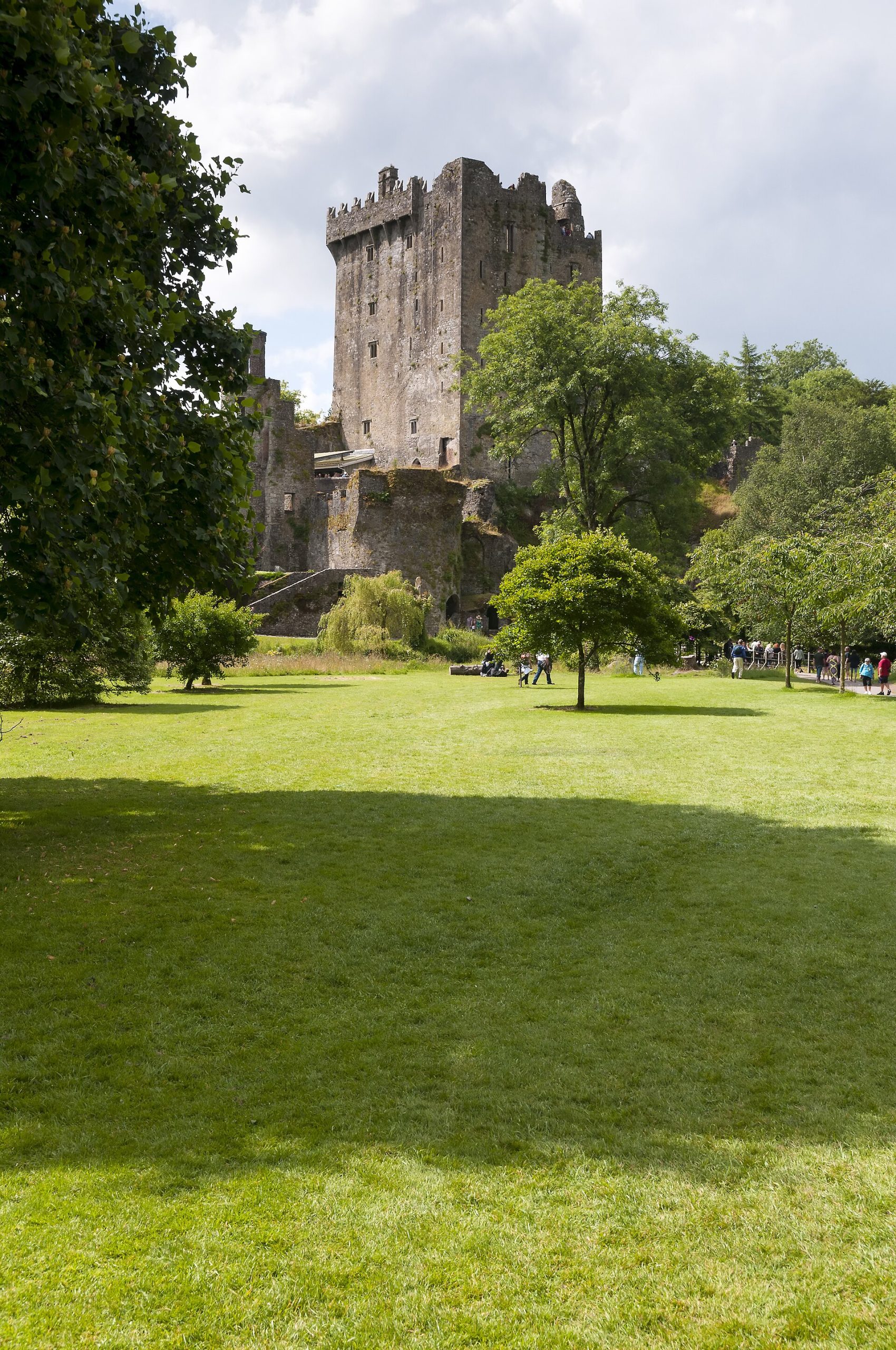
Inside a Great Tower House
Climbing through the tower gives a real sense of what life was like in a great Irish stronghold of the late Middle Ages. The interior rises through several floors, linked by narrow spiral staircases built into the thickness of the walls, and each level served its own purpose, from stores and guardrooms at the bottom to grand chambers higher up.
The principal rooms would have included a great hall for feasting and ceremony, the heart of the lord’s household, along with private chambers, a chapel, and the many practical spaces needed to sustain a large and self-contained community. Life in such a tower combined the grandeur of a noble residence with the constant readiness for defence that the age demanded.
The thick walls, small windows, and defensible design remind us that this was, first and foremost, a fortress. In a violent and unsettled land, a lord’s home had to be able to withstand attack, and every feature of the tower, from its narrow stairs to its lofty battlements, was shaped by the needs of defence as much as of comfort.
As you climb toward the top, past these ancient rooms and up the worn spiral stairs, you are following the same route that generations have taken, and that the modern pilgrim to the Blarney Stone still takes today, up through the living heart of a medieval Irish castle toward the famous stone waiting at the summit.

The Legend of the Stone
At the very top of the tower, set into the battlements, is the object that has made Blarney famous across the globe: the Blarney Stone. According to legend, anyone who kisses this stone will be granted the gift of the gab, the power of persuasive, eloquent, flattering speech, and it is to receive this gift that visitors come in their hundreds of thousands.
The origins of the stone and its powers are wrapped in a wonderful tangle of legend, and there are many competing stories. Some say it was Jacob’s Pillow, brought to Ireland by a prophet; some link it to the Stone of Scone on which Scottish kings were crowned; and one popular tale holds that it was given to a MacCarthy lord by Robert the Bruce, King of Scots, in gratitude for Irish help at the Battle of Bannockburn in 1314. None of these can be proven, and they add to rather than diminish the stone’s mystique.
Whatever its true origin, the belief in the stone’s magical power to bestow eloquence has drawn people to Blarney for a very long time, turning a block of stone in a castle battlement into one of the most famous objects in Ireland. The legend has become an inseparable part of the castle, and of Ireland’s image in the wider world.
It is a rare and remarkable thing for a single stone to become so celebrated, but the Blarney Stone has managed it, and the desire to kiss it and win the gift of the gab has made this Irish tower house a place of pilgrimage for travellers from every corner of the earth.
Historians have tried, with limited success, to pin down when the tradition of the stone actually began, and the truth is lost in the mists of folklore. What is clear is that the legend has been drawing visitors for a very long time, and that its power lies not in any provable fact but in the irresistible appeal of the story itself, the idea that a simple kiss might grant the magical gift of eloquence.

How a Word Was Born
The most famous story about Blarney explains not just the stone but the very word blarney, and it involves one of the most powerful monarchs in history. In the reign of Queen Elizabeth I of England, the lord of Blarney, another Cormac MacCarthy, was under pressure to surrender his castle and prove his loyalty to the crown, but he was a master of delay, forever making fair promises and charming excuses while never actually giving anything up.
According to the tale, every time the queen’s representatives pressed him, MacCarthy would respond with such smooth, flattering, and plausible talk that they came away satisfied but with nothing achieved. When these endless honeyed evasions were reported back to Elizabeth, the frustrated queen is said to have exclaimed that it was all just blarney, more talk that meant nothing, and so, the story goes, the word entered the language.
Whether or not it happened exactly this way, the tale perfectly captures the meaning of blarney, that special gift for talk that flatters and charms and cleverly gets its way, and it ties the word forever to this castle and its lords. It is a delightful piece of folklore, and it has helped make Blarney one of the most famous names in Ireland.
That a small Irish castle should have given the English language a word for smooth-talking eloquence is a wonderful legacy, and it is entirely fitting for a place whose very stone is said to bestow the gift of the gab. Blarney, it seems, has always been associated with the magical power of words.
The word blarney has since travelled far beyond Ireland, entering everyday English as a term for smooth, cajoling, empty flattery, the kind of talk that charms without committing. That a Cork castle should have contributed such a useful and enduring word to the language is a source of considerable local pride, and it is celebrated at the castle as one of Blarney’s greatest claims to fame.
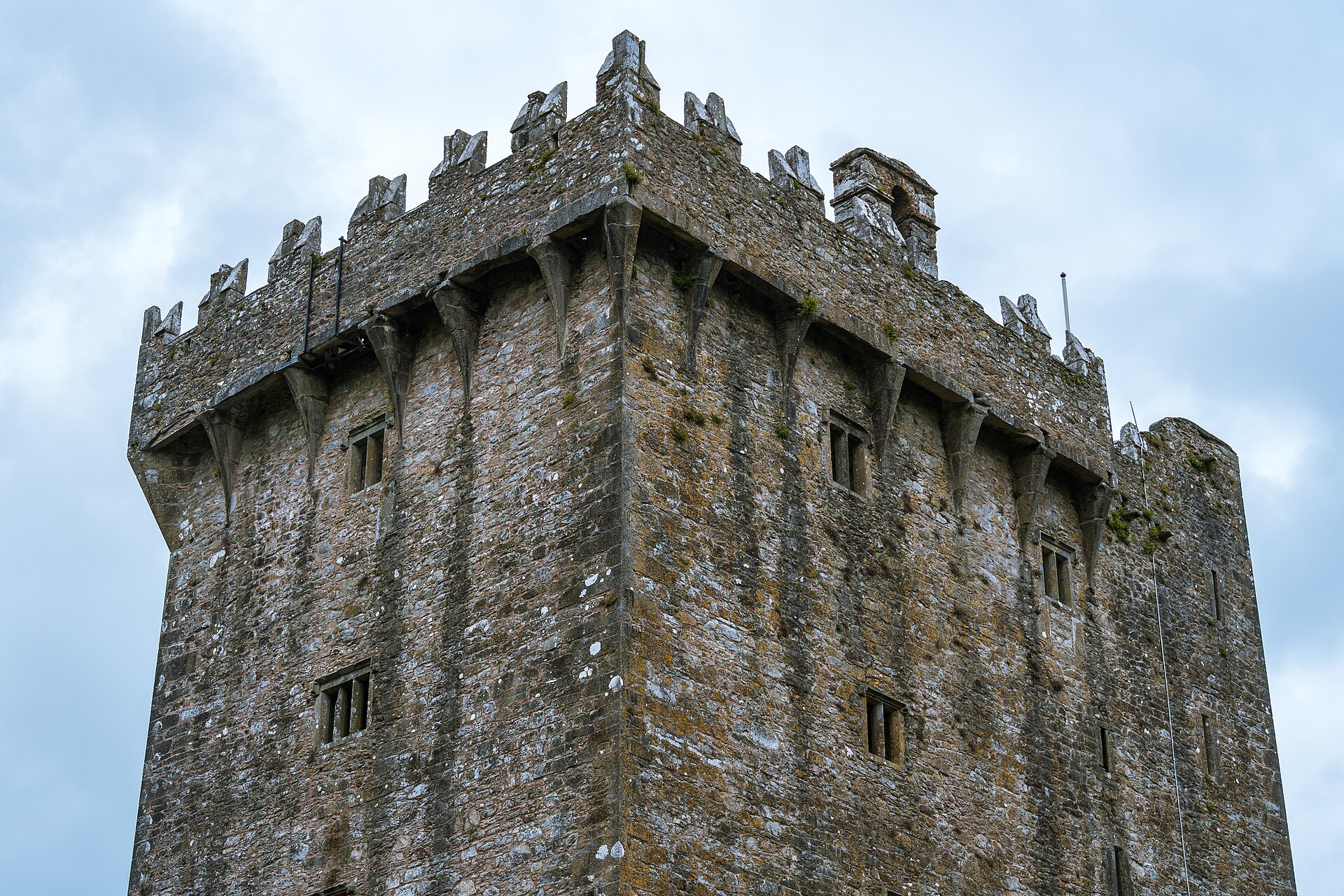
The Climb to the Top
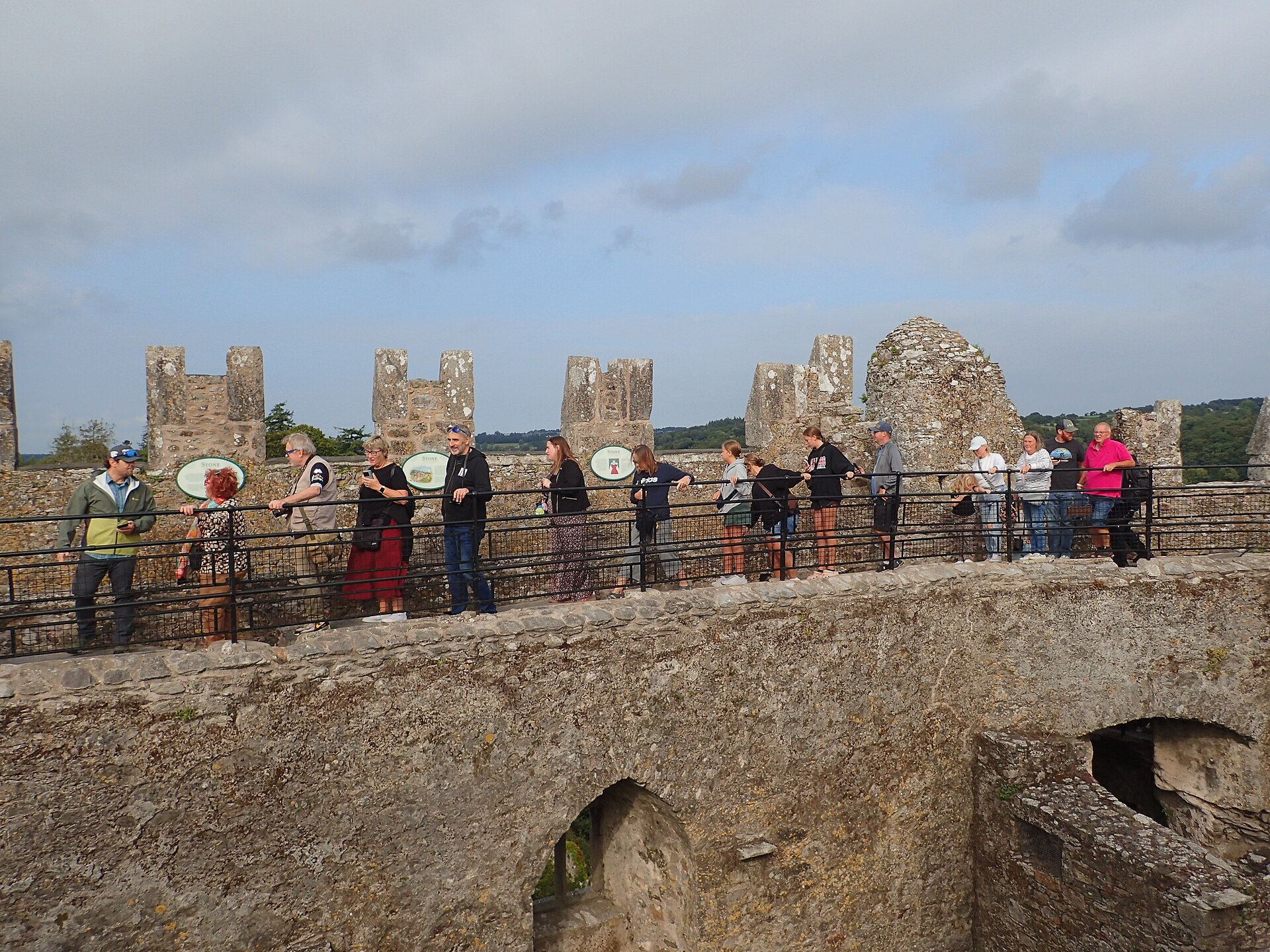
Part of the experience of Blarney is the journey to the stone itself, up through the narrow, winding heart of the tower. On a busy day, a queue of visitors snakes slowly upward through the castle, climbing the tight spiral stairs and passing through the ancient rooms on the way to the battlements. It is a slow and sometimes crowded ascent, but it builds a sense of anticipation as the summit draws near.
The stairs are steep, narrow, and worn smooth by centuries of feet, spiralling up within the thickness of the walls in the classic manner of a medieval tower house. For many visitors, this climb is their first real encounter with the interior of such a castle, and it gives a genuine sense of what it was like to move through these buildings in the age of the MacCarthys.
Emerging at last onto the top of the tower, blinking in the daylight, the visitor is rewarded not only with the chance to kiss the stone but with sweeping views over the estate, the gardens, and the surrounding countryside of County Cork. The battlements are a fine vantage point, and the view is a reward in itself for the effort of the climb.
The queue and the climb, far from spoiling the experience, are part of what makes reaching the Blarney Stone feel like a small pilgrimage. By the time you lean back to kiss the stone, you have earned it, having ascended through the whole height of a great medieval tower to reach the famous battlement at its summit.
Kissing the Stone
Kissing the Blarney Stone is not for the faint-hearted, and that is part of the fun. The stone is set in the wall below the battlements at the very top of the tower, on the outside face, so that to reach it you must lie down on your back, grip an iron rail, and lean out and down over a gap, tipping your head back into empty air high above the ground, before pressing your lips to the famous stone.
In the past this was a genuinely perilous business, with the visitor held by the ankles and dangled out over the drop, but today the process is made much safer, with rails and protective bars and an attendant to help. Even so, leaning back over that dizzying gap takes a little nerve, and it makes kissing the stone a small adventure as well as a ritual, one that visitors remember long afterward.
The stone itself has been kissed so many millions of times over the centuries that it is worn smooth and shiny, a tangible mark of the endless stream of pilgrims who have made the climb. There is something rather wonderful about pressing your lips to a stone touched by so many others across so many years, all hoping for the same gift of eloquence.
For all the jokes about hygiene and the shivers of vertigo, kissing the Blarney Stone remains one of the classic experiences of a visit to Ireland, a bucket-list ritual performed by everyone from ordinary tourists to famous statesmen and celebrities. It is a small, silly, delightful act, and it is at the very heart of Blarney’s fame.

The Well-Worn Stone
It is worth pausing on the stone itself and the endless devotion it has inspired. Generations of visitors have climbed this tower for the sole purpose of kissing a block of stone in the hope of gaining the gift of eloquent speech, and the sheer scale of this ritual, repeated over centuries and now by hundreds of thousands of people every year, is genuinely remarkable.
The stone has become one of the most kissed objects in the world, and its smooth, polished surface bears silent witness to the countless lips that have touched it. Whether or not any of those visitors truly gained the gift of the gab, the ritual has taken on a life of its own, a shared experience that links travellers across time and from every nation.
There is a kind of magic in that shared devotion, quite apart from any power the stone may or may not possess. To kiss the Blarney Stone is to join a vast, unbroken company of pilgrims stretching back through the years, all drawn by the same charming legend to the same lofty battlement in a Cork castle.
That such a simple thing, a stone in a wall, should exert such a powerful and lasting pull on the human imagination is a testament to the enduring appeal of legend and the deep human love of a good story. The Blarney Stone offers eloquence, but perhaps its real gift is a moment of shared wonder and delight.

A Fortress in Ireland’s Wars
Behind the legend, Blarney was a real fortress caught up in the violent history of Ireland, and it saw its share of war. As one of the principal strongholds of the MacCarthys, it was involved in the great conflicts that convulsed the country in the sixteenth and seventeenth centuries, as English power expanded and the old Gaelic order was gradually broken.
During the Cromwellian wars of the mid-seventeenth century, when Oliver Cromwell’s forces conquered Ireland with great brutality, Blarney was besieged and taken, and later in the century it was again involved in the wars between supporters of the rival kings James and William. Through these turbulent years the castle changed hands and its MacCarthy lords struggled to hold on to their ancestral seat amid the wreck of the Gaelic world.
Eventually, like so many native Irish families, the MacCarthys lost Blarney, their lands forfeited in the aftermath of war and their power broken. The castle passed out of the hands of the dynasty that had built it and defended it for centuries, a small part of the vast transfer of land and power that reshaped Ireland in this age.
So beneath the charming legend of the stone lies a harder story, of a great Gaelic family and their stronghold swept up in the conquest and transformation of Ireland. Blarney was not just a place of magic and eloquence but a real fortress that felt the full force of history, and its ruined grandeur is a monument to that turbulent past.
The fall of the MacCarthys was part of one of the great tragedies of Irish history, the long dispossession of the native Gaelic aristocracy and the transfer of their lands to new, largely English and Protestant, owners. Castles like Blarney, once the proud seats of ancient Irish dynasties, passed into other hands, and the world they had ruled was swept away. The castle’s romantic ruin is, in this sense, a monument to a vanished order.
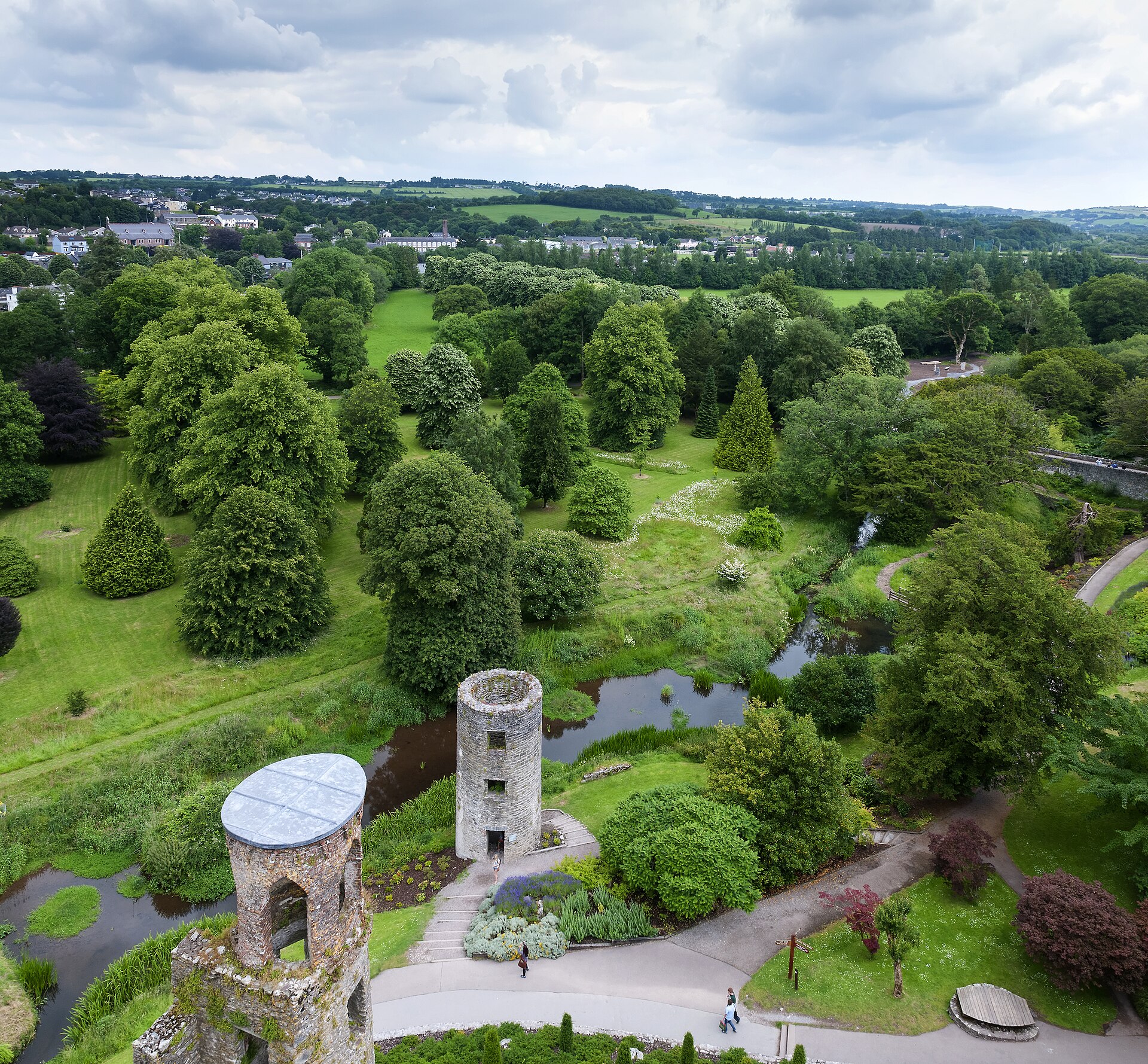
New Owners and a Grand Estate
After the MacCarthys lost Blarney, the castle and its lands passed to new owners, and over time the estate was developed into the grand property we see today. Later families, including the Jefferyes and, through marriage, the Colthursts, held Blarney and shaped its surroundings, building a fine house nearby and, crucially, laying out the celebrated gardens that now draw so many visitors.
Under these owners, the estate around the old tower was transformed into a place of beauty and leisure, with landscaped grounds, walks, water features, and a rich variety of gardens. The medieval fortress became the romantic centrepiece of a great estate, its ruined grandeur set amid carefully cultivated parkland and woodland.
This is why a visit to Blarney offers so much more than the castle and its stone. The estate has been developed and cared for over generations into one of the finest garden landscapes in Ireland, a place to wander and explore far beyond the tower itself. The combination of the ancient castle and the beautiful grounds is a large part of Blarney’s charm.
The Colthurst family, who still own the estate, have continued to develop and open the gardens, adding new features and welcoming the huge numbers of visitors who come each year. Blarney today is thus a living, working estate as well as a historic monument, kept and cherished by a family long associated with the place.

Gardens of Wonder and Danger
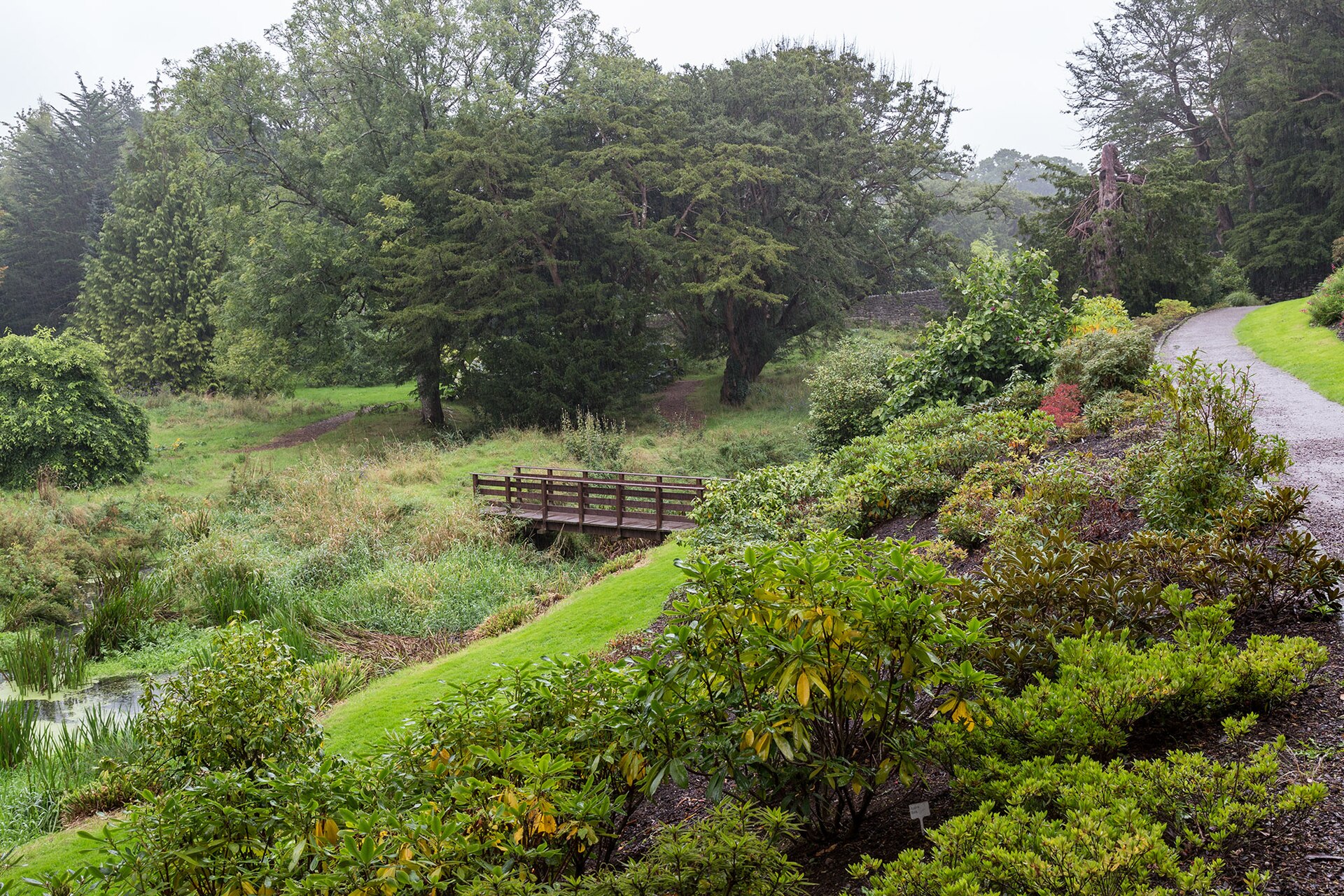
The gardens of Blarney are a wonder in their own right, and they would be worth visiting even without the famous castle. Spread across a large and beautiful estate, they include a great variety of landscapes and features, from sweeping lawns and fine trees to water gardens, an arboretum, and specialist plantings, all laid out to delight and surprise the visitor as they wander the grounds.
The most famous, and most startling, is the Poison Garden, a special garden planted entirely with poisonous, dangerous, and intoxicating plants, each carefully labelled with warnings of its deadly properties. Here, safely behind barriers, visitors can see the many plants that have been used through history to heal, to harm, and to kill, a fascinating and slightly sinister corner of the estate that both educates and thrills.
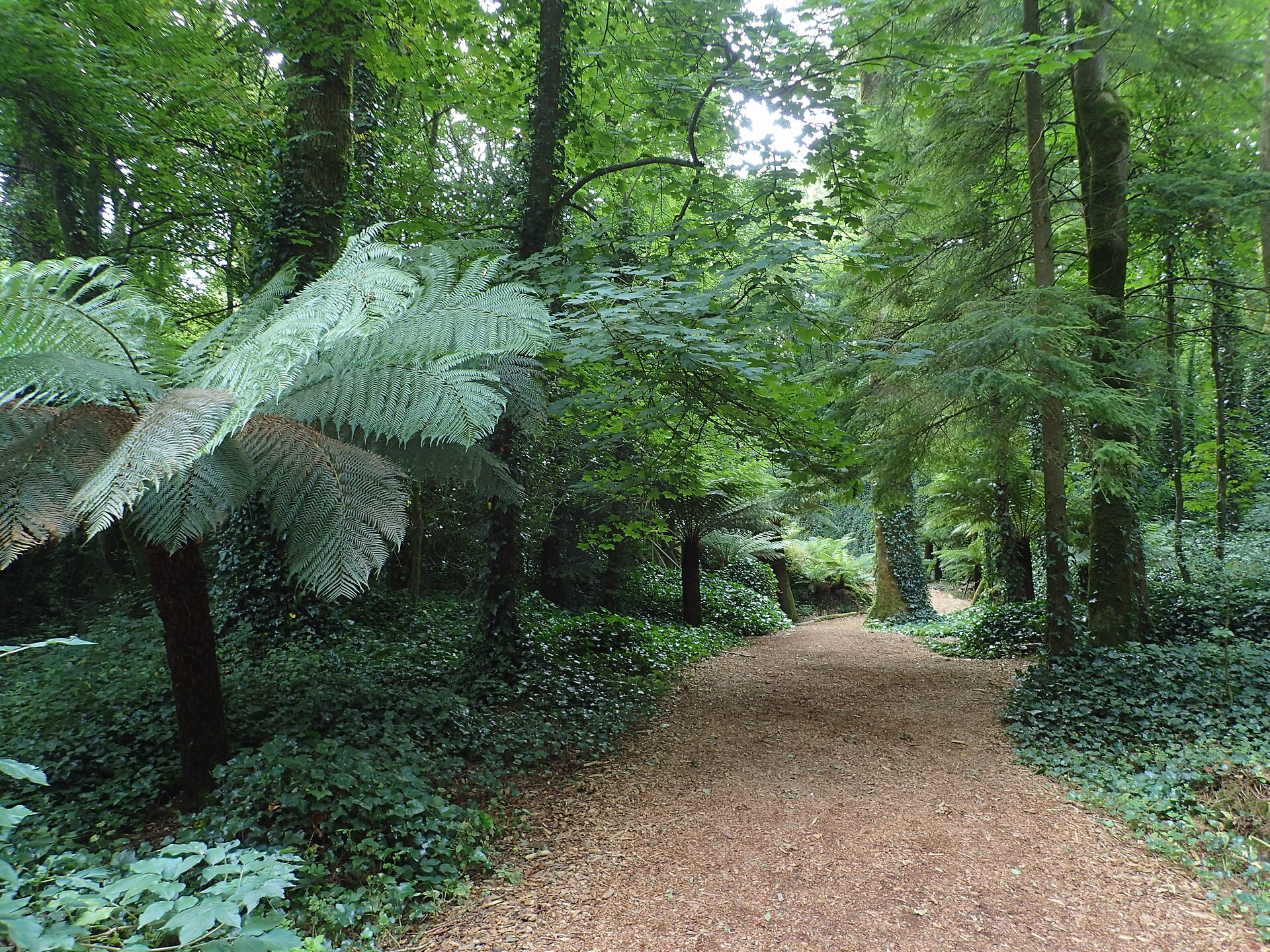
Elsewhere, gentler pleasures await, from the lush greenery of the Fern Garden to woodland walks and riverside paths, offering a rich variety of scenes and moods. The gardens change with the seasons, and there is always something new to discover, so that many visitors find the grounds as memorable as the castle and its stone.
Together, these gardens make Blarney a place to spend a whole day, wandering from the ancient tower to the poison garden to the ferns and the water, in a landscape that combines history, beauty, and a touch of the macabre. They are among the finest and most enjoyable gardens in Ireland.
The Poison Garden is a surprisingly educational place beneath its sinister reputation, for many of its deadly plants have long histories as medicines, poisons, and intoxicants, and their stories touch on everything from ancient healing to notorious crimes. It is a vivid reminder that the natural world is full of danger as well as beauty, and it has become one of the most talked-about features of the whole estate.

The Mysterious Rock Close
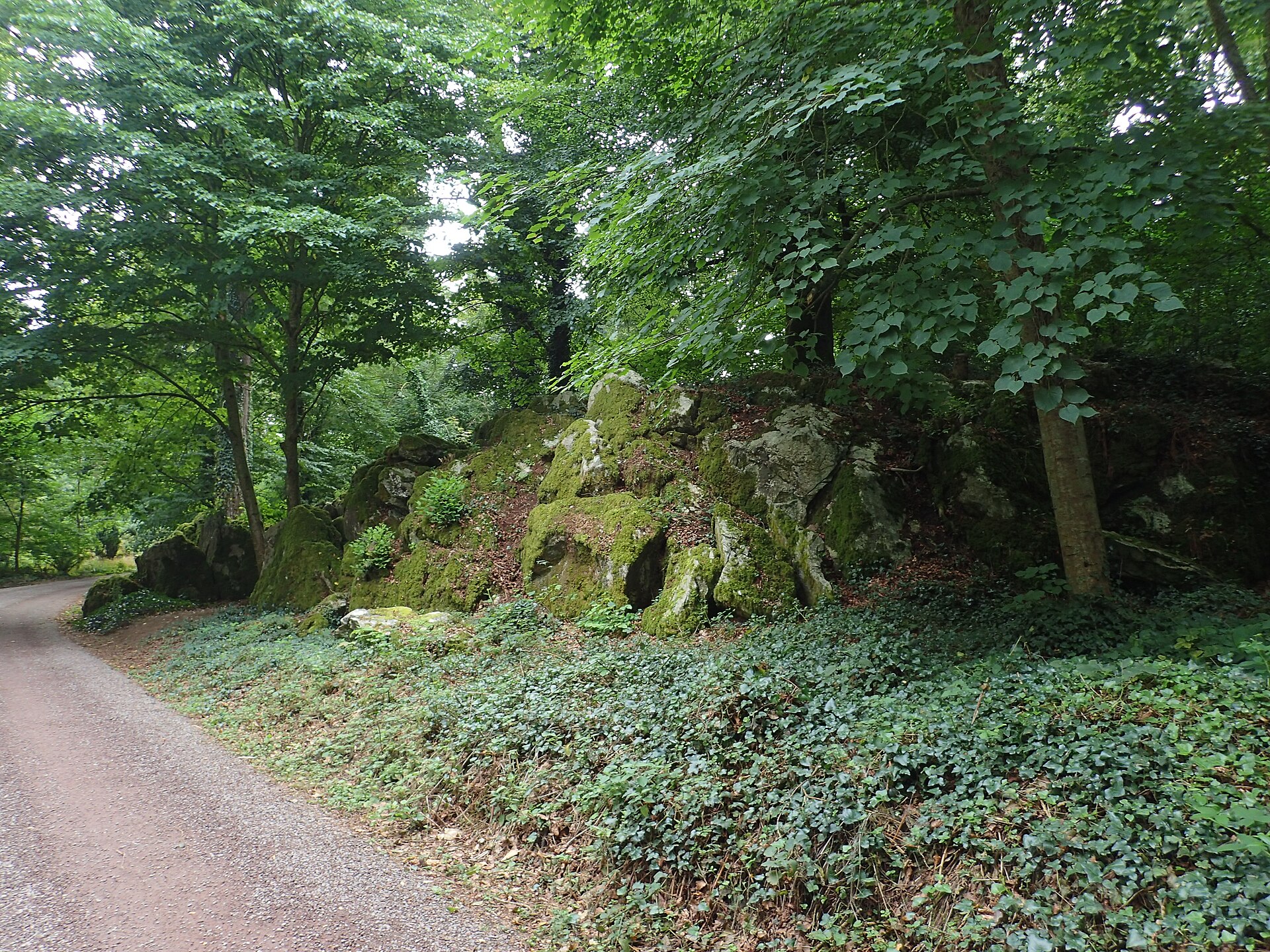
Perhaps the most atmospheric part of the whole estate is Rock Close, an ancient and mysterious garden of great stones, twisted trees, and shadowy pools, said to have links to Ireland’s deep past and to the old world of the druids. Here, among moss-covered rocks and gnarled roots, the visitor steps into a place that feels genuinely magical, quite different from the ordered gardens elsewhere.
Rock Close is full of features wrapped in legend: a set of stone steps to be descended with eyes closed, a wishing stair, ancient standing stones, and other curiosities, each with its own story and its own hint of enchantment. It is a place designed to stir the imagination, blending the natural drama of the landscape with the romance of Irish folklore.
Whether or not it truly has any connection to the druids, Rock Close creates a powerful sense of stepping into an older, more magical world, and it is a favourite corner of the estate for many visitors. It captures the same spirit of legend and wonder that surrounds the Blarney Stone itself, and it deepens the magic of the whole place.
In Rock Close, more than anywhere, you feel that Blarney is not just a castle and a stone but a landscape steeped in story and enchantment, a place where history and legend, nature and imagination, all flow together. It is a fitting companion to the famous tower, and a highlight of any visit.
Gardens like Rock Close, designed to evoke an ancient, enchanted past, were much loved in the romantic era, when there was a great fashion for the wild, the mysterious, and the picturesque. At Blarney, the natural drama of the rocks and trees was enhanced and shaped into a place of deliberate enchantment, and the result is one of the most atmospheric garden spaces in Ireland, where it is easy to believe in the old magic of the land.
A Landscape to Wander
Beyond the famous features, much of the pleasure of Blarney lies simply in wandering its extensive and varied grounds. The estate is large, and its paths lead through a rich succession of landscapes, from open lawns and specimen trees to shady woodland, riverside walks, and lush, green corners like the Fern Garden, where great ferns crowd together in a scene of almost prehistoric abundance.
These quieter parts of the estate offer a welcome contrast to the busy tower and the queue for the stone, and they reward the visitor who is willing to explore. Away from the crowds, the gardens of Blarney are places of real peace and beauty, changing with the light and the seasons, and full of small delights for those who take the time to look.
The variety is remarkable, with different gardens and areas each offering their own character and mood, from the dramatic and the sinister to the gentle and the serene. It is this richness and variety that makes the grounds of Blarney so much more than a mere setting for the castle, but a great garden landscape in their own right.
For garden lovers, and indeed for anyone who enjoys a beautiful place to walk, the grounds of Blarney are a genuine treasure, and they ensure that a visit offers far more than the castle and its stone. To wander here, among the ferns and the trees and the water, is to discover the gentler, greener magic of Blarney.
One of Ireland’s Favourite Castles
Today Blarney is one of the most visited and best-loved attractions in all of Ireland, drawing enormous numbers of visitors from around the world each year, the great majority of them eager to climb the tower and kiss the famous stone. Its combination of a genuine medieval fortress, a world-famous legend, and beautiful gardens makes it almost irresistible, and it is a fixture on countless tours of Ireland.
For all its fame and popularity, Blarney retains a real charm and beauty, and it rewards those who look beyond the stone to appreciate the mighty tower house, the turbulent history of the MacCarthys, and the wonderful gardens that surround it. There is far more to Blarney than a quick kiss and a photograph, and those who take their time are richly rewarded.
The castle has become, in many ways, a symbol of Ireland itself, of its history, its legends, its love of language and storytelling, and its welcome to visitors from every land. To have given the world both a famous ritual and a common word is a remarkable legacy for a single castle, and it is one that Blarney wears lightly and proudly.
Whether you come for the stone, the history, the gardens, or all three, Blarney offers a rich and memorable experience, and it is easy to see why it has become one of the enduring favourites among the castles of Ireland, and one of the most famous castles in the world.
Planning Your Visit
Blarney Castle lies just a short distance from the city of Cork, in the south of Ireland, in the village of Blarney, and it is very easy to reach by road, with regular connections from Cork itself. Its closeness to a major city and to the tourist routes of the south-west makes it one of the most accessible of all Irish castles, and it is a popular day trip.
Allow at least half a day, and ideally longer, to make the most of a visit. Climb the tower and kiss the stone if you dare, but leave plenty of time to explore the extensive gardens, from the Poison Garden to Rock Close to the ferns and the woodland walks. The castle and grounds can be busy, especially in summer, so arriving early helps, both to shorten the queue for the stone and to enjoy the gardens in peace. Wear comfortable shoes for the climb and the walks, and be prepared for a little vertigo at the top. Combine Blarney with the city of Cork and the beautiful scenery of the south-west, and you will experience one of Ireland’s most famous and most charming castles.
The castle sits at roughly 51.9294, -8.5703. Punch that into Google Maps and it will take you straight to Blarney Castle near Cork.
Nearby Castles
Why the World Comes to Blarney
Blarney is a castle that has given the world two gifts: a word and a wish. The word is blarney itself, that smooth, charming, persuasive talk named for the honeyed evasions of its lords; the wish is the age-old hope, renewed by every visitor who kisses the famous stone, of gaining the gift of eloquent speech. Few castles anywhere have entered so deeply into language and legend, and fewer still draw such crowds from every corner of the earth.
But beneath the charm lies a real and formidable history: a mighty MacCarthy tower house, one of the strongest in Ireland, that stood through the great wars that broke the Gaelic world, surrounded now by some of the loveliest and most surprising gardens in the country. Climb the worn spiral stair, brave the drop to kiss the stone, and then lose yourself in the poison garden and the ancient magic of Rock Close, and you will understand why the whole world comes to Blarney, and why, once you have been, its charm never quite lets you go.
So kiss the stone if you dare, and take your chances with the gift of the gab. But do not stop there. Wander the poison garden, descend the wishing steps of Rock Close with your eyes closed, and lose an afternoon among the ferns and the great trees, and you will find that Blarney’s real magic is not confined to a single famous stone. It lies in the whole enchanting mixture of history, legend, and beauty that has made this Cork castle one of the most beloved places in all of Ireland.
You May Like
Mafra, the Palace a King Built From a Vow


One thought on “Blarney Castle: The Irish Fortress That Gave the World a Word”