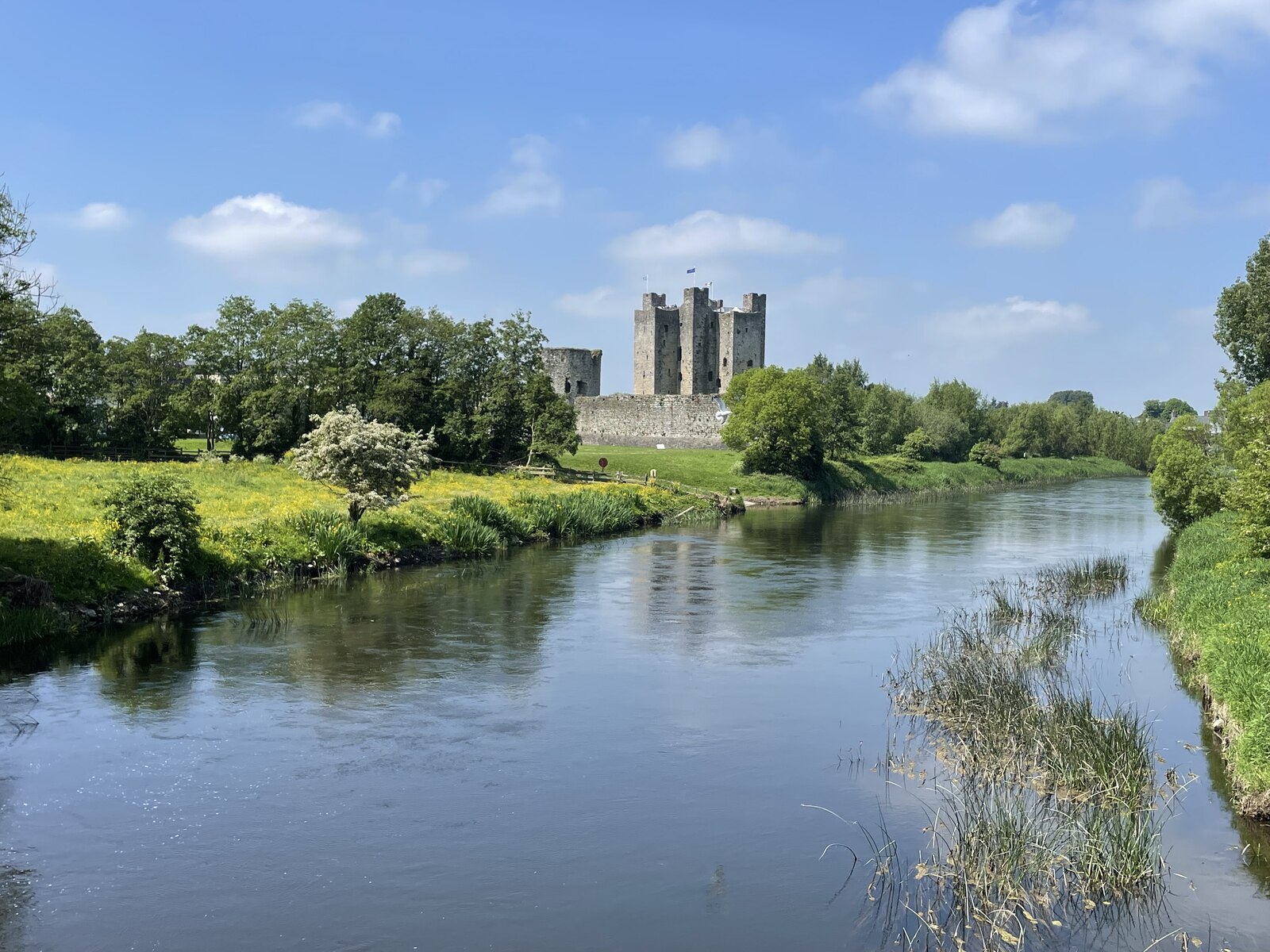
On the banks of the River Boyne, in the green heart of County Meath, stands the largest Anglo-Norman castle in all of Ireland. Trim Castle sprawls across a vast site beside the river, its great walls and towers enclosing an area big enough to lose yourself in, and at its centre rises one of the most remarkable keeps in Europe: a huge, many-sided tower shaped like a great stone cross, unlike anything else in the country. This is a fortress built on a truly heroic scale, raised at the very moment the Normans stormed into Ireland, and it has dominated its stretch of the Boyne for more than eight hundred years.
Trim was not just big; it was important. It stood at the heart of the Lordship of Meath, one of the greatest prizes handed out in the Norman conquest of Ireland, and it became a major centre of English royal power in the country, a place where parliaments met, where royal officials governed, and where, according to tradition, a future king of England spent part of his childhood. For centuries it was one of the key strongholds of the Pale, the region around Dublin where English control was strongest.
In modern times, Trim found unexpected fame when it was used as a location for a famous film about Scottish freedom, bringing crowds of new visitors to marvel at its scale and its history. So this is a castle of superlatives: the biggest in Ireland, a giant of the Norman conquest, and a great survivor that has starred on the world’s screens. Let’s cross the Boyne and explore the mighty fortress of Trim.
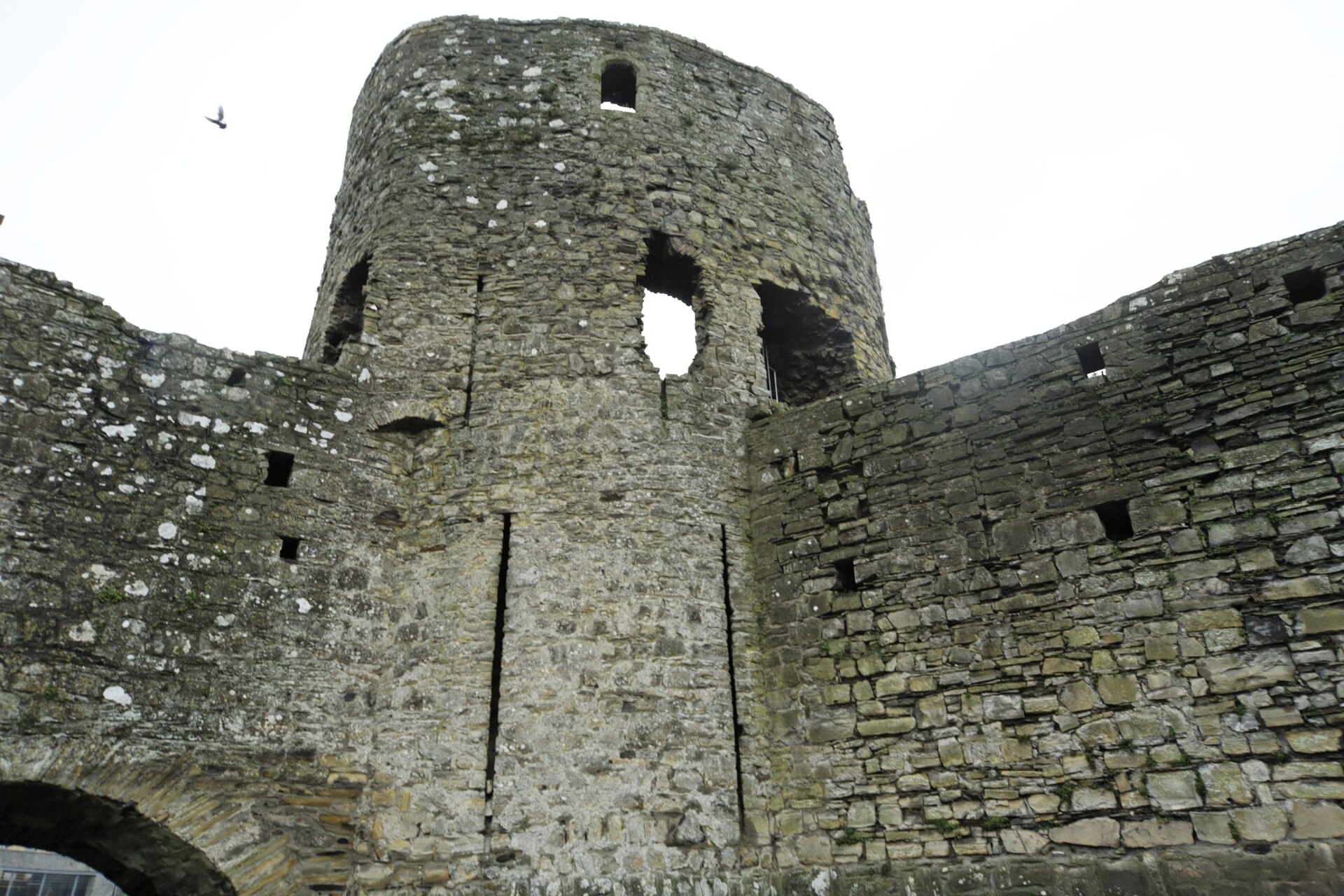
Table of Contents
- The Normans Come to Ireland
- A Fortress on a Giant Scale
- The Rise and Fall of the de Lacys
- The Extraordinary Keep
- Climbing the Great Tower
- A Centre of Royal Power
- On the Edge of the Pale
- A Prince in the Castle
- Guarding the Boyne
- Decline and Long Slumber
- Braveheart and a New Fame
- An Ancient and Storied Landscape
- Exploring Trim Castle Today
- Planning Your Visit
- Nearby Castles
- The Giant of Norman Ireland
The Normans Come to Ireland
Trim Castle was born out of one of the great turning points in Irish history: the arrival of the Normans. In the later twelfth century, these formidable warriors, who had already conquered England a century before, crossed the sea into Ireland, drawn in by Irish politics and the ambitions of the English king Henry II. Their coming would transform the country, and Trim stands as one of the earliest and greatest monuments of that transformation.
The man behind Trim was Hugh de Lacy, one of Henry II’s most powerful followers, to whom the king granted the vast Lordship of Meath, a great swathe of rich land in the heart of Ireland. To hold and control this new territory, de Lacy needed a mighty stronghold, and he chose a commanding site on the River Boyne to build one. Work on the castle began around 1172, at the very dawn of the Norman presence in Ireland.
The first castle was a hurried affair of earth and timber, but it was soon attacked and burned, and the Normans learned their lesson. In its place they raised the great stone fortress whose ruins survive today, built to overawe the conquered land and to stand for centuries. Trim was thus among the first and most important of the stone castles with which the Normans stamped their power on Ireland.
Meath was no ordinary land. This was the ancient royal heartland of Ireland, close to the sacred sites of Tara and the great prehistoric monuments of the Boyne valley, a region rich in history and meaning. By planting his mighty castle here, de Lacy was seizing the very heart of the country, and Trim became a symbol of the new order that the Normans were imposing on Ireland.
To really understand why Trim exists at all, it helps to picture Ireland in the years just after 1169. The Norman lords who crossed from Wales and England were not arriving in an empty land. They were stepping into a country of rival kingdoms, ancient monasteries and cattle-based wealth, where power shifted with every raid and marriage alliance. What the Normans brought was not simply soldiers but a whole technology of domination: the mounted knight, the crossbow, and above all the castle. Wherever they wanted to hold ground, they built, and the speed with which they threw up earthworks and then stone astonished the people who watched it happen.
Hugh de Lacy, the man granted the vast lordship of Meath, understood that a gift of land on parchment meant nothing without the muscle to keep it. Meath was rich, flat and fertile, the old heartland of the high kings at Tara only a few miles away, and holding it would announce to everyone that the newcomers intended to stay for good. Trim, sitting on a crossing of the River Boyne, was the natural place to plant that statement. It controlled movement, it drew trade, and it sat close enough to Dublin to matter yet far enough to need its own strong garrison.
A Fortress on a Giant Scale
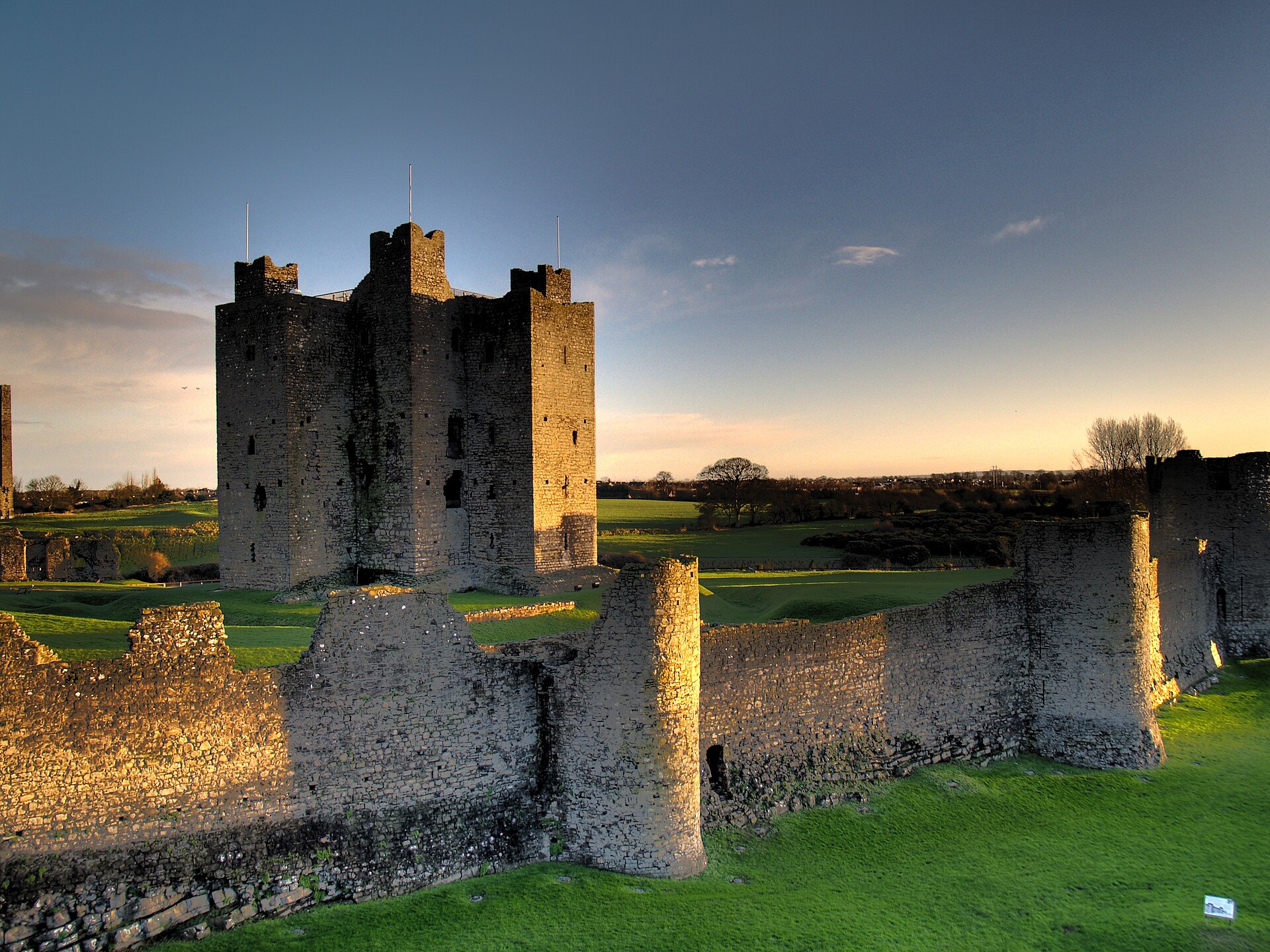
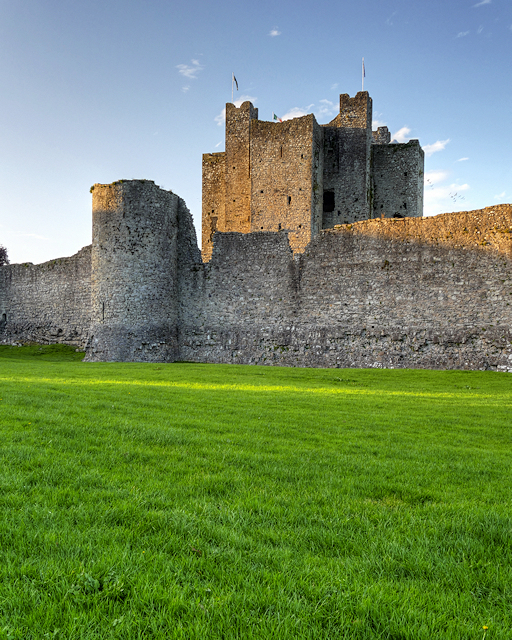
What strikes every visitor to Trim is its sheer size. This is the largest Anglo-Norman castle in Ireland, covering a vast area beside the Boyne, its curtain walls enclosing a great space dotted with towers and buildings. Where many castles are compact strongholds, Trim is a sprawling fortress-town, built to a scale that speaks of enormous power and ambition.
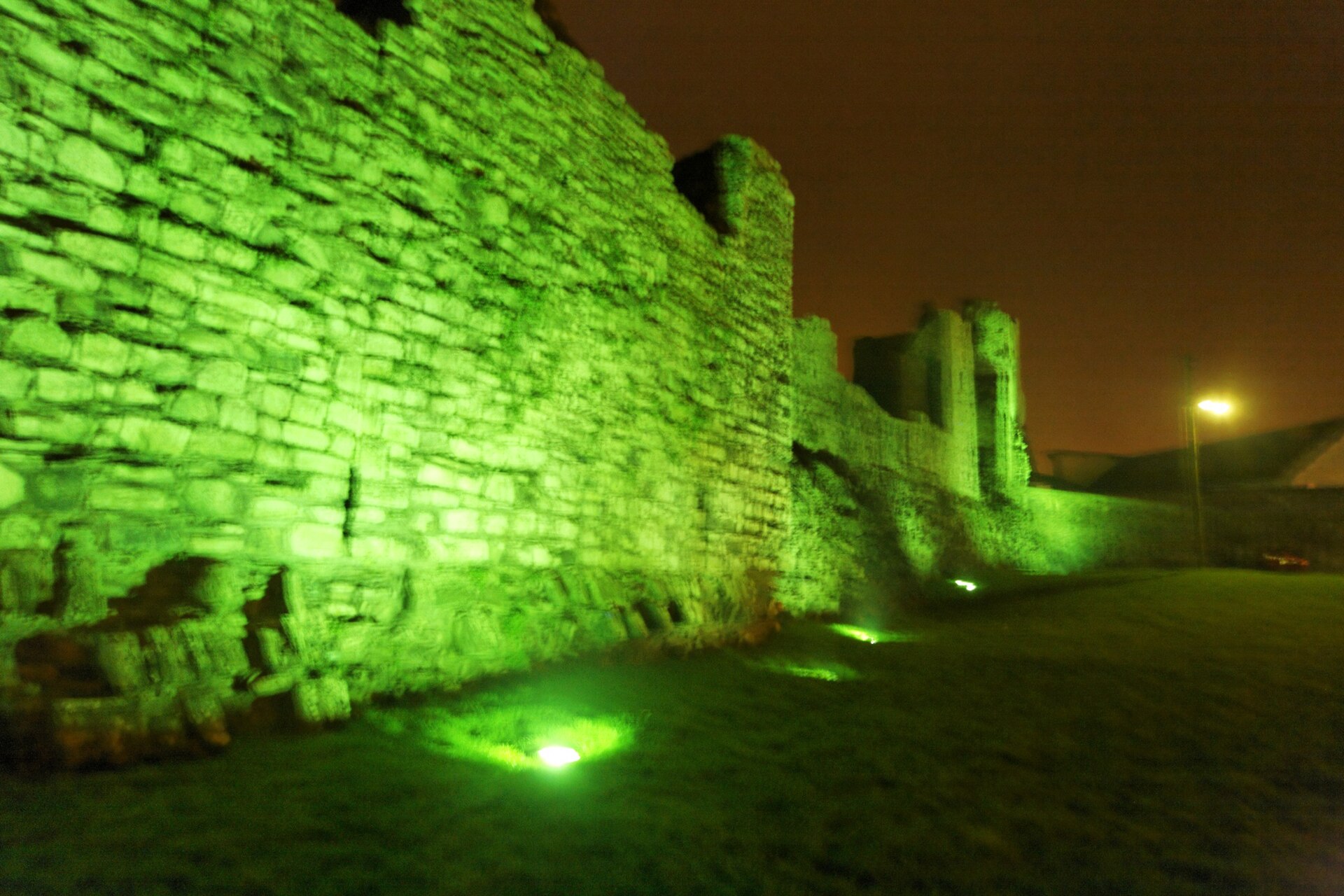
The castle is enclosed by a long circuit of curtain walls, studded with towers and pierced by gates, protecting the great space within. These walls, though ruined in places, still convey the immense scale of the fortress and the effort that went into building it. To walk their length is to appreciate just how large and formidable Trim was.
Within the walls, the ground falls away toward the river, and the various buildings and defences are spread across the site, with the great keep rising at the heart of it all. The layout made clever use of the ground and the river, combining strong walls with natural defences to create a fortress of real strength.
The scale of Trim reflects both the wealth of the de Lacys and the importance of the Lordship of Meath. This was not a minor border fort but a great regional capital, a stronghold from which a vast territory was to be held and governed, and its size was a deliberate statement of the power of its lords and of the Norman conquest itself.
The Rise and Fall of the de Lacys
The story of Trim is, above all, the story of the de Lacy family who built it. Hugh de Lacy, the first lord of Meath, was one of the most powerful of the Norman adventurers in Ireland, and his grant of the great Lordship of Meath made him a magnate of the first rank. But such power made him, and his family, objects of suspicion and rivalry, and their fortunes were as turbulent as the age they lived in.
Hugh de Lacy himself met a violent end, killed in Ireland while overseeing the building works of his new lordship, a reminder of how dangerous the conquest of the country really was. His descendants continued to hold Meath and to develop Trim, but they too were caught up in the constant struggles for power among the great Norman families and with the English crown.
Over the generations, the lordship and the castle passed through changing hands, sometimes held by the de Lacys, sometimes by rivals or by the crown, as the fortunes of the family rose and fell. Through it all, Trim remained the great symbol and stronghold of the Lordship of Meath, the prize that everyone sought to control.
The de Lacys’ story is a vivid illustration of the dangers and rewards of the Norman conquest of Ireland, in which vast lands and great power could be won, but only at the risk of violence, rivalry, and sudden ruin. Their mighty castle at Trim stands as the enduring monument to their ambition and their achievement.
The Extraordinary Keep
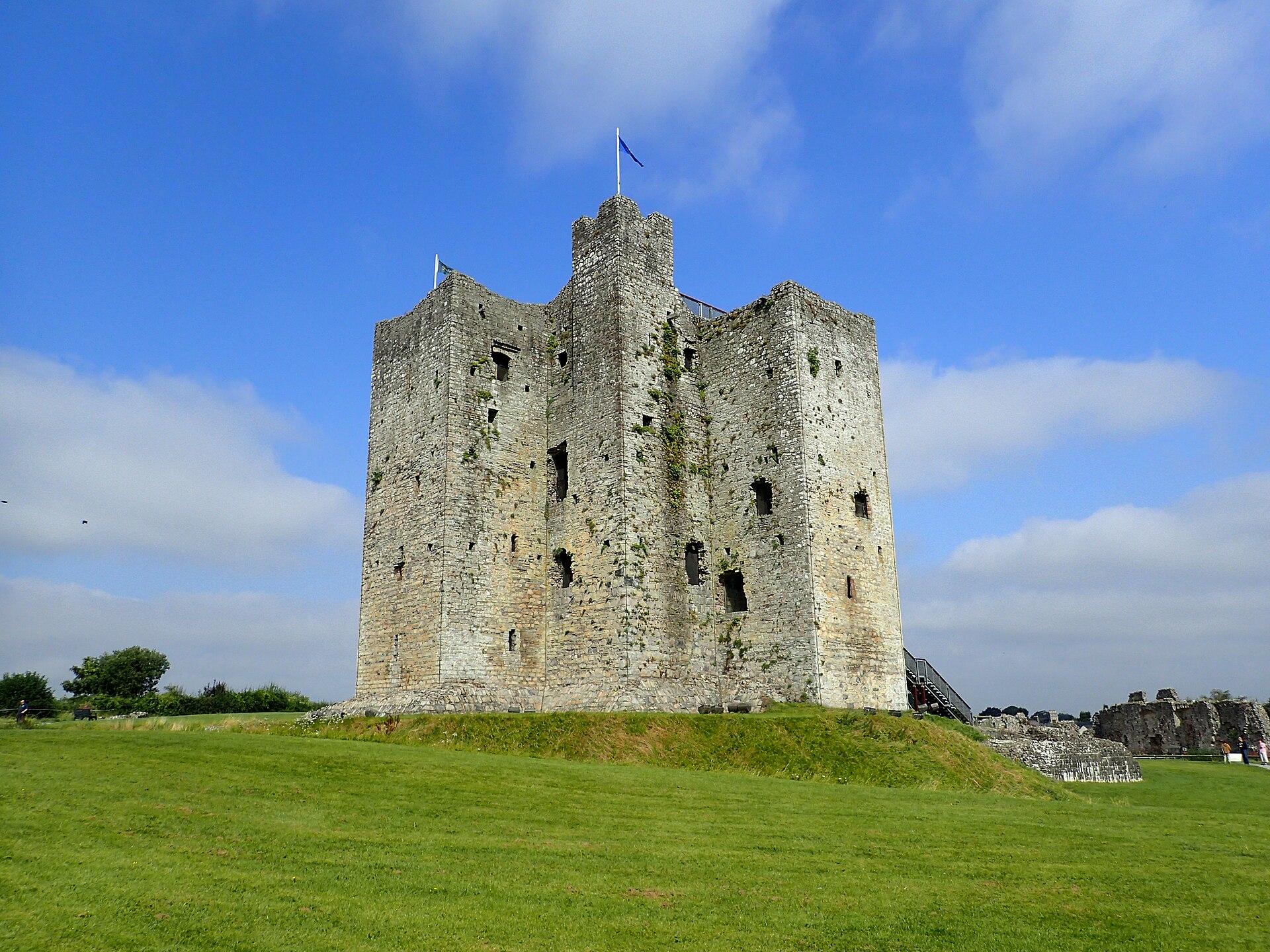
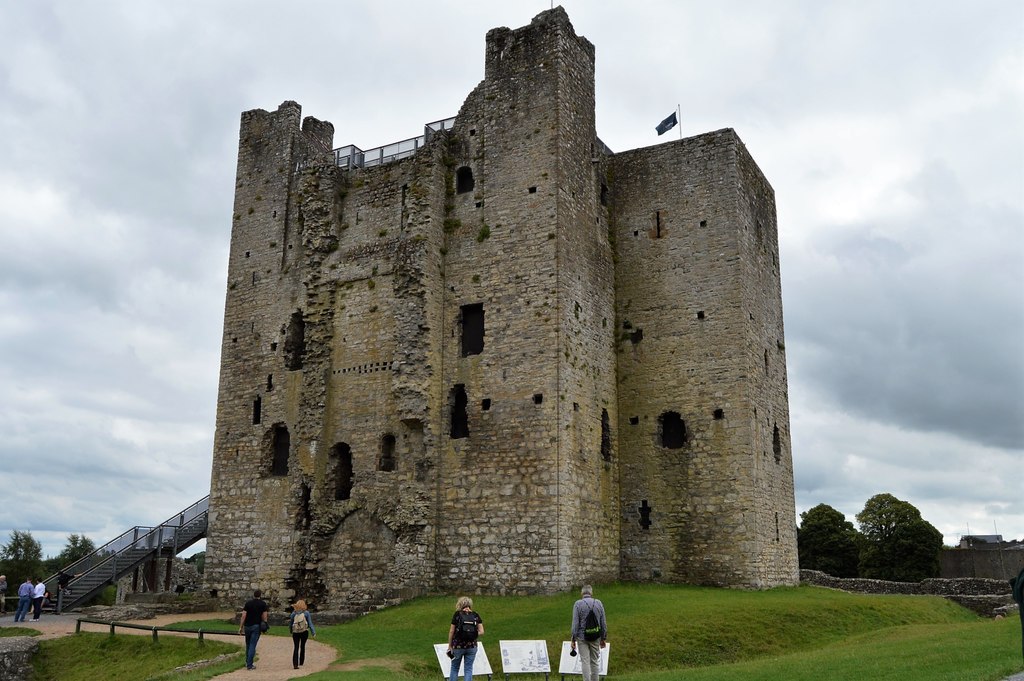
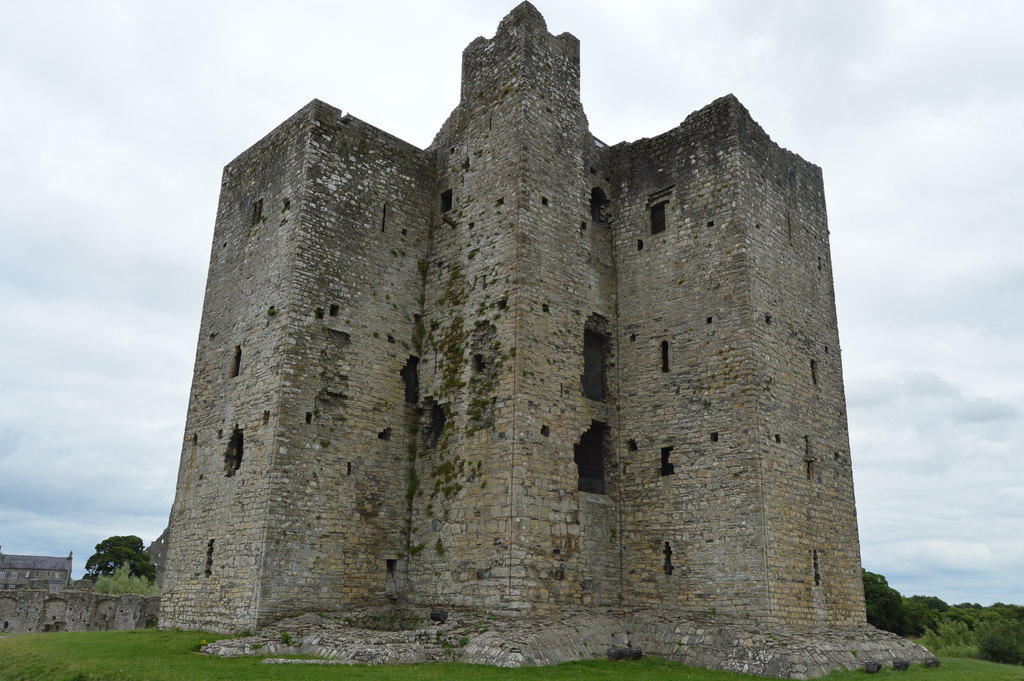
At the centre of Trim stands its most remarkable feature: the keep, one of the most unusual and impressive great towers in all of Europe. Rather than the usual square or round shape, the keep of Trim is built to a complex plan, a great central block with square towers projecting from each side, giving it the form of a huge stone cross with many sides, twenty in all. There is nothing else quite like it in Ireland.
This massive tower was the strongest and grandest part of the castle, the residence of the lord and the ultimate stronghold if the outer defences fell. Its thick walls, its height, and its ingenious design made it a formidable keep, and its unusual shape, with projecting towers giving defenders multiple angles of fire, shows a sophisticated approach to castle design.
Inside, the keep contained the principal rooms of the castle, arranged over several floors, where the lord lived, held court, and conducted the business of his great lordship. It was both a fortress and a palace, combining defensive strength with lordly grandeur, as befitted the seat of one of the most powerful men in Ireland.
The keep of Trim is a genuine architectural marvel, and it remains the dominant feature of the castle and of the town around it. Its strange, powerful, cruciform bulk rising above the walls and the river is the defining image of Trim, and it is one of the great sights of medieval Ireland.
Stand at the foot of the great tower and you begin to grasp why it has fascinated builders and historians for so long. Most Norman keeps are simple rectangles, four walls and a roof. Trim’s is something stranger: a squat central block from which square towers project on each of its sides, giving the whole thing a cruciform, almost star-like footprint when seen from above. Nobody is entirely sure why the builders chose such an elaborate plan. It gave more rooms and more angles from which to shoot, but it also created awkward corners and made the roof a nightmare to keep watertight. Whatever the reasoning, the result is one of the most distinctive keeps anywhere in the Norman world.
The stone itself tells a story of patience. This was not raised in a single burst but over decades, in campaigns of work separated by pauses when money or peace ran short. Archaeologists digging around the tower have found the ghost of an earlier timber castle beneath it, the one that was burned in the very first years of the conquest, and then the successive stone phases layered on top. Each generation of de Lacys added, repaired and adjusted, so the tower you see is really a conversation across a century of ambition, carried out in limestone.
Climbing the Great Tower
For visitors, one of the great pleasures of Trim is the chance to explore the keep, climbing up through its floors to the top for splendid views over the castle, the town, and the surrounding countryside. The interior of the tower, reached by a guided tour, reveals the layout of the great rooms and the ingenuity of the design, and it gives a real sense of the scale and strength of the building.
From the upper levels, the views stretch out over the Boyne valley, taking in the town of Trim, the winding river, and the green fields of Meath, with the distant landmarks of this historic region. Standing at the top of the keep, you can appreciate both the commanding position of the castle and the vast, rich landscape it was built to control.
The climb also brings home the sheer thickness and solidity of the tower’s walls, honeycombed with passages and chambers, and the cleverness of its cruciform design. It is one thing to admire the keep from outside, and quite another to move through its interior and grasp how it actually worked as a fortress and a home.
Exploring the keep is the highlight of any visit to Trim, and it is a rare opportunity to experience the interior of one of the great Norman towers of Europe. Few keeps anywhere are so large, so unusual, or so evocative, and to climb it is to step directly into the world of the Norman conquest of Ireland.
A Centre of Royal Power
Trim was far more than a private fortress; it became one of the great centres of English royal power in Ireland. As the caput, or head, of the Lordship of Meath, it was a place of government and administration, and over the centuries it played an important role in the affairs of the country. Royal officials operated from here, and it was a key stronghold in the region of English control.
The castle was closely associated with the exercise of authority in Ireland, and on occasion it hosted important gatherings and even parliaments, the assemblies through which the country was governed. Trim was thus not just a military stronghold but a political centre, a place where the business of ruling Ireland was carried on.
Its importance was reflected in its close ties to the crown and to the leading figures of the age. The castle and its lordship passed through the hands of powerful families and, at times, came under direct royal control, a sign of just how significant a prize Trim and Meath were considered to be.
So Trim’s history is bound up with the wider story of English rule in Ireland, and it stood at the heart of that rule for centuries. Its walls witnessed not just war but the workings of government, the meetings of parliaments, and the exercise of power over a great and important region.
On the Edge of the Pale
For much of the later medieval period, Trim lay within, or on the edge of, the Pale, the region around Dublin where English control in Ireland was strongest and most secure. Beyond the Pale lay the lands of the Gaelic Irish lords, where English authority was weak or nonexistent, and the boundary between the two worlds was often a dangerous and contested frontier.
As a great fortress in this crucial region, Trim was an important stronghold in the defence and administration of the English-controlled lands. It helped anchor English power in the heart of Ireland and served as a bulwark against the resurgence of Gaelic authority, a role that added to its long strategic importance.
The existence of the Pale, and Trim’s place within it, reflects the incomplete and precarious nature of English rule in Ireland for much of the Middle Ages. English power was never fully secure, and great castles like Trim were essential to maintaining it, guarding the frontier between the two Irelands, the English and the Gaelic.
This frontier role is part of what made Trim so significant, and it is written into the castle’s long history as a centre of English power and a stronghold of the Pale. To understand Trim is to understand the divided and contested world of medieval Ireland, in which a great fortress could stand at the very edge of two clashing civilisations.
A Prince in the Castle
Among the many figures associated with Trim, one stands out: a future king of England. According to tradition, the young Prince Hal, the boy who would grow up to become King Henry V, the victor of the Battle of Agincourt and one of the most celebrated of English kings, spent part of his childhood at Trim Castle, sent there during a turbulent period in his family’s fortunes.
Whether or not every detail of the story is certain, the association links Trim to one of the most famous figures in English history, and it adds to the sense of the castle as a place of real national importance. That a future king should have spent time within these walls is a mark of Trim’s status among the great castles of the age.
It is intriguing to imagine the boy who would become the warrior-king of Agincourt spending his early years in this mighty Irish fortress, far from the courts of England, in the heart of the Lordship of Meath. The connection, real or embellished, has become part of the rich lore of the castle.
Such royal associations, alongside the parliaments and the officials, underline just how central Trim was to the affairs of medieval Ireland and to its ties with the English crown. This was a castle at the very heart of power, and its story touches some of the great names of the age.
For a short but dramatic stretch, Trim held one of the most valuable young men in the medieval world. The future Henry V, the victor of Agincourt, is said to have spent time here as a boy during the reign of Richard II, when the king brought him to Ireland partly to keep him safe and partly to keep an eye on him. Whether or not every detail of the story is true, it is easy to imagine a restless royal child pacing these draughty chambers, staring out across the Boyne and dreaming of the battlefields that would one day make him a legend.
Guarding the Boyne
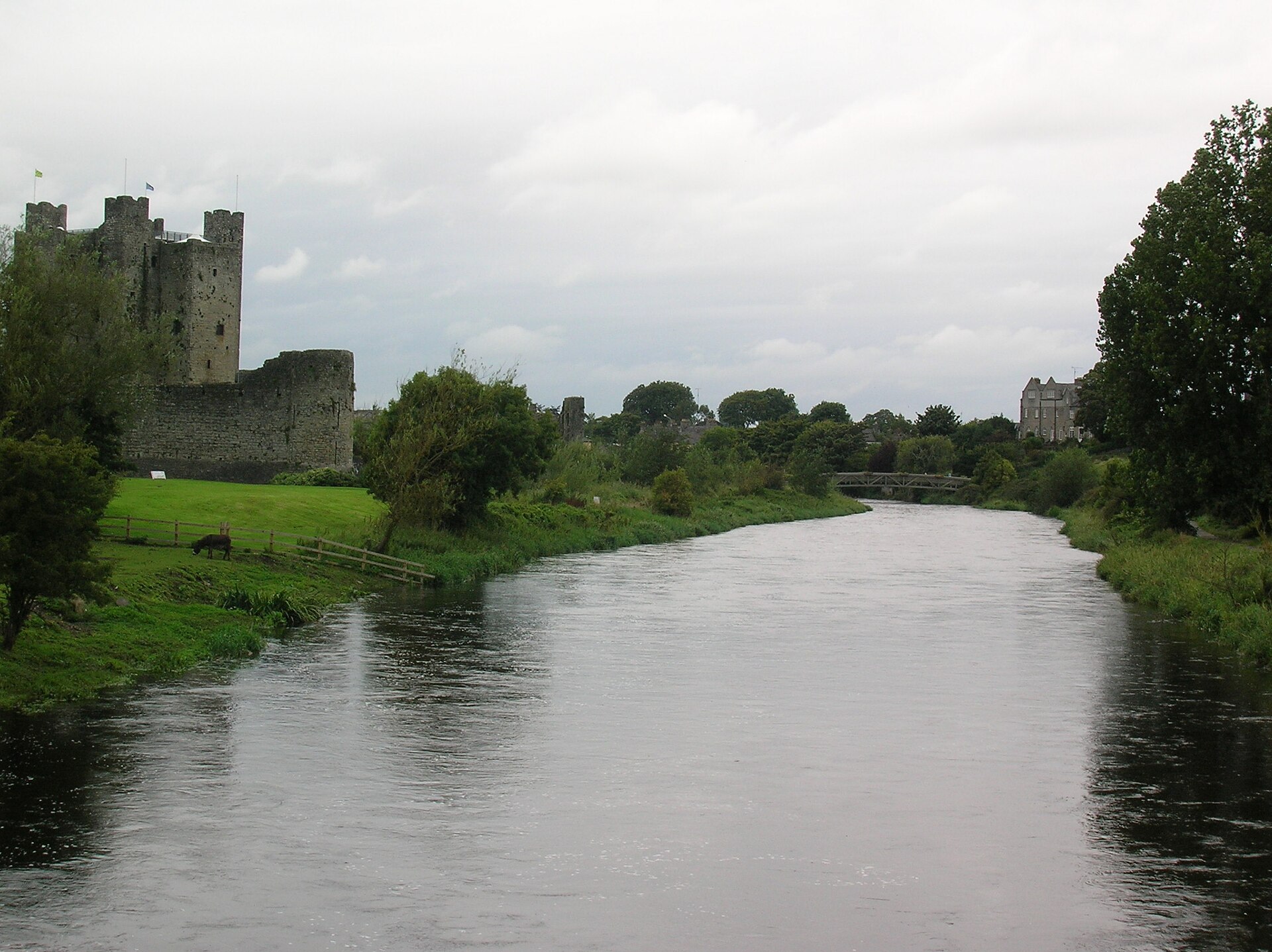
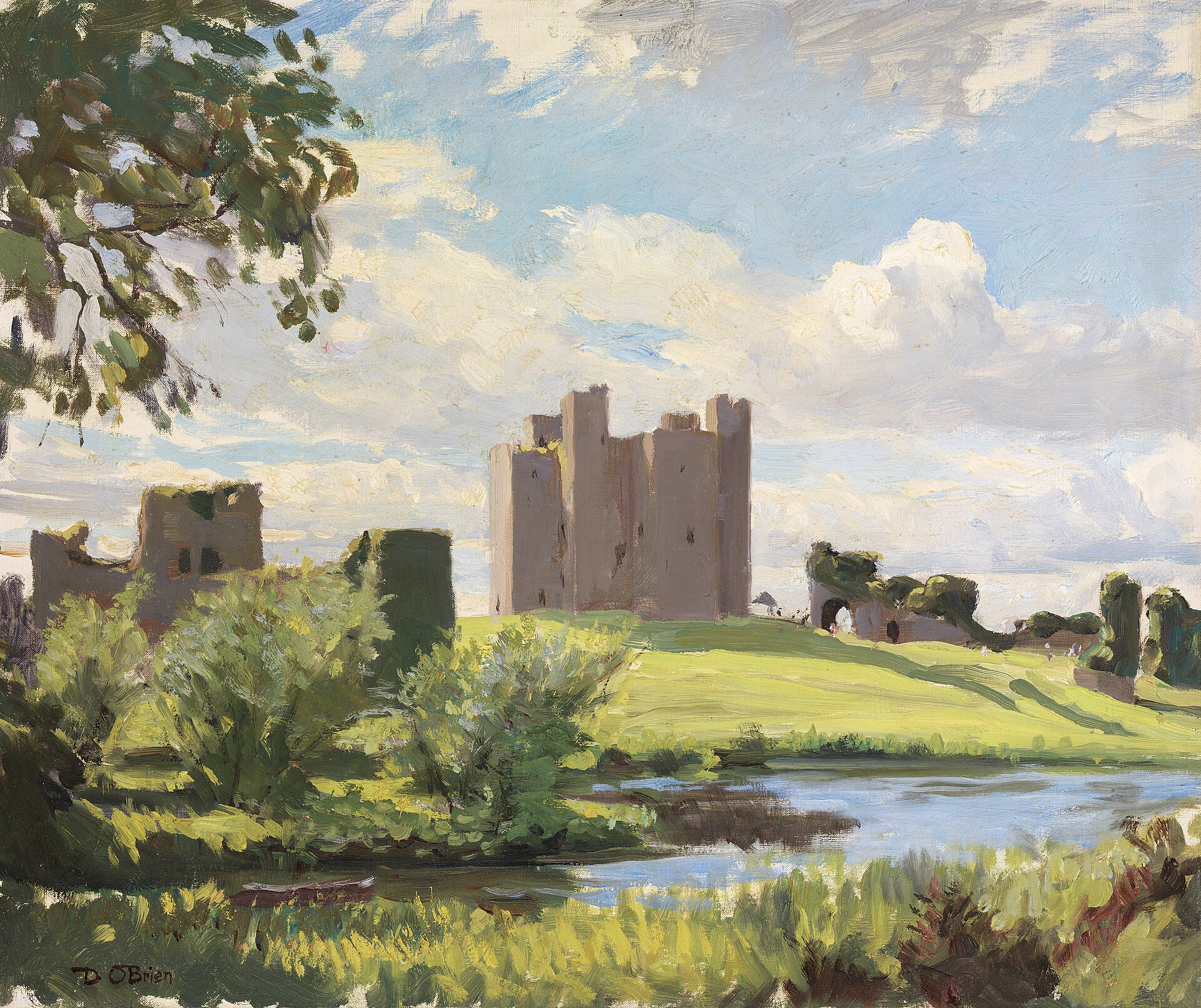
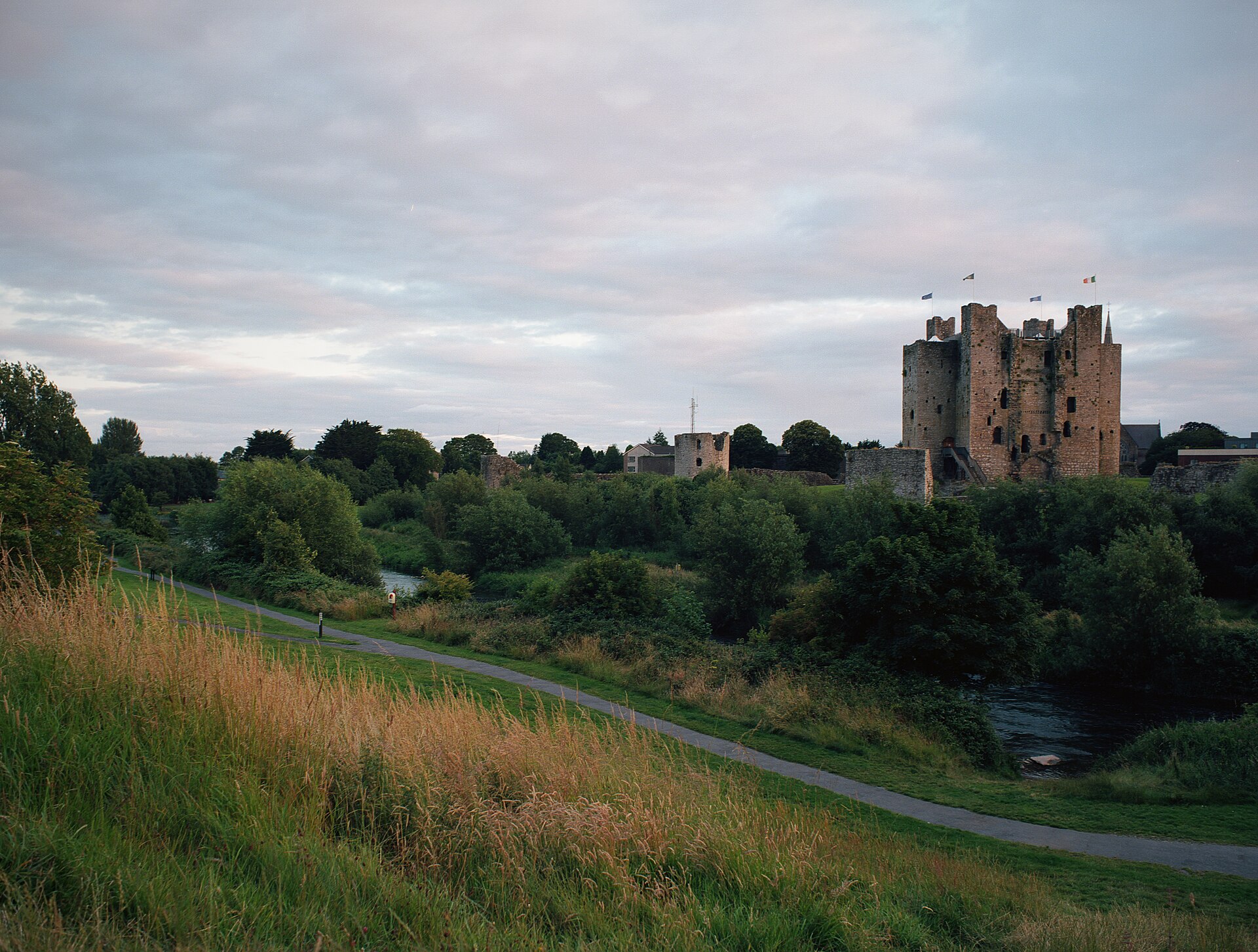
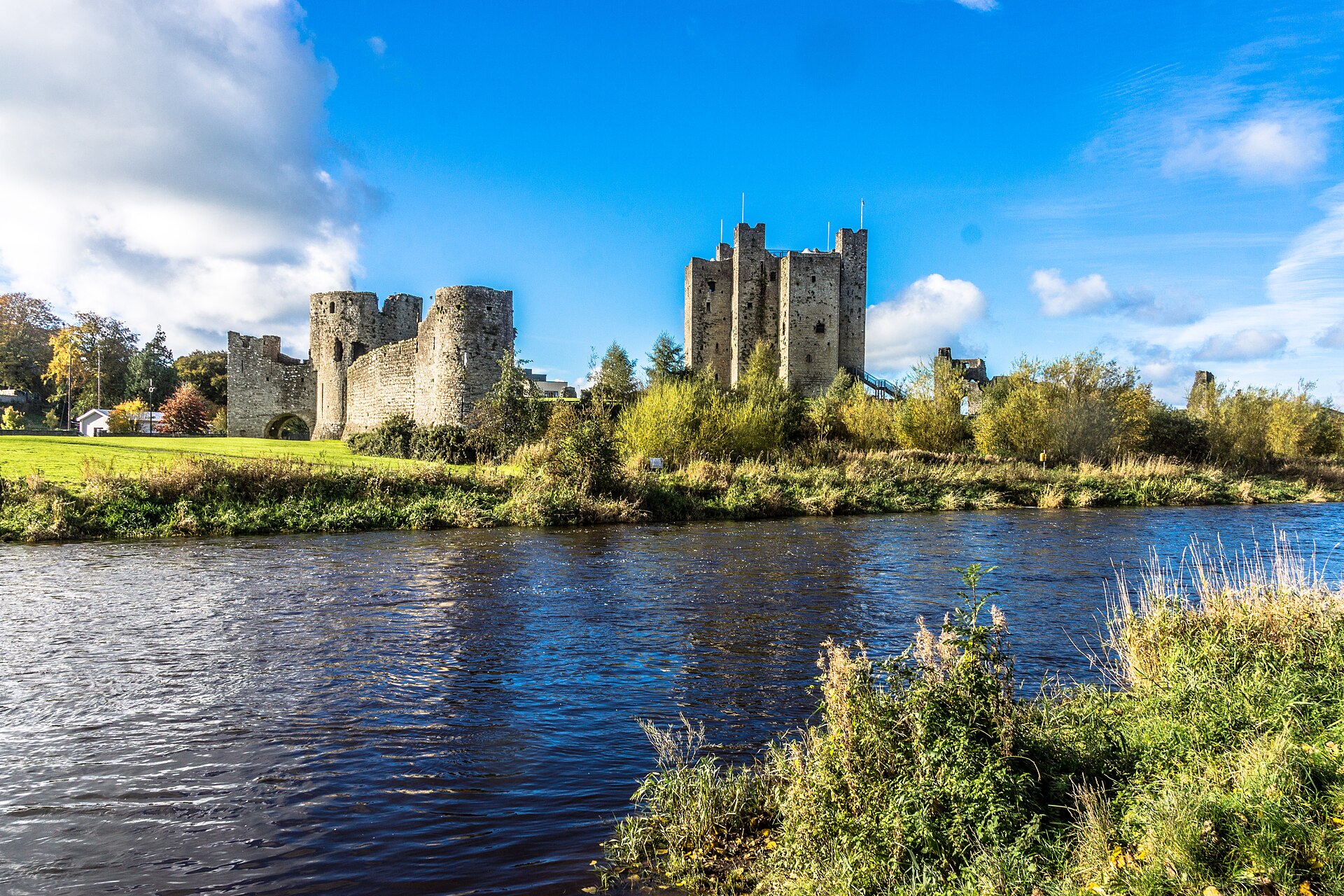
The River Boyne, which flows past Trim Castle, was central to the fortress and to the region. One of the most famous rivers in Ireland, the Boyne winds through a landscape rich in history, past ancient royal and sacred sites, and it gave the castle both protection and a link to the wider country. The river helped defend the fortress and connected it to the network of power in Norman Ireland.
The Boyne valley was, and is, one of the most historic landscapes in Ireland, home to the prehistoric passage tombs of Newgrange and the ancient royal hill of Tara, and steeped in legend and history stretching back thousands of years. By building at Trim, on the Boyne, the Normans planted their great castle in the very heart of this ancient and meaningful land.
The river also made Trim a place of strategic importance, controlling a crossing and the routes through the valley. Whoever held the castle commanded this vital passage, adding to the fortress’s value as a stronghold guarding the approaches into the heart of Ireland.
Today the sight of the great castle reflected in the waters of the Boyne is one of the classic images of Trim, and the river remains inseparable from the fortress it once helped to defend. To understand Trim is to understand its setting on this famous and historic river, in the ancient heartland of Ireland.
The river was everything. In an age before decent roads, water was the highway, and whoever controlled a crossing controlled the flow of people, cattle and coin through the whole region. Trim’s walls hug the Boyne deliberately, using the water as a natural moat on one side and forcing anyone approaching to come within range of the towers. The town that grew up in the castle’s shadow lived off that same traffic, its markets and mills turning the river’s power into money that helped pay for the very walls protecting them.
It is worth remembering, too, that the Boyne valley was already sacred ground long before any Norman set eyes on it. A short distance downstream lie the great passage tombs of Newgrange and Knowth, older than the pyramids of Egypt, and the hill of Tara where the high kings were once crowned. The Normans planted their fortress in a landscape already thick with a thousand generations of memory, and something of that deep antiquity still clings to the place today.
Decline and Long Slumber
Like so many great castles, Trim declined in importance as the centuries passed and the world changed. As English control in Ireland shifted and the nature of warfare and government evolved, the great fortress gradually lost its central role, and it slid slowly into disuse and decay. Its days as a mighty centre of power came to an end, and the castle fell quiet.
Over the long centuries of its decline, Trim decayed into a ruin, its walls and towers weathering above the Boyne, its once-busy interior falling silent. Yet its very size and strength ensured that much survived, and the great keep and the long circuit of walls remained standing, a monument to the vanished age of the Norman conquest.
For a long time the castle stood as a romantic ruin, admired by travellers and artists but no longer a place of power, its glory days long behind it. The mighty fortress that had held down a great lordship and hosted parliaments and princes had become a quiet relic of a distant age.
But Trim was too important and too impressive to be forgotten, and in time it would be recognised, conserved, and celebrated as one of the great monuments of medieval Ireland. Its long slumber would end, and the castle would find new fame and new visitors in the modern age.
Braveheart and a New Fame
Trim’s modern revival owes much to the world of film. In the 1990s, the castle was chosen as a location for a famous and hugely popular epic about the struggle for Scottish freedom, and its great medieval walls and keep provided a spectacular and authentic backdrop for the film. Scenes shot at Trim brought the castle to the attention of audiences around the world.
The film’s enormous success turned Trim into a place of pilgrimage for its many fans, drawn to see the real castle behind the memorable scenes. This new fame brought crowds of visitors and a fresh appreciation of the castle’s scale, history, and beauty, giving the ancient fortress a lively new chapter in its long story.
There is a certain irony in a great symbol of the Norman conquest of Ireland standing in for the fortresses of a film about Scottish independence, but it speaks to the castle’s magnificent, unmistakably medieval character. Only a fortress as large and as authentic as Trim could serve so convincingly as a stage for such an epic.
Thanks in part to this cinematic fame, Trim today is one of the most visited castles in Ireland, its car park busy with travellers eager to explore the largest Norman fortress in the country. The film brought new life and new audiences to Trim, and it helped ensure that this great monument would be cherished and enjoyed by a new generation.
When Mel Gibson arrived in 1994 to film Braveheart, Trim suddenly found itself playing the role of medieval York, of London, and of assorted English strongholds, its very Irishness disguised beneath the story of a Scottish rebellion against the English crown. The irony was not lost on locals. Here was a castle built by the English conquest of Ireland standing in for the English enemy in a film about resisting exactly that kind of conquest. Hundreds of extras from the surrounding towns pulled on chainmail and marched across the fields, and for a few weeks the sleepy county town buzzed like a film capital.
The film did something no guidebook ever could. It put Trim on screens around the world, and visitors began arriving who had never heard the name before but recognised the silhouette from the movie. The castle had spent centuries slowly crumbling in obscurity, and then, almost overnight, it became a destination. It is a strange kind of afterlife for a fortress, to be saved from anonymity not by a battle or a king but by a film crew.
An Ancient and Storied Landscape
Trim does not stand alone but in one of the most historic landscapes in all of Ireland, the valley of the River Boyne. This region was sacred and significant long before the Normans arrived, home to some of the greatest prehistoric monuments in Europe, above all the vast passage tomb of Newgrange, older than the pyramids of Egypt, and the ancient royal hill of Tara, seat of the legendary high kings of Ireland.
By building their great castle here, the Normans placed themselves at the very heart of this ancient and meaningful land, seizing a region charged with the deep history and legend of Ireland. The presence of Trim, a symbol of the new Norman order, amid these monuments of a far older world, gives the landscape an extraordinary depth of history.
For the modern visitor, this means that a trip to Trim can be combined with a journey through thousands of years of Irish history, from the prehistoric tombs of the Boyne to the royal hill of Tara to the mighty Norman castle itself. Few landscapes anywhere offer such a rich and layered encounter with the past.
So Trim is not just a great castle but part of a whole historic region, one of the most important in Ireland. Its setting in the storied Boyne valley, amid the monuments of ancient and medieval Ireland alike, makes it all the more remarkable, and adds greatly to the rewards of a visit.
Exploring Trim Castle Today
For the modern visitor, Trim is a wonderful castle to explore, its vast site offering a great deal to see and enjoy. You can walk the long circuit of the curtain walls, explore the towers and gates, and, above all, take a guided tour of the great keep, climbing to the top for the magnificent views over the Boyne and the town. Information and displays help bring the castle’s long and important history to life.
The scale of the site means there is plenty of space to wander and to appreciate the fortress from many angles, both within the walls and from the surrounding area. The setting beside the river, in the historic town of Trim, adds greatly to the experience, and the whole makes for a rich and rewarding visit.
Because it is so large and so complete, Trim is also an excellent place to understand the Norman conquest of Ireland and the great castles it produced. The fortress tells the story of that transformation directly, from the arrival of the de Lacys to the height of English power in Meath, and its ruins are a vivid record of that momentous age.
All of this makes Trim not just the largest but one of the most impressive and important castles in Ireland to visit. It is a place where the drama of the Norman conquest, the exercise of royal power, and the magnificence of medieval architecture all come together on a truly heroic scale.
Planning Your Visit
Trim Castle stands in the town of Trim, in County Meath, in the east of Ireland, within easy reach of Dublin, making it a very accessible destination and a popular day trip from the capital. The castle is right in the town, beside the River Boyne, and it is impossible to miss, dominating the little town with its great keep and walls.
Allow a couple of hours to do the castle justice, and try to take the guided tour of the keep, which is the highlight of any visit and the only way to explore the interior of the great tower. Wear comfortable footwear for the climb and the walk around the extensive site, and take time to enjoy the views over the Boyne. Trim combines wonderfully with a wider tour of the historic Boyne valley, with its ancient monuments at Newgrange and the Hill of Tara nearby, and it offers one of the greatest and most important medieval castle experiences in all of Ireland.
The castle sits at roughly 53.5548, -6.7896. Punch that into Google Maps and it will take you straight to Trim Castle in County Meath.
Nearby Castles
The Giant of Norman Ireland
Trim is the giant of Norman Ireland. Raised at the very moment the Normans seized the island’s ancient heartland, it is the largest Anglo-Norman castle in the country, its long walls and its extraordinary cruciform keep proclaiming, on a heroic scale, the power of the conquerors who built it. For centuries it stood at the centre of English rule in Ireland, a place of government and parliaments, of powerful lords and, according to legend, of a future king’s childhood.
To stand beneath its mighty keep, or to climb to the top for the view over the Boyne, is to feel the full weight of that history, and the sheer ambition of the men who built such a fortress in a newly conquered land. Brought back to fame by the movies and cherished today as one of Ireland’s greatest monuments, Trim remains what it has always been: a colossus of stone on the banks of the Boyne, and one of the finest castles anywhere in Ireland.
You May Like

Château d’Amboise: Where the French Renaissance Was Born


