There is no other castle in the world quite like Chenonceau. Most great chateaux sit proudly on a hill or beside a river; Chenonceau does something far more daring. It steps out over the River Cher on a row of graceful arches and crosses it entirely, its long gallery floating above the current so that the whole building seems to hover between reflection and sky. Approach it down its avenue of trees and you feel you are walking toward something half real, half enchanted.
But the magic of Chenonceau is not only in its stones. This is the chateau that history handed, again and again, to women. For five centuries it was shaped, saved, expanded and cherished by a remarkable succession of them, so that the French know it fondly as the Chateau des Dames, the Ladies’ Castle. Its story is really their story: a royal mistress and a jealous queen, a grieving widow in white, and an Enlightenment hostess who charmed a revolution.
It is also a place where the great currents of French history flowed right through the building. Kings and favourites schemed here, philosophers dined here, wounded soldiers were nursed here, and in the darkest days of the twentieth century its gallery became a secret bridge to freedom. Let’s cross the water into Chenonceau and meet the women who made it.

In This Article
- A Castle on the Water
- From Fortress to Renaissance Jewel
- Diane de Poitiers and the Bridge
- Catherine de’ Medici Takes Her Revenge
- The Long Gallery Over the River
- The White Lady of Chenonceau
- An Enlightenment Salon
- How Chenonceau Survived the Revolution
- A River of Reflections
- The Chocolate Family and a New Golden Age
- A Hospital and a Bridge to Freedom
- Wandering Chenonceau Today
- Planning Your Visit to Chenonceau
A Castle on the Water
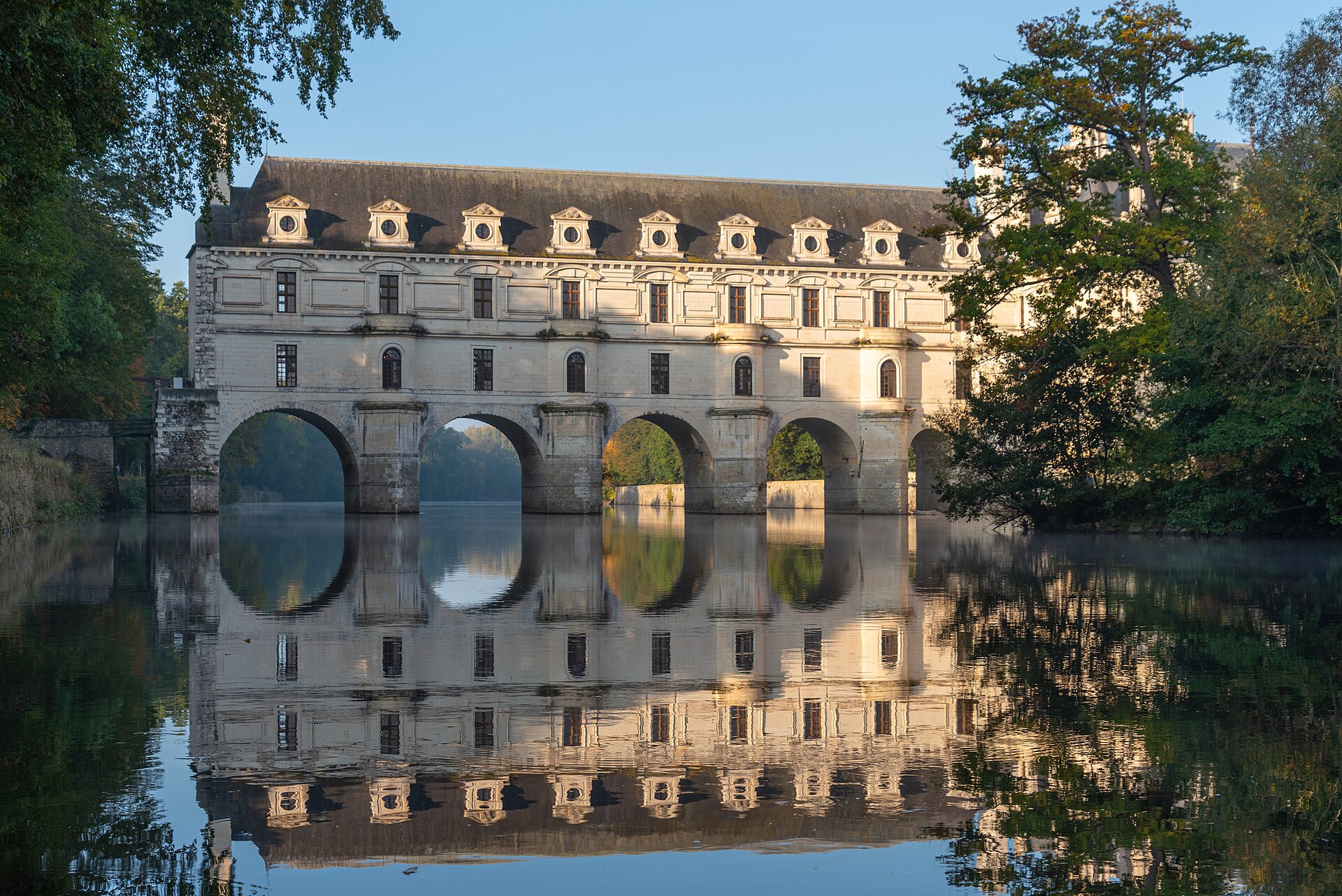
The first thing anyone notices about Chenonceau is that it is built on a bridge. The main body of the chateau stands on the foundations of an old mill on the north bank of the Cher, and from there a long gallery strides across the river on five arches to reach the far side. No other chateau of the Loire does anything so bold, and the effect, especially when the water is still and the whole structure doubles in its own reflection, is unforgettable.
This daring relationship with the river was not there from the start but grew over generations, as one owner after another added to what the last had built. The result is a building that feels less designed than grown, a thing that reached out across the water in stages until it had made the river part of itself. Standing on the bank, watching the current slide beneath the arches, you understand at once why Chenonceau has enchanted visitors for so long.
The setting does something to the spirit of the place. Water surrounds it, softens it, mirrors it, and fills its rooms with a shifting, silvery light quite unlike the light in any castle built on dry land. Chenonceau is a Renaissance palace, a monument of French history and a piece of pure romance all at once, and it owes that magic, above everything, to the river it so gracefully bestrides.
Seen from the air, the logic of the whole composition becomes clear: the older block of the château anchored on the north bank, the long gallery reaching out across the five arches, and the gardens spread on either side like wings. It is a plan that no single architect ever drew, assembled instead across generations, and yet it hangs together with a rightness that feels almost inevitable, as though the river had always been waiting for exactly this building.
For all its fame, Chenonceau remains a place that surprises people in person. No amount of photographs quite prepares you for the moment you first see the gallery striding out across the water, or for the strange, calming quiet of standing inside a room suspended over a flowing river. It is a building that has to be experienced to be believed, and that first sight of it has been stopping visitors in their tracks for the better part of five hundred years.
From Fortress to Renaissance Jewel
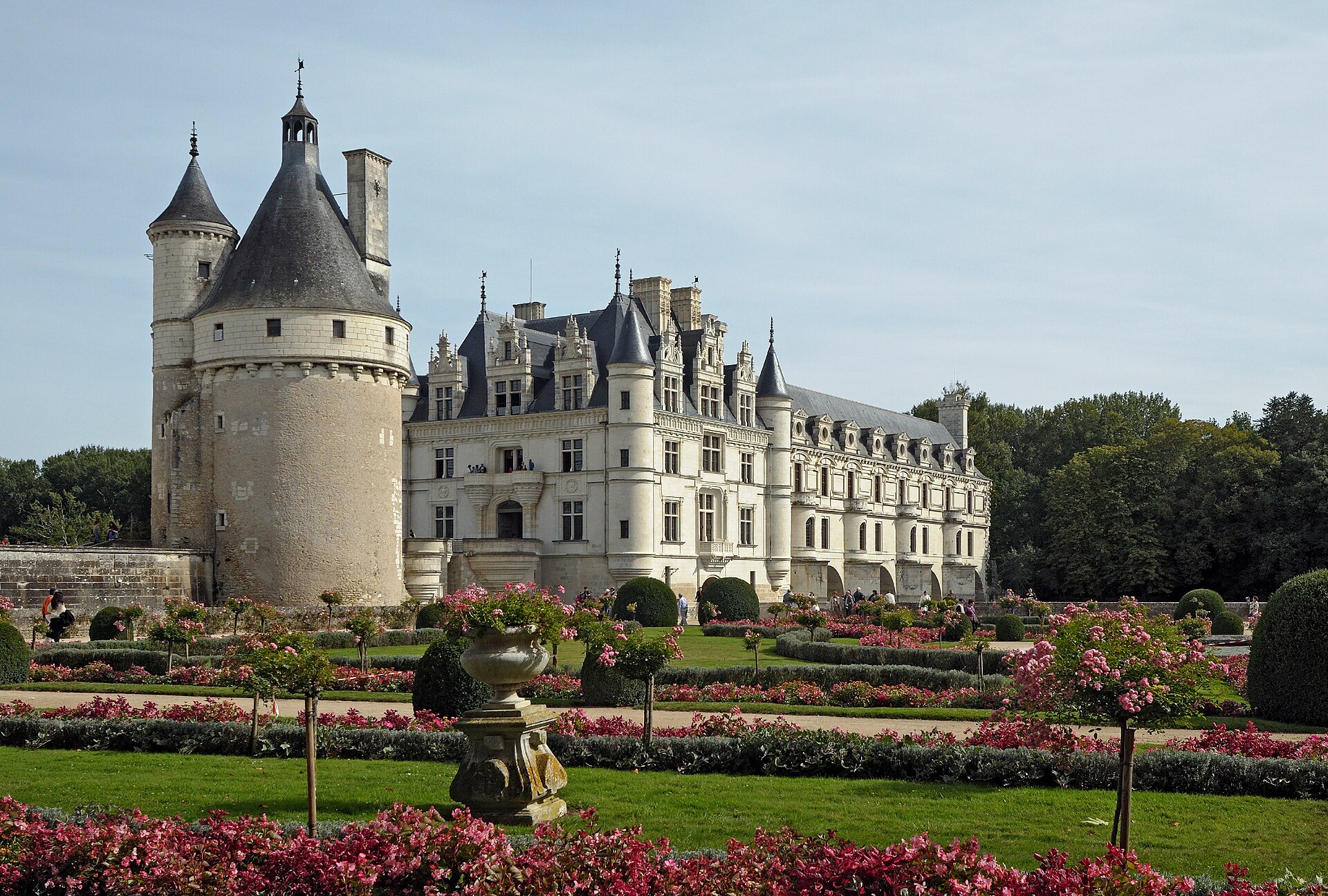
Long before the elegant chateau we see today, there was a medieval fortress and mill on this spot, held during the troubled years of the Hundred Years War by the Marques family. That older, grimmer castle controlled a crossing of the Cher and had all the hard practicality of its violent age. Only one piece of it survives into the present, a sturdy round tower, the Tour des Marques, that still stands beside the newer building like a memory of harder times.
The transformation came in the early sixteenth century, when a wealthy royal financier named Thomas Bohier acquired the estate through years of patient, ruthless legal manoeuvring, buying up debts and neighbouring lands until the impoverished Marques family had no choice but to sell. Bohier and his wife, Katherine Briconnet, swept away most of the old fortress and raised in its place a graceful new Renaissance residence, keeping only the old tower as a reminder of what had gone before.
It is telling that even at this first stage a woman’s hand was at work. With Thomas often away on the king’s business, it was Katherine Briconnet who oversaw much of the building, making decisions about design and layout that shaped the chateau’s character. The pattern that would define Chenonceau, of women taking charge and leaving their mark, was set at the very beginning, and it would repeat itself down the centuries.
The keeping of the old Marques tower was more than sentiment. In an age that prized lineage and continuity, a visible link to the medieval past lent the new château an air of ancient legitimacy, softening the fact that its builders were newly rich financiers rather than old nobility. The tower, remodelled with fashionable Renaissance details, became a bridge between the violent world of the Hundred Years War and the refined new age that was rising in its place.

Diane de Poitiers and the Bridge
In 1547 Chenonceau passed into the hands of one of the most famous women of the French Renaissance. King Henri II gave the chateau to his lifelong mistress, Diane de Poitiers, a woman of legendary beauty and formidable intelligence who, though nearly twenty years the king’s senior, held his devotion completely. Chenonceau became her domain, and she governed it with the skill of a born administrator.
Diane was no mere ornament. She took the estate’s farms and vineyards firmly in hand, turning Chenonceau into a profitable concern, and she laid out magnificent formal gardens along the bank of the Cher, geometric beds and fountains that still bear her name today. Above all, it was Diane who first had the idea of reaching across the river, commissioning a bridge from the chateau to the far bank so that she could enjoy the hunting grounds beyond.
That bridge was the seed of everything Chenonceau would become. Diane built the crossing but did not live at the chateau long enough to crown it, for in 1559 her royal protector was killed in a tournament, struck through the eye by a splintered lance. With Henri dead, Diane’s power evaporated overnight, and the queen she had so long overshadowed was waiting to take her revenge, and her chateau.
Diane’s relationship with Henri II was one of the most extraordinary of the age. She had known him since he was a boy, and though she was so much older, she held a place in his heart and his counsels that his own queen could only envy. He signed some documents with a monogram that entwined their initials, and he showered her with gifts, of which Chenonceau was the greatest. To Diane, the château was both a token of royal love and a serious economic asset, and she treated it as both.
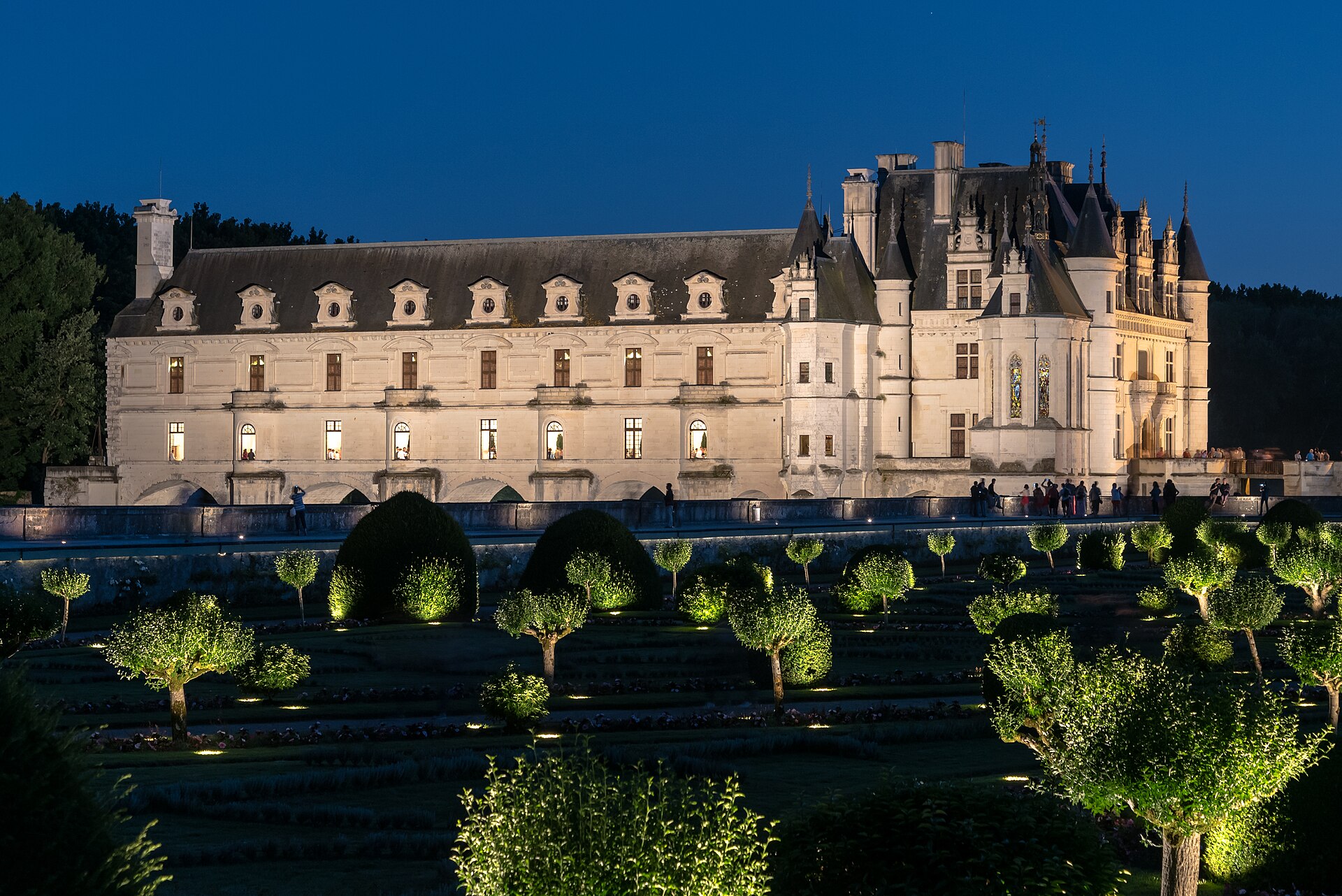
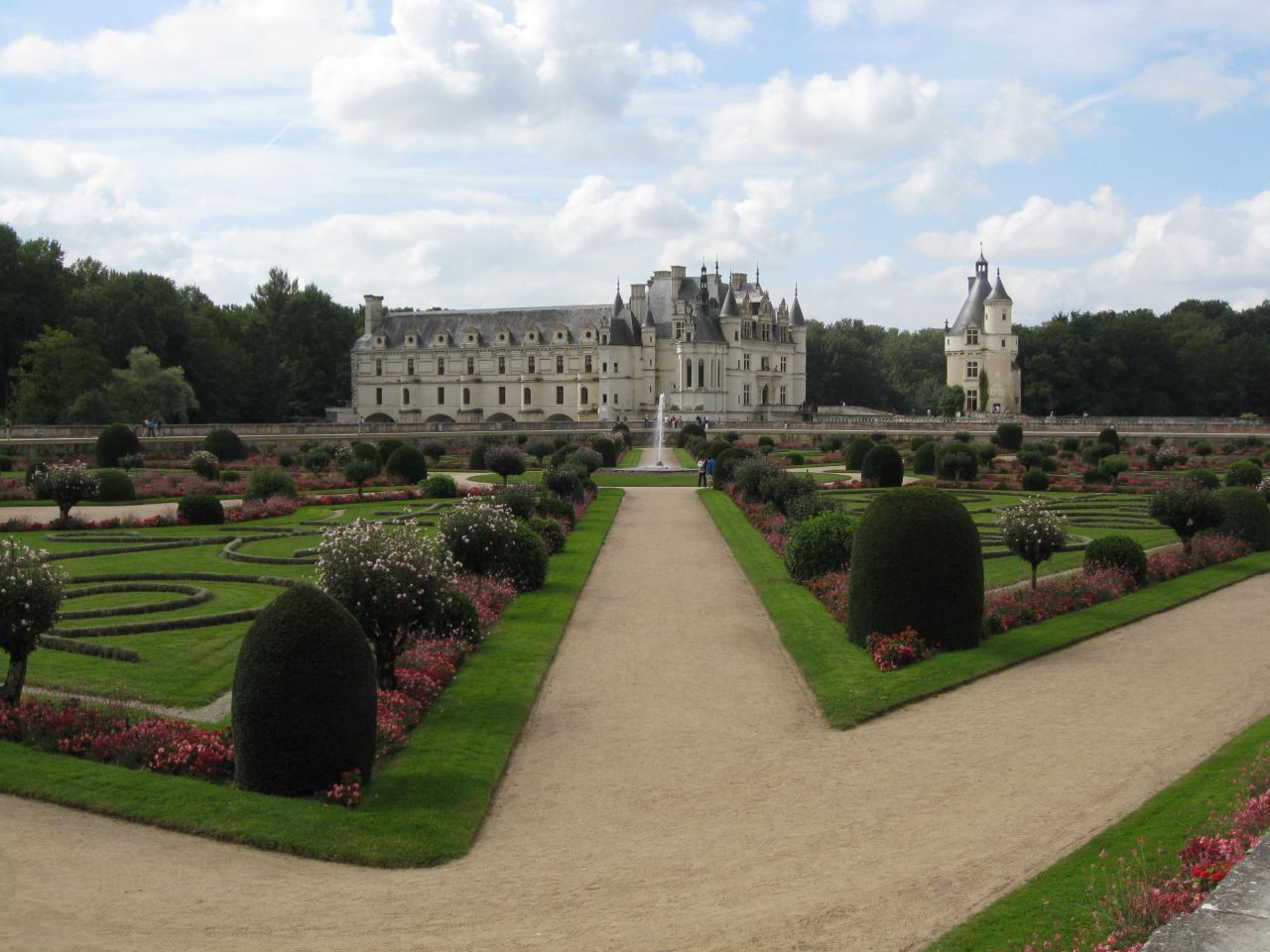
Her gardens on the bank of the Cher were a marvel of the age, vast geometric parterres protected from the river’s floods by raised terraces, filled with fruit trees, vegetables and flowers. They were as much a working estate as a pleasure ground, reflecting Diane’s practical, managing nature. Restored in later centuries, they still give visitors a vivid sense of the ambition of the woman who first laid them out.
Catherine de’ Medici Takes Her Revenge
The queen who had waited so long was Catherine de’ Medici, wife of the dead king and one of the most powerful women in European history. For years she had watched Diane de Poitiers enjoy the château she coveted, and the moment her husband was dead she moved. She forced Diane to give up Chenonceau, offering her another château in exchange, and at last took possession of the place she had always wanted for herself.
Catherine made Chenonceau the centre of her power and her pleasure. It was she who completed Diane’s unfinished bridge by building on top of it the great two-storey gallery that is the château’s crowning glory, a long, light-filled room stretching right across the Cher. She threw spectacular parties here, dazzling entertainments with fireworks and feasting designed to impress the court and bolster the fragile authority of her sons, who ruled France in turbulent, blood-soaked times.
Under Catherine, Chenonceau became a stage for the theatre of royal power. She used its beauty as a political tool, a way of overawing rivals and celebrating her family, and she poured money and imagination into making it more magnificent than ever. The rivalry between the king’s mistress and the king’s wife had shaped the very architecture of the place, each woman adding her own layer, so that the building itself became a monument to their long, cold contest.
Catherine de’ Medici is one of the most formidable and most maligned figures in French history. An Italian bride brought to France as a girl, long overshadowed as queen, she became after her husband’s death the effective ruler of France for years, steering the kingdom through the terrible Wars of Religion as regent for her young sons. Chenonceau was her retreat and her theatre, the place where she could display the magnificence of the crown even as the country tore itself apart.
Her famous festivities at the château were carefully calculated political events. The first fireworks ever seen in France are said to have been set off here, and her entertainments mixed banquets, music, mock battles and elaborate allegories designed to project an image of royal power and unity. Behind the spectacle lay a shrewd political mind that understood, better than almost anyone, how beauty and display could be turned to the service of the state.
The exchange that forced Diane out was dressed up in the language of a fair swap, but no one was fooled about who held the power. Catherine offered the château of Chaumont in return for Chenonceau, and Diane, stripped of royal protection, had little choice but to accept. It was a cold and complete victory, and it gave Catherine at last the prize she had watched another woman enjoy for so many years.

The Long Gallery Over the River
The gallery that Catherine raised on Diane’s bridge is the heart of Chenonceau and one of the most beautiful rooms in France. Some sixty metres long and lit by a double row of windows down each side, it runs the full width of the river, so that walking its length you have the Cher flowing directly beneath your feet on both sides. The floor is a chequerboard of pale stone and dark slate, and the light pouring off the water fills the whole space with a gentle, restless shimmer.
In its heyday this was a ballroom and a place of grand receptions, where the court gathered beneath the windows and the music echoed out over the river. To stand in it now, with the water gleaming on either hand, is to feel the strange enchantment that has drawn visitors for centuries. It is a room that seems to belong as much to the river as to the château, a bridge and a ballroom fused into one astonishing space.
This gallery would go on to play a role its builders could never have imagined, serving as a hospital ward in one world war and, in another, as a literal crossing point between danger and safety. But even setting its later history aside, it remains a masterpiece, the single feature that lifts Chenonceau above every other château of the Loire and turns a beautiful house into something close to a miracle.
The gallery’s design is deceptively simple, but every detail was considered. The rhythm of the windows, the pale flood of light, the chequerboard floor and the fine proportions all combine to create a space that feels both grand and serene. Musicians would have played from one end while dancers filled the floor, the whole scene doubled in the dark water visible through the windows on either side, an effect no ballroom on dry land could ever match.
It is worth pausing, too, on the sheer engineering daring of the thing. To carry a two-storey stone gallery across a flowing river on a row of arches, and to have it stand firm for well over four hundred years, was no small feat. The builders of Chenonceau married beauty and boldness in equal measure, and the gallery remains as much a triumph of nerve as of taste.

The White Lady of Chenonceau
When Catherine de’ Medici died, Chenonceau passed to her daughter-in-law, Louise of Lorraine, the wife of King Henri III. Soon afterwards, in 1589, Henri was assassinated, and the young queen was plunged into a grief from which she never truly recovered. She withdrew to Chenonceau and spent her remaining years there in mourning, becoming one of the most haunting figures in the château’s long history.
Louise dressed entirely in white, the colour of royal mourning in France, and so earned her lasting nickname, the White Lady. She had her private rooms hung with black and decorated with mournful symbols, tears and crowns of thorns, and she spent her days in prayer and remembrance for her murdered husband. For years the woman in white drifted through the beautiful rooms of Chenonceau like a living ghost, turning the palace of festivities into a place of sorrow.
Her story adds a note of melancholy to the château’s romance, a reminder that behind the glittering parties and the political triumphs lay real human grief. The rooms she mourned in can still be seen today, and something of her sadness seems to linger there. In a building shaped by so many strong women, Louise of Lorraine stands out as the one whose mark was made not by ambition but by the depth of her loss.
Louise of Lorraine had been a gentle, devoted wife, and the sudden murder of her husband by a fanatic’s knife shattered her completely. In an age when royal widows were expected to mourn, she took mourning to an extreme that has fascinated visitors ever since, sealing herself away with her grief in rooms deliberately made sombre and dark. Her story is a reminder that Chenonceau, for all its beauty, was also a place where real tragedies were lived out.
Her mourning apartment, restored to something like its original gloom, remains one of the most affecting rooms in the château, its dark hangings and sombre emblems a startling contrast to the light and colour elsewhere. It stands as a memorial not just to one woman’s grief but to the human cost that so often lay behind the glittering surface of royal life.

An Enlightenment Salon
In the eighteenth century Chenonceau found another remarkable mistress, and with her a whole new kind of glory. Louise Dupin, a cultivated and charming woman married to a wealthy tax farmer, made the château a gathering place for the finest minds of the French Enlightenment. Under her, the rooms that had once echoed with royal intrigue filled instead with conversation, ideas and wit.
The guests who came to Louise Dupin’s salon at Chenonceau read like a roll-call of the age. The philosopher Voltaire was among those drawn to her table, and Jean-Jacques Rousseau, the great thinker of the coming revolutionary age, actually worked here as a tutor and secretary, later recalling his time at the château with deep affection. For a while Chenonceau was one of the intellectual centres of France, a place where the ideas that would reshape the world were argued over dinner.
Louise Dupin loved Chenonceau and lived to a great age within its walls. Her long tenure gave the château a period of calm cultivation between the storms of royal politics and the coming upheaval of revolution, and she is remembered fondly as the literary lady of Chenonceau. It was also she who would, in the château’s hour of greatest danger, find a way to save it from destruction.
Rousseau’s time at Chenonceau left a lasting impression on him, and he wrote warmly of the good living and good company he enjoyed there, joking that he grew fat on the château’s excellent food. It was in this cultivated, comfortable world, poised between the old aristocratic order and the revolutionary ideas beginning to stir, that some of the thinking that would shake France to its foundations was quietly nurtured, in the salons of a château that would somehow survive the storm to come.

How Chenonceau Survived the Revolution
When the French Revolution swept across France, it fell like a storm on the châteaux of the old order. Symbols of aristocracy and royal privilege were attacked, looted and burned across the country, and a building as bound up with kings and queens as Chenonceau might have seemed an obvious target for the fury of the mob. That it survived at all is thanks, once again, to a woman.
The elderly Louise Dupin was beloved in the surrounding countryside, respected for her kindness and her long connection to the community, and that goodwill helped shield the château. There is also a famous story that Chenonceau was spared because it was the only bridge across the Cher for miles, too useful to the local people to destroy, and that its chapel was tactfully repurposed to avoid provoking revolutionary anger. Practicality and affection together kept the wreckers away.
So while grander and prouder houses were reduced to blackened ruins, Chenonceau came through the Revolution almost untouched, its gallery, its rooms and its treasures preserved. It is a striking thing that a château so closely tied to the monarchy should have survived the age that destroyed the monarchy, and it survived because the woman who held it was loved. Few episodes capture the peculiar magic of the Ladies’ Castle so well.
The survival of Chenonceau through the Revolution is one of those small miracles of history that turned on human relationships rather than grand events. Where fear and resentment brought down so many great houses, here affection and usefulness held the mob’s hand. It is a quietly hopeful story, and a reminder that the fate of even the greatest buildings often rests, in the end, on how the people around them feel about those who live within.

A River of Reflections
Part of what makes Chenonceau so photographed and so beloved is the way it plays with water and light. The château and its gallery rise directly from the Cher, and on a calm day the river gives back a perfect double of the whole building, arches and windows and towers repeated upside down in the glassy surface. It is one of the most famous views in France, and no photograph ever quite does it justice.
The gardens on either bank complete the picture. Diane de Poitiers’ garden and, opposite it, the garden later associated with Catherine de’ Medici frame the château with colour and geometry, their beds and fountains changing with the seasons. Together with the tree-lined avenue of approach, they turn the whole estate into a carefully composed landscape, designed over centuries to show the building off to its very best advantage.
Wandering the banks of the Cher, you see Chenonceau shift and change with every step, now floating on the water, now framed by trees, now doubled in the river. It is a building made to be walked around and admired from every angle, and it rewards the effort at each turn. This constant dialogue between stone and water is the deepest source of the château’s enchantment.
Photographers and painters have long been drawn to this play of light and water. The great novelist Gustave Flaubert, who visited in the nineteenth century, was captivated by the château’s dreamy beauty, and countless artists since have tried to capture the way it floats upon the Cher. It is a building that seems to change its character with the weather and the hour, austere in grey light, golden at sunset, and almost weightless when morning mist rises off the river.

The Chocolate Family and a New Golden Age
After the Dupins, Chenonceau passed through several hands and one determined restorer, Marguerite Pelouze, who poured a fortune into returning the château to what she imagined was its Renaissance glory. Her ambitions eventually outran her money, and after financial ruin the estate changed owners again, until in 1913 it was bought by a family whose name every French child knew: the Meniers, the great chocolate manufacturers.
The Menier family brought new wealth and new care to Chenonceau, and they own it to this day, one of the very few great French châteaux still in private hands and still lived with as a family treasure rather than a mere museum. Under them the château has been lovingly maintained, its rooms furnished, its gardens tended and its long history honoured, so that visitors today experience a place that feels cherished rather than embalmed.
It is fitting that a château so long shaped by strong personalities should have found, in the modern age, a family willing to devote themselves to its keeping. The Meniers restored and preserved not just a building but a whole living story, and it was under their ownership that Chenonceau would meet its greatest test, when two world wars in turn reached its doors and its extraordinary gallery was called upon to serve.
The Menier family’s long stewardship has given Chenonceau something rare among great monuments: continuity of care and a genuine sense of life. Because it has remained a lived-with family possession rather than passing entirely into state hands, the château has kept a warmth that purely institutional sites often lose, its rooms furnished and flowered, its story told with evident love by those who feel themselves its custodians rather than merely its managers.
A Hospital and a Bridge to Freedom
During the First World War, the Menier family turned the great gallery of Chenonceau into a military hospital, and the long room that had once hosted royal balls filled instead with rows of beds for wounded soldiers. The family paid for the hospital themselves, and thousands of injured men were cared for here, beneath the windows and above the quiet flowing of the Cher, in one of the most beautiful wards any hospital ever had.
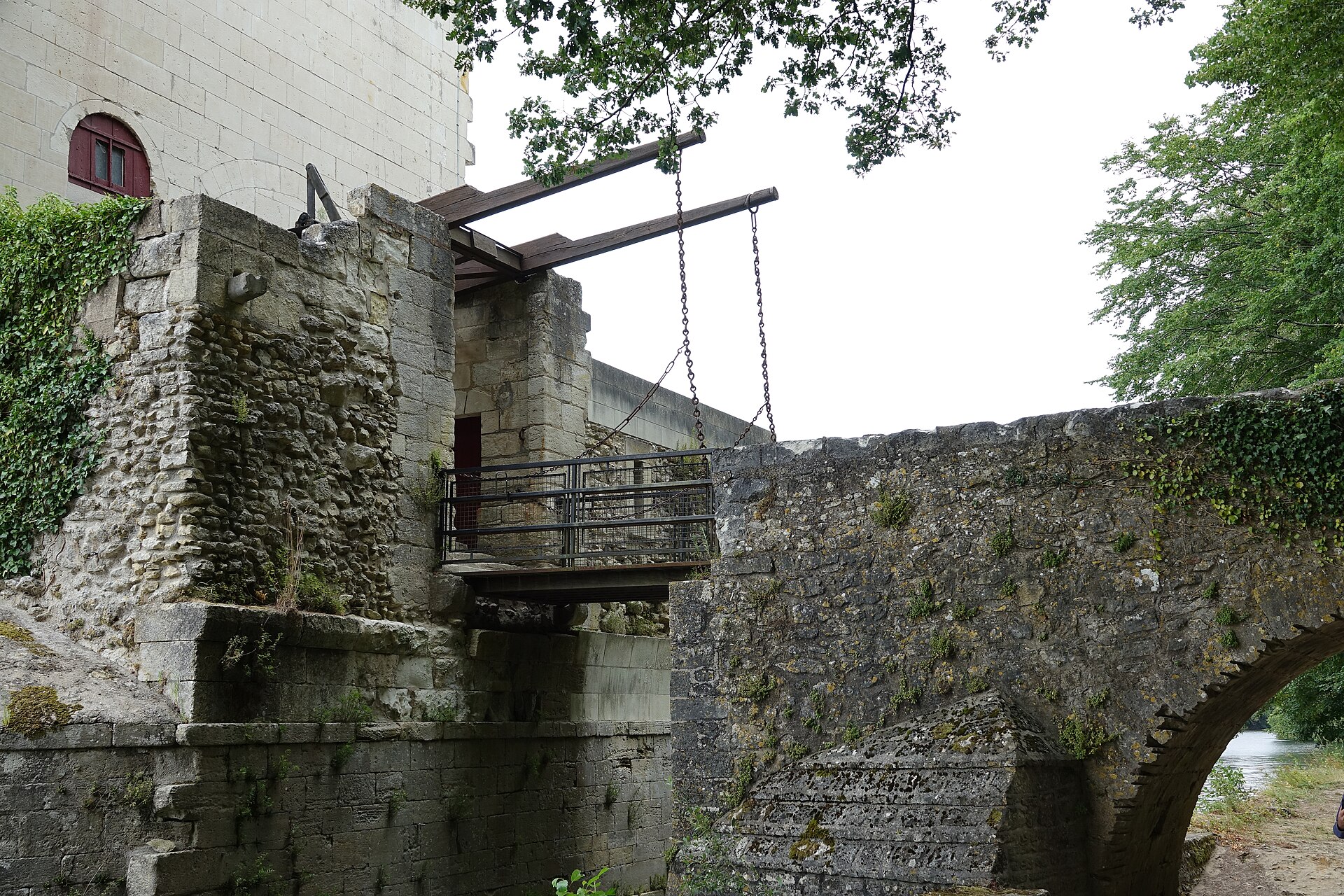
The Second World War gave the gallery an even more dramatic role. When France was divided after the defeat of 1940, the demarcation line between German-occupied France and the nominally free zone ran, astonishingly, right along the River Cher at this very point. The main door of the château stood in the occupied zone, but the far end of the gallery, across the river, opened into free France. The building was, quite literally, a bridge between captivity and freedom.
That accident of geography turned Chenonceau into an escape route. People slipped into the château on the occupied side, walked the length of the gallery over the water, and emerged on the free bank beyond the reach of the occupiers. For those fleeing danger, the beautiful room built for a Renaissance queen became a corridor to safety, and its arches carried more than one desperate traveller across the river to liberty.
The hospital of the First World War was no token gesture. Over the course of the conflict the Menier family cared for thousands of wounded soldiers here, equipping the wards at their own expense and staffing them properly, so that the gallery over the Cher became a place of healing on a serious scale. Photographs from the period show the great room lined with hospital beds, an image that fuses the château’s beauty with the suffering of a generation in the most poignant way.
The Second World War role was more perilous still. Living and working on a demarcation line was dangerous, and the family that owned Chenonceau took real risks in a building watched by the occupying authorities. That the gallery could be used to pass people from the occupied zone into free France depended on nerve and discretion, and it turned an architectural curiosity, a house that happened to bridge a river, into something close to a lifeline in a time of fear.
Wandering Chenonceau Today
Today Chenonceau is one of the most visited châteaux in all of France, second only to Versailles, and it wears its fame gracefully. Visitors approach down a long, tree-lined avenue before crossing to the château itself, where they can explore the great gallery over the river, the richly furnished chambers of its famous mistresses, the vaulted kitchens built into the piers of the bridge, and the mourning rooms of the White Lady.
The gardens are a highlight in their own right. The formal parterres of Diane de Poitiers and of Catherine de’ Medici blaze with seasonal planting, and the wider estate offers walks, a maze, a farm and quiet corners along the banks of the Cher. The château is famous, too, for its magnificent floral arrangements, cut from its own flower garden and displayed throughout the rooms, a living touch that keeps the great house feeling warm and inhabited.
However long you spend here, it is the combination that lingers in the memory: the river and the reflections, the gallery full of light, and above all the extraordinary succession of women whose lives are written into every room. Chenonceau is not just a beautiful building but a story you can walk through, and it is a story that, more than almost any other castle can claim, belongs to its ladies.
The kitchens are a particular delight and easy to overlook. Built right into the piers of the bridge, down at the level of the water, they are a warren of larders, pantries, a butchery and a great range, all arranged so that supplies could be brought in by boat directly from the river. After the gilded rooms above, this glimpse of the working life that kept the château running is a welcome and very human surprise.
Planning Your Visit to Chenonceau
Chenonceau lies in the Indre-et-Loire department of the Loire Valley, near the little village of Chenonceaux, and it is one of the easiest of the great châteaux to reach, with its own railway station and good road connections from Tours and the other Loire towns. It is open every day of the year, and it makes a natural pairing with nearby Chambord and the other châteaux of the region for anyone exploring this astonishing corner of France.
Allow at least half a day to do the château justice. Beyond the famous gallery and the historic rooms, do not miss the great vaulted kitchens built into the piers below the bridge, the beautiful gardens of Diane and Catherine, and the flower workshop where the château’s celebrated arrangements are prepared. Arriving early or late in the day, when the light is soft and the crowds thinner, gives the best chance to enjoy the reflections on the Cher in peace.
You will find Chenonceau in central France, an easy day trip from Tours and a comfortable excursion from Paris. For exact directions to the gates, here is a map link to guide you there: 47.3249, 1.0705. However you come, the first sight of that long gallery striding out across the river is a moment you will remember for a very long time.
Castles Nearby
The Castle the Ladies Built
Chenonceau is a building unlike any other, a palace that steps out over a river and, in doing so, seems to step half out of the ordinary world altogether. But its true wonder is not only architectural. This is a place shaped, again and again, by extraordinary women, who built it, expanded it, mourned in it, filled it with ideas and saved it from destruction, each leaving her own layer on the beautiful whole.
To visit Chenonceau is to walk through five centuries of their lives, from the Renaissance financiers and royal favourites to the grieving White Lady, the Enlightenment hostess and the modern family who cherish it still. Above the quiet, endless flowing of the Cher, the Ladies’ Castle keeps their memory as gracefully as it keeps its own reflection, and it remains, by common consent, one of the loveliest buildings in the world.
You May Like
Mafra, the Palace a King Built From a Vow


One thought on “Château de Chenonceau: The Castle of the Ladies”