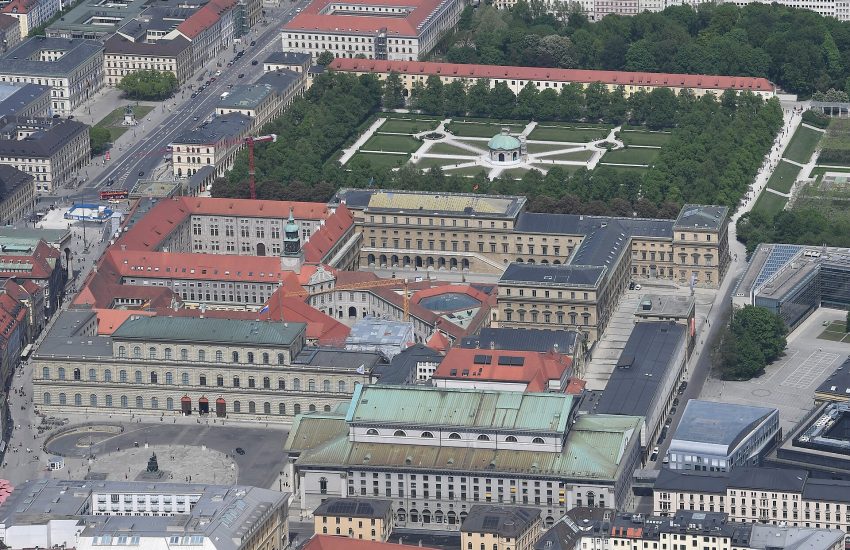
Most castles are content to guard one town or one stretch of coast. Dublin Castle set out to rule a whole country. For the better part of seven hundred years this was the single most powerful place in Ireland, the fortress from which kings, viceroys and administrators governed the island in the name of the English and later the British crown. To understand Irish history, you almost have to start here, in the heart of the capital, where a Norman stronghold slowly turned into a palace of power.
What you see today can be a little confusing at first, because Dublin Castle does not look much like the grim medieval fortress it once was. Fires, rebuilding and centuries of ambition have wrapped the old castle in elegant Georgian brick and grand state rooms, so that it feels more like a palace than a place of war. But look closer, and the fortress is still there: a squat medieval tower, the line of the old walls, the memory of a moat fed by a dark pool that gave the city its name.
This is a place of coronation robes and stolen crown jewels, of daring prison escapes and bloody rebellion, of viceroys dancing in candlelit ballrooms while a nation seethed outside the gates. It is where British rule in Ireland finally came to an end in 1922, handed over in a few quiet minutes that changed everything. Let’s step through the gates and walk through eight centuries of Irish history, one courtyard at a time.

In This Article
- A Castle Born from a Black Pool
- King John’s Command
- The Record Tower, a Survivor in Stone
- Silken Thomas and the Guns of Rebellion
- Red Hugh’s Daring Escape
- Fire and the Birth of a Palace
- Inside the State Apartments
- The Grandest Room of All
- The Chapel Royal
- The Riddle of the Crown Jewels
- Rebellion at the Gates
- The Day Power Changed Hands
- The Castle and Its Gardens Today
- Seeing Dublin Castle for Yourself
A Castle Born from a Black Pool
Dublin Castle owes its existence, and the city around it owes its name, to a pool of dark water. Where the little River Poddle met the broad River Liffey, it formed a deep, still, peaty pool that the Irish called Dubh Linn, the black pool. This was a natural harbour and a place of settlement long before any castle rose, used by the Gaelic Irish and then by the Vikings who founded the trading town of Dublin in the ninth century.
When the Normans swept into Ireland in the late twelfth century, they recognised at once that whoever held this spot held the key to the whole east coast. The site sat on high ground above the rivers, defensible on several sides by water, and perfectly placed to dominate the growing town. It was exactly the kind of position the Normans loved, and it was only a matter of time before they raised a proper stone castle here to make their grip permanent.
So the castle grew out of layer upon layer of earlier settlement, Gaelic, Viking and Norman, each drawn to the same strong ground beside the same black pool. The pool itself was eventually built over and largely forgotten, but its name lives on every time anyone says the word Dublin. Few capital cities can point to the exact patch of water that gave them their name, but in Dublin it lies right beneath the castle gardens.
It is worth dwelling on how unusual it is for a great capital to keep the physical memory of its own beginnings so intact. The dark pool of Dubh Linn was not just a convenient anchorage; it was a boundary and a meeting point, a place where river traffic gathered and where the earliest inhabitants could control who came and went by water. Whoever mastered that pool mastered the trade of the whole region, and trade, then as now, was where power began.
The Vikings who settled here in the ninth century built a longphort, a fortified ship-harbour, and from that rough base grew one of the most important trading towns in the whole Norse world. By the time the Normans arrived, Dublin was already a place worth fighting for, a walled town with a harbour, a mint and a hinterland. The castle, when it came, was not planting a flag in wilderness but seizing the controls of a city that had already been centuries in the making.
All of this makes Dublin Castle a place where you feel time folding in on itself. The Gaelic pool, the Viking harbour, the Norman fortress and the Georgian palace are not separate stories but a single continuous one, playing out on the same few acres of high ground above the river. Once you know that, the castle stops being a jumble of buildings and becomes a chronicle you can walk through.
King John’s Command
The castle as an institution begins with a royal order. In 1204 King John of England, the same John of Magna Carta and Robin Hood infamy, commanded that a strong castle be built in Dublin to defend the city, administer justice and hold his treasure. The work took shape over the following decades, producing a mighty walled fortress with a great gate and powerful round towers at the corners, ringed by a moat fed from the Poddle.
This was a textbook Norman castle of its age, a rectangle of high curtain walls with drum towers guarding each angle, designed to overawe the townspeople and repel any Gaelic Irish attack from the mountains to the south. For the medieval English administration in Ireland, this was home base, the secure heart of the area around Dublin known as the Pale, beyond which royal power faded into a patchwork of Gaelic lordships that no viceroy fully controlled.
The choice to build in stone, and on such a scale, was itself a political statement. Timber castles could be thrown up quickly, but they burned and rotted, and they did not overawe. A great stone fortress with towering walls announced permanence, told the townspeople and the Gaelic lords beyond the Pale that the newcomers had come to stay and had the resources to prove it. Every cartload of dressed stone was an argument about who now ruled.
The castle also became the strongbox of the colony. Here the taxes of the lordship were gathered and counted, here the records of government were kept, and here, behind the thickest walls in Ireland, the treasure of the crown was stored. In an age when a raid could empty a lord’s coffers overnight, that security was priceless, and it made the castle the beating financial heart of English Ireland as much as its military one.
For centuries this fortress did its job. It held the exchequer and the courts, it stored weapons and treasure, it housed the king’s representative and, when needed, it locked away his enemies. Very little of that original stonework is visible above ground today, buried or replaced by later building, but its footprint still shapes the castle. When you stand in the great courtyard, you are standing inside the outline of King John’s fortress.

The Record Tower, a Survivor in Stone
If you want to touch the real medieval castle, go to the Record Tower. This great drum tower, its walls extraordinarily thick, is the last substantially intact tower of the original thirteenth-century fortress, and the most important piece of surviving medieval fabric in the whole complex. Squat, round and immensely strong, it gives you a vivid sense of just how formidable King John’s castle once was.
Over the centuries the tower has worn many hats. It served as a strongpoint in the castle’s defences, then for a long period as a prison, and later as a store for state records, which is how it earned the name it carries today. Its dungeons held prisoners of the crown, and its walls kept them in as effectively as they kept enemies out. In the nineteenth century it was given a decorative crown of battlements, but the core of it is pure medieval muscle.
Standing beside it, you can measure the distance the castle has travelled. All around rise elegant Georgian facades of brick and stone, refined and palatial, and then here is this rough, powerful medieval giant, a reminder of the harder centuries when this was first and foremost a fortress of conquest. The Record Tower is the castle’s memory, the one part that still speaks plainly of war, siege and imprisonment.
The thickness of its walls is genuinely startling when you stand close. In places they run to several metres of solid masonry, built not to be pretty but to shrug off battering rams, fire and cannon alike. This was engineering meant to outlast dynasties, and it has, seeing off every threat that the centuries could throw at it while grander, flimsier buildings around it rose and fell.

Silken Thomas and the Guns of Rebellion
Dublin Castle was built to hold Ireland down, and inevitably it became a target for those who wanted Ireland free, or at least wanted a different master. The most dramatic early challenge came in 1534, when Thomas FitzGerald, heir to the powerful Earls of Kildare and known to history as Silken Thomas for the fine silk his followers wore, renounced his allegiance to King Henry VIII and rose in open revolt.
Believing, wrongly, that his father had been executed in London, Silken Thomas flung down the sword of state and led his men against the symbols of royal power, laying siege to Dublin Castle itself. The fortress held. Its walls and towers, and the guns mounted upon them, proved too strong for the rebels to storm, and the siege failed. The rebellion collapsed, and Silken Thomas and five of his uncles were later executed at Tyburn in London, a brutal warning to any who might follow.
The episode showed both the strength of the castle and the depth of resentment it could provoke. For the crown, the failed siege proved the value of holding this strong point at all costs. For generations of Irish people, the castle became ever more firmly the face of foreign rule, a place where their would-be liberators were imprisoned and from which their conquerors governed.
The revolt of Silken Thomas also marked a turning point in how England ruled Ireland. The FitzGeralds of Kildare had for generations been the effective governors of the country, powerful enough that the crown mostly ruled through them. Their fall broke that system for good, and from then on the crown increasingly sought to govern Ireland directly, through officials sent from England and based in the castle, rather than through great Irish magnates.

Red Hugh’s Daring Escape
Some of the most thrilling stories attached to Dublin Castle are not of battles but of escapes, and none is more famous than that of Red Hugh O’Donnell. A young Gaelic nobleman from Donegal, Aodh Ruadh Ó Domhnaill was seized as a teenager by the English in 1587, lured aboard a ship and kidnapped precisely because the authorities feared the leader he might become. He was locked away in Dublin Castle as a hostage to keep his powerful family in check.
Red Hugh was not the sort to sit quietly. After one failed attempt, he escaped for good in the depths of winter, slipping out of the castle and into the freezing night. He and his companions fled south into the Wicklow Mountains through bitter snow, a journey so harsh that Red Hugh reportedly lost two toes to frostbite before he was rescued by allies and carried to safety. It is one of the great survival stories of Irish history.
The escape mattered far beyond one young man’s freedom. Red Hugh O’Donnell went on to become a central leader of the Nine Years’ War, the great Gaelic rising against Elizabethan rule at the end of the sixteenth century. The prison that was meant to neutralise him instead produced one of the crown’s most dangerous enemies.
The story of Red Hugh became almost legendary in his own lifetime, and it lost nothing in the retelling. Ballads and later histories dwelt on the daring of the escape, the cruelty of the winter, and the frostbite that cost him his toes, turning a young hostage into a folk hero. In the popular memory of Gaelic Ireland, his flight from the castle stood for the refusal of a proud people to be tamed, however strong the walls raised against them.

Fire and the Birth of a Palace
The medieval fortress met its end not through siege but through flames. In 1684 a great fire tore through the castle, gutting much of the old structure and leaving it, in the memorable words of one disgusted official, close to the worst castle in the worst situation in Christendom. It was a disaster, but it was also an opportunity, and the authorities seized it.
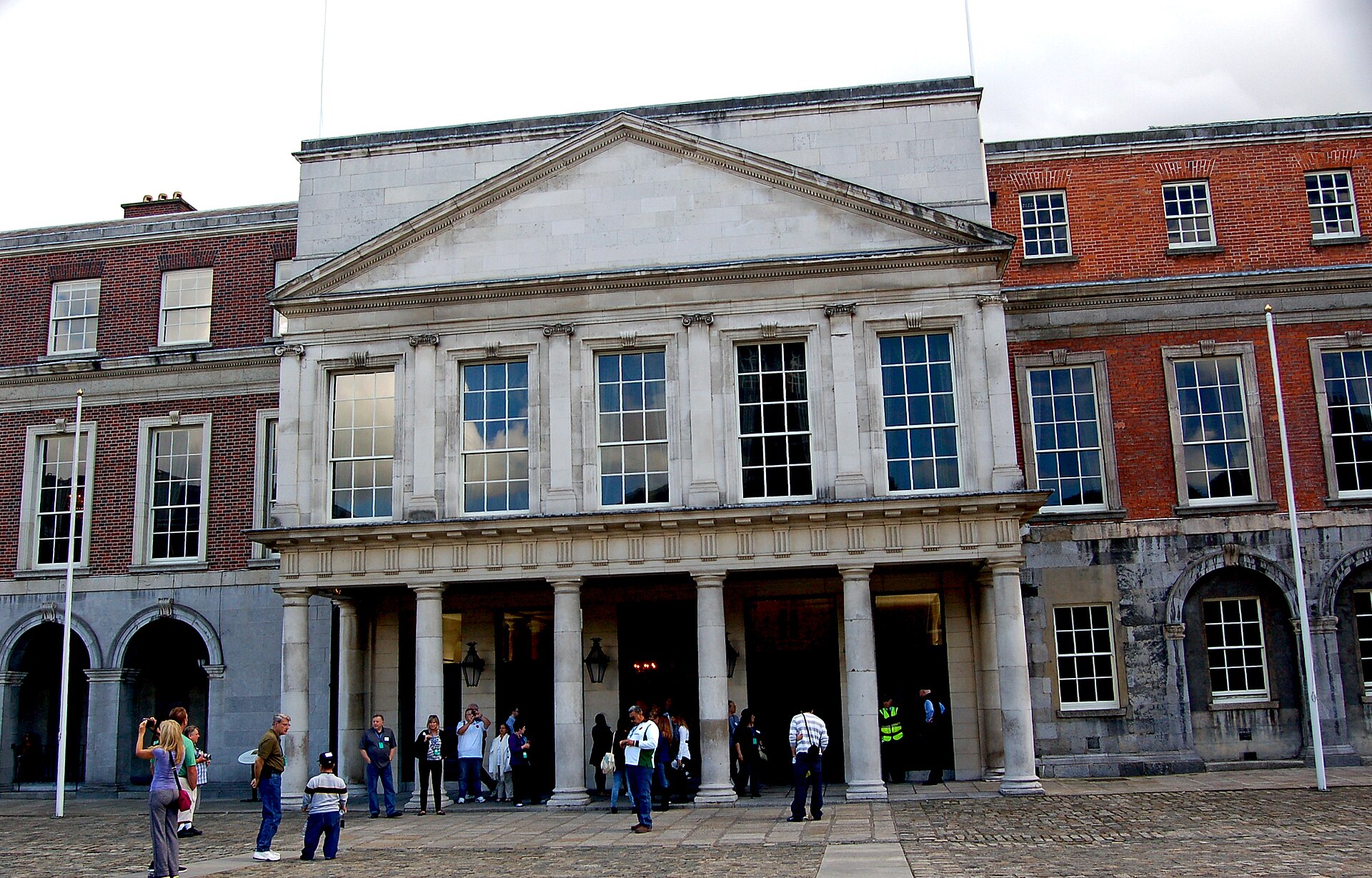
Rather than rebuild a grim medieval fortress, they set about creating something entirely new: a palace fit for the viceroy who ruled Ireland in the monarch’s name. Over the following decades, and right through the eighteenth century, the castle was transformed. Elegant ranges of brick and stone rose around new courtyards, grand staircases and reception rooms were fitted out in the height of Georgian fashion, and the whole place shifted from a machine of war to a theatre of government and glittering society.
This is the castle that largely survives today. The transformation was so complete that first-time visitors are often surprised to learn they are in a castle at all, expecting turrets and drawbridges and finding instead the poised symmetry of a Georgian palace. The change of appearance mirrored a change of role. By the eighteenth century the crown’s hold on Ireland, at least around Dublin, was secure enough that its headquarters could afford to look less like a fort and more like a court.
Inside the State Apartments
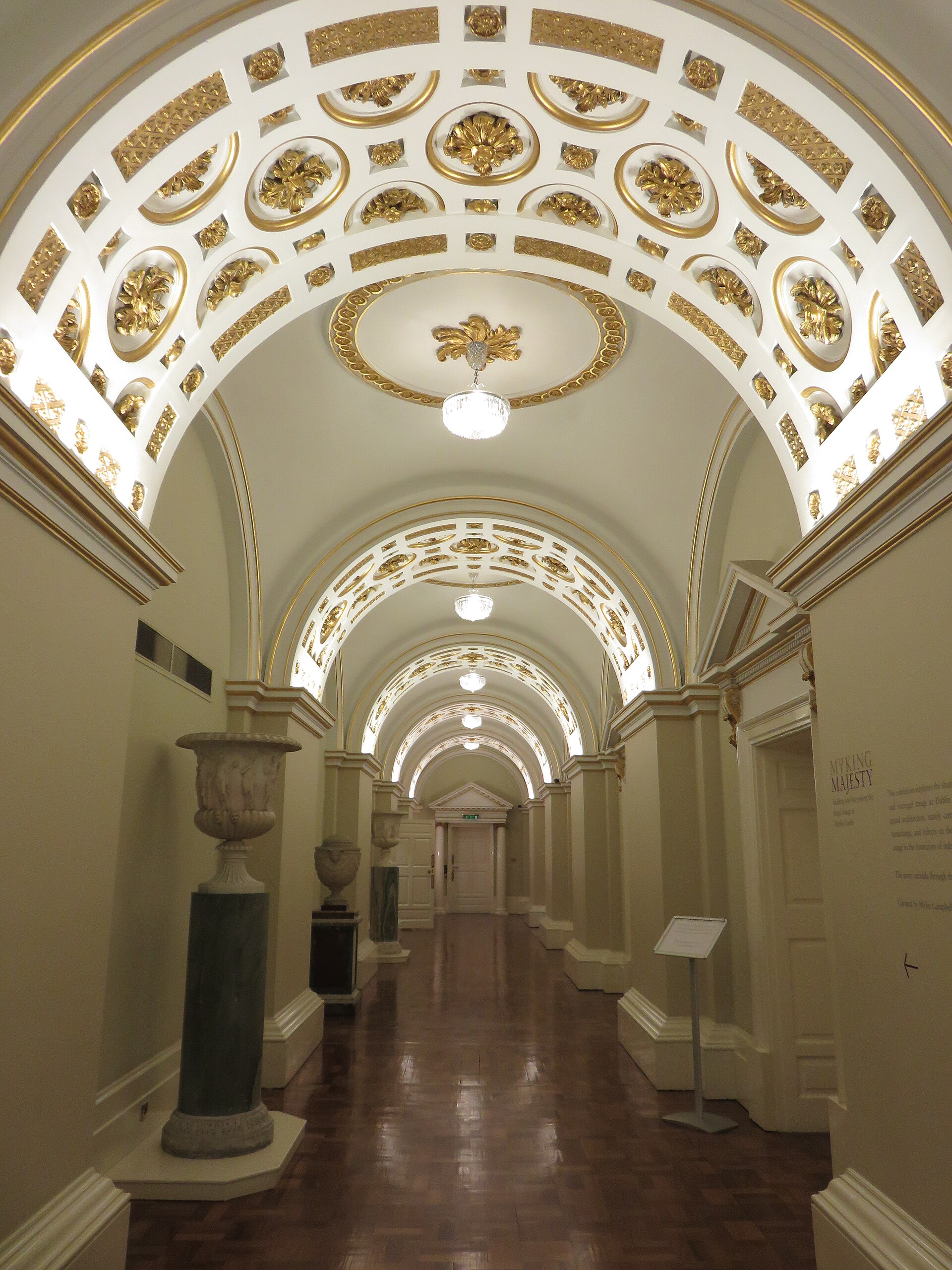
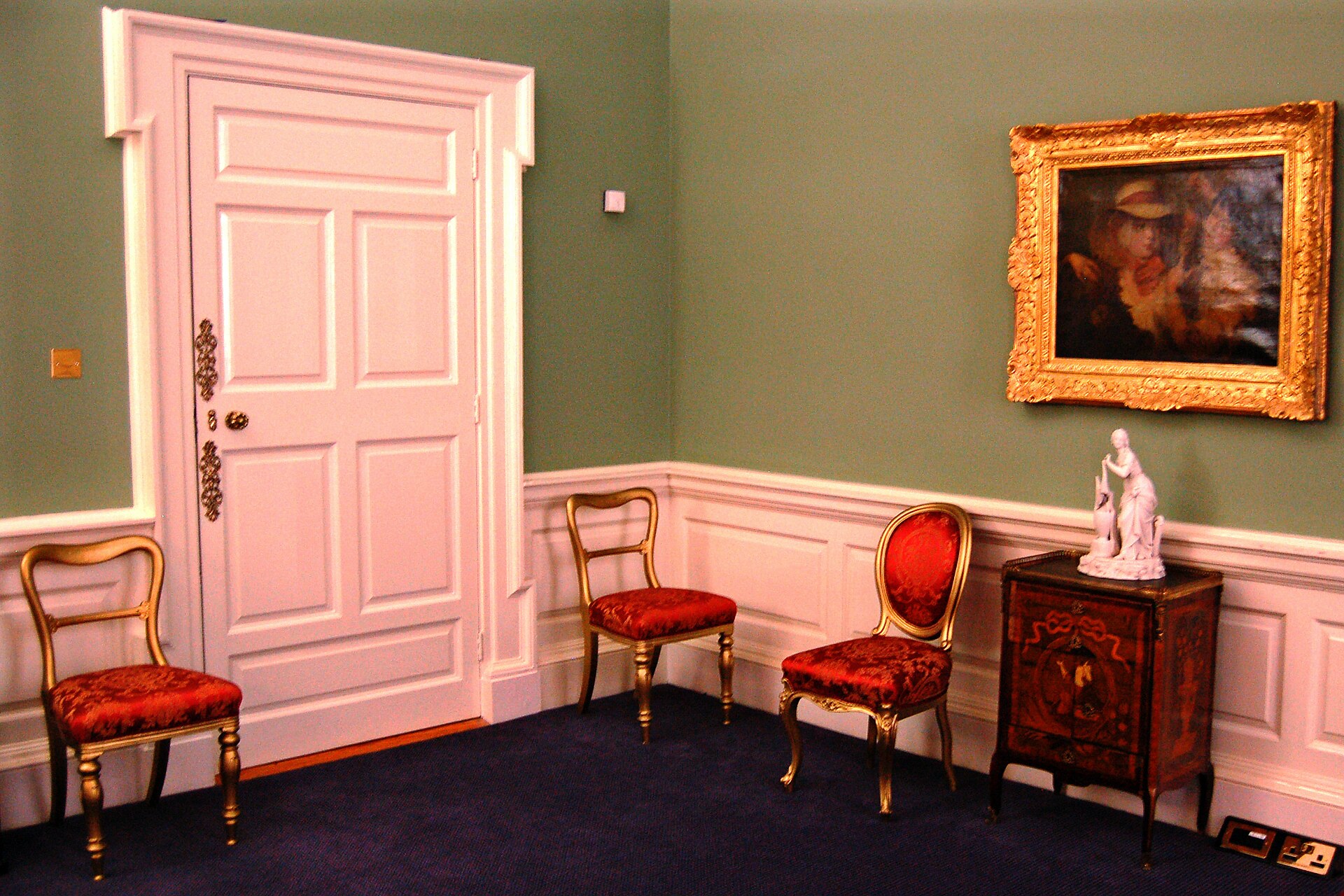
The heart of the rebuilt castle is the suite of State Apartments, the grand rooms where the viceroy lived, entertained and conducted the ceremonial business of government. These are among the most splendid interiors in Ireland, a parade of richly decorated chambers hung with chandeliers, portraits and gilded plasterwork, designed to impress upon every visitor the wealth and authority of the crown.
Here viceroys held levees and balls, received petitioners, and staged the elaborate rituals of power that bound the Anglo-Irish ruling class together. The rooms were the setting for a whole social season, a world of dinners and dances and presentations that revolved around the castle each year. To be received here was to have arrived; to be excluded was to be nobody. Behind the glitter, of course, lay the hard machinery of administration that governed millions.
Walking through them today, you pass from one lavish room to the next along the great corridor, catching the scale of the ambition that shaped them. Every ceiling and cornice was meant to send a message about who was in charge. The irony, plain to Irish eyes even then, was that all this magnificence was the face of a rule that most of the country did not want, a palace of power in the middle of a discontented land.
The contrast between the polish of these rooms and the poverty of much of the country was not lost on contemporaries, and it became one of the sharpest criticisms levelled at castle rule. While viceroys dined beneath painted ceilings, famine and hardship stalked large parts of Ireland, and the gap between the world inside the walls and the world outside them grew into a wound that no amount of gilding could disguise.
The Grandest Room of All
The showpiece of the whole castle is Saint Patrick’s Hall, the grand ballroom that remains its most magnificent single space. With its high ceiling painted with allegorical scenes, its banners and its sweep of gilded decoration, it is a room built for the biggest occasions of state. Beneath its painted ceiling, in an age of candlelight, the elite of Ireland once gathered for the most glittering events of the year.
This hall was the ceremonial home of the Order of Saint Patrick, the chivalric order created to bind the Irish nobility to the crown, and the very order whose regalia would one day be stolen in the castle’s most notorious scandal. Its walls have seen coronation-era pageantry and, in more recent times, the inauguration of Irish presidents, for the room that once celebrated British rule now serves the Irish state on its greatest days.
That continuity is part of what makes the castle so fascinating. The same room that hosted viceregal balls now hosts the ceremonies of an independent republic. The building did not fall or become a mere museum piece; it simply changed hands and carried on, its grandest hall passing from one era of Irish history to the next without missing a beat.
It is a room that rewards looking up. The great ceiling painting, with its swirling allegorical figures, was designed to flatter the monarchy and the union of Ireland and Britain, and reading it now, in a hall used to inaugurate Irish presidents, is one of the sharper little ironies the castle has to offer.

The Chapel Royal
Tucked beside the Record Tower stands one of the castle’s loveliest buildings, the Chapel Royal. Completed in the early nineteenth century, it is a jewel of the Gothic Revival, its exterior crowded with carved heads of famous figures and its interior a delicate fantasy of fan vaulting, timber galleries and stained glass. After the heavy grandeur of the state rooms, it comes as a graceful surprise.
The chapel was built as the private place of worship for the viceroy and the castle household, and no expense was spared in its decoration. Its plaster vaulting imitates the finest medieval stonework, and its walls carry the coats of arms of the viceroys who governed from the castle, a heraldic roll-call of British rule in Ireland running around the interior. It is at once a house of prayer and a monument to power.
Standing between the ancient Record Tower and the graceful chapel, you can read the whole story of the castle in a single glance: the rough medieval fortress of conquest on one side, the refined religious architecture of a confident later age on the other. The two buildings, so close together and so utterly different, capture the way the castle kept reinventing itself while never quite escaping what it fundamentally was.
The carved stone heads that ring the outside of the chapel are worth seeking out, a gallery of figures from Irish history and legend, along with saints and biblical characters, staring down from the walls. They give the building a curious, watchful character, as though the whole weight of the past were keeping an eye on the comings and goings in the yard below.

The Riddle of the Crown Jewels
In the summer of 1907 Dublin Castle became the scene of a mystery that has never been solved. The so-called Irish Crown Jewels, the dazzling regalia of the Order of Saint Patrick, a diamond-studded star and badge and a set of jewelled collars worth a fortune, were kept in a safe in the Bedford Tower under the care of Sir Arthur Vicars, the Ulster King of Arms. Security, it turned out, was astonishingly lax.
The jewels were last definitely seen on the eleventh of June. On the sixth of July, just days before a planned visit by King Edward VII, they were discovered to be missing from their safe. The timing could hardly have been more embarrassing, and the scandal was enormous. Doors that should have been locked had repeatedly been found open, and the investigation that followed was long, tangled and ultimately fruitless, tripping over society scandals and awkward personal connections.
Suspicion fell on various figures in Vicars’s circle, including Francis Shackleton, brother of the famous Antarctic explorer, but nothing was ever proved and no one was charged. Vicars lost his prestigious post and his reputation, and several people caught up in the affair came to unhappy ends. The jewels themselves have never been recovered. Somewhere, perhaps, they still exist, and to this day the theft remains one of the great unsolved robberies in the history of the British Isles.
The scandal did lasting damage precisely because it struck at the dignity of the crown in Ireland. These were not ordinary gems but the very symbols of royal chivalry and honour, and their disappearance from a supposedly secure government building suggested a carelessness at the heart of the administration that critics were quick to seize upon. King Edward VII was reportedly furious, and the affair cast a long shadow over the small, gossipy world of the castle and its officials for years afterwards.

Rebellion at the Gates
For all its role as the calm centre of administration, the castle was never far from violence, and in the twentieth century that violence came right to its gates. During the Easter Rising of 1916, when Irish republicans launched their rebellion against British rule, a party of insurgents attacked the castle’s entrance, killing an unarmed policeman at the gate in the very first minutes of the rising.
Astonishingly, the small group of rebels did not realise how lightly the castle was actually defended that day, and they pulled back rather than press their advantage. Had they pushed on, the symbolic heart of British power in Ireland might have fallen at the very start of the rebellion. Instead the moment passed, troops poured in, and the castle became a command centre for suppressing the rising and, later, a place where wounded were treated and prisoners questioned.
In the bitter years that followed, through the War of Independence, the castle remained the nerve centre of British intelligence and administration in Ireland, and so the focus of republican hatred and, at times, of daring operations against the men who worked within it. The fortress that had loomed over Irish life for seven centuries was now at the centre of the struggle that would finally bring that long chapter to a close.
The attack on the castle gate has a poignant footnote. The policeman killed there, James O’Brien, was himself an Irishman, one of countless people caught on the wrong side of a divide that ran through families and streets as much as between nations. His death in those first minutes was a small, human tragedy at the opening of an event that would reshape the country, a reminder that the struggle over the castle was never simply Ireland against England but a tangle of loyalties far harder to unpick.
The Day Power Changed Hands
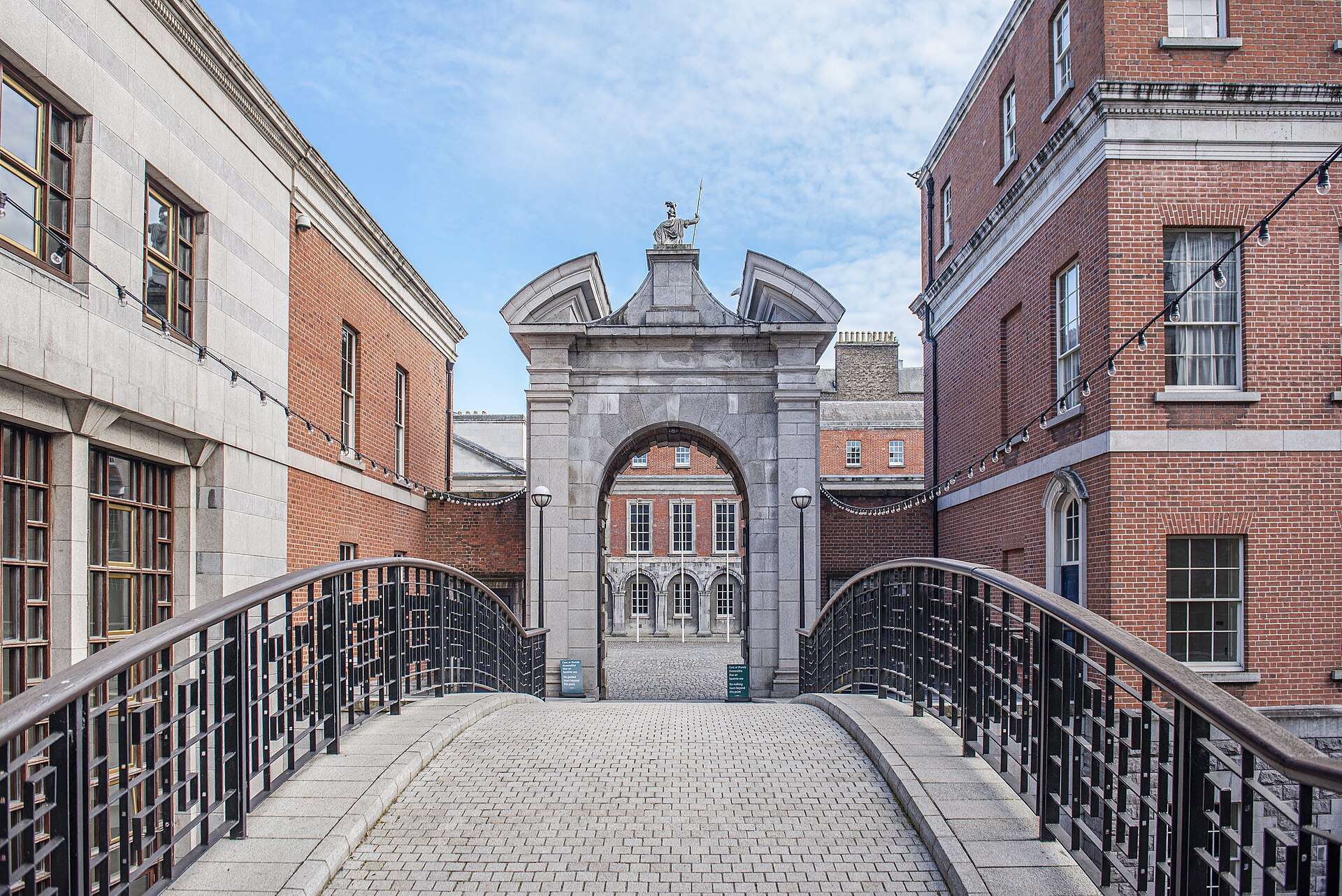
The most quietly momentous event in the castle’s long history took place in January 1922. With the Anglo-Irish Treaty signed and the new Irish Free State coming into being, Dublin Castle, the very symbol of seven hundred years of British rule, was formally handed over to the new Irish provisional government led by Michael Collins. The handover was brief and businesslike, but its meaning was enormous.
There is a famous, possibly embroidered, story that the British official remarked that Collins was seven minutes late, to which Collins is said to have replied that after seven centuries they could afford to wait a few more minutes. Whether or not the words were ever spoken, they capture the moment perfectly. The keys to the fortress of conquest passed, almost casually, into Irish hands, and an age that had begun with King John came to an end.
From that day the castle served the Irish state rather than a foreign crown. It became a place for state ceremonies, presidential inaugurations, the reception of visiting dignitaries and, in time, meetings of the European Union when Ireland held its presidency. The building that had governed Ireland for Britain now helped represent an independent Ireland to the world, its meaning turned entirely inside out without a single stone being moved.
The handover in 1922 was made all the more poignant by how understated it was. There was no great battle for the castle at the end, no storming of the gates that had resisted Silken Thomas nearly four centuries earlier. Instead the transfer came through negotiation and signature, the fortress passing quietly from one authority to another. After seven centuries of conquest and resistance, the ending was almost anticlimactically peaceful, a measure of how completely the world had changed.
The Castle and Its Gardens Today
Modern Dublin Castle is a fascinating layer cake of history, and it wears all its centuries at once. It is a working government complex, a major visitor attraction and a cultural venue rolled into one, and it sits at the very centre of the city, a short walk from Christ Church Cathedral and the busy streets of the old town. Around it cluster museums and galleries, including the world-renowned Chester Beatty collection just beside the castle gardens.
Behind the state buildings lie the Dubh Linn Gardens, laid out on the site of the very black pool that gave Dublin its name, now a calm green space with a distinctive circular lawn. It is a strange and pleasing thought that beneath these quiet gardens once lay the dark water around which the whole story began. From medieval moat to Georgian palace to public park, the castle grounds compress the city’s entire history into a few acres.
The layering of eras is visible everywhere you look. A medieval tower stands beside a Georgian range, which in turn looks onto a garden built over a Viking pool, while modern conference facilities hum discreetly behind historic facades. Rather than freezing the castle at any single moment, its keepers have let it go on being what it always was, a working centre of power that each age adapts to its own needs.
Whether you come for the guided tour of the State Apartments, the medieval undercroft with its glimpses of Viking and Norman Dublin, the elegant Chapel Royal or simply a wander through the courtyards and gardens, the castle rewards the visit many times over. Few places let you walk so directly through the whole span of a nation’s history, from a Viking pool to a modern republic, all within a single set of walls.
The gardens also carry a quieter, more modern layer of meaning. Set into the circular lawn is a memorial to those who gave their lives in the service of the Irish state, a reminder that this ground, once the seat of foreign power, is now bound up with the story of an independent nation. Sit here on a fine day and you are resting on the exact spot where Dublin, and in a sense modern Ireland, began.

Seeing Dublin Castle for Yourself
Dublin Castle sits right in the centre of the city on Dame Street, impossible to miss and easy to reach on foot from almost anywhere in the old core. It is open to visitors throughout the year, and you can either wander the courtyards and gardens freely or take a guided tour that leads you through the State Apartments, the medieval undercroft and the Chapel Royal, which is by far the best way to understand what you are seeing.
Give yourself a good hour or two, more if you want to add the Chester Beatty next door, which is one of the finest small museums in Europe and free to enter. The guided tour is worth booking ahead, especially in the busy summer months, and it brings the whole tangled story to life far better than reading the plaques alone. Comfortable shoes help, as there is a fair amount of walking and some stairs between the different levels and buildings.
You will find the castle at the heart of Dublin, in County Dublin on Ireland’s east coast, an easy day from anywhere in the country. For exact directions to the gate, here is a map link to guide you straight there: 53.3429, -6.2674. Once you have found it, you have found the place where the whole modern history of Ireland was decided, courtyard by courtyard, over the better part of a thousand years.

Castles Nearby
The Fortress That Ruled a Nation
Dublin Castle is not the prettiest castle in Ireland, nor the most romantic ruin, but it may be the most important. No other place has stood so close to the centre of Irish history for so long, from the Vikings and the Normans through seven centuries of English and British rule to the birth of an independent state. Its stones have witnessed sieges and escapes, balls and betrayals, rebellions and the quiet handover of power.
To walk through its courtyards is to walk through the whole story of a nation, compressed into a single set of walls beside a long-buried black pool. Kings ordered it built, rebels stormed its gates, jewels vanished from its tower and, in the end, its keys passed into Irish hands. Of all the castles in Ireland, this is the one where the country’s fate was actually decided, and it is still, quietly, at the heart of things today.
You May Like
Mafra, the Palace a King Built From a Vow