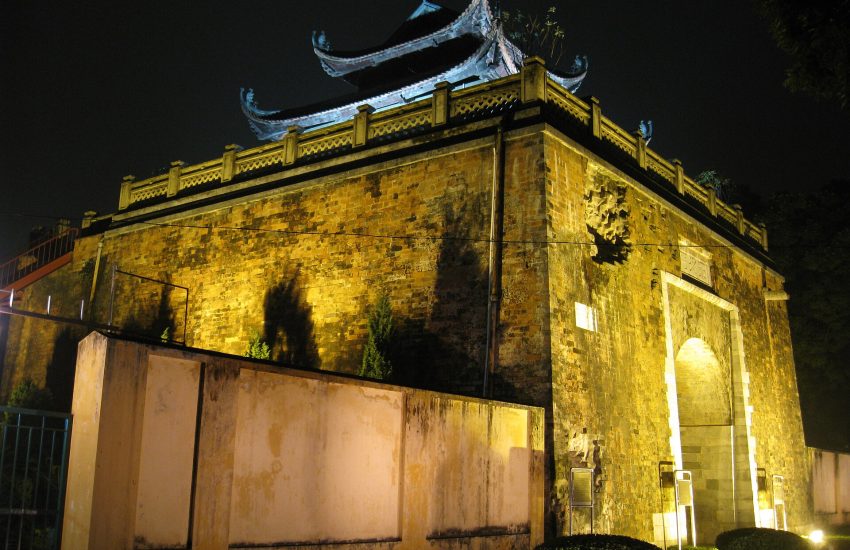
Some fortresses hide a second, older fortress within their walls, and Fort Rotterdam is one of them. Standing on the waterfront of Makassar on the Indonesian island of Sulawesi, this beautifully preserved Dutch colonial stronghold, shaped, the local people say, like a sea turtle crawling toward the water, was built upon the conquered fort of a once-mighty local sultanate, and its story is the story of the region itself.
You come expecting a colonial fort and find a layered monument to power, conquest, and memory, a turtle-shaped fortress of stone whose handsome buildings shelter museums and whose bastions once held a captive national hero. Here the Dutch broke the great free port of the sultanate of Gowa, and here the long history of Makassar is written in stone.
This is the story of Fort Rotterdam, from the proud sultanate that stood before it, through the war that broke that kingdom and the Dutch admiral who rebuilt and renamed the fort, to the imprisonment of a hero and the fort’s rebirth as a treasure of Indonesia. Come and explore the great Turtle Fort with me, and discover the key to the history of Makassar.

In This Article
- The Turtle-Shaped Fort on the Makassar Shore
- The Mighty Sultanate That Stood Before
- The Free Port at the Crossroads of the Spices
- The Ramparts, Moat, and Gates of the Fort
- The Museum and the Cultures of Sulawesi
- The Legacy of the Vanquished Kingdom
- The War That Broke a Kingdom
- The Admiral Who Renamed the Conquered Fort
- Reading the Shape of the Turtle Fort
- The Handsome Buildings Within the Walls
- The Prince Imprisoned Within the Walls
- Through Colonial Rule, War, and Independence
- Exploring the Turtle Fort Today
The Turtle-Shaped Fort on the Makassar Shore
On the waterfront of the city of Makassar, on the Indonesian island of Sulawesi, stands one of the finest and best-preserved Dutch colonial forts in all of Asia, and it carries a curious nickname among the local people: the Turtle Fort. Seen from above, the shape of its walls and bastions is said to resemble a sea turtle crawling toward the water, and this image has given Fort Rotterdam an affectionate identity quite apart from its stern colonial history.

The fort is a remarkable survivor, a substantial stone fortress of the seventeenth century, its ramparts and bastions enclosing a compound of handsome colonial buildings, all wonderfully preserved amid the bustle of the modern city. To pass through its gate is to step from the traffic of Makassar into a quiet enclave of the colonial past, a place where the long and often painful history of the region is written in stone.
But the story of Fort Rotterdam is not only a Dutch story, for beneath the European fortress lies an older one, a stronghold of the local Makassar kingdom, and the fort’s very existence marks one of the great turning points in the history of Sulawesi, the moment when the Dutch broke the power of the once-mighty sultanate of Gowa. The turtle-shaped walls are built upon conquest.
Come and explore Fort Rotterdam, and you will encounter a layered history of local power and colonial conquest, of a proud sultanate and its Dutch conquerors, of imprisonment and resistance, all preserved within one of the most beautiful and evocative colonial fortresses in Southeast Asia. It is the key to the history of Makassar and the whole region, standing turtle-like by the sea.
There is a satisfying completeness to Fort Rotterdam that many colonial forts lack, a sense of a fortress preserved whole rather than in fragments, its walls, bastions, and buildings all intact and cared for. This wholeness makes it one of the most rewarding historic sites in Indonesia, a place where the past can be experienced not in scattered ruins but in a living, coherent ensemble.
The Mighty Sultanate That Stood Before
Before Fort Rotterdam bore its Dutch name, it was a stronghold of the sultanate of Gowa, one of the great powers of the eastern Indonesian archipelago. In the seventeenth century, Gowa, centered on Makassar, was a formidable maritime kingdom, its power resting on trade and on a fleet that commanded the seas of the region, and its capital was one of the great cosmopolitan ports of the East.
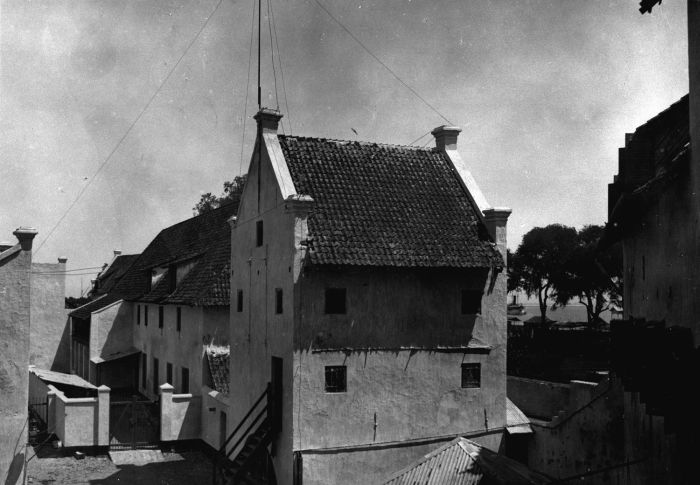
Makassar under the sultans of Gowa was a thriving center of the spice trade, a free port that welcomed merchants from across Asia and Europe, and it grew rich and powerful as a hub of the commerce that flowed through the eastern seas. The sultanate defended its independence and its open trade fiercely, and it built a string of fortifications along its coast to guard its capital and its power.
Among these fortifications was the fort that would become Fort Rotterdam, originally a stronghold of the Gowa kingdom, built to defend the sultanate against its enemies, and above all against the ambitions of the Dutch East India Company. For the Company, which sought to monopolize the spice trade, the free and powerful port of Makassar was an intolerable rival, and a collision between them was inevitable.
The sultanate of Gowa, then, was the original power on this coast, and its fort the ancestor of the Dutch fortress that survives today. To understand Fort Rotterdam is to remember the proud maritime kingdom that stood here first, the great sultanate whose defeat by the Dutch would transform the history of Sulawesi and give rise to the turtle-shaped fort we see today.
The Bugis and Makassar peoples of this coast were among the greatest seafarers of the entire archipelago, their ships and their traders ranging across the eastern seas and beyond, and the power of Gowa rested on this maritime prowess. It was a kingdom of the sea as much as of the land, and its capital at Makassar was one of the great meeting points of the maritime world of Asia.
The Free Port at the Crossroads of the Spices
To understand why the Dutch fought so hard for Makassar, you must understand the spice trade and the peculiar role that the port played within it. Makassar sat at a crossroads of the eastern seas, well placed to gather the spices of the fabled islands to its east, the cloves, nutmeg, and mace that Europe craved, and to channel them into the wider currents of world trade.

Under the sultanate of Gowa, Makassar flourished as a free port, open to merchants of every nation, a place where the trade of the world could be conducted without the monopolistic restrictions that the Dutch sought to impose elsewhere. This openness made Makassar immensely prosperous and cosmopolitan, but it also made it the great rival and obstacle to the Company’s dream of controlling the spice trade entirely.
For the Dutch East India Company, whose whole strategy rested on monopolizing the trade in the most valuable spices, the free port of Makassar was intolerable, a leak in their control through which spices could flow into the hands of rivals. The determination to close this leak, to break the free trade of Makassar and bring it under the Company’s monopoly, was among the deepest causes of the war against Gowa.
The fort, then, was ultimately about spice, about the control of the most valuable trade of the age, and its Dutch conquest was a victory for monopoly over free trade. Fort Rotterdam stands as a monument to this commercial struggle, the fortress that secured the Company’s control over a coast that had once been one of the great open marketplaces of the East.
The struggle over Makassar was, in a larger sense, a contest between two visions of trade, the open and cosmopolitan free port of the sultanate against the closed monopoly of the Company, and the Dutch victory marked the triumph of monopoly across the eastern seas. In this the fate of Makassar reflected the wider transformation of the region under colonial rule, the closing of the open trading world of the archipelago.
The Ramparts, Moat, and Gates of the Fort
Fort Rotterdam was a serious work of military engineering, and its defenses reward the attention of anyone interested in the fortifications of the colonial age. The fort was enclosed by high ramparts of stone, rising several meters, and defended by its five bastions, positioned to command every approach with flanking fire in the manner of the European fortress tradition.

Around the fort ran a moat, a further barrier against any attacker, and the whole was entered through gates that controlled access to the interior. The combination of ramparts, bastions, and moat made Fort Rotterdam a formidable stronghold, well able to defend the Dutch garrison and to dominate the surrounding town and harbor.
The materials of the fort tell their own story of the region, the stone and limestone quarried from nearby sources and the timber drawn from the forests of Sulawesi, all worked by local labor into the substantial fortress that survives today. The solidity of this construction is one reason the fort has endured so well, its ramparts and buildings coming down through the centuries in remarkable condition.
Walking the defenses today, you can appreciate the military logic of the fort, the way the bastions command the walls, the height of the ramparts, the whole geometric arrangement designed for defense in the age of gunpowder. Fort Rotterdam is a fine and well-preserved example of the Dutch colonial fortress, its defenses a testament to the seriousness with which the Company secured its hard-won prize.
The remarkable state of preservation of these defenses today allows the visitor to experience the fort much as it would have appeared in the colonial era, its ramparts and bastions intact, its layout clear and legible. Few colonial forts of the region survive so completely, and the defenses of Fort Rotterdam are among the finest examples of their kind to be seen anywhere in Indonesia.
The Museum and the Cultures of Sulawesi
Among the buildings of Fort Rotterdam today is a museum that has become one of the most important in the region, preserving and presenting the rich cultural heritage of Sulawesi and its peoples. Named for a great epic of the region, the museum houses collections that tell the story of the island’s cultures, from prehistory through the age of the sultanates to the colonial era and beyond.

The museum’s collections encompass the arts, crafts, and daily life of the peoples of Sulawesi, including the Makassar and Bugis peoples renowned as some of the great seafarers of the archipelago. Through its displays, the museum offers a window into a rich and distinctive culture, one shaped by the sea and by centuries of trade, war, and exchange.
That such a museum should be housed within Fort Rotterdam is fitting, for it turns the former instrument of colonial domination into a repository and celebration of the local culture that the colonists once sought to control. The fort that was built upon the conquest of the sultanate now shelters the heritage of the people of that sultanate and their neighbors, a meaningful transformation.
To visit the museum within the fort is to deepen your understanding of the region and its peoples, adding the rich context of local culture to the colonial and military history of the fortress itself. It makes Fort Rotterdam not merely a monument to conquest but a living center of the heritage of Sulawesi, a place where the many strands of the region’s history come together.
The transformation of the fort into a cultural center and museum reflects a wider reclaiming of colonial heritage by the Indonesian nation, turning the monuments of foreign domination into places for the celebration and study of local culture and history. In this Fort Rotterdam has found a meaningful second life, no longer a symbol of subjugation but a center of learning and cultural pride.
The Legacy of the Vanquished Kingdom
Though the sultanate of Gowa was defeated in the great war and its power broken, the memory and the legacy of the kingdom endure powerfully in the region to this day. The people of Makassar and the wider region remember the age of the sultanate as a time of greatness, when their kingdom commanded the seas and their port welcomed the trade of the world.

The seafaring traditions of the Makassar and Bugis peoples, famed throughout the archipelago and beyond, are part of this living legacy, a continuation of the maritime culture that made Gowa great. These peoples remained among the greatest sailors and traders of the eastern seas long after the fall of the sultanate, their ships ranging far across the ocean.
The story of the war, of the proud kingdom and its defeat by the Dutch and their local allies, remains a potent part of the historical memory of the region, a tale of greatness and loss that shapes local identity. Fort Rotterdam, built upon the ruins of the sultanate’s fort, is inextricably bound up with this memory, the physical reminder of both the greatness of Gowa and the conquest that ended it.
To appreciate Fort Rotterdam fully, then, is to hold in mind the vanished sultanate whose defeat it commemorates, the proud maritime kingdom that stood here before the Dutch. The fort is a monument to conquest, but it is also, for the people of the region, a reminder of the greatness that was conquered, and the enduring legacy of the kingdom of Gowa lives on alongside the memory of its fall.
The endurance of Bugis and Makassar seafaring, of the crafts, epics, and customs of the region, testifies to a culture that survived the fall of its greatest kingdom and remains vibrant to this day. In the museum within the fort and in the living traditions of the surrounding city, the legacy of Gowa and its peoples continues, a heritage far older and deeper than the colonial fort that rose upon the sultanate’s defeat.
The War That Broke a Kingdom
The clash between the sultanate of Gowa and the Dutch East India Company came to a head in the great conflict known as the Makassar War, one of the most significant wars in the history of the eastern archipelago. The Company, determined to break the power of the free port and to control the spice trade, made war upon the sultanate, allying itself with local rivals of Gowa.
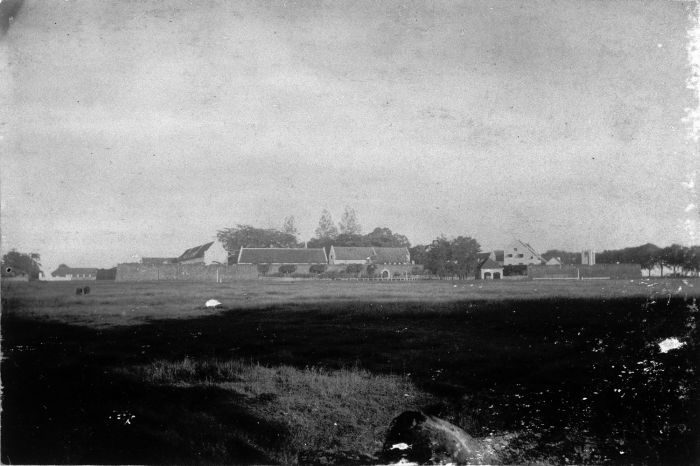
The war was hard-fought and consequential, pitting the maritime power of the sultanate against the resources and determination of the Company and its allies. Chief among the Company’s local allies was a prince of a rival people who had his own grievances against Gowa, and this alliance of Dutch power and local rivalry proved decisive against the once-dominant sultanate.
The defeat of Gowa was sealed by a treaty that marked the end of the sultanate’s independence and the triumph of the Company, a settlement that transferred power and territory, including the great fort, to the Dutch. The proud kingdom that had commanded the seas and welcomed the trade of the world was broken, its power shattered, its capital brought under Company control.
The Makassar War was a turning point not only for Gowa but for the whole region, marking the extension of Dutch dominance over eastern Indonesia and the suppression of the free trade that Makassar had embodied. Fort Rotterdam, ceded to the Dutch in the aftermath, became the symbol and the instrument of this new colonial order, the stronghold from which the Company would rule the conquered coast.
The alliance between the Dutch and the local prince who fought against Gowa illustrates a pattern common to European conquest in the region, the exploitation of rivalries among local powers to achieve what the Europeans could not have managed alone. The fall of Gowa was as much a victory of divide and rule as of superior force, a lesson in how the colonial powers extended their dominion across the archipelago.
The Admiral Who Renamed the Conquered Fort
With the fort in Dutch hands, the Company set about transforming the captured stronghold into a fortress in its own European style, and the man who oversaw this work was the Dutch admiral who had led the conquest, Cornelis Speelman. Between the 1670s, Speelman directed the complete reconstruction of the fort, and in a characteristic act of colonial appropriation, he renamed it after his own birthplace in the Netherlands, Rotterdam.

The reconstruction transformed the fort into a substantial European fortress, its ramparts raised and faced with stone, its bastions rebuilt in the Dutch military style, and its interior filled with the buildings of the colonial administration and garrison. The materials were drawn from the region, stone and limestone quarried from nearby, and timber from the forests of Sulawesi, worked into a mighty stronghold.
It was this reconstruction that gave the fort its distinctive shape, the form that the local people would come to see as resembling a turtle, with its bastions projecting like the head and limbs of the creature. The five bastions, each with its own name, guarded the ramparts, and a moat added to the defenses of the fort, creating the fortress that survives so well today.
The renaming of the fort after a Dutch city was a potent symbol of the conquest, the erasure of the local identity of the stronghold and its rebirth as an instrument of Dutch power. Fort Rotterdam, as it now became, stood as the seat of Company authority on the coast, the fortress from which the Dutch governed their new possession and controlled the trade they had fought so hard to dominate.
View on Google Maps (-5.1342, 119.4055)
Speelman was one of the most formidable of the Company’s servants, a man who combined military skill with ruthless ambition, and his conquest of Makassar was among the great achievements of his career. That he should stamp his own origins upon the conquered fort, renaming it for his birthplace, was characteristic of the man and of the age, an act of personal and imperial appropriation written into the very name of the fortress.
Reading the Shape of the Turtle Fort
The distinctive form of Fort Rotterdam is one of its most beloved features, and it rewards close attention. The fortress is built with five bastions, the projecting strongpoints at its corners and along its walls, and it is the arrangement of these bastions, together with the shape of the ramparts, that gives the fort its resemblance to a sea turtle, an image that has become central to its local identity.

Each of the five bastions bears its own name, drawn from the places and peoples of the region, and each guarded a section of the walls, positioned to bring flanking fire to bear on any attacker in the manner of the European star fort. The ramparts that connect them rise several meters high, and a moat once surrounded the fort, adding a further barrier to its defenses.
The turtle image is more than a fanciful resemblance, for to the local imagination it carries meaning, the turtle being a creature at home both on land and in the sea, as the sultanate of Gowa had been a power both of the land and of the ocean. Whether or not the builders intended the resemblance, it has become a cherished part of how the people of Makassar understand their great fort.
Walking the ramparts and tracing the shape of the bastions today, you can see for yourself the form that suggests the turtle, and appreciate the skill of the military engineering that created so effective and so distinctive a fortress. The turtle shape is the signature of Fort Rotterdam, the feature that sets it apart from the countless other colonial forts of the region and gives it its unique and affectionate character.
The naming of the five bastions after places and peoples of the region embedded a kind of map of the Company’s domain into the very structure of the fort, each bastion a reminder of the territories and peoples the Dutch had brought under their sway. To learn the names of the bastions is to trace something of the geography of Dutch power in the eastern archipelago.
The Handsome Buildings Within the Walls
Within the walls of Fort Rotterdam stands a remarkable ensemble of Dutch colonial buildings, exceptionally well preserved, that make the fort one of the finest surviving examples of colonial architecture in Indonesia. These handsome structures, with their thick walls, shuttered windows, and tiled roofs adapted to the tropical climate, housed the functions of the colonial administration and garrison.

The buildings served many purposes over the centuries, as offices, residences, barracks, storehouses, and a church, the whole compound forming a self-contained colonial town within the fortress walls. Their architecture reflects the Dutch colonial style, solid and functional yet handsome, adapted to the heat and rains of the tropics, and their preservation offers a vivid picture of colonial life in the East Indies.
Among the structures is a church, reflecting the religious life of the colonial community, and various administrative and residential buildings that housed the officials and soldiers of the Company and, later, the colonial government. The compound was the nerve center of Dutch power on the coast, the place from which the affairs of the colony were administered for generations.
Today these well-preserved buildings house museums, libraries, and cultural venues, giving the old fortress a vibrant contemporary life while preserving its historic fabric. To wander among them is to move through a remarkably intact colonial townscape, the finest of its kind in the region, a precious survival of the architecture and atmosphere of the Dutch East Indies.
The endurance of these colonial buildings, so well preserved through the centuries and the upheavals of war and independence, is itself remarkable, and it makes the fort a precious record of the architecture of the Dutch East Indies. To walk among them is to step into a remarkably complete colonial townscape, a rare survival of a world that has largely vanished elsewhere in the region.
The Prince Imprisoned Within the Walls
Fort Rotterdam holds a place of great significance in the history of Indonesian resistance to colonial rule, for it was here that one of the greatest heroes of that resistance, the Javanese prince Diponegoro, spent the long final years of his life as a prisoner of the Dutch. His imprisonment within the fort has made it a site of national importance and pilgrimage.

Diponegoro had led a great and bitter war against Dutch rule on the island of Java, a conflict that shook the foundations of colonial power and cost the Dutch dearly before it was finally suppressed. Captured through treachery when he came to negotiate, the prince was exiled far from his homeland, and he was eventually confined in Fort Rotterdam, held in one of its bastions until his death many years later.
For over two decades the prince lived as a captive within these walls, far from Java, a fallen hero held by the power he had fought against. His long imprisonment and his death in the fort have given Fort Rotterdam a solemn significance in the story of the Indonesian nation, as the place where one of its greatest heroes was held and where he died in exile.
Today the bastion where Diponegoro was imprisoned is preserved as a place of memory, and the prince is honored as a national hero of Indonesia, his struggle against colonial rule celebrated as a milestone in the long road to independence. His presence gives the fort a dimension beyond its colonial and military history, connecting it to the deepest currents of the Indonesian national story.
The presence of Diponegoro’s story within Fort Rotterdam draws a poignant connection between the two great episodes of resistance the fort embodies, the defeated sultanate of Gowa and the defeated hero of the Java War, both brought low by the same colonial power. In holding the captive prince, the fort became a place where two strands of the Indonesian struggle against colonial rule came together.
Through Colonial Rule, War, and Independence
Fort Rotterdam served as the center of Dutch power on the coast for a very long time, functioning as the military and administrative headquarters of the colonial regime through the long centuries of Dutch rule over the region. From within its walls, the Company and later the colonial government administered their possession and projected their authority over the surrounding territory.

The fort continued in this role well into the modern era, adapting to the changing needs of the colonial administration, until in the twentieth century the tides of war swept over the region once more. During the Second World War, when Japanese forces occupied the Indonesian archipelago, Fort Rotterdam was pressed into service by the new occupiers, and it functioned, among other things, as a prisoner of war camp.
The war years were a dark chapter for the region and for the fort, part of the wider upheaval that would ultimately sweep away colonial rule entirely. When the war ended and Indonesia won its independence, the fortress that had for so long been an instrument of foreign power passed into the hands of the Indonesian nation, another colonial stronghold reclaimed by the people it had once helped to subjugate.
In the decades after independence, the significance of Fort Rotterdam as a historic monument came to be recognized, and the fort embarked on a new life as a heritage site and cultural center. From a symbol of colonial domination, it has become a treasured part of the heritage of Makassar and of Indonesia, its long and layered history preserved for the benefit of the nation that inherited it.
The reclaiming of Fort Rotterdam by independent Indonesia mirrors the fate of many colonial monuments across the archipelago, transformed from instruments of foreign rule into elements of the national heritage. In this the fort’s history traces the whole arc of the Indonesian experience, from the age of the sultanates through colonial conquest and occupation to the winning of independence and the building of a nation.
Exploring the Turtle Fort Today
Visiting Fort Rotterdam today is a rewarding experience and one of the essential things to do in Makassar, a chance to explore one of the finest colonial fortresses in Indonesia and to encounter the layered history of the region. The fort sits on the waterfront in the heart of the city, easily reached and beautifully preserved, a peaceful historic enclave amid the bustle of the modern port.

Enter through the gate and explore the grounds, walking among the handsome colonial buildings and along the ramparts, tracing the turtle shape of the bastions and imagining the fortress in its heyday as the seat of Dutch power. Visit the museum housed within the fort, which tells the story of the region and its cultures, and seek out the bastion where the prince Diponegoro was held.
Take the time to appreciate the fine colonial architecture, the best-preserved of its kind in the region, and to reflect on the layered history the fort embodies, from the sultanate of Gowa through the Dutch conquest to the imprisonment of a national hero and the coming of independence. Each layer adds to the meaning of the place, and the fort rewards the thoughtful visitor with a rich encounter with the past.
Come to Fort Rotterdam, then, ready to explore not merely a beautiful old fortress but the very key to the history of Makassar and eastern Indonesia, a turtle-shaped stronghold built on the ruins of a proud sultanate and preserved as a treasure of the nation. Walk its ramparts, explore its buildings, and let the great Turtle Fort by the sea tell you its long and fascinating story.
Makassar itself, the great port city that surrounds the fort, has its own rich history and character, and a visit to Fort Rotterdam is naturally combined with an exploration of the wider city, its waterfront, its markets, and its living maritime culture. The fort is the historic heart of Makassar, the point from which to begin an encounter with one of the great port cities of eastern Indonesia.
Castles Nearby
If Fort Rotterdam has kindled your love of colonial-era fortresses, continue your journey with these remarkable sites:
You May Like
Fort San Pedro: The Oldest Fort in the Philippines