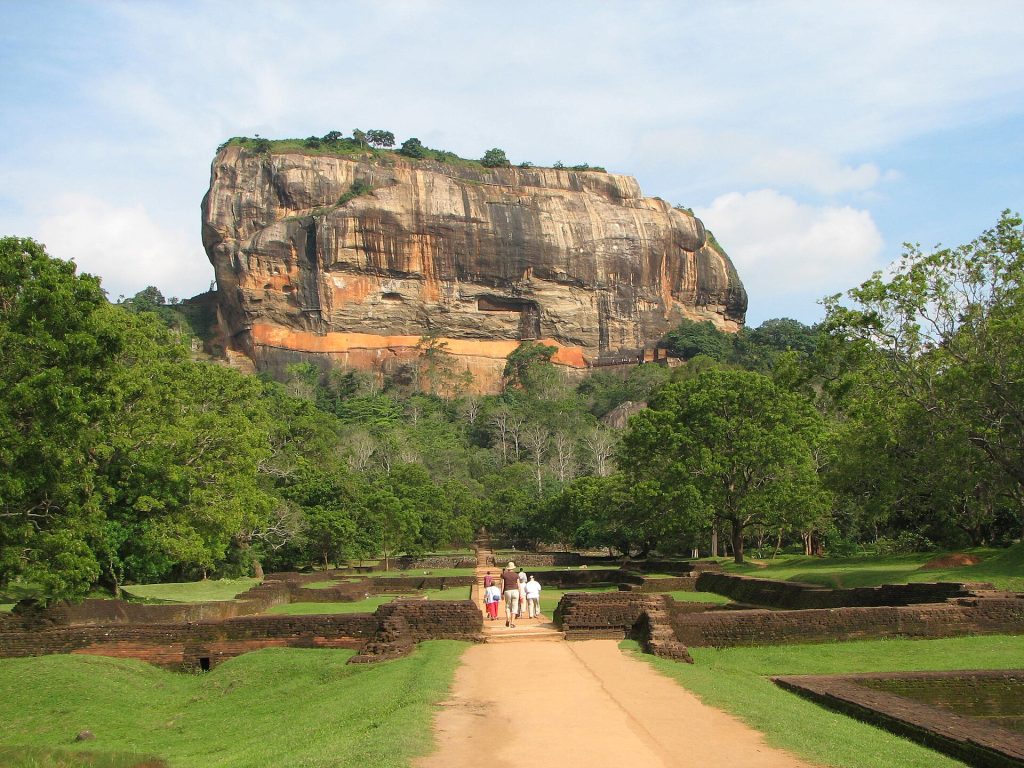
Some places seem to belong more to legend than to history, and Sigiriya is one of them. Rising almost two hundred meters sheer from the jungle plains of central Sri Lanka, this colossal column of granite is crowned with the ruins of a palace that a fifth-century king built, impossibly, upon its very summit, a royal city in the sky raised by a guilty ruler who feared his brother’s revenge.
You come expecting a rock and find instead one of the most audacious creations in the whole history of building, a fortress and palace and work of art all at once, approached through some of the oldest landscaped gardens in the world, past frescoes of heavenly maidens and a polished mirror wall inscribed with thousand-year-old verses, and up through the paws of a giant carved lion to the palace at the top.
This is the story of Sigiriya, the Lion Rock, from the usurper king who built it and the ancient civilization that made it possible, through its gardens and frescoes and hydraulic marvels, to its afterlife as a forest monastery and its fame today as a wonder of the world. Come and climb it with me, and stand where a king once ruled his kingdom from the sky.
In This Article
- The Palace in the Sky Above the Jungle
- The Island Kingdom Before the Rock
- The Water Engineering That Astonishes Still
- Why the World Calls It a Wonder
- The Usurper King and His Fortress of Fear
- The Ancient Gardens at the Foot of the Rock
- The Defenses That Ringed the Sacred Rock
- The Heavenly Maidens Painted on the Rock
- The Mirror Wall and Its Thousand Voices
- Through the Paws of the Great Lion
- The Royal City at the Top of the World
- From Royal Fortress to Forest Monastery
- Climbing the Lion Rock for Yourself
The Palace in the Sky Above the Jungle
From miles away across the flat green plains of central Sri Lanka, you see it long before you reach it: an immense column of rock rising almost two hundred meters straight up from the surrounding jungle, sheer-sided and solitary, crowned with the ruins of a palace that once sat impossibly at its summit. This is Sigiriya, the Lion Rock, one of the most astonishing and audacious creations in the entire history of human building.

To grasp what Sigiriya is, you must imagine the sheer nerve of the vision behind it: a king who looked at this vertical mountain of granite and resolved to build his palace on its very top, to raise a royal city in the sky, defended by the rock itself and by walls and moats and gardens spread around its base. It is a fortress, a palace, and a work of art all at once, and there is nothing else quite like it anywhere in the world.
The climb to the summit takes you past ancient frescoes of heavenly maidens, along a polished mirror wall covered in thousand-year-old graffiti, and through the great paws of a gigantic lion carved from the rock, before the final ascent to the palace at the top. Every stage of the journey was designed to impress and to awe, a carefully staged progression toward the royal city in the clouds.
To stand at last on the summit, with the ruins of the palace around you and the jungle stretching away in every direction far below, is to understand the megalomaniac grandeur of the vision that created Sigiriya. This was a king who would rule from the sky, and though his reign was brief and his end was tragic, the extraordinary fortress he raised has endured for fifteen centuries as one of the wonders of the ancient world.
There is a dreamlike quality to the first sight of Sigiriya, a sense that such a thing should not be possible, that no one would truly build a palace on the top of a sheer rock rising from the jungle. And yet there it is, real and solid and fifteen centuries old, and the impossibility of it only deepens the wonder as you draw near and begin the climb toward the sky.
The Island Kingdom Before the Rock
To appreciate Sigiriya, it helps to understand the remarkable civilization from which it sprang, for the rock fortress did not appear in a vacuum but was the creation of one of the great ancient cultures of Asia. For many centuries before Kashyapa, the island had been home to a sophisticated Buddhist kingdom centered on the ancient capital of Anuradhapura, a civilization renowned for its cities, its monasteries, and above all its mastery of water.
The ancient kingdom of Sri Lanka was one of the wonders of the classical world, its great capital adorned with towering monuments and its landscape transformed by an astonishing network of reservoirs and irrigation works that supported a large and prosperous population. This was a civilization capable of extraordinary feats of engineering and art, and Sigiriya must be understood as one of its supreme achievements.
When Kashyapa seized the throne and resolved to build his rock fortress, he drew upon the accumulated skill and resources of this ancient kingdom, its engineers, artists, and craftsmen. The hydraulic sophistication of the gardens, the artistry of the frescoes, the sheer organizational capacity required to build a palace atop a mountain of rock, all reflect the advanced civilization that stood behind the king’s audacious vision.
Sigiriya, then, is not an isolated marvel but the crowning expression of a great civilization, a concentrated display of everything the ancient kingdom of Sri Lanka could achieve when its full resources were bent to a single extraordinary purpose. To marvel at the rock is to marvel at the culture that produced it, one of the most accomplished of the ancient world.
The Water Engineering That Astonishes Still
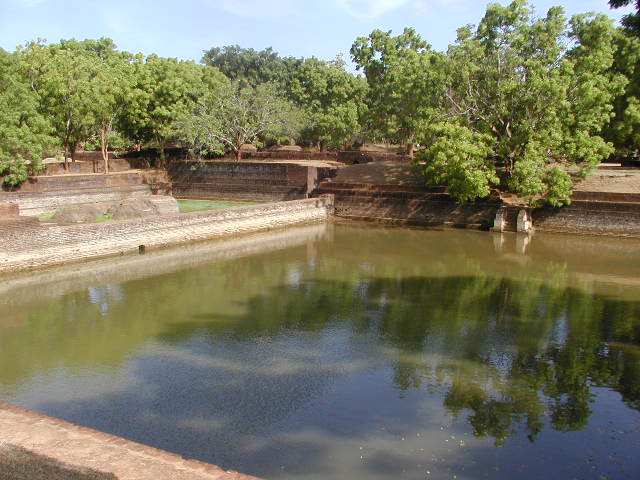
Of all the marvels of Sigiriya, none is more quietly astonishing than its water engineering, for the ancient builders devised a hydraulic system of such sophistication that parts of it still function today, fifteen centuries after they were made. To bring water to the gardens, the moats, and even the summit of the rock required a mastery of engineering that seems almost incredible for its age.
The fountains of the water gardens are the most celebrated example, fed by an underground network of channels and pressure systems that, remarkably, still send water spouting into the air during the rainy season, after fifteen hundred years. That an ancient hydraulic system should continue to work at all is extraordinary, and it speaks to the genius of the engineers who designed it and the quality of their construction.
Water had to be raised, stored, and distributed throughout the vast complex, from the moats at the base to the great tank cut into the summit, and all of this was achieved without any of the technology we might think necessary, through sheer ingenuity and a profound understanding of the behavior of water. The hydraulic works of Sigiriya are among the great achievements of ancient engineering anywhere in the world.
This mastery of water was not unique to Sigiriya but was the hallmark of the whole ancient civilization of Sri Lanka, whose reservoirs and irrigation systems were among the wonders of the classical world. At Sigiriya, this hydraulic genius was harnessed to create the gardens and defenses of a royal fortress, and the result is a monument that astonishes engineers and historians to this day.
Why the World Calls It a Wonder
Sigiriya is often hailed as the eighth wonder of the world, and while such titles are freely given, few places deserve the accolade more. In its combination of natural grandeur, architectural audacity, artistic beauty, and engineering genius, Sigiriya stands as one of the truly singular achievements of humanity, a monument that seems to defy the limits of what was possible in its age.

What sets Sigiriya apart is the sheer completeness of its vision, the way that fortress, palace, gardens, art, and engineering were fused into a single unified creation, staged as a symbolic journey from the plains to the sky. It is not merely a fortress with some fine features but a total work of art and engineering, conceived as a whole and executed with breathtaking ambition and skill.
The recognition of Sigiriya as a heritage of outstanding universal value has confirmed its place among the great treasures of the world, and it draws admirers from every corner of the globe, all of them, like the ancient authors of the mirror wall verses, moved to wonder by what they find. It is among the most beloved and celebrated sites in all of Asia, and the pride of Sri Lanka.
To call Sigiriya a wonder is not hyperbole but simple accuracy, for there is genuinely nothing else quite like it, this palace in the sky raised by a guilty king upon a mountain of rock and adorned with every art his civilization could command. It has amazed all who have beheld it for fifteen centuries, and it will go on amazing all who climb it for centuries still to come.
The Usurper King and His Fortress of Fear
The story behind Sigiriya is one of the most dramatic in all of Sri Lankan history, a tale of ambition, murder, and dread. In the late fifth century, a prince named Kashyapa seized the throne of the island kingdom, and according to tradition he did so by the terrible expedient of murdering his own father, the king, walling him up alive. His act made him ruler, but it also made him a marked man, for his brother, the rightful heir, had fled abroad and was expected to return one day to take revenge.
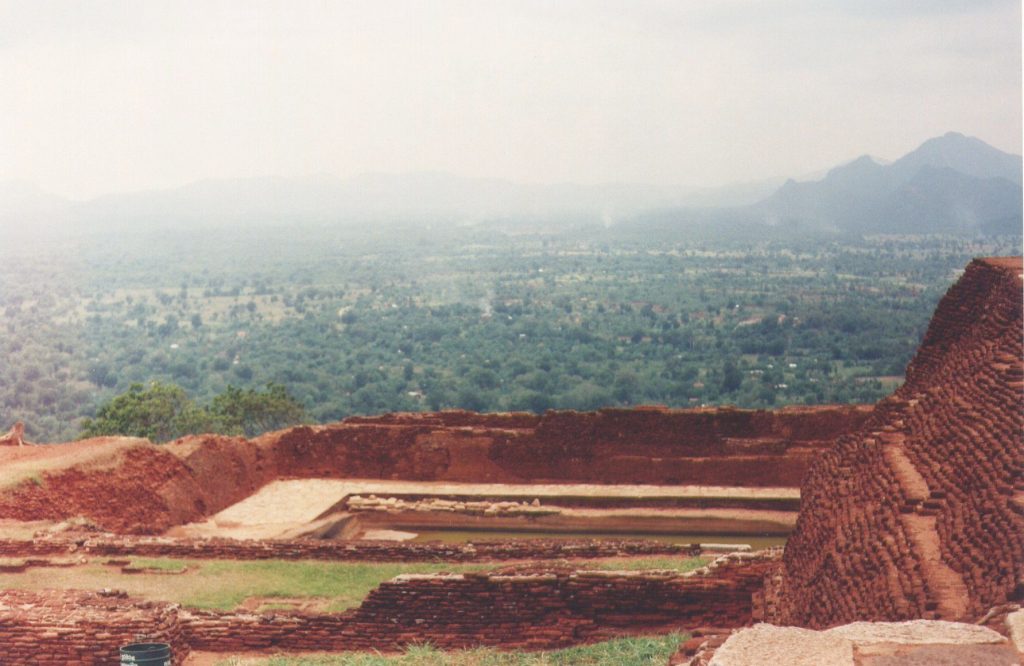
It was in the shadow of this fear that Kashyapa built Sigiriya. Abandoning the traditional capital, he moved to this remote and defensible rock and built upon it a fortress-palace where he might be safe from the vengeance he knew was coming. The whole extraordinary creation was, in a sense, the product of a guilty king’s dread, a stronghold in the sky raised by a man who knew he had powerful enemies and a brother’s justice to fear.
For some eighteen years Kashyapa reigned from his rock, developing Sigiriya into a complex city and fortress, adorning it with gardens and frescoes and every luxury, ruling his kingdom from the palace in the clouds. It was a strange and glittering interlude, the brief golden age of a usurper who had built himself a magnificent refuge against the day of reckoning he knew must come.
And come it did. When Kashyapa’s brother finally returned with an army to claim the throne, the guilty king came down from his rock to give battle on the plains, and there, according to the traditional account, his fortunes turned against him. Abandoned or defeated, Kashyapa met his end, and with his death the brief and brilliant age of Sigiriya as a royal capital came to a close, its palace in the sky left to a very different fate.
The traditional account of Kashyapa’s reign, preserved in the ancient chronicles of the island, reads almost like a tragic drama, the tale of a man whose guilt and fear drove him to extraordinary creation and finally to ruin. Whether every detail is literally true, the story gives Sigiriya its haunting human dimension, the sense of a great monument born from a soul in torment.
The Ancient Gardens at the Foot of the Rock
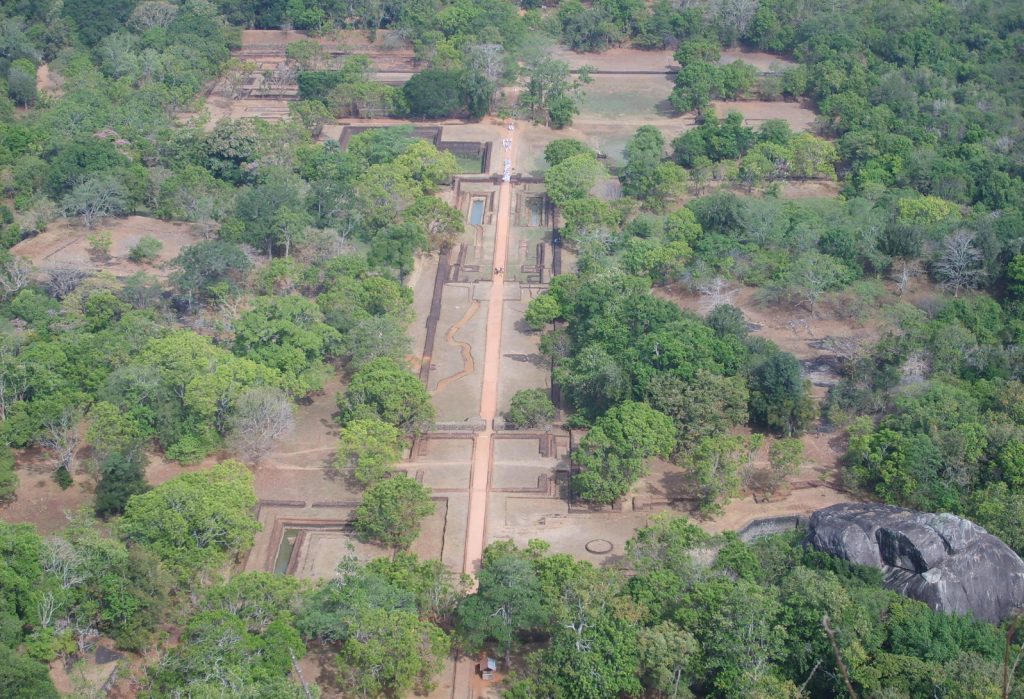
Before you even begin the climb, Sigiriya astonishes you with its gardens, for spread across the ground at the foot of the rock are some of the oldest and most sophisticated landscaped gardens in the world. Laid out with a precision and an artistry that seem almost impossibly advanced for their age, these gardens are among the great glories of the site and a testament to the genius of the ancient Sri Lankan engineers.
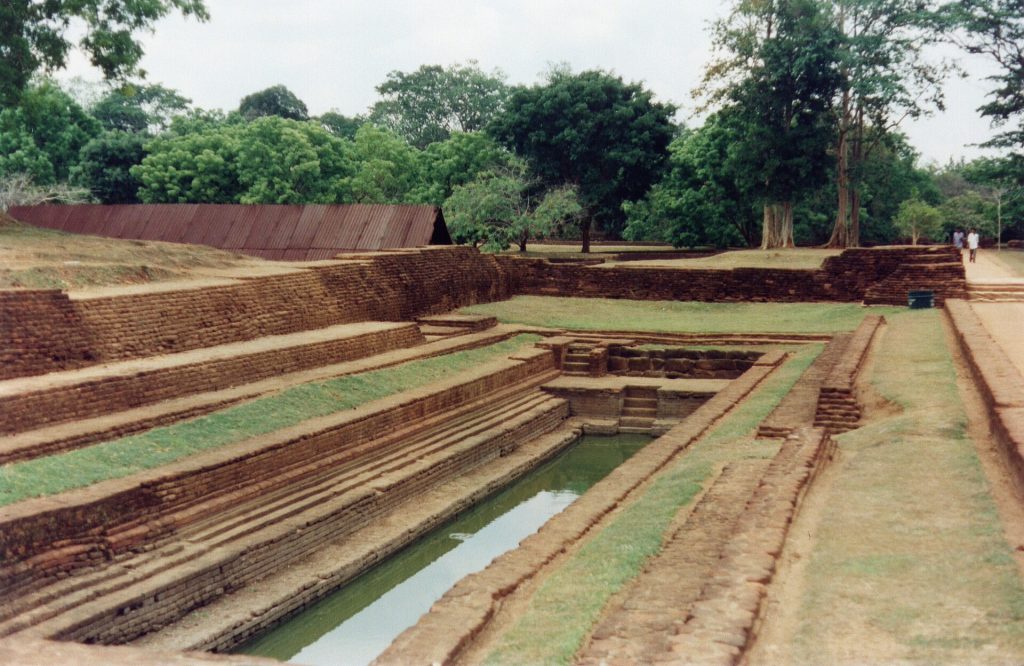
The gardens come in several kinds, and the visitor passes through them in sequence on the approach to the rock. First come the geometric water gardens, a formal arrangement of pools, islands, pavilions, and channels, laid out with mathematical symmetry and fed by an ingenious hydraulic system that brought water to fountains that, remarkably, still function during the rains after fifteen hundred years.
Beyond the water gardens lie the boulder gardens, a more organic landscape winding among the great rocks scattered at the foot of the main outcrop, and then the terraced gardens, climbing the slopes toward the rock itself. Together these three kinds of garden form a masterpiece of landscape design, a carefully composed progression that leads the visitor from the formal order of the plains toward the wild majesty of the rock.
The hydraulic engineering that made these gardens possible was extraordinary, an intricate system of channels, pumps, and pressure that distributed water throughout the complex, watering the gardens and filling the moats. That such sophistication was achieved so long ago is a marvel, and the gardens of Sigiriya rank among the most important early achievements of landscape architecture anywhere in the world.
View on Google Maps (7.957, 80.7603)
Wandering through these gardens on the approach to the rock, you pass from the ordered symmetry of the water gardens into the wilder beauty of the boulder gardens and up through the terraces, a deliberate progression that mirrors the ascent from the human world toward the sacred summit. The gardens are not a mere prelude but an integral part of the whole conception, the first act in the great staged drama of Sigiriya.
The Defenses That Ringed the Sacred Rock
Sigiriya was, above all, a fortress, and King Kashyapa did not rely on the rock alone for his defense. Around the base of the great outcrop he built an elaborate system of walls and moats, ringing the approach to the rock with formidable barriers that any attacker would have to overcome before even reaching the foot of the climb. The whole site was conceived as a stronghold, designed to protect the king from the vengeance he feared.

The moats were broad and deep, filled with water from the same hydraulic system that fed the gardens, and they formed a series of concentric barriers around the rock. Beyond and between them ran ramparts and walls, so that the approach to Sigiriya was a passage through successive lines of defense, each one to be crossed before the next could be reached, funneling any attacker into a killing ground before the rock.
This combination of natural and man-made defenses made Sigiriya formidable indeed. The sheer sides of the rock itself were the ultimate defense, an almost unclimbable natural wall, while the gardens, moats, and ramparts at its base protected the approaches and controlled access to the single guarded path that led to the summit. It was a fortress that used the landscape itself as its greatest weapon.
Yet for all these defenses, Sigiriya’s story reminds us that fortifications alone cannot save a doomed cause. When the reckoning came, Kashyapa did not shelter behind his walls but came down to fight in the open, and his fortress in the sky could not preserve him. The mighty defenses of Sigiriya were never truly tested by siege, and the rock’s brief life as a fortress ended not with an assault upon its walls but with the fall of the king who had built it.
The Heavenly Maidens Painted on the Rock
Partway up the great rock, sheltered in a hollow of the cliff face, survive some of the most beautiful and celebrated paintings of the ancient world, the frescoes of Sigiriya. These exquisite images depict graceful female figures, often called the heavenly maidens or cloud maidens, painted with extraordinary delicacy and grace upon the rock, their beauty undimmed by the passage of fifteen centuries.
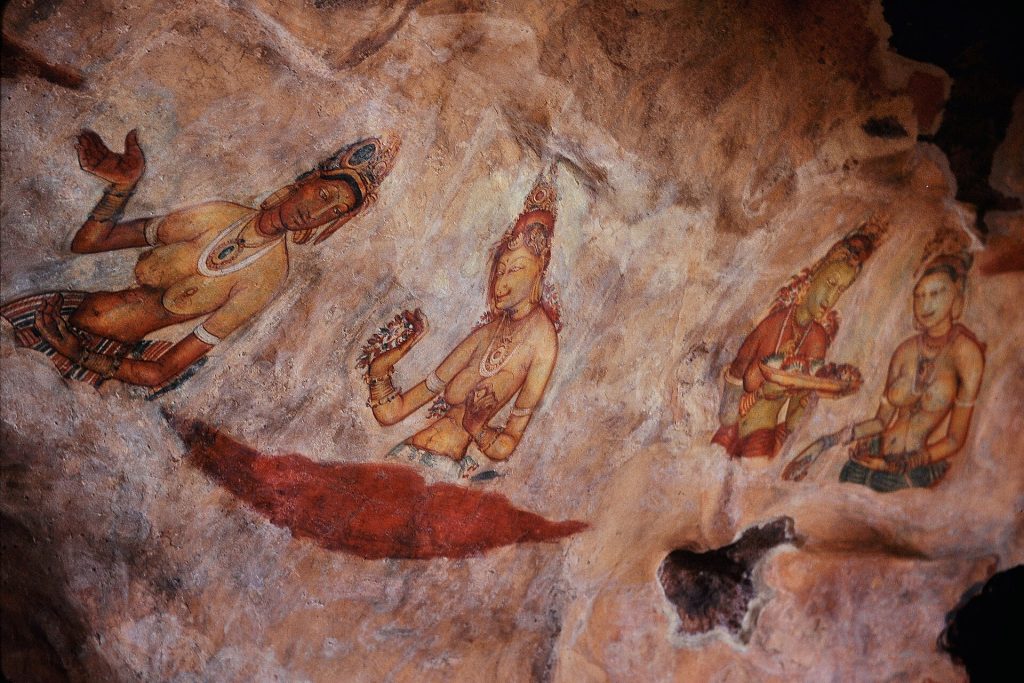
Once, it is believed, these paintings covered an enormous expanse of the western rock face, a vast gallery of figures hundreds of meters long, though most have been lost to time and the elements, and only a fraction survive today in their sheltered hollow. Even so, what remains is breathtaking, a precious window into the artistic achievement of ancient Sri Lanka and among the finest surviving paintings of the whole classical age of Asia.
The identity and meaning of the maidens have been much debated, whether they represent celestial beings, court ladies, or figures from religious tradition, but their artistic quality is beyond dispute. Rendered in warm, glowing colors, with a sensitivity to form and expression that is deeply moving, they are among the treasures of world art, and to see them clinging to the rock face after so many centuries is an unforgettable experience.
That such fragile paintings should survive at all, exposed on a cliff face for fifteen hundred years, is little short of miraculous, and they are protected today with the greatest care. The frescoes of Sigiriya are one of the supreme glories of the site, a poignant reminder of the beauty and refinement of the vanished court that once flourished on and around this extraordinary rock.
Photography of the frescoes is restricted to protect these fragile treasures, and standing before them in person, without the mediation of a camera, is all the more powerful for it. To gaze upon the serene faces of the maidens, painted with such tenderness so very long ago, is to feel an almost uncanny connection to the artists and the world that produced them.
The Mirror Wall and Its Thousand Voices
One of the most extraordinary features of Sigiriya is the mirror wall, a long stretch of wall along the pathway up the rock whose surface was once polished to such a high sheen that, according to tradition, the king could see his own reflection as he walked beside it. This remarkable feat of craftsmanship, achieving a mirror finish on plaster fifteen centuries ago, is a testament to the sophistication of the ancient builders.

But the mirror wall is famous for more than its polish, for over the centuries after Kashyapa, as Sigiriya became a place of pilgrimage and wonder, visitors began to inscribe verses upon its surface, recording their impressions of the rock, the frescoes, and the beauty of the maidens. Over a thousand of these verses survive, scratched into the wall between roughly the eighth and tenth centuries, a unique record of the responses of ancient visitors.
These inscriptions are of immense value, for they are among the earliest surviving examples of poetry and writing in the Sinhala language, offering precious evidence of the language, the literary sensibility, and the very handwriting of people who lived over a thousand years ago. Through them we hear the actual voices of ancient visitors, moved to poetry by the beauty of what they saw, an intimate connection across the centuries.
To stand before the mirror wall and know that its surface bears the words of people who climbed this rock more than a thousand years ago, expressing their wonder in verse much as we do today, is a deeply moving experience. It is a reminder that Sigiriya has been drawing awestruck visitors for well over a millennium, and that our own wonder at the rock joins a chorus of admiration that stretches back through the ages.
Scholars have pored over these ancient verses for the light they shed on the language and literature of a distant age, and for the simple human warmth they preserve, the delight and admiration of ordinary visitors set down in their own words. To read of the wonder they felt is to realize that the essential human response to Sigiriya has scarcely changed across a thousand years and more.
Through the Paws of the Great Lion
The most dramatic moment of the climb comes at a broad terrace partway up the rock, where the final ascent to the summit begins, for here once stood an enormous lion, carved from the rock, through whose open mouth the stairway to the palace ascended. It was from this colossal lion that the rock takes its name, Sinhagiri, the Lion Rock, and to climb to the palace was to pass, symbolically, into the very body of the beast.

The great lion has largely vanished, its head and upper body collapsed long ago, but its enormous paws survive, flanking the base of the final staircase, giving a vivid sense of the scale and the power of the original monument. To stand between these gigantic stone paws, each far taller than a person, and to imagine the towering lion that once rose above them, is to grasp the awesome theatrical grandeur of Kashyapa’s creation.
The symbolism of the lion was potent, for the lion was a royal and dynastic emblem in Sri Lanka, associated with the very origins of the Sinhalese people, and to pass through the lion’s mouth on the way to the palace was to pass through a gateway charged with meaning. The whole ascent was staged as a symbolic journey, culminating in this passage through the king of beasts to the royal city at the summit.
From the lion terrace, the final climb ascends the sheer upper rock by stairways clinging to the cliff, a dizzying ascent that brings home the audacity of building a palace in such a place. The lion gate was the threshold to this final stage, the dramatic climax of the staged progression up the rock, and even in its ruined state its surviving paws remain one of the most powerful and evocative sights at Sigiriya.
The scale of the vanished lion can be judged from the surviving paws, and it must have been an awe-inspiring and even terrifying sight, a colossal beast crouched upon the rock with the stairway rising into its mouth. To pass into the body of the lion on the way to the king was to undergo a kind of symbolic transformation, a passage befitting the approach to a ruler who claimed the majesty of the king of beasts.
The Royal City at the Top of the World
At last, after the climb past the gardens and frescoes and the mirror wall and the lion’s paws, you reach the summit, and there, spread across the top of the great rock, lie the ruins of Kashyapa’s palace, the royal city in the sky. The summit covers a surprising expanse, and across it are the foundations of the palace buildings, terraces, and a great tank cut into the rock to hold water, all that remains of the glittering court that once crowned the rock.

To have built a palace here, on the very top of a sheer column of granite nearly two hundred meters high, was an act of extraordinary ambition and engineering. Every stone, every drop of water, every luxury had to be hauled up the rock, and the logistics of maintaining a royal court in such a place stagger the imagination. Yet Kashyapa did it, creating a palace in the clouds that must have seemed, to his contemporaries, almost supernatural in its audacity.
The views from the summit are, of course, magnificent, sweeping out over the gardens far below and across the endless green of the surrounding jungle to the distant hills. From here Kashyapa could survey his domain and watch the approaches for the enemy he feared, master of all he beheld from his impossible perch atop the rock, ruling his kingdom from the sky.
To stand among these summit ruins today, with the wind in your face and the world spread out far below, is to feel the full force of the vision that created Sigiriya. Here was a king who would not merely build a fortress but would raise his palace above the world itself, and though his glory was brief, the extraordinary achievement endures, a royal city in the sky that has amazed all who have climbed to it for fifteen hundred years.
Water was carried even to this summit and stored in the great rock-cut tank, a detail that never fails to astonish, for it meant that the king could enjoy pools and gardens even here, at the very top of the world. The logistics of sustaining such luxury in such a place are almost beyond belief, and they speak to the boundless ambition that drove the whole extraordinary project.
From Royal Fortress to Forest Monastery
With the death of Kashyapa and the return of the capital to the traditional seat of the kings, Sigiriya’s brief life as a royal fortress came to an end, but the rock did not fall silent. Instead it entered a long second life as a Buddhist monastery, a use for which its remote and elevated setting was well suited, and monks dwelt among its rocks and caves for many centuries after the king who built it was gone.
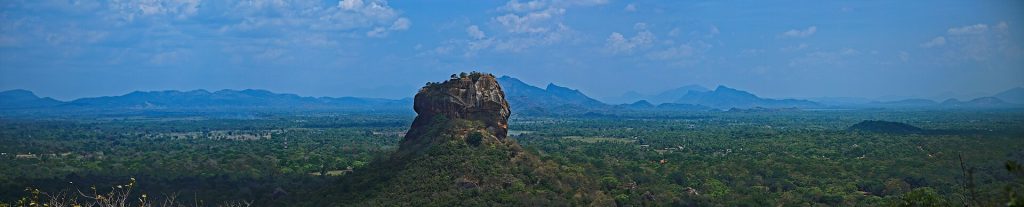
The transformation from royal fortress to religious retreat is a common one in the history of such places, and at Sigiriya the monastery endured for a very long time, perhaps as much as eight or nine centuries, long outlasting the brief royal interlude that had created the great monuments. The caves at the foot of the rock, some of which had sheltered ascetics even before Kashyapa, again became the dwellings of monks.
Eventually, however, even the monastery was abandoned, and Sigiriya passed into a long twilight of neglect, its palace and gardens overgrown, its frescoes and mirror wall left to the elements, its very existence fading toward legend. For centuries the great rock stood largely forgotten, its wonders known only to the local people and slowly succumbing to the reclaiming power of the jungle.
It was only in the modern era that serious archaeological investigation of Sigiriya began, clearing away the jungle, uncovering the gardens, and revealing once more the full extent of the marvels that Kashyapa had created. From this renewed attention has come the recognition of Sigiriya as one of the great treasures of world heritage, and its restoration to its place among the wonders of the ancient world.
Climbing the Lion Rock for Yourself
Climbing Sigiriya is one of the great experiences that travel in Sri Lanka can offer, an adventure that is physical, historical, and deeply moving all at once. The ascent is a real climb, up steep stairways and along walkways clinging to the rock, and it demands a reasonable level of fitness and a head for heights, but the rewards at every stage and at the summit are beyond measure.

Begin early in the day if you can, both to avoid the heat and the largest crowds and to enjoy the soft morning light, and take your time on the way up, for the climb is not a race but a staged journey through the wonders of the rock. Pause at the gardens, seek out the frescoes in their sheltered hollow, walk beside the mirror wall, and stand between the great lion’s paws before the final ascent.
At the summit, give yourself time to explore the ruins of the palace and to drink in the extraordinary views over the gardens and the jungle, and to reflect on the astonishing vision that raised a royal city in such a place. The descent offers its own perspectives, and the whole experience, from the gardens at the base to the palace in the sky, unfolds as one of the most memorable days that any traveler could hope for.
Come to Sigiriya ready to be amazed, for it is a place that seems to belong more to legend than to history, a palace in the clouds built by a guilty king, adorned with heavenly maidens, and guarded by a giant lion. Climb its ancient stairways, stand where Kashyapa once surveyed his kingdom from the sky, and let the Lion Rock of Sri Lanka take its place among the greatest wonders you will ever behold.
The nearby rock of Pidurangala offers a spectacular alternative viewpoint, from which Sigiriya itself can be seen rising from the jungle in all its majesty, and many visitors climb it to behold the Lion Rock from afar. However you choose to experience it, from the summit or from across the plains, Sigiriya rewards every effort with sights that will remain with you for the rest of your days.
Castles Nearby
If Sigiriya has amazed you, continue your journey through the great fortresses of Asia:
You May Like
Mafra, the Palace a King Built From a Vow