On the northwestern edge of Hanover lies one of the most magnificent baroque gardens in Europe, and at its head stands a palace reborn. Herrenhausen Palace was the summer residence of the electors of Hanover, the dynasty that would go on to rule Great Britain, and the Great Garden in front of it is a masterpiece of formal garden design.
Destroyed in the Second World War, the palace was rebuilt between 2009 and 2013 and now houses a museum and a conference centre. Around it stretch the Herrenhausen Gardens, with fountains, hedges, a gallery building, a grotto transformed by the artist Niki de Saint Phalle and one of the highest garden fountains in Europe.
In this article we will explore Herrenhausen from the electress who shaped its gardens to the palace’s destruction and rebirth, and we will finish with practical tips for your visit.
In This Article
- A Palace at the Head of a Great Garden
- Electress Sophia and the Great Garden
- From Electors to Kings of Great Britain
- The Court of Honour
- The Palace Seen From the Side
- The Herrenhausen Palace Museum
- Fountains and the Bell Fountain
- The Garden From Above
- Destruction and Rebirth
- The Great Garden
- The Gallery Building
- Herrenhausen on Video
- Visiting Herrenhausen Today
A Palace at the Head of a Great Garden
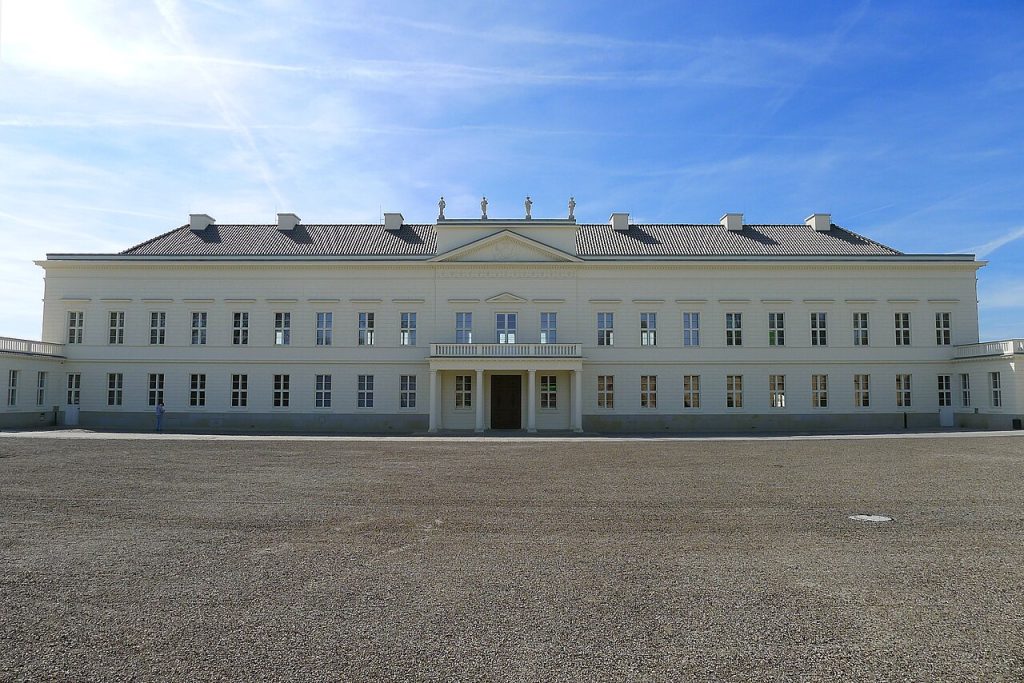
Arriving at Herrenhausen, you see a pale classical palace standing at the end of a vast formal garden. In front of it, geometric parterres, clipped hedges and fountains stretch toward the horizon.
The palace is relatively modest in size compared with the garden, a reminder that at Herrenhausen the garden was always the main attraction.
The ensemble lies in the district of Herrenhausen, a short tram ride from the centre of Hanover, the capital of Lower Saxony.
What makes Herrenhausen special is the combination of a world famous baroque garden with a palace rebuilt in the twenty first century.
Electress Sophia and the Great Garden
The creation of the Great Garden owes most to Electress Sophia of Hanover, wife of Elector Ernst August. A cultivated and energetic woman, she loved the garden and called it her life.
Under her direction, the garden was expanded and transformed into one of the finest baroque gardens in Europe, with the help of the French gardener Martin Charbonnier.
Sophia was also the granddaughter of King James I of England, and in 1701 she was named heir to the British throne. She died in 1714, just weeks before she would have become queen, and her son became King George I of Great Britain.
The philosopher Gottfried Wilhelm Leibniz was a frequent visitor and friend of the electress, and he walked and debated in the garden.
From Electors to Kings of Great Britain
When George I became king of Great Britain in 1714, the electors of Hanover moved their main court to London, but Herrenhausen remained a beloved summer residence.
For more than a century, the house of Hanover ruled both Britain and Hanover, and the kings returned to Herrenhausen when they visited their German lands.
In 1814 Hanover became a kingdom in its own right, and the palace was remodelled in the classical style by the architect Georg Ludwig Friedrich Laves in the 1820s.
The personal union with Britain ended in 1837, when Queen Victoria came to the British throne, as Hanover’s laws did not allow a woman to inherit.
The Court of Honour
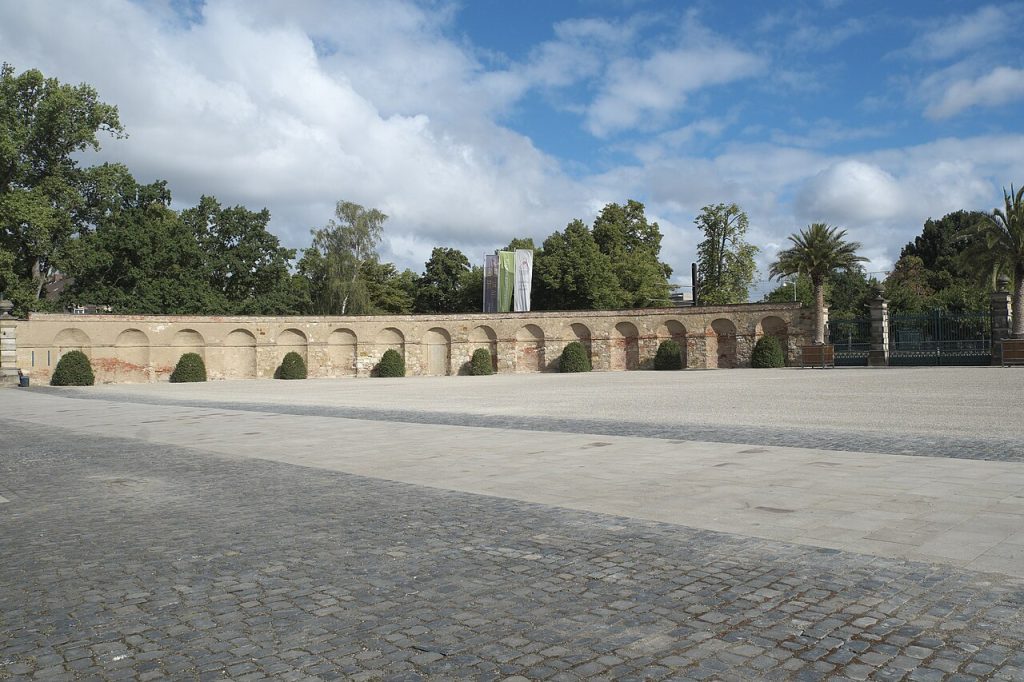
On the town side, the palace faces a court of honour, a formal forecourt that once received carriages and guests arriving from Hanover.
The reconstructed facade follows the classical design of Laves, with columns, a portico and restrained decoration.
The court of honour gives the palace a dignified approach and frames views of the building from the avenue.
The Palace Seen From the Side

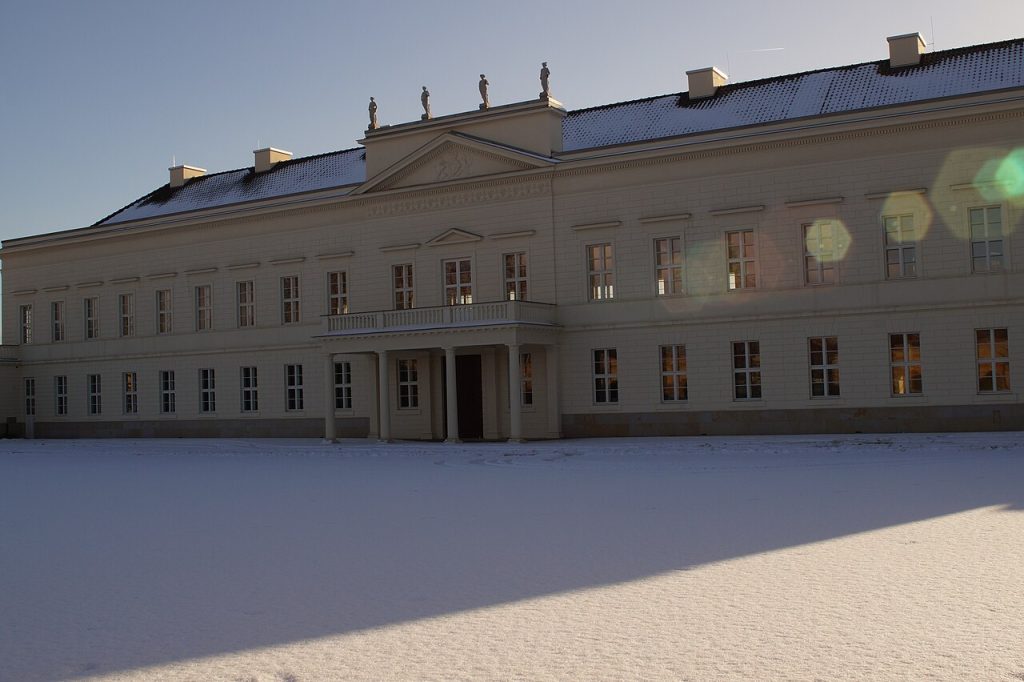
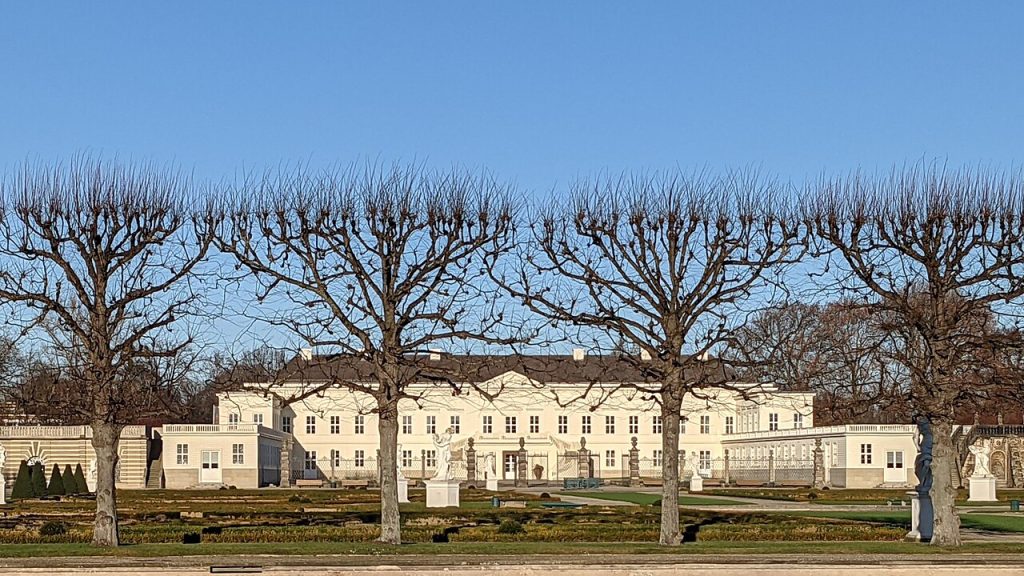
Seen from the side, the palace reveals its long, simple form, with regular windows and a roof that gives it a calm, horizontal character.
This view also shows how the palace sits between the court of honour and the garden, linking the two spaces.
The pale colour of the facades stands out against the green of the surrounding trees and hedges.
The Herrenhausen Palace Museum
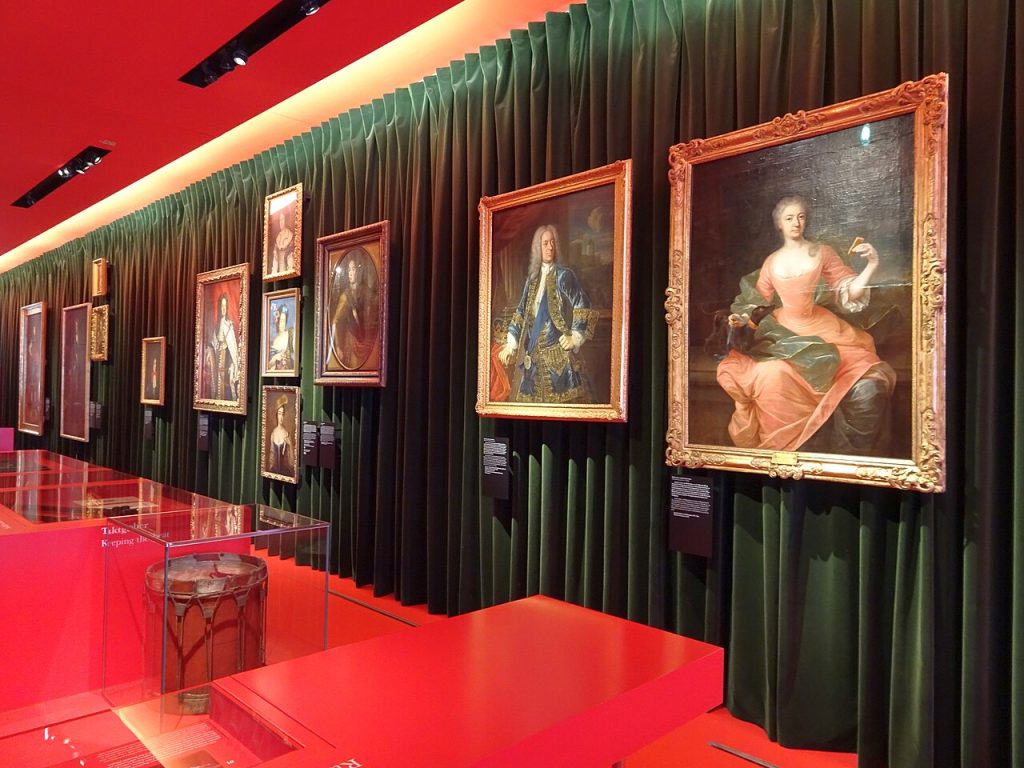
Inside the rebuilt palace, a museum presents the history of Herrenhausen, the Hanoverian dynasty and its connection with Great Britain.
Exhibitions display portraits, furniture, porcelain and documents, telling the story of the electors and kings who lived here.
The rest of the building serves as a conference centre, run by a foundation that supports research and science.
Fountains and the Bell Fountain
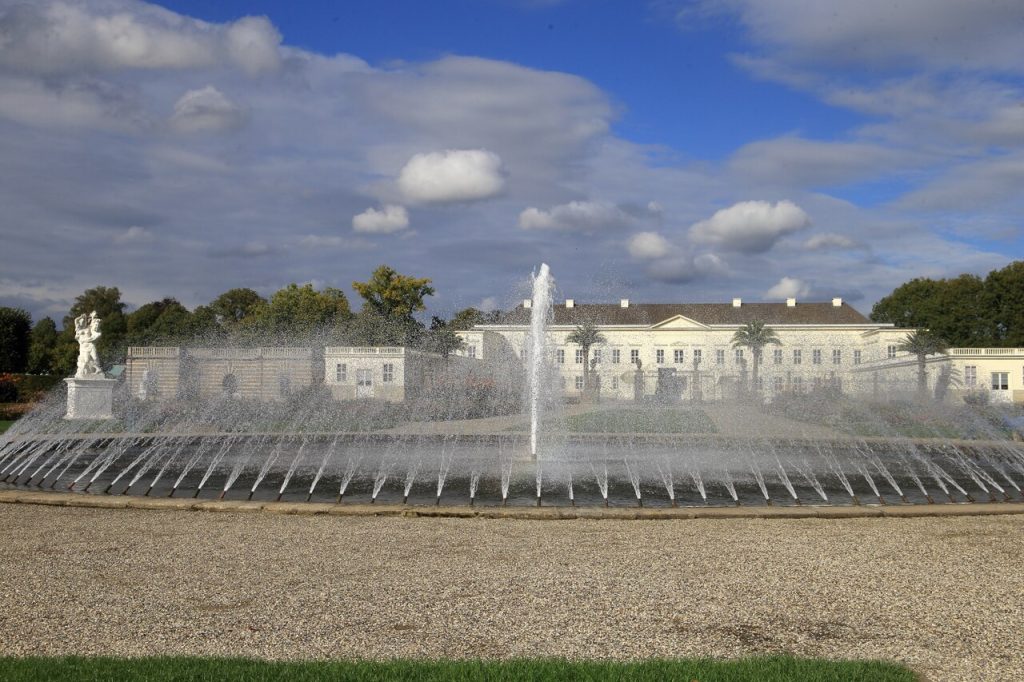
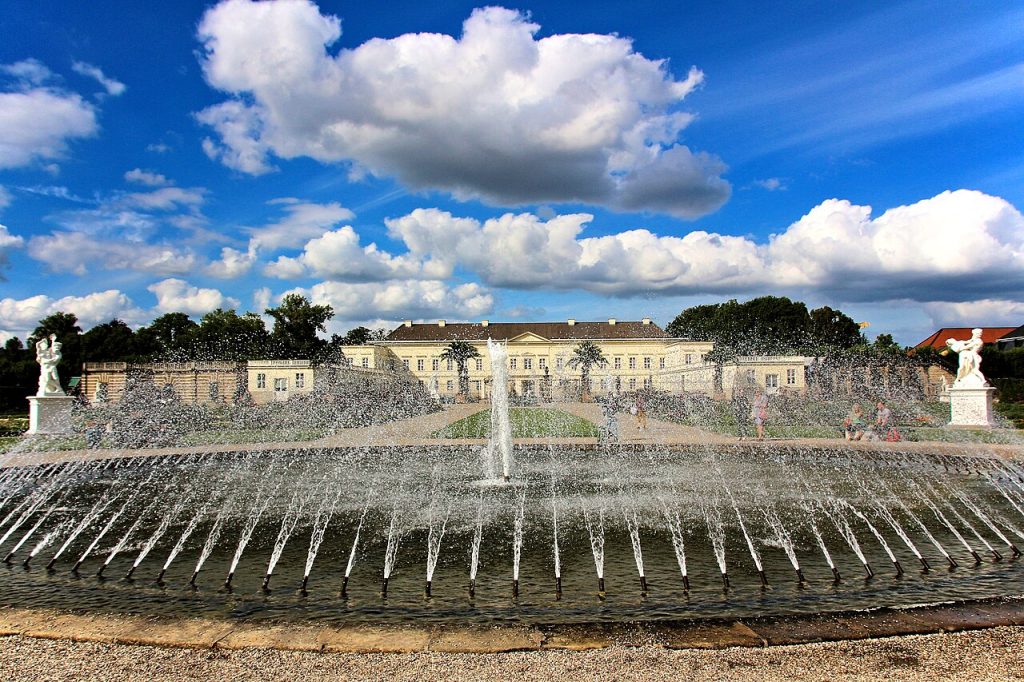
Fountains are one of the great features of the Great Garden. Water jets rise from basins throughout the parterres, adding sound and movement to the formal design.
The Bell Fountain, with its jets forming the shape of a bell, is one of the most charming.
The Great Fountain in the centre of the garden can shoot water more than seventy metres into the air, one of the highest garden fountains in Europe.
The Garden From Above

From the air, the Great Garden reveals its perfect geometry, with a rectangular plan surrounded by a moat and divided into parterres, avenues and bosquets.
The palace stands at one end, the Great Fountain at the centre and long avenues of lime trees at the sides.
Aerial views also show the other Herrenhausen gardens nearby, including the Berggarten with its botanical collections and the Georgengarten in the English landscape style.
Destruction and Rebirth
In 1943 the palace was destroyed by bombing, and for decades only the garden remained, with an empty space where the palace had stood.
Between 2009 and 2013 the palace was rebuilt, with its exterior reconstructed to the classical design of Laves and a modern interior.
The rebuilding restored the visual focus of the Great Garden and gave Hanover back one of its historic landmarks.
The Great Garden
The Great Garden covers about fifty hectares and is one of the most important baroque gardens in Europe. Its parterres, hedges and avenues have been carefully maintained and restored.
Highlights include the Garden Theatre, one of the oldest hedge theatres in Europe, where performances are still held in summer, and the grotto redesigned by the artist Niki de Saint Phalle with colourful mosaics.
Walking through the garden, you discover sculptures, fountains and hidden corners at every turn.
The Gallery Building

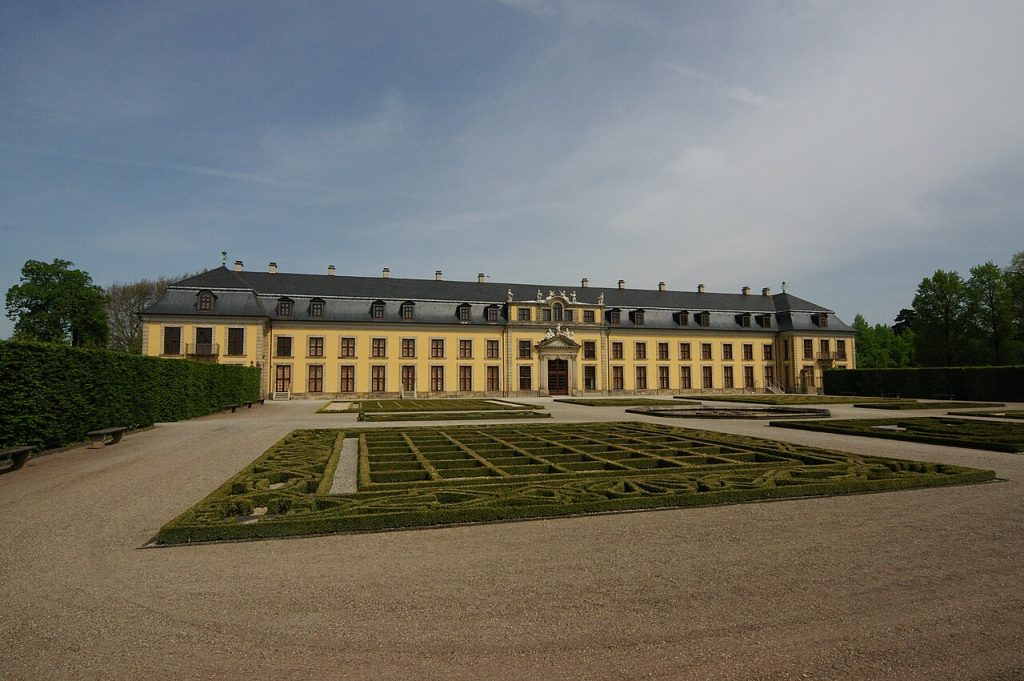
Beside the palace stands the Gallery Building, built at the end of the seventeenth century as a festival hall and orangery. Its main hall is decorated with frescoes depicting scenes from the story of Aeneas.
The building survived the war and is today used for concerts, receptions and events.
Its elegant architecture and painted interior give a vivid impression of the splendour of the electoral court.
Herrenhausen on Video
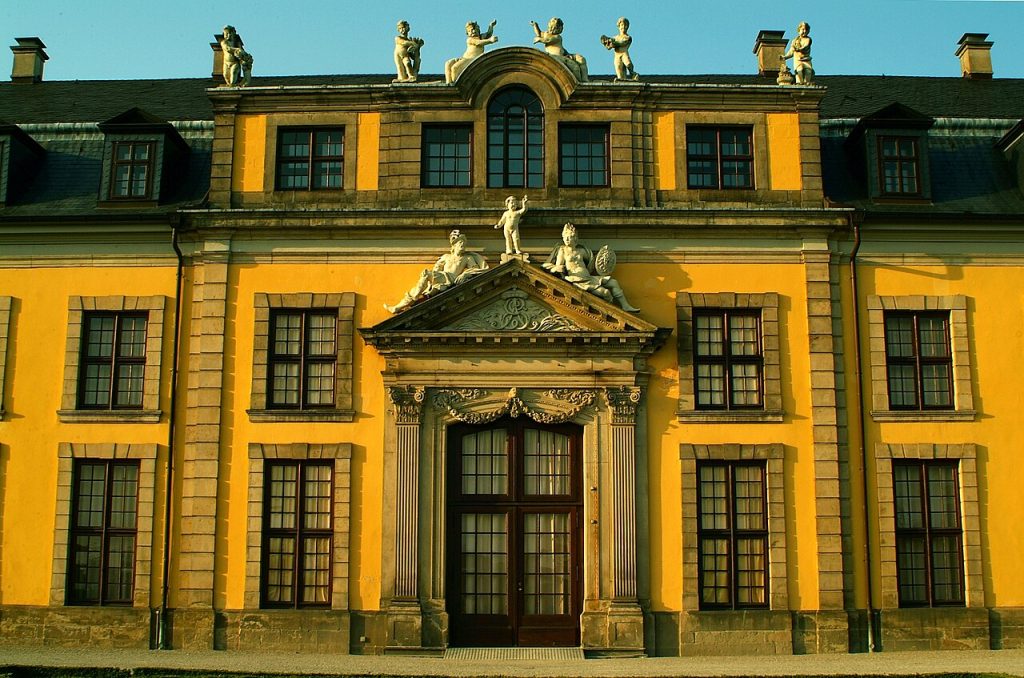
For a tour of the rebuilt palace, the video below takes you through Herrenhausen.
Watch for the museum rooms and the views over the Great Garden.
If the video inspires you, read on for practical tips.
Visiting Herrenhausen Today

The Herrenhausen Gardens are open all year, with an entrance fee for the Great Garden and the Berggarten. The palace museum has its own opening hours.
Herrenhausen lies a short tram ride from the centre of Hanover, and the gardens can easily fill a whole day.
In summer, look out for the illuminated evenings, fireworks competitions and open air theatre in the hedge theatre, which bring the baroque garden to life.
Combine your visit with Celle Palace and other residences of Lower Saxony for a full picture of the Guelph dynasty.
View the location on Google Maps
Palaces Nearby
If you have enjoyed this palace, northern Germany holds more remarkable residences. Here are two more well worth adding to your journey:
- Celle Palace – the residence of the dukes of Brunswick Luneburg, home of the oldest baroque theatre in Germany.
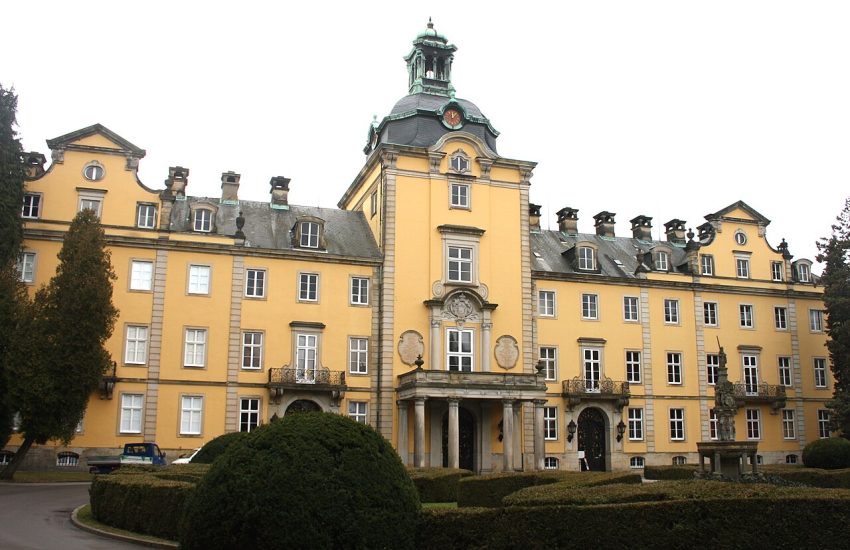
- Buckeburg Palace – the residence of the princes of Schaumburg Lippe with its famous Golden Hall.
You May Like


2 thoughts on “Herrenhausen Palace and the Great Garden of the Electors of Hanover”