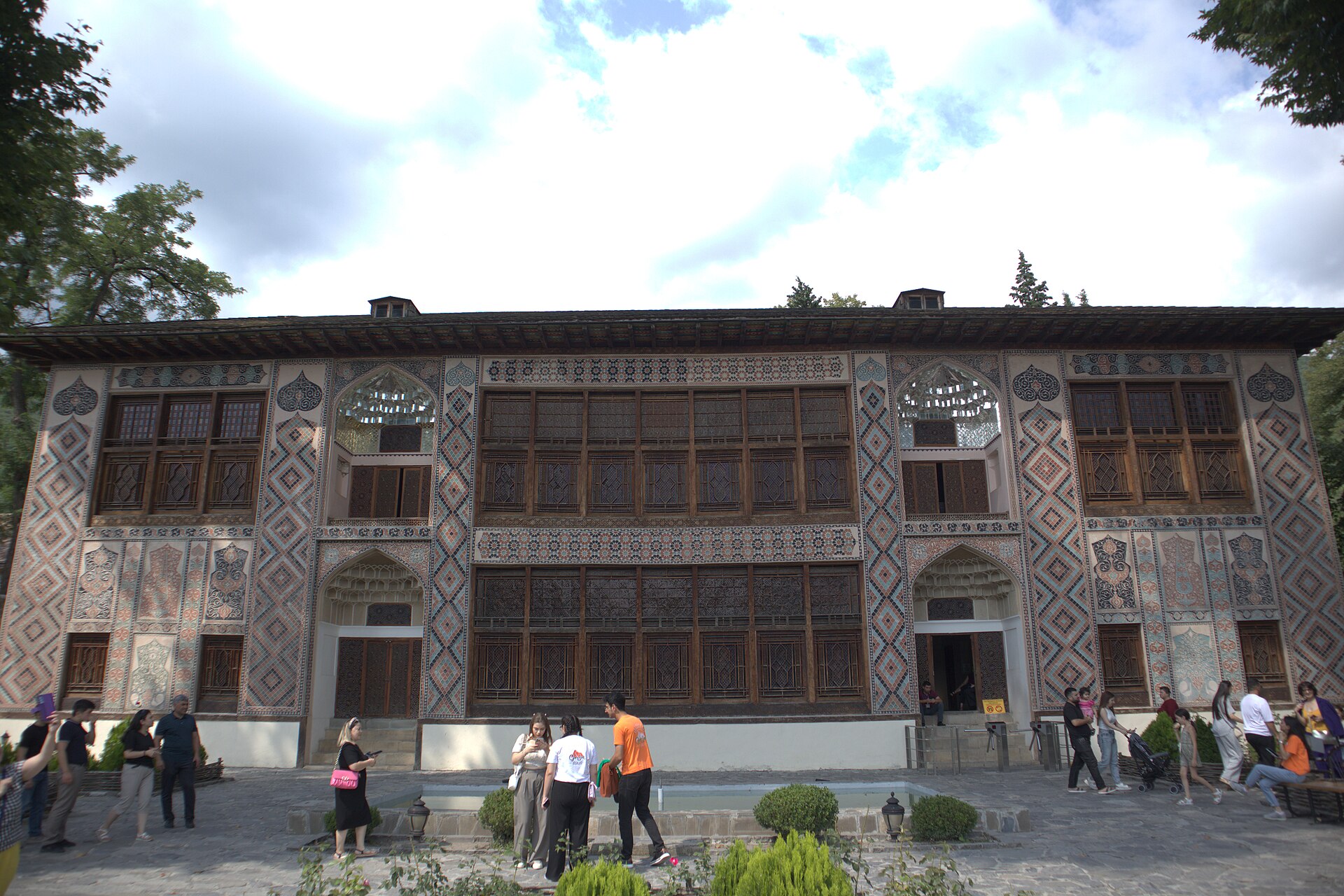
In the foothills of the Greater Caucasus, in the green and mountainous north of Azerbaijan, the old town of Sheki climbs its hillsides amid forests and rushing streams. At the top of the town, within the walls of a hilltop fortress, stands one of the most dazzling small buildings in the entire Caucasus, the summer palace of the khans of Sheki, a two-storey pavilion whose every surface blazes with color and pattern. To step before it is to encounter a jewel box rendered in stone, wood, and glass.
This is no vast palace of endless rooms and echoing halls. The Sheki Khan’s Palace is small, almost intimate, a summer residence rather than a great seat of government, and its magic lies precisely in the astonishing concentration of decoration lavished upon so modest a structure. Built in the eighteenth century, it served the rulers of the Sheki khanate, one of the many small states that flourished in the region during a turbulent and creative age.
The palace is famous above all for two things, its intricate stained-glass windows and its brilliantly painted interiors. The windows, made of thousands of tiny pieces of colored glass set into carved wooden lattices without the use of nails or glue, fill the rooms with jewel-like light, while the walls and ceilings are covered with vivid frescoes depicting flowers, hunting scenes, and dramatic battles. The effect is overwhelming, a total environment of color and craft.
Across the pages that follow you will discover the whole story of this extraordinary little palace, from the khanate that built it and the craftsmen who decorated it, through the marvels of its windows and frescoes, to its survival and its recognition today as part of a World Heritage Site. Come and step inside the painted summer palace in the mountains of Sheki.
In This Article
- The Khanate of Sheki
- Building the Summer Palace
- The Painted Facade
- The Marvel of the Shebeke Windows
- Walls of Painted Wonder
- The Rooms and Their Uses
- The Craftsmen and Their Traditions
- The Fortress and the Setting
- From Khanate to Empire
- A Treasure of World Heritage
- The Palace in the Life of Sheki
- See the Palace for Yourself
- Visiting Sheki Today
The Khanate of Sheki
To understand the palace you must first understand the small state that produced it. In the eighteenth century, following the decline of the great Persian empire that had dominated the region, the lands of the eastern Caucasus fragmented into a patchwork of small principalities known as khanates, each ruled by its own khan. Sheki was one of these, a mountain state that carved out its independence amid the general disorder.
The khanate of Sheki owed its rise to an energetic ruler who took advantage of the collapse of central authority to establish an autonomous state in the mountains. Protected by the difficult terrain and defended by its fortress, Sheki was able to maintain its independence for a time against the pressures of larger neighbors, and its rulers accumulated the wealth and confidence to express their status through building.
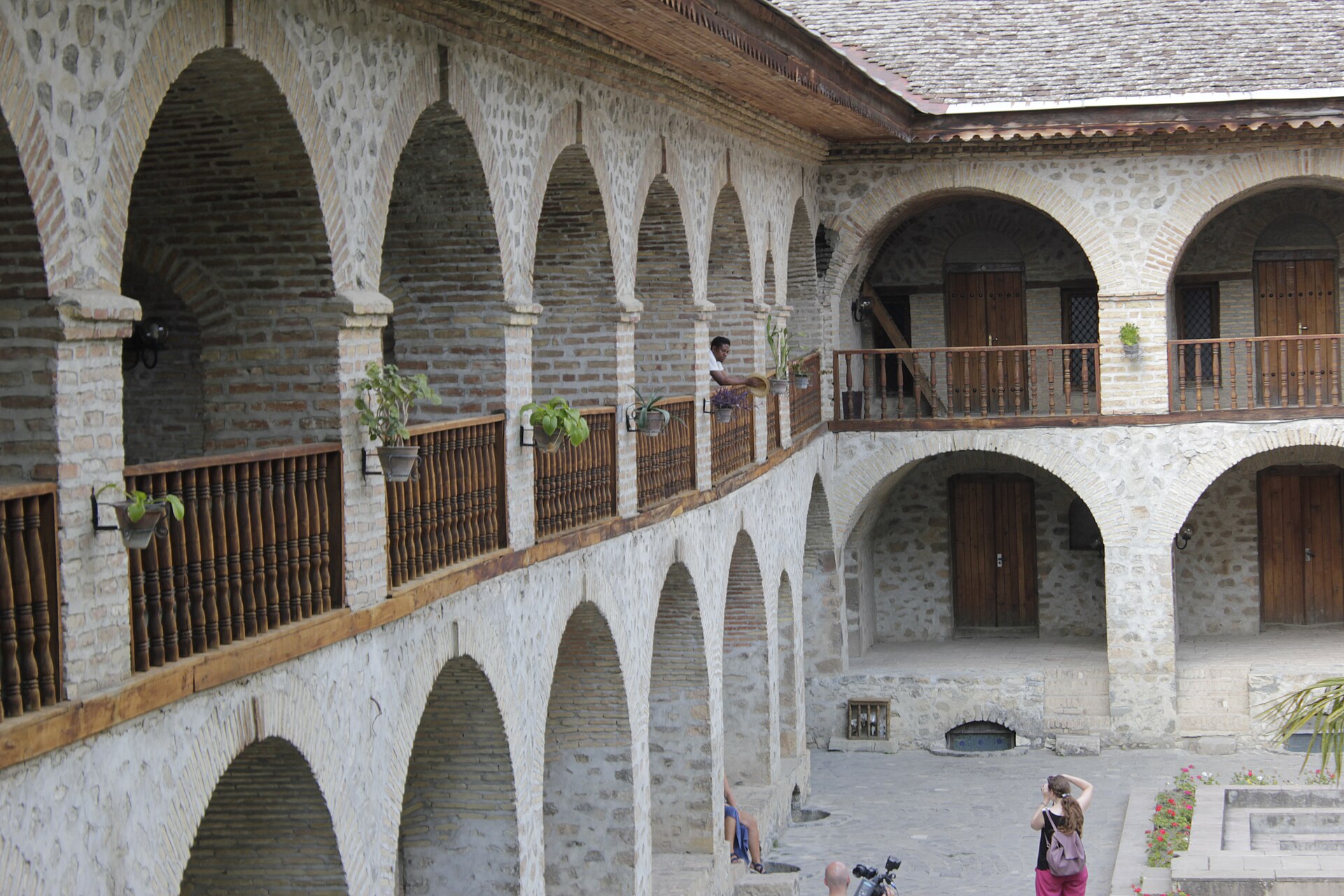
Sheki’s prosperity rested in part on its position along trade routes and on the local production of silk, for which the region was famous. The town became a center of the silk trade, its caravanserais receiving merchants and their goods, and the wealth generated by this commerce helped to fund the cultural flourishing of which the palace is the most brilliant surviving expression.
It was in this context, a small but wealthy mountain state proud of its independence, that the khans of Sheki built their summer palace within the hilltop fortress, a building meant to delight and to impress, and to proclaim the refinement of a court that punched far above its weight.
The age of the khanates was, for all its political fragmentation, a period of remarkable cultural vitality. Freed from the control of a distant imperial center, the local rulers competed with one another in patronage and display, and this rivalry spurred the arts to new heights. The Sheki palace is a direct product of that competitive flowering, a small state’s bid for glory expressed in glass and paint.
Building the Summer Palace
The palace was built in the eighteenth century as a summer residence for the khans, a place to escape the heat and enjoy the cool mountain air within the security of the fortress walls. It was never intended as the main seat of government or the primary residence, but rather as a pleasure pavilion, and this purpose shaped both its modest scale and its lavish decoration.
The building is a compact two-storey structure, its plan straightforward, its glory lying entirely in its surfaces. Rather than impressing through size, the palace was designed to overwhelm through the sheer intensity and quality of its ornament, an approach that reflects a sophisticated aesthetic sensibility and enormous confidence in the skill of the craftsmen employed.
Local and regional artisans were brought together to create the decoration, masters of woodwork, glasswork, and painting whose combined efforts produced the astonishing interiors. The construction and decoration of such a building was a major undertaking for a small state, a demonstration of the khan’s resources and taste, and a magnet for the finest artistic talent the region could offer.
When it was complete, the summer palace stood as the crowning achievement of the Sheki court, a building of such beauty that it became famous far beyond the borders of the little khanate, and one that continues to astonish visitors more than two centuries after it was made.
It is worth reflecting on the choice to lavish such resources on a summer pavilion rather than a fortress or a great hall of state. That decision tells us something about the values of the Sheki court, which prized beauty, pleasure, and refinement, and about the confidence of a ruler secure enough in his mountain stronghold to devote his wealth to delight rather than defense.
The Painted Facade
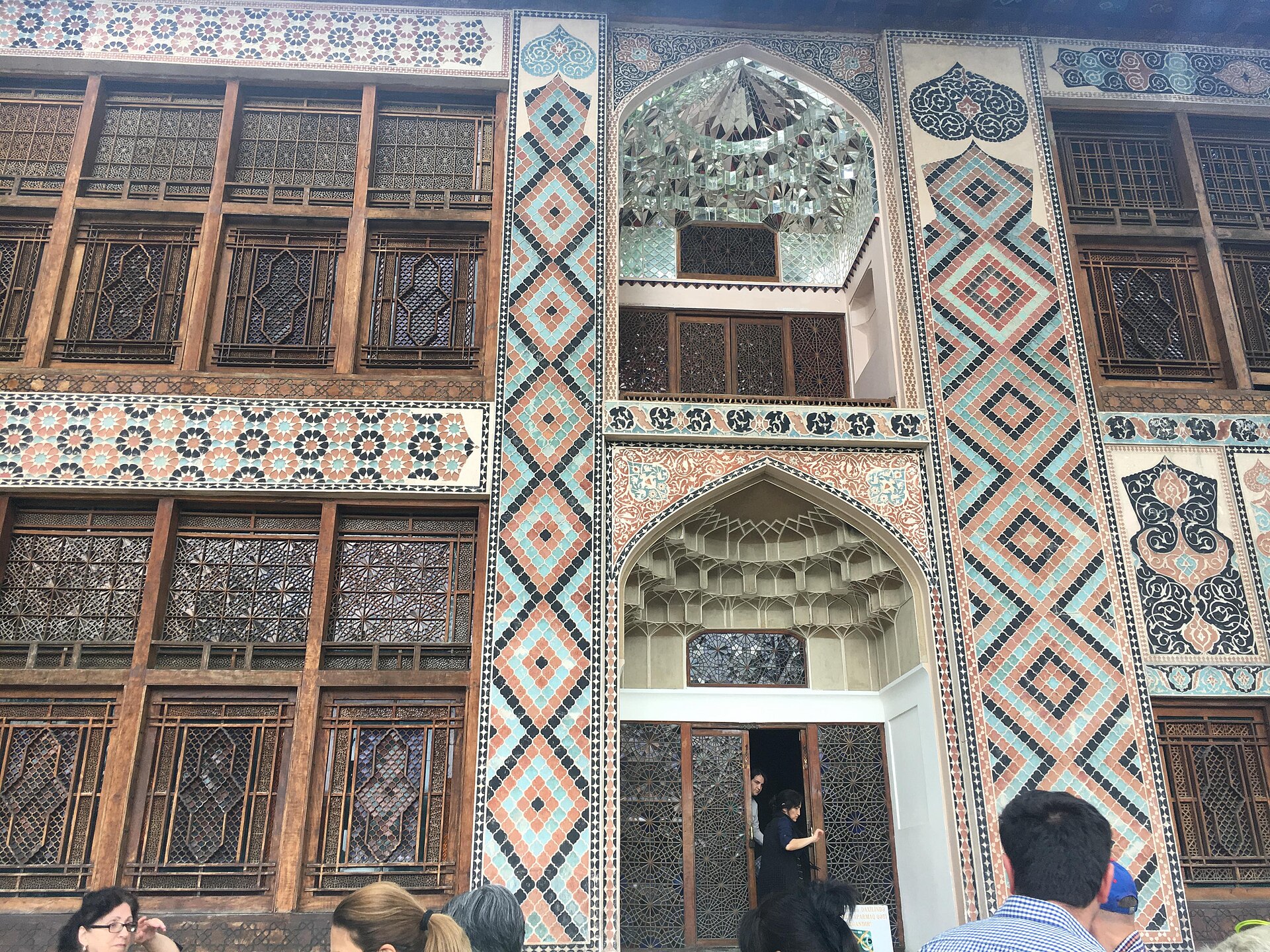
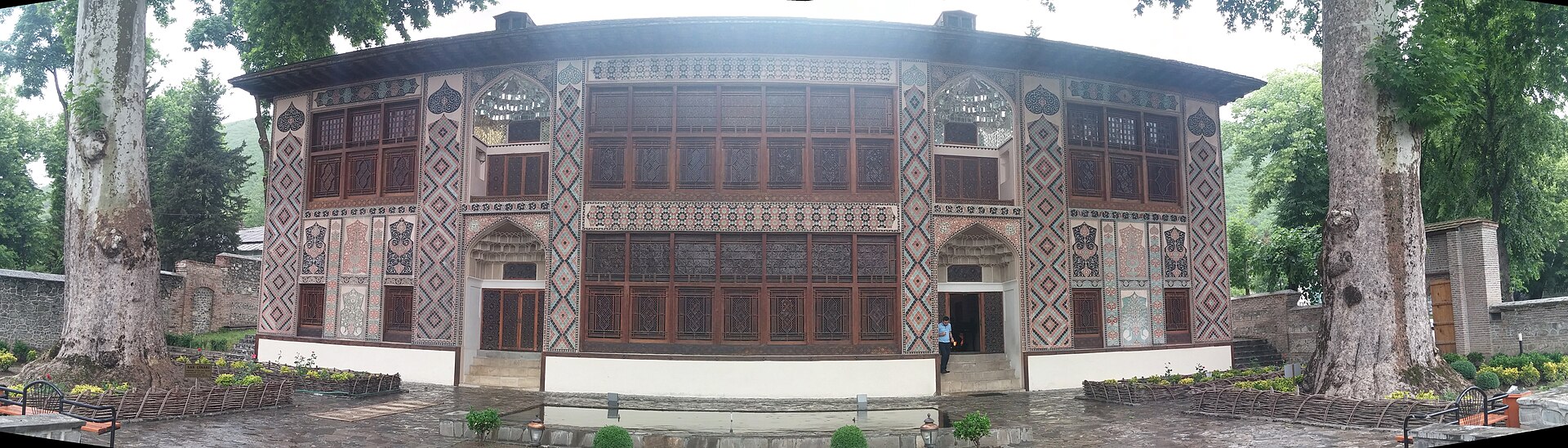
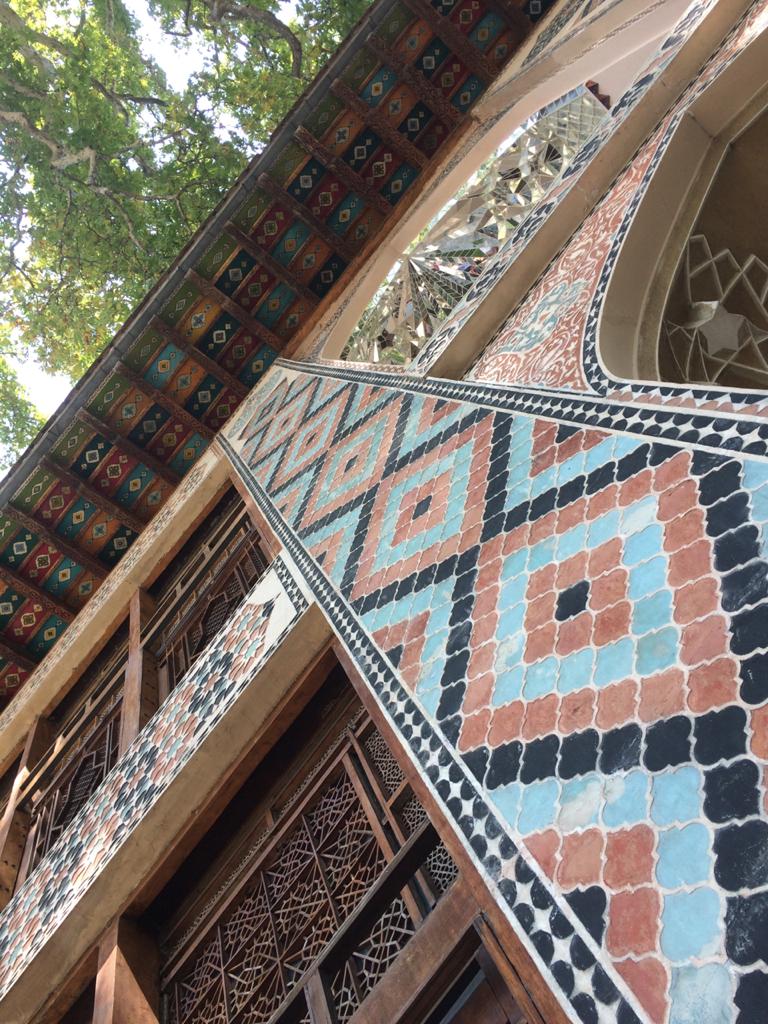
Even before you enter, the palace announces its character through its remarkable facade. The front of the building is dominated by a great expanse of stained-glass window, framed by decorated surfaces, and the whole exterior gives a foretaste of the riot of color and pattern waiting within. There is nothing austere or forbidding here, the palace invites and delights from the first glance.
The facade is enlivened with painted decoration and with the intricate wooden framework of the windows, and it is set beneath a projecting roof that shades the front of the building and casts changing shadows across its surface. Two tall plane trees traditionally stand before the palace, their great age and size adding to the sense that this is a place steeped in history.
The composition of the facade balances the large central window with decorated panels and niches, creating a surface that rewards both the distant view and close inspection. The painted elements, with their floral and geometric motifs, prepare the visitor for the far greater profusion of decoration inside, functioning as an overture to the visual symphony within.
Standing before the palace, framed by its ancient trees and set against the backdrop of the fortress and the mountains beyond, the visitor already senses that this is a building of exceptional character, a small structure that has poured all its ambition into beauty rather than mass.
The Marvel of the Shebeke Windows
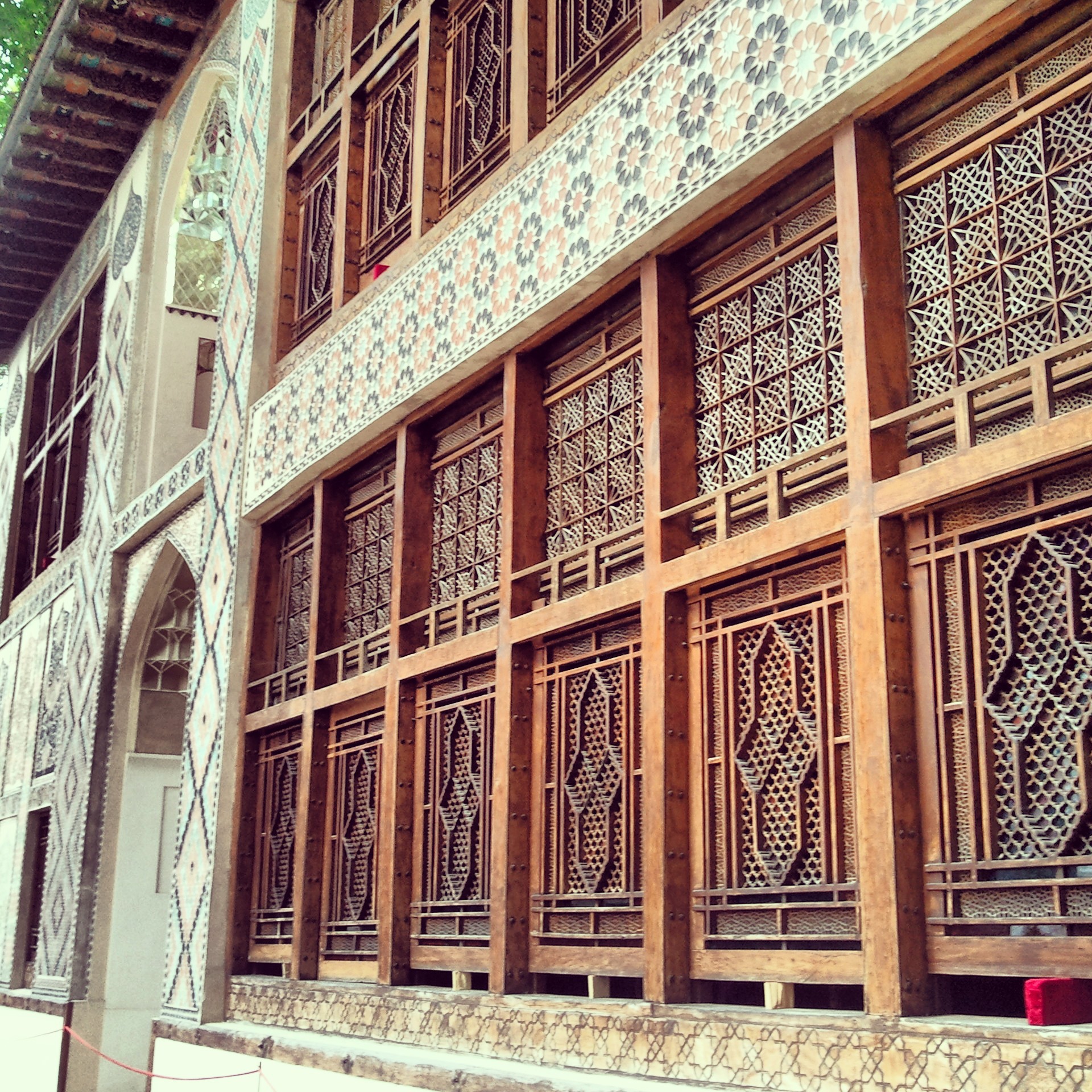
The most celebrated feature of the Sheki Khan’s Palace is its extraordinary stained-glass windows, made using a traditional technique known as shebeke. These windows are constructed from thousands of small pieces of colored glass held in place by an intricate lattice of carved wooden pieces, and, remarkably, the entire assembly is put together without a single nail or drop of glue.
The precision required for this technique is astonishing. Each tiny piece of wood must be cut and shaped to interlock perfectly with its neighbors, forming a rigid framework strong enough to hold the glass securely, all through the accuracy of the joinery alone. A single window may contain thousands of individual pieces, and the making of such a window is the work of a true master, one of the most demanding crafts in the region’s artistic tradition.
The effect of these windows is magical. As sunlight passes through the colored glass, it fills the rooms with shifting patterns of red, blue, green, and gold, transforming the interior into a space of jewel-like radiance that changes constantly with the movement of the sun. The windows are not merely decorative but essential to the whole atmosphere of the palace, painting the very air with color.
The shebeke tradition remains alive in Sheki, where craftsmen continue to practice and teach this demanding art, ensuring that the skills that created the palace’s windows are passed on to new generations. To watch a master at work, fitting the tiny pieces together without nail or glue, is to understand something of the patience and genius that went into the palace.
There is something deeply appropriate about a mountain khanate expressing its wealth through light itself. In an age before electricity, the ability to fill a room with shifting jewel-toned color simply by admitting the sun was a kind of magic, and the shebeke windows would have seemed, to visitors of the eighteenth century, an almost miraculous demonstration of the khan’s command over beauty and craft.
Walls of Painted Wonder
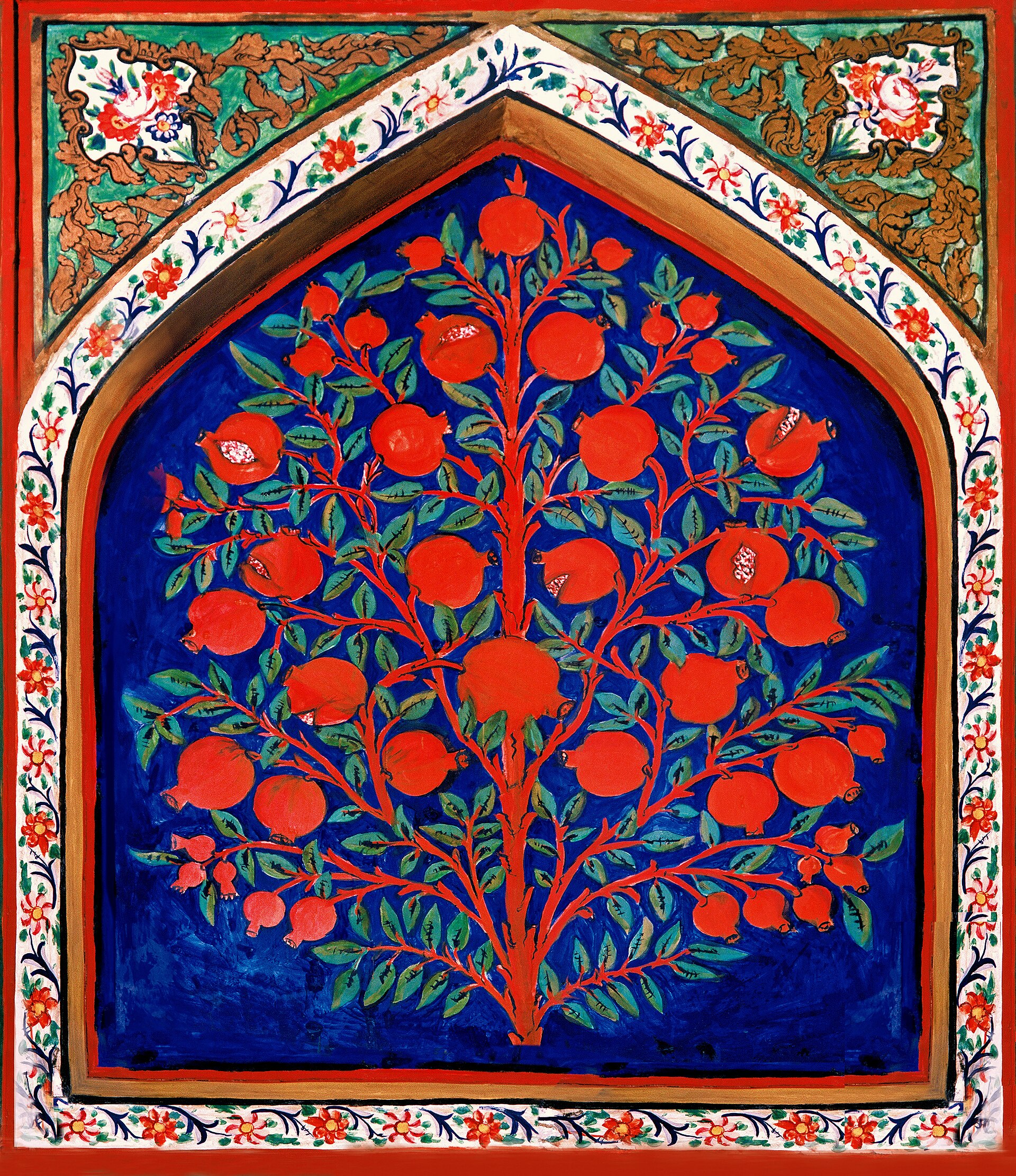
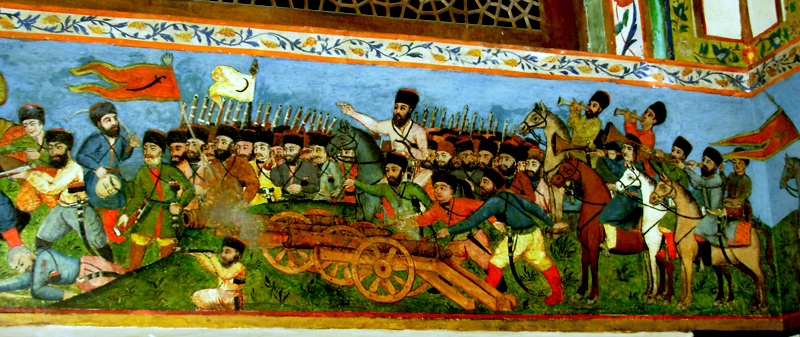
If the windows fill the palace with colored light, the painted decoration fills it with imagery of astonishing richness. Virtually every surface of the interior, walls and ceilings alike, is covered with frescoes and painted ornament, creating a total environment in which the visitor is surrounded on all sides by color, pattern, and scene.
The subjects of the paintings are wonderfully varied. Delicate floral designs and arabesques cover many surfaces, evoking gardens in permanent bloom, while other panels depict scenes of the hunt, with riders pursuing their quarry through stylized landscapes. These images speak of the pleasures of aristocratic life and of the natural world that surrounded the mountain court.
Most dramatic of all are the battle scenes, vivid depictions of warfare that adorn some of the palace’s most important rooms. These paintings, full of movement and incident, celebrate the martial prowess of the khans and their warriors, and they lend an air of heroism and drama to the interiors, reminding the visitor that this was the residence of rulers who had won and defended their independence by the sword.
Together these paintings create an interior of overwhelming visual richness, a place where there is no blank surface, no moment of rest for the eye, only an endless unfolding of color and image that testifies to the extraordinary ambition and skill of the artists who created it.
Scholars who study the paintings find in them a fascinating record of the tastes and preoccupations of the Sheki court. The choice of subjects, the flowers, the hunts, the battles, tells us what the khans wished to celebrate about themselves and their world, while the style of the painting connects Sheki to the broader artistic currents of the Persian and Islamic world of which the khanate was a part.
The Rooms and Their Uses
The palace’s compact plan contains a sequence of rooms across its two floors, each decorated with the same lavish attention but serving different functions in the life of the summer court. The arrangement reflects the needs of a royal residence in miniature, with spaces for reception, for private retreat, and for the ceremonies of the khan.
The grandest rooms were those used for receiving guests and conducting the ceremonial business of the court. Here the decoration reaches its greatest intensity, with the finest windows and the most elaborate paintings, for these were the spaces designed to impress visitors and to display the wealth and refinement of the khan to the greatest effect.
Other rooms served more private purposes, providing the khan and his household with places to withdraw from the public gaze, though even these are decorated to a standard that would grace a palace many times the size. The consistency of quality throughout the building is itself remarkable, a sign that no part of the palace was considered unworthy of the highest artistic effort.
Moving through the rooms, the visitor experiences a succession of dazzling spaces, each slightly different in its decoration yet all united by the same aesthetic of overwhelming richness, so that the whole small building becomes a single continuous work of art rather than a mere collection of rooms.
Climbing between the two floors, the visitor also becomes aware of how cleverly the small building has been organized to make the most of its limited space. Every room has been given its own character through subtle variations in the decoration, so that the palace never feels repetitive despite the consistency of its overwhelming ornament, a triumph of design as much as of craft.
The Craftsmen and Their Traditions
The palace is, above all, a monument to the skill of the craftsmen who created it. The making of such a building drew on deep traditions of woodwork, glasswork, and painting that had developed over centuries in the region, and it brought together masters of each of these arts in a single coordinated effort of extraordinary ambition.
The shebeke window-makers, the fresco painters, and the woodworkers who created the structural and decorative timber elements all had to work in harmony, their contributions combining into a unified whole. This coordination of multiple crafts at the highest level speaks to a mature and sophisticated artistic culture, one capable of organizing and sustaining work of great complexity.
These traditions were not confined to the palace but were part of the wider artistic life of Sheki and the region. The same skills that adorned the khan’s residence were applied to mosques, houses, and other buildings, and the town became known as a center of craftsmanship, a reputation that endures to this day.
The survival of these crafts into the present is one of the happier aspects of the palace’s story. In workshops in Sheki, artisans continue to practice the shebeke technique and other traditional arts, both to maintain and restore the historic buildings and to create new work, keeping alive the living traditions that gave birth to the painted palace.
The transmission of these skills from master to apprentice, across generation after generation, is itself a kind of monument, as impressive in its way as the palace it produced. That the chain has not been broken, that living craftsmen can still make a shebeke window as their predecessors did more than two centuries ago, is a rare and precious thing in the modern world.
The Fortress and the Setting
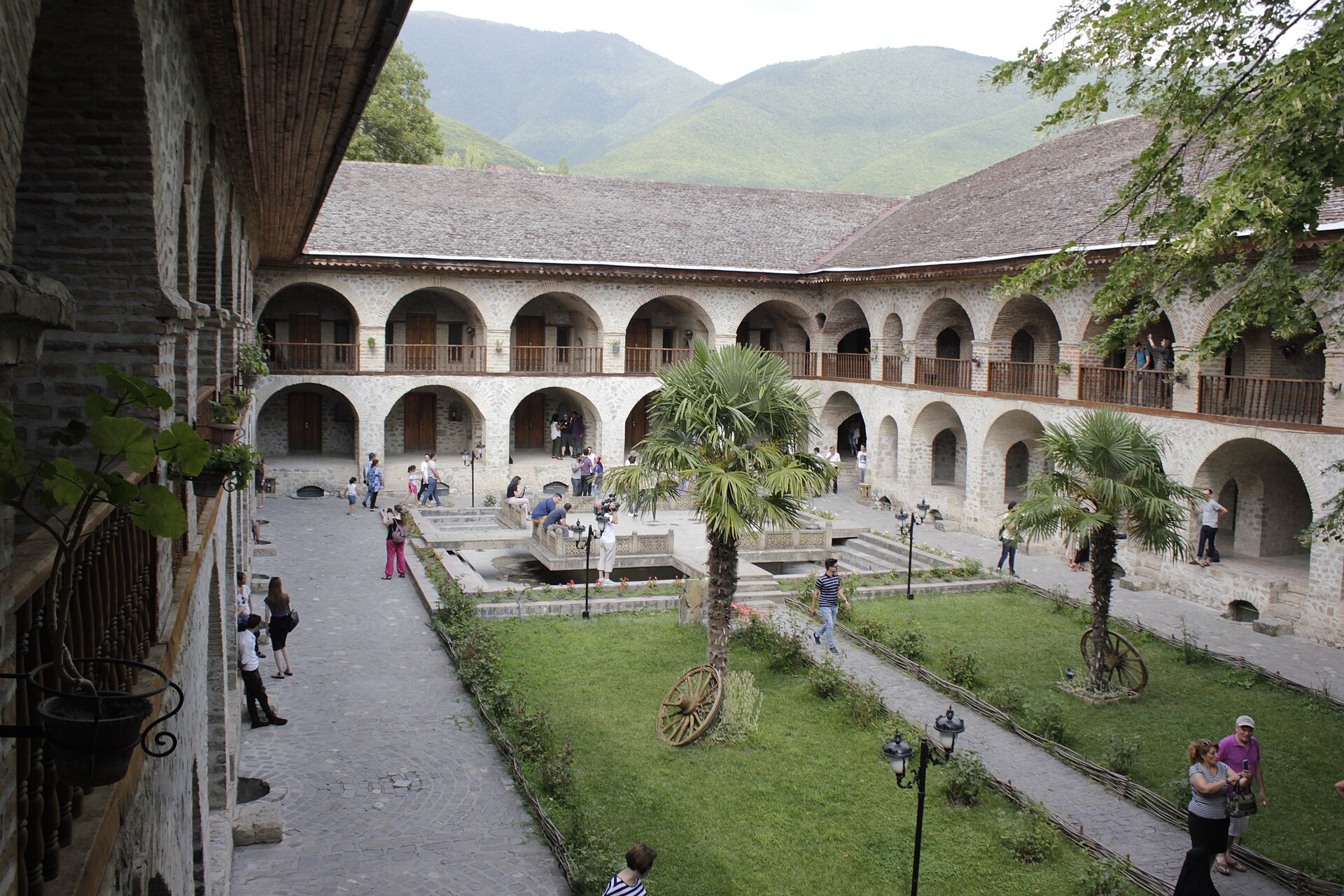
The palace does not stand alone but within the walls of a hilltop fortress that once formed the defensive and administrative heart of the khanate. The fortress walls, enclosing the summit of the hill, provided security for the khan and his court, and within them, alongside the summer palace, stood the other buildings needed for the life of the state.
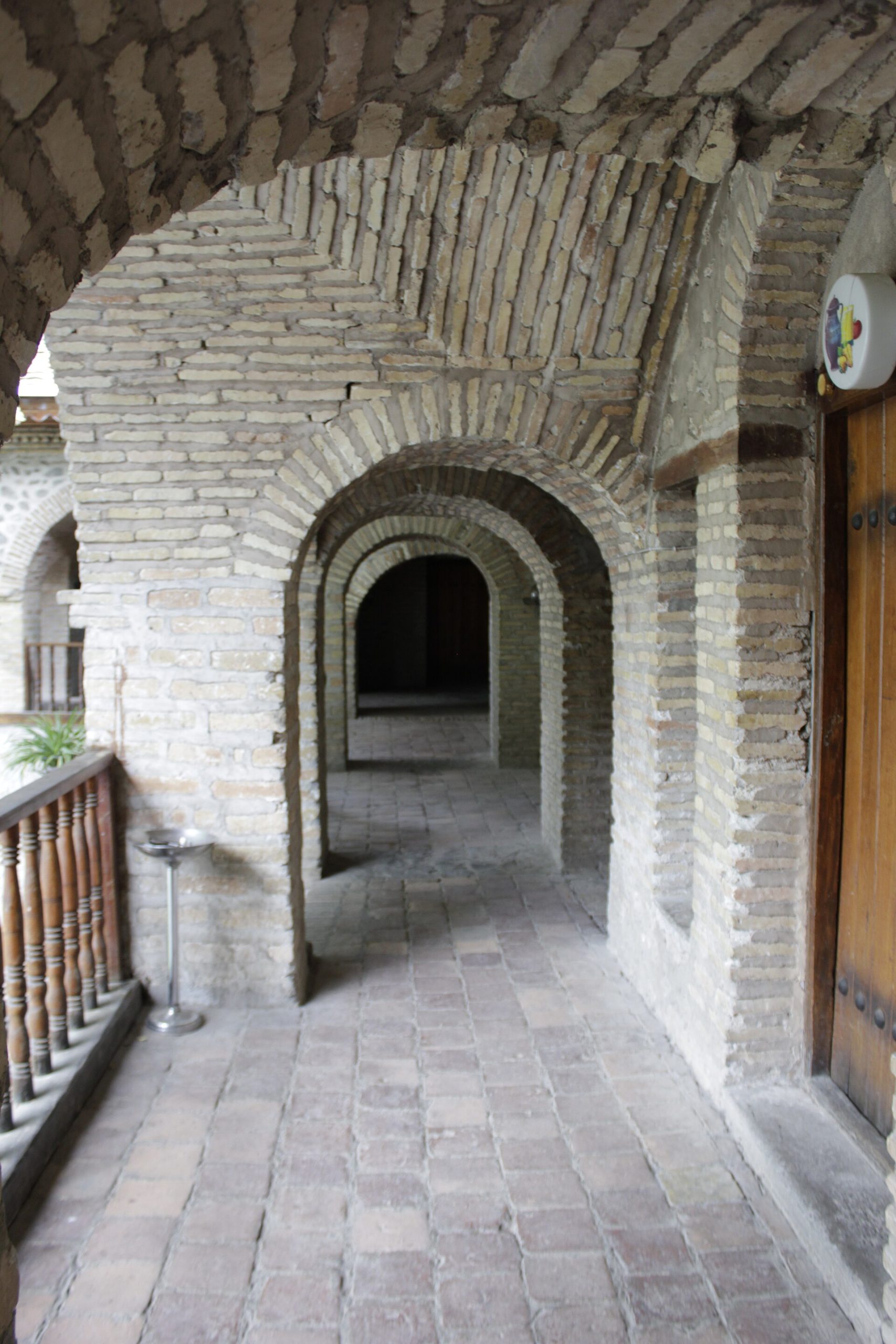
The setting is spectacular. Sheki lies in the foothills of the Greater Caucasus, surrounded by forested mountains and watered by streams that rush down from the heights, and the fortress commands views over the town and the landscape beyond. The mountain air, cool and fresh even in summer, made this an ideal location for a summer residence and helps to explain the palace’s original purpose.
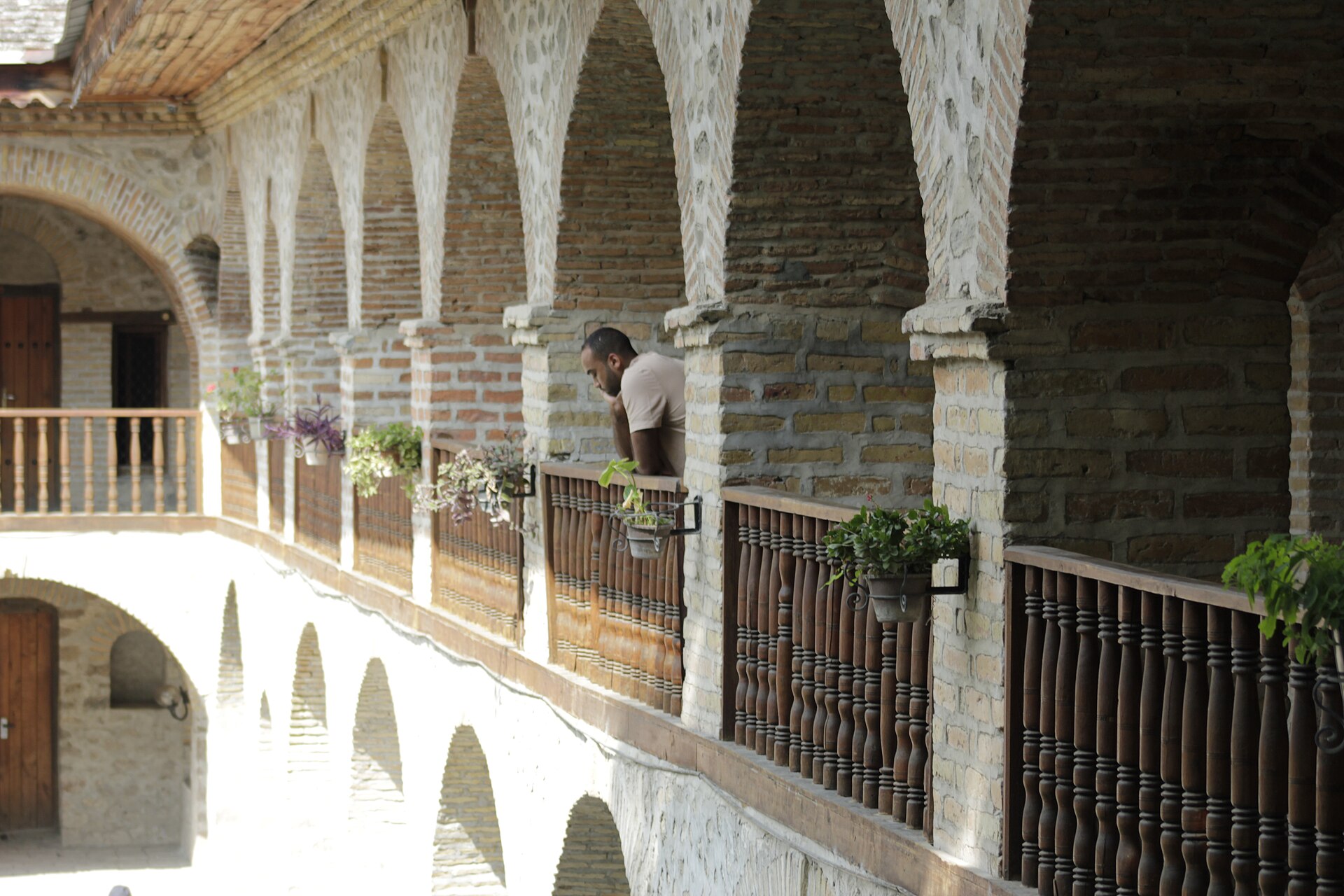
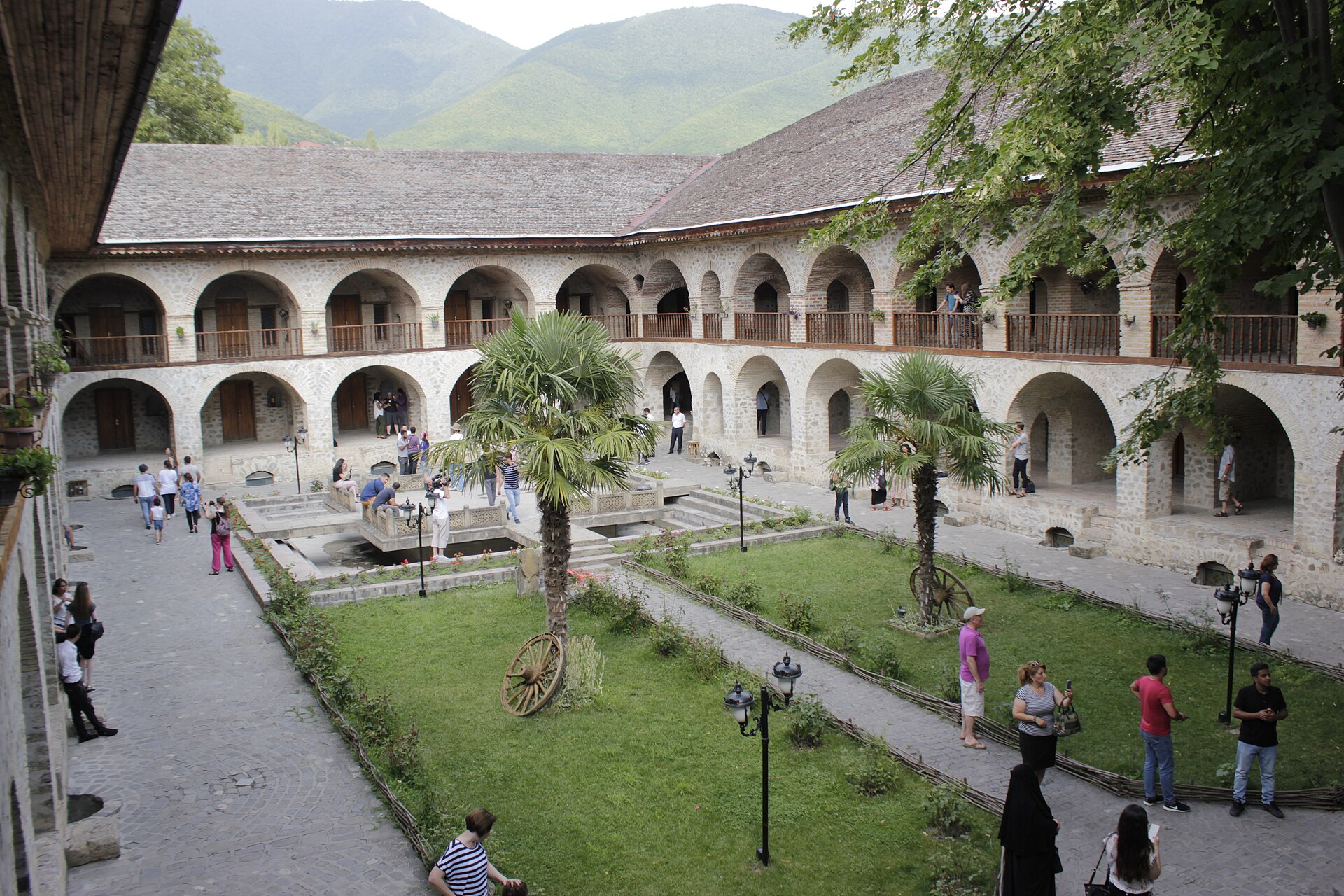
The town of Sheki itself is a place of great charm, its old quarters preserving traditional houses, mosques, and above all the great caravanserais that testify to its former importance in the silk trade. The palace is the crowning jewel of this historic town, but it is best appreciated as part of the wider ensemble of the old town and its mountain setting.
Together the palace, the fortress, and the historic town create one of the most atmospheric destinations in the Caucasus, a place where the natural beauty of the mountains and the cultural richness of the old khanate combine to reward the traveler who makes the journey into the hills.
The journey up to the palace, through the old town and into the fortress, is part of the pleasure of a visit. As you climb, the noise of the modern town falls away, the air grows cooler, and the anticipation builds until, passing through the fortress gate, you come at last upon the painted facade framed by its ancient trees, a moment that rewards the whole journey into the mountains.
From Khanate to Empire
The independence of the Sheki khanate, like that of the other small states of the eastern Caucasus, proved fragile in the face of the great powers that contended for the region. In the early nineteenth century the expanding Russian empire absorbed the khanates one by one, and Sheki too passed under Russian control, ending its brief career as an independent state.
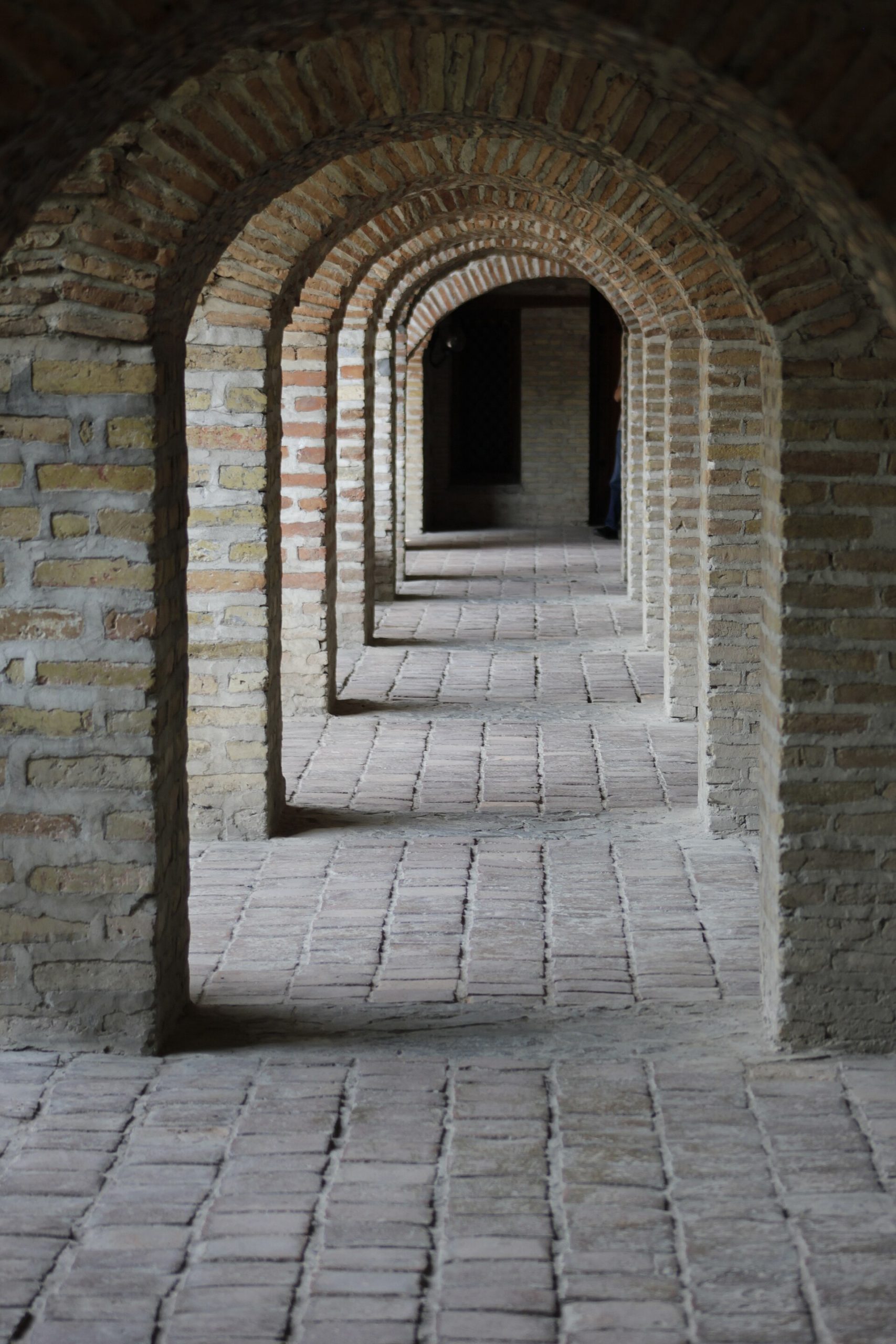
With the loss of independence, the palace ceased to be the residence of a sovereign khan, though it survived as a monument to the vanished khanate. The Russian authorities and their successors used and preserved the building in various ways, and its exceptional beauty ensured that it was valued and protected even as the political world that created it disappeared.
The nineteenth and twentieth centuries brought further changes to the region, as the Caucasus was drawn into the wider history of the Russian and then the Soviet world. Through all these upheavals the palace endured, its fragile windows and paintings requiring careful attention to survive, and generations of custodians worked to preserve this precious inheritance.
That so delicate a building has survived more than two centuries, through wars, revolutions, and the changing of empires, is a testament both to the quality of its construction and to the care of those who recognized its value and worked to protect it for the future.
The absorption of Sheki into the Russian empire was part of a larger story that reshaped the entire Caucasus, as the small local states that had flourished in the eighteenth century gave way to the great empires of the nineteenth. The palace stands as a poignant reminder of that vanished world of independent khanates, a beautiful survivor of an age that history swept away.
A Treasure of World Heritage
In the modern era the exceptional value of the Sheki Khan’s Palace has been recognized at the highest level. The historic center of Sheki, together with the Khan’s Palace, has been inscribed as a UNESCO World Heritage Site, placing this small mountain town and its painted palace among the most important cultural monuments of the world.
This recognition reflects not only the beauty of the palace but its significance as a supreme example of the decorative arts of the region and of a particular tradition of building that flourished in the Caucasus. The palace is valued as a masterpiece that brings together architecture, glasswork, and painting in a unique and perfectly realized whole.
Conservation of the palace is an ongoing and delicate task. The stained-glass windows, the frescoes, and the wooden elements are all vulnerable to the effects of time, light, and humidity, and their preservation requires specialized skills and constant attention. The survival of the local craft traditions has been invaluable in this work, allowing repairs and restoration to be carried out using authentic techniques.
Today the palace functions as a museum, welcoming visitors from around the world who come to marvel at its windows and paintings, and it stands as a proud symbol of Azerbaijan’s cultural heritage and of the artistic achievements of the mountain khanates.
The inscription also brought new responsibilities and new resources. World Heritage status draws visitors and scholarly attention from around the globe, and with them comes both the means to fund conservation and the obligation to protect the site to the highest international standards, ensuring that the painted palace is safeguarded not just for Azerbaijan but for all of humanity.
The Palace in the Life of Sheki
The Sheki Khan’s Palace is more than a museum piece, it is a living symbol of the town and region to which it belongs. For the people of Sheki it represents a proud heritage, a reminder of the days when their town was the seat of an independent khanate and a center of art and commerce, and it anchors the identity of the community.
The palace also sustains the living crafts of the town. The continuing practice of the shebeke technique and other traditional arts is bound up with the palace, both because the building requires these skills for its maintenance and because it inspires and legitimizes the work of contemporary craftsmen. The palace and the crafts sustain one another across the generations.
For visitors, the palace is the highlight of any journey to Sheki, and it draws travelers from across Azerbaijan and around the world into the mountains of the north. This tourism brings life and resources to the town, helping to sustain not only the palace but the wider community and its traditions.
In this way the painted summer palace continues to play an active role in the life of Sheki, more than two centuries after the khans who built it have passed into history, a monument that remains at the heart of its community rather than standing apart from it.
There is a lesson in this for anyone who cares about heritage: that a monument survives best not when it is sealed away as a relic but when it remains woven into the living fabric of its community, cherished, used, and understood by the people who live in its shadow.
See the Palace for Yourself
Photographs struggle to capture the experience of the Sheki Khan’s Palace, for so much of its magic lies in the play of colored light through the shebeke windows and in the overwhelming density of the painted decoration, effects that must be seen in motion to be understood. A video tour brings the palace to life in a way that still images cannot.
The short film below offers a visual introduction to the palace and its setting in the mountain town of Sheki, letting you take in the painted facade, the marvelous windows, and the frescoed interiors. It is an ideal companion to everything you have read here, giving you a feel for the atmosphere of this remarkable little building before you visit in person.
As you watch, look for the way the light streams through the colored glass and for the incredible richness of the painted walls and ceilings, and imagine the khans of Sheki holding court amid all this splendor in their cool mountain retreat. Then, when you make the journey to Sheki, you will recognize the palace not just as a pretty building but as the painted heart of a proud mountain khanate.
Visiting Sheki Today
For the modern traveler, the Sheki Khan’s Palace is one of the essential destinations of Azerbaijan and among the great treasures of the whole Caucasus. Set within its hilltop fortress above the atmospheric old town, the palace can be visited as the highlight of a trip to Sheki, a town that rewards exploration with its historic houses, mosques, and famous caravanserais.
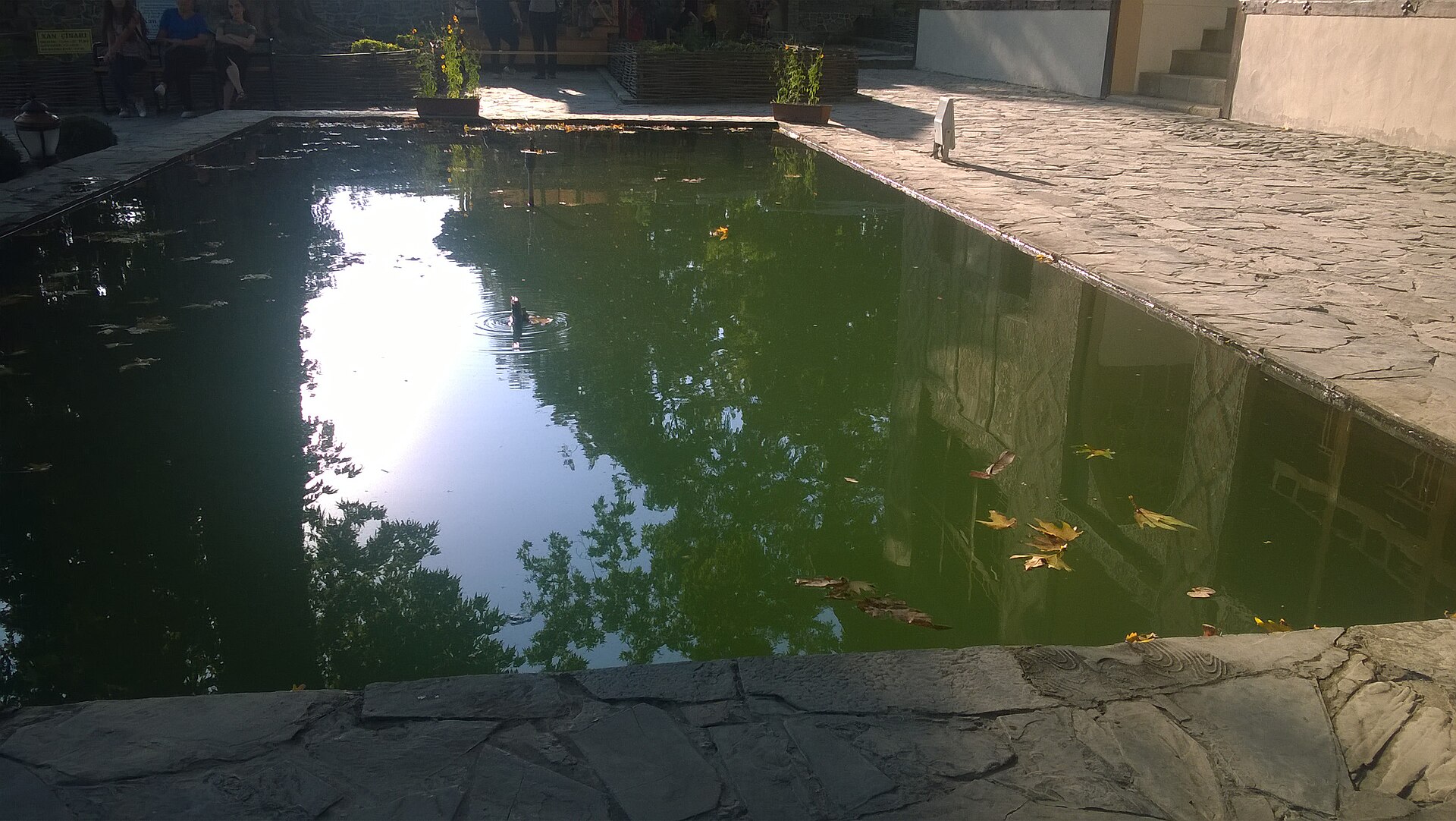
The palace is open to visitors as a museum, and you can admire the painted facade, the shebeke windows, and the frescoed interiors, though to protect the fragile decoration there may be restrictions on photography and on how the rooms are visited. Guided visits help to explain the history and the techniques, deepening your appreciation of what you are seeing.
Sheki lies some hours from Baku, in the mountainous north of the country, and reaching it involves a journey through changing landscapes into the foothills of the Caucasus. The trip is well worth making, both for the palace itself and for the beauty of the surrounding region, and many visitors choose to stay overnight to enjoy the town at a relaxed pace, some even lodging in a restored historic caravanserai.
However you approach it, the Sheki Khan’s Palace rewards the visitor who understands its story. This is not merely a colorful old building but the surviving jewel of a mountain khanate, a masterpiece of the decorative arts, and a monument that continues to embody the history, artistry, and pride of Sheki and of Azerbaijan.
Palaces Nearby
If the painted palace of Sheki has drawn you into the world of the Caucasus and its courts, two more royal residences of the region make natural companions to a visit here, each telling the story of a different people and dynasty.
- The Palace of the Shirvanshahs in Baku — the medieval stone residence of the rulers of Shirvan, crowning the walled old city above the Caspian.
- The Dadiani Palace at Zugdidi — the treasure-filled residence of the princes of Mingrelia in western Georgia.
You May Like
The Bardo, a Palace of the Beys Filled With Roman Mosaics


One thought on “Inside the Painted Summer Palace of the Sheki Khans”