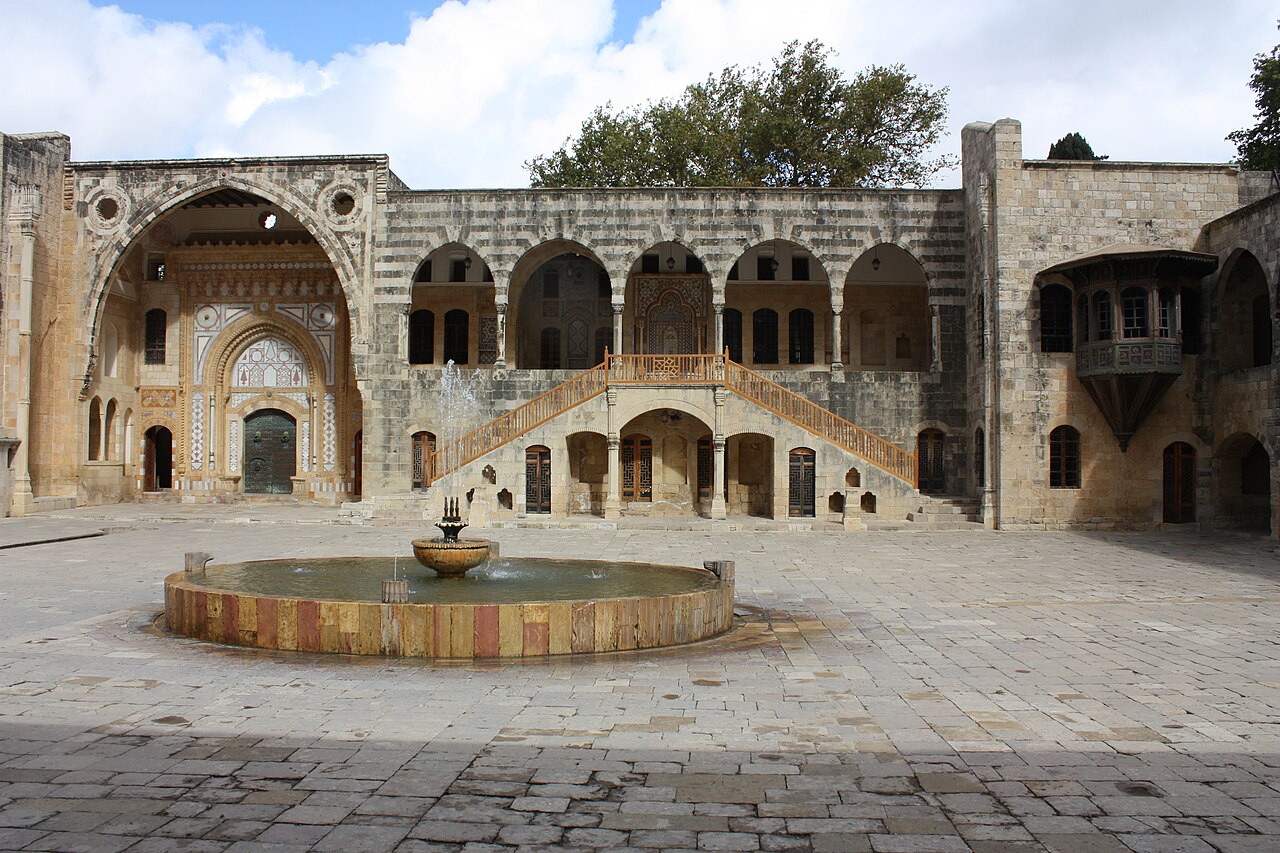
High in the Chouf Mountains of Lebanon, where terraced slopes fall away toward distant valleys, stands one of the most beautiful palaces in the Middle East. Beiteddine, whose name means the House of Faith, spreads across its hillside in a series of courtyards, halls, and gardens, its honey-coloured stone glowing in the mountain light. It is a masterpiece of Levantine architecture and one of the great treasures of Lebanon.
The palace was built in the early nineteenth century by a powerful local ruler, and it took decades of labour to complete. Its architecture blends the traditions of the Arab world with influences drawn from Italy and beyond, creating a style that is at once rooted in its region and open to the wider currents of the Mediterranean. The result is a building of extraordinary richness and beauty.
Beyond its architecture, Beiteddine holds treasures within its walls, from richly decorated apartments and a magnificent hammam to one of the finest collections of Byzantine mosaics in the region. It has served as a seat of power, a summer residence, and a stage for one of the country’s great cultural festivals, and it remains a symbol of the heritage and resilience of Lebanon.
In this guide you will explore Beiteddine from its origins under the emir who built it, through its remarkable architecture, its courtyards, baths, and apartments, its mosaics and gardens, and its role in the modern life of Lebanon, to what it is like to visit. By the end you will understand why this mountain palace is regarded as one of the jewels of the Middle East.
In This Article
- An Emir’s Mountain Palace
- The Ruler Who Built Beiteddine
- Where Arab and Italian Styles Meet
- The Great Courtyards
- The Hammam and Its Baths
- The Private Apartments
- The Byzantine Mosaic Collection
- The Gardens and Fountains
- War, Damage, and Recovery
- The Beiteddine Festival
- A Presidential Summer Residence
- Planning Your Visit to Beiteddine
- See Beiteddine for Yourself
An Emir’s Mountain Palace
Beiteddine was born of the ambitions of a powerful ruler who dominated the mountains of Lebanon in the late eighteenth and early nineteenth centuries. Seeking a seat worthy of his authority, he chose a commanding site in the Chouf Mountains and set about building a palace that would proclaim his power and his taste across the region.

The construction of the palace was an enormous undertaking that unfolded over some three decades. Craftsmen and artisans were gathered from across the region and beyond, and the finest materials were brought to the mountain site to create a residence of exceptional beauty and sophistication. The long years of work reflected the scale of the ruler’s ambition.
The choice of the mountain setting was significant, placing the seat of power in the heartland of the ruler’s domain, amid the terraced slopes and villages of the Chouf. The site offered both security and splendour, and the palace was designed to take advantage of its dramatic position, with terraces and courtyards opening toward the surrounding landscape.
From these beginnings grew one of the most magnificent palaces in the region, a residence that combined the functions of a seat of government, a private home, and a symbol of authority. Beiteddine became the centre of power in the mountains of Lebanon, and it remains a monument to the ruler whose vision and ambition brought it into being.
The scale and ambition of the project reflected the confidence of an era when local rulers in the mountains of Lebanon enjoyed considerable autonomy amid the wider Ottoman world. To build a palace of such magnificence was to stake a claim to a status beyond that of a mere provincial governor, and Beiteddine announced its builder’s aspirations to a grandeur that could stand comparison with the great houses of the region.
The Ruler Who Built Beiteddine
The palace is inseparable from the emir who created it, one of the most important figures in the history of Lebanon. A shrewd and powerful ruler, he dominated the region for decades, navigating the complex politics of an era when the mountains of Lebanon stood at the crossroads of great powers and local rivalries.
The emir was a builder and a patron as well as a politician, and Beiteddine was the greatest expression of his ambitions. Through the palace he displayed his wealth, his taste, and his authority, creating a residence that could rival the great houses of the wider region and that announced his standing to all who came to it.
His long rule was marked by both achievement and turbulence, and his fortunes rose and fell with the shifting politics of the age. The palace witnessed the drama of his reign, serving as the centre of his power and the stage for the events that shaped the history of the mountains during his lifetime.
The emir’s legacy endures above all in Beiteddine, the palace that carries his memory and his vision. Though the political world he dominated has long since passed away, the beauty and grandeur of his palace remain, a lasting testament to a ruler who left an indelible mark on the history and landscape of Lebanon.
The emir’s engagement with the wider Mediterranean world, including contacts that brought foreign craftsmen and ideas to his court, is written into the very fabric of the palace. He was a ruler who looked outward as well as inward, and Beiteddine reflects this cosmopolitan outlook, a mountain palace that was nonetheless connected to the artistic currents of a much larger world.
It is worth remembering that the emir’s reign ended in exile, a reminder of how precarious power could be in that turbulent age. Yet even as his political fortunes collapsed, the palace endured, outliving the man and his rule to become his most lasting monument. There is a certain irony that the ruler is now remembered above all for the beauty he created rather than the power he wielded.
Where Arab and Italian Styles Meet
The architecture of Beiteddine is a remarkable fusion of traditions, blending the styles of the Arab world with influences drawn from Italy and the wider Mediterranean. This meeting of east and west gives the palace its distinctive character, a building deeply rooted in its region yet open to the artistic currents of the age.
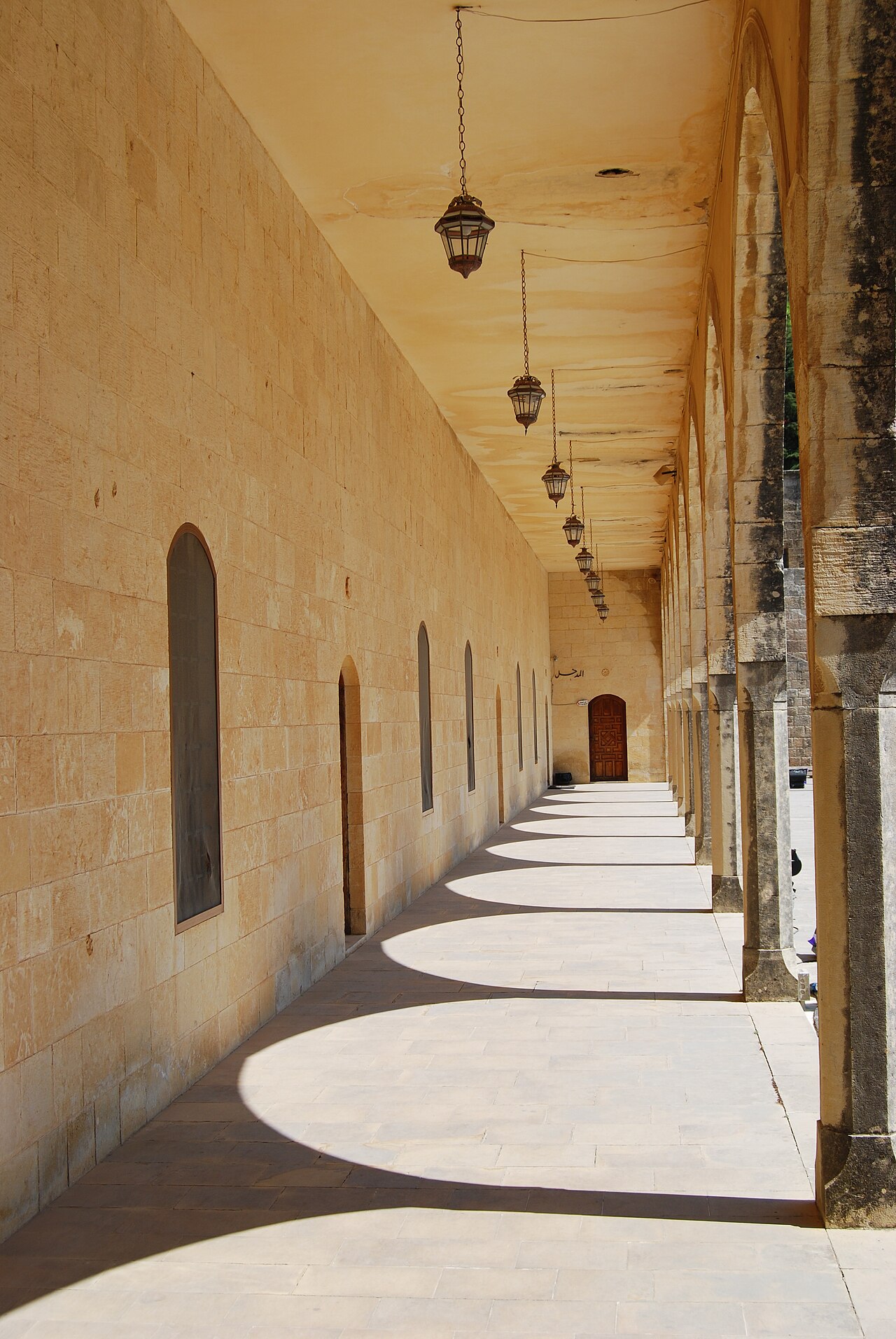
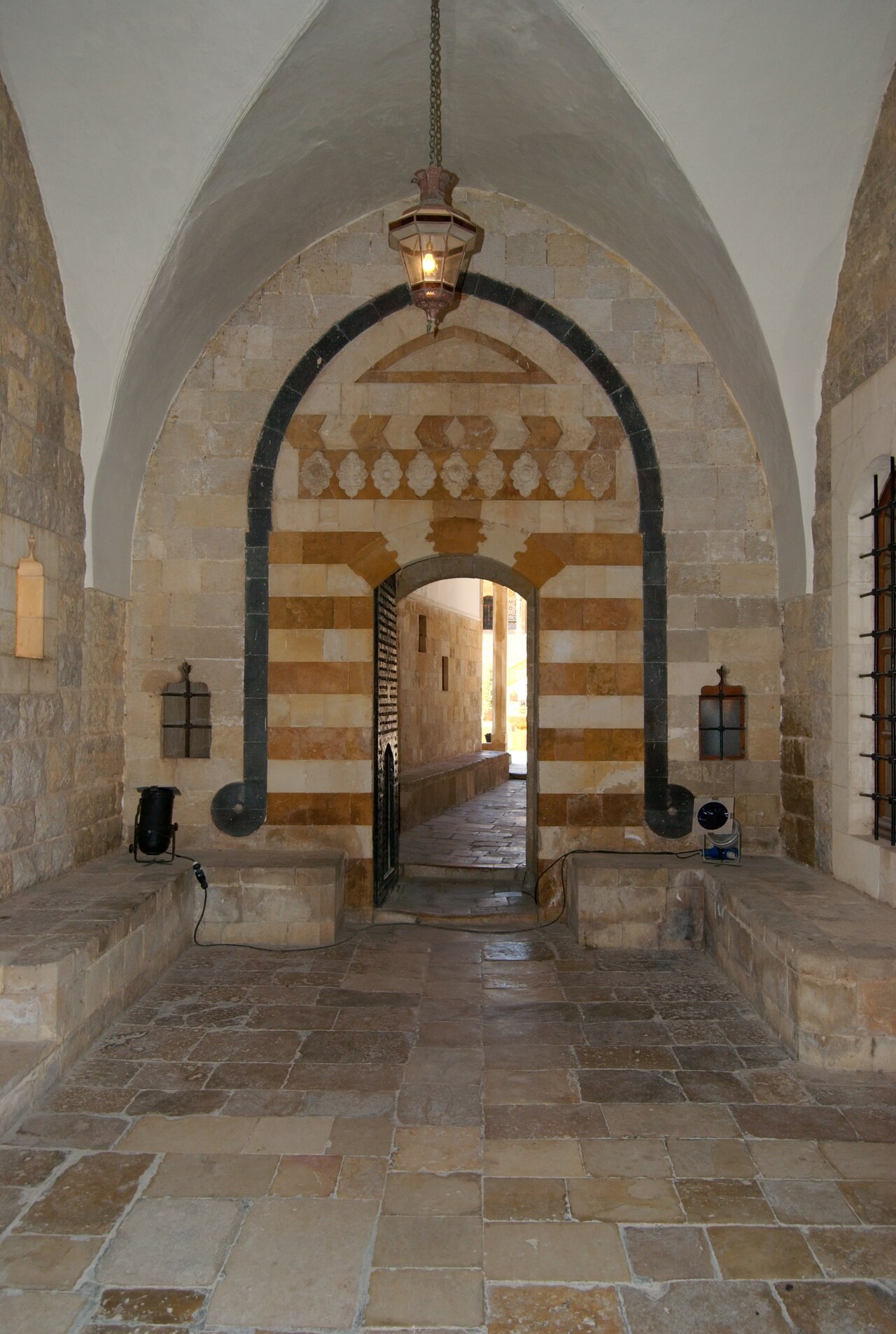
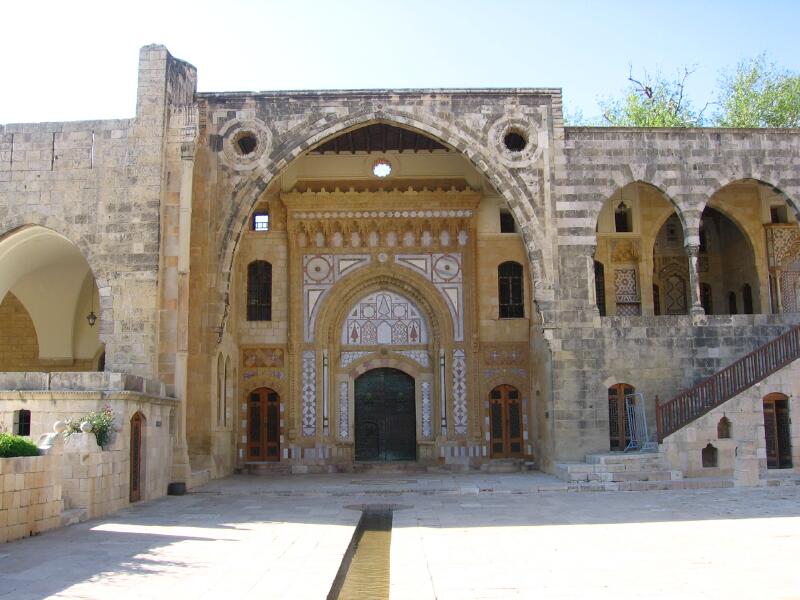
From the Arab and Levantine tradition come the palace’s courtyards, its fountains, its intricate stonework, and its richly decorated interiors, with their carved wood, coloured marble, and ornamental detail. These elements create an atmosphere of eastern splendour, cool and luxurious, well suited to the mountain climate and the traditions of the region.
From Italy and beyond come other influences, visible in aspects of the design and decoration that reflect the ruler’s engagement with the wider Mediterranean world. Craftsmen and ideas from different traditions came together at Beiteddine, producing a style that was neither purely eastern nor purely western but a rich and original blend of both.
This fusion of styles is one of the things that makes Beiteddine so fascinating. It reflects the position of Lebanon at the meeting point of cultures and the cosmopolitan tastes of its rulers, and it produces a building of great beauty and originality, a palace that could have arisen nowhere else but in this crossroads of civilisations.
The stonework of the palace deserves particular attention, for the honey-coloured local stone was worked with extraordinary skill into arches, columns, and carved ornament. The craftsmen who built Beiteddine were masters of their material, and the play of light across the carved surfaces, especially in the golden hours of morning and evening, is one of the quiet pleasures of the palace.
Beiteddine has been recognised as one of the most important works of architecture in Lebanon, valued both for its beauty and for what it represents about the culture that produced it. It stands among the finest surviving examples of its style anywhere, a building that captures a particular moment in the history of the region when local rulers created works of art to rival any in the wider world.
The Great Courtyards
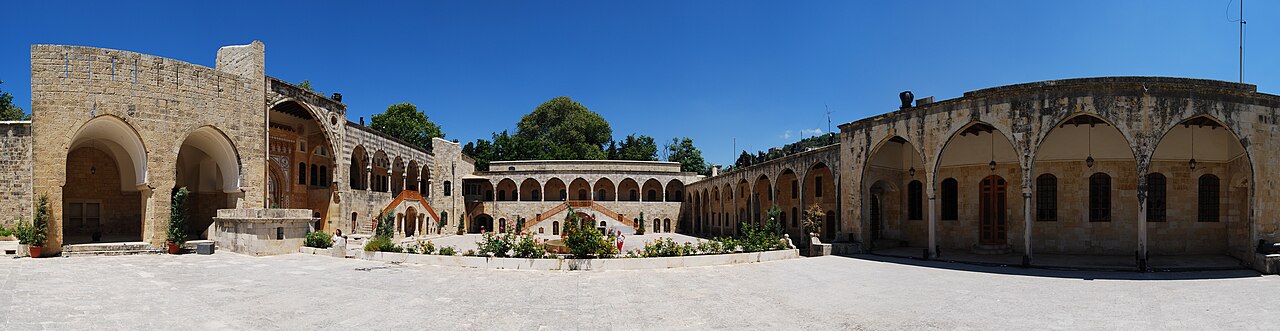
At the heart of Beiteddine are its courtyards, the organising spaces around which the whole palace is arranged. In the tradition of the region, these open courts provided light, air, and a sense of tranquillity, and they served as the settings for the public and private life of the palace. Passing through them is one of the great pleasures of a visit.
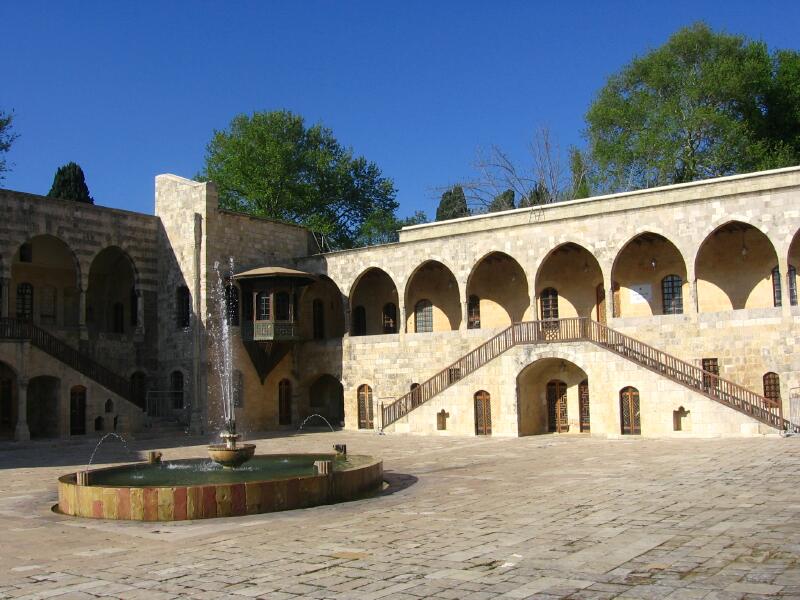
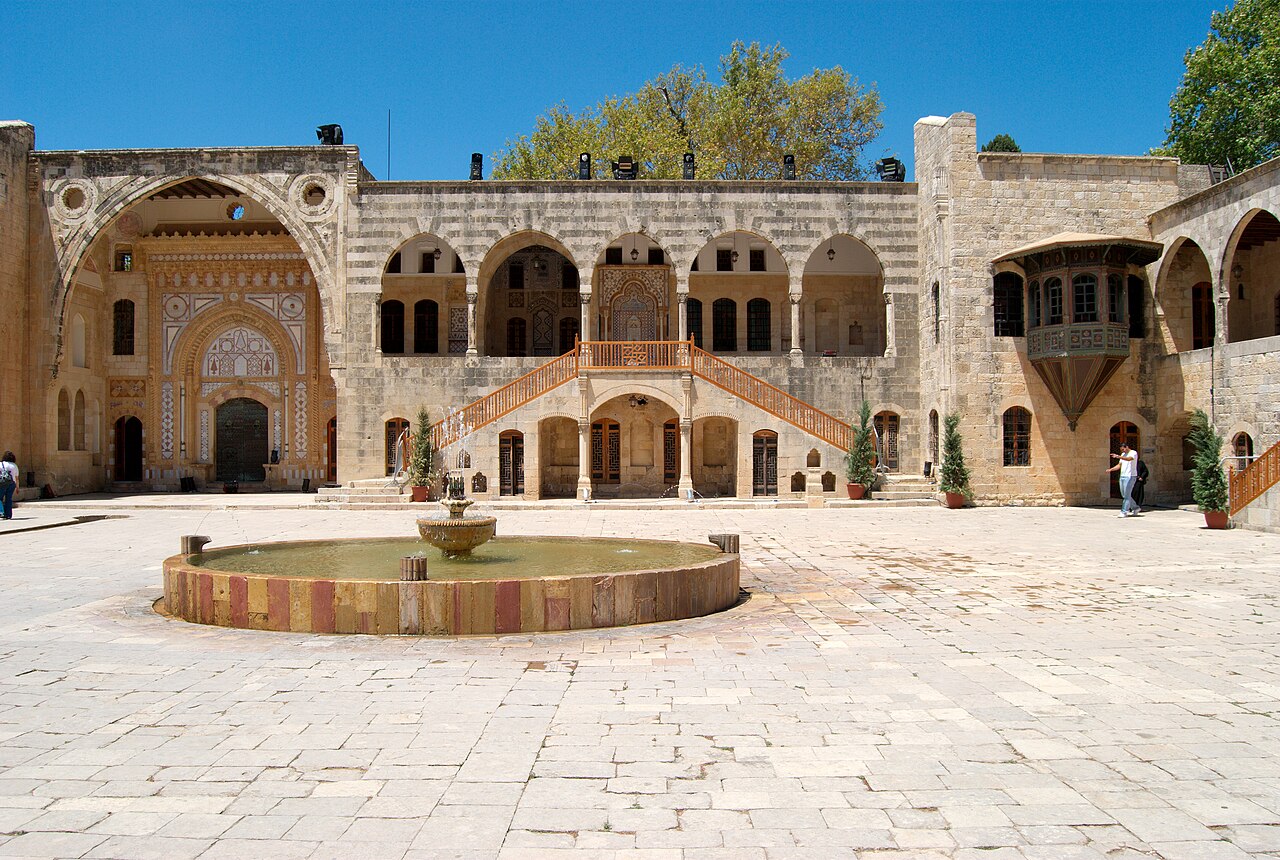
The main courtyard is a vast open space that greets visitors on their arrival, framed by the buildings of the palace and offering sweeping views. This grand court served as the ceremonial forecourt of the palace, the place where visitors gathered and where the authority of the ruler was displayed against the backdrop of the mountains.
Beyond the main court lie further courtyards, more intimate in scale, that served the private life of the palace. These inner courts, with their fountains and decoration, provided cool and secluded spaces for the household, arranged according to the traditions that separated the public and private realms of a great residence.
The sequence of courtyards, moving from the grand and public to the intimate and private, structures the whole experience of Beiteddine. Each has its own character and beauty, and together they create the rhythm of the palace, a series of open spaces that bring light and air into the heart of the building and connect it to the landscape and sky above.
The transition between the courtyards is carefully managed, so that a visitor moves from the bright openness of the great forecourt into progressively more intimate and shaded spaces. This choreography of movement, from public grandeur to private seclusion, reflects a sophisticated understanding of how architecture can shape experience, guiding the visitor through the social world of the palace step by step.
On a still day, standing in one of the inner courtyards with only the sound of a fountain and the mountain breeze, it is easy to feel the timeless quality of the place. The courtyards were designed precisely to create such moments of calm and beauty, and they continue to work their effect on visitors two centuries after they were built, offering an oasis of serenity in the heart of the palace.
The Hammam and Its Baths
Among the most beautiful and evocative spaces in Beiteddine is its hammam, or bath complex, a series of domed chambers that provided for the cleansing and relaxation of the household in the tradition of the region. The hammam was an essential part of any great residence, and at Beiteddine it is a masterpiece of its kind.
The bath chambers are covered with domes pierced by small openings that admit shafts of light, creating a magical play of illumination in the warm, dim interiors. Marble floors, fountains, and decorative detail add to the beauty of the spaces, which were designed for comfort and pleasure as well as cleanliness.
The hammam followed the classic sequence of rooms of the traditional bath, moving from cooler to warmer chambers, each serving a stage in the bathing ritual. This was a place of relaxation and sociability as well as hygiene, an important part of the daily life and culture of the palace and the region.
For visitors today, the hammam is one of the highlights of Beiteddine, a space of great atmosphere and beauty that evokes the daily life of the palace in its heyday. The play of light through the domes, the coolness of the marble, and the elegance of the decoration combine to create one of the most memorable spaces in the whole building.
The hammam also speaks to the daily rhythms of life in the palace, for bathing was a social as well as a personal ritual, a time for conversation and repose. The care lavished on these chambers, in a part of the palace that few outsiders would have seen, reveals how thoroughly the ideals of beauty and comfort were woven into every aspect of life at Beiteddine, from the grand reception halls to the most private of spaces.
The domed roofline of the hammam, studded with its little glazed openings, is a distinctive sight from outside as well, marking the presence of the baths within the sprawling complex. Seen from above, these domes are among the most characteristic features of the palace, a reminder of the sophisticated engineering and artistry that went into even the most functional parts of the building.
The Private Apartments
The private apartments of Beiteddine are among the most richly decorated spaces in the palace, reflecting the wealth and taste of its ruler and his household. These rooms, where the private life of the palace was conducted, are adorned with the finest craftsmanship in wood, marble, and paint, creating interiors of great splendour.

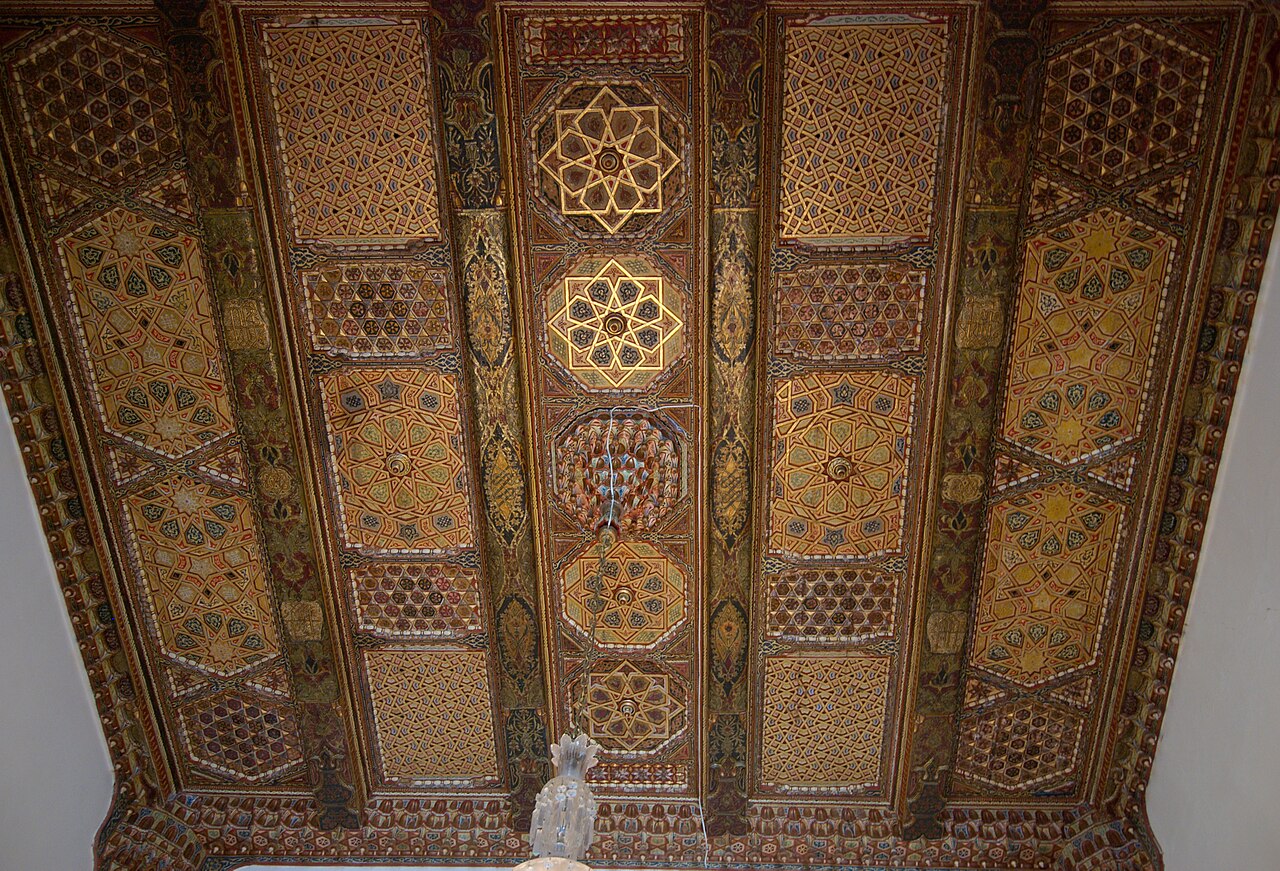
The decoration of the apartments draws on the rich traditions of Levantine interior design, with intricately carved and painted wooden panelling, coloured marble inlay, and elaborate ceilings. Every surface is treated with care, and the rooms glow with the warm colours and patterns of the decorative arts of the region.
These interiors were designed for both comfort and display, providing luxurious surroundings for the household while also impressing visitors with the wealth and sophistication of the ruler. The apartments reflect the domestic life of a great palace, arranged according to the customs of the age and decorated to the highest standards.
For visitors, the apartments offer a glimpse into the private world of Beiteddine, revealing the luxury and beauty in which its rulers lived. The richness of the decoration and the quality of the craftsmanship make these rooms among the treasures of the palace, and they testify to the extraordinary artistry that went into its creation.
The carved and painted wooden panelling of the finest rooms represents one of the great traditions of Levantine decorative art, in which entire rooms were treated as unified works of art. Rich in colour and pattern, these interiors envelop the visitor in a world of ornament, and their survival at Beiteddine offers a precious record of a craft tradition that has become increasingly rare in the modern world.
The Byzantine Mosaic Collection
One of the unexpected treasures of Beiteddine is its remarkable collection of Byzantine mosaics, displayed within the palace and its grounds. These ancient works, dating from the early centuries of the Christian era, were gathered from archaeological sites and brought to Beiteddine, where they form one of the finest such collections in the region.
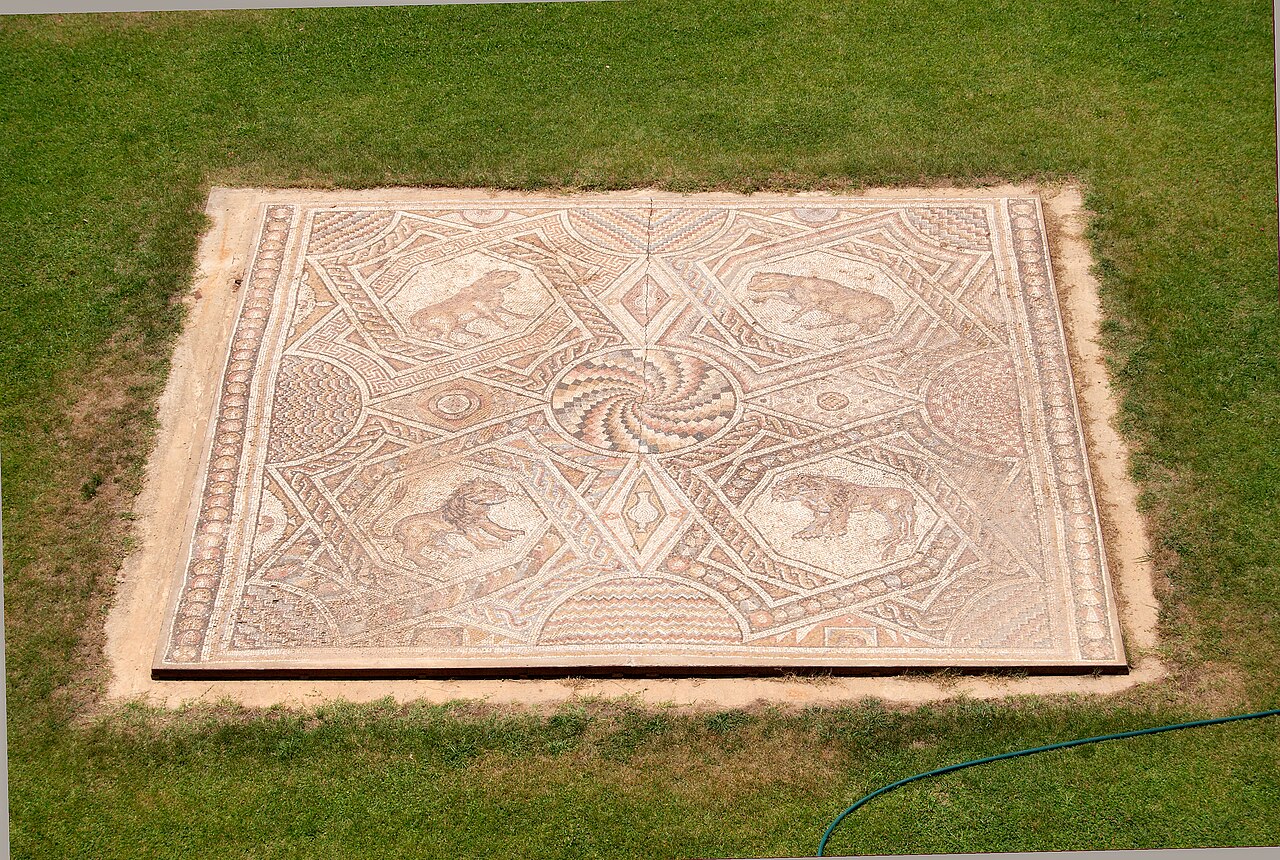
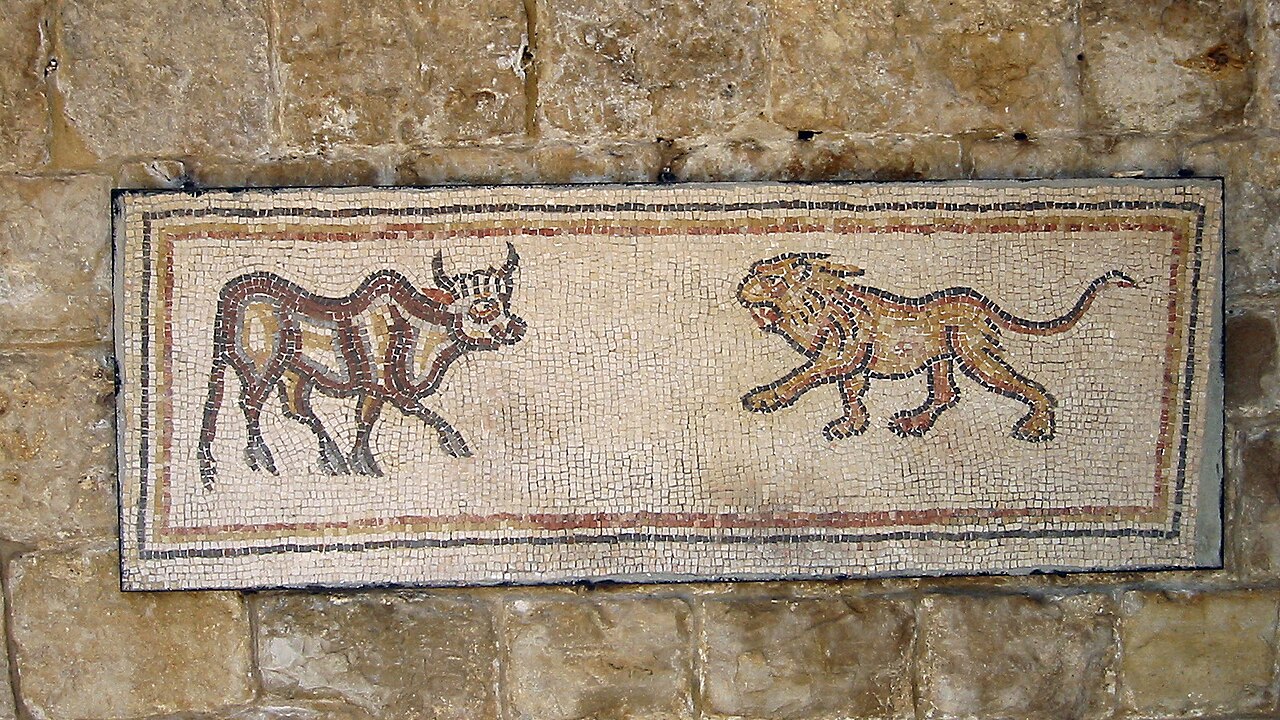
The mosaics depict a rich variety of subjects, from geometric and floral patterns to animals, hunting scenes, and figures, rendered in the intricate technique of the Byzantine mosaicists. Their colours and designs offer a vivid window into the art and life of the late antique and early Byzantine world that once flourished along the eastern Mediterranean.
Displayed in the lower levels and grounds of the palace, the mosaics add a further layer of history to Beiteddine, connecting the nineteenth-century palace to the far more ancient heritage of the region. Visitors can admire these works in a setting that enhances their beauty, a meeting of two great periods of art and history.
The mosaic collection makes Beiteddine a destination for lovers of ancient art as well as of Levantine architecture. It reflects the deep and layered history of Lebanon, where the remains of many civilisations lie close together, and it enriches the experience of the palace with treasures far older than the building that now houses them.
The gathering of these ancient mosaics at Beiteddine was itself an act of cultural preservation, rescuing works that might otherwise have been lost and bringing them together where they could be admired and studied. In this the palace serves a museum’s function alongside its role as a monument, and the juxtaposition of nineteenth-century architecture with late antique art gives visitors an unusually rich encounter with the layered past of Lebanon.
The animal and hunting scenes in the mosaics are especially charming, depicting lions, bulls, leopards, and other creatures with a vividness that bridges the centuries. These images offer a glimpse of the imaginative world of the late antique inhabitants of the region, and their preservation at Beiteddine allows modern visitors to connect with a heritage that stretches back long before the palace itself was conceived.
The Gardens and Fountains
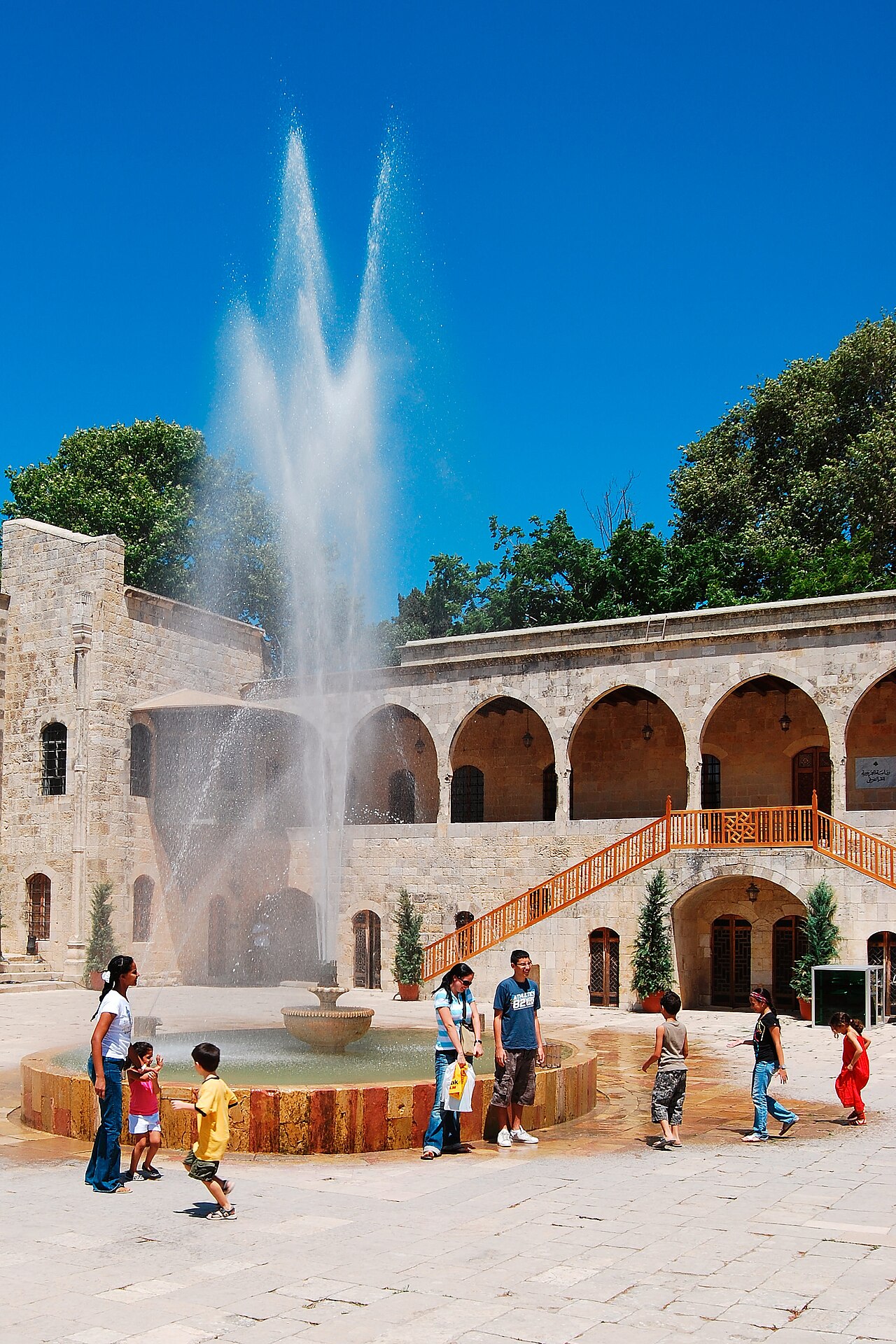
The beauty of Beiteddine extends beyond its buildings to its gardens and the many fountains that grace the palace. Water plays an essential role in the architecture and atmosphere of the palace, cooling the air, delighting the eye and ear, and reflecting the traditions of the region, where gardens and fountains were central to the ideal of paradise on earth.
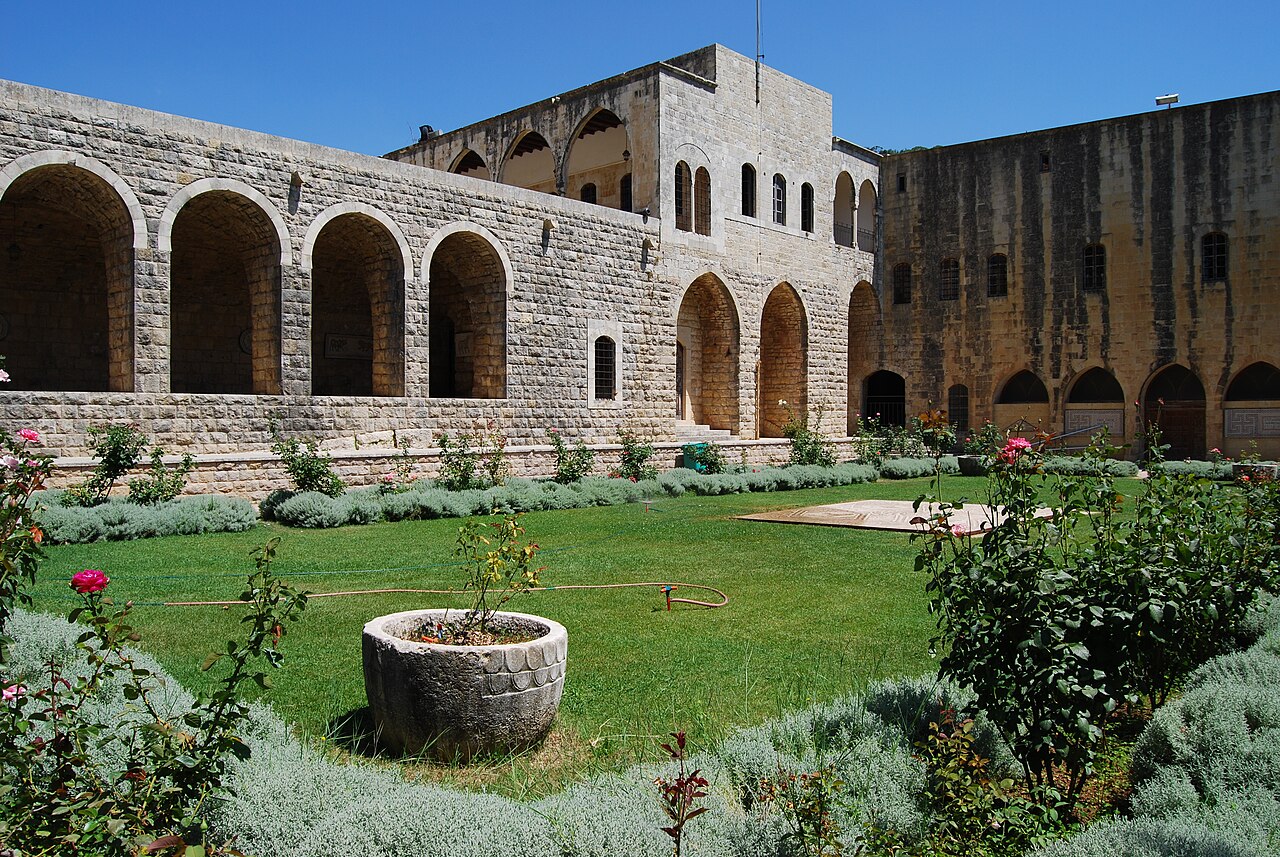
Fountains are found throughout the palace, in courtyards and halls, their gentle sound and sparkling water bringing life and freshness to the spaces. The presence of water was both practical, cooling the mountain palace, and symbolic, evoking the gardens of paradise that were a recurring theme in the culture of the region.
The gardens of the palace, laid out on its terraces, take advantage of the dramatic mountain setting and offer beautiful views of the surrounding landscape. Planted with trees and flowers and adorned with fountains, they provided places of beauty and repose for the household and complemented the architecture of the palace.
Together the gardens and fountains create an atmosphere of tranquillity and beauty that is central to the experience of Beiteddine. They reflect the sophistication of the palace’s design and the importance of nature and water in the culture that produced it, and they remain among the great pleasures of a visit to this mountain retreat.
From the terraces and gardens, the views over the Chouf Mountains are spectacular, and the relationship between the palace and its landscape becomes clear. Beiteddine was designed not to shut out its surroundings but to frame and celebrate them, and the interplay between the ordered beauty of the gardens and the wild grandeur of the mountains beyond is central to the magic of the place.
War, Damage, and Recovery
The history of Beiteddine, like that of Lebanon itself, has not been untroubled. Over the centuries the palace passed through periods of changing use and fortune, and in the turbulent modern history of the country it suffered damage during times of conflict, when the palace and its treasures were put at risk.
During the long years of civil conflict that afflicted Lebanon in the later twentieth century, Beiteddine, like much of the country’s heritage, was exposed to the dangers of war. The palace sustained damage, and its future, along with that of so much of Lebanon’s cultural heritage, was uncertain during those difficult years.
In the aftermath of the conflict, efforts were made to restore and preserve the palace, repairing the damage and safeguarding its treasures for the future. The restoration of Beiteddine formed part of the wider effort to recover and celebrate the cultural heritage of Lebanon after the trauma of war.
The survival and restoration of Beiteddine is a testament to the resilience of Lebanon and the enduring value of its heritage. That the palace has come through such turbulent times and been restored to its former beauty is a source of pride, and it stands today as a symbol of the endurance of the country’s culture through even the darkest periods of its history.
The story of the palace’s damage and recovery has made it, for many Lebanese, a symbol of the wider fate of their country, which has endured great suffering and yet preserved its rich cultural heritage. The restored palace stands as a reminder that beauty and history can survive even the harshest trials, and its recovery has been a source of hope and pride in a nation that has known more than its share of adversity.
The Beiteddine Festival
In modern times Beiteddine has taken on a new role as the setting for one of Lebanon’s great cultural events. Each year, in the warm months, the palace hosts a celebrated arts festival that brings music, dance, and performance to its historic courtyards, filling the ancient spaces with life and art.
The festival draws performers and audiences from Lebanon and around the world, transforming the palace into a magnificent open-air stage. The setting, amid the illuminated architecture of the courtyards under the mountain sky, provides an unforgettable backdrop for concerts and performances of every kind.
This annual event has made Beiteddine a symbol of Lebanon’s cultural vitality and its openness to the world. Through the festival, the palace serves not only as a monument to the past but as a living centre of contemporary culture, connecting its rich heritage to the artistic life of the present.
For many, the festival is one of the highlights of the Lebanese cultural calendar, and it has helped to keep Beiteddine at the heart of the country’s cultural life. The sight of the historic palace alive with music and light captures the spirit of resilience and creativity that the building has come to represent.
The festival’s use of the palace as a stage demonstrates a creative approach to heritage, one that keeps historic places alive by giving them a role in contemporary life. Rather than treating Beiteddine as a museum to be preserved in silence, the festival fills it with music and people, ensuring that new generations form their own memories of the palace and that it remains a living part of the culture.
Over the decades the festival has hosted an extraordinary range of artists, from classical musicians and opera singers to dancers and popular performers, making the palace a meeting point of cultures much as it was in the days of its builder. In this the modern festival echoes the cosmopolitan spirit that shaped Beiteddine from the beginning.
A Presidential Summer Residence
In the modern era, Beiteddine has served as an official summer residence, linking the historic palace to the institutions of the modern Lebanese state. This role has helped to ensure the preservation and continued importance of the palace, keeping it in active use rather than allowing it to become a mere relic.
The use of the palace as an official residence reflects its status as one of the most important and prestigious buildings in Lebanon. Its beauty and historical significance make it a fitting setting for the ceremonial functions of the state, and its association with the highest levels of government underlines its place in the life of the nation.
This continuing official role has also contributed to the care and maintenance of the palace, ensuring that its treasures are preserved and its buildings kept in good condition. The combination of official use and public access allows Beiteddine to serve both the state and the people, remaining a living institution.
As a summer residence of the state, Beiteddine bridges the historic and the contemporary, its ancient halls put to modern use while retaining their beauty and significance. This role has helped to secure the future of the palace and to maintain its place at the heart of Lebanon’s national life and identity.
The choice of Beiteddine for this official role also reinforces its symbolic importance, associating the modern state with one of the great monuments of the nation’s past. In using the palace, the state lays claim to the heritage it represents, and the building serves as a link between the Lebanon of today and the rich history from which it has emerged.
Planning Your Visit to Beiteddine
Beiteddine lies in the Chouf Mountains, a scenic drive from Beirut through the beautiful landscapes of the Lebanese highlands. The journey to the palace is part of the experience, winding up into the mountains through terraced slopes and villages, and the palace makes a rewarding destination for a day trip from the capital.
View Beiteddine Palace on Google Maps
Visitors can explore the courtyards, apartments, hammam, and mosaic collection, admiring the architecture and the treasures of the palace. The site offers a rich experience, combining the beauty of the buildings with the history of the emir who built them and the ancient mosaics that it houses, and it rewards a leisurely visit.
As with any major site, it is wise to check current opening arrangements before visiting, since access can be affected by the palace’s official use and by wider conditions in the country. Timing a visit to coincide with the summer festival offers the chance to experience the palace as a living cultural venue, though the festival period is naturally busy.
You can find the palace and orient yourself using the map link below. Whether you come for the architecture, the mosaics, the mountain setting, or the atmosphere of a great historic palace, Beiteddine offers one of the most memorable experiences in Lebanon. Give yourself time to enjoy both the beauty of the buildings and the splendour of their mountain surroundings.
Many visitors combine a trip to Beiteddine with the wider attractions of the Chouf, a region known for its natural beauty, its cedar forests, and its distinctive culture. Approached in this way, the palace becomes part of a richer experience of the Lebanese mountains, and the journey through the highlands frames the visit and deepens the appreciation of the setting in which the palace was built.
See Beiteddine for Yourself
A palace as beautiful as Beiteddine, set in so dramatic a landscape, is best appreciated in motion, and the short film below offers a closer look at its courtyards, apartments, and mountain setting. It conveys the beauty of the architecture, the play of light and water, and the atmosphere of this great Levantine palace.
As you watch, keep in mind the story behind it: a powerful emir who built a palace over decades in the mountains of Lebanon, a fusion of eastern and western styles, and a building that has survived war and turbulence to remain a symbol of the country’s heritage. Beiteddine is a jewel of the Middle East, a place where history, art, and beauty come together beneath the mountain sky.
Palaces Nearby
If Beiteddine has drawn you into the palatial heritage of the Middle East, two more palaces of the region make natural companions, each with its own character.
- Inside the Azm Palace, a Hidden Paradise of Old Damascus — the finest surviving Damascene courtyard house, famed for its banded stone and painted ceilings.
- Qasr Al Watan, the Abu Dhabi Palace That Opened Its Doors — a working presidential palace in Abu Dhabi opened to the public beneath a vast white dome.
You May Like
The Bardo, a Palace of the Beys Filled With Roman Mosaics


One thought on “Beiteddine, the Mountain Palace of a Lebanese Emir”