On the northern side of the great Plaza Mayor of Lima, the ceremonial heart of the Peruvian capital, stands a long and stately building that has been the center of power in Peru since the very founding of the city. The Government Palace of Peru, also known as the House of Pizarro, is the seat of the executive power and the residence of the President of the Republic, occupying a site that has served as the center of authority for nearly five centuries.
The palace stands on ground chosen by the conquistador Francisco Pizarro himself when he founded Lima in the sixteenth century, laying out the new city around its great square and reserving for himself the plot on the northern side where his own residence would rise. From that first house of the conqueror, through the palaces of the Spanish viceroys, to the seat of the independent republic, this site has never ceased to be the center of Peruvian power.
The building that occupies the site today is largely a creation of the twentieth century, an imposing and dignified palace rebuilt after fire and decay claimed its predecessors. Behind its grand facade lie sumptuous halls where the presidents of Peru receive guests and conduct affairs of state, and before it, in the great plaza, the famous changing of the guard draws visitors to witness the pageantry of the Peruvian state.
Over the following pages you will explore the whole story of this remarkable place, from Pizarro’s founding of Lima through the palaces of the viceroys and the republic, to the building’s grand halls, its ceremonial life, and its role today as the seat of the Peruvian presidency. Come and discover the House of Pizarro at the heart of Lima.

In This Article
- The House of Pizarro
- The Palace of the Viceroys
- Seat of the Republic
- Fire and Rebuilding
- The Facade on the Plaza Mayor
- The Grand Halls Within
- The Changing of the Guard
- The Palace and the City of Kings
- The Working Seat of the Presidency
- Enduring the Earthquakes
- A Symbol of Peru
- See the Government Palace for Yourself
- Visiting the Government Palace Today
The House of Pizarro
The story of the Government Palace begins with the founding of Lima itself. When the Spanish conquistador Francisco Pizarro established the new capital of the conquered lands of Peru in the sixteenth century, he laid out the city around a great central square and chose for his own residence the plot on the northern side of that square, beside the river.
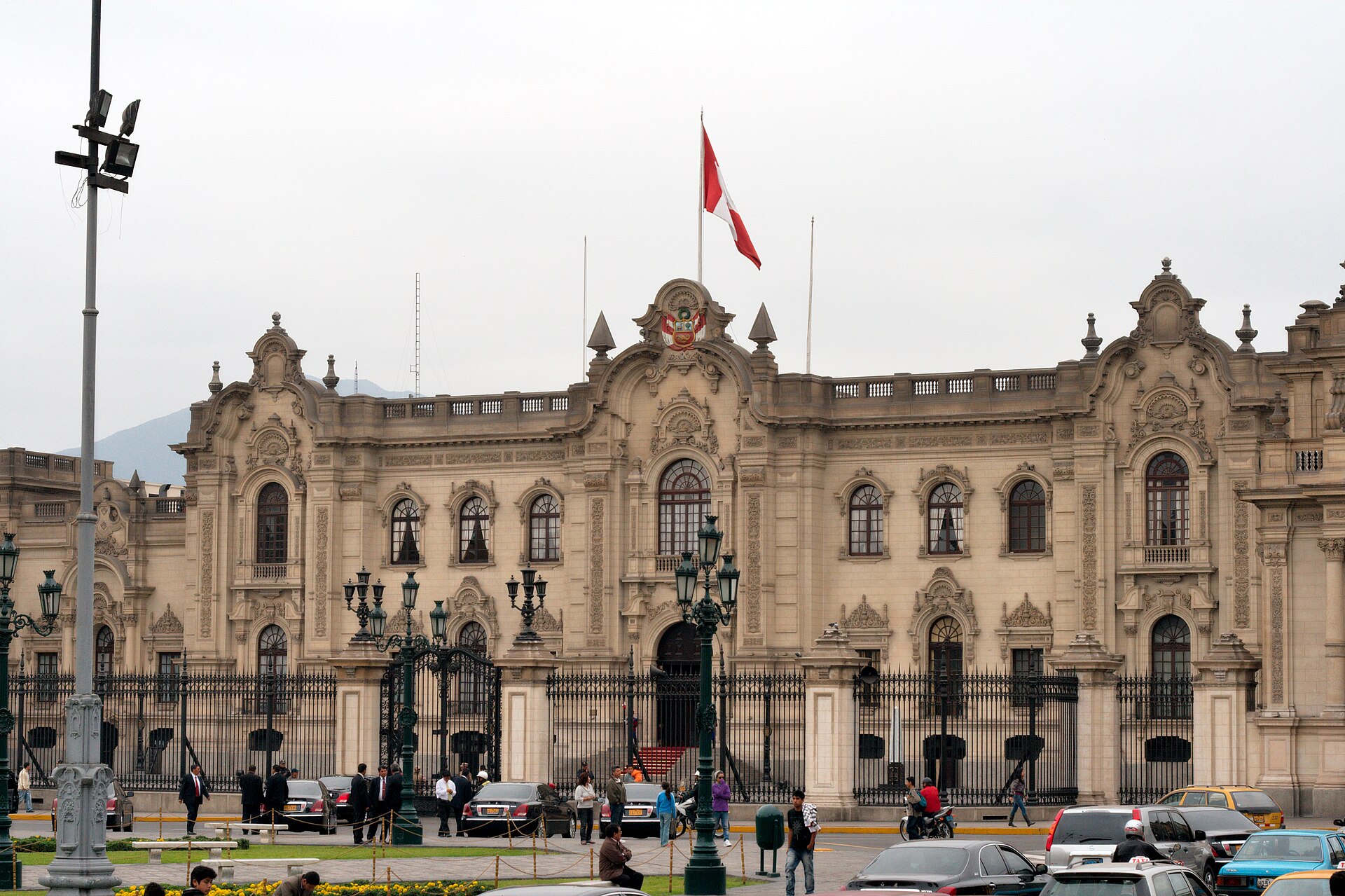
On this plot Pizarro built his house, the residence of the conqueror and the first seat of Spanish power in Peru. From here Pizarro governed the vast territories that had been brought under Spanish control, and the site became, from the very beginning of colonial Lima, the center of authority in the new colony.
The choice of this site by the founder of the city gave it a symbolic primacy that it has never lost. To govern from the plot that Pizarro himself had chosen was to govern from the origin of the city and the colony, and every subsequent occupant of the site inherited something of that foundational authority.
The name House of Pizarro, by which the palace is still known today, preserves the memory of this origin, linking the modern seat of the Peruvian presidency directly to the conquistador who founded Lima and first ruled Peru from this very spot beside the Plaza Mayor.
There is a certain grim poetry in the fact that Pizarro, who chose this spot and built the first house upon it, would himself be assassinated within his residence here, so that the site was marked from its earliest days by the violence and drama that so often attend the exercise of power. The founder’s blood, in a sense, consecrated the ground to its long career as the seat of authority.
The Palace of the Viceroys
After the era of the conquest, the site became the palace of the viceroys, the representatives of the Spanish crown who governed the Viceroyalty of Peru, one of the largest and most important possessions of the Spanish empire in the Americas. For centuries, from this palace, the viceroys ruled a vast territory that extended far beyond modern Peru.

The Viceroyalty of Peru was a realm of immense wealth, drawn above all from the silver mines of the Andes, and Lima, its capital, was one of the greatest cities of Spanish America, known as the City of Kings. The viceregal palace on the Plaza Mayor was the center of this rich and powerful realm, the setting for the ceremonial life of the colonial elite.
Over the colonial centuries, the palace was rebuilt and modified many times, damaged by the earthquakes that periodically struck Lima and adapted to the changing needs and tastes of successive viceroys. Through all these changes, it remained the seat of the highest authority in the viceroyalty, the symbol of Spanish power in South America.
The palace of the viceroys witnessed the whole long history of colonial Peru, from the consolidation of Spanish rule through the height of the viceroyalty’s wealth and power to the gradual emergence of the movements that would eventually bring independence and transform the palace once again.
The title City of Kings, by which Lima was known, expressed the grandeur to which the viceregal capital aspired, and the palace on the Plaza Mayor was the crown of that grandeur. From its halls flowed the decrees that governed a realm stretching down the spine of the Andes, and to it flowed the wealth that made Lima one of the richest cities of the age.
Seat of the Republic
With the independence of Peru in the early nineteenth century, the palace of the viceroys became the seat of the government of the new republic, continuing its ancient role as the center of power under a new political order. The building that had symbolized Spanish colonial authority now became the symbol of Peruvian sovereignty.

The nineteenth century was a turbulent time for Peru, marked by political instability, conflict, and the struggle to build a stable national order, and the palace was at the center of these dramas. It served the succession of governments and leaders who held power during this difficult period, witnessing the vicissitudes of the young republic.
Throughout these years, the palace remained the seat of the executive power, the place from which Peru was governed and the residence of its presidents. It became bound up with the whole political history of the republic, the prize sought by contending forces and the symbol of legitimate authority in the nation.
The continuity of the site as the center of power, from Pizarro through the viceroys to the presidents of the republic, gave the palace a symbolic depth that transcended any particular regime, embodying the enduring center of Peruvian authority across the whole sweep of the nation’s history.
The transition from viceregal palace to republican seat of government was not merely a change of occupant but a transformation of meaning, as a building that had embodied the authority of a distant king became the seat of a sovereign nation governing itself. Yet the physical continuity of the site lent the young republic a reassuring sense of inheriting an ancient center of power.
Fire and Rebuilding
The building that stands on the site today is largely a creation of the twentieth century, for the older palace that had grown up over the colonial and early republican centuries was destroyed by fire and its condition had long been a source of concern. The need to replace the deteriorating structure led to the construction of a grand new palace.

A serious fire in the early twentieth century damaged the old palace and provided the impetus for its comprehensive rebuilding. The reconstruction, carried out over the following decades, produced the imposing building that serves as the Government Palace today, a dignified and grand structure appropriate to its role as the seat of the Peruvian state.
The new palace was designed in a grand and eclectic style, drawing on European models to create a building of appropriate magnificence. Its long facade facing the Plaza Mayor, its grand halls, and its rich decoration reflect the aspirations of the Peruvian state in the twentieth century and its desire for a seat of government worthy of the nation.
Thus the present Government Palace, while occupying the most historic site in Peru, is in its fabric a relatively modern building, a twentieth-century creation on ancient ground, combining the deep symbolic resonance of the site with the grandeur of a purpose-built modern palace of state.
The decision to rebuild rather than relocate reflected the powerful hold of the site over the Peruvian imagination. However practical the arguments for a new palace elsewhere might have been, the symbolic weight of the ground Pizarro had chosen was too great to abandon, and so the new palace rose on the old foundations of Peruvian power.
The grand eclectic style of the rebuilt palace, drawing on the architectural fashions of the early twentieth century, gave Peru a seat of government that could stand comparison with the great presidential palaces of other nations, a building whose scale and dignity affirmed the standing of the republic in the modern world.
The Facade on the Plaza Mayor
The Government Palace presents a long and imposing facade to the Plaza Mayor of Lima, the great square that has been the ceremonial heart of the city since its founding. The palace forms one side of this historic square, facing the cathedral and the other great buildings that surround the plaza.

The facade is grand and dignified, its length punctuated by ornament and by the central entrance, presenting a face of appropriate magnificence to the square and the city. It expresses the importance of the building as the seat of the nation’s government and its place at the very center of the historic capital.
The Plaza Mayor itself, laid out by Pizarro at the founding of the city, is surrounded by the palace, the cathedral, the archbishop’s palace, and the municipal palace, forming an ensemble that expresses the civic, religious, and governmental life of Peru. The Government Palace anchors this ensemble as the seat of national power.
For the visitor, the facade of the Government Palace and its setting on the Plaza Mayor are among the great sights of Lima, a place where the whole history of the city and the nation is gathered, and where the seat of power faces the great square that has been the stage for so much of Peru’s history.
The relationship between the palace and the square is central to the life of the Peruvian capital. The Plaza Mayor is not merely a setting for the palace but a stage on which the public life of the nation unfolds, from celebrations and ceremonies to protests and gatherings, all playing out before the seat of power.
The Grand Halls Within
Behind its imposing facade, the Government Palace contains a sequence of grand and sumptuously decorated halls that serve the ceremonial functions of the Peruvian presidency. These state rooms, richly appointed, provide the setting for the reception of foreign dignitaries, official ceremonies, and the great occasions of the state.
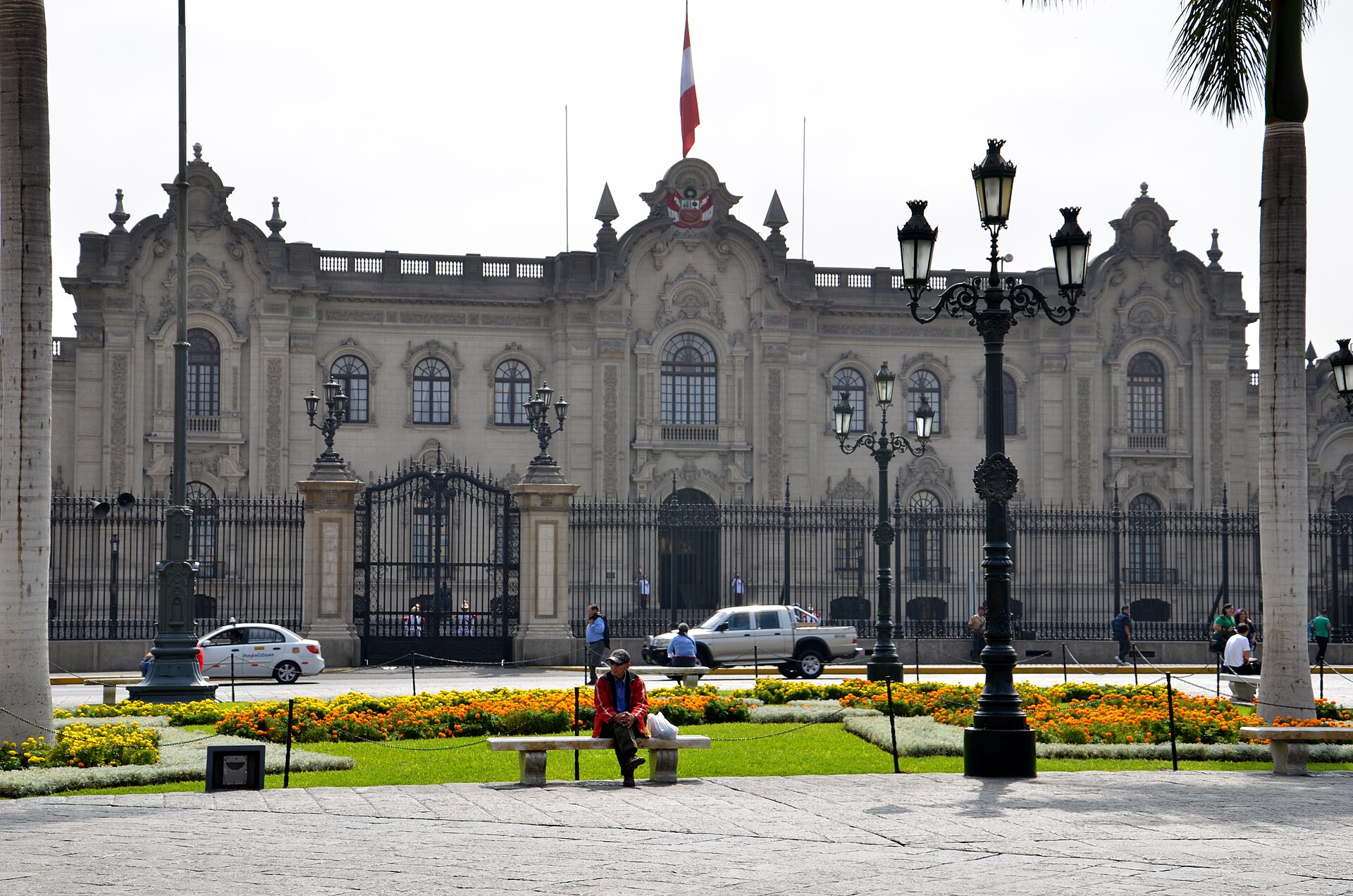
The halls are decorated with a magnificence befitting the seat of the nation’s government, with fine materials, elaborate ornament, chandeliers, and works of art that reflect the history and culture of Peru. Each hall has its own character and function, from grand reception rooms to more intimate salons, together forming a suite of impressive ceremonial spaces.
Among the notable spaces are the grand halls used for the most important state functions, whose splendor is designed to convey the dignity and standing of the Peruvian state to visitors from around the world. These rooms are the setting for the ceremonial life of the presidency, where the nation presents itself in all its formality.
For those able to enter the palace, these halls offer a glimpse of the grandeur of the Peruvian state and a sense of the ceremonial world of the presidency, complementing the historic facade and setting of the building with the richness and splendor of its interior spaces.
The richness of these interiors also reflects the artistic traditions of Peru, blending European grandeur with elements and materials that speak of the country’s own heritage. The halls are, in this sense, not merely grand but distinctively Peruvian, expressing the identity of the nation as well as the dignity of the state.
The Changing of the Guard
One of the most popular and colorful features associated with the Government Palace is the changing of the guard, a ceremony that takes place before the palace and draws crowds of spectators to witness the pageantry of the Peruvian state. This ceremonial display has become one of the great attractions of Lima.
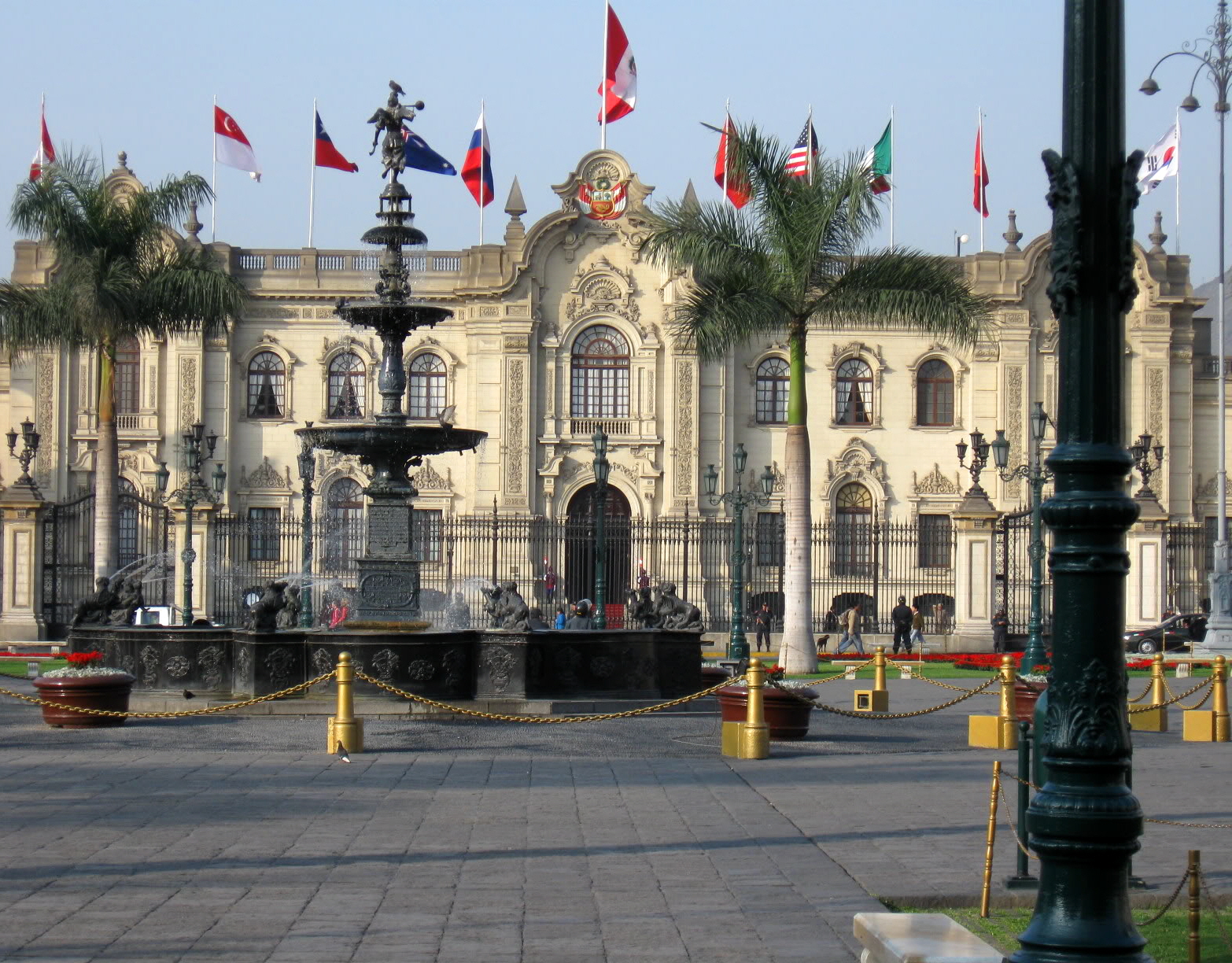
The changing of the guard involves the ceremonial soldiers who guard the palace, performing a formal display of drill and music before the building. The precision of the marching, the colorful uniforms, and the accompanying band combine to create a spectacle that delights visitors and expresses the dignity and tradition of the state.
The ceremony connects the working seat of government to the public and to the traditions of the nation, providing a regular occasion on which citizens and visitors can gather before the palace to witness the pageantry of the state. It has become a beloved feature of the life of the plaza and a highlight for many visitors to Lima.
Through this ceremony, the Government Palace maintains its connection to the public life of Peru, its guard and its pageantry serving as a visible expression of the traditions and dignity of the state, and drawing the people and visitors of the city into the ceremonial life of the seat of power.
The tradition of the guard, with its distinctive uniforms and its accompanying music, links the modern Peruvian state to a long history of military and ceremonial tradition. The regularity of the ceremony makes it a fixed point in the life of the plaza, a moment when the pageantry of the state is displayed for all to see.
The Palace and the City of Kings
The Government Palace stands at the heart of the historic center of Lima, a district of great beauty and historical importance that preserves the memory of the city’s colonial past as the City of Kings. The palace is part of a rich urban ensemble of churches, palaces, and public buildings that make the center of Lima one of the great historic cities of the Americas.

The historic center of Lima, with the Plaza Mayor at its heart, was laid out at the founding of the city and grew into one of the most important urban centers of Spanish America. The wealth of the viceroyalty adorned the city with magnificent buildings, and the historic center preserves much of this heritage, recognized for its outstanding value.
The Government Palace, as the seat of power at the center of this historic city, anchors the whole ensemble, its long facade forming one side of the great square around which the life of colonial and modern Lima has revolved. The palace and its setting together express the deep history of the Peruvian capital.
For the visitor exploring Lima, the Government Palace and the Plaza Mayor are the natural starting point, the historic heart of the city from which its rich past can be explored, and the place where the whole story of Lima, from Pizarro’s founding to the modern republic, is gathered in a single magnificent square.
The recognition of the historic center of Lima as a place of outstanding universal value reflects the extraordinary richness of the city’s colonial heritage, of which the Government Palace and the Plaza Mayor are the centerpiece. To stand in the square is to be surrounded by centuries of history, at the very heart of one of the great cities of the Americas.
The Working Seat of the Presidency
The Government Palace remains the working seat of the Peruvian presidency and the center of the nation’s executive power. It houses the offices of the president and the executive branch, and it serves as the residence of the head of state, continuing its ancient role as the center of authority in Peru.
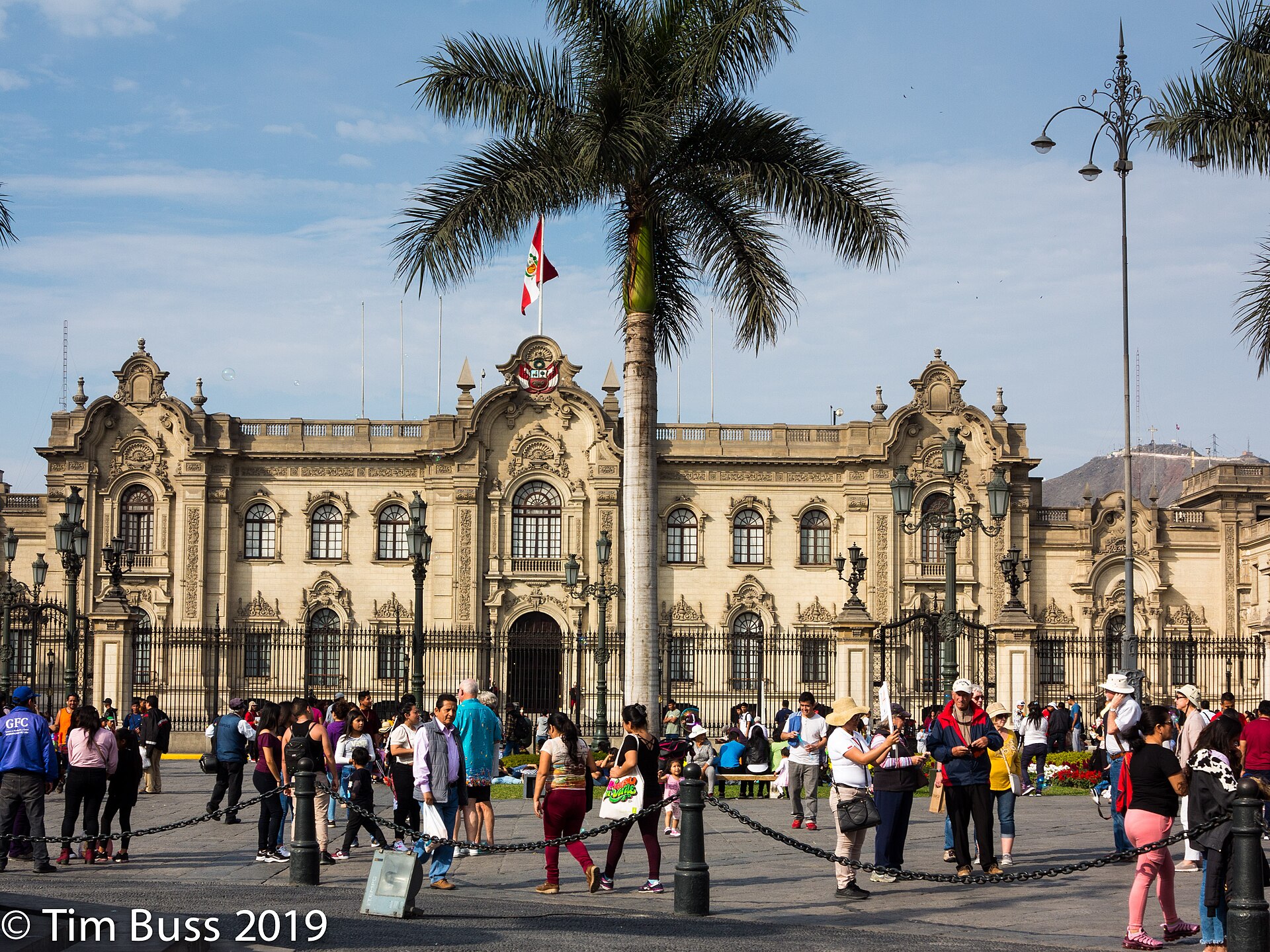
This continuing function ensures that the palace remains at the center of national life, the setting for the daily work of government, for official announcements and ceremonies, and for the reception of important guests. Its halls and its balcony continue to serve the purposes for which the building has always existed.
The dual character of the palace, as both a historic site and a working seat of government, gives it a special vitality. It is not a museum but a living building, where the ongoing life of Peruvian politics unfolds, adding new chapters to the long history embodied in this most historic of sites.
In this way the Government Palace continues its role as the center of power in Peru, a building that stands on the ground Pizarro chose at the founding of Lima and that has served as the seat of authority through conquest, colony, and republic, remaining, to this day, the beating heart of the Peruvian state.
Each new president who takes up residence in the palace becomes part of this long succession, inheriting not only the offices of state but the accumulated history of the site, from Pizarro through the viceroys to the leaders of the republic. The building thus binds every occupant into a chain of authority reaching back to the founding of the city.
Enduring the Earthquakes
Lima lies in a region prone to earthquakes, and the history of the Government Palace, like that of the whole city, has been shaped by these recurring disasters. Over the centuries, earthquakes repeatedly damaged or destroyed the buildings on the site, forcing successive rebuildings and shaping the character of the palace.

The colonial and early republican palaces on the site suffered from these earthquakes, which, together with fire and decay, contributed to the eventual decision to replace the old structure with the modern building. The vulnerability of Lima to seismic activity has thus been a constant factor in the history of the palace.
The modern Government Palace was built with the awareness of this seismic danger, and the maintenance and preservation of the building must take account of the ever-present risk of earthquakes. This challenge is shared by all the historic buildings of Lima, whose survival is a testament to the efforts made to protect them.
The history of destruction and rebuilding gives the site a particular character, a place where the permanence of the institution of power has persisted through the impermanence of the physical structures that have housed it, the seat of authority enduring on this spot even as building after building has risen, fallen, and risen again.
The resilience of the site through so many earthquakes has become part of its meaning, a symbol of the endurance of the Peruvian state through every kind of adversity. That the seat of power has risen again and again on this same ground, whatever nature and history have thrown at it, speaks to the deep continuity of authority in Peru.
A Symbol of Peru
The Government Palace has become one of the great symbols of Peru, recognized throughout the country and beyond as the seat of national power and a monument to the nation’s history. Its facade on the Plaza Mayor is an icon of Lima and of Peru, the face of the Peruvian state.

For Peruvians, the palace carries a wealth of meaning, connected to the whole history of their nation, from the founding of Lima by Pizarro through the era of the viceroys to the modern republic. It is a building that embodies the deep continuity of Peruvian power and the long history of the capital.
The palace also represents the endurance of Peruvian institutions through a turbulent history, a building that has remained the seat of power through conquest, colonial rule, independence, and the vicissitudes of the republic. Its continuity is a symbol of the persistence of the state and the nation.
In all these ways, the Government Palace is far more than a government office. It is a symbol of Peru itself, of its history, its capital, and its identity, a grand palace that stands at the heart of the nation’s public life and that continues to embody the long and dramatic story of the Peruvian state.
For a nation whose history stretches back through the Inca empire and beyond, the Government Palace represents the more recent, but no less significant, layer of that long story, the era of the city of Lima and the modern republic, and it stands as a reminder that Peru’s heritage encompasses not only the ancient wonders of the Andes but the rich history of its colonial and republican capital.
See the Government Palace for Yourself
The grandeur of the Government Palace and the pageantry of its ceremonial life are best appreciated by seeing the building for yourself, standing before its long facade on the Plaza Mayor and, if you are fortunate, witnessing the changing of the guard. A video conveys the atmosphere of the palace in a way that words and still images cannot fully capture.

The short video below shows the changing of the guard before the Presidential Palace in Lima, capturing the colorful pageantry and precision of this popular ceremony. It is an ideal companion to everything you have read here, giving you a feel for the ceremonial life of the palace before you visit in person.
As you watch, consider the long history of the site, from Pizarro’s founding of Lima to the modern republic, and the traditions of the Peruvian state expressed in the ceremony before the palace. Then, when you visit Lima, you will recognize the Government Palace not just as a grand building but as the historic heart of the Peruvian nation.
Visiting the Government Palace Today
For the modern traveler, the Government Palace is one of the essential sights of Lima, a building whose grandeur and historic setting make it a highlight of any visit to the Peruvian capital. Located on the Plaza Mayor, in the historic heart of the city, the palace is easily reached and forms a natural part of any exploration of the old center.

Visitors can admire the facade of the palace from the Plaza Mayor and, depending on current arrangements, may be able to take a guided tour of the grand interior halls or watch the changing of the guard, which is one of the great attractions of a visit. The ceremony, with its colorful pageantry, is a highlight for many visitors to the city.
The palace faces the Plaza Mayor, with the cathedral and other historic buildings nearby, at the heart of the historic center of Lima, so a visit to the palace can be combined with exploration of the surrounding colonial city. As always, it is worth checking current opening arrangements, as access to a working seat of government may vary.
However you approach it, the Government Palace rewards the visitor who understands its story. This is not merely a grand government building but the historic heart of Peru, the ground Pizarro chose at the founding of Lima, the palace of the viceroys, and the seat of the republic, a place where the whole long history of the nation is gathered on a single storied site.
For the visitor with an interest in history, the Government Palace offers a chance to trace the whole arc of Peru’s story from a single vantage point, from the founding of Lima to the present day. Standing before its facade, one is standing at the origin of the modern nation, on the ground from which Peru has been governed for nearly five hundred years.
A visit timed to coincide with the changing of the guard, which takes place around midday, rewards the traveler with the full spectacle of the palace at its most ceremonial, and even those who simply pass through the Plaza Mayor cannot fail to sense the weight of history that hangs about this most storied of Peruvian sites.
Palaces Nearby
If the House of Pizarro has drawn you into the world of the great seats of power in the Andean and South American nations, two more presidential palaces make natural companions to a visit here, each standing at the heart of its own country.
- The Palacio Estevez in Montevideo — the elegant former seat of the Uruguayan government, facing the monument to the founder of the nation.
- The Palacio de Carondelet in Quito — the white Andean seat of Ecuador’s presidency on the great square of one of the finest colonial cities in the Americas.
You May Like


2 thoughts on “The Lima Ground Pizarro Chose and Never Stopped Ruling”