On the Plaza Independencia, the grand ceremonial square at the heart of Montevideo, stands one of the most elegant and historically significant buildings in Uruguay. The Palacio Estevez served for much of the twentieth century as the seat of government and the working office of the presidents of the Uruguayan republic, and it remains today a ceremonial presidential building and the home of a museum dedicated to the nation’s presidency.
The palace occupies a prime position on the great square that forms the symbolic center of the Uruguayan capital, facing the monument to the national hero Artigas and surrounded by the buildings that express the civic life of the nation. Its refined nineteenth-century facade, a fine example of the architecture of its age, has made it one of the most recognizable landmarks of Montevideo.
Though the day-to-day work of the Uruguayan presidency has moved to a modern building nearby, the Palacio Estevez retains its role as a ceremonial seat of the presidency, the setting for official acts and the home of the museum that tells the story of Uruguay’s heads of state. It stands as a monument to the political history of one of South America’s most stable and democratic nations.
Over the following pages you will explore the whole story of this remarkable place, from its origins as a private residence through its long service as the seat of the Uruguayan government, to its architecture, its ceremonial role, and its life today as a presidential museum. Come and discover the Palacio Estevez on the great square of Montevideo.

In This Article
- Origins on the Great Square
- The Seat of Government
- An Elegant Facade
- The Plaza Independencia
- The Halls and the Despacho
- The Museum of the Presidency
- A Ceremonial Presidential Seat
- Facing the National Hero
- A Monument to Uruguayan Democracy
- The Palace in Montevideo
- A Symbol of Uruguay
- See the Palacio Estevez for Yourself
- Visiting the Palacio Estevez Today
Origins on the Great Square
The Palacio Estevez began its life not as a seat of government but as a private residence, built in the nineteenth century on the Plaza Independencia, the great square that was being developed as the ceremonial heart of Montevideo. The square itself was laid out as the city grew and modernized, becoming the symbolic center of the young Uruguayan nation.
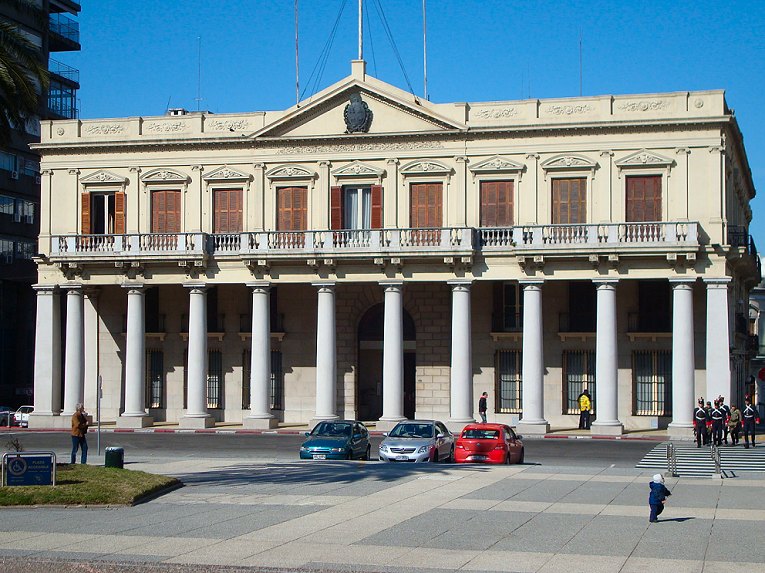
The building was constructed as an elegant private house, reflecting the wealth and taste of the era, and it took its name from a family associated with it. Its position on the great square, among the most prestigious addresses in the city, marked it as a residence of importance from the beginning.
As Montevideo developed and the Plaza Independencia took shape as the center of national life, the buildings around it acquired growing significance, and the future palace, with its prime position on the square, was well placed to take on a public role. Its elegant architecture made it a natural candidate for an important function.
In time, the state acquired the building, and it was transformed from a private residence into the seat of the Uruguayan government, beginning the role for which it would become known and taking its place among the great public buildings of the capital on the Plaza Independencia.
The development of the Plaza Independencia as the ceremonial heart of Montevideo gave the buildings around it a significance that grew with the young nation itself. As Uruguay found its feet as an independent republic, the square became the stage on which its public life was performed, and a building on its edge was well placed to become part of that story.
The name the building carries preserves a link to its private past, a reminder that great public institutions often make their homes in buildings raised for other purposes, and that the character of a seat of government can be shaped by the elegance of a residence rather than the grandiosity of a purpose-built palace of state.
The Seat of Government
For much of the twentieth century, the Palacio Estevez served as the seat of the government of Uruguay and the working office of the nation’s presidents. From this building, the executive power of the republic was exercised, and it became the center of the political life of one of South America’s most notable democracies.

During these decades, the palace was the setting for the daily work of government, the reception of dignitaries, and the great ceremonial occasions of the state. Generations of Uruguayan presidents governed from this building, and its halls witnessed the political history of the nation through much of the twentieth century.
Uruguay in this period developed a reputation as one of the most stable and progressive nations in South America, known for its strong democratic institutions and advanced social policies, and the Palacio Estevez, as the seat of government, stood at the center of this distinctive political culture.
The building thus became bound up with the whole modern political history of Uruguay, a witness to the development of the nation’s democratic institutions and the setting for the exercise of executive power during a formative period in the life of the republic.
The choice of this elegant building as the seat of government reflected the aspirations of Uruguay to house its institutions with appropriate dignity. Rather than construct a purpose-built palace, the state adapted a fine existing residence, giving the seat of government a graceful and human scale that suited the character of the nation.
It was from within these walls that Uruguay’s distinctive experiments in governance were directed, including the pioneering social legislation that gave the small nation an outsized reputation in the early twentieth century. The palace was, in this sense, the workshop of a political vision that made Uruguay a model admired across the continent and beyond.
An Elegant Facade
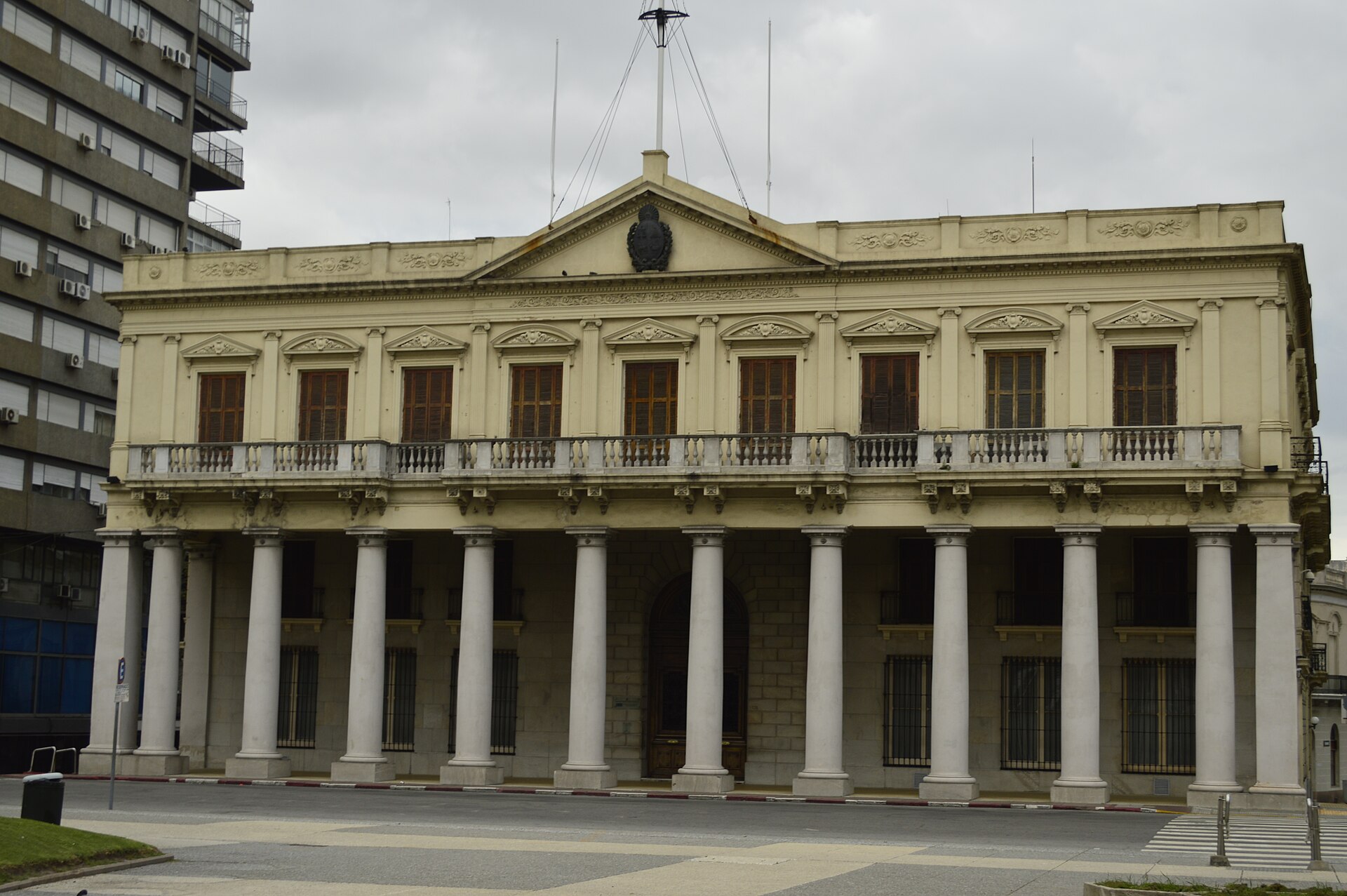
The Palacio Estevez is admired above all for its elegant facade, a refined example of nineteenth-century architecture that gives the building its distinctive character and its prominent place among the landmarks of Montevideo. The facade combines dignity and grace in a manner appropriate to its position on the great square.

The architecture draws on the European styles that were fashionable in the era of its construction, with classical elements and refined ornament creating a facade of harmonious proportions. The building presents a graceful and dignified face to the Plaza Independencia, in keeping with the character of the great square.
Over the years, the building was modified and adapted to its changing functions, and its architecture reflects both its original character as an elegant residence and its later role as a seat of government. The facade, however, has remained the building’s defining feature, an enduring symbol of the palace.
The elegance of the Palacio Estevez sets it apart among the buildings of the Plaza Independencia and makes it one of the most attractive and recognizable structures in Montevideo, a fine example of the architecture that adorned the Uruguayan capital in its formative decades.
The refinement of the building’s design reflects the cultural aspirations of nineteenth-century Montevideo, a city that looked to Europe for its models and sought to adorn itself with architecture of taste and quality. The Palacio Estevez is among the finest expressions of this ambition, a building that would not look out of place in a European capital.
Successive adaptations to the building’s public role were carried out with care to preserve its essential elegance, so that the Palacio Estevez never lost the graceful character that made it worthy of its prominent position. The balance between preservation and adaptation is itself a lesson in how a nation can honor its architectural heritage.
The Plaza Independencia
The Palacio Estevez cannot be understood apart from the great square it faces, the Plaza Independencia, which is the ceremonial and symbolic heart of Montevideo and of Uruguay. This grand square, developed as the center of the modernizing capital, is surrounded by important buildings and dominated by the monument to the national hero.
At the center of the square stands the great monument to Jose Gervasio Artigas, the revered founding figure of Uruguayan nationhood, whose equestrian statue and mausoleum form the focal point of the plaza. The Palacio Estevez faces this monument, so that the seat of government and the memory of the national hero confront one another across the square.
The Plaza Independencia is surrounded by other notable buildings, including the striking Palacio Salvo, once one of the tallest buildings in South America, and the gateway that marks the boundary between the old city and the newer districts. The square forms a remarkable ensemble of Uruguayan civic architecture.
For the Palacio Estevez, its position on this great square is central to its identity and its significance, placing it at the very heart of the ceremonial life of the nation, facing the monument to the founder of Uruguayan independence, in the symbolic center of the capital.
The Plaza Independencia is one of the great civic squares of South America, a space that gathers together the memory of the nation’s founding, the seat of its government, and some of its most striking architecture. To stand in the square is to be at the very center of Uruguayan public life, surrounded by the symbols of the nation.
The nightly illumination of the square and its monument, and the constant flow of Montevideans crossing the plaza on their daily rounds, keep the space alive and give the Palacio Estevez an ever-present audience, a seat of power woven into the everyday life of the city rather than set apart from it.
The Halls and the Despacho
Within the Palacio Estevez are the halls and rooms that served the working and ceremonial functions of the Uruguayan government, including the offices of the presidency and the spaces used for official acts and the reception of guests. These interiors reflect the dignity of the offices they served.

Among the notable spaces is the presidential office, or despacho, from which the presidents of Uruguay conducted the business of government, a room of particular historical significance as the working heart of the executive power during the decades when the palace was the seat of government.
The halls of the palace are decorated in a manner befitting a seat of government, with furnishings and works of art that reflect the history of Uruguay and its presidency. These spaces witnessed the great occasions of the state and the daily work of governing the nation over many decades.
Today these interiors form part of the museum housed in the palace, allowing visitors to see the rooms where the presidents of Uruguay once worked and where the political history of the nation unfolded, preserved as a record of the building’s long service as the seat of government.
The preservation of these interiors as part of the museum allows visitors a rare intimacy with the working spaces of power, a chance to stand in the very room where presidents once made their decisions and to sense the atmosphere of government as it was conducted during a formative era of the nation’s history.
Standing in the restored despacho, the visitor can imagine the weight of the decisions once taken there, and the succession of leaders who occupied the room across the decades, each leaving some trace of their tenure in the history of the building and the nation it served.
The Museum of the Presidency
Today the Palacio Estevez houses a museum dedicated to the history of the Uruguayan presidency, preserving and displaying the story of the nation’s heads of state and the building’s long service as the seat of government. The museum allows visitors to explore the political history of Uruguay through the institution of the presidency.

The museum’s collections include objects associated with the presidents of Uruguay, from personal effects and gifts of state to items connected with the history of the building and the nation. These objects offer a window into the political history of the country and the lives of its leaders.
Among the displays are portraits and belongings of past presidents, documents and objects related to significant events, and the preserved interiors of the palace itself, including the presidential office. Together they tell the story of the Uruguayan presidency and of the building that housed it for so long.
For visitors, the museum offers a rich introduction to the political history of Uruguay, a nation with a distinguished democratic tradition, and a chance to explore the elegant building that served as its seat of government through much of the twentieth century.
The transformation of the palace into a museum of the presidency reflects a democratic impulse to make the history of the nation’s institutions accessible to all, opening the once-private world of government to the citizens in whose name that government was exercised, and preserving the memory of the presidency for future generations.
The collections gathered in the museum, from official portraits to personal belongings, humanize the abstract institution of the presidency, allowing visitors to connect with the individuals who held the highest office and to understand the presidency not as a remote abstraction but as a succession of real people who served the nation.
A Ceremonial Presidential Seat
Although the day-to-day work of the Uruguayan presidency moved in more recent times to a modern building nearby, the Palacio Estevez retains an important ceremonial role as a presidential seat. It continues to be used for official acts and ceremonies, preserving its connection to the highest office of the state.

The palace is used for the formal and ceremonial functions of the presidency, from the signing of important acts to the reception of distinguished guests, so that it remains a working part of the apparatus of the Uruguayan state even as its everyday administrative role has passed to newer facilities.
This ceremonial function ensures that the Palacio Estevez retains its dignity and its place at the center of national life, a building that continues to serve the presidency and the state on the great occasions when the nation expresses itself through formal ceremony.
The combination of ceremonial seat and presidential museum gives the palace a dual role, at once a living part of the ceremonial life of the state and a repository of its political history, ensuring that the building remains both meaningful and useful in the life of the nation.
The decision to preserve the Palacio Estevez for ceremonial use, rather than abandon it once a modern seat of government was built, reflects the Uruguayan respect for tradition and continuity. The building continues to lend its historic dignity to the great occasions of the state, its halls still echoing with the formalities of the republic.
In this way the palace bridges past and present, its historic halls still pressed into the service of the living state on ceremonial occasions, so that the building is neither a frozen relic nor a purely functional office but a place where the continuity of the republic is enacted and affirmed.
Facing the National Hero
The Palacio Estevez faces, across the Plaza Independencia, the great monument to Jose Gervasio Artigas, the national hero of Uruguay, whose memory is central to the identity of the nation. This confrontation between the seat of government and the monument to the founder gives the square its profound symbolic meaning.

Artigas is revered in Uruguay as the father of the nation, the leader whose struggle laid the foundations for Uruguayan independence and identity, and his monument, with its imposing equestrian statue, dominates the Plaza Independencia. Beneath the monument lies a mausoleum where his remains are honored.
The positioning of the Palacio Estevez facing this monument places the seat of government in a constant symbolic relationship with the memory of the national hero, so that those who governed from the palace did so under the gaze, as it were, of the founder of the nation, a powerful reminder of the ideals on which Uruguay was built.
This relationship between palace and monument is central to the meaning of the Plaza Independencia and of the Palacio Estevez, expressing the connection between the exercise of power and the founding ideals of the nation, at the symbolic heart of the Uruguayan capital.
The reverence for Artigas in Uruguay is difficult to overstate, and his monument on the Plaza Independencia is the sacred center of the nation’s civic religion. That the seat of government should stand facing this monument binds the exercise of power to the founding ideals of independence and nationhood in a daily, visible relationship.
A Monument to Uruguayan Democracy
The Palacio Estevez stands as a monument to the distinctive political history of Uruguay, a nation known throughout the twentieth century for its strong democratic institutions, its social progressivism, and its political stability, which earned it a reputation as one of the most advanced societies in the Americas.

As the seat of government during much of this period, the palace was at the center of the development of these institutions, the place from which the leaders who shaped modern Uruguay governed the nation. The building is thus bound up with the achievements of Uruguayan democracy and the traditions of which the nation is proud.
Uruguay’s democratic history was not without interruption, and the nation, like others in the region, experienced periods of upheaval, but its strong democratic traditions ultimately endured, and the Palacio Estevez, as a symbol of the seat of government, embodies this resilience of the nation’s institutions.
For Uruguayans, the palace is a source of pride, a reminder of their nation’s distinguished democratic history and of the leaders who built its institutions, a building that embodies the political traditions that have made Uruguay a notable example of stable and progressive governance in South America.
Uruguay’s reputation as the Switzerland of South America, earned through its stability, its social reforms, and its strong institutions, is embodied in the quiet dignity of the Palacio Estevez, a seat of government on a human scale that reflects the nation’s preference for consensus and moderation over grandiosity and display.
The story of the palace is inseparable from the story of Uruguayan democracy itself, with its achievements, its interruptions, and its ultimate resilience. To understand the building is to understand something of how a small nation built and preserved institutions that became a model for others, and that endured through the trials of the twentieth century.
The Palace in Montevideo
The Palacio Estevez occupies a central place in the cityscape of Montevideo, at the heart of the Plaza Independencia, which marks the boundary between the historic old city and the newer districts of the capital. Its position places it at the very center of the urban and civic life of the city.

The surrounding area is rich in notable buildings and monuments, from the historic gateway of the old city to the towering Palacio Salvo, and the Plaza Independencia forms a grand civic space at the heart of the capital. The Palacio Estevez, with its elegant facade, is among the most admired of these buildings.
Montevideo, as the capital and largest city of Uruguay, is the political, economic, and cultural center of the nation, and the Plaza Independencia, with the Palacio Estevez, is its symbolic heart. The palace thus stands at the center of the life of the capital and the nation.
For the visitor exploring Montevideo, the Palacio Estevez and the Plaza Independencia are a natural focal point, the ceremonial heart of the city from which its history and its civic life can be explored, and a place where the political traditions of Uruguay are given monumental expression.
Montevideo wears its history lightly, a city of faded elegance and human scale where the grand gestures of the past coexist with the easygoing rhythms of the present. The Palacio Estevez, dignified but not overbearing, captures something of this character, a seat of power that never loses its human proportions.
A Symbol of Uruguay
The Palacio Estevez has become one of the symbols of Uruguay, recognized as a seat of the nation’s government and a monument to its political history. Its elegant facade on the Plaza Independencia is a familiar image of Montevideo and of the nation, associated with the presidency and the institutions of the state.

For Uruguayans, the palace carries associations connected to the whole modern history of their nation, to the presidents who governed from it and the institutions they built, and to the distinctive democratic traditions of which the country is proud. It is a building that embodies the political identity of Uruguay.
The palace also represents the continuity and stability of Uruguayan institutions, a building that has served the nation as a seat of government and now as a ceremonial seat and museum, embodying the endurance of the republic and its democratic traditions through the changes of the modern era.
In all these ways, the Palacio Estevez is more than an elegant old building. It is a symbol of Uruguay itself, of its history, its institutions, and its identity, a palace that stands at the heart of the capital and that continues to embody the political traditions of one of South America’s most distinguished democracies.
In a continent where seats of power have often been associated with grandiosity or with the dramas of coups and revolutions, the Palacio Estevez stands for something quieter and, in its way, more remarkable, the steady persistence of democratic institutions in a small nation that made stability and social progress its hallmarks.
See the Palacio Estevez for Yourself
The elegance of the Palacio Estevez and its setting on the great Plaza Independencia are best appreciated by seeing the building for yourself, standing before its refined facade and taking in the square with its monument to the national hero. A video conveys the atmosphere of the palace in a way that words and still images cannot fully capture.

The short video below explores the history of the Palacio Estevez, tracing its story from private residence to seat of government and presidential museum. It is an ideal companion to everything you have read here, deepening your understanding of this important building before you visit in person.
As you watch, consider the long history of the palace and its place at the heart of Uruguayan democracy, facing the monument to the founder of the nation across the great square. Then, when you visit Montevideo, you will recognize the Palacio Estevez not just as an elegant building but as a monument to the political traditions of Uruguay.
Visiting the Palacio Estevez Today
For the modern traveler, the Palacio Estevez is one of the essential sights of Montevideo, a building whose elegance and historical significance make it a highlight of any visit to the Uruguayan capital. Located on the Plaza Independencia, at the heart of the city, the palace is easily reached and forms a natural part of any exploration of the center.

Visitors can admire the facade of the palace from the great square and, depending on current arrangements, may be able to visit the presidential museum housed within, exploring the historic interiors, including the presidential office, and the collections that tell the story of the Uruguayan presidency.
The palace faces the monument to Artigas and stands amid the notable buildings of the Plaza Independencia, at the boundary of the old city, so that a visit to the palace can be combined with exploration of the surrounding historic center of Montevideo. As always, it is worth checking current opening arrangements before you go.
However you approach it, the Palacio Estevez rewards the visitor who understands its story. This is not merely an elegant old building but a seat of Uruguayan government, a monument to the nation’s distinguished democratic traditions, and a presidential museum at the heart of Montevideo, facing the monument to the founder of the nation across the great square.
For the traveler interested in the political history of South America, the Palacio Estevez offers a valuable and often overlooked destination, a chance to encounter the distinctive democratic traditions of Uruguay in the very building where they were shaped, away from the more famous but often more turbulent capitals of the continent.
A visit rewards the traveler willing to look beyond the obvious, for in the quiet dignity of the Palacio Estevez lies the story of a nation that chose, again and again, the path of institutions and law over the temptations of grandeur and force, and that built, on this modest and elegant scale, one of the most admired democracies of the Americas.
Palaces Nearby
If the elegant seat of Uruguayan government has drawn you into the world of the great houses of state in South America, two more presidential palaces make natural companions to a visit here, each standing at the heart of its own nation.
- The Government Palace of Peru in Lima — the House of Pizarro on the Plaza Mayor, seat of Peruvian power since the founding of the city.
- The Palacio de Carondelet in Quito — the white Andean seat of Ecuador’s presidency on the great square of one of the finest colonial cities in the Americas.
You May Like

Ecuador Rules from a White Palace High in the Andes


One thought on “An Elegant House on Montevideo’s Great Square That Became Uruguay’s Seat of Power”