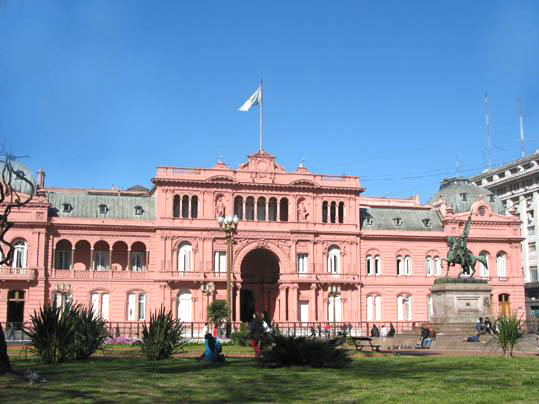
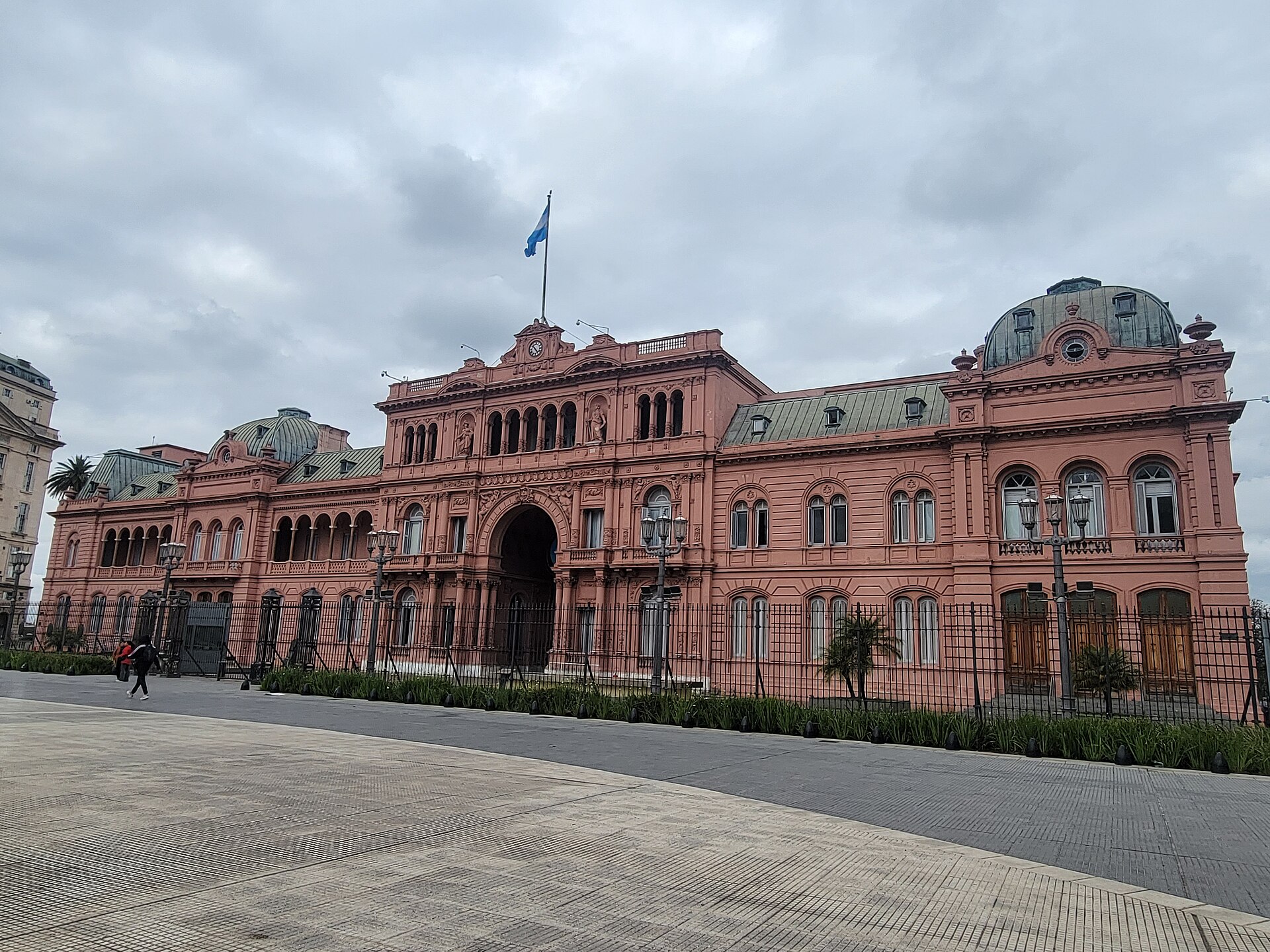
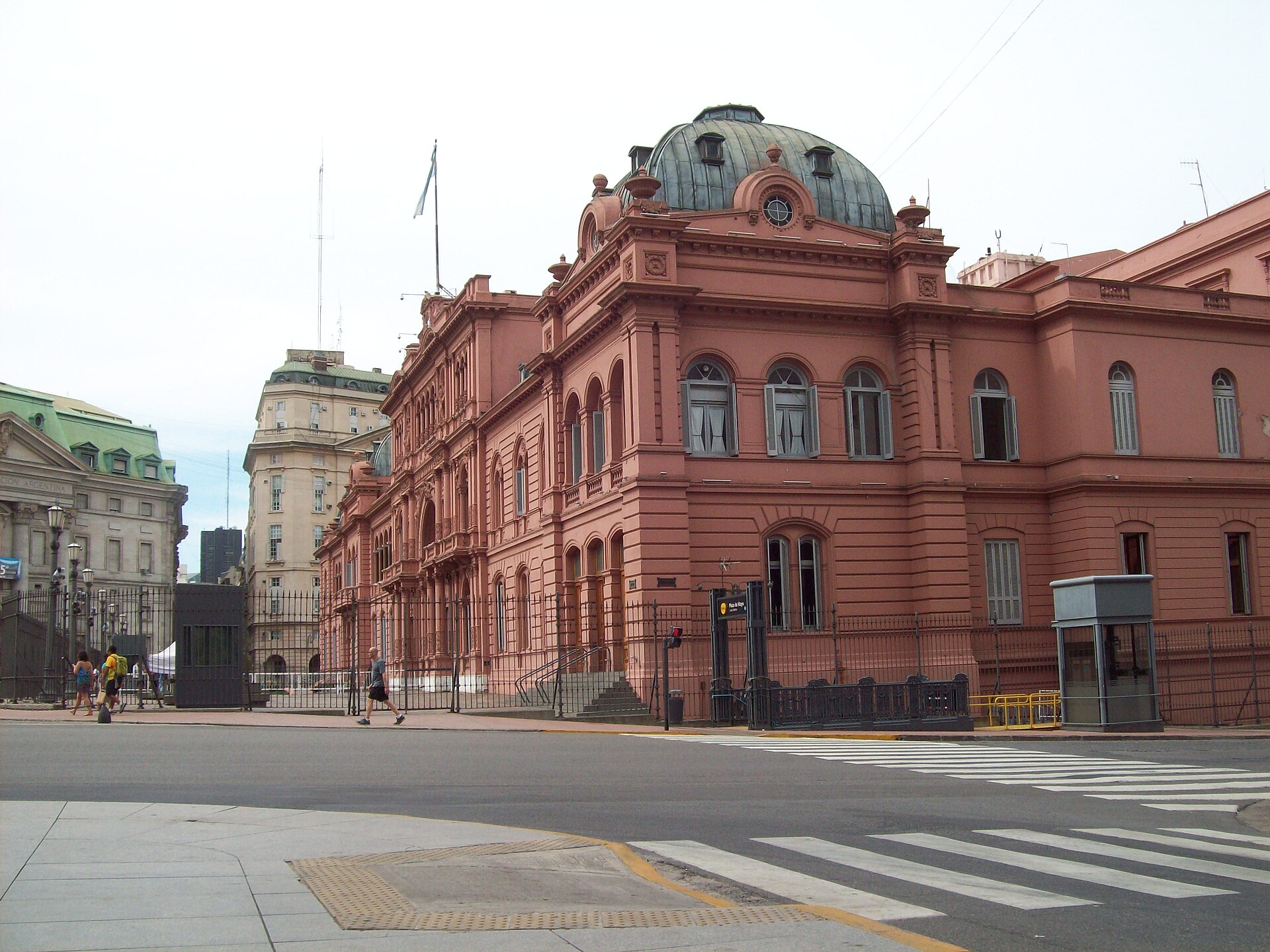
At the eastern end of the Plaza de Mayo, the historic heart of Buenos Aires, stands a building whose distinctive color has made it one of the most recognizable seats of government in the world. The Casa Rosada, the Pink House, is the office of the President of Argentina and the symbolic center of the nation’s political life, a rose-colored palace whose famous balcony has been the stage for some of the most dramatic moments in Argentine history.
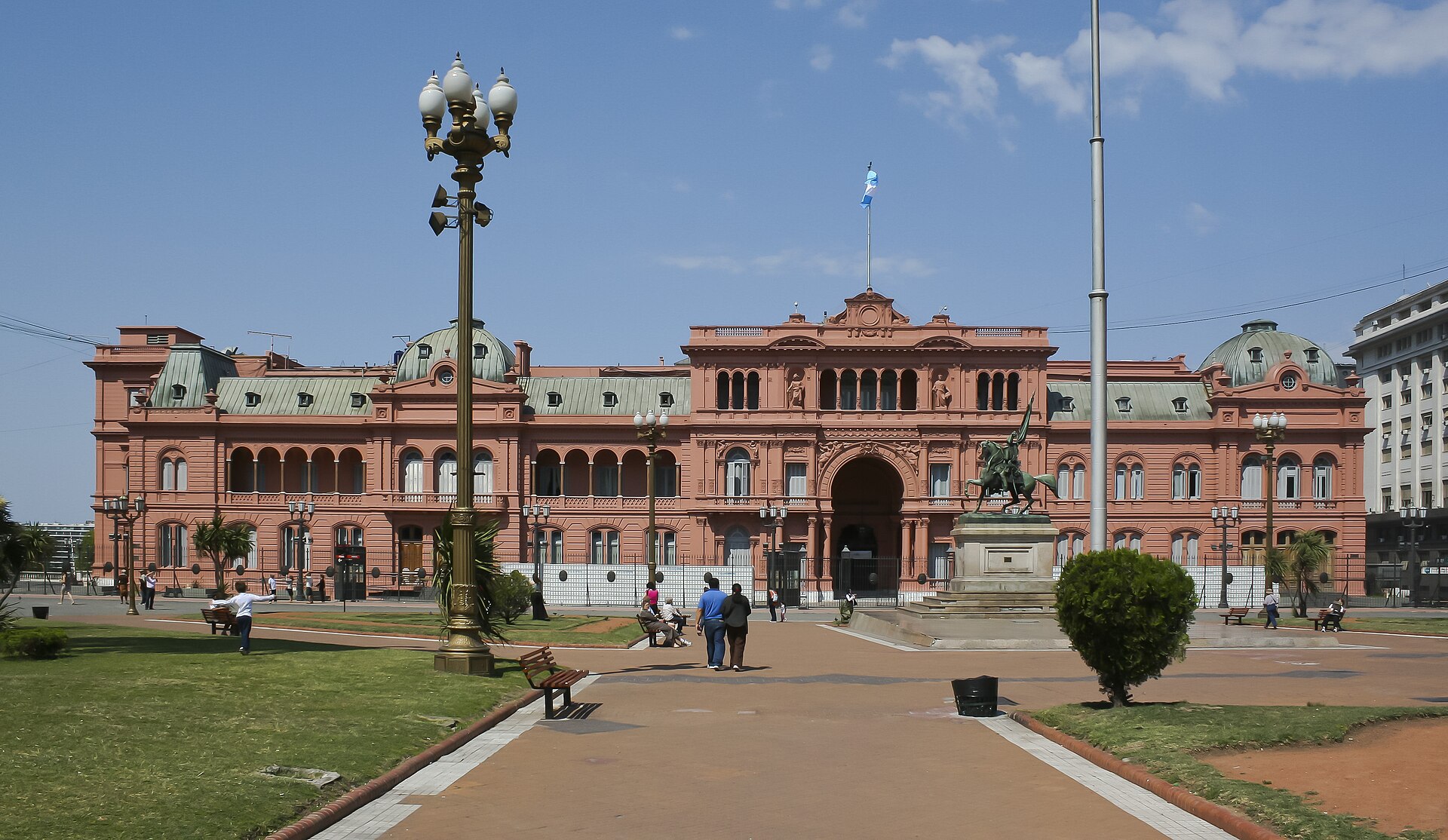
The building takes its popular name from the soft pink hue of its facade, a color that has become inseparable from its identity and that sets it apart from the white-painted government houses of many other nations. Various explanations have been offered for the choice of pink, from the political to the practical, and the color has become a beloved and defining feature of the Argentine seat of power.
More than a government office, the Casa Rosada is a place of memory and emotion for Argentines. Its balcony overlooking the Plaza de Mayo has been the setting for impassioned speeches, mass gatherings, and moments of national triumph and trauma, and the great square before it has been the stage for the celebrations and protests that have shaped the country’s modern history.
Over the following pages you will explore the whole story of this remarkable place, from its origins on the site of an old fort through its architectural development and its famous color, to the great historical dramas played out on its balcony and its role today as the seat of the Argentine presidency. Come and discover the Pink House at the heart of Buenos Aires.
In This Article
- From Fort to Government House
- Building the Pink House
- Why the House Is Pink
- The Famous Balcony
- The Plaza de Mayo
- A Stage for the Nation’s Dramas
- The Palace and Its Halls
- The Museum of the Casa Rosada
- A Symbol of Argentina
- The Casa Rosada in Buenos Aires
- The Working Seat of the Presidency
- See the Casa Rosada for Yourself
- Visiting the Casa Rosada Today
From Fort to Government House
The site of the Casa Rosada has been associated with power since the early days of Buenos Aires, for it was here that the original fort of the city stood, guarding the settlement on the great estuary of the Rio de la Plata. This fort was the seat of Spanish colonial authority, the residence of the governors and later the viceroys who administered the region.
For centuries, then, this spot at the edge of the river was the center of government, first for the Spanish colony and then, after independence, for the emerging Argentine nation. The old fort was gradually replaced and transformed as the needs of government changed, but the site retained its central role as the seat of authority.
In the nineteenth century, as Argentina consolidated as an independent nation, the old colonial structures gave way to new buildings designed to house the government of the republic. The transformation of the site from fortress to government palace mirrored the transformation of Argentina itself from colony to nation.
The building that emerged from this process, developed over the course of the nineteenth century, became the Casa Rosada, the seat of the Argentine executive, standing on the ground that had been the center of power since the founding of Buenos Aires, and continuing an unbroken tradition of authority on this spot beside the river.
The continuity of this site as a center of power is itself remarkable, echoing the pattern seen in other great capitals of the Americas, where the seat of the modern state rose on the very ground that had held colonial and sometimes pre-colonial authority. To govern from here was to inherit the accumulated weight of centuries of rule beside the Rio de la Plata.
Building the Pink House
The Casa Rosada as it stands today is the product of a long process of construction and unification that took place mainly in the later nineteenth century. Earlier, the site had held separate buildings, including a government house and a post office, and a major achievement of the period was to unite these into a single coherent palace.
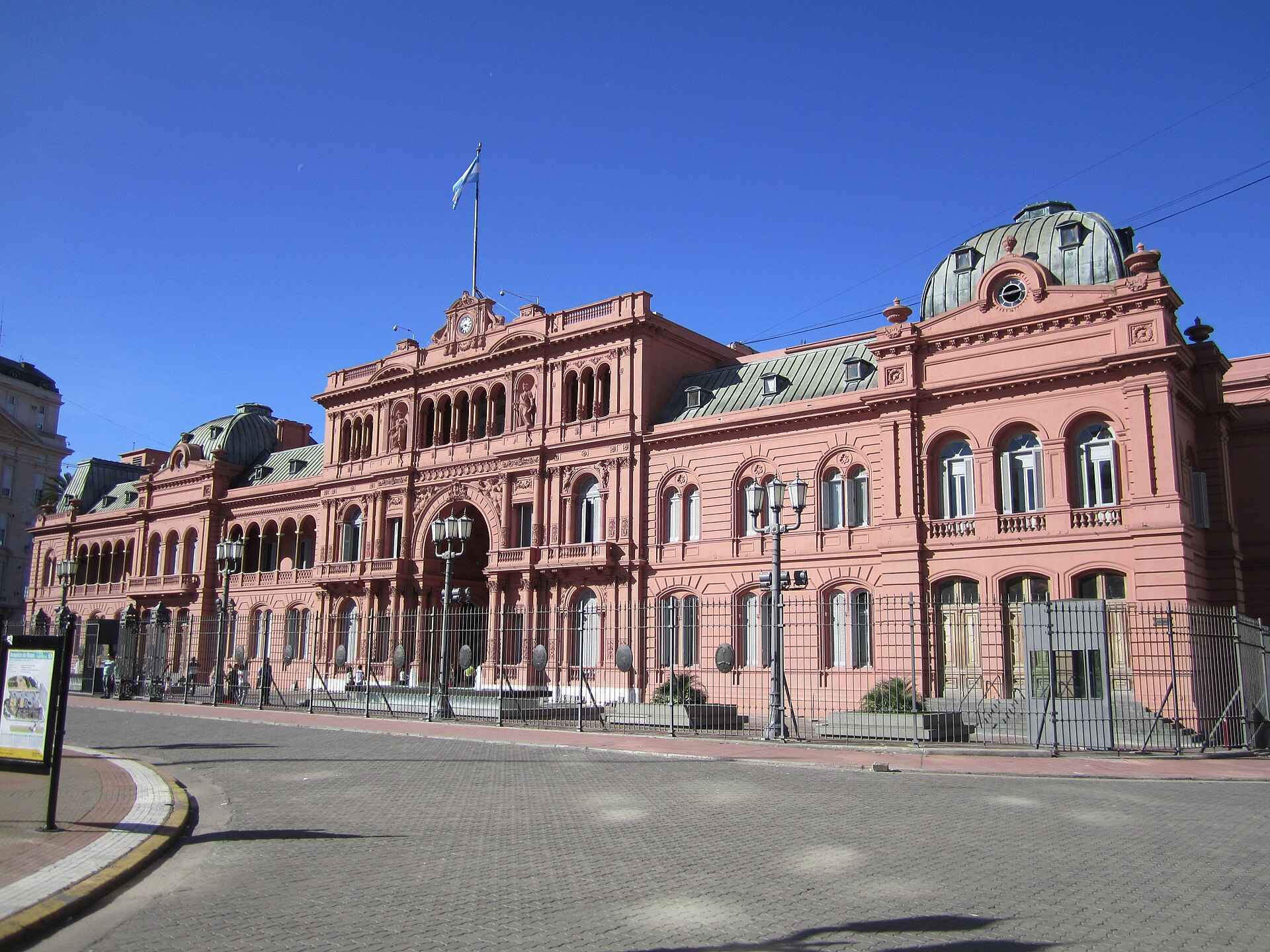
A distinctive feature of the building’s development was the construction of a grand arch that joined the previously separate structures, creating the unified facade that gives the Casa Rosada its characteristic appearance. This act of architectural unification produced the building that Argentines know and love today, a single palace from formerly divided parts.
The architecture of the Casa Rosada reflects the tastes of the age in which it was built, drawing on European models in the eclectic, ornate manner favored in the later nineteenth century. The result is a dignified and elaborate palace, its facade richly detailed, appropriate to its role as the seat of government of a nation that aspired to a place among the great countries of the world.
When it was complete, the unified Casa Rosada stood as a fitting symbol of the Argentine state, a grand palace at the heart of the capital, its distinctive color and elaborate facade making it instantly recognizable and marking it as the center of the nation’s political life.
The uniting arch was more than an engineering solution to the problem of two separate buildings; it became a defining feature of the palace, giving the facade its central focus and its sense of unity. In joining the divided structures into one, the builders created not just a bigger building but a single symbol, a coherent house for the Argentine state.
Why the House Is Pink
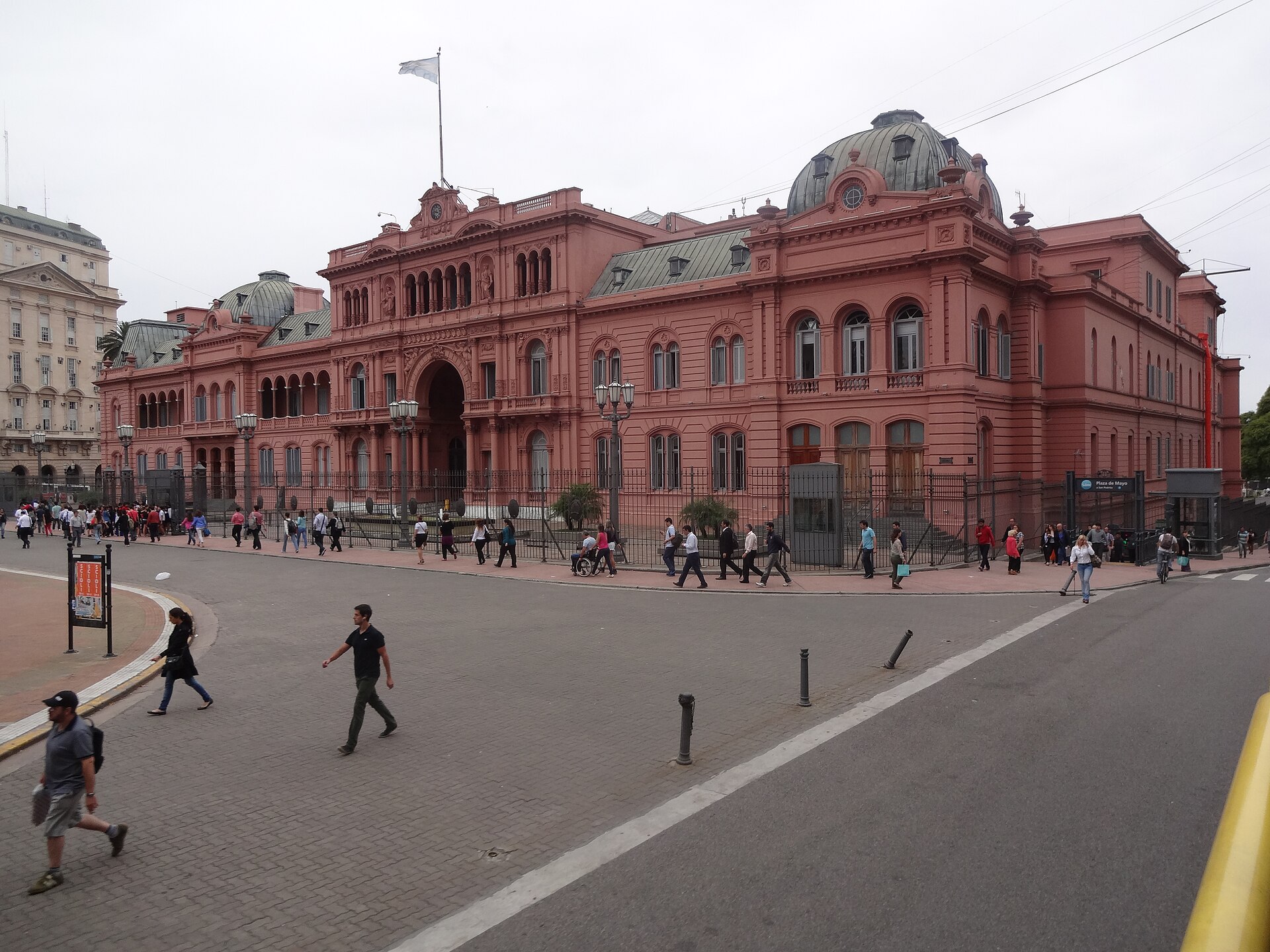
The most distinctive feature of the Casa Rosada is, of course, its color, the soft pink that gives the building its name and its unique character among the government houses of the world. The question of why the building is pink has intrigued observers for generations, and several explanations have been offered.
One popular account holds that the pink color was chosen for political reasons, as a gesture of reconciliation between the two great rival factions of nineteenth-century Argentine politics, blending the red of one party with the white of the other to produce a color that symbolized unity and peace. This explanation, whatever its historical accuracy, has become part of the beloved lore of the building.
A more practical explanation traces the color to the building materials and techniques of the era, suggesting that the pink resulted from the use of certain substances, such as ox blood, mixed into the paint or plaster to protect the surface against the humidity of the riverside climate. Such techniques were used elsewhere, and the color may have had a functional origin.
Whatever the true explanation, the pink color has become an inseparable part of the identity of the Casa Rosada, cherished by Argentines and recognized around the world. The building is periodically repainted to maintain its distinctive hue, ensuring that the Pink House remains true to the name that has become so closely bound up with its meaning.
The debate over the origin of the pink color is itself a kind of national conversation, one in which history, legend, and civic pride are pleasantly entangled. Whether one prefers the romantic story of political reconciliation or the practical tale of ox-blood plaster, the color has come to mean far more than its origins, standing now simply for Argentina itself.
Periodically, when the building is repainted, the exact shade becomes a small matter of public interest, a reminder of how deeply Argentines care about this detail of their national symbol. The Pink House must remain truly pink, and the maintenance of its color is treated as a duty owed to the identity of the nation.
The Famous Balcony
If the color makes the Casa Rosada recognizable, it is the balcony that has made it legendary, for this balcony overlooking the Plaza de Mayo has been the stage for some of the most dramatic and emotional moments in the history of Argentina. From here, leaders have addressed the nation, and vast crowds have gathered to hear them.
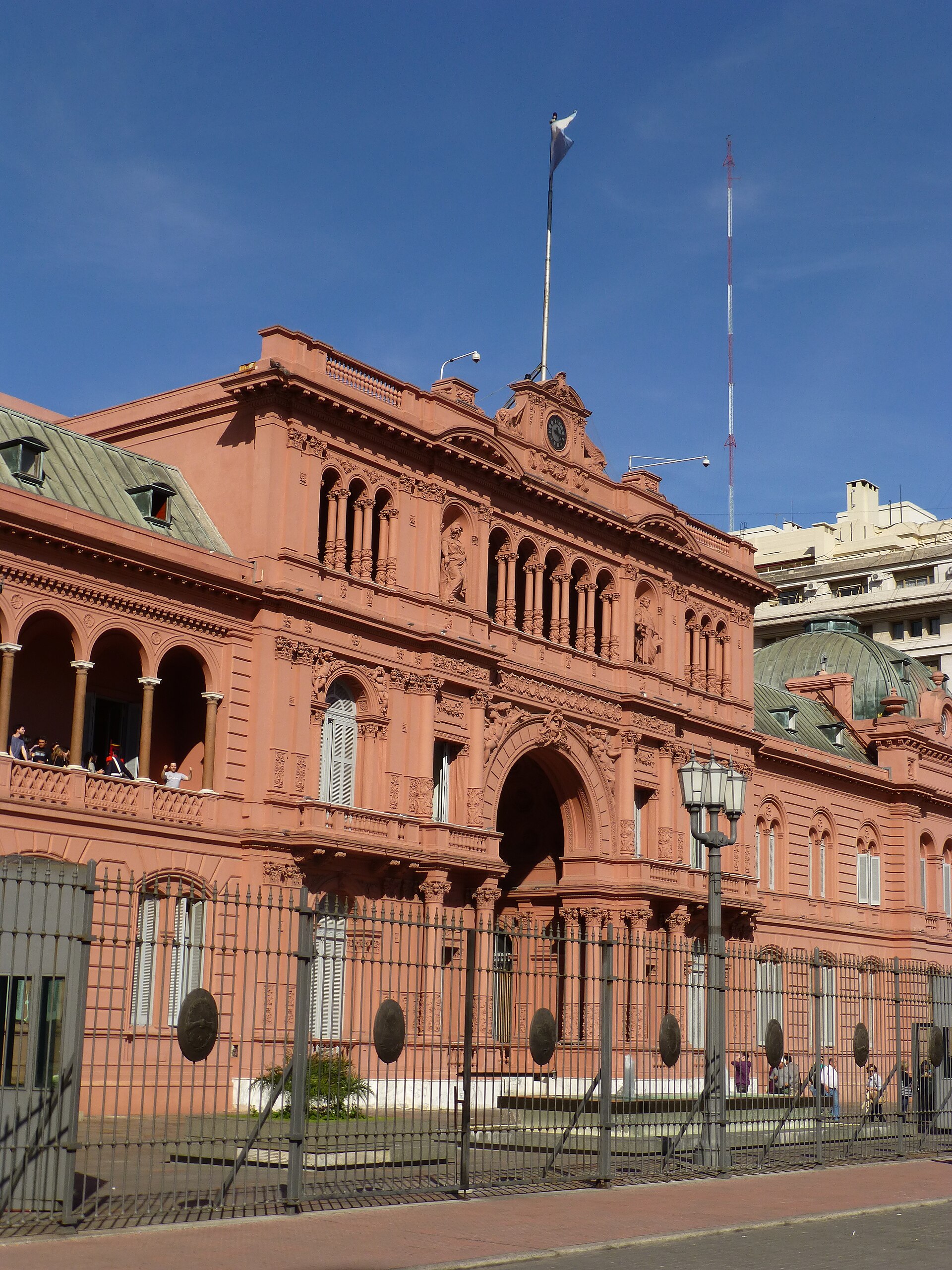
The balcony is associated above all with the great political dramas of the twentieth century, when leaders used it to speak directly to the assembled people in the square below, forging a powerful and emotional connection between the government and the crowd. These scenes, of a leader on the balcony and a sea of people in the plaza, have become iconic images of Argentine history.
The most famous of these associations is with the political movement led by a charismatic president and his celebrated wife, whose appearances on the balcony before adoring crowds became defining moments of an era. The image of the balcony and the plaza filled with supporters entered deep into the national memory and the wider world’s imagination.
Through these dramas, the balcony of the Casa Rosada became far more than an architectural feature. It became a symbol of the relationship between power and the people in Argentina, a stage on which the passions of the nation were expressed, and a place charged with emotional and political meaning for generations of Argentines.
The power of the balcony lay in the directness of the connection it made possible, allowing a leader to speak, seemingly without intermediary, to a vast crowd gathered in the open square, and allowing that crowd to respond as one. In an age before the dominance of broadcast media, this face-to-face communion of leader and multitude was a potent political force.
The Plaza de Mayo
The Casa Rosada cannot be understood apart from the great square it faces, the Plaza de Mayo, which has been the political heart of Buenos Aires and of Argentina since the earliest days of the city. This vast public space, named for the month of the revolution that began Argentina’s path to independence, is the stage on which the drama of the nation has repeatedly played out.
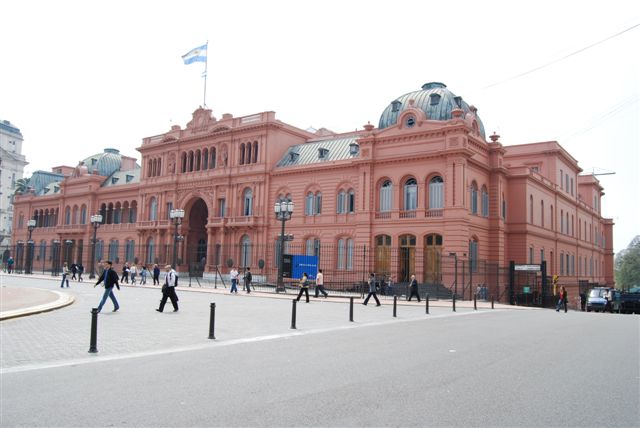
The plaza has been the setting for the great gatherings of Argentine history, from celebrations of independence and national triumphs to protests, demonstrations, and moments of collective mourning. It is the place where Argentines have come together, in joy and in anger, to make their voices heard before the seat of power.
Among the most moving associations of the plaza is with the mothers and grandmothers who gathered there to demand justice and answers about their disappeared children during a dark period of the nation’s history, their silent, persistent presence in the square becoming a powerful symbol of resistance and remembrance that resonated around the world.
Together, the Casa Rosada and the Plaza de Mayo form a single stage for the political life of Argentina, the palace and the square facing one another, power and people confronting each other across the open space, in a relationship that has defined the public life of the nation for more than two centuries.
The pairing of palace and plaza gives Argentine political life a distinctive theatrical quality, in which the great questions of the nation are debated not only in parliament and press but in the open air, before the pink walls of the Casa Rosada. Few capitals possess so charged and so public a stage for the drama of their politics.
A Stage for the Nation’s Dramas
For well over a century, the Casa Rosada has been at the center of Argentine political life, and its halls and balcony have witnessed the whole turbulent history of the modern nation. Governments have risen and fallen here, leaders have been celebrated and overthrown, and the great crises and triumphs of Argentina have played out in and around the building.
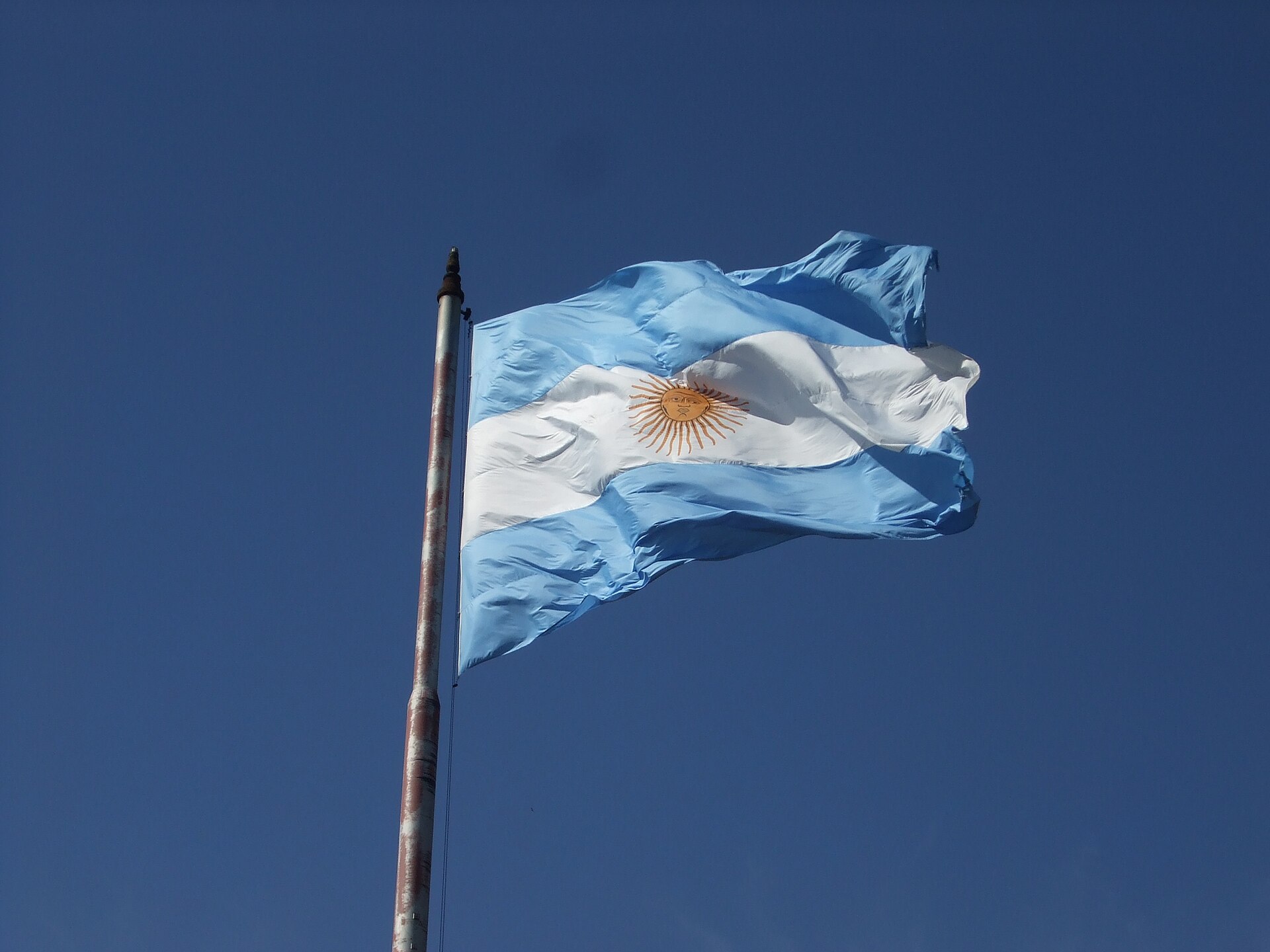
The twentieth century in particular was a time of dramatic upheaval in Argentina, marked by the rise of mass political movements, periods of military rule, and recurring economic and political crises, and the Casa Rosada was at the center of it all. The building saw coups and restorations, the making and unmaking of governments, and the passionate politics that have marked the nation’s history.
Through all these dramas, the Casa Rosada remained the seat of executive power, the prize sought by contending forces and the symbol of legitimate authority. To hold the Casa Rosada was to hold power in Argentina, and the building became bound up with the whole struggle for control of the nation’s destiny.
The history embodied in the Casa Rosada is thus the history of modern Argentina itself, with all its passion, its conflict, and its resilience, and to understand the building is to understand something of the dramatic and often tumultuous political life of the nation it has served for so long.
That the building survived so many convulsions, remaining the seat of legitimate authority through coups and restorations alike, gave it a symbolic stability that transcended any particular government. The Casa Rosada came to stand for the continuity of the Argentine state itself, a fixed point around which the storms of the nation’s politics revolved.
For the visitor, this dense layering of history is part of what makes the Casa Rosada so compelling. To stand before it is to stand where so many of the defining moments of Argentina have occurred, and to sense, in the quiet of an ordinary day, the echoes of the crowds and the speeches and the passions that this pink facade has witnessed across the generations.
The Palace and Its Halls
Beyond its famous facade and balcony, the Casa Rosada contains a wealth of grand interior spaces that serve the ceremonial and working functions of the Argentine presidency. These halls and rooms, richly decorated, provide the setting for the official life of the government and the reception of important guests.
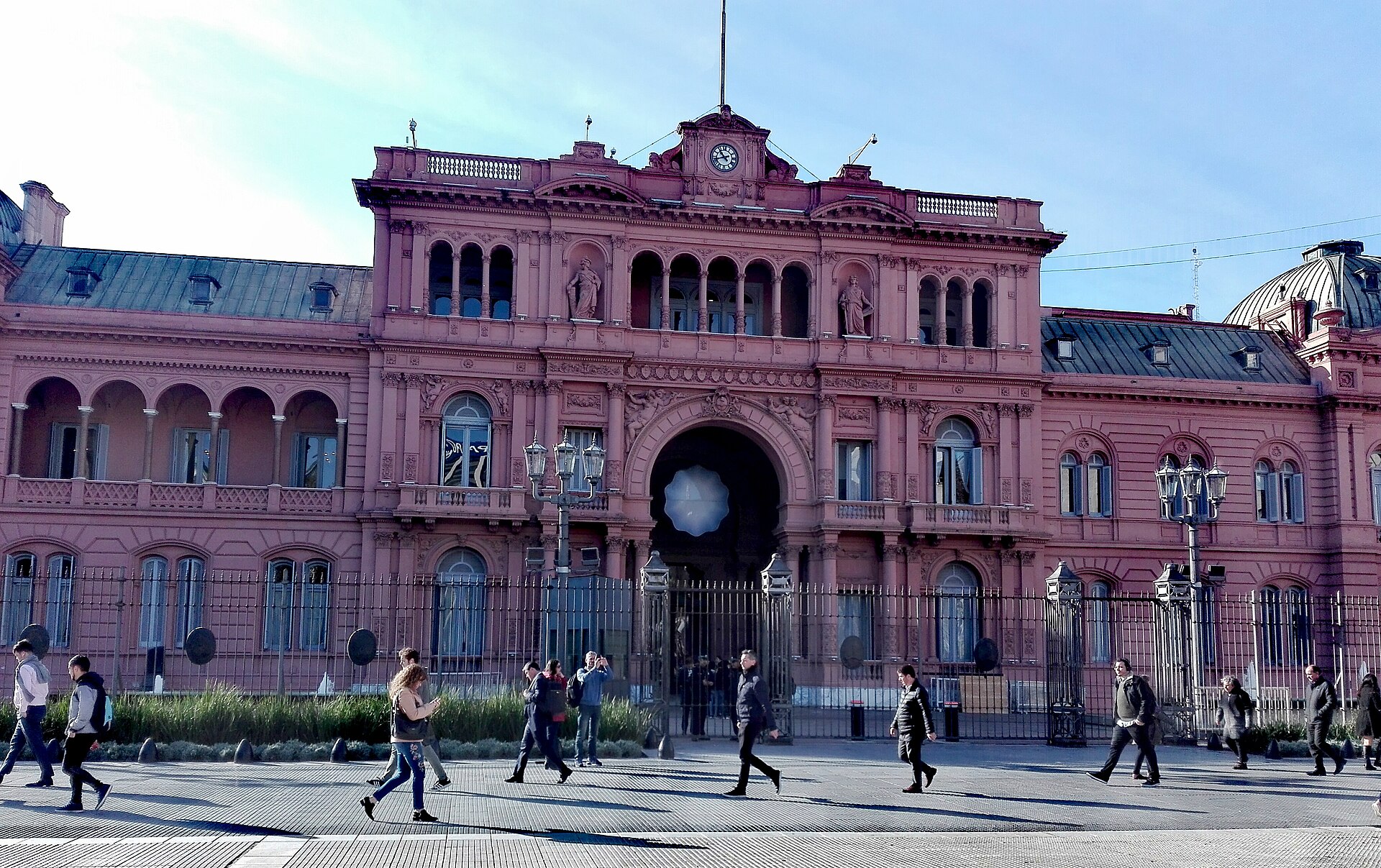
Among the notable interior spaces are grand halls used for ceremonies and official functions, decorated in the ornate style of the building’s age and hung with portraits and works of art that reflect the history of the nation. These rooms convey the dignity of the offices they serve and provide an appropriate setting for affairs of state.
The building also contains the working offices of the presidency and the executive branch, so that the Casa Rosada combines the functions of a ceremonial palace with those of a working seat of government. This dual character is typical of such buildings, which must serve both the symbolic and the practical needs of the state.
The interior of the Casa Rosada, with its grand halls and its historical decoration, complements the famous exterior, completing the picture of a building that is at once a working government office, a ceremonial palace, and a monument to the history of the Argentine nation.
The ornate, European-influenced style of the interior reflects the confidence and prosperity of Argentina in the era when the building took its final form, a time when the nation was among the wealthiest in the world and looked to the great capitals of Europe for its models of grandeur and refinement.
The Museum of the Casa Rosada
Associated with the Casa Rosada is a museum dedicated to the history of the building and of the Argentine presidency, allowing visitors to explore the story of this central institution of the nation. The museum preserves and displays objects and information related to the building and the leaders who have governed from it.
Among the features associated with the site are archaeological remains of the earlier structures that once stood here, including the old fort and customs house, which have been excavated and preserved, allowing visitors to see the physical traces of the building’s long history beneath and around the present palace.
The museum displays objects related to the presidents of Argentina and the history of the nation, from personal effects to items of ceremonial and historical significance, offering a window into the political history of the country as seen through the institution of the presidency and the building that houses it.
For visitors, the museum enriches the experience of the Casa Rosada, providing the historical context that gives the building its meaning and allowing a deeper appreciation of the long and dramatic story embodied in this famous seat of Argentine power.
The excavated remains beneath the site are among its most fascinating features, for they allow the visitor to descend, in a sense, through the layers of Argentine history, from the present palace down to the foundations of the old fort and customs house, making tangible the long continuity of power on this riverside ground.
A Symbol of Argentina
The Casa Rosada has become one of the great symbols of Argentina, instantly recognizable and deeply bound up with the national identity. Its distinctive color, its famous balcony, and its central place in the political life of the nation have made it an icon, reproduced in countless images and known around the world as the face of Argentine government.
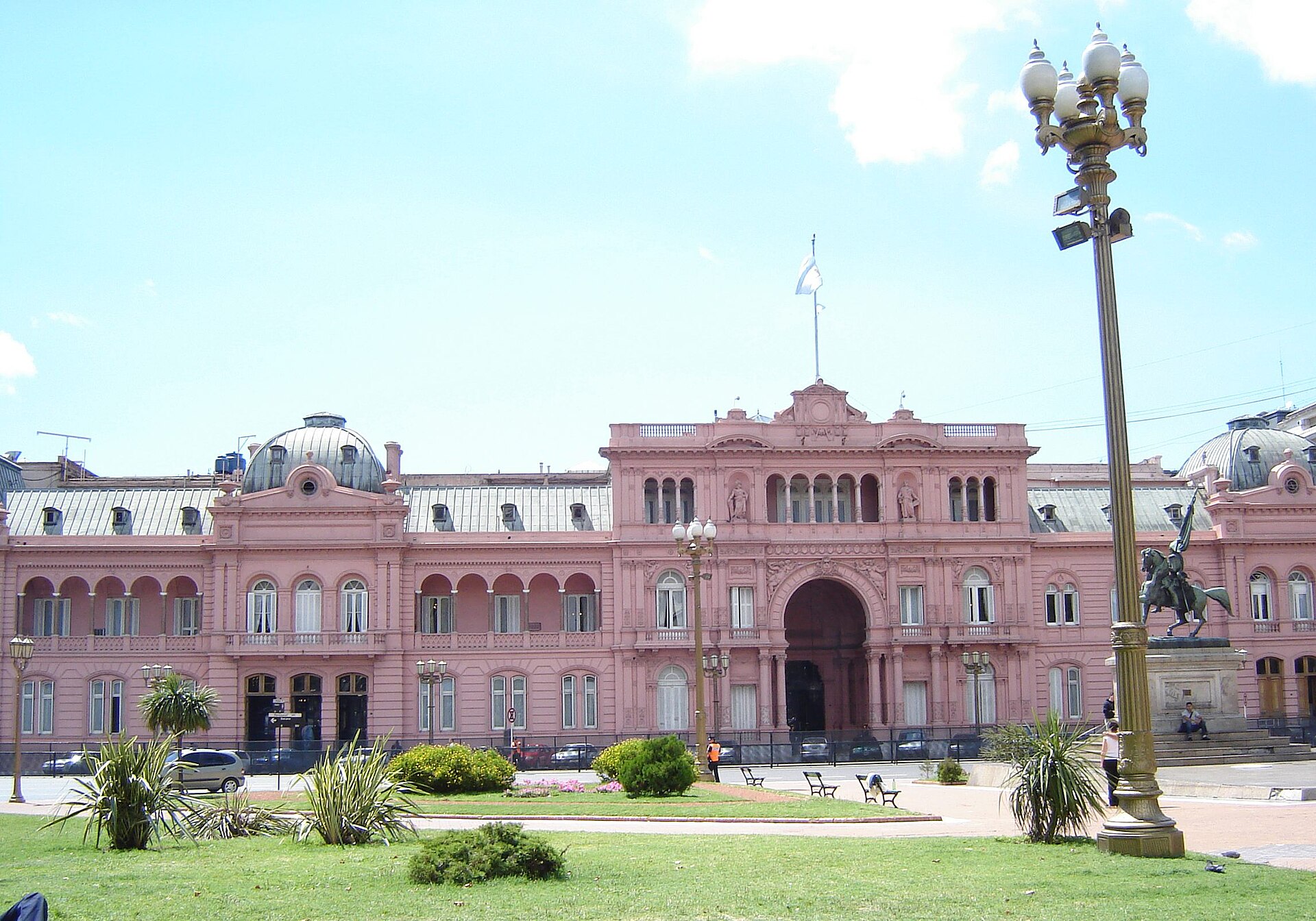
For Argentines, the building carries a wealth of associations and emotions, connected to the great figures and movements of their history, to moments of national pride and pain, and to the ongoing life of their democracy. It is a building that belongs to the whole nation, a shared symbol of the Argentine state and its history.
The Casa Rosada also represents the endurance of Argentine institutions through a turbulent history, a building that has remained the seat of power through coups, crises, and restorations, a constant amid the upheavals of the nation’s political life. Its continuity is itself a kind of reassurance, a symbol of the persistence of the state.
In all these ways, the Casa Rosada is far more than a government office. It is a symbol of Argentina itself, of its history, its passions, and its identity, a rose-colored palace that stands at the heart of the nation’s public life and that continues to embody the drama and the resilience of the Argentine people.
It is telling that in moments of national crisis or celebration, Argentines instinctively turn toward the Casa Rosada and the Plaza de Mayo, as though the nation’s joys and sorrows must be brought to this place to be fully expressed. Few buildings anywhere are so completely fused with the emotional life of the people they serve.
The Casa Rosada in Buenos Aires
The Casa Rosada occupies a commanding position in the cityscape of Buenos Aires, at the eastern end of the Plaza de Mayo and near the waterfront developments along the old port. Its pink facade stands out amid the surrounding buildings, a splash of distinctive color at the historic heart of the great South American metropolis.
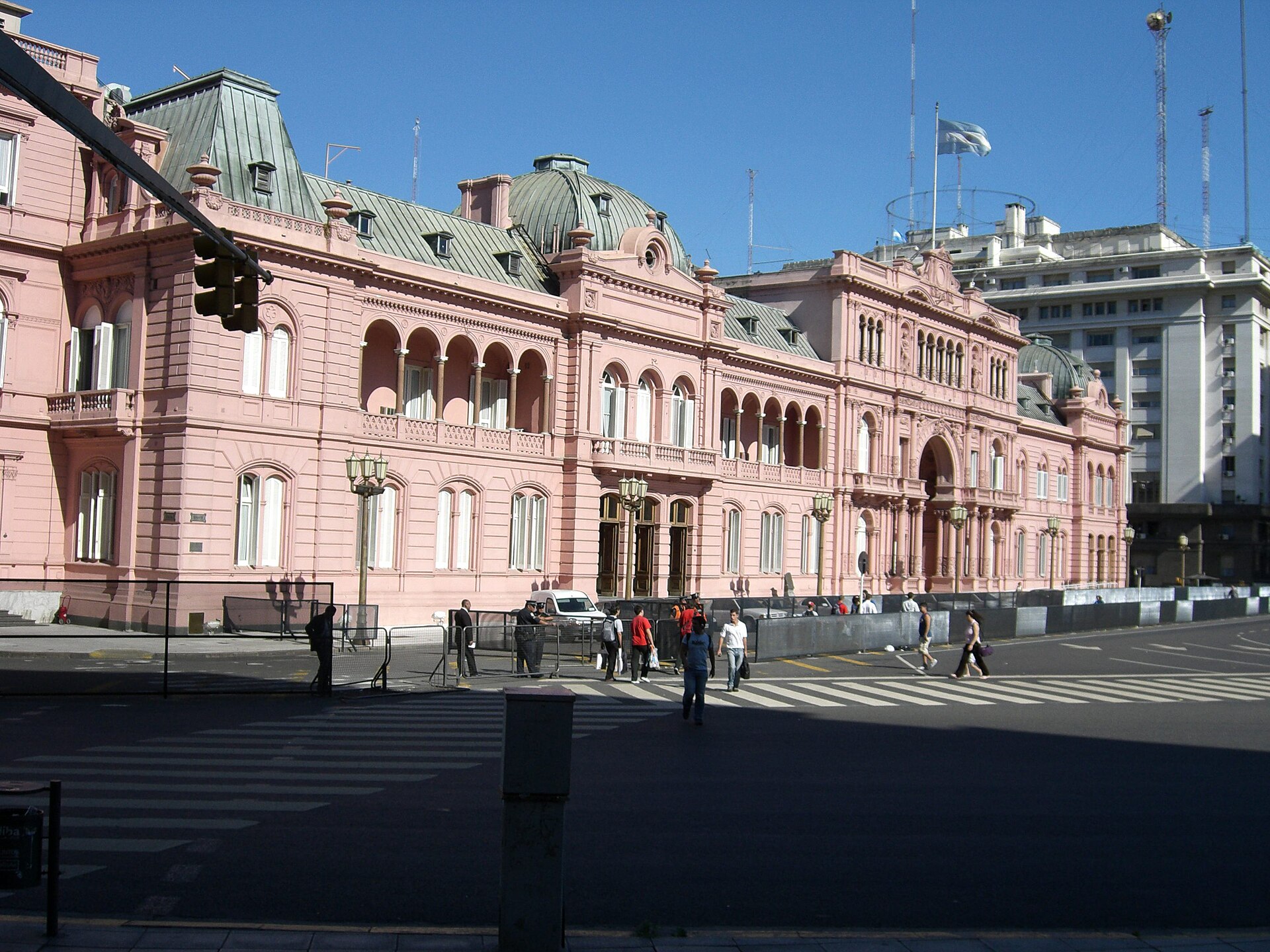
The area around the Casa Rosada is rich in historic and civic buildings, including the cathedral and other institutions that cluster around the Plaza de Mayo, forming an ensemble that expresses the civic and national life of Argentina. The palace is thus part of a larger historic center that repays exploration.
Nearby, the redeveloped docklands district of Puerto Madero has transformed the former port area into a fashionable quarter of restaurants and modern buildings, so that the historic Casa Rosada now stands close to one of the most dynamic areas of the modern city, old and new side by side.
For the visitor exploring Buenos Aires, the Casa Rosada is a natural focal point, its distinctive color and central location making it easy to find and its rich history making it essential to understanding the city and the nation, a landmark that anchors the historic heart of one of the world’s great capitals.
Standing where the city meets the river, the Casa Rosada also marks the point from which Buenos Aires historically looked outward to the world, across the vast estuary and the ocean beyond. In this sense its position is doubly symbolic, at once the inward-facing heart of the nation and the threshold from which Argentina faced the wider world.
The Working Seat of the Presidency
The Casa Rosada remains the working seat of the Argentine presidency, and this living function is central to its identity. Although the president of Argentina may reside elsewhere, the Casa Rosada is the principal office of the executive and the symbolic center of the government, the place where the business of governing the nation is conducted.
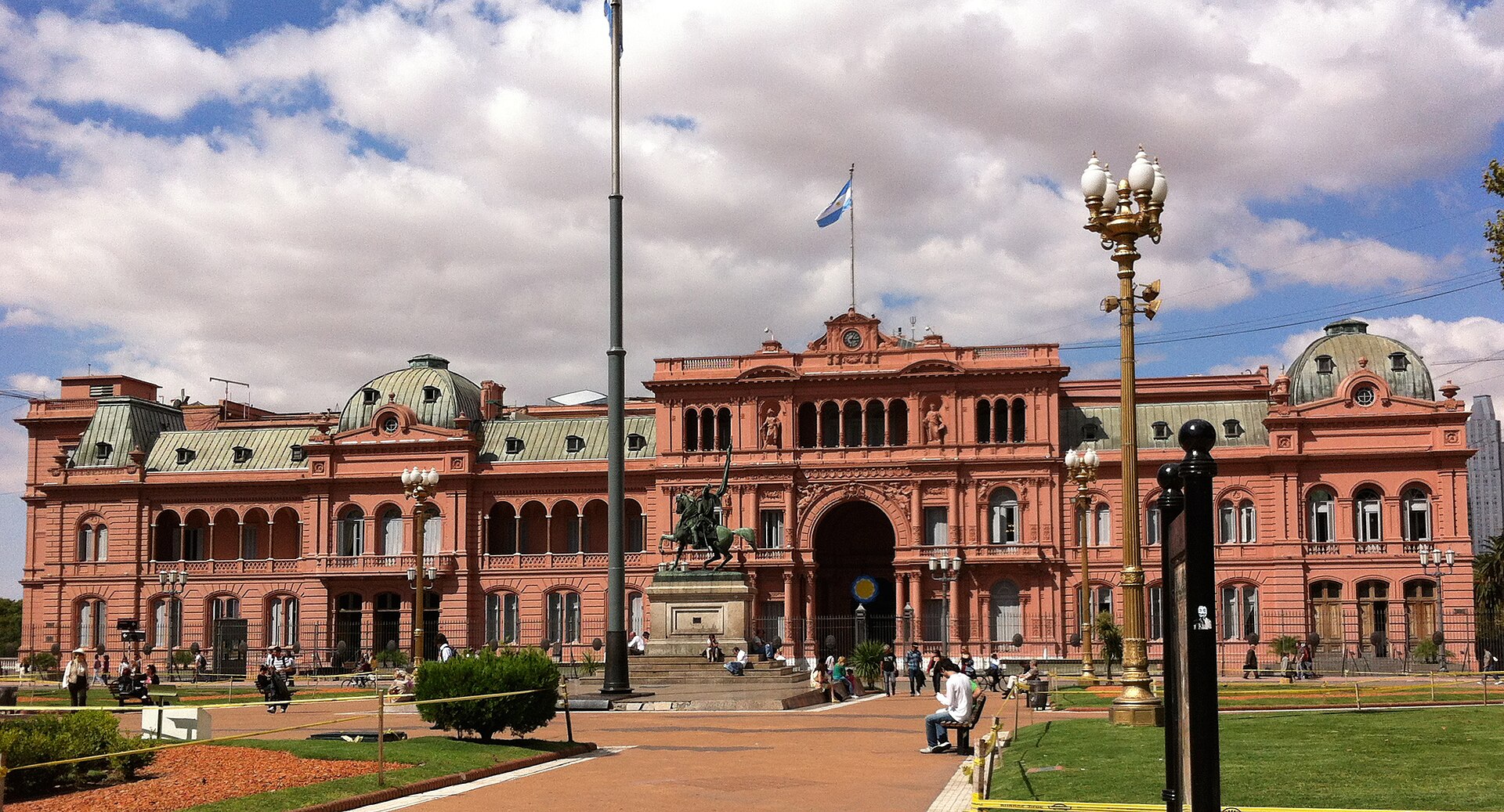
This continuing role ensures that the building remains at the center of national life, the setting for official announcements, ceremonies, and the reception of foreign dignitaries. Its balcony and its halls continue to serve the purposes for which the building has always existed, connecting the present government to the long history of authority on this spot.
The dual character of the Casa Rosada, as both a historic monument and a working seat of government, gives it a special vitality. It is not a museum piece but a living building, where the ongoing drama of Argentine politics continues to unfold, adding new chapters to the long history embodied in its walls.
In this way the Casa Rosada continues its ancient role as the center of power in Argentina, a building that has served the nation through all the vicissitudes of its history and that remains, to this day, the beating heart of the Argentine state and the enduring symbol of its political life.
Each new administration adds its own chapter to the building’s story, and the sight of a newly elected president entering the Casa Rosada for the first time is one of the recurring rituals of Argentine democracy, a moment in which the long history of the building and the fresh hopes of the nation briefly meet.
See the Casa Rosada for Yourself
The distinctive character of the Casa Rosada, its famous pink facade and its historic balcony, is best appreciated by seeing the building for yourself, standing before it in the Plaza de Mayo and taking in the setting that has witnessed so much of Argentine history. A video tour conveys the atmosphere of the place in a way that words and still images cannot fully capture.
The short video below explores the history of the Casa Rosada, including the origins of its famous color and the dramas associated with the building. It is an ideal companion to everything you have read here, deepening your understanding of the Pink House and its place in the story of Argentina.
As you watch, consider the great events that have unfolded on the balcony and in the plaza, and the wealth of meaning and emotion that Argentines invest in this rose-colored palace. Then, when you visit Buenos Aires, you will recognize the Casa Rosada not just as a colorful building but as the passionate heart of the Argentine nation.
Visiting the Casa Rosada Today
For the modern traveler, the Casa Rosada is one of the essential sights of Buenos Aires, a building whose distinctive color and dramatic history make it a highlight of any visit to the Argentine capital. Located on the Plaza de Mayo, in the historic heart of the city, the palace is easily reached and forms a natural part of any exploration of the old center.
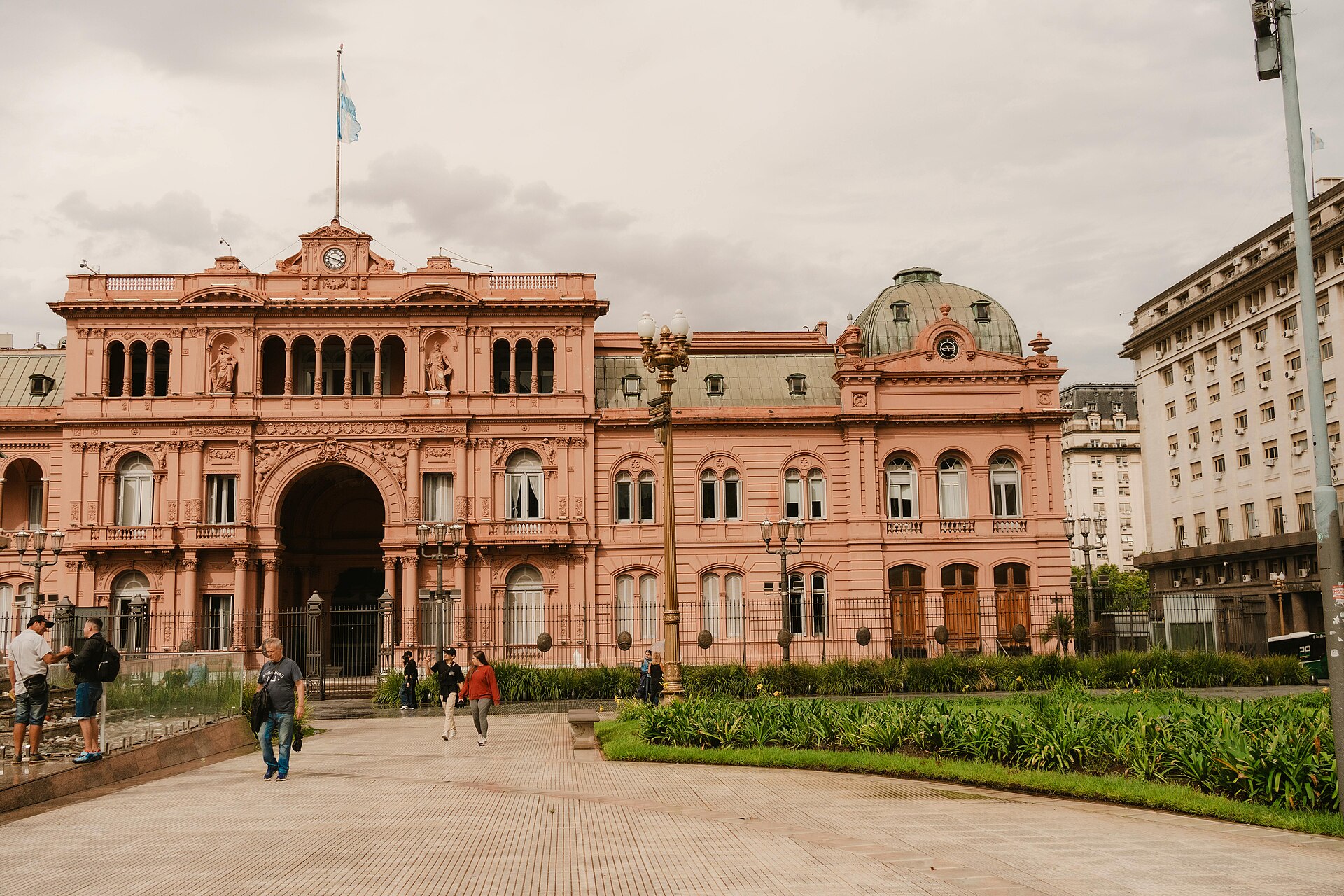
Visitors can admire the famous facade and balcony from the Plaza de Mayo, and, depending on current arrangements, may be able to tour parts of the building or visit the associated museum, with its archaeological remains and historical displays. Guided visits, when available, allow a deeper appreciation of the building and its history.
The Casa Rosada faces the Plaza de Mayo, with the cathedral and other historic buildings nearby, and is within reach of the fashionable Puerto Madero district, so that a visit to the palace can be combined with exploration of the surrounding historic center and waterfront. As always, it is worth checking current opening arrangements, as access to a working seat of government may vary.
However you approach it, the Casa Rosada rewards the visitor who understands its story. This is not merely a colorful government building but the passionate heart of Argentine political life, a stage for the great dramas of the nation’s history, and an enduring symbol of Argentina, standing rose-colored and proud at the center of Buenos Aires.
Try, if you can, to be in the Plaza de Mayo when the square is busy, for it is then that the true character of the place reveals itself, as citizens, tourists, vendors, and sometimes demonstrators fill the space before the pink walls, and the living relationship between the Argentine people and their house of government becomes vividly, unforgettably clear.
Palaces Nearby
If the Pink House has drawn you into the world of Latin American seats of power, two more great houses of state make natural companions to a visit here, each standing at the heart of its own nation’s history.
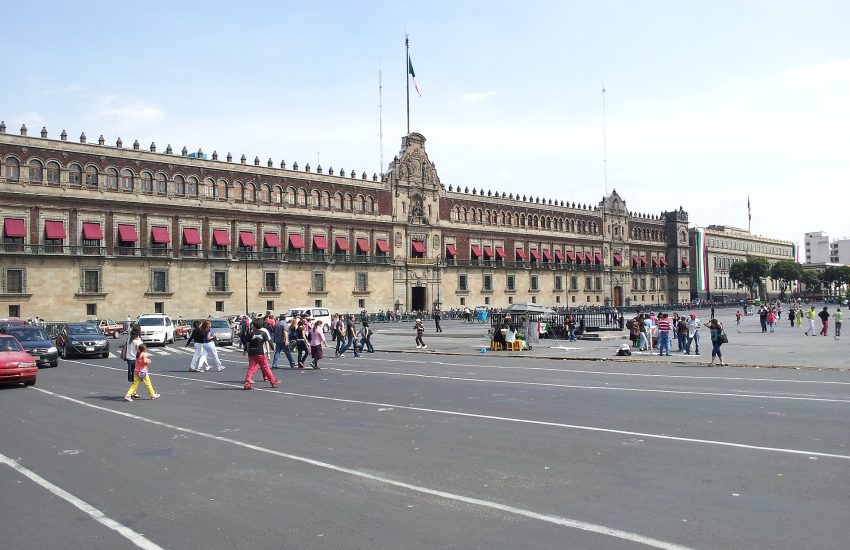
- The Palacio Nacional in Mexico City — the seat of Mexican power on the site of Moctezuma’s palace, home to Diego Rivera’s epic murals.
- The Palacio de La Moneda in Santiago — the neoclassical seat of the Chilean presidency, a former mint that became the stage for the nation’s greatest drama.
You May Like
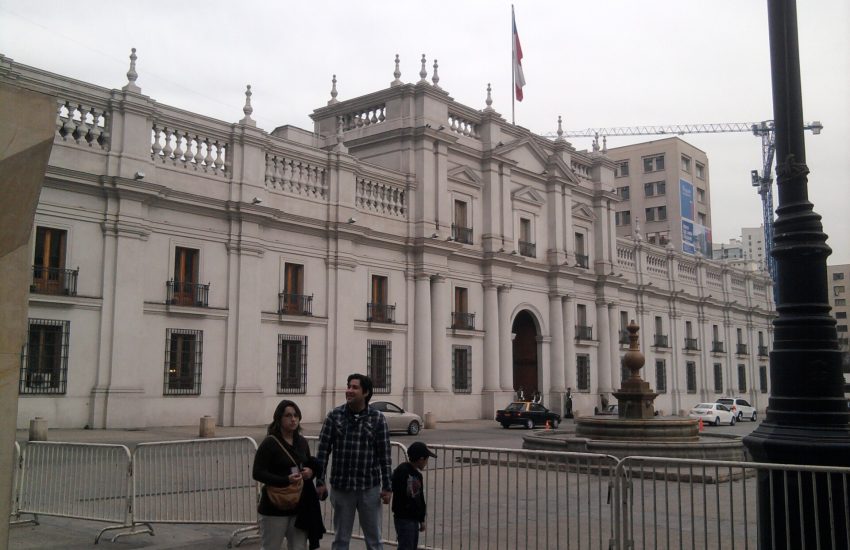
The Chilean Mint That Became a Palace and a Battleground


One thought on “Why Argentina Runs Its Government from a Pink House”