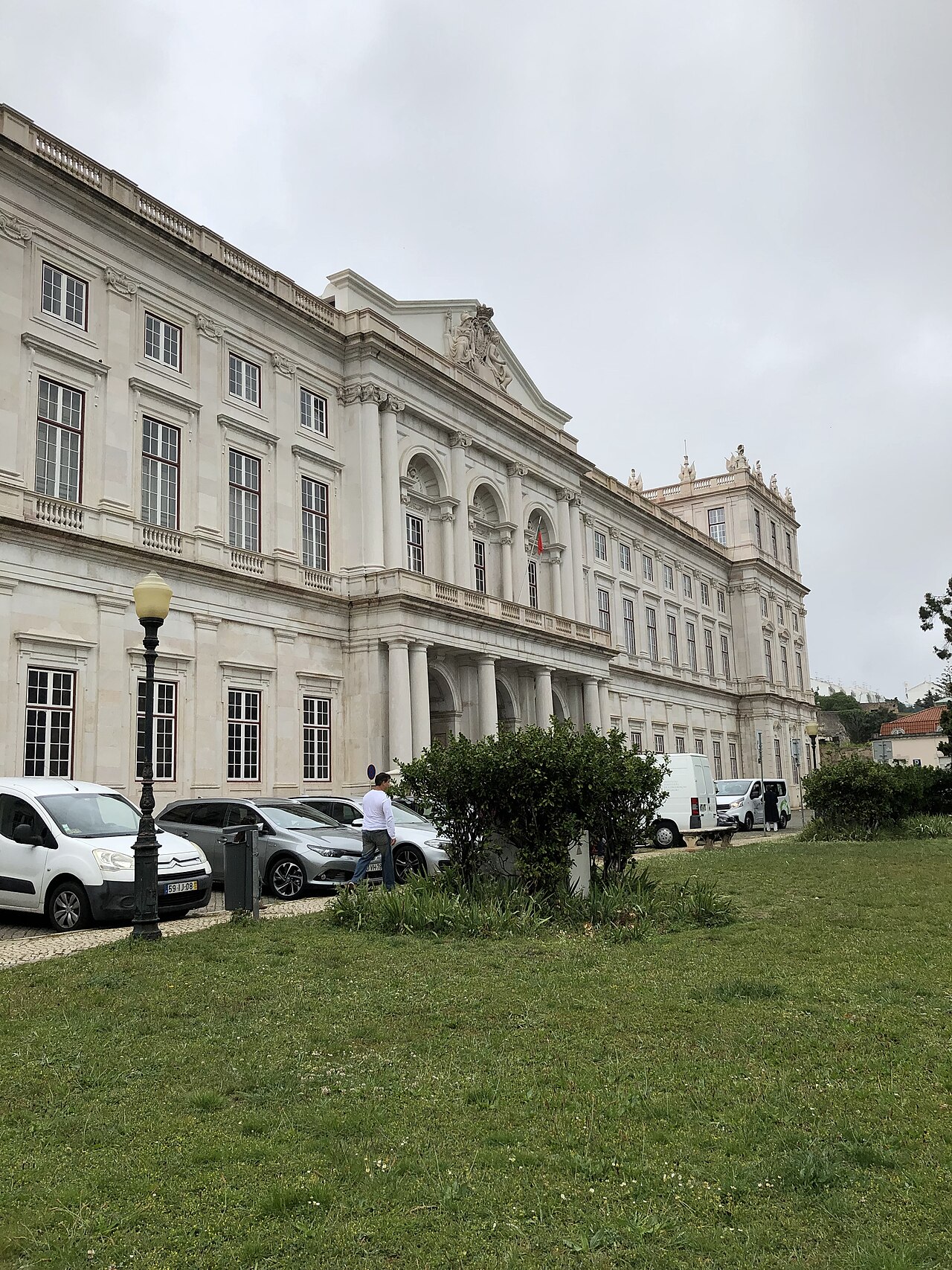
High on a hill in the western reaches of Lisbon, with the Tagus glittering in the distance, stands a palace that looks every inch the seat of a monarchy and yet was never truly finished. The Palacio Nacional da Ajuda presents a grand neoclassical face to the city, its long facade of pale stone lined with columns and crowned with sculpture, and for the last decades of the Portuguese monarchy it served as the official royal residence. To walk into it today is to step into the nineteenth century almost intact.
Ajuda is a different kind of palace from the great Baroque monuments of earlier reigns. Where Mafra overwhelms with sheer scale and religious ambition, Ajuda speaks the calmer, more ordered language of neoclassicism, and its interiors reflect the taste of a settled royal household rather than the vaulting dreams of a single king. It is a palace of drawing rooms and dining halls, of throne rooms and private chambers, decorated with the paintings, tapestries, porcelain, and furniture that a modern court gathered around itself.
Its story is bound up with disaster and recovery. The palace rose on the ruins of an earlier royal residence, and its long, halting construction mirrors the turbulent fortunes of Portugal across the eighteenth and nineteenth centuries. Wars, financial troubles, and political upheaval all left their mark, and the building that survives is in some ways a record of everything that got in the way of finishing it.
In this guide you will follow Ajuda from its origins in catastrophe through its slow building, its years as the beating heart of the royal court, the opulence of its interiors, the fall of the monarchy that left it empty, and its rebirth as one of Lisbon’s essential museums. By the end you will see why this unfinished palace remains one of the most complete windows into royal life that Portugal has to offer.
In This Article
- From a Wooden Palace to a Royal Ambition
- A Palace Built Slowly, and Never Quite Finished
- Neoclassical Lines Above the Tagus
- When Ajuda Became the Royal Home
- Luis, Maria Pia, and a Court in Its Prime
- Inside the Opulent Rooms
- The Throne Room and the Rooms of State
- A Treasury of Nineteenth-Century Taste
- The Royal Treasure on Display
- The Monarchy Falls and the Doors Close
- A New Life as a National Museum
- Planning Your Visit
- See Ajuda for Yourself
From a Wooden Palace to a Royal Ambition
To understand Ajuda you have to start with the catastrophe that shaped modern Lisbon. In 1755 a colossal earthquake, followed by fire and a tsunami, devastated the city and destroyed much of its royal and religious architecture. The disaster left deep scars, not only on the capital but on the mind of the royal family, and it changed forever how the monarchy thought about where and how it should live.
In the aftermath, King Joseph I developed a famous dread of stone buildings, terrified of being crushed in another quake. Rather than rebuild a solid palace, the court settled into a sprawling wooden complex on the heights of Ajuda, a structure grand enough to serve as a royal residence yet built of timber so that it could not collapse in the way the old palaces had. This temporary-seeming solution, known as the Real Barraca, housed the monarchy for decades.
Wood, however, carried its own danger. In 1794 a fire swept through the Real Barraca and destroyed it, leaving the royal family once again without a proper home in Lisbon. It was this second disaster, rather than the earthquake itself, that finally prompted the decision to build a permanent, fire-resistant palace of stone on the same commanding site. Out of the ashes of the wooden palace, the idea of Ajuda as we know it was born.
The choice of the Ajuda hill was deliberate. It stood clear of the crowded, quake-prone lower city, caught fresh air and sweeping views, and offered room for a monumental building and its gardens. If the monarchy was going to build again, it would build on high ground, in stone, with an eye to permanence. The palace that followed would carry the memory of both disasters in its very existence.
It is striking how much of Ajuda’s identity was determined before a single stone was laid. The trauma of 1755 and the fire of 1794 did not merely clear the site; they set the terms for what the new palace had to be, a solid, permanent statement of a monarchy that had twice lost its home. Every later decision about the building was made in the shadow of those disasters, and the sense of a court determined never again to be left homeless runs quietly through the whole enterprise.
A Palace Built Slowly, and Never Quite Finished
Work on the new stone palace began at the turn of the nineteenth century, and from the start it was dogged by interruption. The original design was ambitious, envisioning a vast building far larger than what stands today, but Portugal was entering one of the most turbulent periods in its history, and grand architectural plans were among the first casualties of political and financial crisis.
The Napoleonic invasions dealt the project a heavy blow. When French armies threatened Lisbon, the royal family fled to Brazil, and with the court absent and the treasury strained, construction slowed to a crawl. The design was scaled back, the style shifted as tastes and architects changed, and the building crept forward in fits and starts across the decades rather than rising in a single confident campaign.
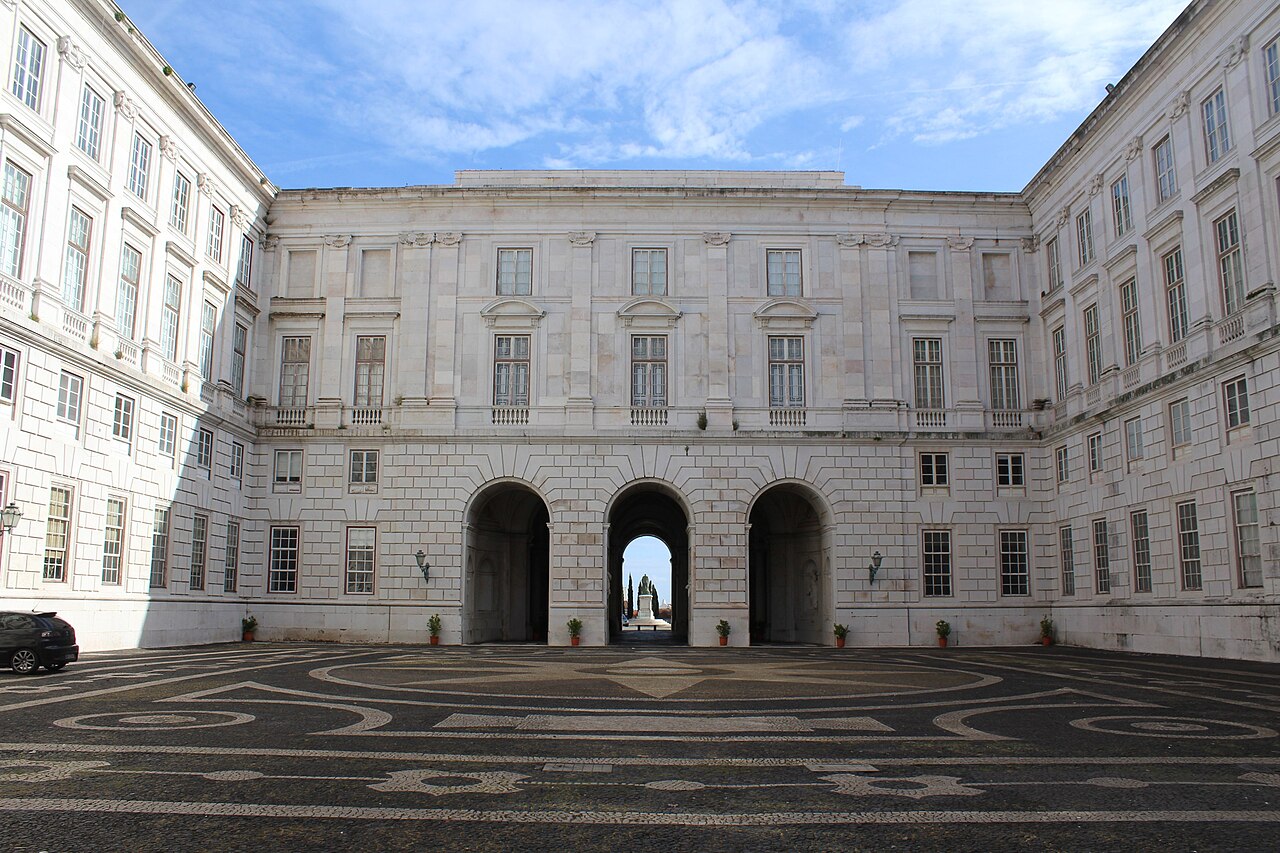
The result is a palace that bears the marks of its stop-and-start history. What was completed represents only a portion of the original grand scheme, and if you look carefully you can sense where ambitions were trimmed and plans redrawn. Ajuda is, in a very real sense, an unfinished building, and that incompleteness is part of its honesty; it shows a monarchy trying to keep up appearances through an age that kept pulling the ground from under it.
And yet enough was built to make a working royal palace, and later generations completed and furnished the interiors to a high standard. The gap between the sweeping original vision and the more modest reality is one of the most interesting things about Ajuda. It is a monument not only to royal ambition but to the limits that history places on such ambition.
Visitors sometimes find it hard to believe that so grand a building was never completed as intended, but the evidence is there for those who look. Wings that were planned were never built, and the palace we see represents a fragment of a much larger dream. Rather than diminishing Ajuda, this lends it a certain honesty, a reminder that even monarchies must live within their means and their times, and that history rarely lets grand plans unfold exactly as drawn.
Neoclassical Lines Above the Tagus
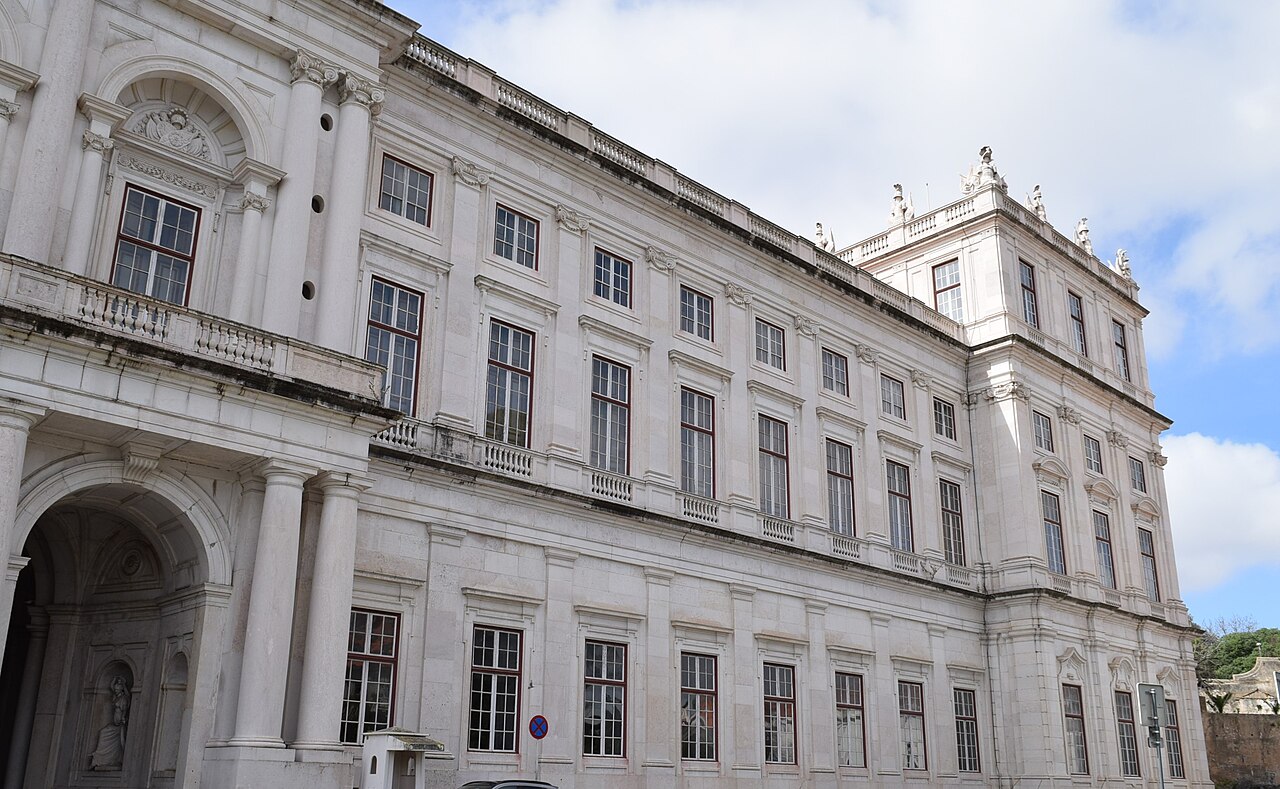
The Ajuda that stands today is a monument of neoclassicism, the style that dominated European architecture in the decades around 1800. Gone are the exuberant curves and drama of the Baroque; in their place are straight lines, balanced proportions, and the calm authority of columns and pediments drawn from the classical world. The palace wears its dignity soberly, trusting in order rather than ornament to convey majesty.
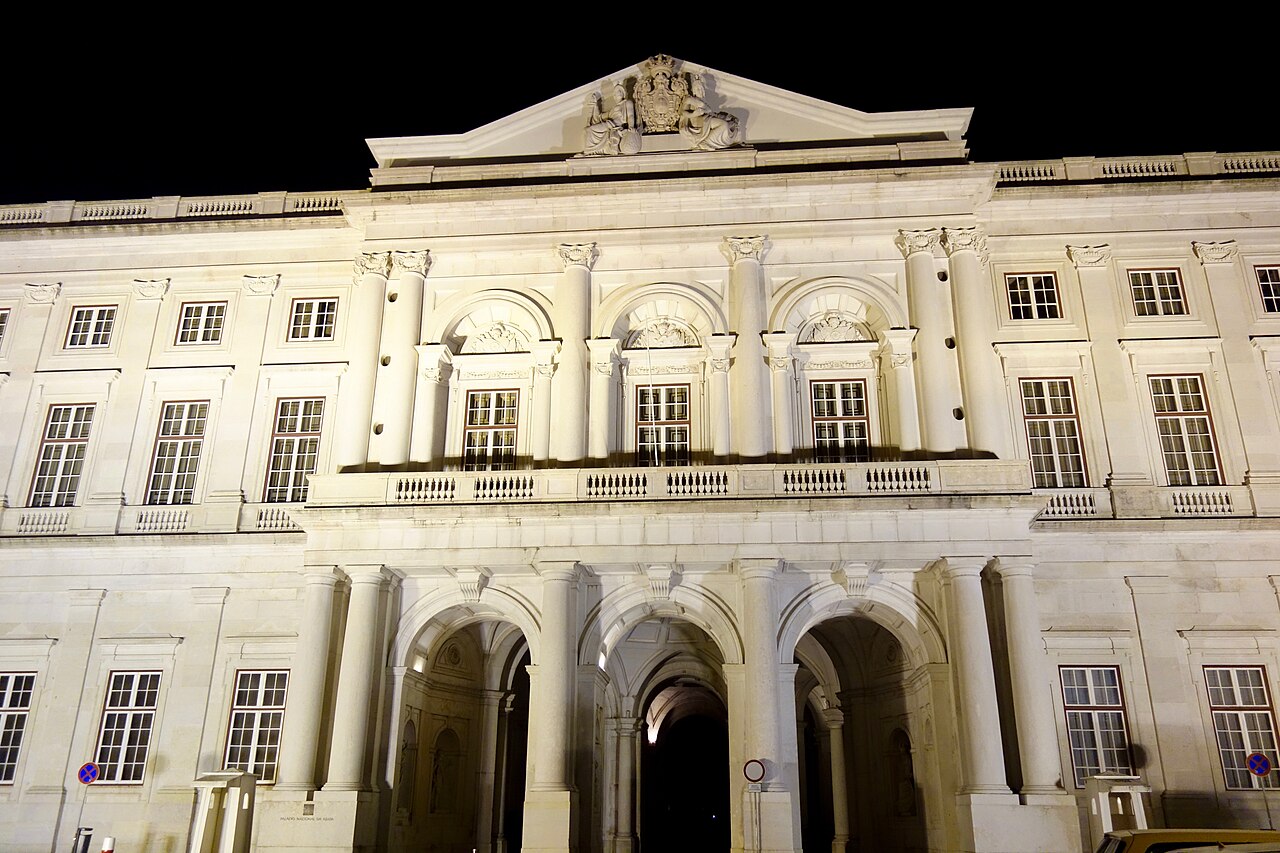
The main facade is long and horizontal, articulated by ranks of columns and pilasters and enriched with sculpture that lifts the eye without overwhelming it. The pale stone catches the strong Lisbon light, and the whole composition is designed to read clearly from a distance, a serene presence on its hill above the river. Where earlier palaces sought to astonish, Ajuda seeks to reassure, projecting the image of a modern, orderly monarchy.
Several architects shaped the building over its long gestation, and the shifts in their approaches are part of its character. The design evolved from earlier plans in a more Baroque spirit toward the cooler neoclassical language that prevailed as the work went on. This layering of intentions gives Ajuda a slightly composite quality, a building assembled from the ideas of more than one generation.
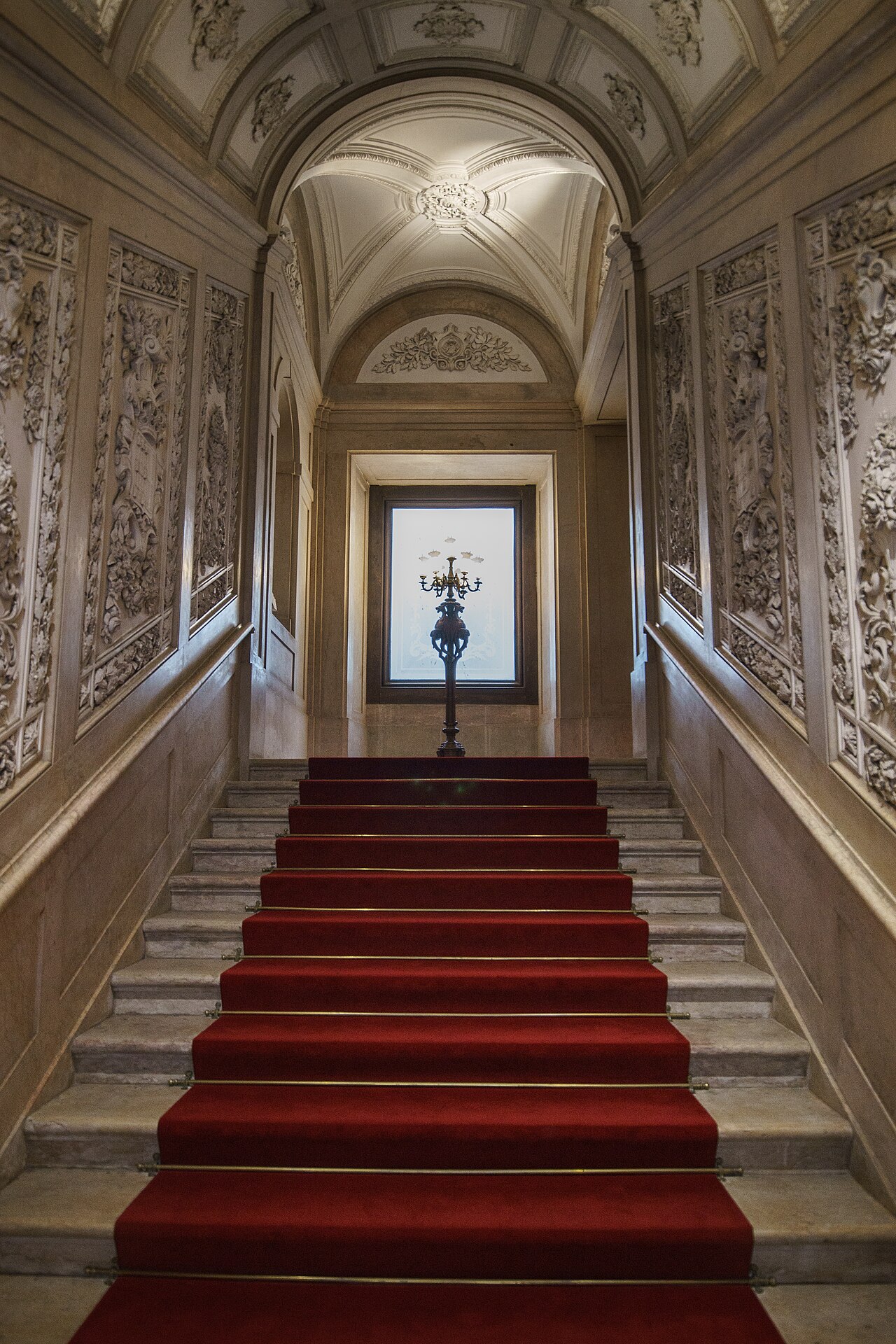
Inside, the architecture becomes the frame for a spectacular sequence of state rooms and private apartments. The plan leads visitors through an unfolding series of spaces of rising grandeur, each decorated in the taste of the nineteenth-century court. It is in these interiors, even more than in the restrained exterior, that Ajuda reveals its ambition to stand among the great royal residences of Europe.
Set against the Lisbon sky, the palace also plays a role in the wider cityscape. From its hilltop it looks out over the western districts toward the river, and its long pale facade is a landmark visible from many points around. In this way Ajuda is not just an interior to be explored but a presence in the city, a reminder on the skyline of the monarchy that once ruled from within its walls.
When Ajuda Became the Royal Home
For much of its early existence the half-built palace was used only intermittently, but in the second half of the nineteenth century Ajuda finally came into its own as the official residence of the Portuguese monarchy. The decisive moment came with the reign of King Luis I, who chose the palace as the royal home and, with his queen, set about turning the unfinished shell into a fully furnished court.
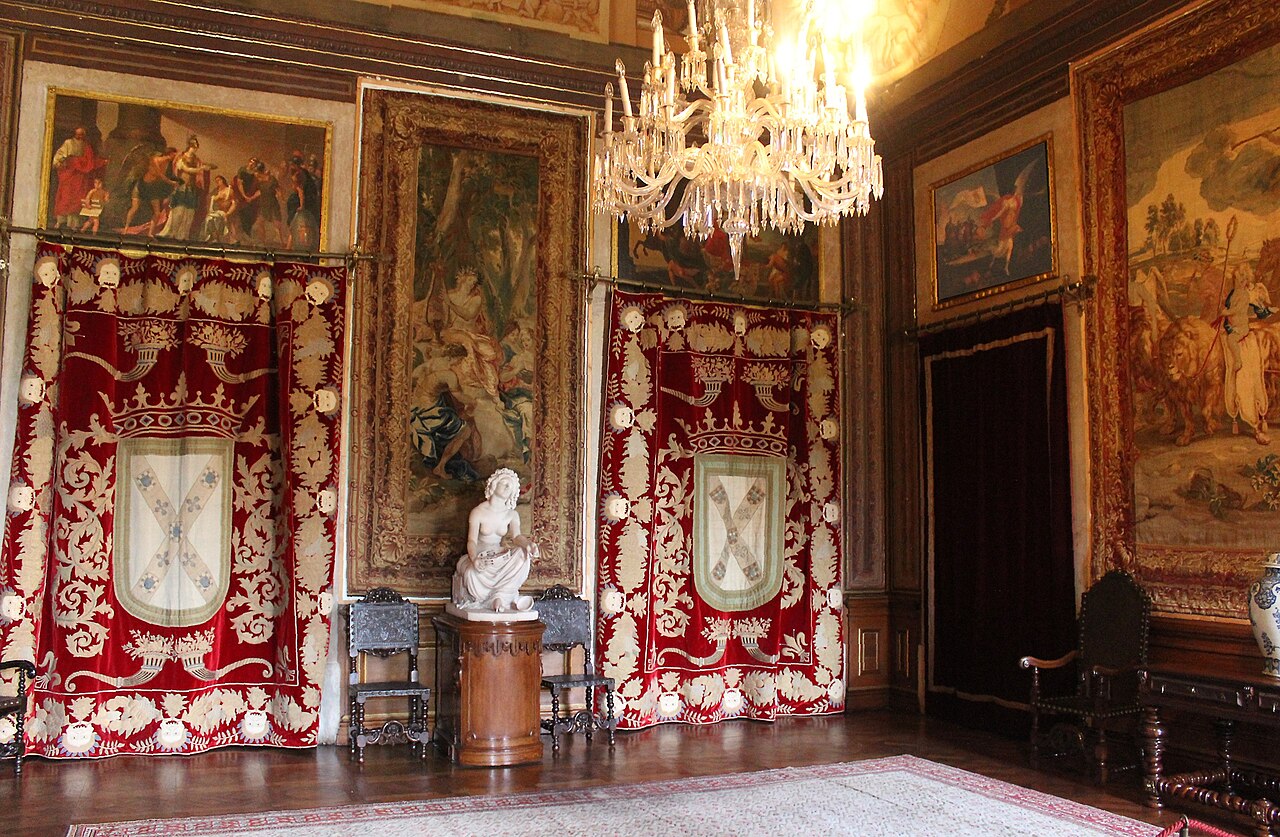
This transformation matters enormously for what visitors see today. The interiors of Ajuda are, above all, a portrait of royal life in the later nineteenth century, the period when the palace was actually lived in. The rooms were decorated, furnished, and equipped according to the taste and technology of the age, and because the monarchy fell not long afterward, much of that decoration has survived remarkably intact.
Living in Ajuda meant running a modern household on a royal scale. The palace had to accommodate not only the private life of the royal family but the elaborate machinery of court ceremony, official receptions, state dinners, and the constant flow of dignitaries and guests. Its rooms were arranged to serve both functions, moving from grand public halls to more intimate private quarters.
By making Ajuda their home, Luis I and his successors gave the long-stalled building a purpose that finally justified all the effort of its construction. For a few decades it was truly the centre of the Portuguese monarchy, and the atmosphere of those years still clings to its rooms. To visit is to catch that world at the moment just before it vanished.
Luis, Maria Pia, and a Court in Its Prime
The couple most closely associated with Ajuda’s golden age are King Luis I and his wife, Queen Maria Pia of Savoy, the daughter of the king of Italy. Their marriage brought a strong current of Italian and wider European taste into the palace, and Maria Pia in particular threw herself into the decoration of the interiors with an enthusiasm, and an expense, that became legendary.
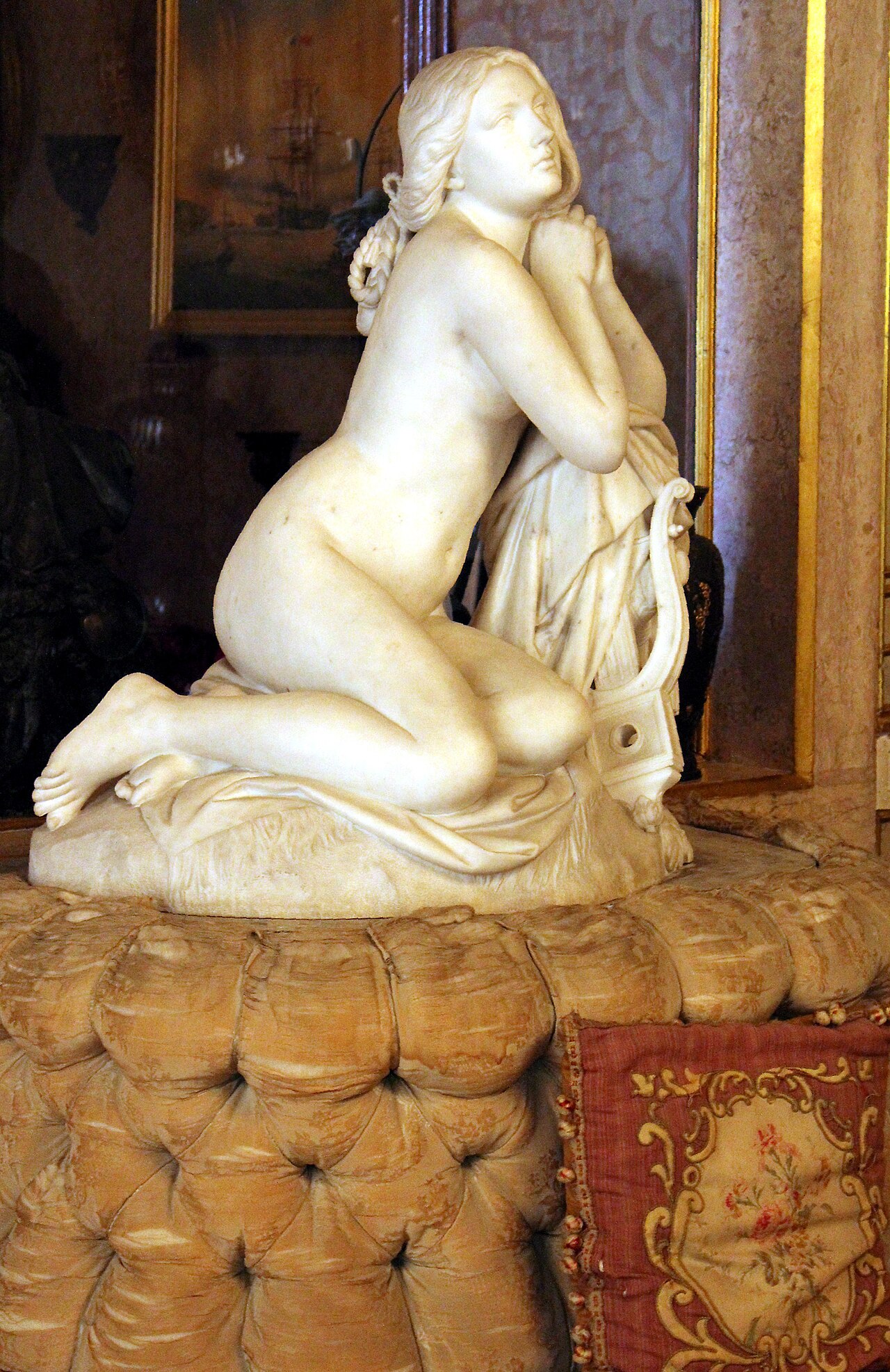
Maria Pia had a reputation for lavish spending on the palace, and while this drew criticism at the time, it is thanks to her that Ajuda is so richly appointed. She commissioned furnishings, textiles, and decorative schemes on a grand scale, shaping many of the rooms that visitors admire today. Her drive to make Ajuda a residence worthy of a European royal house left a lasting imprint on the building.
Life at court under Luis and Maria Pia followed the elaborate rituals expected of nineteenth-century monarchy. There were formal audiences and receptions, gala dinners in the great halls, music and entertainment, and the careful choreography of public and private life that a royal household demanded. The palace was arranged to make all of this run smoothly, with service areas and private rooms tucked behind the grand public spaces.
This was also a cultured court. Luis I was known for his interest in the arts, including music and translation, and the atmosphere at Ajuda reflected a monarchy that wished to be seen as modern and civilised. For a brief span, the palace on the hill embodied the confident, cultivated image the Portuguese crown wanted to present to itself and to the world.
It is worth remembering that this cultivated court existed against a backdrop of mounting political strain. Even as the rooms of Ajuda filled with beautiful things, the monarchy’s position in Portuguese society was growing less secure, and the confident image the palace projected was in part an answer to that anxiety. The splendour of these years carries, in hindsight, a note of things being held together by display as much as by power.
Inside the Opulent Rooms
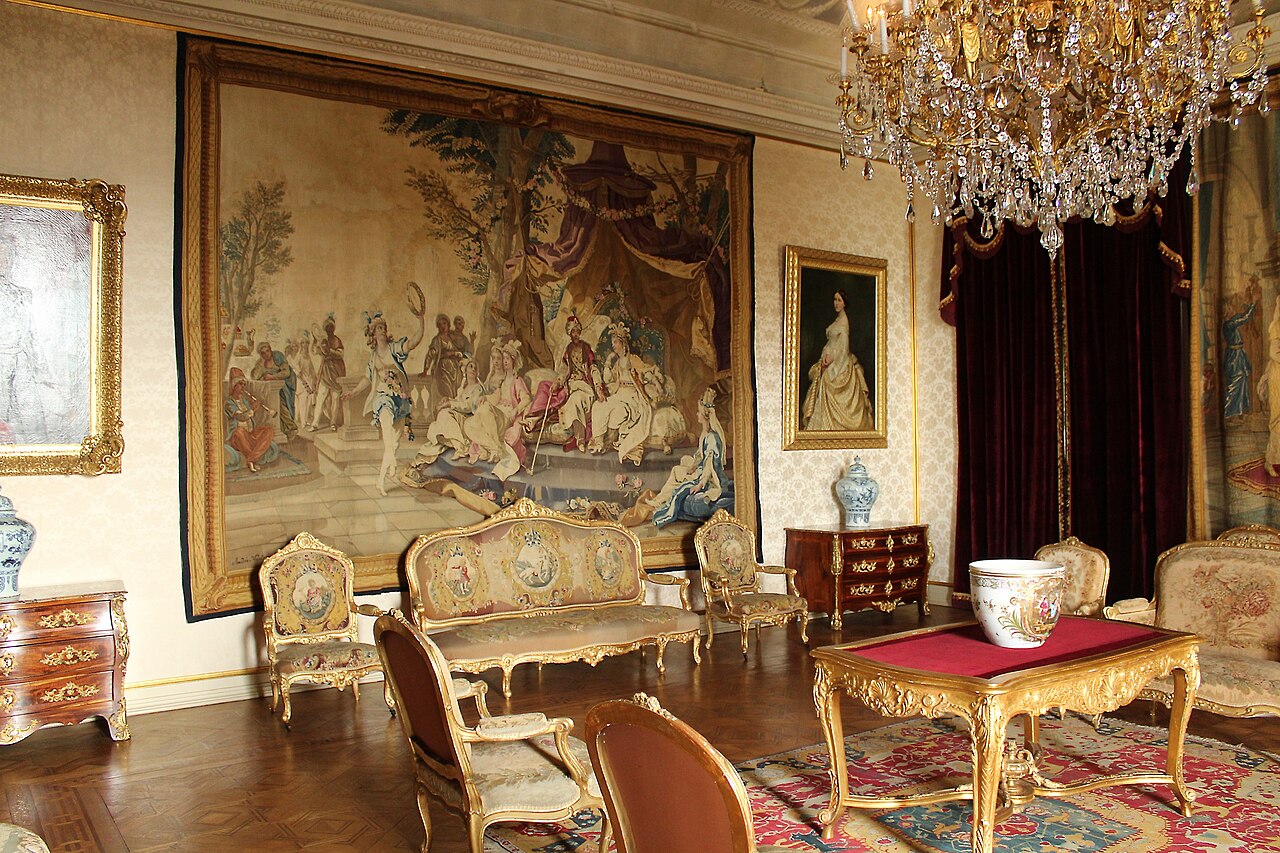
The interiors are the reason most people come to Ajuda, and they do not disappoint. Room after room unfolds in a sequence of extraordinary richness, each with its own character, colour scheme, and theme, and together they form one of the most complete surviving royal decorative schemes in Portugal. Walking through them is like turning the pages of a catalogue of nineteenth-century taste.
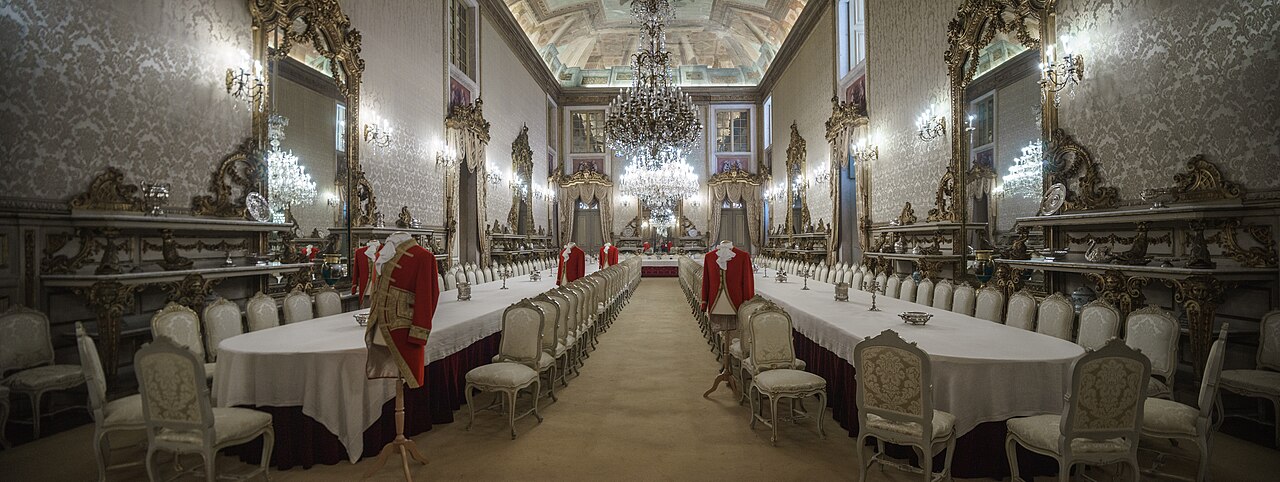
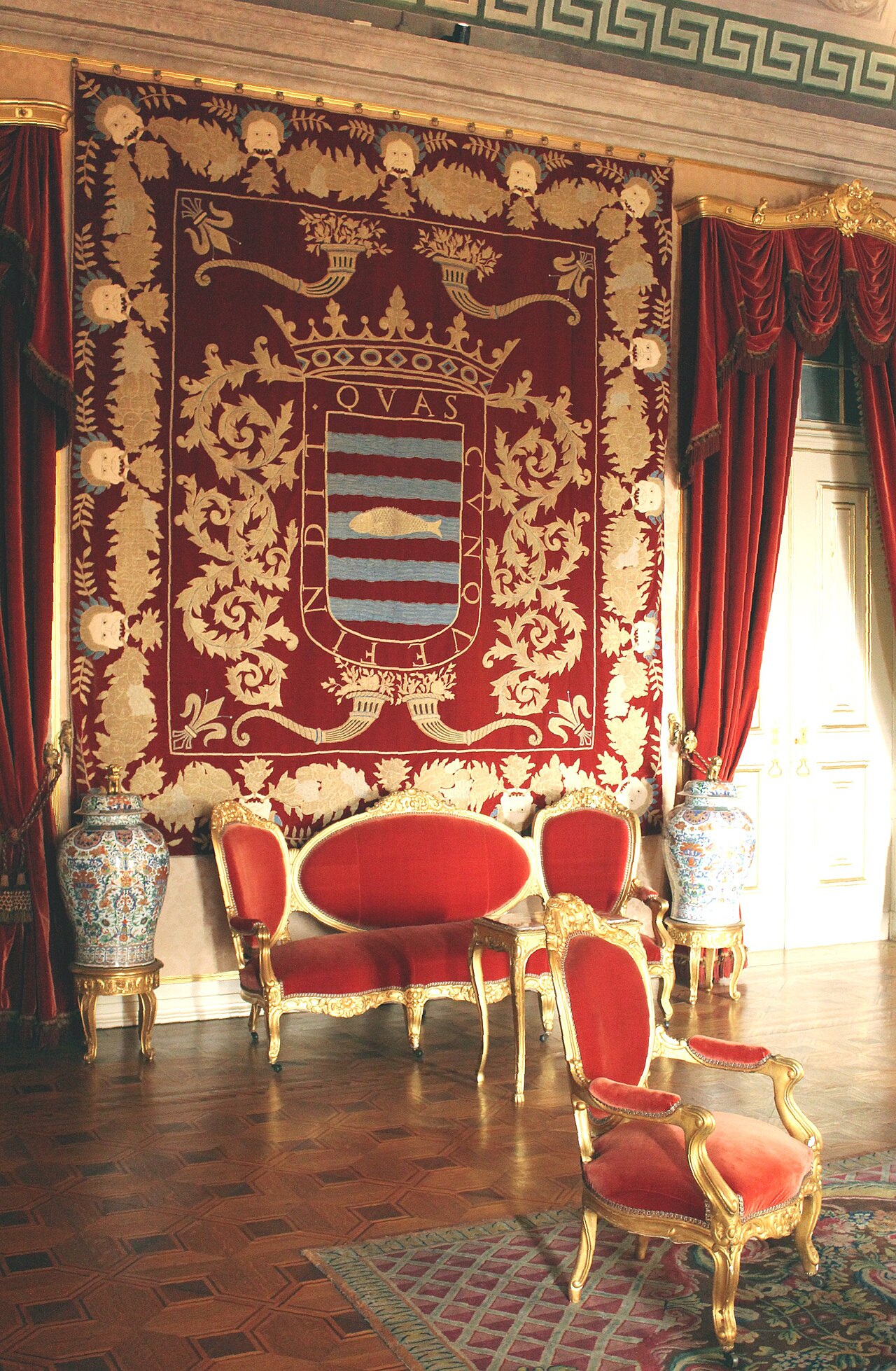
The decoration draws on every resource a wealthy court could command. Walls are hung with silk and tapestry or painted with elaborate schemes; ceilings are frescoed or richly moulded; floors gleam with inlaid wood. Furniture, much of it made specially for the palace, fills the rooms, and everywhere there are clocks, vases, mirrors, chandeliers, and objects of porcelain and bronze arranged to dazzle the eye.
Individual rooms are known by their dominant colours or functions, and part of the pleasure of a visit is moving from one mood to the next, from intimate cabinets to soaring reception halls. Because the palace was frozen more or less as it stood when the monarchy fell, the rooms retain their original arrangements to a rare degree, giving a vivid sense of how the spaces were actually used.
What makes the interiors so affecting is their completeness. Many palaces survive only as architecture, their contents scattered, but at Ajuda the furnishings remained largely in place. The result is not an empty monument but a furnished home, one where you can imagine the court moving through the rooms, and where the decorative arts of an entire era are gathered under one roof.
Part of what makes the interiors so absorbing is the sheer density of detail. There is almost nowhere for the eye to rest; every surface has been considered, every corner furnished, every wall dressed. For modern visitors used to sparer spaces, this abundance can be overwhelming at first, but it repays slow looking, and the more time you spend, the more individual treasures emerge from the general splendour.
The Throne Room and the Rooms of State
Among the many rooms at Ajuda, the great halls of state stand apart, and the throne room is the ceremonial climax of the whole palace. Here the monarchy staged its most formal moments, and the decoration was designed to impress upon every visitor the dignity and permanence of the crown. Rich colours, gilding, and carefully arranged symbolism combine to create a space of deliberate grandeur.
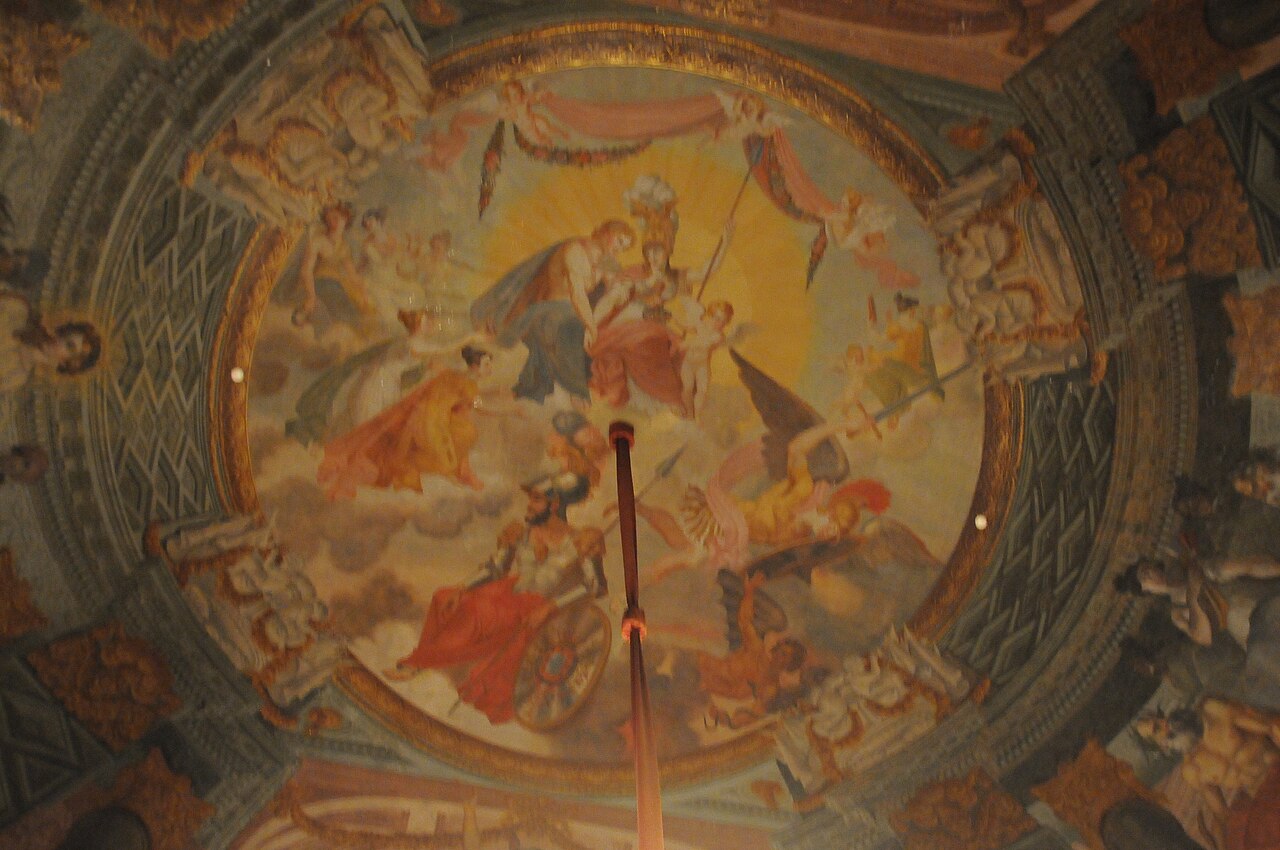
The throne itself sits beneath a canopy at the focal point of the room, framed so that all attention is drawn toward the seat of royal authority. Around it, the decoration reinforces the message of majesty, from the ceiling above to the furnishings below. Standing where courtiers once waited to be received, you can feel how architecture and ornament were marshalled in the service of power.
Other rooms of state served their own ceremonial roles. There were halls for banquets and receptions, spaces for music and dancing, and grand galleries designed for the display of the court at its most magnificent. Each was decorated to a theme, and moving between them you sense the careful gradation of formality that governed court life, from the most public occasions to more selective gatherings.
These rooms also hosted real history. State dinners, official audiences, and royal ceremonies unfolded within them, and they witnessed the ordinary business of monarchy as well as its grand set pieces. To stand in them now, quiet and empty, is to feel the absence of the life they were built to contain, and to appreciate how vividly the setting still evokes it.
The rooms of state also reveal how seriously the nineteenth-century monarchy took the theatre of ceremony. Nothing here was left to chance; the arrangement of spaces, the sequence in which visitors passed through them, and the decoration of each were all calculated to convey a message about the order and dignity of the crown. In this sense the palace was itself an instrument of government, a stage on which the idea of monarchy was performed.
A Treasury of Nineteenth-Century Taste
Ajuda is as much a museum of the decorative arts as it is a royal residence, and its collections are extraordinary in their range and quality. The palace holds paintings, sculpture, furniture, textiles, ceramics, glass, and metalwork gathered across the nineteenth century, much of it acquired or commissioned specifically for these rooms. Together they document the taste of a European court in remarkable depth.
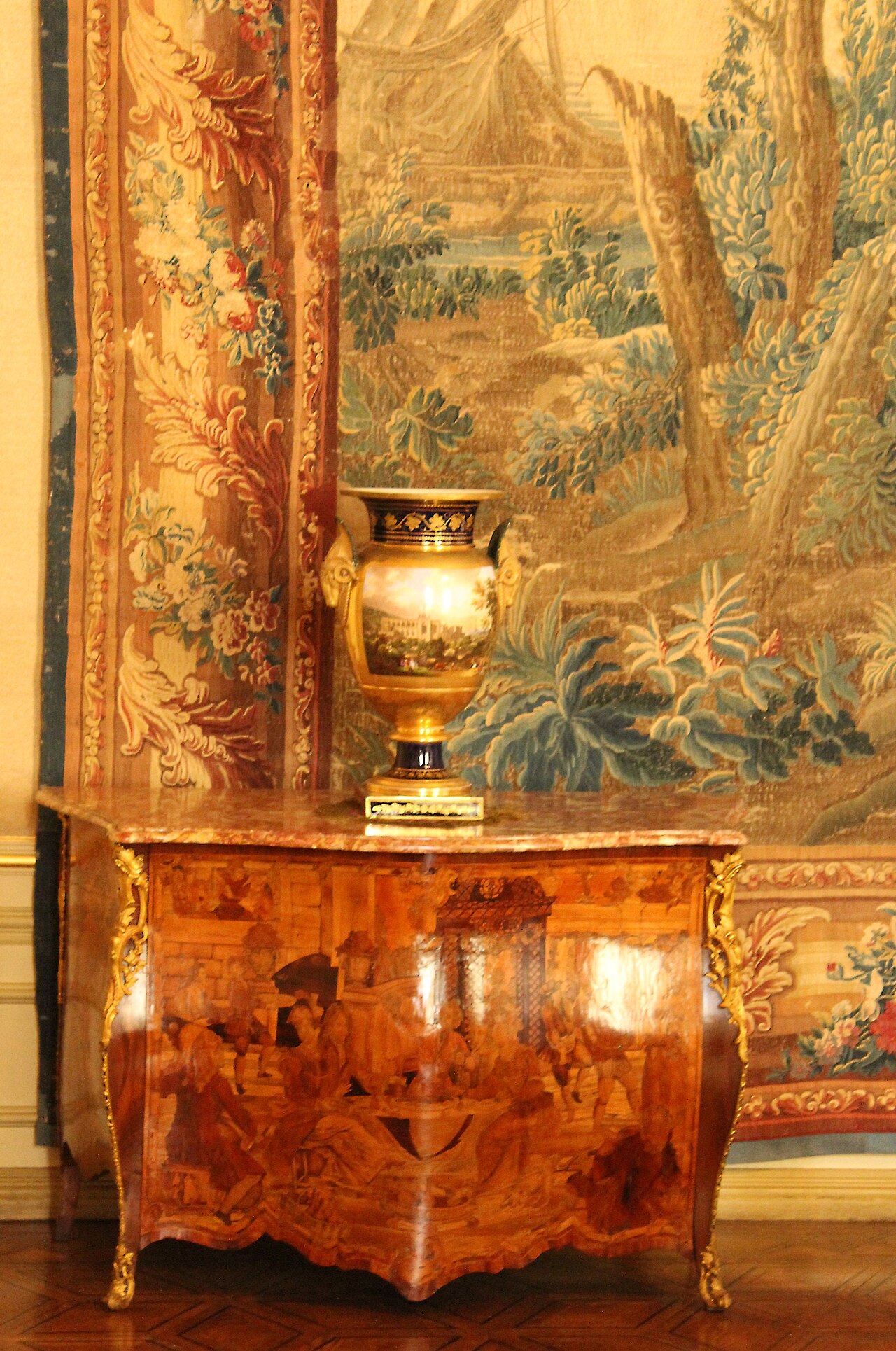
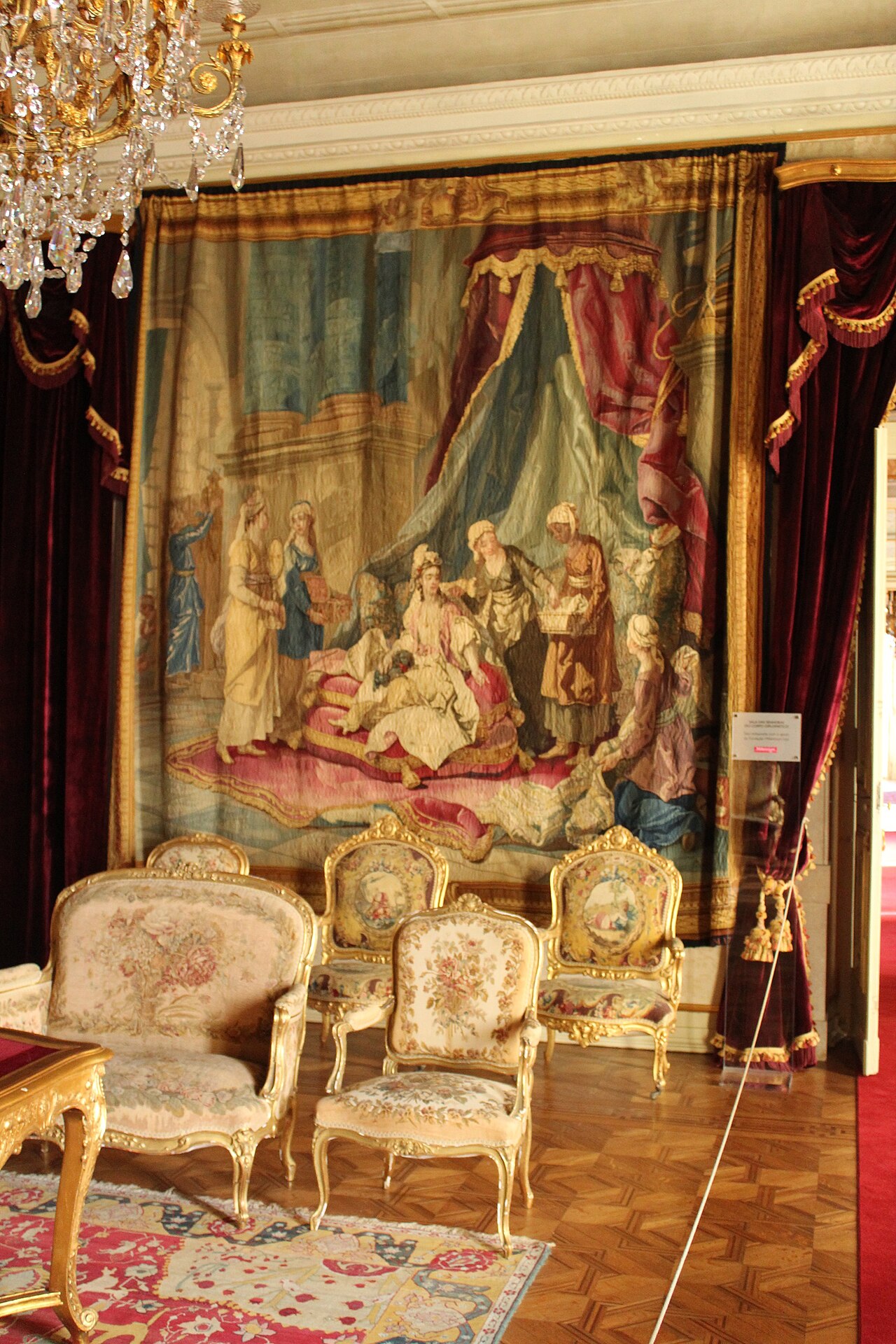
The furniture alone rewards close attention, ranging from grand ceremonial pieces to the intimate objects of daily life, and reflecting the changing fashions of the era. Textiles and tapestries add colour and warmth, while porcelain and glass from the great manufactories of Europe fill cabinets and tables. Clocks and chandeliers, often masterpieces of craftsmanship in their own right, punctuate the rooms.
Paintings and sculpture are woven throughout the palace, from formal royal portraits to decorative and religious works. These are not hung as in a picture gallery but integrated into the life of the rooms, part of the total decorative effect that the court aimed to achieve. The effect is of art embedded in daily use rather than set apart for contemplation.
For anyone interested in the applied arts, Ajuda is a treasure house. It preserves not just individual masterpieces but whole ensembles, showing how objects were meant to be seen together in the settings they were made for. In an age when so many royal collections have been dispersed, this survival of context is precious and rare.
The Royal Treasure on Display
In recent years Ajuda has gained a spectacular new dimension with the creation of a purpose-built museum for the Portuguese royal treasure, integrated into the palace complex. This addition brought together the crown jewels, precious regalia, and the gold and silver treasures of the monarchy in a modern, secure setting designed to show them at their best.
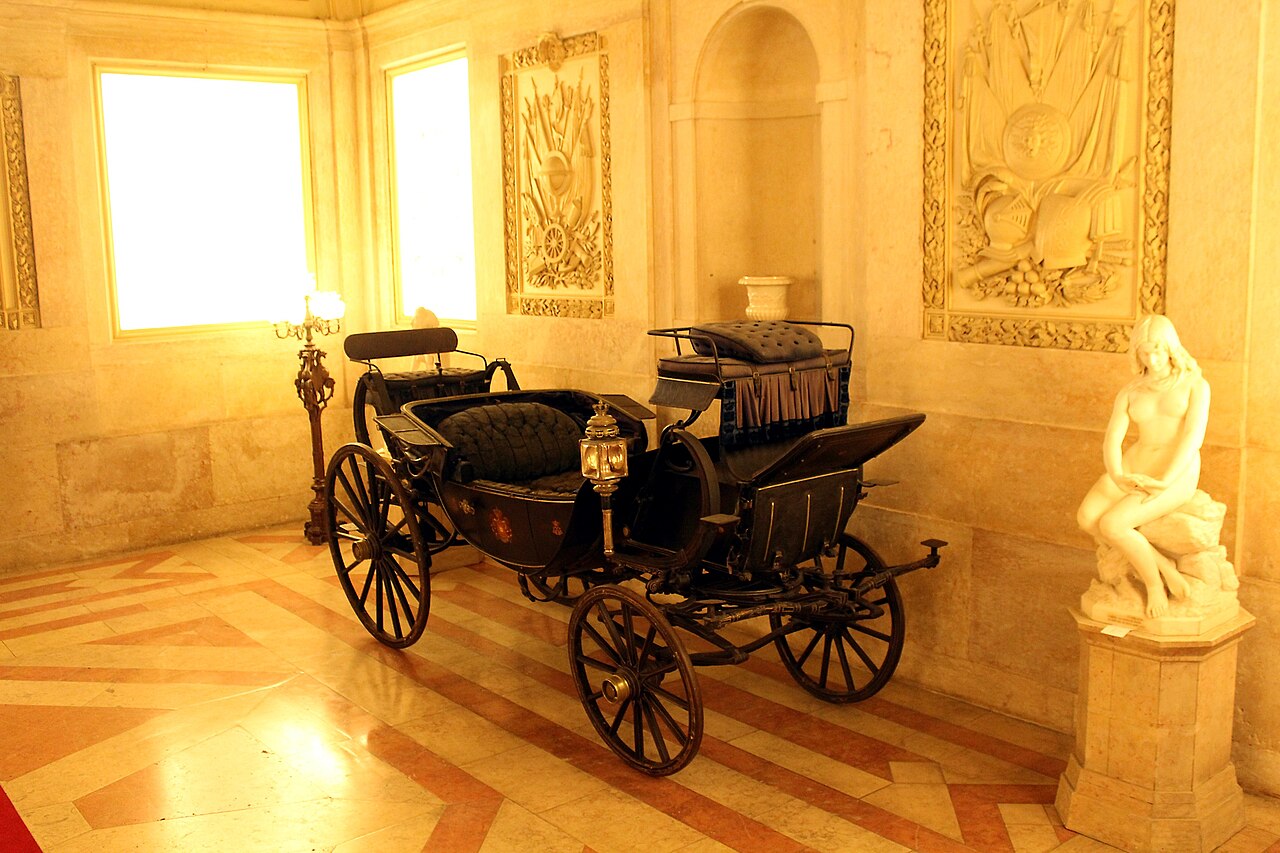
The collection on display is dazzling. It includes jewels, orders, and ceremonial objects accumulated by the royal house over centuries, along with magnificent works in gold and silver used at court. Many of these pieces had rarely been seen by the public, kept safe rather than shown, and their presentation together tells the story of royal wealth and ceremony in vivid material form.
The museum was conceived to complement the historic interiors of the palace rather than compete with them. Where the state rooms show how the monarchy lived, the treasure galleries show the concentrated splendour of its most precious possessions, the objects reserved for the grandest occasions and the deepest symbolism of the crown. The contrast between the two experiences enriches a visit to Ajuda enormously.
Its creation also signalled a renewed investment in Ajuda as a cultural destination. By pairing the atmospheric old rooms with a state-of-the-art display of the royal treasure, the palace offers something few other sites can: the setting of a real royal court alongside the very treasures that court once used. It has helped make Ajuda one of the essential stops for anyone exploring Lisbon’s royal heritage.
For many visitors the treasure galleries are the highlight of the whole complex, and it is easy to see why. There is something uniquely powerful about standing before the actual jewels and regalia of a vanished monarchy, objects that carried immense symbolic weight and were reserved for the most solemn occasions. Displayed together, they turn abstract history into something you can see glinting behind the glass.
The Monarchy Falls and the Doors Close
The world that Ajuda was built to serve came to an abrupt end in 1910, when a revolution overthrew the Portuguese monarchy and proclaimed a republic. For the palace on the hill, this was a decisive moment. The royal family went into exile, the court that had filled the rooms dispersed, and the building that had so recently become the heart of the monarchy was suddenly without the institution it existed to house.
The years leading up to the fall had been troubled. The assassination of King Carlos I and his heir in 1908 had shaken the monarchy to its core, leaving a young king on an unsteady throne, and the political ground continued to shift until the crown collapsed entirely. Ajuda witnessed the twilight of the dynasty, and its rooms hold the memory of those anxious final years.
When the monarchy ended, the question of what to do with its palaces became a matter for the new republic. Ajuda, richly furnished and full of royal collections, could not simply be abandoned, and its contents made it a natural candidate for preservation as a record of the vanished court. The decision to keep it more or less as it was is why so much survives today.
There is a particular poignancy to a palace that reached completion and fullness just as the system it served was about to disappear. Ajuda had waited more than a century to become a true royal home, and it held that role for only a few decades before history closed the chapter. Its rooms carry both the confidence of the court and the melancholy of its sudden end.
The abruptness of the monarchy’s end is part of what gives Ajuda its haunting quality. This was not a palace slowly abandoned but one caught mid-life, its rooms still fully furnished, its collections in place, when the institution around it simply ceased to exist. That sudden stop is precisely what preserved it, freezing a moment of royal life that most other palaces have long since lost to renovation and reuse.
A New Life as a National Museum
After the monarchy fell, Ajuda entered a new chapter as a public institution. The palace and its collections passed into the care of the state, and over the following decades it was opened to visitors as a museum, preserving the interiors and furnishings that made it so remarkable. What had been a private royal world became a shared national heritage.
The transition was not without challenges. Maintaining a vast, richly furnished palace is a demanding task, and Ajuda has undergone various campaigns of conservation and restoration over the years to protect its fragile interiors and objects. The unfinished portions of the original design and the wear of time both had to be managed as the building settled into its museum role.
Interestingly, the palace has never entirely lost its connection to public ceremony. Its grand halls have at times been used for official state functions, giving Ajuda a continuing role in the life of the nation even in the republican era. In this way the rooms built for royal ceremony have occasionally served the ceremonies of the modern state.
Today Ajuda is firmly established as one of Lisbon’s major museums, valued both for its atmospheric interiors and for the depth of its collections. The addition of the royal treasure galleries has renewed interest in the site, and ongoing care ensures that this window into nineteenth-century royal life remains open for future visitors. The unfinished palace has found, in its museum life, a kind of completion after all.
The story of Ajuda’s conservation is, in its own way, as long and demanding as the story of its construction. Generations of curators and restorers have worked to stabilise its structure, protect its textiles and gilding from light and damp, and keep its thousands of objects in good order. Every visit you make rests on that patient, largely invisible labour, which allows a fragile nineteenth-century world to survive into the present.
Planning Your Visit
Ajuda sits in the western part of Lisbon, in the Ajuda district not far from the riverside monuments of Belem, which makes it easy to combine with other sights on the same side of the city. Reaching it is straightforward by public transport or car, and once there you can spend anywhere from an hour to half a day depending on how thoroughly you explore the state rooms and, if you wish, the royal treasure museum.
View Ajuda National Palace on Google Maps
The heart of a visit is the self-guided route through the historic interiors, which leads you in sequence through the private apartments and the great rooms of state. Information is provided to help you understand what you are seeing, and the fixed route ensures you do not miss the highlights, from the intimate chambers to the throne room. The royal treasure galleries are a separate experience within the complex and are well worth the additional time.
As with any major museum, it is wise to check current opening hours and ticket arrangements before you go, since these can change with the seasons and with special exhibitions or events. Combined tickets or separate admissions may apply to the palace and the treasure museum, so it helps to plan which parts you most want to see. Quieter times tend to be earlier in the day.
You can locate the palace and plan your route using the map link below. Whether you come for the royal interiors, the treasure, or simply the view from the hill, Ajuda offers a rare chance to walk through a European royal residence that stopped in time. Give yourself room to linger; the rooms reveal their details slowly, and the atmosphere of the vanished court is best absorbed at an unhurried pace.
See Ajuda for Yourself
A palace as richly decorated as Ajuda is best appreciated in motion, moving from room to room as the colours and themes shift around you. The short film below takes you inside the palace, offering a sense of the sequence of state rooms, the density of the decoration, and the atmosphere of a royal residence preserved almost as its last occupants left it.
As you watch, remember the long and difficult road that brought Ajuda into being, from the earthquake and fire that cleared the way to the century of halting construction and the few brilliant decades as a royal home. The palace you see is the survivor of all that history, and its beauty is inseparable from the turbulent story that produced it.
Palaces Nearby
If Ajuda has drawn you into the world of Portugal’s royal residences, two nearby palaces make natural next steps, each showing a different face of the same monarchy.
- Mafra, the Palace a King Built From a Vow — a colossal Baroque palace, basilica, and convent north-west of Lisbon.
- Pena Palace, the Fairy-Tale Castle Above Sintra — Portugal’s vivid masterpiece of Romanticism on a peak above Sintra.
You May Like
The Bardo, a Palace of the Beys Filled With Roman Mosaics


One thought on “Ajuda, Lisbon’s Unfinished Royal Palace”