In the heart of old Damascus, one of the oldest continuously inhabited cities on earth, hidden behind a plain outer wall near the great Umayyad Mosque, lies one of the most beautiful houses in the Arab world. The Azm Palace opens inward, away from the busy streets, onto a world of shaded courtyards, splashing fountains, citrus trees, and richly decorated halls. It is a masterpiece of the traditional Damascene house, built on the grandest scale.
The palace was created in the eighteenth century as the residence of an Ottoman governor of Damascus, and it embodies the ideals of domestic architecture that had developed in the city over many centuries. Rather than presenting a grand facade to the world, it turns inward, arranging its rooms around courtyards in the manner perfected in the hot, dense cities of the region, where privacy, coolness, and beauty were prized above outward display.
Within its walls, the palace is a treasury of the decorative arts, from its distinctive banded stonework to its painted wooden ceilings and its cool marble courtyards. Today it houses a museum dedicated to the arts and popular traditions of Syria, making it both a monument of architecture and a window into the culture of Damascus and its people.
In this guide you will explore the Azm Palace from its origins under the governor who built it, through its remarkable architecture, its courtyards and halls, its decoration and its baths, its role as a museum, and its survival through the turbulent modern history of Syria, to what it represents today. By the end you will understand why this palace is regarded as one of the jewels of old Damascus.
In This Article
- A Governor’s Grand House
- The Governor Who Built It
- Ablaq Stone and the Damascene House
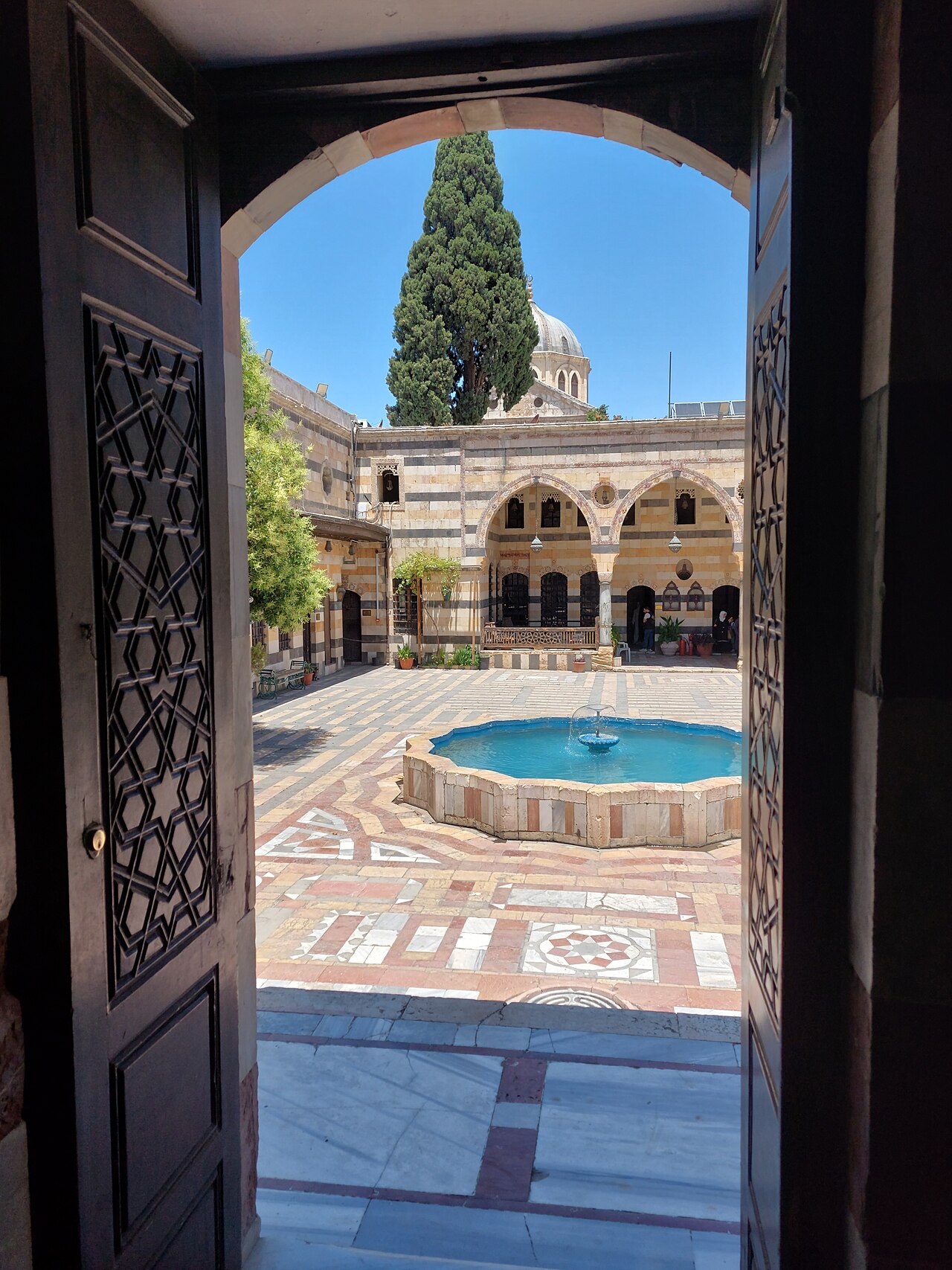
- Courtyards, Fountains, and Citrus Trees
- The Private and Public Wings
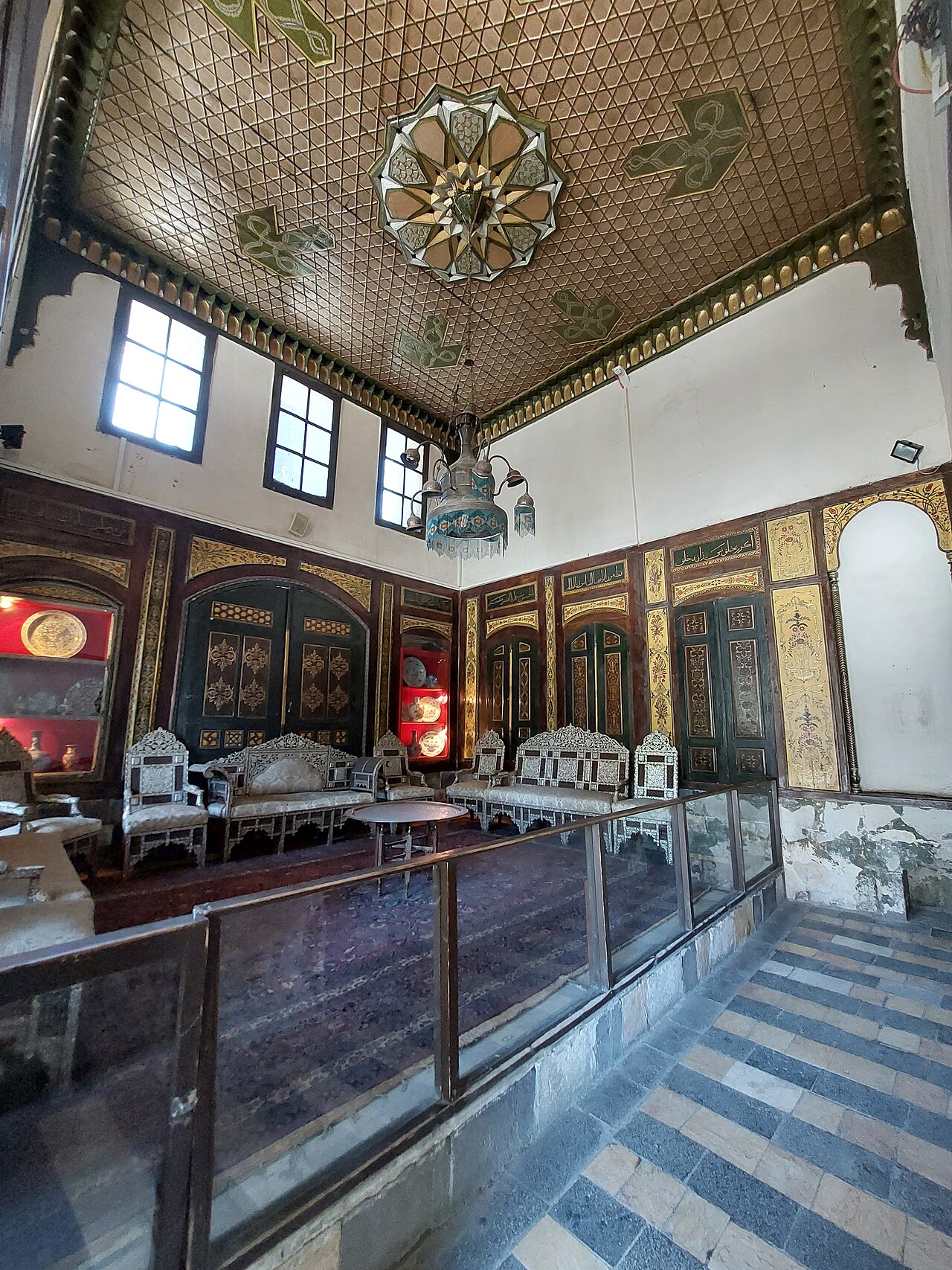
- The Painted Wooden Ceilings
- The Great Reception Halls
- The Private Bath
- The Museum of Popular Traditions
- Bombardment and Restoration
- A Jewel of Old Damascus
- Planning a Visit to the Azm Palace
- See the Azm Palace for Yourself
A Governor’s Grand House
The Azm Palace was built in the middle of the eighteenth century as the private residence of the Ottoman governor of Damascus. At a time when the city was an important provincial capital of the Ottoman Empire, its governor required a residence worthy of his position, and the palace was created to serve as both a family home and a seat of authority.
The construction of the palace was a major undertaking, employing the finest craftsmen of Damascus, a city long renowned for its artisans and its traditions of building and decoration. The result was a residence that displayed the wealth and taste of its owner and the extraordinary skills of the city’s craftsmen, a showcase of the domestic arts of Damascus at their height.
The palace was built in the traditional manner of the great houses of Damascus, turning inward around courtyards rather than presenting an ornate face to the street. Behind its unassuming outer walls lay a world of luxury and beauty, a private paradise hidden from the public gaze, in keeping with the values of the culture that produced it.
From these beginnings, the Azm Palace became one of the most celebrated houses in Damascus, admired for its beauty and its scale. It stands today as one of the finest surviving examples of the traditional Damascene residence, a monument to the domestic architecture of the city and to the governor whose wealth and taste brought it into being.
The mid-eighteenth century was a period of relative prosperity and stability for Damascus, and the building of so lavish a residence reflected the confidence of the age. As a great caravan city and a gathering point for pilgrims bound for the holy cities of Arabia, Damascus commanded considerable wealth, and the Azm Palace channelled that wealth into one of the supreme expressions of its domestic culture.
The Governor Who Built It
The palace is associated with a powerful member of a prominent family that provided several governors to Damascus and other cities during the Ottoman period. As governor, he wielded great authority over the city and its region, and the building of the palace was an expression of his power, wealth, and cultivated taste.
The family to which he belonged was one of the most influential in the region during this era, and its members left their mark on several cities through their patronage of architecture and the arts. The Azm Palace in Damascus is the greatest of the residences associated with the family, a monument to their prominence and their refinement.
As a governor, the builder of the palace was responsible for the administration of an important part of the Ottoman Empire, and his residence reflected the dignity of his office as well as his personal wealth. The palace served as a setting for the business of government and the reception of guests, as well as the private life of his household.
The legacy of the governor endures in the palace, which carries his family’s name and preserves the memory of their power and taste. Though the political world he inhabited has long since passed away, the beauty of his residence remains, a lasting testament to a family that played an important role in the history of Damascus and the wider region.
The construction of the palace is said to have drawn on materials and craftsmen gathered with the full resources of a provincial governor, and even, according to tradition, on materials taken from older structures. Whatever the details, the result was a house of exceptional richness, and the ambition behind it reflected the governor’s determination to leave a residence worthy of his standing in one of the empire’s great cities.
The palace remained associated with the family for a considerable time and passed through various uses over the generations before its eventual transformation into a museum. Each phase of its life added a layer to its history, but through them all the building retained the essential character given to it by its founder, a continuity that links the museum of today to the governor’s grand house of the eighteenth century.
Ablaq Stone and the Damascene House
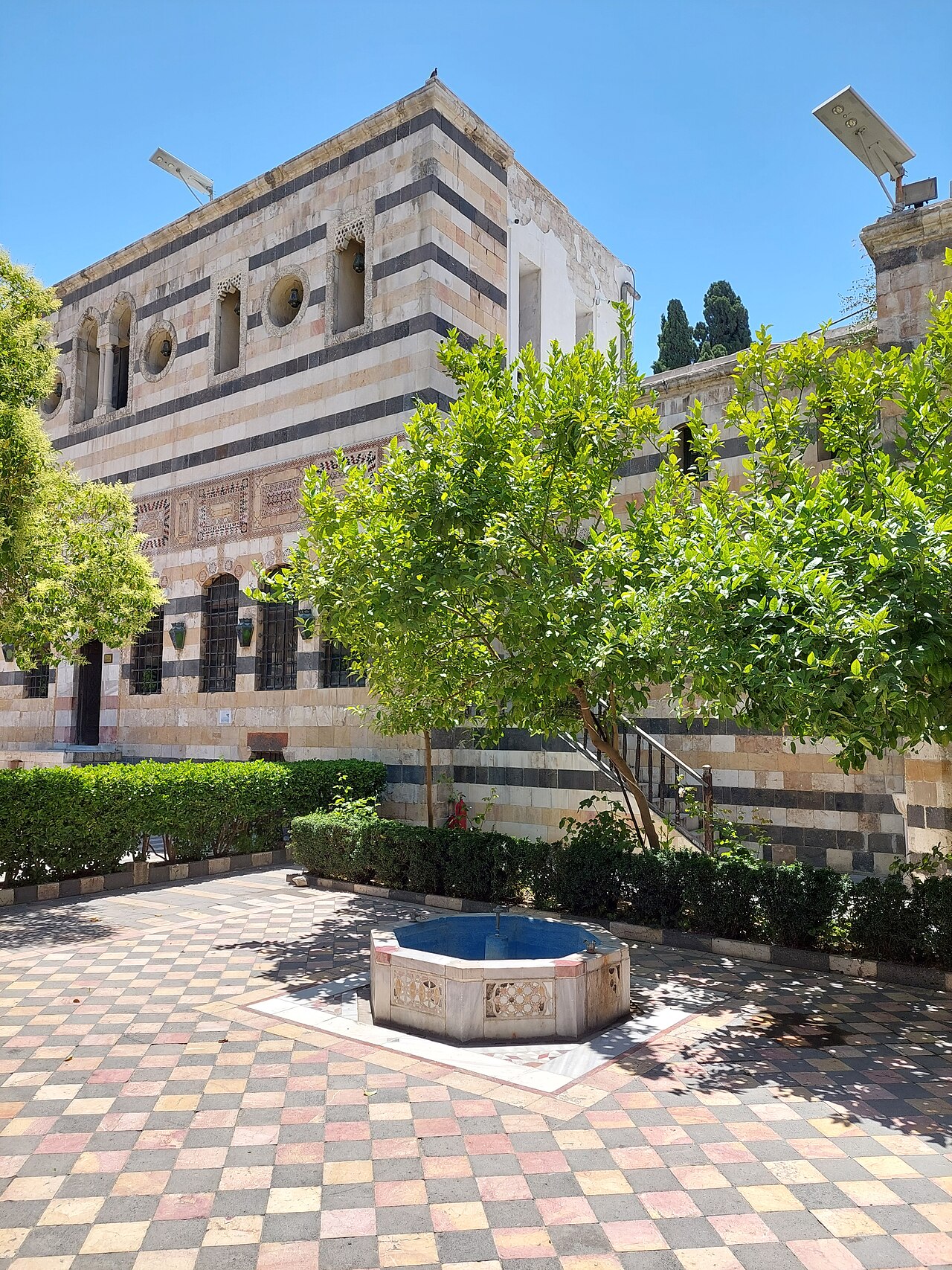
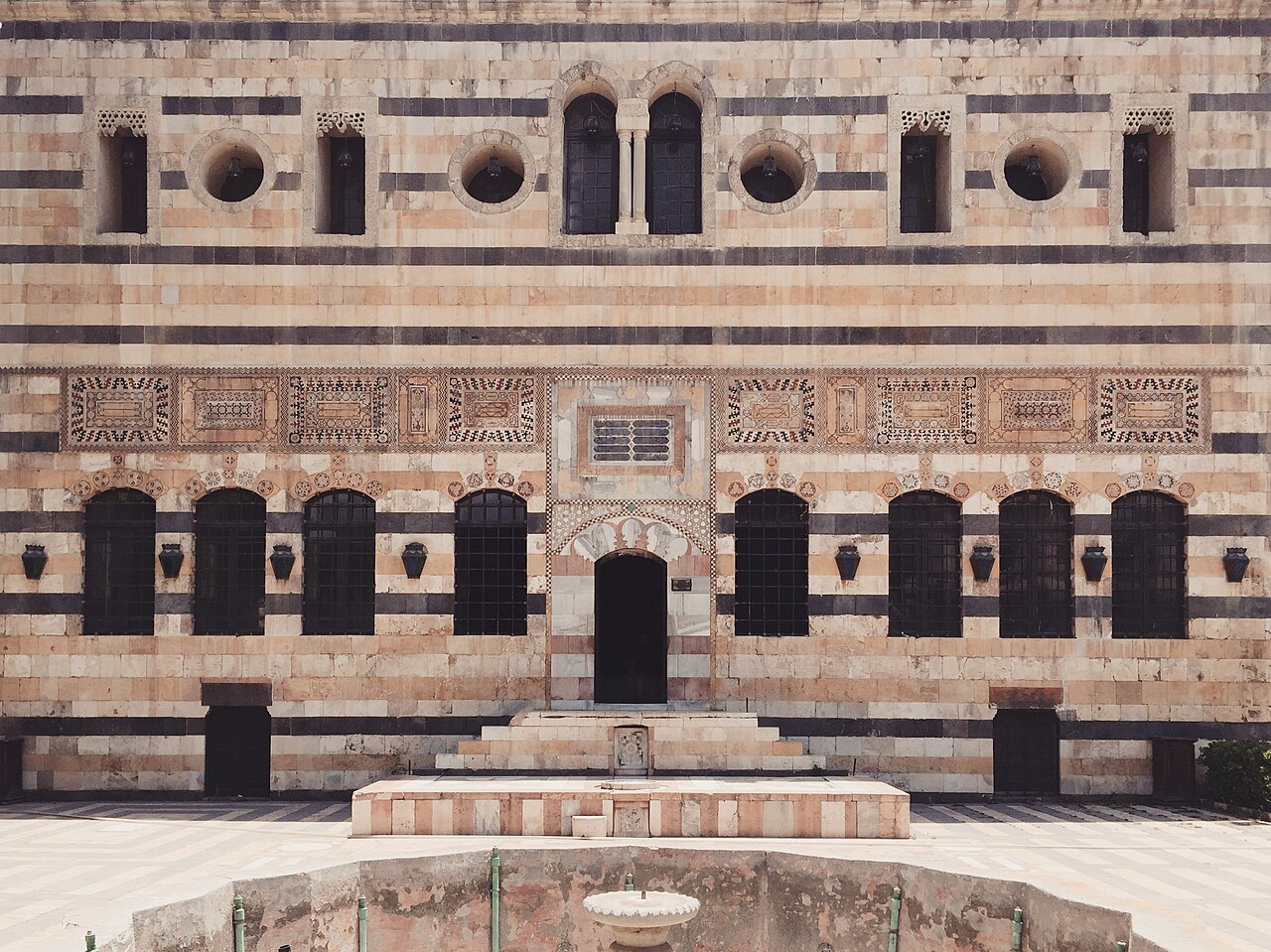
The architecture of the Azm Palace is a superb example of the traditional building style of Damascus, distinguished above all by its use of ablaq masonry, the striking technique of alternating bands of light and dark stone. This banded stonework, using pale limestone and dark basalt, creates bold horizontal patterns that are one of the hallmarks of Damascene architecture.
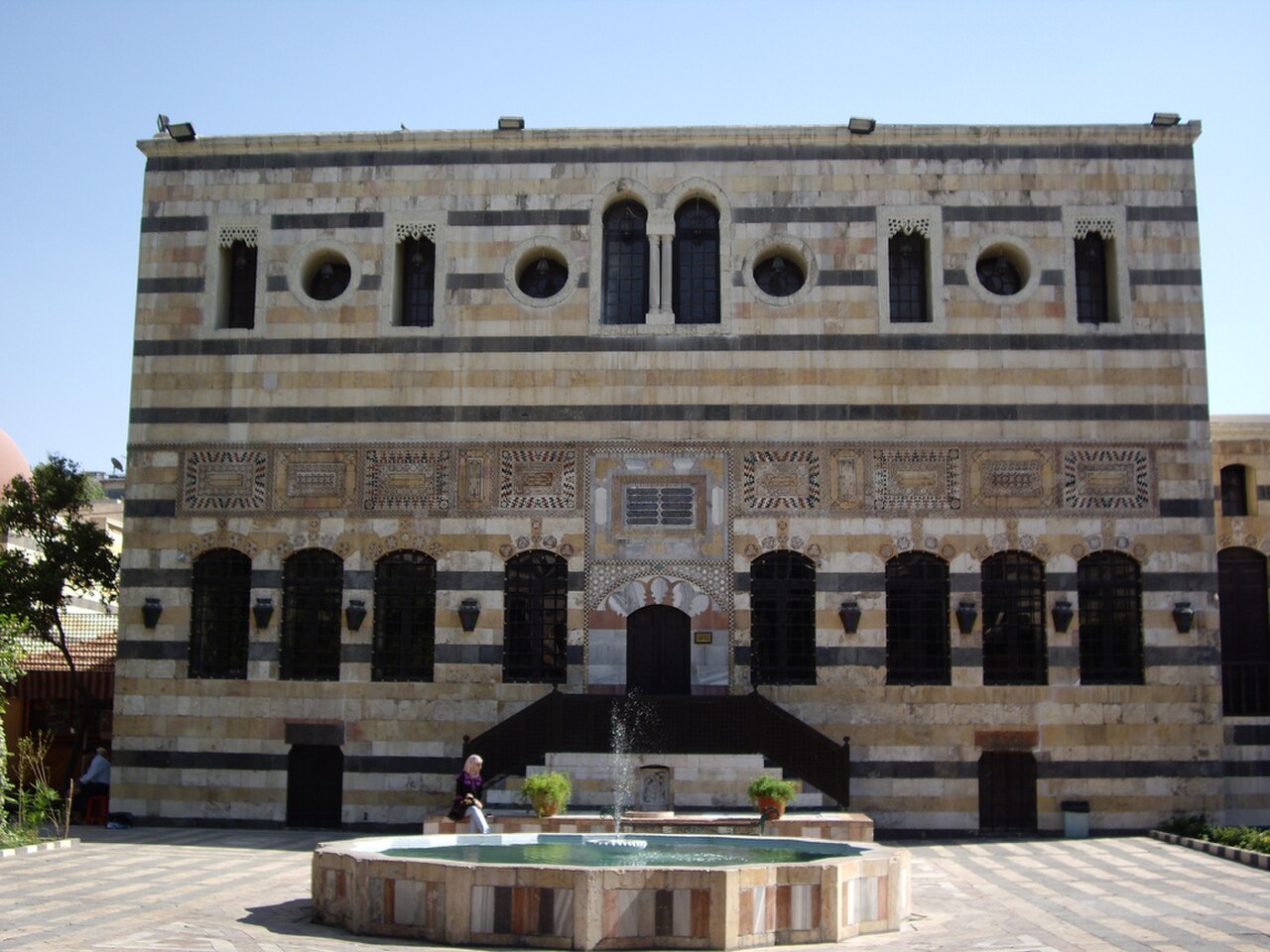
The ablaq technique is both decorative and practical, and it gives the walls of the palace their distinctive rhythm and beauty. Combined with intricate stone carving, marble inlay, and other decorative work, it creates surfaces of great richness, demonstrating the mastery of the stoneworkers of Damascus and their long tradition of craftsmanship.
The palace follows the classic plan of the great Damascene house, arranged around courtyards and divided into distinct sections for public and private life. This inward-looking design, with rooms opening onto shaded courts rather than the street, was perfectly adapted to the climate and the social customs of the city, providing privacy, coolness, and beauty.
Every element of the architecture reflects the sophisticated traditions of Damascene domestic building, refined over centuries in one of the great cities of the Islamic world. The Azm Palace represents the culmination of these traditions, a house that combines the practical wisdom of local building with the wealth and ambition of a great governor, producing a residence of exceptional beauty.
The inward-turning plan of the Damascene house was a response to both climate and culture, shutting out the heat, dust, and noise of the street while creating a private world of coolness and calm within. The Azm Palace demonstrates this principle on a grand scale, and part of the wonder of entering it is the contrast between the plain exterior and the beauty that unfolds inside, a transformation that never fails to surprise.
The Azm Palace has come to be regarded as the finest and most complete example of an eighteenth-century Damascene residence, valued by scholars and visitors alike as a model of the type. Its scale, its state of preservation, and the quality of its decoration set it apart, making it not only a beautiful building but an essential document of the domestic architecture of the region.
Courtyards, Fountains, and Citrus Trees
At the heart of the Azm Palace are its courtyards, the open spaces around which the whole house is arranged and which give it its character and beauty. In the tradition of the Damascene house, these courts are places of coolness and repose, planted with trees and cooled by fountains, offering an oasis of calm at the centre of the dense old city.
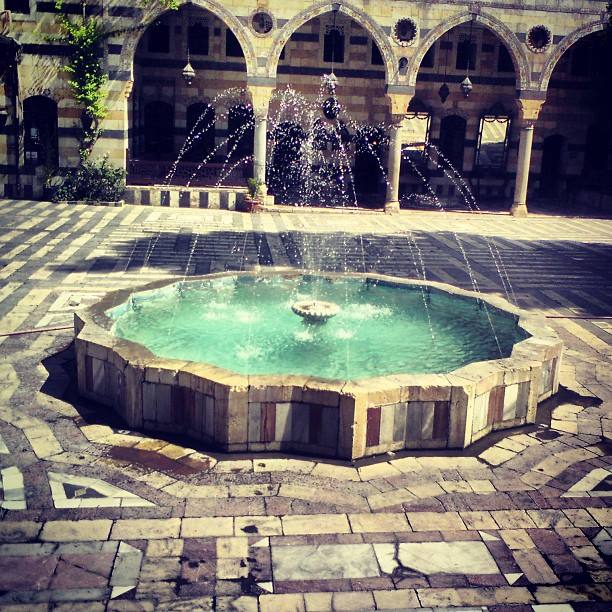
The main courtyard is a spacious court paved with marble and adorned with fountains and pools, whose water cools the air and fills the space with gentle sound. Around it are planted citrus trees and other greenery, whose foliage provides shade and whose fragrance perfumes the air, creating an atmosphere of sensory delight.
The courtyards were the centre of daily life in the palace, the places where the household gathered and where guests were received in the pleasant seasons. Their design reflects a deep understanding of how to create comfort and beauty in a hot climate, using water, shade, and greenery to transform the harsh environment into a paradise.
The play of water, shade, and light in the courtyards is one of the great pleasures of the palace. The fountains sparkle, the citrus trees cast their shade, and the marble surfaces reflect the changing light of the day, creating a space of extraordinary beauty and tranquillity that captures the ideal of the Damascene house at its finest.
The presence of multiple courtyards, each serving a different part of the house, allowed the palace to function as a self-contained world. Water channelled through the courts fed the fountains and pools, and the careful planting of trees and flowers turned each court into a garden. This integration of architecture and nature lies at the heart of the Damascene ideal of the home as an earthly paradise.
In the heat of a Damascus summer, the difference between the sun-baked streets and the shaded, fountain-cooled courtyards of the palace would have been dramatic. The architecture worked as a kind of climate control centuries before mechanical cooling, using shade, water, and the movement of air to create comfort. This environmental wisdom is one of the enduring lessons of the traditional Damascene house.
The Private and Public Wings
Like all great houses of Damascus, the Azm Palace is divided into two main sections, each with its own courtyard and its own function. This division between the public and private realms of the house was fundamental to the domestic architecture of the region, reflecting the social customs and values of the culture that produced it.
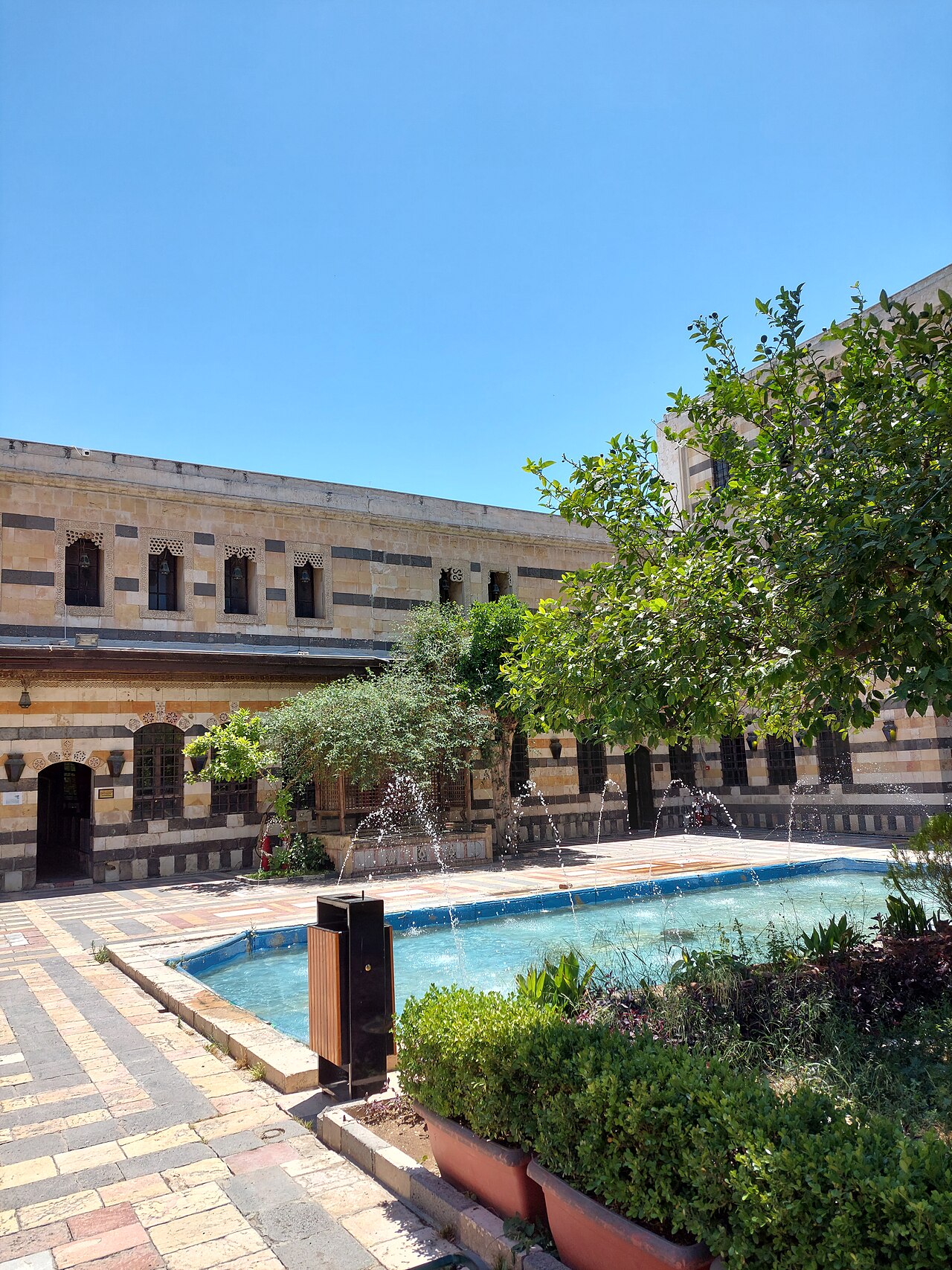
One section, the more public part of the house, was devoted to the reception of guests and the conduct of business. Here the governor would receive visitors and hold gatherings, and this part of the palace was designed to impress with its grandeur and hospitality, the face the household presented to the outside world.
The other section, the private part of the house, was reserved for the family and its domestic life, screened from the eyes of visitors. This more intimate realm was the true home of the household, and its courtyards and rooms provided the setting for the private life of the family away from the public functions of the palace.
The division between these two realms structured the whole life of the palace and shaped its architecture, with each section arranged around its own courtyard and provided with its own rooms and facilities. This arrangement, characteristic of the great houses of the region, reflects a sophisticated understanding of the relationship between public and private life in the culture of Damascus.
The naming of individual halls, such as those traditionally associated with the bride and with the mother-in-law, reflects the way the architecture was bound up with the life of the family and its ceremonies. These rooms were not abstract spaces but settings for the human dramas of a great household, from weddings to daily gatherings, and their names preserve a memory of the people who once filled them.
The Painted Wooden Ceilings
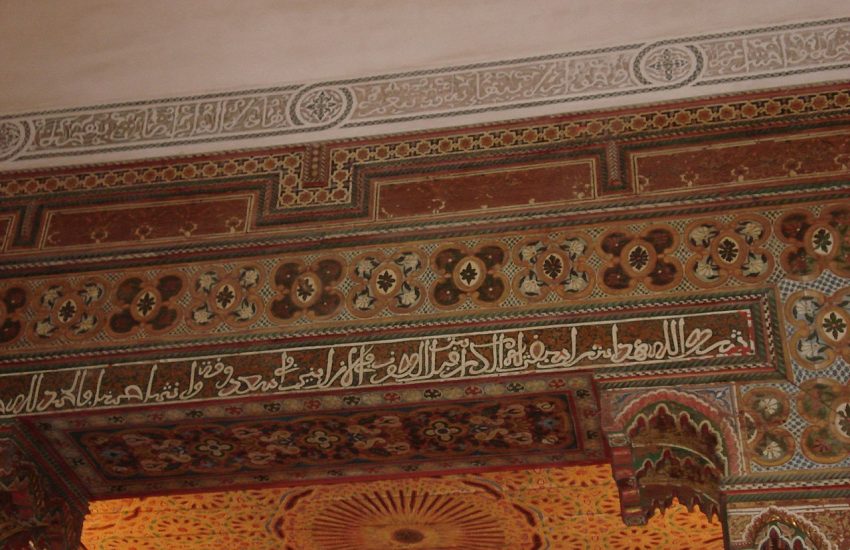
Among the greatest treasures of the Azm Palace are its painted wooden ceilings, masterpieces of a decorative art for which Damascus was famous. These ceilings, covering the finest rooms of the palace, are adorned with intricate patterns, floral designs, and calligraphy in rich colours and gold, creating surfaces of extraordinary beauty overhead.
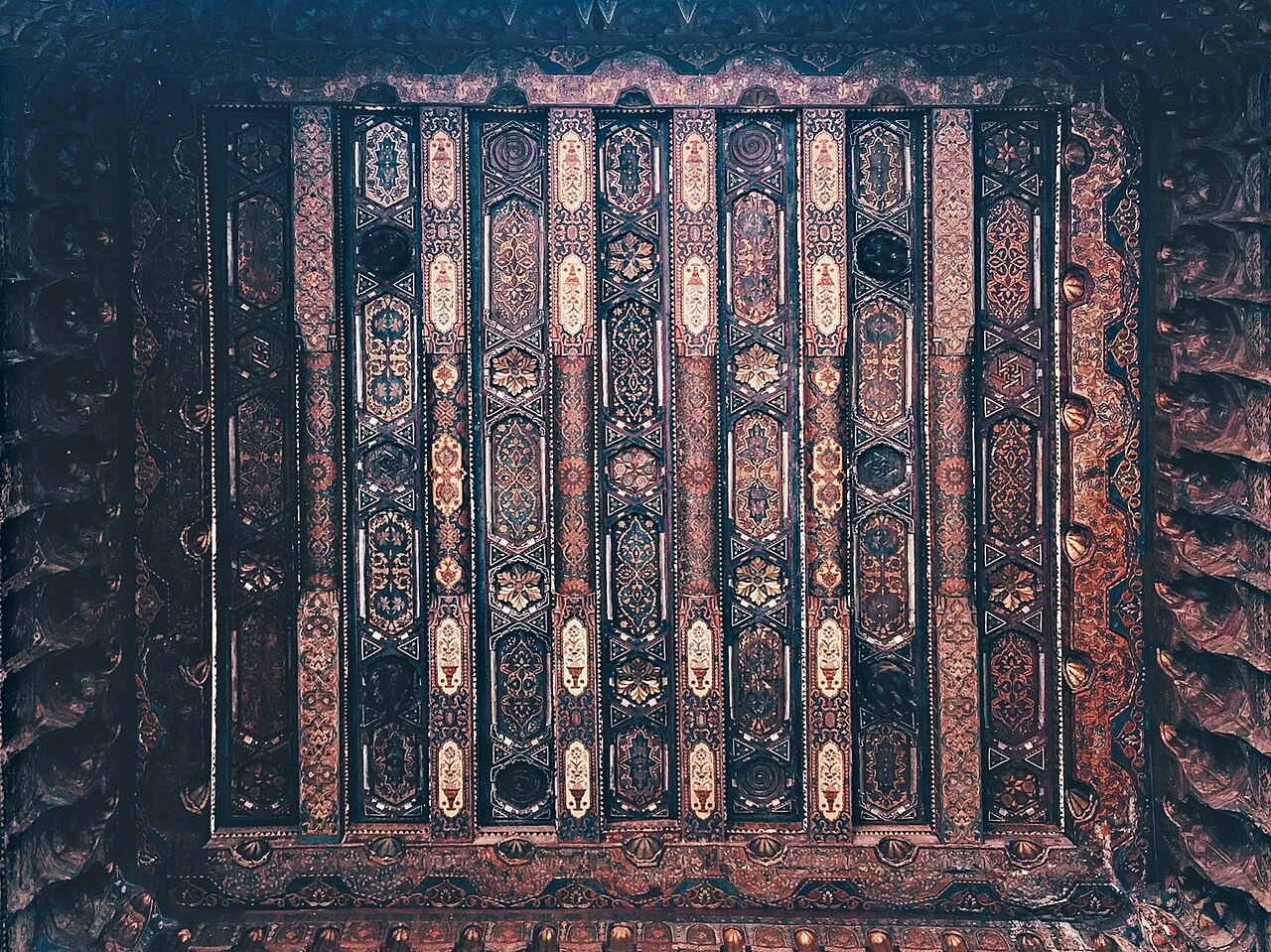
The tradition of painted and gilded woodwork was one of the glories of Damascene interior decoration, and the craftsmen who created these ceilings were masters of their art. Working in wood, they covered the surfaces with elaborate ornament, combining geometric and floral patterns with inscriptions in a rich and harmonious whole.
These ceilings transformed the rooms they covered into jewel boxes of colour and pattern, their beauty enhanced by the play of light across the gilded surfaces. They represent the height of the decorative arts of Damascus, and their survival in the palace offers a precious record of a craft tradition that reached extraordinary levels of refinement.
For visitors, the painted ceilings are among the most memorable features of the palace, drawing the eye upward to admire their intricate beauty. They embody the artistry and the love of decoration that characterised the domestic architecture of Damascus, and they are among the finest examples of their kind to survive anywhere in the region.
The wooden ceilings also served a practical purpose alongside their beauty, for timber was better suited than stone to spanning the wide rooms and withstanding the region’s occasional earthquakes. That such functional elements were treated as opportunities for the most lavish decoration is characteristic of the culture that built the palace, in which beauty and utility were never seen as opposed.
Restoring these ceilings after the damage the palace suffered was among the most delicate tasks of its recovery, requiring craftsmen skilled in the traditional techniques of painting and gilding on wood. Their success in bringing the ceilings back to life is one of the triumphs of the palace’s restoration, ensuring that this most fragile and beautiful of art forms could continue to be admired by visitors.
The Great Reception Halls
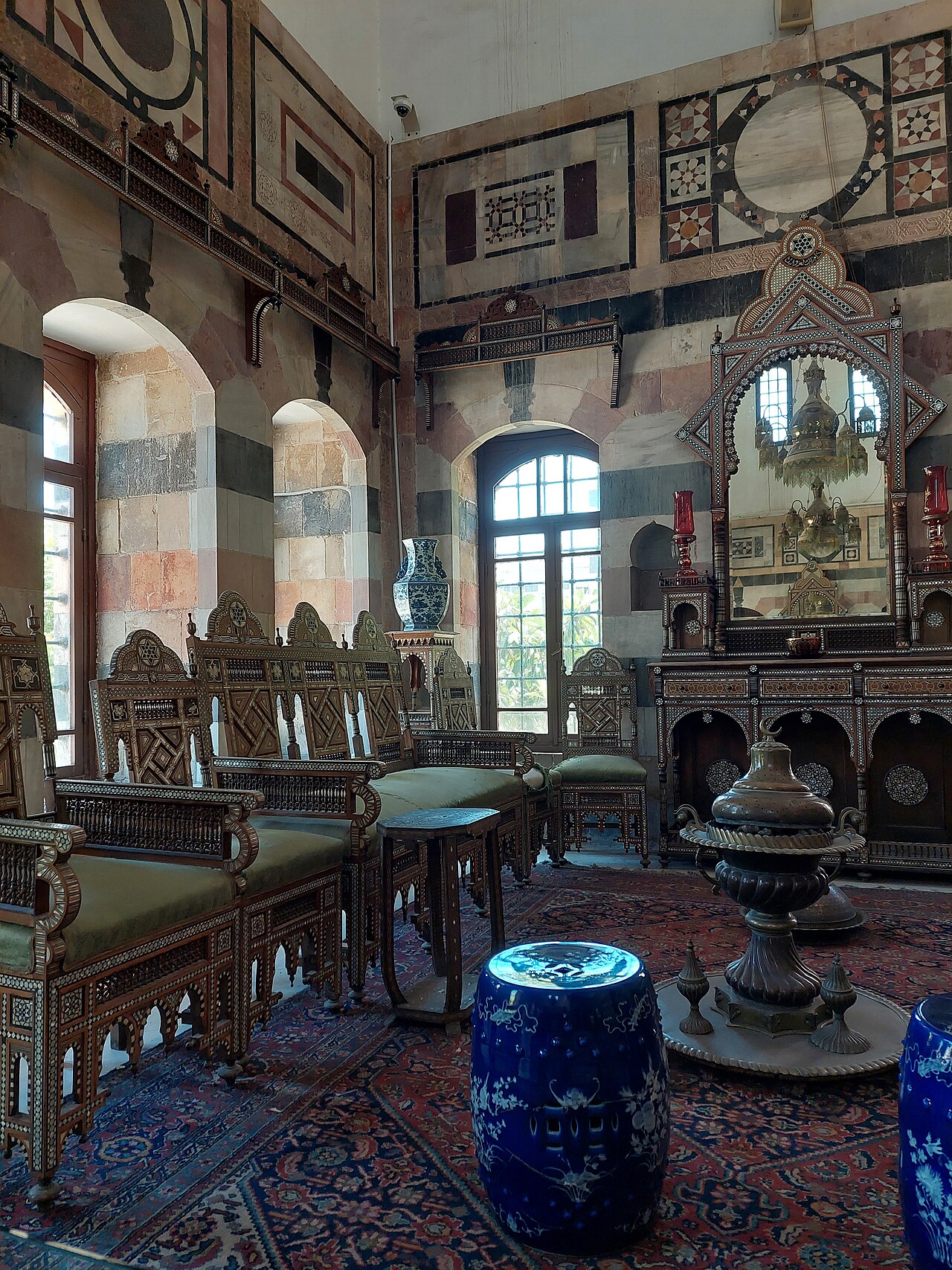
The Azm Palace contains a series of magnificent reception halls, the grandest rooms of the house, where the governor received his most important guests. These halls, richly decorated with marble, painted woodwork, and intricate ornament, were designed to display the wealth and hospitality of the household and to impress all who entered.
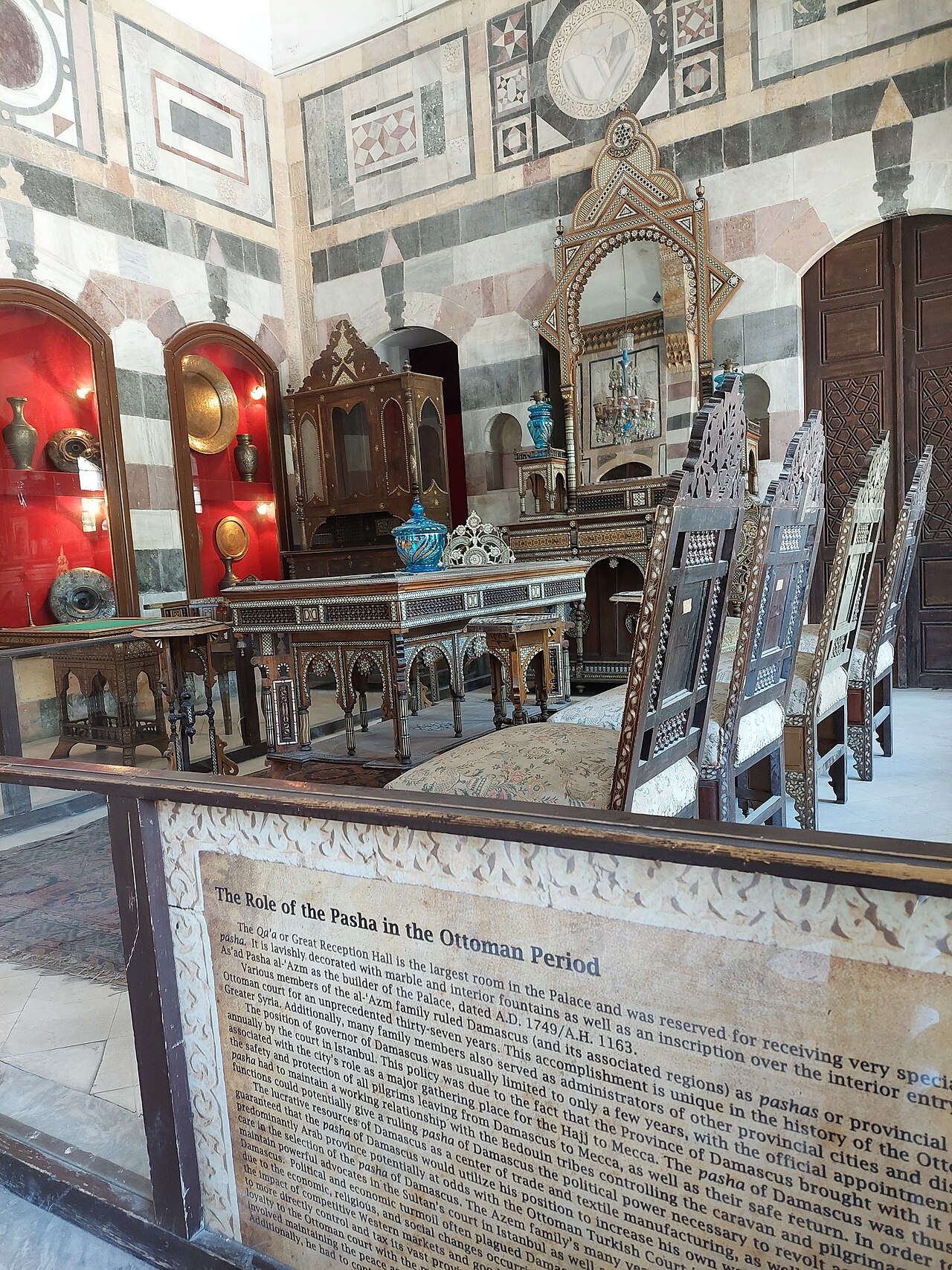
The great reception halls follow the traditional form of the finest rooms of the Damascene house, often with a lower entrance area and a raised main section where guests were seated. Fountains, marble floors, and elaborate decoration create an atmosphere of luxury, and the halls were furnished for the comfort and honour of important visitors.
Hospitality was a central value of the culture that produced the palace, and the reception halls were the setting for its expression. Here the governor would entertain his guests amid surroundings of the utmost beauty, offering the finest of everything in accordance with the traditions of generosity that governed social life.
These halls represent the palace at its most magnificent, the spaces where its wealth and artistry were most fully displayed. Their beauty and grandeur make them among the highlights of the palace, and they preserve the atmosphere of the great occasions of hospitality for which they were created, a vivid record of the social life of old Damascus.
The seating arrangements of the great halls, with honoured guests placed on the raised platform and refreshments served amid the sound of the fountains, followed an elaborate etiquette that governed the reception of visitors. To be received in such a hall was to be honoured, and the beauty of the surroundings was itself a form of hospitality, a gift of beauty offered to the guest.
The Private Bath
Like other great houses of the region, the Azm Palace includes its own private hammam, or bath, a series of chambers that provided for the cleansing and relaxation of the household. The presence of a private bath was a mark of luxury and an essential part of the daily life and culture of a great residence.
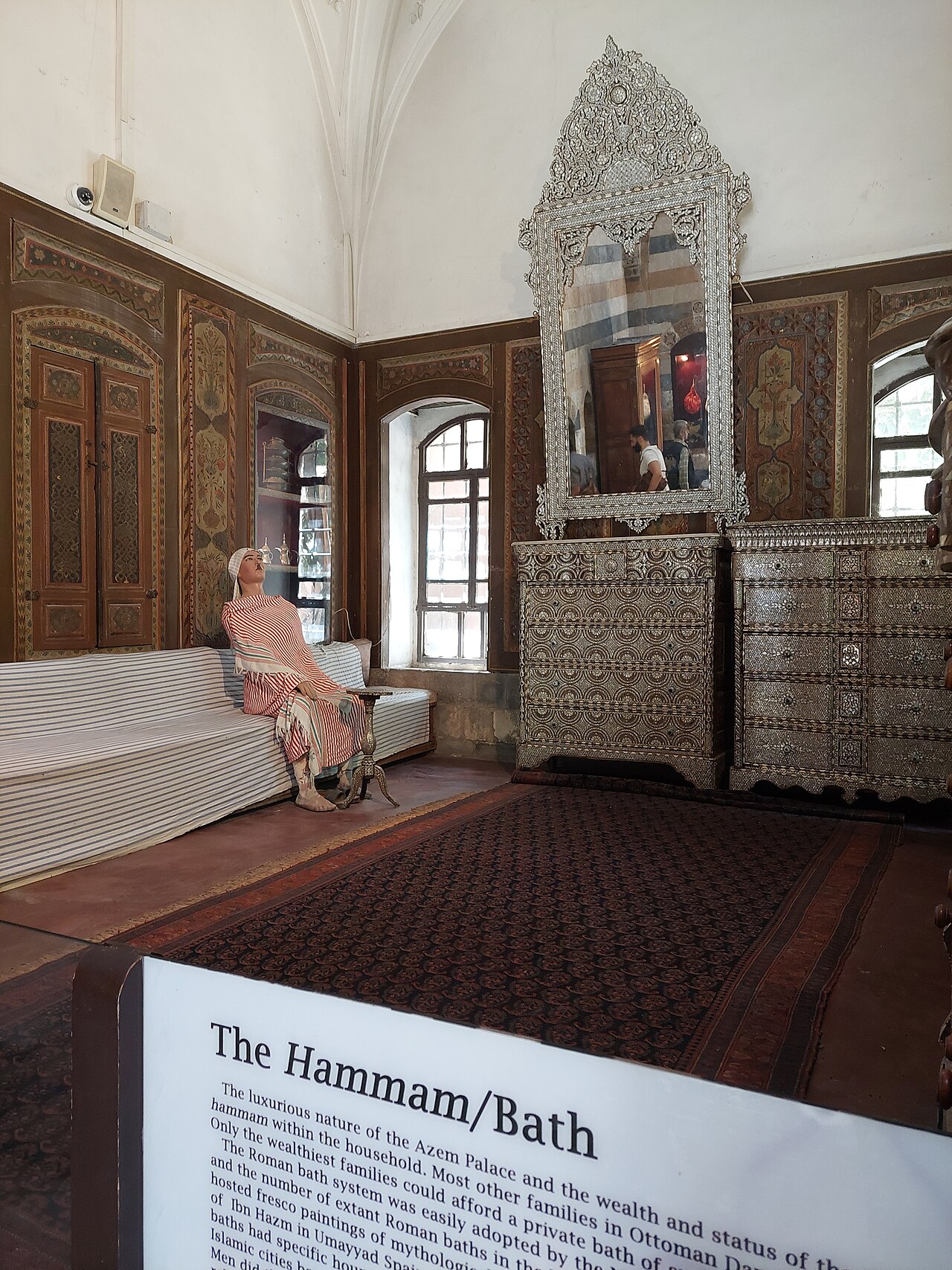
The bath chambers, with their domes and heated rooms, followed the classic form of the traditional hammam, providing a sequence of spaces of varying temperature for the bathing ritual. Marble, decoration, and the play of light through openings in the domes created an atmosphere of beauty and comfort in these intimate spaces.
The private bath allowed the household to enjoy the pleasures of the hammam within the privacy of the palace, without recourse to the public baths of the city. It was a place of relaxation and refreshment, an important part of the domestic life of the palace and of the wider culture of bathing that flourished in the cities of the region.
For visitors today, the bath is one of the fascinating spaces of the palace, offering insight into the daily life and customs of the household. Its architecture and decoration, and the atmosphere created by the light filtering through the domes, make it one of the evocative corners of the palace, a reminder of the comforts and rituals of life in old Damascus.
The inclusion of a private bath within the house also reflected the social importance of the hammam in the culture of Damascus, where public baths were centres of community life. To have one’s own bath was a mark of the highest status, allowing the household to enjoy in private a ritual that was, for most, a communal experience, and its presence completes the picture of the palace as a self-sufficient world.
The Museum of Popular Traditions
In its modern life, the Azm Palace has become a museum dedicated to the arts and popular traditions of Syria, its historic rooms filled with displays that bring to life the culture and daily life of Damascus and the wider region. This role has given the palace a new purpose while preserving its beauty and historic character.
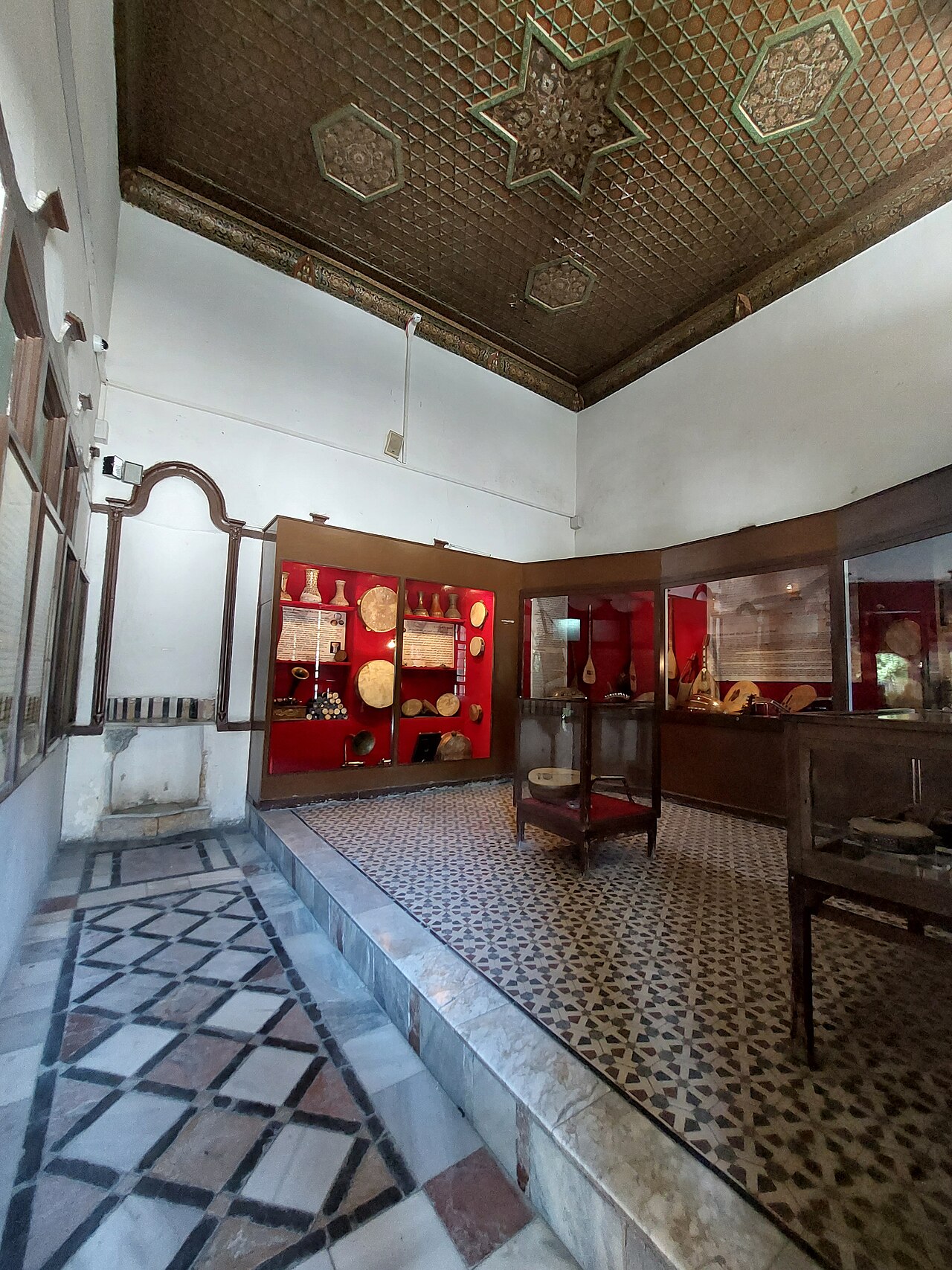
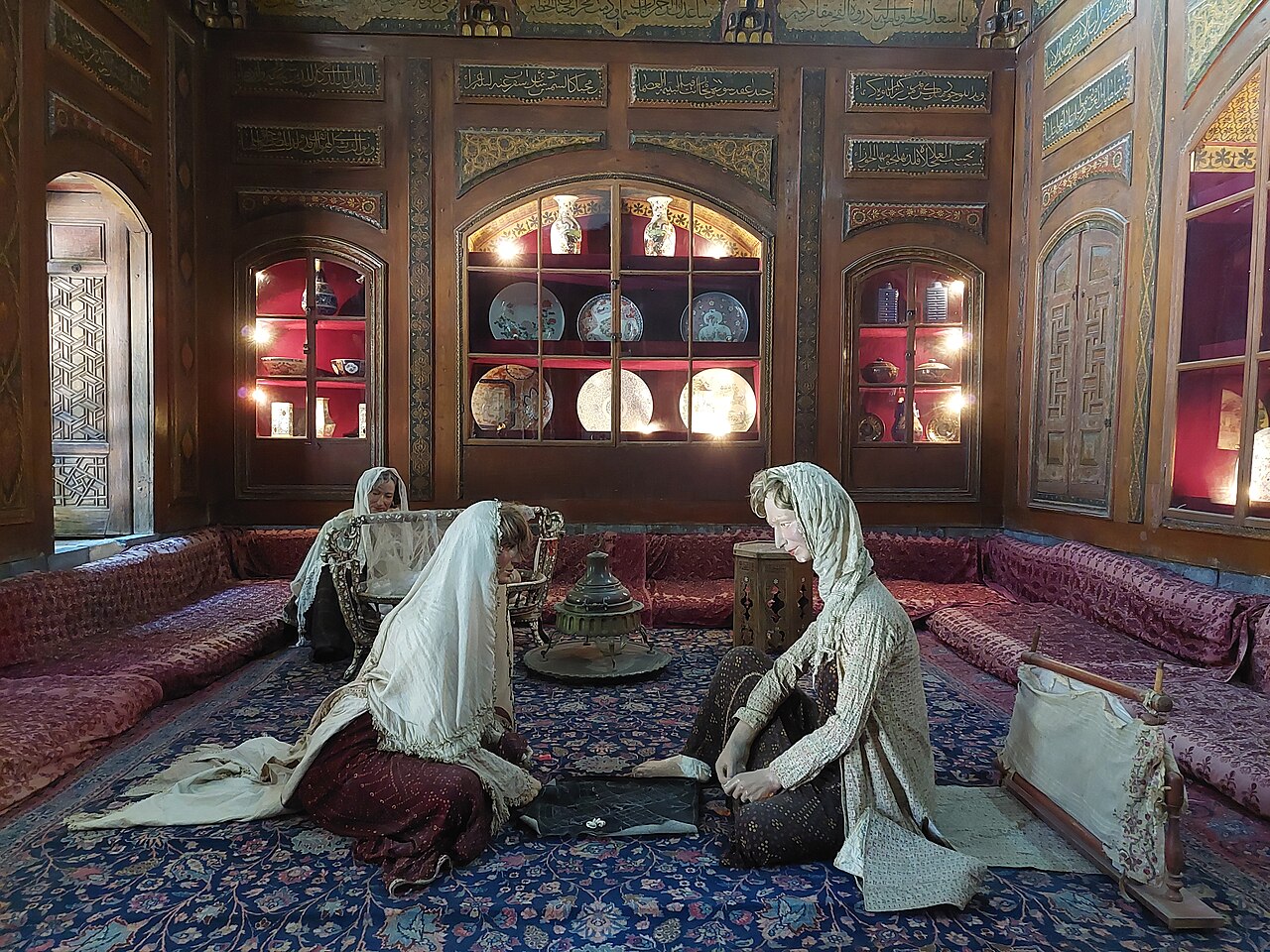
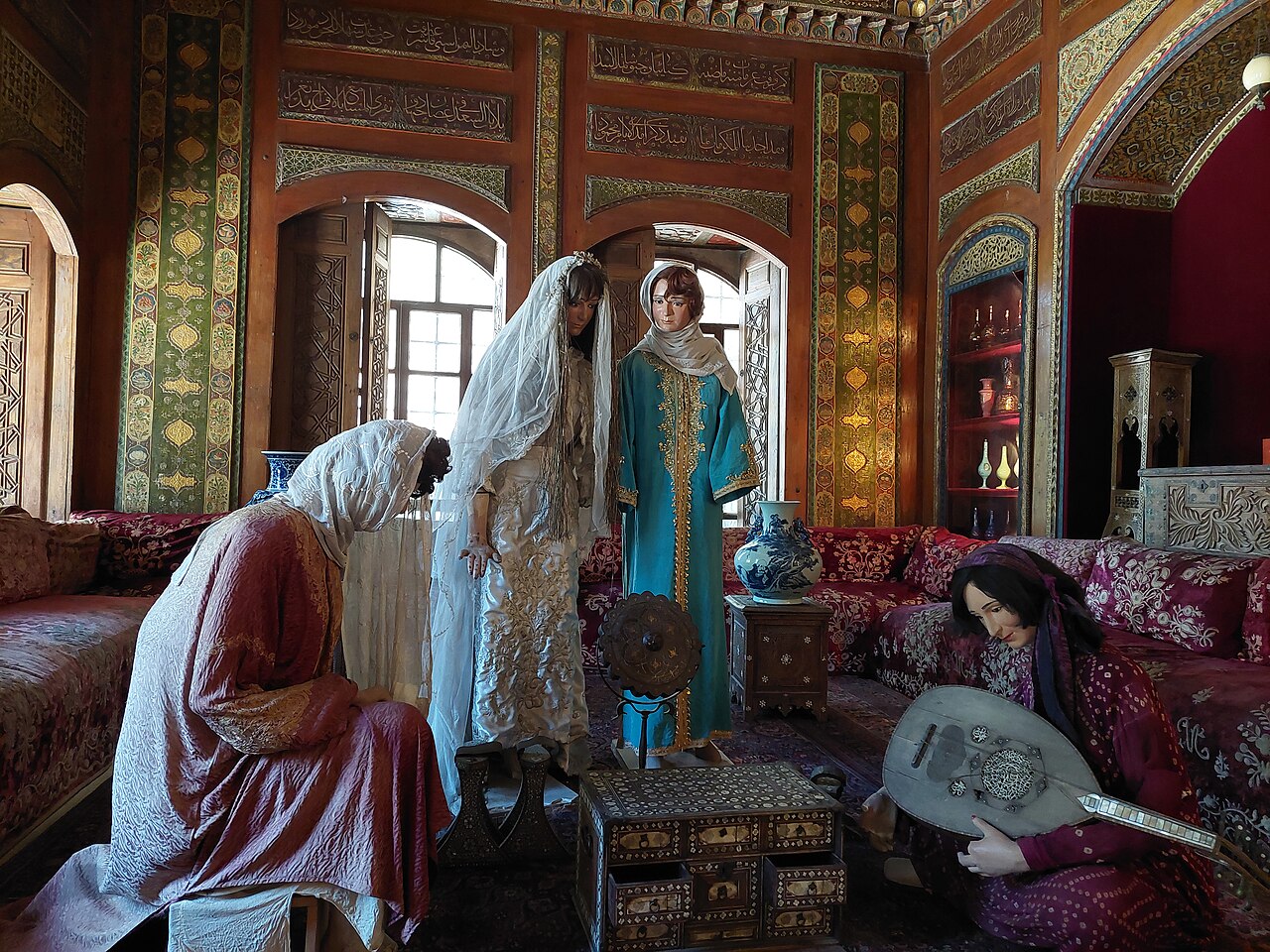
The museum uses the rooms of the palace to present scenes and objects from traditional life, from crafts and costumes to furnishings and the customs of the household. These displays, set within the authentic surroundings of the palace, offer visitors a vivid and immersive picture of the traditional culture of Damascus.
By combining the beauty of the historic palace with displays of popular traditions, the museum offers a rich experience that goes beyond the appreciation of architecture. Visitors can learn about the way of life that the palace was built to serve, and about the crafts and customs that shaped the culture of the city over the centuries.
The transformation of the palace into a museum has helped to preserve it and to share its treasures with the public, turning a private residence into a place of learning and enjoyment. In this role the palace continues to serve the people of Damascus and its visitors, keeping alive the memory of the traditional culture it so beautifully embodies.
The museum’s displays are especially valuable now as a record of a way of life and a cultural heritage that has been placed under great strain by the upheavals of recent years. In preserving and presenting the traditional crafts and customs of Damascus, the museum keeps alive knowledge that might otherwise be lost, and it affirms the enduring identity of the city through its arts and traditions.
Set within the authentic rooms of a great house, the museum’s re-created scenes of traditional life gain a power that a conventional gallery could never match. A room furnished as it might have been in the past, beneath its original painted ceiling and beside its own fountain, allows the visitor to imagine the life of the palace directly, bridging the gap between object and setting in a way that is rare and deeply affecting.
Bombardment and Restoration
The long history of the Azm Palace has not been without trauma. In the turbulent modern history of Syria, the palace suffered serious damage, most notably during a period of conflict in the earlier twentieth century when the city was bombarded and the palace was badly harmed, putting its treasures at risk.
The damage to the palace was a blow to the heritage of Damascus, and the restoration that followed was a major undertaking. Craftsmen worked to repair the harm and to recover the beauty of the building, drawing on the traditional skills that had created it in order to restore its stonework, its ceilings, and its decoration.
The restoration of the palace reflected the value placed on it as a monument of the city’s heritage, and the care taken to return it to its former beauty. The work of recovery preserved the palace for future generations and allowed it to resume its place among the treasures of old Damascus.
The survival and restoration of the Azm Palace is a testament to the resilience of the heritage of Damascus, a city that has endured many trials over its long history. That the palace has come through such damage and been restored is a source of pride, and it stands as a reminder of the endurance of the city’s culture through even the most difficult times.
The palace’s history of damage and recovery is, in a sense, the history of Damascus itself, a city that has been destroyed and rebuilt many times over its long existence and has always risen again. The restored palace embodies this resilience, standing as a symbol of the endurance of a culture that has weathered the storms of history for thousands of years.
A Jewel of Old Damascus
The Azm Palace stands in the heart of old Damascus, one of the oldest and most storied cities in the world, near the great Umayyad Mosque and the ancient markets and streets of the historic centre. Its location places it at the very heart of a city whose history stretches back thousands of years.
The old city of Damascus is a place of extraordinary richness, its narrow streets and historic buildings preserving the heritage of many centuries and civilisations. The palace is one of the treasures of this historic quarter, and its beauty and importance make it a highlight among the many wonders of the old city.
The setting of the palace amid the life of the old city is part of its character, connecting it to the markets, mosques, and houses that surround it. Behind its walls lies its private world of courtyards and halls, but it belongs to the fabric of the living city, woven into the ancient heart of Damascus.
As one of the finest surviving houses of old Damascus, the palace embodies the domestic heritage of the city and the traditions that shaped it. Together with the other treasures of the historic centre, which is celebrated for its outstanding heritage, it forms part of one of the great historic urban landscapes of the world, a fitting home for so beautiful a palace.
To step from the crowded lanes of the old city into the serene courtyards of the palace is to understand the genius of Damascene domestic architecture, which created private paradises amid the density of the city. This contrast between the public bustle outside and the private calm within is one of the defining experiences of the palace and of the old city that surrounds it.
The proximity of the palace to the Umayyad Mosque, one of the holiest and most ancient sites of the Islamic world, places it within a landscape of extraordinary historical depth. Visitors moving between the two encounter many layers of the city’s past within a short walk, and the palace takes its place among monuments spanning many centuries of the history of Damascus.
Planning a Visit to the Azm Palace
The Azm Palace lies in the old city of Damascus, near the Umayyad Mosque and the historic markets, in the heart of the ancient centre. For those able to visit, it is one of the essential sights of old Damascus, easily combined with the other treasures of the historic quarter that surround it.
View the Azm Palace on Google Maps
Visitors to the palace can explore its courtyards, reception halls, private apartments, and bath, admiring the architecture and decoration and the displays of the museum of popular traditions housed within. The palace offers a rich experience, combining the beauty of the building with insight into the traditional culture of Damascus.
As with any site in a region that has experienced conflict and instability, it is essential to check current conditions and access arrangements carefully before contemplating a visit, as the situation can change and the safety and accessibility of the site may be affected. Visitors should be guided by up-to-date advice on travel to the region.
You can locate the palace and orient yourself using the map link below. Whether you are able to visit in person or wish to learn about this remarkable building from afar, the Azm Palace stands as one of the great treasures of old Damascus, a jewel of Damascene domestic architecture and a window into the rich culture and history of one of the world’s oldest cities.
See the Azm Palace for Yourself
A palace as beautiful as the Azm Palace is best appreciated in motion, and the short film below offers a closer look at its courtyards, halls, and decoration. It conveys the beauty of the banded stonework, the coolness of the courtyards with their fountains and trees, and the richness of the painted ceilings and reception halls.
As you watch, keep in mind the story behind it: an Ottoman governor who built a grand house in the heart of old Damascus, a masterpiece of the traditional Damascene home, and a palace that has survived war and turbulence to remain a symbol of the city’s heritage. The Azm Palace is a jewel of the Middle East, a hidden paradise at the heart of one of the world’s oldest cities.
Palaces Nearby
If the Azm Palace has drawn you into the palatial heritage of the Middle East, two more palaces of the region make natural companions, each with its own character.
- Beiteddine, the Mountain Palace of a Lebanese Emir — a Chouf Mountain palace blending Arab and Italian styles, with a famed Byzantine mosaic collection.
- Qasr Al Watan, the Abu Dhabi Palace That Opened Its Doors — a working presidential palace in Abu Dhabi opened to the public beneath a vast white dome.
You May Like
The Bardo, a Palace of the Beys Filled With Roman Mosaics