On the seafront of Nuku’alofa, capital of the island kingdom of Tonga, stands a white timber palace with red roofs that looks almost too delicate for the vast Pacific stretching beyond it. This is the Royal Palace of Tonga, home of the only indigenous monarchy still reigning in the Pacific, and one of the most evocative royal residences anywhere in the island world.
You come to the Royal Palace to stand before a living symbol of Polynesian sovereignty. In an ocean where so many traditional kingdoms were swept away, Tonga kept its crown, and this graceful Victorian-style building, wrapped in verandas and set against the sea, has been the seat of that unbroken monarchy for generations.
In this guide you will get to know the palace as more than a picturesque waterfront landmark. We will trace the story of the kings who built and lived here, admire the distinctive architecture, explore the wider royal landscape of Nuku’alofa, and understand why this small white palace carries such enormous meaning for the people of Tonga. By the end you will see why it stands at the very heart of the nation’s identity.

In This Article
- Arriving at the Royal Palace
- The Last Kingdom of the Pacific
- The King Who Forged Modern Tonga
- A Palace of White Timber
- A Throne Beside the Ocean
- Coronations and Royal Ceremony
- The Royal Tombs of Nuku’alofa
- A Monarchy Close to Its People
- Faith, Tradition and the Crown
- Weathering Storms and Time
- The Palace at the Heart of Nuku’alofa
- A Closer Look on Film
- The Royal Palace Today
Arriving at the Royal Palace
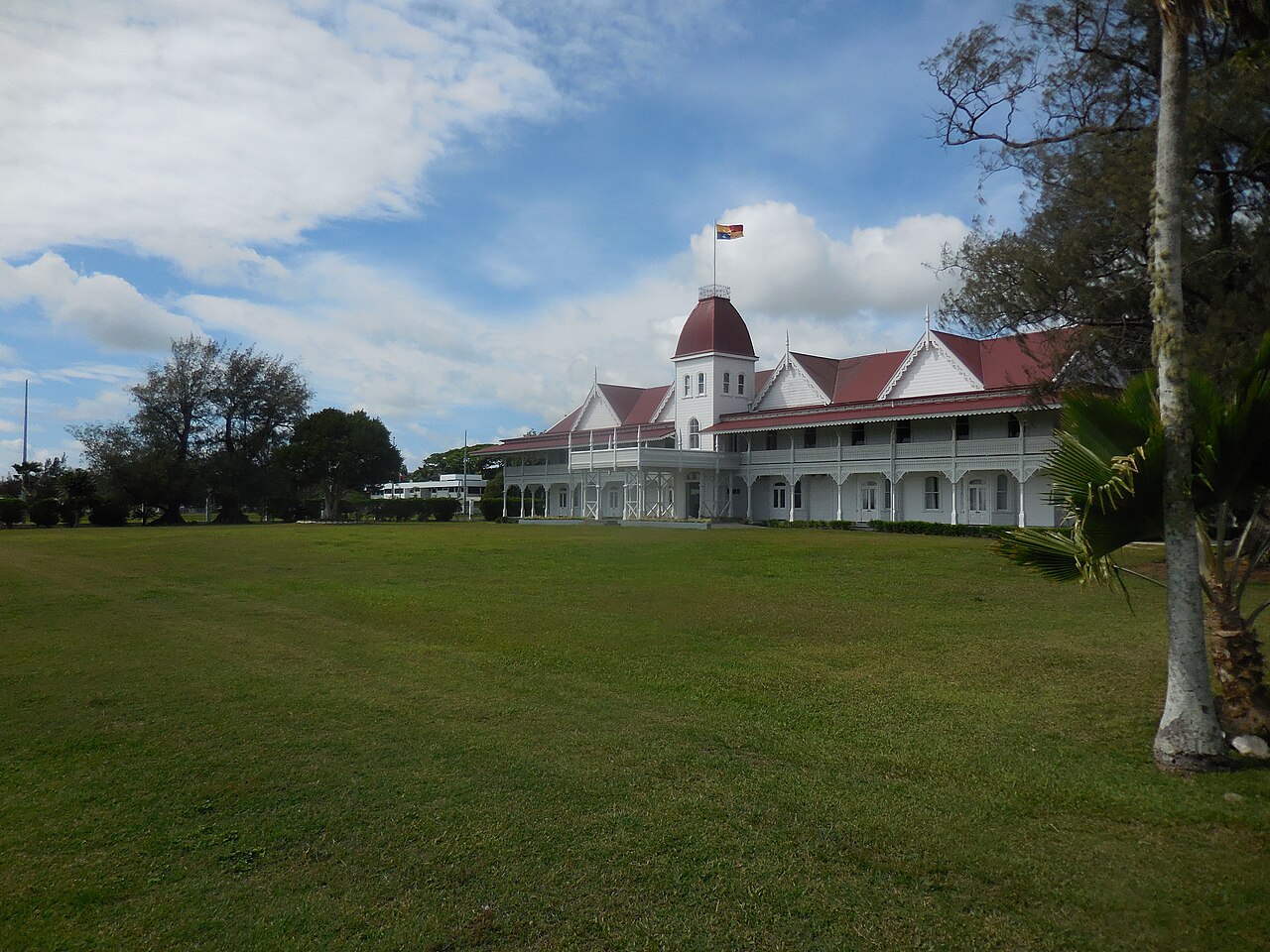
Your first sight of the Royal Palace is of a gleaming white building rising just behind the seafront, its red roofs and ornate timber verandas standing out against the blue of sky and ocean. Set within lawns and shaded by trees, it makes an impression of graceful, understated dignity.

The palace sits close to the water’s edge, so that the sea forms a constant backdrop to its elegant lines. This closeness to the ocean feels entirely fitting for the seat of a seafaring Polynesian kingdom, binding the monarchy to the element that shaped its world.
Because it remains a working royal residence, you will admire the palace mostly from beyond its gates and fence, across the surrounding grounds. That distance does nothing to diminish its charm; if anything, it adds to the sense of a private royal world glimpsed from without.
Take time to walk along the waterfront and view the palace from different angles. The interplay of white timber, red roof, green lawn and blue sea is one of the loveliest sights in the Pacific, and it rewards an unhurried, appreciative gaze.
Whatever the weather, the palace holds its dignity, whether gleaming under bright Pacific sun or standing softly against a sky heavy with tropical cloud. It is a building that suits every mood of its island setting.
Many visitors are struck by how approachable the whole scene feels. There is nothing forbidding here, only a graceful royal home sharing its waterfront with the everyday life of the capital.
Give yourself time simply to stand and take it in. Some places announce their importance loudly; the Royal Palace of Tonga does so with quiet grace, and it rewards those who slow down to feel it.
The gentle rustle of palms, the murmur of the nearby sea and the sight of that red-and-white palace together create a first impression that stays with visitors long after they have moved on.
The Last Kingdom of the Pacific
To understand the Royal Palace, you must understand what Tonga represents. Across the Pacific, the arrival of foreign powers swept away one traditional kingdom after another, yet Tonga alone preserved its monarchy through the colonial age and into the present. It is the last of the Pacific’s ancient royal lines still to reign.

That survival is a source of immense national pride. The Tongan monarchy is not a revived or ceremonial invention but a genuine, continuous institution reaching back deep into Polynesian history, and the palace is its living seat.
This uniqueness gives the building a significance far beyond its modest size. It is not merely a royal house but a symbol of endurance, of a people who kept their sovereignty when so many others lost theirs.
Keeping this in mind transforms a visit. You are not looking at just another colonial-era residence but at the home of a monarchy that embodies the unbroken continuity of an entire island civilization.
It is worth pausing to reflect on just how remarkable this survival is. In the great age of empires, the odds against a small island kingdom keeping its independence were formidable, yet Tonga managed exactly that.
This is why Tongans speak of their monarchy with such deep feeling. It is not merely a government institution but a living emblem of a hard-won and fiercely guarded independence.
In this sense, the palace is a monument to a road not taken by the rest of the region, the seat of a sovereignty that refused to be extinguished.
The story of how Tonga preserved its crown is inseparable from the wider history of the Pacific, and the palace serves as the most tangible reminder of that singular achievement.
Scholars of the region often point to Tonga as a unique case, and standing before the palace you grasp intuitively why its survival matters so much to Pacific history as a whole.
That sense of being in the presence of something genuinely rare is part of what makes a visit to the palace so memorable and so meaningful.
For anyone drawn to the histories of the world’s monarchies, the Tongan crown offers one of the most compelling stories of all, and its palace is the place where that story feels most immediate.
The King Who Forged Modern Tonga
The palace is inseparable from the dynasty that built it, and above all from the monarch who unified the islands and set Tonga on its modern course. A visionary ruler, he brought the scattered chiefdoms together under a single crown and steered his kingdom skillfully through a dangerous age of foreign expansion.

By founding a stable, unified monarchy and giving his country a constitution, he secured Tonga’s independence when other Pacific societies were being absorbed by outside powers. The palace stands as the seat of the royal house he established.
His achievement was one of statesmanship as much as strength. Understanding the forces reshaping the Pacific, he positioned his kingdom to survive them, blending tradition with the new institutions of the modern age.
As you look at the palace, remember that it represents the fruit of that vision, the home of a dynasty that safeguarded a nation’s freedom through wisdom and foresight. It is a monument to one of the great success stories of Pacific history.
The constitution he granted became a cornerstone of the modern kingdom, embedding the monarchy within a framework of law that helped secure both the crown and the nation’s freedom.
His legacy is felt to this day in every aspect of Tongan public life, and the palace stands as the enduring seat of the royal house he brought into being.
To walk past the palace is thus to salute, however unknowingly, one of history’s more remarkable feats of small-nation statecraft.
The dynasty he founded has provided the kingdom with continuity and stability across the generations, and each successive monarch has taken up residence in this same treasured palace.
In uniting the islands and codifying their laws, he gave Tonga the institutions it needed to face the modern world on its own terms, and the palace remains the symbol of that founding achievement.
It is fitting that the home of such a consequential dynasty should itself be so distinctive, a palace as memorable as the history it represents.
A Palace of White Timber
The architecture of the Royal Palace is distinctive and immediately memorable. Built largely of timber in a Victorian-influenced style, with wide verandas, decorative eaves and steep red roofs, it blends imported nineteenth-century fashion with a form well suited to the tropical climate.

The generous verandas are more than ornament; they shade the interior from the sun and catch the sea breeze, a practical response to the Pacific heat wrapped in elegant detailing. Form and function meet gracefully in the design.
The whiteness of the timber, set against the red roofs and green lawns, gives the palace its luminous, almost storybook appearance. It is a building that photographs beautifully and lingers in the memory, at once grand and welcoming.
Look closely at the woodwork and detailing and you will appreciate the craftsmanship that went into it. This is a palace built to impress while remaining human in scale, a fitting home for a monarchy close to its people.
The decision to build in timber, using techniques and fashions of the era, produced a palace quite unlike the stone residences of European monarchies, one perfectly at home in its Pacific setting.
Maintaining such a wooden building in a warm, humid, storm-prone climate is a demanding task, and the care lavished on it over the years speaks to how much it is treasured.
For all its imported style, the palace feels utterly Tongan, adapted so thoroughly to its setting and purpose that it belongs unmistakably to its island home.
Restoration and upkeep are ongoing necessities, and the skill devoted to preserving the timber structure ensures that its graceful lines endure for new generations to admire.
There is a warmth to a palace built of wood rather than stone, a human quality that suits a monarchy so closely bound to its people.
Compared with the imposing stone palaces of Europe, this graceful wooden residence tells a different story, one of a monarchy shaped by its own island world rather than by imported grandeur, and it is all the more appealing for it.
A Throne Beside the Ocean
The setting of the palace, right on the Nuku’alofa waterfront, is central to its character. Few royal residences anywhere sit so intimately beside the sea, and for a Polynesian kingdom whose history and identity are bound up with the ocean, the location could hardly be more apt.

From the palace grounds the eye is drawn constantly outward to the water, a reminder of the voyaging traditions and maritime world from which Tongan civilization sprang. The sea is not a backdrop here but a presence, woven into the meaning of the place.
This waterfront position also made the palace a visible symbol of the kingdom to all who arrived by sea, a gleaming statement of sovereignty greeting visitors as they approached the shore. It announced Tonga’s status to the wider world.
Standing before the palace with the ocean beyond, you feel the deep connection between crown and sea that lies at the heart of Tongan kingship. It is a location that speaks eloquently of who the Tongans are and where they came from.
For a nation of navigators and voyagers, siting the seat of the crown beside the ocean was profoundly meaningful, a statement that the monarchy belonged to the same seafaring world as the people it ruled.
At sunrise and sunset especially, the palace and the sea together form a scene of quiet beauty that captures the spirit of the island kingdom.
No visitor who sees the palace against the ocean forgets the image; it is the very picture of an island monarchy at home by its sea.
The palace grounds, open to the sea air, seem to breathe with the rhythm of the ocean, reinforcing the sense that here the crown and the sea are inseparable partners.
It is a setting that no inland palace could ever replicate, and it lies at the very heart of what makes the Tongan royal residence so distinctive.
It is no wonder that images of the palace against the sea have become the enduring symbol of the kingdom, instantly recognizable and deeply loved.
Coronations and Royal Ceremony
The Royal Palace has been the focal point of the great ceremonial occasions of the Tongan monarchy. Coronations, royal celebrations and solemn state events have centered on the palace and its surroundings, drawing the nation together in shared moments of tradition and pride.

Tongan royal ceremony is rich and distinctive, blending indigenous Polynesian custom with the forms of a constitutional monarchy. On the great occasions, the palace becomes the stage for rituals that express the deep bond between the crown and the people.
These events are far more than pageantry. They reaffirm the continuity of the monarchy and the identity of the nation, connecting the present sovereign to the long line of rulers who came before, all the way back to the founder of the modern kingdom.
To understand the palace fully is to appreciate its ceremonial role. It is not a static monument but a living center of national ritual, called upon at the defining moments in the life of the kingdom.
Visitors fortunate enough to witness a Tongan royal occasion never forget it, for these events combine deep solemnity with vivid displays of custom, from ceremonial dress to traditional presentations of respect.
The palace at such times becomes the beating heart of the nation, the point toward which every eye and every hope is turned as the rituals of monarchy unfold.
Even in quieter periods, the knowledge that these great ceremonies take place here lends the building a constant undercurrent of significance.
In these moments, more than any other, the true meaning of the palace as the ceremonial soul of the nation becomes unmistakably clear.
Such occasions bind the generations together, linking today’s Tongans to their ancestors through rituals performed in the same cherished place.
The Royal Tombs of Nuku’alofa
Near the palace lies the royal burial ground, where the monarchs of the dynasty are laid to rest. This solemn site forms part of the wider royal landscape of Nuku’alofa, binding the living seat of the monarchy to the resting place of its ancestors.
The presence of the royal tombs so close to the palace underlines the continuity of the dynasty across the generations. Here the past kings and queens of Tonga lie in dignity, watched over by the nation they ruled.
For Tongans, these sites carry deep reverence, and royal funerals are among the most significant national occasions. The bond between the palace and the tombs expresses the unbroken thread of the monarchy through time.
When you consider the palace, hold in mind this wider sacred geography. The seat of the living king and the resting place of his forebears together tell the full story of a dynasty rooted deeply in the soil and history of Tonga.
Royal ceremonies connected to these sites are conducted with great solemnity and draw the whole nation into shared moments of mourning and remembrance.
Together, the palace and the tombs map the full arc of a reign, from the living seat of power to the final resting place, all within the compass of the capital.
This intertwining of the living and the departed royalty gives the capital a solemn depth that visitors often find unexpectedly moving.
In honoring their departed monarchs so close to the seat of the living crown, the Tongans express a reverence for continuity that lies at the core of their national character.
A Monarchy Close to Its People
One of the striking features of the Tongan monarchy is its closeness to the people it serves. The royal house is woven into the fabric of national life, and the palace, set openly on the waterfront rather than hidden behind vast walls, reflects that accessibility.

This intimacy between crown and people is part of what has sustained the monarchy through changing times. The king is not a remote figure but a deeply respected presence at the center of Tongan society, and the palace embodies that relationship.
The modest scale of the palace, compared with the vast residences of larger monarchies, reinforces the point. This is a royal house that reigns within a close-knit island nation, its authority resting on tradition and affection as much as on grandeur.
As you look at the palace across its lawns, you sense that closeness. It is the home of a monarchy that belongs to its people, a shared symbol of identity rather than a distant seat of power.
This bond between crown and people has proven remarkably durable, adapting to modern times while retaining the warmth and immediacy that have always characterized it.
In an age when many monarchies feel remote, the Tongan crown’s closeness to its people stands out, and the open, welcoming setting of the palace expresses that spirit perfectly.
This is a monarchy measured not in the scale of its palaces but in the depth of its people’s devotion, and by that measure the Tongan crown stands tall.
It is a relationship that outsiders often find striking, so different is it from the distant grandeur associated with monarchy elsewhere in the world.
Faith, Tradition and the Crown
Religion and tradition are deeply intertwined with the Tongan monarchy, and the palace stands at the meeting point of these forces. The kingdom’s strong Christian faith and its enduring Polynesian customs together shape the character of the crown and its ceremonies.

This blend of faith and tradition gives Tongan kingship its particular flavor, distinct from any other monarchy in the world. The palace serves as the seat from which this uniquely Tongan synthesis of the sacred and the royal is expressed.
Sundays and religious observances hold a special place in national life, and the monarchy is closely associated with the country’s spiritual identity. The crown and the church stand together as pillars of Tongan society.
Appreciating this dimension deepens your understanding of the palace. It is the seat not only of political authority but of a whole way of life in which faith, custom and monarchy are bound tightly together.
The rhythms of religious life and the calendar of royal and traditional events intertwine throughout the year, and the palace stands at the center of this shared national rhythm.
This close alliance of crown, custom and faith has helped anchor Tongan society through periods of rapid change, providing a stable core of identity.
For the visitor, appreciating this dimension is essential, for the palace cannot be understood apart from the web of belief and tradition that gives it meaning.
It is a synthesis found nowhere else, and it lends the Tongan monarchy, and its seafront palace, a character entirely their own.
This deep-rooted synthesis of crown, custom and faith continues to guide national life, and the palace remains its most visible and enduring symbol.
To grasp this interweaving of the sacred and the royal is to come closer to the true heart of Tonga than any guidebook description could ever convey.
Weathering Storms and Time
Set on a low Pacific shore, the palace and its city have faced the natural challenges of their exposed island setting, from tropical storms to the ever-present power of the sea. That the palace still stands, cared for and cherished, is a testament to the resilience of the nation.

The Tongan people have repeatedly rebuilt and protected their treasured landmarks in the face of such trials, and the survival of the Royal Palace reflects their determination to preserve the symbols of their identity.
This resilience mirrors the larger story of the monarchy itself, which weathered the storms of history as surely as the building has weathered those of nature. Endurance is written into the character of both.
When you see the palace standing serene beside the ocean, remember the effort required to keep it so. Its continued presence is an achievement, a sign of a people devoted to safeguarding their heritage.
Each time the nation has faced adversity, its determination to protect and restore its cherished landmarks has shone through, and the palace has always been foremost among them.
This spirit of careful stewardship ensures that the building will continue to stand as a symbol of the kingdom for generations to come.
In the resilience of the palace, Tongans read the resilience of their whole nation, a small but proud country that has held fast to its identity.
Standing firm through storm and change alike, the palace has become an emblem of steadfastness for a proud and enduring people.
The determination to keep the palace standing, whatever the challenges, mirrors the resolve that has kept the kingdom itself intact through the centuries.
And so the palace stands, weathered but unbowed, a fitting emblem for a nation that has met every challenge with quiet, unshakable resolve.
The Palace at the Heart of Nuku’alofa
The Royal Palace anchors the capital city of Nuku’alofa, giving the seafront town its focus and its sense of identity. Around the palace and its grounds cluster the other institutions of the kingdom, so that this stretch of waterfront forms the symbolic center of the nation.
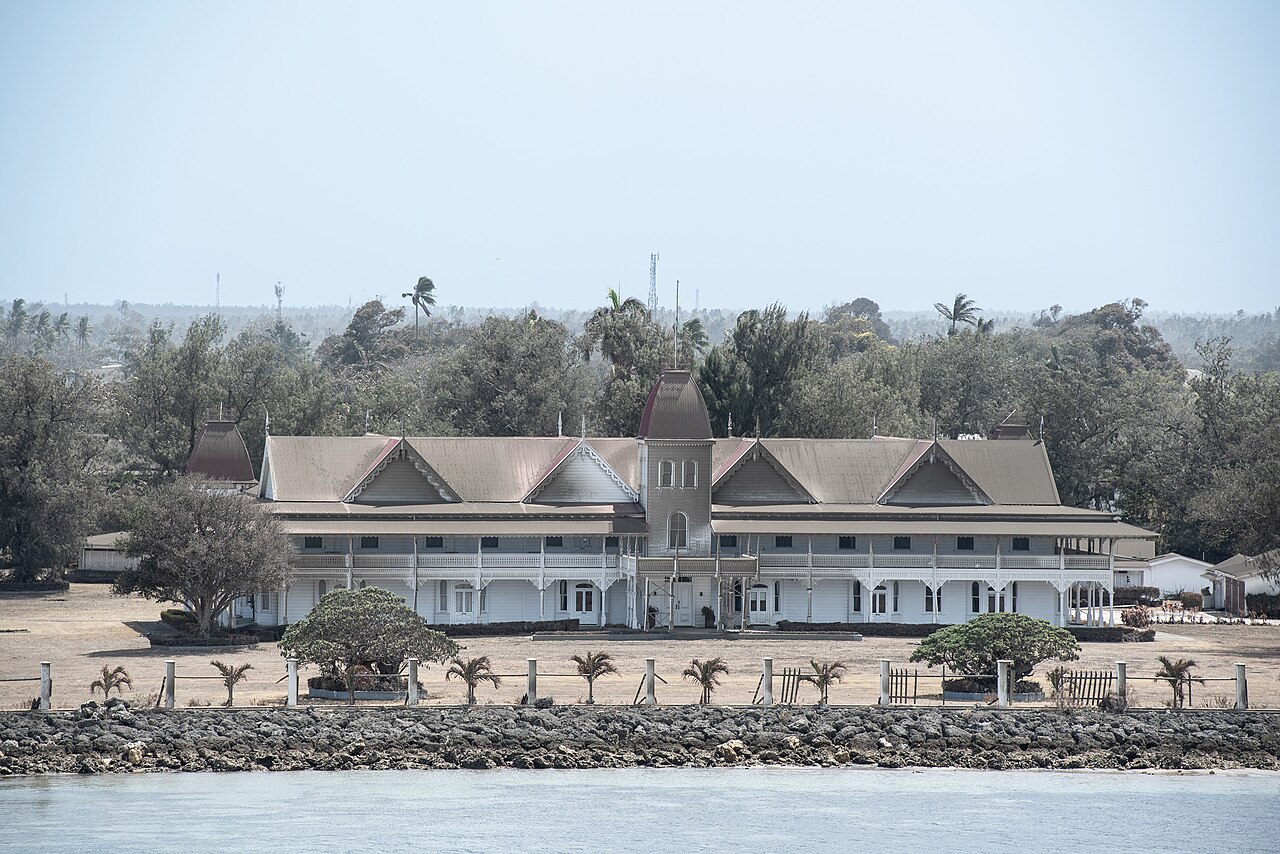
The city grew up in the shadow of the crown, and the palace remains its most recognizable landmark. For Tongans and visitors alike, this white building by the sea is the image that comes to mind when they picture the capital.
Strolling the nearby waterfront, you feel how naturally the palace presides over the life of the town. It is not walled off in isolation but set within the living city, a constant presence in the daily rhythm of Nuku’alofa.
This central position reinforces the palace’s role as the heart of the kingdom. To visit it is to stand at the very core of Tongan national life, where the story of the country is most concentrated.
For the traveler, the palace makes the natural starting point for exploring the capital, the fixed point from which the rest of Nuku’alofa’s landmarks and history unfold.
Everything of importance in the kingdom seems to radiate outward from this waterfront core, making the palace not just a building but the organizing center of national life.
To know the palace is, in large part, to know Nuku’alofa itself, so completely does the one define the character of the other.
The waterfront around the palace has witnessed the great moments of the nation’s modern history, and to stand there is to feel connected to the ongoing story of the kingdom.
For all the modern development around it, the palace keeps its quiet primacy, the still center around which the life of the capital continues to turn.
A visit that begins at the palace naturally opens outward into the rest of the capital, but it is here, at the royal seat, that the true center of gravity lies.
A Closer Look on Film
To appreciate the beauty and setting of the Royal Palace of Tonga, film offers a fine complement to a visit. The short video below helps bring the palace and its seafront surroundings to life.

Watching it, you can better sense the elegance of the timber architecture, the closeness of the sea and the atmosphere of Nuku’alofa, details that reward a closer look. It makes an ideal companion to understanding this unique Pacific monarchy.
The Royal Palace Today
Today the Royal Palace of Tonga continues in its historic role as the seat of the Pacific’s last indigenous monarchy, a cherished national symbol and a beloved landmark of Nuku’alofa. Its white timber and red roofs remain as evocative as ever against the ocean sky.

For visitors, the palace offers a rare encounter with a living Polynesian kingdom, a chance to stand before the home of a crown that has endured where so many others vanished. It rewards those who come with curiosity and respect for its meaning.
There is a lesson in the palace’s quiet endurance. It shows how a small nation can preserve its sovereignty and identity against great odds, and how a modest building can carry the pride of an entire people.
When you finally turn to leave, glance back at the white palace above its lawns, with the Pacific stretching endlessly beyond. You will carry with you the image of a proud island kingdom, and the memory of the last royal palace of the Pacific keeping watch over its sea.
The palace remains a source of unity and pride, a reminder to every Tongan of the long and unbroken story of their monarchy.
For the wider world, it offers a rare and precious sight: a genuine Polynesian royal palace, still serving its original purpose, still standing proudly by the sea.
Long after a visit ends, the image of that white palace beside the endless blue returns to mind, a lasting emblem of the Pacific’s last kingdom.
In an age of constant change, the steadfastness of the Royal Palace offers a reassuring sense of continuity, both to Tongans and to all who come to admire it.
It endures, in the end, as living proof that a small island nation can hold fast to its crown, its customs and its pride against all the currents of history.
More than a monument, it is a promise kept, generation after generation, that the kingdom and its crown will endure.
View the location on Google Maps
Palaces Nearby
If the last palace of the Pacific has captured your imagination, two more royal residences of the maritime and island world make fitting companions to this one.
- the Istana Besar of Johor, the grand seaside palace of the Malay sultanate in Johor Bahru.
- the painted palace of Klungkung, the Balinese royal court famed for its cosmic ceiling paintings.
You May Like
Balla Lompoa, the Great House and Golden Crown of the Gowa Kings


One thought on “The Royal Palace of Tonga, the Last Crown Still Reigning in the Pacific”