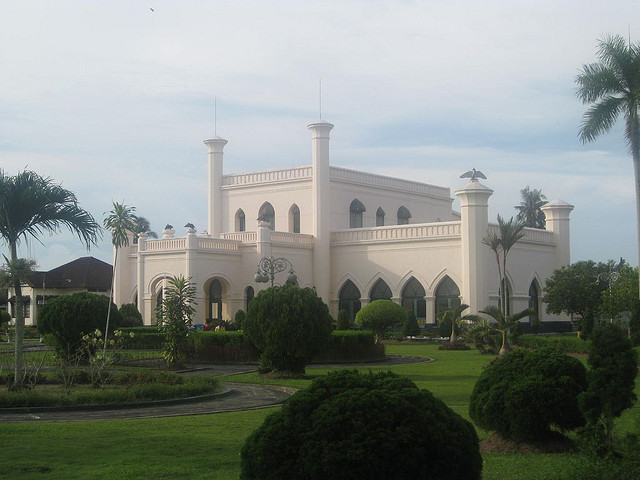
At the southern tip of the Malay Peninsula, where the strait glitters between Malaysia and the island of Singapore, stands a palace that quietly changed how the Malay world imagined its rulers. The Istana Besar, the Grand Palace of Johor, rises above landscaped gardens in the heart of Johor Bahru, an elegant fusion of Malay dignity and Victorian confidence built by a sultan who looked outward to the world.
You come to the Istana Besar to meet a very particular moment in history, the moment when a forward-looking ruler decided that his young state deserved a palace to match the grandest houses of the age. The result is a building of white walls and blue roofs, of throne rooms and treasure-filled halls, set in gardens that slope gently toward the sea.
In this guide you will get to know the palace as more than a handsome facade. We will trace the vision of the sultan who built it, wander its opulent state rooms, admire the collections that now fill it as a royal museum, stroll its famous gardens, and understand why this graceful residence remains a proud symbol of Johor’s identity. By the end you will see why locals speak of it with such affection.

In This Article
- Arriving at the Istana Besar
- The Sultan With a Modern Vision
- A Marriage of Two Architectural Worlds
- The Throne Room and State Halls
- Treasures of a Royal House
- The Palace Gardens by the Sea
- A Palace at the Heart of Its City
- Ceremony and the Life of the Court
- A Dynasty That Looked Outward
- Preserving a National Treasure
- Banquet and Reception Halls
- A Closer Look on Film
- The Istana Besar Today
Arriving at the Istana Besar
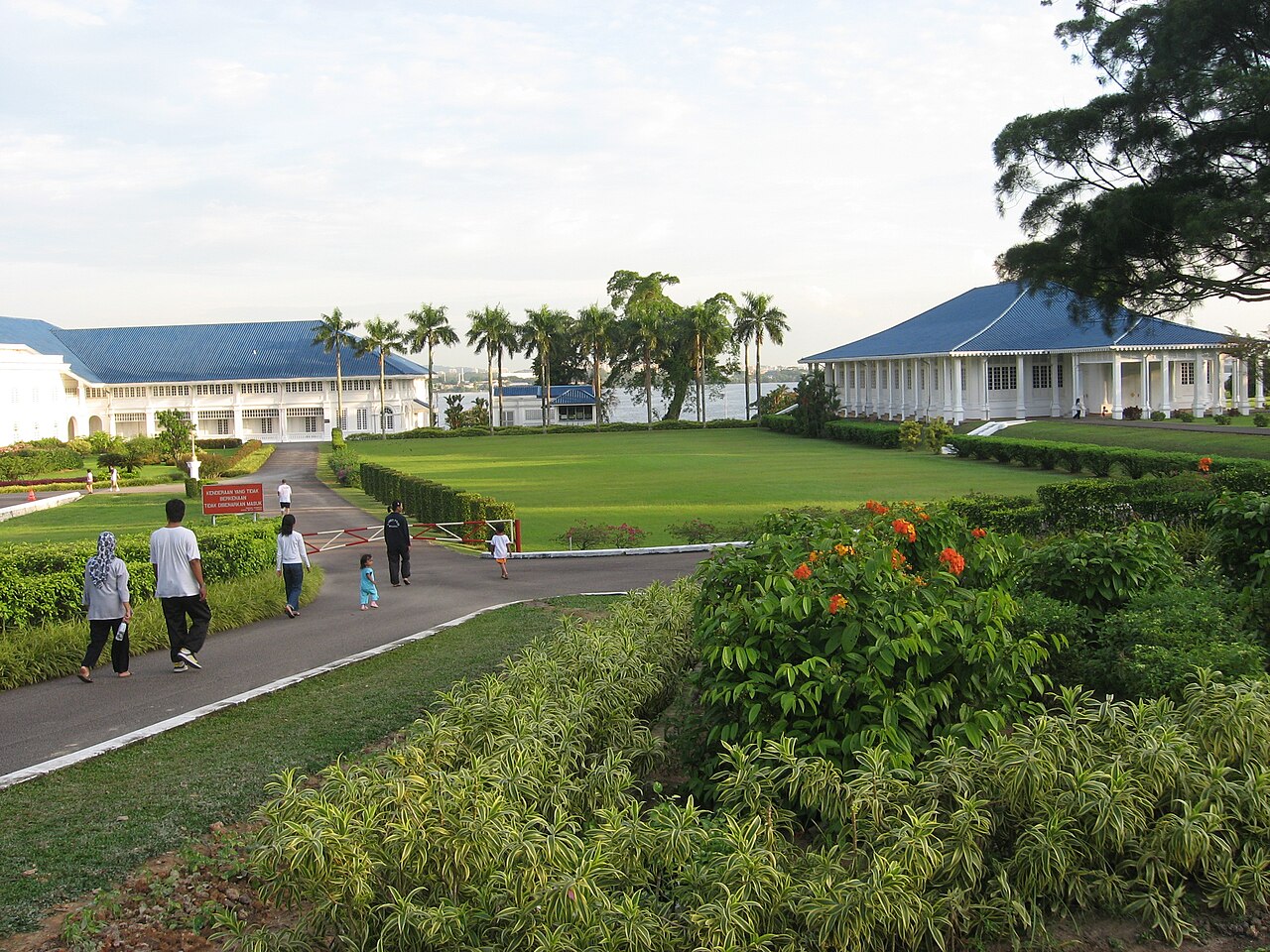
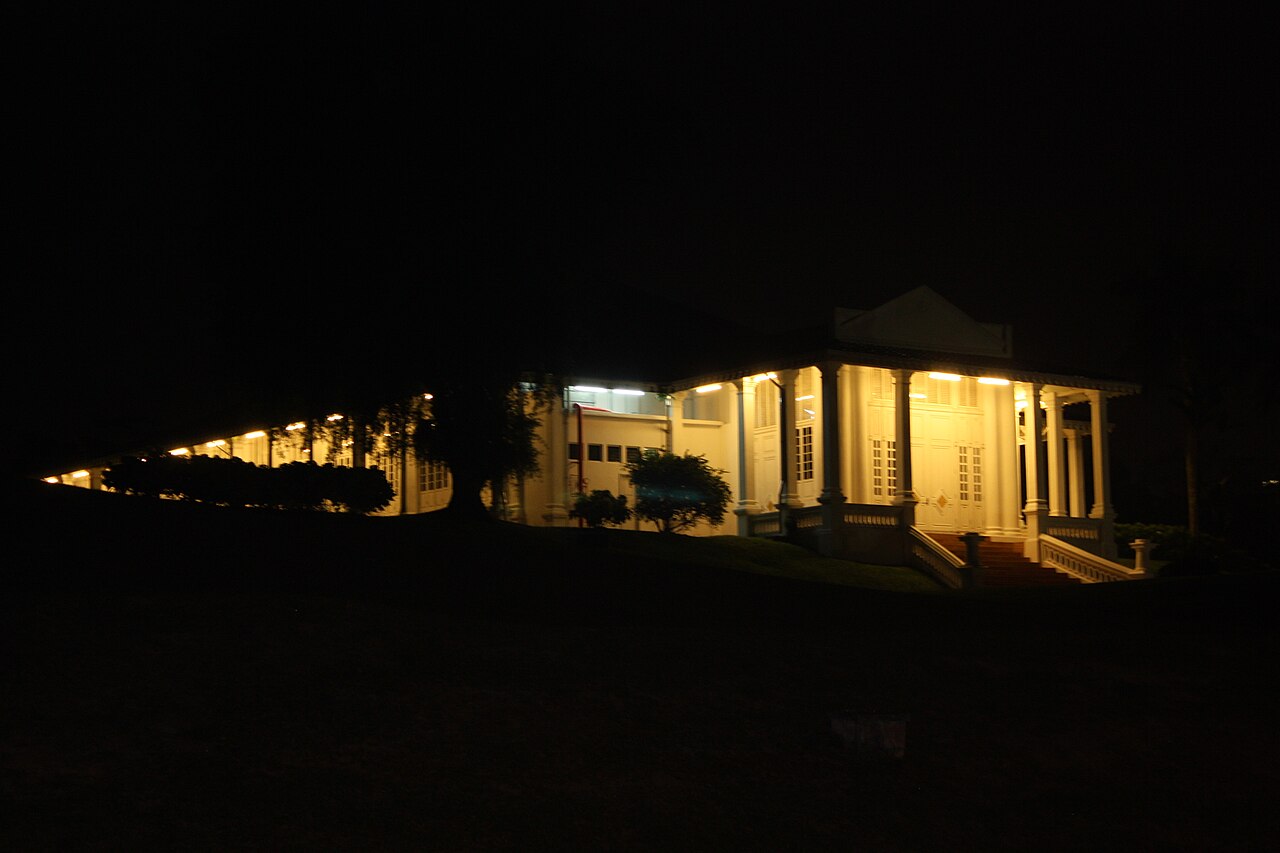
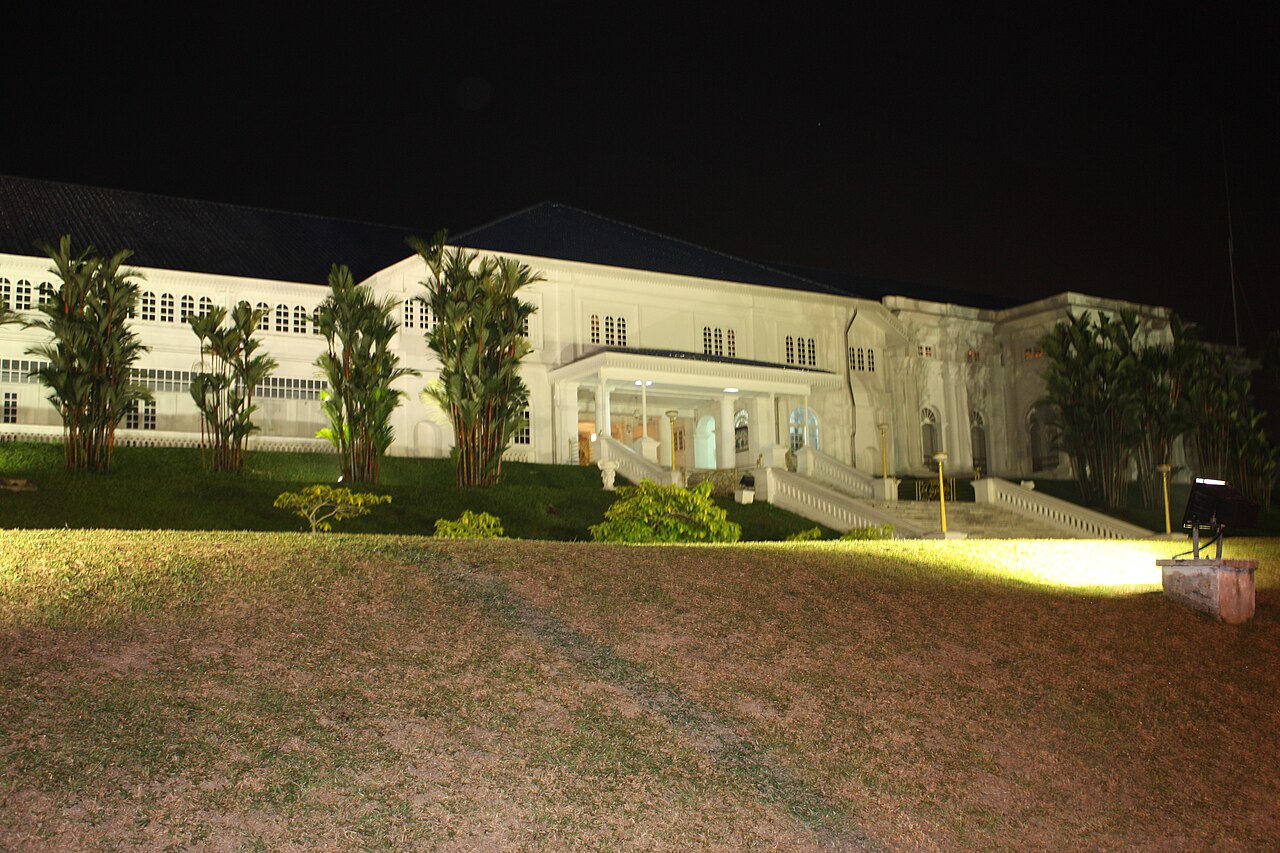
Your first sight of the Istana Besar is of a long, gracious white building crowning a gentle rise above the water, its blue-toned roofs catching the tropical light. Set within generous grounds, it makes an immediate impression of calm authority, a palace that feels both stately and welcoming.

The approach through the gardens does much to prepare you. Broad lawns, mature trees and glimpses of the strait beyond frame the palace beautifully, and the sense of space around the building lets its elegant proportions breathe. This is a residence designed to be admired from a distance as well as up close.
There is a distinctly nineteenth-century confidence to the whole ensemble, a blend of European grandeur and local sensibility that speaks of an era when Johor was opening itself to the wider world. Even before you step inside, the palace tells you a great deal about the ambitions of the ruler who created it.
Take a moment to walk the grounds and enjoy the setting. The combination of formal gardens, sea views and the long white facade is one of the great pleasures of a visit, and it rewards a slow, unhurried appreciation.
Arriving in the softer light of morning or late afternoon is especially rewarding, when the white walls glow and the gardens are at their most peaceful. The palace seems to change character with the light, and patient visitors are rewarded with its most beautiful moods.
Whichever way you approach, the first impression endures: a serene white palace presiding over green lawns and blue water, quietly confident and unmistakably regal.
The palace also offers a striking contrast with the busy streets that surround it. Passing through the gates feels like stepping back into an earlier, more gracious age, the noise of the city giving way to the calm of the royal grounds.
This sense of transition, from the modern city to the historic palace, is part of what makes a visit so memorable. It heightens your appreciation of the building and its setting, framing the whole experience as a passage into another world.
Whatever draws you here, the palace makes a lasting first impression, one that sets the tone for everything you discover within its gracious walls.
The Sultan With a Modern Vision
The Istana Besar is inseparable from the ruler who built it, a sultan often remembered as the father of modern Johor. A forward-thinking figure who traveled widely and admired much of what he saw abroad, he set out to modernize his state and to give it institutions and buildings worthy of a respected nation.
His palace was part of that grand project. By raising a residence that married Malay tradition with the fashionable European styles of the day, he made a clear statement: Johor was a modern state, engaged with the world, deserving of dignity and respect on the international stage.
This was a ruler who understood the power of appearances in diplomacy. A splendid palace was not mere vanity; it was a tool of statecraft, a way of impressing visiting dignitaries and asserting the standing of his realm among far larger powers.
As you explore the Istana Besar, keep that ambition in mind. Every gracious room and fine detail was part of a deliberate vision to present Johor as a confident, cultivated kingdom, and the palace remains the most eloquent expression of that vision.
His reign is remembered as a turning point, a time when the state built the foundations of its modern administration and identity. The palace stands as the physical symbol of that transformation, a monument to a ruler who chose engagement over isolation.
To walk his palace is, in a sense, to walk through his mind, to see made solid the ambitions of a ruler determined to secure his kingdom’s place in a rapidly modernizing age.
It is worth pausing on how unusual this outlook was for its time. Many rulers of small states retreated inward when faced with the pressures of a changing century, but this sultan did the opposite, seeking out the wider world and inviting it in.
His travels abroad clearly left a deep impression, feeding an appetite for the best of what he encountered and a determination to bring something of it home. The palace is, in part, a souvenir of those journeys, reinterpreted through a distinctly Johor sensibility.
The legacy of his vision extends far beyond the palace walls, shaping the administration, the institutions and the outlook of the state he did so much to modernize. The Istana Besar is simply its most visible and beautiful expression.
A Marriage of Two Architectural Worlds
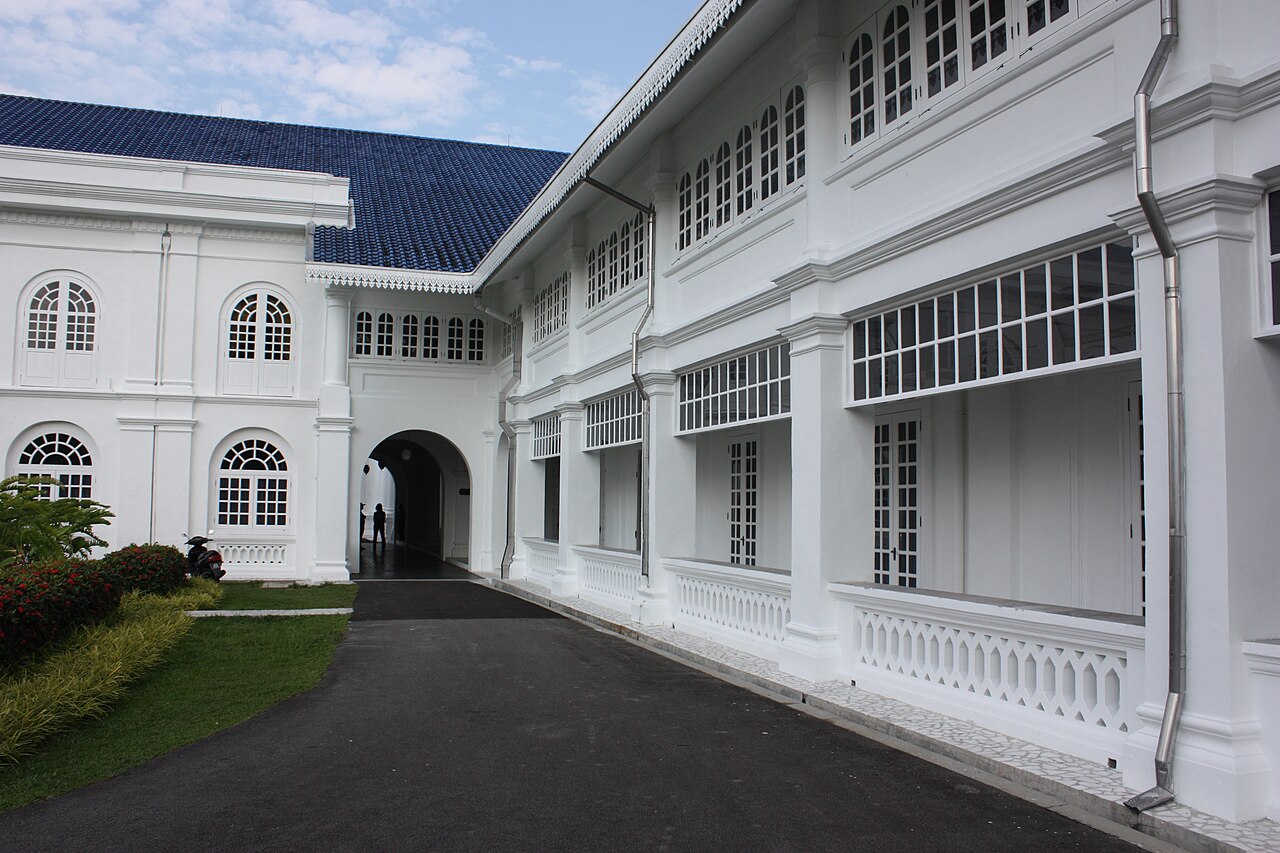
The architecture of the Istana Besar is a fascinating conversation between East and West. In its symmetry, its grand proportions and its decorative flourishes you can read the influence of Victorian taste, yet the building never loses its rootedness in the Malay world it was built to serve.
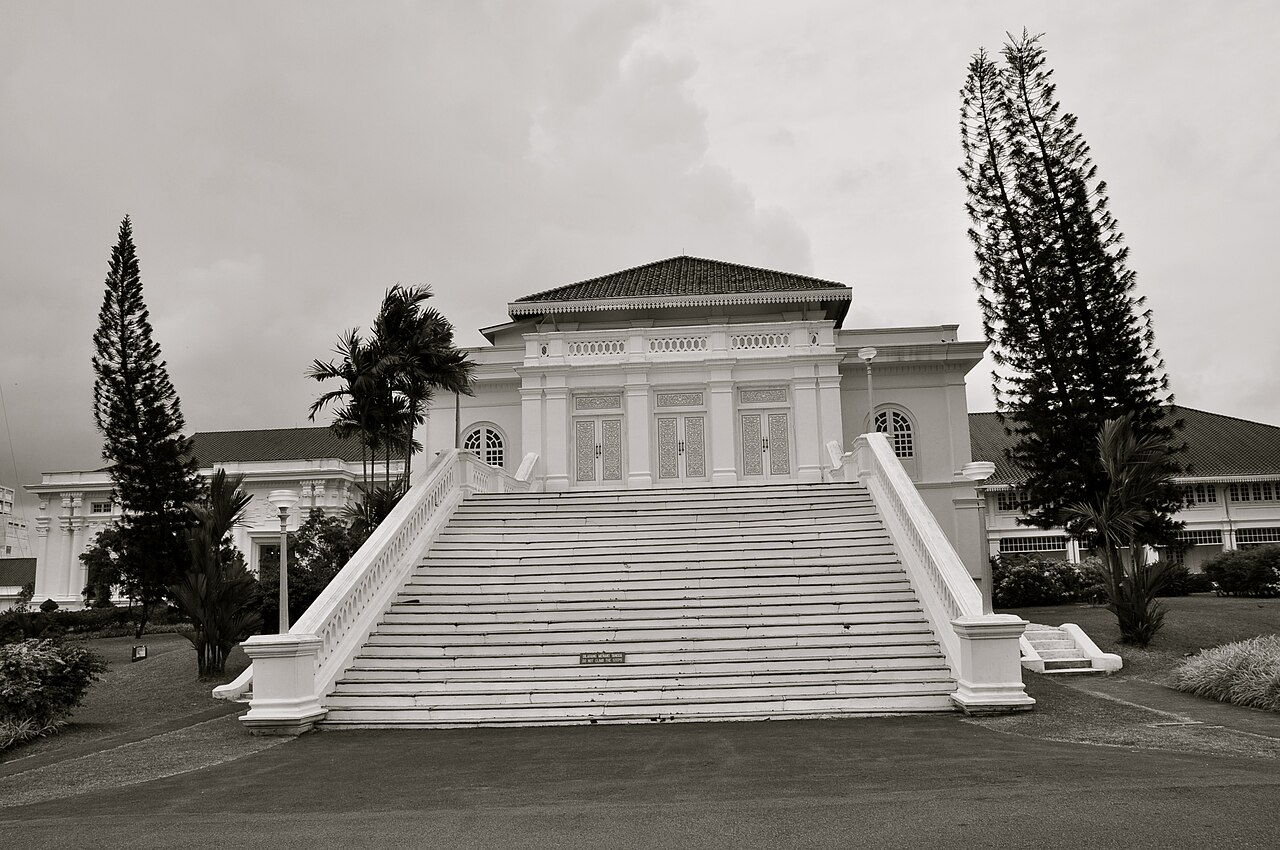
This blending was entirely deliberate. The sultan wanted a palace that would look at home among the great residences of Europe while still belonging unmistakably to Johor, and his architects achieved that balance with real skill. The result feels neither wholly foreign nor purely traditional, but something distinctively its own.
Look closely and you will find the two traditions meeting everywhere, in the layout of the state rooms, the style of the furnishings and the way the building sits within its tropical setting. It is a physical record of a moment when the Malay elite engaged confidently with a changing world.
This architectural marriage is part of what makes the palace so historically important. It stands as a monument to cultural exchange, a building that absorbed outside influences without surrendering its own identity, much like the ruler who commissioned it.
The tropical climate shaped the design too, with wide spaces and airy rooms suited to the heat, so that even the European elements were adapted thoughtfully to their setting rather than copied wholesale. Practicality and beauty went hand in hand.
This willingness to borrow and adapt, rather than simply imitate, is what gives the building its lasting appeal. It feels authentic precisely because it belongs to nowhere else on earth.
Historians of architecture often single out the building precisely for this quality of synthesis, treating it as a landmark example of how the Malay world engaged creatively with foreign influences in the nineteenth century.
The genius of the design lies in its confidence. It borrows freely without ever seeming derivative, integrating disparate elements into a harmonious whole that could only have arisen from this particular meeting of cultures.
In the end, the building resists easy categorization, and that is exactly its strength. It stands as proof that the meeting of cultures, handled with confidence and taste, can produce something wholly new and enduringly beautiful.
The Throne Room and State Halls
At the ceremonial heart of the palace lie its state rooms, and chief among them the throne room, a space designed to convey the majesty of the sultanate. Here, beneath fine ceilings and amid rich furnishings, the formal business of monarchy was conducted with due solemnity.
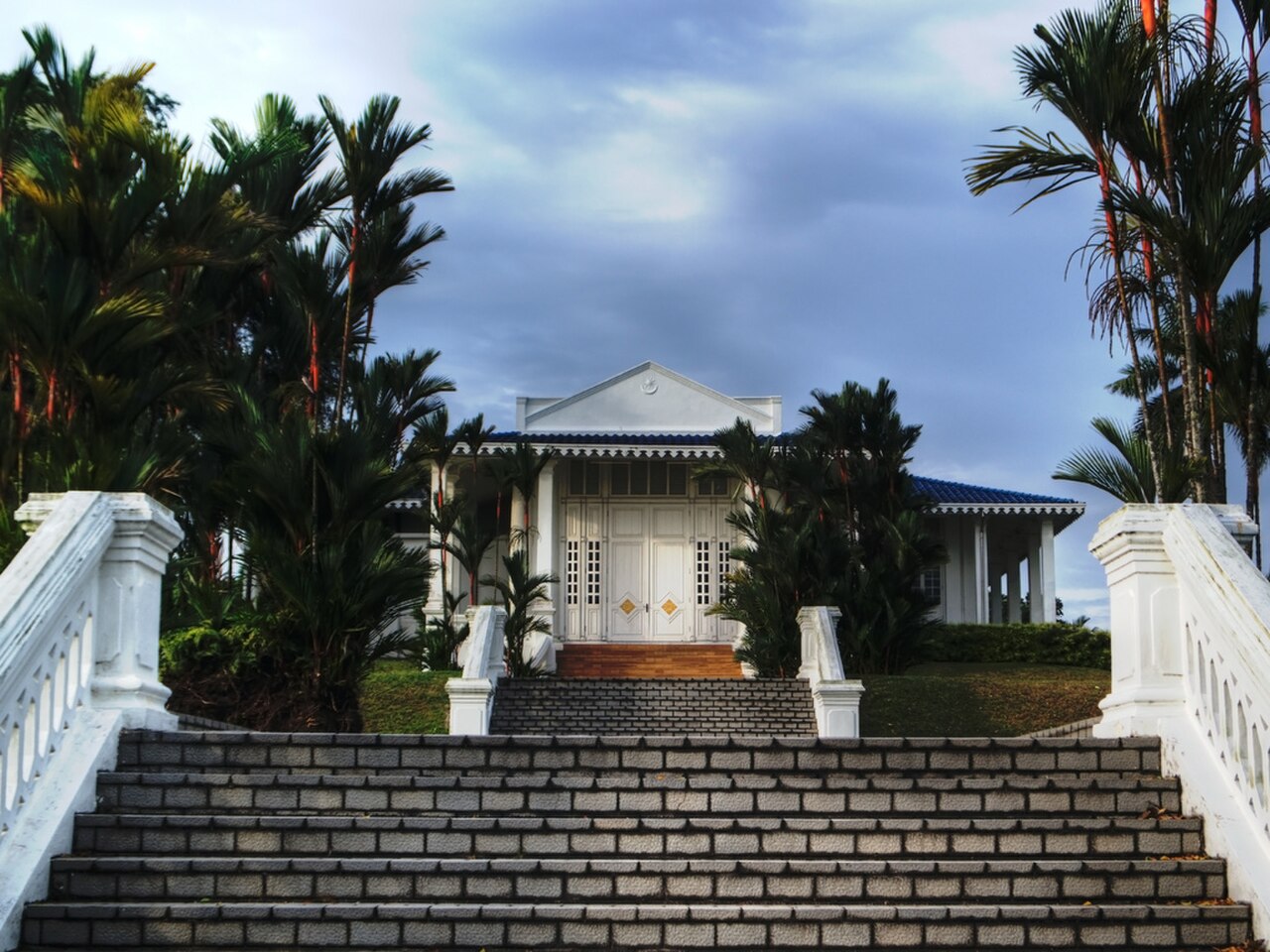
The throne itself is the natural focus, a seat of authority framed to impress upon every visitor the dignity of the ruler. Standing before it, you can easily imagine the ceremonies of state that once unfolded here, the receptions, the audiences, the great occasions of the kingdom’s life.
The surrounding halls continue the theme of restrained magnificence, with elegant proportions and carefully chosen decoration that speak of taste as much as wealth. These were rooms meant to host the important moments of a nation, and they carry that weight gracefully.
Take your time in these spaces. They are where the palace’s ceremonial purpose comes most vividly to life, and they help you understand how a building can embody the authority and continuity of a royal house.
The craftsmanship on display, from the woodwork to the fittings, reflects the care lavished on a palace meant to represent an entire state. Every surface was chosen to reinforce the impression of a dignified and cultivated court.
For all their grandeur, these rooms never lose a certain human warmth, a reminder that they were the working heart of a living court rather than cold monuments to power.
Ceremonial protocol governed every detail of how these rooms were used, from where a visitor might stand to how they were presented to the ruler. The architecture itself was shaped to support this careful choreography of respect and hierarchy.
Even a brief pause in the throne room impresses upon you the seriousness with which the sultanate approached the symbolism of rule, understanding that authority is sustained as much by ceremony and setting as by power itself.
Treasures of a Royal House
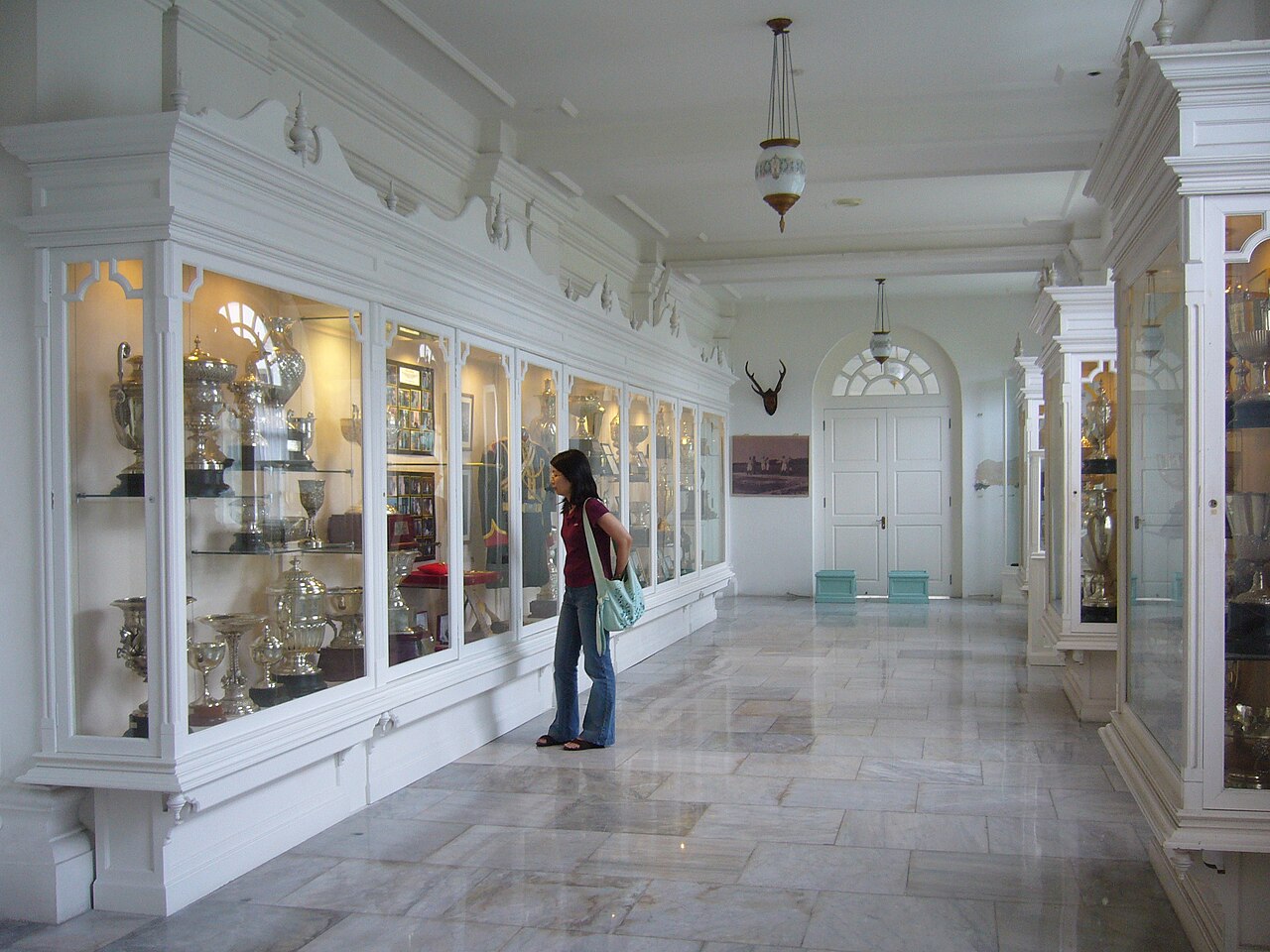
Today the Istana Besar serves as a royal museum, and its rooms are filled with the accumulated treasures of the Johor sultanate. Gifts from foreign rulers, ceremonial regalia, fine furnishings and personal mementoes together tell the story of the dynasty and its connections across the world.

Wandering among these collections is like leafing through the family album of a kingdom. Each object carries its own history, and together they reveal a royal house that was cosmopolitan, well-connected and deeply conscious of its own heritage.
Among the highlights are the diplomatic gifts that speak of Johor’s place in a wider network of powers, tokens of respect exchanged between rulers that turned the palace into a repository of international friendship as well as royal memory.
For the visitor, these treasures transform the palace from a beautiful shell into a living record of a dynasty. They invite you to slow down and look closely, rewarding your attention with glimpses into the private and public worlds of Johor’s rulers.
The variety is remarkable, ranging from grand ceremonial objects to intimate personal items, and together they paint a rounded portrait of the people who lived and ruled here. Few museums offer so personal a view of a royal house.
Together, the collections make the palace a place of learning as well as beauty, offering insight into the history, diplomacy and daily life of one of the Malay world’s most notable dynasties.
Certain objects stand out for the stories they carry, connecting Johor to distant courts and to moments of historical significance. To linger over them is to trace the threads that bound this small state to the wider world.
Because the objects were gathered over generations, they also chart the evolving tastes and priorities of the dynasty, offering a subtle history of the royal house told through the things it chose to keep and treasure.
The Palace Gardens by the Sea
The grounds of the Istana Besar are among its greatest glories. Laid out as extensive gardens sloping toward the strait, they provide a serene green setting that perfectly complements the white elegance of the palace, and they have long been cherished as a place of beauty and repose.
These gardens were designed to please and to impress, with sweeping lawns, ornamental plantings and shaded walks that reflect the same outward-looking taste that shaped the palace itself. Strolling here, you sense the leisured world of a nineteenth-century court at ease.
The sea views add a special dimension. The strait shimmering beyond the greenery connects the palace to the wider maritime world that made Johor prosperous, a reminder that this was a kingdom shaped by trade and by the water at its doorstep.
Whether you come for the flowers, the sea breeze or simply the calm, the gardens are a highlight in their own right. They round out the experience of the palace and offer a peaceful counterpoint to the grandeur of its halls.
Generations of visitors have found these grounds a welcome retreat from the bustle of the city, and their enduring popularity is a testament to the vision that created them. They remain one of the loveliest green spaces in the region.
In the cool of the evening, with the light softening over the water, the gardens take on a particular magic that lingers in the memory long after the visit ends.
The choice to open the palace grounds toward the sea rather than turning inward speaks volumes about the outward-looking spirit of the court. The water was not a barrier but a bridge, and the gardens celebrate that connection.
Careful tending over the decades has kept the gardens flourishing, so that each generation of visitors encounters them much as earlier ones did, a living link to the palace’s founding era.
Come at any season and the grounds offer something to admire, from flowering trees to the ever-present interplay of green lawn and blue water that defines this uniquely situated royal garden.
A Palace at the Heart of Its City
The Istana Besar does not stand in splendid isolation but at the very heart of Johor Bahru, the city that grew up around the sultanate. Its presence has shaped the character of the city, anchoring it to its royal past even as modern towers rise nearby.

This closeness to the life of the city is part of the palace’s charm. It is woven into the identity of Johor Bahru, a constant reminder of the state’s history and of the dynasty that has guided it. Locals regard it with genuine pride and affection.
The relationship between palace and city tells you something about the nature of the Johor sultanate, a monarchy closely bound to its people and its place. The Istana Besar is not a remote symbol but a familiar landmark at the center of everyday life.
As you look from the palace grounds toward the surrounding city, you feel that connection keenly. Here past and present sit side by side, the historic residence of the sultans presiding gently over a bustling modern metropolis.
That the palace has kept its dignity amid such rapid growth says much about how carefully its setting has been protected. It remains an island of calm and history in the heart of a fast-changing city.
For anyone seeking to understand the city, a visit to the palace is the natural starting point, the place where Johor Bahru’s whole story begins to make sense.
The palace’s location so close to the water also reminds you of Johor Bahru’s origins as a port and trading center. The city and the sultanate grew up together, and the Istana Besar stands at the point where their stories converge.
In this way the palace serves as both anchor and origin point for the city, a fixed reminder of where Johor Bahru came from even as it races confidently into the future.
Ceremony and the Life of the Court
Throughout its history the Istana Besar has been a stage for the great ceremonies of the Johor royal house. Coronations, weddings, receptions and state occasions have all unfolded within its walls, giving the palace a central role in the ritual life of the sultanate.
These ceremonies are rich with tradition, blending Malay custom with the formality the palace was built to accommodate. On such days the building comes fully alive, its state rooms filled with color, its halls echoing with the protocol of a royal court.
Even today the palace retains its ceremonial dignity, called upon for occasions of importance to the state. That continuing role keeps it from becoming a mere museum piece, linking the present dynasty to the traditions of its ancestors.
Understanding this ceremonial dimension helps you see the palace whole. It was built not only to be admired but to be used, to host the defining moments of a kingdom, and that purpose still resonates through its rooms.
The great occasions held here have bound the royal house to its people across the generations, each ceremony adding a new chapter to the palace’s long and living story.
To witness or even imagine these occasions is to grasp the deep continuity of the sultanate, a thread of tradition running unbroken from the palace’s founding to the present day.
Each generation has added its own occasions to the palace’s history, so that the building holds within it a layered record of the dynasty’s joys and milestones stretching back well over a century.
This unbroken ceremonial tradition is one of the palace’s greatest treasures, intangible yet deeply felt, and it ensures that the Istana Besar remains a living heart of the sultanate rather than a monument to a vanished past.
A Dynasty That Looked Outward
The story of the Istana Besar is also the story of a dynasty that consistently looked outward. From its founder onward, the Johor royal house cultivated connections abroad, embraced modern ideas and positioned itself as a bridge between the Malay world and the wider globe.
This cosmopolitan spirit is written all over the palace, from its hybrid architecture to its collections of foreign gifts. It reflects rulers who saw engagement with the world not as a threat to their identity but as a means of strengthening it.
That outlook helped the sultanate navigate a turbulent age with its dignity and continuity intact. While many monarchies faltered, Johor’s royal house adapted and endured, and the Istana Besar stands as a testament to that resilient, forward-looking tradition.
For the visitor, this dimension adds depth to every room. The palace is not just beautiful; it is the expression of a philosophy of rule that valued openness, modernity and pride in equal measure.
It is a philosophy that still resonates today, in a state that remains proud of both its heritage and its place in the modern world. The palace embodies that balance as eloquently as ever.
In this sense the Istana Besar is not only a relic of the past but a statement about the future, a reminder that tradition and progress can walk together.
Visitors from around the world who come to the palace often remark on this openness, sensing in the building a spirit of welcome that mirrors the character of the dynasty that built it.
It is a fitting legacy for a dynasty that always understood itself as part of a larger world, and that built, in the Istana Besar, a lasting emblem of that generous and confident vision.
Preserving a National Treasure
As one of the most important historic buildings in the region, the Istana Besar has been carefully preserved and cared for, ensuring that its architecture and collections endure for future generations. This stewardship reflects the deep value placed on the palace as a national treasure.

Maintaining such a building in a tropical climate is no small task, demanding constant attention to protect its fabric and its contents. The ongoing effort to conserve the palace speaks to how much it means to Johor and to Malaysia as a whole.
By opening much of the palace as a museum, its custodians have found a way to share this heritage with the public while safeguarding it. Visitors can experience the grandeur of the sultanate firsthand, and in doing so help keep its story alive.
This commitment to preservation ensures that the Istana Besar will continue to inspire. It is a reminder that heritage is not simply inherited but actively maintained, a responsibility that each generation takes up in turn.
The care shown to the palace is itself a form of respect for the ruler who built it and the dynasty it represents, a way of honoring the past by carrying it faithfully into the future.
Thanks to this dedication, visitors for generations to come will be able to stand where the sultans stood and feel the living presence of Johor’s remarkable history.
Conservation work is guided by respect for the original vision, ensuring that restorations honor the building’s historic character rather than modernizing it out of recognition. The aim is always to keep faith with what the founder created.
Ultimately, the survival of the palace in such fine condition is a shared achievement, the work of many hands across many years, and a source of justified pride for all who care about the heritage of Johor.
Banquet and Reception Halls
Beyond the throne room, the Istana Besar contains a suite of banquet and reception halls where the sultanate entertained its guests in style. These grand spaces were designed for hospitality on a lavish scale, hosting dinners and gatherings that cemented alliances and displayed the wealth of the state.
Long tables, fine settings and elegant surroundings turned these rooms into stages for the social side of statecraft. To dine here as a guest of the sultan was to be received into a world of refinement that rivalled the great courts of Europe.
The care taken over these entertaining spaces reflects how seriously hospitality was regarded, both as a courtesy and as an instrument of diplomacy. A memorable evening at the palace could do as much for Johor’s standing as any formal negotiation.
Standing in these halls today, you can almost hear the murmur of conversation and the clink of glasses, the sounds of a court that knew how to welcome the world. They are among the most evocative rooms in the whole palace.
Together with the throne room, they complete the picture of a residence built for every kind of royal occasion, from the most solemn ceremony to the most convivial gathering.
The scale of hospitality these rooms allowed reflected the sultanate’s prosperity, much of it drawn from trade and enterprise. To entertain grandly was to advertise that success to the world.
In their proportions and finishing these halls match the finest rooms of the palace, confirming that hospitality was regarded as an art form worthy of the very best the sultanate could offer.
It is easy, standing among them, to imagine the grand evenings they once hosted, the palace ablaze with light and filled with the sound of a court at its most sociable and self-assured.
A Closer Look on Film
To appreciate the full sweep of the Istana Besar, from its gracious facade to its treasure-filled halls, film offers a wonderful complement to a visit. The short video below helps bring the palace and its setting to life.

Watching it, you can better sense the scale of the building, the beauty of its gardens and the richness of its collections, details that reward a closer look. It makes an ideal companion to understanding this proud symbol of Johor.
The Istana Besar Today
Today the Istana Besar endures as one of the most beloved landmarks of Johor, cherished as a royal museum, a ceremonial venue and a proud emblem of the state’s identity. Its blend of history, beauty and continuing purpose keeps it firmly at the center of local life.

For visitors, the palace offers a rare chance to step into the world of a nineteenth-century Malay sultanate at the height of its confidence. The state rooms, the collections and the seaside gardens together create an experience that lingers long in the memory.
There is a lesson in the Istana Besar’s graceful endurance. It shows how a monarchy can honor its traditions while embracing the world, and how a building can carry the identity of a whole people across the generations.
When you finally turn to leave, glance back at the long white facade above its gardens, with the strait glittering beyond. You will carry with you the sense of having visited a place where a kingdom once declared its confidence to the world, and where that spirit lives on.
Few palaces manage to be at once so historic and so alive, so rooted in their past and so present in the life of their city. That rare balance is the enduring gift of the Istana Besar.
And so the palace endures, welcoming new visitors each year into a story that is still being written, a proud white landmark keeping watch over the city and the sea.
For the traveler willing to look beyond the obvious sights, the Istana Besar offers one of the most rewarding encounters in the region, a chance to touch the living heritage of a proud and enduring monarchy.
It is, in the end, a place that repays curiosity generously, giving up its stories to those who take the time to explore it with care and attention.
That living continuity, more than any single room or object, is what makes the Istana Besar so special, and why it will remain a treasured landmark for generations yet to come.
View the location on Google Maps
Palaces Nearby
If the Istana Besar has drawn you into the world of maritime and island monarchies, two more royal palaces of the wider region make fitting companions to this one.
- the painted palace of Klungkung, the Balinese royal court famed for its cosmic ceiling paintings.
- the Royal Palace of Tonga, the seafront home of the last indigenous monarchy of the Pacific.
You May Like
Balla Lompoa, the Great House and Golden Crown of the Gowa Kings