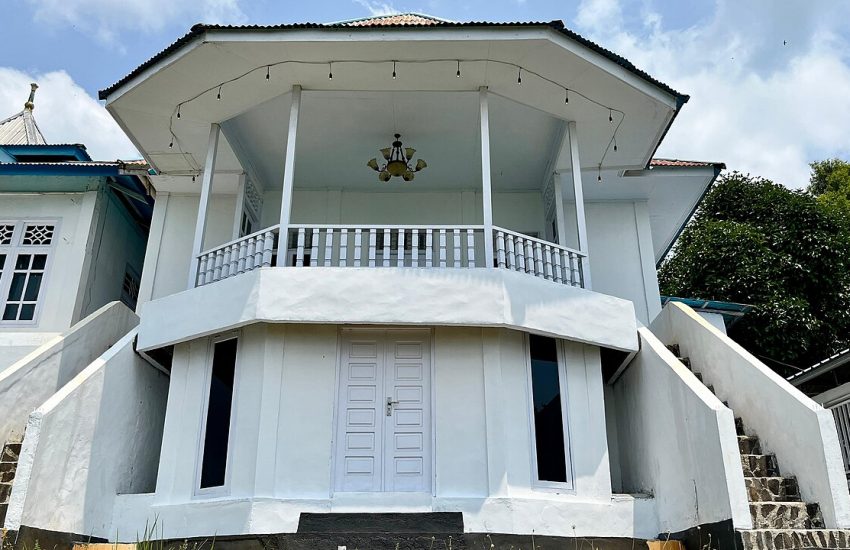
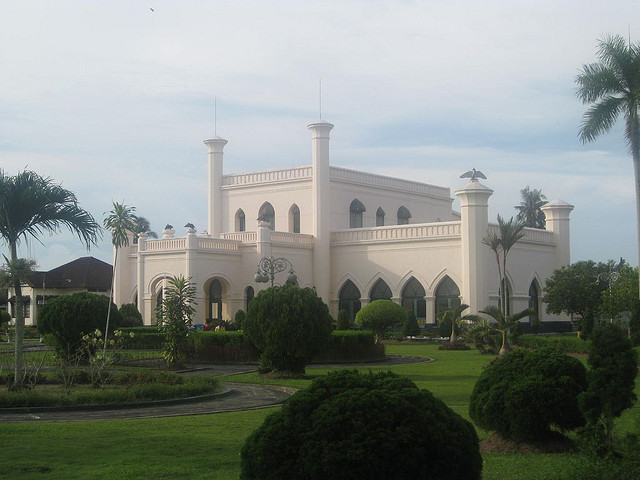
On the banks of a broad river in the Sumatran province of Riau stands a palace that looks as though it were plucked from a European fantasy and set down in the tropical heart of the Malay world. The Istana Siak, seat of the once-powerful Sultanate of Siak Sri Indrapura, gleams white and blue above the water, its domes and arches a striking blend of continents and cultures.
You come to the Istana Siak to meet one of the great Malay maritime kingdoms at the height of its confidence. This was the palace of sultans who grew wealthy on river and sea trade, who embraced modern ideas and European fashions, and who left behind one of the most beautiful and unusual royal residences in all of Indonesia.
In this guide you will get to know the palace beyond its photogenic facade. We will trace the story of the Siak sultanate, admire the extraordinary architecture, explore the treasures within, from a legendary music box to the royal crown, and understand why this river palace remains a proud symbol of Riau and of Malay heritage. By the end you will see why the Istana Siak enchants everyone who finds it.
In This Article
- Arriving at the Istana Siak
- A Kingdom Built on the River
- The Sultan Who Built the Palace
- A Fusion of Continents
- The Legendary Music Box
- The Crown and Royal Treasures
- Elegant Interiors
- The Rise of the Siak Sultanate
- A Sultanate That Chose the Nation
- Preserving a Malay Treasure
- The Grounds, Mosque and Royal Tombs
- A Closer Look on Film
- The Istana Siak Today
Arriving at the Istana Siak
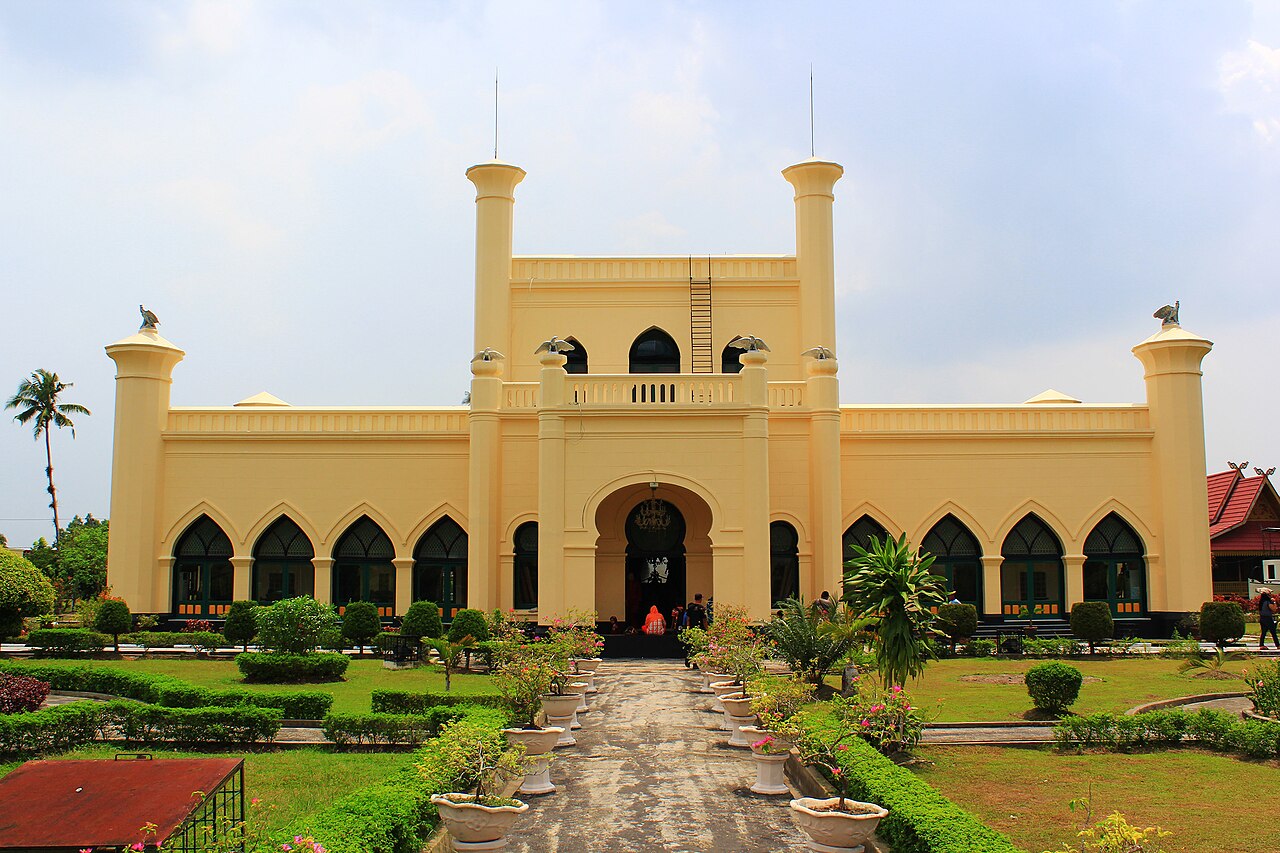
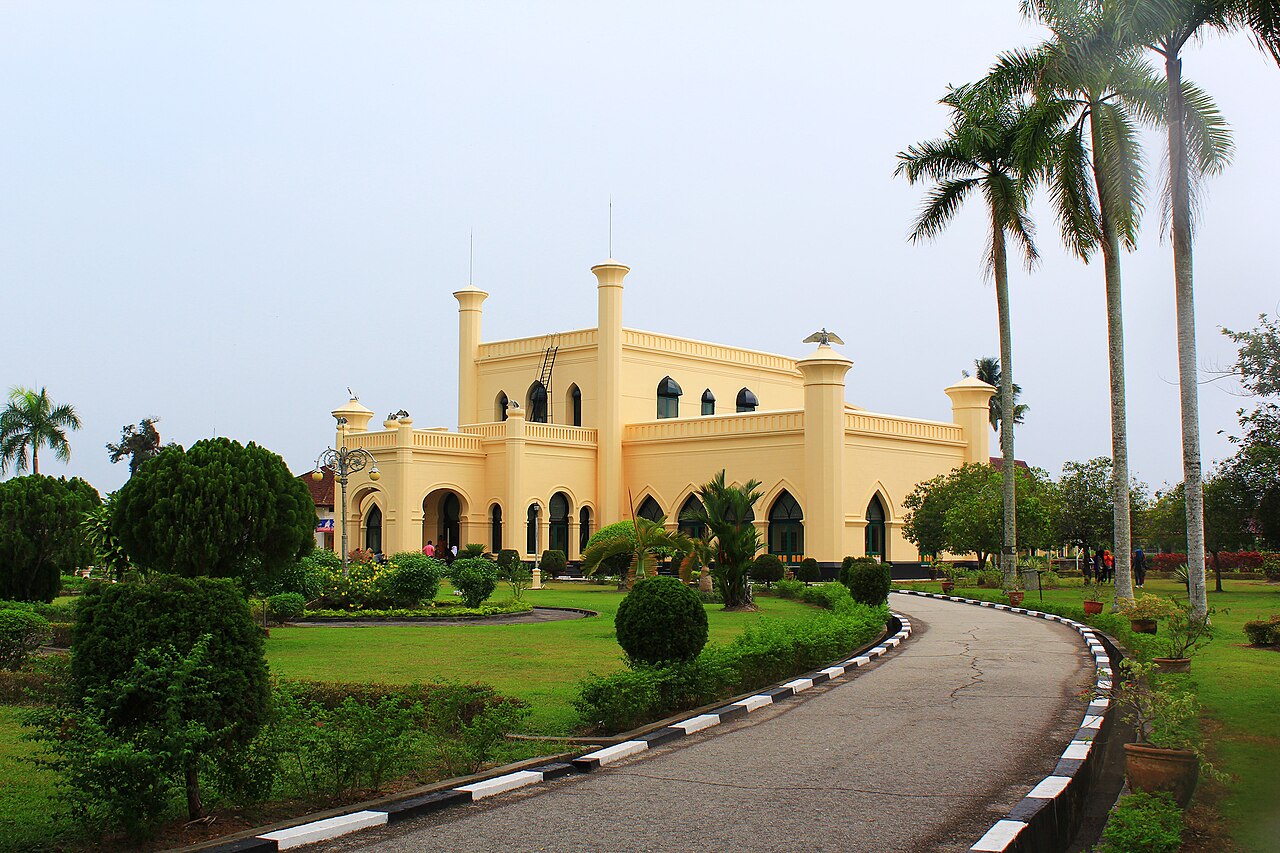
Your first sight of the Istana Siak is unforgettable: a dazzling white palace trimmed in blue, crowned with domes and arches, rising elegantly above the river that gave the sultanate its wealth. Against the green of the Sumatran landscape, it seems almost to glow.

The palace stands within landscaped grounds beside the water, its setting as gracious as its architecture. The broad river that flows past was once the highway of the sultanate’s commerce, and the palace was placed to command and celebrate that lifeline.
There is a fairy-tale quality to the building that catches every visitor by surprise. Blending European grandeur with Malay and Islamic elements, it looks like nothing else in the region, and its beauty makes an immediate and lasting impression.
Take time to walk the grounds and admire the palace from different angles. The interplay of white walls, blue trim, domes and river is one of the loveliest sights in Sumatra, and it rewards an unhurried, appreciative gaze.
The contrast between the exotic European silhouette and the tropical Sumatran setting is part of what makes the first encounter so memorable, and visitors often pause simply to take it in.
Whatever the light, the palace holds its charm, gleaming under bright sun or standing softly against the frequent tropical clouds.
First-time visitors frequently describe a sense of disbelief at finding so European-looking a palace deep in Sumatra, and that surprise is part of the building’s enduring appeal.
Set your expectations aside and simply let the palace surprise you; few buildings in Indonesia reward a first encounter so richly.
By the time you step through the entrance, you are ready to meet not just a building but the whole confident world of the Siak sultanate.
A Kingdom Built on the River
To understand Siak, you must understand its river. The sultanate grew rich as a maritime and riverine trading power, controlling commerce that flowed along the waterways of eastern Sumatra and out into the busy straits beyond. Trade was the foundation of its wealth and its influence.
That commercial success made Siak one of the more powerful Malay kingdoms of its age, a state whose reach extended across a significant swath of the region. The palace is the most visible legacy of the prosperity that trade brought.
The river connected Siak to a wider world of commerce and ideas, bringing not only goods but influences from far afield. This openness to the outside world would shape the character of the sultanate and, in time, its remarkable palace.
Keeping this maritime foundation in mind transforms a visit. The Istana Siak is not merely a pretty building but the crowning symbol of a trading kingdom that turned the wealth of the waterways into architecture, culture and power.
The waterways were the arteries of the kingdom, carrying the trade that filled its treasury and connected it to the great trading routes of the region.
Control of these routes gave Siak both wealth and strategic importance, making it a power that larger states had to reckon with.
To stand by the water today is to sense the source of the kingdom’s greatness, the flowing highway that carried Siak to prosperity.
The prosperity that flowed from this trade allowed the sultans to patronize architecture, learning and the arts, and to project their kingdom’s presence far beyond its borders.
In an age when so much power and wealth moved by water, a kingdom that commanded the rivers commanded its own destiny, and Siak did so with notable success.
The legacy of that riverine wealth is everywhere in the palace, which could only have been built by a kingdom grown prosperous on the flow of trade.
Even now, gazing at the water that slides past the palace, it is easy to imagine the laden boats that once made this quiet river one of the busy arteries of the Malay trading world.
The Sultan Who Built the Palace
The Istana Siak owes its splendor to a forward-looking sultan who, in the late nineteenth century, set out to give his kingdom a residence worthy of a modern state. Well-traveled and open to new ideas, he drew inspiration from what he had seen abroad.
His vision was to create a palace that would announce Siak’s sophistication and standing to the world. By blending European architecture with local and Islamic elements, he produced a building that was both cosmopolitan and unmistakably rooted in the Malay world.
This was a ruler who understood that a great palace was a statement of ambition. The Istana Siak proclaimed that his kingdom was modern, prosperous and confident, ready to engage with the wider world on its own terms.
As you explore the palace, remember the vision behind it. Every dome and arch reflects the aspirations of a sultan determined to place his river kingdom among the respected states of his age.
His travels had shown him the grand residences of other lands, and he was determined that his own kingdom should not be outshone.
The palace he created stands as a lasting monument to that ambition, and to the confidence of a ruler who looked outward to the world.
In commissioning the palace, he was making a claim about the place of Siak in the modern world, and the building has justified that claim ever since.
The decision to build in so bold and modern a style was itself a statement, a declaration that Siak would meet the changing world with confidence rather than retreat.
That confidence is written into every line of the palace, which still seems to look outward to the world with the same assurance its builder intended.
His name is inseparable from the palace, and to admire the building is, in a sense, to honor the vision of the ruler who dreamed it into being.
Standing before his creation today, more than a century later, one can only admire how completely his ambition was realized in stone, tile and dome.
A Fusion of Continents
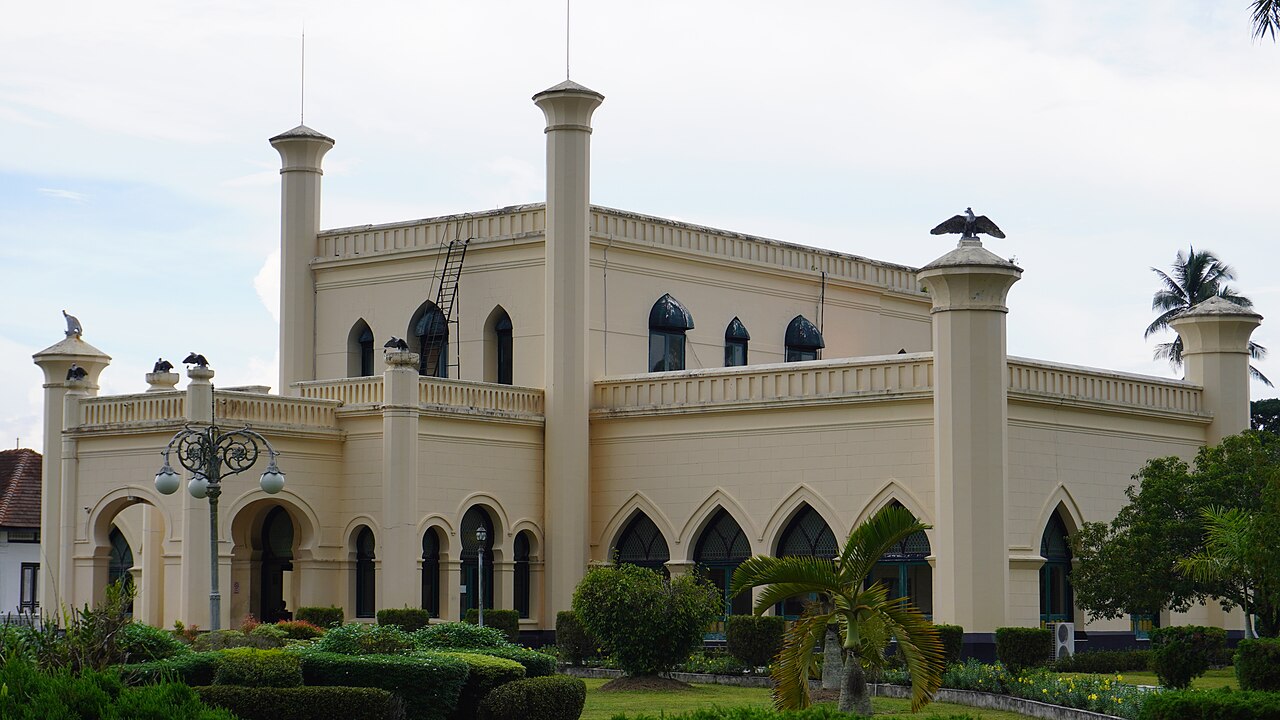
The architecture of the Istana Siak is a spectacular fusion of styles. European influences appear in its grand proportions, its arches and its domes, while Malay and Islamic elements shape its decoration and its spirit. The result is a building unlike any other.
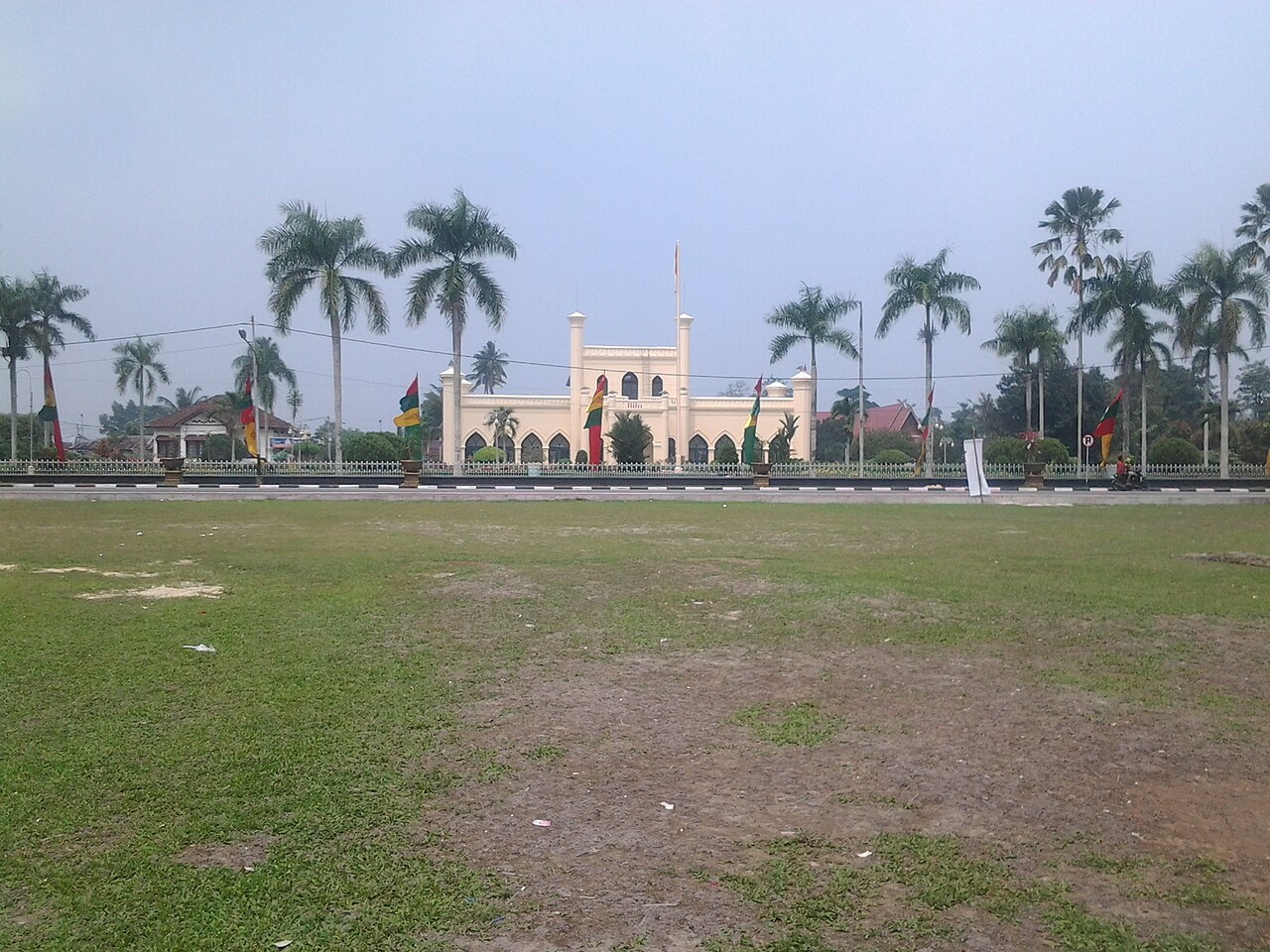
This blending was entirely deliberate, the expression of a sultanate that saw itself as a bridge between worlds. The palace absorbed outside influences without losing its own identity, much like the kingdom that built it.
Look closely and you will find the different traditions meeting throughout the building, in the shape of a window, the pattern of a tile, the sweep of an arch. Each detail is part of a carefully composed dialogue between cultures.
This architectural fusion is central to the palace’s appeal and its significance. It stands as a monument to cultural exchange, a beautiful embodiment of the meeting of East and West in the tropical heart of Sumatra.
The domes in particular give the palace its distinctive silhouette, an unexpected sight in the Sumatran landscape that never fails to surprise first-time visitors.
This willingness to blend traditions rather than merely imitate is what gives the building its lasting originality and charm.
Scholars of architecture prize the palace precisely for this quality of synthesis, treating it as a landmark example of the meeting of European and Malay building traditions.
The palace is sometimes likened to a European villa transported to the tropics, yet that description misses the Malay soul that runs through every part of it.
In the harmony of its many influences, the palace seems to embody the very spirit of the archipelago, where cultures have long met and mingled.
The Legendary Music Box
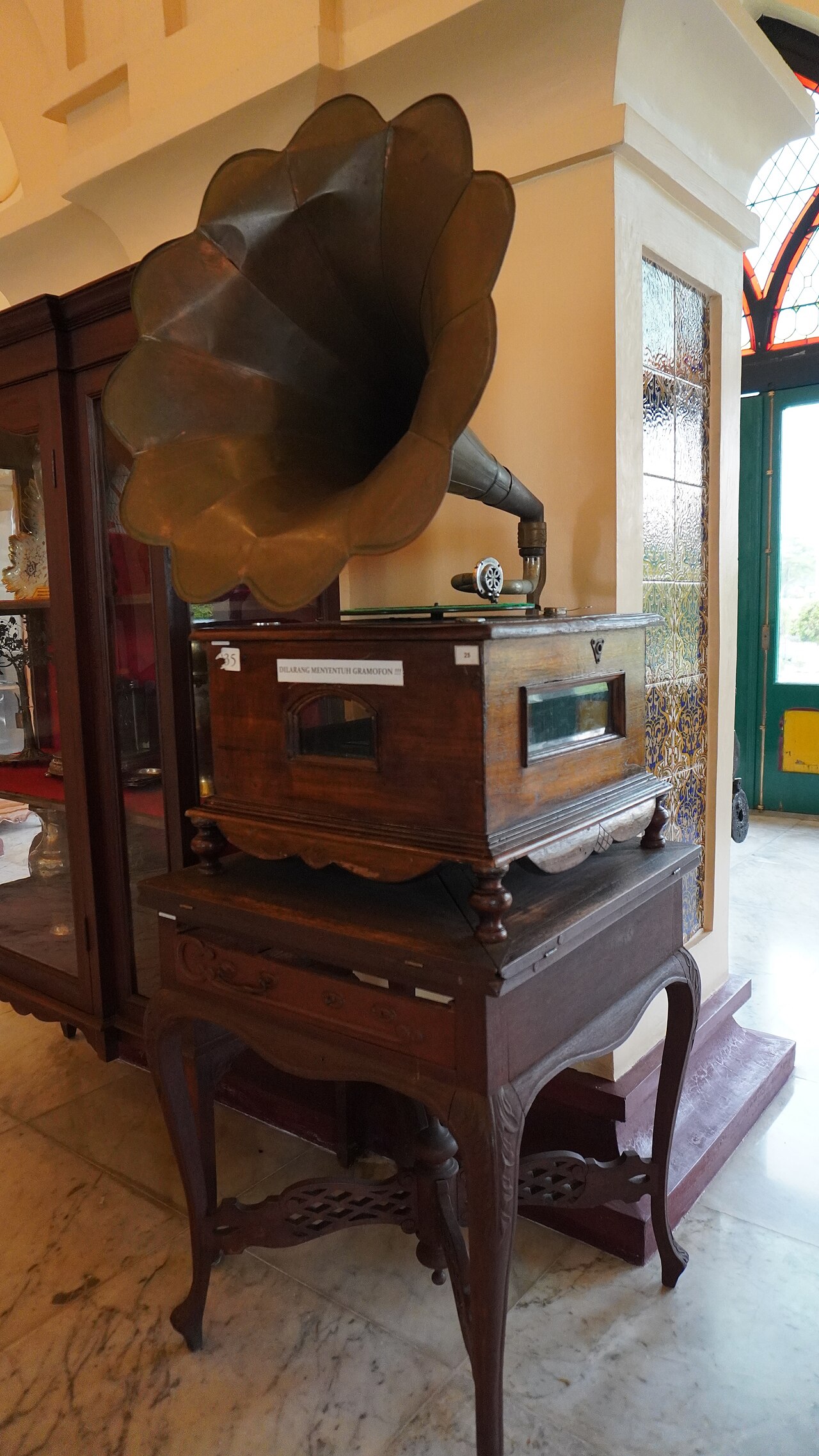
Among the most celebrated treasures of the Istana Siak is a remarkable mechanical music box, an object of European manufacture said to be extremely rare. This wonderful device, capable of playing the music of great composers, was a prized possession of the sultanate and remains one of the palace’s most beloved attractions.
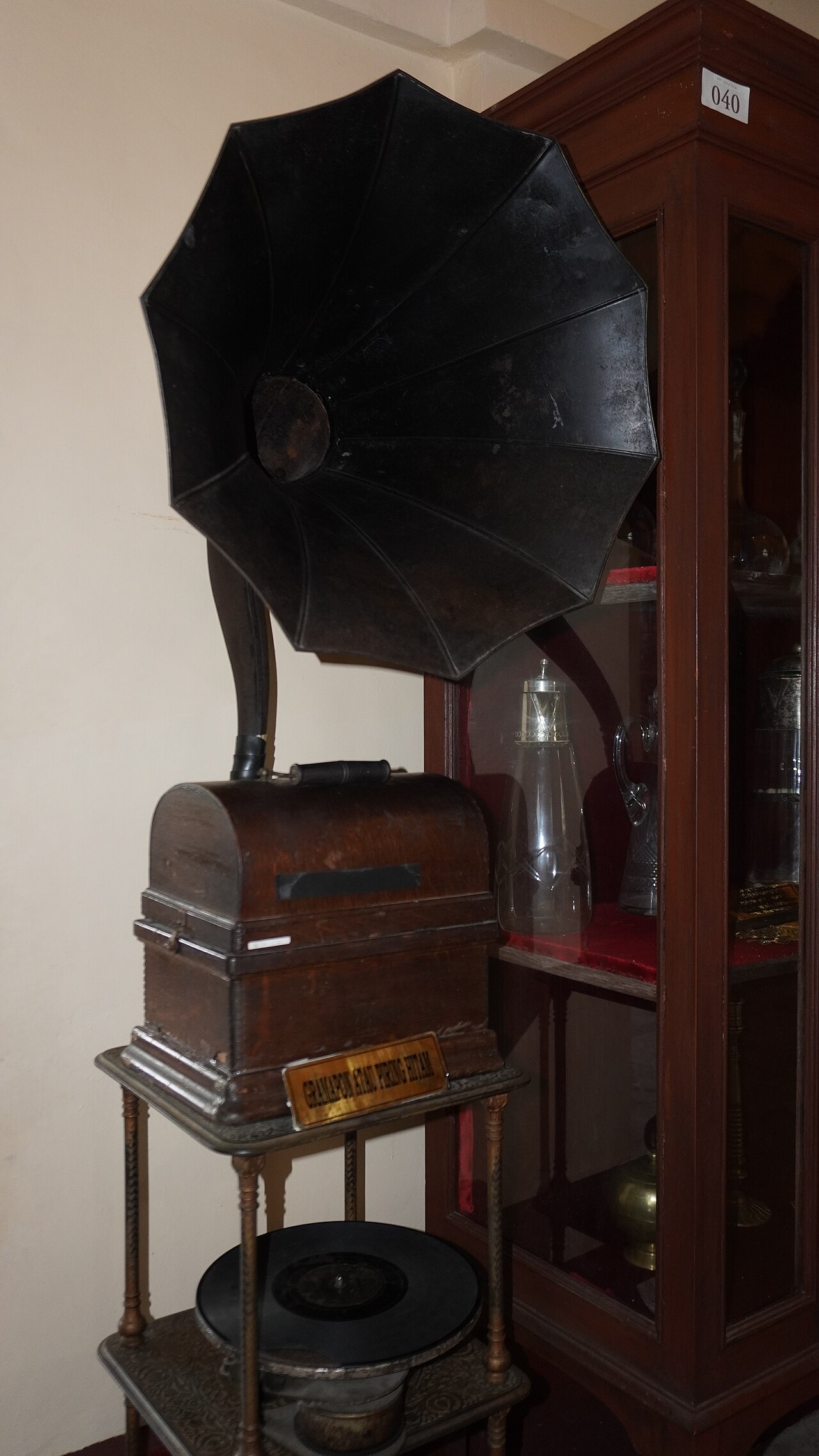
The presence of such an object speaks volumes about the outlook of the Siak court. Here was a Malay sultanate delighting in the finest mechanical marvels of Europe, embracing the culture of distant lands with evident pleasure.
Stories cluster around the music box, adding to its allure, and visitors are often captivated by the idea of European melodies filling a Sumatran palace more than a century ago. It is a charming symbol of the sultanate’s cosmopolitan spirit.
For the visitor, the music box is a highlight of any tour, a tangible reminder that the Istana Siak was a place where the wider world was welcomed and enjoyed. Few objects better capture the character of this remarkable court.
That such a delicate European instrument found its way to a palace deep in Sumatra is a vivid illustration of how far the sultanate’s connections reached.
Visitors are often delighted to learn its story, which captures in a single object the cosmopolitan spirit of the Siak court.
Few objects anywhere so perfectly capture the outward-looking spirit of a kingdom, and it remains the item visitors most often remember.
The idea of European symphonies resounding through a Sumatran palace more than a century ago is irresistibly romantic, and it draws visitors from far and wide.
It stands as a small but eloquent testimony to how thoroughly the wider world was welcomed within these walls.
Whenever its story is told, the music box seems to conjure the whole spirit of the sultanate, curious, worldly and unafraid of the new.
To hear its story told on the spot is one of the small joys of a visit, and it stays with travelers long after they leave.
The Crown and Royal Treasures
The palace holds the accumulated treasures of the Siak sultanate, chief among them the royal crown and regalia that symbolized the authority of its rulers. These precious objects embody the dignity and continuity of the dynasty.

Alongside the regalia, the palace preserves fine furnishings, portraits and objects gathered over the sultanate’s history, many of them reflecting its taste for European elegance. Together they paint a vivid picture of a wealthy and refined court.
The crown in particular carries deep significance, a tangible link to the line of sultans who ruled Siak and to the ceremonies that sustained their authority. It is among the most treasured items in the whole collection.
For those who explore the palace, these treasures bring its history to life. Each object opens a window onto the world of the sultanate, from its ceremonies of state to its enthusiasm for the fashions of distant lands.
Each item in the collection carries its own history, and together they reveal a court that prized both its own traditions and the finest that the wider world could offer.
The regalia in particular connect the visitor directly to the ceremonies and authority of the vanished sultanate.
To view the crown is to feel the presence of the sultans themselves, and the weight of the tradition they embodied.
Together, the treasures form a portrait of a court that was proud, prosperous and thoroughly engaged with the world of its time.
For the visitor, lingering over these objects is the surest way to feel the presence of the vanished sultanate.
Elegant Interiors
Step inside the Istana Siak and you enter a world of refined elegance. The interiors were furnished in a lavish, European-influenced style, with fine furniture, mirrors, chandeliers and decorative details that speak of the sultanate’s wealth and cosmopolitan taste.
A graceful staircase, ornate fittings and carefully appointed rooms all reflect the care lavished on the palace. These were spaces designed to impress visitors and to provide a fitting setting for the life of a modern royal court.
The blend of imported luxury and local sensibility continues indoors, where European furnishings sit within a building shaped by Malay and Islamic tradition. The effect is both grand and distinctive, entirely in keeping with the palace’s character.
Wandering these rooms, you appreciate the sophistication of the Siak court. The interiors reveal a sultanate that embraced the elegance of the wider world while remaining proudly itself, a balance struck with evident success.
The chandeliers and mirrors, many imported from Europe, cast a soft glamour over the rooms, evoking the elegant gatherings the palace once hosted.
Every furnishing seems chosen to convey both comfort and status, in keeping with a court that took evident pleasure in the refinements of the age.
Even today the interiors retain much of their original atmosphere, allowing visitors to imagine the life of the sultanate at its height.
The overall impression is of a court thoroughly at ease in two worlds at once, blending the comforts of Europe with the dignity of a Malay sultanate.
To move through the rooms is to trace the tastes and aspirations of a court that saw no contradiction between its Malay roots and its love of European refinement.
The overall effect is one of harmony rather than clash, a testament to the confidence with which the sultanate embraced influences from every direction.
It is easy, standing in these elegant rooms, to imagine the receptions and ceremonies that once filled them with life and color.
The rooms invite lingering, each revealing some new detail of the sultanate’s refined and cosmopolitan taste.
In these surroundings it becomes easy to picture the court at its height, a world of elegance poised confidently between Sumatra and the wider globe.
The Rise of the Siak Sultanate
The Sultanate of Siak Sri Indrapura emerged as a significant power in eastern Sumatra, building its strength on trade and skillful navigation of the complex politics of the region. Over time it grew into one of the more influential Malay states of its era.
The dynasty that ruled Siak guided the kingdom through the challenges of an age marked by the growing presence of foreign powers. Their success in maintaining the sultanate’s prosperity and identity is reflected in the grandeur of their palace.
Siak’s history is bound up with the wider story of the Malay world and its encounters with outside forces. The sultanate’s ability to prosper and endure speaks to the resourcefulness of its rulers and the strength of its commercial foundations.
Understanding this history deepens a visit. The Istana Siak is the crowning achievement of a kingdom that rose through trade and statecraft to a position of real importance in the region.
At its peak, the influence of Siak extended over a considerable territory, and its rulers were figures of real consequence in the affairs of the region.
The sultanate’s story is one of ambition and adaptation, of a Malay kingdom that carved out a lasting place for itself through trade and skillful diplomacy.
Its long history lends the palace a depth that goes far beyond its architectural beauty, rooting it in a rich and consequential past.
This depth of history is what elevates the Istana Siak from a beautiful curiosity to a monument of genuine national significance.
The rise of Siak is a reminder of how dynamic and interconnected the Malay world once was, and of the sophistication of its leading courts.
To grasp the full significance of the palace, it helps to remember that it was the seat of a kingdom that once shaped the affairs of a large part of Sumatra.
The endurance of the sultanate through turbulent times is itself a kind of achievement, one embodied in the palace that survives to tell its story.
Set against the wider sweep of Sumatran history, the story of Siak stands out for its blend of commercial acumen, political skill and cultural ambition, all of which find expression in the palace that its rulers left behind for us to admire.
A Sultanate That Chose the Nation
One of the most significant chapters in Siak’s story came with the birth of modern Indonesia. When the new nation was founded, the sultanate lent its support to the young republic, a decision remembered as an important gesture in the country’s early days.
This choice reflected the sultanate’s sense of belonging to the wider Indonesian nation, and it earned Siak an honored place in the national story. The palace, in this light, is not only a royal residence but a monument to a pivotal moment in Indonesian history.
The transition from independent sultanate to part of a larger nation was handled in a way that preserved the honor of the dynasty and its people. It is a story of dignity and continuity amid great change.
For visitors, this dimension adds depth to the palace. The Istana Siak witnessed not only the golden age of a trading kingdom but also its graceful passage into the new era of the Indonesian republic.
This act of allegiance is remembered with pride, and it secured for Siak a respected place in the narrative of the young nation.
The dignity with which the sultanate embraced the new order reflects the wisdom that had long characterized its rulers.
In this way the palace bridges two eras, the age of sultans and the age of the republic, holding both within its walls.
The story of Siak’s entry into the republic is taught as an example of far-sighted loyalty, and it lends the palace an added layer of national meaning.
In embracing the new nation, the sultanate ensured that its legacy would live on within a larger story rather than fade with the passing of the old order.
It is fitting that a palace so open to the world should belong, in the end, to a nation built on the union of many peoples and traditions.
Preserving a Malay Treasure
Today the Istana Siak is cared for as a museum and a cherished heritage site, its architecture and collections preserved for future generations. This stewardship reflects the deep value placed on the palace as a treasure of Malay and Indonesian culture.

Maintaining such a building in a humid tropical climate is a demanding task, requiring constant attention to protect its distinctive fabric and its contents. The ongoing effort to conserve the palace testifies to how much it is treasured.
By opening the palace to the public, its custodians allow visitors to experience the splendor of the Siak sultanate firsthand, and in doing so help keep its story alive. It has become one of the cultural highlights of the region.
This commitment to preservation ensures that the Istana Siak will continue to inspire. It stands as a reminder that heritage must be actively maintained, a responsibility taken up anew by each generation.
The palace draws visitors from across Indonesia and beyond, all eager to see one of the most distinctive royal residences in the country.
Its careful upkeep ensures that this shining example of Malay royal architecture will endure for generations to come.
The result of this dedication is a palace that feels remarkably alive, its beauty undimmed by the passage of time.
Efforts to conserve the palace draw on both local pride and national recognition of its importance, ensuring that its future is secure.
For the visitor, the result is a chance to experience the sultanate’s world in a setting that has been lovingly maintained.
In safeguarding the Istana Siak, Indonesia preserves not just a building but a whole chapter of its Malay heritage.
That such care is taken speaks to a shared conviction that this palace belongs not just to Riau but to the heritage of the entire nation and of the Malay world beyond it.
The Grounds, Mosque and Royal Tombs
The Istana Siak sits within a wider royal landscape that extends beyond the palace itself. Nearby stand the grand mosque of the sultanate and the tombs of its rulers, together forming a complex that expresses the full life of the kingdom, spiritual as well as political.

The royal mosque reflects the deep Islamic faith at the heart of the sultanate, a place of worship for the court and a symbol of the religious foundations of its authority. Its presence near the palace underlines the union of faith and kingship in Siak.
The tombs of the sultans, meanwhile, bind the living seat of the monarchy to the resting place of its ancestors, expressing the continuity of the dynasty across the generations. Together, palace, mosque and tombs map the whole world of the sultanate.
Exploring these surroundings enriches any visit. They reveal that the Istana Siak was the center of a complete royal and religious world, not merely a beautiful residence standing alone by the river.
For those who take the time to see them, the mosque and tombs add depth and context to the palace, completing the picture of a proud and pious Malay kingdom.
The harmony between the palace and its religious surroundings speaks of a kingdom in which worldly and spiritual authority were closely intertwined.
Taken together, the palace, mosque and tombs offer a fuller understanding of the sultanate than the palace alone could ever provide.
The mosque in particular remains a place of living faith, linking the historic palace to the ongoing spiritual life of the community around it.
Wandering between palace, mosque and tombs, you gain a fuller sense of the sultanate as a complete world, ordered around both its rulers and its faith.
This wider complex is what transforms a visit from mere sightseeing into a genuine encounter with the world of a Malay sultanate.
To walk the whole ensemble slowly, from palace to mosque to tombs, is to read the biography of a kingdom written across its most sacred and splendid places.
Few royal complexes in Sumatra offer so complete a picture of a sultanate’s world, and it is this completeness that lingers with visitors long after they depart.
A Closer Look on Film
To appreciate the full beauty of the Istana Siak, from its gleaming facade to its elegant interiors, film offers a fine complement to a visit. The short video below helps bring the palace and its riverside setting to life.

Watching it, you can better sense the scale of the building, the richness of its rooms and the charm of its setting, details that reward a closer look. It makes an ideal companion to understanding this remarkable Malay palace.
The Istana Siak Today
Today the Istana Siak endures as one of the most beautiful and beloved historic sites in Sumatra, a shining symbol of the Siak sultanate and of Malay heritage. Its distinctive architecture and rich collections continue to enchant all who visit.

For travelers, the palace offers a rare and rewarding encounter with a Malay maritime kingdom at the height of its confidence. Its blend of European grandeur and local tradition creates an experience that lingers long in the memory.
There is a lesson in the palace’s graceful endurance. It shows how a kingdom can embrace the wider world while honoring its own identity, and how a building can carry the pride of a people across the generations.
When you finally turn to leave, glance back at the white-and-blue palace shining above its river. You will carry with you the image of a cosmopolitan Malay court that turned the wealth of trade into beauty, still gleaming on the banks of the Siak.
Long after a visit ends, the image of that gleaming white palace beside the river returns to mind, a lasting emblem of a proud and cosmopolitan Malay kingdom.
It stands, in the end, as one of the treasures of Sumatra, richly rewarding all who make the journey to see it.
It remains a place where the confidence and cosmopolitanism of the old Malay world can still be felt, vividly and unforgettably.
For anyone drawn to the history of the Malay world, the palace is an essential destination, offering an encounter with a kingdom at the height of its powers.
And so the Istana Siak endures, a gleaming reminder that the Malay world produced courts of dazzling sophistication and enduring beauty.
Whatever route brings you here, the Istana Siak rewards the journey many times over, leaving every visitor with a richer sense of the Malay world’s grandeur.
View the location on Google Maps
Palaces Nearby
If the river-kingdom court of Siak has drawn you deeper into the world of Indonesia’s sultanates, two more royal palaces of the archipelago make natural next stops.
- the Kedaton of Ternate, the palace of a spice sultanate set between a volcano and the sea in Maluku.
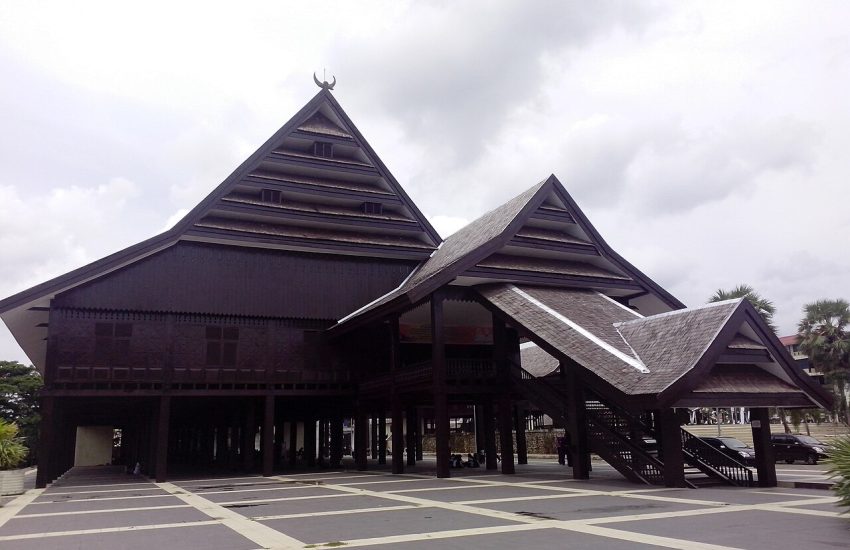
- Balla Lompoa, the timber Great House and golden crown of the seafaring Gowa kingdom in Sulawesi.
You May Like
Balla Lompoa, the Great House and Golden Crown of the Gowa Kings