In the town of Sungguminasa, just inland from the great seafaring city of Makassar in South Sulawesi, stands a tall wooden palace raised high on sturdy pillars, its steep roof and broad verandas unmistakably the work of the Bugis-Makassar world. This is Balla Lompoa, the Great House, the palace of the kings of Gowa, one of the mightiest maritime kingdoms the eastern seas of Indonesia ever knew.
You come to Balla Lompoa to meet a kingdom of seafarers and warriors whose ships and traders once ranged across the archipelago, and whose rulers defied the greatest colonial power of their age. The palace, built in the traditional timber style yet grand in scale, guards the regalia and memory of that proud realm, including a crown of gold that is among the great treasures of Indonesia.
In this guide you will get to know Balla Lompoa beyond its striking silhouette. We will trace the rise of the kingdom of Gowa, explore the distinctive stilt architecture of the palace, marvel at the golden regalia within, and understand why this Great House remains a powerful symbol of Makassar identity. By the end you will see why the palace of Gowa still commands such deep respect.

In This Article
- Arriving at Balla Lompoa
- The Great Kingdom of Gowa
- A Palace Raised on Pillars
- The Golden Crown of Gowa
- The Rooster of the East
- Masters of the Eastern Seas
- A Treasury of Regalia
- Sacred Objects and Ceremonies
- The Bugis-Makassar World
- Preserving the Great House
- Living Traditions of the Court
- A Closer Look on Film
- Balla Lompoa Today
Arriving at Balla Lompoa
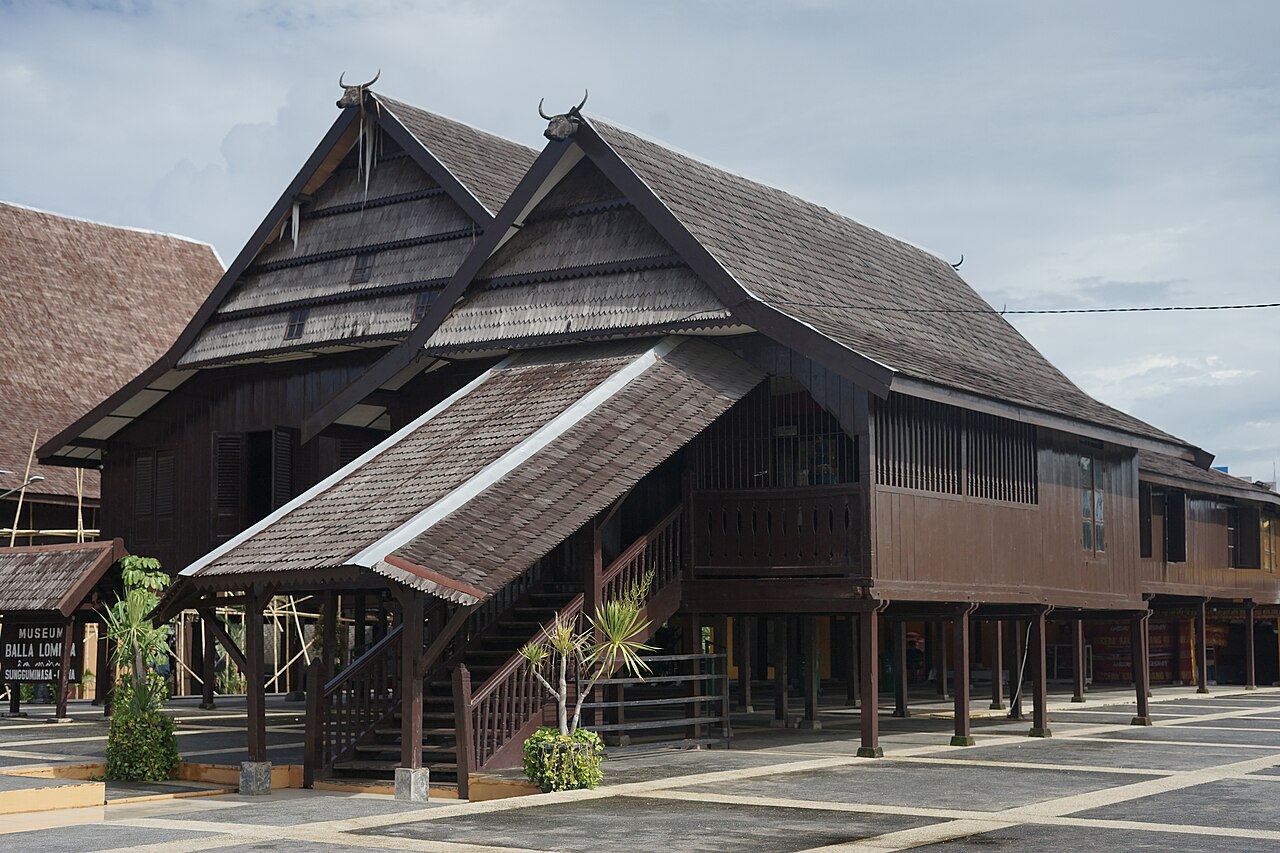
Your first sight of Balla Lompoa is of an imposing timber palace lifted high on its pillars, its dark wooden walls and steep, tiered roof rising above the surrounding grounds. Reached by a broad staircase, the Great House lives up to its name, projecting dignity and strength.

The architecture is unmistakably that of the Bugis-Makassar tradition, in which important houses stand raised on stilts, and it gives the palace a distinctive, powerful presence quite unlike the stone or masonry residences of other kingdoms. This is a palace rooted deeply in local building traditions.
As a museum of the Gowa kingdom, the palace welcomes those who come to learn its story, and climbing the steps to the raised main floor feels like ascending into the world of the old court. The elevation itself, once a mark of status, still commands respect.
Take a moment to appreciate the building’s proportions and its setting before going in. The scale of the timber structure, the sweep of the roof and the sense of solidity all speak of the power of the kingdom that raised it.
The broad staircase leading up to the main floor sets the tone for the visit, drawing you upward into the elevated world of the court.
Even before you enter, the sheer scale of the timber structure conveys the power and prestige of the kingdom that built it.
First-time visitors are often struck by how different this timber palace feels from the stone residences of other kingdoms, and how powerfully it expresses its own tradition.
The Great House rewards a slow approach, each step revealing more of its scale and craftsmanship.
However you come to it, Balla Lompoa makes an impression that lingers, setting the tone for a visit rich in history and wonder.
By the time you reach the raised main floor, you feel yourself already within the world of the old court, ready to meet its treasures and its story.
There is a quiet grandeur to Balla Lompoa that no photograph fully captures, and it is best appreciated in person, standing beneath its great roof.
The Great Kingdom of Gowa
To understand Balla Lompoa, you must understand Gowa. This was one of the most powerful kingdoms of eastern Indonesia, a maritime state whose influence radiated across the seas of the region through trade, diplomacy and force of arms. At its height, Gowa was a power to be reckoned with far beyond Sulawesi.

The strength of Gowa rested on the sea. Its people were renowned sailors and traders, and the kingdom controlled a great port that drew merchants from across the archipelago and beyond. This maritime prowess made Gowa wealthy and formidable.
The palace is the seat and symbol of this remarkable kingdom. Though the present Great House was built in more recent times, it continues a royal tradition reaching back through centuries of Gowa’s history as a leading power of the eastern seas.
Keeping this in mind transforms a visit. Balla Lompoa is not merely a fine timber house but the seat of a kingdom whose ships and traders helped shape the history of maritime Southeast Asia.
At the height of its power, Gowa dominated much of the region, its authority acknowledged across the seas of eastern Indonesia.
This was a kingdom that dealt with foreign powers as an equal, confident in its wealth, its fleets and its warriors.
The legacy of that power endures in the pride of the people of Makassar, for whom Gowa remains a symbol of greatness.
The rivalry and alliances of Gowa with neighboring states shaped the politics of the whole region, drawing distant powers into the affairs of Sulawesi.
Its influence extended along the trade routes that laced the eastern archipelago, carrying the name of Gowa far and wide.
Few kingdoms of the eastern seas achieved so wide a reach or left so deep a mark on the history of the region.
The palace, standing proud on its pillars, remains the most eloquent witness to all that Gowa once was.
Standing within the palace, one feels the weight of that history, the sense of being at the center of a realm that once helped shape the destiny of the eastern seas.
For the traveler willing to venture beyond the usual routes, the reward is an encounter with one of Indonesia’s most storied kingdoms, its spirit still alive within the Great House.
A Palace Raised on Pillars
The architecture of Balla Lompoa is a magnificent example of traditional Bugis-Makassar building. The entire palace is raised high off the ground on massive wooden pillars, with the main living and ceremonial spaces on the elevated floor, reached by a grand staircase.

This raised construction served many purposes, offering protection, ventilation and a clear expression of status, for the higher and grander the house, the more important its occupant. In a royal palace, these principles were taken to their fullest expression.
The steep, layered roof is another hallmark of the style, its form both practical in a tropical climate and richly symbolic. Together with the timber walls and broad verandas, it gives the palace its powerful and distinctive silhouette.
Exploring the building, you appreciate how a traditional architectural language could be scaled up to express the grandeur of a kingdom. Balla Lompoa is at once deeply rooted in local custom and unmistakably a palace.
The great pillars that support the palace are themselves impressive, massive timbers that speak of the resources and skill the kingdom could command.
Every element of the design, from the height of the floor to the pitch of the roof, carried meaning in the traditional architecture of the region.
The broad verandas offered space for gatherings and cool retreat from the tropical heat, blending practicality with grandeur.
In its raised form and towering roof, the palace embodies the architectural genius of the Bugis-Makassar world.
Traditional builders worked without nails in the old manner, fitting the great timbers together with remarkable skill, a craft passed down through generations.
The result is a structure both strong and graceful, able to stand for decades against the tropical elements while retaining its beauty.
Balla Lompoa stands today as one of the finest surviving examples of this monumental timber tradition.
Seen as a whole, the palace is a triumph of a monumental timber tradition, proof that grandeur need not depend on stone.
It remains a source of pride for the people of the region, who see in it the enduring genius of their ancestors.
The palace demonstrates how a living building tradition, scaled up with skill and ambition, could produce a residence fit for kings.
The Golden Crown of Gowa
Among the greatest treasures held within Balla Lompoa is the royal crown of the Gowa kingdom, a magnificent object of gold said to be studded with precious stones. This crown is one of the most celebrated pieces of royal regalia in all of Indonesia, and it lies at the heart of the palace’s collection.
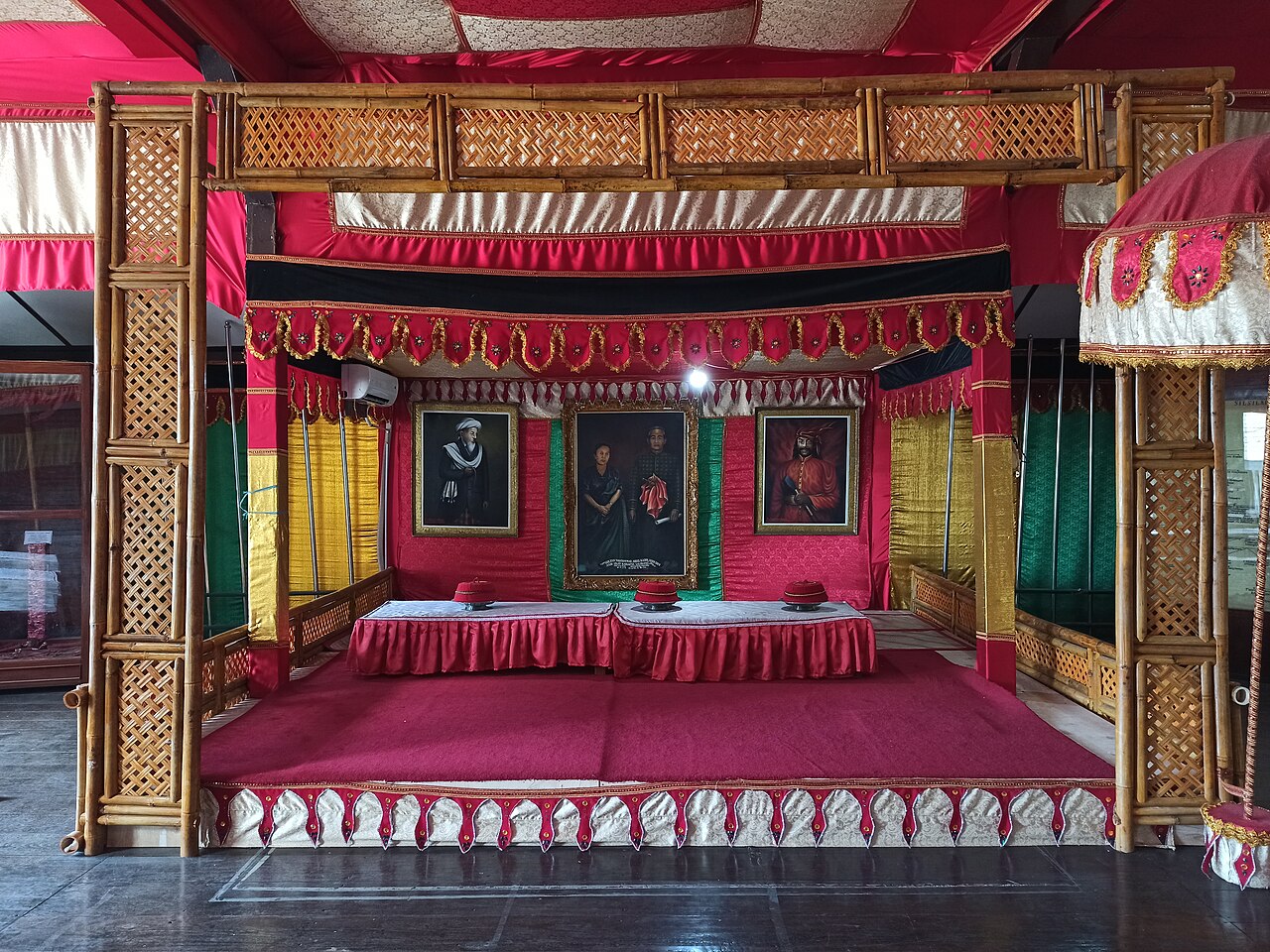
The crown is far more than a display of wealth. It embodies the authority and continuity of the kingdom, treated with the deepest reverence and central to the rituals that sustain the dignity of the royal line. To the people of Gowa, it is a sacred trust.
Alongside the crown, the palace holds other pieces of golden regalia, including ceremonial ornaments and heavy gold chains, together forming a treasury of extraordinary richness. The sheer quantity of gold speaks eloquently of the wealth the kingdom once commanded.
For the visitor, the golden regalia are the highlight of any visit. They reveal the splendor of the Gowa court and the sacred dimension of its kingship, embodied in objects of dazzling beauty and profound meaning.
The weight and richness of the gold on display astonish visitors, offering vivid proof of the wealth that trade brought to the kingdom.
Access to the most sacred regalia is carefully managed, and their display on special occasions is treated with great ceremony.
To stand before the crown is to sense the sacred dimension of Gowa’s kingship, a power understood as a trust handed down through generations.
It is no exaggeration to call the crown one of the supreme treasures of Indonesian royal heritage.
The crown and its accompanying regalia are brought out for the most important ceremonies, when their splendor can be fully appreciated.
At other times, their careful safekeeping reflects the reverence in which they are held by the people of Gowa.
No account of Indonesian royal treasure is complete without mention of the golden regalia of this kingdom.
For the visitor, the sight of so much gold gathered in one place is unforgettable, a vivid measure of the kingdom’s former glory.
The crown remains, above all, the beating heart of the palace, the treasure around which its whole story turns.
Few sights in all of Indonesia so vividly convey the wealth and majesty of a bygone kingdom as the golden treasures gathered here.
The Rooster of the East
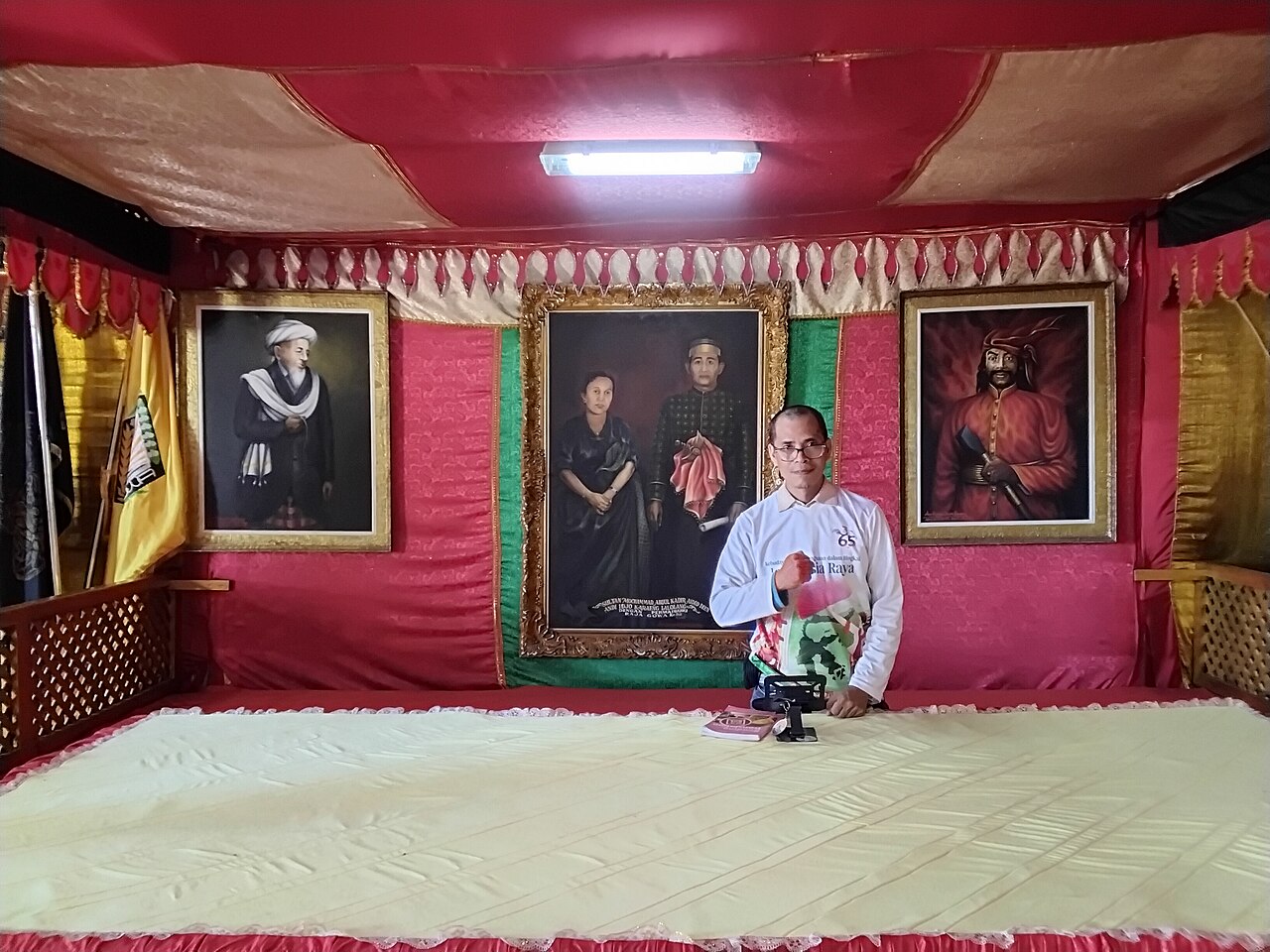
No figure looms larger in the story of Gowa than its great warrior king, a ruler celebrated across Indonesia for his fierce resistance to colonial power. So formidable was he that his enemies themselves gave him a nickname honoring his fighting spirit, a name that has echoed through history.
His long struggle against the encroaching Dutch became legendary, a defiant stand in defense of his kingdom’s independence and the freedom of the eastern seas. Though the odds were immense, his courage made him a lasting national hero.
The memory of this king suffuses the palace and the identity of Gowa itself. He represents the proud, unbowed spirit of a maritime kingdom that refused to submit quietly to foreign domination.
To understand Balla Lompoa is to understand the legacy of this warrior king. The palace stands as a monument to a kingdom whose defiance became a symbol of resistance for the whole nation.
His resistance, though ultimately overwhelmed, entered the national imagination as a symbol of courage and defiance against colonial power.
To this day his name is honored across Indonesia, and it is inseparable from the story of Gowa and its palace.
The great port and fortifications of his kingdom became the stage for some of the most dramatic episodes of resistance in the region’s history.
His legacy is a reminder that the maritime kingdoms of the East defended their freedom with fierce determination.
Songs, stories and monuments across the region keep his memory alive, and his example continues to inspire pride in the seafaring heritage of Sulawesi.
In him, the defiant spirit of Gowa found its most enduring embodiment, and the palace honors that spirit still.
His story lends the palace a heroic dimension, connecting the treasures within to a legendary struggle for freedom.
To visit the palace is, in a sense, to pay quiet homage to his defiance and to the proud kingdom he fought to defend.
Masters of the Eastern Seas
Gowa’s greatness was built on the sea, and the kingdom stands as one of the supreme examples of the maritime civilizations of the archipelago. Its people, the Makassar and their Bugis neighbors, were among the finest sailors and shipbuilders in the region.
The kingdom’s great port was one of the busiest in the eastern archipelago, a cosmopolitan hub where traders of many nations met to exchange the goods of a vast region. This commerce brought Gowa its wealth and its wide-reaching influence.
This maritime orientation shaped every aspect of the kingdom, from its economy to its outlook to its rivalries with other powers. Gowa looked outward to the sea, and its fortunes rose and fell with the tides of trade and conflict upon it.
The palace, though it stands inland, is the seat of this seafaring realm, and its treasures reflect the wealth that the ocean brought. To visit Balla Lompoa is to encounter the heart of one of the great maritime kingdoms of the East.
The ships of the region, famed for their design and seaworthiness, carried Gowa’s traders and warriors to distant shores.
This seafaring heritage remains a source of immense pride for the people of Makassar and the wider region.
The wealth that flowed through the kingdom’s port funded its splendor, its ceremonies and its ability to project power across the seas.
To understand Gowa is to understand the sea, and the palace is the seat of a realm that the ocean made great.
The kingdom’s shipwrights produced vessels admired throughout the archipelago, and its sailors ranged as far as distant northern coasts in search of trade.
This bold maritime culture gave Gowa a character all its own, restless, enterprising and proud.
That legacy of the sea still runs deep in Makassar today, a city that has never forgotten its origins as the heart of a great maritime kingdom.
The Great House gathers the memory of all this seafaring glory beneath its towering roof, a fitting seat for a kingdom of the waves.
Even today, the harbor of Makassar bustles with the descendants of that seafaring tradition, a living link to the age when Gowa ruled the eastern waves.
A Treasury of Regalia
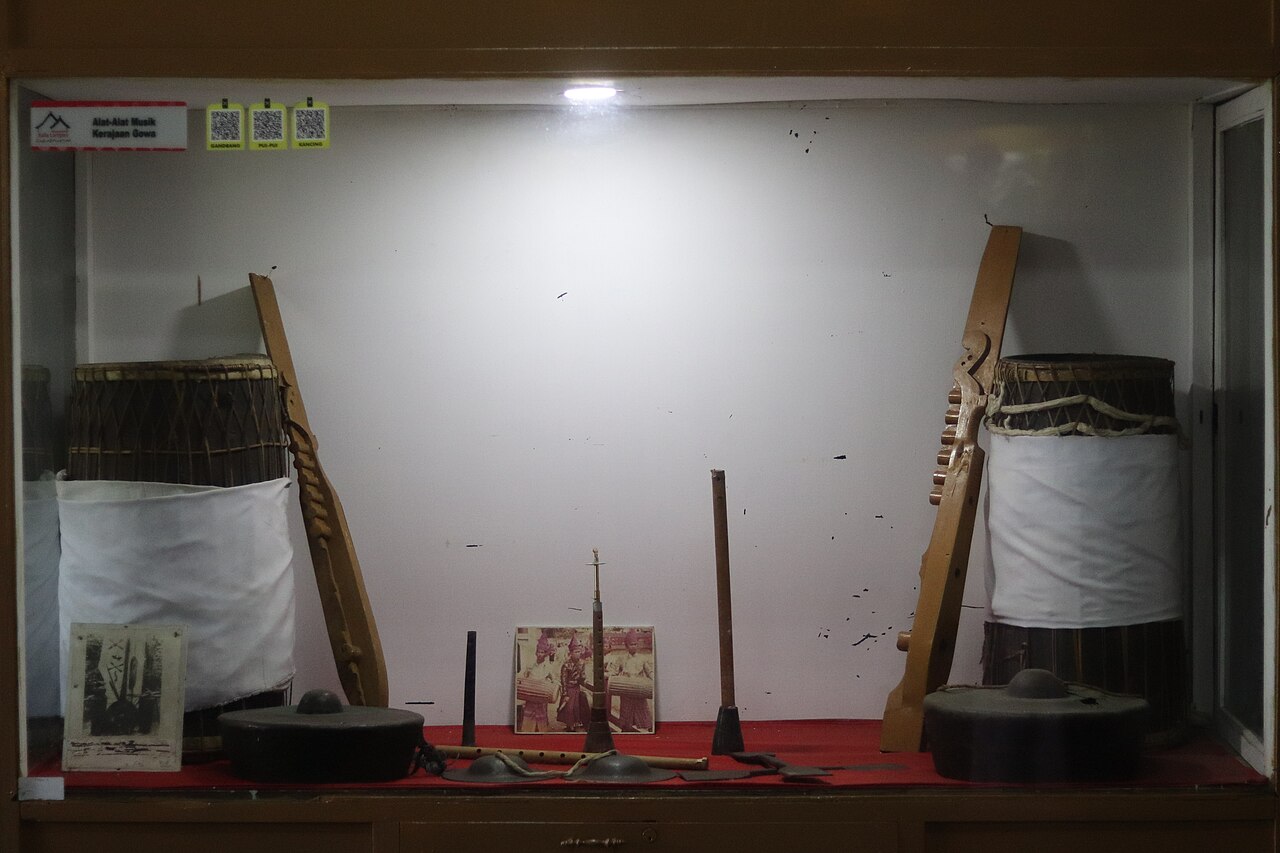
Beyond the famous crown, Balla Lompoa preserves a rich collection of the Gowa kingdom’s regalia and heirlooms. Weapons, ceremonial objects, ornaments and sacred items together tell the story of the dynasty and the rituals that sustained its authority.

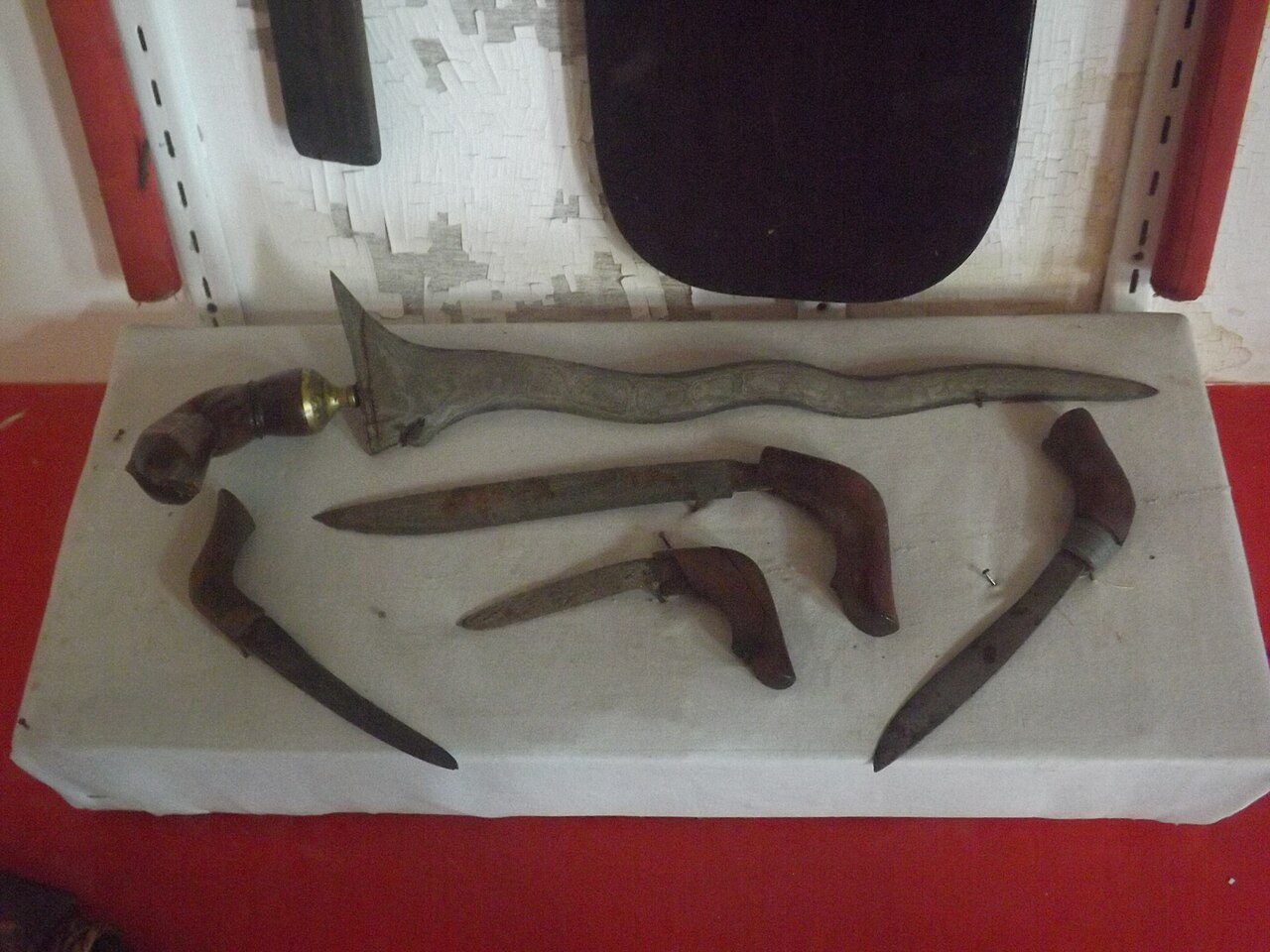
Among the treasures are the distinctive daggers and weapons of the region, objects of both practical and spiritual significance, as well as ornaments and ceremonial equipment used in the great rites of the court. Each carries its own meaning and history.
These collections make the palace a treasury of memory, safeguarding the material heritage of one of Indonesia’s most historic kingdoms. They offer an intimate view of the culture and beliefs of the Gowa court.
For those who explore the palace, the regalia bring its history vividly to life. Each object opens a window onto the world of the kingdom, from its warrior traditions to its sacred ceremonies.
The daggers in particular, with their distinctive wavy blades, are objects of deep cultural significance, believed by many to carry spiritual power.
Together the collection amounts to a treasury of memory, preserving the material heritage of one of the archipelago’s greatest kingdoms.
Each visit reveals new details, and those who linger are rewarded with a fuller understanding of the Gowa court and its world.
For the visitor, lingering over these objects is the surest way to feel the presence of the vanished kingdom and its warrior kings.
The range of objects, from weapons to ornaments to sacred items, reflects the many facets of a court that was at once warlike, wealthy and deeply spiritual.
It is a collection that rewards patient attention, each object adding another thread to the rich tapestry of the kingdom’s story.
Taken together, the regalia transform the palace from a beautiful structure into a living record of a proud and powerful dynasty.
Sacred Objects and Ceremonies
The regalia of Gowa are not mere museum pieces; many are regarded as sacred objects, imbued with spiritual power and treated with great ceremony. The palace remains a place where these items are honored and, on occasion, ritually cleansed and displayed.

Such ceremonies keep alive beliefs and practices reaching back through the centuries, connecting the present community to the sacred foundations of the kingdom. The palace serves as the setting for these important observances.
The reverence shown to the regalia reflects a kingship understood as more than political rule, a sacred trust bound up with the spiritual welfare of the people. The objects are living links to the ancestors and to the divine.
For the visitor, this sacred dimension deepens the experience of the palace. Balla Lompoa is not only a museum but a place where the spiritual traditions of Gowa continue to be honored and maintained.
The ritual cleansing of the regalia is among the most solemn of these observances, an occasion of deep significance for the community.
Such ceremonies reveal a worldview in which objects, ancestors and the living are bound together in a continuous sacred order.
To witness or even to learn of these rites is to glimpse the spiritual heart of the Gowa kingdom.
This enduring reverence ensures that the palace remains a living spiritual center, not merely a repository of the past.
In these observances, the past and present of Gowa meet, and the sacred foundations of the kingdom are renewed for another generation.
For the community, these rites are not relics but living acts of devotion, binding each new generation to the sacred heritage of Gowa.
The Bugis-Makassar World
Balla Lompoa is a window into the rich culture of the Bugis and Makassar peoples of South Sulawesi, renowned throughout Indonesia as seafarers, traders and warriors. The palace embodies the traditions, aesthetics and values of this proud maritime society.

From the architecture of the Great House to the objects it contains, the palace expresses a distinctive cultural world with its own customs, arts and social order. To visit is to enter this world and to appreciate its depth and sophistication.
The Bugis-Makassar peoples have left their mark across the archipelago and beyond, their ships and communities found in distant corners of the region. Gowa was one of the great centers of this expansive and dynamic culture.
Understanding this cultural context enriches a visit. Balla Lompoa is not an isolated monument but the crowning expression of one of Indonesia’s most remarkable and far-reaching maritime civilizations.
The seafaring reputation of these peoples is legendary, and their communities can be found scattered across the islands of Southeast Asia and beyond.
Their culture prizes honor, courage and enterprise, values embodied in the history of Gowa and its warrior kings.
The palace stands as a proud monument to this remarkable and far-reaching civilization.
Their traditions of navigation, honor and craftsmanship have earned them a special place in the story of maritime Southeast Asia.
Balla Lompoa gathers all these strands together, a monument to a culture as dynamic as the seas it mastered.
To appreciate the palace fully is to appreciate the whole world of the Bugis and Makassar peoples, one of Indonesia’s great maritime cultures.
In honoring this heritage, Balla Lompoa offers the world a window into a civilization whose influence reached across an ocean.
The enduring vitality of this culture, still expressed in the seafaring life of modern Makassar, gives the palace a living relevance that mere age could never confer.
Preserving the Great House
Today Balla Lompoa is cared for as a museum and a cherished heritage site, its architecture and treasures preserved for future generations. This stewardship reflects the deep value placed on the palace as a symbol of Gowa and of South Sulawesi.
Maintaining a large timber building in a tropical climate is a demanding task, requiring constant attention to protect its distinctive fabric. The ongoing effort to conserve the palace testifies to how much it is treasured by the community.
By opening the palace to the public and displaying its regalia, its custodians allow visitors to experience the splendor of the Gowa kingdom firsthand, helping to keep its story alive for new generations.
This commitment to preservation ensures that Balla Lompoa will continue to inspire. It stands as a reminder that heritage must be actively maintained, a responsibility taken up anew by each generation.
The palace draws visitors from across Indonesia and beyond, all eager to see its famous golden crown and to learn the story of Gowa.
Its careful upkeep ensures that this outstanding example of traditional architecture will endure for generations to come.
In safeguarding Balla Lompoa, South Sulawesi preserves not just a building but a whole chapter of its proud maritime heritage.
For the visitor, the result is a chance to experience the world of the Gowa kingdom in a setting lovingly maintained for the future.
Living Traditions of the Court
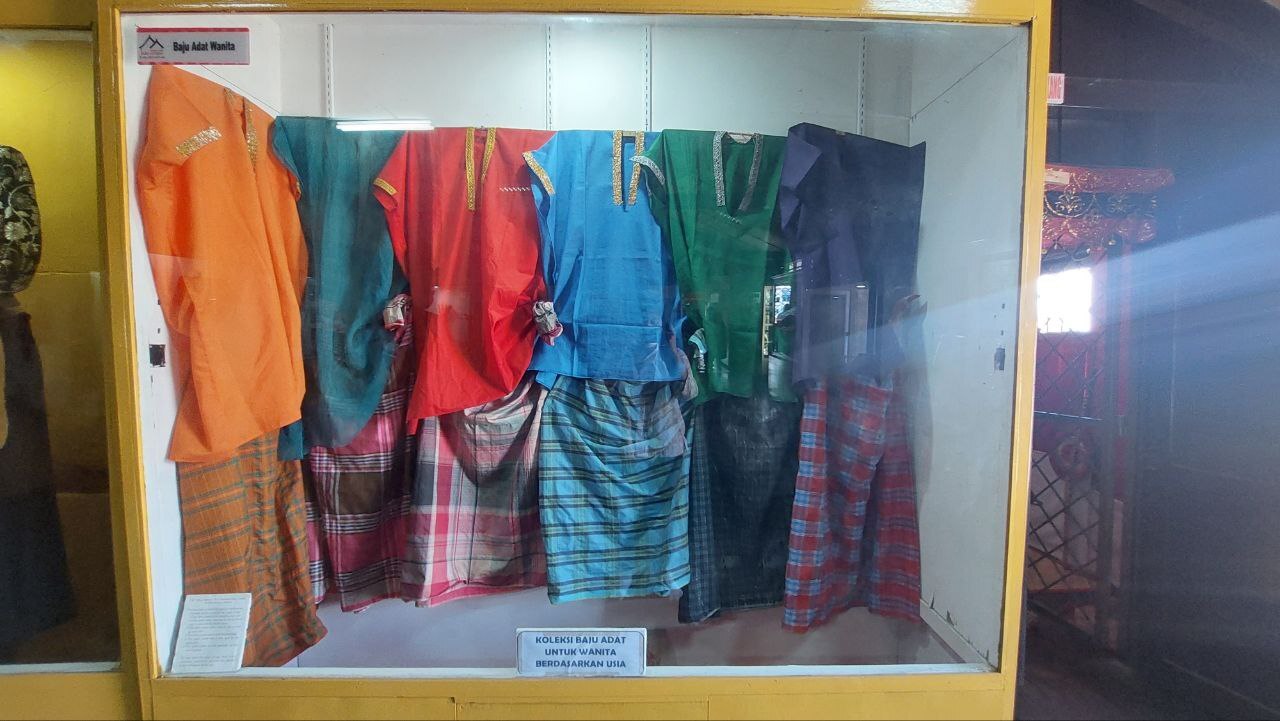
Although the kingdom of Gowa belongs to history, its traditions live on around Balla Lompoa, which continues to serve as a focus for the cultural life of the community. Ceremonies, gatherings and celebrations keep the customs of the old court alive.

On special occasions the palace becomes the stage for rituals rooted in centuries of tradition, when the sacred regalia may be honored and the heritage of Gowa is proudly displayed. These events draw the community together around its royal past.
Traditional dress, music and dance feature in these observances, offering a vivid glimpse of the courtly culture of the Bugis-Makassar world. The palace provides the perfect setting for such expressions of living heritage.
This continuity is deeply meaningful, ensuring that Balla Lompoa is not simply a museum of a vanished world but a place where the traditions of Gowa continue to be practiced and cherished.
For visitors fortunate enough to witness these ceremonies, they offer an unforgettable encounter with a proud culture that has kept faith with its past.
In these moments of celebration, the long history of Gowa becomes, for a time, gloriously present once more.
The care taken to maintain these traditions ensures that the cultural heart of Gowa continues to beat strongly into the present day.
For the community, they are a source of identity and pride, binding the present to a glorious past.
Those who time their visit to coincide with a ceremony carry away memories of a spectacle few other historic courts can still offer.
Encountering these living traditions is a rare privilege, and one that stays with visitors long after they depart.
A Closer Look on Film
To appreciate the grandeur of Balla Lompoa and the richness of its treasures, film offers a fine complement to a visit. The short video below helps bring the palace and its golden regalia to life.
Watching it, you can better sense the scale of the timber architecture, the splendor of the crown and the atmosphere of the Great House, details that reward a closer look. It makes an ideal companion to understanding this historic palace.
Balla Lompoa Today
Today Balla Lompoa endures as one of the most important historical and cultural sites in South Sulawesi, a proud symbol of the Gowa kingdom and of Makassar identity. Its distinctive architecture and golden treasures continue to move and fascinate all who visit.
For travelers, the palace offers a rare and rewarding encounter with one of the great maritime kingdoms of the East. To stand within the Great House, surrounded by the regalia of a proud seafaring realm, is to feel the pull of a powerful history.
There is a lesson in the endurance of Balla Lompoa. It shows how a kingdom’s heritage can survive and thrive long after its age of power has passed, carried forward in architecture, treasure and living memory.
When you finally turn to leave, glance back at the Great House rising on its pillars against the Sulawesi sky. You will carry with you the memory of a golden crown, a defiant warrior king, and one of the mightiest maritime kingdoms the eastern seas ever knew.
Long after leaving, travelers find the image of the Great House on its pillars returning to mind, a lasting symbol of a proud seafaring kingdom.
It remains a place of pilgrimage for those who wish to understand the true story of maritime Sulawesi.
It stands, in the end, as proof that the greatness of a kingdom can outlive its age, carried forward in gold, timber and living memory.
For anyone drawn to the history of maritime Indonesia, the palace of Gowa is an essential and unforgettable destination.
And so Balla Lompoa endures, guardian of a golden crown and a proud history, rising on its pillars against the Sulawesi sky.
Whatever route brings you here, Balla Lompoa rewards the journey many times over, leaving every visitor with a deeper sense of maritime Indonesia’s grandeur.
In the end, the palace stands as a bridge between a glorious past and a living present, inviting all who visit to share in the story of Gowa.
For those who reach it, the Great House offers not just a glimpse of treasure but a genuine sense of connection to one of the proudest chapters in Indonesian history.
View the location on Google Maps
Palaces Nearby
If the Great House of Gowa has drawn you into the world of Indonesia’s sultanates, two more royal palaces of the archipelago make natural companions to this one.
- the Kedaton of Ternate, the palace of a spice sultanate set between a volcano and the sea in Maluku.
- the Istana Siak, a gleaming white-and-blue Malay river palace in Sumatra.
You May Like
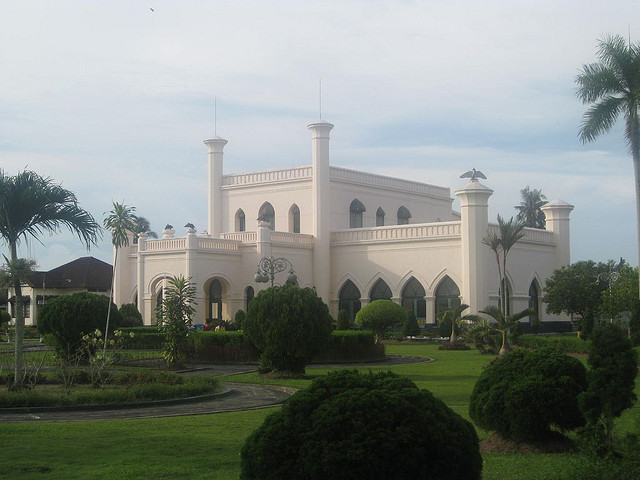
The Istana Siak, a Fairy-Tale Malay Palace on a Sumatran River


2 thoughts on “Balla Lompoa, the Great House and Golden Crown of the Gowa Kings”