On the western edge of Graz, at the end of a long avenue and surrounded by a park where peacocks roam the lawns, stands one of the most intriguing palaces in Austria. Eggenberg Palace looks at first like a stately, rather severe baroque residence, square and solid with towers at its corners. But this building hides a secret. It was designed as a model of the universe, a calendar in stone, in which windows, rooms and doors were counted out to reflect the days, weeks and months of the year.
Inside, a sequence of magnificent state rooms leads to the breathtaking Planetary Hall, painted with the gods of the planets and the signs of the zodiac. Along the way you will find candlelit interiors that have scarcely changed in centuries, a rare Japanese room whose screens show a lost castle of Osaka, and collections that make the palace one of the cultural treasures of Styria. No wonder it is part of a UNESCO World Heritage Site together with the historic centre of Graz.
In this article we will explore the story of Eggenberg, from the ambitious statesman who built it to its cosmic symbolism, its painted halls, its gardens and everything you need to know to plan your own visit. So come along, and let us step inside a palace built to mirror the heavens.
In This Article
- A Palace Built Like a Universe
- Hans Ulrich of Eggenberg and His Rise to Power
- A Calendar Written in Stone
- Courtyards and Arcaded Galleries
- Towers, Staircases and the Road to the Piano Nobile
- The Planetary Hall
- Gods, Planets and Painted Heavens
- A Suite of Candlelit State Rooms
- Rococo Touches and the Red Salon
- The Japanese Room and a Lost Castle
- A Chapel and Collections Worth Exploring
- Step Inside Eggenberg on Film
- Visiting Eggenberg Palace Today
A Palace Built Like a Universe
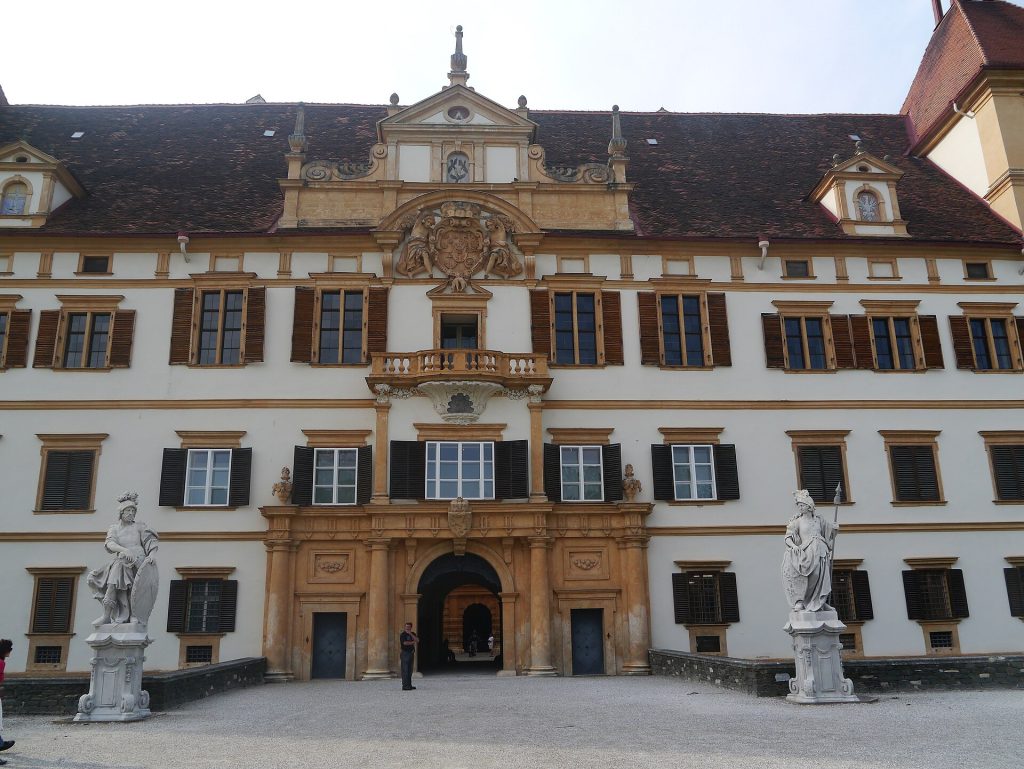
Arriving at Eggenberg, the first thing you notice is its strict geometry. The palace forms a great square block, with corner towers and long rows of evenly spaced windows. Compared with the playful outlines of many baroque palaces, it seems almost austere, a building designed to express order and harmony rather than fantasy.
That impression is no accident. The palace was conceived as an image of the cosmos, in which every element was arranged according to a careful plan. It is one of the most fascinating examples anywhere of how the people of the seventeenth century tried to express their understanding of the universe through architecture.
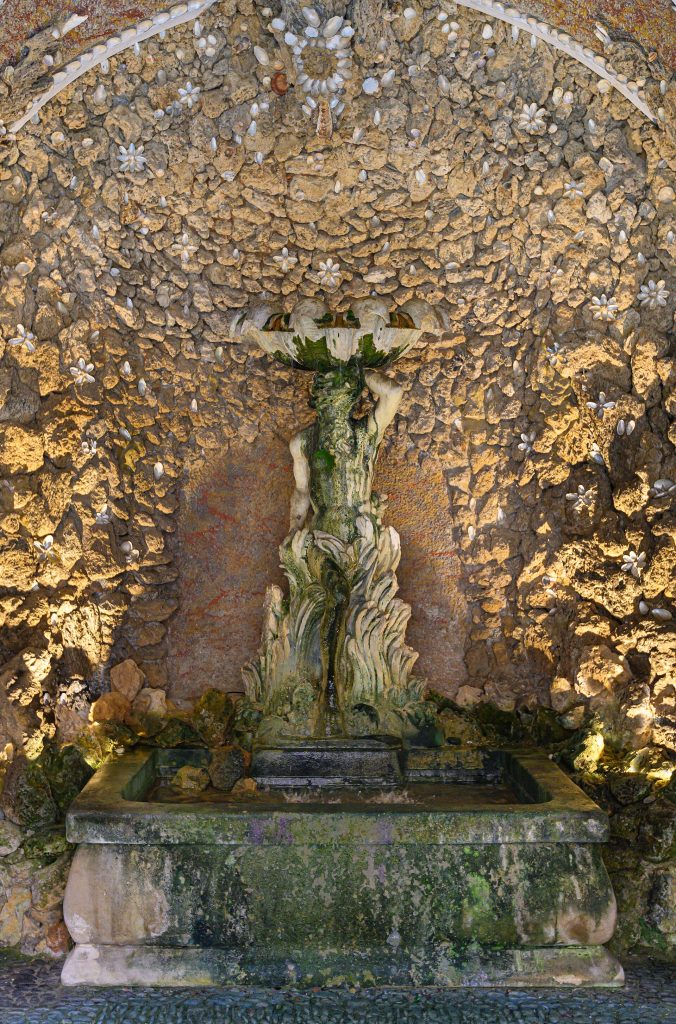
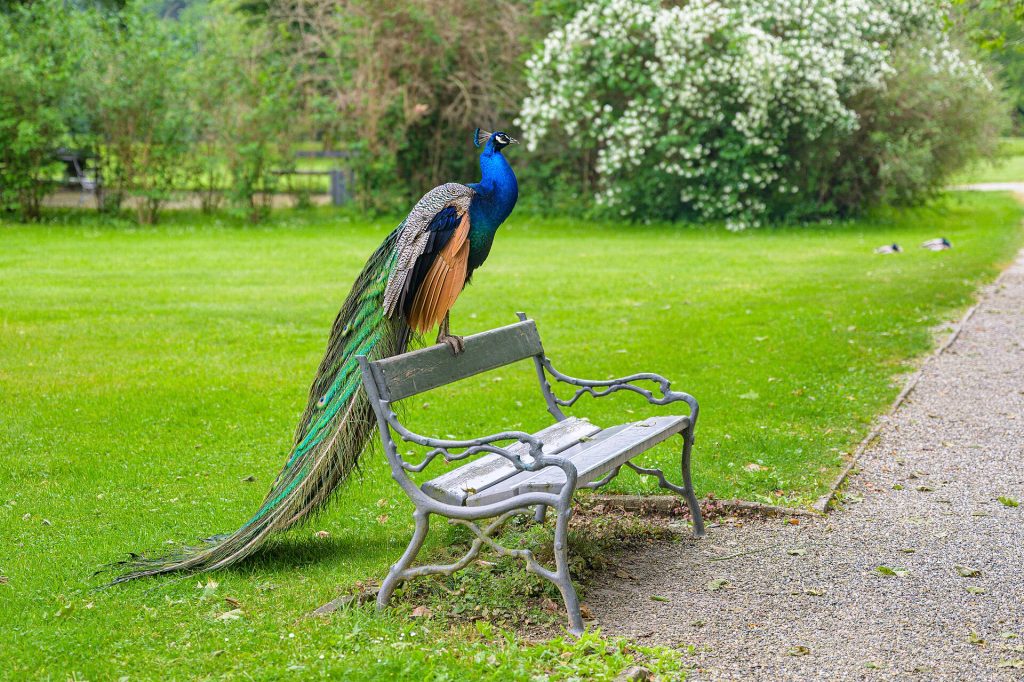
Around the palace stretches a large landscaped park, where you can stroll along shady paths, discover a romantic grotto and watch the famous peacocks that strut across the lawns and sometimes perch on the garden walls. It is a peaceful place, only a short tram ride from the busy centre of Graz, yet it feels like a world apart.
Before you even step inside, it is worth walking around the building to appreciate its proportions. Count the windows, look at the towers and notice the rhythm of the facades. You are looking at a building that was designed to be read like a book of symbols.
Eggenberg is also a place where history feels unusually close. Because so much of the original decoration survives untouched, and because the rooms are not crowded with modern additions, you can walk through them with a sense that the princes and their guests have only just stepped out.
The palace is also surprisingly calm compared with the more famous imperial residences of Vienna. Even in the busy season it rarely feels crowded, which makes it a pleasure to explore at your own pace.
Hans Ulrich of Eggenberg and His Rise to Power
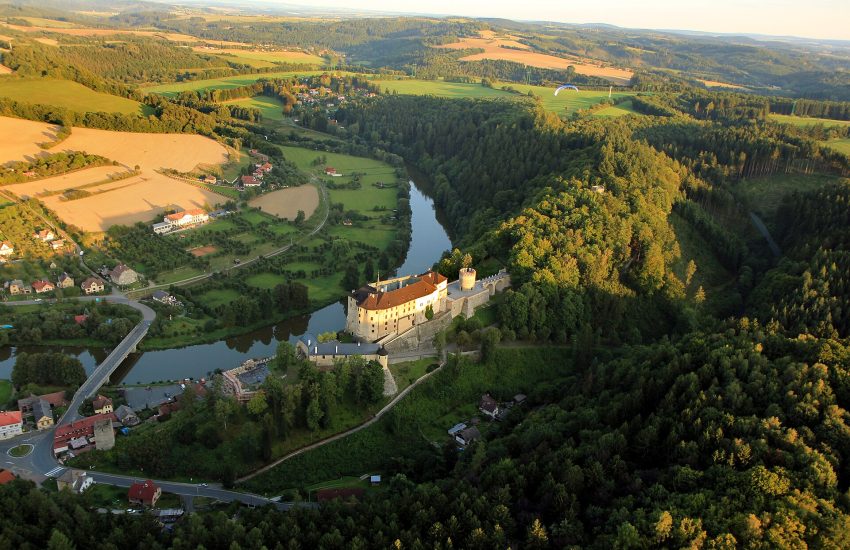
The palace was built for Hans Ulrich of Eggenberg, one of the most powerful men of his age. Born in 1568 into a family of Styrian merchants and bankers, he rose through service to the Habsburg prince Ferdinand, who later became Emperor Ferdinand II. Hans Ulrich became his closest adviser and effectively his chief minister, at the heart of imperial politics during the early years of the Thirty Years War.
His success brought enormous wealth, titles and lands. He was made a prince of the empire and received the Duchy of Krumau in Bohemia, which included the great castle of Cesky Krumlov. He was also governor of Inner Austria, the group of Habsburg lands that had Graz as its capital.
To match his new status, Hans Ulrich needed a residence that would express his power and learning. He chose to rebuild and greatly expand an older family house outside Graz, and from around 1625 the new palace began to take shape. It was meant to rival the residences of the greatest princes in Europe.
Hans Ulrich died in 1634 and did not live to see the interiors completed, but the palace he planned remained the seat of his family for generations, a lasting monument to one of the most remarkable careers of the seventeenth century.
His career was marked by the turbulent politics of his time. The Thirty Years War tore central Europe apart, and as the emperor’s leading adviser Hans Ulrich was involved in some of the most important decisions of the early war years. His enemies resented his influence, but his loyalty to Ferdinand never wavered.
The Eggenberg coat of arms, featuring three ravens carrying a crown, can be seen in several places around the palace. It is a reminder of the family that rose so quickly from merchants to princes and left this extraordinary building as their legacy.
It is interesting to compare Eggenberg with Cesky Krumlov, the other great residence connected with the family. Krumlov is a dramatic medieval and Renaissance castle above a river, while Eggenberg is a rational, symmetrical palace on the plain. Together they show the range of the family’s ambitions and tastes.
A Calendar Written in Stone
The design of Eggenberg is full of numerical symbolism. The palace is often said to have 365 windows on its outer facades, one for every day of the year. On the main floor there are 24 state rooms, matching the hours of the day, and these rooms together contain 52 windows, one for each week of the year. The four corner towers represent the four seasons, and other features have been linked to the months and the phases of the moon.
To the people of the seventeenth century, such symbolism was deeply meaningful. They saw the universe as a harmonious creation governed by divine order, and they believed that architecture could reflect that order. By building his palace as a model of time and the cosmos, Hans Ulrich was placing himself and his family within the grand design of creation.
The architect who translated these ideas into stone was Giovanni Pietro de Pomis, a painter, architect and medal maker who worked for the Habsburg court in Graz. He combined the ideas of Italian Renaissance architecture with the symbolic programme desired by his patron, creating a building that is both rational and mysterious.
As you explore the palace, keep these numbers in mind. Once you know the secret, it becomes a kind of puzzle, and many visitors enjoy trying to spot the hidden connections between the architecture and the calendar.
Scholars still debate some of the details, and counting the windows yourself may give slightly different results depending on what you include. But there is no doubt that the overall plan was deliberate, and that Hans Ulrich and his architect intended the building to be understood as a symbol of the ordered universe.
This kind of thinking connects Eggenberg with the wider intellectual world of the early seventeenth century, when astronomy, astrology, mathematics and philosophy were closely linked, and when scholars searched for hidden harmonies in nature.
The palace also faces carefully chosen directions, and some researchers have suggested that its orientation was linked to astronomical observations. Whether or not every theory is correct, it is clear that Eggenberg was meant to be in harmony with the heavens as well as with the landscape around it.
Courtyards and Arcaded Galleries
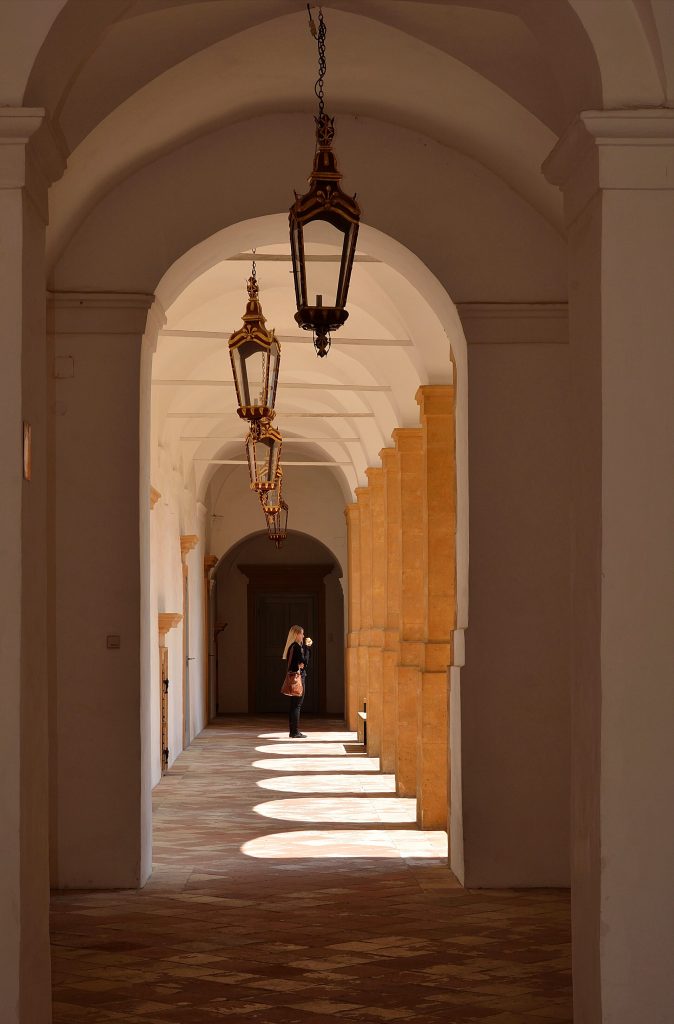
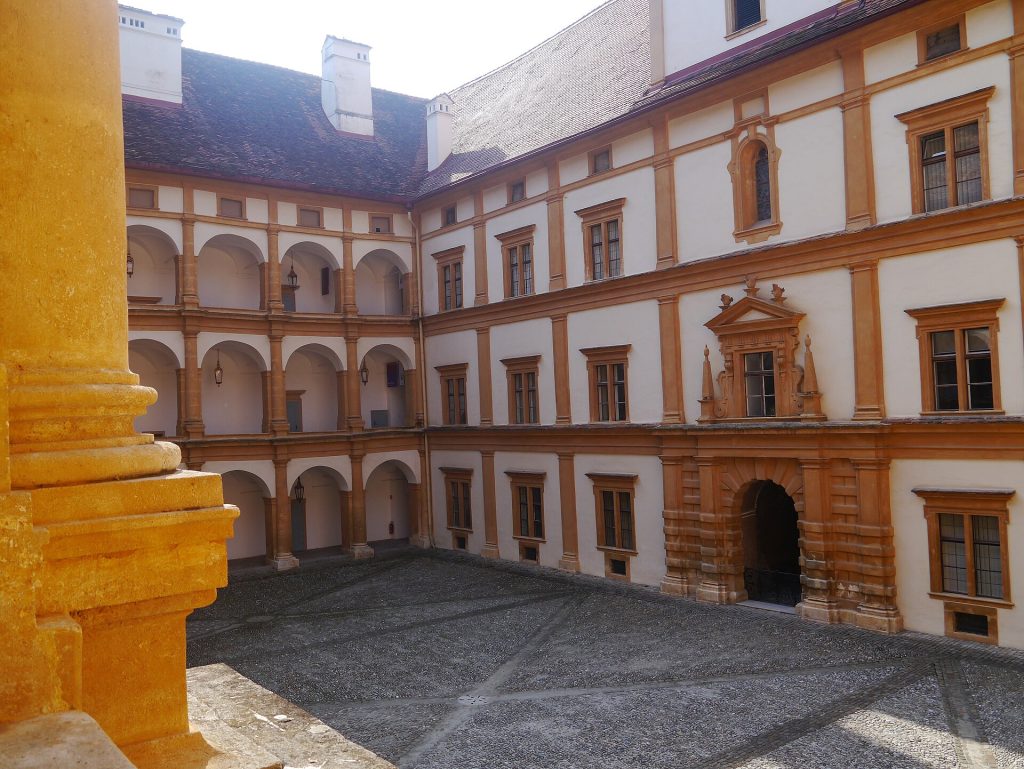
At the heart of the palace lies a large inner courtyard, surrounded by three storeys of arcaded galleries. These open walkways, with their rows of arches, give the courtyard a light and elegant character that contrasts with the more severe outer facades. They also connect the different parts of the building, allowing people to move around the palace while sheltered from the weather.
The courtyard design reflects Italian influence, recalling the cortili of Renaissance palaces in Florence and Rome. At Eggenberg the arcades are arranged with the same careful sense of symmetry that runs through the whole building, creating a feeling of balance and calm.
In the middle of the courtyard rises the older core of the building, including parts of the medieval family residence that Hans Ulrich incorporated into his new palace. This blend of old and new is typical of many great houses, where ambitious owners built around the foundations laid by their ancestors.
The courtyard is a lovely place to pause and take in the scale of the palace. On sunny days the arches cast patterns of light and shadow across the paving, and in summer the space is sometimes used for concerts and cultural events.
From the courtyard you can also appreciate the height of the building and the regular rhythm of the windows on the inner facades. It is a good spot for photographs, especially in the softer light of early morning or late afternoon.
Behind the arcades lie corridors and smaller rooms that once housed officials, servants and visiting guests. A great palace like Eggenberg was a small town in itself, with dozens of people working to keep it running smoothly, and the courtyard was the place where all their paths crossed.
Towers, Staircases and the Road to the Piano Nobile
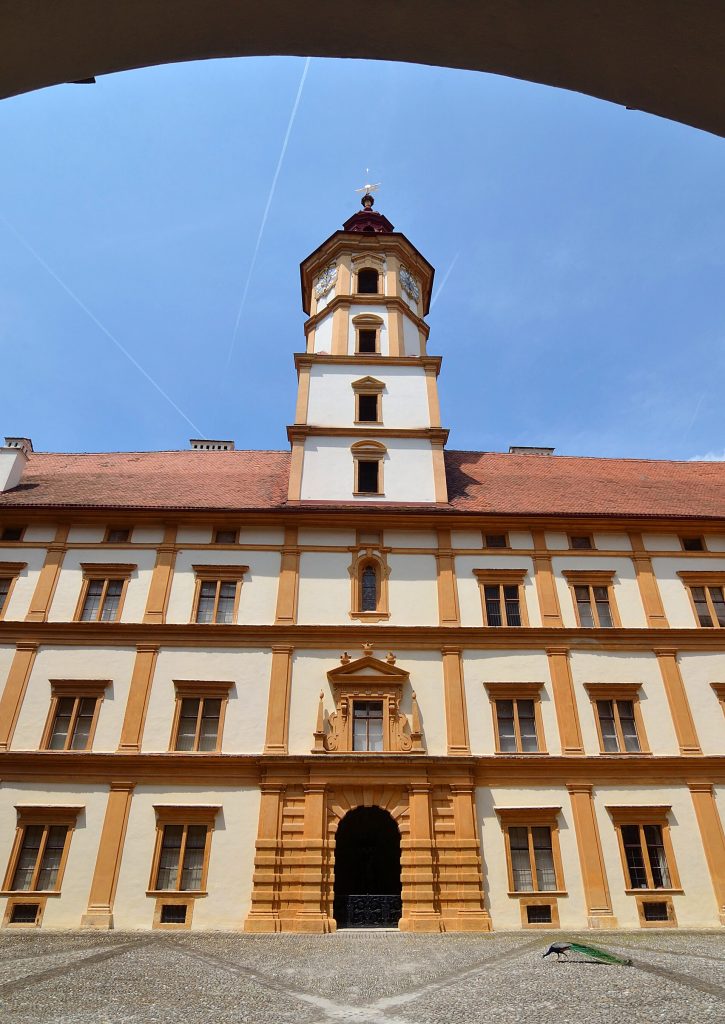
The four corner towers of Eggenberg give the palace its distinctive silhouette. Beyond their symbolic role as the four seasons, they anchor the corners of the great square and lend the building an air of strength and permanence, almost like a castle. Inside them, staircases and smaller rooms connect the different levels of the palace.
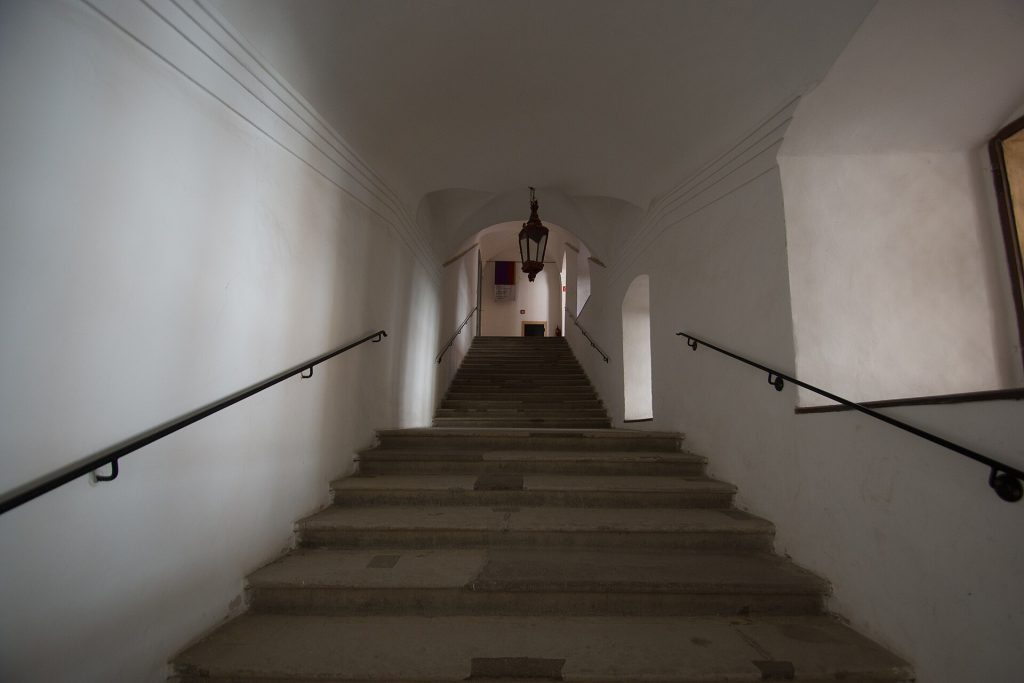
The main staircase leads up to the piano nobile, the principal floor where the grand state rooms are located. In baroque palaces the journey up the stairs was an important part of the experience, a gradual ascent that prepared visitors for the splendour above. At Eggenberg, the staircase is broad and dignified, setting the tone for what follows.
As you climb, you leave behind the practical world of the ground floor, with its service rooms and storage spaces, and enter the realm of ceremony and display. This vertical journey mirrors the symbolic programme of the palace, rising from the earthly toward the heavenly.
Guided tours of the state rooms begin on this floor, and they are well worth joining. The guides explain the symbolism of the rooms and point out details you might otherwise miss, bringing the cosmic plan of the palace to life.
Notice also the solid walls and the deep window recesses as you move through the lower levels. These details remind you that Eggenberg was built at a time of war, when even a palace needed to feel secure.
From the upper windows of the palace you can also catch glimpses of the park and the city beyond, a reminder that Eggenberg was always meant to dominate its surroundings, standing proudly at the edge of the capital of Inner Austria.
The Planetary Hall
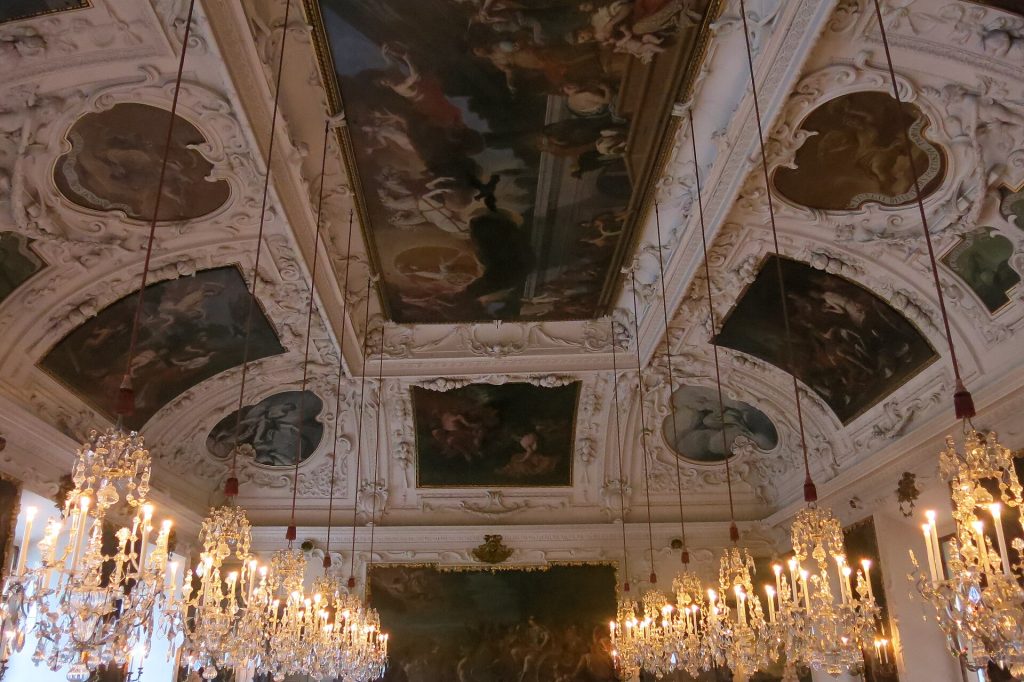
The climax of the state apartments is the Planetary Hall, the largest and most magnificent room in the palace. Its ceiling and walls are covered with paintings that bring the cosmic symbolism of Eggenberg to a spectacular conclusion. Here the gods of the planets, as they were known in the seventeenth century, appear in glorious colour, surrounded by the signs of the zodiac and allegories of the elements.
The hall was decorated in the later seventeenth century, when the grandson of Hans Ulrich, Johann Seyfried of Eggenberg, completed the interiors his grandfather had planned. He commissioned the painter Hans Adam Weissenkircher, who created a cycle of paintings that unite astronomy, mythology and the glorification of the Eggenberg family.
Standing in the middle of the hall, you are surrounded on every side by images of the heavens. The effect is overwhelming in the best sense, a feast of colour, gold and movement that seems to lift the room off the ground. It was here that the family held their most important receptions and celebrations, beneath a painted universe that celebrated their place in the order of things.
The Planetary Hall is one of the great baroque interiors of central Europe, and it alone would justify a visit to Eggenberg. Take your time, look up and let the paintings tell their story.
The room is also used for concerts and special events, and hearing music beneath the painted planets is a memorable experience. If your visit coincides with one, it is well worth booking a ticket.
Take a moment, too, to look at the windows of the hall and the views they frame. Light falling across the painted walls changes throughout the day, and the room can look quite different in the morning and in the late afternoon.
Many visitors find themselves returning to the Planetary Hall at the end of the tour for one last look. It is the kind of room that seems to reveal something new every time you see it.
Gods, Planets and Painted Heavens
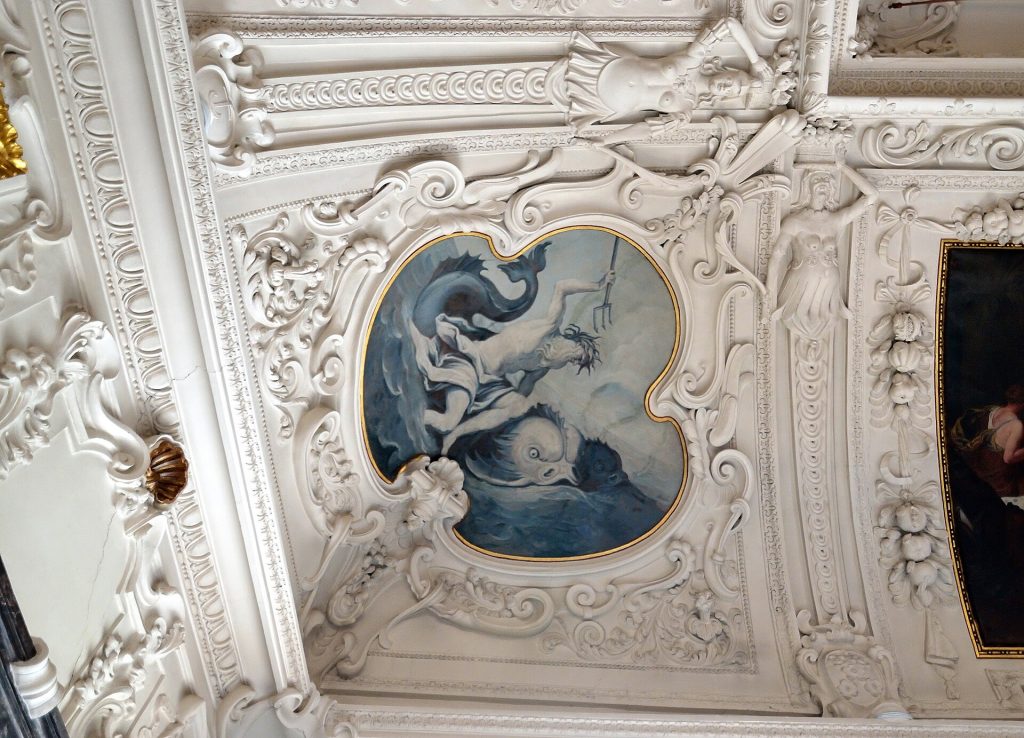
The paintings by Weissenkircher reward careful attention. Each of the seven classical planets known at the time, including the Sun and the Moon, is represented by its mythological deity, with the attributes and companions that ancient tradition associated with it. Around them, the signs of the zodiac mark the passage of the year, completing the calendar theme that runs through the whole palace.
The central image on the ceiling links these heavenly figures to the Eggenberg family itself, suggesting that their fortunes were guided by the stars. To a modern visitor this may seem a little boastful, but in the seventeenth century such imagery was a common way for noble families to express their importance and their connection to the divine order.
Weissenkircher was one of the leading painters in Styria at the time, and his work at Eggenberg is considered his masterpiece. His style combines rich colour, dramatic lighting and elegant figures, drawing on Italian and Flemish influences while developing a voice of its own.
If you are interested in the history of astronomy, the Planetary Hall offers a fascinating glimpse into the way people imagined the heavens at a time when scientific ideas were changing rapidly. It was in this same period that astronomers such as Johannes Kepler, who once worked in Graz, were transforming our understanding of the solar system.
Pay attention also to the gilded stucco frames that surround the paintings. They help to structure the ceiling and guide the eye from one image to the next, creating a sense of order that matches the cosmic theme of the room.
The colours have been carefully restored in recent decades, and they now shine with something close to their original brilliance. Seeing them in person is very different from seeing them in photographs, so make sure you allow time to take it all in.
A Suite of Candlelit State Rooms
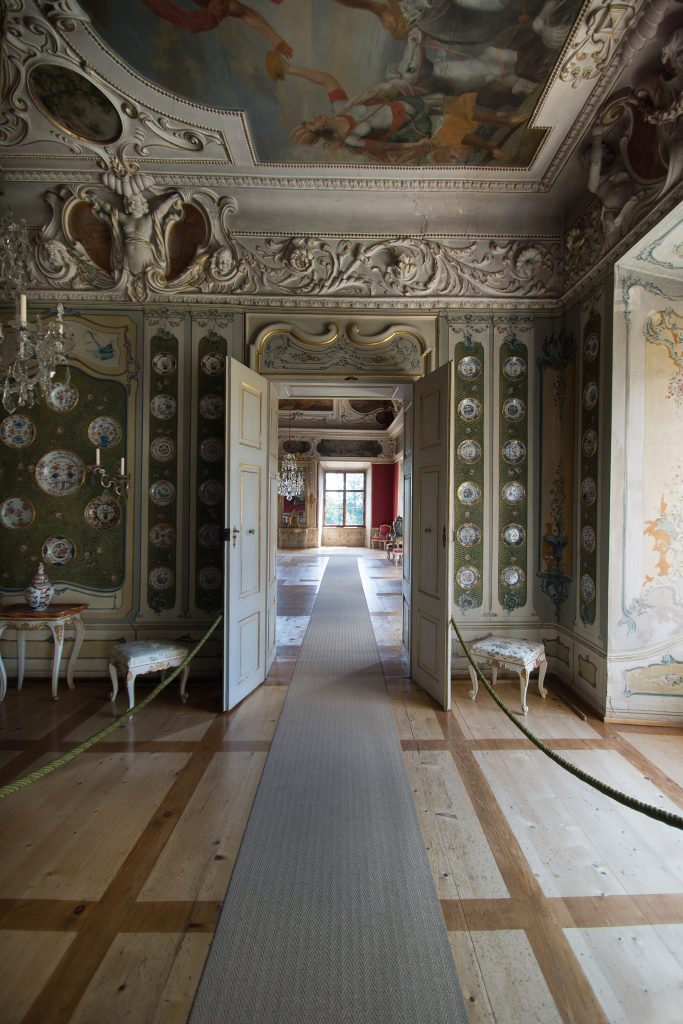
The 24 state rooms of the piano nobile are arranged in a continuous circuit around the palace, so that the doors line up to create a long vista through the whole suite. This arrangement, known as an enfilade, was typical of grand baroque residences, and at Eggenberg it allows you to look through room after room, a dazzling perspective of doorways and painted ceilings.
Each room has a ceiling decorated with paintings, many of them created in the seventeenth century, depicting mythological, biblical and historical scenes. Together they form a vast pictorial programme that has been studied by art historians for its richness and complexity. The walls are hung with silk and painted decoration, and the rooms are furnished with historic pieces.
One of the remarkable things about Eggenberg is how well its interiors have been preserved. The state rooms were never fitted with electric lighting, so they still look much as they did centuries ago. On special occasions they are lit only by candles, creating an atmosphere that transports you straight back to the baroque age.
Walking through the suite is like turning the pages of a great illustrated book. Every room has its own character, yet they all form part of a single, carefully planned whole.
Among the paintings in the state rooms, look out for scenes of love, war, virtue and fate, many drawn from classical mythology. They were meant to entertain and educate guests, offering endless subjects for conversation as they moved from room to room.
Some rooms also contain fine tiled stoves, which once heated the apartments in the cold Styrian winters. These beautiful objects combine practical function with decorative elegance and are a characteristic feature of central European palaces.
The tours usually move at a gentle pace, giving you time to look up at the ceilings and to ask questions. Do not hesitate to ask about particular paintings, because the guides know many fascinating stories about the scenes and their meaning.
Rococo Touches and the Red Salon
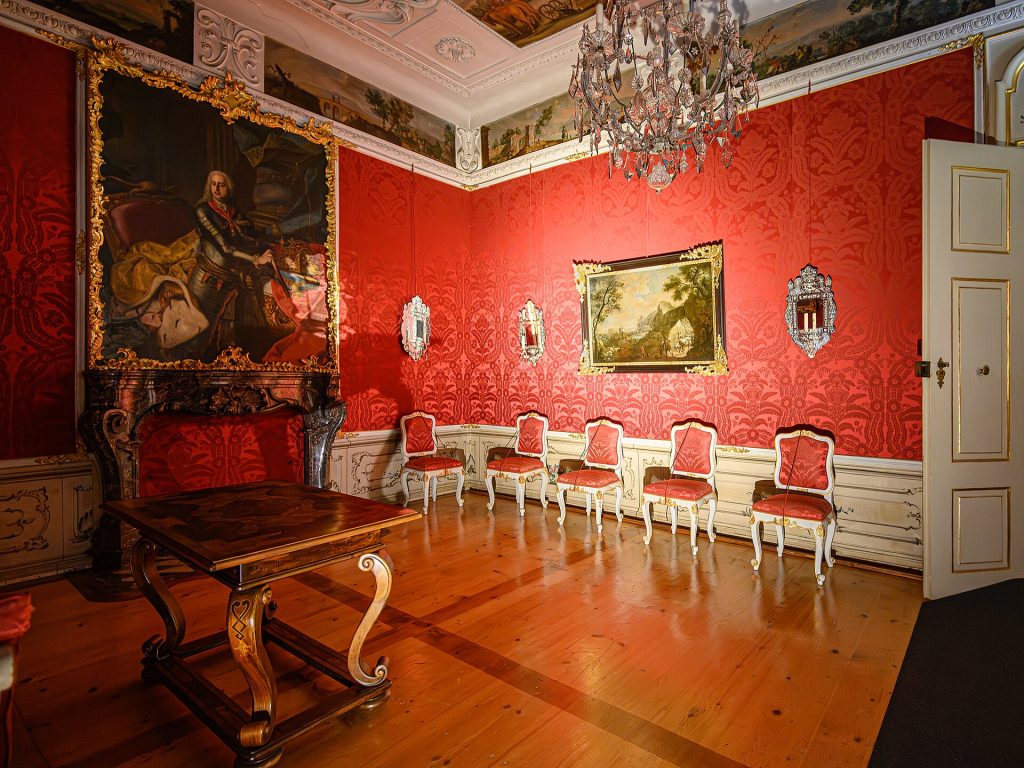
The Eggenberg family line came to an end in the early eighteenth century, and the palace passed by inheritance to the counts of Herberstein, one of the oldest noble families of Styria. In the middle of the eighteenth century they modernised some of the interiors in the lighter, more playful rococo style that was then in fashion.
The Red Salon is a fine example of this later phase. Its walls are covered in rich red fabric, and the decoration is more delicate and intimate than the grand baroque halls. Mirrors, gilded frames and graceful furniture create a sense of refined comfort, reflecting the changing tastes of eighteenth century aristocrats who valued elegance and conversation as much as grandeur.
The Herbersteins also redesigned parts of the gardens, but they took care to preserve the main state rooms, including the Planetary Hall. As a result, the palace today offers a fascinating mix of styles, with early baroque splendour alongside rococo charm.
The family owned Eggenberg until 1939, when the palace was sold to the province of Styria. Since then it has been cared for as a public museum, and careful restoration has brought its interiors back to life.
The contrast between the Red Salon and the Planetary Hall is a lesson in how taste changed over a century. Where the earlier rooms aimed to impress with grand symbolism, the later ones aimed to charm with grace and comfort.
Look out for the delicate painted ornaments and the fine furniture in the rooms remodelled by the Herbersteins. Many pieces were made by craftsmen in Graz and Vienna, and they show the high standard of decorative art in the Habsburg lands in the eighteenth century.
The Japanese Room and a Lost Castle
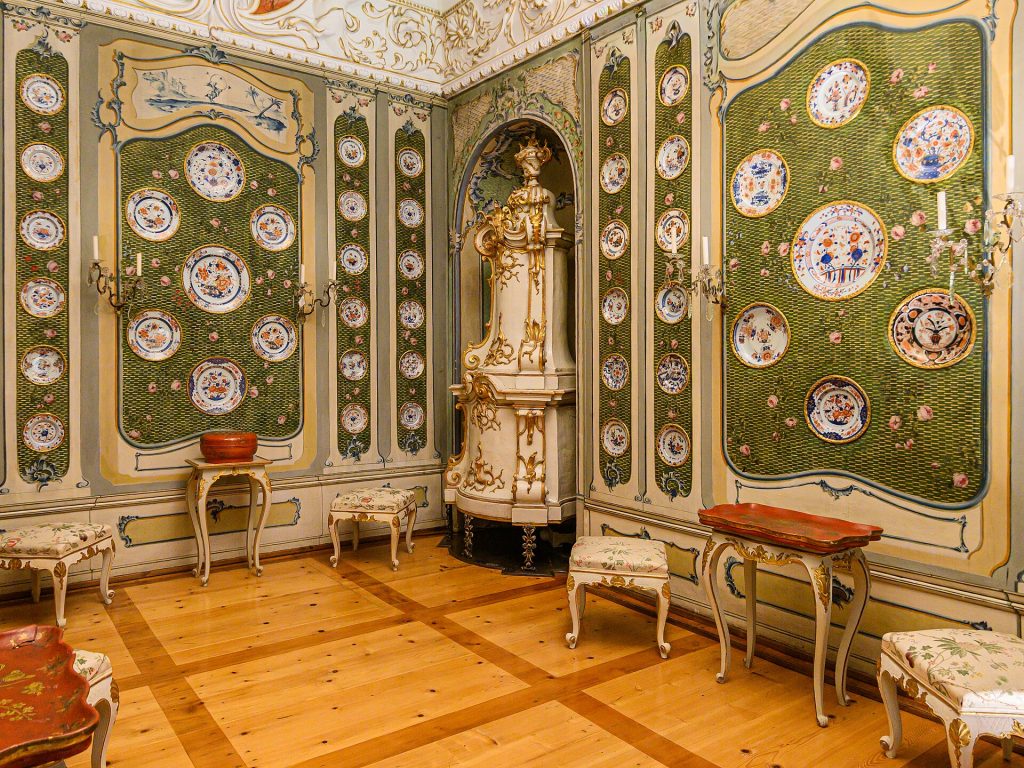
One of the most extraordinary treasures of Eggenberg is found in a room known as the Japanese Room. Its walls incorporate panels from a Japanese folding screen of the early seventeenth century, showing the city and castle of Osaka in remarkable detail. Such screens were rare in Europe, and this one has become famous among scholars worldwide.
What makes it so important is what it shows. The screen depicts Osaka during the time of the Toyotomi family, before the great castle was destroyed in 1615. Very few images of the original castle and the life of the city in that period survive, so the panels at Eggenberg are a precious historical record, studied by historians from Japan and elsewhere.
How the screen reached Graz is not entirely clear, but it was probably acquired through the trade routes that brought Asian luxury goods to Europe in the seventeenth century. In the eighteenth century the panels were cut and fitted into the walls of the room, a common practice at the time, and they have remained there ever since.
Standing in the Japanese Room, you are looking at a world that vanished four centuries ago on the other side of the globe, preserved in a palace in the heart of Austria. It is one of the most unexpected and moving experiences that Eggenberg offers.
In recent years the screen has attracted great interest from Japanese researchers and visitors, and it has become a symbol of cultural connection between Graz and Osaka. Restoration work has helped to preserve the delicate painted surfaces for future generations.
The room also contains other examples of the eighteenth century fascination with Asia, including porcelain and lacquer pieces. Together they show how far the cultural horizons of a Styrian noble family could reach, even at a time when travel to East Asia was rare and dangerous.
A Chapel and Collections Worth Exploring
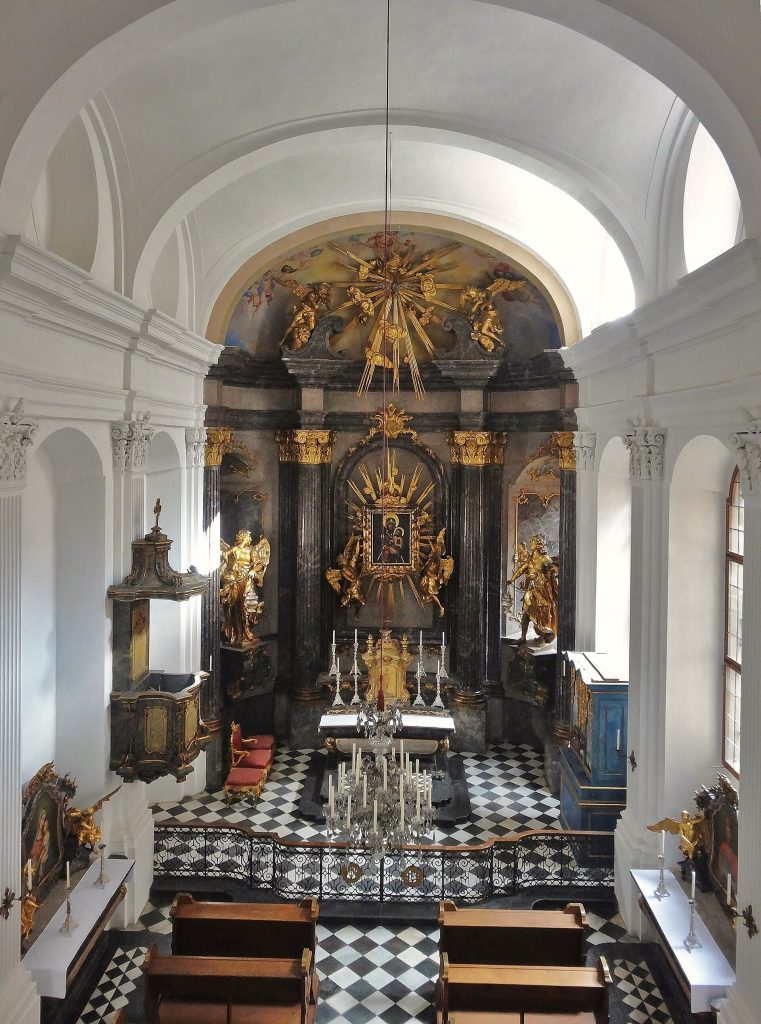
Like most great residences of its time, Eggenberg has its own chapel, used by the family for worship and private devotions. Its decoration reflects the religious culture of the Catholic Habsburg lands, and it provides a calmer, more reflective space within the palace.
Today Eggenberg is part of the Universalmuseum Joanneum, one of the oldest museums in Austria, and the palace and its grounds host several important collections. These include a coin cabinet with an impressive array of historic coins and medals, an archaeology museum displaying finds from Styria and beyond, and the Old Gallery with paintings and sculptures from the Middle Ages to the baroque period.
Among the archaeological treasures, look out for the famous Strettweg cult wagon, a bronze object from the early Iron Age showing a goddess surrounded by riders and figures. It is one of the most important prehistoric finds from Austria, and it is a highlight for many visitors.
With so much to see, it is easy to spend a whole day at Eggenberg. You can combine a tour of the state rooms with visits to the museums and a long walk in the park, making it one of the richest cultural destinations in the region.
The Old Gallery in particular is a hidden gem, with medieval altarpieces, Renaissance portraits and baroque paintings that trace the history of art in the region. Even visitors who come only for the palace often find themselves lingering here longer than they expected.
The coin cabinet is also more interesting than it may sound. Coins and medals were powerful tools of propaganda in the past, carrying the portraits and symbols of rulers to every corner of their lands, and the collection tells the story of Styria and the Habsburg monarchy through these small but eloquent objects.
Step Inside Eggenberg on Film
To get a feeling for the scale and splendour of Eggenberg before you visit, the video below offers a tour of the palace, its state rooms and its gardens. The narration is in German, but the images speak for themselves, taking you from the courtyard to the Planetary Hall and the park.
As you watch, look out for the long enfilade of rooms, the painted ceilings and the colourful details of the Planetary Hall.
After the video, the final section covers practical tips for planning your trip to Graz and Eggenberg.
Visiting Eggenberg Palace Today
Eggenberg lies on the western edge of Graz, the capital of Styria and the second largest city in Austria. It is easy to reach by tram from the city centre, with a short walk from the nearest stop to the palace gates. Graz itself is a lively, attractive city with a UNESCO listed old town, and Eggenberg was added to that World Heritage Site in 2010.
The state rooms can be visited on guided tours, usually from spring to autumn, while the park is open all year round. The museums have their own opening times, and a combined ticket often gives access to several collections. It is a good idea to check the current schedule before you set out, as hours can change with the seasons.
Leave time to enjoy the park. Its paths lead past lawns, flower beds, a planetary garden that echoes the themes of the palace, and a romantic grotto. The peacocks are a constant delight, especially when the males spread their tails in a shimmer of blue and green.
If you can, try to attend one of the candlelit events or concerts held in the state rooms. Seeing the Planetary Hall glowing in candlelight is a rare and unforgettable experience, and it brings you as close as possible to the world of the princes who built it.
Graz is also well known for its food and wine, with the vineyards of southern Styria just a short drive away. After a day at Eggenberg, a meal in the old town or an excursion into the wine country makes a perfect way to round off your visit.
Whenever you come, Eggenberg rewards curiosity. It is a palace that asks you to look closely, to count and to wonder, and it leaves you with a new appreciation of how people in the past tried to capture the mysteries of the universe in stone and paint.
For families, the park is a perfect place to relax after the museum visits. Children love chasing the peacocks, though they should be gentle, and there are plenty of shady spots for a picnic on a warm day.
View the location on Google Maps
Palaces Nearby
If Eggenberg has fascinated you, Austria holds many more princely residences. Here are two more remarkable palaces well worth adding to your journey:
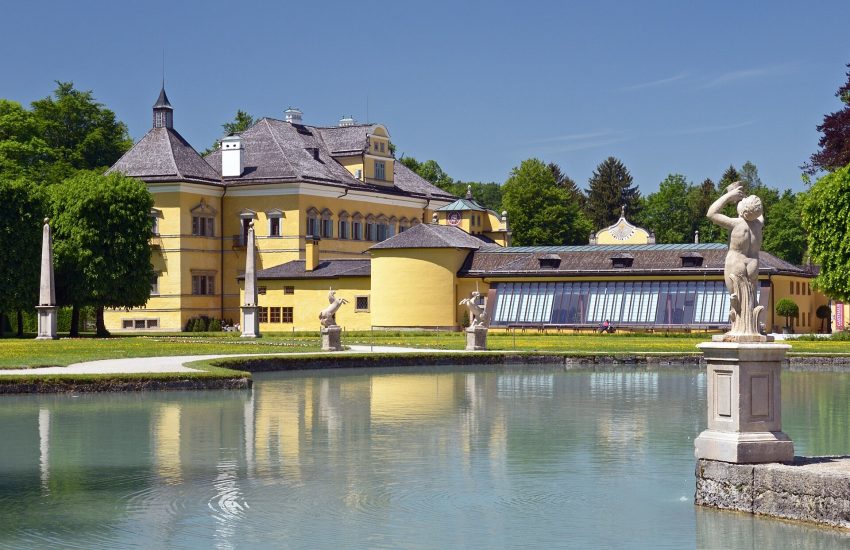
- Hellbrunn Palace – the playful summer palace of a Salzburg prince archbishop, famous for its centuries old trick fountains.
- Schonbrunn Palace – the golden summer residence of the Habsburg emperors in Vienna, with vast gardens and a famous zoo.
You May Like
Hellbrunn Palace and the Trick Fountains of a Playful Archbishop