Few castles in Europe can claim what Cesky Sternberk can claim. For more than seven and a half centuries it has been linked to a single family, the Sternbergs, whose golden eight pointed star still shines above its gate. Perched on a rocky ridge above a bend of the Sazava River, about an hour from Prague, the castle looks like the very picture of a Bohemian stronghold, long and narrow, with towers and walls following the line of the rock as if they had grown out of it.
Yet step inside and you find something unexpected: elegant early baroque rooms filled with stucco, paintings, furniture and one of the most remarkable collections of historic engravings in the country. This is a fortress that became a home, and a home that is still lived in by descendants of the family who founded it in the thirteenth century.
In this article we will explore the story of Cesky Sternberk, from its foundation and its dramatic sieges to its lavish interiors, its defences and the river valley that surrounds it, and we will finish with everything you need to know to plan your own visit. So come along, because this is a castle with a very personal story to tell.
In This Article
- A Castle on a Ridge Above the Sazava
- Founded Under a Golden Star
- Seven Centuries of One Family
- Sieges, Rebellion and Survival
- Guns, Bastions and the Battery Tower
- Through the Cold Corridor
- The Splendour of the Knights Hall
- Portraits, Furniture and Rare Engravings
- Dungeons and Darker Corners
- The Hunger Tower and Outer Walls
- The River Valley Below
- See Cesky Sternberk in Motion
- Visiting Cesky Sternberk Today
A Castle on a Ridge Above the Sazava
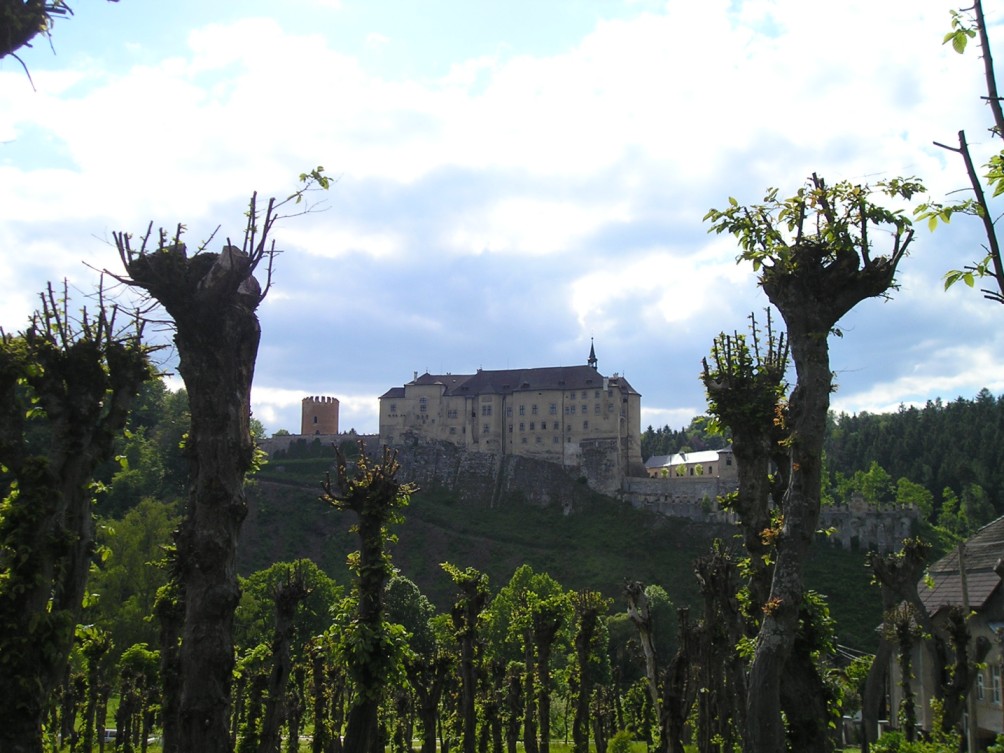
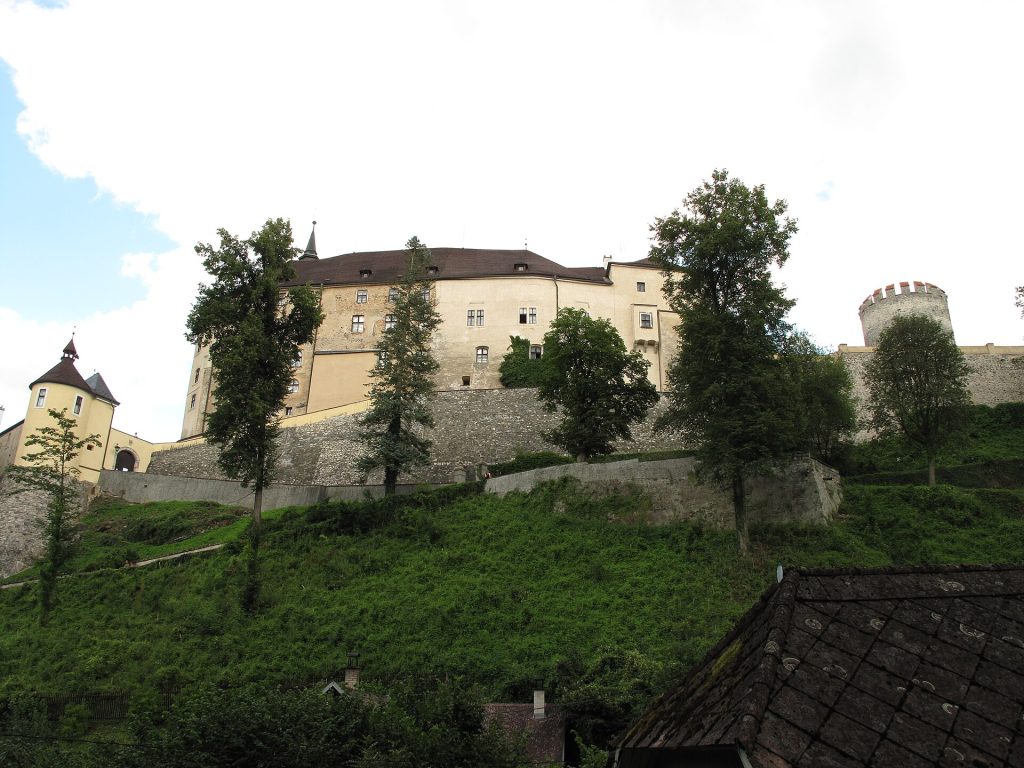
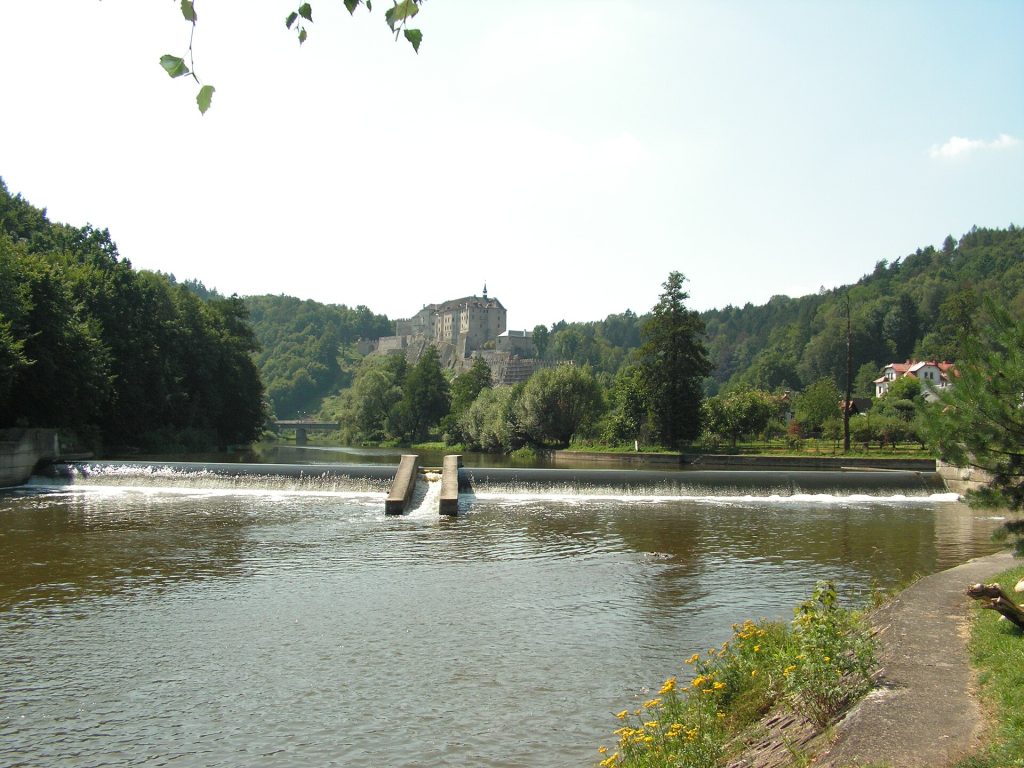
The best way to arrive at Cesky Sternberk is slowly, along the winding road or railway that follows the Sazava valley. The river curls through wooded hills, and then suddenly the castle appears high above the water, stretched along a rocky spur like a ship sailing over the trees. It is one of those sights that makes you reach for your camera before you have even parked.
The castle is long and relatively narrow, because its builders had to fit it onto the top of the ridge. On one side the rock drops steeply toward the river, on the other the land falls away into a small valley. This natural position made it extremely difficult to attack, which was exactly what its founder intended when he chose the site in the thirteenth century.
Below the castle lies a small village of the same name, with a few houses, a church, cafes and a weir on the river. It is a peaceful, unhurried place, and in summer the riverbanks attract walkers, canoeists and families enjoying a day out from Prague. The contrast between the relaxed village life and the dramatic fortress above is part of the charm.
As you climb up toward the gate, take a moment to look at the walls and towers around you. They tell the story of centuries of building, rebuilding and adaptation, and they prepare you for the surprising world you will find inside.
Many people say that Cesky Sternberk looks most beautiful in the early morning, when mist rises from the river and the castle seems to float above the valley. If you are staying nearby, it is well worth getting up early to see it. Even on a grey day, though, its silhouette against the sky has a powerful, timeless quality that few castles can match.
Founded Under a Golden Star
The castle was founded around 1241 by Zdeslav of Divisov, a nobleman who served the Bohemian king. According to tradition, he gave his new castle a name inspired by the emblem of his family, a golden eight pointed star on a blue field. In German, star mountain becomes Sternberg, and so the castle, and the family itself, took the name that they still carry today.
The middle of the thirteenth century was a time when Bohemian nobles were building castles across the kingdom, both to protect their lands and to show their importance. The Sazava valley was a valuable region, and a strong castle here allowed its owner to control the river route and the surrounding estates. Zdeslav chose his site carefully, taking full advantage of the steep rocky ridge.
Over the following generations the Sternberg family rose to become one of the most prominent noble houses in Bohemia. Members of the family served as royal officials, military commanders and patrons of the church, and they built or acquired other castles across the country. Yet Cesky Sternberk remained a key family seat, a symbol of their origins and identity.
The eight pointed star appears throughout the castle, carved in stone, painted on walls and woven into decoration. As you explore, try to spot it in as many places as you can. It is a constant reminder that this is not just any historic building, but the ancestral home of a family whose story is woven into the history of Bohemia.
The name of the castle includes the word Cesky, meaning Czech or Bohemian, to distinguish it from another castle called Sternberk in Moravia, which was also linked to the same family at one time. The two castles are sometimes confused by travellers, so make sure you are heading to the right one when you plan your trip.
The symbolism of the star was important in the medieval world. Stars suggested guidance, fame and heavenly favour, and a family that chose such an emblem was making a statement about its ambitions. Over the centuries the Sternbergs lived up to that ambition, producing statesmen, soldiers, churchmen and scholars.
Seven Centuries of One Family
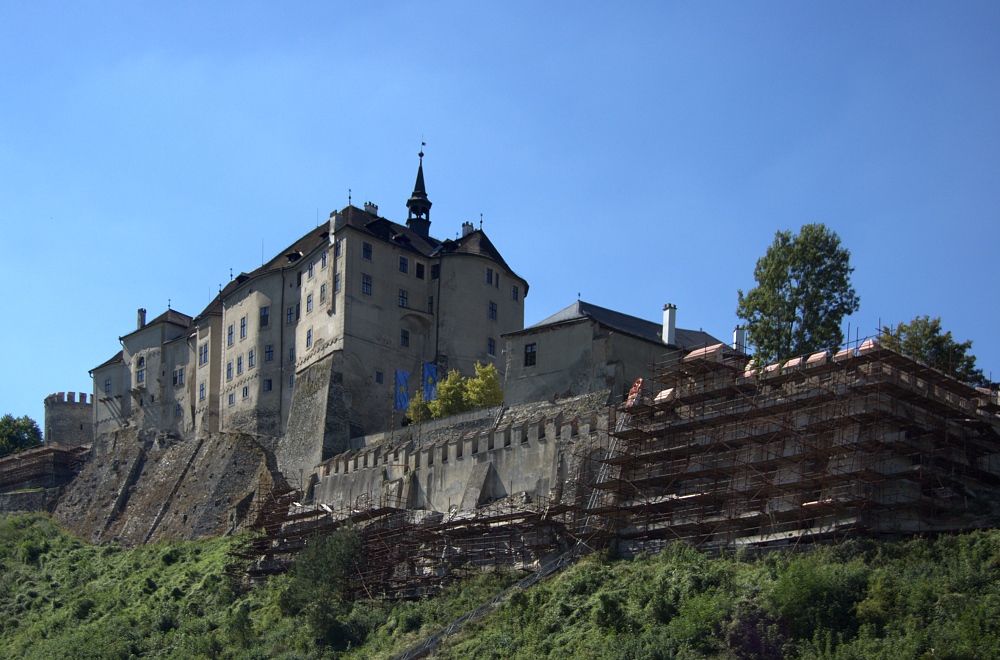
What makes Cesky Sternberk so unusual is the continuity of its ownership. Many castles in central Europe changed hands dozens of times, passing between families through marriage, sale, conquest or confiscation. Cesky Sternberk, by contrast, has belonged to the Sternbergs for most of its history, a remarkable record that very few European castles can match.
That record has not been unbroken. In the early eighteenth century the castle passed out of the main family line for a period, before being bought back in the nineteenth century. In the twentieth century, after the communist takeover, it was confiscated by the state, like so many other noble properties in Czechoslovakia. The family member who had lived there was allowed to stay on as a guide, a strange and often painful situation for someone showing visitors around his own ancestral home.
After the Velvet Revolution, the castle was returned to the family in the early 1990s through restitution. Since then the Sternbergs have once again cared for the building, opening it to visitors while continuing to live there. This gives the castle a special atmosphere, because you are not visiting a museum run by an anonymous institution but a home looked after by people with a deep personal connection to it.
Many visitors find this aspect of the castle unexpectedly moving. Family portraits on the walls are not just images of distant aristocrats, but ancestors of the people who still live upstairs, and the stories told by the guides often carry a sense of living memory rather than dry history.
One notable member of the family in the nineteenth century, Kaspar Maria von Sternberg, became a famous natural scientist and was a founder of the National Museum in Prague. His interest in botany, geology and fossils made him one of the leading scholars of his time, and he shows how the family contributed not only to politics and war but also to the cultural and scientific life of the nation.
In the decades since restitution, the family has worked hard to repair and maintain the castle, a demanding task for any private owner of such a large historic building. Income from visitors helps pay for this work, so every ticket you buy contributes directly to the preservation of the castle for future generations.
The family has also been active in sharing the history of the castle with the public, supporting events, exhibitions and cultural programmes. This openness has helped make Cesky Sternberk one of the most popular castles within easy reach of Prague, and one that visitors often remember with particular warmth.
Sieges, Rebellion and Survival
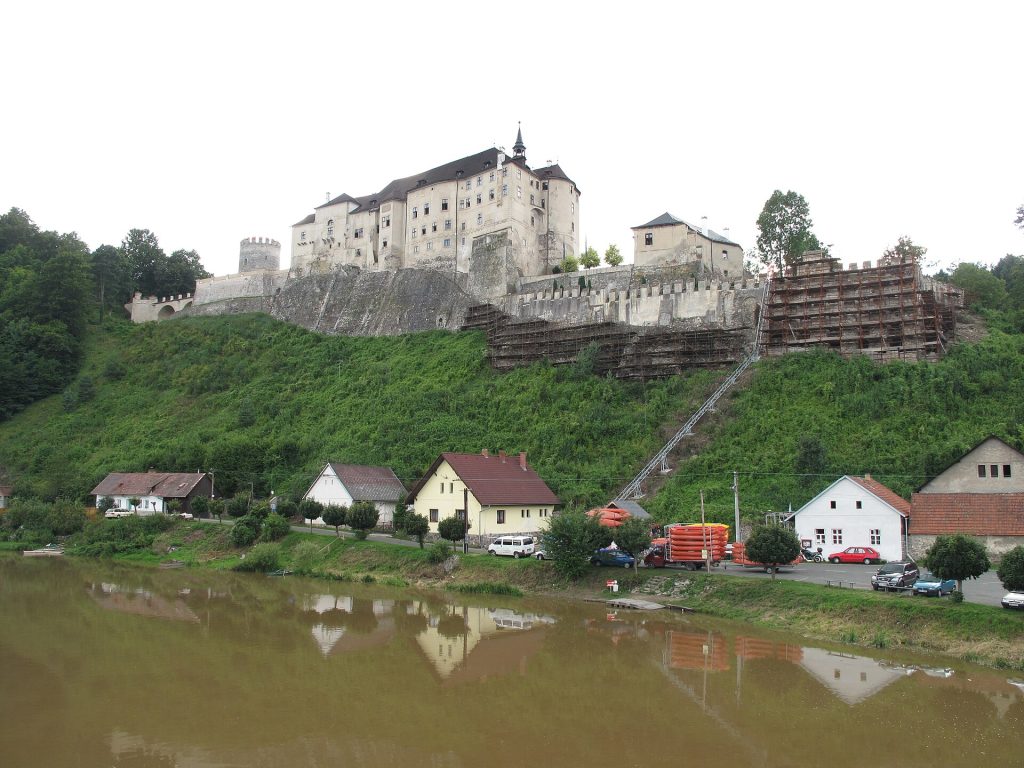
A castle in such a strategic position could not escape the conflicts of Bohemian history. In the fifteenth century, during the turbulent reign of King George of Podebrady, a leading member of the Sternberg family stood at the head of a league of nobles opposed to the king. The quarrel turned violent, and in 1467 royal forces besieged Cesky Sternberk.
The attackers set up their guns on the hills across the valley and bombarded the castle. The siege lasted for weeks, and the castle suffered serious damage before the defenders finally surrendered. It was a dramatic episode that showed how even the strongest medieval fortress could be threatened by the new power of artillery.
After the siege, the family repaired and strengthened the castle, learning lessons from what had happened. New fortifications were added to protect the weakest side, including bastions and towers designed to hold cannon of their own. Some of these features survive today, and they make the castle a fascinating place for anyone interested in the history of warfare.
The castle later lived through the upheavals of the Thirty Years War, when Bohemia was devastated by fighting and occupation. Yet despite all these dangers, it survived, and its ability to endure through centuries of conflict is part of what makes it so impressive today.
It is worth pausing to imagine the castle in 1467, with enemy guns on the opposite hill and the defenders watching anxiously from the walls. The valley that seems so peaceful today was then filled with soldiers, tents and the thunder of cannon. Knowing this adds a new layer of meaning to the quiet views you enjoy from the windows.
The rebellion that brought about the siege was part of a wider struggle over religion and royal authority in fifteenth century Bohemia, a period shaped by the legacy of the Hussite movement. The Sternbergs, like many noble families, were caught up in these conflicts, and their fortunes rose and fell with the political tides.
Guns, Bastions and the Battery Tower
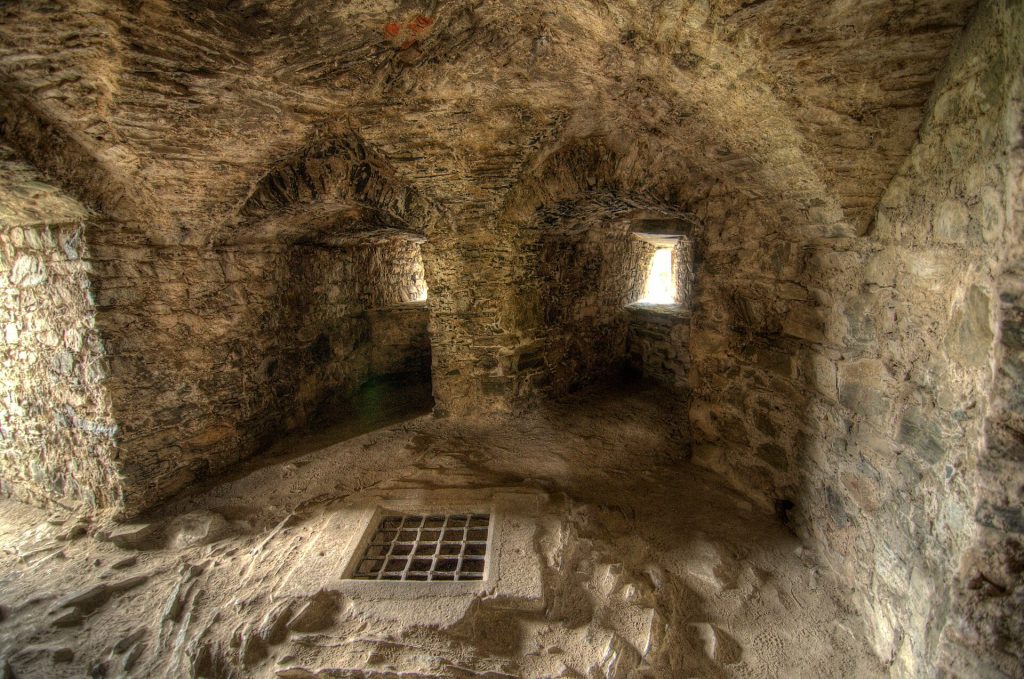
The defences of Cesky Sternberk were developed over a long period, and they reveal how military technology changed between the thirteenth and the seventeenth centuries. The original castle relied on its high position, thick walls and narrow approaches. Later, as cannon became more powerful, the owners added gun platforms and bastions that could both resist bombardment and return fire.
One of the most interesting features is a battery tower, built to hold artillery pieces that could cover the approaches to the castle. Inside you can see historic cannon positioned at the openings, giving a vivid sense of how the defenders would have worked. Standing there, you can imagine the noise, smoke and danger of a siege in the age of gunpowder.
The castle also has outer fortifications on the southern side, where the ridge was easiest to approach. These were designed to keep attackers at a distance and to slow down any assault. Walking along the walls, you can appreciate how every part of the landscape was used to make the castle as secure as possible.
For families with children, these defensive features are often the highlight of the visit. There is something irresistible about cannon, towers and battlements, and they help bring the more distant history of the castle to life in a very tangible way.
Look closely at the gun ports and the thickness of the walls in the battery tower. They were carefully designed to give cannon a wide field of fire while protecting the gunners. Such details show how seriously the owners took the threat of attack, even long after the great siege of the fifteenth century.
Through the Cold Corridor
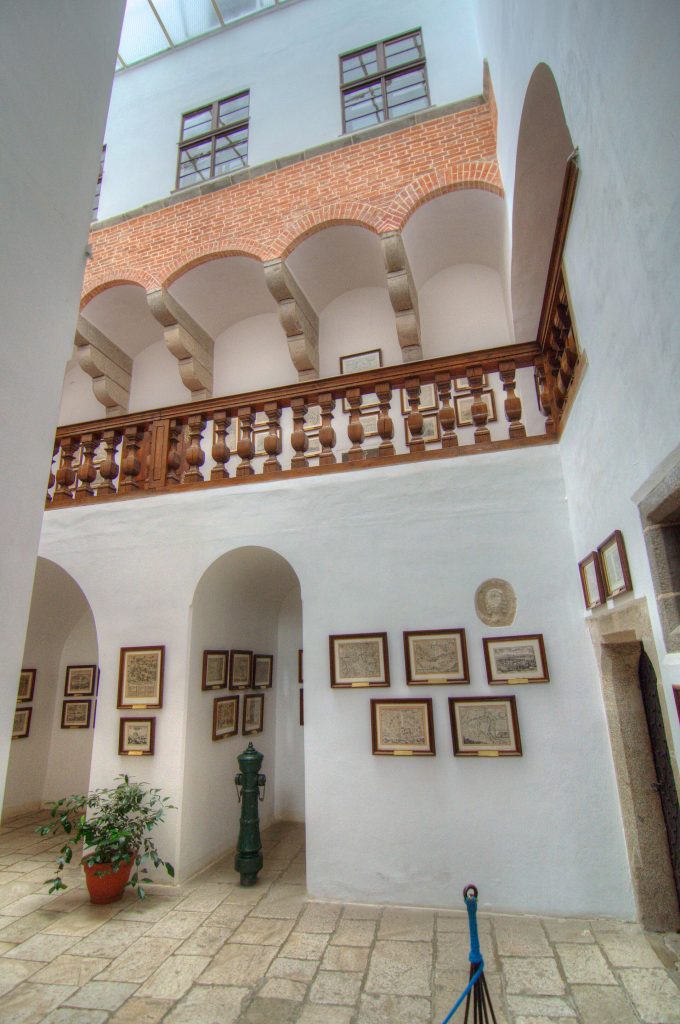
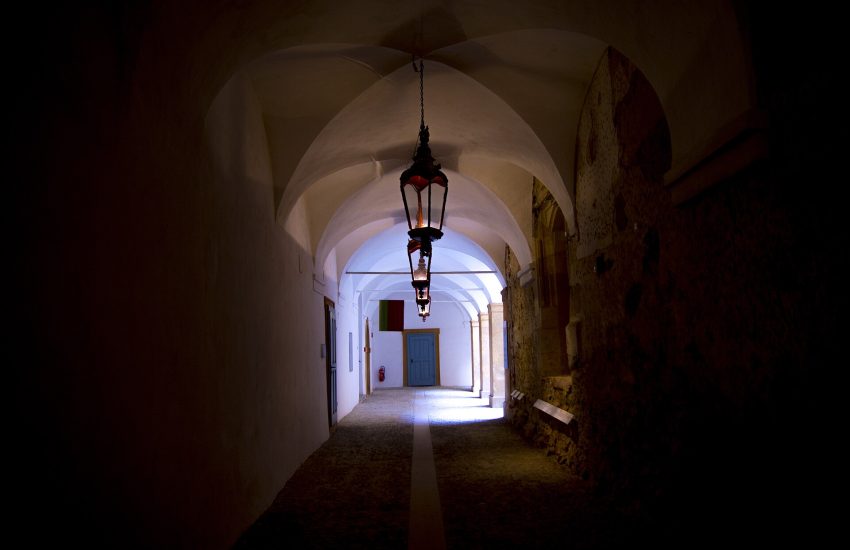
Your tour of the interior begins with the entrance passage, sometimes known as the cold corridor. It is a stark, stone lined space that still feels very much like the inside of a medieval fortress. On a hot summer day the cool air is a welcome relief, and the thick walls remind you of how much effort went into keeping the castle safe.
From here the guided tour leads you upward into the residential parts of the castle, and the change in atmosphere is striking. Within a few steps you move from bare stone into rooms decorated with stucco, paintings and fine furniture. It is like passing from one century into another, and that sense of transformation is one of the most memorable aspects of the visit.
This contrast reflects the history of the building. In the seventeenth century, after the Thirty Years War, the Sternbergs remodelled the interiors in the early baroque style. They kept the outer shell of the fortress but filled it with elegant rooms suitable for a noble family of their rank, creating a home that was both secure and refined.
Tours are usually led by knowledgeable guides, and they often share stories about the family and the castle that you would never find in a guidebook. Be sure to ask questions, because the answers can be surprisingly personal and entertaining.
It is worth noting that photography rules inside the castle can vary, and in many historic houses in the Czech Republic photography is restricted or allowed only with a special ticket. Check at the ticket office before your tour so you know what to expect, and respect the wishes of the family who live there.
As you move from room to room, notice the doors, floors and window frames, many of which are historic in their own right. Small details like worn thresholds and old locks bring you closer to the generations of people who passed through these same spaces before you.
The Splendour of the Knights Hall
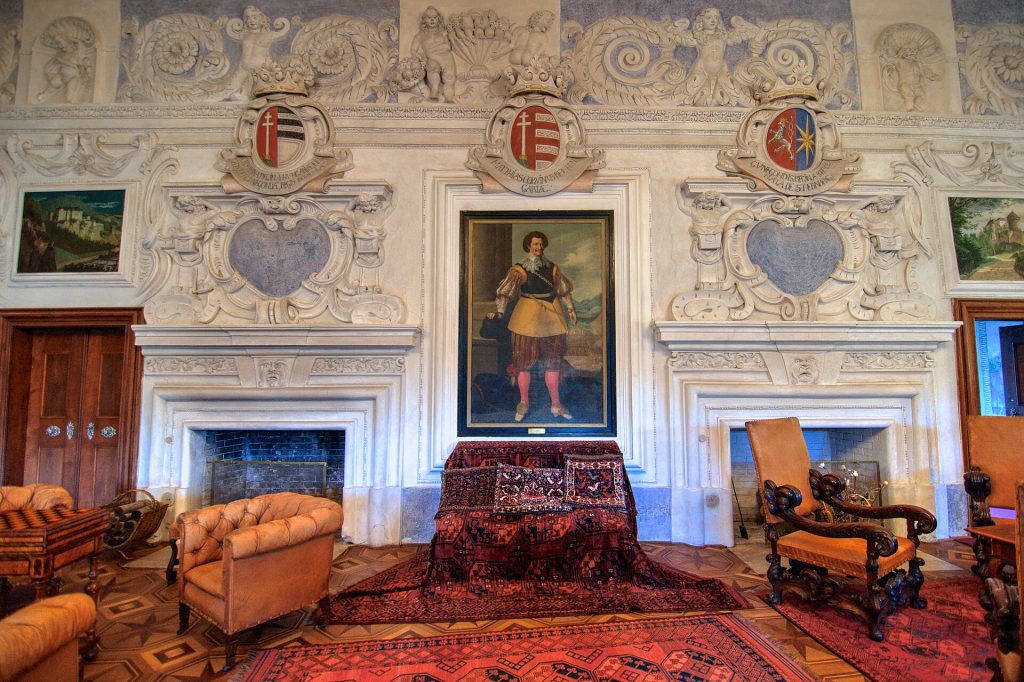
The most celebrated room in the castle is the Knights Hall, a magnificent space decorated with rich stucco in the early baroque style. The ceiling is covered with sculpted ornament, and the walls are hung with paintings and portraits. It is a room designed to impress, a statement of the wealth and status of the family who rebuilt the castle in the seventeenth century.
The stucco work is especially fine, created by Italian craftsmen who were in great demand across central Europe at the time. Garlands, frames, figures and decorative motifs flow across the ceiling, giving the room a sense of movement and abundance. In the afternoon light, the white stucco seems almost to glow.
Beneath this ceiling, the family received guests, held celebrations and displayed their portraits and treasures. Today the hall is furnished with period pieces and paintings that help recreate the atmosphere of a noble residence. It is easy to imagine music, candlelight and conversation filling the room on a winter evening.
Take your time in the Knights Hall. Look up at the details of the ceiling, study the portraits and notice the views from the windows over the river valley. It is a room that rewards patient observation, and it is one of the finest early baroque interiors in Bohemia.
The early baroque style seen here was a direct response to the trauma of the Thirty Years War. After decades of destruction, noble families across Bohemia rebuilt and redecorated their homes, often in a lighter, more ornamental style that celebrated peace and recovery. The Knights Hall at Cesky Sternberk is a fine expression of that mood of renewal.
The portraits in this room and elsewhere in the castle form a gallery of Sternberg ancestors stretching back many generations. Some show stern men in armour, others elegant ladies in silk and lace, and together they create a sense of a family watching over its home across the centuries.
Portraits, Furniture and Rare Engravings
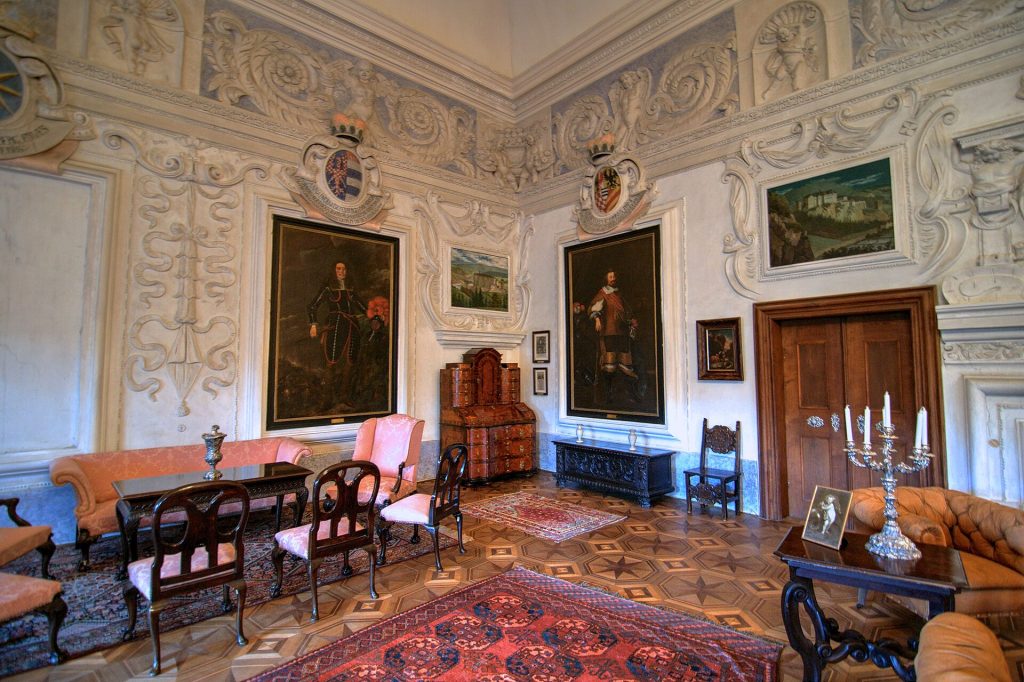
Beyond the Knights Hall, the tour leads through a series of rooms filled with the collections of the Sternberg family. There are portraits of ancestors, period furniture, porcelain, clocks, weapons and hunting trophies, each telling a small part of the family story. Some rooms have the feel of formal reception spaces, while others are more intimate and domestic.
One of the treasures of the castle is a large collection of copper engravings, many of them depicting scenes from the Thirty Years War. These prints were collected over generations, and together they form one of the most important collections of their kind in the country. They offer a fascinating visual record of battles, sieges and events from one of the most destructive conflicts in European history.
Other rooms reveal the everyday life of the family in later centuries, with bedrooms, studies and smaller sitting rooms. Some of the furnishings were acquired after the family regained the castle, carefully chosen to restore the atmosphere of a lived in noble home.
What is striking throughout is the sense of continuity. Objects collected by ancestors centuries ago sit alongside pieces gathered by more recent generations, all within the same walls. It feels less like a museum display and more like a family album spread across many rooms.
If you have a particular interest in history, ask your guide about the engravings. Some of them show events and places connected with the family, and the guides often enjoy explaining the stories behind particular prints. Seeing these images within the walls of a castle that itself survived the Thirty Years War gives them a special resonance.
Dungeons and Darker Corners
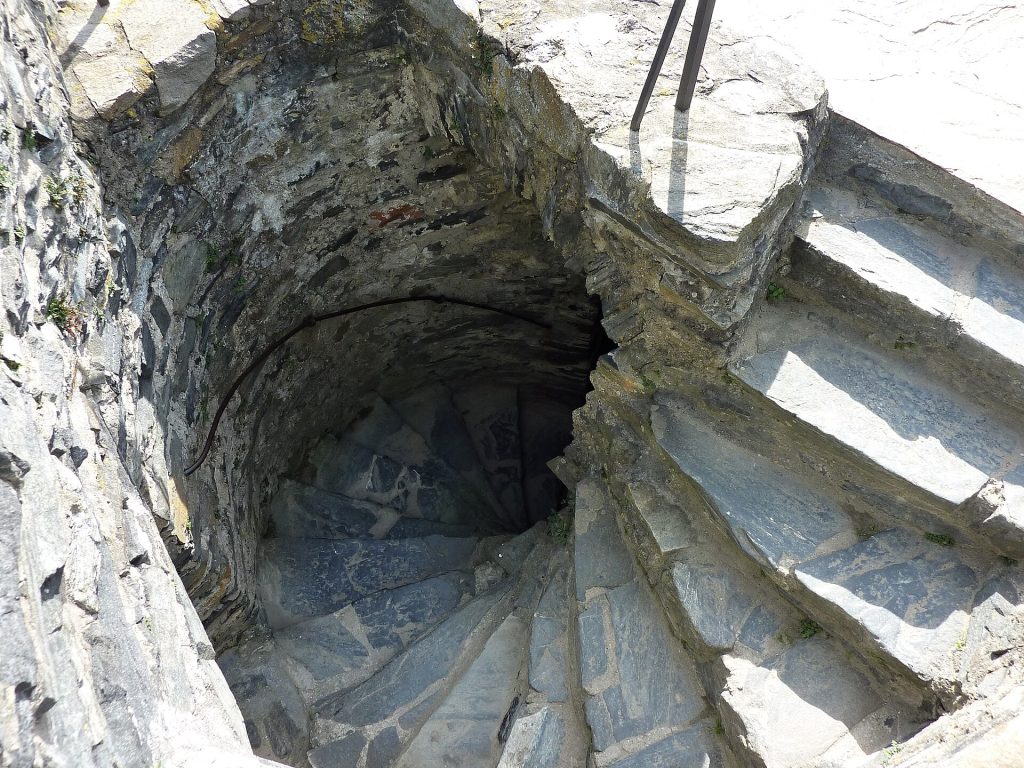
Every self respecting castle needs a dungeon, and Cesky Sternberk does not disappoint. In the lower parts of the building you can see an old dungeon, a reminder of the harsher side of castle life. In the medieval and early modern periods, the lords of a castle also exercised justice over their estates, and prisoners could be held in grim conditions while awaiting trial or punishment.
The dungeon is a cold, dim space, and it contrasts sharply with the elegance of the rooms above. Standing inside, you get a sense of the fear and discomfort that prisoners must have felt, cut off from daylight and from the life of the castle. It is a sobering moment in an otherwise light and colourful visit.
Stories and legends have grown up around these darker corners, as they do in almost every old castle. Guides sometimes share tales of ghosts, secret passages and unfortunate prisoners, and while not every story can be proven, they add to the atmosphere and help connect visitors with the long history of the place.
For children in particular, the dungeon is often one of the most exciting parts of the tour, a chance to experience a little of the thrill and shiver of medieval history.
Dungeons like this one also remind us that castles were centres of power in a very practical sense. The lord of Cesky Sternberk was responsible for order on his lands, collecting rents, settling disputes and punishing crimes. The dungeon was part of that system, a physical expression of authority that every local villager would have known about and feared.
Today, of course, it is simply a fascinating relic, and a striking counterpoint to the comfort and beauty of the family rooms upstairs. Moving between these spaces helps you appreciate the full range of life within a castle, from privilege and luxury to hardship and fear.
The Hunger Tower and Outer Walls
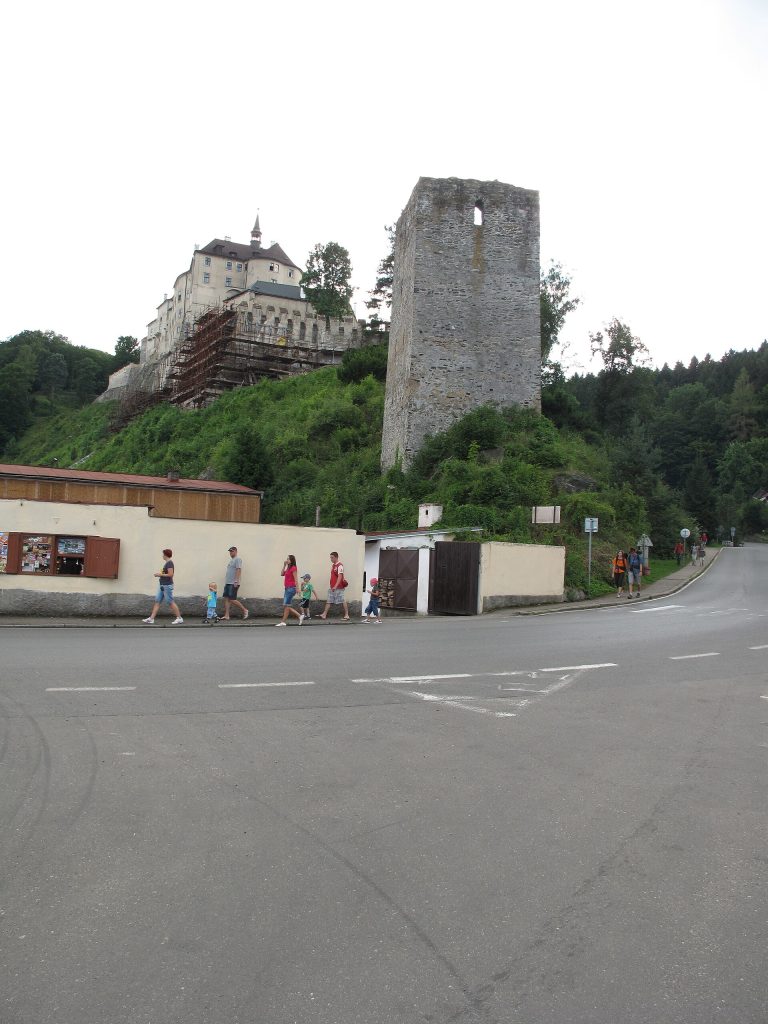
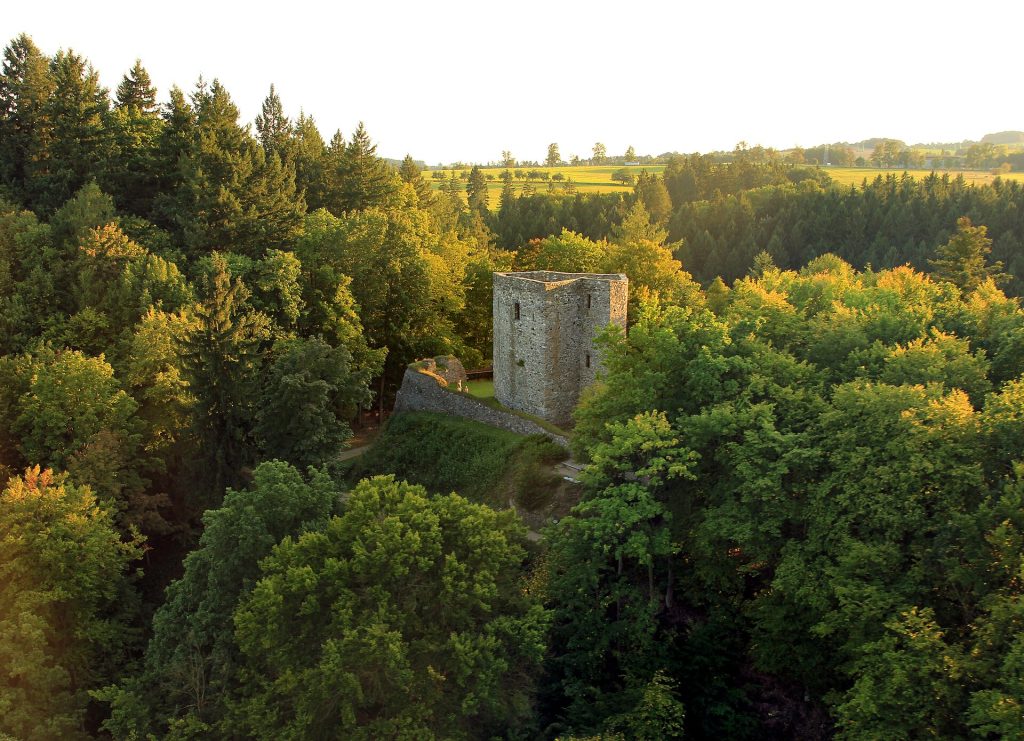
Outside the main building, the castle is protected by a system of outer walls and towers. One of the most evocative is the so called hunger tower, a name given in Czech castles to towers where prisoners were said to be left without food. Whether every story attached to it is true or not, the name alone conjures up the hard realities of the past.
The outer defences were especially important on the southern side of the castle, where the ridge connects to higher ground and an attacker could approach most easily. After the siege of 1467, the family invested heavily in strengthening this side, and the walls and towers you see today reflect that effort.
Walking around the outer fortifications gives you a different perspective on the castle. From here you can appreciate its long profile, the way the buildings follow the shape of the rock, and the careful placement of every tower. You also get lovely views over the surrounding countryside.
These outer areas are a reminder that Cesky Sternberk was always more than a residence. For centuries it was a working fortress, and its builders never forgot that danger might come up the valley at any time.
If you enjoy photography, the outer walls offer some of the most interesting angles on the castle. Look for compositions that combine the towers with the rocky ridge and the forest beyond, or frame the long main building through an opening in the walls. Late afternoon light is particularly flattering on the old stone.
The fortifications also show how the castle adapted over time. Some parts are clearly medieval, others belong to the age of gunpowder, and some have been repaired and restored in more recent centuries. Reading these layers is part of the pleasure of exploring a castle with such a long history.
The River Valley Below
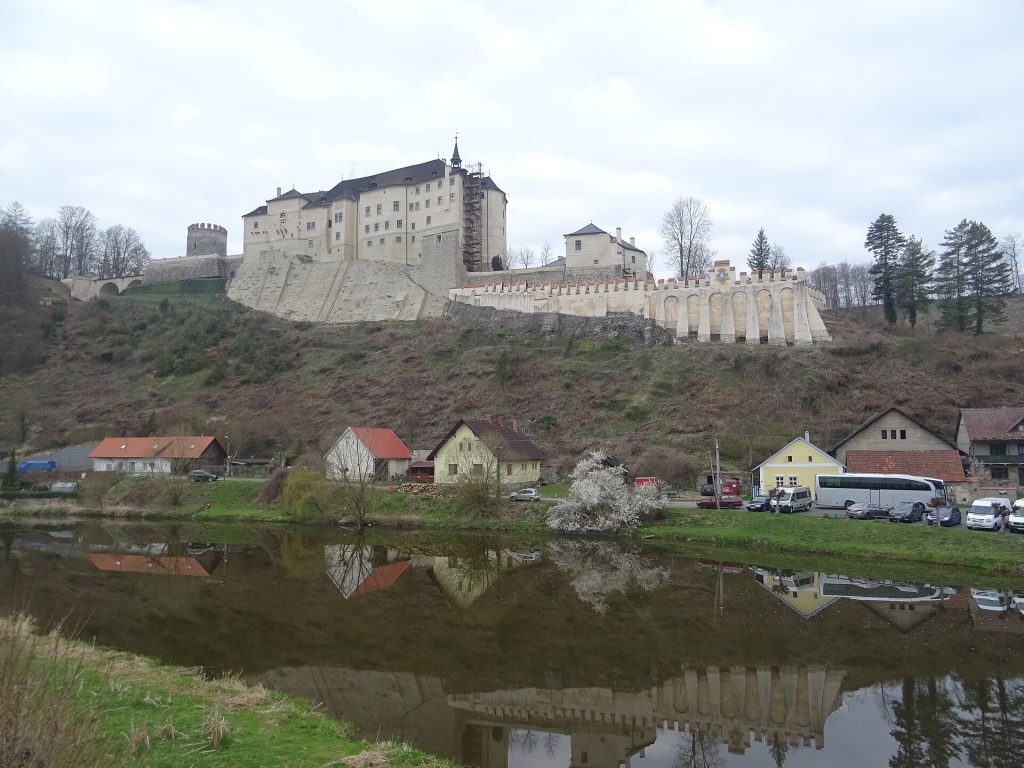
Part of the joy of visiting Cesky Sternberk is the landscape that surrounds it. The Sazava River winds through a valley of forests, meadows and small villages, and it has long been a favourite destination for people from Prague looking to escape the city. Canoeists paddle down the river in summer, walkers follow trails along its banks, and cyclists explore the quiet roads.
From the river, the castle looks especially dramatic, rising high above the trees on its rocky spur. Many of the best photographs of Cesky Sternberk are taken from the riverbanks or from the bridge, so it is well worth wandering down to the water after your tour.
The weir below the castle creates a pleasant spot to relax, and on warm days you may see people swimming or picnicking nearby. In autumn, when the forests turn gold and red, the whole valley takes on a rich, painterly beauty.
If you have time, consider combining your visit with a walk along the river or a short trip to other sights in the Sazava valley, such as the historic monastery at Sazava a little further upstream. The region rewards slow travel and is full of quiet corners waiting to be discovered.
The Sazava valley has also inspired writers, painters and photographers for generations. Its combination of river, rock and forest captures something essential about the Bohemian landscape, gentle and dramatic at the same time. Spending even a few hours here helps you understand why so many Czechs feel such affection for this part of their country.
See Cesky Sternberk in Motion
Sometimes the best way to understand a castle is to see it from every angle. The video below offers a tour of Cesky Sternberk, its dramatic position above the river, its walls and towers and its elegant rooms. It is a great way to get a feel for the place before you visit.
As you watch, notice how the castle seems to grow out of the rock, and how the landscape of the Sazava valley frames it from every side. These views help explain why the founder chose this spot almost eight centuries ago.
Ready to see it for yourself? The final section covers everything you need to know to plan your trip.
Visiting Cesky Sternberk Today
Cesky Sternberk lies in Central Bohemia, roughly fifty kilometres southeast of Prague. By car the journey takes about an hour, and there is parking in the village below the castle. You can also arrive by train along the scenic Sazava valley line, which makes the journey itself part of the experience.
Visits to the interior are by guided tour, which usually lasts around an hour. Tours run regularly during the main season from spring to autumn, with more limited opening outside these months. Because the castle is still a family home, opening arrangements can vary, so it is a good idea to check the current schedule before you set out.
Wear comfortable shoes, as there is a climb from the village up to the castle, and some of the stairs inside are steep and uneven. There is a small cafe and shop nearby, and the village offers places to eat with views of the river.
Plan to spend at least half a day here, combining the castle tour with time to explore the walls, the gardens around the castle and the riverbanks below. If you are travelling from Prague, Cesky Sternberk also pairs well with a visit to Konopiste, which lies not far away.
If you want to stay overnight, there are guesthouses in the village and in nearby towns, and an evening by the river, with the illuminated castle above, is a wonderful way to end the day. Local restaurants serve traditional Czech dishes, and a hearty meal after a day of climbing and exploring is well deserved.
Above all, remember that Cesky Sternberk is more than a historic monument. It is a home with a living story, and visiting it feels a little like being welcomed as a guest into a family that has watched over this valley for almost eight hundred years.
View the location on Google Maps
Palaces Nearby
If Cesky Sternberk has captured your imagination, the Czech lands offer many more princely residences. Here are two more remarkable places well worth adding to your journey:
- Konopiste Chateau – the Bohemian home of Archduke Franz Ferdinand, filled with hunting trophies and a vast collection of Saint George art.
- Telc Chateau – a Renaissance jewel in southern Moravia with a gilded Golden Hall and a UNESCO listed town square.
You May Like
Eggenberg Palace in Graz and Its Secret Calendar of the Cosmos