Most palaces were built to impress, to govern or to house a court. Hellbrunn was built for fun. Just south of Salzburg, at the foot of a wooded hill, a cultured and pleasure loving prince archbishop created a summer retreat in the early seventeenth century where he could escape the formalities of the city, entertain guests and, quite literally, soak them with surprises. More than four hundred years later, the hidden jets of its trick fountains are still catching visitors off guard, and the laughter they provoke is part of the experience.
But Hellbrunn is much more than a practical joke. Its yellow palace holds some of the earliest baroque frescoes north of the Alps, its gardens are full of grottoes, statues and ponds, and on the hill behind it lie a theatre carved out of a quarry and a little palace said to have been built in a single month. It is a place of wit, art and imagination, and one of the most delightful sights in Austria.
In this article we will explore the story of Hellbrunn, from the colourful archbishop who dreamed it up to the painted halls, the famous water games and the gardens, and we will finish with practical tips for your visit. So come along, but be warned: you may get a little wet.
In This Article
- A Pleasure Palace at the Edge of Salzburg
- The Prince Archbishop Who Loved to Play
- A Palace Without Bedrooms
- The Painted Festive Hall
- Music Beneath the Octagon
- Exotic Fantasies in the Chinese Room
- Unicorns, Curiosities and Hidden Symbols
- A Quiet Chapel Amid the Festivities
- The Famous Trick Fountains
- Grottoes, Statues and a Mechanical Theatre
- A Theatre in the Rock and a Palace Built in a Month
- Get Splashed Before You Go
- Planning Your Day at Hellbrunn
A Pleasure Palace at the Edge of Salzburg
You approach Hellbrunn along a long, tree lined avenue that once linked the palace with the city. At the end of it stands a cheerful yellow building, its facade clean and well proportioned, facing a formal courtyard and a wide ornamental pool. Compared with the grand baroque palaces of Vienna, it looks almost modest, but there is a lightness to it that sets the mood straight away.
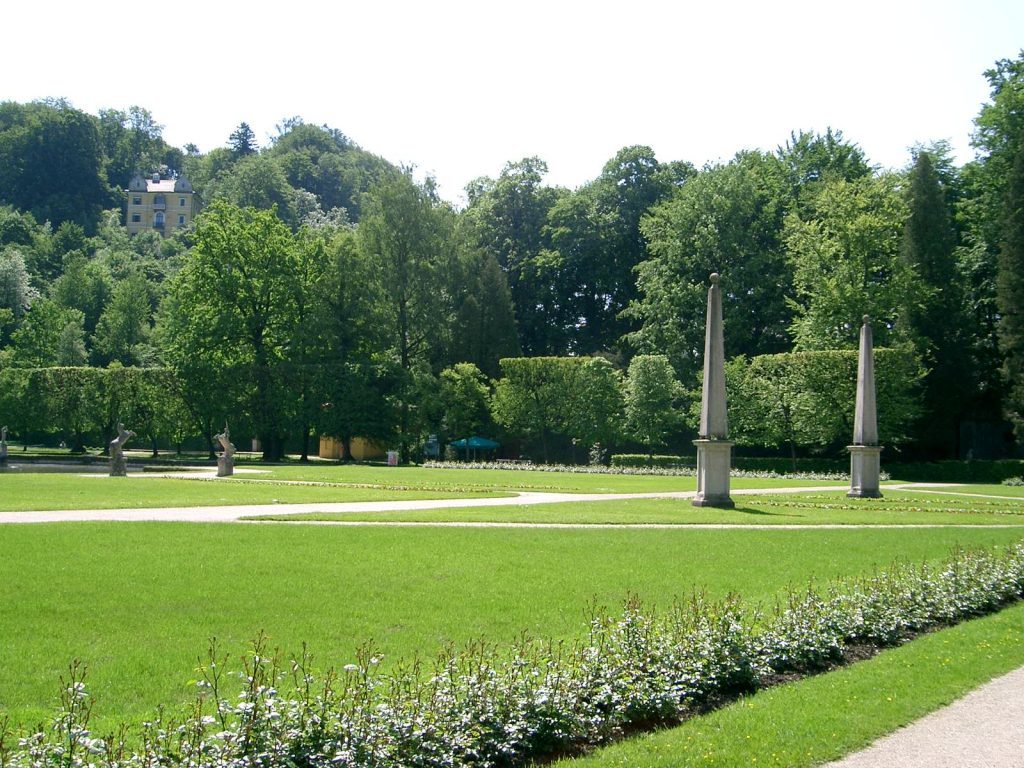
Behind and around the palace stretch the gardens, a mixture of formal parterres, shady avenues, ponds and lawns, with the wooded slopes of the Hellbrunn hill rising beyond. On a summer day the whole place hums with visitors, children running between the fountains and families picnicking on the grass, and yet it never quite loses its sense of being a private retreat.
Hellbrunn sits just a few kilometres from the old town of Salzburg, and it is easy to reach by bus or even by bicycle along the old avenue. Many visitors combine it with a day in the city, but it deserves time of its own, because there is far more to see here than first meets the eye.
What makes Hellbrunn special is its mood. This is not a palace about power or politics. It is a palace about pleasure, curiosity and play, and that spirit can still be felt in every corner of the grounds.
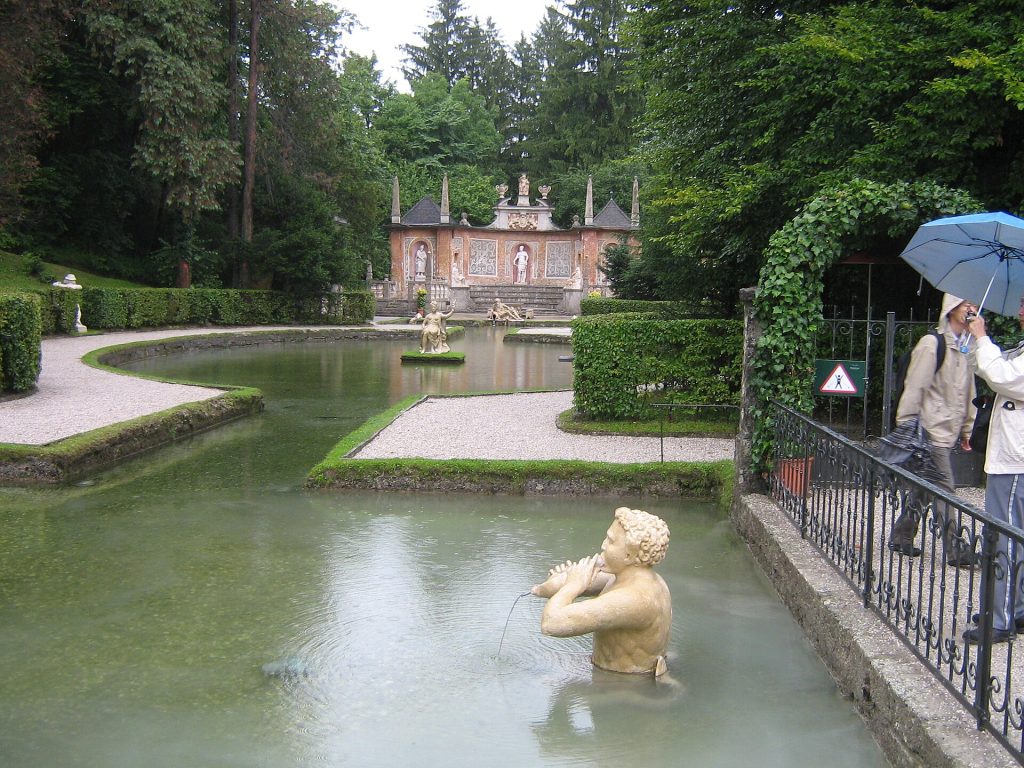
The name Hellbrunn is often explained as meaning clear spring, a reference to the abundant springs on the hill that feed the ponds and fountains. Water is the soul of this place, and you will hear it everywhere, trickling in channels, splashing in basins and gushing from statues.
The Prince Archbishop Who Loved to Play
Hellbrunn was the creation of Markus Sittikus of Hohenems, who became prince archbishop of Salzburg in 1612. As ruler of the archbishopric, he held both spiritual and secular power, governing a wealthy state in the heart of the Alps. He had been educated in Italy and was deeply influenced by the culture of Rome, where cardinals and princes built splendid villas surrounded by gardens, grottoes and fountains.
Markus Sittikus wanted something similar for himself. Almost as soon as he took office, he began building a summer residence south of the city, and the work moved remarkably quickly. Within just a few years the palace and its gardens were complete, and the archbishop had a place where he could relax, hunt, hold festivities and entertain his guests in the Italian manner.
By all accounts he had a lively sense of humour. The trick fountains that he installed in the gardens were designed to surprise and drench unsuspecting visitors, while he himself stayed perfectly dry. It was a playful way of showing his wealth and ingenuity, and it made his summer palace famous across the region.
Markus Sittikus died in 1619, after only a few years in office, but in that short time he left a lasting mark on Salzburg. Hellbrunn is perhaps his most charming legacy, a place that still reflects his personality more than four centuries later.
Markus Sittikus also made his mark on the city itself. He continued the rebuilding of Salzburg Cathedral and supported music and theatre, helping to lay the foundations for the rich cultural life that would later make the city famous. Hellbrunn shows his private side, the side that loved humour, nature and beauty.
His family, the counts of Hohenems, came from the region near Lake Constance, and he was related to the influential Borromeo family of Milan. These connections linked Salzburg with the wider world of Italian culture, and Hellbrunn is one of the clearest expressions of that link.
Interestingly, the archbishop also kept animals in the grounds, and the tradition of exotic creatures at Hellbrunn survives in a way through the nearby zoo, which occupies part of the former hunting grounds beneath the rocky face of the hill.
A Palace Without Bedrooms
One curious fact about Hellbrunn is that it was designed as a day palace. The archbishop did not intend to spend his nights here. He would ride out from the city in the morning, enjoy a day of hunting, feasting and amusement, and return to his residence in Salzburg in the evening. As a result, the palace has no proper bedrooms, which was unusual even at the time.
The building was designed by the Italian architect Santino Solari, who also worked on Salzburg Cathedral. He created a compact, elegant villa in the style of the late Renaissance and early baroque, with a central block, symmetrical wings and a forecourt that frames the approach. Its clean lines show the influence of Italian villas that Markus Sittikus had admired in his youth.
Inside, the rooms were arranged for receptions, dining, music and conversation, rather than for daily living. That gives the palace a distinctive character. Every room was intended to delight, to impress or to entertain, and the decoration reflects this festive purpose.
Around the palace, the gardens were laid out as a sequence of experiences, with ponds, avenues, grottoes and fountains arranged to lead guests from one surprise to the next. The palace and its grounds were conceived as a single work of art, a stage for the pleasures of a princely day out.
The idea of a villa for daytime pleasure came directly from Italy, where wealthy Romans and Renaissance cardinals built suburban retreats for leisure. Hellbrunn is one of the most faithful translations of that idea into the landscape of central Europe, and it was greatly admired by later rulers and garden designers.
The forecourt in front of the palace, with its ornamental pool and statues, was designed to make a strong first impression on arriving guests. Even today, it is the classic spot for photographs, with the palace reflected in the still water on calm days.
Behind the palace, the gardens were later partly reshaped in the landscape style that became fashionable in the eighteenth and nineteenth centuries, with winding paths and informal groups of trees. This mixture of formal and natural design gives the grounds a pleasant variety.
The Painted Festive Hall
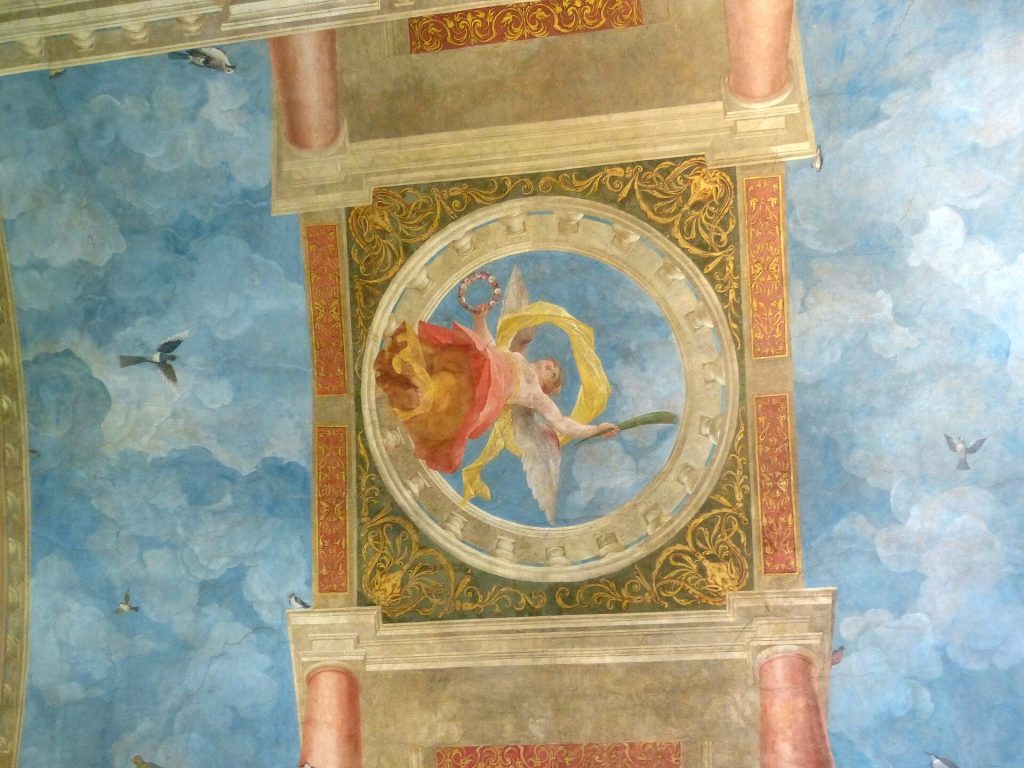
The heart of the palace is the Festive Hall, a tall, airy room where the archbishop held banquets and celebrations. Its walls and ceiling are covered with frescoes painted by the Italian artist Arsenio Mascagni in the early seventeenth century, and they are among the earliest examples of this kind of illusionistic painting north of the Alps.
Look up and you will see painted architecture that seems to open the ceiling to the sky, with balustrades, columns and figures that appear to float above you. The walls are decorated with scenes and painted architecture that trick the eye into seeing depth where there is only flat plaster. The effect is theatrical and joyful, perfectly suited to a palace built for entertainment.
Among the paintings you will find references to the archbishop himself, to his family emblems and to the pleasures of feasting and celebration. The colours are rich and warm, and the room seems to glow on a sunny day. It is easy to imagine music playing, tables laden with food and guests in their finest clothes gathered beneath these painted heavens.
The Festive Hall is a reminder that Hellbrunn, for all its jokes and surprises, was also a place of real artistic ambition. Markus Sittikus brought Italian artists to Salzburg to create something genuinely new, and this room is one of the finest results of that ambition.
Take a moment to compare the frescoes with the later decoration you will see elsewhere in the palace. The contrast helps you appreciate how early and how innovative these paintings were when they were created, and why art historians consider them so important.
Mascagni came from Florence and worked for Markus Sittikus on several projects. His style, with its bold perspectives and lively colours, introduced Salzburg to the latest artistic ideas from Italy and influenced painters in the region for years to come.
Music Beneath the Octagon
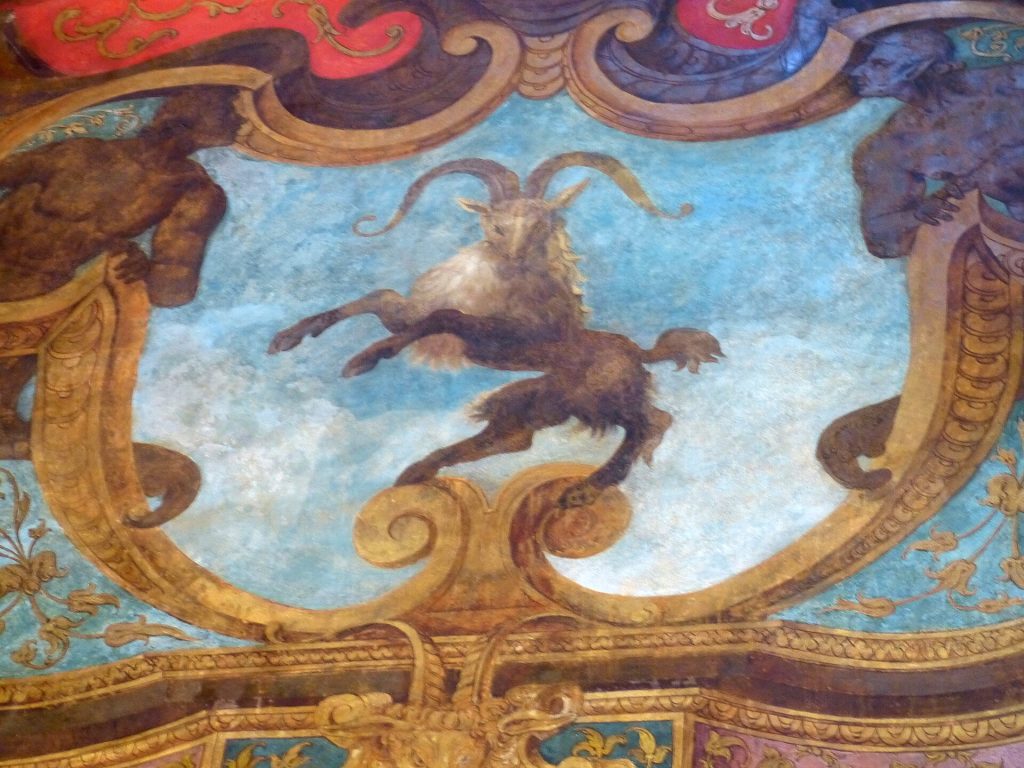
Next to the Festive Hall lies the Octagon, an eight sided room that was used for music. Its painted ceiling and walls continue the theme of illusion and celebration, and the shape of the room was designed to create a pleasing acoustic for musicians performing for the archbishop and his guests.
Music was central to court life in Salzburg, a city that would later become famous as the birthplace of Mozart. Markus Sittikus was a great patron of music and theatre, and he is associated with some of the earliest performances of opera north of the Alps. The Octagon reflects that love of music, a space where melody and painting combined to create an atmosphere of refined pleasure.
The frescoes here include painted landscapes and architectural illusions that seem to extend the room beyond its walls. Standing in the centre, you are surrounded on every side by colour and imagery, a little like being inside a jewelled box.
If you visit during one of the occasional concerts or events at Hellbrunn, you may have the chance to hear music in these historic spaces, which is a wonderful way to experience them as their creator intended.
The Octagon is also a good place to reflect on how the palace was used. Guests would move from the dining hall to the music room and then out into the gardens, following a carefully planned sequence of pleasures that made a day at Hellbrunn an unforgettable event.
Salzburg has remained a city of music ever since, home to the world famous Salzburg Festival each summer. Standing in the Octagon, you are touching one of the earliest chapters of that long musical tradition.
Exotic Fantasies in the Chinese Room
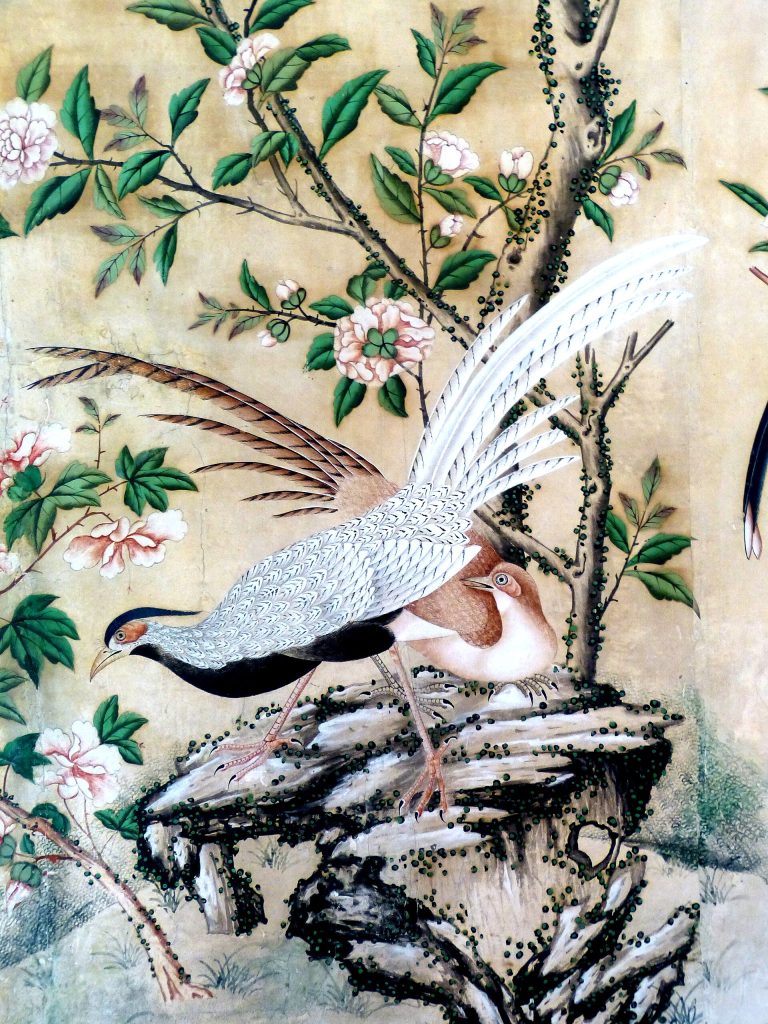
Later generations added their own touches to the palace interiors, and one of the most charming is the Chinese Room. In the eighteenth century, European aristocrats were fascinated by the art and culture of East Asia, and many palaces acquired rooms decorated in a fanciful Chinese style, known as chinoiserie.
At Hellbrunn the Chinese Room features painted decoration with exotic figures, landscapes and motifs inspired by imported porcelain, lacquer and textiles. It was not an accurate picture of China, but a European dream of a distant and mysterious land, full of colour and elegance.
The room shows how Hellbrunn continued to evolve after the death of its founder. Each new archbishop added something of his own taste, so the palace became a kind of layered portrait of court fashions in Salzburg over more than a century.
Today the palace interiors also house an exhibition about the history of Hellbrunn and its creator, with displays that help explain the ideas behind the gardens, the fountains and the art. It is well worth taking the time to explore it before heading outside.
The fashion for chinoiserie spread across Europe in the eighteenth century, from royal palaces in France and Germany to country houses in England. Seeing it here, in a palace built a century earlier by an Italian minded archbishop, shows how each era reshaped Hellbrunn according to its own dreams and tastes.
Notice how the painted figures and landscapes blend real Chinese motifs with pure European invention. Pagodas, bridges and willow trees appear alongside scenes that no traveller to China would have recognised, yet the overall effect is graceful and light hearted.
Unicorns, Curiosities and Hidden Symbols
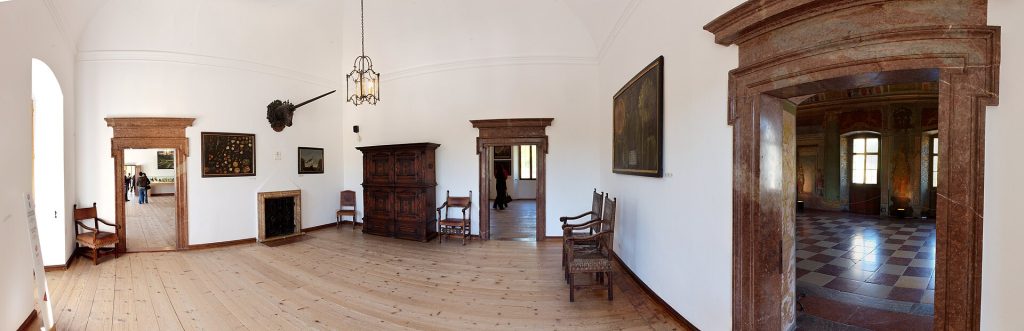
Markus Sittikus was fascinated by the wonders of nature and the curiosities of the world, and the palace reflects this interest. One room is known for its depiction of a unicorn, a creature that was widely believed in during the Renaissance and was associated with purity, power and healing. Other paintings in the palace show exotic animals and birds, including a white reindeer and a colourful cockatoo, as if the archbishop wanted to bring the marvels of distant lands into his summer home.
Such images were typical of the cabinets of curiosities that princes and scholars assembled at the time, collections of rare objects, specimens and artworks meant to capture the variety of creation. For a cultured ruler like Markus Sittikus, displaying these wonders was a way of showing both his learning and his wealth.
Restoration work in recent years has uncovered and revealed parts of the original decoration that had been hidden under later layers, and some of these discoveries can be seen during a visit. They offer a glimpse of how the palace looked in its earliest years.
Keep your eyes open as you walk through the rooms. Many details carry symbolic meanings, from emblems of the archbishop to allegories of the seasons and the elements, and the more you look, the more you discover.
The tiled stove, carved coats of arms and inscriptions on the floor are further details worth looking for. Each of them tells a small part of the story of the palace and the people who lived and celebrated here, and together they make the interior far richer than its modest size would suggest.
A Quiet Chapel Amid the Festivities
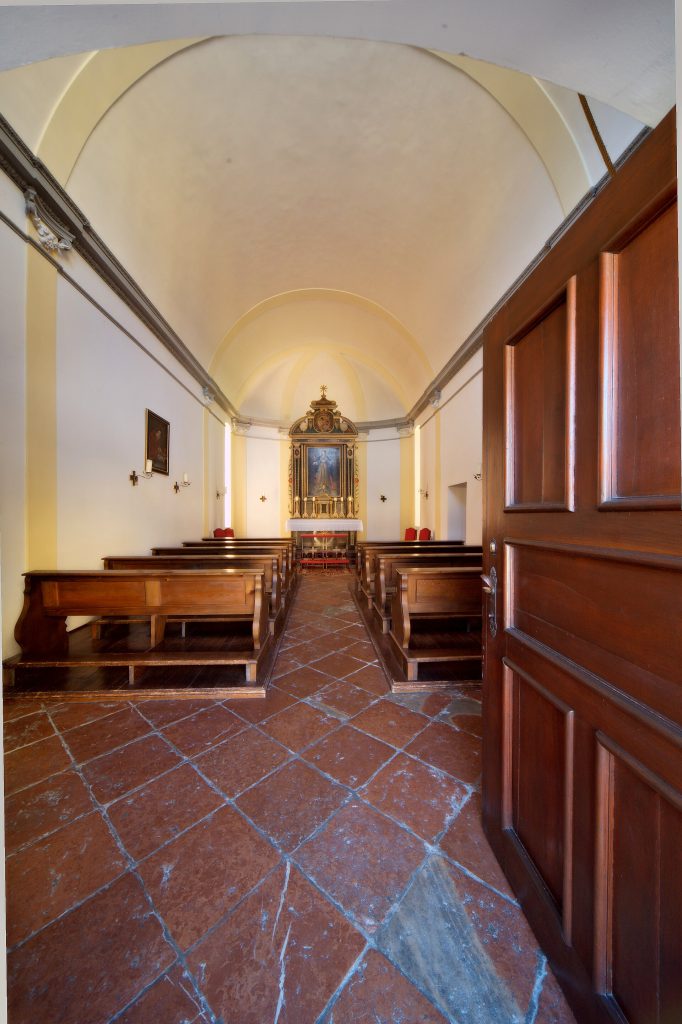
Even a palace devoted to pleasure needed a place of prayer, especially one built by a prince archbishop. Hellbrunn has its own small chapel, a calm and dignified space that offers a contrast to the festive halls and the playful gardens.
The chapel reminds us that Markus Sittikus was not only a ruler and a patron of the arts but also a churchman, responsible for the spiritual life of his archdiocese. His period in office came during the Counter Reformation, when the Catholic Church was renewing itself in response to Protestant challenges, and Salzburg was an important centre of Catholic culture in the Alpine region.
Inside the chapel, the decoration is more restrained than in the festive rooms, but it still shows the care and quality that went into every part of the palace. It is a good place to pause for a moment before heading out to the noisier delights of the water games.
The combination of chapel, banqueting hall and trick fountains captures the many sides of life at an early baroque court, where faith, art, politics and entertainment were all woven together.
Small palace chapels like this one were also used for private devotions by the archbishop and his household, and occasionally for special celebrations. Their intimate scale makes them feel personal in a way that great cathedrals rarely do.
If you are interested in the religious history of the region, a visit to Salzburg Cathedral and the archbishops residence in the old town makes a perfect complement to Hellbrunn, showing the public face of the same rulers who relaxed here in private.
The Famous Trick Fountains
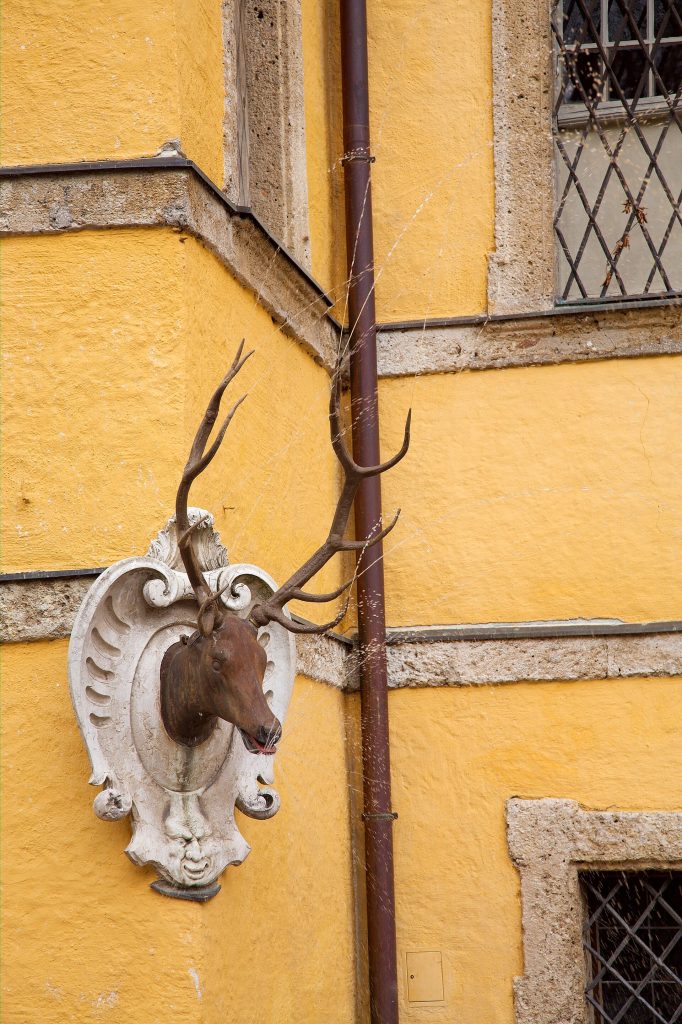
For most visitors, the highlight of Hellbrunn is the trick fountains, known in German as the Wasserspiele. Created for Markus Sittikus in the early seventeenth century, they are among the oldest surviving water features of their kind in the world, and they still work today, driven entirely by water pressure from natural springs on the hill, with no electric pumps involved.
The most famous feature is the Prince Table, a long stone table surrounded by stone seats in an outdoor dining area. The archbishop would invite his guests to sit down for a meal or a glass of wine, and then, at a signal, water would spurt from hidden jets in the seats, soaking everyone except the host, whose own seat had no jet. Etiquette required that no one could stand up until the archbishop did, so the guests simply had to sit and get wet.
Guided tours of the trick fountains lead you through the gardens and grottoes, and the guides take great pleasure in catching visitors by surprise. Jets of water shoot from the ground, from the walls, from the mouths of statues and from the antlers of a stag, and you never quite know where the next one will come from. On a hot summer day, getting splashed is part of the fun.
Children absolutely love it, but adults are rarely immune either. It is impossible to walk through the water games without laughing, and that shared delight connects you with the guests who first experienced them four hundred years ago.
The engineering behind the fountains is remarkable. Water flows down from springs on the hill through a network of pipes and channels, and the pressure created by the difference in height is enough to power every jet, grotto and moving figure. Some of the original pipes have been replaced over the centuries, but the basic system remains the same.
Guides control the jets by opening hidden valves, and part of the fun is watching them choose their moment. Nobody is safe, not even those who think they have found a dry corner, so it is best to relax and enjoy the joke.
It is worth knowing that the water games were not only jokes. They also displayed the technical knowledge of the age, and visitors from across Europe came to admire them. In an era before electricity, controlling water in such clever ways was a sign of learning and sophistication.
Grottoes, Statues and a Mechanical Theatre
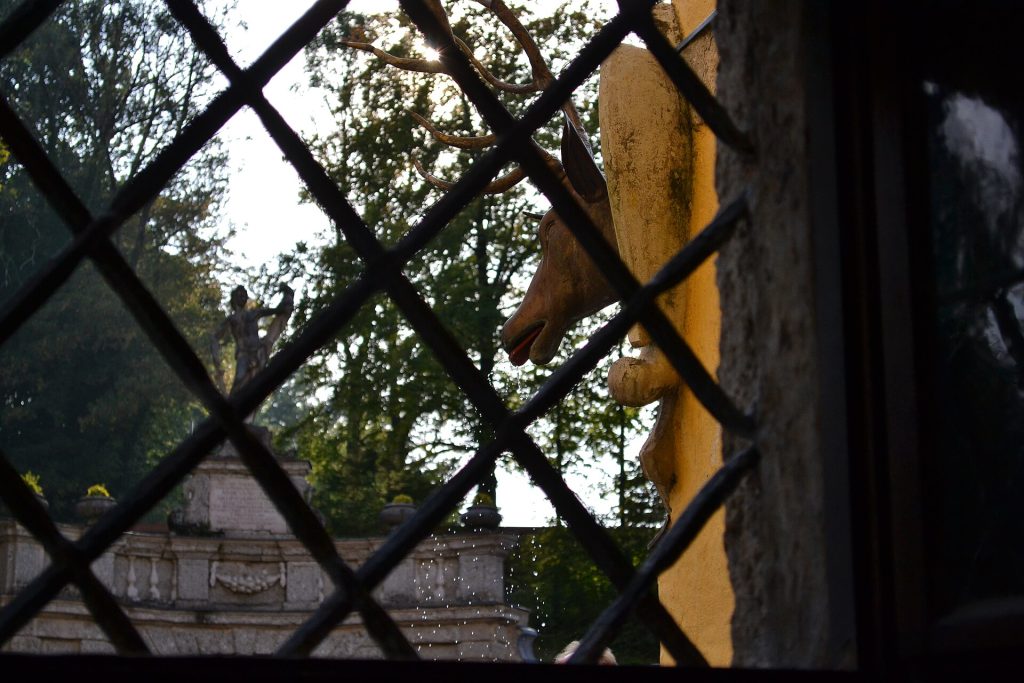
Along the route of the trick fountains you will find a series of grottoes, each one decorated with shells, stones and statues. There is a Neptune grotto, a bird grotto where water creates the sound of birdsong, and a crown grotto where a golden crown rises and falls on a jet of water. Each grotto is a small world of fantasy, designed to astonish visitors with the ingenuity of its creators.
One of the most remarkable features is the mechanical theatre, added in the middle of the eighteenth century. It shows a busy baroque town with more than a hundred moving figures, craftsmen at work, soldiers on parade, dancers and musicians, all powered by water. A water driven organ provides music as the little figures go about their tasks. It is an enchanting piece of engineering and a favourite with visitors of all ages.
Statues of mythological figures are scattered throughout the gardens, some standing in ponds, others framing paths and avenues. Orpheus, Neptune and other classical characters reflect the Renaissance fascination with ancient mythology, while the stag and other animal figures recall the hunting parties that were part of life at Hellbrunn.
Taken together, these features show how gardens in this period were meant to be places of discovery and surprise. Every turn of the path brought something new, and visitors were expected to marvel, laugh and wonder as they went along.
Look closely at the details in the grottoes, the shells pressed into the walls, the delicate statues and the clever little mechanisms. Craftsmen spent years creating these effects, and many of them have been carefully restored so that they work just as they did centuries ago.
The mechanical theatre was created by a local craftsman in the eighteenth century, at a time when the archbishops still enjoyed adding new wonders to the gardens. Its figures depict the trades and pastimes of a typical town, from bakers and butchers to musicians and soldiers, offering a charming snapshot of daily life in the baroque era.
Children often stand spellbound in front of it, watching each tiny figure move in turn. Adults, too, find it hard to look away, and it is one of those details that many visitors remember long after their trip.
A Theatre in the Rock and a Palace Built in a Month
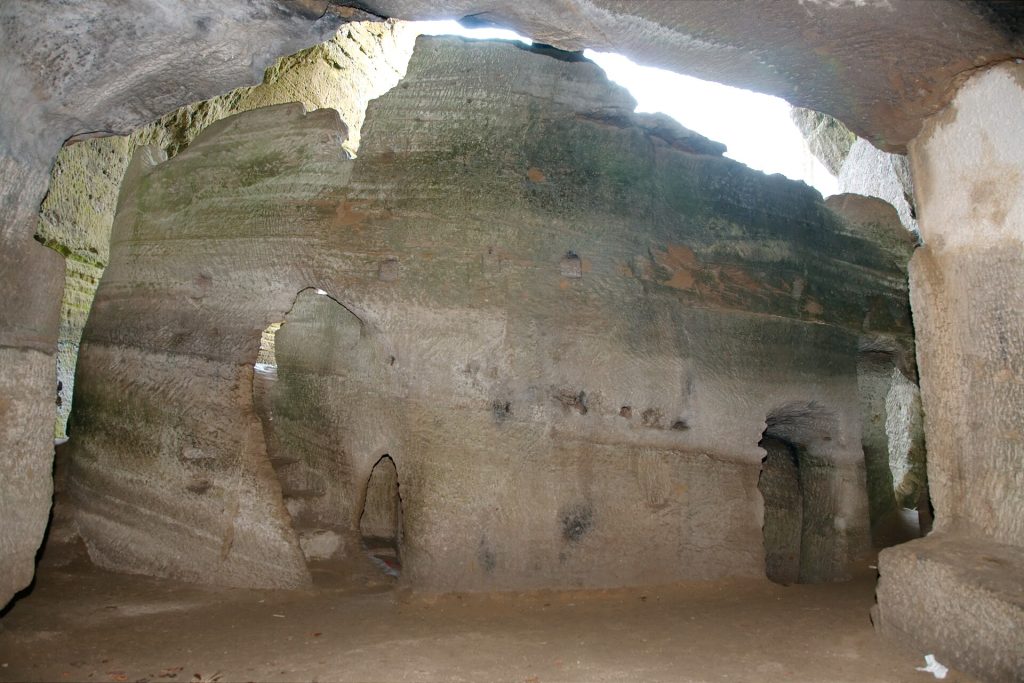
Climb the wooded Hellbrunn hill behind the palace and you will find two more remarkable creations of Markus Sittikus. The first is the Stone Theatre, a natural stage carved out of a former quarry. Here, in 1617, one of the earliest opera performances in the German speaking world is believed to have taken place, in a setting framed by rock and trees. It is a strikingly atmospheric spot, and in summer it is sometimes still used for performances.
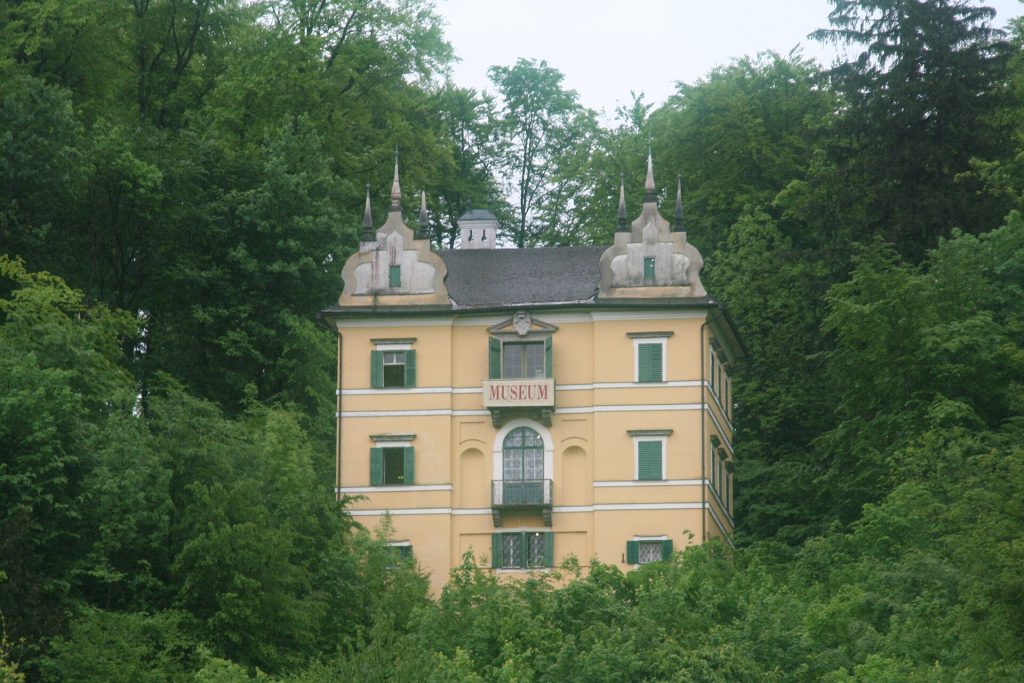
The second is the Monatsschlossl, the little Month Palace. According to legend, the archbishop built it in a single month in 1615 to surprise a visiting guest who had remarked that the hill was missing a building. Whether or not the story is true, the elegant little palace sits charmingly on the hilltop and offers fine views over the gardens and the surrounding countryside.
Today the Month Palace houses a museum of Salzburg folk culture, with exhibits on traditional costumes, customs and crafts of the region. It is a fascinating place to learn about the everyday life and festivals of the people of Salzburg, and it makes a lovely contrast with the courtly world of the palace below.
The walk up the hill is pleasant and not too demanding, and the views from the top, across the plain toward Salzburg and the mountains, make the effort well worthwhile.
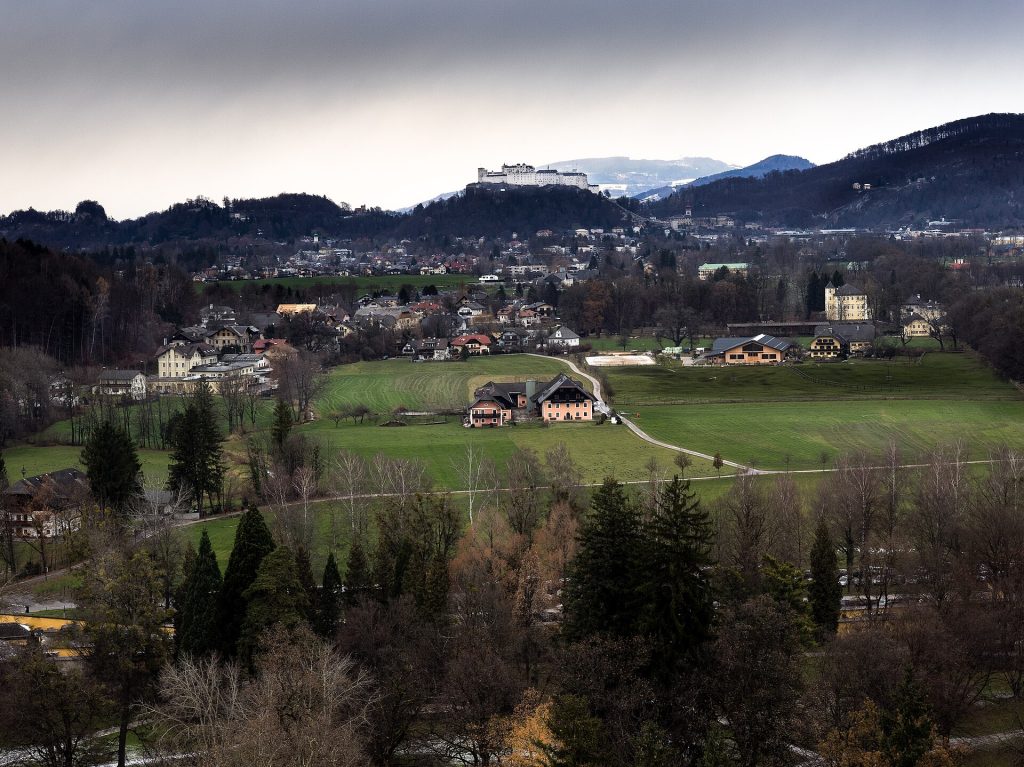
From the top of the hill, the wider landscape opens up around you, with the fortress of Salzburg on the horizon and the mountains rising to the south. It is a reminder that Hellbrunn was always part of a larger landscape, linked by its avenue to the city and framed by the Alps.
The Stone Theatre in particular is a magical place to visit in the evening light, when shadows deepen in the old quarry and the rock walls glow softly. It is easy to imagine the singers and musicians of the seventeenth century performing here for the archbishop and his guests.
Get Splashed Before You Go
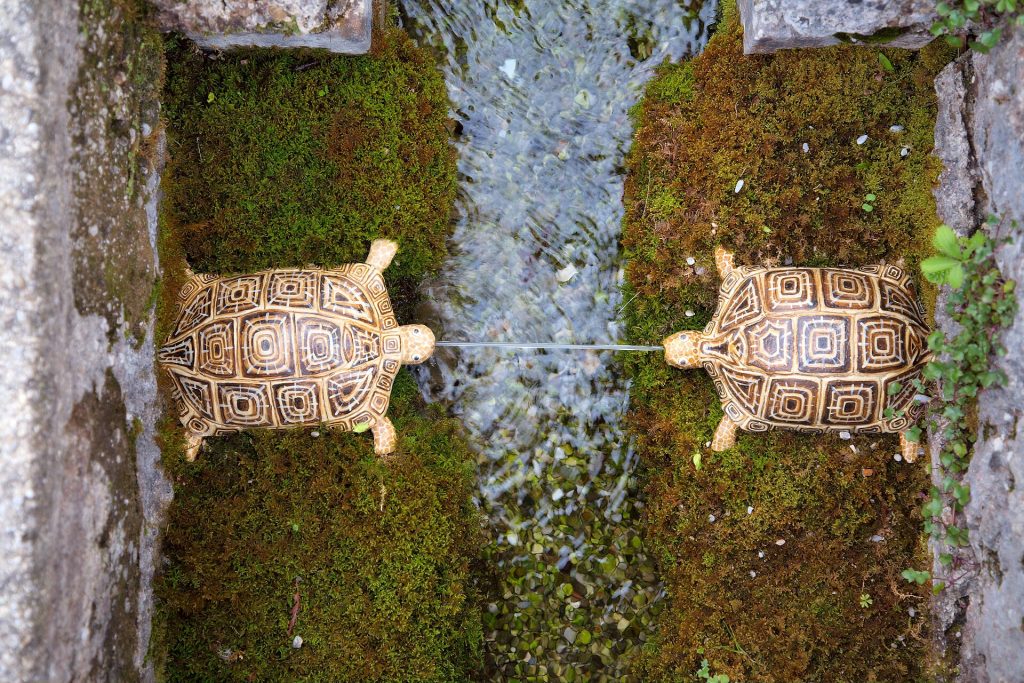
No description can quite capture the surprise of the Hellbrunn trick fountains, so the best preparation is to watch them in action. The video below takes you through the water games, the grottoes and the gardens, showing exactly how the hidden jets catch visitors unaware.
Watch for the Prince Table, the dancing water features and the little mechanical theatre, and imagine the reactions of guests who saw them for the very first time four centuries ago.
If the video has you smiling, read on for practical advice on planning your own visit to Hellbrunn.
Planning Your Day at Hellbrunn
Hellbrunn lies about five kilometres south of the centre of Salzburg. City buses run regularly from the old town, and the journey takes around twenty minutes. Many visitors prefer to walk or cycle along the historic Hellbrunner Allee, a beautiful tree lined avenue that passes several smaller country houses on the way.
The trick fountains can only be visited with a guided tour, and the season usually runs from spring to early November, with tours departing frequently throughout the day. The palace interior is usually included in the same ticket, and audio guides help you explore at your own pace. The park itself is open to the public and free to enter, so you can stroll there at any time.
Bring a spare layer or a small towel if you are visiting on a cooler day, because some splashing is almost guaranteed. In summer, the water is pure fun. Hellbrunn is also home to a well known Christmas market in the courtyard during Advent, when the palace windows become a giant advent calendar and the whole place takes on a festive glow.
Film lovers should look out for the glass pavilion from The Sound of Music, which now stands in the Hellbrunn park. Nearby you will also find Salzburg Zoo, set against the rock face of the hill, which makes Hellbrunn an easy and rewarding day out for families.
Allow at least half a day for your visit, more if you plan to walk up the hill, see the folk museum and explore the zoo. Early mornings and late afternoons are usually quieter, especially in the busy summer months.
However long you stay, Hellbrunn is likely to leave you with a smile. It is one of those rare historic places that invites you not just to admire, but to play, just as its founder intended more than four hundred years ago.
View the location on Google Maps
Palaces Nearby
If Hellbrunn has charmed you, the Alpine world holds many more royal and princely residences. Here are two more remarkable palaces well worth adding to your journey:
- Herrenchiemsee Palace – the island palace of King Ludwig II of Bavaria, modelled on Versailles and just across the border from Salzburg.
- Eggenberg Palace – a baroque palace in Graz built as a calendar of the cosmos, crowned by its painted Planetary Hall.
You May Like
Eggenberg Palace in Graz and Its Secret Calendar of the Cosmos


One thought on “Hellbrunn Palace and the Trick Fountains of a Playful Archbishop”