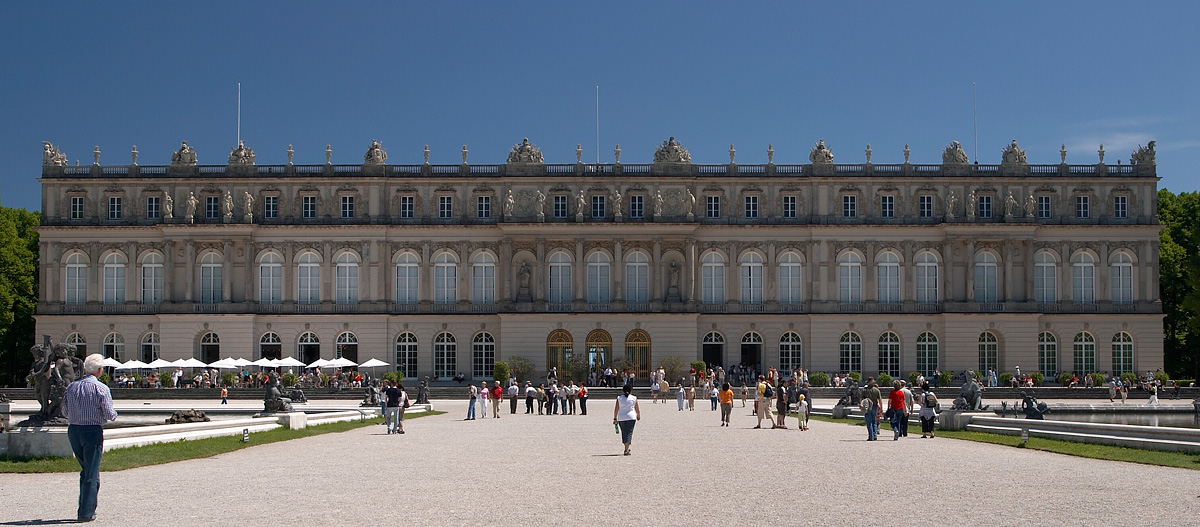
On an island in the middle of the Chiemsee, the largest lake in Bavaria, rises the most ambitious and extravagant of all the palaces built by King Ludwig II, the Dream King who spent his fortune and ultimately his sanity in the pursuit of architectural fantasy. Schloss Herrenchiemsee was conceived as nothing less than a full-scale recreation of the Palace of Versailles, a monument to the absolute monarchy of France that Ludwig so passionately admired, built on an island retreat far from the modern world.
Where Linderhof was an intimate jewel and Neuschwanstein a medieval fantasy, Herrenchiemsee was to be the grandest of all, a temple to the Sun King, Louis XIV, whom Ludwig revered above all other monarchs. The palace was intended to rival and even surpass its French model, and its central feature, the great Hall of Mirrors, is even longer than the famous gallery at Versailles that inspired it.
Yet Herrenchiemsee remains, in a sense, a magnificent fragment, for the king’s death and the exhaustion of his resources left the palace unfinished, its grand wings never completed, and Ludwig himself spent only a handful of nights within its walls. It stands as the supreme expression of his dreams and of their ultimately unattainable nature, a Versailles in the wilderness that could never quite be finished.
Over the following pages you will explore the whole story of this remarkable place, from the king and his obsession with Versailles, through the palace and its astonishing halls, to its unfinished state and its life today as one of the great sights of Bavaria. Come and discover the island Versailles of the Dream King.
In This Article
- The King and His Obsession
- A Palace on an Island
- Recreating Versailles
- The Great Hall of Mirrors
- The State Apartments
- The Gardens and Fountains
- A Magnificent Fragment
- The King’s Downfall
- The King Ludwig II Museum
- The Meaning of the Island Versailles
- An Island That Shaped Modern Germany
- See Herrenchiemsee for Yourself
- Visiting Herrenchiemsee Today
The King and His Obsession
To understand Herrenchiemsee, you must understand the passion that drove its creation, King Ludwig II’s profound and lifelong obsession with the absolute monarchy of France and above all with Louis XIV, the Sun King. For Ludwig, Louis represented the ideal of sacred, absolute kingship, a monarch who ruled by divine right in unrivaled splendor, and this ideal shaped the king’s imagination throughout his life.

Ludwig, who ruled Bavaria in an age of constitutions, parliaments, and the rising power of a united Germany dominated by Prussia, felt himself a king diminished, deprived of the true majesty he believed a monarch should possess. In the France of Louis XIV he found an image of the kingship he longed for, and he sought to recreate that world in his own building projects.
Of all Ludwig’s creations, Herrenchiemsee was the most direct homage to this vision, conceived explicitly as a recreation of Versailles, the supreme monument of French absolutism. The palace was to be a shrine to Louis XIV and to the ideal of kingship he embodied, a place where Ludwig could imagine himself the heir to that vanished glory.
This obsession, which found its grandest expression at Herrenchiemsee, was both the source of the king’s extraordinary architectural achievements and a symptom of his tragic detachment from the realities of his own age. In building a Versailles in Bavaria, Ludwig was fleeing from a world in which the kingship he dreamed of no longer existed.
The intensity of Ludwig’s identification with Louis XIV was almost total, extending to a fascination with every aspect of the Sun King’s court and its rituals. In an age of railways, telegraphs, and mass newspapers, the Bavarian king lived in imagination in the seventeenth century, and Herrenchiemsee was the grandest attempt to make that imaginative world physically real.
A Palace on an Island
For his grandest project, Ludwig chose a spectacular and secluded setting, an island in the middle of the Chiemsee, the largest lake in Bavaria, surrounded by water and framed by the distant Alps. The choice of this remote island reflected the king’s desire for privacy and seclusion, his wish to create his dream world far from the intrusions of the modern age.
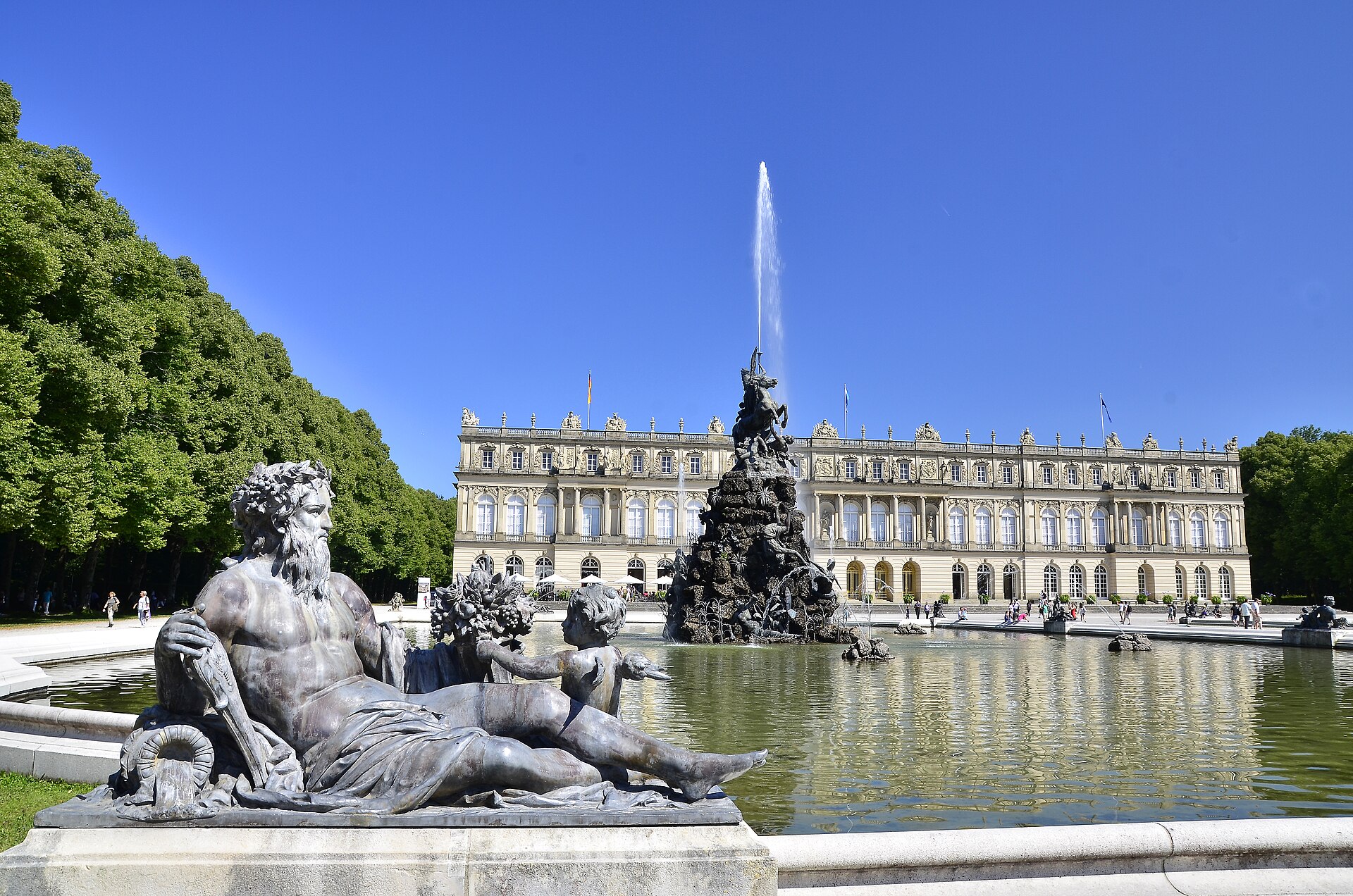
The island, known as the Herreninsel, had a long history and contained an old monastery, and the king acquired it to serve as the site for his new palace. The isolation of the island, reachable only by boat, made it an ideal retreat for a monarch who increasingly shunned the world, a private realm surrounded by the waters of the lake.
The building of a great palace on an island presented considerable practical challenges, from the transport of materials across the water to the creation of the elaborate gardens and fountains that the design demanded. Yet these difficulties only added to the grandeur of the conception, a Versailles rising from the waters of a Bavarian lake.
The setting gives Herrenchiemsee a unique character among palaces, approached across the water and set amid the natural beauty of the lake and its island, a combination of architectural magnificence and sublime natural setting that reflects the romantic sensibility of its creator.
The approach to the palace by boat across the Chiemsee is one of the defining experiences of a visit, for as the vessel nears the island the palace gradually reveals itself among the trees, a vision of Versailles rising unexpectedly from the waters of a Bavarian lake. Few palaces anywhere are approached in so dramatic and memorable a fashion.
Recreating Versailles
The central conception of Herrenchiemsee was the recreation of Versailles, and the palace was designed to reproduce, and in some respects to surpass, the great French model. The architects studied Versailles closely, and the Bavarian palace reproduces many of its features, from the general layout to specific rooms and decorative schemes, in a remarkable act of architectural homage.
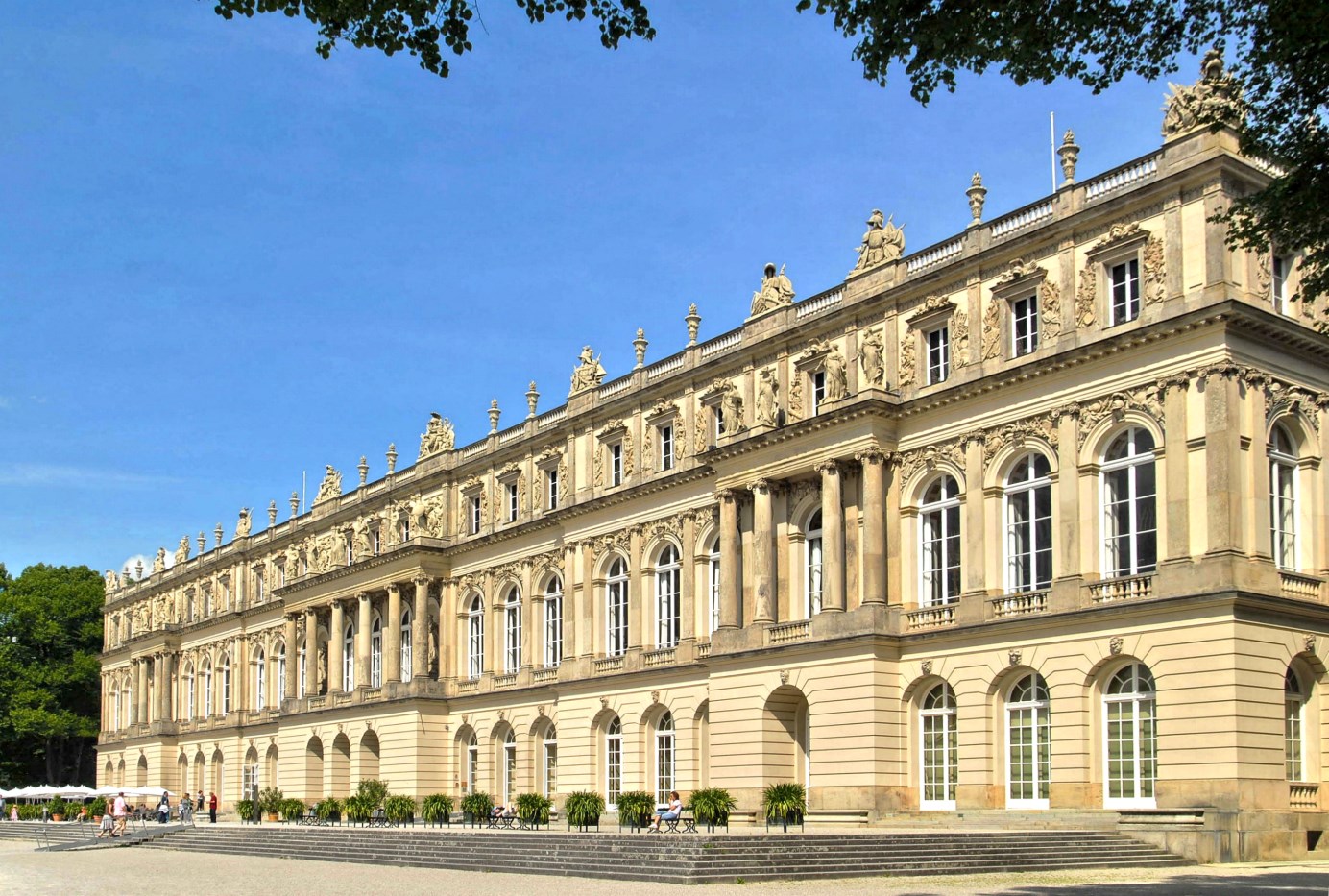
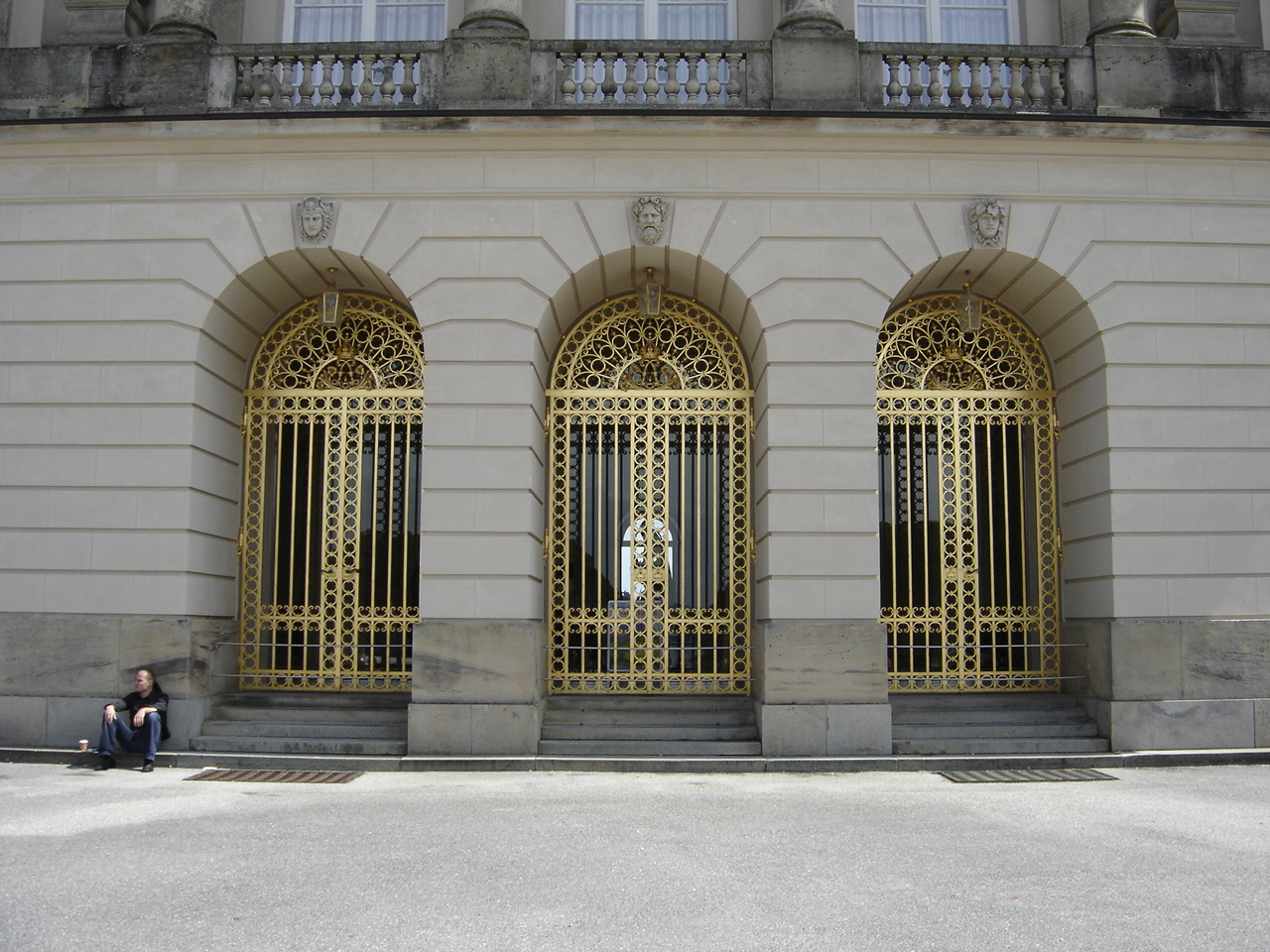
This was no mere superficial imitation but a serious attempt to recreate the splendor of the French palace, executed with the finest materials and craftsmanship and at enormous expense. Ludwig spared nothing in his determination to build a worthy monument to the Sun King, and the resulting palace rivals its model in the richness of its decoration.
In some respects, Herrenchiemsee even exceeds Versailles, most famously in its great Hall of Mirrors, which was deliberately made even longer than the celebrated gallery at the French palace. This spirit of emulation and surpassing reflects Ludwig’s ambition to create not merely a copy but the ultimate expression of the ideal that Versailles represented.
The recreation of Versailles at Herrenchiemsee stands as one of the most extraordinary architectural projects of the nineteenth century, a full-scale homage to a vanished world of absolute monarchy, built by a king who longed to inhabit that world and who poured his fortune into its realization.
The decision to build not a variation on Versailles but a deliberate recreation of it set Herrenchiemsee apart from the countless palaces across Europe that had merely been influenced by the French model. Ludwig wanted the thing itself, or as close to it as could be built, and this literalness of ambition gives the palace its extraordinary and slightly uncanny character.
The Great Hall of Mirrors
The supreme glory of Herrenchiemsee, and the room that most fully realizes Ludwig’s ambition to recreate and surpass Versailles, is the great Hall of Mirrors, a vast gallery of dazzling splendor that ranks among the most magnificent interiors in all of Europe. Modeled on the famous Hall of Mirrors at Versailles, it was deliberately made even longer than its French prototype.
The hall is lined with mirrors and windows, its length illuminated by countless candles in chandeliers and candelabra, creating an effect of overwhelming brilliance when fully lit. The reflections of the lights in the mirrors multiply the illumination endlessly, producing a spectacle of shimmering magnificence that few interiors anywhere can match.
The decoration of the hall reproduces the richness of its French model, with gilded ornament, painted ceilings, and every surface worked to a standard of the highest luxury. It was designed to overwhelm the visitor with a sense of royal splendor, the very embodiment of the absolute magnificence that Ludwig sought to recreate.
To stand in the great Hall of Mirrors at Herrenchiemsee, especially when it is illuminated by candlelight as the king intended, is to experience one of the most spectacular interiors ever created, a room that fulfills, more completely than any other, Ludwig’s dream of recapturing the vanished splendor of the Sun King’s Versailles.
That the Bavarian Hall of Mirrors was made deliberately longer than the original at Versailles speaks volumes about Ludwig’s psychology, his need not merely to equal but to surpass the model he revered. In this competitive homage there is something both magnificent and poignant, the striving of a diminished king to outdo the greatest monarch of the past.
When the hall is lit by its thousands of candles, as it is on special occasions, the effect is said to be almost overwhelming, a sea of light multiplied endlessly in the mirrors, and it is then that the room comes closest to fulfilling the king’s vision of recreating the splendor of the Sun King’s court in all its dazzling brilliance.
The State Apartments
Beyond the Hall of Mirrors, Herrenchiemsee contains a sequence of state apartments that reproduce the grand rooms of Versailles, decorated with the same lavishness and following the same schemes as their French models. These include the great state bedchamber, the council chamber, and other rooms that formed part of the ceremonial sequence of the French royal palace.
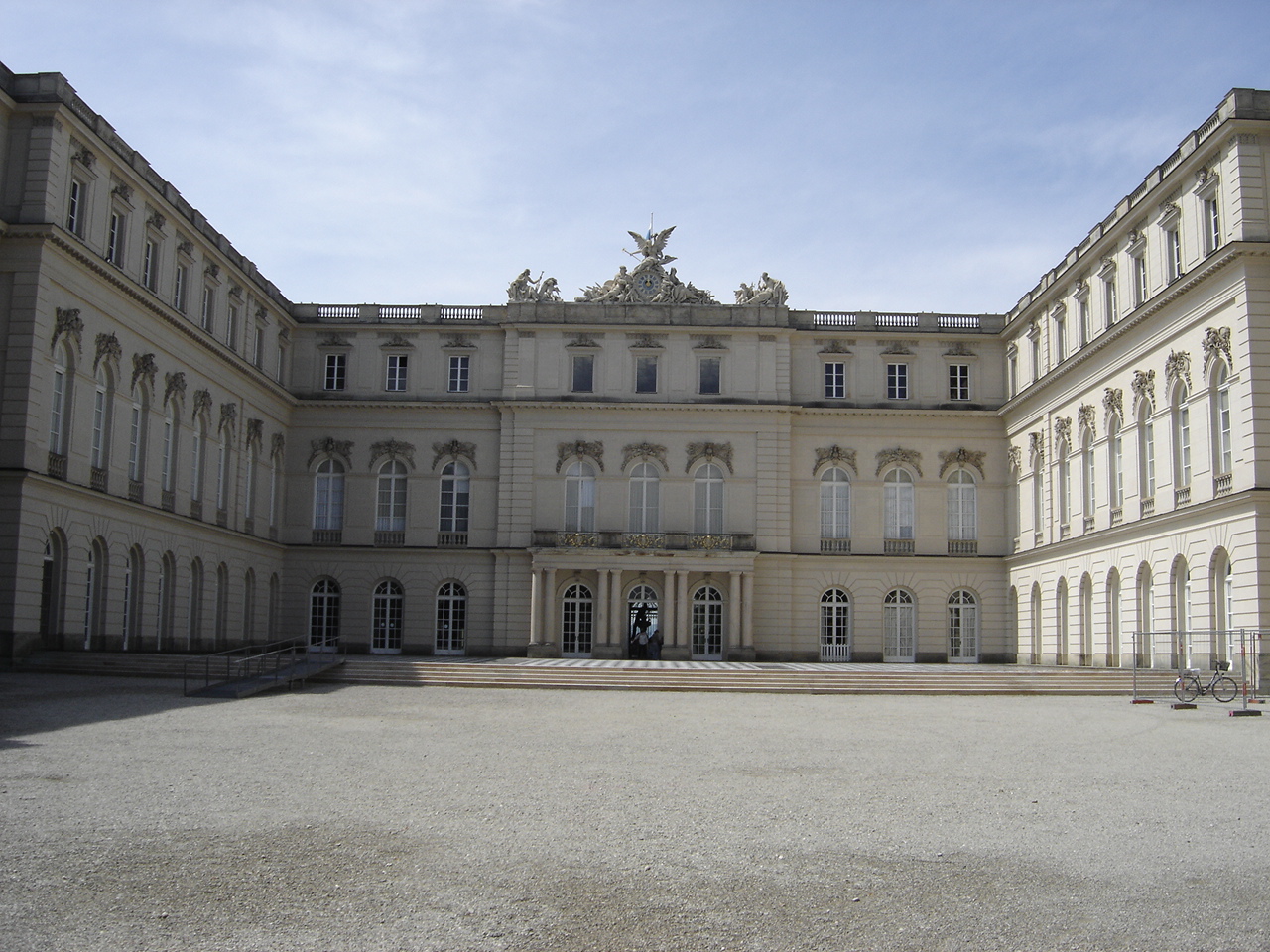
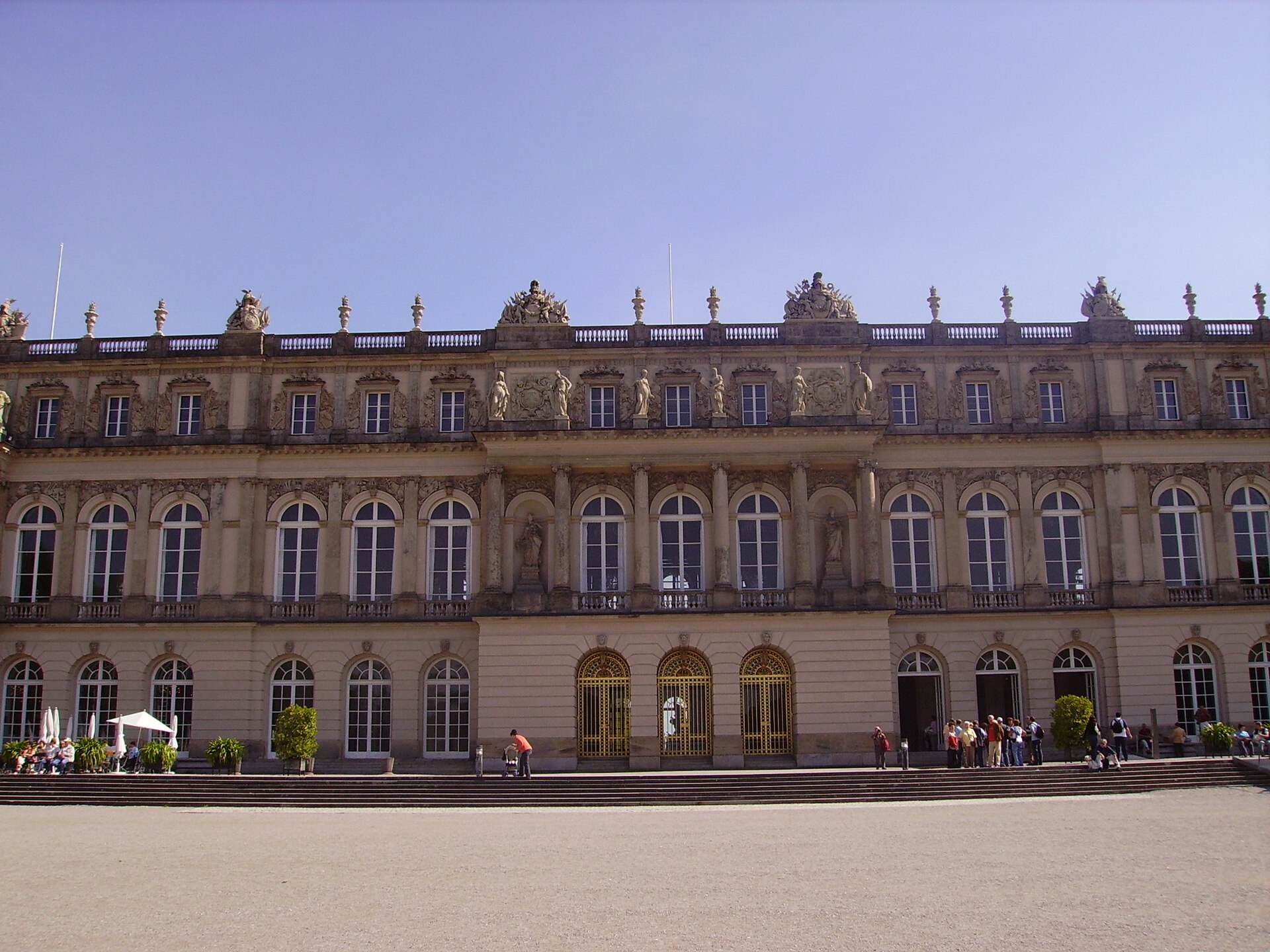
The state bedchamber is among the most magnificent rooms, a chamber of overwhelming richness recreating the state bedroom of the French kings, where the elaborate ceremonies surrounding the royal rising and retiring once took place. In recreating this room, Ludwig paid homage to the whole ritual apparatus of French absolute monarchy.
The rooms are decorated with gilded carving, rich fabrics, paintings, and every luxury, reproducing the opulence of Versailles in the Bavarian palace. Portraits and images of Louis XIV and the French monarchy appear throughout, weaving the king’s obsession into the very fabric of the building.
These state apartments, though they were never used for the ceremonial purposes for which their French models were designed, stand as a remarkable recreation of the world of Versailles, a sequence of magnificent rooms that transport the visitor into the vanished splendor of the age of absolute monarchy that Ludwig so revered.
The reproduction of Versailles extended even to the smallest details of the decorative schemes, so that scholars of the French palace can find at Herrenchiemsee faithful copies of rooms and ornaments from the original. In this the palace serves almost as a record of Versailles as it was understood in the nineteenth century, a mirror held up to the French model.
The Gardens and Fountains
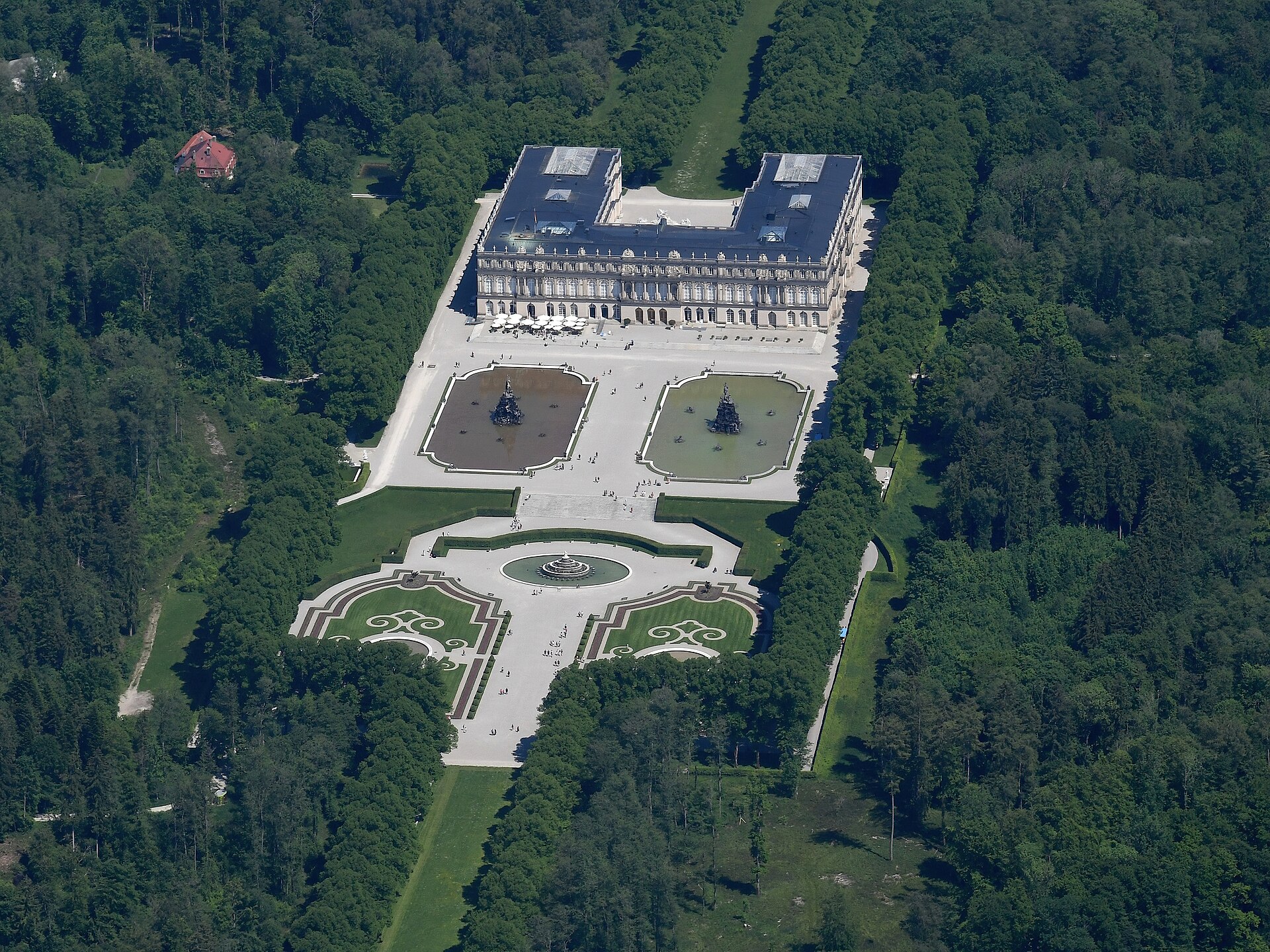
The gardens of Herrenchiemsee were designed, like the palace itself, in emulation of Versailles, with formal parterres, fountains, and sculptures arranged in the grand French manner. Though never completed to the full extent of the original conception, the gardens that were realized reproduce something of the splendor of the gardens of the French palace.
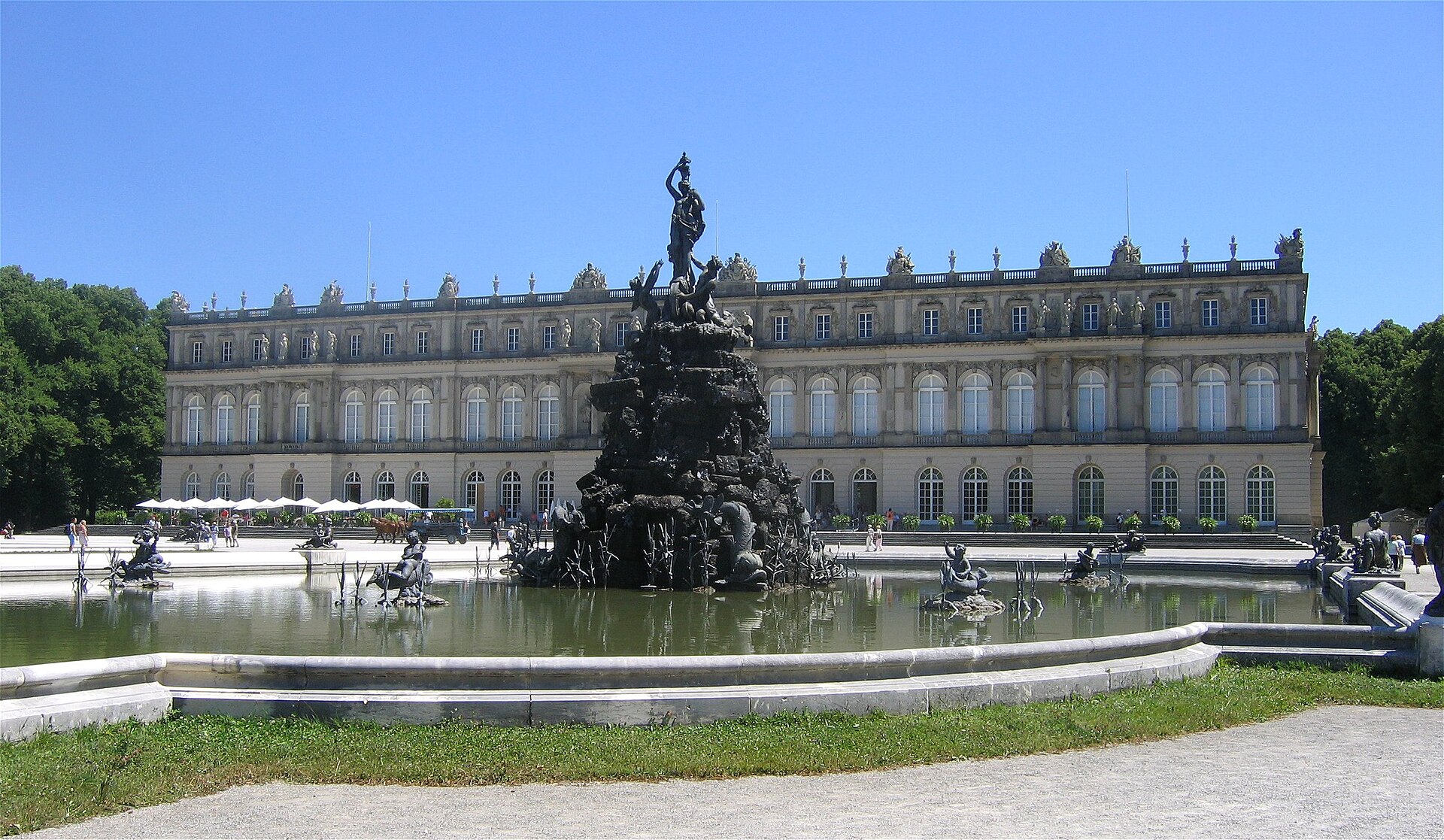
The great fountains are among the most impressive features of the grounds, recreating the elaborate waterworks of Versailles, with sculptural groups and jets of water that animate the formal landscape. These fountains, set against the backdrop of the lake and the distant mountains, combine the artifice of the French garden with the natural beauty of the Bavarian setting.
The formal gardens extend before the palace, their geometric parterres and axial paths following the principles of the French garden design that Ludwig sought to reproduce. The gardens frame the palace and provide the setting for its magnificent facade, completing the recreation of the Versailles ensemble on its island.
Though the incomplete state of the project means that the gardens were never fully realized, what was built gives a powerful impression of the grand conception, and the fountains and parterres of Herrenchiemsee remain among the finest examples of the formal garden in Bavaria, a fitting setting for the island Versailles.
The fountains of Herrenchiemsee, playing against the backdrop of the lake and the mountains, achieve effects that even Versailles cannot match, for the natural setting lends the formal waterworks a sublimity quite different from the enclosed grandeur of the French gardens. Here the artifice of the French garden meets the wild beauty of the Alpine landscape.
A Magnificent Fragment
For all its magnificence, Herrenchiemsee remains an unfinished palace, for the king’s death and the exhaustion of his resources left the great project incomplete. The full design called for extensive wings that were never built, and even parts of the palace that were constructed were left unfinished, so that the building we see today is, in a sense, a magnificent fragment.
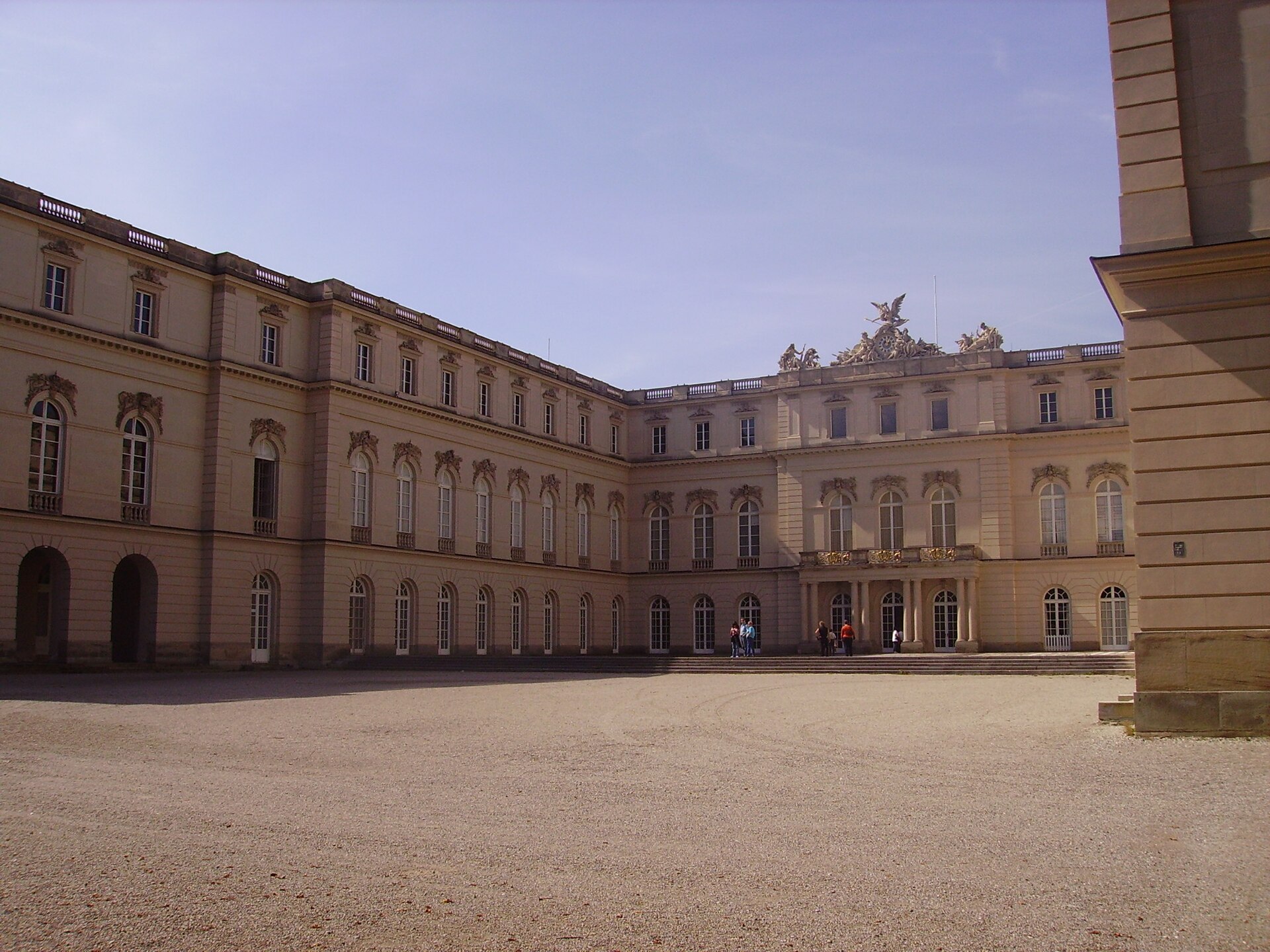
The enormous cost of the palace, together with Ludwig’s other building projects, had strained even his personal fortune to the breaking point, and the construction proceeded only as funds allowed. When the king died, work ceased entirely, leaving the palace in the state it had reached, its grand ambitions only partly realized.
Ludwig himself spent only a handful of nights in the palace, and it was never used for the purposes for which its magnificent state apartments were designed. The great rooms, created to recreate the ceremonial life of Versailles, stood empty and unused, a stage on which the intended drama was never performed.
This unfinished state gives Herrenchiemsee a peculiar poignancy, for it stands as a monument not only to the king’s dreams but to their ultimate unattainability. The island Versailles, conceived to surpass its model, remains forever incomplete, a magnificent fragment of a vision that could never be fully realized.
Wandering through the finished rooms and then coming upon the unfinished portions, the visitor experiences directly the collision between the king’s boundless ambition and the hard limits of money and time. The bare, incomplete spaces are as eloquent, in their way, as the gilded halls, testifying to a dream that outran every earthly resource.
In its incompleteness, Herrenchiemsee also achieves an unintended honesty, for it lays bare the gap between aspiration and achievement that lies at the heart of all human striving, and reminds us that even the grandest dreams must reckon, in the end, with the limits of the possible. The palace is at once a triumph and a confession of defeat.
The King’s Downfall
The building of Herrenchiemsee, the most expensive of all Ludwig’s projects, contributed directly to the crisis that would end his reign and his life. The vast sums the king poured into his palaces exhausted his personal resources and drove him deeply into debt, alarming his ministers and providing grounds for the move against him.
In the events that followed, the king was declared unfit to rule and deposed, and shortly afterward he died in mysterious circumstances in a lake, bringing to an end the extraordinary career of the Dream King. The building projects that had consumed his fortune and his energies were left incomplete, monuments to a vision that had outrun both his resources and, in the eyes of his opponents, his reason.
Herrenchiemsee, as the grandest and most expensive of these projects, stands as the supreme example of the ambition that both created Ludwig’s extraordinary legacy and brought about his downfall. The palace that was to be the ultimate monument to absolute monarchy became instead a symbol of the king’s tragic overreach.
Yet in the judgment of history, the very extravagance that ruined Ludwig has proved to be his greatest gift to Bavaria, for the palaces he built, including the unfinished Herrenchiemsee, have become among the most treasured and visited monuments in all of Germany, drawing admirers from around the world.
The tragedy of Ludwig is inseparable from the grandeur of his palaces, for the very qualities that made him a builder of genius, his boundless imagination, his indifference to cost, his flight from reality, were also the qualities that destroyed him. Herrenchiemsee is the monument on which this tragic contradiction is written most largely.
The King Ludwig II Museum
Herrenchiemsee today houses a museum dedicated to King Ludwig II, allowing visitors to explore the life and legacy of the extraordinary monarch who created the palace. The museum tells the story of the Dream King, his passions and obsessions, his building projects, and his tragic fate, providing the context for understanding the palace itself.
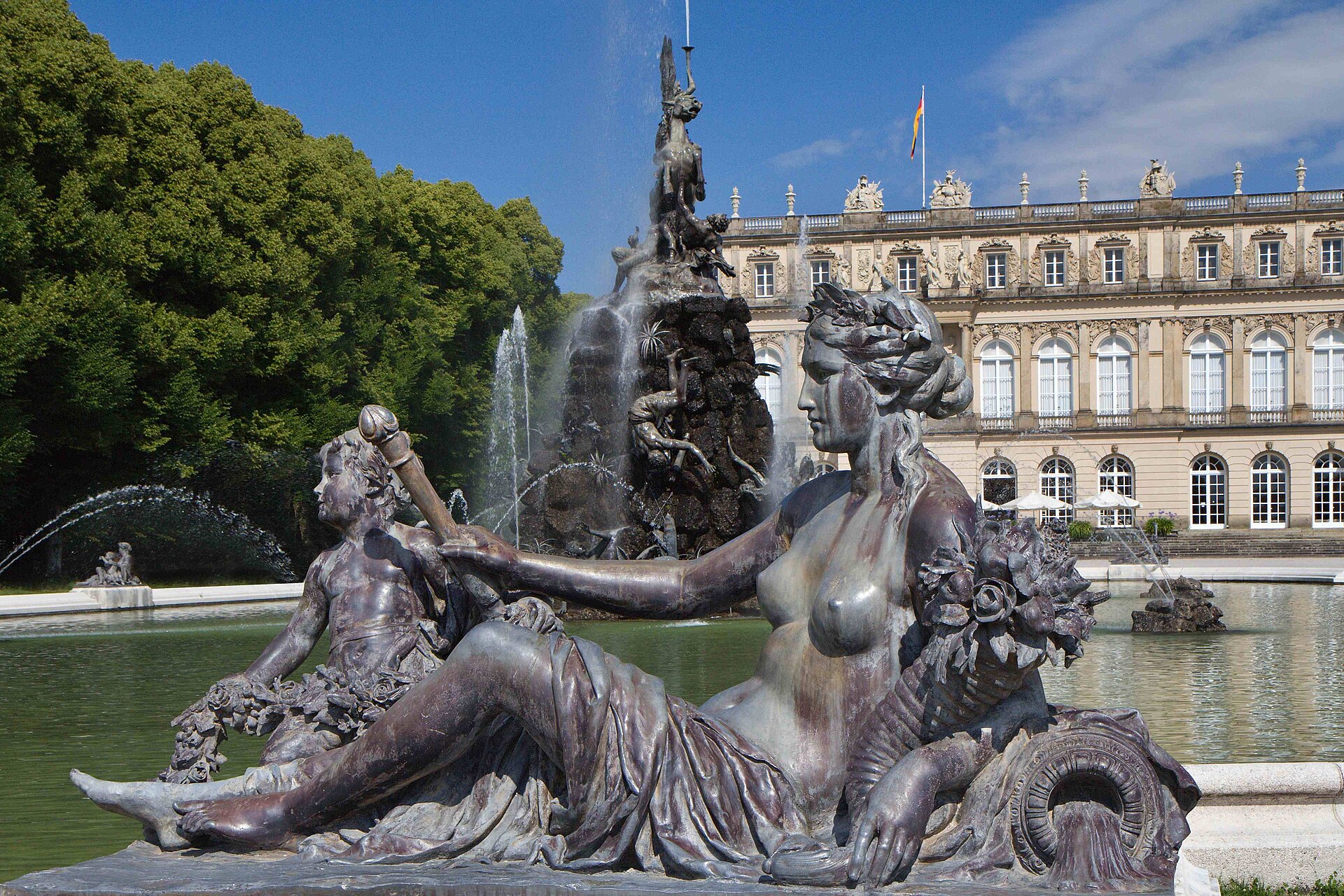
The museum’s displays include objects associated with the king, from personal effects to items related to his building projects and his reign, offering insight into the character and imagination of one of history’s most fascinating royal figures. It complements the experience of the palace with a deeper understanding of the man behind it.
The island itself, with its old monastery and its natural beauty, offers additional interest, and the whole complex has become a place of pilgrimage for those fascinated by the story of Ludwig II. The combination of the magnificent palace, the museum, and the beautiful setting makes Herrenchiemsee a rich and rewarding destination.
For visitors, the museum deepens the encounter with the palace, transforming a visit from mere sightseeing into an engagement with the remarkable story of the king whose dreams gave rise to this island Versailles, and whose tragic fate lends the whole place its haunting resonance.
The story told in the museum, of a king who poured his fortune and his sanity into the pursuit of beauty, and who died young and mysteriously, has all the elements of tragedy, and it is this human drama, as much as the splendor of the architecture, that draws visitors to the island and holds them in fascination.
The Meaning of the Island Versailles
Herrenchiemsee occupies a unique place among the palaces of Europe, for it is at once a homage to the greatest of all royal palaces and the expression of a single, obsessive imagination. As a recreation of Versailles built by a king who longed for the vanished world of absolute monarchy, it embodies a peculiarly romantic and tragic vision.
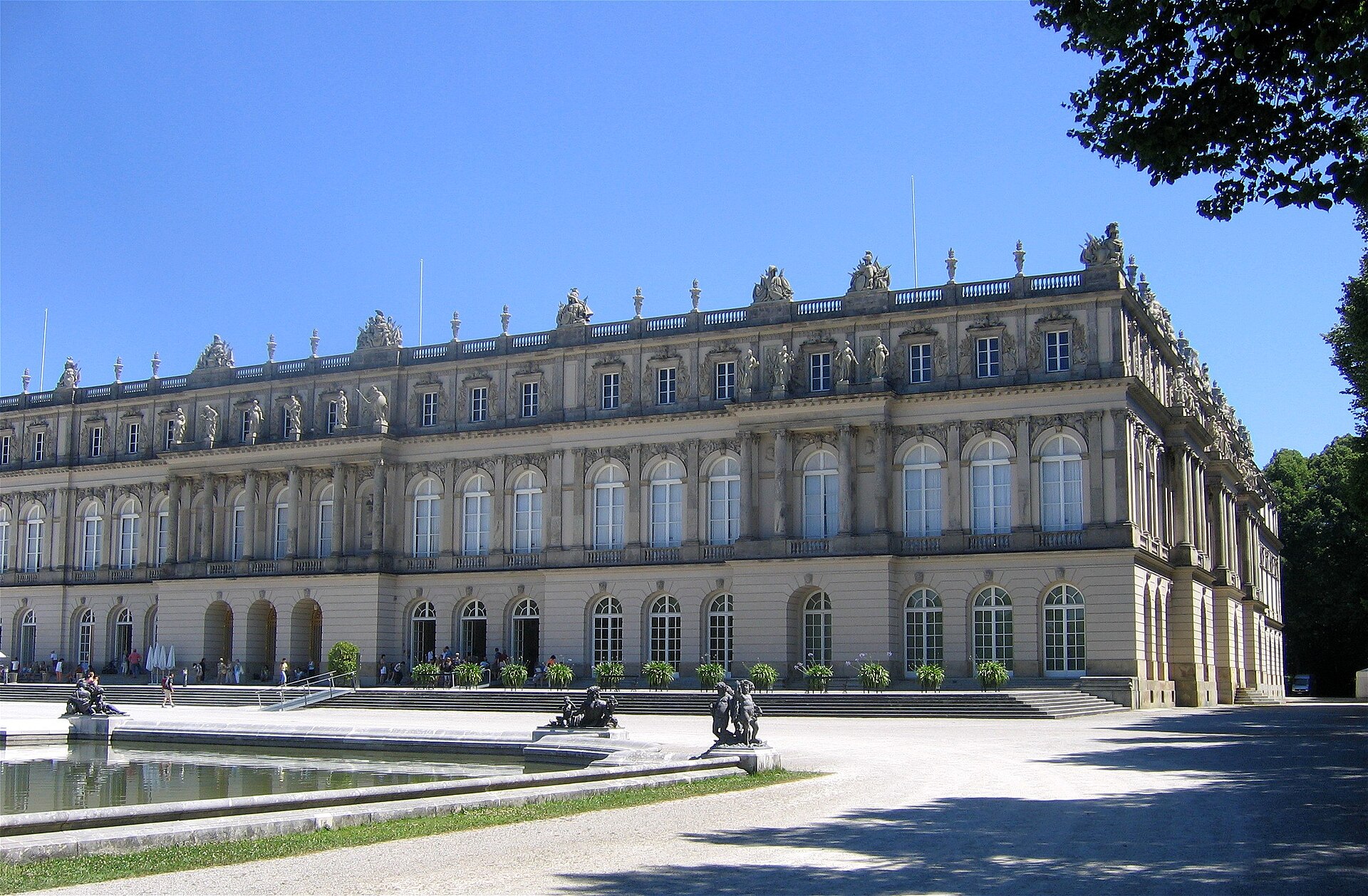
The palace can be read as the ultimate expression of Ludwig’s flight from his own age into a dream of the past. In building his island Versailles, the king sought to recreate not merely a building but a whole vanished order, a world of sacred, absolute kingship that had passed away and that could exist, in the modern age, only as fantasy.
There is a profound irony in the fact that this monument to absolute monarchy, built in emulation of the France of Louis XIV, was created in an age of constitutions and mass politics, by a king whose real power was sharply limited. Herrenchiemsee is, in this sense, a palace out of time, a magnificent anachronism.
Yet it is precisely this quality of doomed, extravagant dreaming that gives Herrenchiemsee its power. It stands as a testament to the human capacity to create beauty out of longing, and as a monument to a king who, unable to live in his own age, built for himself a magnificent refuge in a dream of the past.
In the end, perhaps the deepest meaning of Herrenchiemsee lies in the way it embodies the romantic impulse itself, the longing for a lost and idealized past, pursued without regard for cost or practicality, in the conviction that beauty and dream are worth any sacrifice. The palace is a monument to that impulse in its purest and most extreme form.
An Island That Shaped Modern Germany
The island of Herrenchiemsee holds a significance in German history that reaches beyond the story of the Dream King and his palace, for it was here, in the aftermath of the Second World War, that a gathering of experts met to lay the groundwork for the constitution of a new, democratic Germany. In the shadow of Ludwig’s monument to absolute monarchy, the foundations of a modern democratic state were prepared.
The choice of this secluded island for so momentous a task was fitting, for its isolation offered a quiet setting away from the pressures of the outside world, much as it had for the reclusive king who built the palace. In the buildings on the island, the assembled experts worked to draft proposals for the constitution that would govern the new Germany.
There is a striking irony in the fact that the island created by Ludwig as a shrine to absolute, divine-right monarchy became, in the twentieth century, a birthplace of German democracy. The two chapters of the island’s history, the royal fantasy and the democratic foundation, stand in remarkable contrast, united only by the seclusion of the setting.
This dual heritage gives Herrenchiemsee a significance that few other palaces can claim, as both a monument to a vanished ideal of kingship and a place associated with the birth of the modern German state, so that the island carries within it two very different visions of how a nation should be governed.
That the same island should hold both Ludwig’s shrine to absolute kingship and a birthplace of German democracy is one of the more remarkable juxtapositions in European history, a reminder that the same quiet places can serve very different dreams, and that the long story of a nation can turn, unexpectedly, on a secluded island in a lake.
See Herrenchiemsee for Yourself
The magnificence of Herrenchiemsee, with its great Hall of Mirrors, its state apartments, and its fountains, all set on an island in a beautiful Bavarian lake, is best appreciated by seeing the palace for yourself. A video conveys the scale and splendor of the place in a way that words and still images cannot fully capture.
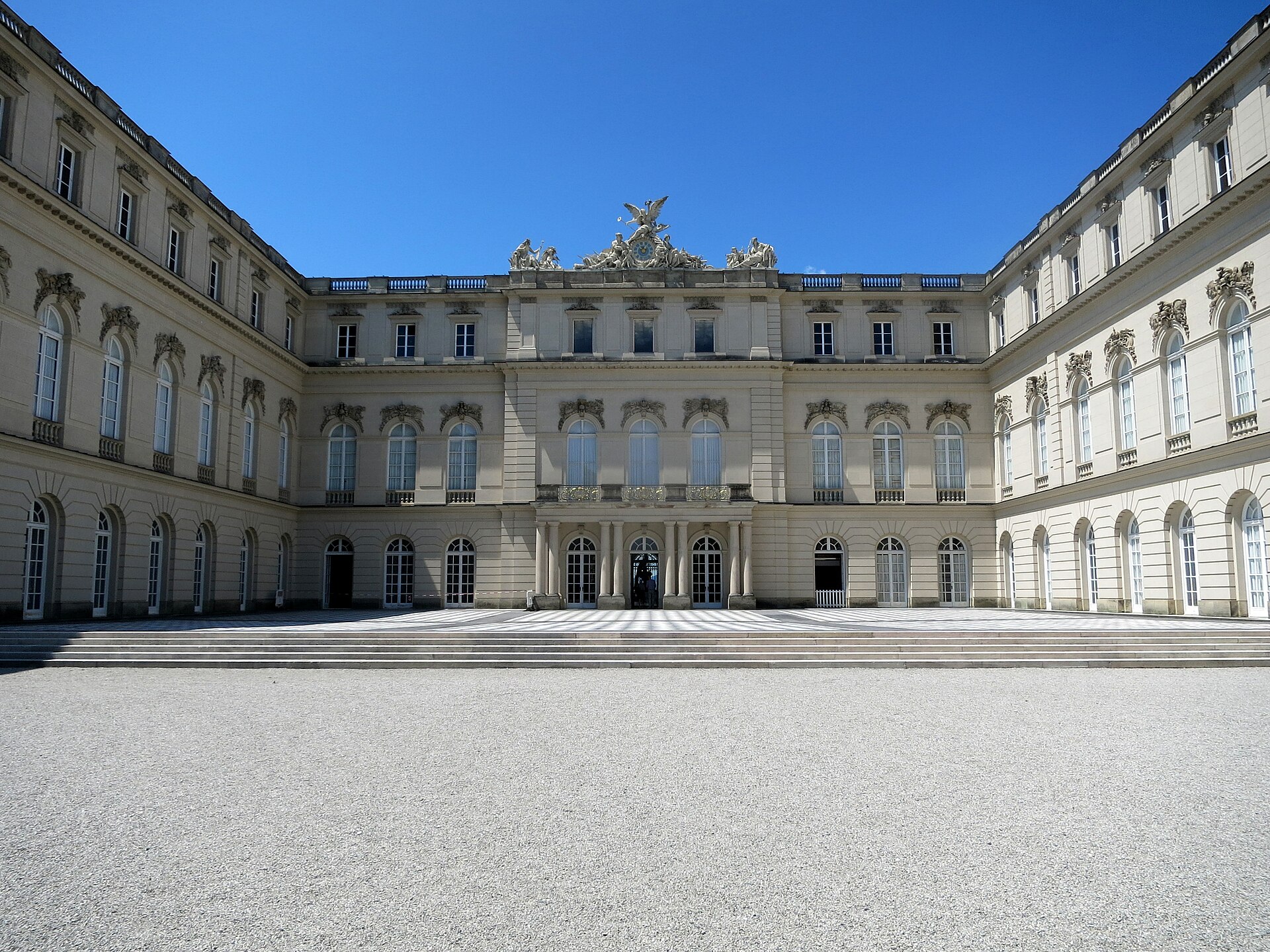
The short video below explores Herrenchiemsee, its recreation of Versailles, and the story of its creator, King Ludwig II, including its unfinished state. It is an ideal companion to everything you have read here, deepening your understanding of this remarkable palace and the extraordinary ambition that gave rise to it.
As you watch, consider the scale of the king’s ambition in seeking to recreate and surpass Versailles on a Bavarian island, and the poignancy of the unfinished palace and the tragic fate of its creator. Then, when you visit Bavaria, you will recognize Herrenchiemsee not just as a magnificent palace but as the grandest expression of the Dream King’s vision.
Visiting Herrenchiemsee Today
For the modern traveler, Herrenchiemsee is one of the essential sights of Bavaria, a palace whose magnificence and romantic associations make it a highlight of any visit to the region. Set on its island in the Chiemsee, the palace is reached by boat across the lake, a journey that is itself a memorable part of the experience.

Visitors can tour the completed portions of the palace, above all the spectacular Hall of Mirrors and the state apartments, which recreate the splendor of Versailles, and can explore the gardens with their fountains and parterres. The King Ludwig II Museum on the island provides context on the life and legacy of the palace’s creator.
The island setting, with its natural beauty and its old monastery, adds to the pleasure of a visit, and the journey across the lake, with views of the palace and the surrounding mountains, is a delight in itself. Herrenchiemsee lies within reach of Ludwig’s other palaces, making it part of a memorable tour of the Dream King’s creations.
However you approach it, Herrenchiemsee rewards the visitor who understands its story. This is not merely a magnificent palace but the grandest and most ambitious of the Dream King’s creations, an island Versailles built in homage to a vanished world, and a monument to the extraordinary and tragic imagination of one of history’s most fascinating monarchs.
Because the palace is reached only by boat and lies within a large natural park, a visit combines the pleasures of a lake excursion with the wonder of the palace itself, and many visitors find that the journey across the water and the walk through the island’s grounds are as memorable as the gilded halls that are their destination.
For anyone who has already visited the real Versailles, a visit to Herrenchiemsee offers a fascinating counterpoint, a chance to see how the greatest of royal palaces was understood and re-imagined by a nineteenth-century king, and to reflect on the strange and moving impulse that led him to build his own version of it on a lake in the Bavarian Alps.
Palaces Nearby
If the island Versailles of the Dream King has drawn you into the world of the Bavarian royal palaces, two more great residences of the Wittelsbach dynasty make natural companions to a visit here, each telling a different chapter of the story.
- Schloss Linderhof — the intimate rococo villa that Ludwig loved best, the only one of his palaces completed in his lifetime.
- The Munich Residenz — the vast city palace that was the ancient seat of the Wittelsbach dynasty for more than seven centuries.
You May Like
The Bardo, a Palace of the Beys Filled With Roman Mosaics


One thought on “The Bavarian King Who Built His Own Versailles on a Lake”