In the heart of Trier, the oldest city in Germany, a delicate pink rococo palace stands beside one of the most massive Roman buildings north of the Alps. The Electoral Palace was the residence of the archbishop electors of Trier, and its elegant south wing, with a famous staircase and sculptures by Ferdinand Tietz, faces a baroque garden that leads toward the ruins of the Roman imperial baths.
Few places in Europe show such a dramatic encounter between eras. On one side rises the Aula Palatina, the throne hall built for Emperor Constantine in the fourth century; on the other, the playful curves and soft colours of eighteenth century rococo. Together they form one of the most memorable ensembles in the Moselle valley.
In this article we will explore the Electoral Palace from the archbishops who built it to its rococo wing, its staircase, its garden and its Roman neighbours, and we will finish with practical tips for your visit.
In This Article
- A Pink Palace Beside a Roman Giant
- The Archbishop Electors of Trier
- The Renaissance Wings
- The Rococo South Wing
- The Staircase and Ferdinand Tietz
- Prussian Changes and the Freeing of the Basilica
- The Constantine Basilica Next Door
- The Palace Garden
- Statues and Fountains
- From the Palace to the Imperial Baths
- Trier and the Moselle Valley
- The Electoral Palace on Video
- Visiting the Electoral Palace Today
A Pink Palace Beside a Roman Giant
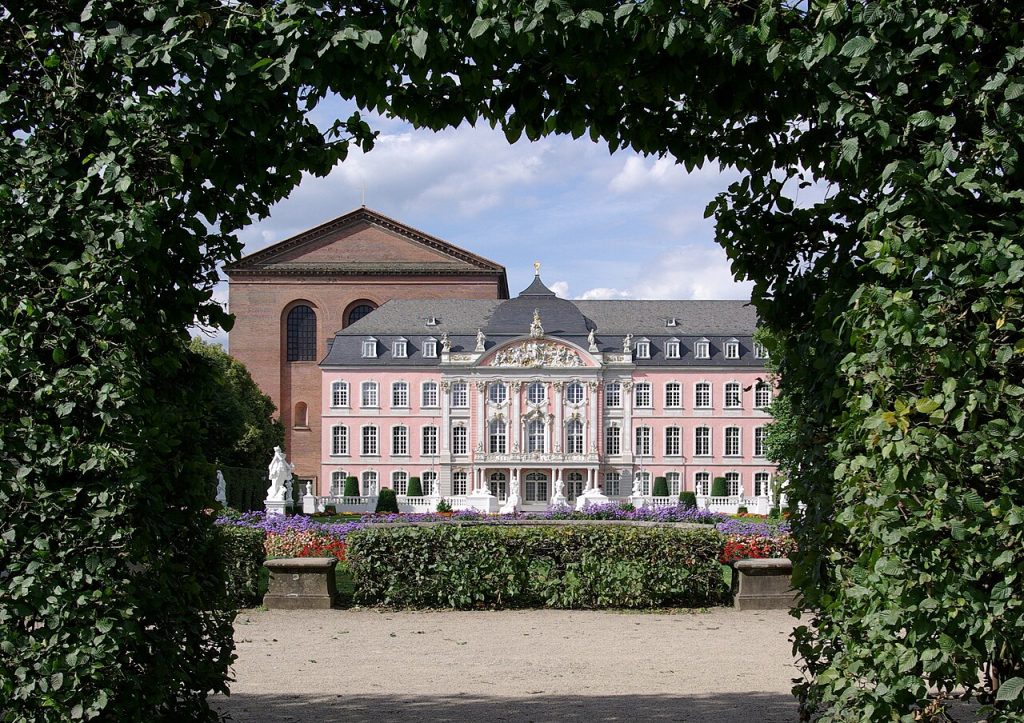
Walking from the market square of Trier toward the Constantine Basilica, you suddenly see the Electoral Palace, its pale pink facade glowing beside the dark brick walls of the Roman hall. The contrast is startling and unforgettable.
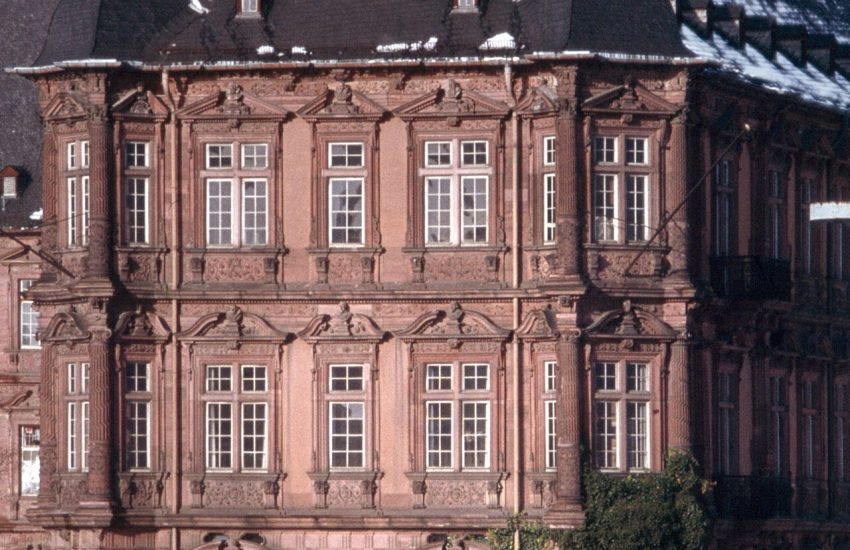
The palace forms a long wing facing the garden, decorated with white stone details, sculptures and a central projection crowned by the arms of the archbishops.
Trier is a city where history is layered at every step. Roman gates, baths, an amphitheatre and the cathedral stand within walking distance of the palace, making the city a UNESCO World Heritage Site.
What makes the Electoral Palace special is this setting, where a rococo residence and the remains of the Roman Empire meet in a single view.
On sunny days, the garden in front of the palace is full of people enjoying the flower beds, fountains and statues, and the pink facade makes a perfect backdrop for photographs.
The palace is at its most beautiful in the late afternoon, when the low sun warms the colours of the stone and the shadows of the statues stretch across the lawns.
Many visitors come to Trier for its Roman monuments and are surprised to discover this elegant rococo palace, which adds a completely different chapter to the city’s story.
The Archbishop Electors of Trier
The archbishops of Trier were among the seven electors of the Holy Roman Empire, who chose the king of the Romans. They ruled a territory along the Moselle and the Rhine and held a position of great prestige.
In the Middle Ages, the archbishops used the Roman throne hall as their castle, adapting the ancient building for their own residence.
In the early seventeenth century, Archbishop Lothar von Metternich decided to build a modern palace, and construction began in 1615, with wings attached to the Roman hall.
Over the following decades, the palace grew into a large Renaissance residence, but the archbishops increasingly preferred their palaces at Koblenz and Ehrenbreitstein, closer to the Rhine.
The last elector, Clemens Wenceslaus, built the Electoral Palace in Koblenz, and the Trier palace became a secondary residence before the electorate was swept away in 1794.
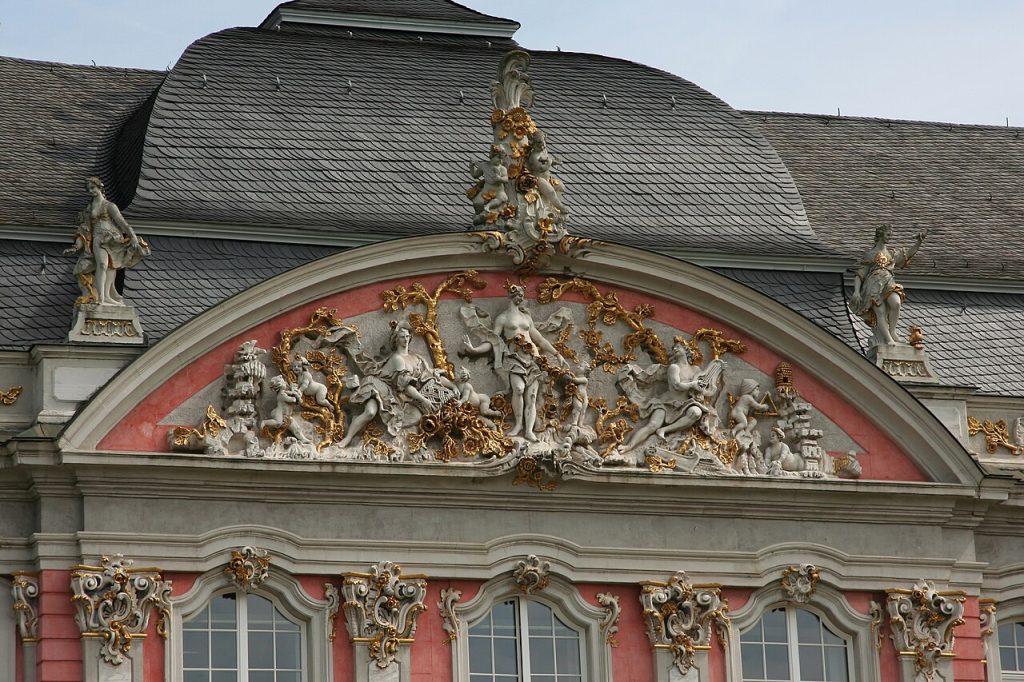
The archbishops’ coat of arms, with its red cross on a white field, can be seen on the palace and in many places around Trier.
The archbishops were powerful patrons of art and architecture, and their buildings in Trier, Koblenz and along the Rhine still shape the character of the region.
The Renaissance Wings
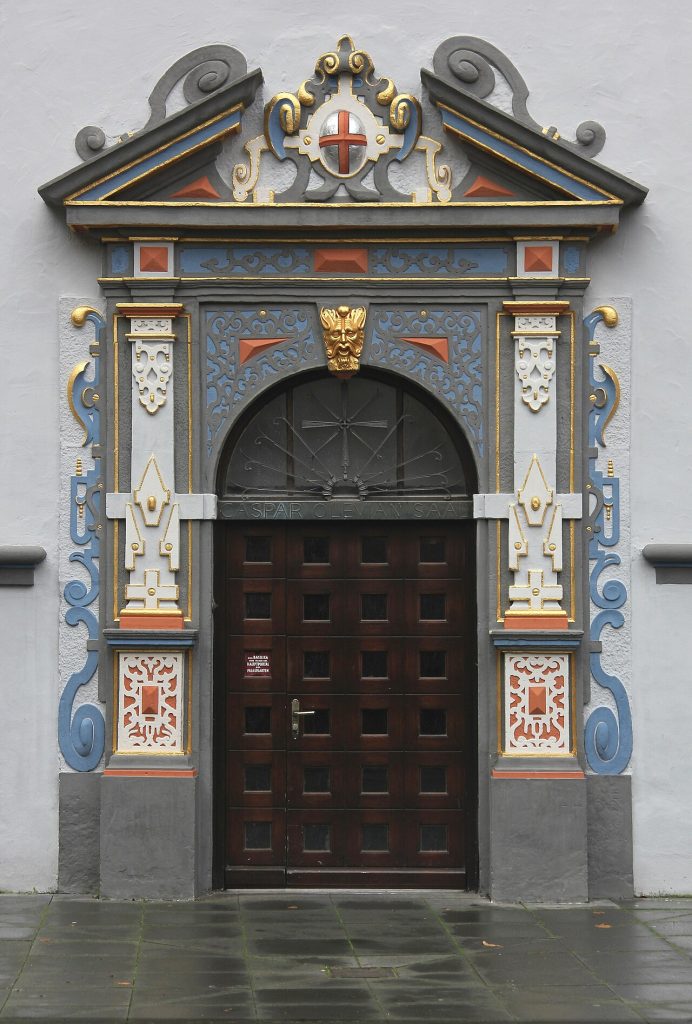
The oldest parts of the palace date from the early seventeenth century, built in the Renaissance style with sandstone frames, gables and arcades.
The north wing and the east wing preserve much of this original character, with sturdy proportions and decorative details typical of German Renaissance architecture.
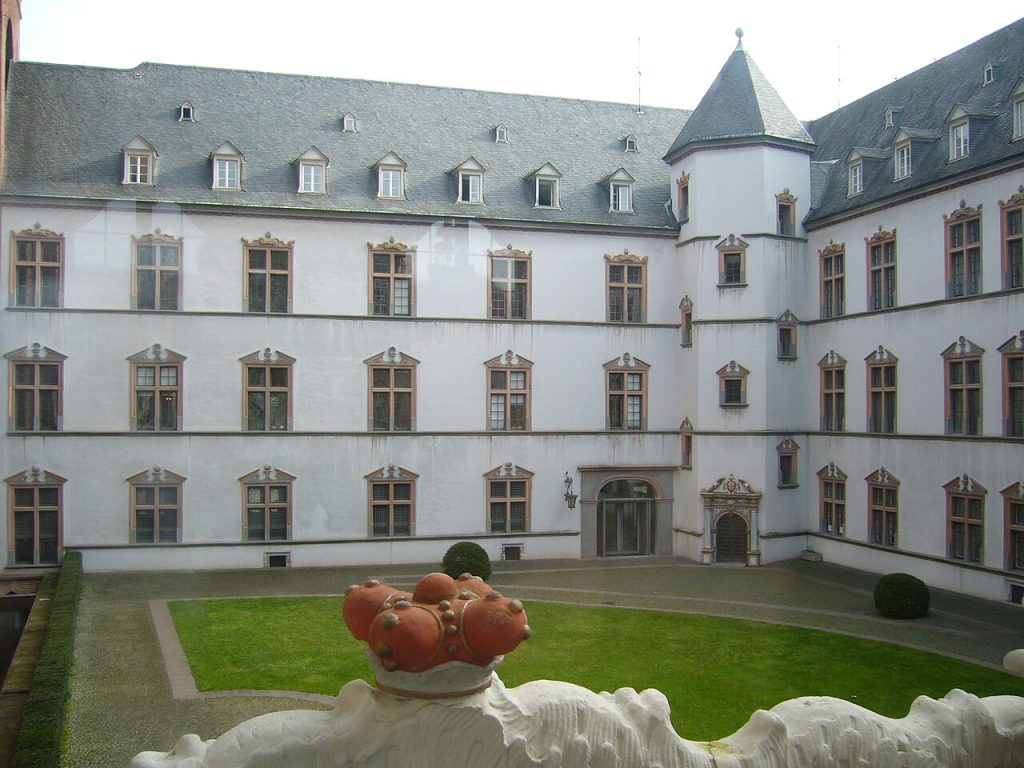
These wings once enclosed a courtyard together with the Roman hall, creating a palace that literally incorporated the ancient building into its structure.
Walking around the palace, you can still see the transition between the Renaissance wings and the later rococo addition.
The Renaissance builders used local sandstone, and its warm tones still give the older wings a solid, dignified character.
Inside these wings, rooms were arranged for the archbishop’s household, administration and guests, reflecting the complex life of an ecclesiastical court.
The north wing’s facade, with its rhythmic windows and stone details, offers a sober counterpoint to the playful rococo wing.
The Rococo South Wing
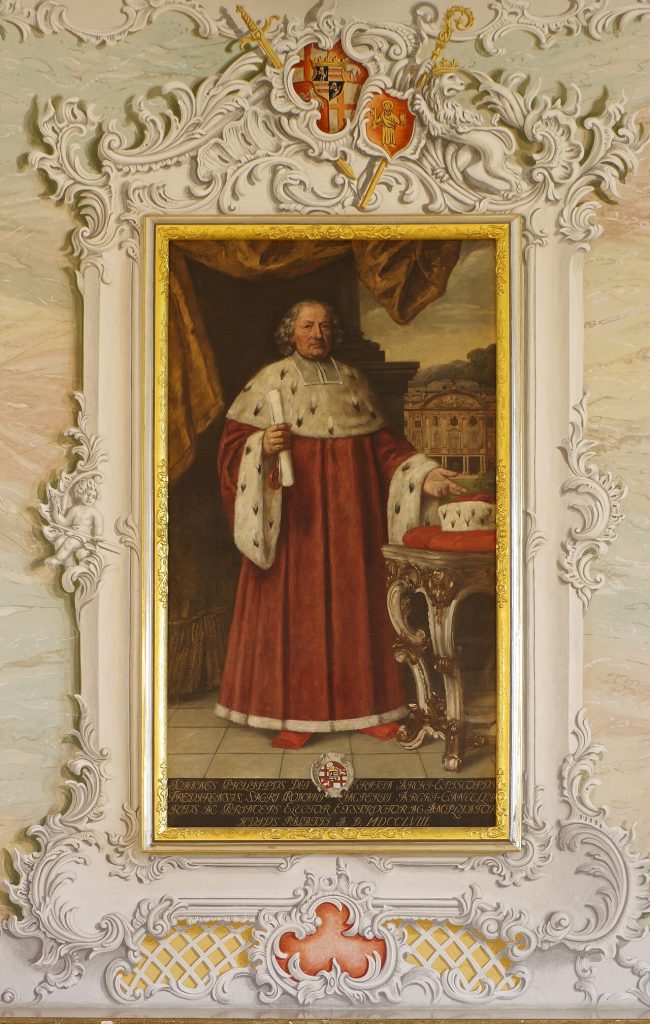
In the middle of the eighteenth century, Archbishop Johann Philipp von Walderdorff wanted to modernise the palace in the fashionable rococo style. Between 1756 and 1762, the old Renaissance south wing was replaced by a new wing designed by Johannes Seiz, a pupil of the great architect Balthasar Neumann.
The new wing faces the garden with a long, elegant facade painted in pink and decorated with white stone, sculptures and window frames full of graceful curves.
At its centre, a projecting section with a balcony and the archbishop’s coat of arms gives the facade a focal point and a sense of ceremony.
The south wing is considered one of the finest rococo buildings in Germany, and its delicate decoration contrasts beautifully with the massive Roman walls beside it.
Johannes Seiz also worked on other buildings for the archbishops, including Engers Palace on the Rhine, and his style defined the late baroque architecture of the electorate.
The balcony at the centre of the facade was designed for the archbishop to appear before the people gathered in the garden, a gesture of princely presence.
The pink colour of the facade was restored according to historical evidence, and it gives the palace a cheerful, almost fairy tale quality that delights visitors.
The Staircase and Ferdinand Tietz
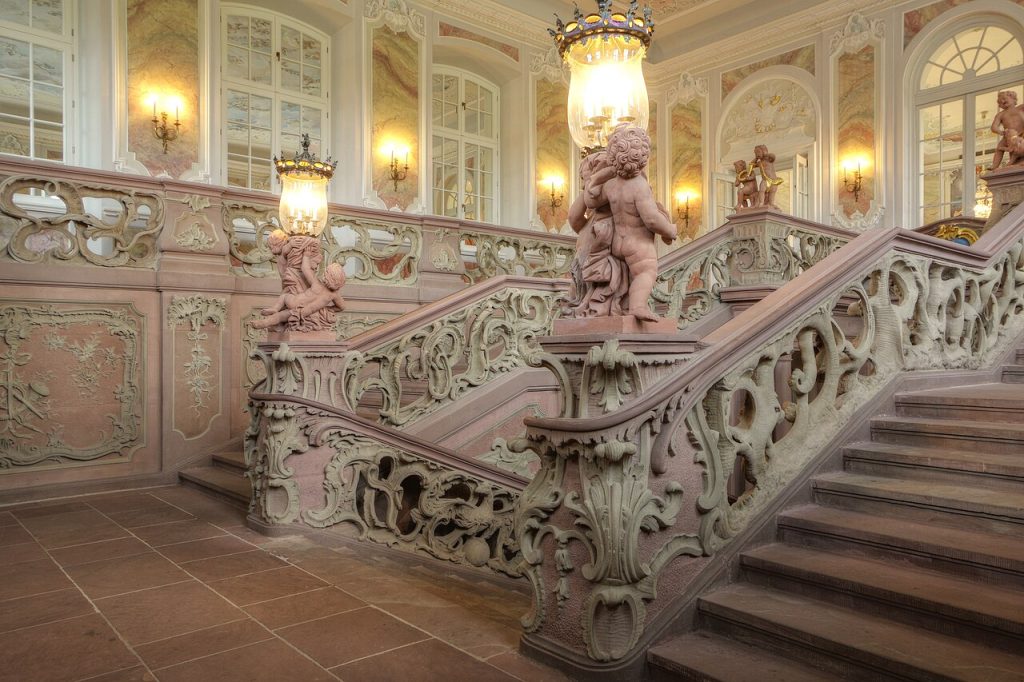
Inside the rococo wing lies one of its greatest treasures, a magnificent staircase that rises through the building with elegant curves and rich decoration.
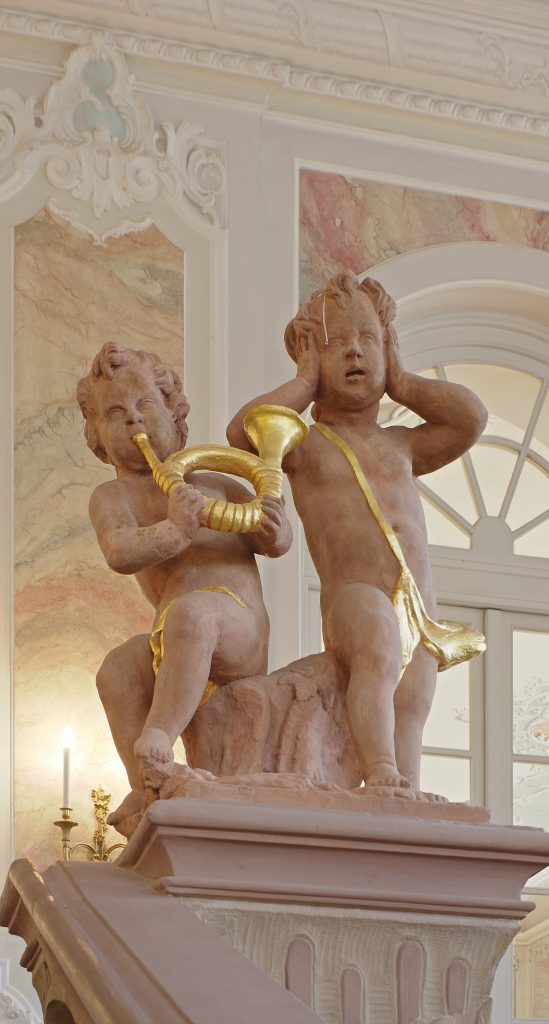
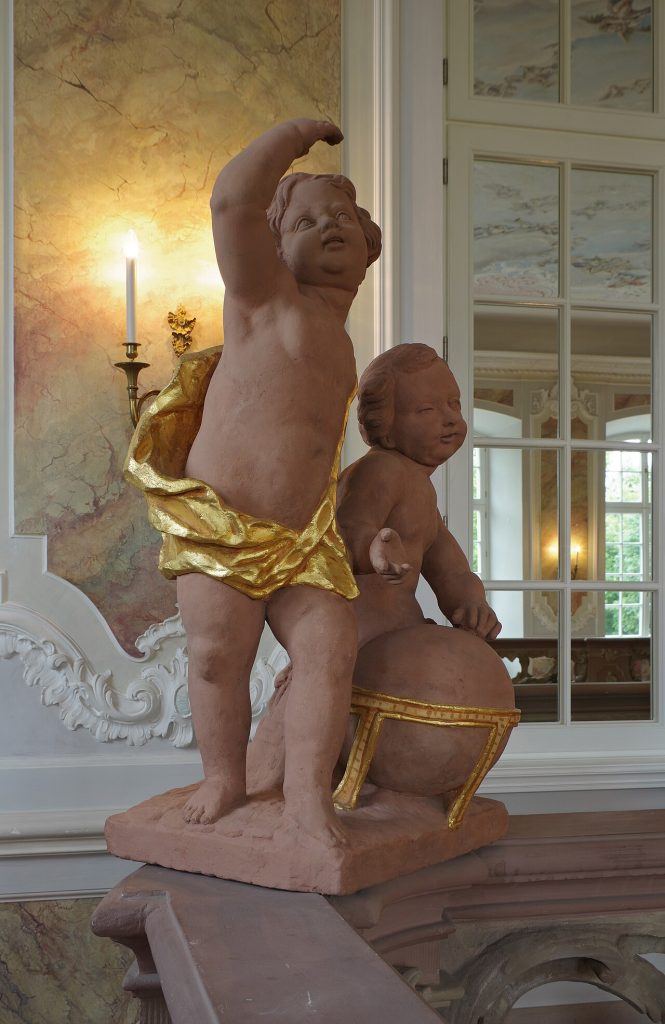
The sculptor Ferdinand Tietz, one of the leading rococo sculptors of Germany, contributed figures and ornament that give the staircase a sense of movement and life.
Stucco, ironwork and sculpture combine to create a space of great beauty, designed to impress visitors as they climbed to the state rooms of the archbishop.
Because the palace now houses government offices, the staircase can usually be seen only during guided tours or special events, but it is well worth seeking out.
Tietz also created sculptures for the gardens of Veitshochheim and other princely residences in Franconia, and his playful style is instantly recognisable.
The staircase leads to the former state rooms, where the archbishop received guests and held audiences beneath decorated ceilings.
Prussian Changes and the Freeing of the Basilica
After the French occupation and the end of the electorate, Trier became part of Prussia in 1815. The palace was used as barracks, and in the nineteenth century King Frederick William IV decided to restore the Roman throne hall as a Protestant church.
To free the basilica from the palace buildings that had been attached to it, parts of the Renaissance wings were demolished, and the Roman hall was reconstructed in its ancient form.
As a result, the palace today is smaller than it was in the days of the archbishops, and the basilica stands once again as an independent monument.
This decision reflected the nineteenth century fascination with antiquity, and it created the dramatic juxtaposition of Roman and rococo that we see today.
During the Second World War, both the palace and the basilica were damaged, and both were restored in the following decades.
The reconstruction of the basilica was one of the great restoration projects of nineteenth century Germany, and it made Trier a destination for lovers of antiquity.
The Constantine Basilica Next Door
The Aula Palatina, or Constantine Basilica, was built around 310 as the throne hall of Emperor Constantine the Great, who resided in Trier for several years when the city was one of the capitals of the Roman Empire.
It is the largest surviving single room hall from Roman antiquity, with walls of brick rising more than thirty metres and huge windows that flood the interior with light.
Today the basilica is a Protestant church, and its vast, austere interior offers a striking contrast to the decorative richness of the rococo palace.
Visiting both buildings together gives you a vivid sense of Trier’s long history, from Roman emperors to baroque archbishops.
The basilica is open to visitors outside service times, and concerts on its organ fill the enormous space with sound.
Inside the basilica, the scale of the space is overwhelming, and it is easy to imagine the emperor seated on his throne at the far end, receiving envoys from across the empire.
The Palace Garden
In front of the rococo wing lies the Palace Garden, a formal baroque garden with lawns, flower beds, fountains and a long pond. It stretches from the palace toward the Imperial Baths, one of the largest Roman bath complexes outside Rome.
The garden is decorated with statues, copies of rococo figures originally created by Ferdinand Tietz, representing gods, seasons and allegories.
It is one of the most popular green spaces in Trier, a place where residents and visitors stroll, relax and enjoy the views of the palace.
In spring and summer, the flower beds are planted with colourful displays that complement the pink facade of the palace.
At the western edge of the garden stands the Rhineland State Museum, with one of the finest collections of Roman antiquities in Germany.
Benches along the paths invite you to sit and enjoy the garden, and in summer the lawns are filled with people reading, picnicking and relaxing in the sun.
Statues and Fountains
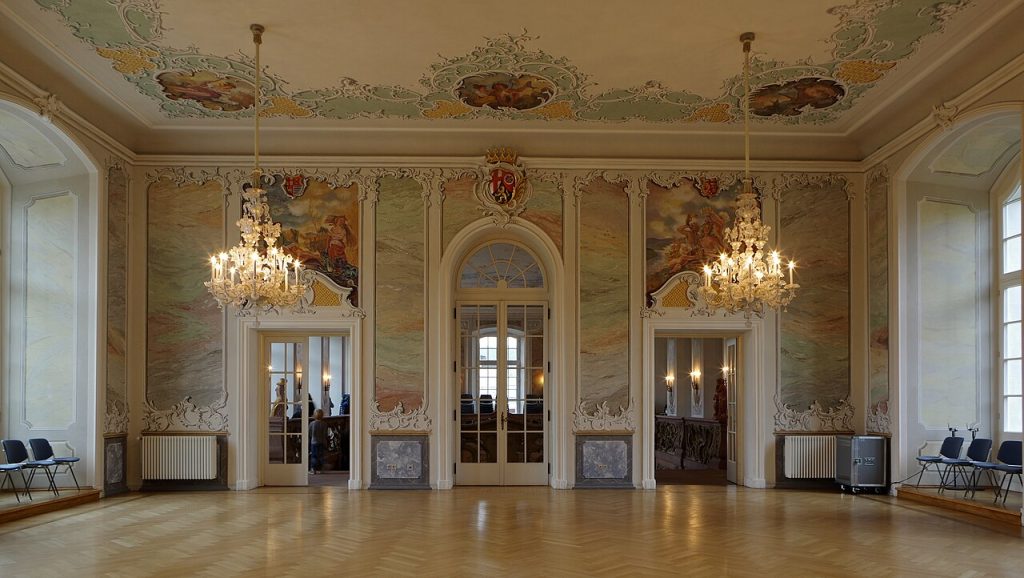
The statues in the Palace Garden are among its most charming features. Each figure is full of movement and character, typical of the rococo style.
Many depict figures from classical mythology, while others represent abstract ideas such as the seasons or the elements.
Fountains and the long pond add the sound and reflections of water, enhancing the garden’s atmosphere.
Walking along the paths, you can discover each statue in turn and enjoy the changing views of the palace behind them.
The original statues by Tietz were moved to protect them from weather damage, and the copies in the garden preserve their charm for visitors today.
From the Palace to the Imperial Baths
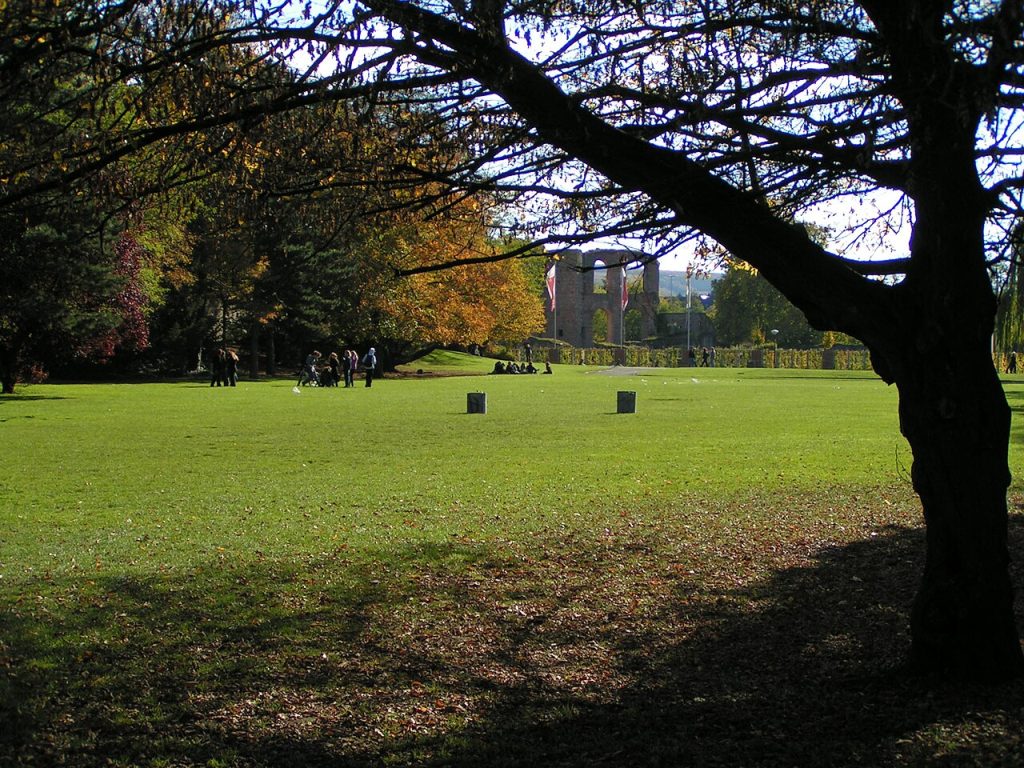
At the far end of the Palace Garden lie the Imperial Baths, built in the fourth century as part of Constantine’s imperial residence. Their massive ruins are among the most impressive Roman remains in Germany.
Visitors can explore the underground service tunnels and imagine the luxurious bathing complex that once stood here.
The walk from the palace through the garden to the baths is one of the most rewarding in Trier, linking two great eras of the city’s history.
Combined tickets allow you to visit several Roman sites in Trier, including the baths, the amphitheatre and the Porta Nigra.
From the baths, you can look back across the garden to the palace and the basilica, a view that captures nearly two thousand years of history.
Trier and the Moselle Valley
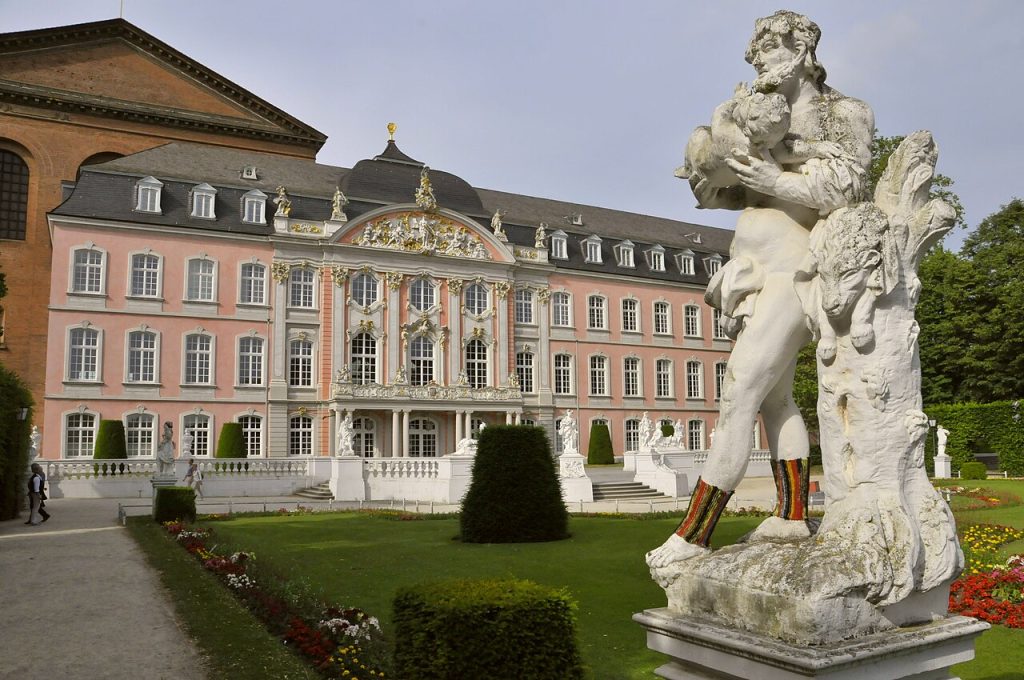
Trier lies on the banks of the Moselle, surrounded by hills covered with vineyards. The river valley is one of the most beautiful wine regions in Europe, famous for its Riesling wines and its steep slopes.
From the palace, it is only a short walk to the river, where boats depart for trips along the Moselle to picturesque wine villages.
The archbishops of Trier owned extensive vineyards, and wine was an important source of income for the electorate.
Today, wine festivals, tastings and cellar visits make the Moselle valley a favourite destination for travellers, and Trier is the perfect starting point.
Combining a visit to the palace with a day in the vineyards gives you a complete picture of the culture and history of the region.
The vineyards around Trier are particularly beautiful in autumn, when the leaves turn gold and the grape harvest brings the villages to life.
The Electoral Palace on Video
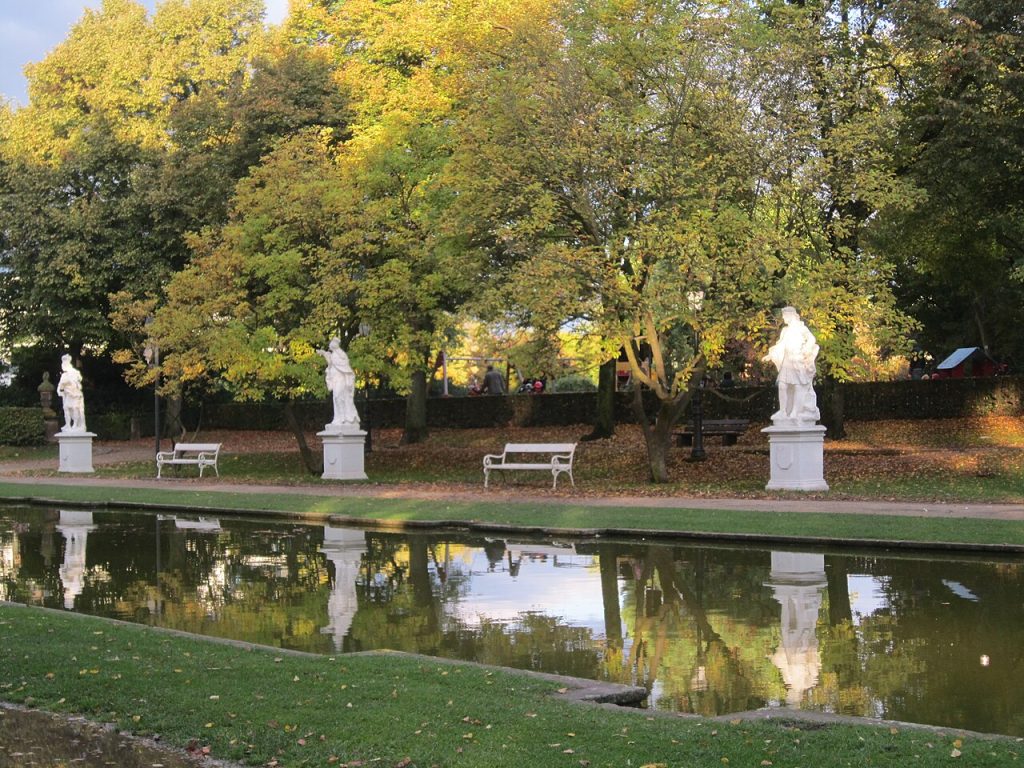
For a look at the palace and its garden, the video below presents the Electoral Palace in Trier.
Watch for the pink facade, the statues and the Roman basilica beside the palace.
The video also gives a sense of the palace’s setting in the heart of the old city.
If the video inspires you, read on for practical tips.
Visiting the Electoral Palace Today

The Electoral Palace houses state government offices, so the interiors are not regularly open, but the exterior, the courtyard and the Palace Garden can be enjoyed at any time. Guided tours of the staircase and state rooms are offered occasionally.
The palace lies in the centre of Trier, a few minutes walk from the main market, the cathedral and the Porta Nigra.
Plan a full day in Trier to see the palace, the basilica, the Roman sites, the cathedral and the old town, and allow time to enjoy a glass of Moselle wine in one of the city’s wine bars.
Trier pairs well with Koblenz and Engers, the other residences of the archbishop electors along the Moselle and the Rhine.
Whenever you visit, the Electoral Palace offers a delightful encounter with rococo elegance in the midst of one of the oldest cities in Europe.
View the location on Google Maps
Palaces Nearby
If you have enjoyed this palace, the Rhine and Moselle region holds more remarkable residences. Here are two more well worth adding to your journey:
- The Electoral Palace of Koblenz – the classical residence of the last elector of Trier on the Rhine.
- Engers Palace – the rococo hunting palace of the electors of Trier on the banks of the Rhine.
You May Like

The Electoral Palace of Koblenz and the Last Elector of Trier


One thought on “The Electoral Palace of Trier and Its Rococo Wing Beside a Roman Giant”