On the southern edge of Dusseldorf, beside a large park that stretches toward the Rhine, stands a pink palace that seems to float on the reflection of its pond. Benrath Palace was built in the 1750s and 1760s for Elector Carl Theodor of the Palatinate as a maison de plaisance, a house of pleasure, and it is one of the most perfect late rococo ensembles in Europe.
Behind its graceful facade, which appears to be a single storey, lie some eighty rooms cleverly arranged on several levels, including a magnificent domed hall. Around the palace extend a vast park with long avenues and ponds, and today the ensemble houses three museums devoted to the palace itself, to garden art and to natural history.
In this article we will explore Benrath from the elector who commissioned it to its architect, its rooms, its park and its museums, and we will finish with practical tips for your visit.
In This Article
- A Pink Palace Reflected in Water
- Elector Carl Theodor
- Nicolas de Pigage
- The Corps de Logis
- Benrath From Above
- The Domed Hall
- The Apartments of the Elector and Electress
- The Garden Hall
- The Garden Front
- The Palace Park and Its Statues
- The Mirror Pond
- Benrath Palace on Video
- Visiting Benrath Palace Today
A Pink Palace Reflected in Water
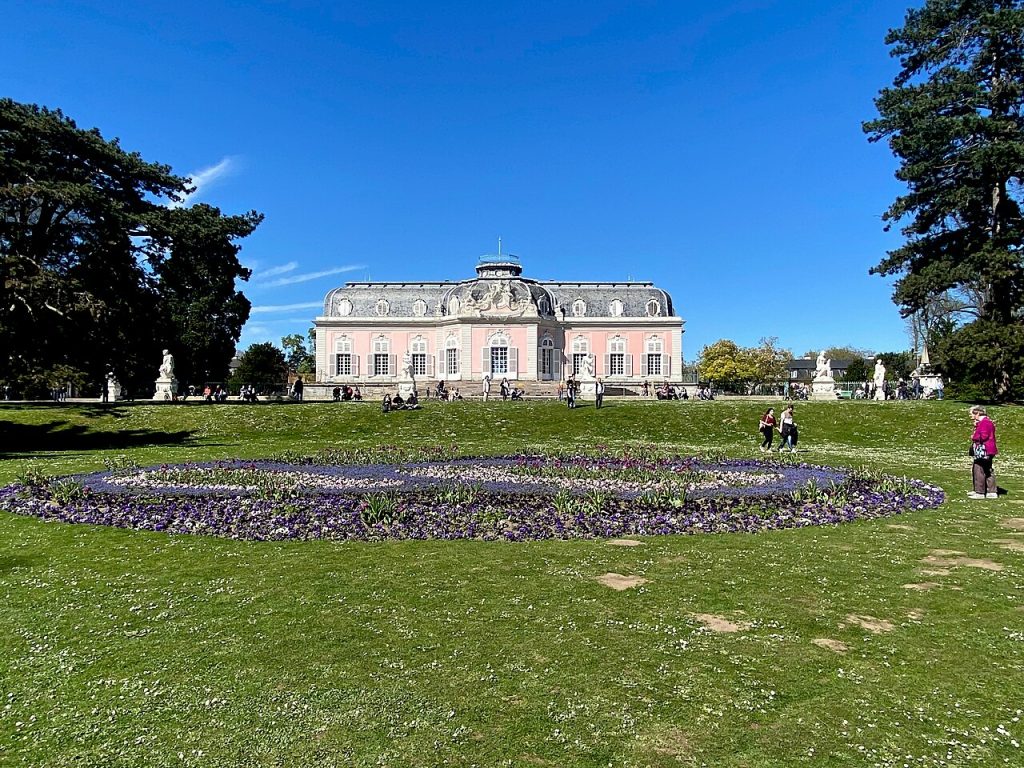
The classic view of Benrath Palace is from across the pond in front of it. The pink central building, the corps de logis, rises behind the water, its curved roof and elegant facade mirrored on the still surface.
On either side, two long curving wings embrace the forecourt, creating a harmonious composition that welcomes visitors as they approach.
The palace lies in the district of Benrath, in the south of Dusseldorf, and is easy to reach from the city centre by tram or train.
What makes Benrath special is the perfect unity of architecture, garden and water, conceived by a single architect as a complete work of art.
Its soft pink colour and refined proportions give the palace a gentle, almost dreamlike quality that delights visitors in every season.
The approach through the forecourt, with the wings on either side and the pond ahead, was designed to build anticipation, revealing the palace gradually as visitors arrived.
In winter, when the pond is still and the trees are bare, the palace takes on a quiet, almost magical beauty.
Elector Carl Theodor

Benrath was built for Carl Theodor, Elector Palatine and Duke of Julich and Berg, one of the most cultivated princes of the eighteenth century. His court at Mannheim and Schwetzingen was famous for its music, theatre and art.
Dusseldorf was the capital of the Duchy of Berg, which Carl Theodor ruled alongside the Palatinate, and he wanted a residence where he could stay during his visits to the north.
He chose Benrath, where an older hunting lodge stood beside the Rhine, and commissioned a new palace designed for pleasure, hunting and relaxation.
Ironically, Carl Theodor visited Benrath only rarely after its completion, as his interests and later his inheritance of Bavaria drew him elsewhere.
Nevertheless, the palace remains one of the finest monuments of his reign and of his passion for art and architecture.
Carl Theodor’s wife, Elisabeth Augusta, had her own apartments at Benrath, and the palace was designed to accommodate both their households with equal elegance.
Nicolas de Pigage

The palace was designed by Nicolas de Pigage, a French architect who served as court architect to Carl Theodor and also created the gardens and buildings of Schwetzingen.
At Benrath, Pigage designed every element of the ensemble, from the palace to the wings, the gardens and the ponds, creating one of the most unified rococo complexes in Europe.
Construction took place between 1755 and 1770, and the result is considered Pigage’s masterpiece, combining French elegance with German craftsmanship.
His genius lies in the harmony of the whole, where architecture and landscape are perfectly balanced.
Pigage paid close attention to every detail, from the shape of the roof to the design of the door handles, ensuring a perfect harmony throughout the building.
The Corps de Logis

The central building, the corps de logis, is the heart of the palace. From the outside it appears to have only one storey, crowned by a curved mansard roof, but inside it contains around eighty rooms on four levels.
This clever arrangement allowed the building to look light and elegant while providing ample space for apartments, servants rooms and service areas.
The rooms are arranged around the central domed hall, with the elector’s and electress’s apartments on either side, each with its own sequence of rooms.
Hidden staircases and corridors allowed servants to move discreetly through the building, a typical feature of eighteenth century palace design.
The ingenuity of the plan is one of the most fascinating aspects of Benrath, and guided tours reveal its hidden spaces.
The curved mansard roof, which hides the upper floors, is one of the most distinctive features of the palace and a key to its elegant appearance.
Benrath From Above

Seen from above, the layout of Benrath becomes clear. The corps de logis stands at the centre, framed by the curving wings, with the pond in front and the park extending behind toward the Rhine.
Long avenues radiate through the park, creating views and paths that lead deep into the woodland.
The symmetry of the plan reflects the ideals of the period, while the park’s natural areas show the growing interest in landscape gardening.
Aerial views also reveal the scale of the park, which covers more than sixty hectares.
The park’s avenues were designed for hunting and promenades, and they still offer long, straight walks through the woods.
The Domed Hall

At the centre of the corps de logis lies the domed hall, a round room crowned by a dome and lit from above. It is the most magnificent space in the palace, used for receptions and gatherings.
The hall is decorated with elegant stucco, columns and mirrors, and its circular form creates a sense of harmony and balance.
From the domed hall, doors lead to the garden hall and the apartments, so it serves as the hub of the palace.
Concerts are held in the domed hall, and its acoustics and beauty make it a wonderful setting for music.
Standing in the centre of the domed hall and looking up at the light falling from above is one of the highlights of a visit.
The Apartments of the Elector and Electress
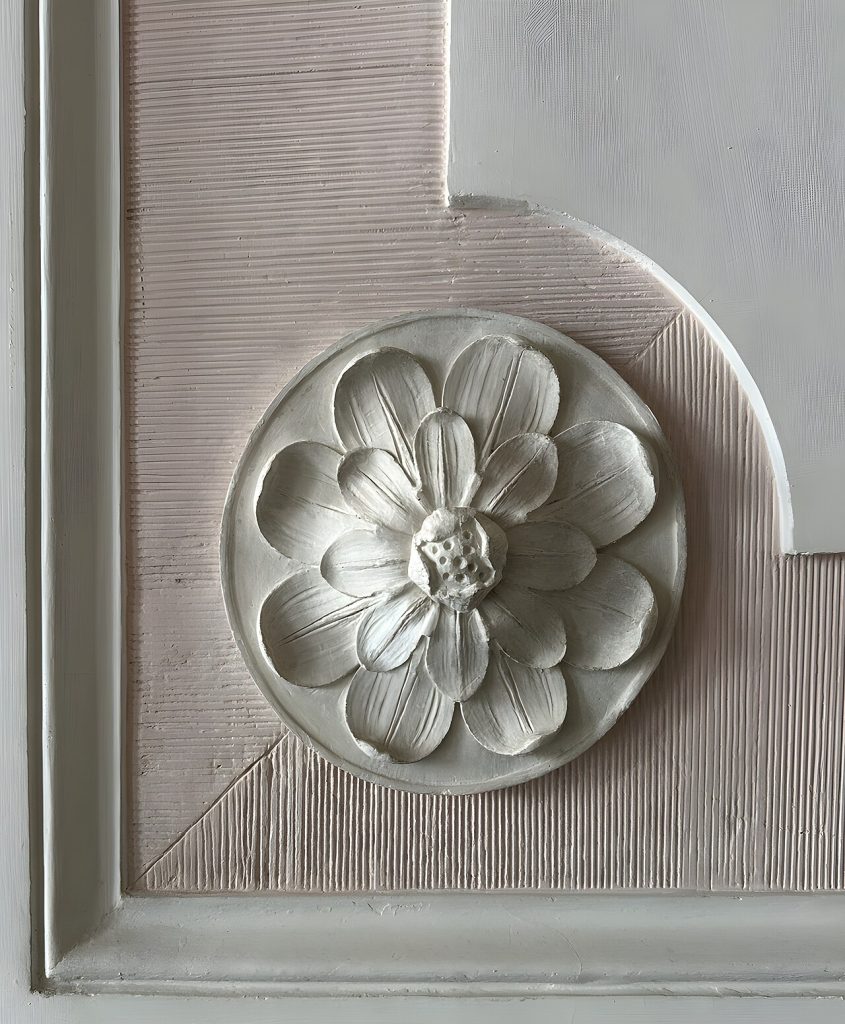
On either side of the domed hall lie the apartments of the elector and the electress, each consisting of an antechamber, bedroom, cabinet and other rooms.
The rooms are decorated with stucco, wood panelling, silk wall coverings and fine furniture, creating an atmosphere of refined comfort.
Many of the furnishings date from the eighteenth century, and the rooms have been carefully restored to their original appearance.
The decoration of the apartments shows the late rococo style at its most elegant, with delicate ornament and soft colours.
One of the most fascinating aspects of Benrath is the way its many rooms are fitted into a building that looks so small from outside. Guided tours often include hidden staircases, mezzanine rooms and service corridors.
These spaces were used by servants, who kept the palace running without disturbing the elector and his guests.
Seeing them helps you understand how a baroque palace functioned, with a strict separation between the public and private spheres.
The ingenuity of Pigage’s design is still admired by architects today.
The electress’s apartment is particularly charming, with delicate decoration in soft colours and fine furniture that reflects feminine taste in the rococo era.
The Garden Hall

Behind the domed hall, the garden hall opens toward the park, linking the interior of the palace with the landscape beyond.
Its doors and windows frame views along the main axis of the park, creating a seamless transition between architecture and nature.
The garden hall was used for summer gatherings, when guests could step directly from the palace into the gardens.
Its decoration includes elegant stucco and paintings that echo the themes of nature and the seasons.
From the garden hall, a terrace leads down to the park, inviting visitors to continue their journey outdoors.
The Garden Front

The south side of the palace faces the park and offers a different view of the corps de logis. Here the facade is framed by trees and lawns rather than water.
From the garden front, the long central avenue stretches into the park, leading the eye toward the distant horizon.
This side of the palace was designed for the private enjoyment of the elector and his guests, away from the formality of the forecourt.
Walking around the palace, you can appreciate how Pigage designed each side for a different purpose and view.
In summer, the lawns in front of the garden front are popular for picnics and relaxing in the sun.
The Palace Park and Its Statues
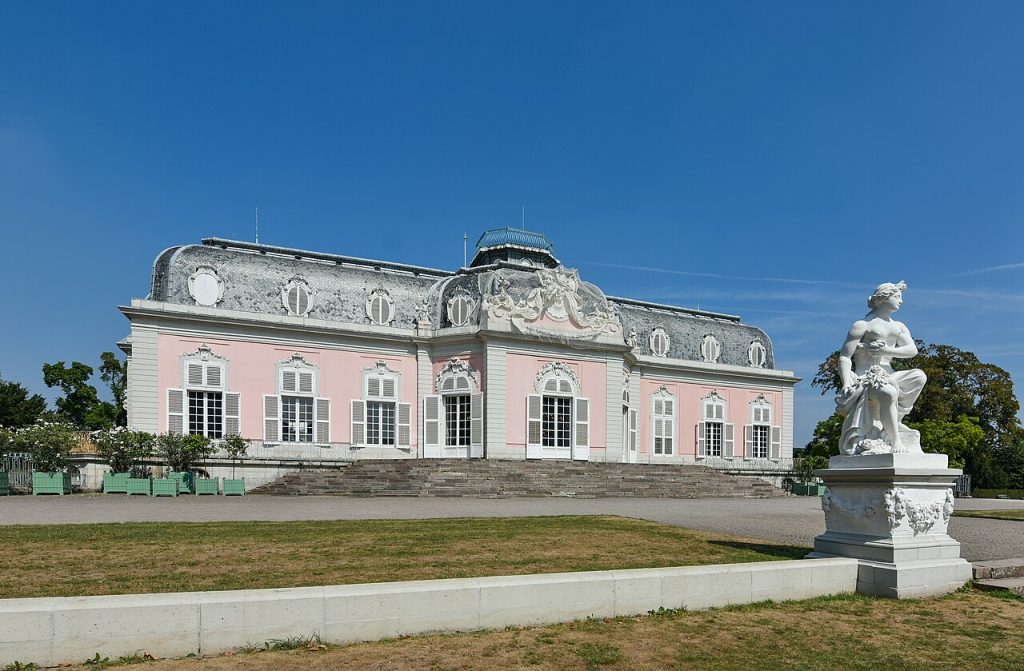
The park of Benrath Palace is one of the largest and most beautiful in the Rhineland. It combines formal baroque elements near the palace with extensive woodland and avenues further away.
Statues decorate the gardens, representing gods, seasons and allegories, adding interest to a walk.
The park also contains a French garden, a private garden of the elector and a long canal, as well as natural areas rich in wildlife.
It is a favourite place for walks, jogging and relaxation, and its peaceful atmosphere makes it a green oasis in the city.
The Museum of European Garden Art in the east wing explains the history of garden design and helps visitors understand the ideas behind the park.
The Mirror Pond

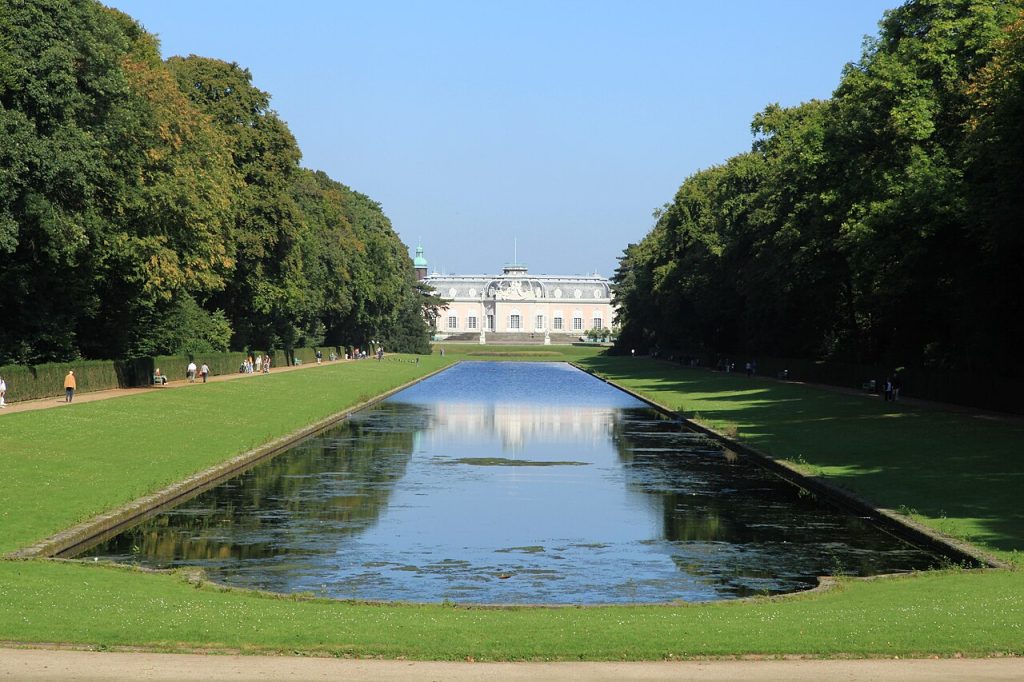
In front of the palace lies the mirror pond, a large ornamental lake designed to reflect the corps de logis. On calm days, the reflection is perfect, doubling the beauty of the palace.
The pond also served as a setting for festivities, with boats and illuminations on summer evenings.
Today it is one of the most photographed spots in Dusseldorf, and the view of the palace across the water is iconic.
Ducks and swans glide across the pond, adding life to the scene.
At sunset, the pink facade glows in the warm light and its reflection shimmers on the water, creating one of the most romantic scenes in Dusseldorf.
Benrath Palace on Video
For a tour of the palace and its park, the video below takes you through Benrath Palace.
Watch for the domed hall, the apartments and the views of the park and pond.
The video also captures the atmosphere of the park, which is an essential part of the Benrath experience.
If the video inspires you, read on for practical tips.
Visiting Benrath Palace Today
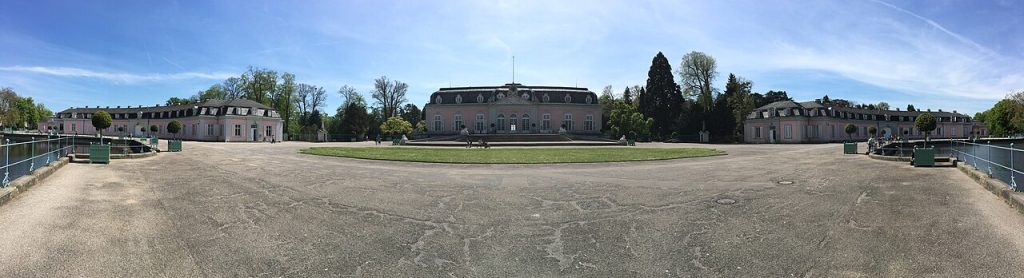
Benrath Palace is managed by a foundation and houses three museums: the Museum Corps de Logis, with the historic rooms, the Museum of European Garden Art in the east wing, and the Museum of Natural History in the west wing.
The historic rooms can be visited on guided tours, while the museums and the park are open for individual visits.
Benrath is easy to reach from Dusseldorf by tram or S Bahn, and the palace is a short walk from the station.
Plan at least half a day to see the palace, the museums and the park, and consider combining your visit with Augustusburg Palace at Bruhl or the palaces of Bonn.
Concerts, exhibitions and seasonal events are held throughout the year, so check the programme before your visit.
Whenever you come, Benrath offers a perfect blend of architecture, nature and art, one of the most delightful palace ensembles in Germany.
View the location on Google Maps
Palaces Nearby
If you have enjoyed this palace, the Rhineland holds more remarkable residences. Here are two more well worth adding to your journey:
- Augustusburg Palace – the rococo masterpiece of the elector of Cologne at Bruhl.
- Poppelsdorf Palace – the baroque palace of the electors of Cologne in Bonn, home to a famous botanical garden.
You May Like


