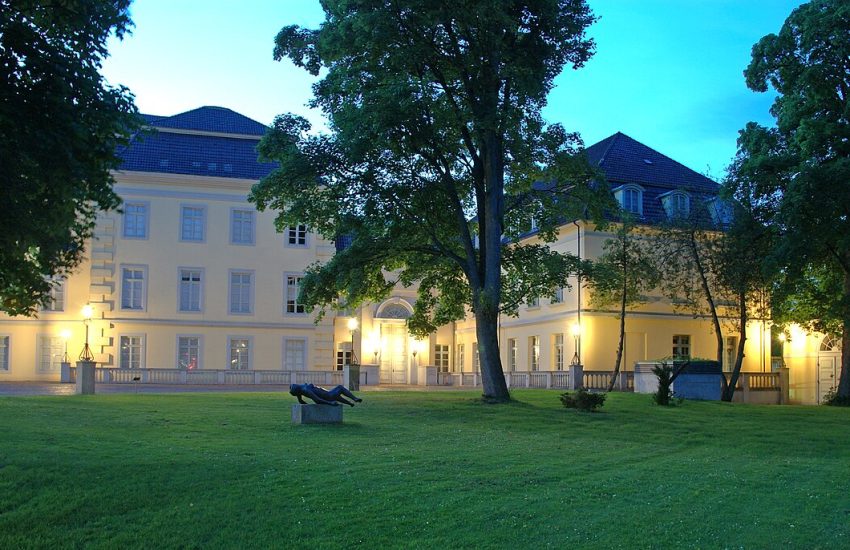
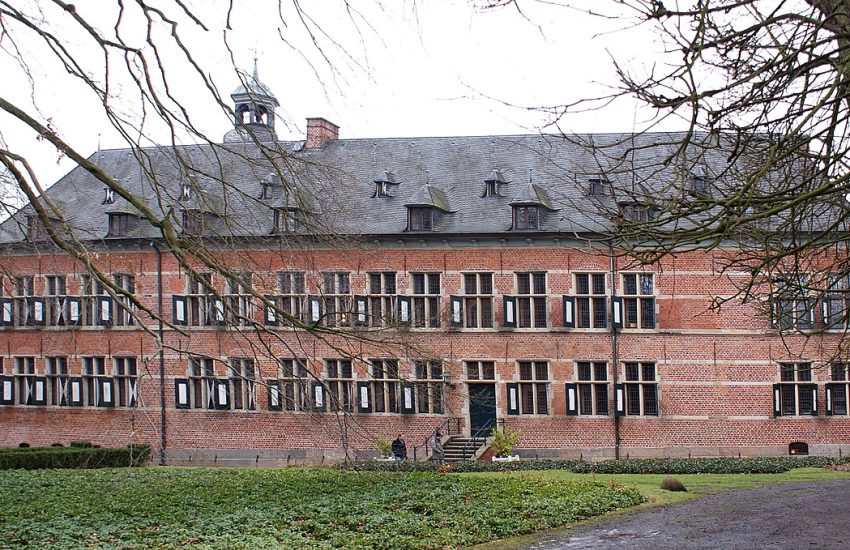
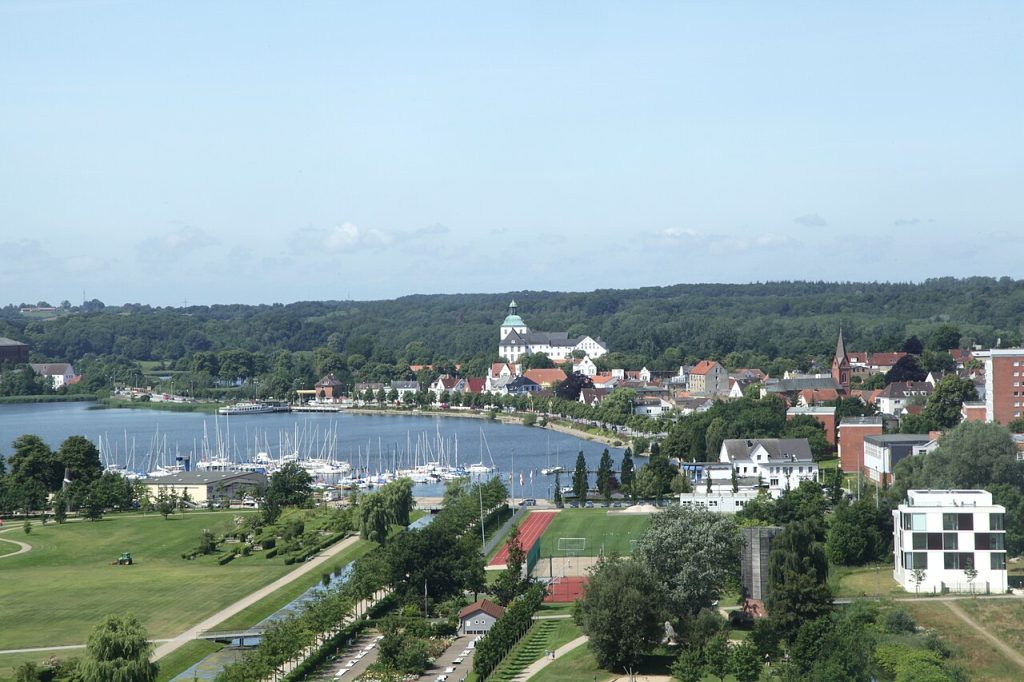
At the inner end of the Schlei, the long fjord that reaches forty kilometres inland from the Baltic, lies an island with a castle on it. The castle is large, four-sided, built of brick and plaster in a mixture of styles that took three centuries to assemble, and it was for a hundred and seventy years the seat of one of the most ambitious small dynasties in Europe. The dukes of Schleswig-Holstein-Gottorf played off Denmark against Sweden, married into Russia, patronised scholars and built, in a garden pavilion, a globe three metres across that you could walk inside and watch the heavens turn. Then they lost everything, and the globe went to the tsar.
Gottorf today is the home of the state museums of Schleswig-Holstein, which means that the ducal rooms hold Gothic altarpieces and Expressionist paintings, while a hall in the courtyard contains a wooden boat that Germanic warriors sank in a bog around the year 320 and glass cases hold the preserved bodies of people who died in the marshes two thousand years ago. It is one of the most rewarding single destinations in northern Germany, and the globe, rebuilt in 2005, is back in the garden.
This is a long story with many turns. Follow the contents or follow me, from the bridge over the Schlei to the top of the terraced garden.
In This Article
- An Island in the Schlei
- From Bishops to Dukes
- The Gottorf Dukes and Their Dangerous Game
- Duke Frederick III, Collector and Dreamer
- The Globe You Could Walk Inside
- Olearius, Persia and the Court Library
- The Chapel and the Ducal Pew
- The Hall of Stags
- 1713: The Danes Take Gottorf
- The Gottorf Line Becomes the House of Romanov
- Two Centuries of Barracks
- Two Museums in One Castle
- The Nydam Boat and the Bog Bodies
- Gottorf on Video
- Visiting Gottorf Castle Today
- Palaces Nearby
An Island in the Schlei
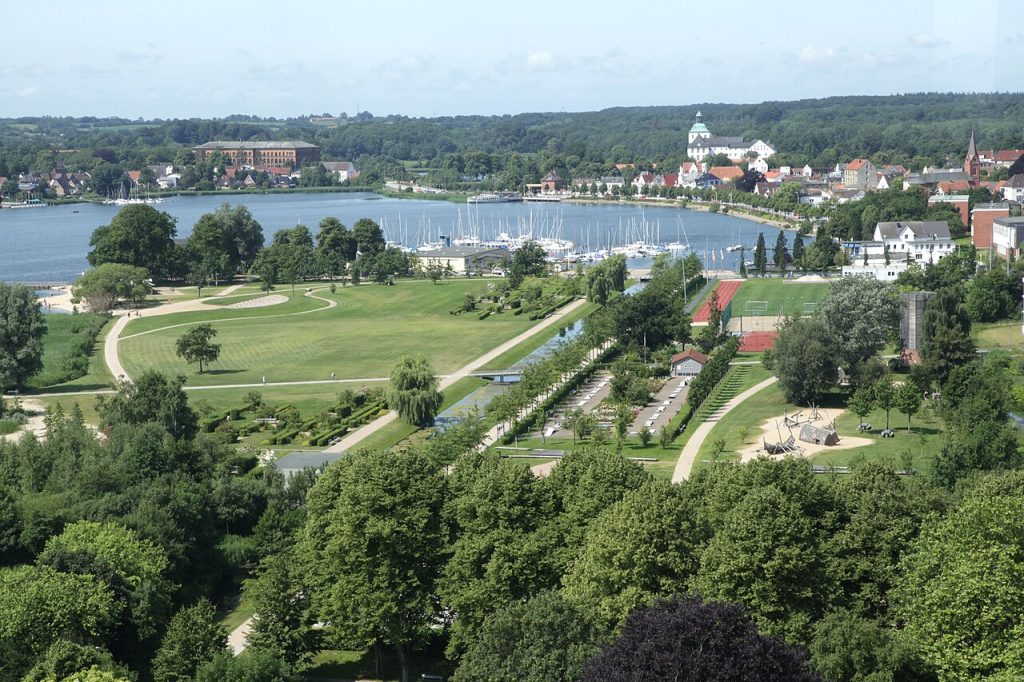
Start on the shore of the Schlei in the old town of Schleswig and look west. The fjord narrows here into a reedy lake, and in the middle of it sits the castle island, joined to the mainland by causeways on two sides. The site was chosen in the twelfth century for defence: water on all sides, a town with a cathedral close by and the great trade route between the North Sea and the Baltic passing a few kilometres to the south.
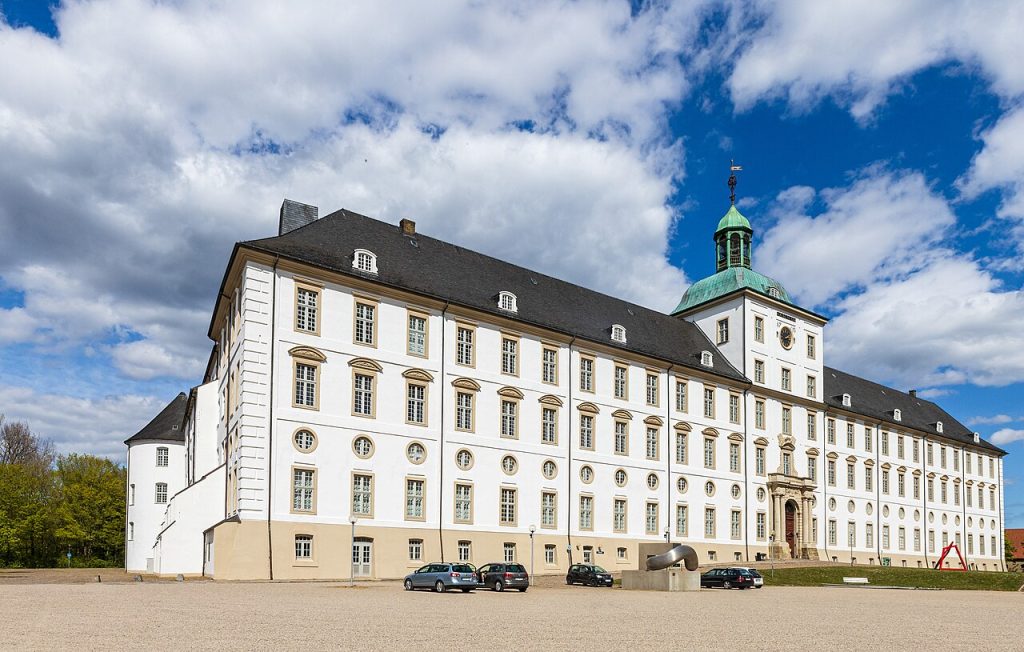
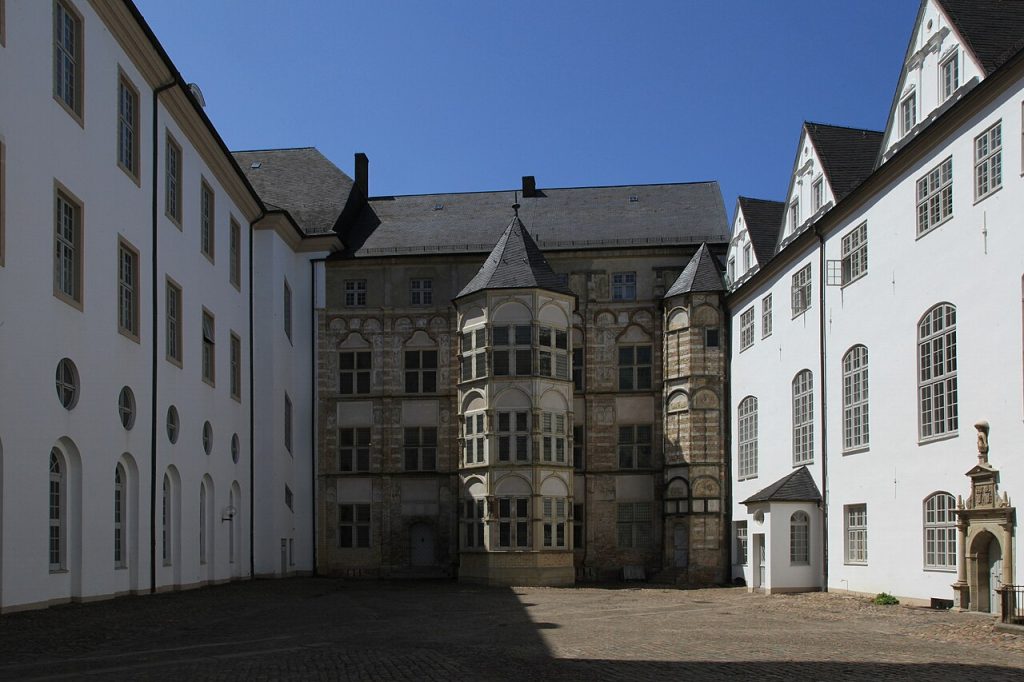
Now, stop here and get the scale. Gottorf is one of the largest castles in Schleswig-Holstein, a quadrangle with a courtyard big enough for a parade, and from the shore it looks less like a palace than a fortress that has been softened by centuries of alteration. The south wing, with its Baroque facade, faces the town; the older wings face the garden. Everything about the building says that whoever lived here expected to be taken seriously.
From Bishops to Dukes
The first castle on the island was built around 1161 by the Bishop of Schleswig, who needed a stronghold away from his cathedral. The Danish dukes of Schleswig acquired it in the thirteenth century, and through the late Middle Ages it passed among the Schauenburg counts of Holstein and the Danish crown as the two duchies, Schleswig and Holstein, were bound together by the famous promise that they should remain forever undivided. In 1544 King Christian III of Denmark divided them anyway, among himself and his brothers, and his brother Adolf received the share whose principal residence was Gottorf.
Adolf was the founder of the House of Schleswig-Holstein-Gottorf, and he rebuilt the mediaeval castle as a Renaissance residence with new wings around the courtyard. Fragments of his work survive in the north and west wings. The dynasty he founded would last at Gottorf until 1713 and, through a remarkable series of marriages, would end up on the thrones of Russia and Sweden.
The Gottorf Dukes and Their Dangerous Game
The Gottorf dukes ruled a patchwork of territories in Schleswig and Holstein, with the Danish king as their co-ruler and rival. From the early seventeenth century they pursued a policy that was clever and ultimately fatal: alliance with Sweden, Denmark’s great enemy, to protect themselves from Danish absorption. Duke Frederick III married his daughter to King Charles X of Sweden, Swedish armies came to Gottorf’s aid in several wars, and for a century the castle was the Swedish spearhead pointed at Copenhagen.
The dukes spent on the scale of their ambitions. The Baroque south wing, with its long facade toward the town and the great staircase inside, was finished around 1703 under Duke Frederick IV, who was Charles XII’s brother-in-law and died fighting for Sweden at the battle of Kliszów in 1702. His young son inherited a splendid castle and a duchy whose survival depended entirely on Swedish victory.
Duke Frederick III, Collector and Dreamer
Of all the Gottorf dukes, Frederick III is the one who matters for the visitor. He ruled from 1616 to 1659 and was a prince of the age of curiosity: he collected paintings, books, instruments, coins, shells and curiosities, employed scholars and artists, sent an embassy to Persia in search of a silk trade route, founded the town of Friedrichstadt for Dutch religious refugees and tried to open a northern passage to the East. Most of his schemes failed financially, but they left Gottorf with a Kunstkammer, a library and a reputation that drew learned visitors from across Europe.
Now, stop here in the courtyard and imagine it around 1650: the duke’s scholars crossing from the library, Persian envoys in the gateway, the court painter at work and, in the garden above the castle, the strangest object in northern Germany taking shape under the direction of the court mathematician.
The Globe You Could Walk Inside
The Gottorf Globe was built between 1650 and 1664 for Frederick III by the court scholar Adam Olearius and the gunsmith Andreas Bösch. It was a hollow sphere more than three metres in diameter, painted on the outside with a map of the world and on the inside with the constellations of the night sky. A door let a dozen people in to sit on a bench around a fixed table; a water-driven mechanism then turned the entire sphere once in twenty-four hours, so that the painted stars wheeled overhead exactly as the real ones did outside. It was the first planetarium in the modern sense and one of the wonders of the age.
The globe stood in its own pavilion, the Globushaus, at the top of the terraced Neuwerk garden behind the castle. In 1713, when the Danes took Gottorf, they packed it off as a gift to Tsar Peter the Great, who had admired it; it travelled to St Petersburg, burned in 1747, was rebuilt and today sits in the Kunstkamera museum there. Schleswig rebuilt its own full-size working copy in a new Globe House in 2005, and you can sit inside it and watch the heavens turn as the duke did.
Olearius, Persia and the Court Library
Adam Olearius deserves a stop of his own. A Saxon scholar who joined Frederick III’s service in the 1630s, he travelled as secretary of the ducal embassy to Moscow and Persia between 1635 and 1639, a journey of several years and great hardship that reached the court of the Shah at Isfahan. His account of the journey, published in 1647, was the first serious German description of Russia and Persia and was read across Europe. Back at Gottorf he ran the library and the Kunstkammer, built the globe and translated Persian poetry.
The library and most of the collections were taken to Copenhagen after 1713 and form part of the Danish royal collections today, but the castle museums have gathered portraits, books and objects that recall the circle around Olearius. Look for the portrait of the scholar himself and for the astronomical instruments in the rooms devoted to the Gottorf court.
The Chapel and the Ducal Pew
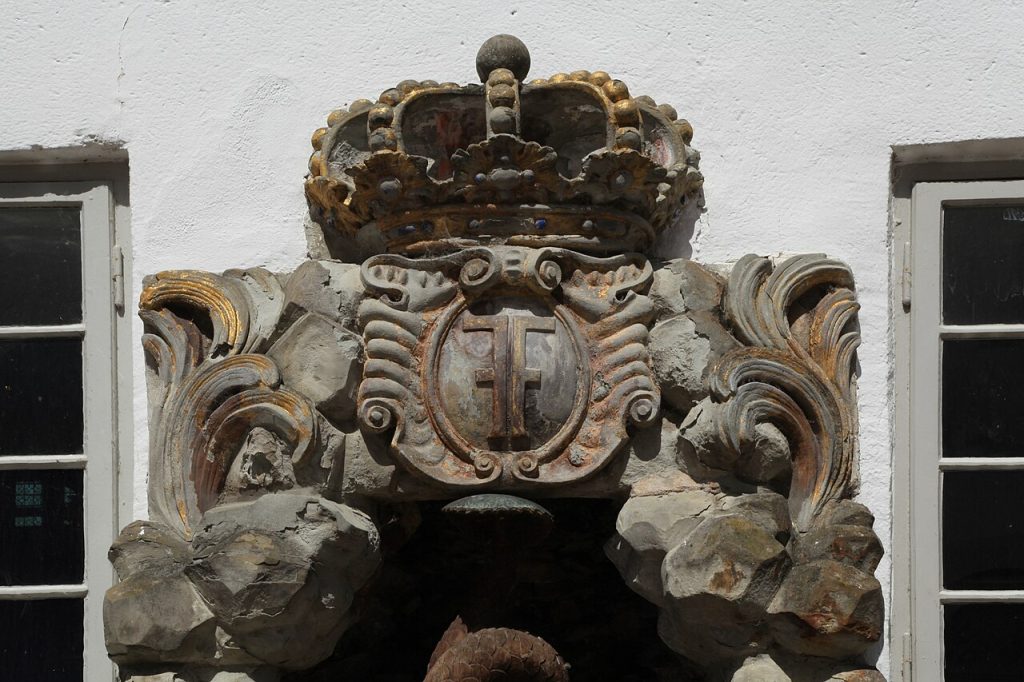
Inside the castle, the first room to seek out is the chapel, which survived every change of owner and every barracks conversion with its Renaissance fittings intact. It is a tall, galleried space with a carved altar, a pulpit, and above all the ducal pew, a two-storey enclosed box on the north side built around 1610 for Duke Johann Adolf and his family, panelled, painted and gilded inside like a jewel casket. From its windows the duke looked down on the court at prayer without being seen himself.
The chapel is one of the finest Protestant court chapels in northern Germany, comparable to those at Celle and Güstrow, and a reminder that the Gottorf dukes were Lutheran princes who took their religious role seriously even while their politics were cynical. Concerts are held here regularly, and the acoustics are superb.
The Hall of Stags
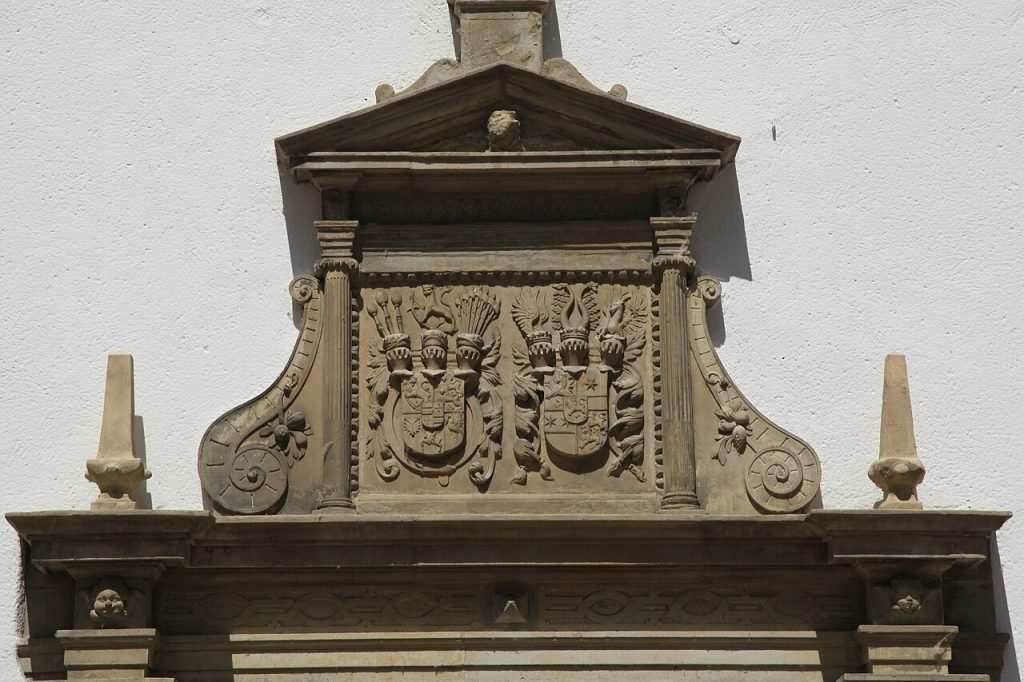
Upstairs lies the Hirschsaal, the Hall of Stags, the great hall of the Renaissance castle and one of the most memorable rooms in Schleswig-Holstein. It was decorated around 1595 with a frieze of life-size stucco stags, each with real antlers, standing against painted landscapes along the walls, and with a coffered ceiling and painted scenes of the hunt. The effect is of a forest frozen in plaster, and it is unlike anything else in the region.
The hall was used for banquets and audiences and, in the barracks years, for storage and drill, which damaged but did not destroy the stags. Restoration has brought them back, antlers and all, and the hall now serves for the museum’s displays of Renaissance art and as a venue for events. Now, stop here in the middle of the room and turn slowly; you will count more than a dozen stags staring back at you.
1713: The Danes Take Gottorf
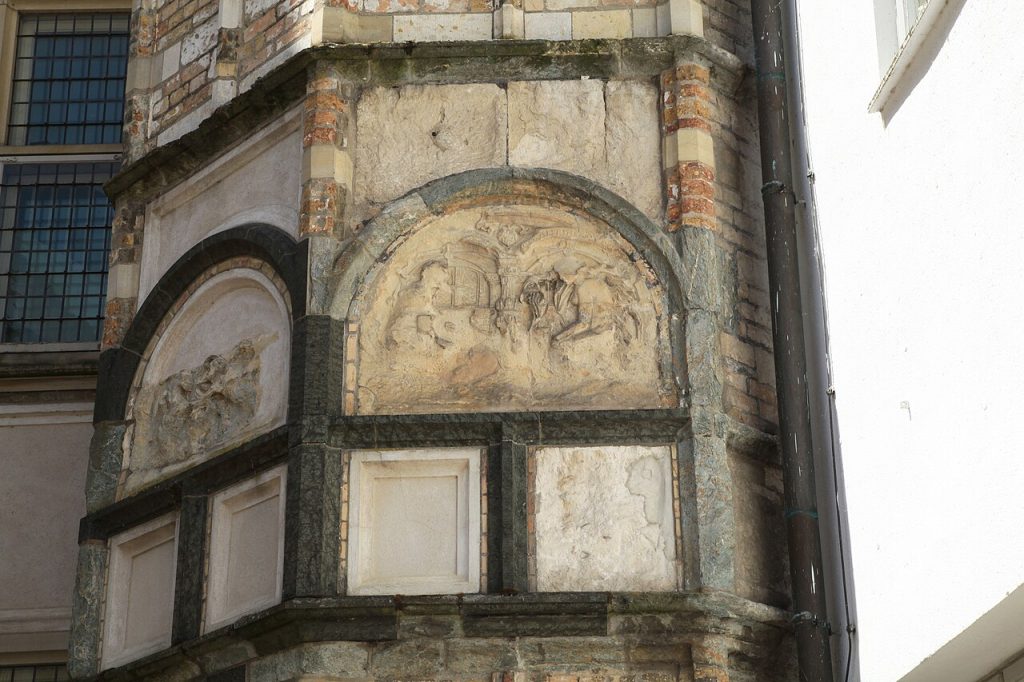
The Gottorf gamble failed in the Great Northern War. When Charles XII of Sweden was defeated at Poltava in 1709, the Gottorf duchy lost its protector. Danish troops occupied the castle in 1713, the young duke Charles Frederick fled to Sweden and in 1721 the Danish crown formally annexed the Gottorf share of Schleswig. The dukes kept their Holstein lands, with a residence at Kiel, but the castle on the Schlei was gone, and with it the globe, the library and the collections.
The Danish governor of the duchies, the Statthalter, moved into the castle, and Gottorf became an administrative seat rather than a court. The gardens were maintained for a time and then let go; the Globe House decayed and was pulled down. Within a generation the castle that had rivalled Copenhagen in learning was a provincial office with very fine rooms.
The Gottorf Line Becomes the House of Romanov
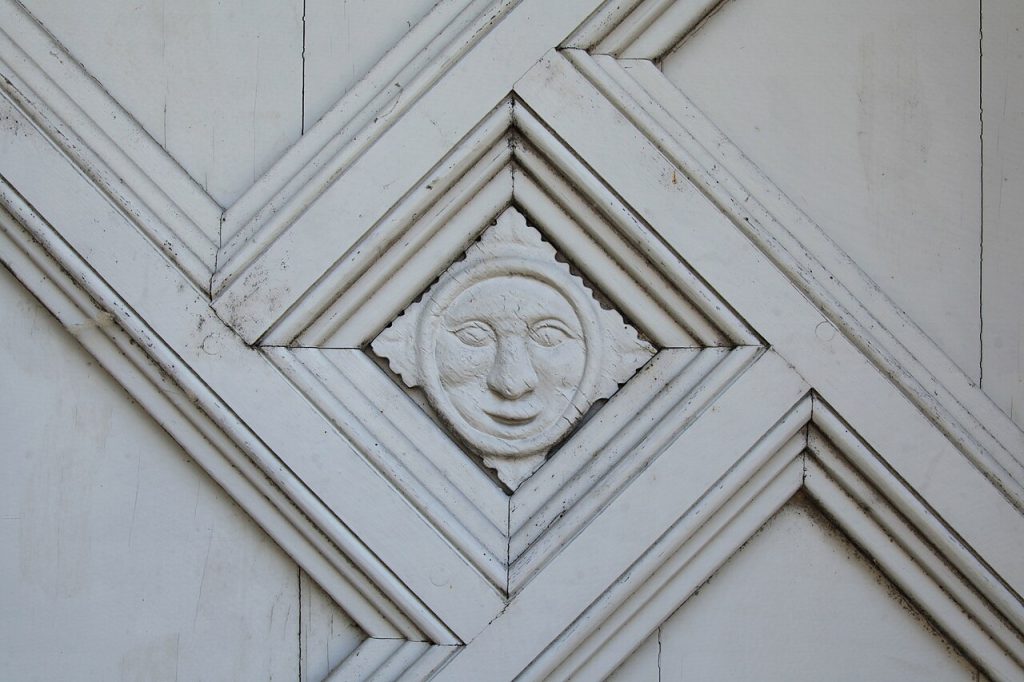
Here is the twist that gives Gottorf its place in world history. The exiled Duke Charles Frederick married Anna, daughter of Peter the Great, in 1725. Their son Charles Peter Ulrich was raised at Kiel as a Gottorf prince, was summoned to Russia by his aunt Empress Elizabeth and became Tsar Peter III in 1762. He was murdered within months, but his wife Catherine the Great ruled for thirty-four years and their descendants, the Romanovs of the nineteenth and twentieth centuries, were by strict male descent members of the House of Holstein-Gottorf.
A junior Gottorf branch, meanwhile, had become prince-bishops of Lübeck at Eutin and would inherit the Duchy of Oldenburg, and another member of the family was elected King of Sweden in 1751. So the little dynasty that lost its castle in 1713 ended up on three thrones. The portrait gallery in the castle traces these connections, and it is worth taking time over the family tree.
Two Centuries of Barracks
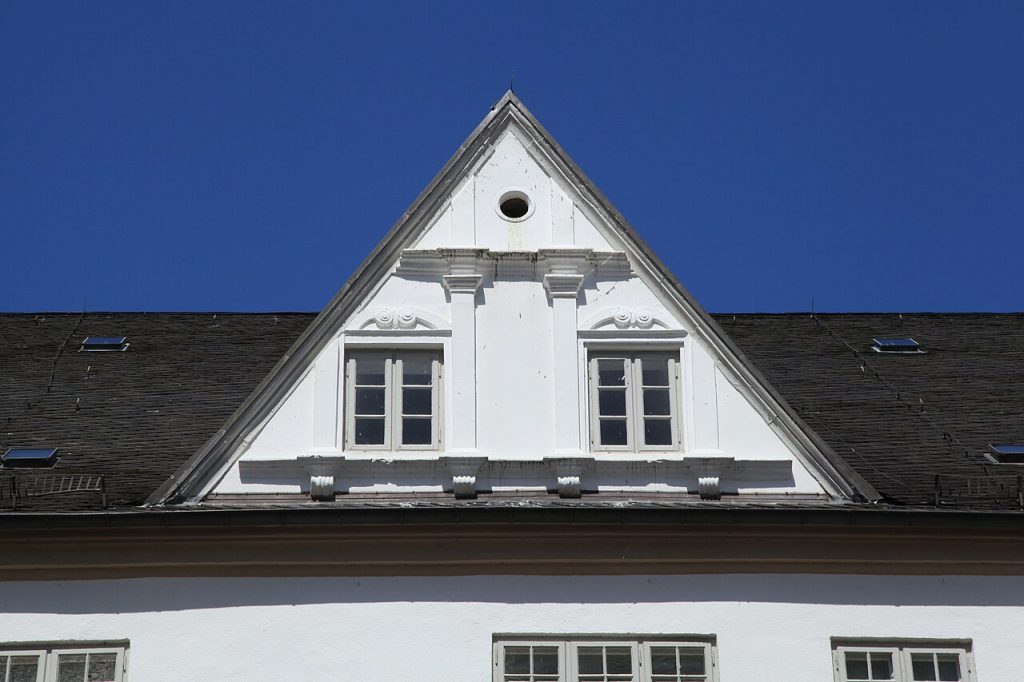
In the 1840s the Danish army moved into Gottorf, and after 1864 the Prussian army took over. For a century the castle was a barracks: the state rooms became dormitories and offices, the chapel a storeroom, the Hirschsaal a drill hall, the garden a parade ground. Walls were knocked through, floors were strengthened for weapons stores and the Baroque staircase was fenced off. After 1945 the building housed refugees from the eastern provinces, thousands of them, in conditions that completed the damage.
And yet the castle survived, as barracks so often preserve what palaces lose. The soldiers did not redecorate; they simply covered things up. When the museums arrived, conservators found the stags under whitewash and the ducal pew under boards, and the long work of recovery began.
Two Museums in One Castle
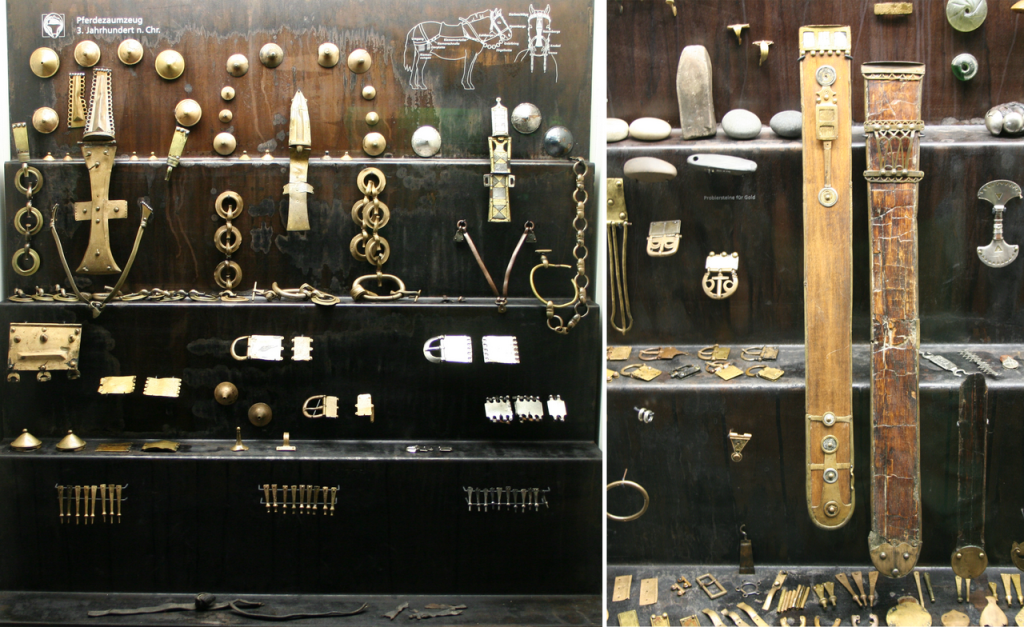
In 1947 the new state of Schleswig-Holstein decided to make Gottorf the seat of its two state museums, which had lost their homes in Kiel to wartime bombing. The Museum of Art and Cultural History occupies the main castle with collections running from mediaeval altarpieces and Renaissance sculpture through Baroque court art to the Expressionists of the Brücke group, including major works by Nolde, Kirchner and Schmidt-Rottluff. The Museum of Archaeology occupies wings and a purpose-built hall with the finds of the region from the Stone Age to the Vikings.
Walk through the castle with this in mind and the building becomes a vast showcase in which the rooms themselves are exhibits. The combination of a ducal residence, a first-rank art collection and a world-class archaeological museum in one place is rare, and Gottorf repays a full day. The nearby Viking Museum at Haithabu, run by the same foundation, covers the great Viking trading town across the Schlei.
The Nydam Boat and the Bog Bodies
The archaeological museum’s two great treasures stop everyone in their tracks. The Nydam boat is a twenty-three-metre oak vessel built around the year 320 and sunk as a sacrifice in a bog in what is now Danish South Jutland, discovered in 1863 and the oldest surviving rowing boat of the type that carried the Angles and Saxons to Britain a century later. It lies in its own hall, dark and enormous, with the oar holes still visible.
Nearby are the bog bodies: the remains of people who died in the marshes of Schleswig in the Iron Age and were preserved by the peat, their skin, hair and clothing intact after two thousand years. The Windeby and Rendswühren bodies are the best known, and the museum presents them with care and context. Now, stop here, after the dukes and the globe and the stags, and consider how deep the history of this small land goes.
Gottorf on Video
Before you plan your trip, take a few minutes to see Gottorf Castle in motion. The video below gives a good sense of the setting, the scale of the buildings and the atmosphere of the grounds.
Visiting Gottorf Castle Today
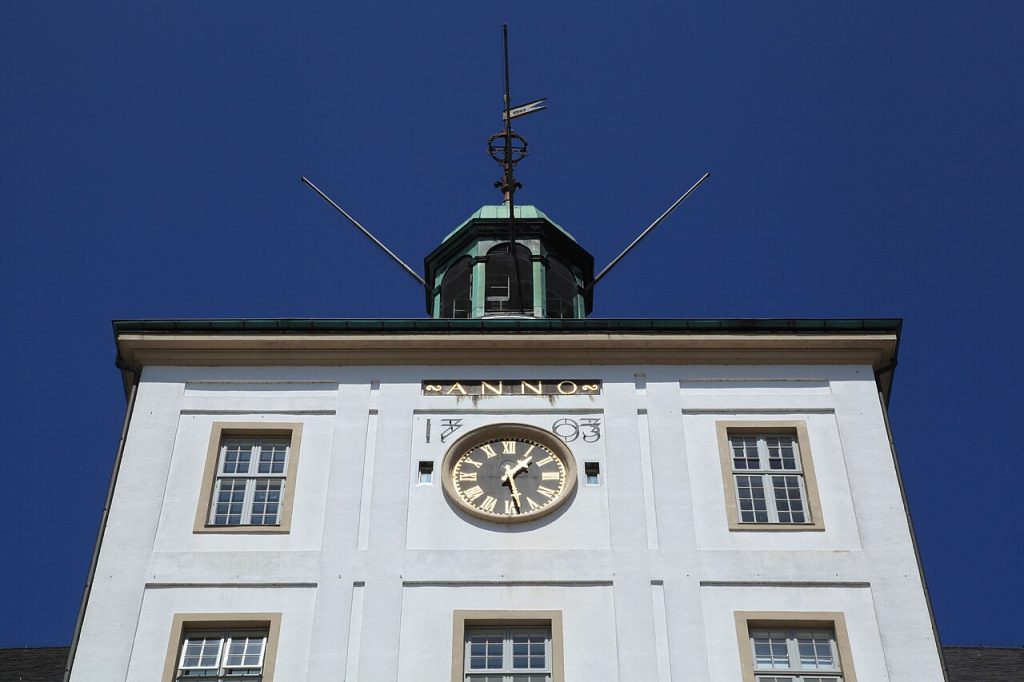
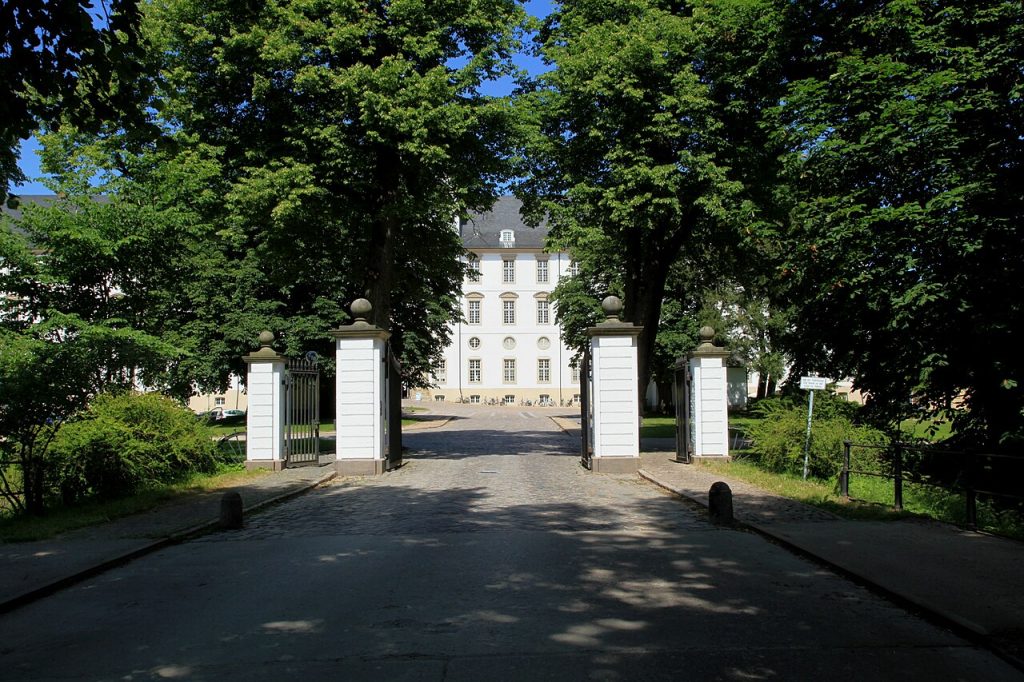
Gottorf Castle and its museums are open year-round, usually Tuesday to Sunday, with one ticket covering the castle, both museums, the Nydam hall and the Globe House in the Neuwerk garden, which has a separate opening season from spring to autumn. Allow at least four hours; a full day is better, with lunch in the castle café. Tours of the Globe House run on a fixed schedule because only a small group fits inside the sphere at a time. The Baroque terraced garden, restored in the 2000s with its Hercules pond and cascades, is free to walk.
Schleswig is on the railway between Hamburg and Flensburg, about ninety minutes from Hamburg; the castle is a fifteen-minute walk or a short bus ride from the station. Combine it with the cathedral and its Bordesholm altar in the old town and with the Viking Museum at Haithabu across the water. Here is the exact spot: Gottorf Castle on Google Maps.
Palaces Nearby
If you have enjoyed this palace, the region holds more remarkable residences. Here are two more well worth adding to your journey:
You May Like