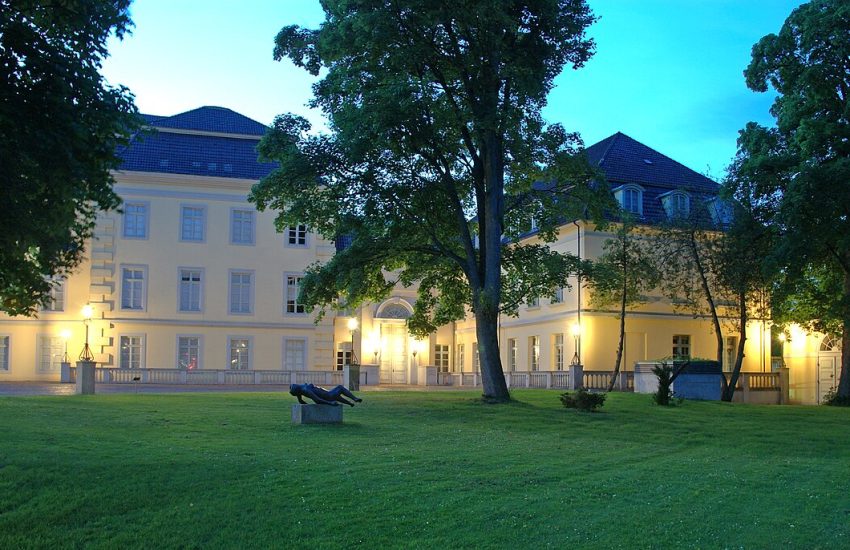
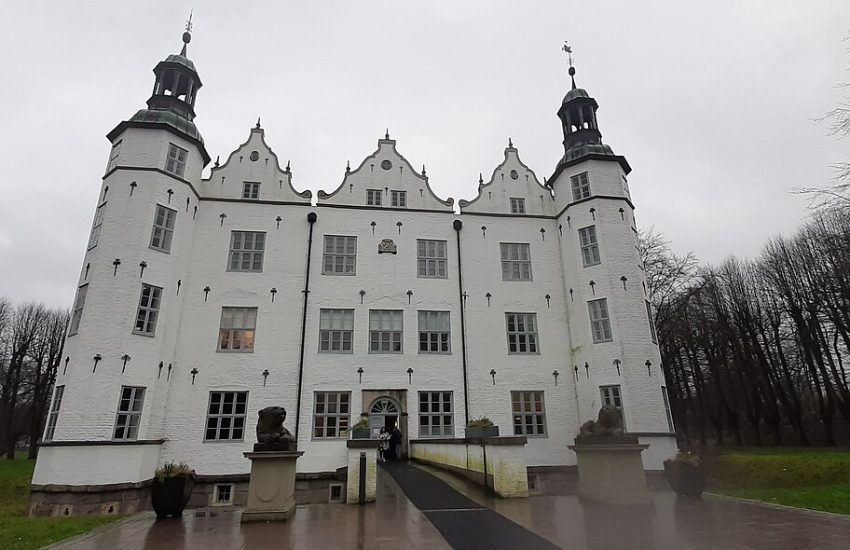
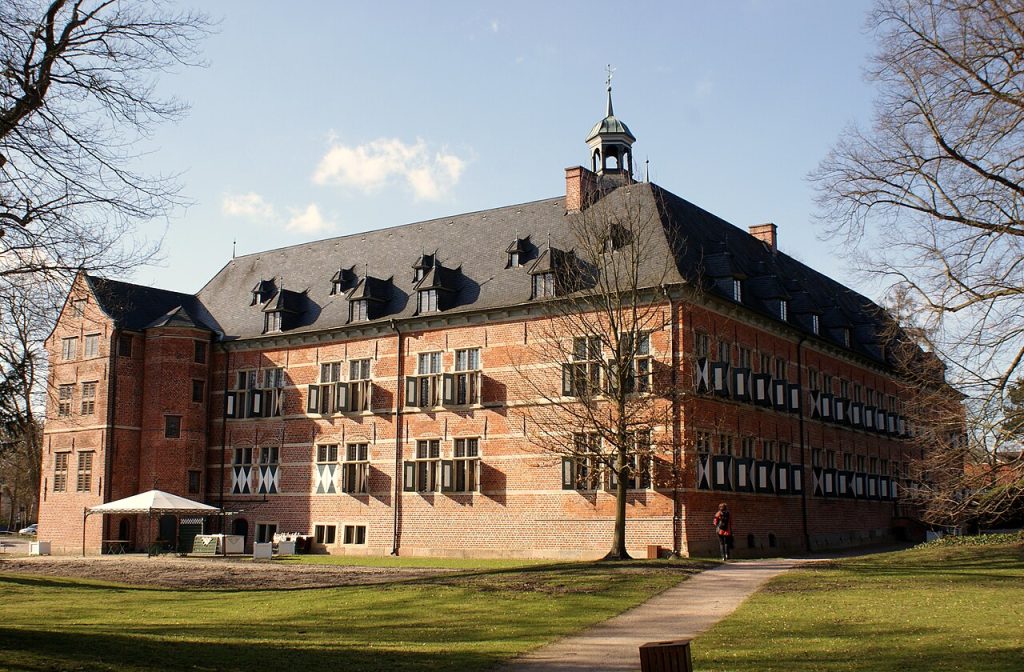
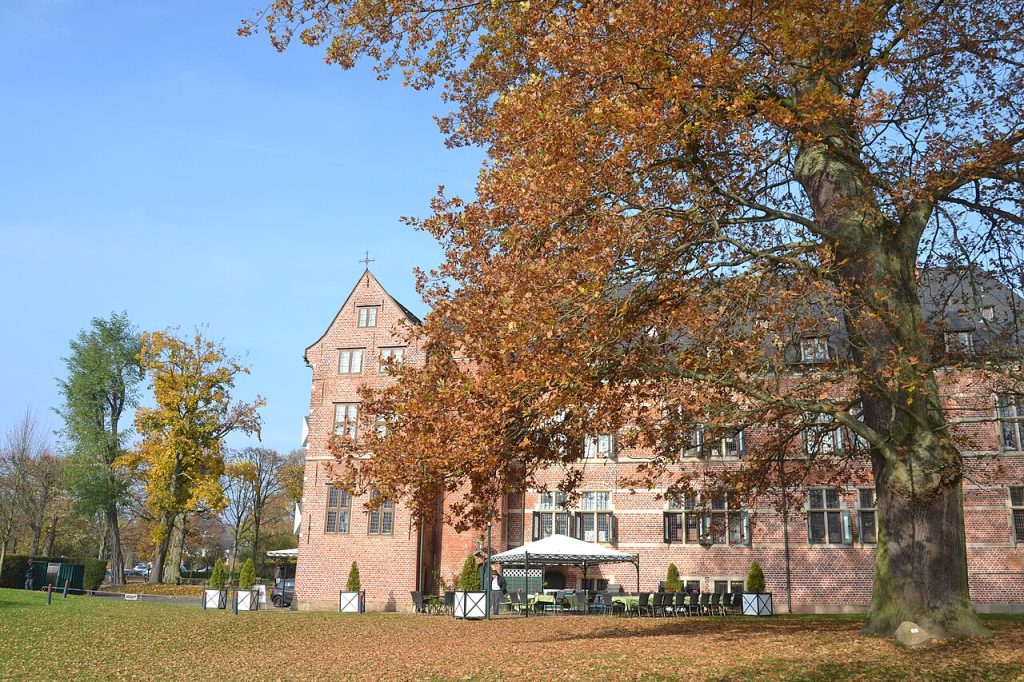
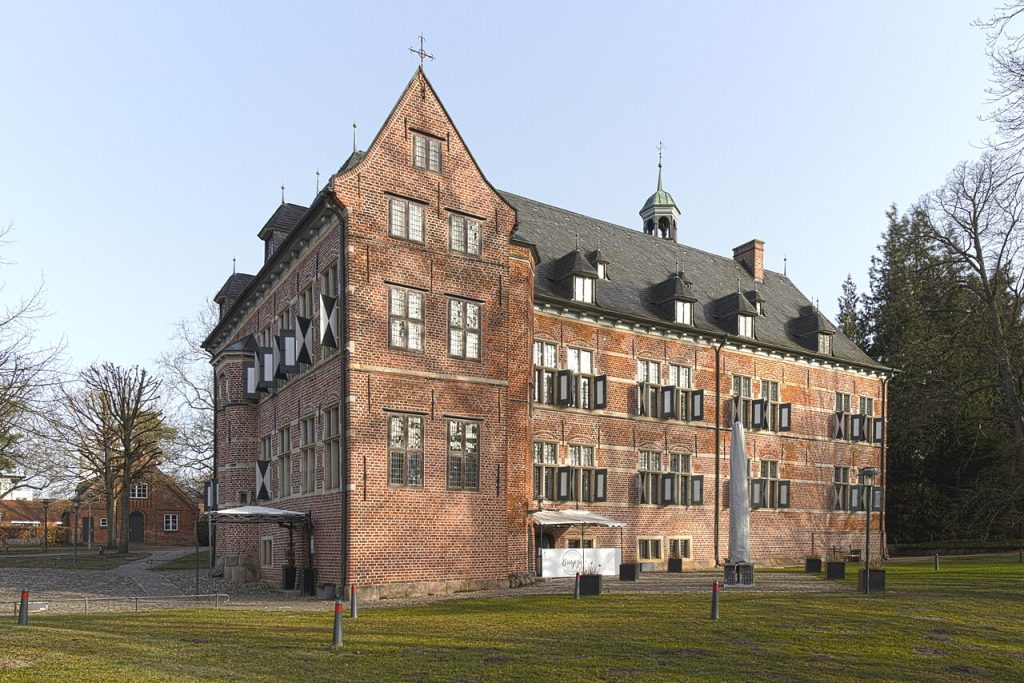
Reinbek is the kind of place Hamburgers drive through on the way to somewhere else, a leafy suburb on the river Bille just beyond the city boundary. Turn off the main road, however, and you meet a long red-brick building with a steep roof and two short wings, standing in a park beside a mill pond. This is Reinbek Palace, built between 1572 and 1576 for Duke Adolf of Schleswig-Holstein-Gottorf, and it is the oldest surviving palace of the Gottorf dukes anywhere, older than the Baroque wings at Gottorf itself and a generation older than Glücksburg and Ahrensburg.
It has had an undignified life. Conceived as a hunting seat and widow’s residence, it served for three centuries as an administrative office where peasants paid their taxes, became a hotel for Hamburg day-trippers in the nineteenth century, slid into decay in the twentieth and was within a few years of collapse when the town of Reinbek bought it in 1972. The restoration that followed uncovered a Renaissance palace of real quality under the layers, and today it is the town’s cultural centre, with exhibitions, concerts and a café where the duke’s hall used to be.
Let me walk you from the mill pond through the three wings and into the park, with the nuns, the dukes and the tax collectors in their turn. The contents are below.
In This Article
- On the Bille, Where Holstein Meets Hamburg
- The Nunnery Before the Palace
- Duke Adolf, the First Gottorf
- Building the Palace: 1572 to 1576
- Dutch Renaissance in Holstein Brick
- Three Wings and a Courtyard
- The Hunting Seat and the Widows
- Three Centuries as a Tax Office
- The Hotel Years and the Hamburg Day-Trippers
- Decay in the Twentieth Century
- The Town Buys Its Palace
- What the Restoration Found
- The Park, the Mill Pond and the River
- Reinbek on Video
- Visiting Reinbek Palace Today
- Palaces Nearby
On the Bille, Where Holstein Meets Hamburg
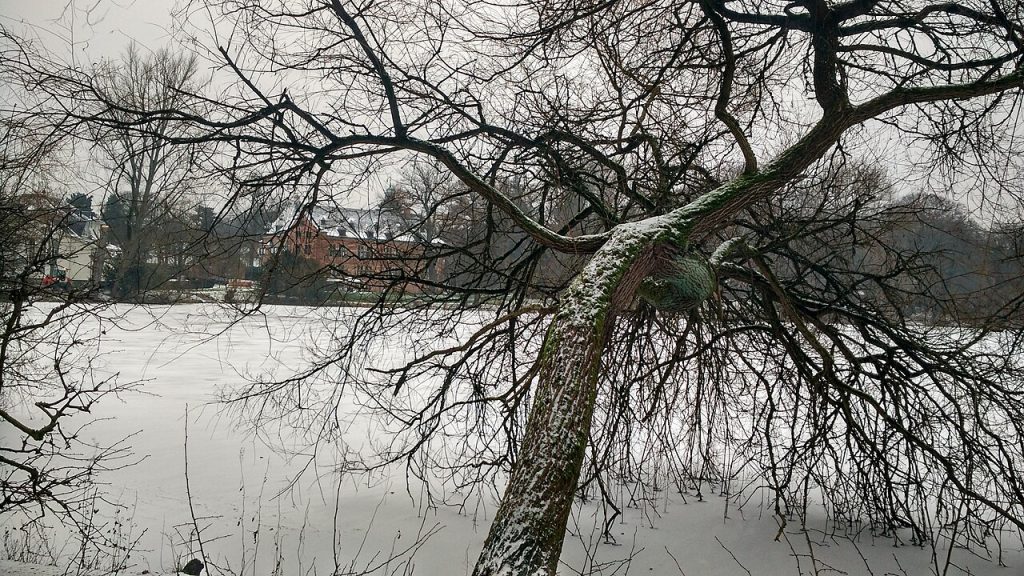
The river Bille rises in the Holstein hills and flows west into the Elbe at Hamburg, and for most of its history it marked a border. On the north bank lay the Duchy of Holstein; on the south, across the water, lands that belonged to Hamburg and to the shared Hamburg-Lübeck territory of Bergedorf. Reinbek, where a mill dammed the river into a pond, was therefore a frontier post as well as a pleasant spot, and that explains why a duke wanted a house here.
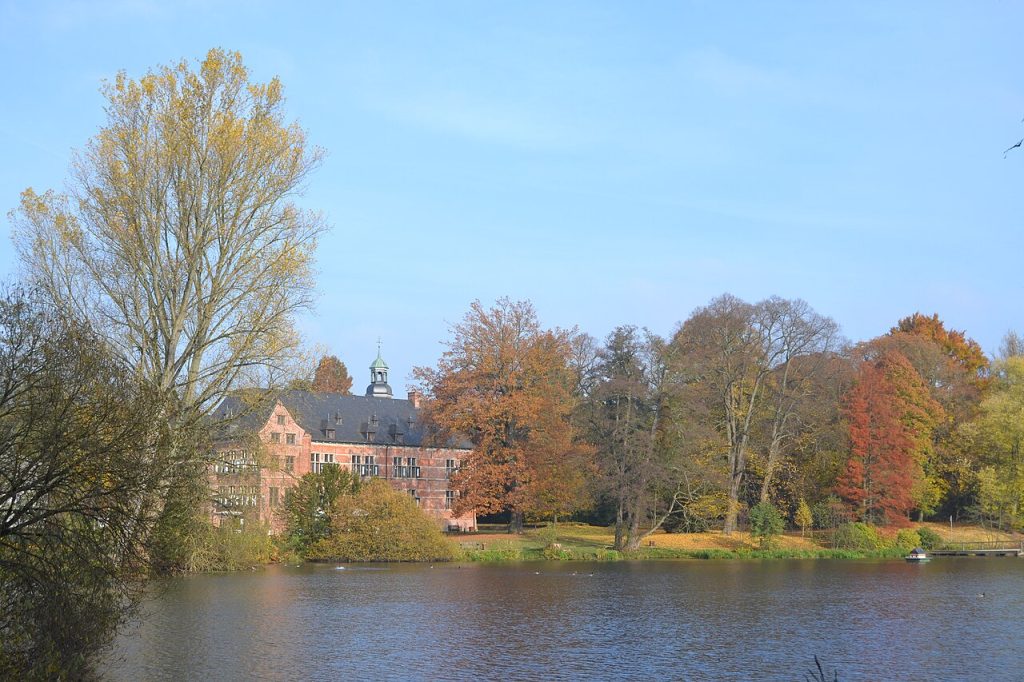
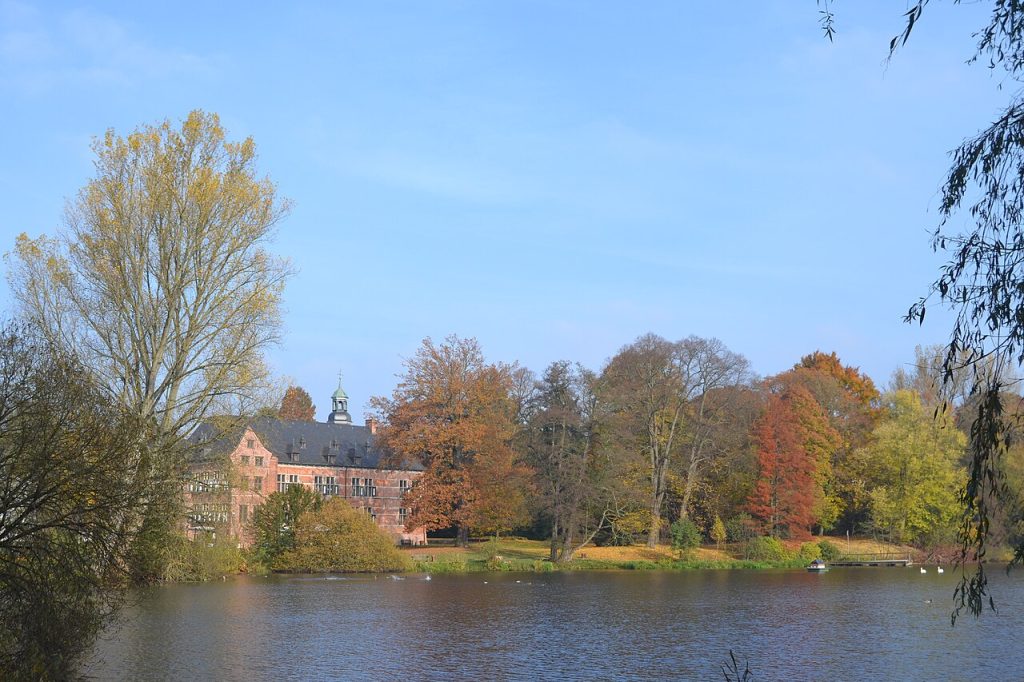
Now, stop here on the far side of the mill pond and look across at the palace. The long main wing runs parallel to the water, with the two short wings projecting toward you, and the red brick is reflected in the pond. The setting has changed, the suburb has grown up around it, but the view from this spot is still essentially the one Duke Adolf’s guests had when they rode in from the south.
The Nunnery Before the Palace
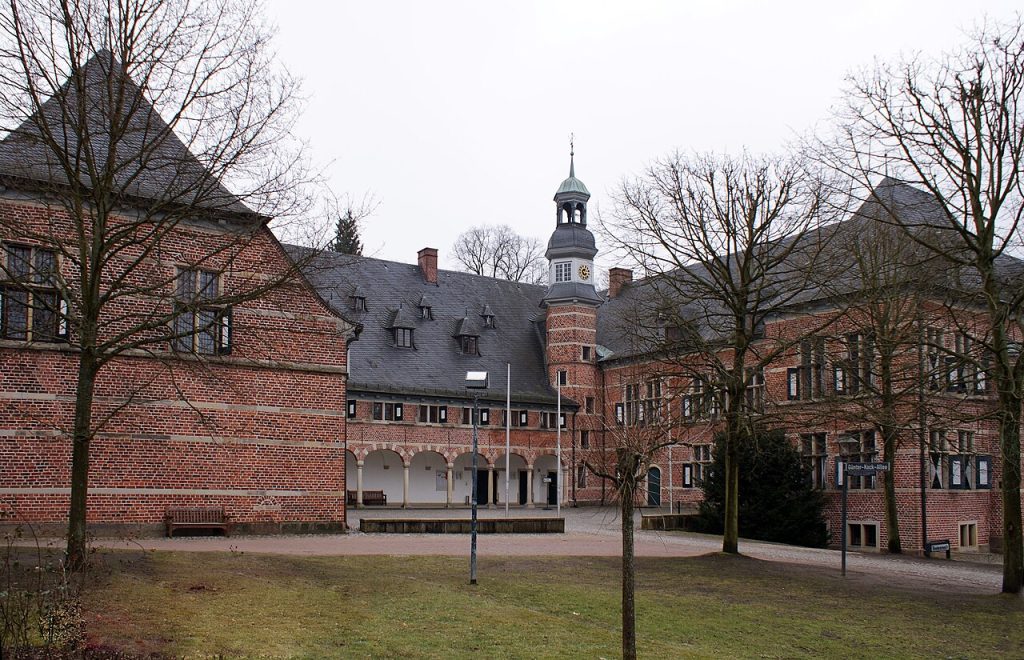
Before the palace there was a convent. The Cistercian nunnery of Reinbek was founded in the thirteenth century, moved to this site around 1250, and for nearly three hundred years housed the daughters of Holstein nobles in a community that owned the mill, the fields and several villages. The Reformation ended it: the nuns were dispersed around 1529, the convent lands passed to the dukes, and the buildings were used as a farm and then quarried.
Nothing of the convent stands above ground, but excavations during the restoration found its foundations under the palace courtyard and the park, and reused mediaeval bricks can be spotted in the lower walls of the palace. Like Glücksburg, Reinbek was built on a monastery, and like Glücksburg the builder saw no reason to apologise for it.
Duke Adolf, the First Gottorf
Duke Adolf was the younger brother of King Christian III of Denmark and in the division of 1544 received the share of Schleswig and Holstein whose chief seat was Gottorf. He was a soldier who had fought for the Emperor Charles V in Germany and the Netherlands, a Lutheran, a shrewd manager of his lands and a builder. During his reign he put up or rebuilt a string of residences across his territory, of which Reinbek is the best preserved and Gottorf itself the grandest.
Reinbek suited him for several reasons. It was close to Hamburg, where he borrowed money and bought luxuries; it lay in good hunting country along the Bille and the Sachsenwald forest; and it gave him a presence on the southern edge of his lands, facing the free city. He began building in 1572, when he was over forty and at the height of his power.
Building the Palace: 1572 to 1576
The work went quickly, between 1572 and 1576, under a master builder whose name is not securely recorded but who clearly knew the latest Dutch models. The duke used the convent’s stones for the foundations, brought new brick from kilns on his estates and imported sandstone from the Weser for the portal and the window frames. The result was a palace of three wings around an open courtyard, two storeys high with a basement, a steep roof and stepped gables at the ends.
What makes the date remarkable is how little has changed. The dukes never enlarged Reinbek, later owners never modernised the exterior and the twentieth century, for all its neglect, did not demolish anything. The brick box you see is the one finished in 1576, which makes it a document of Renaissance building in the north rivalled in the region only by Gottorf’s chapel and the oldest parts of Husum.
Dutch Renaissance in Holstein Brick
Look at the gables. The stepped outline with its pilasters and small pediments, the horizontal bands of sandstone that cross the brick, the way the windows are grouped under shared frames: all of this is the Dutch Renaissance that spread from Antwerp and Amsterdam to Denmark and the German coast in the second half of the sixteenth century. Duke Adolf had served in the Netherlands and knew the style at first hand; his master builder may well have been Dutch.
The palace is a quieter example than the great Danish castles of the period, without their copper spires and sculpted dormers, and that restraint has worn well. The deep red of the brick against the pale sandstone, the regularity of the windows and the clean lines of the gables give Reinbek a dignity that larger and showier buildings lack. Walk slowly along the main wing and let the proportions do their work.
Three Wings and a Courtyard
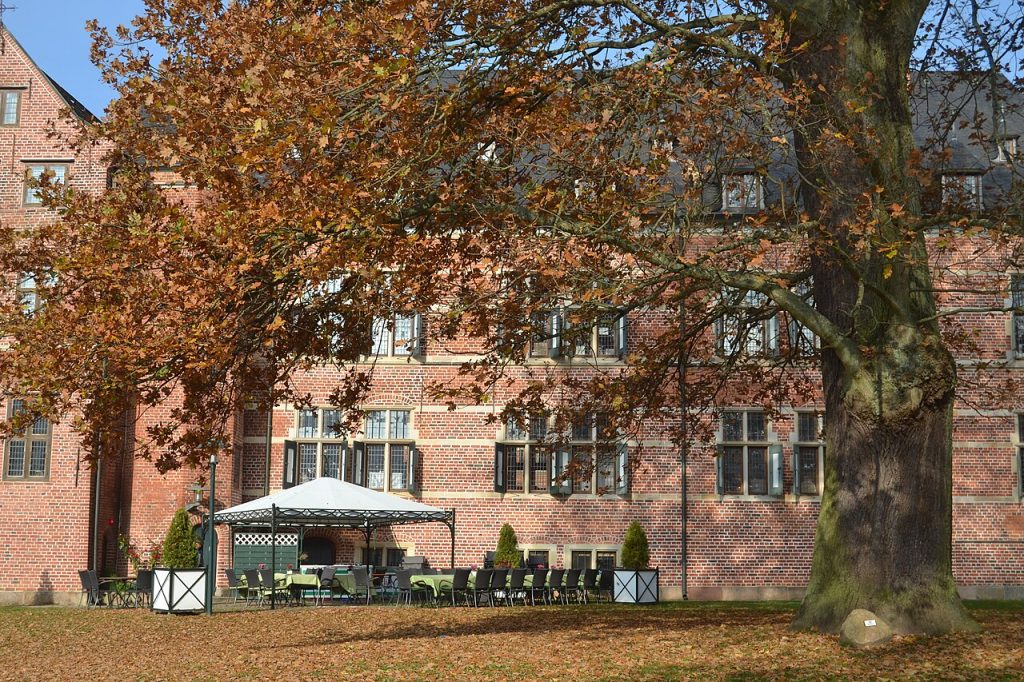
Step into the courtyard. The main wing held the hall and the ducal apartments on the first floor, with kitchens and service rooms below; the two side wings held guest rooms, offices and the chapel, and the open fourth side faced the river and the garden. There was no moat and no gatehouse. Reinbek was built for comfort and display, not for defence, which tells you how secure Duke Adolf felt in his lands by the 1570s.
The plan also made the house easy to divide, which mattered later when it housed officials and tenants side by side. The restoration kept the original division of the wings, so that today the main wing holds the exhibition halls and the side wings the café, offices and function rooms, more or less where the duke’s household put them.
The Hunting Seat and the Widows
In the dukes’ hands Reinbek had two uses. It was a hunting lodge for the great Sachsenwald forest to the east, where the Gottorfs hunted red deer and boar, and it was a Witwensitz, a widow’s residence. Duke Adolf died in 1586 and his widow Christine of Hesse lived at Reinbek until her own death in 1604, keeping a small court and running the estate; later ducal widows followed her. The palace thus spent its first decades as a household of women, which is worth remembering when you walk the rooms.
The hunting continued into the seventeenth century, with the court riding out from Reinbek into the forest and the palace filling for a few weeks each autumn. But the dukes’ attention was increasingly fixed on Gottorf, Kiel and their Swedish alliance, and after 1700 Reinbek was no longer a residence of any importance. Its long second career had begun.
Three Centuries as a Tax Office
From the seventeenth century Reinbek was the seat of the Amt, the ducal and later royal Danish district administration for the surrounding villages. The Amtmann, a nobleman appointed by the sovereign, lived in the main wing; his clerks worked in the side wings; and the peasants of the district came here to pay their dues, register their land and plead their cases. For nearly three hundred years the Renaissance hall was an office and the ducal bedrooms were the residence of a provincial official.
This was not glamorous but it was preservative. The Amt kept the roof repaired and the walls standing because it needed the building, and it had no money to rebuild in a fashionable style. When Prussia reorganised the administration of Schleswig-Holstein after 1867 the Amt was abolished, and in 1874 the state sold the palace. For the first time in three centuries Reinbek was in private hands.
The Hotel Years and the Hamburg Day-Trippers
The buyer turned the palace into a hotel. The railway from Hamburg to Berlin had opened in 1846 with a station at Reinbek, and the wooded valley of the Bille had become a favourite destination for Sunday excursions from the city. The Schlosshotel offered rooms, a restaurant in the old hall, a garden terrace by the pond and boats on the river, and for half a century it did a lively trade. Hamburg families took coffee under the duke’s beams, and Reinbek began to grow into the villa suburb it is today.
The hotel years altered the interiors considerably, with partition walls, new staircases, kitchens and bathrooms, but they also kept the palace in use and in public view. Many Hamburgers of a certain age still remember dancing at the Schlosshotel, and the restoration kept a few traces of this period, including photographs in the exhibition.
Decay in the Twentieth Century
The hotel closed after the First World War and the palace passed through a series of owners who used it for flats, offices and storage. In the Second World War it housed bombed-out families from Hamburg and afterwards refugees from the east, dozens of households crammed into the Renaissance rooms with improvised stoves and partitions. By the 1960s the roof leaked, the gables were cracking, the brick was spalling and the building was officially listed as endangered.
Plans were drawn up to demolish it for housing. Reinbek had grown into a prosperous commuter town, the land was valuable and the palace was in the way. That it survived is due to a group of local people who refused to accept the loss of the one building that gave their town a history.
The Town Buys Its Palace
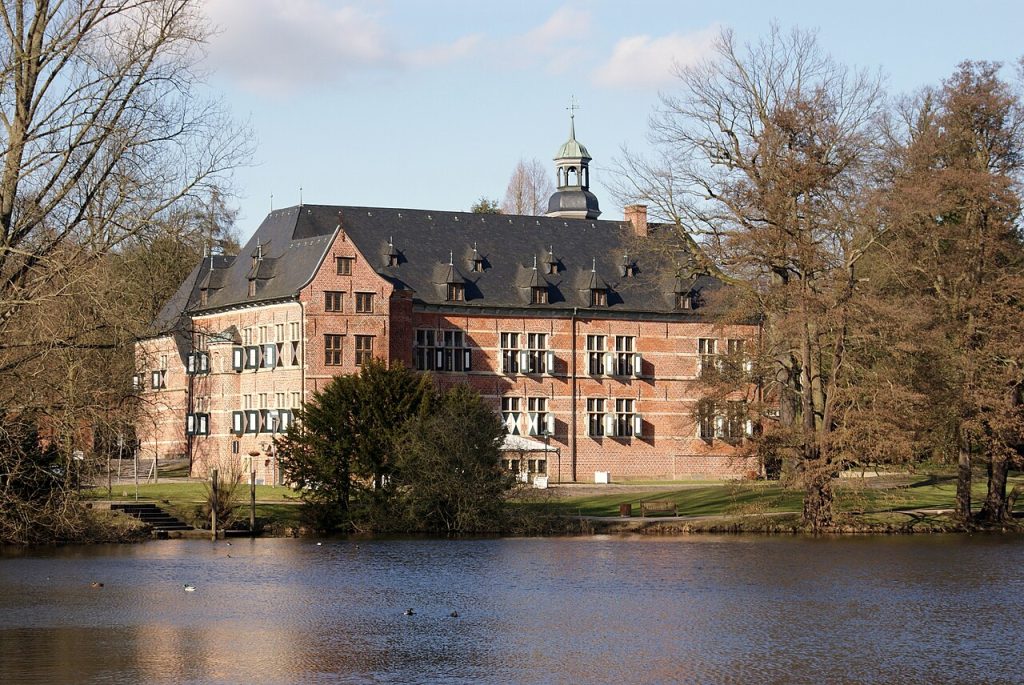
In 1972 the town of Reinbek bought the palace, and with grants from the state, the federal government and private donors began a restoration that took fifteen years. Everything added after 1600 that had no value was removed: partitions, hotel staircases, twentieth-century plaster. The brick was repaired with matching material, the gables rebuilt, the roof renewed in the original form and the sandstone portal and window frames conserved. The palace reopened in 1987 as the town’s cultural centre, with exhibition halls, a concert room and a café.
The decision to use it rather than to furnish it as a period museum was deliberate. Nothing of the ducal furnishings survived, so rather than fill the rooms with reproductions the town left them largely bare, letting the architecture speak and using the spaces for art and music. It is a model that other towns have since followed.
What the Restoration Found
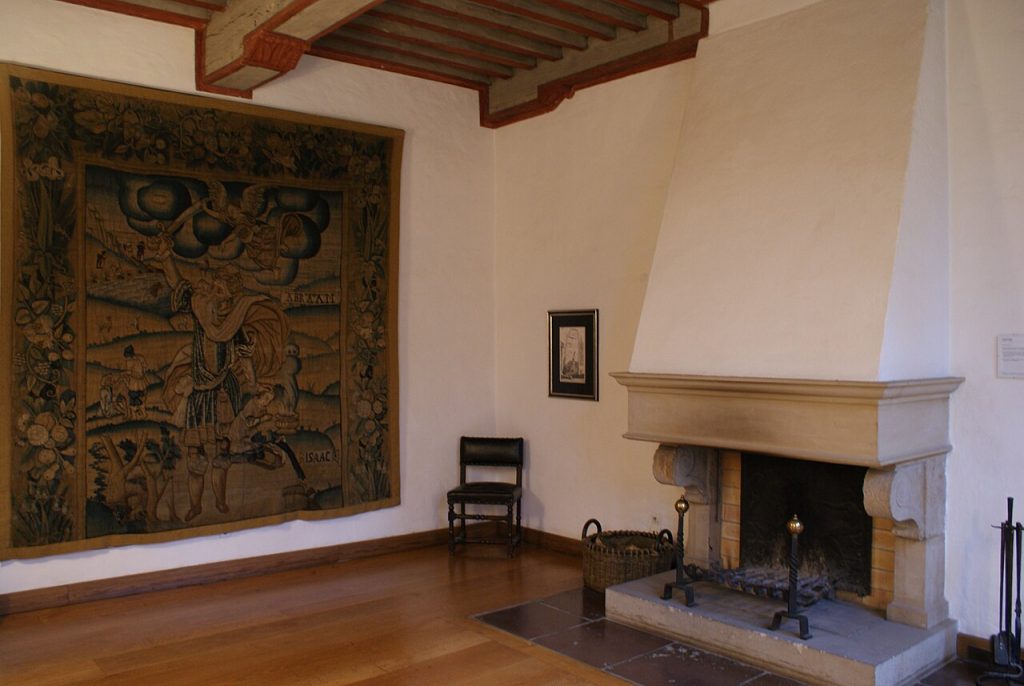
Go inside and look up. The restorers uncovered the original Renaissance beamed ceilings under later plaster in several rooms, some with traces of painted decoration, and in the main wing they found fragments of sixteenth-century wall painting with foliage and heraldry. The great hall on the first floor was recovered in its full length, with its deep window embrasures looking out over the pond, and the old spiral staircase in the corner was reopened. A small permanent exhibition explains the building’s history with models, finds from the excavation and photographs of the hotel years.
Now, stop here in the hall and look at the beams. They were cut in the 1570s from Holstein oaks that were already old when the nuns were here, and they have held up a roof for four hundred and fifty years through dukes, tax collectors, hoteliers and refugees. The restoration simply let them be seen again.
The Park, the Mill Pond and the River
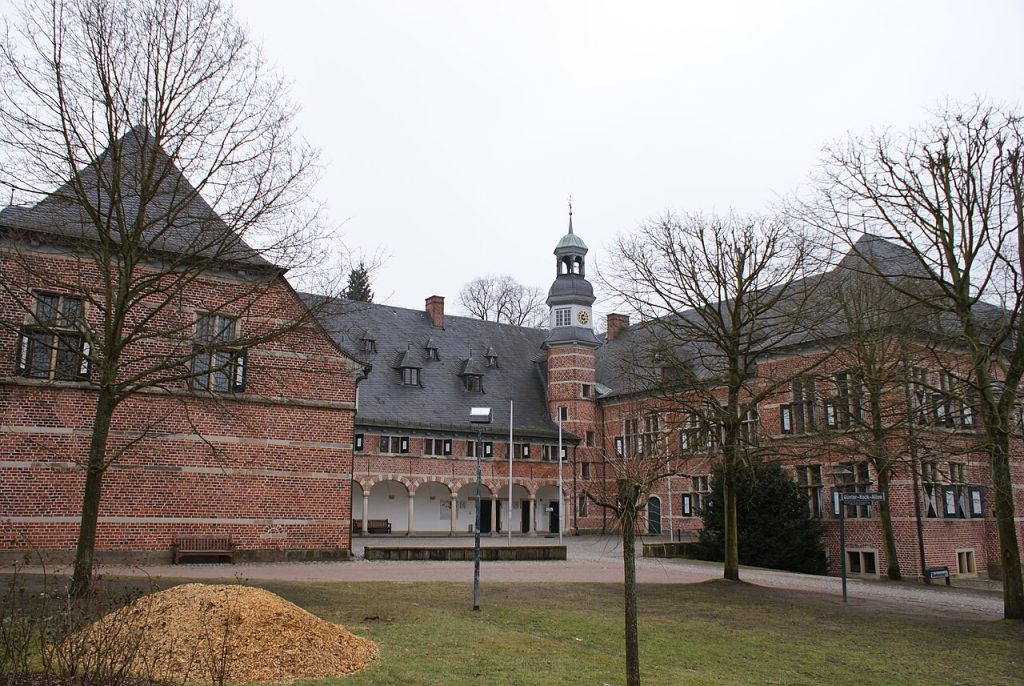
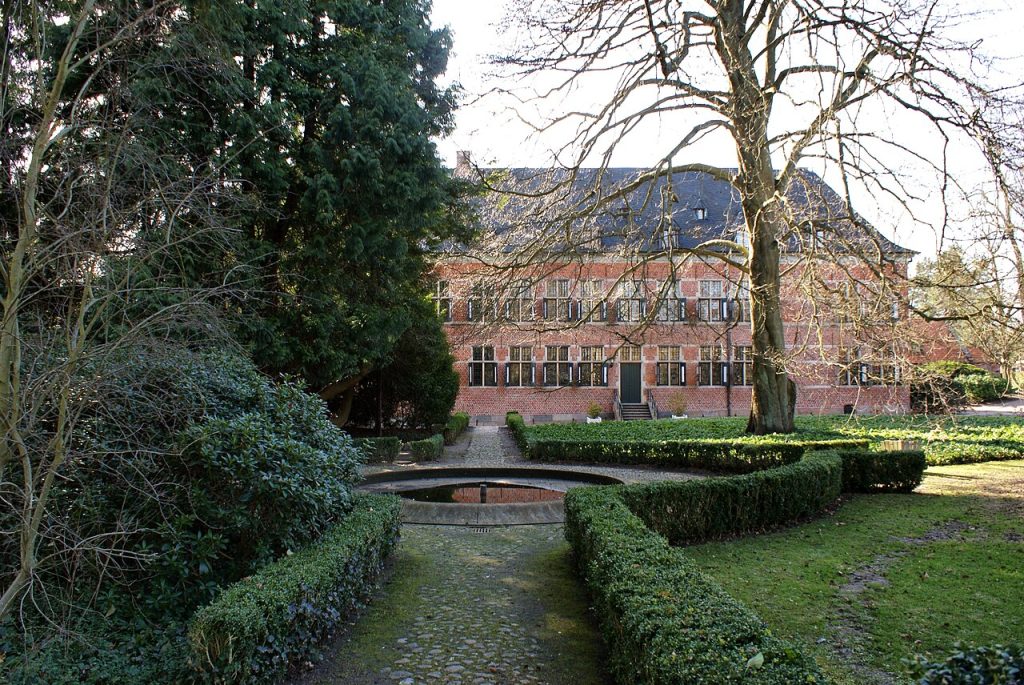
Walk out of the courtyard toward the river. The park was laid out in the nineteenth century for the hotel guests and restored by the town as a landscape garden with lawns, old trees and paths along the Bille. The mill pond, dammed since the Middle Ages, lies on the east side with the former mill beside it, and a walk around the water gives you the palace from every angle, with the gables reflected in the pond on still days.
The Bille valley beyond is a nature reserve of meadows and alder woods, and the footpath continues upstream toward the Sachsenwald, the forest where the dukes hunted and where, two centuries later, Bismarck would be given his estate at Friedrichsruh. A circuit of an hour takes you from the palace into the woods and back along the water.
Reinbek on Video
Before you plan your trip, take a few minutes to see Reinbek Palace in motion. The video below gives a good sense of the setting, the scale of the buildings and the atmosphere of the grounds.
Visiting Reinbek Palace Today
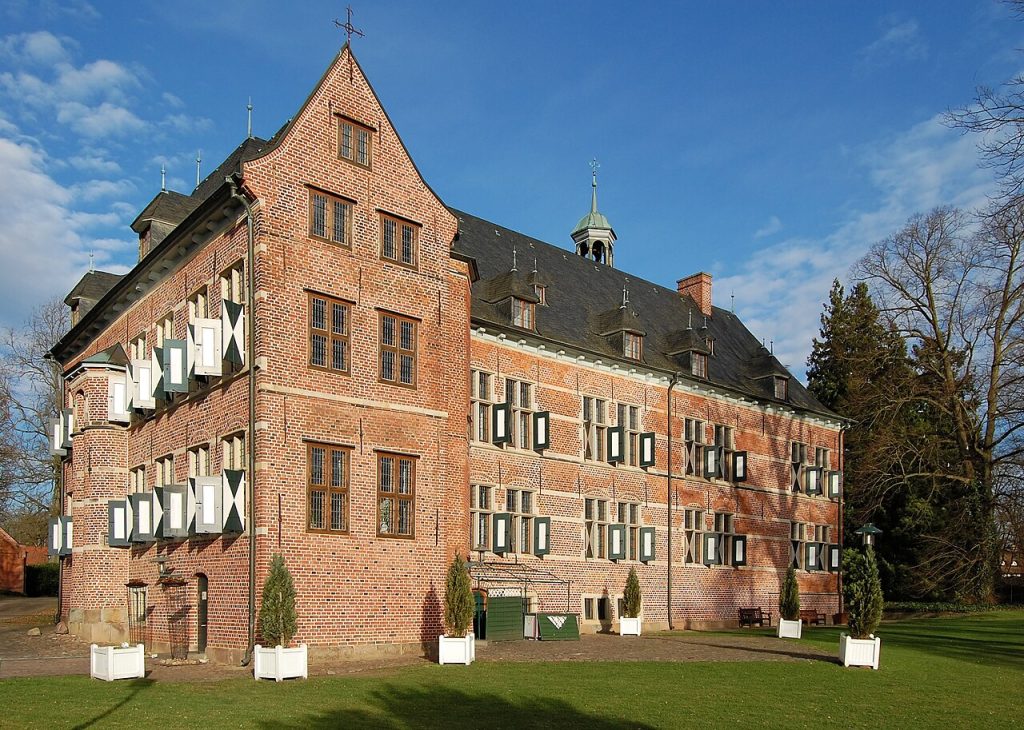
Reinbek Palace is open as a cultural centre year-round, usually Tuesday to Sunday, with changing art exhibitions in the main wing, a permanent display on the building’s history, concerts and readings in the hall and a café in one of the side wings. Admission to the building is low and the park is free. Allow an hour for the palace and exhibition and another for the park and the pond; combine it with a walk up the Bille valley toward the Sachsenwald if the weather is kind.
Reinbek station, on the S-Bahn line S21 from Hamburg, is a ten-minute walk from the palace; the journey from the city centre takes about twenty-five minutes. Ahrensburg Palace lies twenty minutes north by car, and the two make a comfortable day of Renaissance castles on Hamburg’s doorstep. Here is the exact spot: Reinbek Palace on Google Maps.
Palaces Nearby
If you have enjoyed this palace, the region holds more remarkable residences. Here are two more well worth adding to your journey: