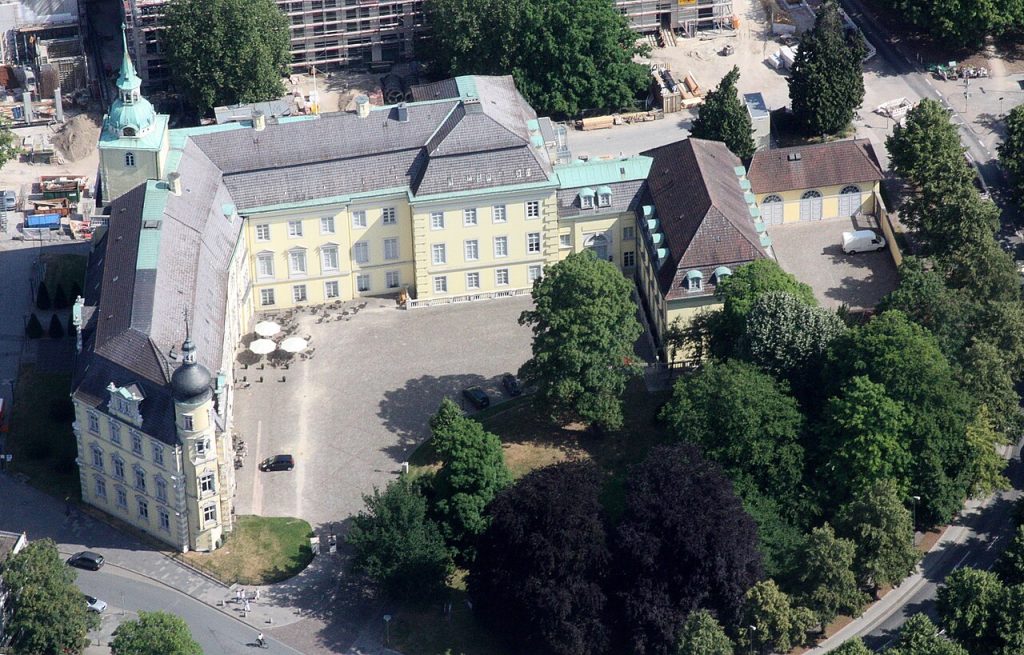
Oldenburg is one of those German cities that most foreigners cannot place. It lies in the flat country west of Bremen, has a university, a famous horse breed and a reputation for sensible Lutheran prosperity, and until 1918 it was the capital of its own state, the Grand Duchy of Oldenburg, with its own grand duke, parliament, army and railway. The palace that housed the grand dukes stands in the middle of town, a long yellow building with a Renaissance core and Baroque and classical additions, and since 1923 it has been the state museum of art and cultural history.
The building’s biography mirrors the state’s. It began as the castle of the counts of Oldenburg, a mediaeval family that happened, in 1448, to supply a king to Denmark and so became the ancestor of every Danish monarch since. It was rebuilt as a Renaissance residence by Count Anton Günther, the horse-breeding diplomat who kept his land out of the Thirty Years’ War. It passed to the Danish crown, then in 1773 to a Gottorf cousin from the Russian imperial circle, and under the dukes and grand dukes of the nineteenth century it was enlarged and refurnished for a court that was small, cultivated and remarkably durable.
Let me walk you through the wings and the centuries, from the count’s tower to the grand duke’s last day. The contents are below; the horse story is in the middle.
In This Article
- A Palace in the Middle of a City
- The Counts Who Fathered the Kings of Denmark
- Anton Gunther, the Count Who Kept the Peace
- The Horses of Oldenburg and the Painted Kranich
- The Renaissance Palace of 1607
- A Century Under the Danish Crown
- Peter Friedrich Ludwig and the Classical Court
- The Russian Connection
- Grand Dukes in a Small Capital
- Wings, Facades and the Yellow Colour
- The State Rooms and the Collections
- 1918: The Last Grand Duke Leaves
- The State Museum Since 1923
- Oldenburg on Video
- Visiting Oldenburg Palace Today
- Palaces Nearby
A Palace in the Middle of a City
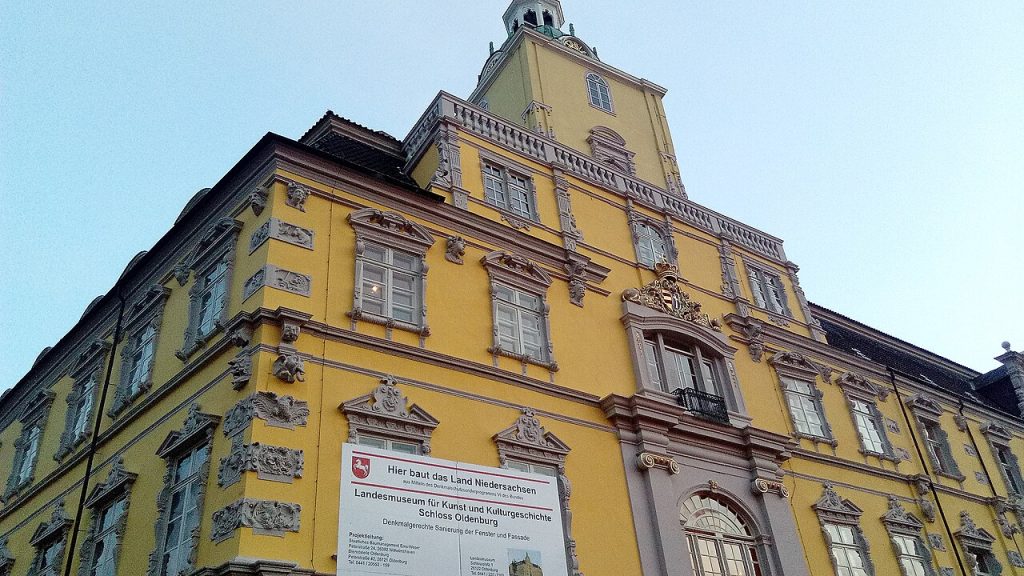
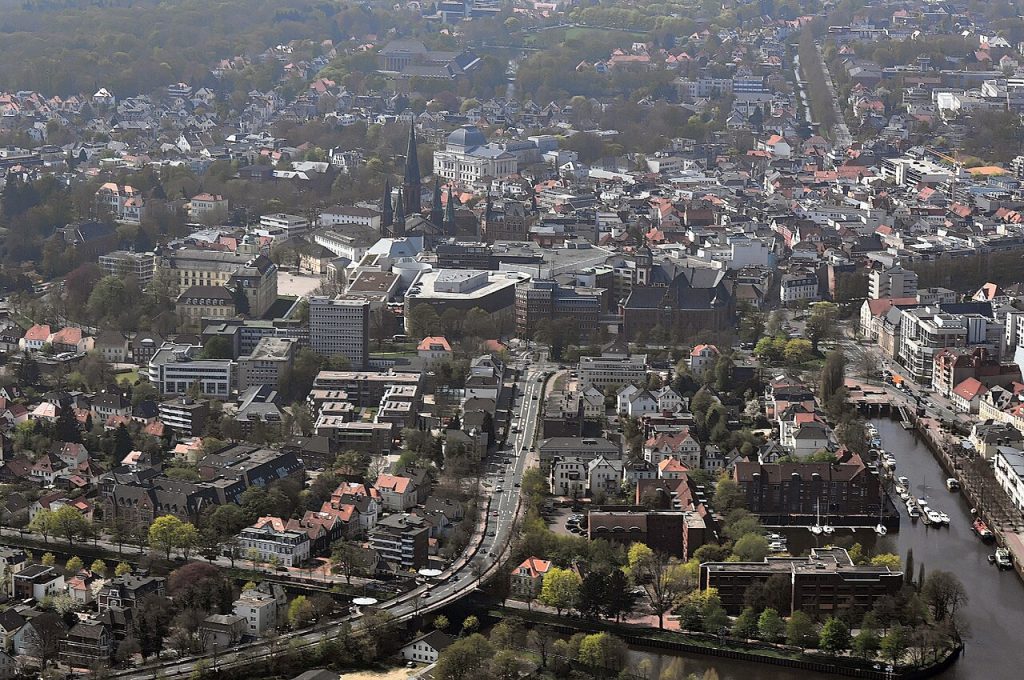
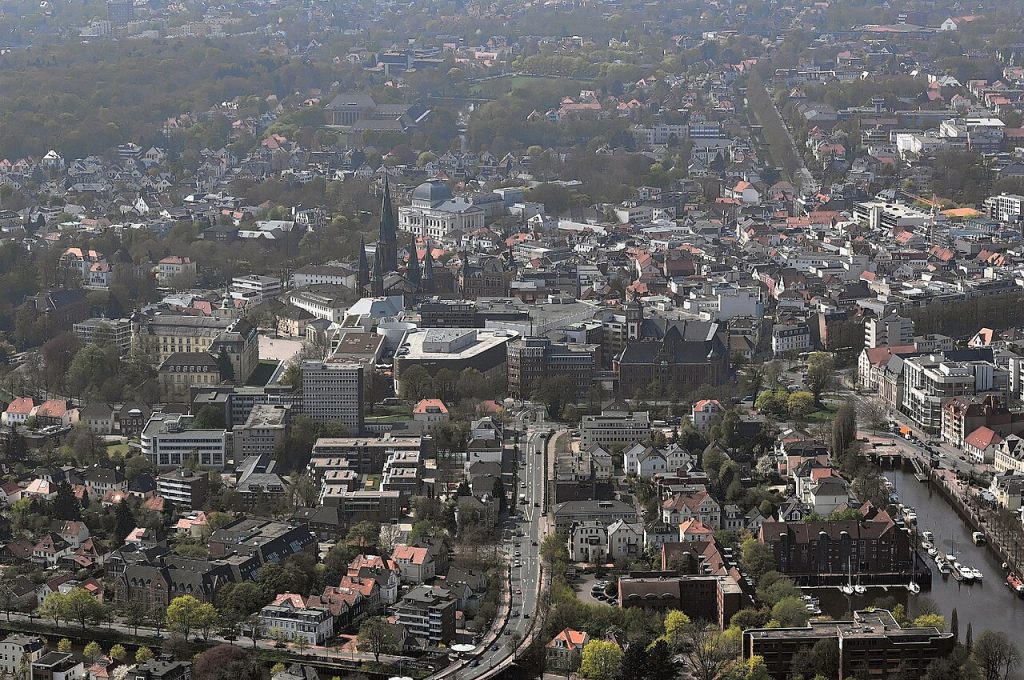
Most German residences stand apart from their towns, behind gates and parks. Oldenburg’s palace stands on a square at the end of the main shopping street, with the Lamberti church on one side, the old town hall a few steps away and the castle garden beginning at its back door. The palace was built where the mediaeval castle stood, on the edge of the town above the river Hunte, and the town simply grew around it until the two were inseparable.
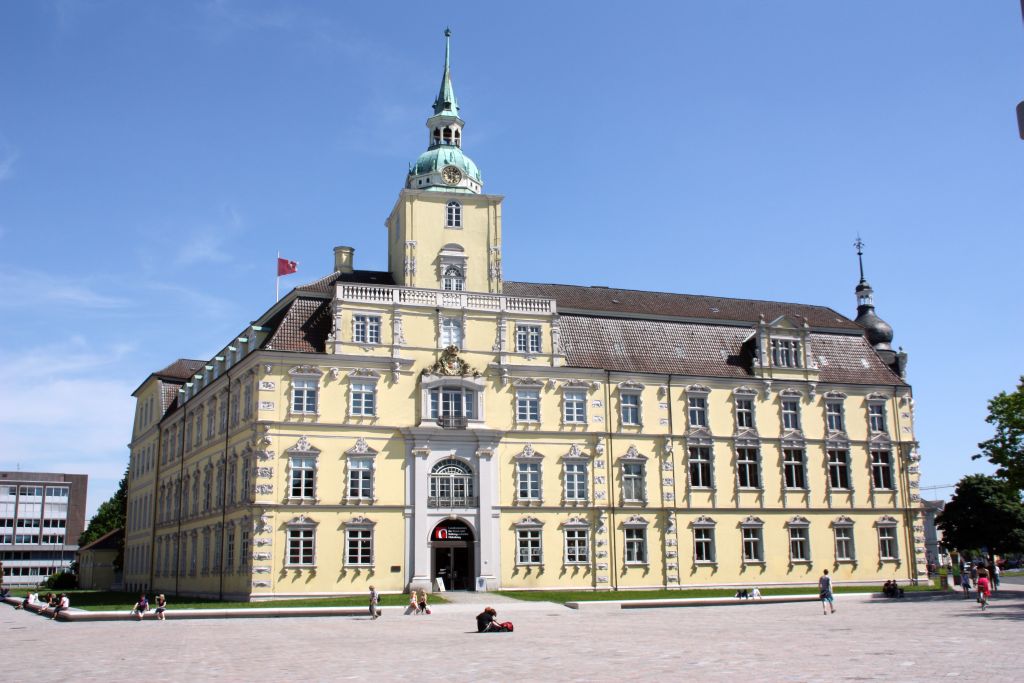
Now, stop here on the Schlossplatz and look at the long yellow facade with its central tower. The tower is the clue to the oldest part; the wings to either side were added over three centuries, and the whole was unified by the yellow render that is the colour of Oldenburg’s official buildings to this day. Behind you, the city goes about its business; the palace has always been part of it rather than above it.
The Counts Who Fathered the Kings of Denmark
The counts of Oldenburg were a modest North German family who held a castle on the Hunte from the twelfth century and spent the Middle Ages quarrelling with the Frisians to the west and the archbishops of Bremen to the east. Then, in 1448, Count Christian was elected King of Denmark, and the family’s history took a turn that still echoes. Every Danish monarch since, and through later marriages the kings of Norway, Sweden, Greece and the Russian tsars, descends from the counts of this small town.
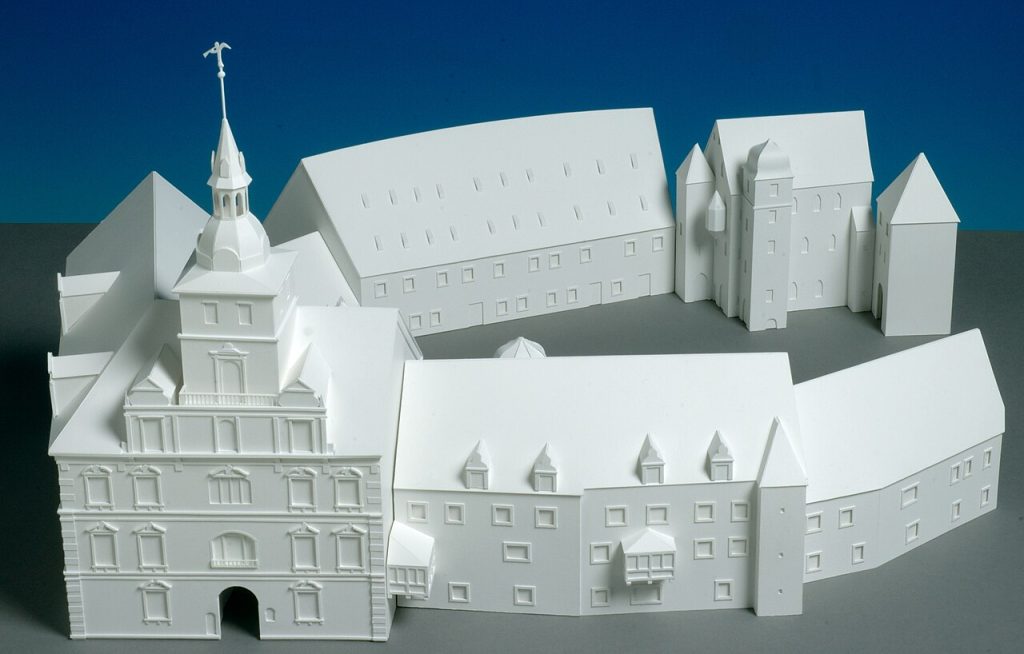
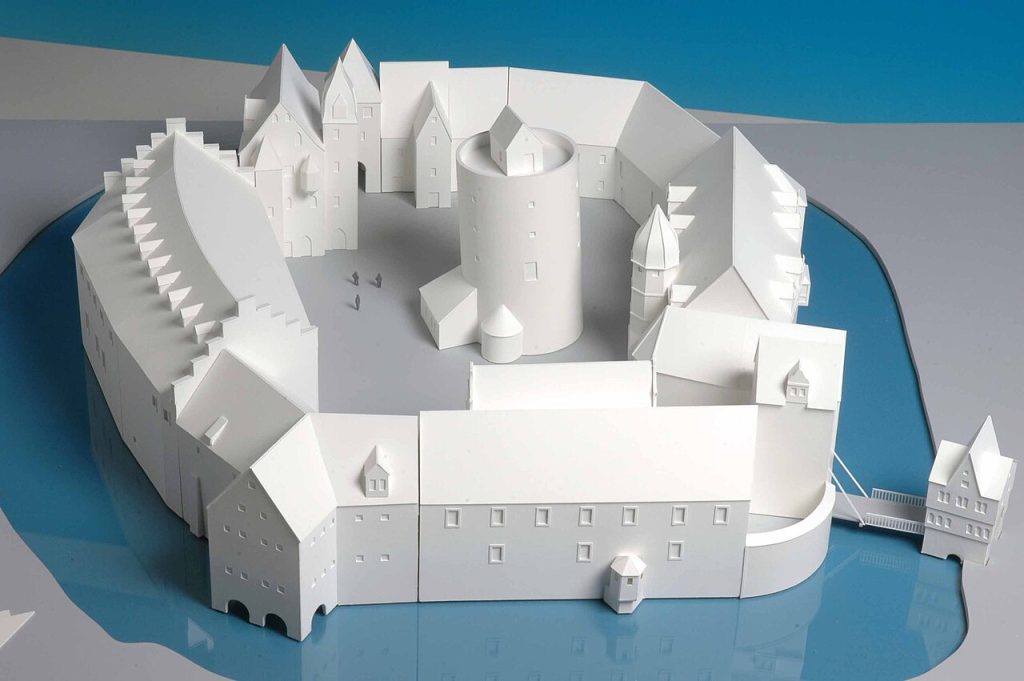
The Danish line left Oldenburg to a junior branch, which carried on as counts in the old castle for another two centuries. The castle itself was a mediaeval fortress with a keep and a moat, repeatedly damaged by fire and flood and rebuilt. Nothing visible of it survives except its position and some masonry in the cellars under the tower.
Anton Gunther, the Count Who Kept the Peace
Here is the hero of the story. Count Anton Günther ruled Oldenburg from 1603 to 1667, through the whole of the Thirty Years’ War, and he managed what almost no other German ruler managed: he kept his country out of it. By skilful diplomacy, well-placed bribes, strict neutrality and the occasional gift of a fine horse to a passing general, he preserved Oldenburg from occupation and plunder while the rest of Germany burned. His subjects called him the good count, and the title has stuck.
He was also a builder, a collector and an improver who diked the marshes, founded towns and acquired the Weser toll that made his small state rich. In 1607 he began replacing the mediaeval castle with a Renaissance residence, and the tower and the core of the main wing are his. His portrait hangs in the museum, a shrewd, heavy-featured man with the look of someone who has outwitted a great many people.
The Horses of Oldenburg and the Painted Kranich
Anton Günther’s other passion was horses. He built up a stud that crossed local mares with Spanish, Neapolitan and Turkish stallions and produced the heavy, elegant carriage horse that became the Oldenburger, a breed that still exists and has evolved into one of the world’s leading sport horses. His horses were diplomatic currency, given to emperors, kings and generals, and they were the reason armies passed Oldenburg by. The most famous was Kranich, a grey stallion with a tail so long it was said to be tied in knots, which the count rode on ceremonial occasions.
Kranich was painted life-size, and the picture, with the count’s portrait, is one of the museum’s treasures. Now, stop here in front of it and consider that this horse and its stablemates did as much to save Oldenburg from the war as any treaty. The breed is still raised in the district, and the annual stallion show in the city is one of the great events of the equestrian calendar.
The Renaissance Palace of 1607
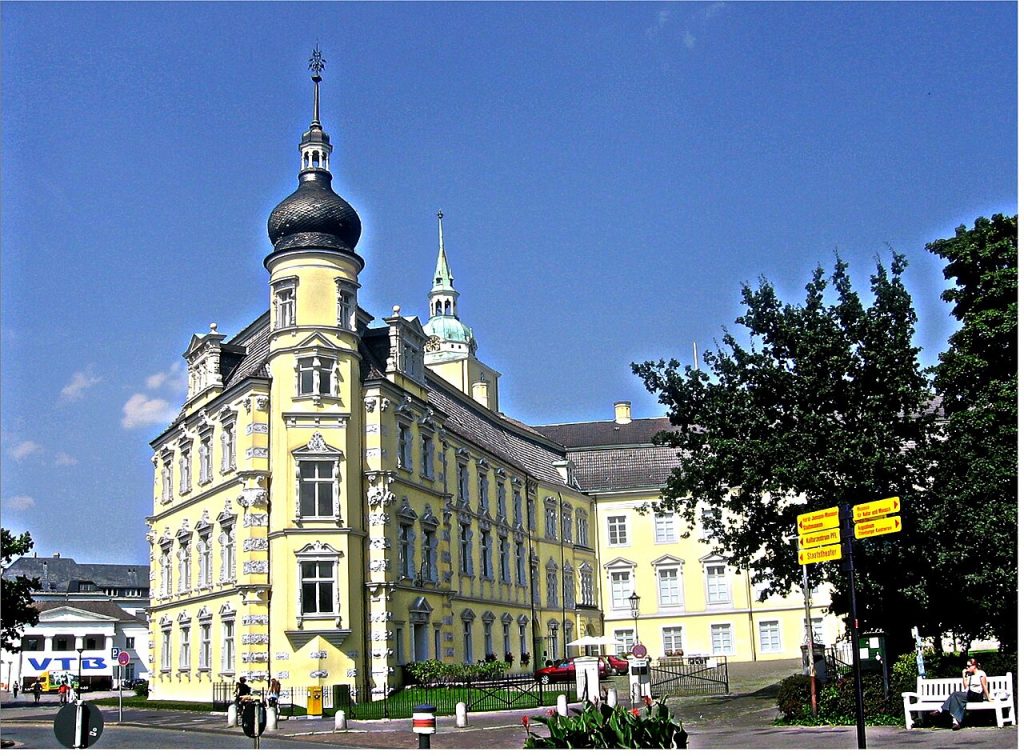
The palace Anton Günther began in 1607 was a Renaissance block in the Weser style, with a tall tower over the entrance, ornate gables and sandstone decoration against brick. Dutch and Weser-Renaissance craftsmen worked on it, and the tower with its onion-shaped cap, rebuilt in later centuries, became the symbol of the city. Inside, the count installed a great hall, a chapel, a library and the Kunstkammer where his collections were kept.
Much of this exterior was later smoothed over by Baroque and classical remodelling, but the tower and the proportions of the main wing are his, and on the garden side you can still see Renaissance window frames and the line of the old gable. The palace is a palimpsest, and the Renaissance is the bottom layer.
A Century Under the Danish Crown
Anton Günther died childless in 1667, and Oldenburg passed to his distant cousins the kings of Denmark, who ruled it for the next hundred and six years as a province governed from Copenhagen. The palace became the seat of the Danish governor, the Statthalter, and lost its character as a residence. A fire in 1676 destroyed much of the town and damaged the castle, and the Danes repaired it in a plain Baroque manner, adding a wing and simplifying the Renaissance decoration.
The Danish century was not unhappy. Oldenburg was peaceful, the dikes were maintained and trade flowed through the Weser ports. But the town was a backwater without a court, and the palace was an office. That changed in 1773, when a complex dynastic deal brought a new ruling family from an unexpected direction.
Peter Friedrich Ludwig and the Classical Court
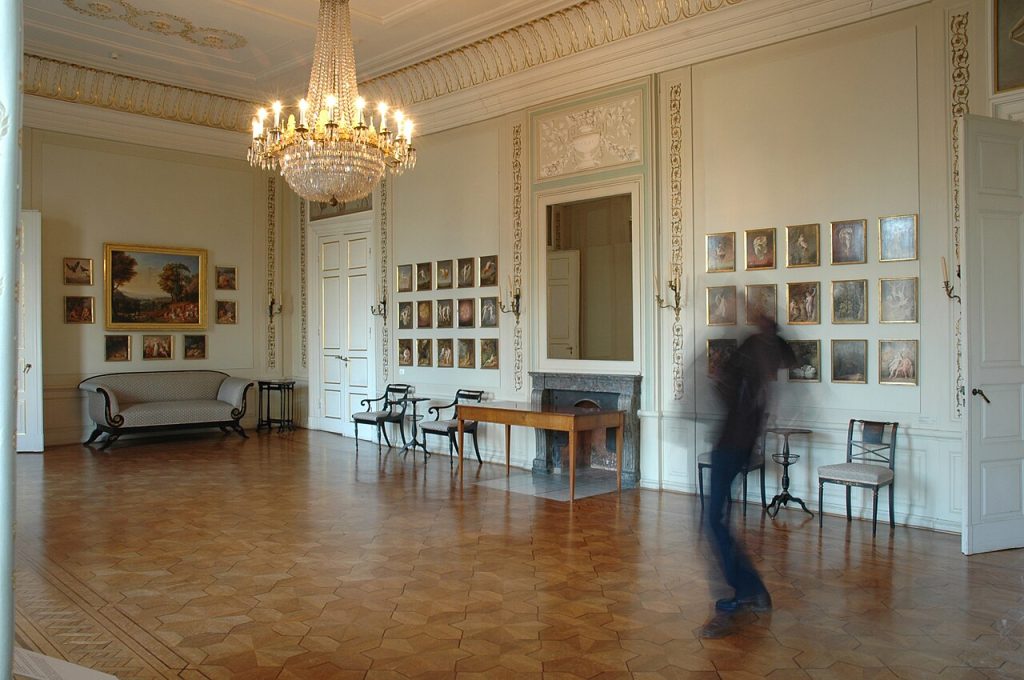
In 1773 the Danish king exchanged Oldenburg for the Gottorf claims to Schleswig, and the county, now a duchy, passed to the Gottorf line of Holstein, the same family that held Eutin. The real ruler from 1785 was Duke Peter Friedrich Ludwig, a cultivated prince who had grown up at the Russian court and in Berne, who corresponded with scholars and who set out to make Oldenburg a model enlightened state. He reformed administration and schools, planted the palace garden and rebuilt the palace in the classical taste.
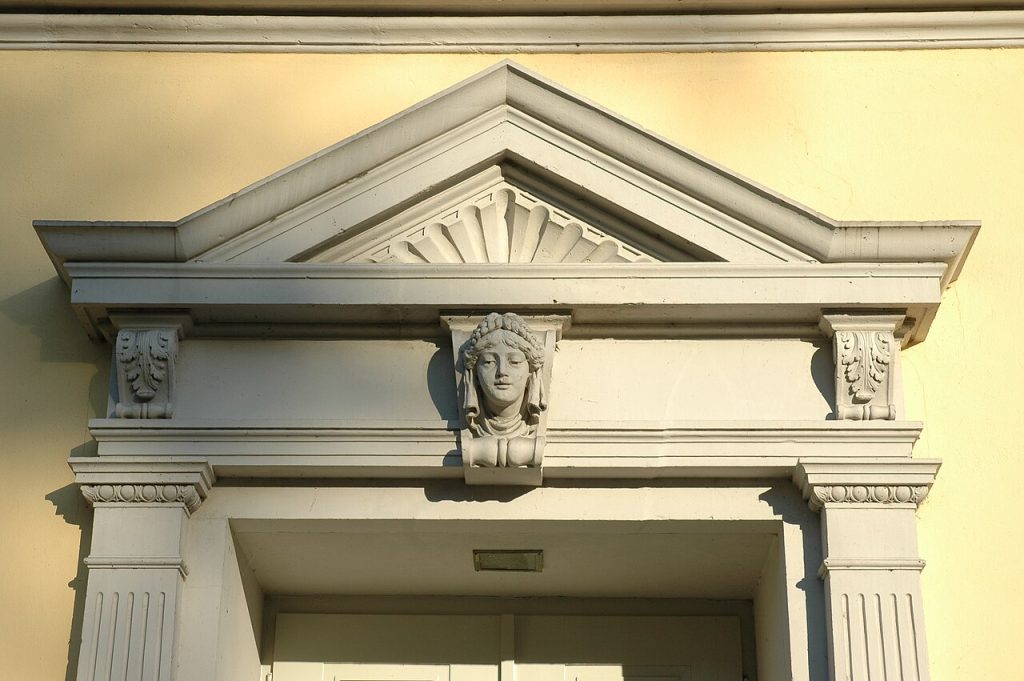
Under Peter Friedrich Ludwig the facade was regularised, the yellow render applied and the interiors refitted with classical stucco, columns and marble stoves. He also brought the court painter Tischbein to his lands and created the art collection that is the heart of today’s museum. His long reign, interrupted only by Napoleon’s annexation of Oldenburg from 1810 to 1813, gave the small state the solid classical face it still wears.
The Russian Connection
The Oldenburg dukes were cousins of the Romanovs, since both descended from the Gottorf line, and the connection was renewed in every generation. Peter Friedrich Ludwig’s son Georg married a daughter of Tsar Paul; their son Peter was raised in Russia and founded the Russian branch of the house, whose members were generals, philanthropists and courtiers in St Petersburg until 1917. Russian grand duchesses visited Oldenburg, Russian orders hung on Oldenburg uniforms, and the palace holds portraits, porcelain and gifts from the imperial court.
The connection had practical value too. When Napoleon annexed Oldenburg in 1810, the insult to the tsar’s relatives was one of the grievances that led to the French-Russian war of 1812, which is about as much influence as a duchy of a quarter million people can have on world events. The museum’s Russian rooms are worth seeking out.
Grand Dukes in a Small Capital
The Congress of Vienna raised Oldenburg to a grand duchy in 1815, and for a century the grand dukes ruled a state of three scattered pieces, Oldenburg itself, the Principality of Lübeck around Eutin and the Principality of Birkenfeld far away on the Rhine. They were conscientious, frugal and constitutional, granting a parliament in 1849 and building a capital of classical public buildings, a theatre, a museum, the Augusteum gallery and tree-lined avenues. The palace was enlarged with a library wing and a new ballroom wing in the mid-nineteenth century.
Court life was modest by German standards, with the grand dukes living more like wealthy country gentlemen than monarchs. Yet the state worked, the harbour at Brake and the railways prospered, and when the German Empire was founded in 1871 Oldenburg entered it as one of the small states that had every reason to be content.
Wings, Facades and the Yellow Colour
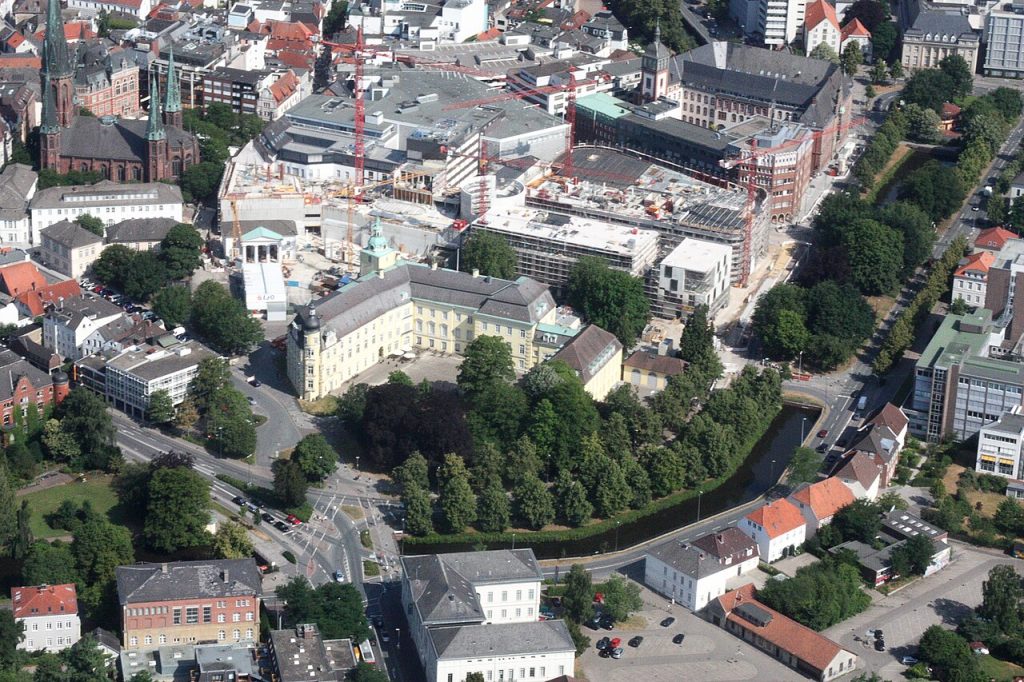
Walk around the building to read its layers. The tower and main wing are Anton Günther’s Renaissance core; the plain Baroque wing on the north is Danish; the classical facade and the garden front are Peter Friedrich Ludwig’s; the library wing and the ballroom wing on the south are the grand ducal additions of the 1840s and 1890s. What unites them is the yellow render with white details that Peter Friedrich Ludwig chose and that later architects respected.
The yellow became the colour of the state. Oldenburg’s public buildings, from the theatre to the railway station, wear it, and the city’s identity is bound up with it. Now, stop here on the garden side and look at the facade in afternoon light, when the yellow glows against the green of the park. The palace is not grand by Dresden standards, but it is harmonious, and harmony was the Oldenburg virtue.
The State Rooms and the Collections
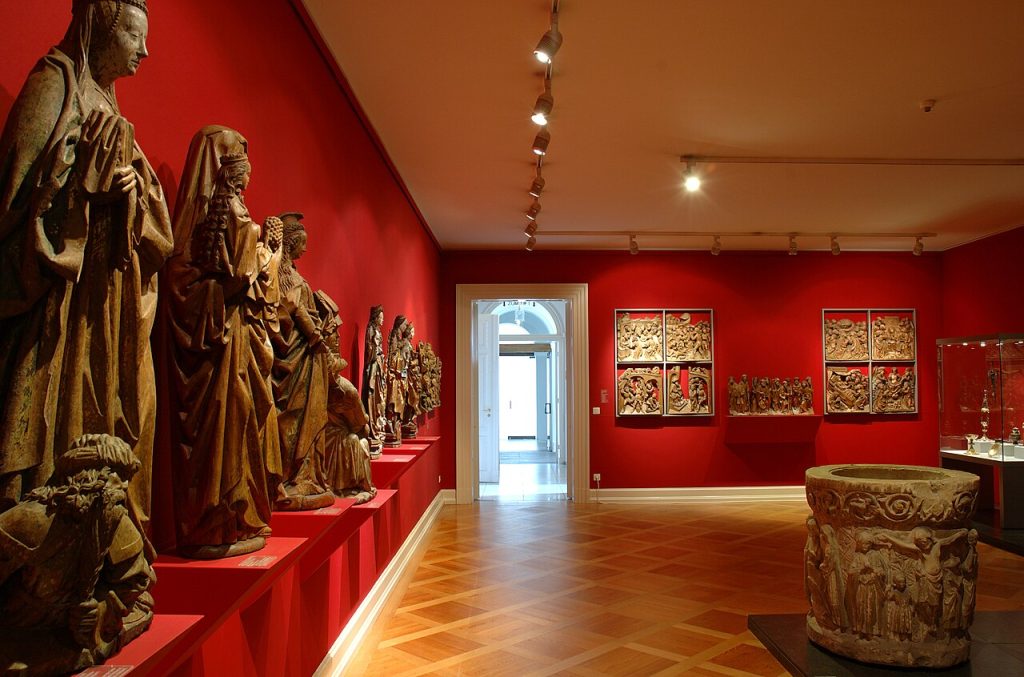
Inside, the museum occupies the former state rooms and apartments. The classical rooms on the main floor keep their stucco, columns and parquet and display the grand ducal collections of painting, with works by Tischbein, Danish Golden Age artists and Italian and Dutch masters acquired by Peter Friedrich Ludwig. The grand ducal apartments show furniture, porcelain and silver in period settings, and the former ballroom holds changing exhibitions.
The collection ranges further than you might expect, from mediaeval altarpieces and Renaissance sculpture through Baroque ivories and eighteenth-century porcelain to the applied arts of the twentieth century. Look especially for the Tischbein idylls, painted at Eutin for the duke, and for the rooms devoted to the history of the Oldenburg state, with its uniforms, orders and the regalia that the last grand duke left behind.
1918: The Last Grand Duke Leaves
Grand Duke Friedrich August II ruled from 1900 and was a popular, straightforward sovereign who had served as a naval officer and was known in the city as a tireless walker and talker. In November 1918 revolution reached Oldenburg as it reached every German capital, and on 11 November, the day of the armistice, he abdicated without resistance and withdrew to his estate at Rastede, where he lived until 1931. The Free State of Oldenburg took over the palace and its collections, and the grand ducal flag came down from the tower.
Now, stop here and consider how quietly it ended. No shots were fired in Oldenburg, the grand duke kept his private property and his popularity, and the state continued under a republican government with the same borders and the same yellow buildings until Hitler’s reorganisation of 1933 and the merger into Lower Saxony in 1946. Few monarchies have dissolved with less drama.
The State Museum Since 1923
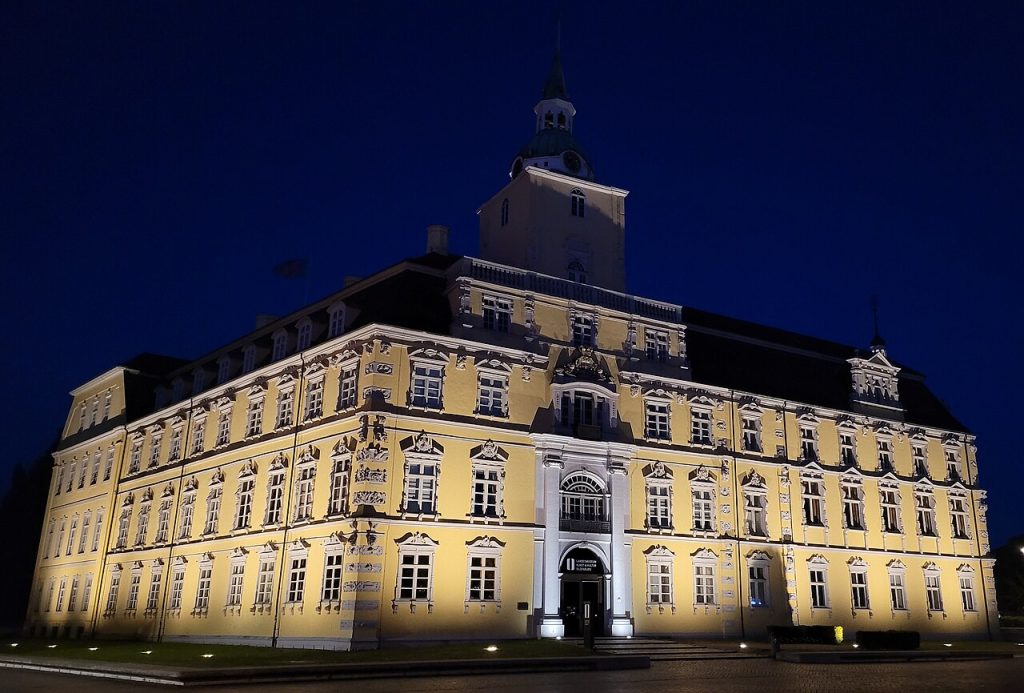
In 1923 the palace opened as the Landesmuseum für Kunst und Kulturgeschichte, and it has served that purpose for a century, surviving the Second World War with little damage and expanding into the neighbouring Augusteum and Prinzenpalais, which hold the gallery of old masters and the collection of modern art respectively. The three buildings together form one of the most substantial museum complexes in north-western Germany, and the palace remains the historical heart of it.
Restoration in recent decades has recovered the classical interiors, repaired the tower and renewed the yellow facades, and the museum has rethought its presentation of Oldenburg’s history, including the colonial trade that passed through its ports and the role of the court in the nineteenth century. The grand duke’s palace is now the city’s attic, in the best sense, where everything that mattered has been kept.
Oldenburg on Video
Before you plan your trip, take a few minutes to see Oldenburg Palace in motion. The video below gives a good sense of the setting, the scale of the buildings and the atmosphere of the grounds.
Visiting Oldenburg Palace Today
The Landesmuseum in Oldenburg Palace is open year-round, usually Tuesday to Sunday, with one ticket covering the palace, the Augusteum and the Prinzenpalais, all within a few minutes’ walk. Allow two hours for the palace alone and half a day for the three buildings. The palace garden behind the museum, laid out by Peter Friedrich Ludwig as an English landscape park with rhododendrons, old trees and a lake, is free and open daily and is one of the finest in northern Germany, especially in May and June.
Oldenburg is about forty minutes by train from Bremen and two hours from Hamburg; the palace is a ten-minute walk from the station through the pedestrianised old town. Jever and its castle lie an hour to the north-west by car or regional train. Here is the exact spot: Oldenburg Palace on Google Maps.
Palaces Nearby
If you have enjoyed this palace, the region holds more remarkable residences. Here are two more well worth adding to your journey:
You May Like