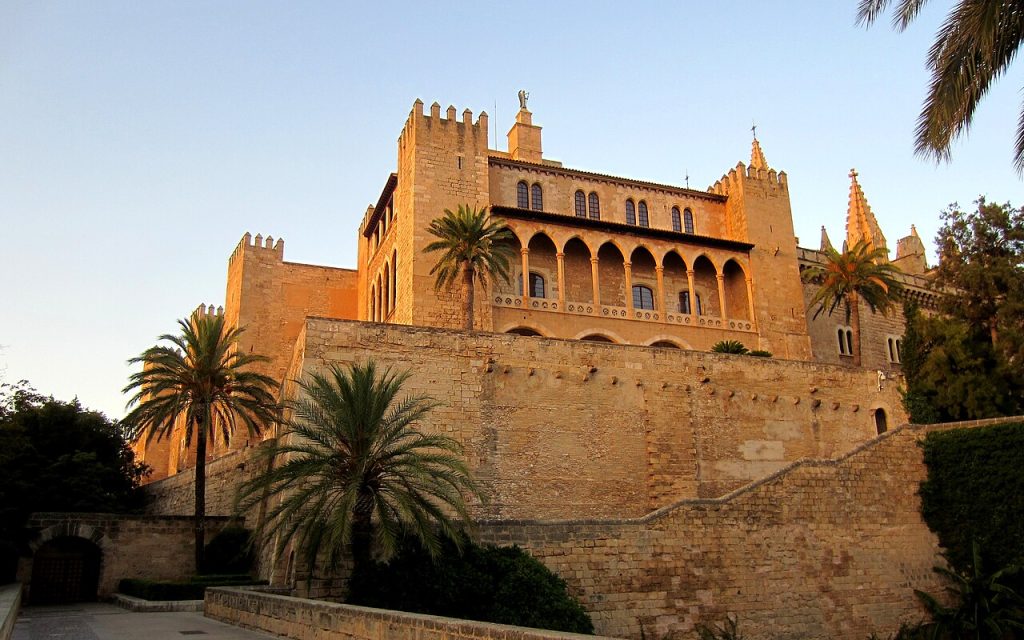
Above the harbour walls of Palma de Mallorca, sharing a terrace over the sea with the golden mass of the cathedral, stands a square fortress of sandstone towers, Gothic windows and tiled roofs around an arcaded courtyard, with the royal standard flying when the King of Spain is on the island. It is the Palau Reial de l’Almudaina, the Royal Palace of La Almudaina, the oldest working royal residence in Spain after a thousand years of continuous official life: an Islamic alcázar of the Moorish walis, rebuilt from 1281 by James II of Mallorca as the seat of an independent medieval kingdom, held ever after by Aragon and Spain, and still today the official residence of the Spanish crown in the Balearics, where the king holds his summer audiences.
La Almudaina is the memory of a kingdom most visitors never knew existed. For seventy years, from 1276 to 1349, the Kingdom of Mallorca, carved by James the Conqueror from his conquests for a younger son, ruled the Balearics, Roussillon and Montpellier from this palace and from Perpignan, minted its own money, kept a brilliant little court, built Bellver castle in the woods above the bay, and was finally crushed and reabsorbed by its Aragonese cousins, its last king dying in battle on the beach at Llucmajor. The palace keeps that court’s great hall, its royal chapel, its Arab baths and its lion fountain, and the third stop of this Iberian chapter is the smallest and oldest royal seat in it.
Walk with me up from the harbour past the cathedral, through the Sea Gate into the courtyard, up to the Gothic hall of the medieval kings and out onto the terraces of the queen’s garden, with Moors, medieval kings, governors and the modern crown in order. The contents are below.
In This Article
- A Fortress Over the Harbour
- The Alcázar of the Walis
- 1229: James the Conqueror Takes Madina Mayurqa
- The Kingdom of Mallorca
- James II Rebuilds the Palace
- The Hall of Tinell
- The Chapel of Saint Anne
- The Arab Baths and the Lion Fountain
- King Sancho, the Falcons and the Court
- 1349: The End of the Kingdom at Llucmajor
- Governors, Viceroys and the Angel on the Tower
- The Modern Royal Residence
- The Neighbour: Palma Cathedral
- La Almudaina on Video
- Visiting La Almudaina Today
- Palaces Nearby
A Fortress Over the Harbour
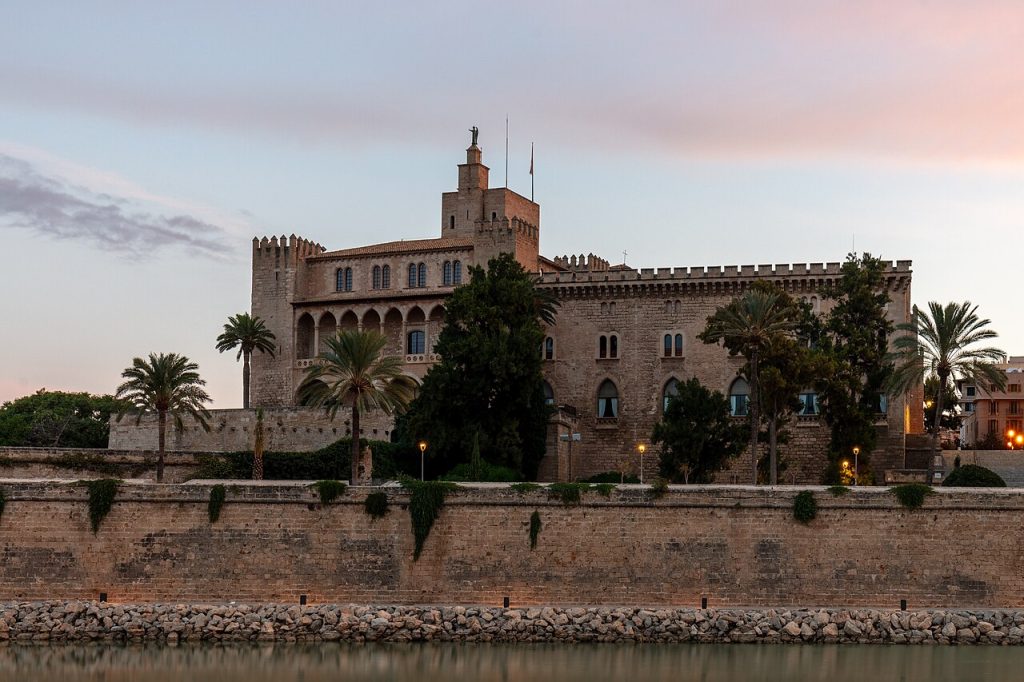
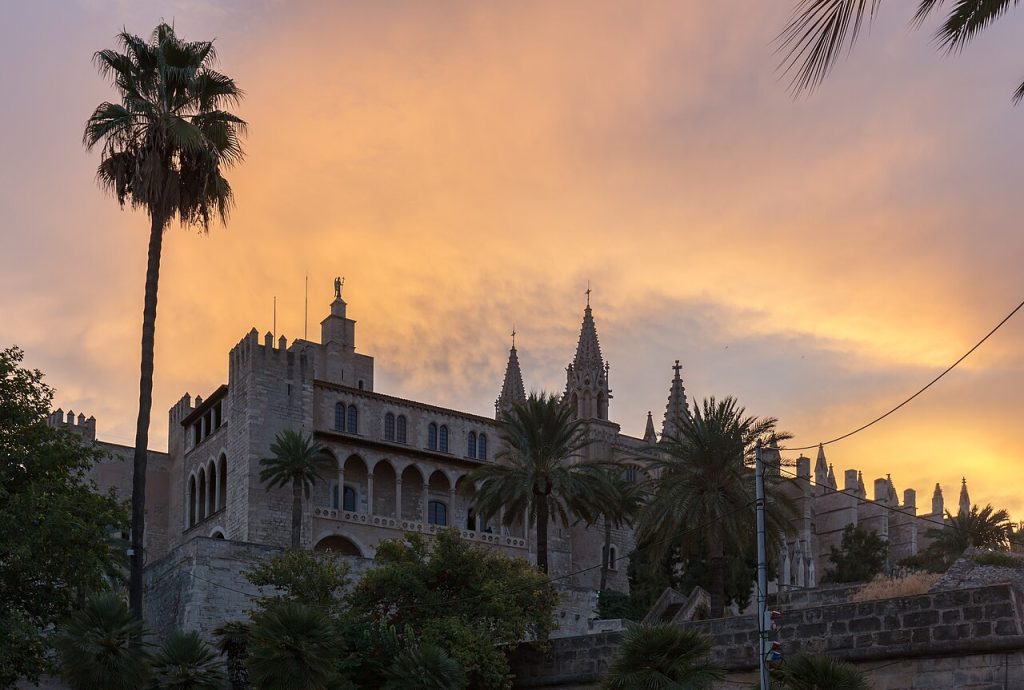
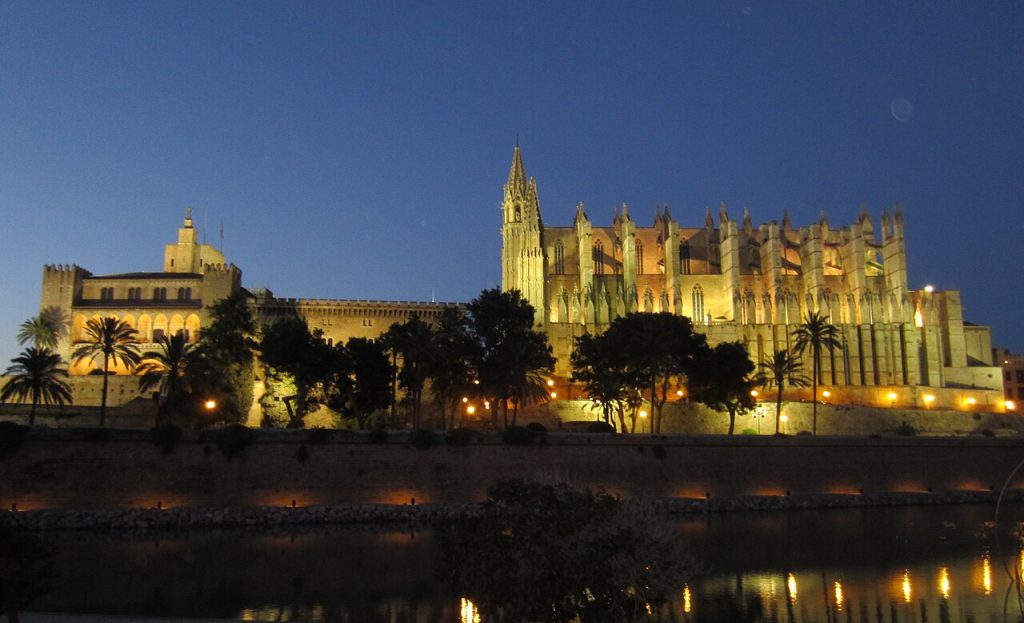
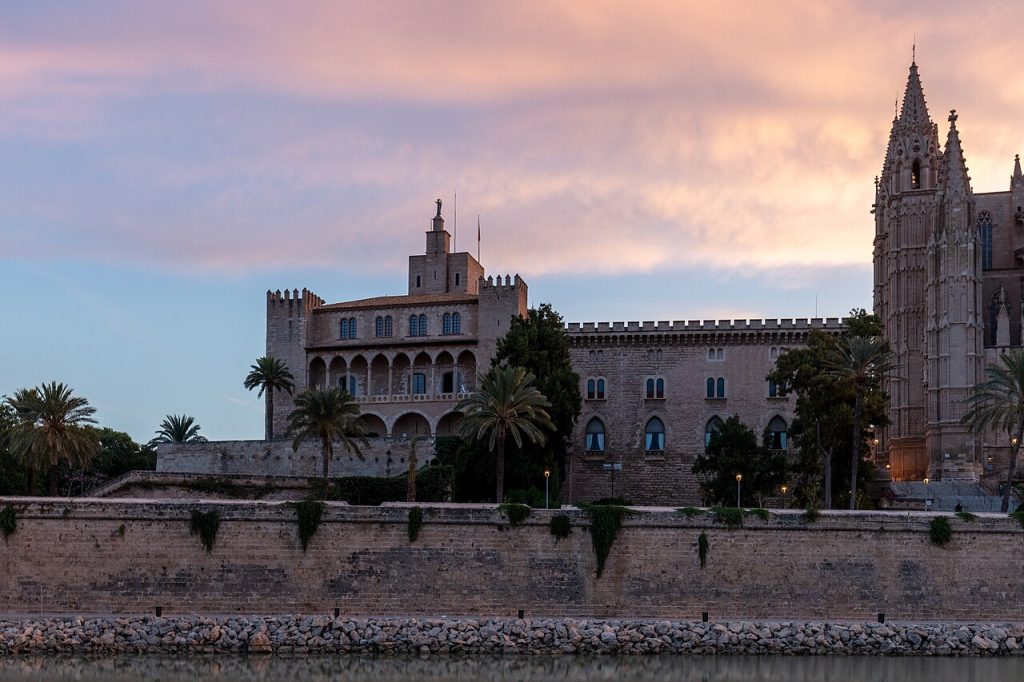
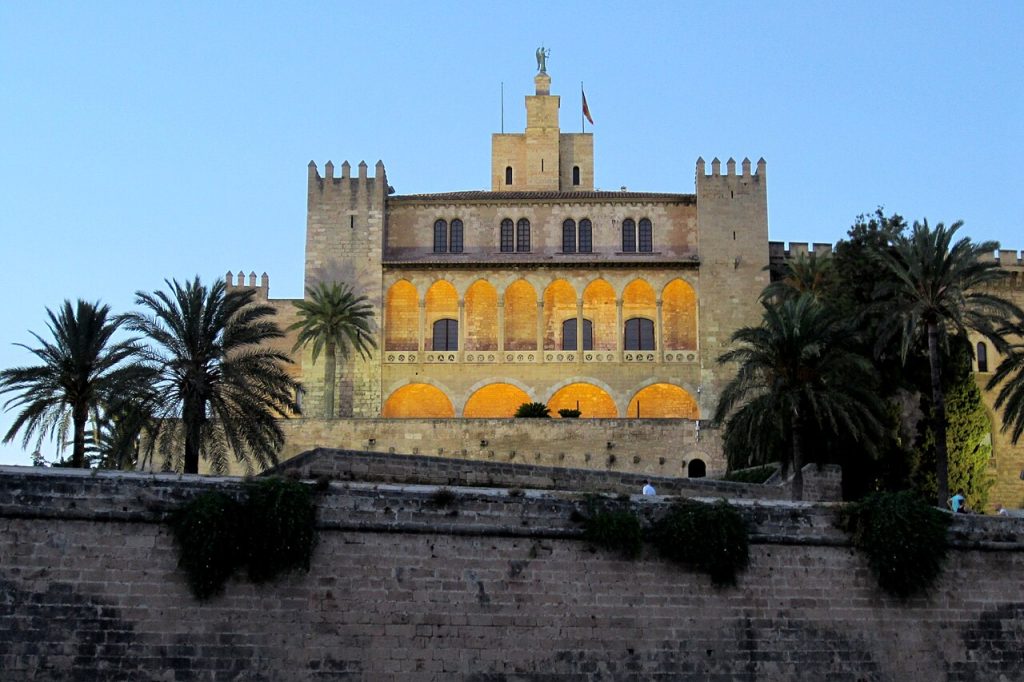
Palace and cathedral stand together on the low acropolis where Roman Palma, Moorish Madina Mayurqa and Christian Ciutat de Mallorca each kept their centre of power, with the city walls dropping from their terrace to the harbour and, at their feet, the gardens of s’Hort del Rei, the King’s Orchard, replanted in the twentieth century with pools, pergolas and orange trees where the medieval kings had their water gardens. The name Almudaina is the Arabic al-mudayna, the citadel, and the building keeps its fortress outline, a quadrilateral of curtain walls and square towers, the tallest crowned since 1309 by a bronze angel, with the Gothic windows of the royal apartments punched through the military stone.
Now, stop here on the harbour walk below and look up at the ensemble: wall, palace, angel, cathedral. Every ruler of the island for two thousand years governed from that fifty metres of skyline, and the whole history of Mallorca is in the view.
The Alcázar of the Walis
Mallorca fell to the Caliphate of Córdoba in 902, and Madina Mayurqa grew into one of the great ports of the western Mediterranean, a city of mosques, gardens and corsair fleets; its governors, the walis, and later its independent kings built the Almudaina as their alcázar in the tenth and eleventh centuries, a palatine city in miniature with walls, towers, residence, mosque and baths, fed by a qanat from the springs. The Christian rebuilding reused rather than razed it: the Gothic palace sits on and within the Moorish one, whose masonry shows in the lower walls, whose bath chambers survive intact, and whose plan, divided between a public and a private palace around courtyards, is still the plan you walk today.
Mallorcan Islam lasted three centuries and went deep; when the crusaders came, the island was the richest prize in the western sea, and its palace was already old.
1229: James the Conqueror Takes Madina Mayurqa
In September 1229 James I of Aragon, twenty-one years old, two metres tall and already called the Conqueror, landed a crusading army of Catalans at Santa Ponsa to end Mallorcan piracy and take the island for Christendom and Barcelona’s merchants; after three months of siege the city fell by storm on 31 December 1229, with a sack so terrible that the king himself recorded the horror in his autobiography, the Llibre dels Fets, the first memoir ever written by a Christian king. The wali’s alcázar became the royal palace, the great mosque became the site of the cathedral, and Catalan settlers, language and law replaced three centuries of Islam; the island’s Muslims were enslaved, converted or scattered.
James ruled a realm from Valencia to Montpellier, and at his death in 1276 he split it, Aragon and Catalonia to his elder son Peter, and the Balearics, Roussillon, Cerdanya and Montpellier to the younger, James, as a new kingdom: the Kingdom of Mallorca, with the Almudaina as its island seat.
The Kingdom of Mallorca
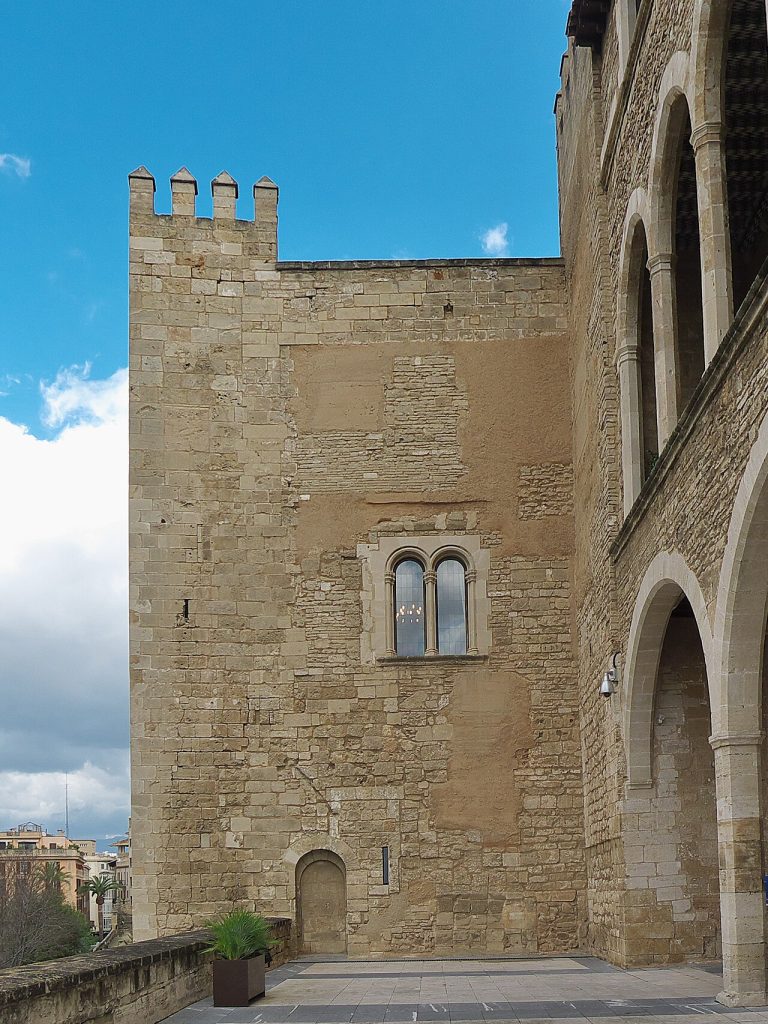
The Kingdom of Mallorca was a Mediterranean middle power of islands and mountain counties, rich from the sea: Palma in the 1300s was a boom town of merchants, mapmakers and money-changers, home of the Jewish cartographic school that drew the famous Catalan Atlas, and of Ramon Llull, the island’s astonishing philosopher-missionary, who wrote two hundred books in Catalan, Latin and Arabic and died, by tradition, stoned on a mission to Tunis. The kings, vassals of Aragon by a treaty they resented, balanced between Aragon and France, kept twin capitals at Palma and Perpignan, whose palace of the Kings of Mallorca still stands, and spent their revenues on buildings: the Almudaina, Bellver, the cathedral’s royal chapel.
Three kings reigned, James II, Sancho I and James III, before the kingdom’s cousins in Barcelona decided the experiment had lasted long enough; seventy years was all it had, and almost everything beautiful in old Palma dates from them.
James II Rebuilds the Palace
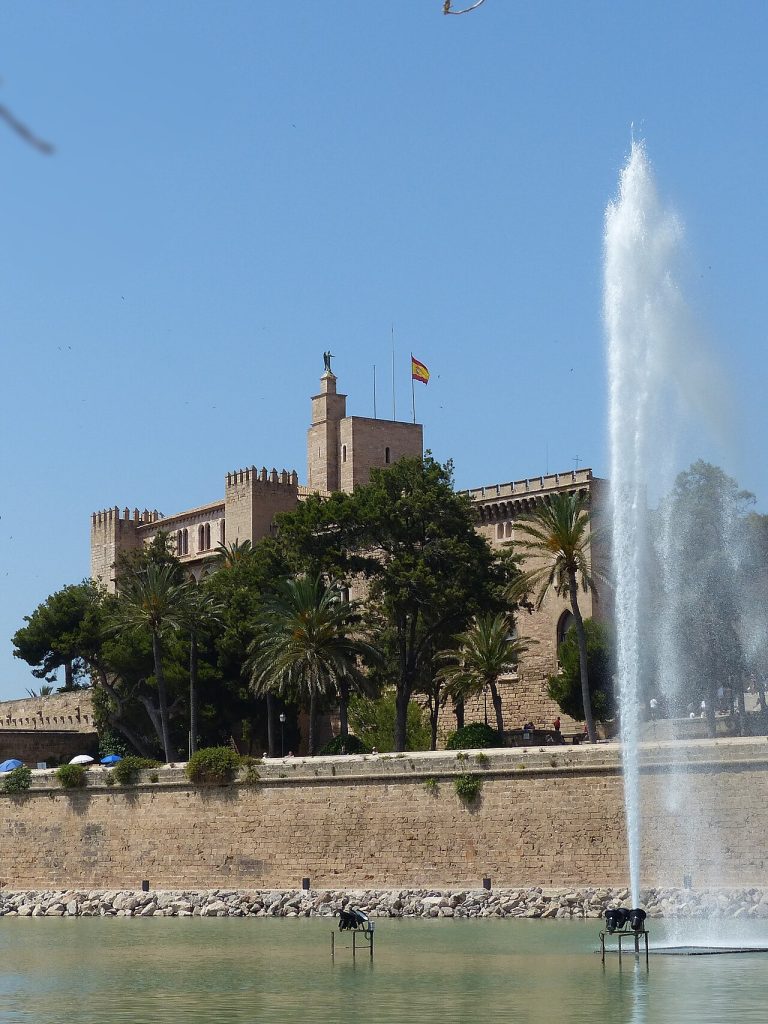
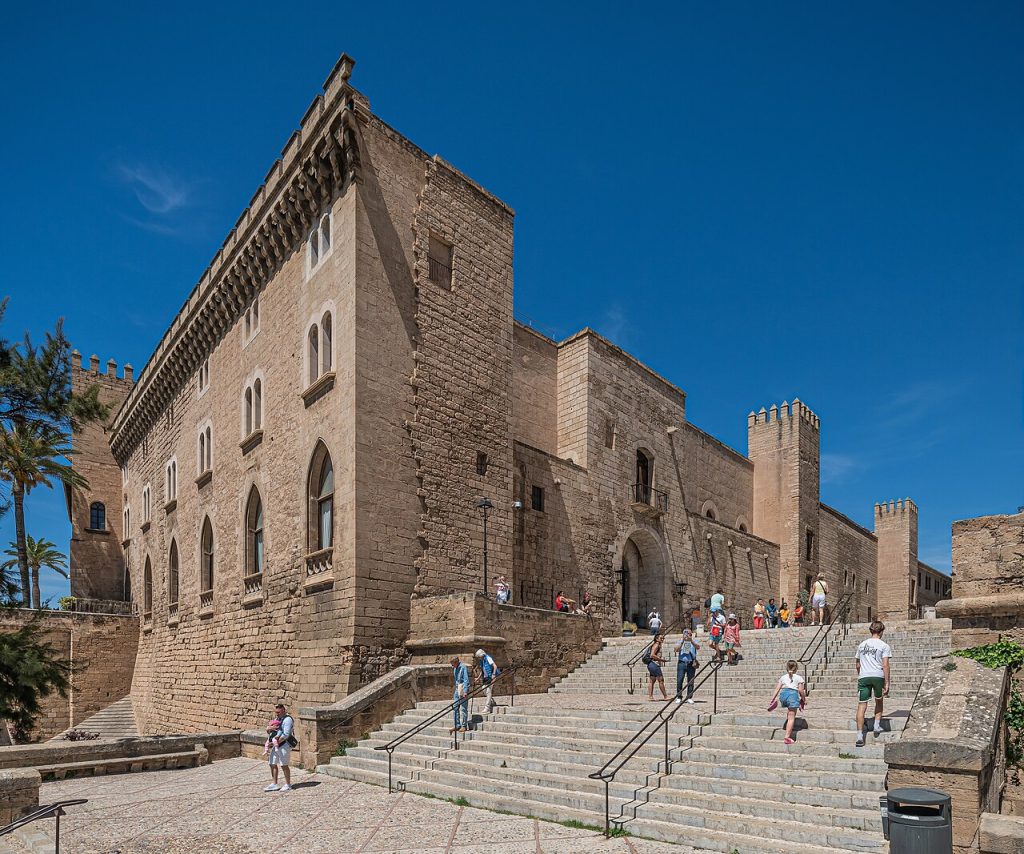
James II, the first king, remade the alcázar from 1281 into a Gothic palace in the Mediterranean manner of his family, with Perpignan and Barcelona’s royal works sharing masters and ideas: around the great courtyard, the Patio de Armas, rose the King’s Palace with its great hall, the separate Queen’s Palace with its own courtyard and chapel, the chapel of Saint Anne, the angel tower, and galleries of pointed arcades open to the sea air; Moorish walls, baths and the water system were kept and dressed in the new style. The works, directed by masters including Pere Salvà, builder of Bellver, made the Almudaina one of the finest royal residences of its century, praised by visitors for its halls, gardens and sea views.
Now, stop here in the central courtyard by the lion fountain and turn around: Moorish stones below, Gothic arches above, the angel on the tower overhead, and the layers of the palace read like the rings of a tree.
The Hall of Tinell
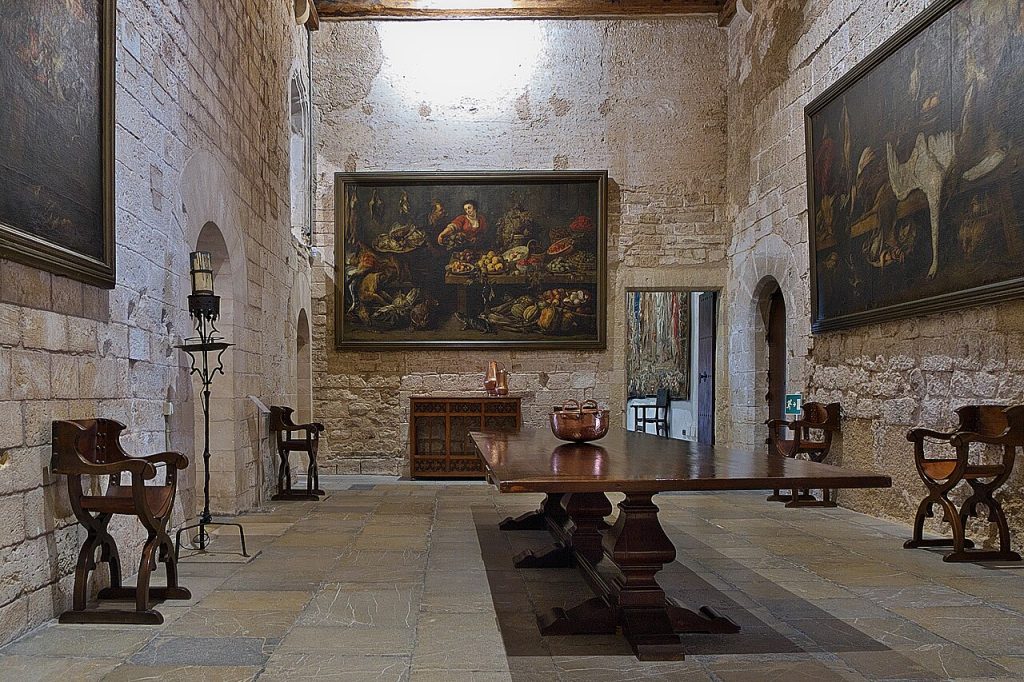
The heart of the King’s Palace is the great hall, the Saló del Tinell, a vast Gothic room spanned by stone diaphragm arches carrying a timber roof, in the Catalan manner of the age, where the kings of Mallorca held their courts, feasts and parliaments; later centuries subdivided it into apartments, and the twentieth-century restoration reopened it to its full medieval volume. Here the island’s estates swore their kings, ambassadors from Aragon, France and the Maghreb were received, and the kingdom’s short political life was played out; today it is hung with Flemish tapestries from the royal collections and used by the Spanish crown for receptions and investitures when the court is on the island.
Stand at one end and look down the march of arches: the hall is the kingdom’s parliament, throne room and banqueting house in one, and it is still doing royal work seven centuries later.
The Chapel of Saint Anne
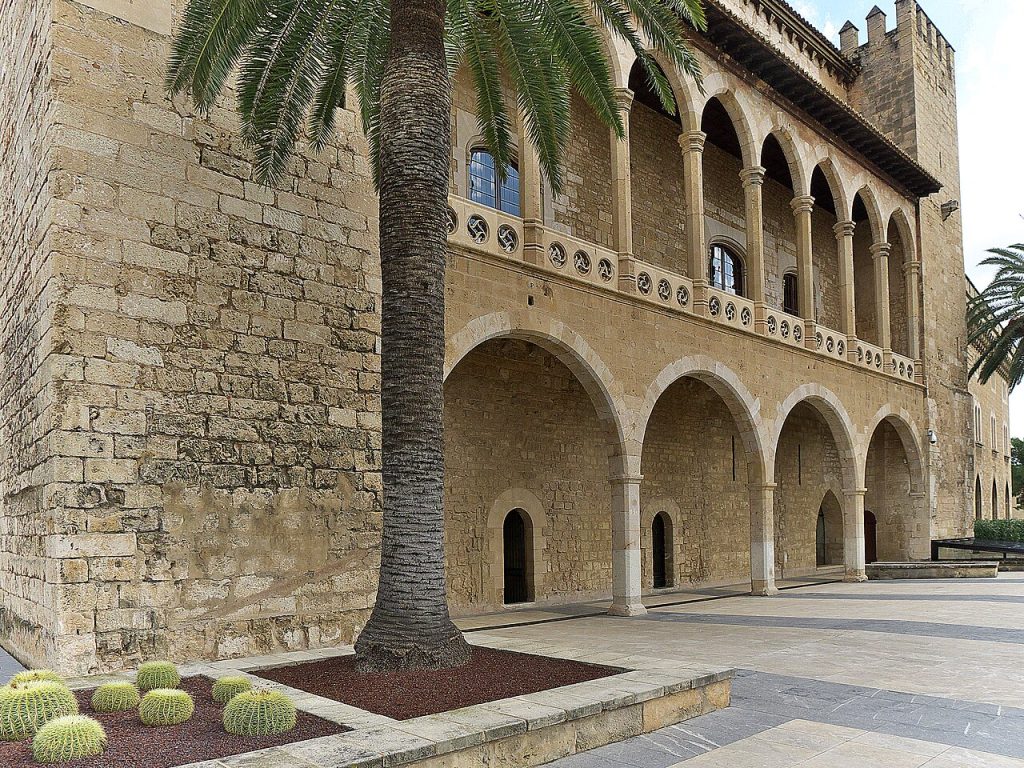
The palace chapel, Santa Anna, built under James II, keeps one of the island’s treasures at its door: a portal of pink and white marble carved in a Romanesque style already old-fashioned when it was made, by masters brought from the mainland, with worn capitals of beasts and foliage, opening into a small Gothic nave where the kings and their households heard mass steps from their chambers. Beside it the lower chapel of Saint James served the palace staff, and the chapel’s bells still ring for the garrison’s ceremonies; the royal pew connected directly to the king’s apartments, the same arrangement in miniature that Philip II would build at El Escorial three centuries later.
The chapel is dedicated to Saint Anne because the kingdom’s founding dynasty favoured her; look up at the keystones for the arms of Mallorca, the bars of Aragon differenced with a bend of blue.
The Arab Baths and the Lion Fountain
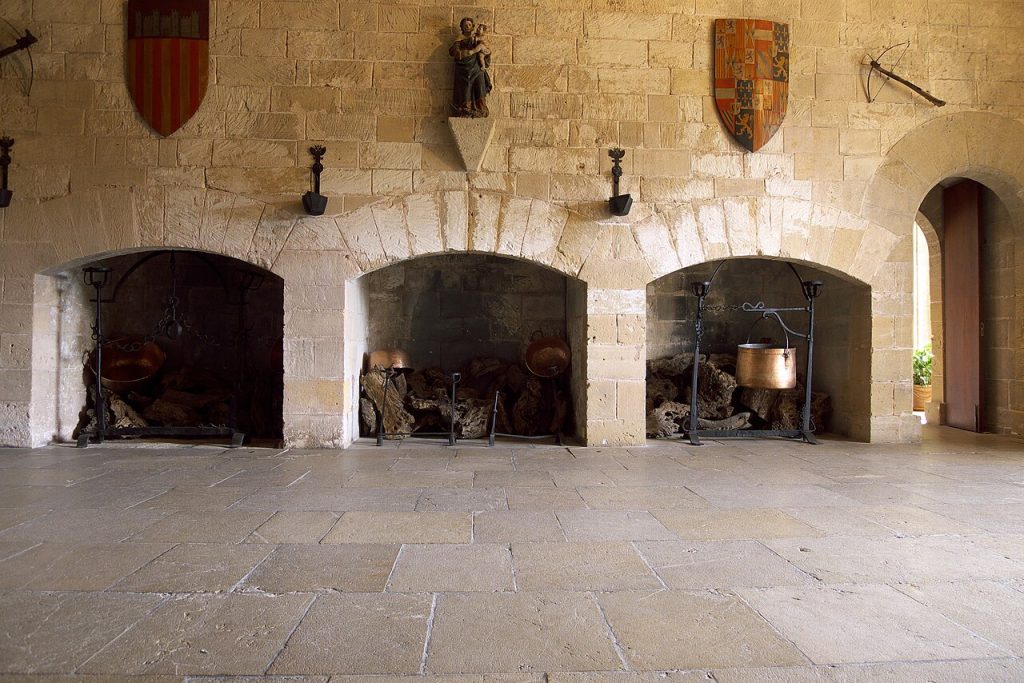
Off the courtyard the palace keeps its banys àrabs, the bath suite of the Moorish alcázar, small vaulted chambers for cold, warm and hot bathing with their hypocaust and water channels, among the best preserved palace baths of al-Andalus and a reminder that the medieval kings inherited and used a Muslim machine for living; the city has a second set of Arab baths in a garden nearby. In the courtyard the lion fountain, a Gothic basin on a column with four worn stone lions, gathered the palace’s water from the old qanat, and the terraces of the Queen’s Palace kept small gardens over the sea, remade below the walls today as s’Hort del Rei with its fountains and bitter oranges.
Now, stop here in the bath’s main chamber and let your eyes adjust: the light falls through star-shaped openings in the vault, as it did for the wali, for the Conqueror and for every king after.
King Sancho, the Falcons and the Court
Sancho I, who reigned from 1311 to 1324, was the kingdom’s quiet golden age: asthmatic, he summered in the clear air of Valldemossa, where his mountain palace later became the Carthusian monastery that sheltered Chopin, and at the Almudaina he kept a court of physicians, Lullists, musicians and mapmakers, and above all falcons, for the Mallorcan peregrines bred on the island’s cliffs were the most prized hunting birds in Europe, sent as royal gifts to popes and kings. The court’s accounts survive and show a small kingdom living well: silks, Barbary horses, Greek slaves, pepper and tuna, and the wages of the masters still building the cathedral and Bellver.
Sancho died without legitimate children, and the crown passed to his small nephew James III under regents; Aragon watched, and waited.
1349: The End of the Kingdom at Llucmajor
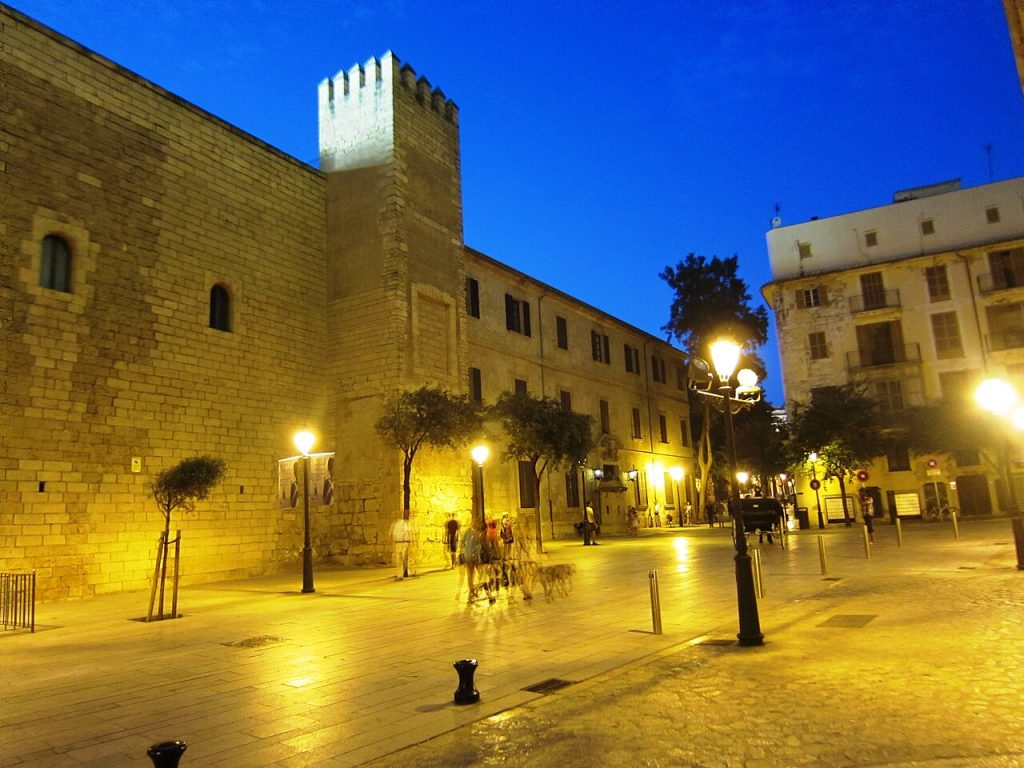
James III, proud and unlucky, was manoeuvred by his cousin Peter IV of Aragon, called the Ceremonious, into a legal trap: summoned as a vassal, judged contumacious, and stripped of his kingdom by sentence, with the Aragonese fleet arriving in 1343 to execute the verdict almost unopposed. James sold Montpellier to France to raise an army, landed on the island in October 1349, and met the Aragonese governor’s forces at Llucmajor, where he was defeated and killed, his young son captured on the field and kept a prisoner for years; the Kingdom of Mallorca ended on that beach road, and the Balearics have been governed from the mainland ever since. The Almudaina became the palace of Aragonese, then Spanish, governors.
Mallorca keeps the defeat tenderly: Llucmajor has its monument to the last king, and James III lies in the cathedral next door to the palace that was his.
Governors, Viceroys and the Angel on the Tower
From 1349 the palace housed the kingdom-within-a-crown’s administration: the governors and viceroys of Mallorca, the Audiència, the royal treasury and, after the Bourbons, the captains general of the Balearics, who kept their headquarters here into the twenty-first century and whose military gardeners and engineers patched the Gothic fabric through five quiet centuries, whitewashing halls, flooring over the Tinell and mounting cannon on the sea wall. Over it all turned the Àngel de la Almudaina, the bronze Gabriel set on the keep in 1309 as weathervane and protector, the city’s talisman, renewed over the centuries and still turning; the tower is named for it, and sailors entering the bay looked for the angel before the cathedral.
The palace’s survival owes everything to this unglamorous service: never abandoned, never remodelled into a modern residence, it was simply used, and so it lasted.
The Modern Royal Residence
Restorations through the twentieth century stripped the barracks accretions, reopened the Tinell and the chapels and refurnished the royal apartments with tapestries, Mudéjar ceilings and period furniture from the national collections, and in 1985 the palace passed to Patrimonio Nacional as an official residence of the crown: the King of Spain holds his annual summer audiences and receptions here each August, when the court follows its old habit of moving to Mallorca, and the palace shares the royal summer with the modern Marivent palace outside the city, the family’s private house. On audience days the standard flies from the angel tower and the courtyard fills with uniforms, exactly as it did for King Sancho.
La Almudaina is thus the oldest address in Spanish officialdom: power has sat on this rock without interruption since the Caliphate, and the state still answers letters from it every summer.
The Neighbour: Palma Cathedral
No account of the palace is complete without its neighbour across the narrow square: La Seu, the cathedral of Palma, begun by the kings of Mallorca over the great mosque and built for four centuries, one of the widest and tallest Gothic naves in Europe, lit by the fourteen-metre rose window Mallorcans call the Gothic eye of God, modernised inside by Gaudí, who hung a wrought-iron canopy over the altar, and by Miquel Barceló’s ceramic chapel of 2007; the royal chapel behind the altar was built as the pantheon of the Mallorcan kings, and James II and James III lie there in modern tombs. Twice a year, around 2 February and 11 November, the dawn sun through the east rose projects a double rose on the west wall, and the city gets up early to see it.
Palace and cathedral were one royal project, the earthly and heavenly courts of a small kingdom side by side; visit them together and the kingdom of Mallorca stops being a footnote.
La Almudaina on Video
Visiting La Almudaina Today
The Royal Palace of La Almudaina is open Tuesday to Sunday under Patrimonio Nacional, with a route through the courtyard, the King’s and Queen’s palaces, the Saló del Tinell, the chapel of Saint Anne, the baths and the terraces; audio guides run in English, admission is free for EU residents on Wednesday and Sunday afternoons, and the palace closes to visitors during royal acts in August. Allow ninety minutes, combine it with the cathedral next door, booked online to skip the line, and walk down afterwards through the s’Hort del Rei gardens to the harbour; mornings beat the cruise-ship crowds, and the view of the floodlit ensemble from the Parc de la Mar at night is the best free sight in Palma.
The palace stands at the seaward edge of Palma’s old town, fifteen minutes’ walk from Plaça Major and twenty by bus or taxi from the airport; Palma is ninety minutes by air from Barcelona or Madrid, and the ferry from Barcelona takes a night. Here is the exact spot: La Almudaina on Google Maps.
Palaces Nearby
You May Like
Bussaco Palace and the Hunting Lodge That Became a Hotel