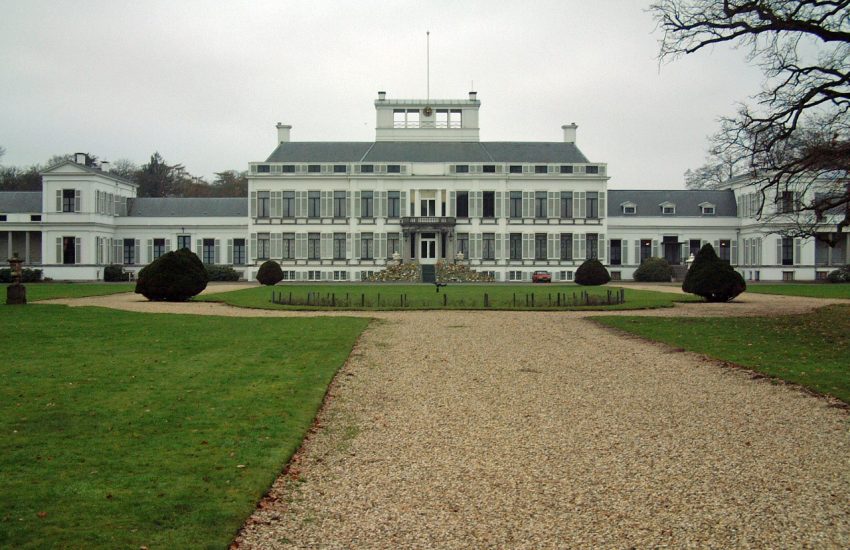
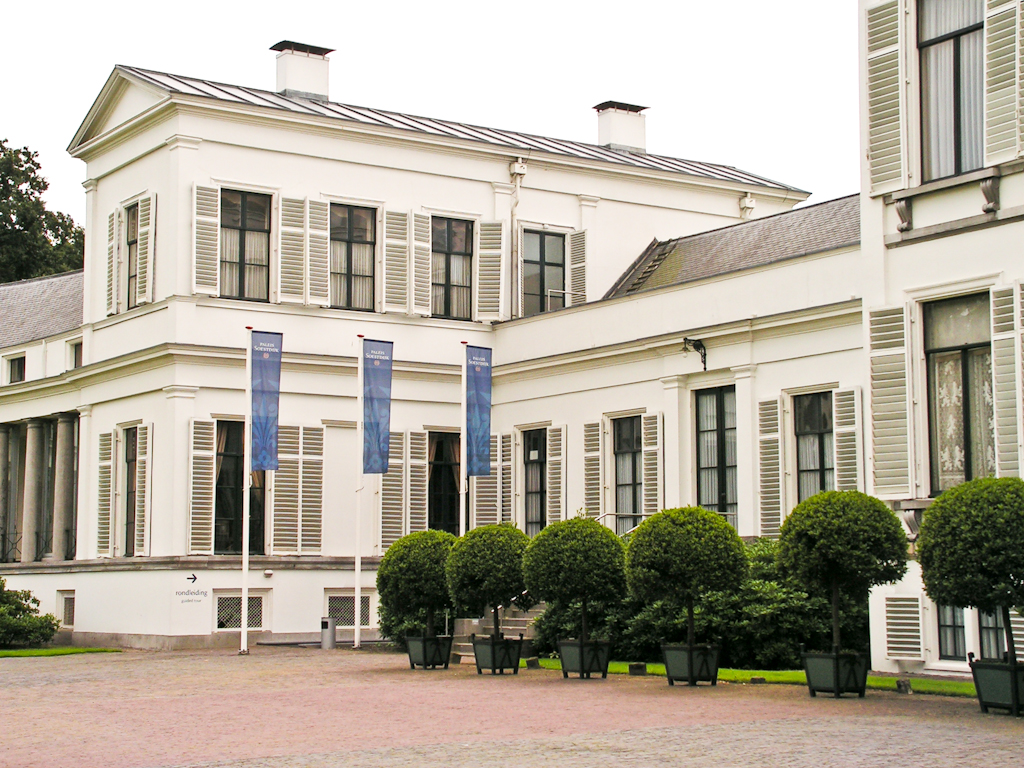
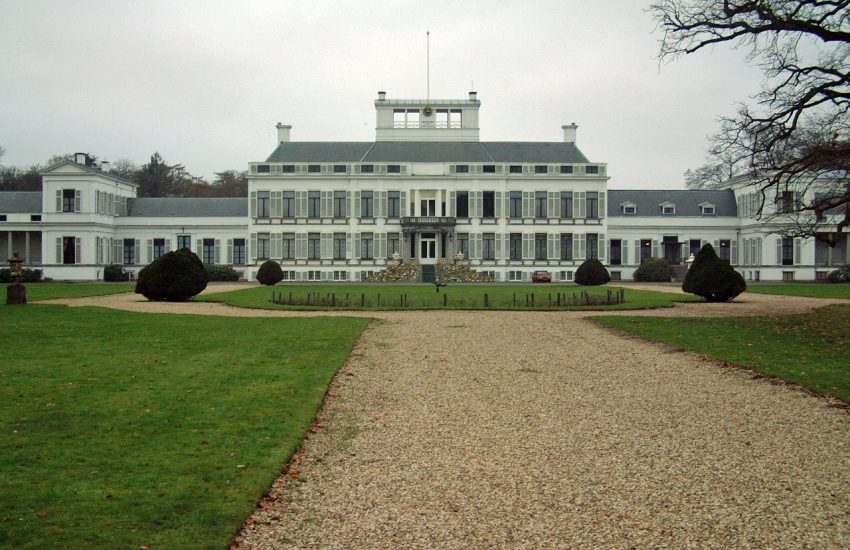
Now, stop here for a moment, before you walk up the gravel. Look at the white block of a building in front of you, with its two long wings reaching out like arms that never quite close. It does not threaten you. It does not try to make you feel small. Most palaces in Europe were built to do exactly that, and the fact that this one does not is the first thing you should notice about Soestdijk.
The Netherlands has always had a complicated relationship with grandeur. This is a country that made its fortune through trade, through ledgers and ships and careful accounting, and it built a royal house that was expected to be visible but not extravagant. Soestdijk is the architectural expression of that expectation. It is a palace that behaves, for most of its life, like a large country house that happens to have a queen living in it.
And for fifty years it was exactly that. Queen Juliana and Prince Bernhard raised four daughters here, cycled on the grounds, received birthday crowds at the front steps, and gave the Dutch public something no other European monarchy quite managed in the twentieth century: the sense that the royal family lived in a house you could imagine yourself living in, if you happened to have rather a lot of money and a very long driveway.
- A Hunting Lodge in the Sand
- The Soldier Prince Who Rebuilt It
- The White Wings and the Waterloo Gift
- Anna Pavlovna and the Russian Taste
- The English Garden and the Forest Behind It
- Juliana, Bernhard and the Long Occupation
- The Birthday Parade on the Front Steps
- Four Daughters and a Bicycle
- The Affair That Shook the Palace
- Inside the Rooms That Stayed Modest
- The Needle in the Woods
- The Empty Years After 2004
- What Happens to a Palace Nobody Rules From
A Hunting Lodge in the Sand
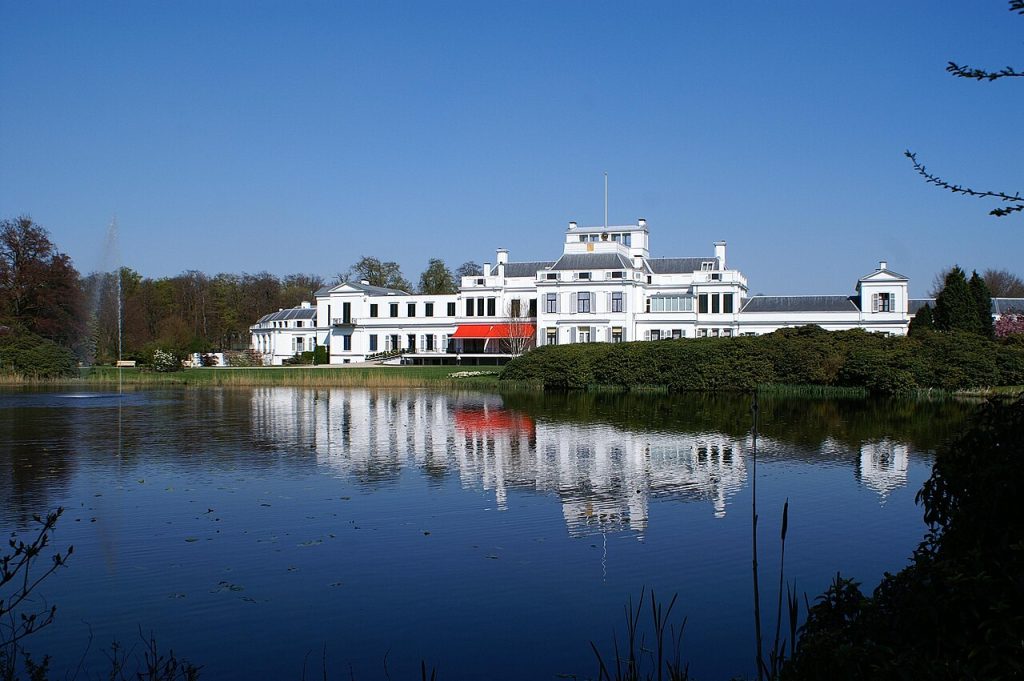
Begin with the ground itself, because it explains everything. This is the Gooi, a stretch of sandy heath and woodland between Amsterdam and Utrecht, poor land for farming and excellent land for hunting. In the seventeenth century a wealthy Amsterdam burgomaster built himself a hunting lodge here and called it Soestdijk, after the dike and the nearby village of Soest.
In 1674 the house passed to William III, stadtholder of the Dutch Republic and, within fifteen years, king of England. He enlarged it, laid out formal gardens, and used it exactly as a man of his position used such places: as somewhere to ride out from in the morning and return to in the evening, muddy and satisfied. The building you see today still has that lodge buried inside it, the way a tree keeps its early rings.
Notice what this origin does to the scale. A hunting lodge is designed around horses and dogs and tired men, not around processions. Later owners could add wings and columns, but they could never quite turn it into Versailles, because the bones were wrong. That accident of origin shaped three centuries of Dutch royal life.
The Soldier Prince Who Rebuilt It
The palace as a palace begins with William Frederick, the prince of Orange who would become King William II. In 1815 he commanded Dutch troops at Quatre Bras and Waterloo, was wounded in the shoulder, and came home a national hero at the age of twenty-two.
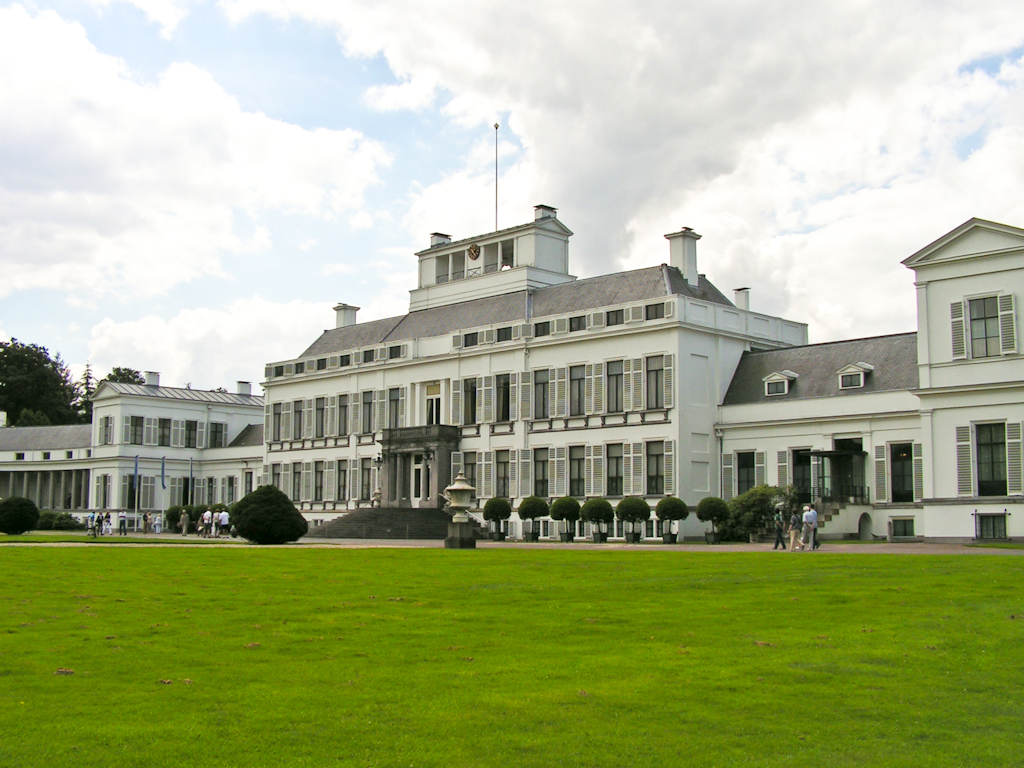
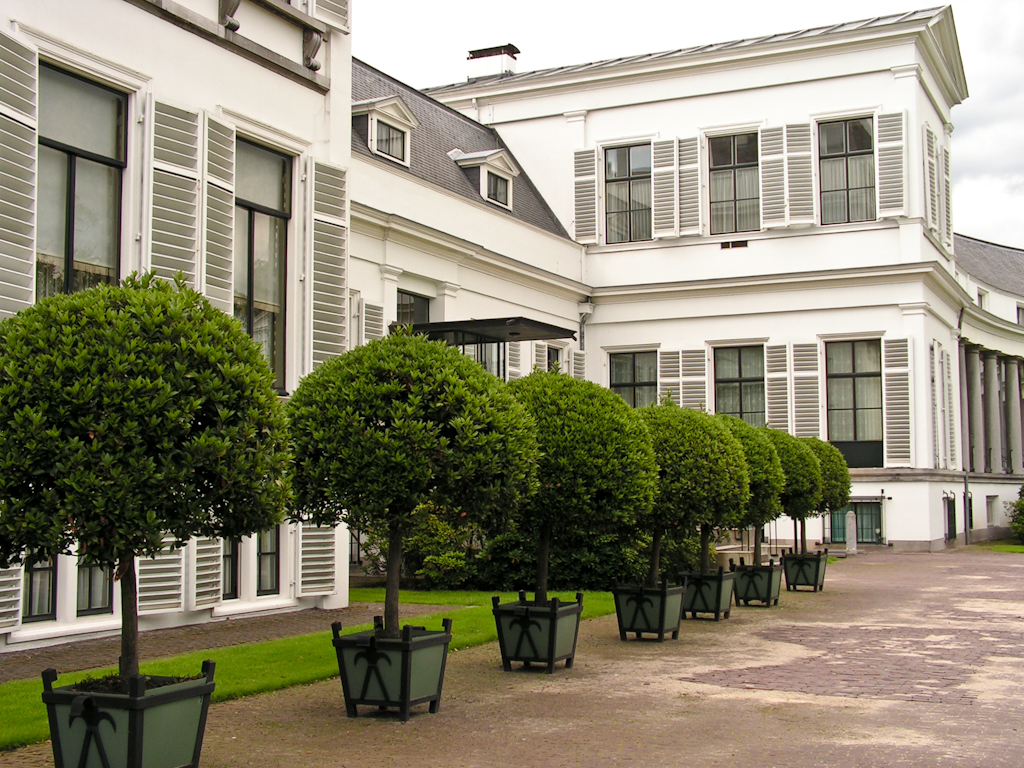
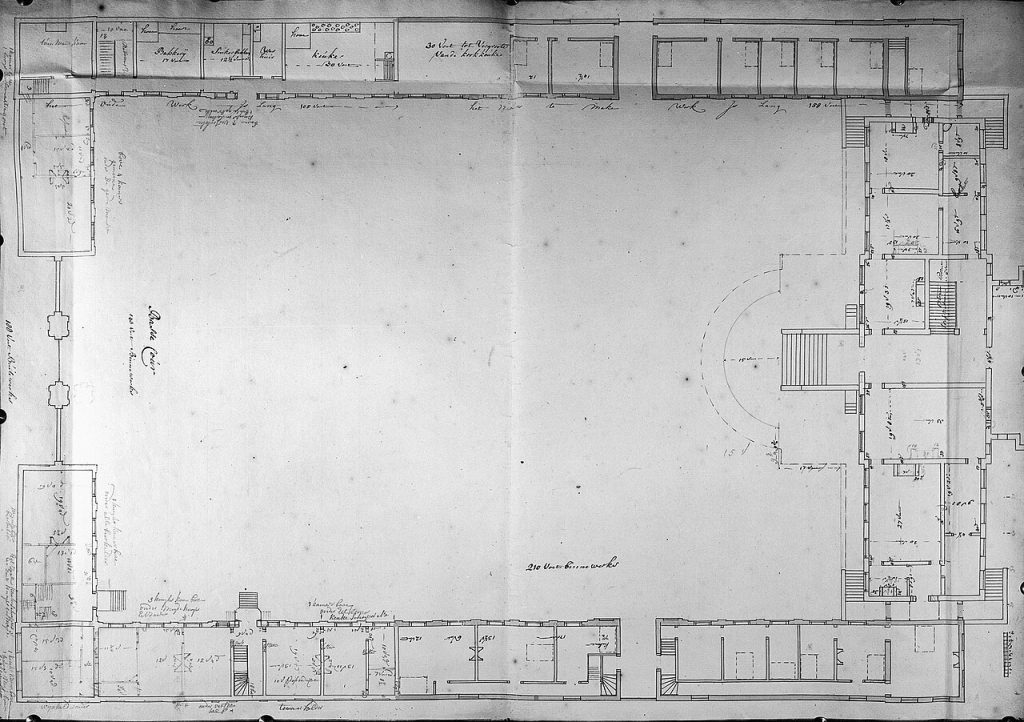
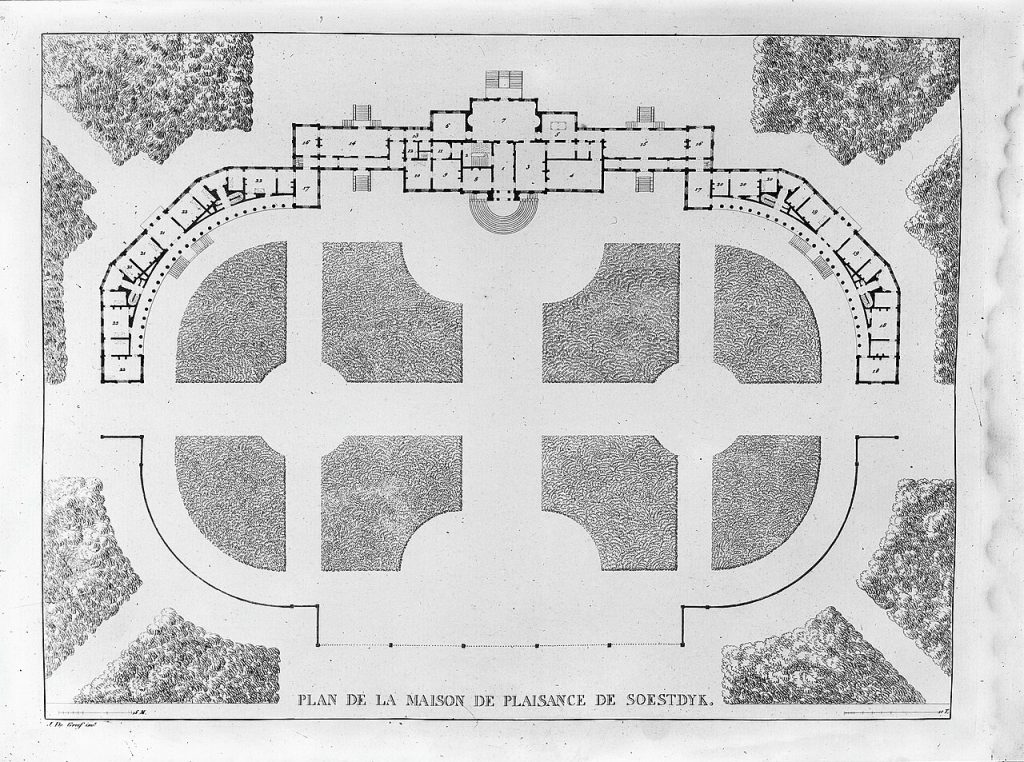
The Dutch people bought him a house. That is the simple version, and it happens to be true. Public subscription money, raised in gratitude, was spent on enlarging Soestdijk into a residence suitable for the heir to a brand-new kingdom. The two long wings that give the palace its shape were added in the years after 1815, and the whole thing was painted white, which is why photographs of it always look slightly like a wedding cake left out in the woods.
Stand at the centre of the forecourt and look at the symmetry. It is almost aggressive in its regularity, as if the architect wanted to leave no doubt that this was now a national building rather than somebody’s shooting box.
The White Wings and the Waterloo Gift
There is a lesson in those wings about how monarchies survive. A dynasty that has just been restored after twenty years of French rule cannot afford to look either shabby or greedy. The Orange family solved the problem by accepting a gift rather than commissioning a monument, and by spending it on a house in the woods rather than a palace in the capital.
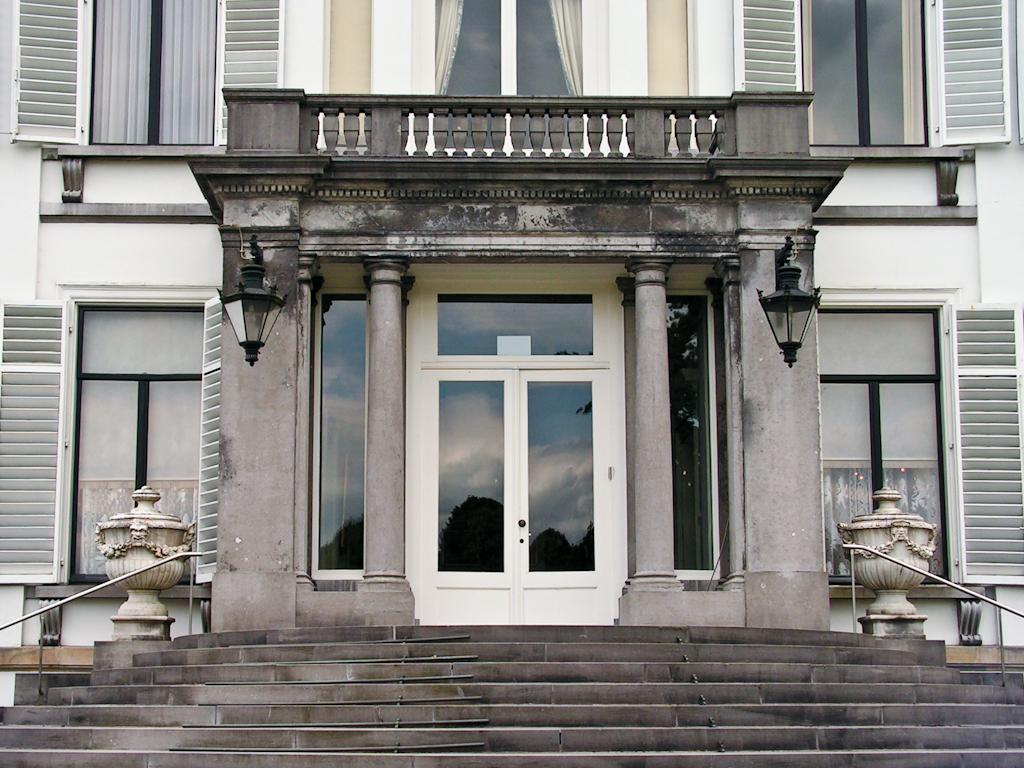
Walk along the front and you will see that the decoration is thin. Pilasters, a pediment, a balustrade, and then nothing. No sculpture programme announcing dynastic virtues, no allegorical figures pointing at the sky. The money went into size, not into ornament, which is a very Dutch decision.
It is also why the palace photographs badly and experiences well. From a distance it is a plain white bar. From the gravel, with the forest closing behind it, it has the calm of a building that does not need to argue.
Anna Pavlovna and the Russian Taste
William II married Anna Pavlovna, daughter of Tsar Paul I of Russia and sister of two tsars, and she brought with her an idea of court life that the Netherlands had never seen. She had grown up in palaces where gilding covered every surface and where hundreds of servants moved through rooms designed for display.
Soestdijk resisted her, mostly. She filled rooms with Russian furniture and Orthodox icons, she planted, she rearranged, and she made the place grander than it had been. But the building would not stretch. Visitors from St Petersburg found it charming and small. Anna Pavlovna, by all accounts, found it both of those things too, and spent much of her widowhood here anyway.
Her presence left a thread that runs through Dutch royal history: the Romanov inheritance of jewels, the Russian names that appear in family letters, the icons that sat in Protestant rooms. In a palace this modest, a visiting culture leaves clear marks.
The English Garden and the Forest Behind It
Turn your back on the palace now and look at the park, because this is where Soestdijk is most persuasive. The formal gardens of William III’s time were swept away in the nineteenth century and replaced with an English landscape park: winding paths, irregular groups of trees, water that looks accidental and is not.
Behind the park, the forest simply continues. That is the real luxury here. The estate runs into woodland that runs into more woodland, and a family living in the house could ride or walk for an hour without meeting a road. In a country as densely populated as the Netherlands, that is a rarer privilege than gold leaf.
Look for the old beeches near the eastern side. Several are old enough to have been standing when the wings were built, and they are the only witnesses on the estate that have been present for the whole story.
Juliana, Bernhard and the Long Occupation
In 1937 Princess Juliana married Prince Bernhard of Lippe-Biesterfeld, and the couple were given Soestdijk as their home. They had three years there before the war arrived. In May 1940 the royal family fled to England, and Juliana continued on to Canada with her children. Bernhard stayed with the Dutch forces in Britain.
The palace spent the occupation under German use, and the family returned in 1945 to a building that had been emptied of a good deal of what it contained. What followed was the longest and most characteristic chapter of the house: Juliana became queen in 1948, and for the next thirty-two years she ruled from a house she treated as a home.
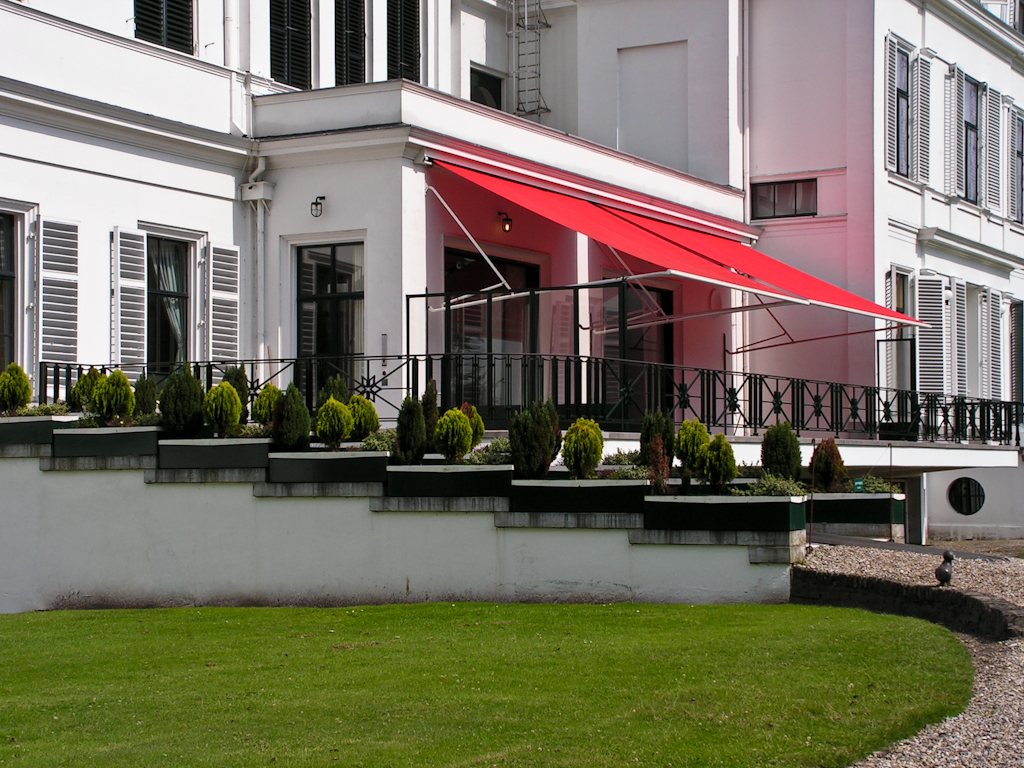
This is the part that visitors struggle to picture. The Dutch head of state lived here with her husband and daughters, worked in a study upstairs, and had lunch at a table where the children argued. Soestdijk made that possible, because it had never been designed to prevent it.
The Birthday Parade on the Front Steps
If you remember one thing about Soestdijk, make it this. Every year on 30 April, Queen Juliana’s official birthday, thousands of people came to the palace and walked past the front steps, handing flowers and gifts to the royal family, who stood there and received them for hours.
It was broadcast live. Schoolchildren came by bus. Village associations brought cheeses, folk-dance groups performed on the gravel, and a procession of ordinary Dutch people filed past their queen with armfuls of tulips. The family stood on the steps in the cold until it was finished.
Stand at the bottom of those steps and look up. Nothing in the architecture marks this as a national stage, and yet for a generation of Dutch people this short flight of stone is the most recognisable piece of the monarchy. Rituals attach themselves to places without asking the architect.
Four Daughters and a Bicycle
Beatrix, Irene, Margriet and Christina grew up here. The stories that survive are domestic rather than ceremonial: bicycles on the paths, a pony, skating when the water froze, holidays interrupted by official duties. Beatrix, the eldest, would become queen in 1980 and reign for thirty-three years.
The Dutch public knew these details because the family allowed them to be known. Photographs of the princesses on the estate did more for the standing of the monarchy than any ceremony could, and they established an expectation that has outlived the house: that a Dutch royal should be visible, approachable and faintly ordinary.
It is worth asking whether the architecture made the attitude or the attitude chose the architecture. Probably both. A family that wanted distance would never have been comfortable here.
The Affair That Shook the Palace
Soestdijk also held a crisis that nearly broke the Dutch monarchy. In the 1950s Queen Juliana came under the influence of Greet Hofmans, a faith healer brought to the palace in the hope of helping Princess Christina, who had been born with severely impaired sight.
Hofmans stayed for years. She acquired influence over the queen’s thinking on pacifism and politics, and the resulting rift between Juliana and Bernhard became so serious that the government intervened, a commission investigated, and the affair reached the international press in 1956.
The healer left. The marriage survived in public. But the episode is a reminder that this calm white house contained a long private struggle at the very top of the state, and that the atmosphere of homeliness the Dutch loved was also an atmosphere in which an outsider could take root unnoticed.
Inside the Rooms That Stayed Modest
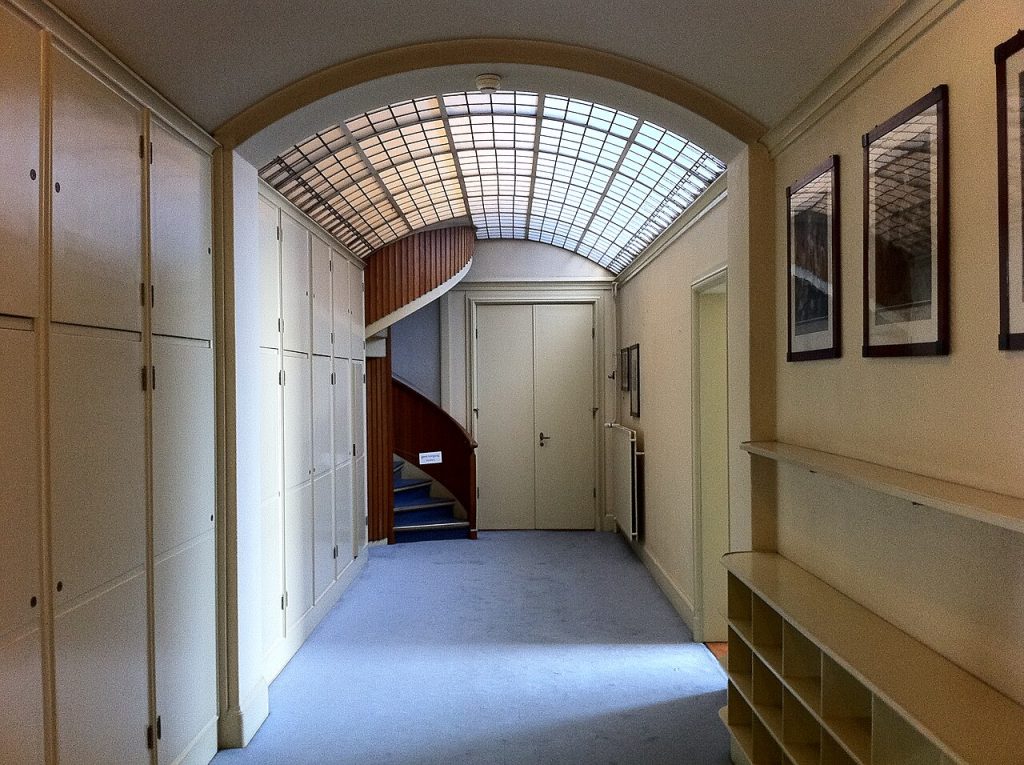
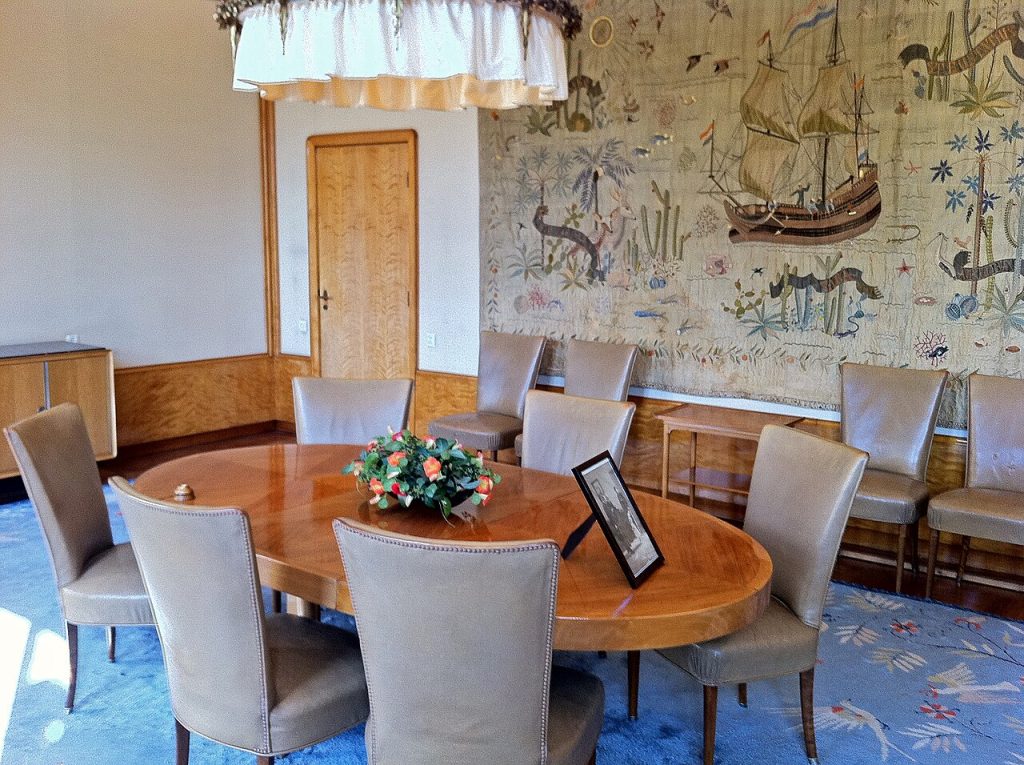
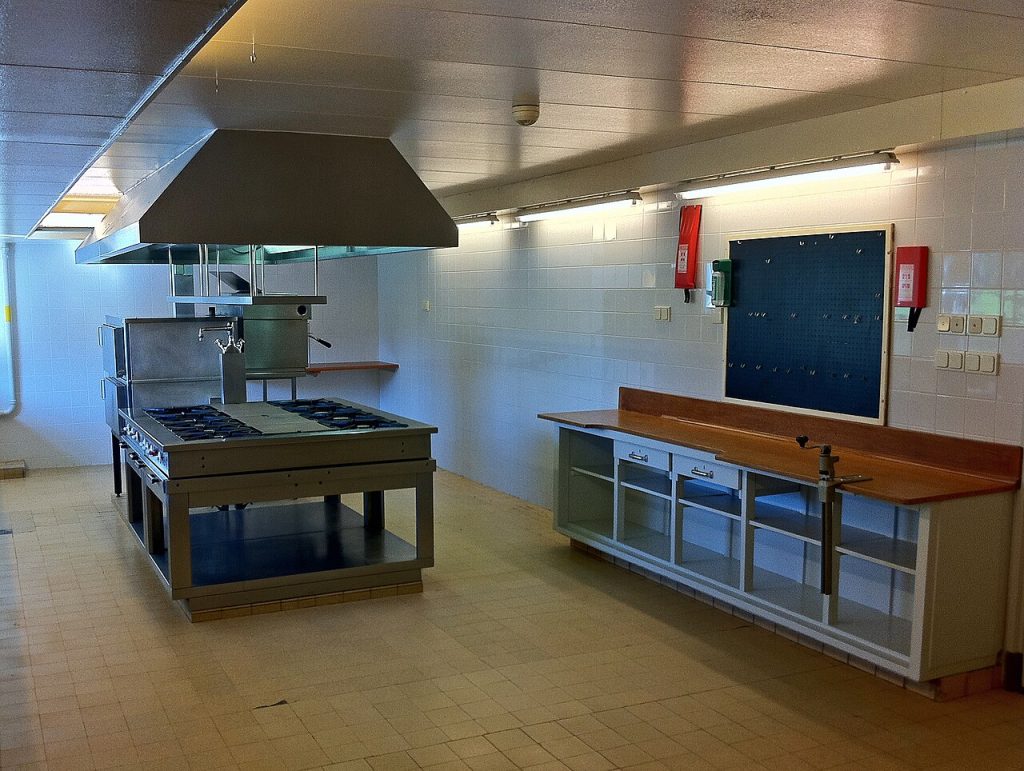
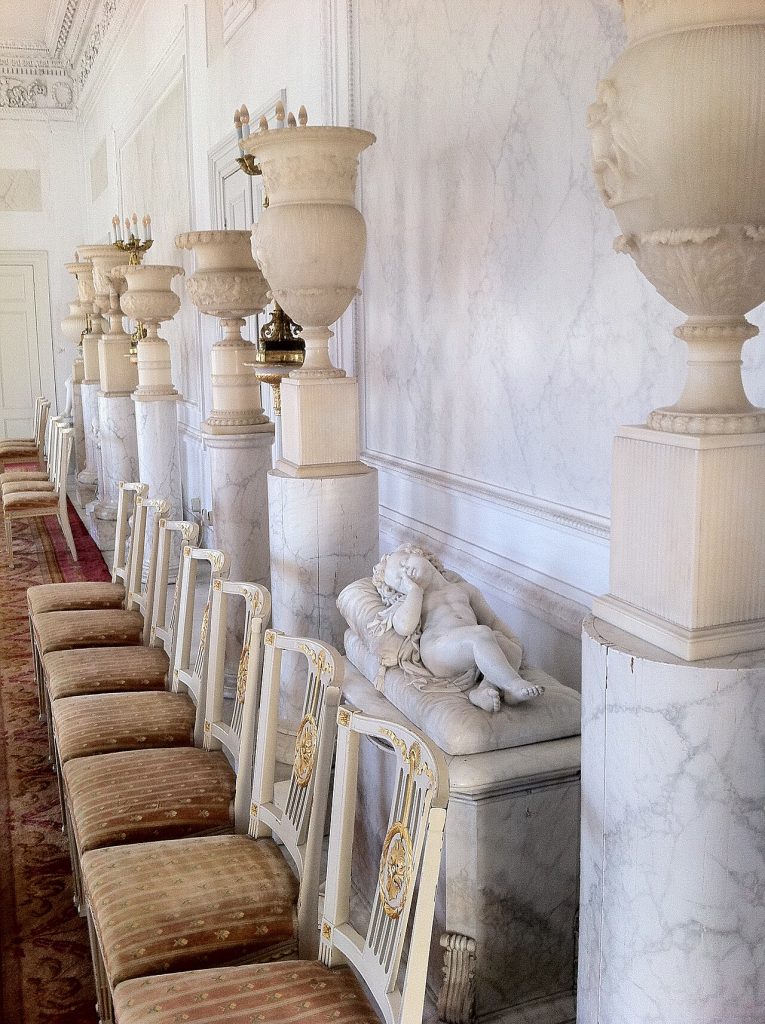
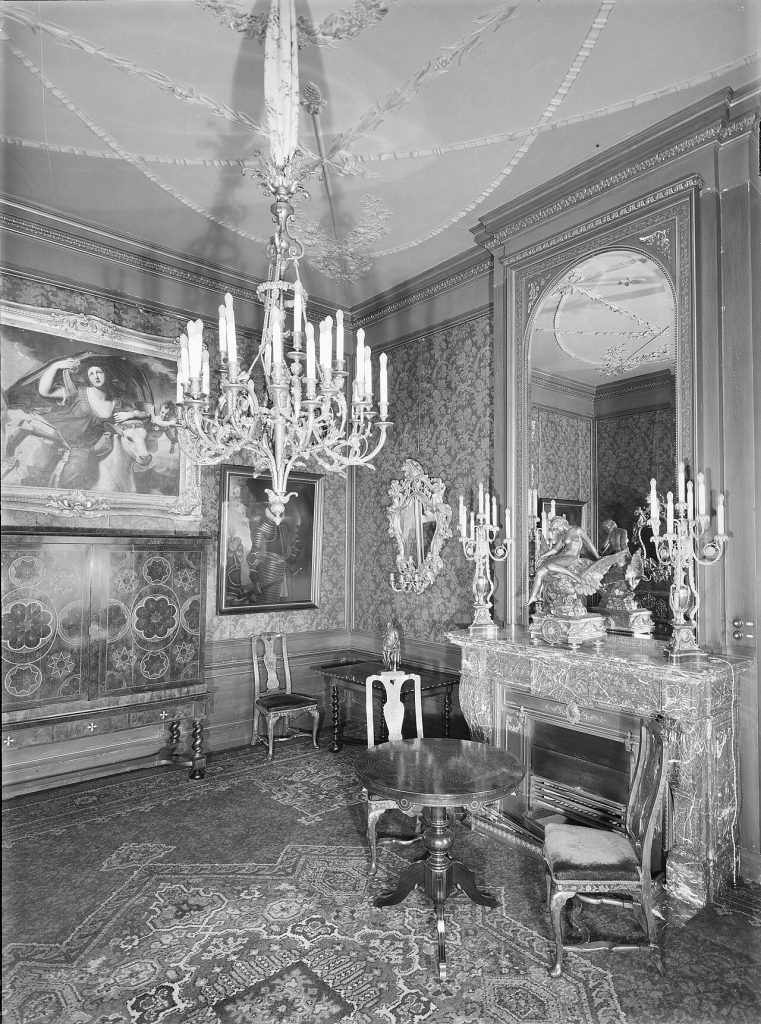
If you get inside, adjust your expectations at the door. There is no hall of mirrors, no throne room designed to humble ambassadors. There is a sequence of reception rooms, a dining room, studies, and private apartments, decorated in the accumulated layers of two centuries of family occupation.
What you see is a house that was lived in hard. Carpets wore out and were replaced with something practical. Portraits hang beside family photographs. Furniture from Anna Pavlovna’s Russia sits near chairs bought in the 1950s because they were comfortable.
Museum curators find this maddening and historians find it precious. Very few European palaces preserve the texture of twentieth-century royal domestic life, because most royal families moved out of their historic houses and into modern ones. Here, the historic house was the modern one.
The Needle in the Woods
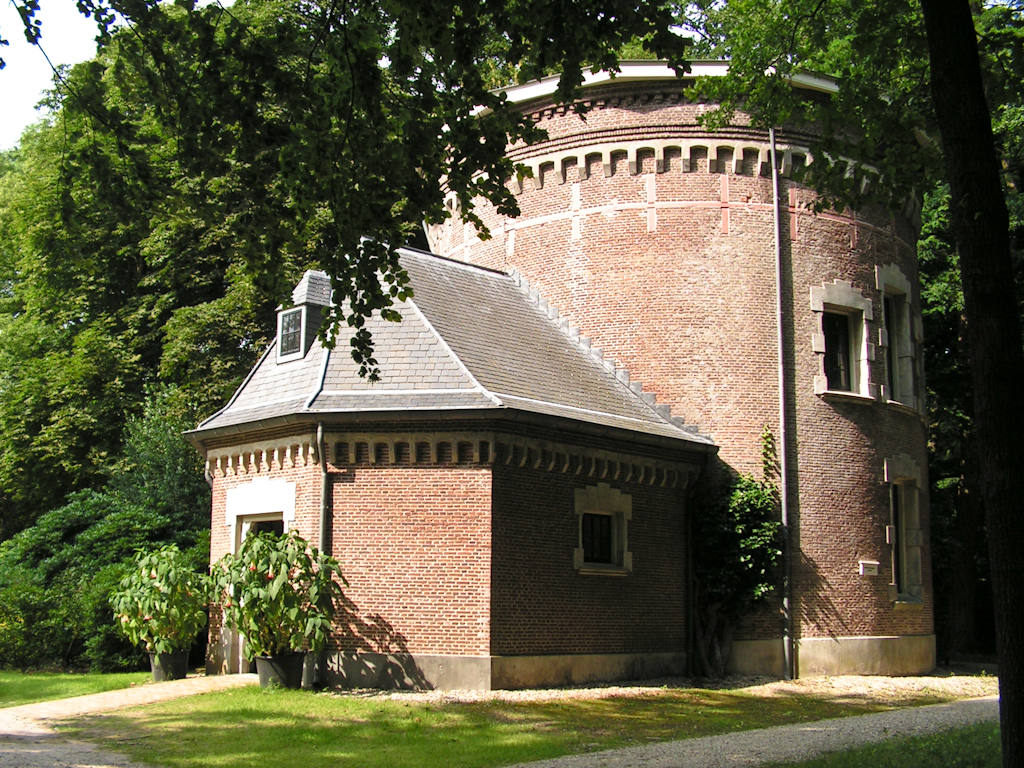
Walk or drive a little way into the forest to the south and you will find the Naald van Waterloo, the Waterloo Needle, an obelisk raised in 1826 on the spot where, according to tradition, the prince of Orange camped before marching to the battle.
It is a strange, thin monument standing in sand and pine, and it makes the connection between this quiet estate and the European war that created the modern Dutch kingdom. The palace was the reward; the needle marks the reason.
Visit it at the end of the day, when the light comes sideways through the trunks. It is one of those monuments that work far better in their setting than they would in a city square.
The Empty Years After 2004
Juliana died in March 2004, Bernhard in December of the same year, and Soestdijk went quiet. The contents were divided, the house passed to the state, and for more than a decade it sat in the woods with its shutters closed, opened occasionally for exhibitions and tours while committees argued about its future.
An empty palace is an expensive object. Roofs leak, heating systems fail, parkland reverts. The Dutch government tried several times to find a buyer or a use that would pay for the upkeep without turning the place into something the public would resent.
In 2017 the estate was sold to a private consortium with plans involving a hotel, events, housing on part of the grounds and public access to the palace itself. The plans have been contested, revised, delayed and litigated ever since. If you visit, check carefully what is actually open, because the answer changes.
What Happens to a Palace Nobody Rules From
Here is the question Soestdijk poses more sharply than almost any other royal house in Europe. A palace that was never grand has no obvious second life. Versailles can be a museum because it was always a stage. A hunting lodge turned family home is harder to repurpose, because what made it valuable was precisely the thing that cannot be exhibited: ordinary life.
Some argue that the only honest use is to open the rooms as they were left, with the worn carpets and the mismatched furniture, and let people see how a twentieth-century queen actually lived. Others point out that this would not pay the bills, and that a dead house helps nobody.
Walk back down the drive and turn once more. Whatever is decided, the building will keep looking like what it is: a long white house in a forest, built for a soldier, lived in by a family, and photographed by a nation every spring for fifty years.
Visiting Soestdijk Palace Today
Soestdijk stands on the Amsterdamsestraatweg between Baarn and Soest, about forty minutes by train and bus from Amsterdam and twenty minutes from Utrecht. Baarn station is the nearest stop, and the walk from there takes roughly half an hour through pleasant suburban woodland.
Access varies with the redevelopment project. In recent years the palace has opened for guided tours and temporary exhibitions in defined seasons rather than on a fixed year-round schedule, and parts of the estate have hosted events and festivals. Book ahead, because tour capacity inside the building is limited and sells out quickly in summer.
The grounds, where accessible, are best in late spring when the rhododendrons flower, and in October when the beeches turn. Allow half a day if you want to include the Waterloo Needle and a walk in the surrounding forest. Find it here: https://www.google.com/maps?q=52.1839,5.2878
Palaces Nearby
You May Like
Soestdijk Palace and the Royal Family That Lived Quietly