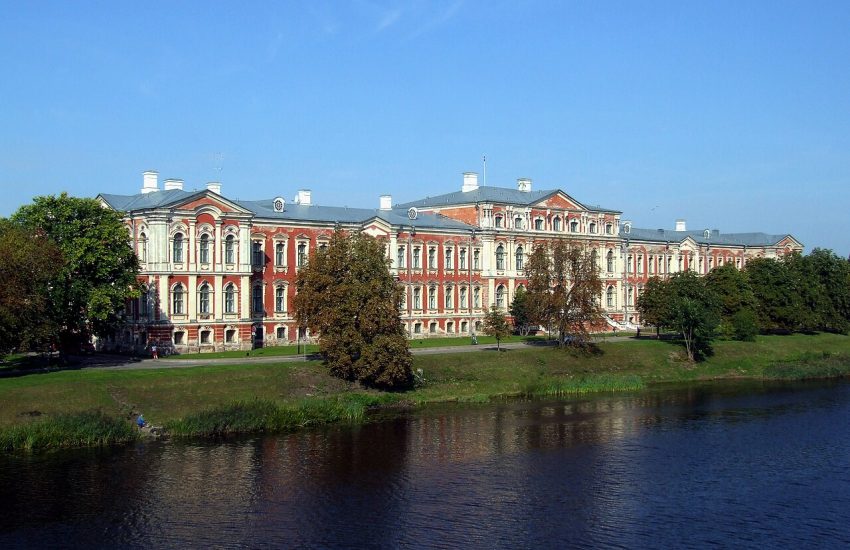
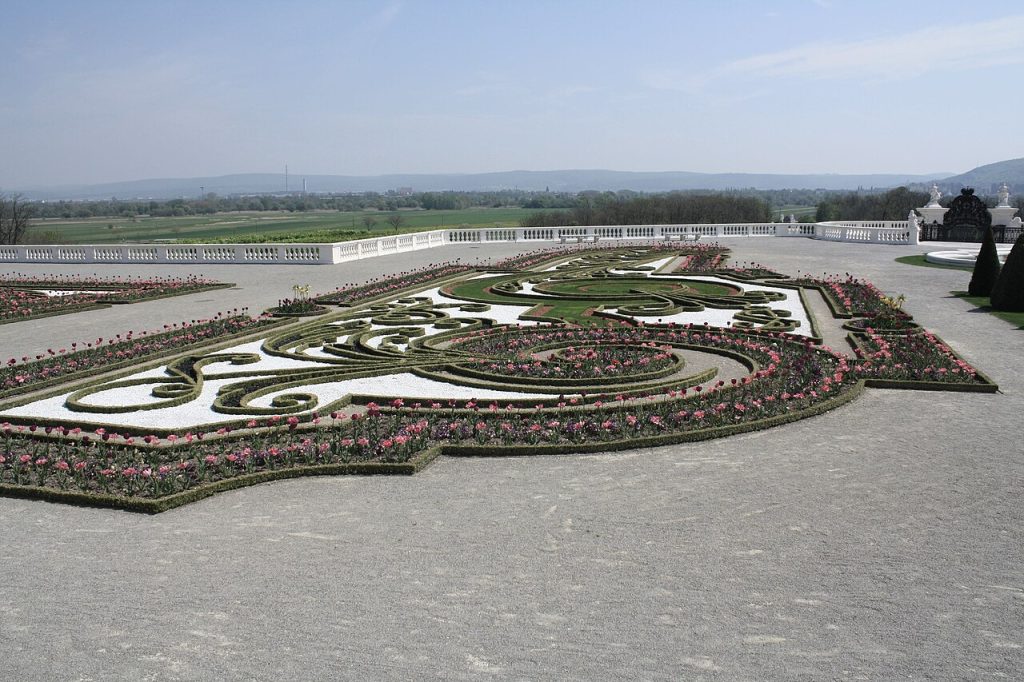
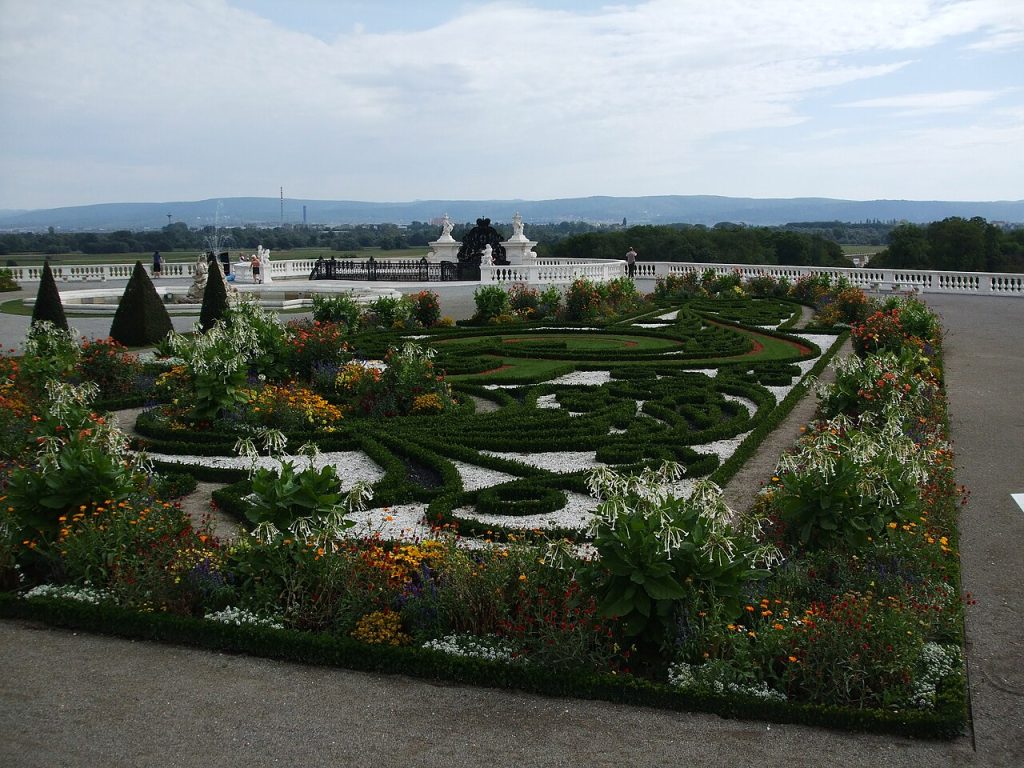
Now, stop at the top of the garden stairs and count the terraces. Seven of them drop away in front of you toward the Morava river and the Slovak border beyond, each one a complete garden in itself, with fountains, hedges, statues and gravel walks.
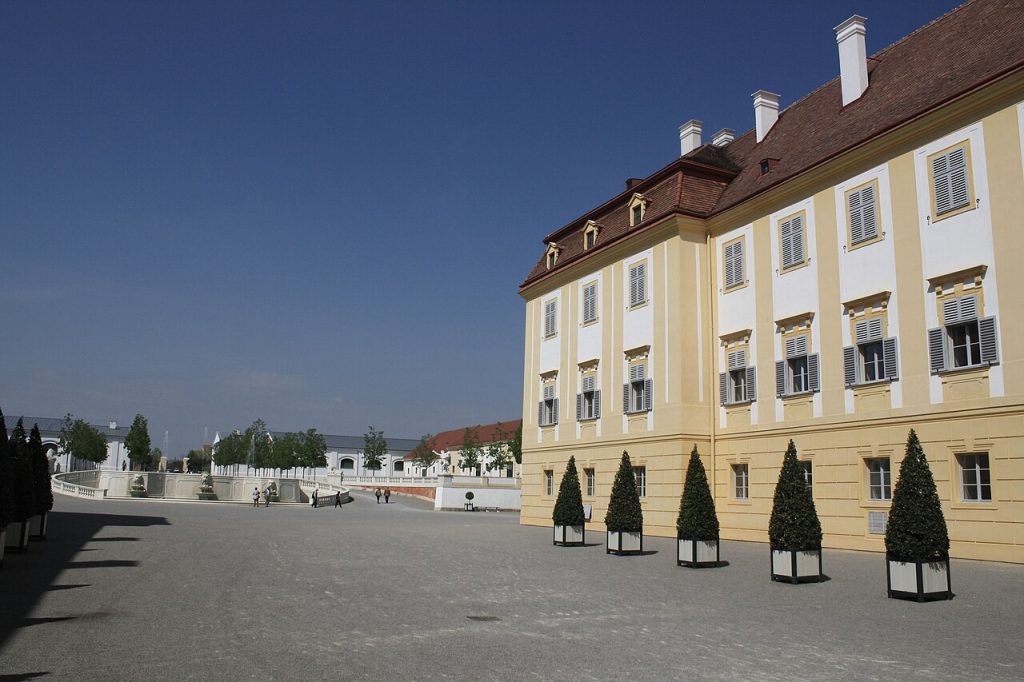
Schloss Hof was built by Prince Eugene of Savoy, the general who broke Ottoman power in central Europe, as a country retreat where he could entertain, hunt and garden on a scale that matched his reputation.
It later belonged to Maria Theresa, who enlarged it for family use, and today it is one of the largest restored baroque estates in Europe, with a working farm attached.
- Prince Eugene of Savoy
- The Marchfeld and the Border
- Lukas von Hildebrandt Builds a Retreat
- Seven Terraces
- Fountains, Statues and Water Engineering
- Maria Theresa Takes Over
- Adding a Floor for a Family
- Army Use and Decline
- On the Iron Curtain
- The Great Restoration
- The Estate Farm
- Niederweiden Next Door
- Visiting Schloss Hof
Prince Eugene of Savoy
Eugene of Savoy was born in Paris, rejected by Louis XIV for military service, and went to Austria, where he became the greatest commander of his age. He beat the Ottomans at Zenta and Belgrade, fought alongside Marlborough at Blenheim, and effectively secured central Europe for the Habsburgs.
He was also a collector, a builder and a patron on an enormous scale: the Belvedere in Vienna, the Winter Palace in the city, and this estate in the countryside.
He never married and left no heirs, which is why his properties were dispersed after his death in 1736.
The Marchfeld and the Border
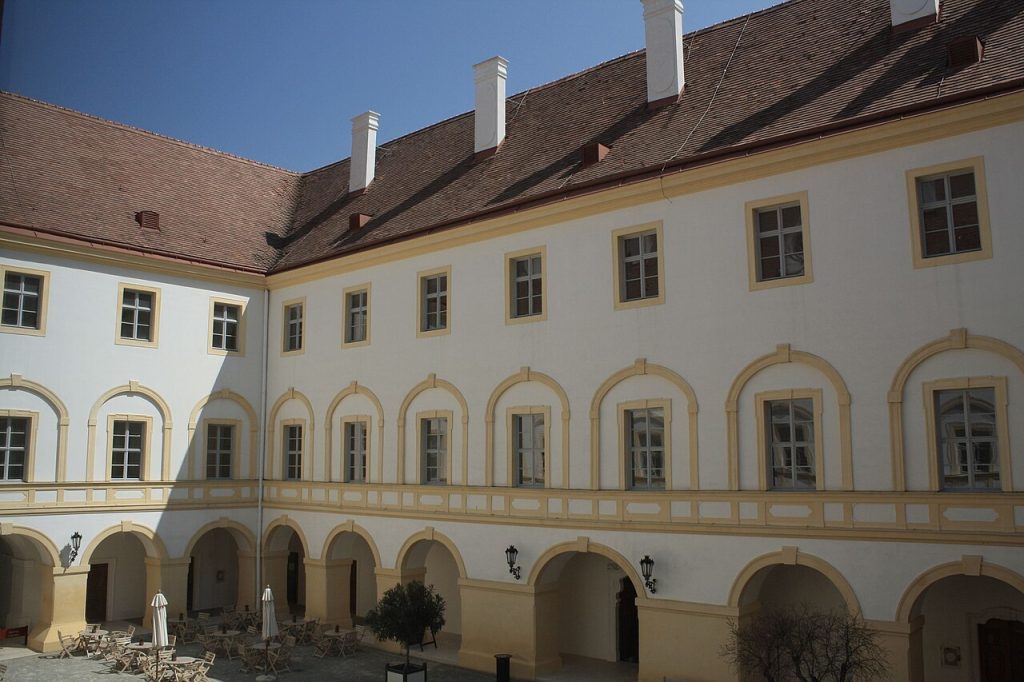
The Marchfeld is the flat plain east of Vienna, between the Danube and the Morava, historically a battlefield and a granary. Schloss Hof sits on a bluff at its edge, looking across the river into what is now Slovakia.
Bratislava is twenty minutes away. In Eugene’s time it was Pressburg, the coronation city of the Hungarian kings, and the estate sat between two capitals.
That position made it convenient for hunting, for entertaining and for reaching the Hungarian lands quickly.
Lukas von Hildebrandt Builds a Retreat
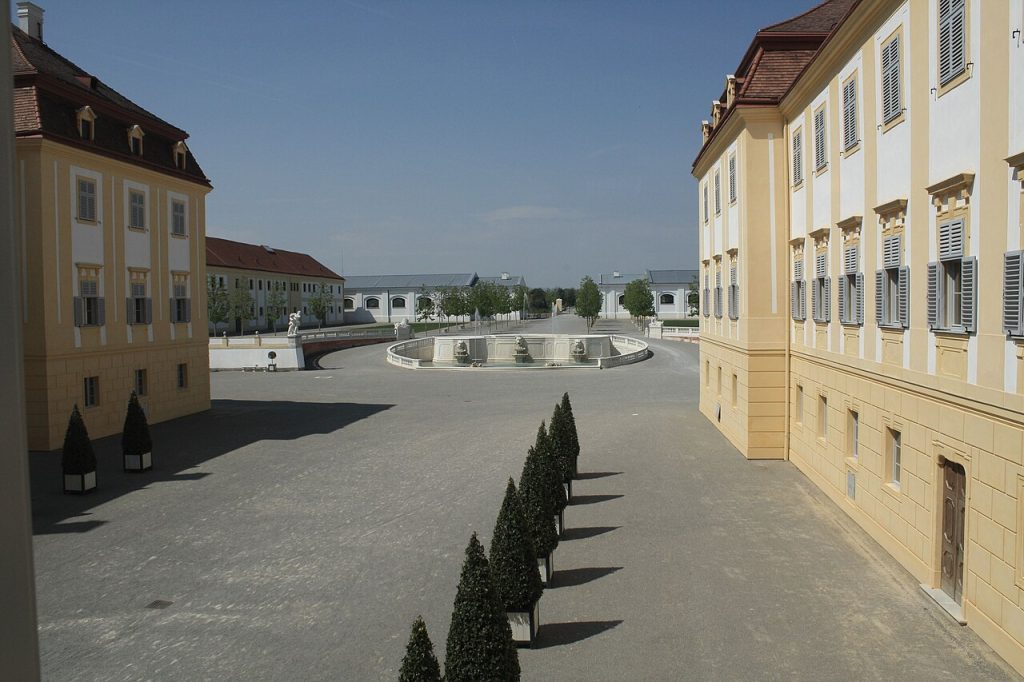
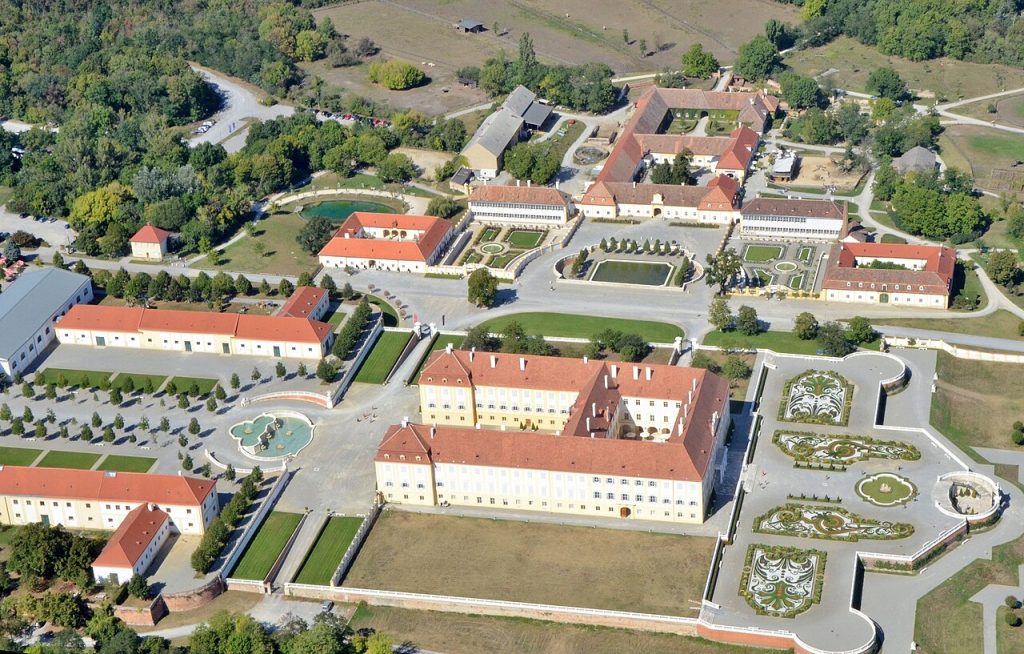
From 1725 Eugene employed Johann Lukas von Hildebrandt, architect of the Belvedere, to transform an existing fortified manor into a baroque country palace with gardens, stables, an orangery and a chapel.
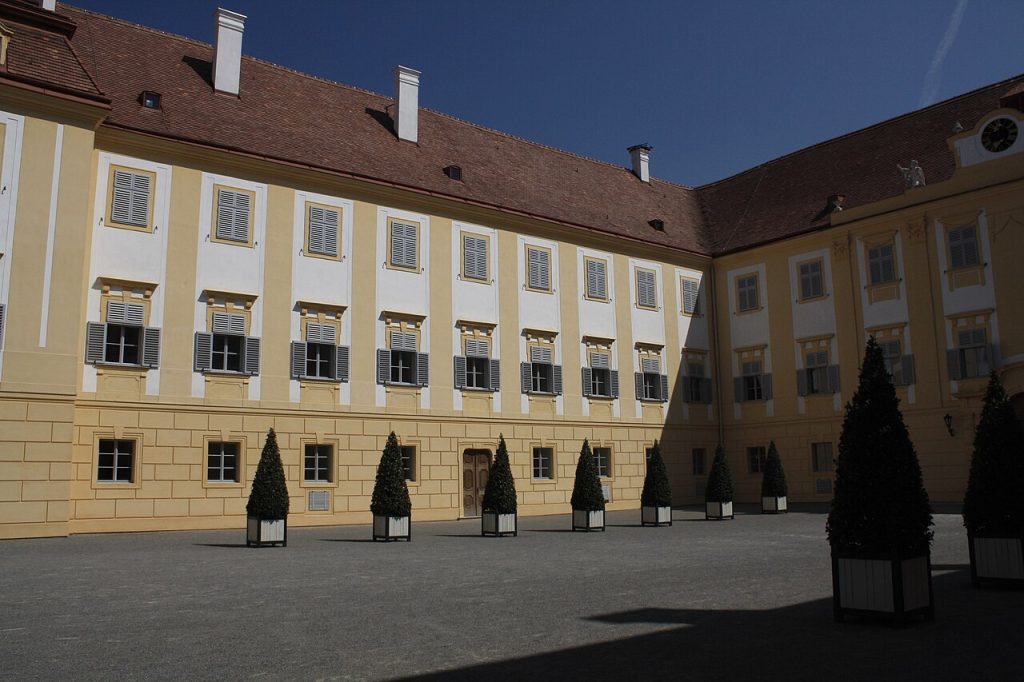
Hildebrandt’s work here is less showy than the Belvedere and more practical: a comfortable single-storey residence with state rooms, built around the relationship to the garden.
The gardens, not the house, were always the main event.
Seven Terraces
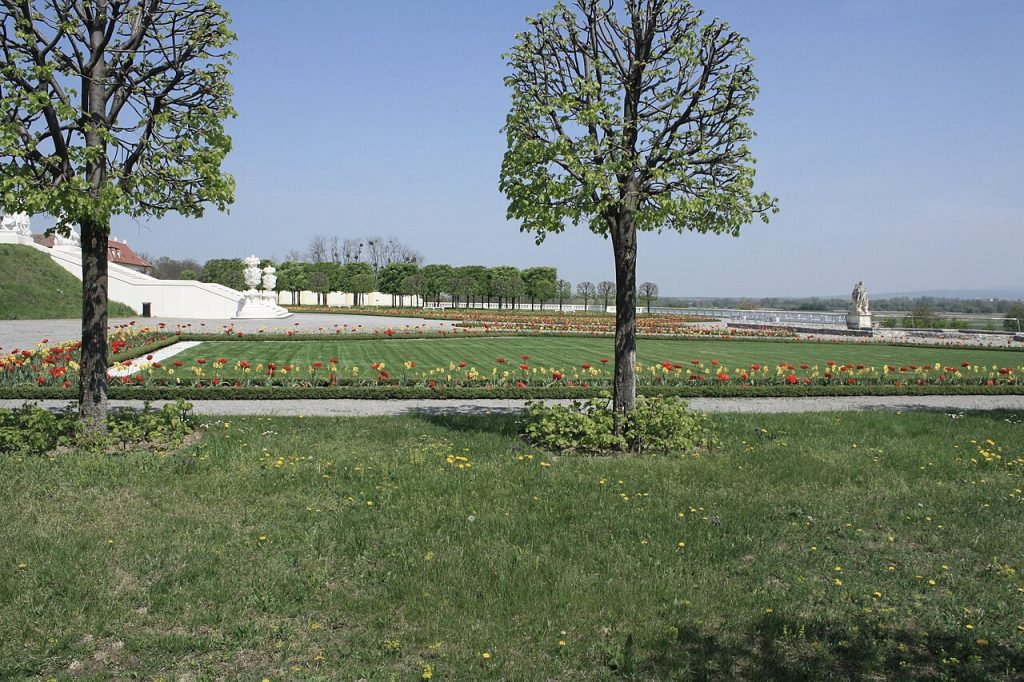
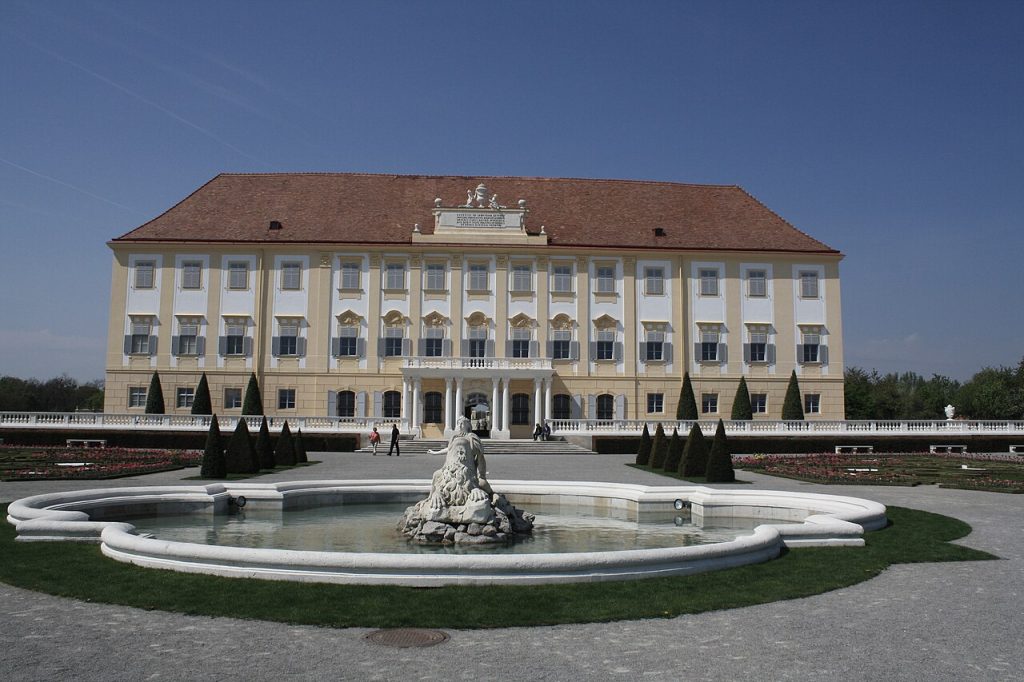
The garden descends in seven terraces, each with its own character: parterres near the house, fountains in the middle levels, orchards and groves lower down, and a final terrace opening toward the river meadows.
Building terraces on this scale required moving enormous quantities of earth and constructing retaining walls that still hold two and a half centuries later.
Walk down and then back up. The ascent, with the palace growing above you, is the view the design was built for.
Fountains, Statues and Water Engineering
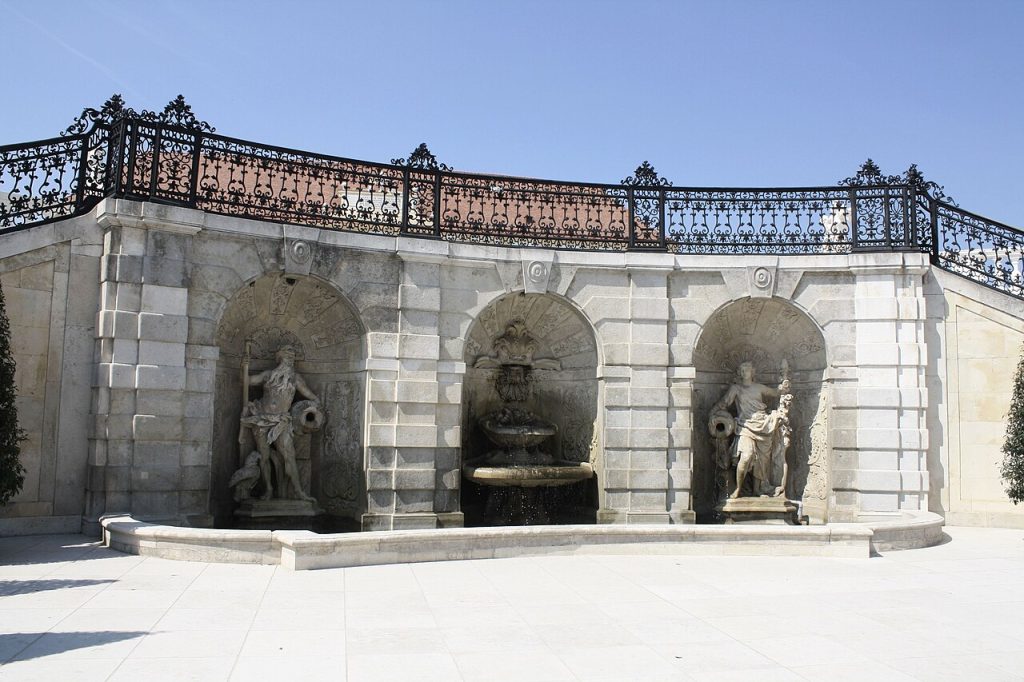
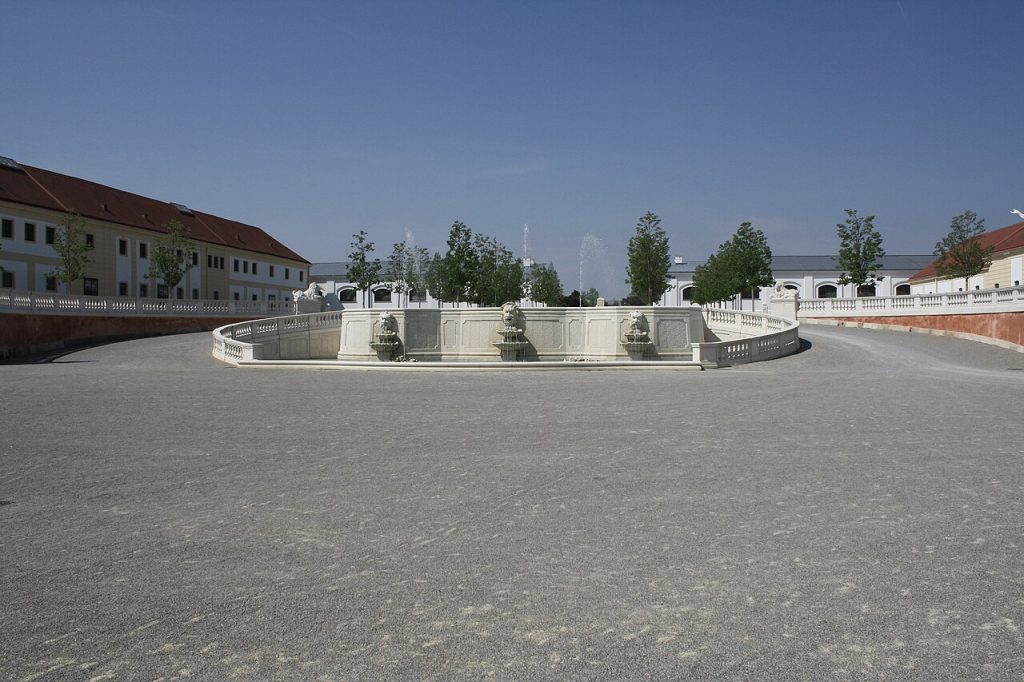
Water had to be lifted to the top of a dry bluff, stored and distributed to fountains on several levels. The engineering was as expensive as the sculpture.
The restored fountains run in season, with cascades and basins populated by baroque figures from classical mythology.
Baroque gardens were technology demonstrations as much as artworks. A working fountain was a statement about resources and competence.
Maria Theresa Takes Over
In 1755 Empress Maria Theresa bought the estate. She used it for family stays, hunting parties and celebrations, and she brought the Habsburg family’s enormous domestic apparatus with her.
Her husband Francis Stephen was an enthusiastic estate manager and naturalist, and under them the farm and gardens were developed further.
After Francis Stephen’s death in 1765 Maria Theresa used Schloss Hof as a retreat during her long widowhood.
Adding a Floor for a Family
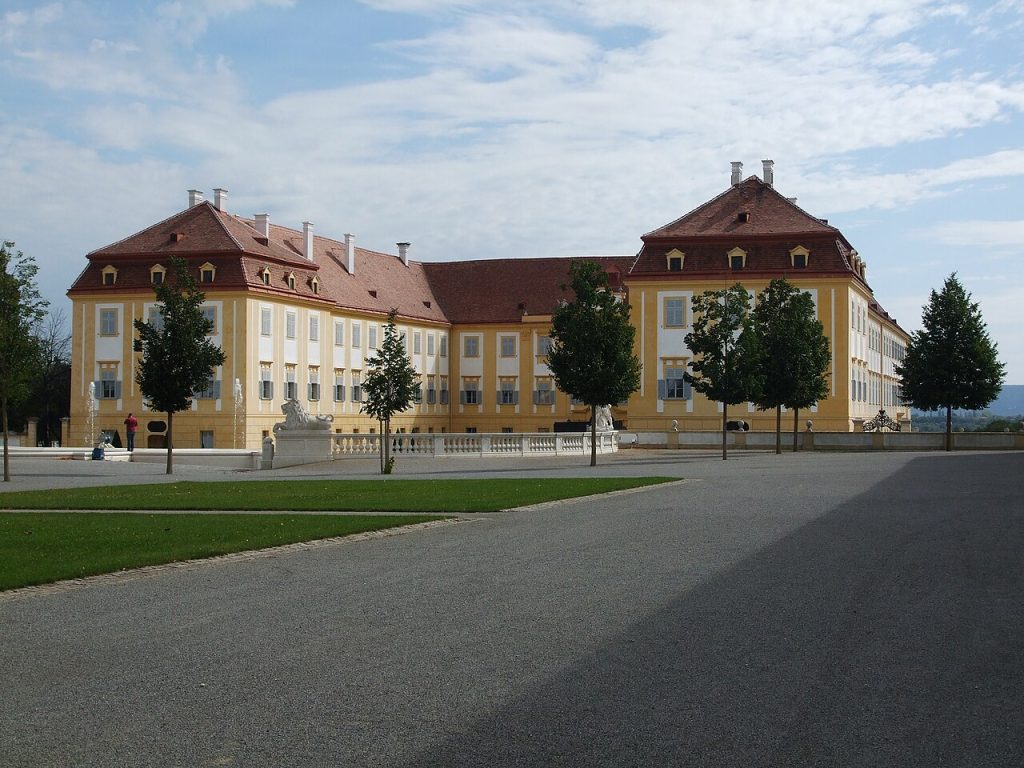
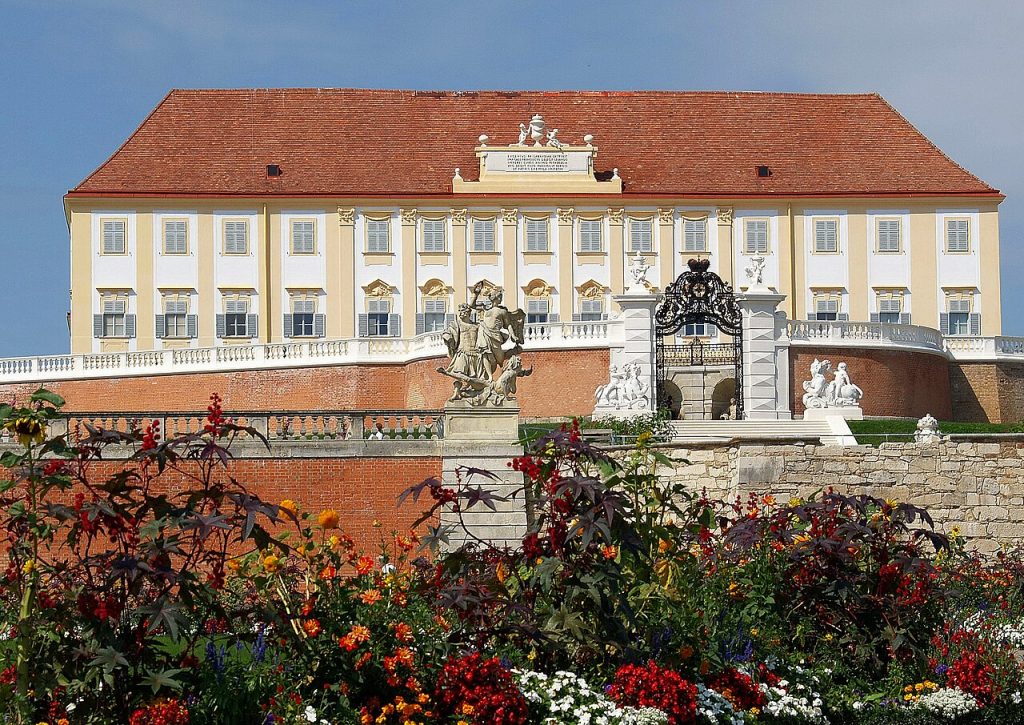
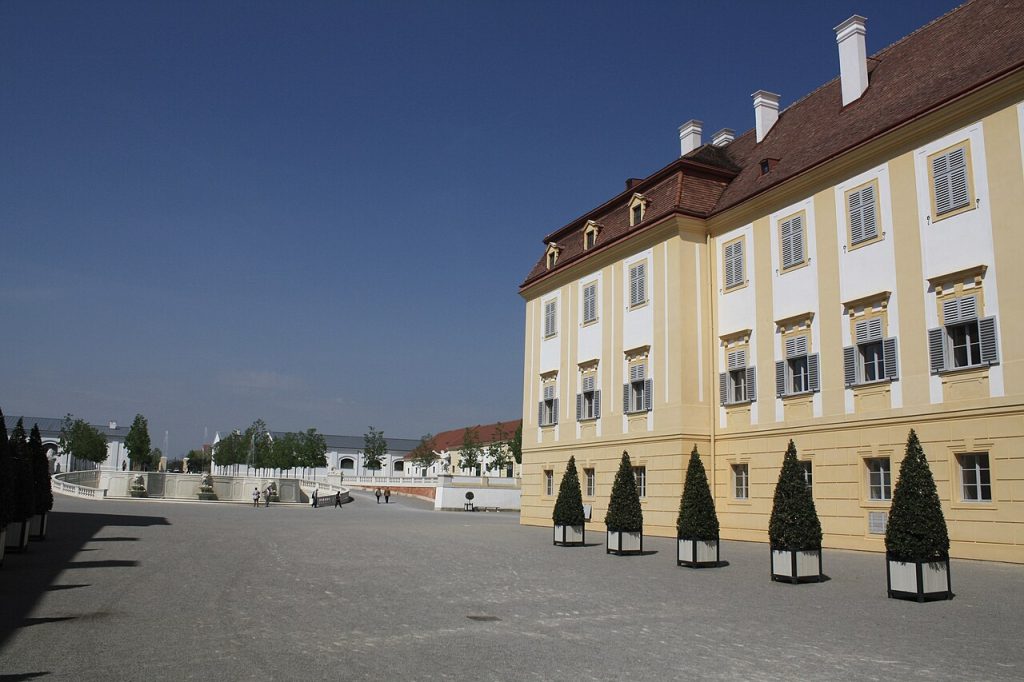
To accommodate the imperial family, a second storey was added in the 1770s, changing the proportions of Hildebrandt’s single-storey design.
Purists have complained ever since, but the change records the shift in function: from a bachelor general’s retreat to a family residence for a dynasty with sixteen children.
Inside, both phases are presented: Eugene’s rooms on the ground floor, Maria Theresa’s apartments above.
Army Use and Decline
In the nineteenth century the estate passed to the Austrian military, which used the buildings as a stud farm and barracks. Maintenance was minimal and the gardens disappeared under grass.
Military ownership preserved the structures while erasing the detail, which is a common pattern. Soldiers need roofs, not parterres.
By the twentieth century the terraced garden had vanished entirely from view, surviving only in plans and under the turf.
On the Iron Curtain
After 1945 the Morava became the border between Austria and communist Czechoslovakia, and this estate found itself on the edge of the Iron Curtain, in a restricted military zone with watchtowers across the river.
Nothing was invested here for forty years. The border was fortified, visitors were few, and the region emptied as people moved toward Vienna.
When the border opened in 1989, the estate suddenly stood twenty minutes from Bratislava again, and restoration became politically attractive.
The Great Restoration
From the 1980s and intensively from 2002, Austria restored the palace and recreated the terraced garden from historical plans, archaeology and surviving structures.
The result is one of the largest baroque garden reconstructions in Europe, with parterres, fountains, hedges and sculpture returned to their eighteenth-century arrangement.
The palace reopened in 2005 and the gardens progressively after that, with the estate now functioning as a major visitor attraction in Lower Austria.
The Estate Farm
The restored estate farm keeps rare and historic breeds: Lipizzaner-related horses, Hungarian grey cattle, Mangalica pigs, goats, donkeys and poultry, and it is the part of the site that children remember.
Baroque estates were agricultural enterprises, and reconstructing the farm alongside the gardens makes the economic basis of the whole thing visible.
Markets, craft demonstrations and seasonal festivals use the farmyard throughout the year.
Niederweiden Next Door
A few kilometres away stands Schloss Niederweiden, a small hunting lodge built in the 1690s by Fischer von Erlach and later altered for Maria Theresa, now used for exhibitions and managed with Schloss Hof.
It is tiny by comparison and worth the detour for the contrast: a jewel-box hunting box against a terraced palace.
A combined ticket covers both, and the drive between them crosses the Marchfeld plain.
Visiting Schloss Hof
Allow the better part of a day. The palace tour takes an hour, the gardens two, and the farm as long as anyone under ten insists.
Go in late spring when the parterres are planted and the fountains run, or in autumn for the orchards. The site closes or reduces services in winter.
Combine it with Bratislava, which is twenty minutes away across the river and a genuinely good small capital.
Watch the Palace on Film
Visiting Schloss Hof Today
Schloss Hof lies in the Marchfeld, about forty-five kilometres east of Vienna and twenty minutes from Bratislava, with bus and rail connections to Marchegg and road access from both capitals.
The estate opens from spring to autumn with ticketed entry covering palace, gardens and farm, and hosts markets and events in winter; check the calendar before travelling.
Allow most of a day, and consider combining it with Niederweiden or a trip across to Bratislava. Find it here: https://www.google.com/maps?q=48.2325,16.9736
Palaces Nearby
You May Like
Palmse Manor and the Baltic German Estates of Estonia