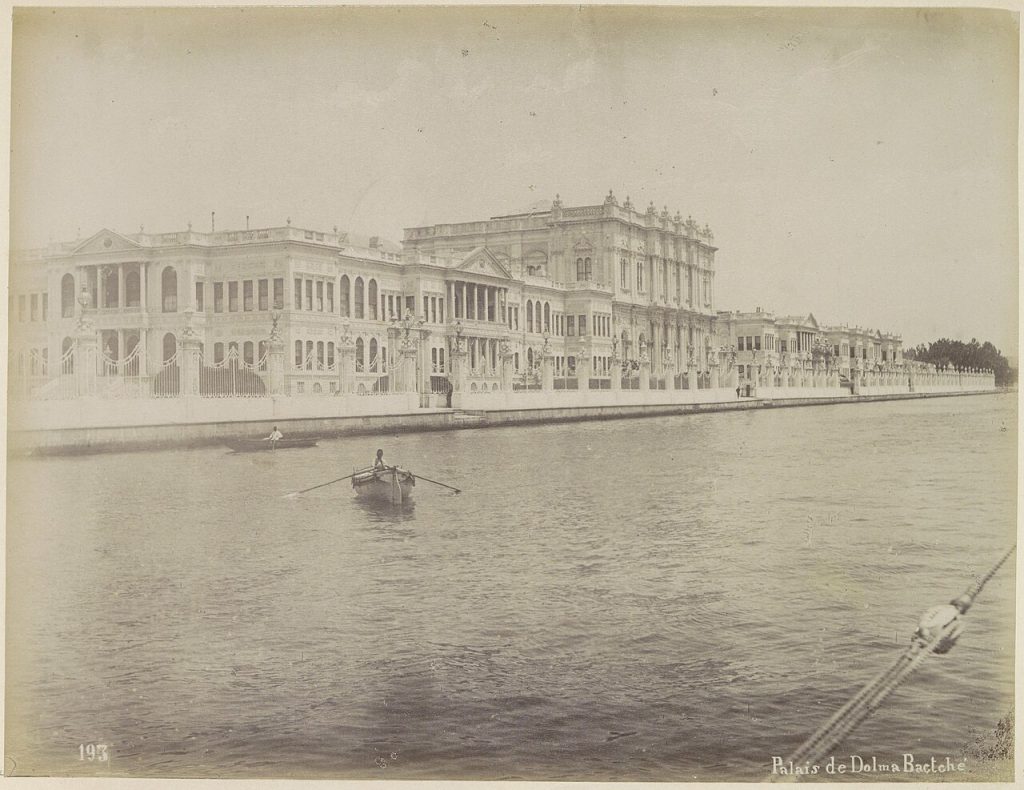
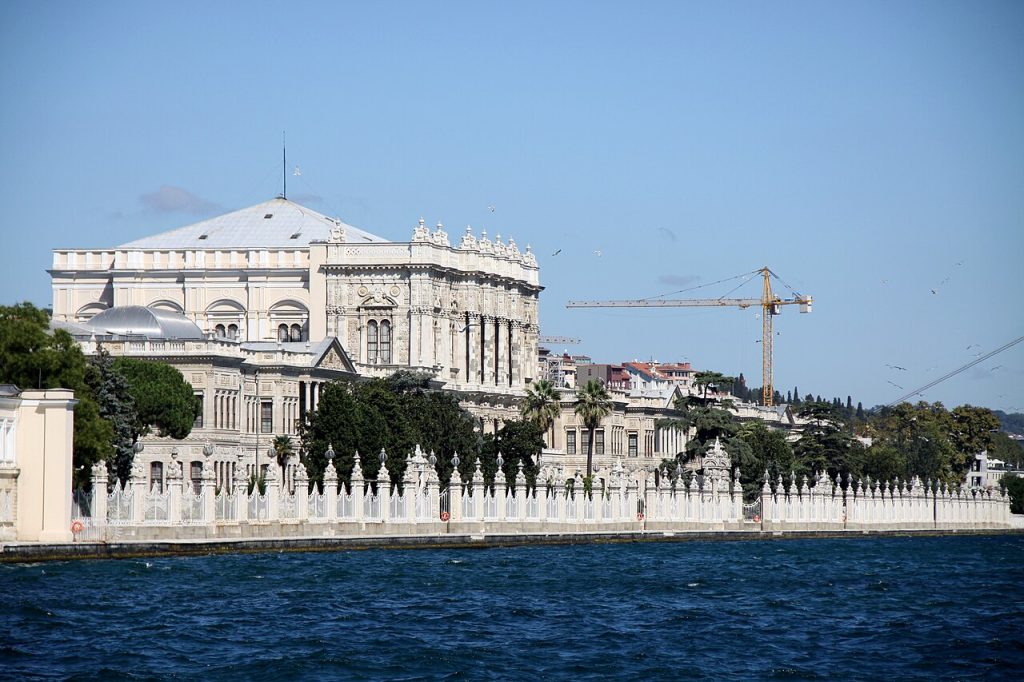
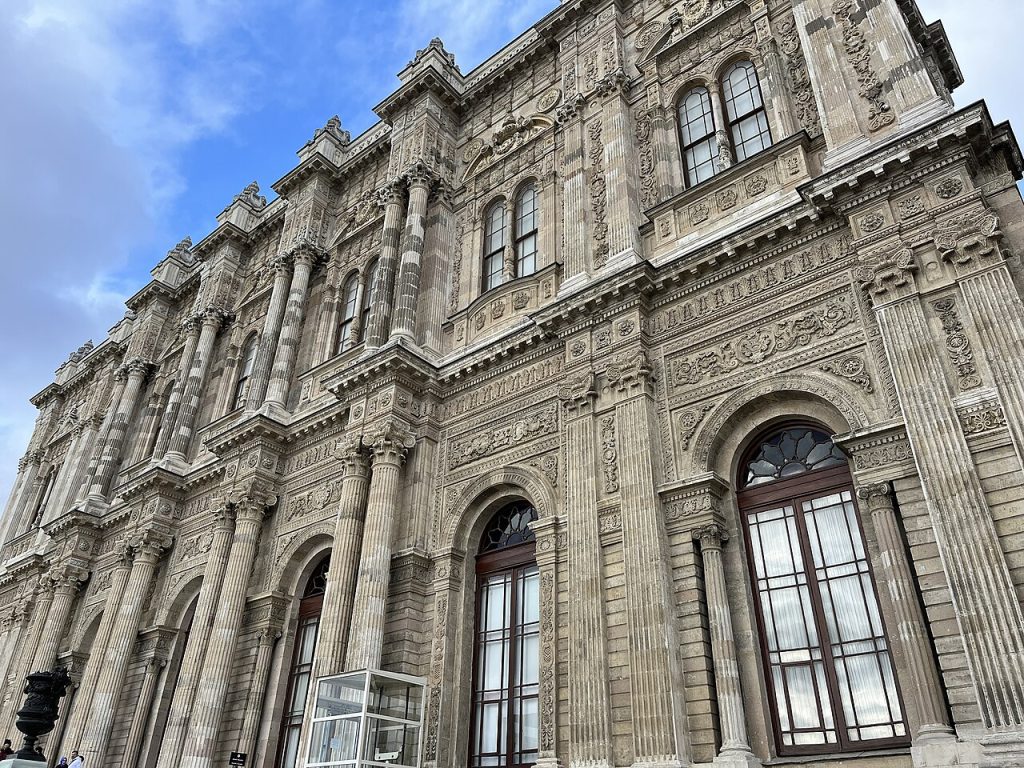
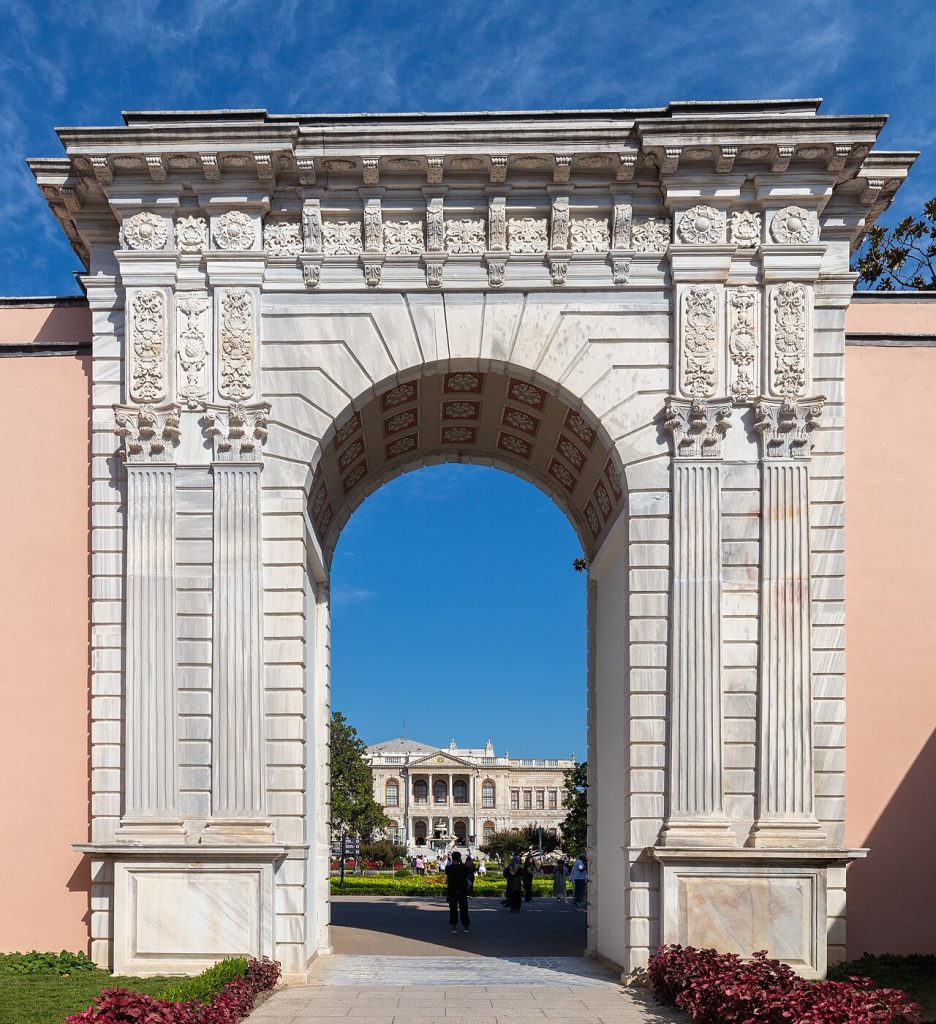
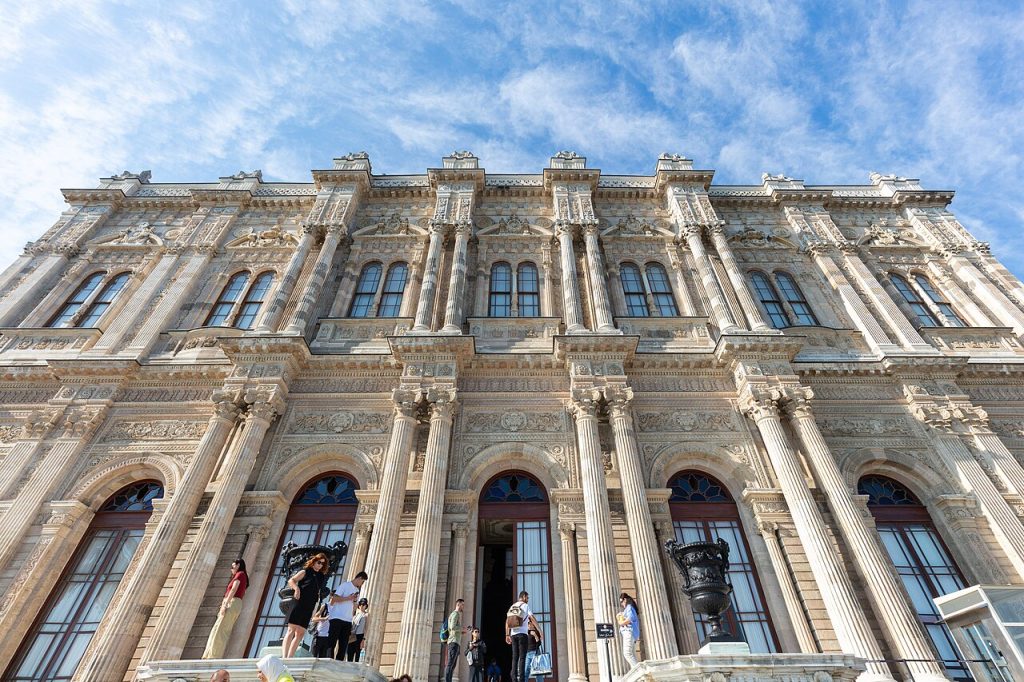
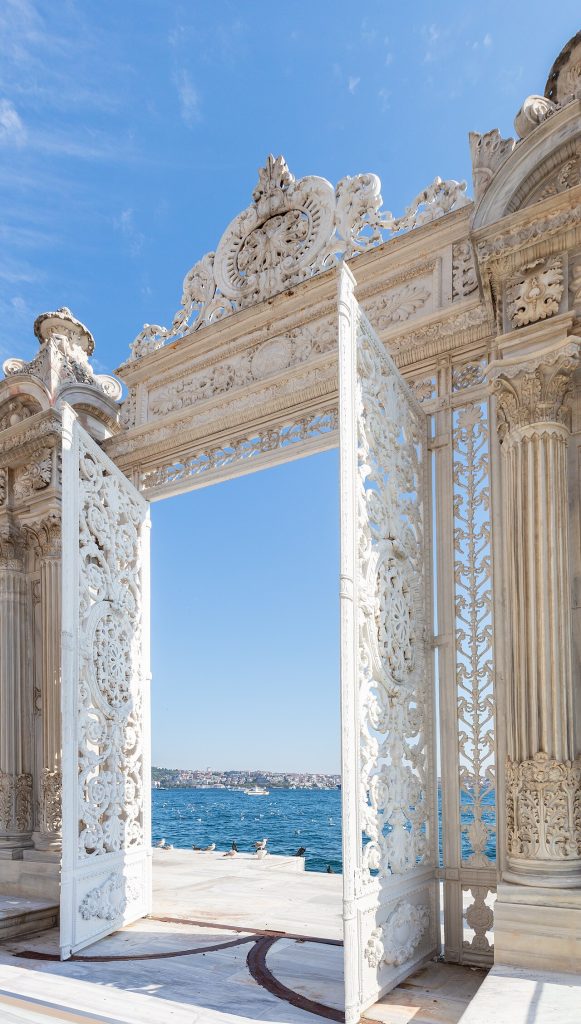
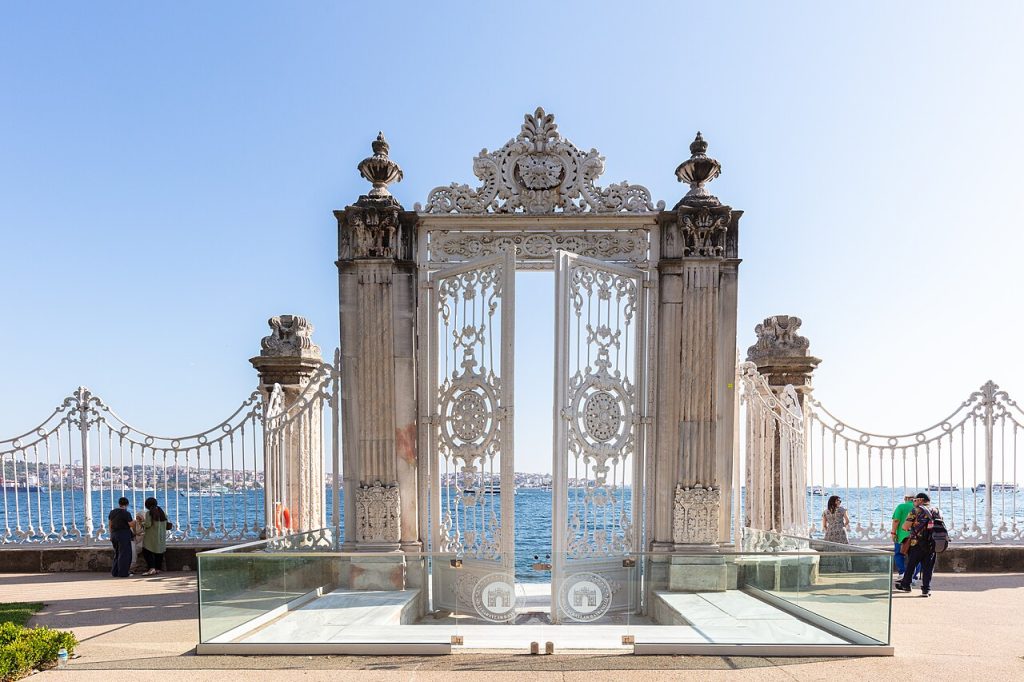
Now, stop on the quay in front of the sea gate and look along the facade. Six hundred metres of white marble face the Bosphorus, with a gate designed to be entered from a boat, and nothing about it looks Ottoman in the way Topkapi does.
That is the entire point. Dolmabahce was built to announce that the Ottoman Empire was a modern European state, at a moment when European powers were treating it as a problem to be managed.
It cost an enormous sum, it was paid for substantially with foreign loans, and the debt that followed helped push the empire toward bankruptcy within twenty years. It is the most beautiful expensive mistake in Istanbul.
- The Filled-In Garden
- Abdulmecid and the Reform Era
- The Balyan Family
- What Style Is This
- The Ceremonial Hall and Its Chandelier
- The Crystal Staircase
- The Harem Wing
- What It Cost
- The Sultans Who Lived Here
- The First Ottoman Parliament
- Ataturk and 9.05
- A Palace in a Republic
- Visiting Dolmabahce
The Filled-In Garden
The name means filled-in garden. This stretch of shore was a bay where the Ottoman fleet once anchored, gradually filled in from the seventeenth century to create imperial gardens and wooden pavilions.
By the nineteenth century a sequence of timber palaces stood here, and they burned, as timber palaces did. The decision to build in stone and marble was partly about fire and partly about image.
Nothing of the earlier wooden complex survives except the clock tower’s predecessor site and some of the garden layout.
Abdulmecid and the Reform Era
Abdulmecid I came to the throne in 1839 at sixteen and immediately issued the Tanzimat decree, launching four decades of reform: legal equality for non-Muslim subjects, a modern army, new schools, a reformed bureaucracy.
He spoke French, played European music, and believed the empire’s survival depended on convincing Europe that it belonged among civilised states.
Dolmabahce, built between 1843 and 1856, is that argument in marble.
The Balyan Family
The architects were Garabet Amira Balyan and his son Nigogayos, members of an Armenian family who served as imperial architects for five generations and built most of the major Ottoman buildings of the nineteenth century.
The Balyans trained in Paris, worked in European styles, and were trusted with budgets that would have terrified most architects.
Their work defines the Bosphorus skyline: Dolmabahce, Ciragan, Beylerbeyi, Kucuksu, Ortakoy mosque and a dozen more.
What Style Is This
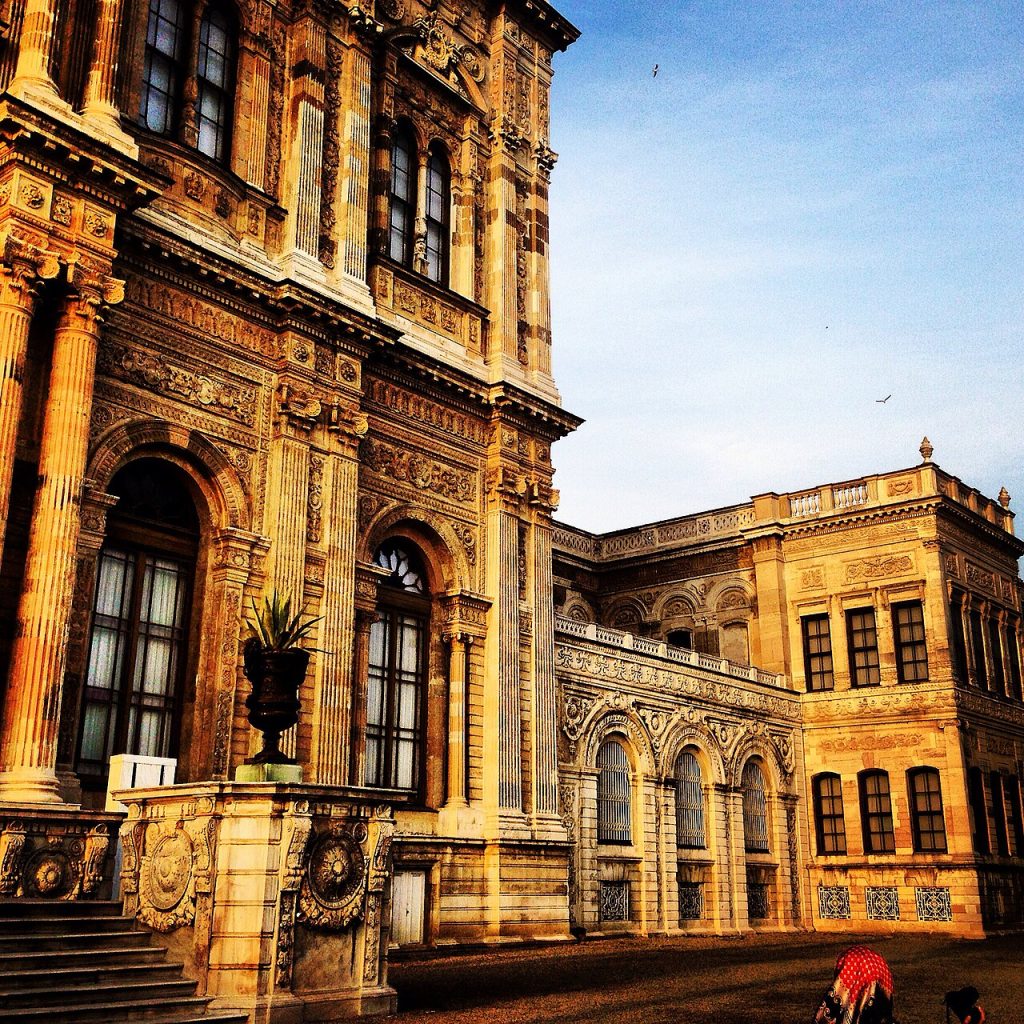
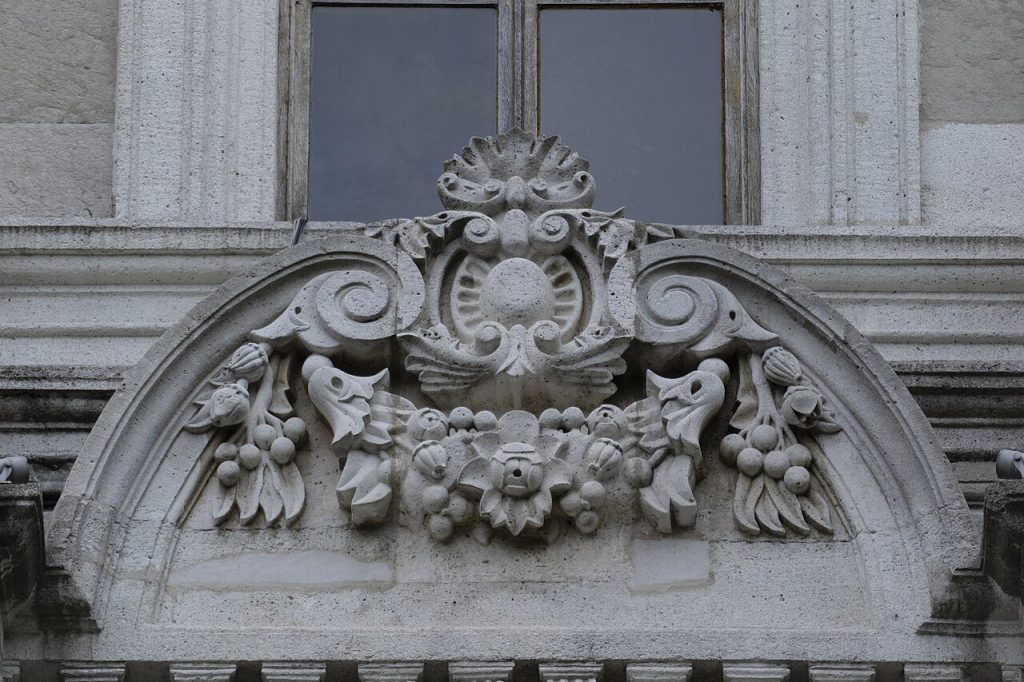
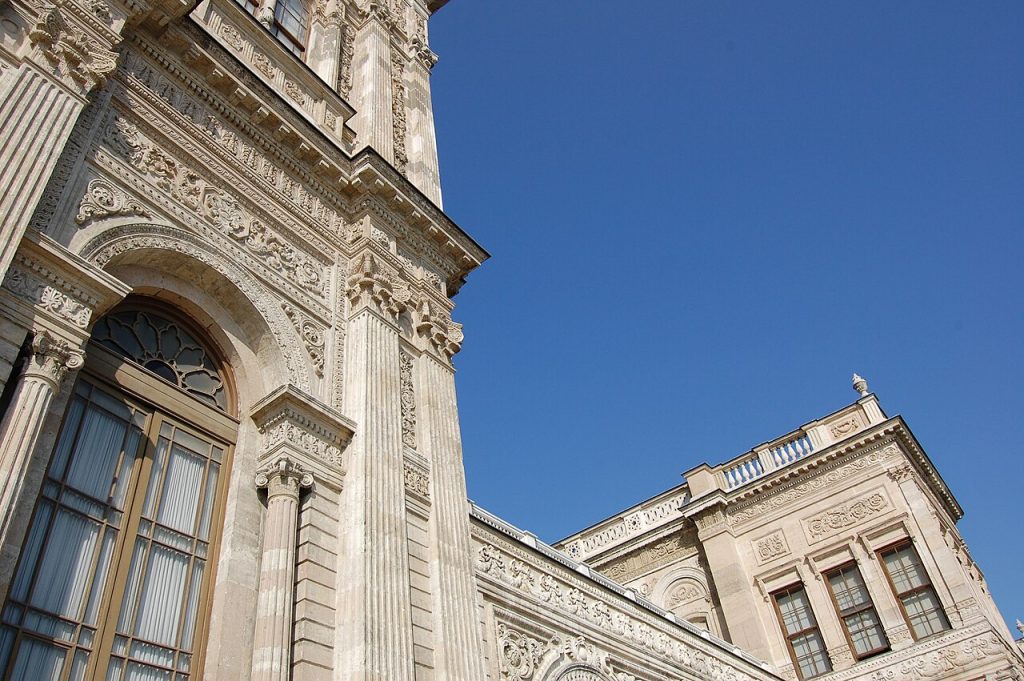
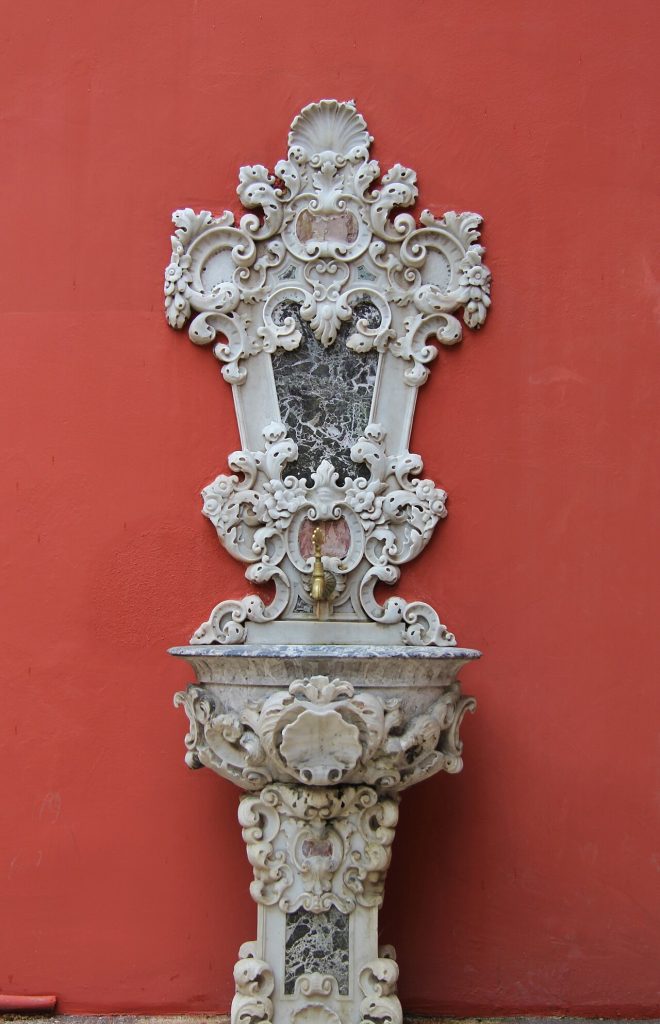
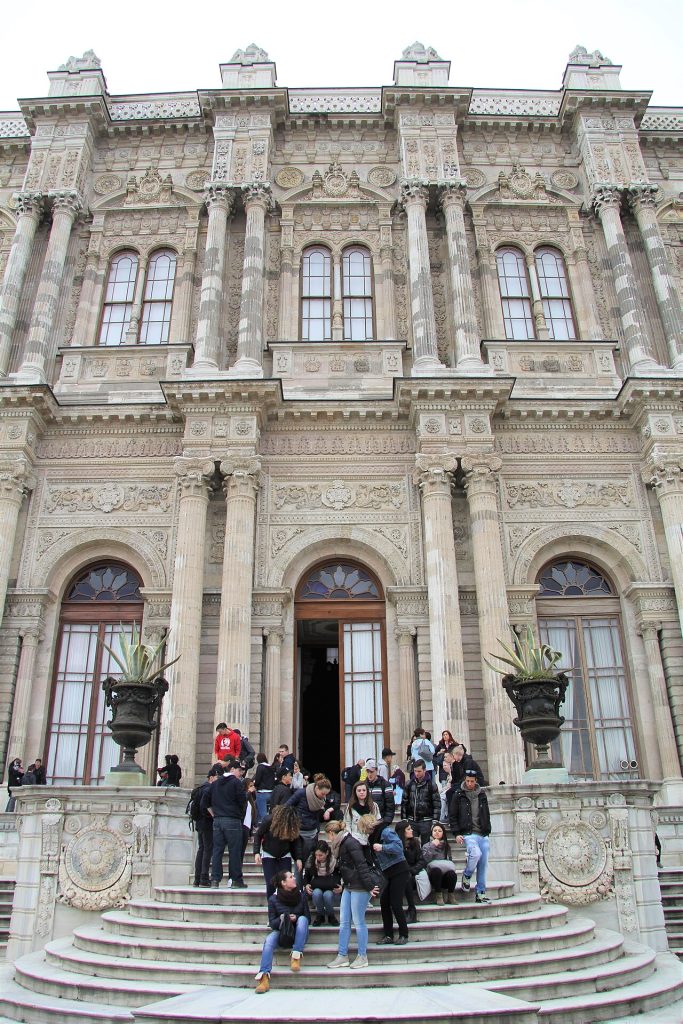
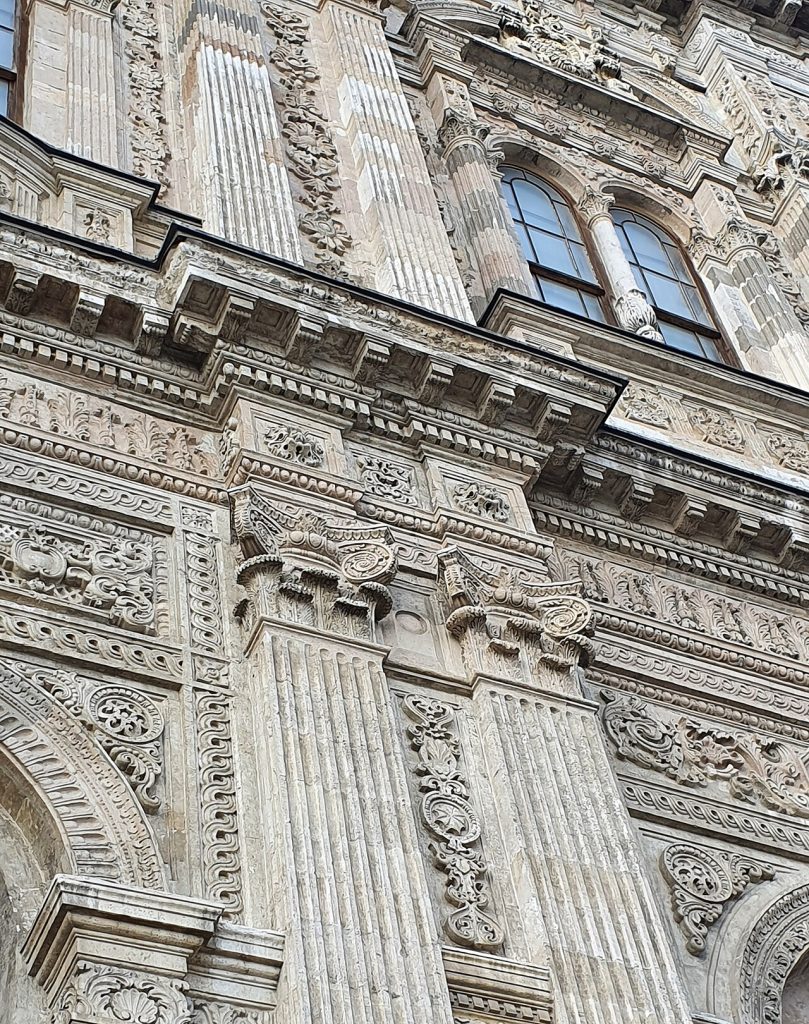
Officially it is a mixture of baroque, rococo and neoclassical with Ottoman elements. In practice it is the nineteenth-century international palace style, the same language used in Vienna, St Petersburg and Paris, applied with unusual intensity.
Ottoman elements survive in the plan rather than the decoration: the separation of selamlik and harem, the sequence of spaces, the orientation to water.
Critics at the time and since have called it derivative. Walk through it and the sheer confidence of the thing wins most arguments.
The Ceremonial Hall and Its Chandelier
The Ceremonial Hall rises through the centre of the palace, two thousand square metres under a dome fifty-six metres high, with fifty-six columns and a chandelier of four and a half tonnes carrying seven hundred and fifty lamps.
The chandelier is usually described as a gift from Queen Victoria. It is among the largest Bohemian crystal chandeliers in the world, and the hall was heated from beneath the floor to allow winter receptions.
Stand in the middle and look up. Nothing in Ottoman architecture before this attempted anything like it.
The Crystal Staircase
The double staircase with balusters of Baccarat crystal is the single most photographed object in the palace, and it does exactly what it was designed to do: stop visitors in their tracks on the way up.
Crystal appears throughout the building, in chandeliers, candelabra, even a crystal piano and a crystal fireplace, all of it imported at enormous expense.
The quantity of glass is itself the message. Fragility on this scale announces that the owner is not worried about money, which in this case was untrue.
The Harem Wing
The palace divides into the selamlik, the public and official half, and the harem, the family half, linked by the ceremonial hall. The harem here is European in furnishing and Ottoman in function.
It holds the sultans’ private apartments, the valide sultan’s rooms, nurseries and the rooms where several sultans were born and died.
The contrast with Topkapi’s harem is instructive: tiled courtyards and intimate rooms there, French furniture and tall windows here, within two generations.
What It Cost
The construction consumed five million Ottoman gold lira, a sum equivalent to a substantial share of annual state revenue, and much of it was financed by borrowing on European markets.
The empire took its first foreign loan in 1854, during construction, and by 1875 it had defaulted. In 1881 European creditors established the Ottoman Public Debt Administration, which collected revenues directly.
It is impossible to tour this palace honestly without that fact. The marble and the debt arrived together.
The Sultans Who Lived Here
Six sultans used Dolmabahce: Abdulmecid, Abdulaziz, Murad V briefly, Abdulhamid II for a few years before moving to Yildiz, Mehmed V and Mehmed VI, the last sultan, who left Istanbul on a British warship in 1922.
Abdulaziz was deposed here in 1876 and died days later at Feriye, officially by suicide, in circumstances still argued about.
Abdulhamid II moved out because he considered the palace indefensible, too close to the water and too easy to approach, and built himself a guarded compound on the hill at Yildiz.
The First Ottoman Parliament
In March 1877 the first Ottoman parliament opened in this palace, under the constitution of 1876, with deputies elected from across the empire: Muslims, Christians and Jews, Turks, Arabs, Armenians, Greeks and Bulgarians.
It lasted just over a year. Abdulhamid II suspended it in February 1878 during the war with Russia and ruled without it for thirty years.
The constitution was restored in 1908 by the Young Turk revolution, and the second constitutional period began, running to the empire’s end.
Ataturk and 9.05
Mustafa Kemal Ataturk used Dolmabahce as his Istanbul residence and workplace, held conferences here, and died in a modest bedroom in the harem wing on 10 November 1938, of cirrhosis, at the age of fifty-seven.
Every clock in the palace is stopped at 9.05, the time of his death. The bedroom is preserved with a Turkish flag over the bed, and visitors are asked to pass in silence.
Each year on 10 November at 9.05 the country stops: sirens sound, traffic halts, people stand still in the street. The room is the physical centre of that ritual.
A Palace in a Republic
After 1924 the palace passed to the new republic and was used for state receptions and visiting heads of state, then opened progressively to the public from the 1980s.
It is now administered by the national palaces directorate, which also manages Beylerbeyi, Kucuksu, Ihlamur, Aynalikavak and the other imperial properties in this series.
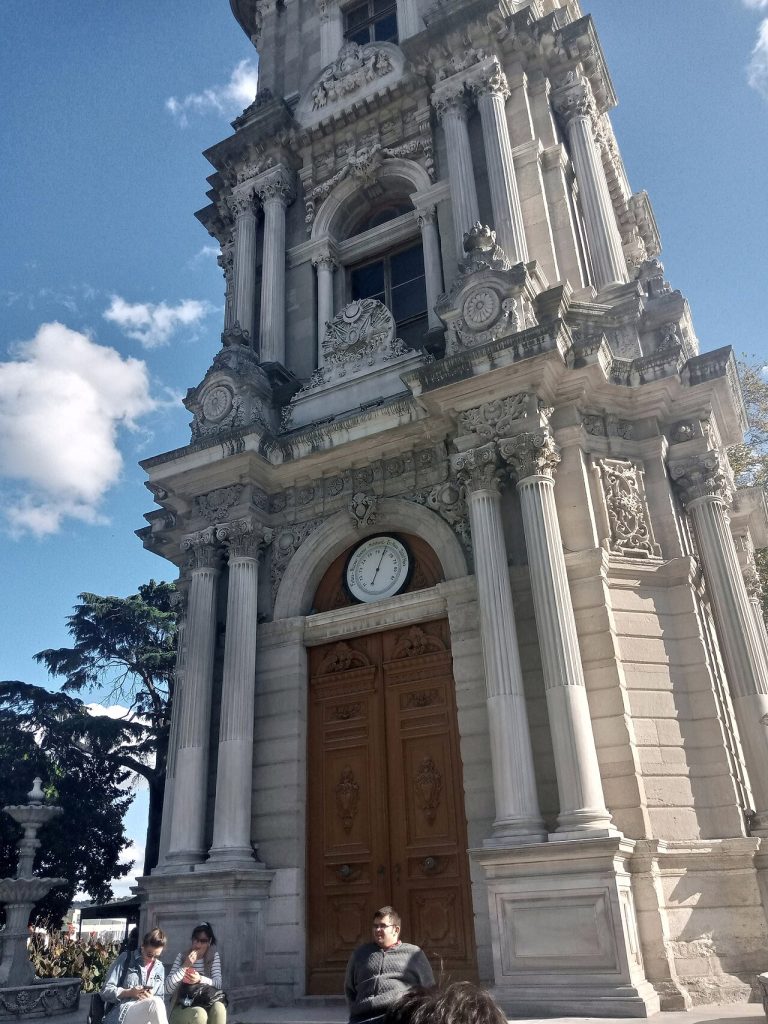
The gardens, the clock tower and the palace mosque are part of the same complex and can be seen without a ticket.
Visiting Dolmabahce
Tours are guided and timed, with separate tickets for selamlik and harem, and photography rules inside are strict. Queues are long in summer, so arrive early or book online.
Arrive by ferry or tram to Kabatas and walk along the water. The approach from the sea side is the one the building was designed for.
Afterwards walk up to Besiktas for lunch, or along the shore toward Ciragan, which is the next palace in this series and five minutes away.
Watch the Palace on Film
Visiting Dolmabahce Palace Today
Dolmabahce stands on the European shore of the Bosphorus between Kabatas and Besiktas, a short walk from the Kabatas tram and funicular stop and from the Besiktas ferry pier.
It opens daily except Mondays, with timed guided tours of the selamlik and harem on separate or combined tickets; the gardens, clock tower and museums have their own arrangements. Book online to avoid the queue.
Allow two to three hours. Find it here: https://www.google.com/maps?q=41.0392,29.0000
Palaces Nearby
You May Like
Topkapi Palace and the Court That Ruled an Empire