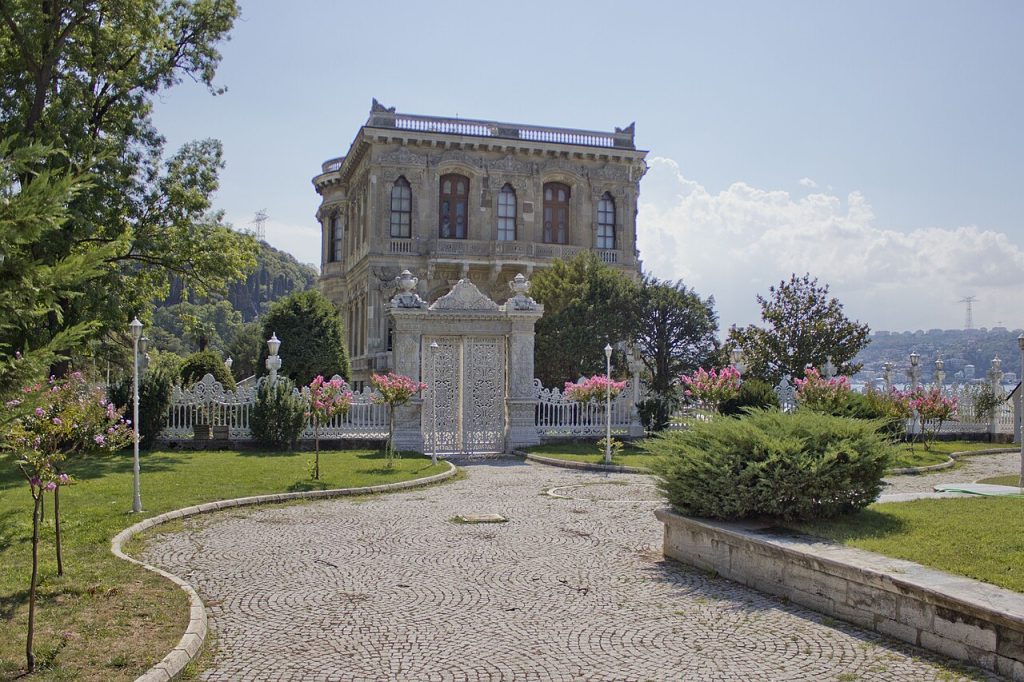
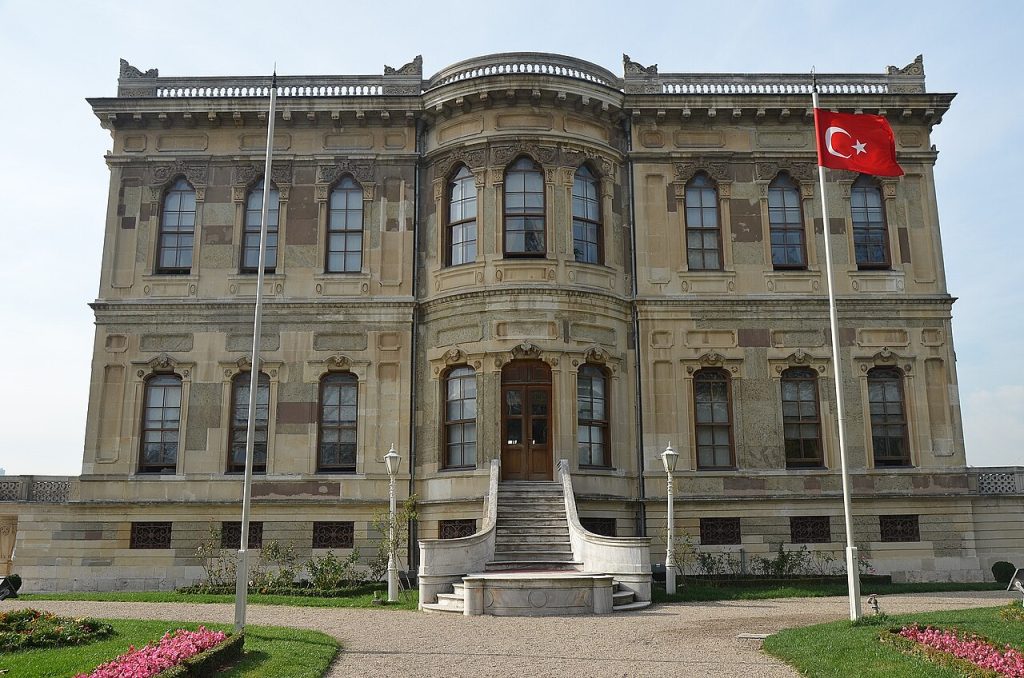
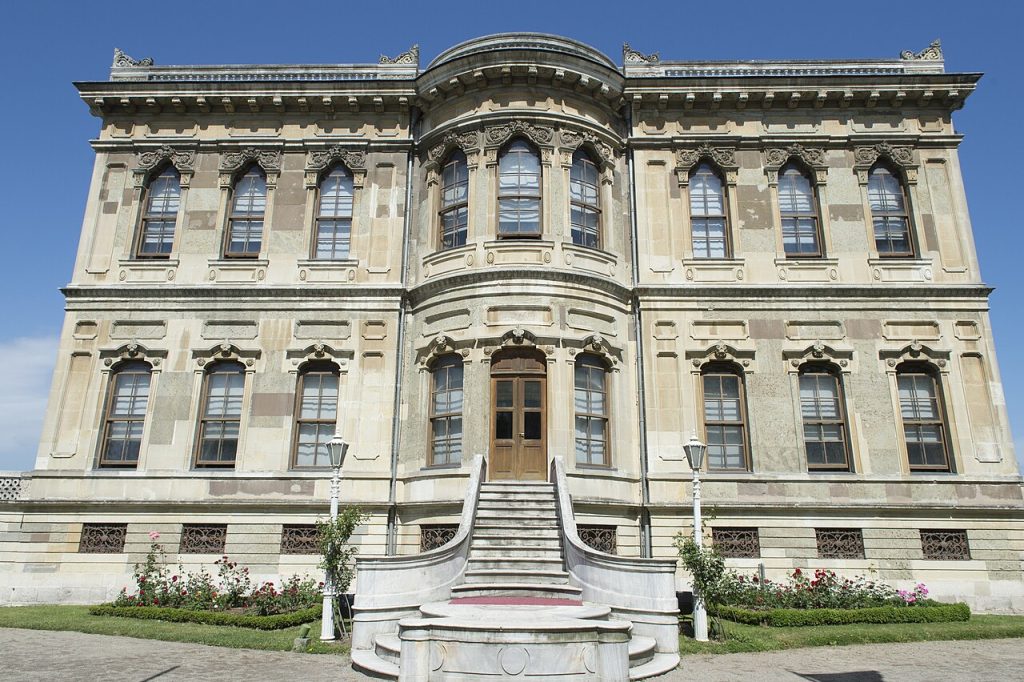
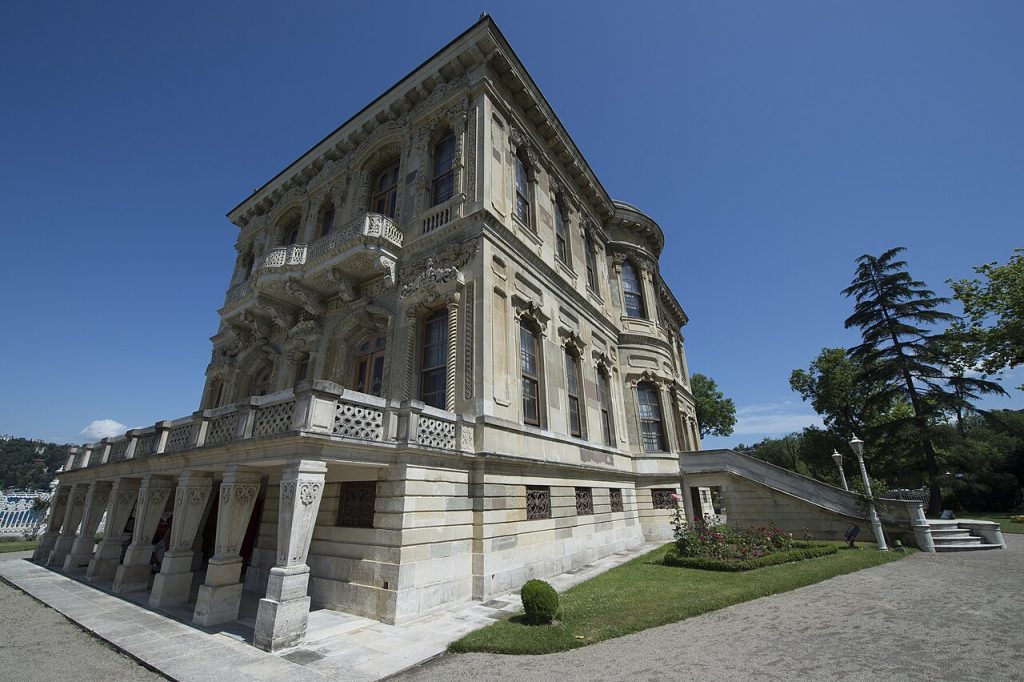
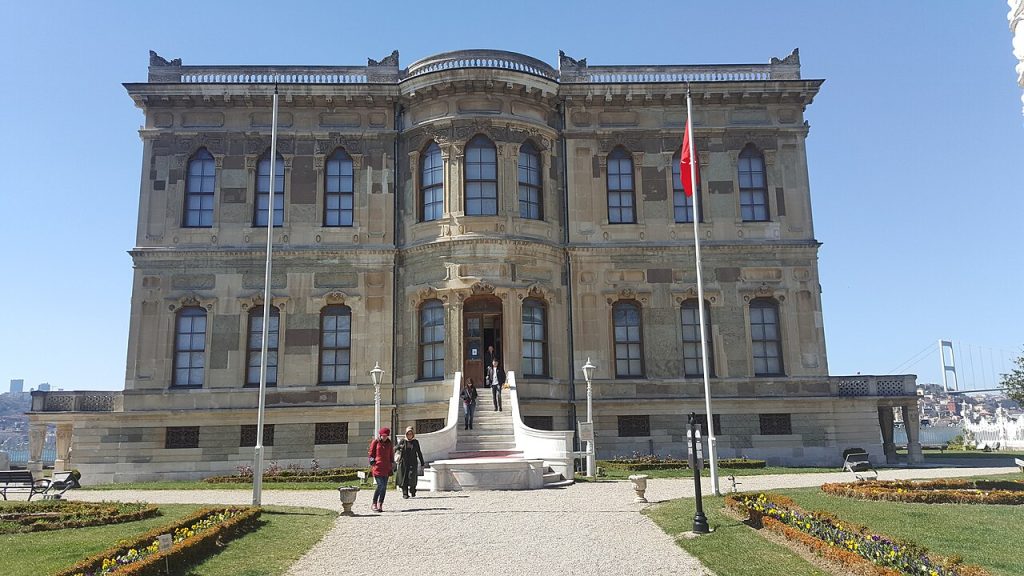
Now, stop at the marble steps on the water and look at the size of the building. Kucuksu has two floors, four rooms on each, and no bedrooms worth the name. It is one of the most heavily decorated buildings in Istanbul and it was never meant for sleeping.
It was a day pavilion. The sultan came by boat, spent an afternoon, received a few people, ate, looked at the water and went home. The elaborate decoration exists for a few hours of use at a time.
Around it lay the Sweet Waters of Asia, a meadow between two streams where Istanbul came out on Fridays and holidays to picnic, and that social scene is the reason the building is here.
- The Sweet Waters of Asia
- A City That Picnicked
- The Wooden Pavilion Before
- Abdulmecid and the New Pavilion
- Nigogayos Balyan’s Smallest Palace
- A Palace With No Garden Walls
- Inside the Four Rooms
- The Fireplaces and the Ceilings
- The Fountain of Mihrisah Sultan
- Guest House of the Republic
- A Favourite of Film Crews
- The Shore Around It
- Visiting Kucuksu
The Sweet Waters of Asia
Two small streams, the Goksu and the Kucuksu, reach the Bosphorus here, and the meadow between them was known to Europeans as the Sweet Waters of Asia.
It was imperial land, used for hunting and outings, and from the eighteenth century it became the city’s favourite recreation ground, reached by caique across the water.
Western travellers wrote about it constantly: carriages, veiled women, musicians, sweet sellers, boats drawn up on the grass.
A City That Picnicked
Ottoman Istanbul had a strong outdoor leisure culture: excursions to meadows, springs and groves, especially on Fridays, with food brought from home and musicians hired on the spot.
Social rules were relaxed at these gatherings compared with the city, which is why nineteenth-century European accounts are so fascinated by them.
The pavilion existed to let the sultan participate in that world without leaving the imperial frame.
The Wooden Pavilion Before
A wooden pavilion stood here from the eighteenth century, built by grand viziers and later taken into imperial use, and rebuilt more than once.
Mahmud II used it, and Abdulmecid decided in the 1850s to replace it with a stone building in the new European manner.
The current pavilion dates from 1856 and 1857, the same years Dolmabahce was completed.
Abdulmecid and the New Pavilion
Abdulmecid, the sultan of Dolmabahce, commissioned the new Kucuksu in the same European idiom, although at a fraction of the size. It was finished in 1857.
The purpose remained unchanged: short visits, hunting, receiving guests, resting during an excursion.
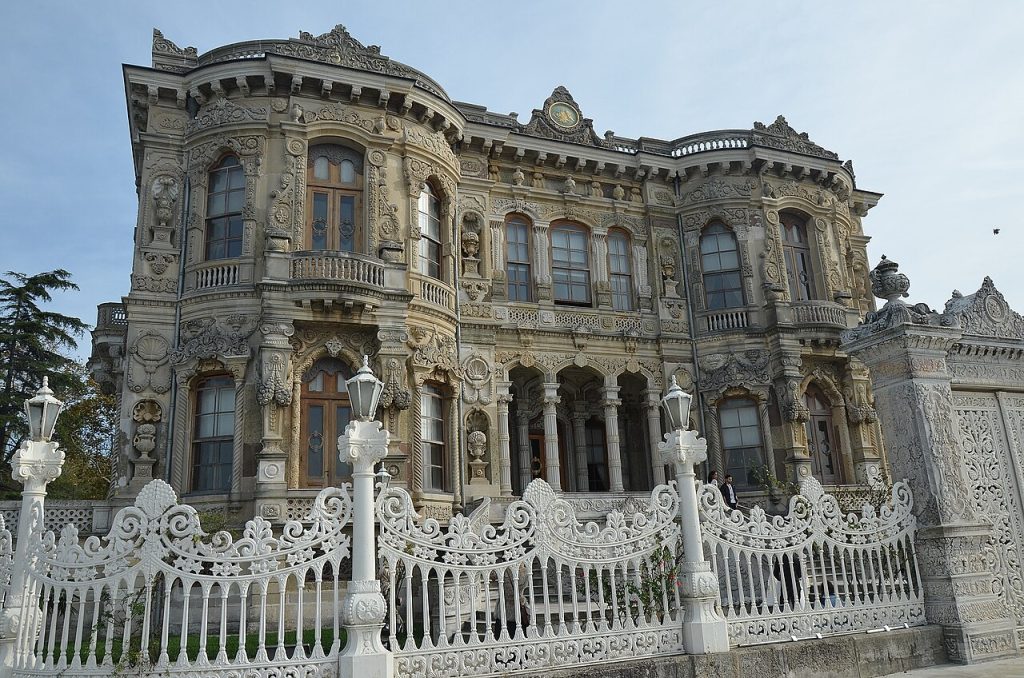
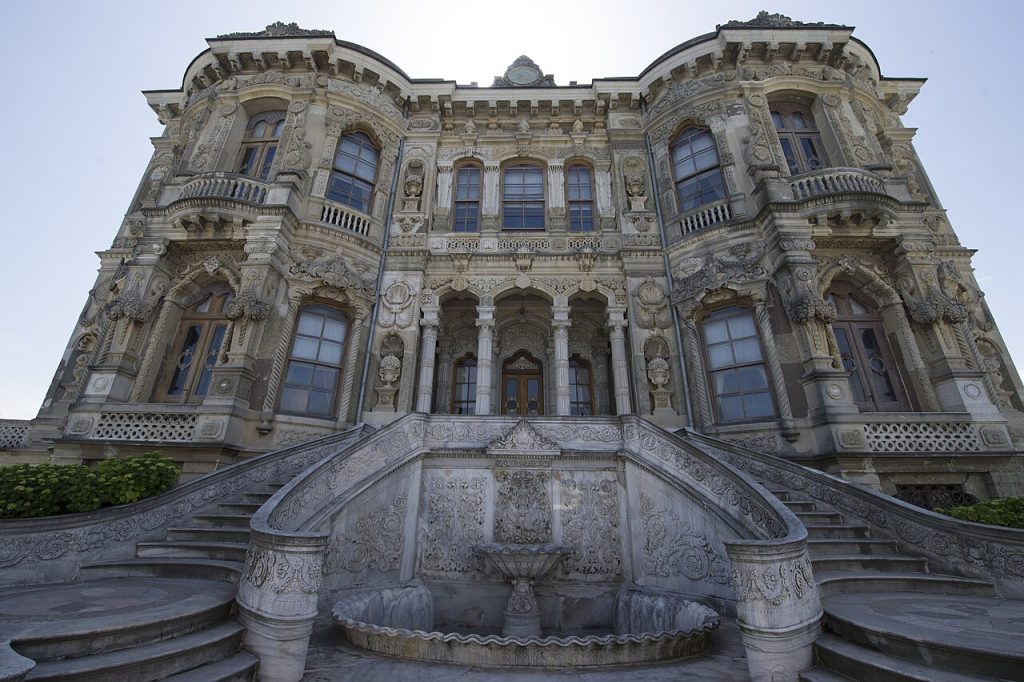
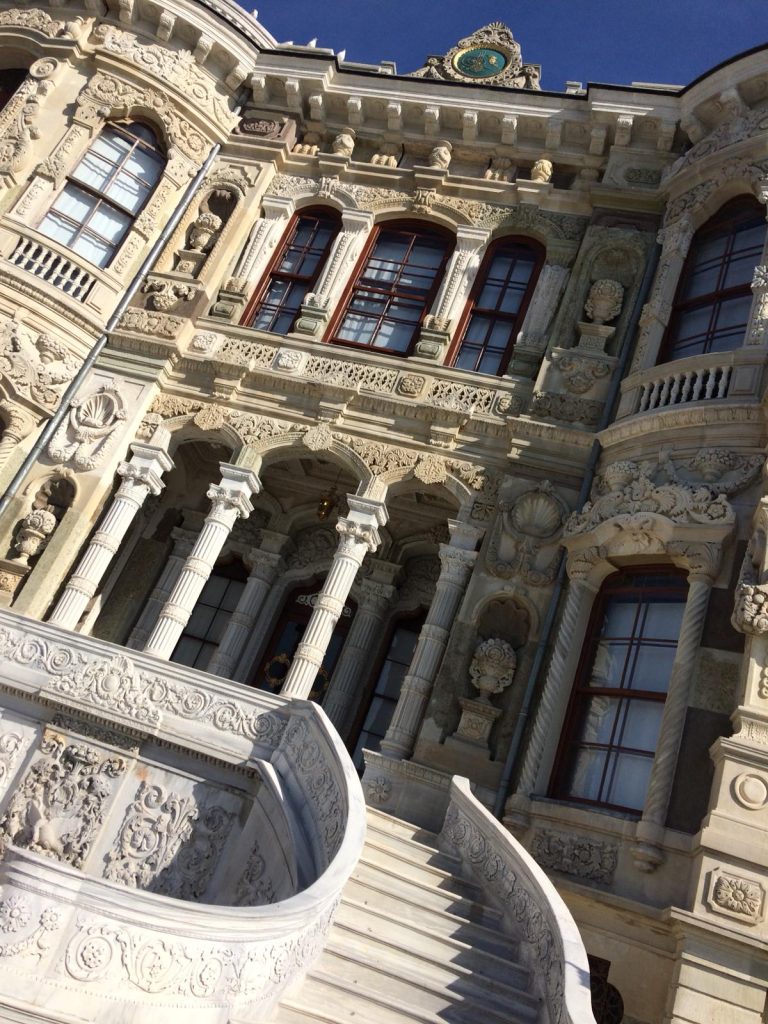
Later sultans used it the same way, and Abdulaziz added the ornate marble staircases and the cast-iron fencing that frame it today.
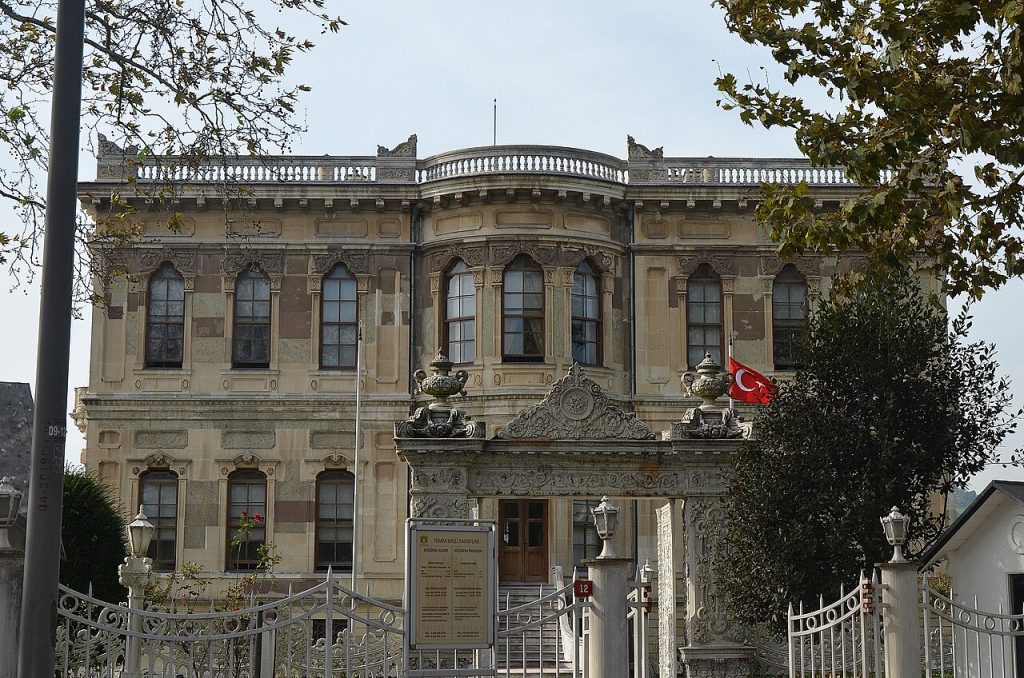
Nigogayos Balyan’s Smallest Palace
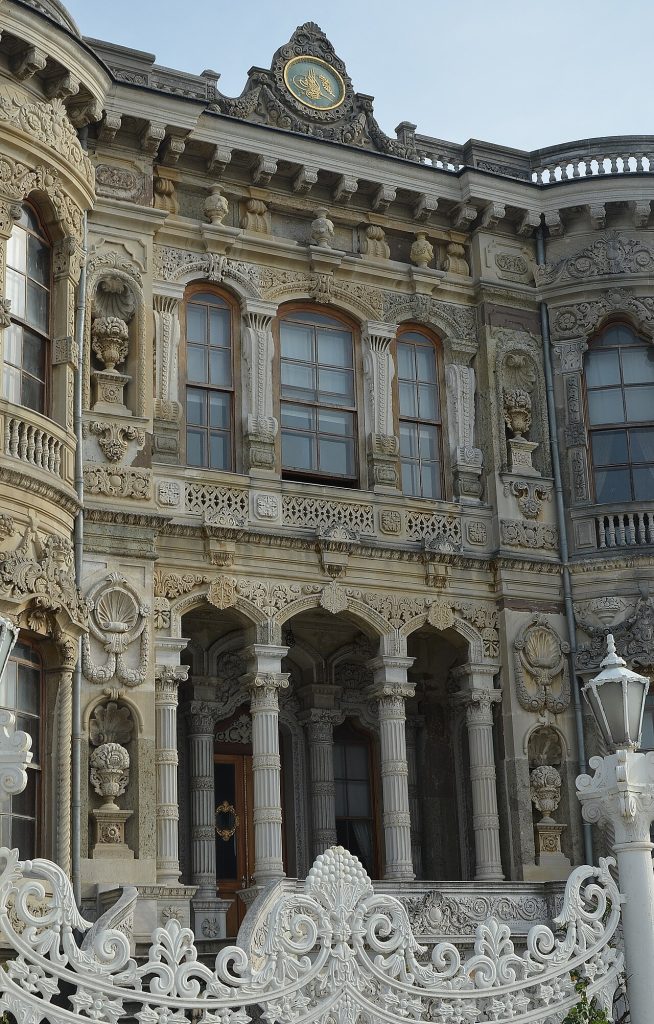
The architect was Nigogayos Balyan, who also worked on Dolmabahce and Ciragan. At Kucuksu he had almost no space to work with and compensated with decoration.
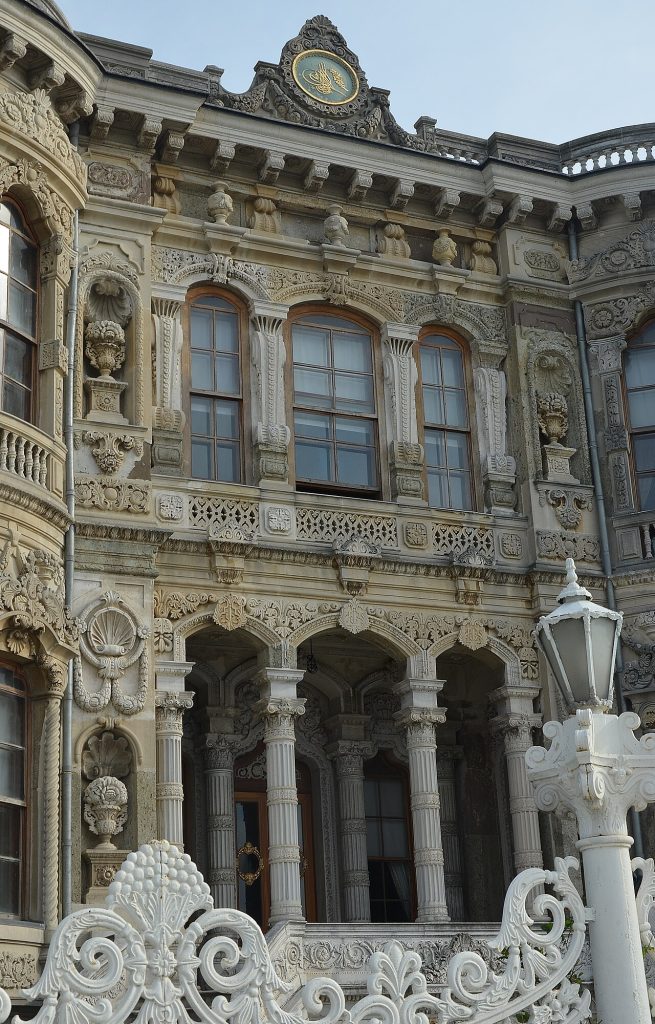
Every surface of the exterior carries carving: garlands, shells, scrolls, acanthus, swags. The building is small enough that the density of ornament does not become oppressive.
It is the most baroque object on the Bosphorus and the easiest to photograph.
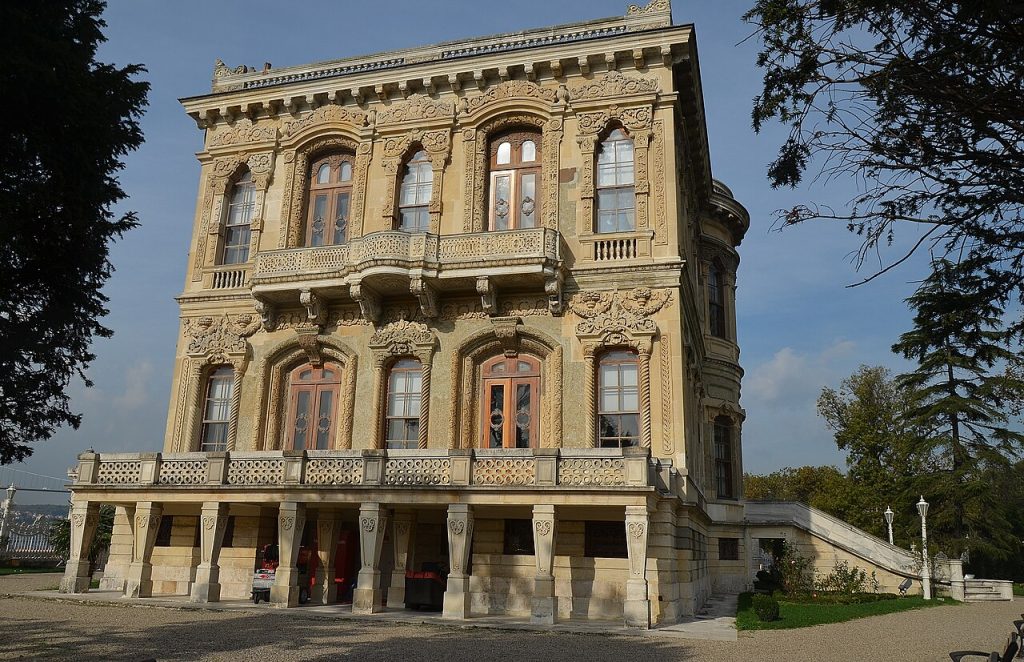
A Palace With No Garden Walls
Unusually, Kucuksu was built without high garden walls, open to the meadow, with only a low iron fence. That reflected its function as a place of leisure rather than government.
The open setting also meant that the people picnicking in the meadow could see the imperial pavilion and, occasionally, the imperial family.
That visibility was part of the point in an era when the dynasty was trying to appear closer to its subjects.
Inside the Four Rooms
Inside are eight rooms over two floors, arranged around central halls, with a staircase linking them. There is no kitchen in the building; food came from a separate service structure.
The rooms are furnished with European furniture, Hereke carpets, Bohemian chandeliers and parquet floors of extraordinary quality.
Because it is small, the visit takes half an hour, which makes it the ideal second stop on an afternoon.
The Fireplaces and the Ceilings
The marble fireplaces, carved in Italy, are the most admired objects in the pavilion, each one different and several of them more elaborate than anything of their size at Dolmabahce.
The painted ceilings, by Italian and Ottoman artists, use trompe l’oeil to make low rooms appear higher.
Look up in each room. The ceilings are the main event in a building where the walls are mostly windows.
The Fountain of Mihrisah Sultan
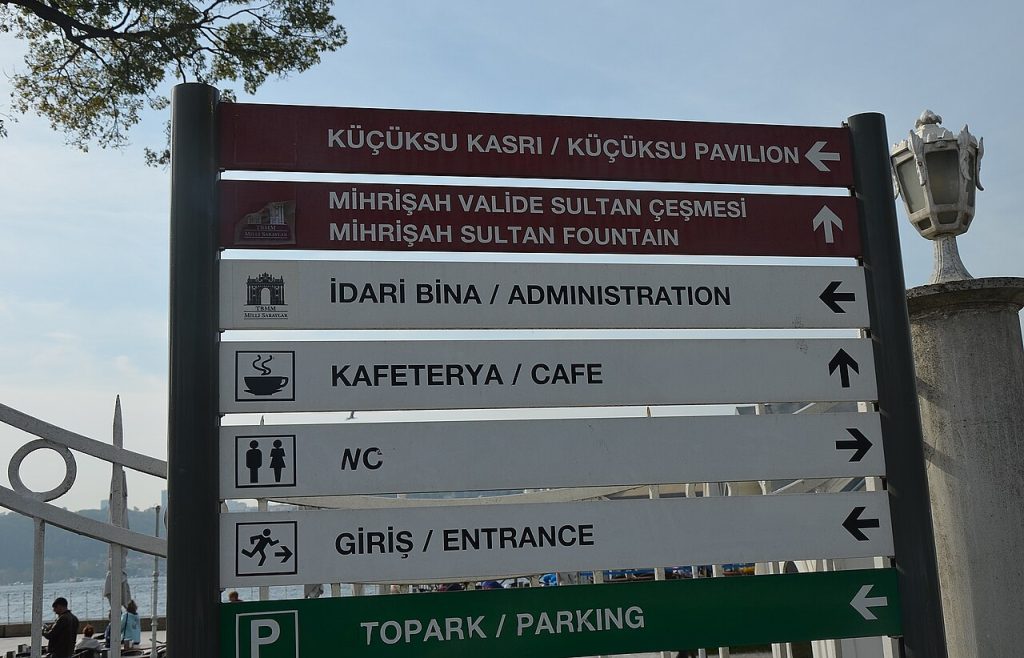
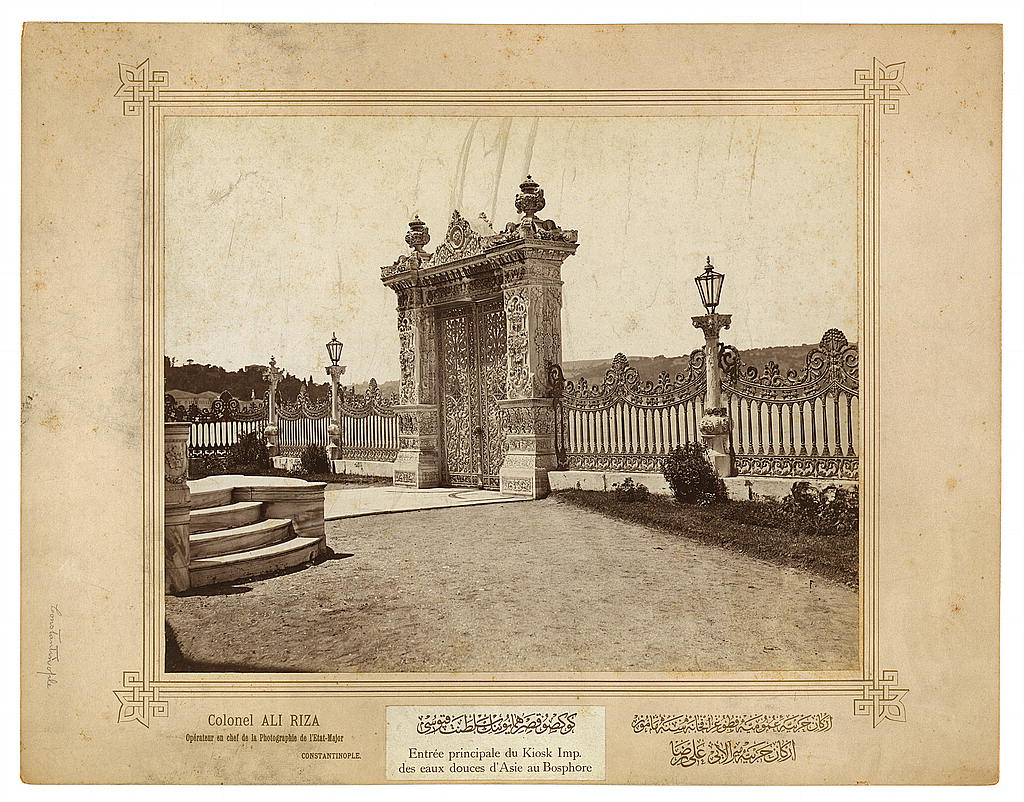
Beside the pavilion stands a large marble fountain built in 1806 by Mihrisah Sultan, mother of Selim III, one of the finest street fountains in Istanbul.
Ottoman fountains of this kind were charitable foundations, built by royal women and officials to provide water to travellers and to earn merit, and they are a defining feature of the city’s streets.
It predates the pavilion by half a century and is worth as much attention.
Guest House of the Republic
After 1923 the pavilion was used as a state guest house, then as a museum, with periods of closure for restoration. It has hosted official receptions for visiting delegations.
Its small scale made it practical for exactly the kind of use a large palace could not offer: an intimate dinner with a view.
It is now run by the national palaces directorate with the other imperial properties.
A Favourite of Film Crews
Kucuksu has appeared in Turkish films and television repeatedly, and internationally in the James Bond film The World Is Not Enough, where it served as a character’s residence.
Its photogenic qualities are obvious: small, ornate, waterfront, with a clean silhouette against the Bosphorus.
If the building looks familiar before you have ever visited, that is why.
The Shore Around It
North of the pavilion stands Anadolu Hisari, the fortress built by Bayezid I in the 1390s, the oldest Ottoman structure on the Bosphorus, with the wooden yali mansions of Kandilli and Goksu around it.
The Goksu stream can still be rowed in small boats, and fish restaurants line the shore.
It is one of the pleasantest stretches of the Asian side for a half-day walk.
Visiting Kucuksu
Combine it with Beylerbeyi to the south and Anadolu Hisari to the north. Buses run along the shore road from Uskudar, and ferries stop nearby in season.
The visit itself is short. The surroundings are what make the trip worthwhile.
Stand on the marble steps at the water, look across to the European shore, and picture the meadow behind you full of carriages and picnic cloths.
Watch the Pavilion on Film
Visiting Kucuksu Pavilion Today
Kucuksu stands on the Asian shore between Kandilli and Anadolu Hisari, reachable by bus from Uskudar in about half an hour, or by taxi from the Bosphorus bridges.
The pavilion opens as a museum on the national palaces schedule, closed on Mondays, with ticketed entry; the grounds, fountain and shore are freely accessible.
Allow an hour here and half a day for the stretch of shore including Anadolu Hisari. Find it here: https://www.google.com/maps?q=41.0817,29.0689
Palaces Nearby
You May Like
The Krasnoyarsk Surikov Estate and the Cossack Gentry of the Yenisei


One thought on “Kucuksu Pavilion and the Meadow of the Sweet Waters”