Now, stop inside the main hall and look at the walls. Calligraphic panels run above the windows, the ceiling is painted wood, the windows are low and wide, and there is no European furniture anywhere. You are standing in the last surviving Ottoman palace interior of the classical kind in Istanbul.
Everything else in this series is marble, French and nineteenth century. Aynalikavak is wood, Ottoman and eighteenth century, and it shows how sultans lived before the court decided it needed to look European.
It survives by accident. The complex it belonged to was enormous, and this one pavilion is all that is left.
- The Shipyard Garden
- Where the Name Comes From
- A Vanished Palace Complex
- Selim III and the Rebuilding
- The Interior That Survived
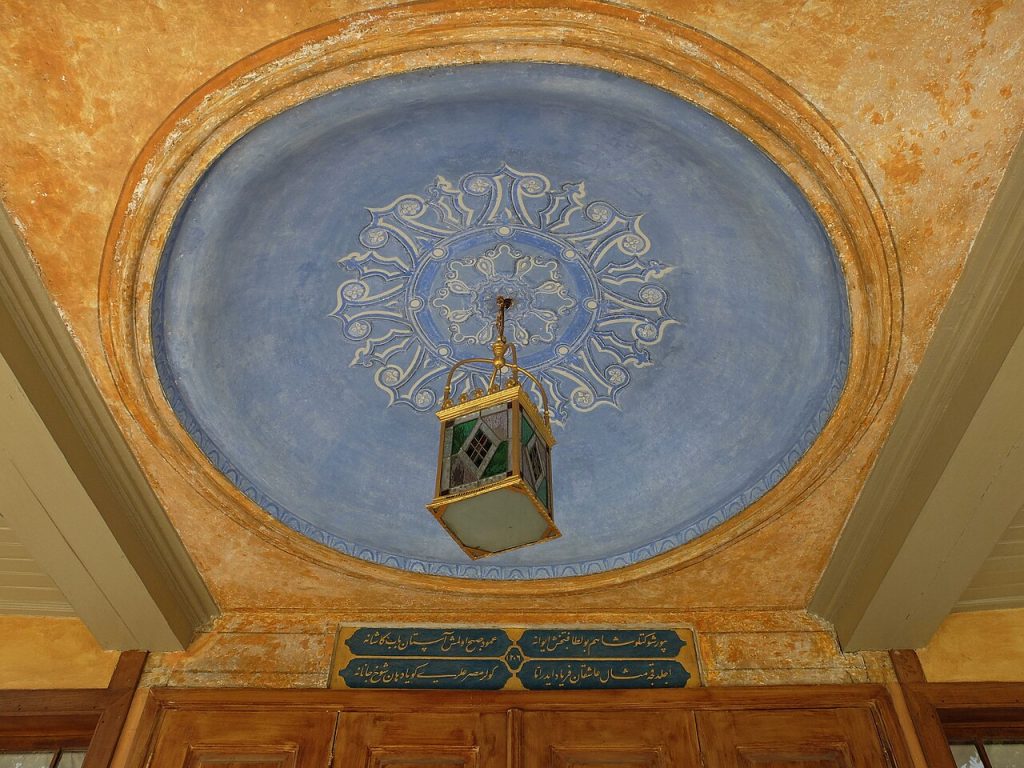
- Calligraphy as Decoration
- Selim III the Composer
- The Treaty Signed Here
- Demolition and Survival
- The Museum of Turkish Music
- The Golden Horn Around It
- Restoration
- Visiting Aynalikavak
The Shipyard Garden
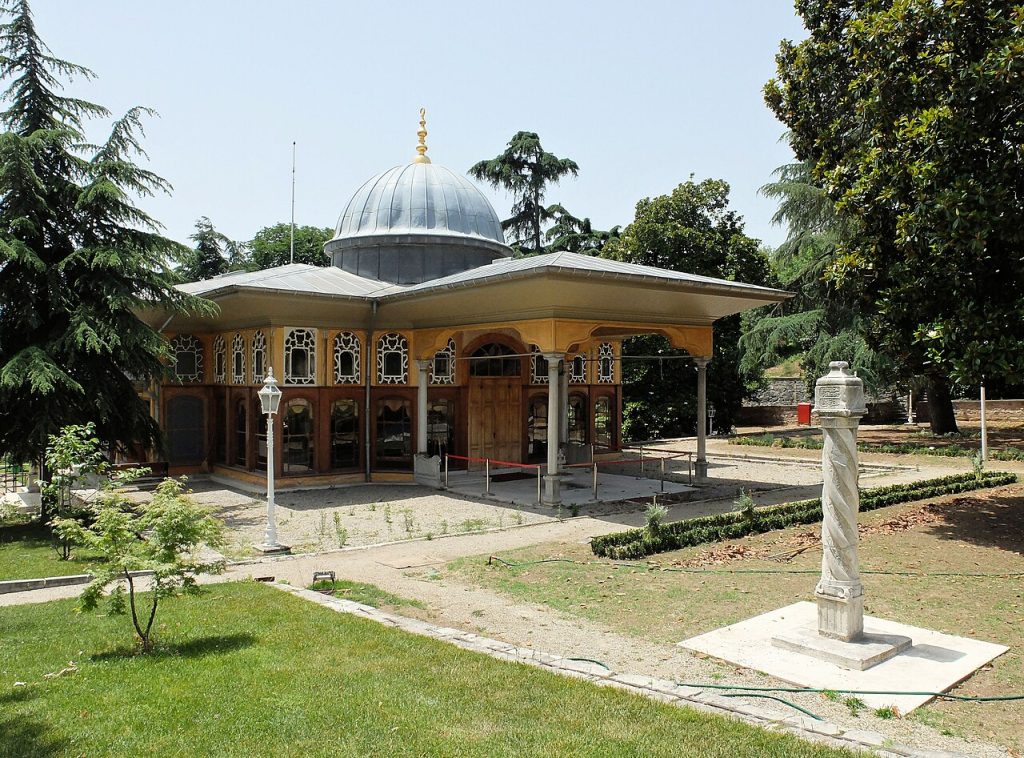
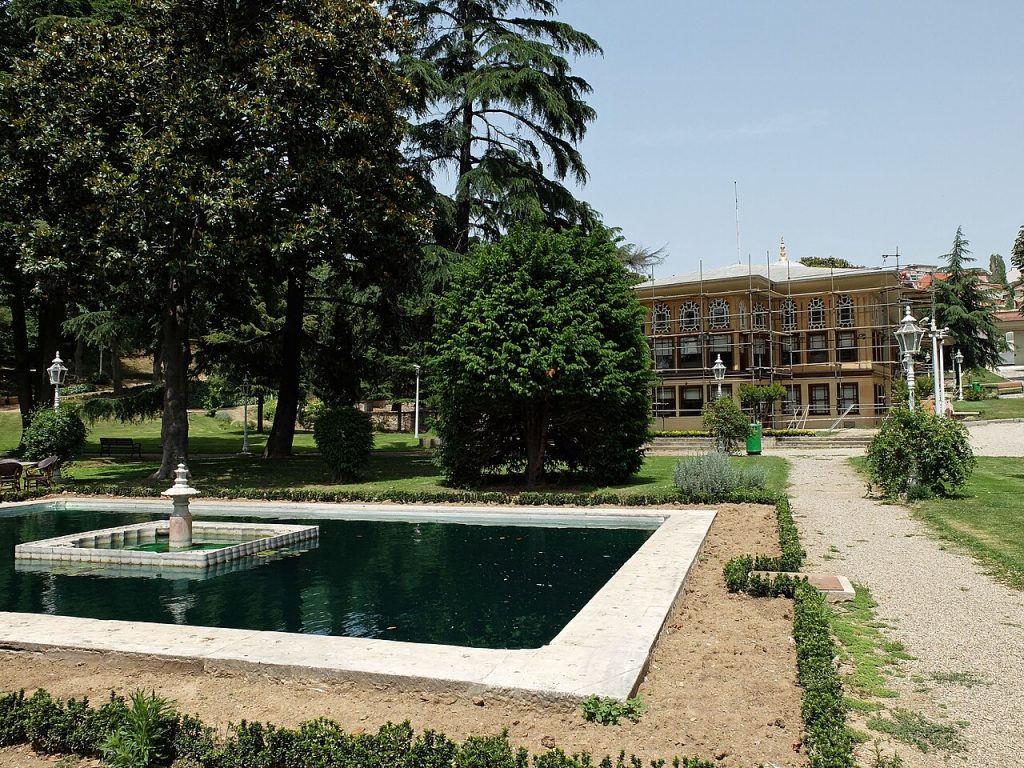
The pavilion stands at Hasköy on the northern shore of the Golden Horn, beside what was for centuries the imperial shipyard, the Tersane, where the Ottoman navy was built.
Gardens were laid out here in the fifteenth century, and successive sultans built pavilions among them, so that the court could watch launches and reviews.
The whole area was a mixture of industry, naval administration and imperial leisure, which is an unusual combination.
Where the Name Comes From
Aynalikavak means mirrored poplar. The usual explanation is that the Venetian republic presented large mirrors to the sultan, which were installed in the pavilions among the poplar trees of the garden.
Venetian mirrors were a diplomatic gift of the first rank in the seventeenth century, expensive and technically impressive, and giving them signalled respect.
The poplars are gone and so are the original mirrors, but the name stuck.
A Vanished Palace Complex
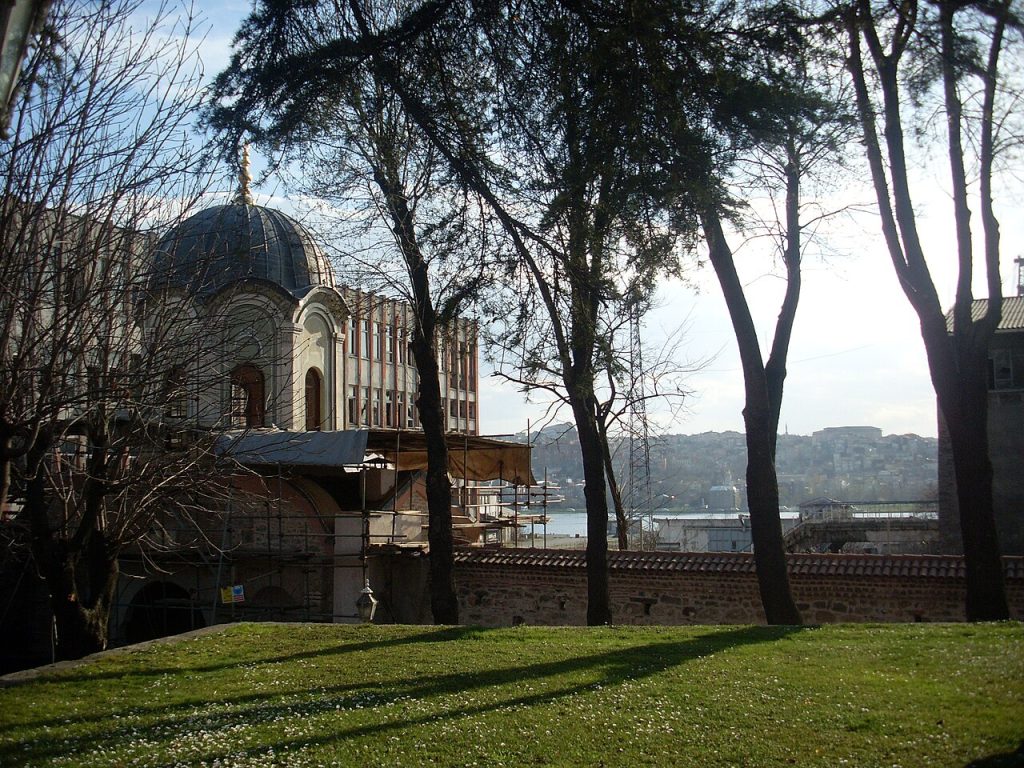
At its height the Aynalikavak complex covered a large area with multiple pavilions, gardens, pools and service buildings, used regularly by sultans from the seventeenth century onward.
Fires, the expansion of the shipyard and nineteenth-century industrial development consumed almost all of it.
What remains is a single building in a reduced garden, surrounded now by a working district.
Selim III and the Rebuilding
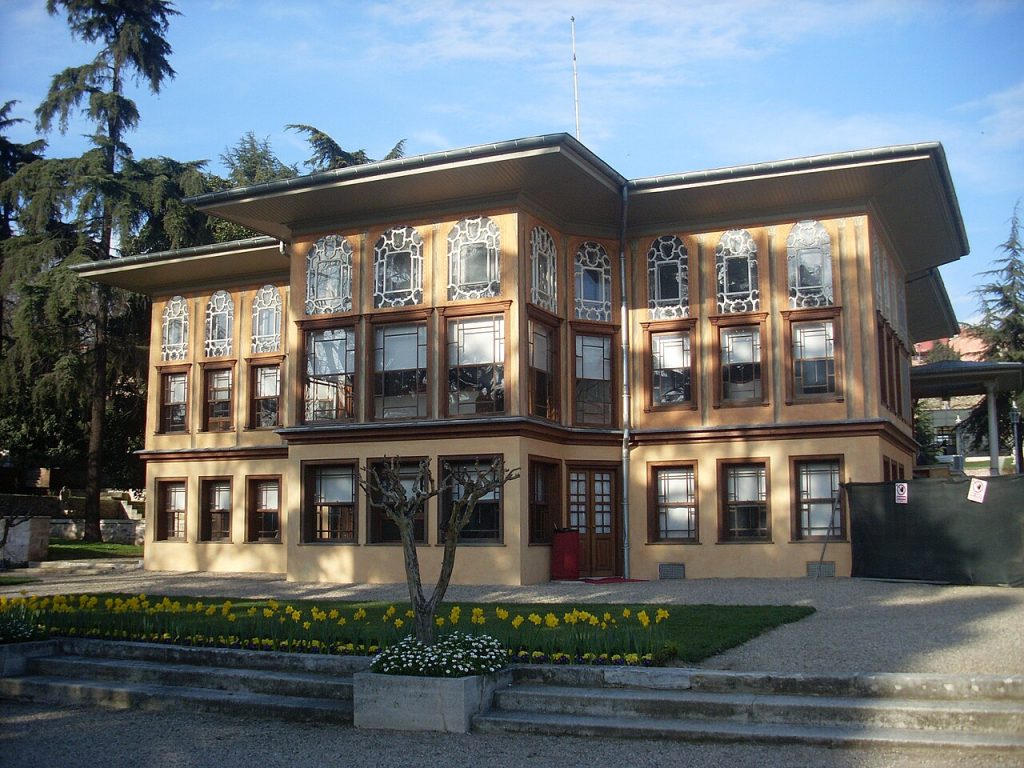
The present building dates largely from the reign of Selim III, who rebuilt it in the 1790s. Selim was a reforming sultan who tried to modernise the army and was deposed and later killed for it in 1808.
He was also one of the greatest composers in the Ottoman classical tradition, with dozens of surviving compositions and several musical modes attributed to him.
This pavilion was one of his favourite places, and the music museum inside it is therefore well chosen.
The Interior That Survived
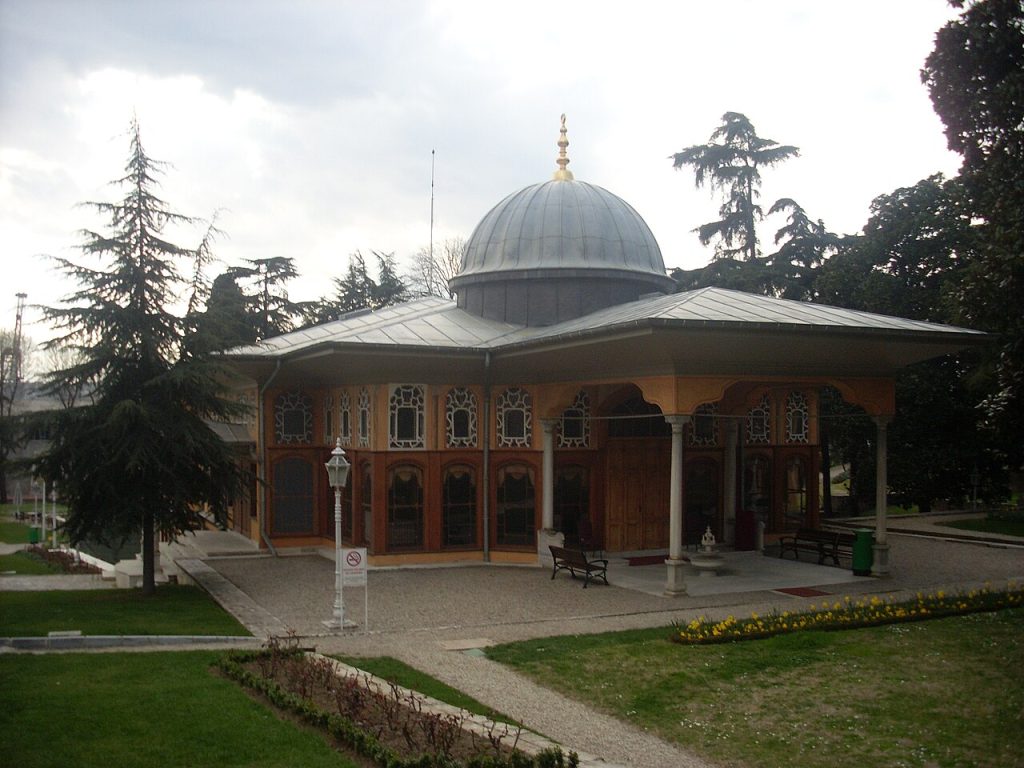
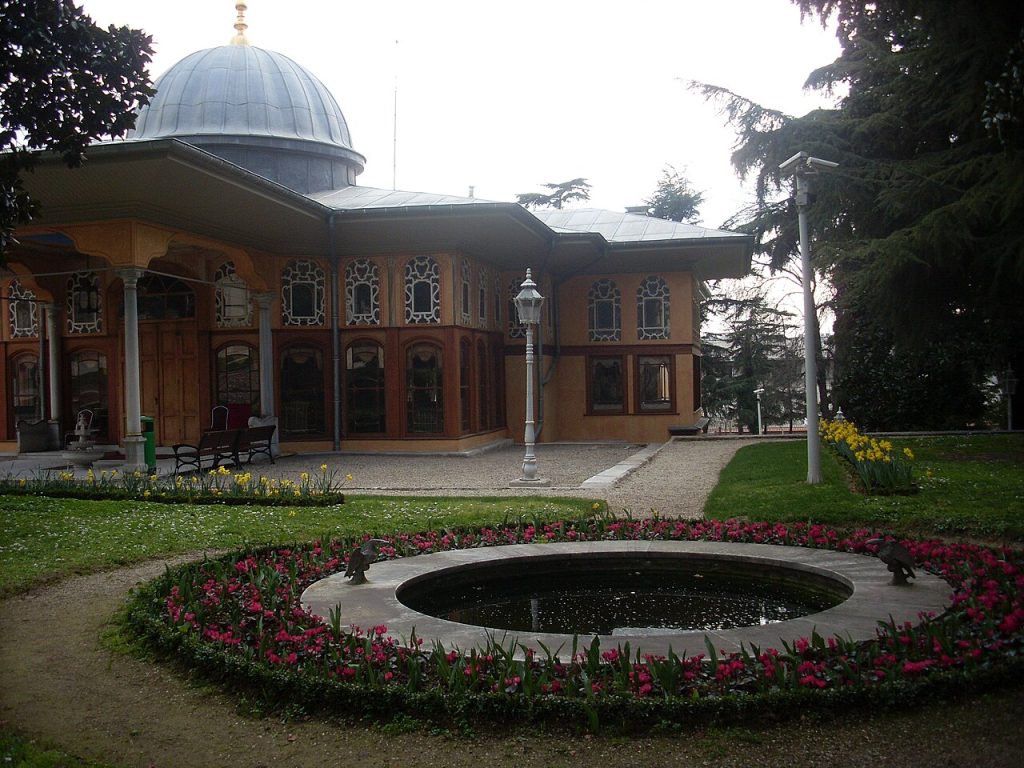
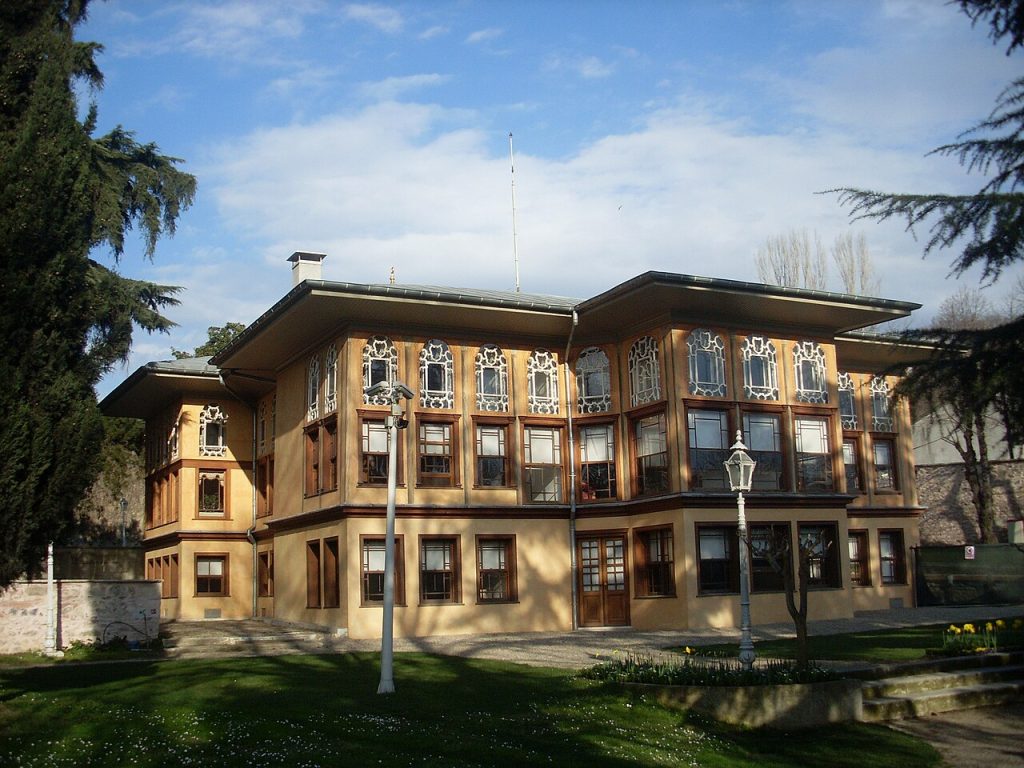
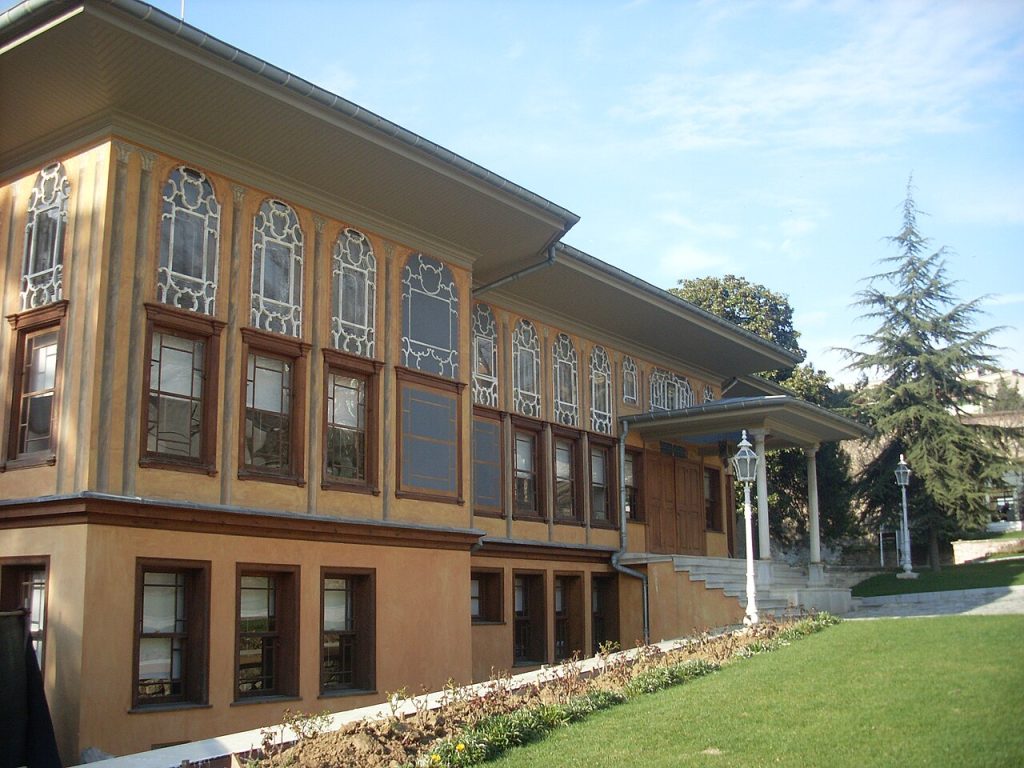
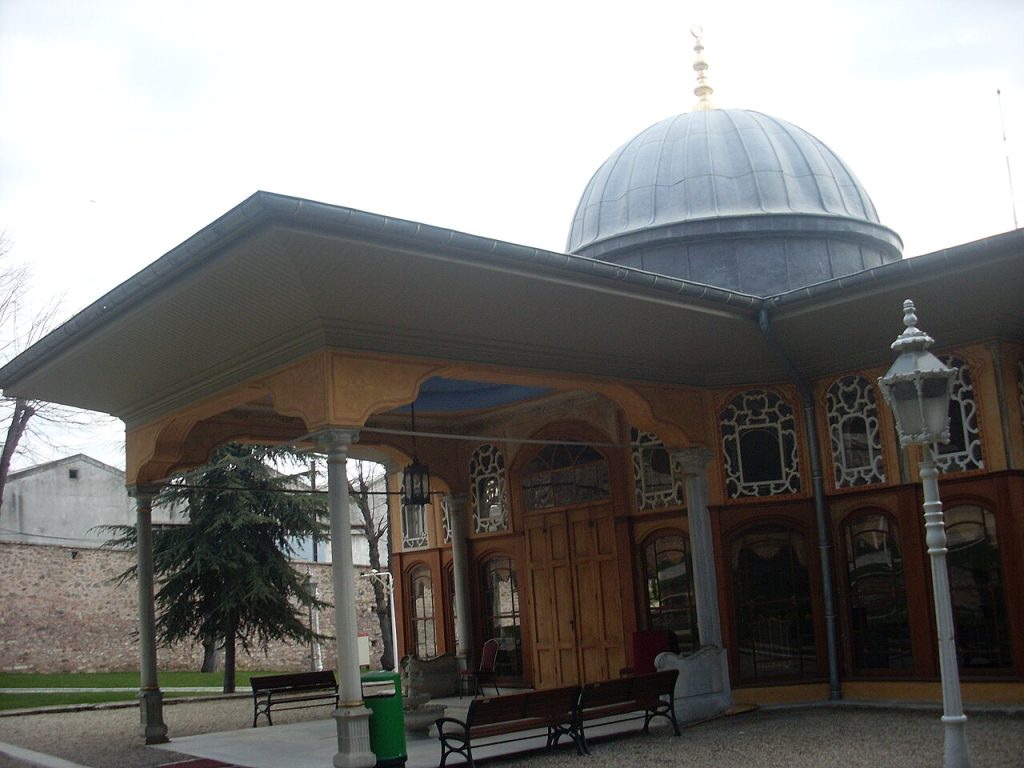
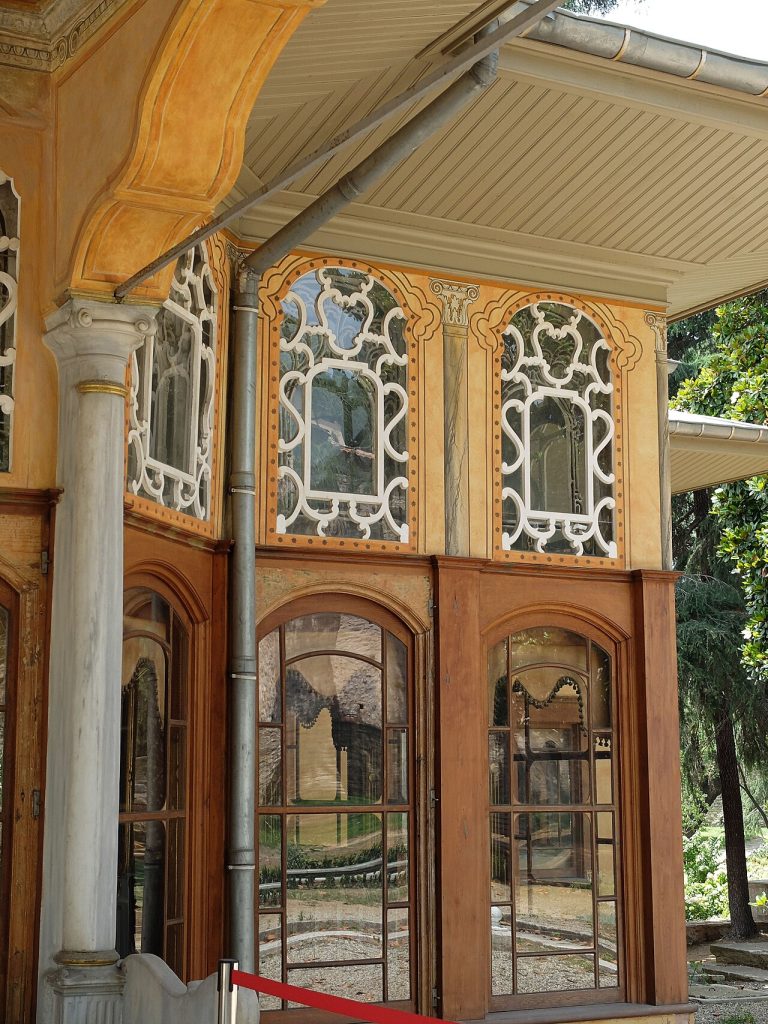
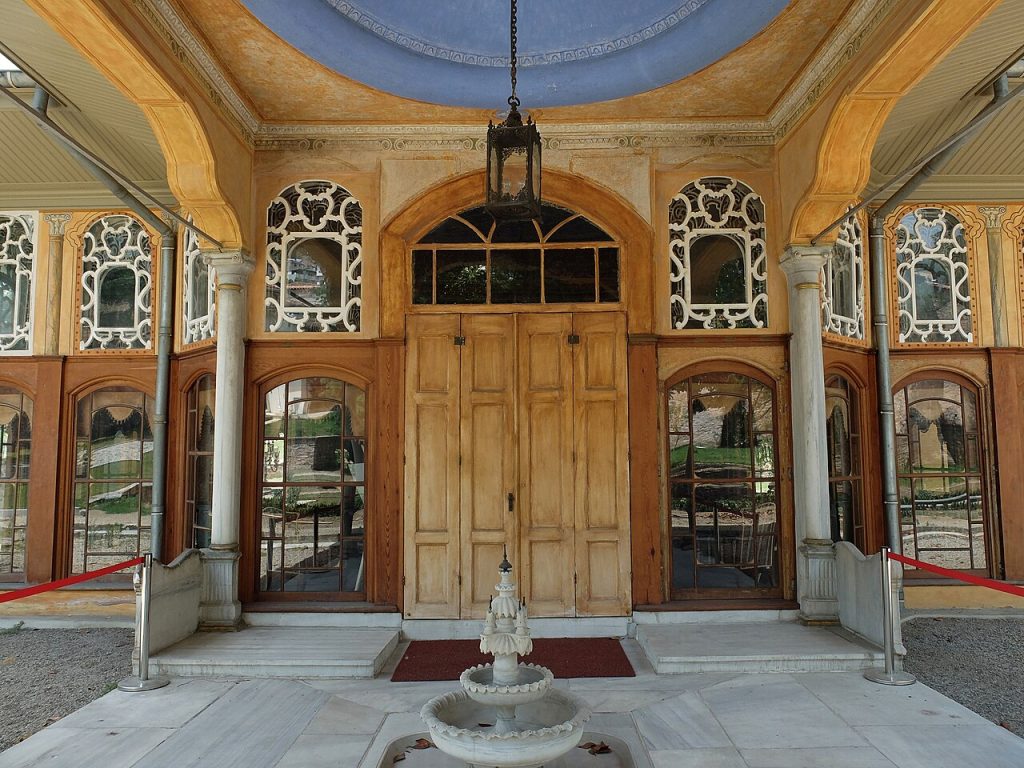
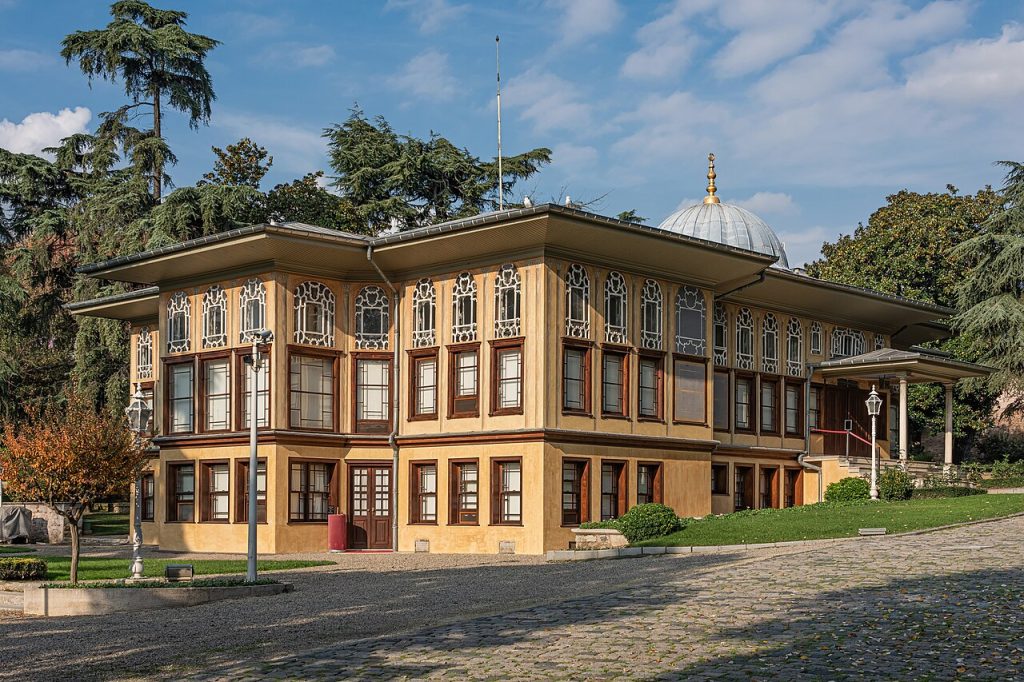
The main hall has a raised seating area, low divans around the walls, wide windows with stained glass above, painted wooden ceilings and a domed central section.
There are no chairs in the original arrangement, no fireplaces of the European kind, and no corridors. Rooms open into one another.
This is how Ottoman interiors worked before the 1850s, and almost nothing else of it survives in the city outside Topkapi.
Calligraphy as Decoration
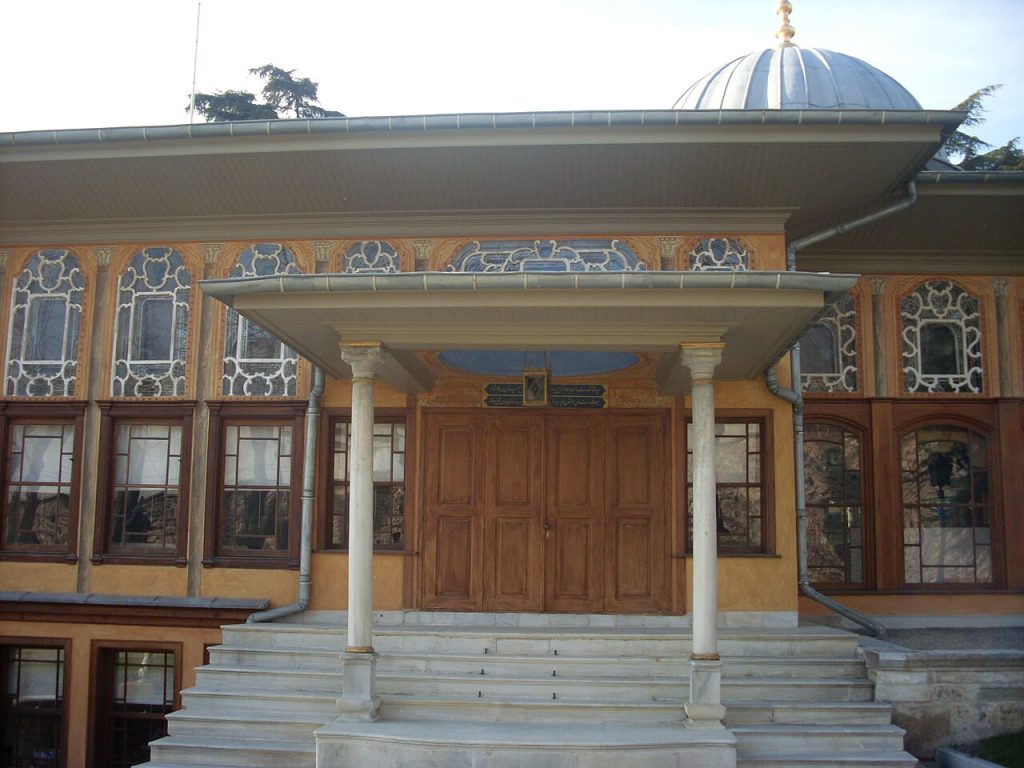
Above the windows run calligraphic panels, including verses by Sultan Selim himself and by court poets, executed by the best calligraphers of the period.
In Ottoman decorative practice, writing is the highest art form, and a wall of calligraphy carries more status than a wall of painting.
Look at the proportions of the letters rather than trying to read them, and the panels become comprehensible as design.
Selim III the Composer
Selim III composed in the makam system of Ottoman classical music, invented new modes, played the ney and the tanbur, and gathered musicians at court including the Armenian composer Hamparsum Limonciyan and the great Dede Efendi.
Hamparsum devised a notation system at Selim’s request, which is why so much eighteenth-century Ottoman music survives in written form.
The pavilion’s collection of instruments connects directly to that circle.
The Treaty Signed Here
In 1779 the Aynalikavak Convention was signed in this complex between the Ottoman Empire and Russia, settling questions left open by the treaty of Kucuk Kaynarca five years earlier, particularly over Crimea.
The convention recognised Russian influence in Crimea in practice, and within four years Russia annexed the khanate outright.
That sequence is where the Crimean palaces earlier in this series, Livadia and Alupka, ultimately come from.
Demolition and Survival
Through the nineteenth century the complex shrank as the shipyard expanded and the court moved to the Bosphorus. Buildings were demolished, gardens built over, and the surviving pavilion was used for storage and offices.
Neglect was in this case protective. Nobody modernised the interior because nobody important lived in it.
By the twentieth century it was the oldest intact palace interior in the city outside Topkapi, almost by default.
The Museum of Turkish Music
The pavilion now houses a museum of Turkish music instruments, with neys, tanburs, uds, kanuns, kemences and percussion, many of them historic, displayed in the rooms where Selim III composed.
Recordings play in the background, and the combination of the instruments, the calligraphy and the wooden interior is unusually coherent.
Occasional concerts are held in the main hall, and they are the best way to experience the building.
The Golden Horn Around It
Hasköy was historically a Jewish and later mixed district, with synagogues, workshops and the shipyard. The Golden Horn became heavily industrial and polluted in the twentieth century and was cleaned up from the 1980s.
Nearby stand the Rahmi Koc Museum of industry and transport, in old shipyard and foundry buildings, and the Sutluce and Eyup waterfronts.
The area rewards a half-day, and almost no tourists come.
Restoration
The pavilion has been restored several times in the twentieth and twenty-first centuries, with work on the timber structure, the painted ceilings and the calligraphic panels.
Wooden buildings require continuous maintenance, and the survival of this one is a long argument against the assumption that stone lasts and timber does not.
It reopened to the public under the national palaces directorate and is shown as a museum.
Visiting Aynalikavak
Take a Golden Horn ferry to Hasköy or a taxi from Taksim or Sisli. The pavilion is set in a small garden behind a wall and is easy to walk past.
Combine it with the Rahmi Koc Museum next door, which is one of the best museums in the city and almost unrelated in subject.
Go slowly in the main hall. There is nothing else like it left in Istanbul.
Watch the Pavilion on Film
Visiting Aynalikavak Pavilion Today
Aynalikavak stands at Hasköy on the northern shore of the Golden Horn, reachable by Golden Horn ferry, by bus from Taksim or Sisli, or by taxi in about fifteen minutes from Beyoglu.
The pavilion opens as a museum under the national palaces directorate, closed on Mondays, with ticketed entry including the instrument collection; concerts are occasionally held in the main hall.
Allow an hour, and combine it with the Rahmi Koc Museum a few minutes away. Find it here: https://www.google.com/maps?q=41.0431,28.9478
Palaces Nearby
You May Like
Ihlamur Pavilion and the Valley of Linden Trees