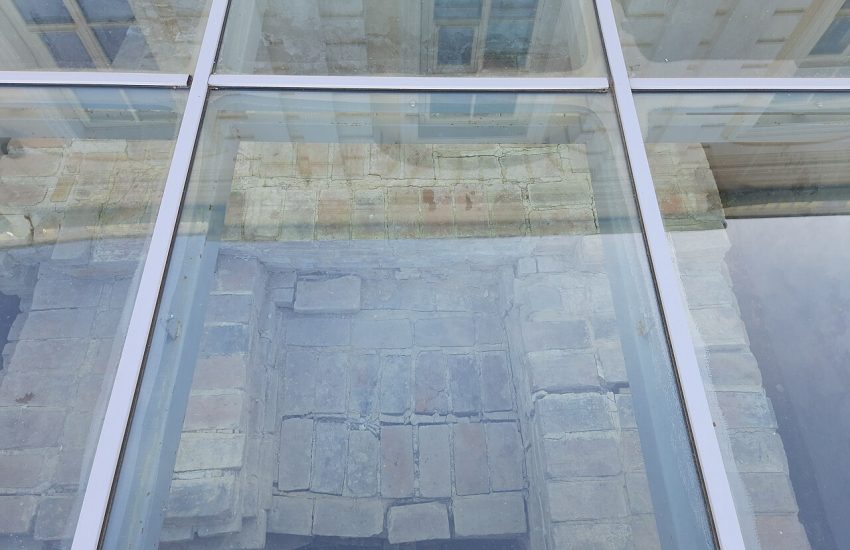
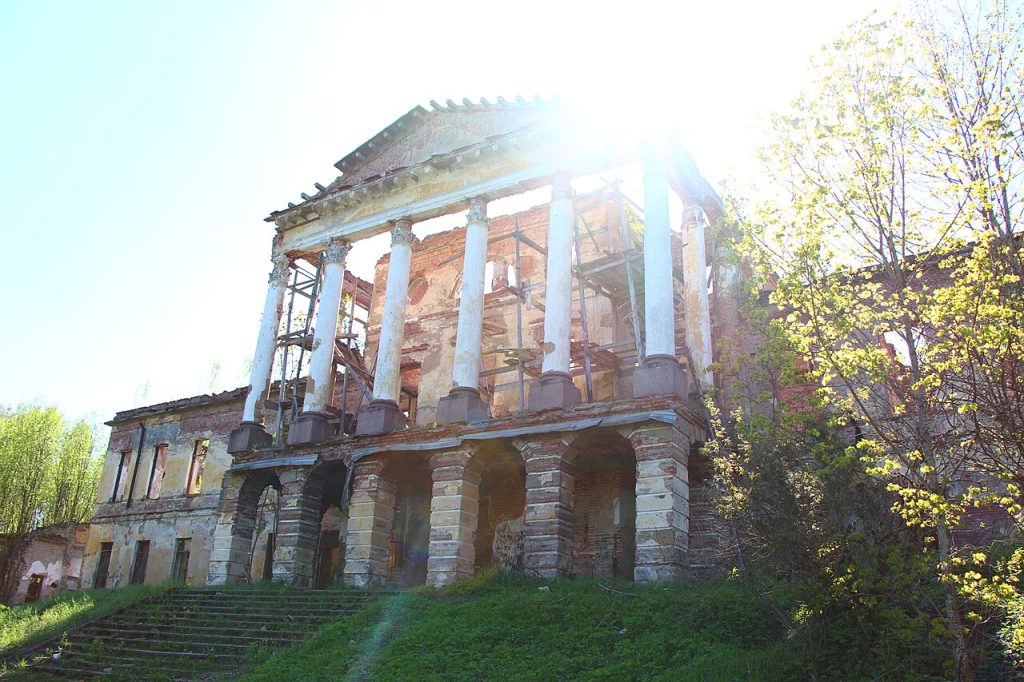
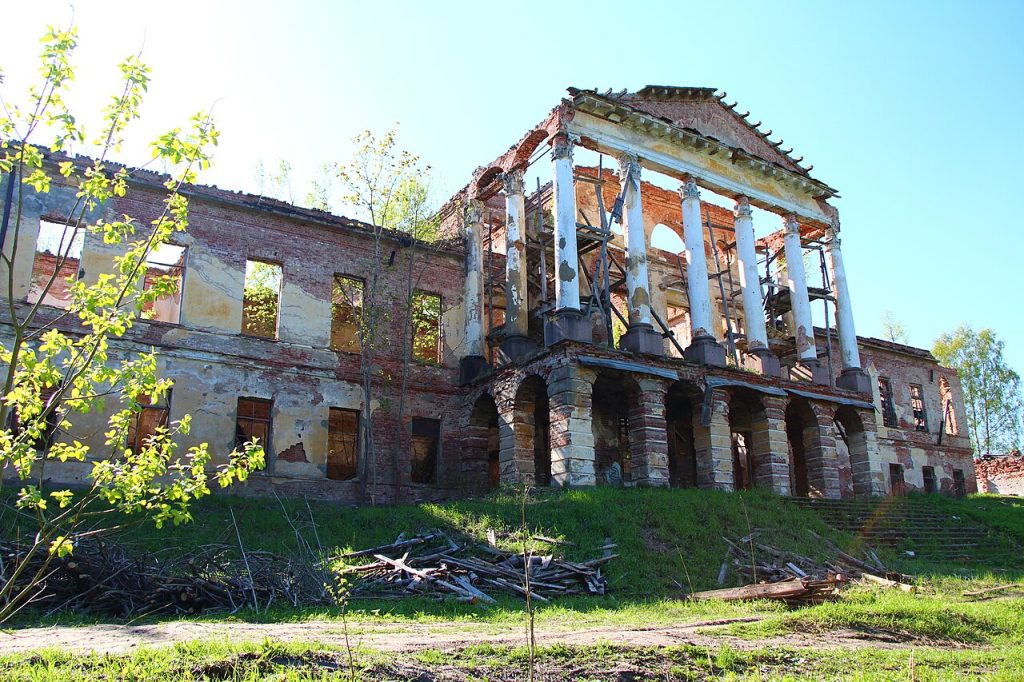
Twenty kilometers south of Peterhof, where the springs rise that feed the great fountains, stands the ghost among the imperial residences. Ropsha Palace is a ruin: a long classical shell on a hill above cascading ponds, its portico open to the sky, its park gone half wild. Yet this broken house carries as much history as any gilded hall on the coast, including the darkest single event in the Romanov family story.
It was here, in July 1762, days after the coup that crowned Catherine the Great, that her deposed husband Peter III died in the custody of her allies, a death officially blamed on illness and believed by Europe to be murder. The palace that witnessed it had belonged to Peter the Great, to his daughter Elizabeth, and would later serve emperors as a hunting seat and honeymoon house.
This guide tells Ropsha’s whole story: the healing springs and Peter’s bathhouse, the grand rebuilding under Elizabeth and Catherine, the fatal week of 1762, the paper mill and the fish ponds, the twentieth century that emptied the house, and what a visitor finds today at the most haunting address in the St Petersburg region.
- The Springs of Ropsha
- Peter the Great’s Estate
- Elizabeth’s Pleasure Palace
- A Palace for Peter III
- The Fatal Week of 1762
- Death and Mystery
- Catherine and the Aftermath
- The Paper Mill and the Ponds
- Hunting Seat of the Emperors
- Revolution and War
- The Long Fall into Ruin
- Rescue Plans and Restoration
- Ropsha Today
- Watch Ropsha Palace on Film
- Visiting Ropsha Palace Today
- Palaces Nearby
The Springs of Ropsha
Ropsha owes everything to water. The village sits on the edge of the Izhora upland, where powerful springs break from the limestone, cold, abundant, and famously pure, and those springs wrote the estate’s history twice over: they drew the court for their supposed healing powers, and they made the fortune of the fountains at Peterhof, twenty kilometers downhill.
The water road built in the 1720s still begins here. Engineers led the Ropsha springs into canals and ponds that feed, by gravity alone, every jet of the Grand Cascade, and the system remains in service three centuries later, a protected monument in its own right whose keepers still walk the channels from Ropsha to the sea.
The springs also filled a staircase of ponds below the palace hill, which later generations stocked with trout and carp for the imperial table. The ponds, the cold streams, and the trees around them remain the loveliest part of Ropsha, and the reason the place feels alive even with its palace dead.
Peter the Great’s Estate
The old Ingrian village of Ropsha fell to Russia in the Northern War, and Peter the Great took the high ground for himself. Attracted by the mineral springs, he kept a modest wooden house and bathhouse here and, tradition says, took cures in the icy water; a church of St Peter and Paul served the little estate.
Peter granted neighboring land to his field marshal and comrades, and under his daughter the estate consolidated into a single crown property. Of the founder’s Ropsha nothing certain survives above ground, but the estate’s bones, the hill, the springs, the first ponds, are his era’s work.
The tsar’s choice of Ropsha for rest cures gave the place its first identity, as a health retreat before it was a pleasure palace, and the spring water’s reputation never faded: into living memory, Leningraders drove out to fill bottles at the roadside fonts.
Elizabeth’s Pleasure Palace
Empress Elizabeth, who turned so many of her father’s modest seats into baroque spectacles, did the same at Ropsha. From the 1740s her architects, with Rastrelli credited for the design’s final form, raised a proper palace on the hill: a central block with wings and galleries, terraces toward the ponds, and a park laid out in the French taste with the Strelka river led through cascades.
Ropsha became a stop on the empress’s hunting progresses and a pleasure house between Peterhof and the inland estates, with the ponds supplying the famous Ropsha trout to her table. Accounts describe festivities in the galleries and the empress fishing her own ponds with golden tackle.
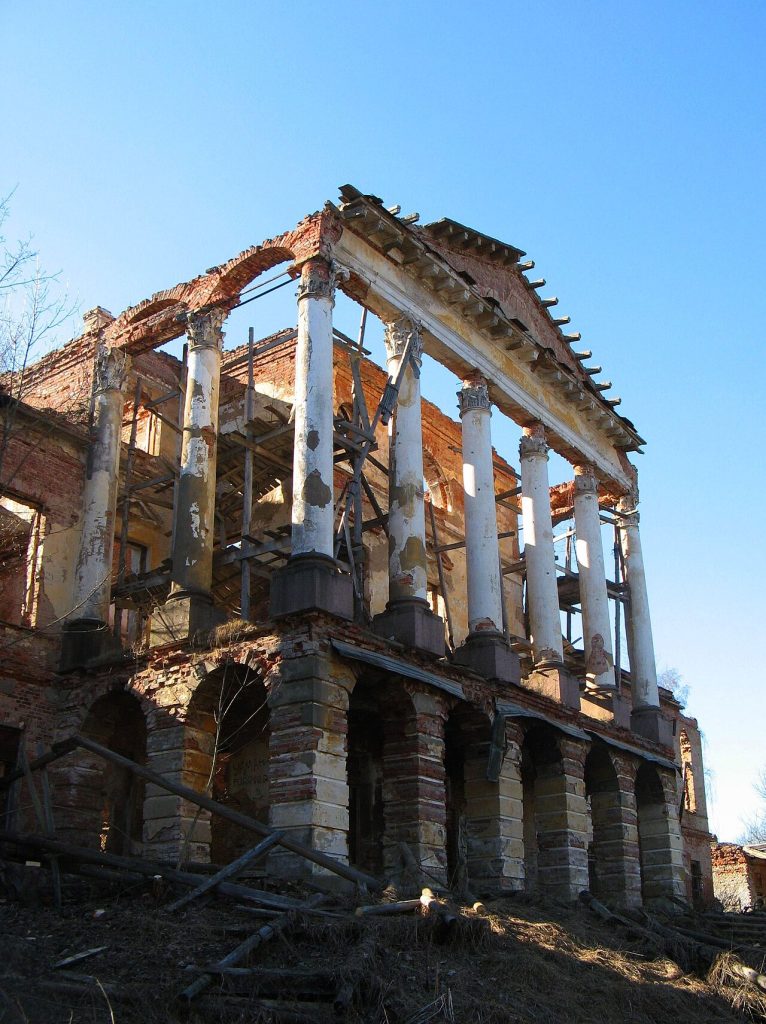
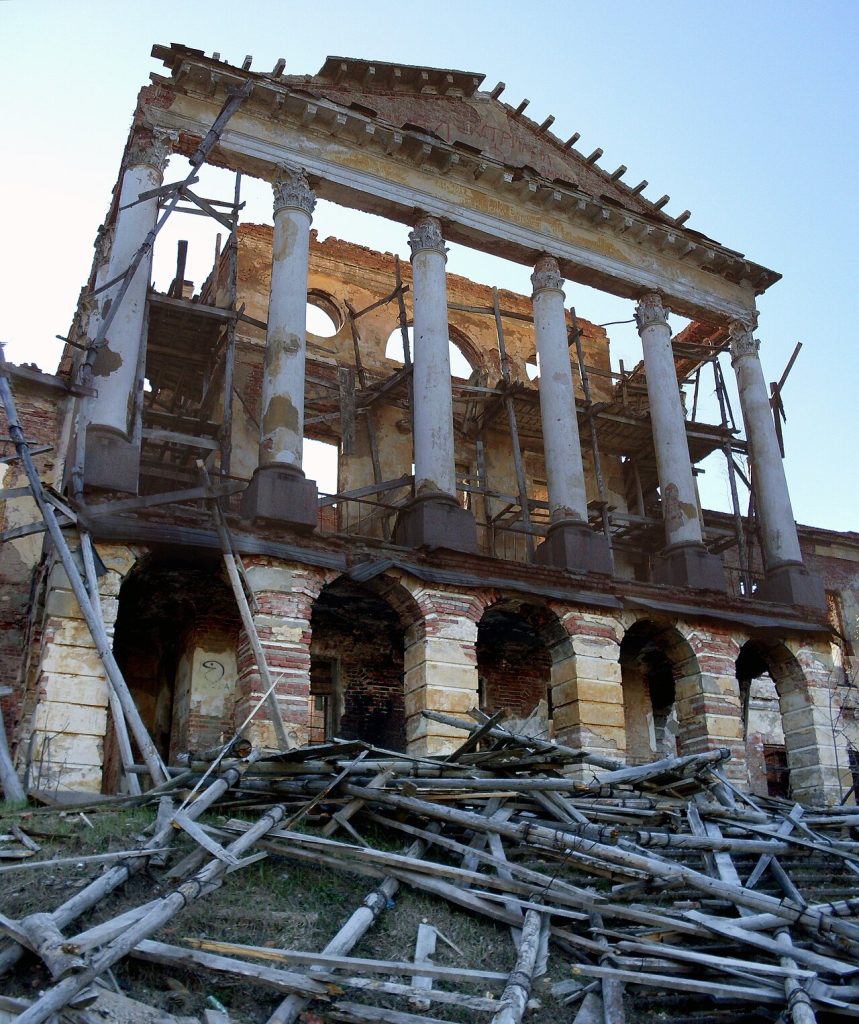
The palace Elizabeth built is, in outline, the ruin you see today: her central block and portico survived every later rebuilding as the core of the house. Its orientation tells the period’s priorities, the garden front gazing down the water staircase toward the distant sea, architecture and hydraulics in one composition.
A Palace for Peter III
Elizabeth presented Ropsha to her nephew and heir, the future Peter III, and the grand duke used it as he used Oranienbaum, for stays away from a court where he never felt at home. The estate was comfortable, private, and well stocked for the hunting he enjoyed, and it figured among his favorite properties.
That attachment became history’s irony. When the coup of June 1762 deposed him, and his wife’s lieutenants needed a secure house for the ex-emperor away from the capital, the guards took him not to a fortress but to his own quiet Ropsha, to rooms he knew, while a more permanent arrangement, the fortress of Schlusselburg was discussed, could be prepared.
He arrived under escort on 29 June 1762 with a small suite, guarded by officers of the coup led by Alexei Orlov, brother of Catherine’s favorite. The week that followed made the modest palace one of the most discussed houses in Europe.
The Fatal Week of 1762
What happened at Ropsha between 29 June and 6 July 1762 remains partly in shadow. The deposed emperor, by the guards’ notes, was unwell, frightened, and begging small comforts: his violin, his dog, his doctor. Orlov’s surviving messages to Catherine report illness worsening by the day, in a tone swinging between rough pity and impatience.
On 6 July, Peter III was dead. The official manifesto announced death by hemorrhoidal colic, an explanation Europe received with open mockery; Frederick the Great remarked that the deposed tsar had allowed himself to be dethroned like a child sent to bed. A letter from Alexei Orlov to Catherine, confessing a fatal drunken scuffle, surfaced decades later in forms scholars still dispute.
Whether death came by violence, by design, by brawl, or by the collapse of a fragile man, it came at Ropsha, in custody, days before any trial or treaty could complicate the new reign. The empress declared herself shocked; the officers involved prospered; the palace acquired its permanent shadow.
Death and Mystery
The mystery of Peter III’s death has kept historians employed for two and a half centuries. No contemporary investigation was held; the body, displayed with the throat wrapped, fed rumor; and the key Orlov letter exists only in a later copy, leaving even the confession contested. Modern scholarship ranges from murder on implicit orders to manslaughter to natural death amid brutal neglect.
What no one disputes is the consequence. The death at Ropsha freed Catherine from a living rival but chained her reputation to a corpse, and every crisis of her reign revived the story, most dangerously in the Pugachev rebellion, whose leader claimed to be Peter III escaped from Ropsha’s guards.
The palace’s later owners felt the weight. Paul I, the dead man’s son, reburied his father with imperial honors and made the surviving conspirators walk behind the coffin; at Ropsha he is said to have ordered memorial rites in the rooms. Legends of a haunted chamber attached themselves to the house and never left.
Catherine and the Aftermath
Catherine the Great never used Ropsha after 1762, and the estate slipped quietly out of court life for a generation, held by the crown and leased for its farms and fisheries, as if the reign preferred not to look at it. The palace stood maintained but unloved, its name unspoken in the empress’s correspondence.
Late in her reign she gave Ropsha away, to the court banker and favorite-of-all-work Ivan Lazarev, and the grant began the estate’s happiest chapter. Lazarev, an Armenian magnate with building ambitions, engaged serious architects, enlarged the palace in the classical taste, and remade the park.
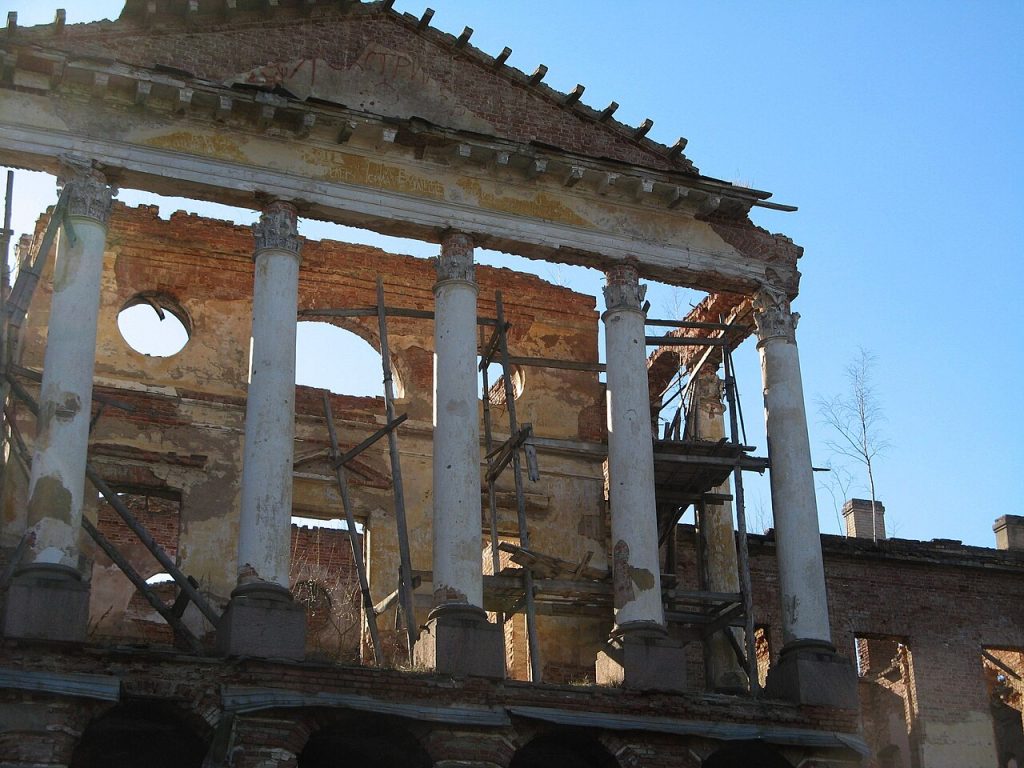
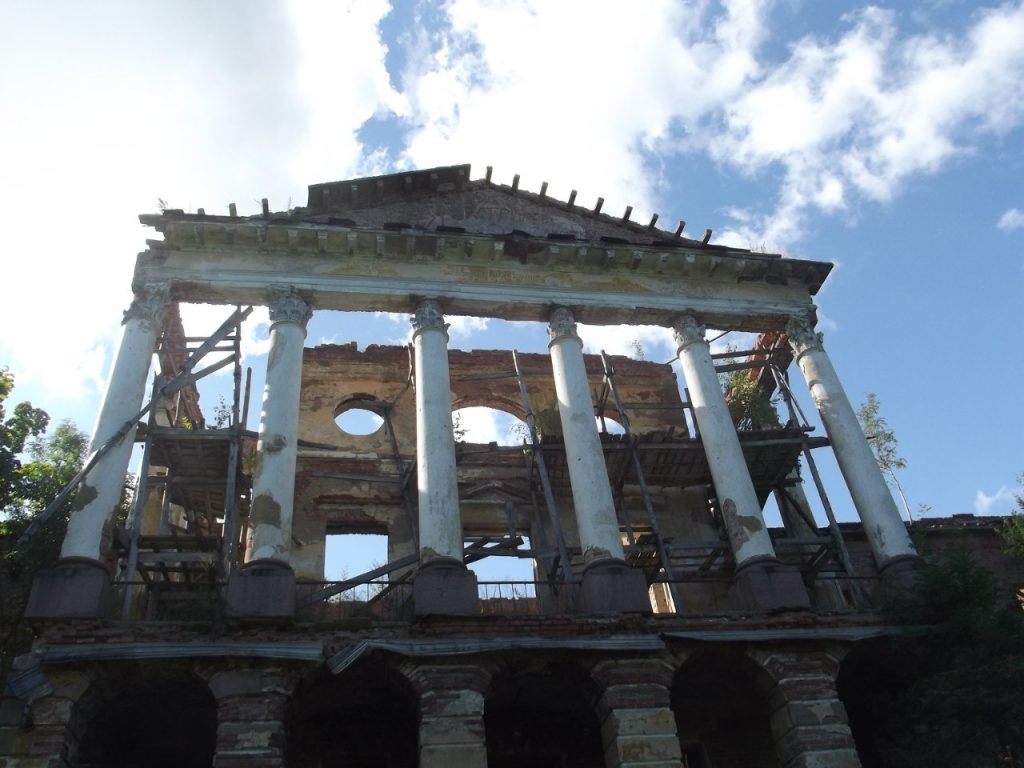
Under Lazarev the house gained the colonnaded look its ruin still shows, attributed in part to Antonio Porta and connected by tradition with designs of the great Yuri Felten; terraces, pavilions, and the water garden were renewed. The palace of the tragedy became, for a few decades, simply a beautiful country seat.
The Paper Mill and the Ponds
Lazarev was a man of enterprises, and Ropsha worked for its living. He built a paper mill on the estate’s rushing water in the 1780s, a handsome industrial building whose successors operated for two centuries; Ropsha paper carried a court reputation, and the mill village grew beside the park.
The fish ponds became an industry of their own. The cold spring water proved ideal for trout, and Ropsha’s hatcheries supplied the imperial table and, in time, scientific fish-breeding for all Russia; the institute that grew from them worked into the modern era, giving its name to a breed of Ropsha carp known to every Russian aquaculturist.
This productive Ropsha, mill, ponds, farms, cushioned the estate through changes of owner and regime, and explains the cluster of old utility buildings around the park. The palace was the estate’s crown, but the water was always its heart.
Hunting Seat of the Emperors
In 1826 the crown bought Ropsha back, and for its last imperial century the estate served the dynasty as a hunting seat and retreat. Nicholas I and his successors shot in its woods and fished its ponds; the palace kept suites ready for sudden imperial descents, and the hunting administration managed the game of the whole district from Ropsha.
The house saw one famous honeymoon: Nicholas II and Alexandra, married in November 1894 amid court mourning, spent early days of their marriage quietly at Ropsha, a fact their daughters’ generation liked to recall as the family’s one unshadowed association with the place.
The last emperors modernized lightly, a telegraph here, new kennels there, leaving Elizabeth’s and Lazarev’s palace essentially intact. Photographs from 1900s albums show the white colonnades over the ponds, lawns mowed to the water, and shooting parties on the steps where trees now grow.
Revolution and War
After 1917 Ropsha’s estate was nationalized, its contents dispersed, and the palace given to state farms and fish-science institutes, a fate that kept the roof on while erasing the interiors. The park grew shaggy; the ponds kept working; the house slid from residence to office to barracks.
War reached Ropsha twice. The German front of 1941 ran through the district, and in January 1944 the Leningrad and Oranienbaum offensives met at Ropsha, a junction commemorated as the moment the siege’s strangling ring was broken; the battles left the village shattered and the palace burned.
Postwar military tenants patched the building for use, and aerial photographs into the 1970s show it whole, if graceless. When the garrison finally left in the late Soviet years, the palace was abandoned outright, and the quick Baltic climate began the demolition that neglect had ordered.
The Long Fall into Ruin
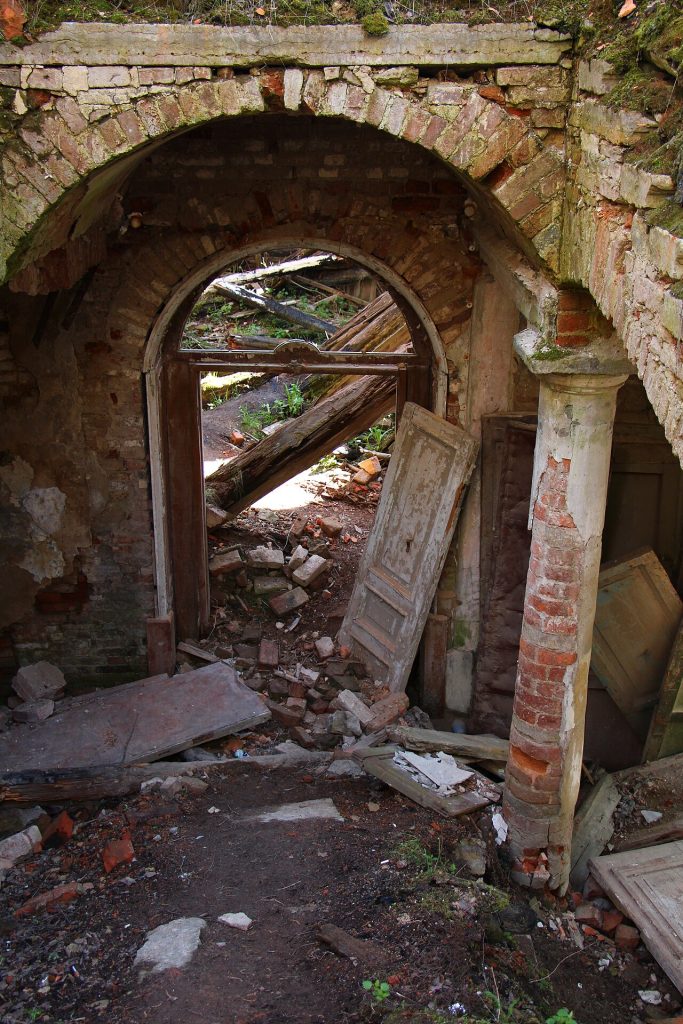
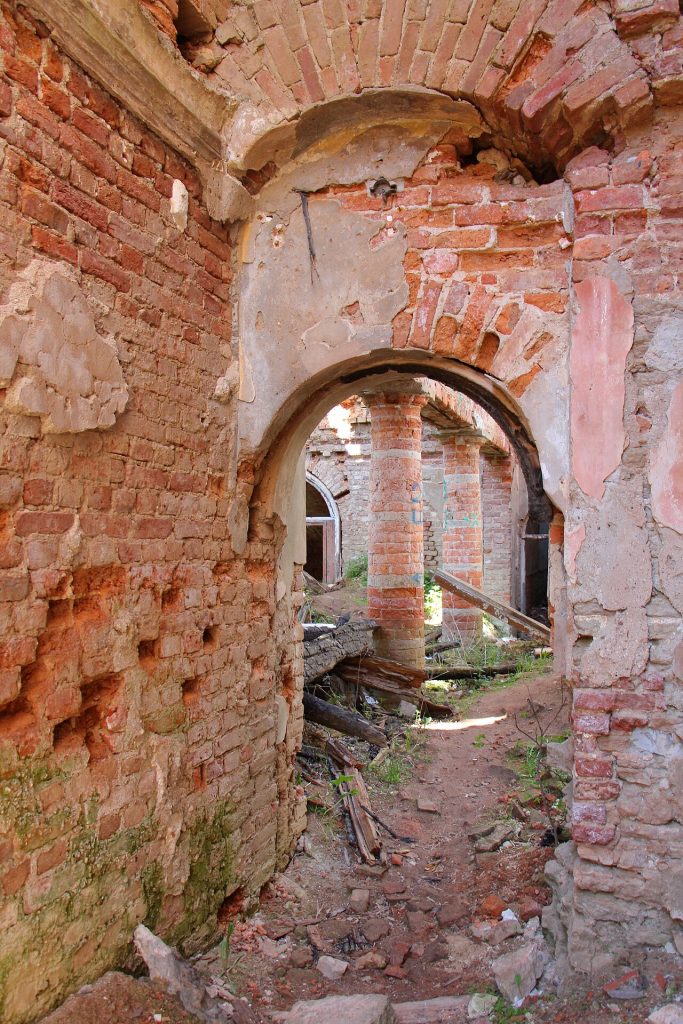
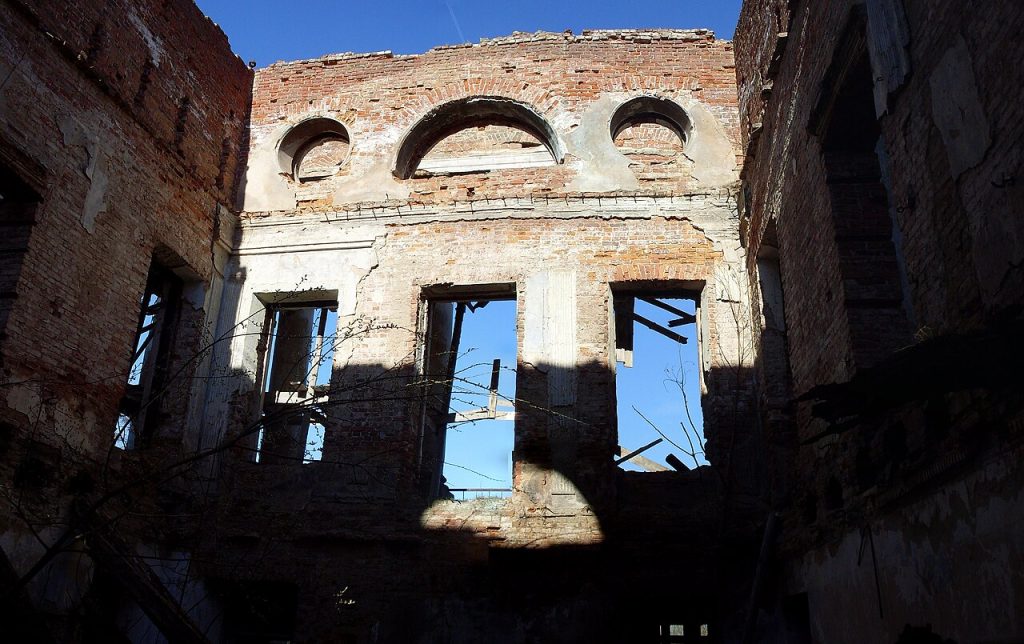
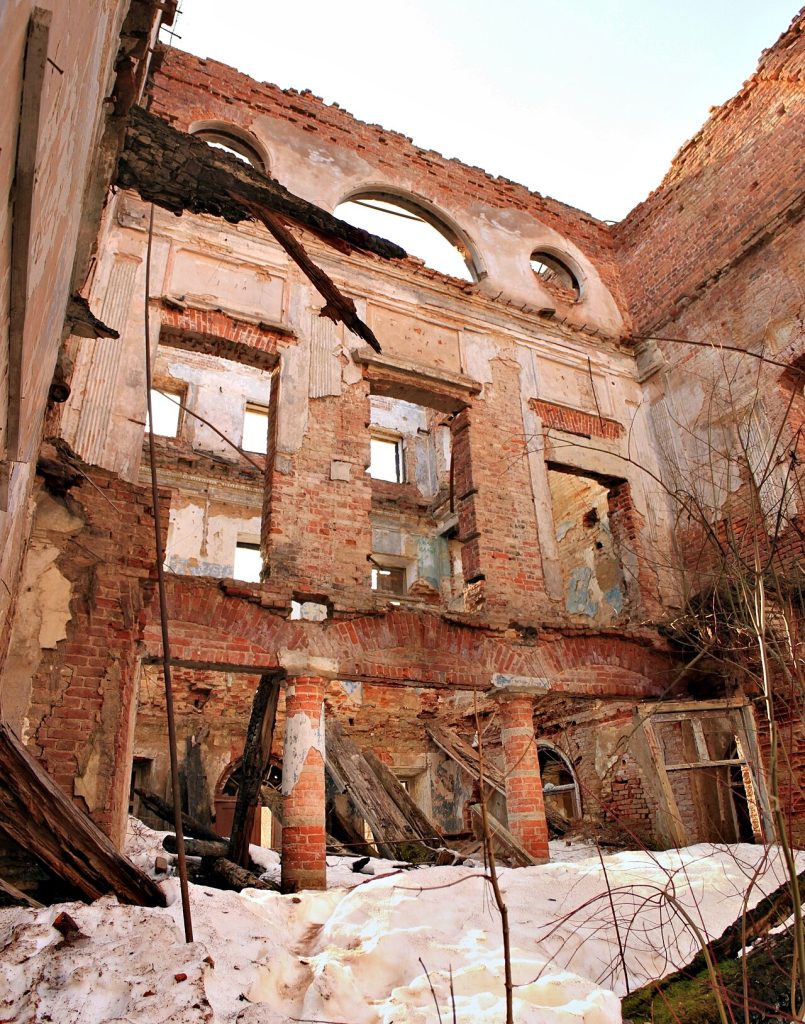
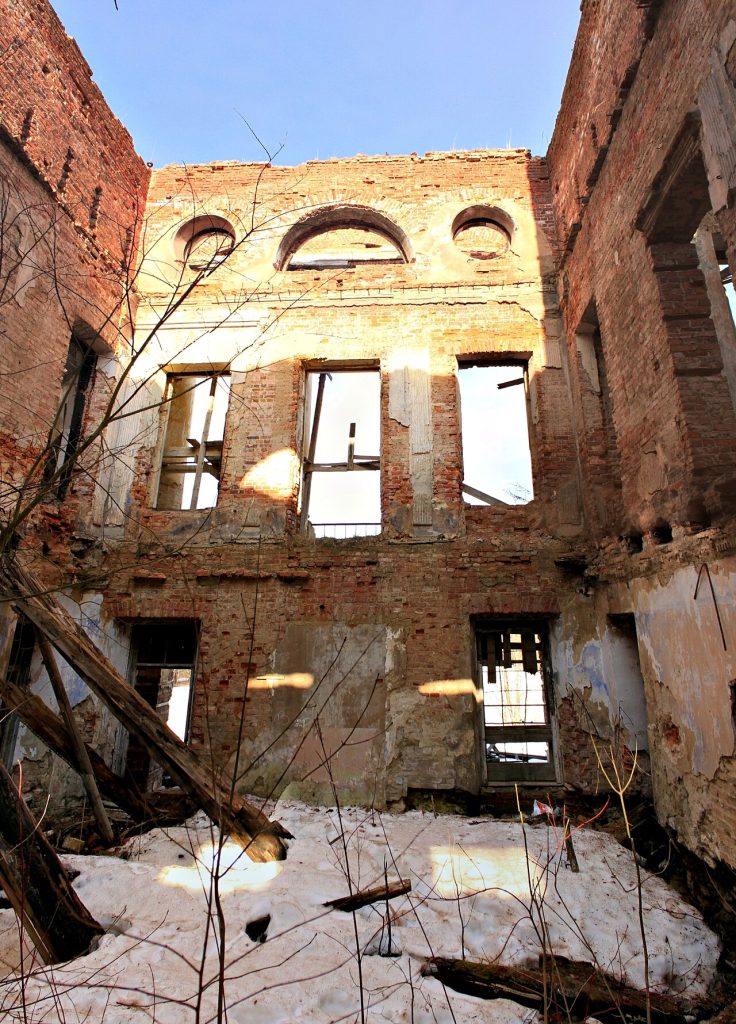
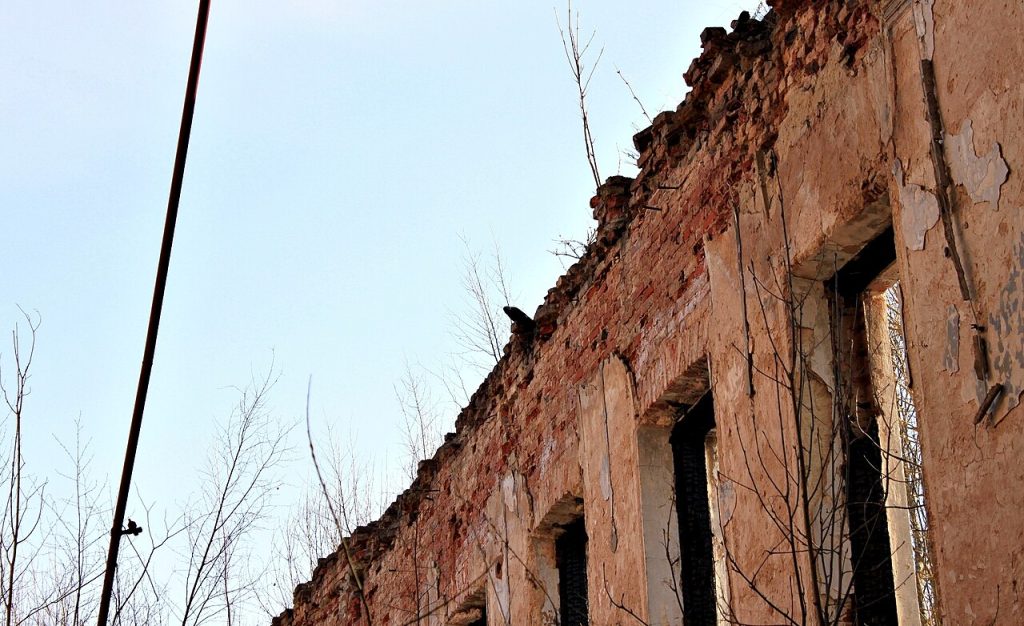
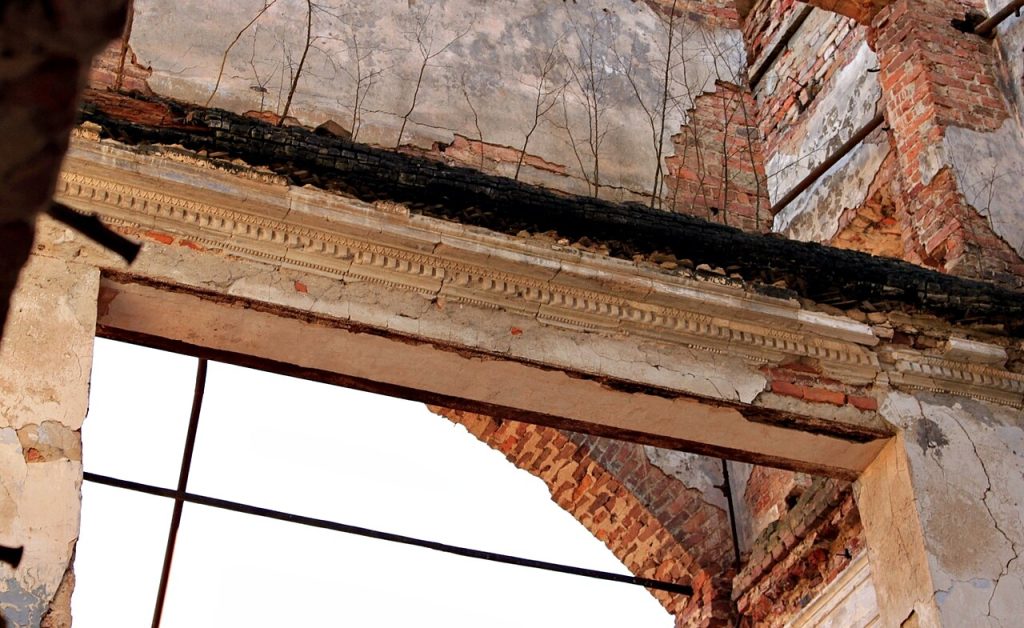
The last half century undid two hundred and fifty years of building. Fires in the 1990s took the roofs; frost split the brick; collectors of rubble took the rest, and in 2015 the portico’s columns collapsed, the ruin’s lowest moment, caught on video that circulated as a national reproach.
The palace entered every register that should have saved it, a federal monument, part of the St Petersburg ensembles on the UNESCO World Heritage list, and every decade produced surveys, transfers, and promises while the walls went on shedding stone. Ropsha became the textbook case of Russian heritage at the brink, cited in every debate on ruined estates.
What survives is nonetheless considerable: the central block’s walls to full height in places, wing fragments, the terraces, the park’s old trees and water system, and the estate buildings around, enough, specialists insist, for honest restoration rather than fantasy, if the will and money hold.
Rescue Plans and Restoration
The turn came in 2020, when Ropsha passed to the Peterhof state museum, the institution that rebuilt the fountains from ashes and knows the estate as the source of its water. Peterhof’s teams fenced and braced the ruin, cleared the park’s dangerous wood, opened the grounds to guided visits, and began the slow archaeology under the fallen halls.
Announced plans see the ensemble conserved and the palace eventually restored as a museum and visitor center of the water road, the springs-to-Samson system that ties Ropsha to the Grand Cascade; design work and funding decisions have moved in stages, and dates remain cautious, but for the first time in generations the direction is upward.
Restorers frame the task soberly: much must be rebuilt on documented foundations, as Peterhof itself was, and the goal is truth to the palace’s layered history, Elizabeth’s core, Lazarev’s classicism, the imperial hunt, rather than a glossy invention. Ropsha’s second life, like its ponds, will be fed slowly from deep springs.
Ropsha Today
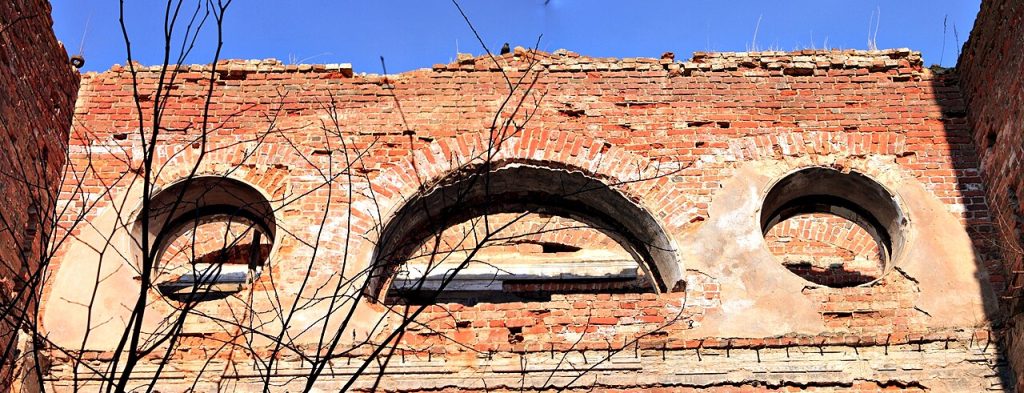
Today’s visitor finds a place unlike anything else on the palace ring: no ticket halls or gilded queues, but a hill of great trees, the white bones of a palace behind construction fencing, and the ponds sliding glass-clear below. Storks nest in the village; the springs still pour; the silence does most of the talking.
Guided walks arranged through the Peterhof museum explain the water road and the house’s history on site, and independent travelers can circle the estate’s edge and the mill stream freely where safety allows. Photographers prize the ruin at dawn and in snow, when the colonnade fragments stand like a stage set for the story they witnessed.
Ropsha completes any tour of the imperial suburbs because it shows the alternative ending, what Peterhof and Pavlovsk would be without their rescuers, and because its story, splendor, crime, industry, war, ruin, and now perhaps return, is the whole Russian eighteenth-to-twenty-first century in one hilltop. Some houses are museums; Ropsha is a memento mori.
Watch Ropsha Palace on Film
Visiting Ropsha Palace Today
Ropsha village lies about twenty kilometers south of Peterhof and fifty southwest of central St Petersburg, reached by bus from Peterhof and Krasnoye Selo or most easily by car along the Ropsha highway. The palace itself is a conserved ruin behind fencing, viewable from the grounds, with access inside the perimeter only on guided visits arranged through the Peterhof state museum, whose site lists current tours and restoration news. The ponds, springs, and village church reward an hour’s walk, and the estate pairs naturally with Peterhof or Gatchina on a day’s driving circuit. You can find the palace on the map here: Ropsha Palace on Google Maps.
Palaces Nearby
You May Like
The Konstantin Palace at Strelna and the Russian Versailles That Waited