In the north of Moscow, in the shadow of the television tower that borrowed its name, stands a palace made of wood and devoted entirely to make-believe. Ostankino is the only eighteenth-century theater-palace in Russia to survive with its stage machinery, and it was built for the most extraordinary love story of the Russian aristocracy: Count Nikolai Sheremetev, the empire’s richest man, raised this temple of art around a serf actress named Praskovya, whom he heard sing as a girl, made the star of his stage, and finally, in defiance of his entire world, married.
The palace rose in the 1790s at furious speed, designed by famous architects but executed, carved, painted, and gilded by the count’s own serf masters, whose names, Argunov, Mironov, Dikushin, deserve the fame usually reserved for their employers. Its heart is a theater hall of pale blue and gold that could, by an engineering trick still functional, convert from auditorium to ballroom in under an hour.
This guide tells Ostankino whole: the Sheremetev fortune and the serf troupe, Praskovya’s rise from blacksmith’s daughter to countess, the palace built as her stage and monument, the emperors and the one famous night of 1797, the long museum age and the current grand restoration, with everything you need to plan a visit as the palace reopens.
- The Sheremetev Fortune
- From Ostashkovo to Ostankino
- A Theater of Serfs
- The Pearl of the Troupe
- A Scandalous Love
- Building the Theater Palace
- The Serf Architects
- The Convertible Hall
- The Night of Emperor Paul
- Marriage and Loss
- The Count’s Atonement
- From Estate to Museum
- The Great Restoration
- Watch Ostankino Palace on Film
- Visiting Ostankino Palace Today
- Palaces Nearby
The Sheremetev Fortune
The Sheremetevs were wealth beyond metaphor. Field Marshal Boris Sheremetev, Peter the Great’s victorious commander at Poltava, founded the fortune; his son Pyotr multiplied it by marrying the heiress of the Cherkassky princes, a union that brought, among much else, the village of Ostankino into the family. By the time Count Nikolai Petrovich inherited in 1788, the family owned roughly two hundred thousand serfs across dozens of provinces, an income emperors borrowed against, and palaces they could barely count.
Nikolai himself was a child of the Enlightenment’s gilded edge. Educated with the future Emperor Paul, his friend from boyhood, he toured Europe for four years, studied music in Paris on the eve of its revolution, played the cello seriously, and returned to Russia convinced that art, above all theater and opera, was the proper glory of a great house.
In this he followed his father, whose estate at Kuskovo already staged operas that drew the empress herself. But where Kuskovo’s theater was one ornament among garden follies, the son conceived something unheard of: an entire palace that would be a theater first and a residence almost incidentally, a machine for art. The fortune made the dream merely a matter of orders; what made it history was the woman at its center.
From Ostashkovo to Ostankino
The estate’s recorded story begins in 1558, when Ivan the Terrible granted the village then called Ostashkovo to a service noble; the name’s origin is argued between a founder called Ostap and the word for remnant, and Moscow folklore, never resistant to a shiver, prefers a darker guess involving remains and tells of a prophetess who cursed the land’s owners. Its early masters did little to contradict the gloom: one was executed in the oprichnina terrors.
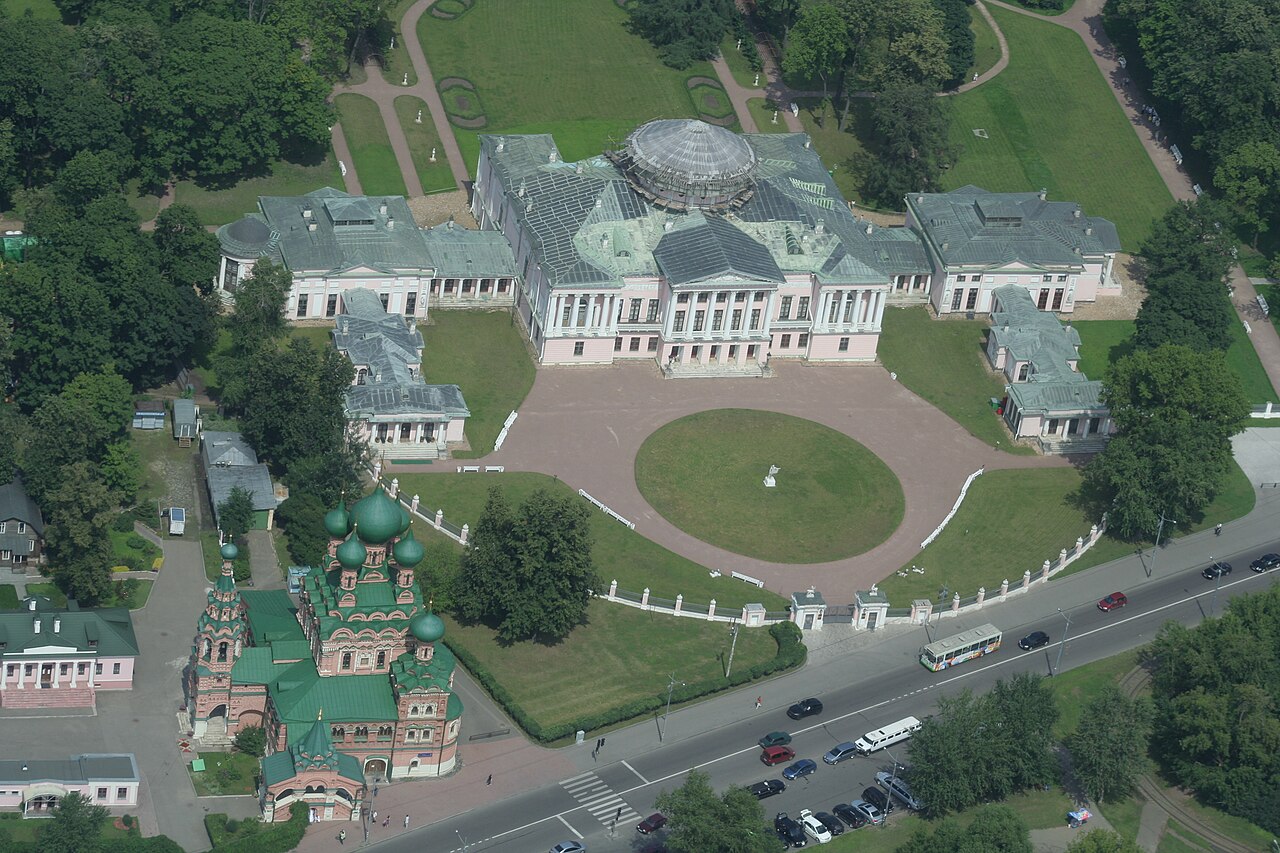
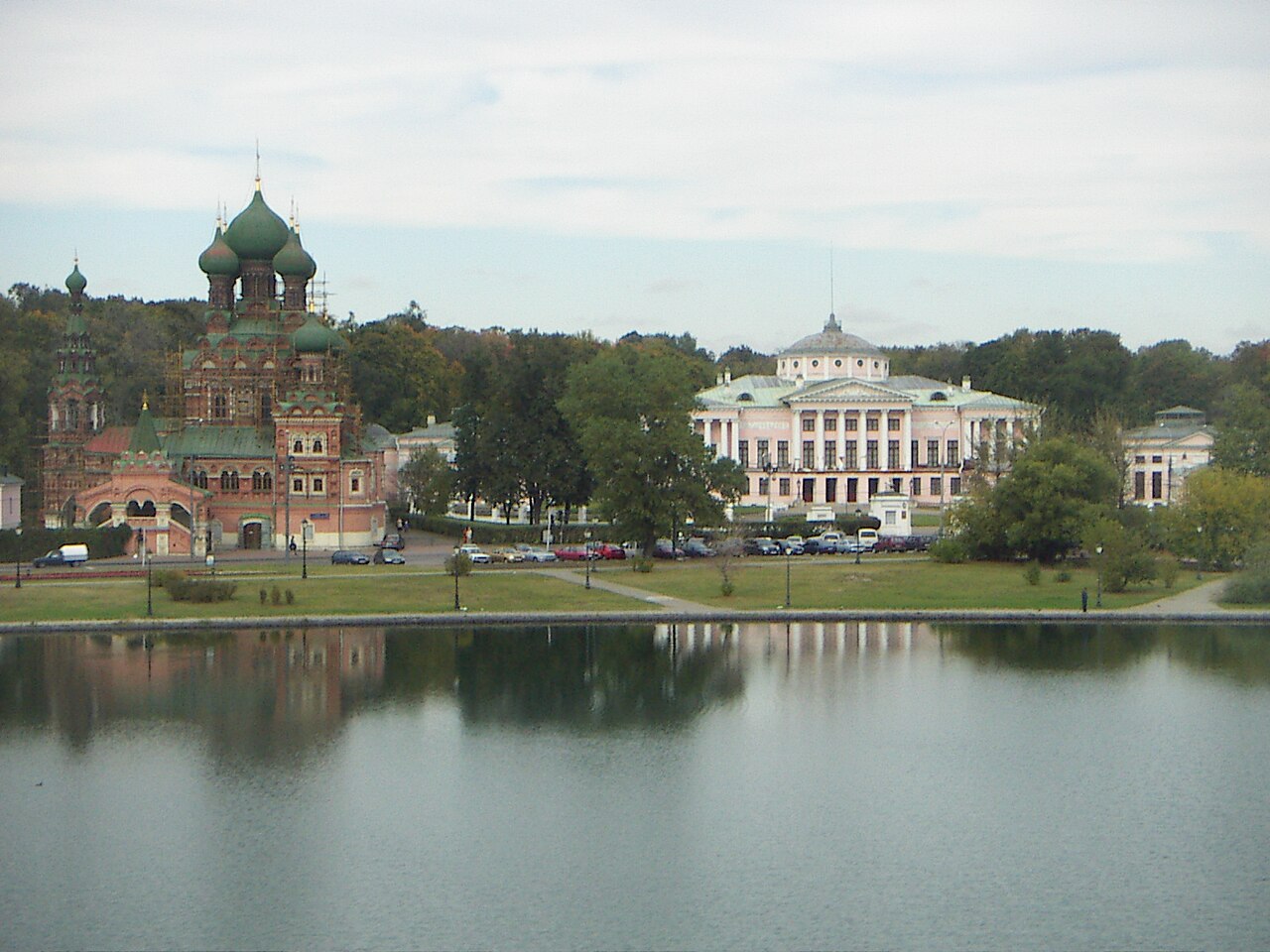
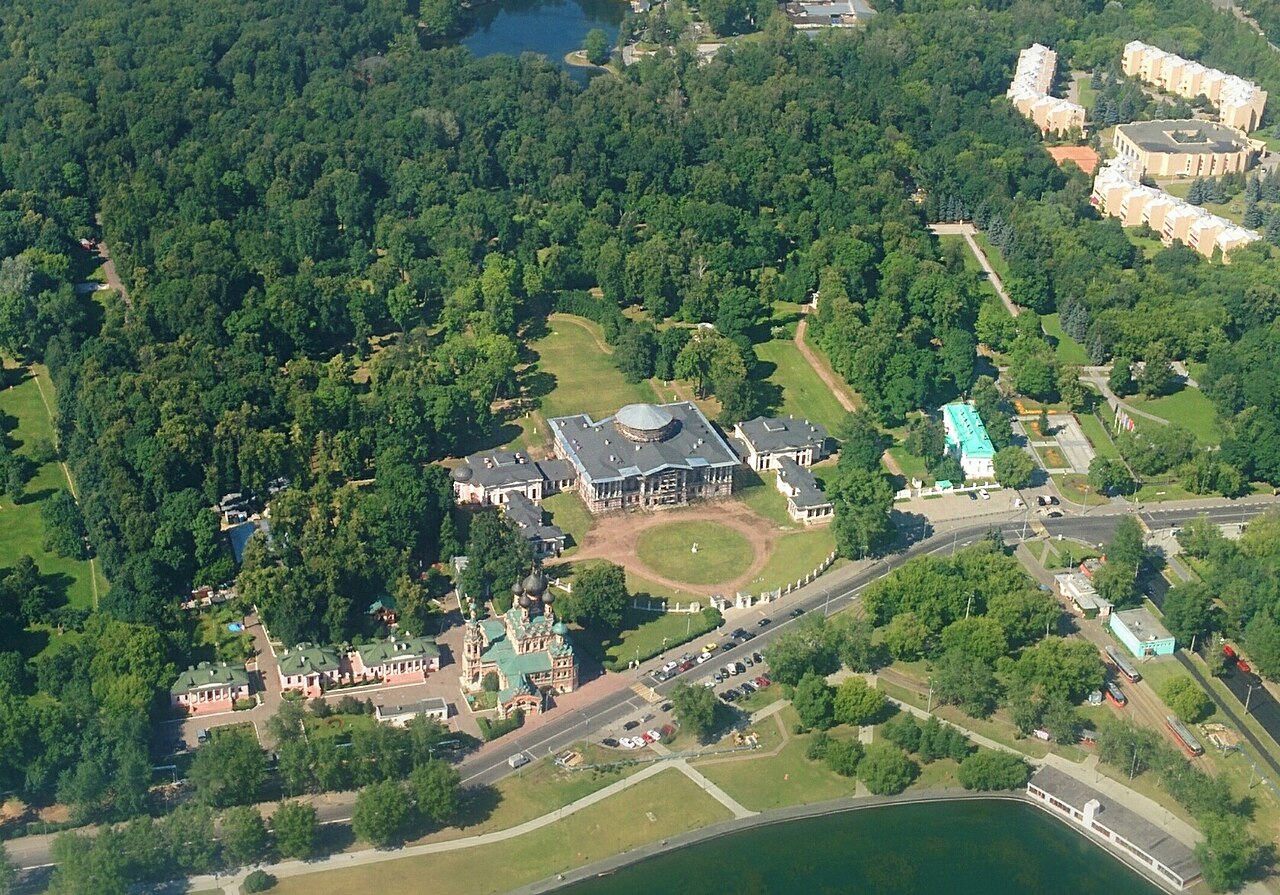
Under the Cherkassky princes in the seventeenth century the estate flourished into a boyar showpiece. Their steward built the surviving Trinity Church in the 1680s, a red-brick extravagance of tiered kokoshniks and patterned tile by the master Pavel Potekhin, and the princes planted the great cedar grove and stocked hunting grounds that drew Tsar Alexei himself. The church still stands beside the palace, the ensemble’s deepest root.
The Cherkassky heiress’s dowry carried Ostankino to the Sheremetevs in 1743, and for half a century it served as a quiet satellite of their main seat at Kuskovo, timber and hay rather than chandeliers. Count Nikolai’s choice of this modest northern village for his great project was partly practical, fresh ground to build on, and partly, biographers suspect, symbolic: a new world for a new life, away from his father’s stage where everything had begun.
A Theater of Serfs
The Sheremetev theater was an empire of bonded talent. Scouts combed the family’s villages for promising children, who were then raised in the troupe’s boarding school: literacy, French and Italian, solfeggio, dance, instrument, and stagecraft, an education finer than most nobles received, delivered to legal property. At its height the company numbered around two hundred actors, singers, musicians, machinists, and painters, every one a serf.
The paradox was the age’s own. The troupe performed Gluck and Grétry at European level; its prima donnas wore diamonds on stage and returned to servile quarters after curtain; a performer could be renamed at the master’s whim, the custom of gemstone stage names, Pearl, Garnet, Turquoise, replacing village surnames. Discipline was strict but the Sheremetev school, by the era’s grim standards, was gentle: Nikolai forbade corporal punishment of his artists and paid them salaries.
Contemporaries ranked the company above the imperial theaters in opera; Catherine the Great, after a Kuskovo performance, declared she had nowhere heard better. That the finest music in Russia was made by people who could in law be sold with the land they stood on is Ostankino’s uncomfortable foundation, and the palace is honest about it: its beauty is inseparable from the system it transcended.
The Pearl of the Troupe
Praskovya Kovalyova was born in 1768, daughter of a hunchbacked serf blacksmith on the Kuskovo estate. Taken into the theater school at seven for the promise of her voice, she debuted at eleven and by her teens was the troupe’s star under the stage name Zhemchugova, from zhemchug, pearl. Her soprano, by every surviving account, was of piercing beauty, and her tragic roles left audiences in tears.
Her defining part came in 1787 in Grétry’s Marriages of the Samnites: the warrior maiden Eliane, defending love against law. Catherine the Great attended a gala performance at Kuskovo, was conquered, and sent the serf singer a diamond ring from her own hand, an imperial gesture that set tongues wagging and fixed the girl’s fame. The role became so identified with her that the count later commissioned her portrait in Eliane’s red cloak.
Praskovya was more than a voice: she read seriously, composed, her song about a girl’s fate is counted the first published work by a Russian woman composer in the folk tradition, and carried herself, witnesses agreed, with a dignity that made the fiction of her legal status absurd. It was a dignity the count noticed early and never recovered from.
A Scandalous Love
Nikolai Sheremetev heard Praskovya sing when she was a child and he a young heir; by the late 1780s, the count in his thirties and the singer in her twenties, they were inseparable, and the liaison between Russia’s richest noble and his own serf became the empire’s most discussed open secret. Society could tolerate a master’s whim; what it could not digest was the evident truth that this was a marriage in everything but law.
The count’s letters survive and are unambiguous: he writes of her tender heart and mind adorned with virtues, and of his contempt for the brides paraded before him. In 1798 he signed Praskovya’s manumission, freeing her and her family, and his agents constructed a convenient genealogy deriving the Kovalyovs from a captive Polish noble family named Kovalevsky, a fiction nobody believed and everybody required.
Ostankino itself was the love’s monument: a palace where she would be not the master’s property but the sovereign of the stage, opened in triumph with her in the lead. Moscow society came, applauded the pearl, and cut her dead in the foyers; the couple withdrew increasingly into a private world, and the palace built for festivals fell quiet within a few seasons, waiting for a wedding the world said was impossible.
Building the Theater Palace
The palace went up between 1792 and 1798 with the speed only two hundred thousand serfs could fund. Nikolai collected designs from the most fashionable names, Francesco Camporesi, Giacomo Quarenghi, Ivan Starov contributed drawings, but the executed building was synthesized and endlessly revised on site by his own serf architects, with the count bombarding the works with letters changing details room by room.
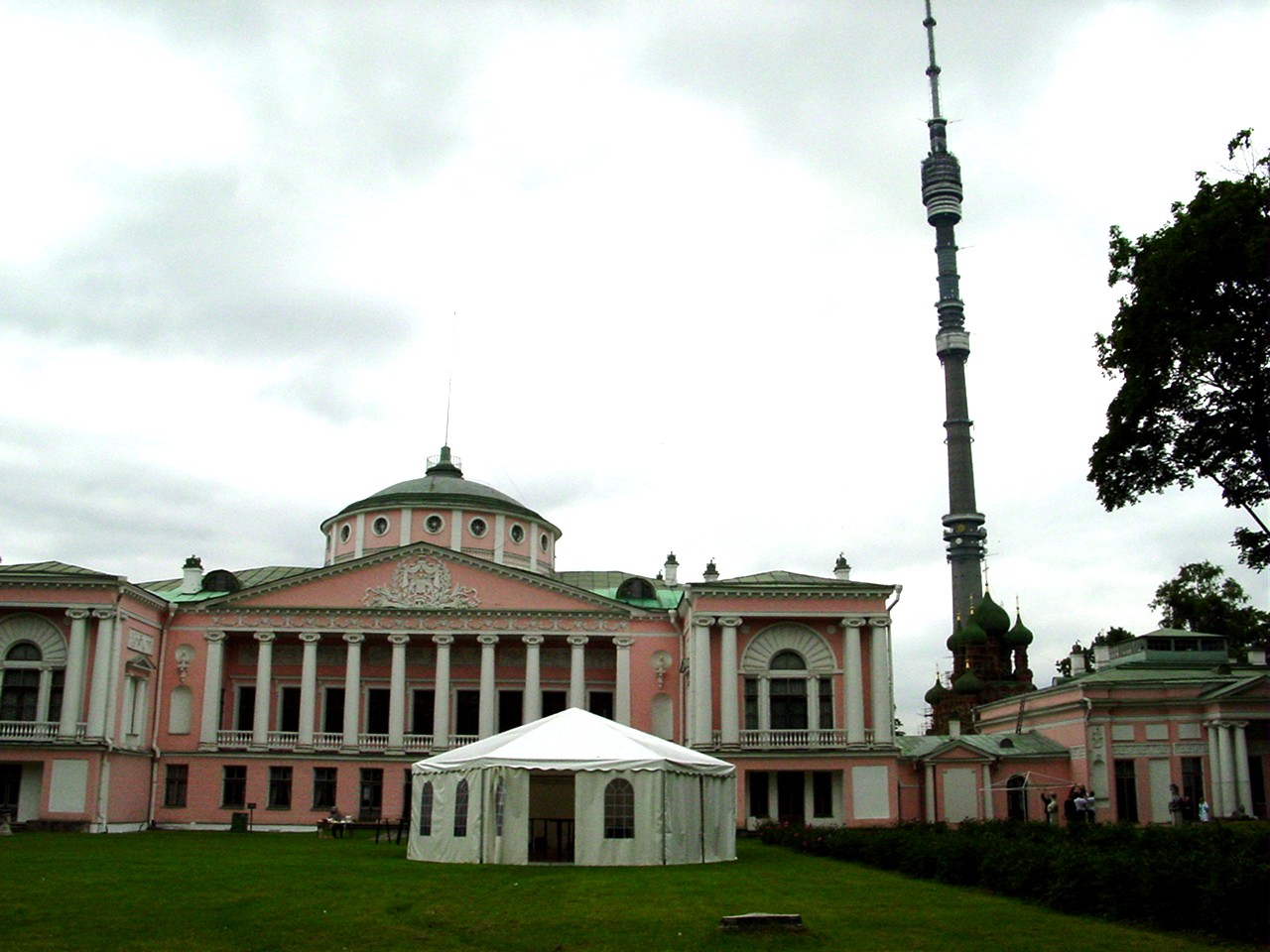
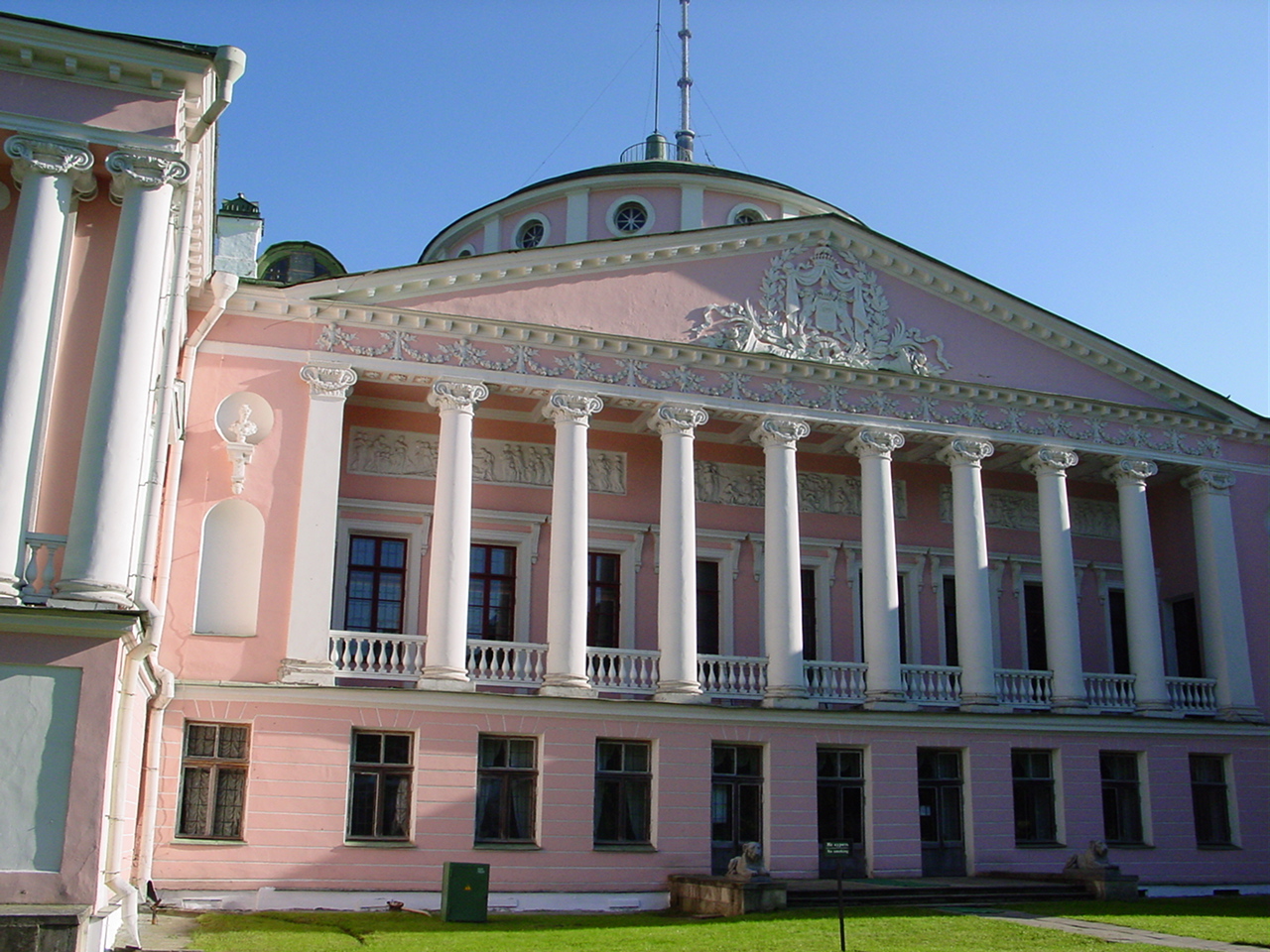
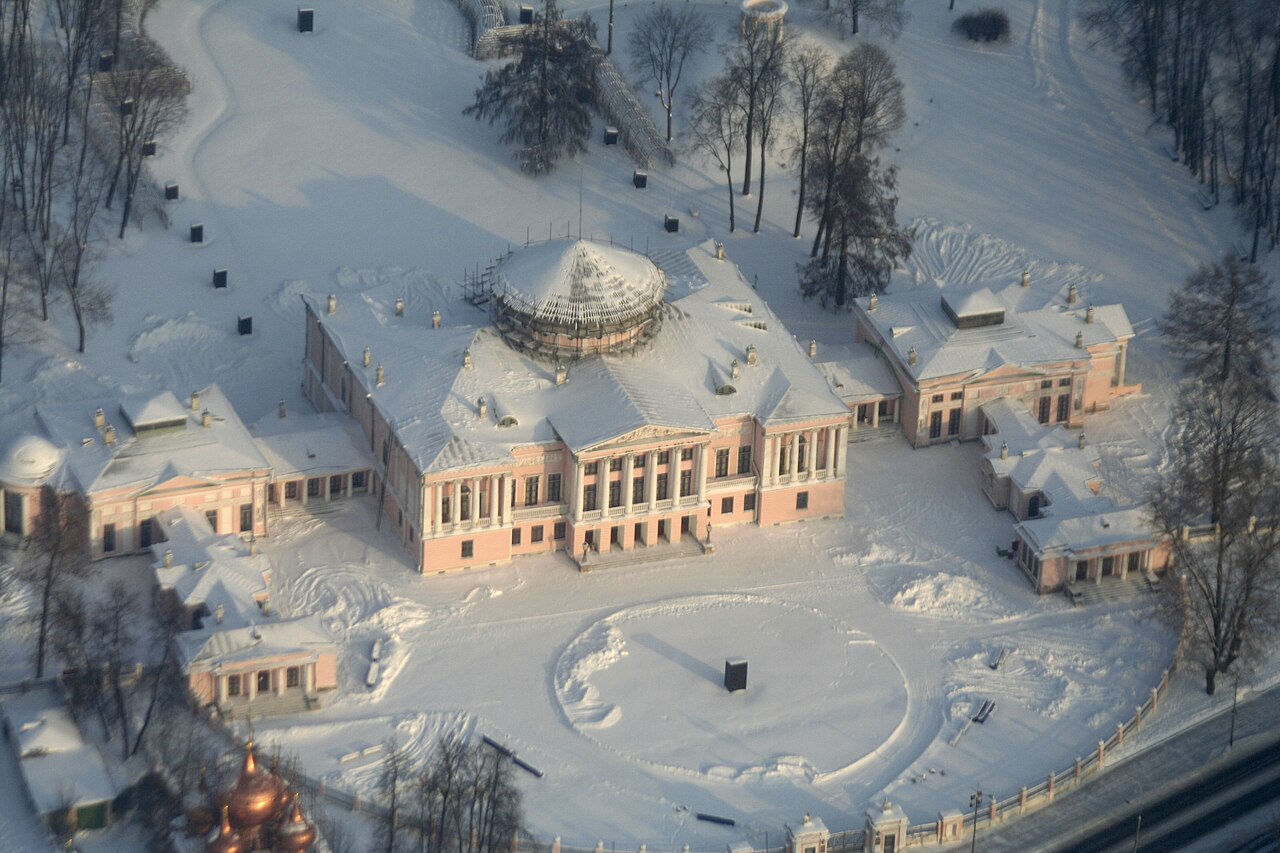
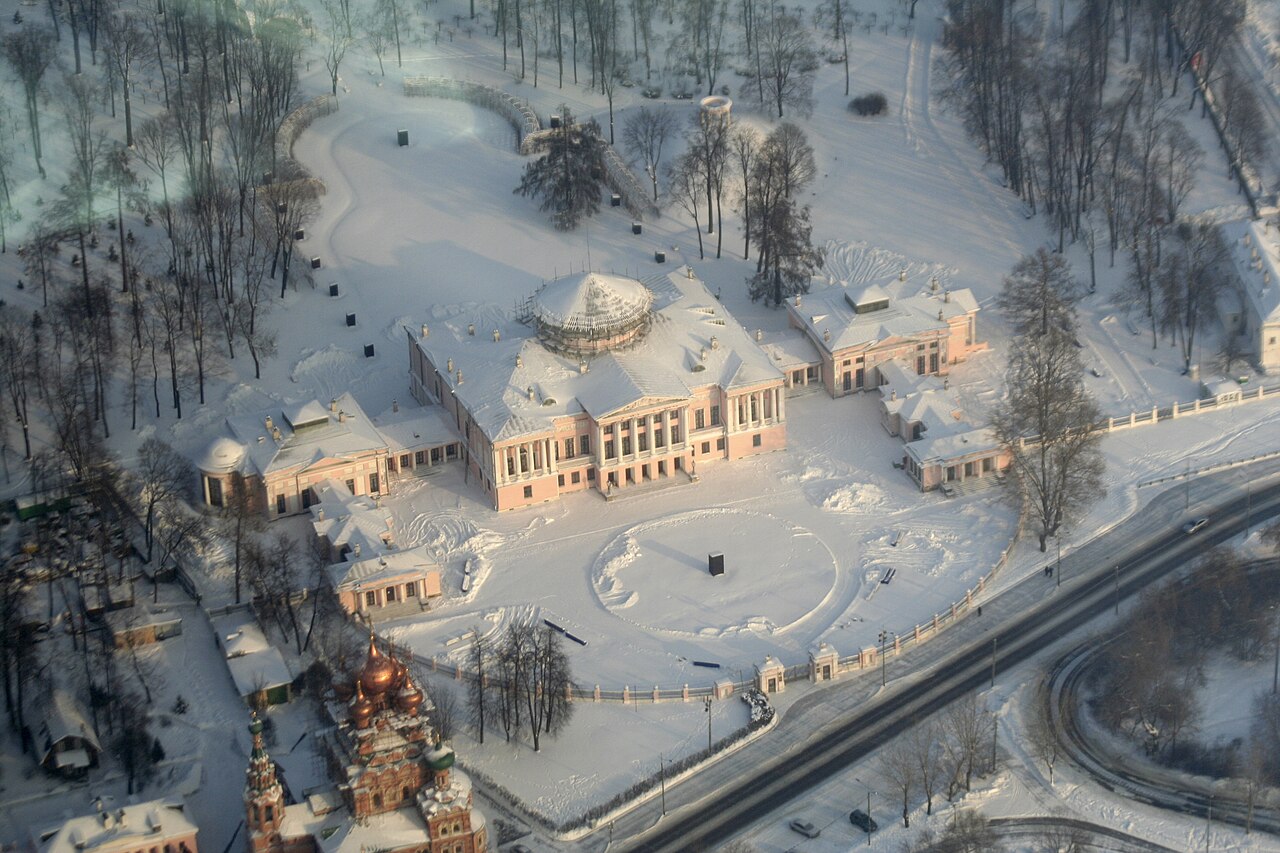
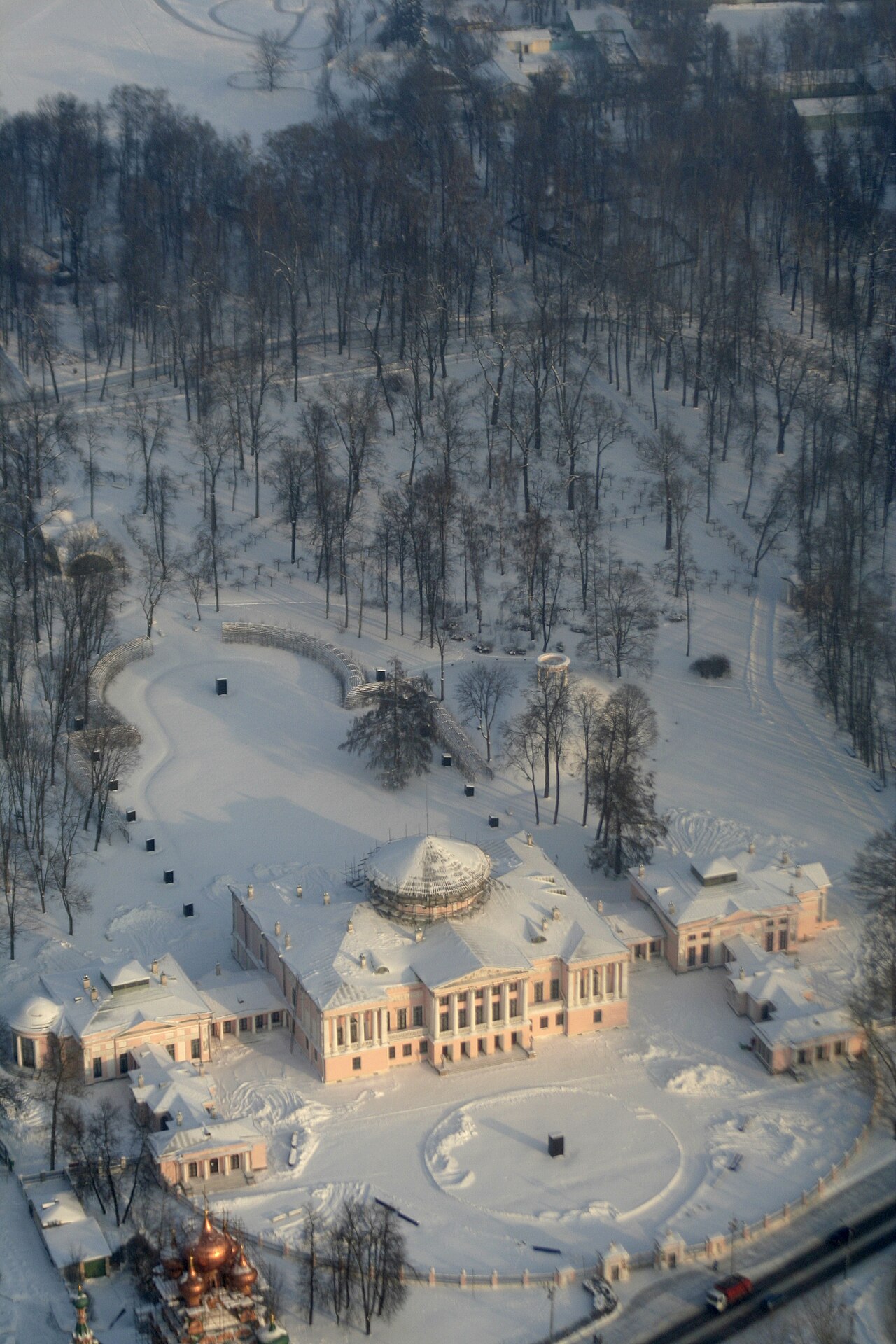
The construction is Ostankino’s secret: the palace is wood, framed pine plastered to imitate stone, a theater’s own make-believe at architectural scale. Wood was fast and acoustically kind, and the count wanted both; the pink-and-white classical facades, the six-columned portico, the wings curving to pavilions, all are stage scenery built to be believed, and for two centuries the illusion has held against weather and war.
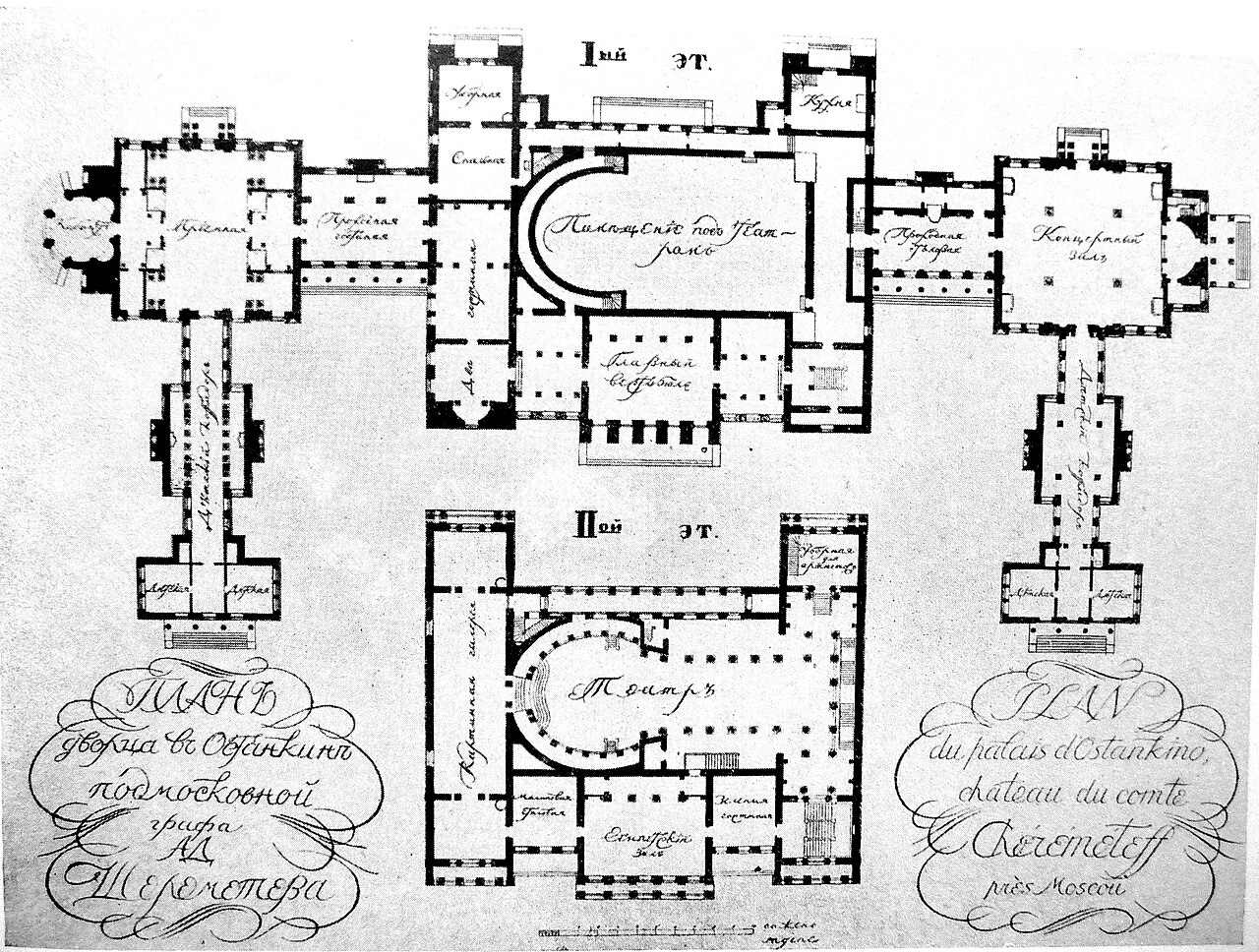
Inside, the processional route was designed as a crescendo: vestibule, print rooms hung with engravings, the crimson and the blue drawing rooms, the Italian and Egyptian pavilions for concerts and supper, and at the center the great hall, every room dressed in carved and gilded wood, paper-mache ornament, and parquets of a dozen species, the whole lit by crystal and tinted glass. It is the most complete authentic ensemble of eighteenth-century interiors in Russia, nothing rebuilt from ashes, everything the count’s craftsmen touched still in place.
The Serf Architects
The men who actually built Ostankino were property of the man who commissioned it. Pavel Argunov, serf architect trained under Bazhenov, led the works and designed much of the interior architecture; Alexei Mironov and Grigory Dikushin, serf masters both, engineered and detailed; and the Argunov family’s painters, Ivan and his son Nikolai, created the estate’s portraits, including the images of Praskovya that are now in every Russian textbook.
The carvers’ shops produced the palace’s glory: doorframes, torcheres, and capitals of lime and pine gilded or left pale, furniture to the architects’ drawings, and the famous paper-mache details that lightened walls built for acoustics. Specialists can tell serf work from the imported bronzes and French silks beside it only by its superiority of invention under constraint, making do, magnificently, was the house style.
Nikolai Argunov’s brush left the cycle’s most haunting image: Praskovya in a red shawl, pregnant, painted weeks before her death, a portrait of private grief in an age of public masks. The serf artists outlived their subjects into freedom, Nikolai Argunov was manumitted and elected to the Academy, and their collective authorship makes Ostankino not merely a monument of serf-owning culture but, uniquely, of serf genius.
The Convertible Hall
The palace’s engineering heart is the theater hall, pale blue, white, and gold under a painted ceiling, with its horseshoe of columns. Its trick made it famous across Europe: the raked auditorium floor could be lifted level with the stage by screw-jack mechanisms below, benches vanishing, so that within the hour the theater became a ballroom, and back again, machinery worked by teams of serfs in the cellars.
The stage itself was among Russia’s largest and deepest, equipped by the serf machinist Fyodor Pryakhin with thunder runs, wind machines, cloud borders, and flying gear; below and above it the machine floors survive, the only such complex of the century left in Russia, which gives Ostankino the same status for theater historians that Drottningholm holds in Sweden.
The repertoire matched the plant: full opera with choruses and ballets, horses on stage for the premiere of Kozlovsky’s heroic opera at the palace’s 1795 opening, celebrating the taking of Izmail, and illuminations in the park between acts. Guests reported the uncanny moment of leaving supper to find the auditorium where the ballroom had been, the house itself the evening’s greatest performer.
The Night of Emperor Paul
Ostankino’s single most theatrical evening came in the spring of 1797, during the coronation festivities of Emperor Paul, the count’s friend since their shared boyhood lessons. Nikolai staged a welcome that Moscow retold for a generation: as the imperial carriage rolled up the approach through the estate’s old grove, the entire curtain of trees screening the palace fell away in one instant, revealing the illuminated facade, the count’s serfs had sawn the trunks through in advance and held them upright with ropes, dropping the forest on cue.
Inside waited the troupe’s full splendor, the convertible hall, an opera, and Praskovya’s voice; the emperor, moved, is said to have spent the evening in long private conversation with his host. Paul’s favor mattered beyond vanity: the new emperor made Nikolai chief marshal of the court, and his tolerance, where Catherine had merely smiled, opened the narrow legal door through which the impossible marriage would eventually pass.
The felled-grove coup entered Russian legend as the definitive gesture of serf-powered magnificence, hundreds of hands making a landscape disappear for one carriage’s view. The same hands, the chronicles do not add but we should, replanted the park afterward; the avenue the emperor rode survives, and the palace still faces it, ready, one feels, to drop another forest if required.
Marriage and Loss
By 1800 Praskovya’s health was failing, tuberculosis, the singers’ disease, had silenced the voice that built the palace, and Nikolai resolved to regularize before God what society refused. On 6 November 1801, in the Moscow church of Simeon Stylites, count and former serf were married in near secrecy, two witnesses and a confessor; the capital learned of it only later, with the shock reserved for the age’s one unforgivable misalliance.
Two years of guarded happiness followed in Petersburg and at Ostankino’s sister estates. In February 1803 Praskovya bore a son, Dmitry; twenty days later she was dead at thirty-four, before her churching, before society had decided whether to receive her. The count’s grief unhinged him; Nikolai Argunov’s last portraits and the death mask he ordered preserve a mourning that contemporaries found excessive and we find simply true.
Nikolai survived his wife by six years, raising their son and writing for him a testament that remains one of Russian memoir’s strangest documents: a grandee’s confession that rank and riches had given him nothing, and that the only wealth he had known was the serf blacksmith’s daughter the world had forbidden him to love. He never entered Ostankino’s theater again; the palace’s great age had lasted barely a decade, and it closed with her.
The Count’s Atonement
Praskovya’s deathbed wish, the count recorded, was that her fortune serve the destitute, and Nikolai poured his grief into granite: the Hospice House he founded in Moscow, a hospital and almshouse for the poor of any estate, opened in 1810, endowed with sums that staggered the treasury. Muscovites called it, simply, the Sheremetev hospital, and its curved classical building on the Garden Ring, by Quarenghi’s design, still serves medicine today as the Sklifosovsky emergency institute.
The endowment pensioned brides without dowries, ransomed debtors, and buried the friendless, categories the testament lists with a widower’s precision; the count’s instructions that patients of every rank be received equally made the Hospice an institution a century ahead of its empire. Dmitry, the son, continued and enlarged the charity, and the family’s serf theaters, meanwhile, were quietly dissolved, their artists freed or pensioned.
History’s accounting is thus unusually legible at Ostankino: one palace of make-believe, one hospital of stone, both monuments to the same woman. Russians who have never visited the estate know her name through the hospital’s story, and the Sklifosovsky’s doctors, it is said, still keep her portrait, the pearl who turned an empire’s largest private fortune toward the poor.
From Estate to Museum
The nineteenth century left Ostankino gently becalmed. Dmitry Sheremetev and his heirs preserved the palace as a relic, no remodelings, occasional family visits, the theater’s machinery oiled but idle, while the surrounding village grew into a dacha suburb whose summer residents included, in 1856, Alexander II, who stayed at the palace before his coronation and signed there, tradition holds, early papers on the serfs’ emancipation, a poetic justice Ostankino’s guides relish.
After 1917 the estate was nationalized and opened in 1919 as the Museum of Serf Art, a Soviet framing that, whatever its politics, fixed the palace’s interpretive gold standard: the creators here were the bonded craftsmen, named and honored. The collections, furniture, portraits including the Argunov cycle, the count’s library and instruments, survived in place; the park lost ground to the 1939 agricultural exhibition next door, the future VDNKh, and the 1960s brought the television tower and studios that made Ostankino a national byword for broadcasting.
The museum age’s quiet heroism was maintenance: a wooden palace with original silk walls and paper-mache gilding cannot be heated or crowded, so generations of curators kept it alive with summer-only opening, humidity vigils, and restraint, admitting visitors in slippers over parquets no tsarist ball had worn. By the 2000s, though, the structure itself, Argunov’s pine frame, needed more than care.
The Great Restoration
In 2013 the palace closed for the most delicate restoration in Moscow: a full structural and decorative campaign on a building where the monument is the material itself, every plank of Argunov’s frame, every original silk and gilded chip subject to conservation rather than replacement. Engineers lifted and relaid foundations under a standing wooden house, climate systems were threaded invisibly, and the theater’s machine floors were conserved as the industrial relics they are.
The work has run long, as honest work on such a patient must, with reopening pushed in stages through the 2020s while the collections toured and the park, replanted to its eighteenth-century plan with parterre and avenues, reopened first. Officials promise the full ensemble, palace, theater with working historic machinery for chamber performances, pavilions, and gardens, in the middle of the decade; conservators, wiser, promise it when it is ready.
What waits at the end is unique: not a reconstruction but the original thing, the one great eighteenth-century theater-palace that never burned, never modernized, and never forgot whom it was for. When the convertible hall’s floor next rises level with the stage, the machinery turning will be Pryakhin’s, and the first voice in the restored acoustics will answer, across two centuries, to a serf girl’s soprano.
Watch Ostankino Palace on Film
Visiting Ostankino Palace Today
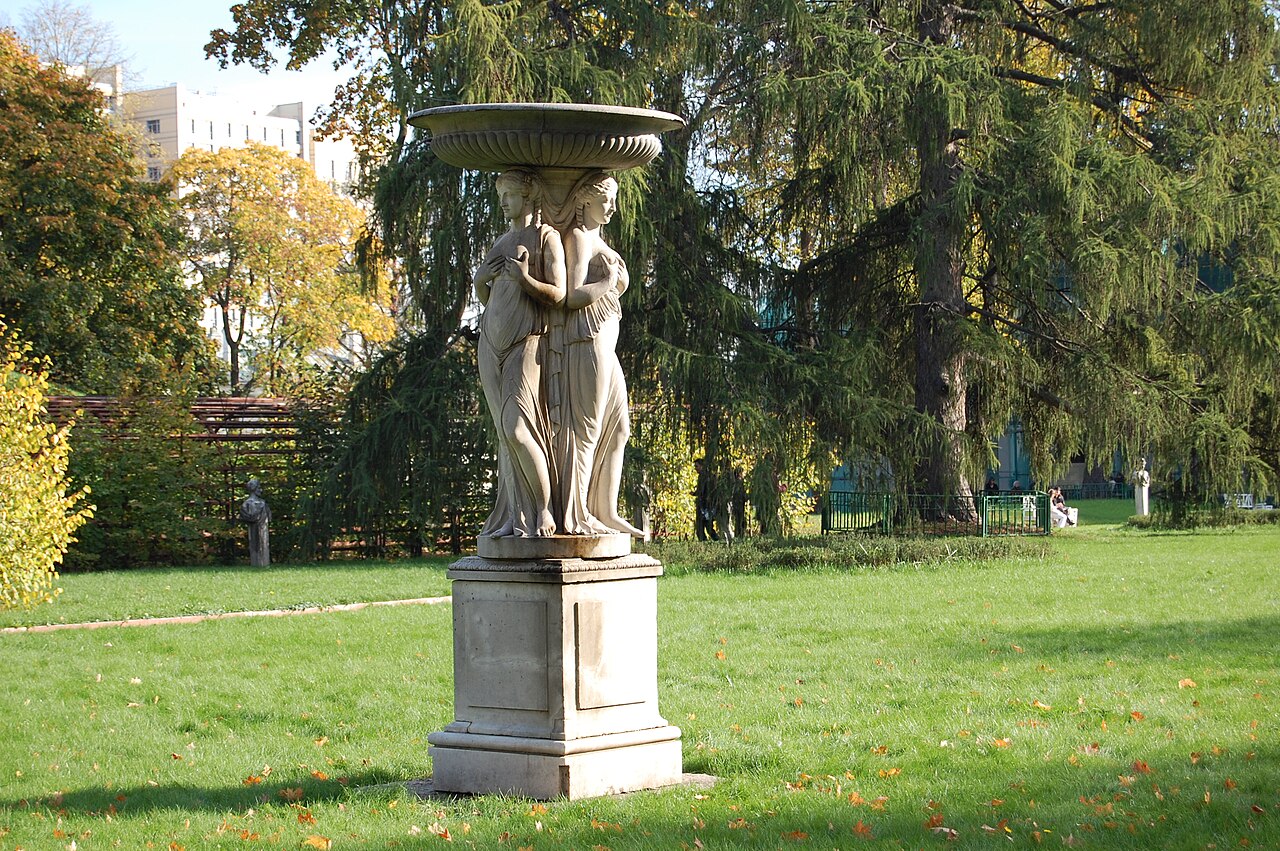
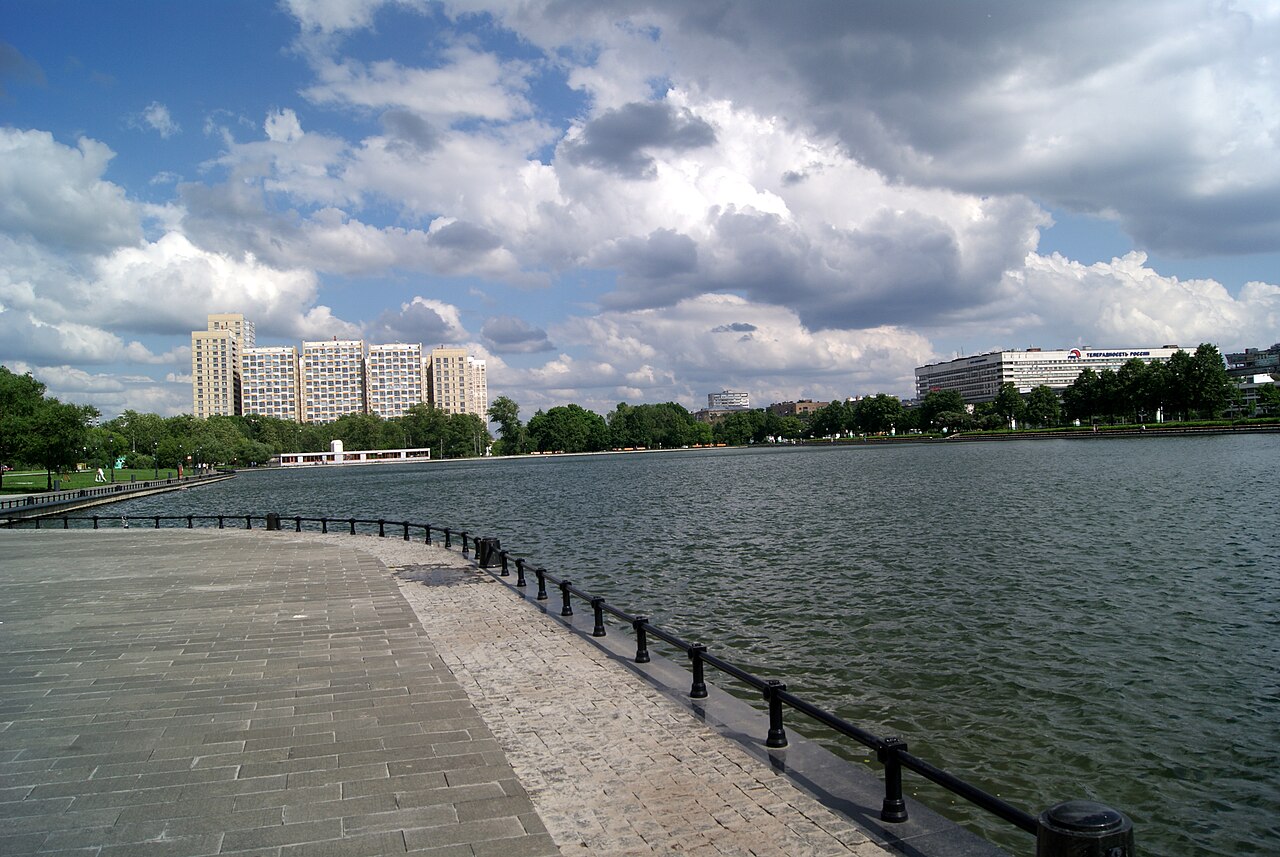
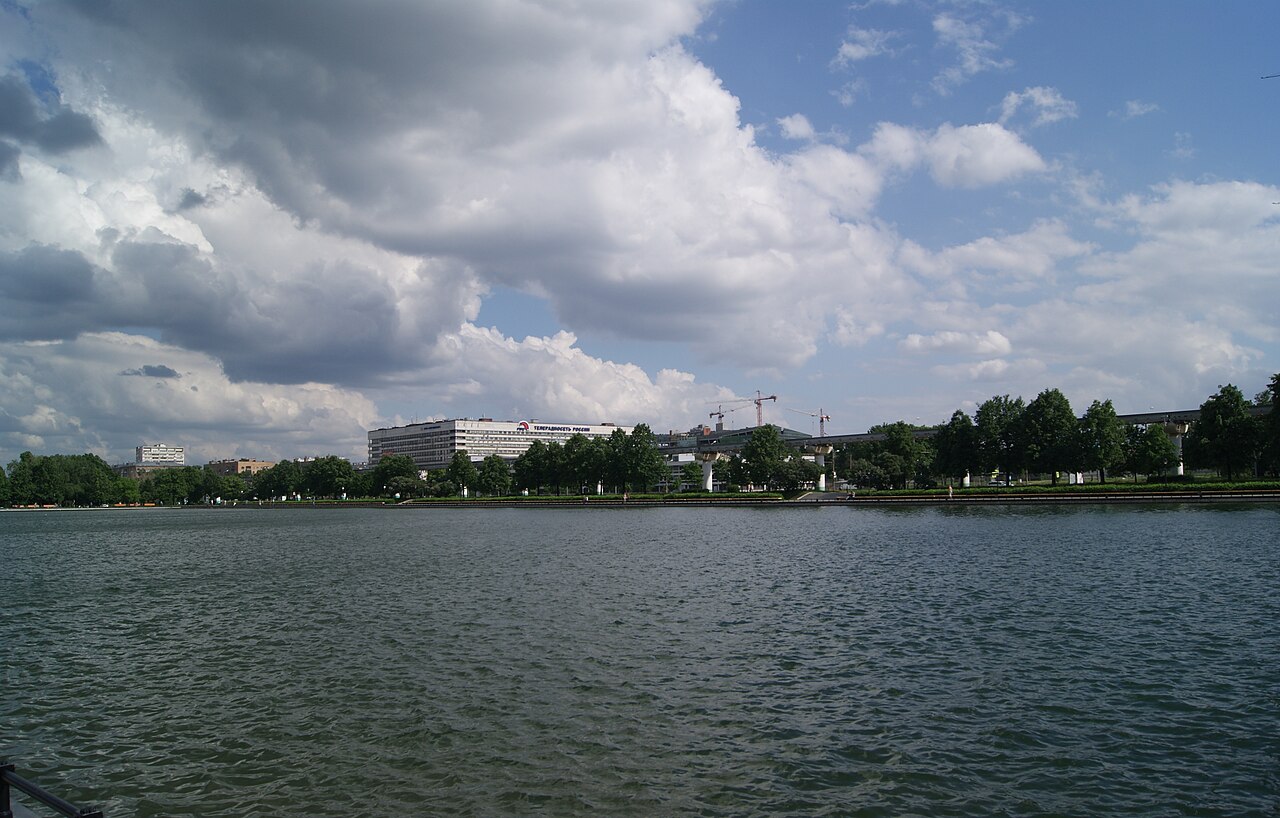
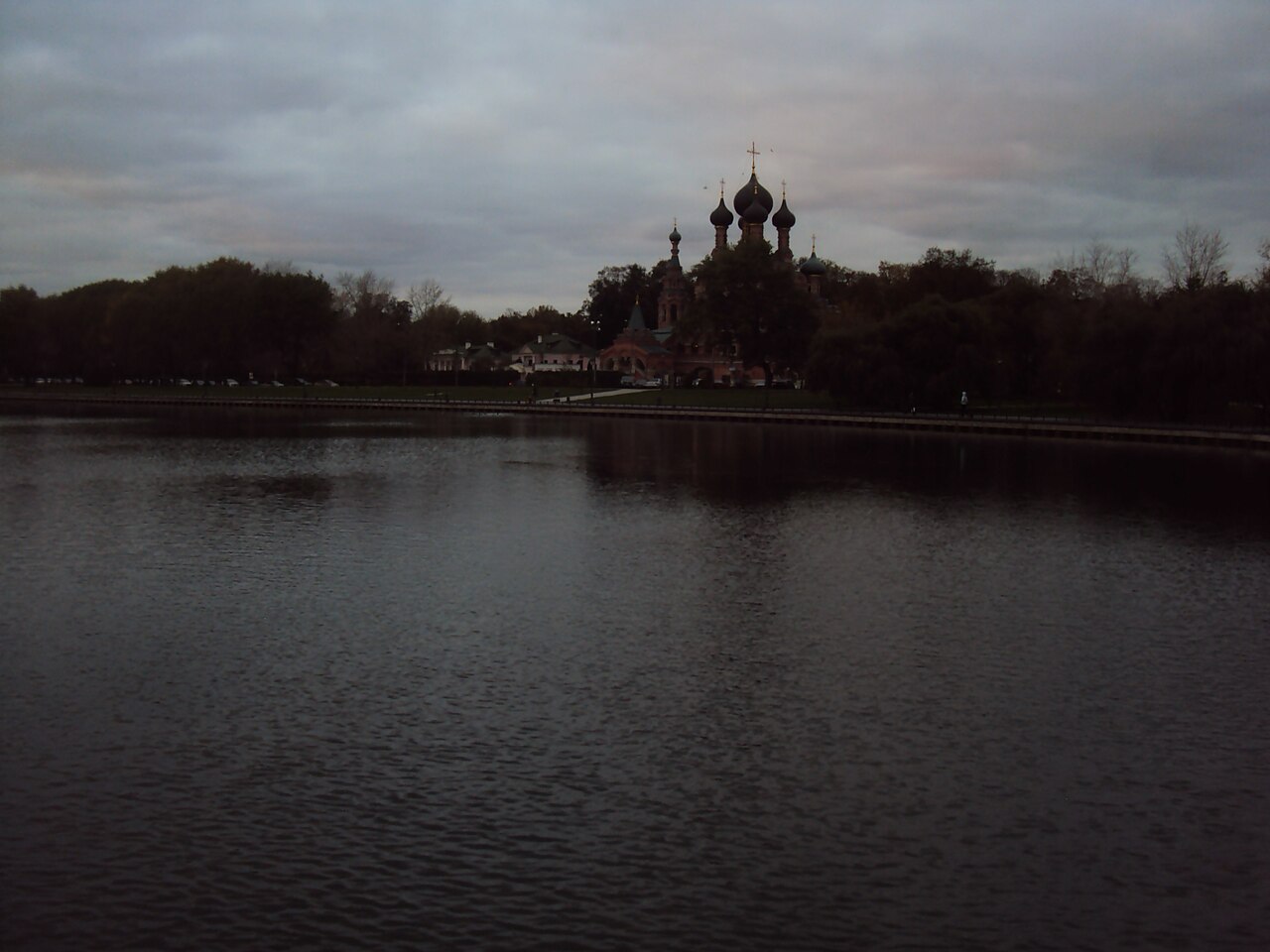
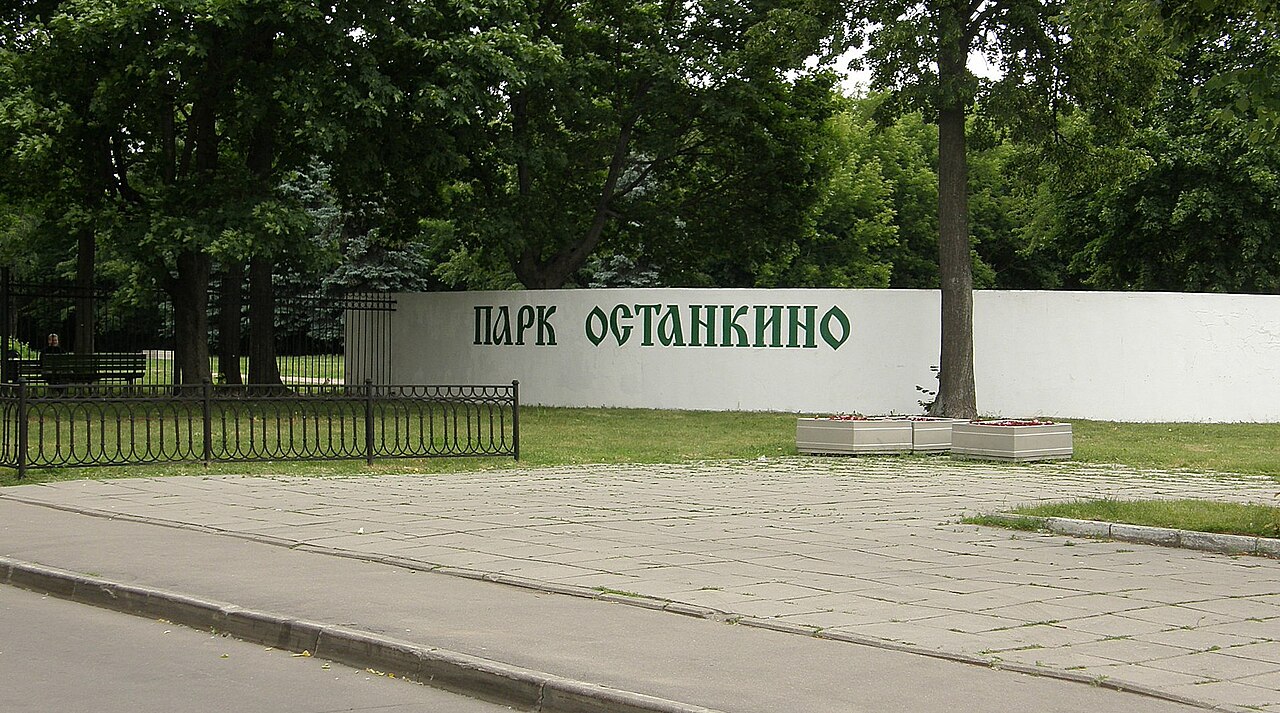
Ostankino stands in northern Moscow beside the television center: the nearest metro is VDNKh, with the monorail and tram lines serving Ostankino directly, and the vast VDNKh exhibition park and botanical garden adjoin the estate for a combined day out. The palace interiors have been under comprehensive restoration, with reopening staged through the 2020s, so check the Ostankino museum’s official site for current access; the restored park, the pond, and the seventeenth-century Trinity Church beside the palace are open and reward a visit on their own, and the church holds regular services. Even during works, the exterior ensemble, pink facades against the cedar grove with the television tower behind, makes one of Moscow’s most photogenic contrasts of centuries. You can find the palace on the map here: Ostankino Palace on Google Maps.
Palaces Nearby
You May Like
The Terem Palace and the Hidden Fairy Tale of the Kremlin