In the eastern desert of Jordan, at the great oasis of Azraq, rises a fortress unlike any other, Qasr al-Azraq, a mighty stronghold built entirely of black basalt, the fortress whose history reaches from the Romans to the Arab Revolt, the castle from which Lawrence of Arabia directed part of the campaign that shook the Ottoman empire. The fortress, its black walls and towers rising from the desert, is one of the most evocative monuments of Jordan, Qasr al-Azraq the black fortress of the oasis, the castle of many ages and of Lawrence.
Qasr al-Azraq is the great fortress of the eastern desert. Built and rebuilt over many centuries, from the Roman age through the Ayyubid and the Ottoman, the fortress of black basalt guarded the vital oasis of Azraq, the only permanent water in the vast eastern desert, the castle the stronghold of the oasis, Qasr al-Azraq the black fortress of the many ages, the castle that guarded the water and the routes of the desert of Jordan.
This article continues the Jordanian palace series, turning to Qasr al-Azraq, the black basalt fortress of the eastern desert, the stronghold of the great oasis, the castle of many ages from the Romans to the Arab Revolt, the fortress from which Lawrence of Arabia directed his campaign, Qasr al-Azraq the black fortress of the oasis, the evocative castle of the desert of Jordan.
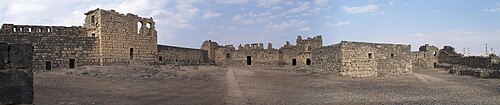
- The Oasis of Azraq
- The Basalt Fortress
- The Roman Origins
- The Ayyubid Reconstruction
- The Black Basalt
- The Gate and the Stone Doors
- The Courtyard and the Towers
- The Mosque in the Court
- Lawrence of Arabia
- The Arab Revolt
- The Strategic Oasis
- The Fortress of Many Ages
- Qasr al-Azraq Today
- Watch on Film
- Visiting Today
- Palaces Nearby
The Oasis of Azraq
Azraq is the great oasis of the eastern desert. The oasis of Azraq, whose name means the blue, was for millennia the only permanent water in the vast eastern desert of Jordan, a place of springs, pools, and wetlands in the heart of the arid steppe, the oasis the vital water of the desert, Azraq the blue oasis, the place of water that made the fortress and the routes possible in the eastern desert of Jordan.
The oasis was the key to the desert: Azraq the only permanent water in the eastern desert, the oasis the vital point on the routes, the place that controlled the passage through the arid steppe, the water the key to the desert, Azraq the strategic oasis, the blue water the heart of the eastern desert, the oasis whose water made Qasr al-Azraq a place of importance for every age.
The oasis was a haven of life: Azraq, with its springs, its pools, and its wetlands, a haven of life and a resting place in the harsh desert, the oasis the gathering place of the birds, the animals, and the travelers, the blue water the haven of the steppe, Azraq the oasis of life, the blue place the haven in the desert that the fortress of Qasr al-Azraq guarded.
The Basalt Fortress
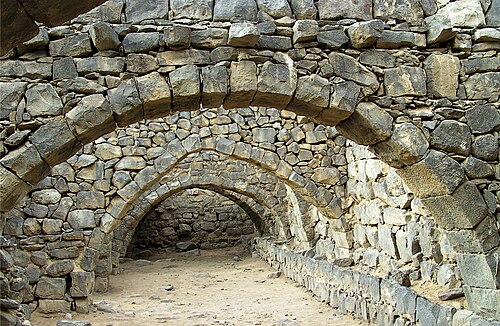
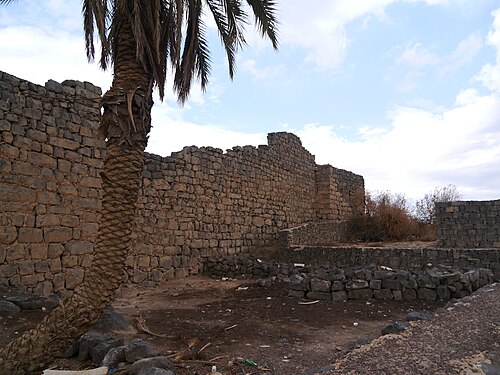
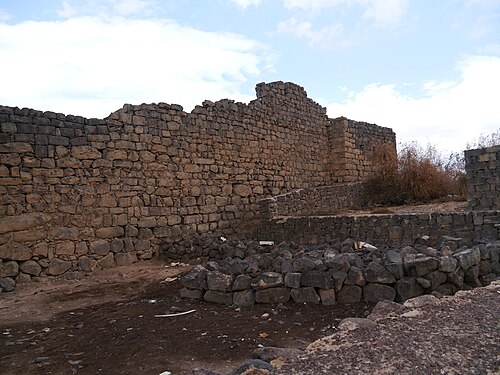
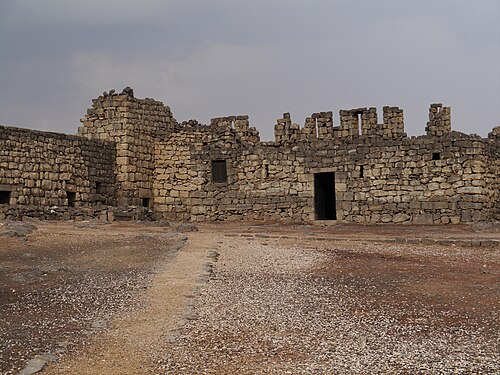
Qasr al-Azraq is built of black basalt. The fortress is constructed entirely of the black volcanic basalt of the region, the dark stone giving the castle its somber and striking appearance, the walls, the towers, and the gate all of the black stone, the basalt fortress the distinctive mark of Qasr al-Azraq, the black stone the signature of the castle, the fortress of basalt the striking monument of the desert of Jordan.
The black stone gives the fortress its character: the basalt of Qasr al-Azraq lending the castle a dark and somber majesty unlike any other fortress, the black walls the distinctive face of the stronghold, the dark stone the character of the castle, the basalt the signature of Qasr al-Azraq, the black fortress the striking and the somber monument, the castle of the black stone in the desert of Jordan.
The basalt came from the volcanic desert: the black basalt of Qasr al-Azraq quarried from the volcanic desert around the oasis, the stone the product of the ancient volcanoes of the region, the basalt the local material of the fortress, the black stone the gift of the volcanic land, the basalt the building stone of Qasr al-Azraq, the dark rock the material of the fortress of the eastern desert of Jordan.
The Roman Origins
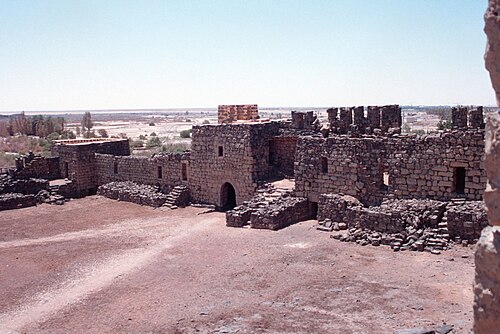
Qasr al-Azraq began as a Roman fort. The fortress has its origins in the Roman age, when the Romans built a fort at the oasis of Azraq to guard the water and the eastern frontier of their empire, the Roman fort the origin of the castle, the stronghold the guardian of the Roman desert frontier, Qasr al-Azraq the fortress whose roots reach to the Roman age in the eastern desert of Jordan.
The Romans guarded the frontier from Azraq: the Roman fort at Azraq part of the system of defenses that guarded the eastern frontier of the empire against the desert tribes, the stronghold the outpost of the Roman power, the fort the guardian of the frontier, the Roman castle the sentinel of the desert edge, Qasr al-Azraq the Roman fortress of the oasis, the stronghold of the imperial frontier in the desert.
The Roman fort set the pattern: the Roman origins of Qasr al-Azraq establishing the oasis as a place of the fortress, the site that every later age would fortify, the Roman fort the foundation of the stronghold, the origin the beginning of the castle’s long history, the Roman castle the first of the fortresses of Azraq, the stronghold whose history began with Rome in the eastern desert of Jordan.
The Ayyubid Reconstruction
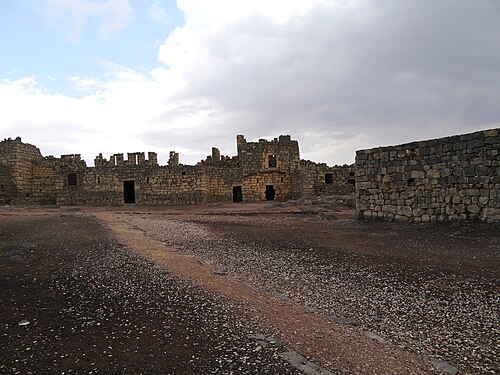
The fortress was rebuilt by the Ayyubids. The castle that stands today was largely rebuilt in the Ayyubid age, in the early thirteenth century, by the governors of the dynasty of Saladin, the fortress reconstructed as a stronghold of the Ayyubid power, the Ayyubid castle the form of Qasr al-Azraq today, the reconstruction the work of the age of Saladin’s heirs in the eastern desert of Jordan.
The Ayyubids strengthened the stronghold: the Ayyubid governors rebuilding Qasr al-Azraq as a strong fortress of black basalt, the castle reconstructed with its walls, its towers, and its gate, the Ayyubid work the form of the fortress, the reconstruction the strengthening of the stronghold, the Ayyubid castle the rebuilt fortress of the oasis, the stronghold of the age of Saladin’s dynasty in the desert.
The fortress served the Ayyubid and later powers: Qasr al-Azraq, rebuilt by the Ayyubids, serving as a stronghold through the following ages, used by the Mamluks, the Ottomans, and others who held the oasis, the fortress the stronghold of the successive powers, the castle the guardian of the water through the centuries, Qasr al-Azraq the fortress of the many rulers of the eastern desert of Jordan.
The Black Basalt
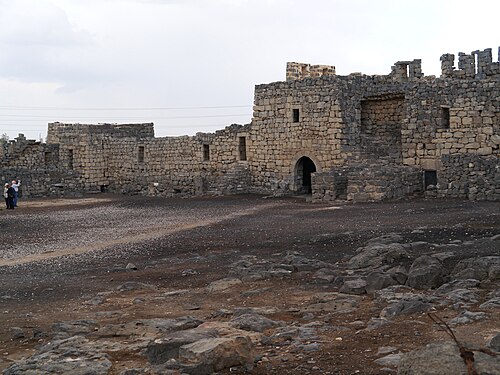
The black basalt defines Qasr al-Azraq. The fortress, built entirely of the dark volcanic stone, is one of the few castles of the world made wholly of basalt, the black stone giving the building its unique and somber character, the basalt the defining feature of the castle, the black stone the mark of Qasr al-Azraq, the volcanic rock the signature of the fortress of the eastern desert of Jordan.
The basalt is hard and enduring: the black basalt of Qasr al-Azraq a hard and durable stone, the material that has let the fortress endure through the ages, the basalt the strength of the castle, the hard stone the endurance of the stronghold, the volcanic rock the durability of Qasr al-Azraq, the black basalt the enduring material of the fortress of the oasis in the desert.
The basalt gives a somber beauty: the dark basalt of Qasr al-Azraq lending the fortress a somber and striking beauty, the black walls rising from the desert a memorable sight, the basalt the source of the castle’s character, the black stone the beauty of the stronghold, the volcanic rock the somber majesty of Qasr al-Azraq, the basalt the striking face of the fortress of the eastern desert of Jordan.
The Gate and the Stone Doors
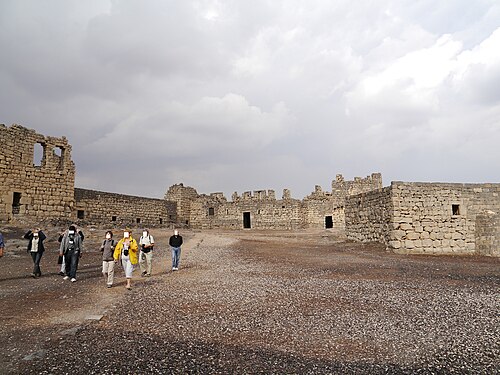
Qasr al-Azraq is famous for its stone doors. The fortress is entered through a great gate hung with massive doors made of single slabs of basalt, the stone doors swinging on stone hinges, a marvel of the basalt construction, the stone doors the famous feature of Qasr al-Azraq, the basalt gates the wonder of the castle, the massive stone doors the jewel of the fortress of the eastern desert of Jordan.
The doors are single slabs of basalt: the great doors of Qasr al-Azraq each made of a single massive slab of basalt, the stone doors a remarkable feat of the construction, the basalt gates swinging on their stone pivots, the doors the wonder of the fortress, the stone slabs the famous feature of the castle, the basalt doors the marvel of Qasr al-Azraq in the eastern desert.
The doors still swing on their hinges: the massive basalt doors of Qasr al-Azraq still turning on their stone pivots after the centuries, the doors the enduring marvel of the fortress, the stone gates the working wonder of the castle, the basalt doors the surviving jewel of the stronghold, the stone slabs the famous and enduring feature of Qasr al-Azraq, the doors the marvel of the fortress of the desert of Jordan.
The Courtyard and the Towers
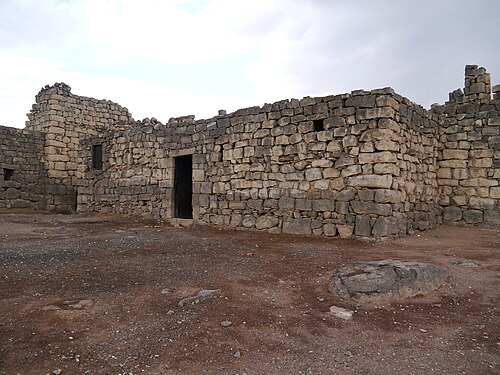
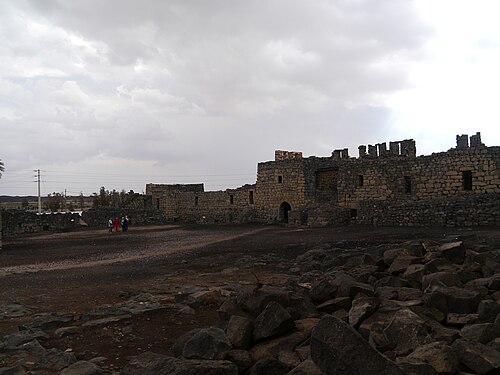
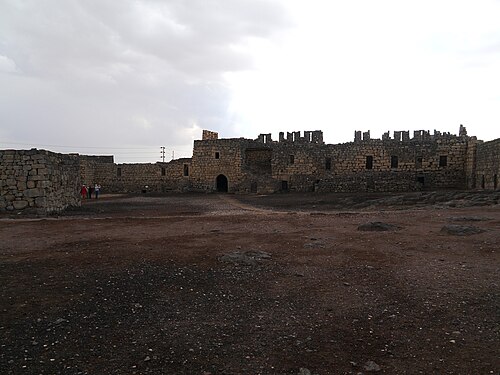
Qasr al-Azraq is built around a courtyard. The fortress encloses a large central courtyard, with towers at the corners and ranges of rooms around the walls, the court the open heart of the castle, the towers the strong points of the defense, the courtyard and the towers the structure of Qasr al-Azraq, the central court the heart of the fortress, the towers the strength of the stronghold of the eastern desert of Jordan.
The towers guard the corners: the towers at the corners of Qasr al-Azraq the strong points of the defense, the bastions of black basalt guarding the walls, the towers the military works of the fortress, the corner towers the strength of the castle, the bastions the guardians of the stronghold, the towers the defense of Qasr al-Azraq, the corner towers the strength of the fortress of the oasis.
The court was the heart of the garrison’s life: the central courtyard of Qasr al-Azraq the heart of the life of the garrison, the open space the center of the fortress, the court the setting of the daily life of the stronghold, the courtyard the heart of the castle, the open court the center of Qasr al-Azraq, the courtyard the heart of the fortress of the eastern desert of Jordan.
The Mosque in the Court
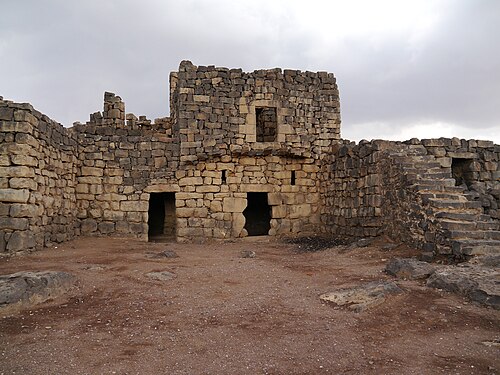
Qasr al-Azraq holds a mosque in its court. Within the central courtyard of the fortress stands a small mosque, a place of worship for the garrison, built in the Ayyubid or the Mamluk age, the mosque the religious heart of the castle, the small place of worship the sacred building of the garrison, the mosque in the court the jewel of Qasr al-Azraq, the place of worship the spiritual center of the fortress of the desert of Jordan.
The mosque served the garrison: the little mosque in the court of Qasr al-Azraq the place of worship of the soldiers who held the fortress, the mosque the religious center of the garrison, the small building the sacred heart of the castle, the place of worship the spiritual dimension of the stronghold, the mosque the religious jewel of Qasr al-Azraq, the small mosque the sacred building of the fortress of the oasis.
The mosque is a feature of the court: the small mosque standing in the central courtyard of Qasr al-Azraq, the place of worship a feature of the heart of the fortress, the mosque the sacred building in the court, the little mosque the jewel of the courtyard, the place of worship the religious center in the heart of the castle, the mosque the sacred feature of Qasr al-Azraq in the desert of Jordan.
Lawrence of Arabia
Qasr al-Azraq is famous as the base of Lawrence of Arabia. In the winter of 1917 to 1918, during the Arab Revolt against the Ottoman empire, T. E. Lawrence, the British officer known as Lawrence of Arabia, made Qasr al-Azraq his base, living in the fortress with the Arab forces, the castle the headquarters of Lawrence in the desert, Qasr al-Azraq the fortress of Lawrence of Arabia, the stronghold of the famous campaign of the eastern desert of Jordan.
Lawrence lived in the fortress: T. E. Lawrence occupying Qasr al-Azraq with the Arab forces in the winter of the revolt, the officer living in the rooms above the gate, the castle the base of his operations, Lawrence the famous occupant of the fortress, the officer whose presence made Qasr al-Azraq famous, the stronghold the home of Lawrence of Arabia in the desert of Jordan.
He wrote of the fortress in his memoir: Lawrence describing Qasr al-Azraq and the winter he spent there in his famous memoir, the Seven Pillars of Wisdom, the fortress immortalized in the account of the Arab Revolt, the castle the setting of the famous pages, Qasr al-Azraq the fortress of the memoir, the stronghold made famous by the writing of Lawrence of Arabia in the desert of Jordan.
The Arab Revolt
Qasr al-Azraq was a base of the Arab Revolt. During the First World War, the Arab Revolt against the Ottoman empire, led by the Hashemite prince Faisal and supported by Lawrence and the British, swept through the deserts of Arabia and Jordan, and Qasr al-Azraq, with its vital oasis, became a base for the Arab and the British forces, the fortress the stronghold of the revolt, the castle the base of the campaign in the eastern desert.
The revolt shook the Ottoman empire: the Arab Revolt, with its guerrilla campaign against the Ottoman railway and garrisons, playing a part in the fall of the Ottoman empire in the Middle East, the revolt the struggle for Arab independence, Qasr al-Azraq a base of the campaign, the fortress the stronghold of the Arab and British forces, the castle the base of the revolt in the desert of Jordan.
The fortress was a base for the advance on Damascus: Qasr al-Azraq serving as a base from which the Arab forces and Lawrence prepared for the advance on Damascus in 1918, the fortress the staging point of the campaign, the castle the base of the final advance, the stronghold the staging ground of the revolt, Qasr al-Azraq the fortress of the campaign that took Damascus, the castle of the Arab Revolt in the desert of Jordan.
The Strategic Oasis
Qasr al-Azraq guarded a strategic oasis. The fortress owed its importance in every age to the oasis of Azraq, the only permanent water in the vast eastern desert, the strategic point on the routes between Arabia, Syria, and Iraq, the oasis the key to the desert, Qasr al-Azraq the guardian of the strategic water, the fortress the stronghold of the vital oasis in the eastern desert of Jordan.
The water made the oasis vital: the springs and the wetlands of Azraq the only reliable water in the eastern desert, the oasis the vital point for every army and caravan, the water the key to the passage of the desert, Azraq the strategic haven, the oasis the vital water that gave Qasr al-Azraq its importance in every age, the fortress the guardian of the water of the desert.
The fortress controlled the routes: Qasr al-Azraq, guarding the oasis, controlling the routes that passed through the eastern desert, the fortress the master of the ways, the castle the stronghold of the passage, the fortress the guardian of the routes and the water, Qasr al-Azraq the control point of the desert, the castle that held the strategic oasis of the eastern desert of Jordan.
The Fortress of Many Ages
Qasr al-Azraq is a fortress of many ages. The castle, with its Roman origins, its Ayyubid reconstruction, its Mamluk and Ottoman use, and its role in the Arab Revolt, is a palimpsest of the history of the eastern desert, the fortress the record of the ages, Qasr al-Azraq the stronghold of the many centuries, the castle that carries the layers of the Roman, the medieval, and the modern history of the desert of Jordan.
The fortress served every power of the desert: Qasr al-Azraq held and used by the Romans, the Ayyubids, the Mamluks, the Ottomans, and the forces of the Arab Revolt, the fortress the stronghold of every power that held the eastern desert, the castle the record of the rulers, Qasr al-Azraq the fortress of the many ages, the stronghold that served the succession of the powers of the desert of Jordan.
The castle carries the layers of history: Qasr al-Azraq, in its black basalt walls, carrying the memory of nearly two thousand years of history, from the Roman frontier to Lawrence of Arabia, the fortress the palimpsest of the ages, the castle the record of the desert’s history, Qasr al-Azraq the stronghold of the many centuries, the fortress that holds the layers of the history of the eastern desert of Jordan.
Qasr al-Azraq Today
Qasr al-Azraq today stands as the black fortress of the eastern desert, the stronghold of the great oasis, the castle of many ages from the Romans to the Arab Revolt, the fortress of the black basalt and the massive stone doors, the base of Lawrence of Arabia, Qasr al-Azraq the evocative monument of the desert, the black fortress of the oasis, the enduring stronghold of the eastern desert of Jordan.
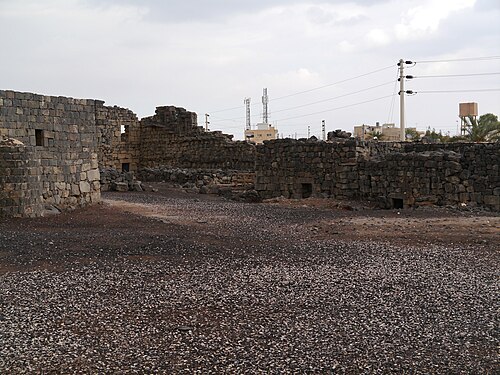
The fortress endures as an evocative monument: Qasr al-Azraq, its black walls rising from the desert, standing as one of the most evocative monuments of Jordan, the fortress the stronghold of the oasis and of Lawrence, the castle the record of the ages, Qasr al-Azraq the enduring black fortress, the monument that carries the memory of the Roman frontier, the Ayyubid castle, and the Arab Revolt in the desert of Jordan.
Qasr al-Azraq continues the Jordanian palace series, the black basalt fortress of the eastern desert, the stronghold of the great oasis, the castle of many ages from the Romans to the Arab Revolt, the fortress of Lawrence of Arabia, Qasr al-Azraq the evocative monument of the black stone, the fortress of the oasis, the enduring stronghold that guarded the water and the routes of the eastern desert of Jordan.
Watch Qasr al-Azraq on Film
Visiting Qasr al-Azraq Today
Qasr al-Azraq stands at the oasis town of Azraq in the eastern desert of Jordan, about one hundred kilometers east of Amman; the black basalt fortress is visited for its massive walls and towers, its famous stone doors, its central court with the little mosque, and the rooms associated with Lawrence of Arabia, one of the chain of desert castles of Jordan and a monument of the Arab Revolt. Travel in Jordan is generally accessible, but current conditions should be checked before any visit; Qasr al-Azraq is among the treasures of the heritage of Jordan. You can find the fortress on the map here: Qasr al-Azraq on Google Maps.


