On the highest hill of Amman, the capital of Jordan, crowning the ancient citadel that has been the heart of the city for thousands of years, stand the ruins of the Umayyad Palace, the great governor’s residence of the early Islamic age. The palace, with its monumental domed gateway, its colonnaded street, its audience hall, and its mosque, is the finest Umayyad monument of Amman, the citadel the layered heart of the city from the ancient Ammonites to the Umayyads, the palace the jewel of the early Islamic Jordan.
The Amman Citadel is a layered monument of the ages. The hill, known as Jabal al-Qal’a, has been inhabited and fortified for millennia, the citadel bearing the remains of the ancient Ammonites, the Romans, the Byzantines, and the Umayyads, the great Umayyad palace the crowning monument of the hill, the citadel the record of the whole history of Amman, the palace the jewel of the early Islamic age on the ancient acropolis of the capital of Jordan.
This article continues the Jordanian palace series, turning to the Umayyad Palace of the Amman Citadel, the great governor’s residence of the early Islamic age, the jewel of the ancient acropolis of Amman, the palace of the domed gateway and the colonnaded street, the Umayyad monument that crowns the layered citadel of the capital of Jordan.
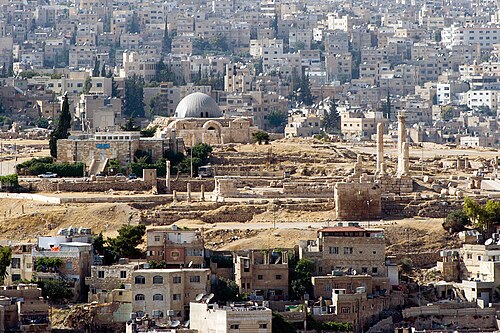
- The Citadel of Amman
- The Ancient Rabbath Ammon
- The Roman Philadelphia
- The Umayyad Governor’s Palace
- The Monumental Gateway
- The Domed Vestibule
- The Colonnaded Street
- The Audience Hall
- The Congregational Mosque
- The Roman Temple of Hercules
- The Byzantine Church
- Excavation and Restoration
- The Umayyad Palace Today
- Watch on Film
- Visiting Today
- Palaces Nearby
The Citadel of Amman
The Amman Citadel crowns the heart of the city. The citadel, on the hill of Jabal al-Qal’a, is the ancient acropolis of Amman, the fortified height that has been the heart of the city since the deepest antiquity, the citadel the layered record of the ages, the acropolis the crown of the capital, the citadel the hill of the Umayyad Palace and the monuments of the many ages of Amman, the heart of the city of Jordan.
The hill has been inhabited for millennia: the citadel of Amman inhabited and fortified since the Bronze Age, the hill the continuous seat of the city through the ancient, the classical, the Byzantine, and the Islamic ages, the citadel the record of the millennia, the acropolis the layered heart of Amman, the hill the seat of the city from the ancient Ammonites to the Umayyads in the capital of Jordan.
The citadel is a layered monument: the Amman Citadel bearing the remains of the Ammonite, the Roman, the Byzantine, and the Umayyad ages, the hill a palimpsest of the history of the city, the citadel the record of the layers, the acropolis the monument of the ages, the citadel the layered heart of Amman, the hill that carries the whole history of the capital of Jordan.
The Ancient Rabbath Ammon
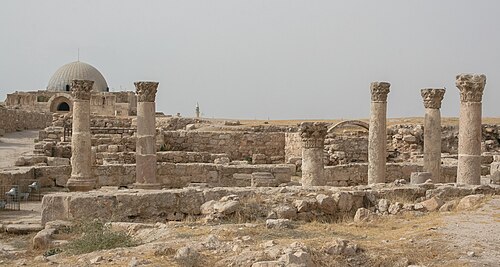
Amman was the ancient Rabbath Ammon. In the deepest antiquity the city was Rabbath Ammon, the capital of the Ammonites, a people of the Bible and the ancient Near East, the citadel the acropolis of the Ammonite capital, the hill the seat of the ancient kingdom, Rabbath Ammon the ancestor of Amman, the citadel the stronghold of the ancient city, the acropolis the heart of the Ammonite capital in the land of Jordan.
Rabbath Ammon was a city of the Bible: the ancient Rabbath Ammon mentioned in the Bible as the capital of the Ammonites, the city of the wars of David and the ancient Israelites, the citadel the stronghold of the biblical city, Rabbath Ammon the city of the scripture, the acropolis the seat of the ancient kingdom, the citadel the stronghold of the biblical Rabbath Ammon in the land of Jordan.
The name endures in Amman: the ancient Rabbath Ammon giving its name, through the ages, to the modern Amman, the city the continuation of the ancient capital, the citadel the link between the ancient and the modern, Rabbath Ammon the root of the name of Amman, the acropolis the continuous heart of the city, the citadel the stronghold that joins the ancient Rabbath Ammon to the capital of modern Jordan.
The Roman Philadelphia
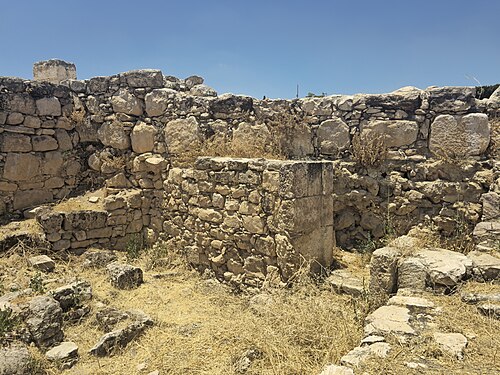
Amman was the Roman Philadelphia. In the classical age the city was known as Philadelphia, one of the cities of the Decapolis, the league of Greco-Roman cities of the region, the citadel the acropolis of the Roman city, the hill crowned by the temple of Hercules, Philadelphia the Roman name of Amman, the citadel the acropolis of the classical city, the hill the heart of the Roman Philadelphia in the land of Jordan.
Philadelphia was a city of the Decapolis: the Roman Philadelphia one of the ten cities of the Decapolis, the Greco-Roman league of the region, the city a center of the classical civilization, the citadel the acropolis of Philadelphia, the hill the seat of the Roman city, Philadelphia the classical Amman, the citadel the acropolis of the Decapolis city in the land of Jordan.
The Roman city left great monuments: the Roman Philadelphia leaving the great monuments of the classical age, the theater in the valley below and the temple of Hercules on the citadel, the city the builder of the classical Amman, the citadel the acropolis crowned by the Roman temple, Philadelphia the classical city of the monuments, the citadel the Roman acropolis of the Decapolis city in the land of Jordan.
The Umayyad Governor’s Palace
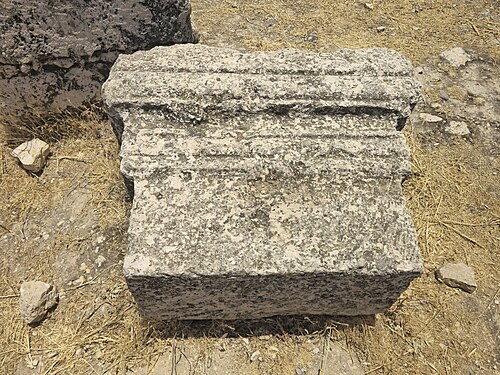
The Umayyad Palace was the governor’s residence. In the early eighth century, the Umayyad rulers built on the citadel of Amman a great palace, the residence of the governor of the region, a complex of gateway, street, courts, and audience hall, the palace the seat of the Umayyad power in Amman, the governor’s residence the jewel of the early Islamic citadel, the Umayyad Palace the crown of the acropolis of Jordan.
The palace was a complex of buildings: the Umayyad Palace of Amman a great ensemble of the monumental gateway, the colonnaded street, the courts, the audience hall, and the residential buildings, the palace a self-contained world on the citadel, the governor’s residence the seat of the administration, the Umayyad Palace the complex of the early Islamic power on the acropolis of Amman.
The palace crowned the Umayyad city: the Umayyad Palace the seat of the government of Amman in the early Islamic age, the residence the heart of the Umayyad city, the palace the crown of the citadel, the governor’s residence the center of the power, the Umayyad Palace the seat of the early Islamic Amman, the governor’s palace the jewel of the Umayyad citadel of Jordan.
The Monumental Gateway
The Umayyad Palace has a monumental gateway. The entrance to the palace is a great monumental gateway, a cruciform domed hall that served as the vestibule and the ceremonial entrance to the residence, the gateway the splendid threshold of the palace, the monumental hall the jewel of the Umayyad building, the gateway the ceremonial entrance to the governor’s palace on the citadel of Amman.
The gateway is a domed hall: the monumental gateway of the Umayyad Palace built as a cruciform hall crowned, in its reconstruction, by a great dome, the gateway the domed vestibule of the palace, the hall the splendid threshold, the domed gateway the jewel of the entrance, the monumental hall the ceremonial face of the Umayyad Palace of Amman, the gateway the crown of the approach to the residence.
The gateway is richly decorated: the monumental gateway of the Umayyad Palace adorned with the carved and molded decoration of the early Islamic art, the blind arcades, the rosettes, and the ornament covering the walls, the decoration the jewel of the gateway, the carved ornament the glory of the hall, the gateway the showcase of the Umayyad decoration on the citadel of Amman, the monumental entrance the jewel of the early Islamic art of Jordan.
The Domed Vestibule
The gateway contains a great domed vestibule. The monumental entrance of the Umayyad Palace is a cruciform hall roofed, in its restored form, with a great dome, the vestibule the splendid first space of the palace, the domed hall the ceremonial threshold, the vestibule the jewel of the entrance, the domed hall the splendid vestibule of the Umayyad Palace on the citadel of Amman, the hall the ceremonial heart of the gateway.
The dome crowns the vestibule: the great dome, raised in the modern restoration over the cruciform vestibule of the Umayyad Palace, the dome the crown of the hall, the vault the splendid roof of the vestibule, the dome the jewel of the gateway, the domed roof the glory of the entrance hall, the dome the crown of the vestibule of the Umayyad Palace on the citadel of Amman.
The vestibule is the splendid threshold: the domed vestibule of the Umayyad Palace the splendid first space through which the visitor passed into the residence, the hall the ceremonial threshold, the vestibule the jewel of the entrance sequence, the domed hall the splendid introduction to the palace, the vestibule the ceremonial heart of the gateway of the Umayyad Palace on the citadel of Amman.
The Colonnaded Street
A colonnaded street led through the palace. From the gateway, a colonnaded street ran through the Umayyad Palace complex toward the audience hall, the street the processional axis of the palace, the colonnade the grand approach to the heart of the residence, the colonnaded street the ceremonial spine of the Umayyad Palace, the avenue the grand way through the complex on the citadel of Amman.
The street was the processional axis: the colonnaded street of the Umayyad Palace the ceremonial axis along which the approach to the audience hall was made, the street the processional way of the palace, the colonnade the grand spine of the complex, the avenue the ceremonial heart of the residence, the colonnaded street the grand approach through the Umayyad Palace on the citadel of Amman.
The street linked the buildings: the colonnaded street connecting the monumental gateway with the courts and the audience hall of the Umayyad Palace, the street the link through the complex, the colonnade the spine that joined the buildings, the avenue the connecting axis of the palace, the colonnaded street the grand link of the Umayyad Palace, the avenue the ceremonial spine of the residence on the citadel of Amman.
The Audience Hall
The Umayyad Palace has a great audience hall. At the heart of the complex stood the audience hall, the throne room where the governor received his court and conducted the business of the government, the hall the ceremonial heart of the palace, the audience room the seat of the Umayyad authority, the audience hall the jewel of the Umayyad Palace, the throne room the center of the power on the citadel of Amman.
The hall was the seat of the governor: the audience hall of the Umayyad Palace the place where the governor of Amman held his court, received the petitioners, and ruled the region, the hall the seat of the authority, the audience room the center of the government, the throne room the heart of the Umayyad power, the audience hall the seat of the governor on the citadel of Amman.
The hall was richly built: the audience hall of the Umayyad Palace a finely built and decorated chamber, the hall the showcase of the Umayyad building, the audience room the jewel of the complex, the throne room the splendid heart of the palace, the audience hall the finest space of the residence, the hall the ceremonial jewel of the Umayyad Palace on the citadel of Amman, the throne room the glory of the early Islamic building of Jordan.
The Congregational Mosque
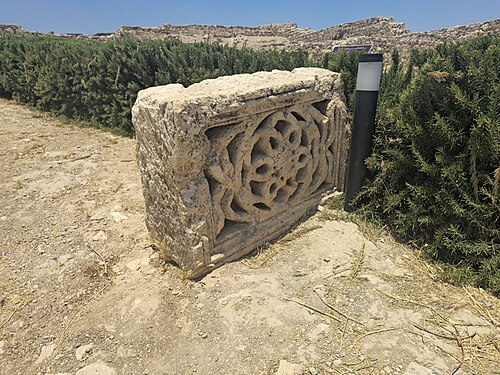
The citadel held an Umayyad mosque. Near the palace on the citadel stood a congregational mosque of the Umayyad age, the place of worship of the Umayyad city, the mosque the religious heart of the citadel, the great mosque the sacred building of the Umayyad Amman, the congregational mosque the jewel of the early Islamic acropolis, the place of worship the spiritual center of the Umayyad citadel of Jordan.
The mosque served the Umayyad city: the congregational mosque of the citadel the place of the Friday prayer and the religious life of the Umayyad Amman, the mosque the religious center of the city, the great mosque the sacred heart of the citadel, the place of worship the spiritual center of the Umayyad acropolis, the mosque the religious jewel of the Umayyad citadel of Amman.
The mosque completed the Umayyad complex: the congregational mosque, with the palace and the other buildings, completing the Umayyad ensemble on the citadel, the mosque the religious element of the complex, the great mosque the sacred counterpart of the palace, the place of worship the religious heart of the Umayyad acropolis, the mosque the completing jewel of the Umayyad citadel of Amman.
The Roman Temple of Hercules
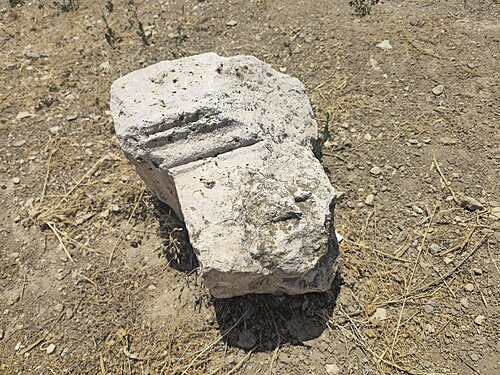
The citadel holds the Roman Temple of Hercules. On the acropolis of Amman, near the Umayyad Palace, stand the columns of the great Roman Temple of Hercules, built in the second century in the age of the Roman Philadelphia, the temple the monument of the classical city, the Temple of Hercules the jewel of the Roman citadel, the columns the landmark of the acropolis of Amman, the temple the monument of the Roman age of Jordan.
The temple was a great classical monument: the Temple of Hercules one of the chief monuments of the Roman Philadelphia, a great temple on the acropolis dedicated to the hero-god, the temple the showcase of the classical building, the columns the surviving glory of the Roman city, the Temple of Hercules the monument of the classical Amman, the temple the jewel of the Roman age on the citadel of Jordan.
The columns crown the citadel: the surviving columns of the Temple of Hercules rising on the acropolis of Amman, the columns the landmark of the citadel, the temple the Roman jewel of the hill, the pillars the surviving monument of the classical age, the Temple of Hercules the Roman crown of the citadel, the columns the landmark of the layered acropolis of Amman beside the Umayyad Palace.
The Byzantine Church
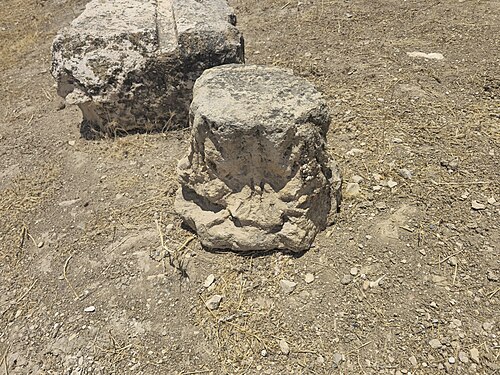
The citadel holds a Byzantine church. On the acropolis of Amman, among the monuments of the ages, stand the remains of a Byzantine church, the place of worship of the Christian city of the late antique age, the church the monument of the Byzantine Amman, the basilica the jewel of the Christian age, the Byzantine church the monument that joins the classical and the Islamic on the citadel of Amman, the church the record of the Byzantine age of Jordan.
The church marks the Byzantine city: the Byzantine church on the citadel the monument of the Christian Amman of the late antique age, the church the record of the Byzantine city, the basilica the sacred building of the Christian age, the church the monument of the Byzantine Amman, the basilica the jewel that marks the Christian age on the layered citadel of Amman.
The church is a layer of the citadel’s history: the Byzantine church, with the Roman temple, the Umayyad palace, and the ancient remains, one of the layers of the history of the Amman Citadel, the church the Christian layer of the acropolis, the basilica the record of the Byzantine age, the church the monument that adds the Christian age to the layered history of the citadel of Amman.
Excavation and Restoration
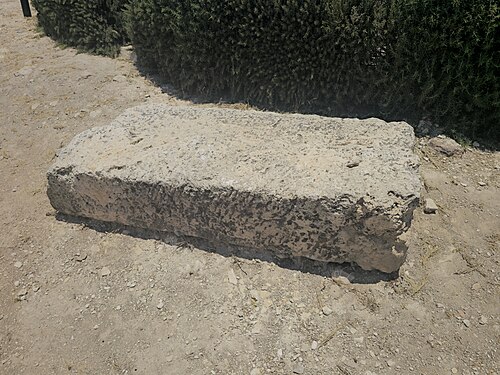
The Amman Citadel has been excavated and restored. The citadel and the Umayyad Palace have been the subject of extensive excavation and restoration, the archaeologists uncovering and conserving the monuments of the many ages, the domed gateway of the palace reconstructed, the citadel opened as an archaeological park and the site of the Jordan Archaeological Museum, the restoration the recovery of the layered acropolis of Amman.
The restoration revealed the palace: the excavation and the restoration of the Umayyad Palace uncovering the gateway, the street, the audience hall, and the mosque, the reconstruction of the domed vestibule giving the visitor an impression of the Umayyad splendor, the restoration the recovery of the palace, the work the revelation of the early Islamic monument on the citadel of Amman.
The citadel is an archaeological park: the Amman Citadel, with its Umayyad Palace, its Temple of Hercules, its Byzantine church, and its museum, preserved as an archaeological park and one of the chief monuments of Jordan, the citadel the showcase of the layered history, the acropolis the treasure of the heritage, the citadel the archaeological crown of the capital of Jordan.
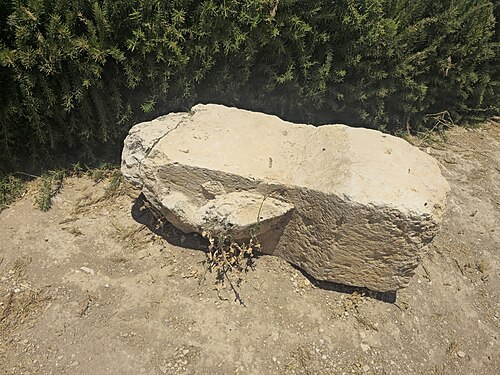
The Umayyad Palace Today
The Umayyad Palace today stands as the crown of the Amman Citadel, the great governor’s residence of the early Islamic age, the palace of the monumental domed gateway, the colonnaded street, the audience hall, and the mosque, the jewel of the layered acropolis of Amman, the Umayyad Palace the finest early Islamic monument of the capital, the crown of the citadel that carries the whole history of Amman from the ancient Ammonites to the present.
The palace endures as the jewel of the citadel: the Umayyad Palace, its domed gateway restored, standing as the crowning monument of the Amman Citadel, the palace the jewel of the early Islamic age, the residence the crown of the acropolis, the Umayyad Palace the finest Umayyad monument of Amman, the governor’s palace the enduring jewel of the layered citadel of the capital of Jordan.
The Umayyad Palace continues the Jordanian palace series, the great governor’s residence of the early Islamic age, the jewel of the Amman Citadel, the palace of the domed gateway, the colonnaded street, and the audience hall, the Umayyad monument that crowns the ancient acropolis, the Umayyad Palace the finest early Islamic building of Amman, the enduring jewel of the layered citadel of the capital of Jordan.
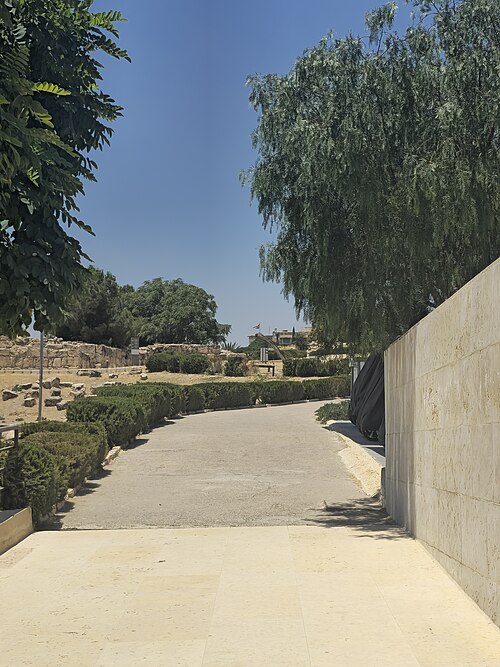
Watch the Umayyad Palace of Amman on Film
Visiting the Umayyad Palace Today
The Umayyad Palace stands on the Amman Citadel, Jabal al-Qal’a, the ancient acropolis on the highest hill in the center of Amman, the capital of Jordan; the palace, with its reconstructed domed gateway, its colonnaded street, its audience hall, and its mosque, is visited together with the Roman Temple of Hercules, the Byzantine church, and the Jordan Archaeological Museum, with the great view over the city and the Roman theater below. Travel in Jordan is generally accessible, and the citadel is one of the chief sites of the capital; current conditions should still be checked before any visit. You can find the palace on the map here: Umayyad Palace of the Amman Citadel on Google Maps.


