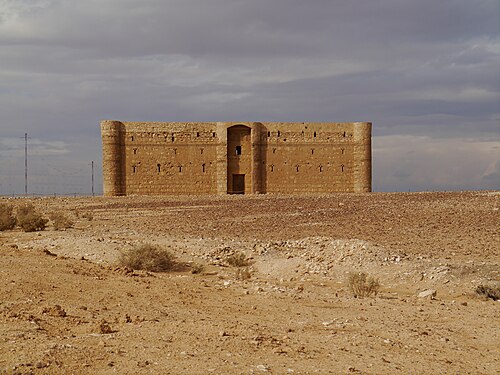
In the desert east of Amman, rising foursquare and formidable from the flat steppe, stands Qasr Kharana, one of the most striking and best-preserved of the Umayyad desert castles of Jordan. The building, a compact square fortress of two storeys with round towers at its corners and a single great gate, is one of the enigmas of the early Islamic architecture, Qasr Kharana the desert castle of the mysterious purpose, the fortress-palace that rises alone and complete from the Jordanian steppe.
Qasr Kharana is among the most complete of the desert castles. Where many of the Umayyad buildings survive as ruins, Qasr Kharana stands almost entire, its walls, its towers, its gate, and its two storeys of rooms around the court preserved as when they were built, the castle one of the best-preserved of the Umayyad desert buildings, Qasr Kharana the complete fortress of the steppe, the jewel of preservation among the desert castles of Jordan.
This article continues the Jordanian palace series, turning to Qasr Kharana, the square desert castle east of Amman, one of the best-preserved and most enigmatic of the Umayyad buildings, the fortress-palace of the round towers and the single gate, Qasr Kharana the desert castle of the mysterious purpose, the jewel of the early Islamic architecture rising complete from the steppe of Jordan.
- The Desert Castle of Kharana
- The Enigmatic Fortress
- The Early Date
- The Fortified Appearance
- The Round Towers
- The Great Gate
- The Central Court
- The Two Storeys
- The Vaulted Rooms
- The Decorated Chambers
- A Caravanserai or a Palace
- The Study of Kharana
- Qasr Kharana Today
- Watch on Film
- Visiting Today
- Palaces Nearby
The Desert Castle of Kharana
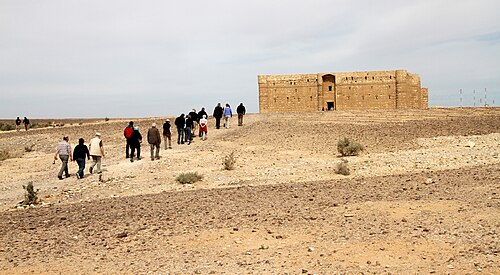
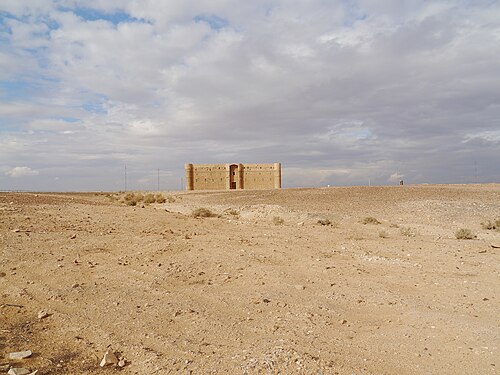
Qasr Kharana rises alone in the desert. The square castle stands isolated in the flat steppe east of Amman, its massive walls and round towers visible from afar, the building a commanding presence in the emptiness, Qasr Kharana the fortress of the desert, the castle rising alone from the flat land, the building the striking monument of the steppe, Qasr Kharana the desert castle standing complete in the Jordanian desert.
The castle commands the desert routes: Qasr Kharana standing on the desert routes east of Amman, the building a landmark and perhaps a station on the ways, the castle the mark on the empty steppe, the fortress the commanding presence over the desert, Qasr Kharana the landmark of the routes, the building the station of the desert, the castle the monument that rises over the ways of the Jordanian steppe.
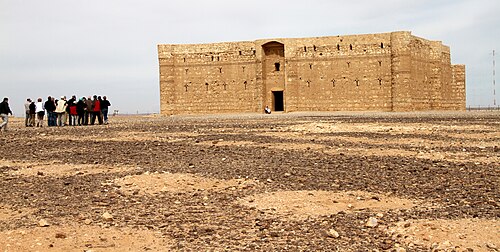
The castle is a compact square: Qasr Kharana a compact square building, its four sides of massive wall enclosing the court and the rooms, the castle a tight and formidable block, the fortress a square of stone and plaster, Qasr Kharana the compact castle of the desert, the building the square fortress of the steppe, the castle the formidable block that rises complete from the Jordanian desert.
The Enigmatic Fortress
Qasr Kharana is a building of mystery. The purpose of the castle has long been debated, the building fortified in appearance yet with features that suggest it was not truly military, the castle perhaps a palace, a caravanserai, a meeting place, or a retreat, Qasr Kharana the enigma of the desert, the fortress of the uncertain purpose, the building whose true function remains one of the puzzles of the Umayyad architecture.
The building looks military but may not be: Qasr Kharana, with its massive walls, its round towers, and its single gate, appearing to be a fortress, yet its towers solid and its arrow-slits too narrow to be useful, the castle fortified in look but perhaps not in purpose, the building the fortress that may be a palace, Qasr Kharana the enigma of the fortified appearance, the castle of the debated function in the desert of Jordan.
The purpose remains debated: the function of Qasr Kharana debated by the scholars, the castle perhaps a residence, a place of assembly for the desert tribes, a caravan station, or a retreat, the building the subject of the long debate, Qasr Kharana the enigma of the desert, the castle whose purpose remains uncertain, the fortress the puzzle of the Umayyad building in the steppe of Jordan.
The Early Date
Qasr Kharana is one of the earliest desert castles. An inscription in the building gives a date of around 710, making Qasr Kharana one of the earliest datable of the Umayyad desert castles, the building a work of the early eighth century, the castle the monument of the first age of the Umayyad desert building, Qasr Kharana the early fortress of the steppe, the castle of the dated inscription of the Umayyad age.
The inscription dates the building: a painted inscription in one of the rooms of Qasr Kharana giving a date corresponding to around 710, the text the evidence for the early date, the inscription the document of the building’s age, the dated text the anchor of the chronology, Qasr Kharana the castle of the dated inscription, the building whose early date the text establishes in the desert of Jordan.
The early date makes it a key monument: Qasr Kharana, as one of the earliest datable desert castles, a key monument for the understanding of the development of the Umayyad architecture, the building the reference for the early desert building, the castle the anchor of the chronology, Qasr Kharana the key monument of the early Umayyad architecture, the building the dated jewel of the desert castles of Jordan.
The Fortified Appearance
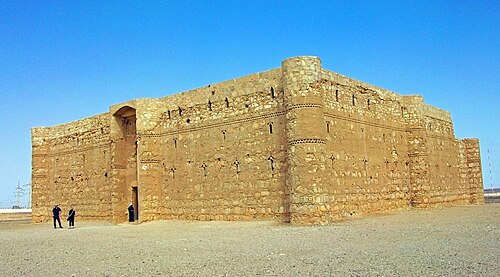
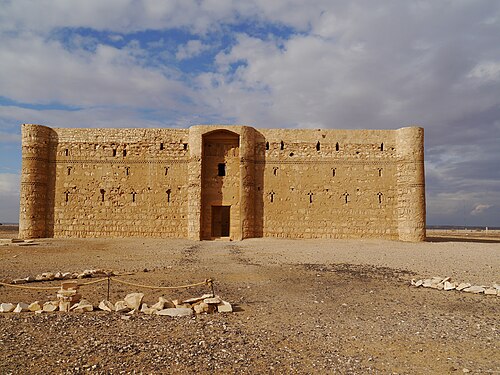
Qasr Kharana has a fortified appearance. The castle presents the look of a stronghold, its massive outer walls rising sheer, its round towers at the corners, its single gate the only opening, the building the image of a fortress, Qasr Kharana the castle of the military look, the fortress whose appearance proclaims strength, the building the stronghold of the desert in its outward form.
The walls rise sheer and massive: the outer walls of Qasr Kharana rising sheer from the desert, the massive construction the image of strength, the walls the formidable face of the castle, the sheer sides the military look of the fortress, Qasr Kharana the castle of the massive walls, the building the stronghold whose walls proclaim its strength in the desert of Jordan.
The appearance may be for display: the fortified look of Qasr Kharana perhaps intended more for display and prestige than for real defense, the castle the expression of the power and the status of its builder, the fortress the image of strength as a statement, Qasr Kharana the castle whose military look is a display, the building the fortress of prestige in the desert of the Umayyad Jordan.
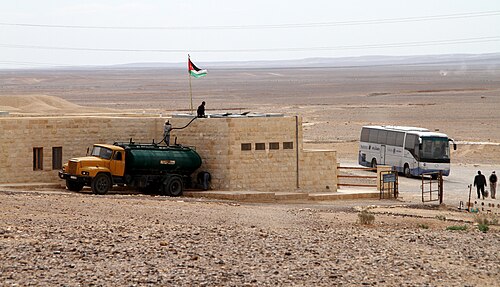
The Round Towers
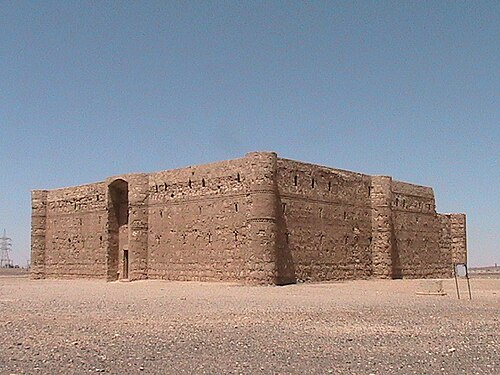
Qasr Kharana is marked by its round towers. The castle has round towers at its corners and semicircular buttresses along its walls, the towers giving the building its distinctive and formidable silhouette, the round towers the mark of Qasr Kharana, the bastions the strong points of the appearance, the towers the distinctive feature of the castle, the round bastions the signature of the desert fortress of Jordan.
The towers are solid, not hollow: the round towers of Qasr Kharana largely solid, not the hollow defensive towers of a true fortress, the bastions more decorative and supportive than military, the solid towers the sign that the castle was not truly defensive, the round bastions the clue to the building’s purpose, the towers the enigmatic feature of Qasr Kharana in the desert of Jordan.
The towers give the castle its silhouette: the round towers at the corners of Qasr Kharana giving the building its distinctive and memorable form, the bastions the sculptural feature of the castle, the towers the silhouette of the fortress against the desert sky, the round bastions the signature of Qasr Kharana, the towers the distinctive mark of the desert castle rising from the steppe of Jordan.
The Great Gate
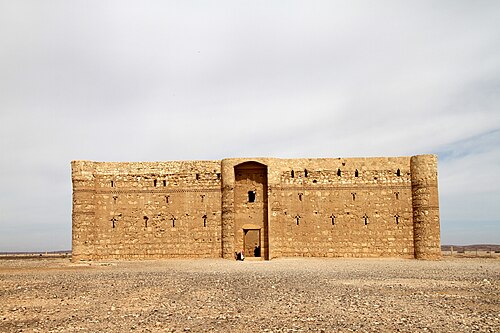
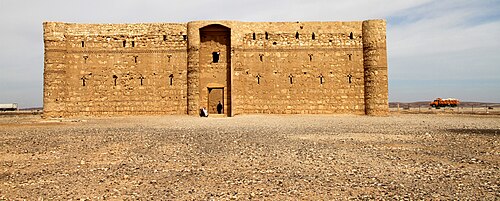
The castle is entered through a single great gate. Qasr Kharana has one entrance, a gate on the south side flanked by two of the round towers, the single opening the only way into the castle, the gate the formidable and the ceremonial entrance, the great gate the threshold of Qasr Kharana, the entrance the one way through the massive walls, the gate the guarded threshold of the desert fortress of Jordan.
The gate leads into the court: the great gate of Qasr Kharana opening into the central courtyard, the entrance the passage from the desert to the heart of the castle, the gate the threshold between the outer and the inner worlds, the entrance the way into the court, the great gate the passage into Qasr Kharana, the gate the threshold of the central court of the desert castle.
The gate is the single opening in the walls: the one gate of Qasr Kharana the only breach in the massive outer walls, the entrance the sole opening in the fortified block, the gate the controlled access to the castle, the single entrance the mark of the enclosed and the private building, the great gate the one threshold of Qasr Kharana, the entrance the single way into the desert fortress of Jordan.
The Central Court
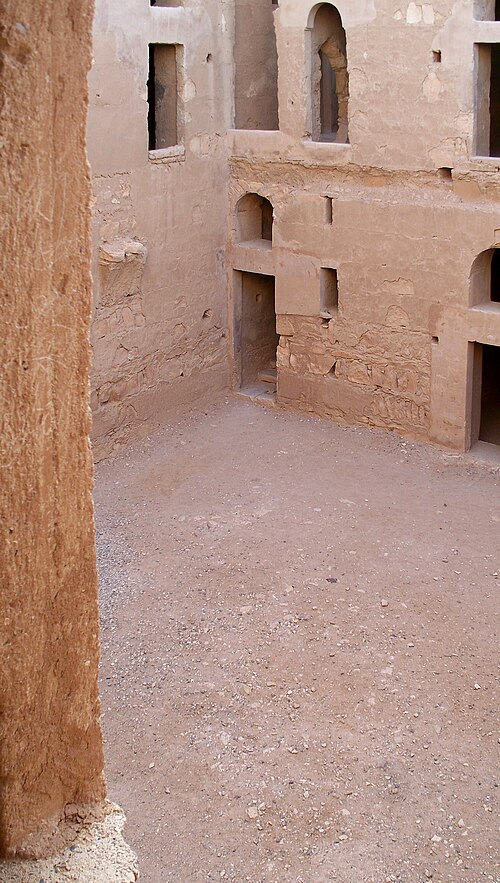
Qasr Kharana is built around a central court. Within the massive walls, the castle is arranged around a central courtyard, the court the open heart of the building, the rooms of the two storeys arranged around it, the courtyard the light and the organizing center of the castle, the central court the heart of Qasr Kharana, the open court the focus of the fortress, the courtyard the center of the desert castle of Jordan.
The court brings light to the rooms: the central courtyard of Qasr Kharana the source of light and air for the rooms arranged around it, the court the open heart that lights the enclosed building, the courtyard the center that orders the castle, the open court the light-well of the fortress, the central court the heart of Qasr Kharana, the courtyard the organizing and the lighting center of the desert castle.
The court is the heart of the building: the central courtyard of Qasr Kharana the focus around which the whole castle is arranged, the court the private and the organizing heart, the courtyard the center of the building’s life, the open court the heart of the fortress, the central court the focus of Qasr Kharana, the courtyard the heart of the enclosed desert castle of Jordan.
The Two Storeys
Qasr Kharana rises in two storeys. The castle has two floors of rooms arranged around the court, the ground floor and the upper storey, the rooms reached by stairs from the court, the two storeys the arrangement of the building, the upper floor the finer level of the rooms, the two storeys the structure of Qasr Kharana, the floors the division of the desert castle of Jordan.
The upper storey held the finer rooms: the upper floor of Qasr Kharana containing the finer and the more decorated rooms, the better chambers the level of the residence or the reception, the upper storey the principal floor, the finer rooms the heart of the building’s use, the upper floor the better level of Qasr Kharana, the upper storey the finer part of the desert castle.
The ground floor served as store and stable: the ground floor of Qasr Kharana likely serving for stores, stables, and service, the lower level the practical floor of the castle, the ground storey the working part of the building, the lower rooms the service spaces, the ground floor the practical level of Qasr Kharana, the lower storey the working heart of the desert castle of Jordan.
The Vaulted Rooms
The rooms of Qasr Kharana are vaulted. The chambers of the castle are roofed with vaults of stone and plaster, the vaulting the shelter of the rooms, the halls and chambers covered with the barrel and the cross vaults of the early Islamic building, the vaulted rooms the structure of Qasr Kharana, the vaults the roofing of the castle, the vaulting the architecture of the desert fortress of Jordan.
The vaulting is a fine work of building: the vaults of Qasr Kharana a demonstration of the skill of the early Islamic builders, the roofing of stone and plaster a fine work of the craft, the vaulting the architecture of the castle, the vaults the shelter and the structure of the rooms, the vaulted chambers the fine building of Qasr Kharana, the vaulting the craft of the desert castle.
The rooms vary in size and finish: the chambers of Qasr Kharana ranging from the large halls to the smaller rooms, the finer and the plainer, the rooms the varied spaces of the castle, the chambers the range of the building’s accommodation, the varied rooms the arrangement of Qasr Kharana, the chambers the spaces of the desert castle, the rooms the varied accommodation of the fortress of Jordan.
The Decorated Chambers
Qasr Kharana has decorated chambers. Some of the rooms of the upper storey are adorned with carved and molded plaster decoration, engaged columns, rosettes, and bands of ornament, the decoration the mark of the finer rooms, the decorated chambers the showcase of the Umayyad craft, the ornamented rooms the jewels of Qasr Kharana, the decoration the fine work of the desert castle of Jordan.
The decoration shows the Umayyad taste: the plaster ornament of Qasr Kharana, with its columns, rosettes, and bands, the expression of the early Umayyad decorative style, the decoration the showcase of the taste, the ornament the mark of the finer rooms, the decorated chambers the jewels of the castle, the plasterwork the record of the Umayyad decoration in the desert of Jordan.
The decoration marks the finer rooms: the ornamented chambers of Qasr Kharana the finer rooms of the upper storey, the decoration the sign of the principal spaces, the ornament the mark of the reception or the residence, the decorated rooms the heart of the building’s finer use, the decoration the jewel of Qasr Kharana, the ornamented chambers the finest spaces of the desert castle of Jordan.
A Caravanserai or a Palace
Qasr Kharana may have been a caravanserai or a palace. The debate over the castle’s purpose has suggested it may have been a caravanserai for the desert routes, a palace or residence, a retreat, or a meeting place for the Umayyad rulers and the desert tribes, the building the subject of the long debate, Qasr Kharana the castle of the uncertain function, the fortress whose purpose remains a puzzle in the desert of Jordan.
It may have been a place of assembly: Qasr Kharana perhaps a meeting place where the Umayyad rulers received the desert tribes and conducted the business of the steppe, the castle the setting of the assembly, the building the place of the gathering, the fortress the meeting point of the rulers and the tribes, Qasr Kharana the possible place of assembly, the castle of the desert diplomacy of the Umayyad Jordan.
The purpose remains a puzzle: the function of Qasr Kharana never finally settled, the castle a caravanserai, a palace, a retreat, or a meeting place in the various theories, the building the enigma of the desert, the fortress the puzzle of the purpose, Qasr Kharana the castle of the uncertain function, the building whose true use remains one of the mysteries of the Umayyad architecture of Jordan.
The Study of Kharana
Qasr Kharana has been studied and preserved. The castle, well preserved in the desert, has been studied by archaeologists and historians seeking to understand its date, its purpose, and its place in the Umayyad architecture, the building the subject of the scholarly study, Qasr Kharana the castle of the research, the fortress the monument preserved and studied, the building the treasure of the Umayyad architecture of Jordan.
The study has revealed its date and features: the research on Qasr Kharana establishing its early date from the inscription, its plan, its decoration, and its place among the desert castles, the study the recovery of the building’s history, the research the understanding of the castle, Qasr Kharana the subject of the scholarly work, the building whose features the study has revealed in the desert of Jordan.
The castle is a protected monument: Qasr Kharana recognized and protected as one of the chief Umayyad desert castles of Jordan, the building preserved as a treasure of the heritage, the fortress the monument of the early Islamic architecture, Qasr Kharana the protected jewel of the desert, the castle the treasure of the Umayyad heritage, the building the monument of the desert castles of the kingdom.
Qasr Kharana Today
Qasr Kharana today stands as one of the best-preserved and most enigmatic of the Umayyad desert castles of Jordan, the square fortress of the round towers and the single gate, the building of the central court and the two storeys, the castle of the uncertain purpose, Qasr Kharana the jewel of the desert, the complete fortress of the steppe, the enduring treasure of the early Islamic architecture of Jordan.
The castle endures complete in the desert: Qasr Kharana, standing almost entire in the flat steppe, the best-preserved of the desert castles, the building the jewel of preservation, the fortress the complete monument of the Umayyad desert, Qasr Kharana the enduring castle of the steppe, the building the treasure that rises whole from the desert of Jordan, the fortress the enigma of the Umayyad architecture.
Qasr Kharana continues the Jordanian palace series, the square desert castle of the Umayyads, the best-preserved and most enigmatic of the fortresses of the steppe, the building of the round towers, the single gate, and the central court, Qasr Kharana the jewel of the desert castles, the enduring fortress of the Umayyad Jordan, the treasure that rises complete from the eastern desert of the kingdom.
Watch Qasr Kharana on Film
Visiting Qasr Kharana Today
Qasr Kharana stands in the desert east of Amman, about sixty-five kilometers from the capital along the road toward Azraq, the square castle rising from the flat steppe near the desert highway; the fortress is visited for its remarkable preservation, its round towers, its single gate, its central court, and its two storeys of vaulted and decorated rooms, one of the chain of Umayyad desert castles of Jordan. Travel in Jordan is generally accessible, but current conditions should be checked before any visit; Qasr Kharana is among the treasures of the early Islamic heritage. You can find the castle on the map here: Qasr Kharana on Google Maps.


