The past of the world’s most famous mountaineer, Reinhold Messner, is followed. His brother Günther died during the legendary Nanga Parbat ascent in 1970. Now his three mountaineer friends are breaking their silence and making serious accusations against him.
Is he responsible for his brother’s death?
Emil Bobi (Profile)
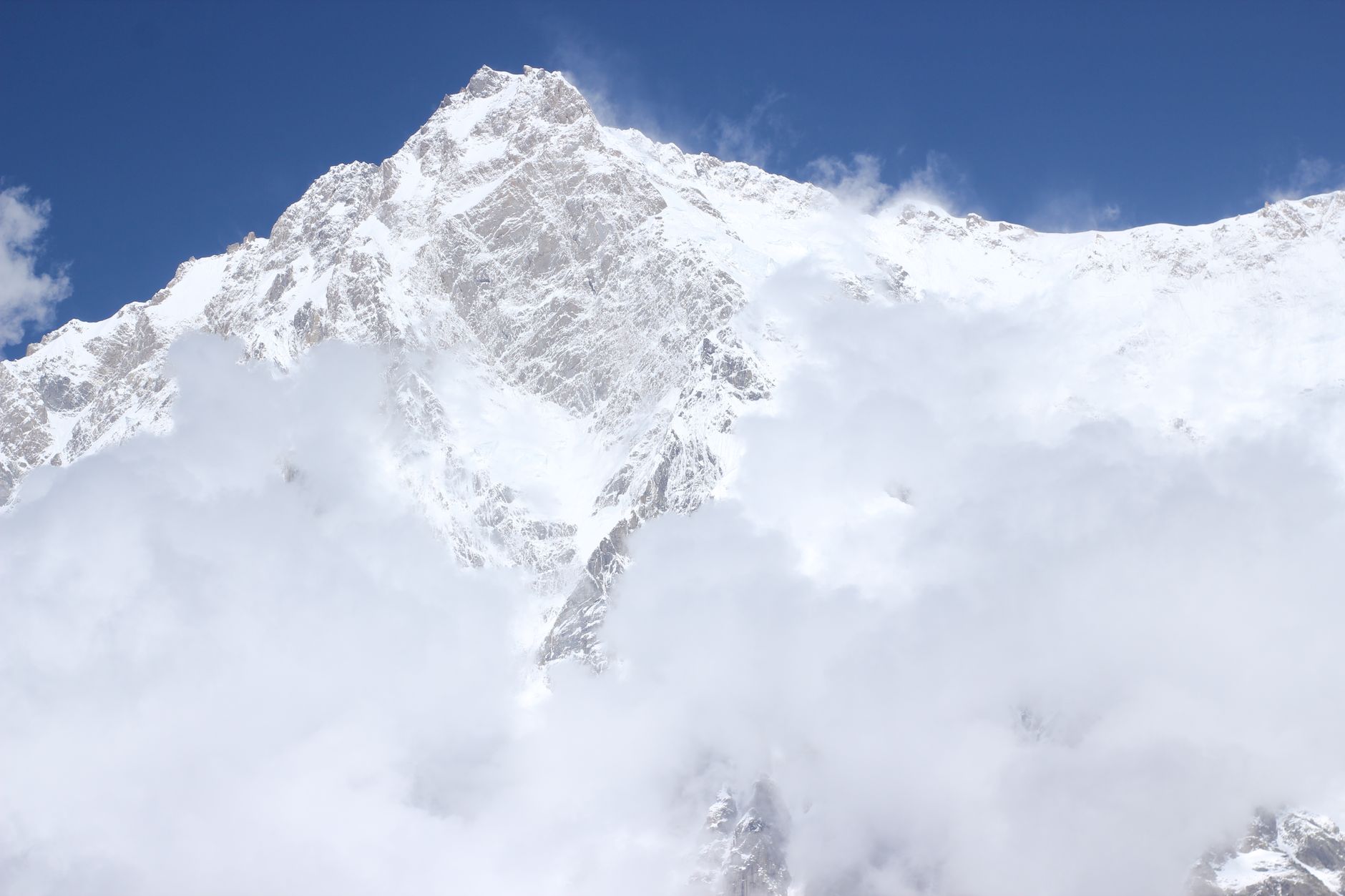
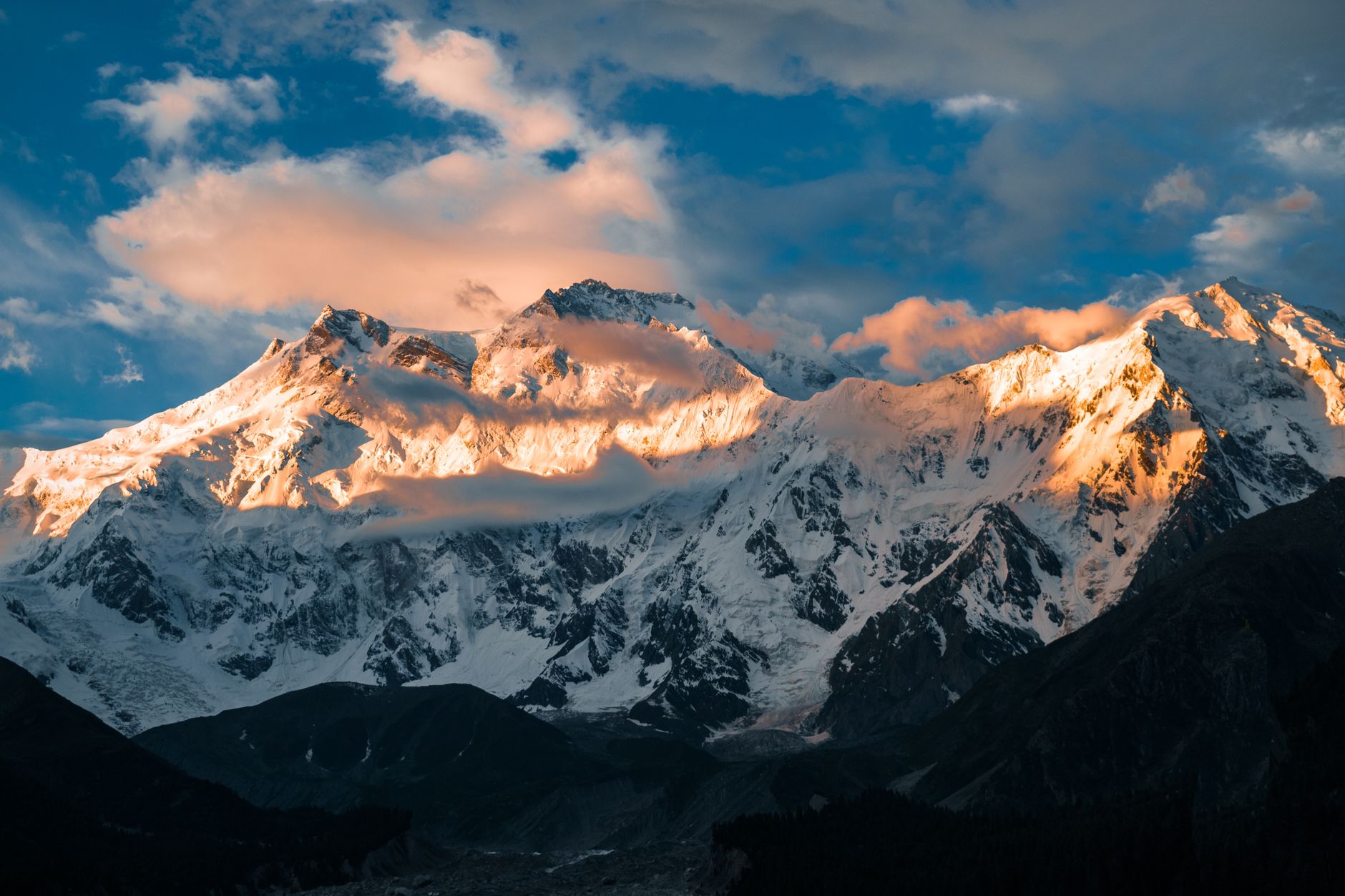
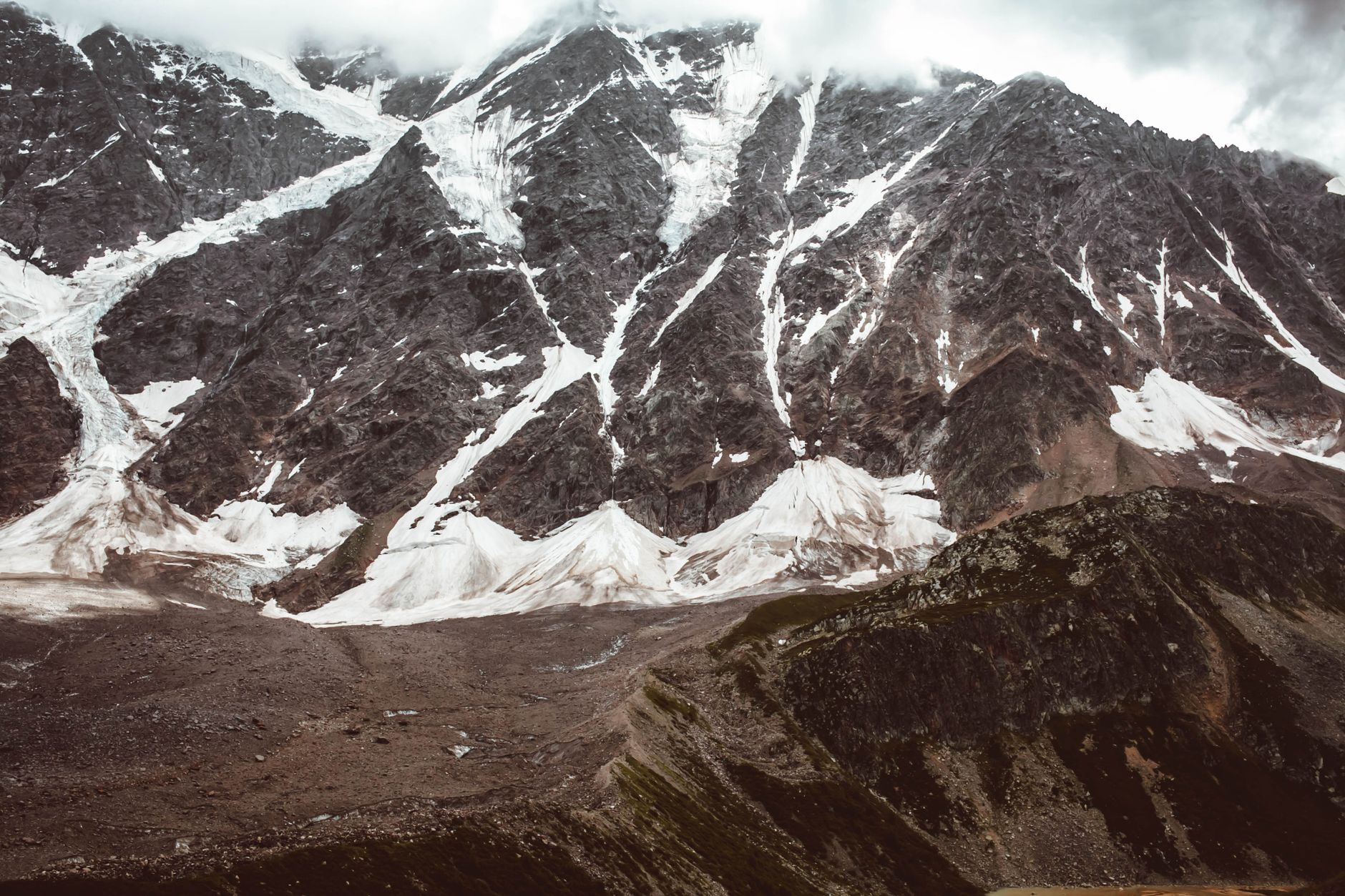
Baron Max Engelhard von Kienlin of Munich always drew a sharp line between friendship and mountain companionship. But the 70s connected him with Reinhold Messner from South Tyrol. They wrote mountaineering history together as members of the Nanga Parbat ascent. Reinhold Messner, who was 25 years old at the time, and his brother Günther, who was 2 years younger, were the first humans to cross the world’s highest wall, which was almost 5000 meters high, by Rupal, and climb to an altitude of 8126 meters.
They managed to reach the summit in . (Reinhold Messner crossed the mountain by going up from the Rupal side and descending to the opposite side from Diamir.) Günther Messner lost his life on this ascent. When Reinhold Messner and Max von Kienlin’s wife, Uschi, fell in love with each other and even got married that year, the friendship between Max and Reinhold ended. Their mountaineering friendship would last for another 32 years. But now it has come to an end.
Max Engelhardt von Kienlin prepared a 20-page dossier specifically for the Profile. In the file, the contents of which were confirmed to Profil by the expedition’s photographer Jurgen Wingler and mountain filmmaker Bernhard Baur, Kienlin makes very serious accusations against Reinhold Messner.
“Reinhold constantly makes false statements about his brother’s death, but in reality he is guilty of this tragedy”, in this article Kienlin said, “I kept silent for 30 years, I could have done this forever, but Reinhold Messner destroyed us all, even the dead. Reinhold Messner is the reason for this scandal in two new books that have just been published (Bare Mountain). This Nanga story is told from Messner’s point of view.” in the book.
And it currently ranks 15th among the best-selling books of the German news magazine Spiegel. The second book is a biography written for the 10th death anniversary of Karl Maria Herrligkoffer. Besides Messner, Munich mountain historian Horst Höfler, who did not participate in this exposition, is also listed as the author. In the book, a Chronologist constantly appears and gives clues and poses questions.
In fact, towards the end of the book, he blames the other members of the team for not helping the Messner brothers who were in an emergency. The chronologist asks: “Why didn’t a few men in the expedition group get together and form a search group and go towards Diamir via the Mazeno pass?” Von Kienlin, Winkler and Baur say that they are unfairly accused of not helping themselves because of this sentence, and they break their silence for the first time.
The cause of Günther Messner’s death was already at that time when his group was divided into two due to Messner’s inconsistent statements. It caused arguments, insults and accusations. Expedition manager Herrlig Koffer, who was heavily criticized by almost everyone in the group for his human inadequacy, made everyone sign an agreement. According to this agreement, only he was given the right to present information about this expedition to the public.
Herrligkoffer, who had a bloody knife with Messner, said in a briefing in the seventies that Messner sacrificed his brother to his own petty ambition. Even though Messner had signed an agreement in 1971, a year after the expedition, he published his book titled Red Firecracker with the event, which he called “the greatest disaster” of his life. Immediately afterwards, the book was banned and this distinguished chapter of mountaineering history was left to be forgotten.
Apart from the members of the team telling something to the public, they had all become estranged from each other. Also, most of them died after a short time.
Günther Messner’s death thus remained unexplained objectively. Reinhold Messner rose to the world’s only pop star, carrying the scars of the Nanga Parbat trauma and being angry. His achievements are still considered miraculous even by his countless opponents.
Max von Kienlin lists the contradictory ideas of what Messner said and even says that he and Reinhold Messner created a story about Günther’s death that would suit the public. According to him, Reinhold Messner was planning to climb Nanga Parbat in a planned manner, hiding it from the entire climbing team, with the ambition of setting a record. Günther Messner, who had severe altitude sickness, could not continue.
It most likely happened after the summit and was even abandoned there dead. Otherwise, Reinhold Messner had to stop the transition. Reinhold Messner, on the other hand, said that this transition was not planned, that it was attempted out of desperation, and that Günther Messner, who was very worn out, would not be able to make the way back. Günther had almost reached the Diamir plain on the other side when he was trapped under an ice avalanche.
Only Reinhold Messner knows what happened far above Pakistan in the last days of June.” It is necessary to be very careful when it comes to impressions of the past and memories of the present: in such extreme conditions, layers of consciousness mix with each other and the perception of the Self changes.” It’s not just Messner who expresses this. Personalities are divided. It is very difficult to test the share of reality in the lived reality because hallucinations can occur at any time.
For example, Messner says that he experienced the presence of a third person just outside his field of vision during the descent. When Felix Kuen went to the summit one day after the Messner brothers, he shouted, “The Japanese are coming, hundreds of men are spreading around from the summit.” “Memories deceive us all,” Messner tells Profile today, “but the truth is that Günther Messner has disappeared. He happened somewhere in Nanga Parbat.”
Such a situation, where different people make very different statements, would lead to legal investigations all over the world, but nothing like this has happened so far.
Reinhold Messner loved his brother. It is possible to feel this on every page of the Naked Mountain book. They did not have any special closeness to each other in their early childhood. A sworn partnership was born between them when Reinhold Messner came home one day and found his brother being whipped by his father in the doghouse until he could not walk.
From that moment on, their biggest goal was to go to the mountains and travel the world together, and they wanted to get away from this father as much as possible. Back then, Reinhold Messner was known as someone who could do things beyond the ordinary. ) was invited by Karl Maria Herrligkoffer to the Nanga Parbat expedition in the autumn. Many lost their lives in Nanga, which the Germans called “Mountain of Destiny”.
Likewise, Herrligkoffer’s half-brother died here. This is cited as the explanation for his constant return here. With one member missing from the team, Reinhold Messner arranged for his brother to be included in the group. But this team already looks like it’s going to fall apart. At the beginning of May 1970, the expedition had already arrived in Nanga Parbat. The main camp and 5 stations were established, and critical places were secured with ropes.
But the weather was not on their side. As early as the end of June, black cloud clusters were visible in the sky, heralding the approaching monsoons. This clearly signaled the end of the climbing season.
It was decided to give it one last try. If the weather report from Rawalpindi was good, the team would start the ascent the next day. If they received news that the weather was bad, Reinhold, who was in the best health among them, would try to quickly ascend to the summit on Saturday, June 27. He, his brother Günther and cameraman Berthard Baur were at the fifth camp (7350m), staying in a small tent in an emergency camp set up on a vertical ice wall.
Since radio contact with the following was not possible, according to the agreement between them, Herrligkoffer would transmit the weather forecast through the main camp flare. The red firecracker would herald the approaching bad weather and herald Reinhold Messner’s departure alone. The blue rocket would indicate good weather and the team would attempt the summit together. Even though the weather was good, a red flare was fired. Why this happened has not been explained until today.
June 27, 1970 at 2:30;
Reinhold Messner crawls out of the tent at minus forty degrees and sets off. Without ropes, backpack and supplies.
After a while, the others wake up and begin to feel safe. The rope salad in front of them infuriates Günther, he throws everything and starts climbing after Reinhold, in the same way, without a bag, rope and supplies.
This was clearly something beyond all planning. Gerhard Baur does not climb and waits, “When he looks back and remembers this day, a voice inside me was telling me no.”
Towards the morning hours, Günther catches up with Reinhold and they climb together. Towards five o’clock, the big moment: “Suddenly all curiosity was erased.” This is what it says in the Naked Mountain book. “I am on the powder snow at the summit in Nanga Parbat.” From this point on, definitions differ. Reinhold Messner says that Gunther was very exhausted at the summit, but that he had not yet suffered from altitude sickness.
Reinhold says that the idea of descending to the Diamir side instead of climbing back came from Günther, that the route just below the summit is not very steep, and that a team of people put forward opposing ideas.
According to Reinhold Messner’s statement, at around 18:00 the brothers descended towards Diamir for an hour to reach a place where they could make an emergency bivouac. That night, Gunter’s fight against death begins. Without a backpack, without food, in extremely low-oxygen air and at minus fifty degrees, he gets severe altitude sickness and begins to pass out.
The next morning, Reinhold Messner goes up the mountain from the bivouac to the Rupal crevice and screams for help there for three hours. He returns to Günther again and again. Gunther is unable to move, but he is conscious and understands what is being said. He listens to Reinhold Messner’s soothing words. Messner says help is not in sight. Then suddenly Reinhold hears voices.
Felix Kuen (in 1970) and Peter Scholz (in 1972) They continue their planned debuts. They can hear each other for a short time. Reinhold Messner asks for help for his brother and asks if there is any rope with them. Strong winds make agreements difficult. The conversation that took place at that moment is considered something very misleading that could not be understood within the team. Kuen Shouts: Is everything okay? Messner responds; Yes, everything is fine.
Both Messenger and Kuen explain this in the same way. Messner later writes that he did not mean it that way. “Sickness in the mountains is a relative thing,” he says.
Kuen and Scholz continue to climb to the top. Reinhol is left alone with his brother again. At that moment, another decision is taken that expresses this from despair to a new despair. Going down the other way. If they can, through a wall where both of them are completely strangers, towards a direction where not a single person can be seen at the foot of the mountain.
Reinhold Messner says that his brother was slowly following him, trying to find the right route. They are almost at the vegetation boundary, but just before Günther falls, and since he is left behind, sight and sound contact is interrupted. Reinhold waits below and drinks water like crazy from the source he finally reaches. But Günther does not come despite waiting.
Reinhold dies completely exhausted, with frozen black wooden toes after the unprecedented struggle. After two days of waiting and desperate searching, he comes to the conclusion that his brother is dead. According to today’s estimates, he thought he died in an ice avalanche just below where he was.
When Messner met again with the other members of the group in the city of Gilgit, according to the common recollections of his other friends, Messner was constantly shouting.
Where is Günther, where is Günther?
In the first days and weeks after these events, Max von Kienlin stays with his friend who is suffering from deep depression. Von Kienlin: “I just wanted to be with him. Günther was no longer alive. I wanted to at least save his life. And I accepted his point of view unconditionally and spread it around.” According to Kienlin, Messner constantly makes contradictory statements.
Because Kienlin understands Reinhold’s pain, he prepares a mean story: “an unspoken agreement has been formed between us that the truth will be slightly changed.”
He tried to discuss this issue openly with Messner. The response was tears and silence.
Von Kienlin and the others kept quiet for 32 years, but now they are trying to turn the tables, having been provoked by the “chronologist”. According to von Kienlin, the statements found inconsistent by Messner are listed as follows.
Reinhold Messner spoke with great admiration about the transition from the main camp to Diamir. He plans this before the climb. Messner complains about the lack of maps, and Baur and Winkler confirm this.
Von Kienlin: “Mountain climbing was still a very new discipline at that time, but Messner was under unstoppable pressure to break the record. Why does Messner say everything is fine when he establishes voice contact with Felix Kuen after the night at the bivouac? Von Kienlin: Why doesn’t Messner say that his brother is sick? He screams for help for three hours. Next, why doesn’t he ask for a rope?
What does the phrase “disease is relative” mean here? If Messner was separated from his brother at the bottom to the point of losing sight and voice contact, then this is a wrong action by a very experienced mountaineer like Messner towards a friend who was weakened. Actually, it shouldn’t have happened like that. When he meets the group again, he shouts where is Günther. According to Kienlin, shouldn’t he know this better?
According to Kierlin’s statement, from the explanations of the expedition manager Herrligkoffer, it is understood that Günther was before he bivouacked under the summit. Herrligkoffer states that he is one hundred percent sure about this. This means that Reinhold thought that he could not help his brother anyway and left him there. Returning without a rope is dangerous, 8000 m. Why not force the negativity by exceeding the good?
Thus, a climb occurs for the first time in human history.
However, what does not fit into this fiction is Messner shouting that everything is fine. Another fiction is that Günther still lives at the top, stays there, and Reinhold continues the transition alone. Because he thought that the ascent, which fit the good weather plan, had begun and help was approaching, Günther could then be lowered to the camp with a rope. Günther may have believed this and told Reinhold to continue, that he should not stop, that he would be saved somehow.
Why shouldn’t he realize the dream he’s had for a long time? According to Kienlin, Messner never got over his brother’s death. He tried to shake off the feeling of guilt, no matter what degree it was. With or without a reason. Now he is trying to get over this by openly and shamelessly kicking his old mountain friends.
In his interview with Messner Profile, he says that he is not the Chronologist in his book and that he only wrote the introduction. He says that 30 years have passed and he takes on the responsibility alone.
According to Kienlin, the Chronologist can be none other than Reinhold. Because the author he wrote with did not participate in this expedition.
(There are also interviews with Messner and Kienlin in the article, but I am translating a couple of interesting points.)
Profile: Your friend Reinhold Messner, who was very close at the time, had a great love affair with your wife and after a while married her. Are you trying to take revenge?
Von Kienlin; I was very angry 31 years ago, and the first two or three years were very difficult for me because something like this had happened to me, because the children stayed with me. If I wanted to do something, then I would do it. I also owe him a debt of gratitude. Because I have been in a very happy marriage for 27 years. I also have no personal grudge against Reinhold.
Profile: If you knew that Messner was thinking of coming down from the other side, why didn’t you intervene?
Von Kienlin: Those who know the conditions there would just shake their heads at such a question. Many things were considered, but it was not possible to influence the decisions of the Pakistani assistant officer, Herrligkoffer, the expedition manager. The distance to the other side was approximately 120 km. (here we are talking about going around the mountain) This was also a timing problem. When Günther happened, we were all on the wall.
Also, how could such a rescue be done with a miserable team?
Profile: With Jeeps of course
Von Kienlin: There wasn’t even a road to the base camp, many roads were unusable in some places. Something like this could take days.
Profile: You were sure that they both died in the camp?
Von Kienlin: That was the most incredible thing. But as far as I know, Herrligkoffer has tried everything there is to do. He informed the relevant authorities via radio. Seekers with high condition were also sent.
Profile: But was the team on the way back?
Von Kienlin: No, we set out days later. We had to leave everything on the wall. We did everything we could do. As a participant in the expedition, you must comply with what the manager and the relevant authorities say.
Profile: Since when did you start to disbelieve Messner’s narrative and were you sure that the event had developed very differently?
Von Kienlin: We were all aware from day one that this was a more problematic event than Reinhold’s version of it. There were a lot of things that didn’t fit the game, like voice contact. Herrligkoffer did not make up hypotheses in his head either. First we thought, my god, poor Reinhold. He turned back in a very pitiful manner, threw himself into my arms and started shouting, “Where is Günther?” The fact that Günther was dead pushed me to at least save Reinhold.
Any different explanation would do him great harm. Especially in his family.
Profile: Which thesis do you believe in more?
Kienlin: I believe both arguments fifty percent. Günther died the night of the bivouac after the summit or was abandoned while living at the summit.
Profile: You were aware that there was something up above, though.
Kienlin: Yes, but such a thing was not something that could be expressed due to Reinhold’s current state of health and mood. There was no room for other fictions. We all thought that there was no point in blaming someone who went through something like that. Anyone who had different experiences at that altitude will understand this very well.
Profile: So why does Messner criticize his friends?
Kienlin: I don’t think he had any bad intentions. Others just don’t mean anything to him. Over the years, the instinct of self-preservation has developed more and more and now it appears like this. He may also believe this himself now. Now he experiences his repressions as if he believes them.
Interview: Emil Bobi
You May Like