In the very centre of the Welsh capital, ringed by a great park and the bustle of the modern city, stands a castle unlike any other, a place where two thousand years of history are gathered within a single set of walls. Cardiff Castle is at once a Roman fort, a Norman stronghold, a medieval castle, and a Victorian Gothic fantasy palace of breathtaking extravagance. Few places anywhere compress so much of the past, and so many transformations, into one remarkable site at the heart of a great city.
The story of Cardiff Castle spans the whole sweep of British history, from the Roman legions who first fortified the site, through the Norman conquerors who raised a mighty keep upon its ancient walls, to the medieval lords who held it as a stronghold of power in Wales. Layer upon layer of history accumulated on this spot, each age leaving its mark, so that the castle became a palimpsest of the nation’s past.
Yet the castle owes its most extraordinary character to a later transformation, when one of the wealthiest men in the world poured his fortune into remaking it as a Gothic revival dream palace, its interiors decorated with a richness and imagination almost without parallel. This astonishing fusion of ancient fortress and Victorian fantasy gives Cardiff Castle its unique character, a place of both deep history and dazzling artistic invention.
In this article you will get to know Cardiff Castle fully: its Roman and Norman origins, its medieval history as a stronghold in Wales, its extraordinary transformation into a Gothic revival fantasy, its dazzling decorated interiors, its beautiful grounds and famous animal wall, its gift to the people of Cardiff, and its life today as the cherished centrepiece of the Welsh capital and one of the most remarkable castles in all of Britain.

In This Article
- Two Thousand Years in One Castle
- Roman Origins
- The Norman Keep
- A Medieval Stronghold in Wales
- The Richest Man in the World
- A Gothic Revival Fantasy
- The Dazzling Interiors
- The Clock Tower and the Skyline
- The Grounds and the Animal Wall
- A Gift to the People of Cardiff
- The Castle and the Welsh Capital
- A World of Symbolism and Imagination
- Cardiff Castle Today
Two Thousand Years in One Castle
Cardiff Castle stands in the heart of the Welsh capital, a great walled enclosure containing a Norman keep on its ancient mound, a range of grand buildings along one wall, and beautiful grounds, all set within the centre of the modern city. What makes the castle so extraordinary is the sheer span of history it embodies, from Roman fort to Victorian fantasy, gathered within a single site.
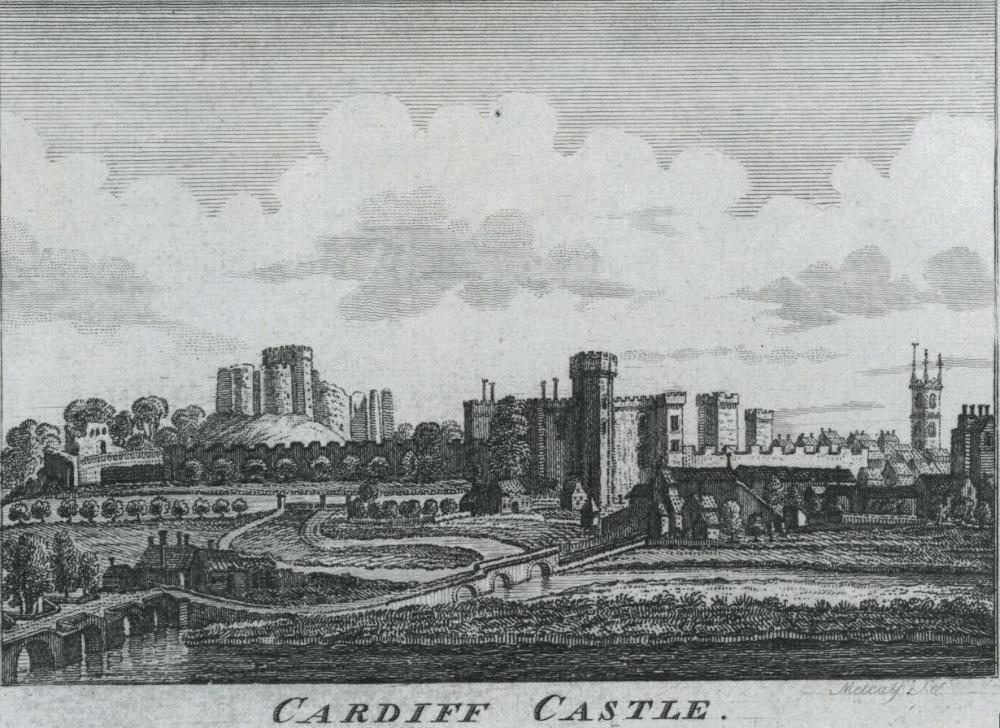
The castle is really several castles in one, each age having built upon the last. The Roman fort provided the ancient walls, the Normans raised the great keep, the medieval lords added their strongholds, and the Victorians transformed the whole into a fantasy palace. To walk through the castle is to journey through two thousand years of history, encountering the traces of each successive age.
This layering of history, combined with the extraordinary artistic richness of its later transformation, gives Cardiff Castle a character unlike any other. It is at once an ancient monument and a work of dazzling Victorian imagination, a fortress and a fantasy, and its position at the heart of the Welsh capital makes it the centrepiece of the city and one of the great historic attractions of Wales.
The experience of moving through Cardiff Castle is one of continual surprise, as the visitor passes from the ancient Roman walls to the medieval keep and then into the astonishing Victorian interiors. Few sites offer so dramatic a range of moods and periods, and this variety is central to the castle’s appeal, making a visit feel like a journey through the whole of history rather than a tour of a single monument.
That so much history and so much beauty should be gathered within a single set of walls at the heart of a capital city is remarkable, and it makes Cardiff Castle one of the most rewarding historic sites in Britain. The contrast between the ancient fortifications and the dazzling fantasy interiors gives every visit a sense of drama, as the visitor moves between the deep past and the vivid imagination of the Victorian age.
Roman Origins
The history of Cardiff Castle begins with the Romans, who established a fort on this site as part of their network of military strongholds across the province. The Roman fort, with its walls and defences, occupied the ground on which the later castle would rise, and its ancient walls, uncovered and partly reconstructed, remain visible in the fabric of the castle today.
For centuries the Roman fort guarded this strategic site, commanding the surrounding country and forming part of the military infrastructure of the province. When the Romans eventually withdrew, the fort fell into disuse, but its walls remained, a substantial defensive enclosure that would later provide the foundation for the medieval castle raised upon the site.
The Roman origins of Cardiff Castle give it a claim to be one of the most ancient inhabited sites in the Welsh capital, a place of power reaching back some two thousand years. The visible Roman walls, incorporated into the later castle, are a tangible link to this deep past, and they remind the visitor that the ground on which the castle stands has been a stronghold since the earliest days of recorded history in Wales.
The survival and partial reconstruction of the Roman walls give the castle a tangible connection to the ancient world, a rare and precious thing at the heart of a modern city. To trace these ancient defences is to touch the earliest chapter of the castle’s story, and to appreciate that the site has been a stronghold for some two thousand years, since the days when the legions guarded this corner of their province.
The Norman Keep
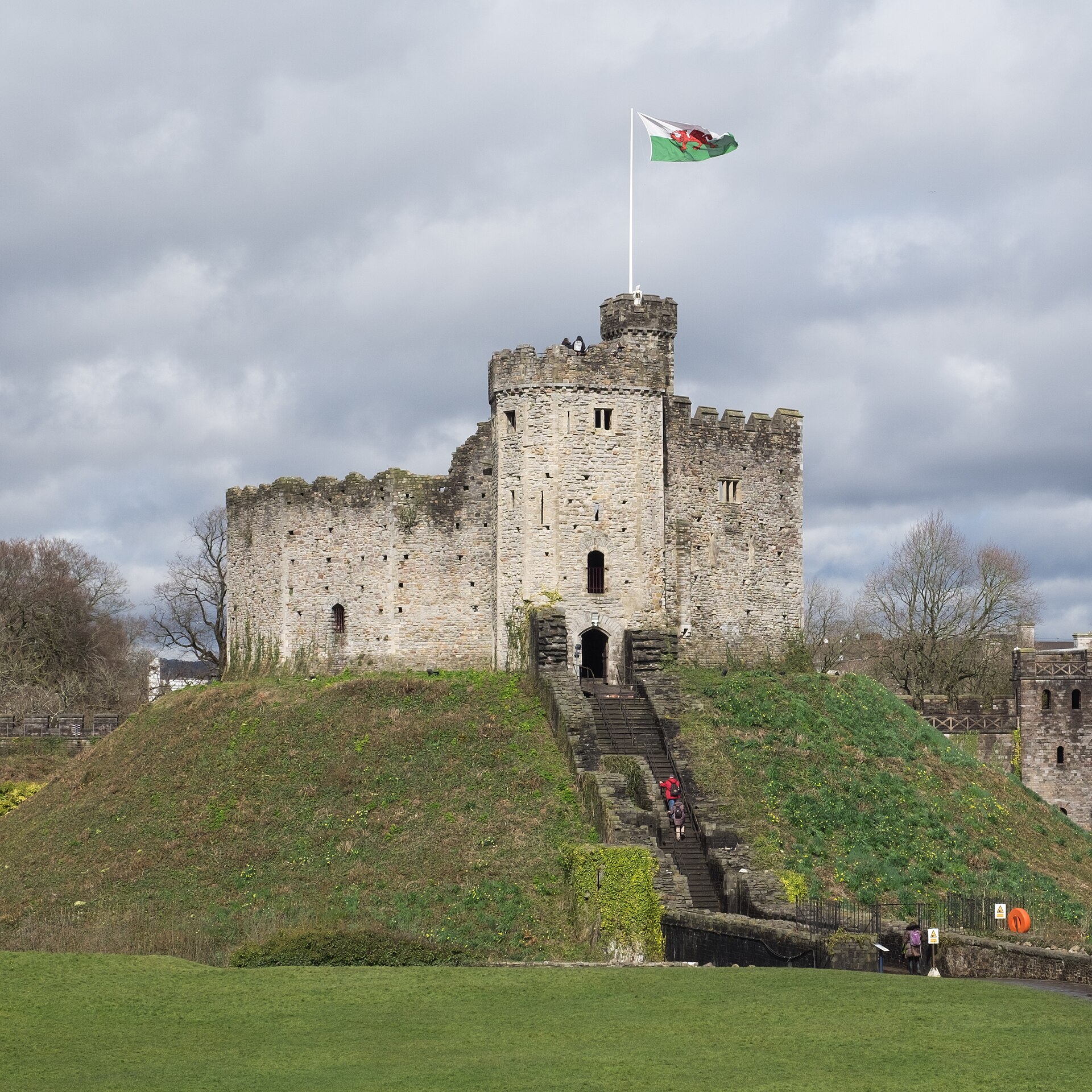
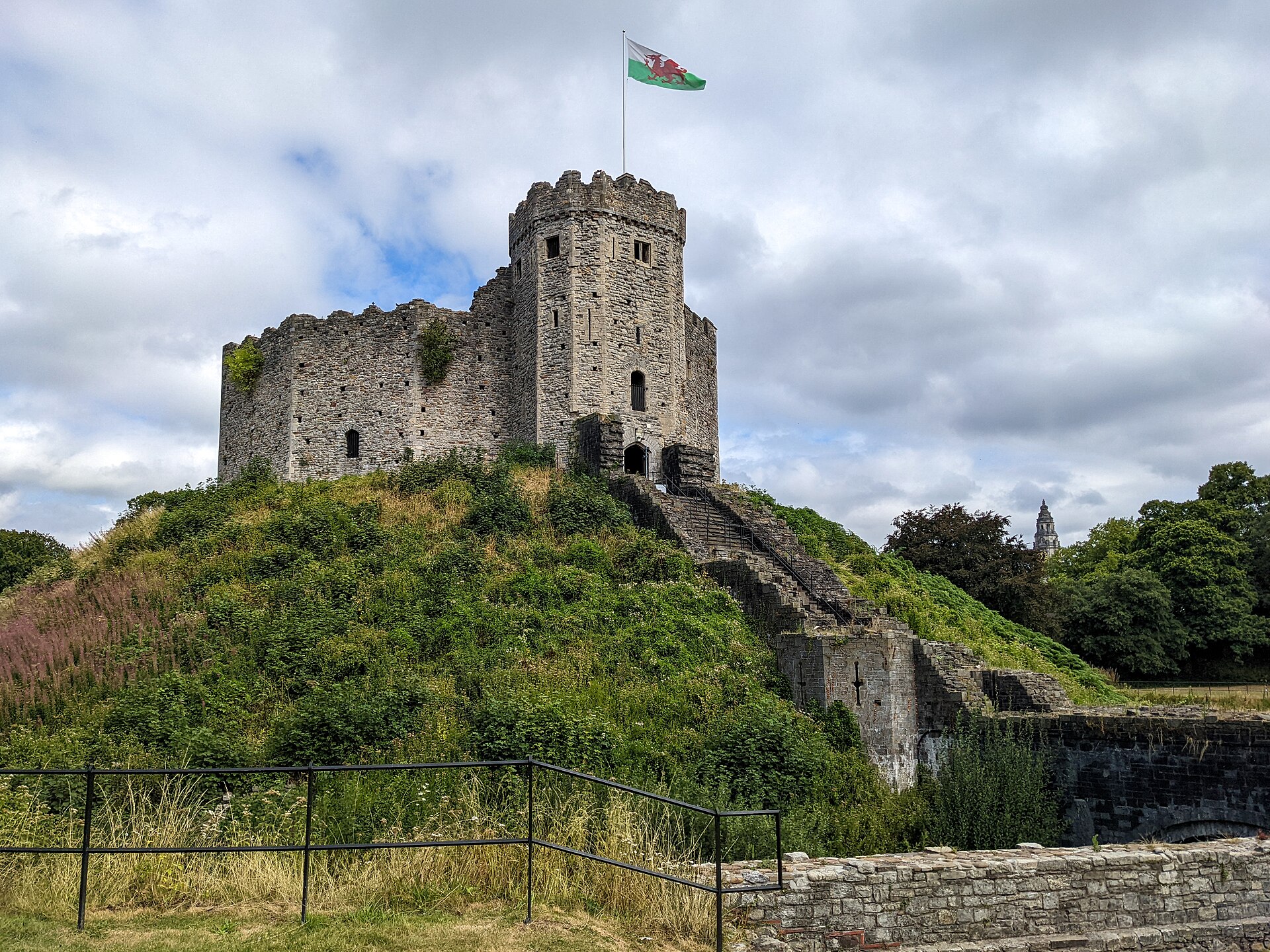
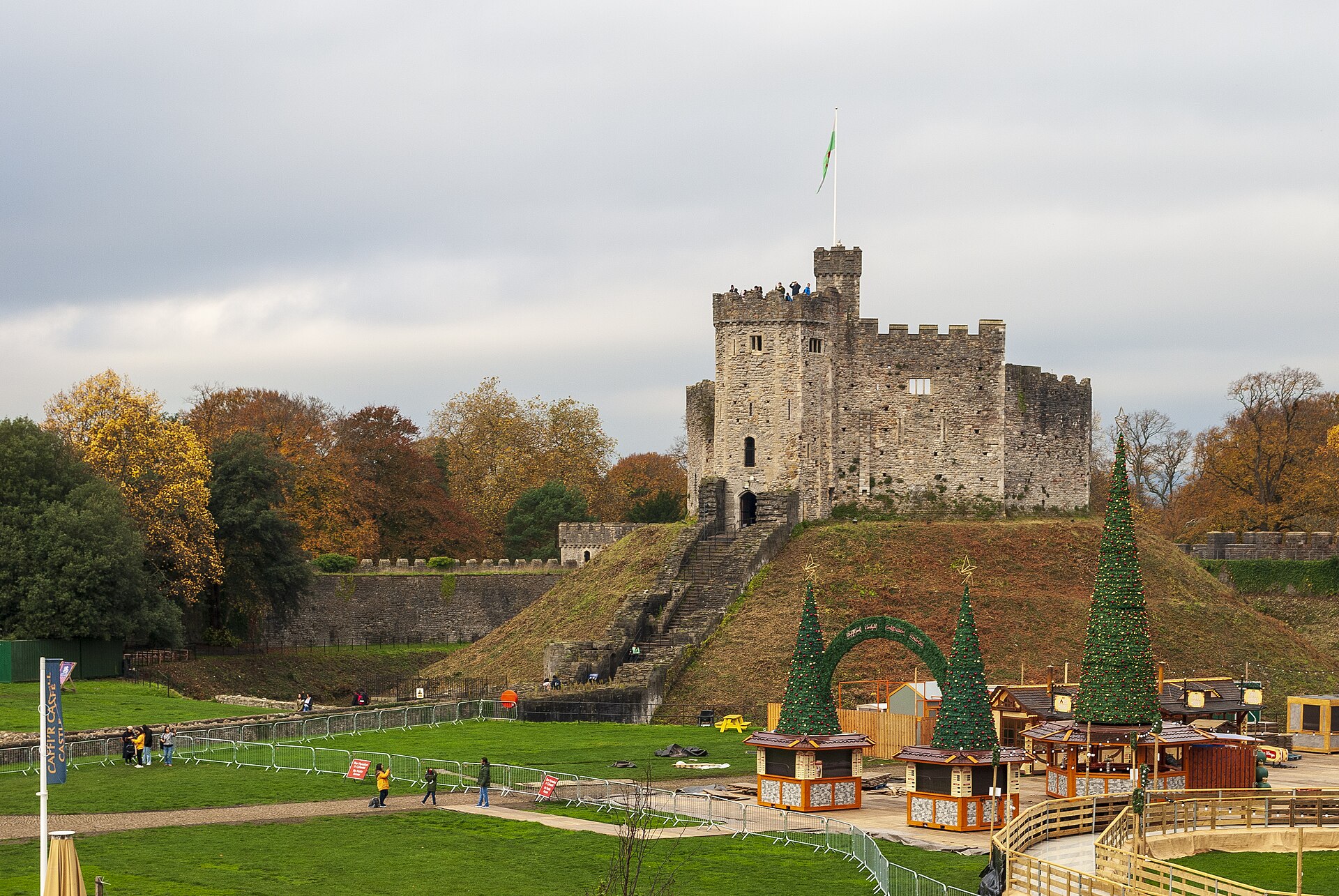
After the Norman conquest, the newcomers raised a mighty castle on the site of the ancient Roman fort, building a great keep upon a high earthen mound within the old walls. This Norman keep, a formidable stone tower on its steep mound, was the stronghold from which the conquerors held their power in the region, and it remains one of the most striking features of the castle.
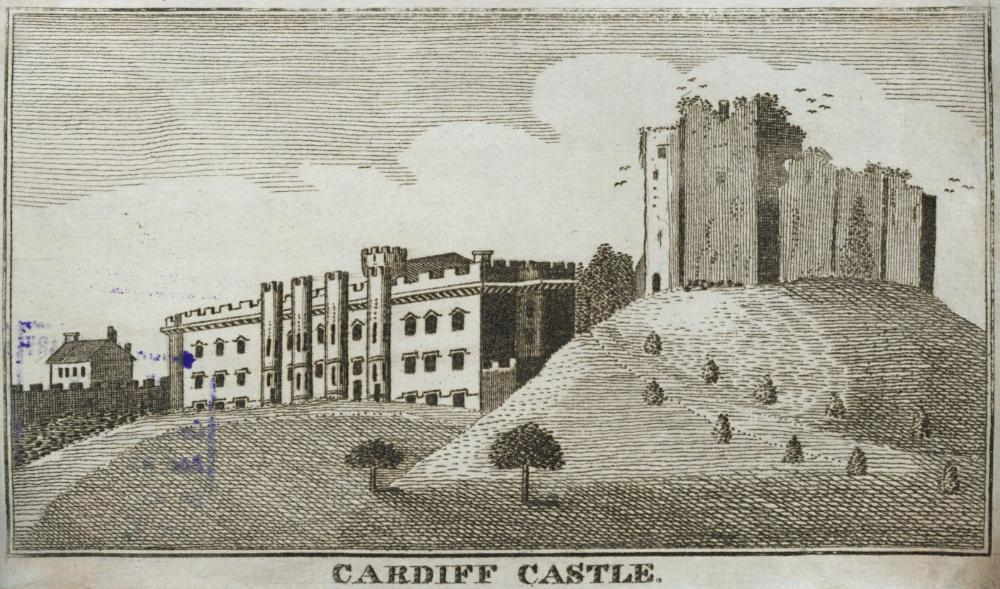
The keep on its mound is a classic example of the Norman motte-and-bailey castle, the type of fortress with which the conquerors secured their newly won lands. From its commanding height, the keep dominated the surrounding country and the growing town, a symbol and instrument of Norman power in a land that was often hostile to the newcomers.
Climbing the mound to the keep today, a visitor is rewarded with fine views over the castle and the city beyond, and with a vivid sense of the fortress’s defensive purpose. The Norman keep, ancient and imposing on its steep mound, stands as the medieval heart of the castle, a powerful reminder of the age when the site was a working stronghold in the turbulent history of Wales.
The great keep on its steep mound remains one of the most impressive medieval structures in Wales, a powerful reminder of the age when the castle was a working fortress. The climb to its summit rewards the visitor not only with fine views but with a vivid sense of the defensive purpose that shaped the castle, and the keep stands as the enduring medieval heart of the whole complex.
A Medieval Stronghold in Wales
Through the medieval centuries, Cardiff Castle was a stronghold of the lords who held power in this part of Wales, a fortress at the centre of their domains and a symbol of their authority. Held by a succession of powerful noble families, the castle was the seat from which the surrounding lordship was governed, and it played its part in the often violent history of medieval Wales.
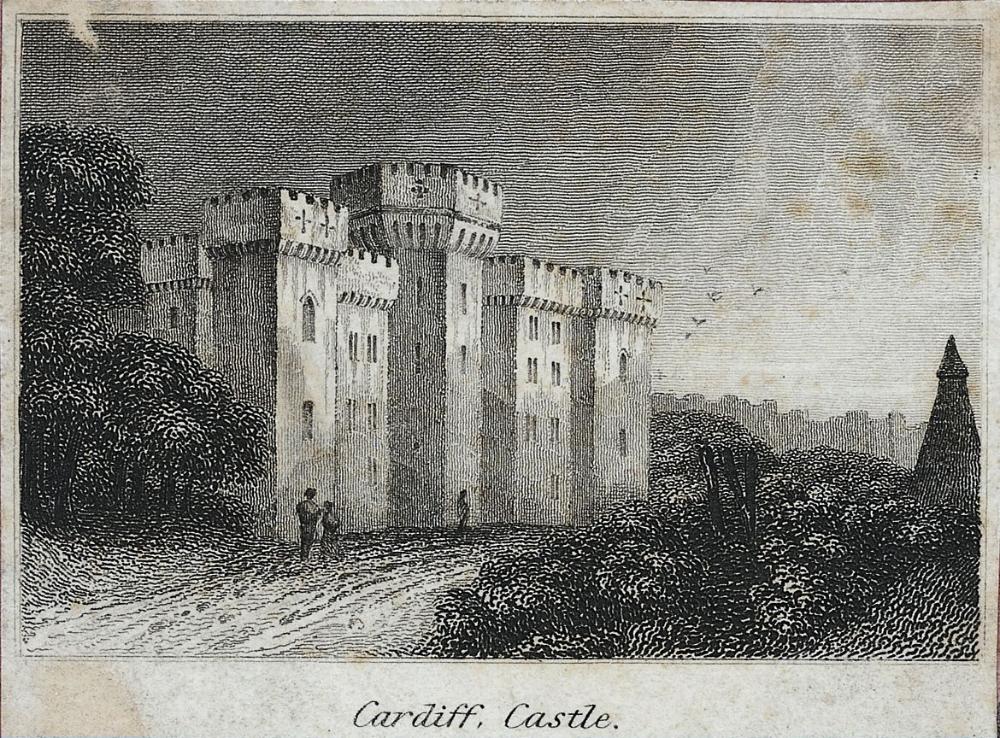
The medieval castle was more than the Norman keep, for the lords added ranges of buildings, towers, and defences along the walls, creating a substantial fortress and residence. These medieval additions transformed the castle from a simple keep into a more elaborate stronghold, reflecting the wealth and power of the lords who held it and the importance of the site in the region.
For centuries the castle stood at the centre of the history of this part of Wales, its walls witnessing the conflicts, the changes of lordship, and the slow growth of the town at its gates. The medieval castle, with its keep and its ranges of buildings, was the dominant power in the region, and its long history as a stronghold forms an essential chapter in the story of Cardiff Castle.
The succession of powerful families who held the castle through the medieval centuries made it a centre of authority in this part of Wales, and its walls witnessed the changing fortunes of the region. The medieval castle, with its keep and its ranges of buildings, was a stronghold of real importance, and this long history as a seat of power forms an essential layer in the rich story of Cardiff Castle.
The Richest Man in the World
The most extraordinary chapter in the castle’s history came in the nineteenth century, when it passed into the hands of a nobleman who was, through the industrial wealth of his estates, one of the richest men in the world. Possessed of an immense fortune and a passion for the medieval past, he resolved to transform the castle into a fantasy palace of unparalleled richness and imagination.
This wealthy patron shared a deep enthusiasm for the Gothic revival, the movement that sought to recapture the spirit and splendour of the medieval age, and he found in a brilliant and eccentric architect the perfect partner for his ambitions. Together, patron and architect embarked on a project of transformation that would make the castle one of the most remarkable creations of the age.
The wealth that made this possible flowed from the industrial development of the region, and the transformation of the castle was itself a product of that prosperity. The nobleman poured his vast fortune into the project, sparing no expense in the pursuit of his vision, and the result was a work of extravagant beauty that stands as a monument to both his wealth and his imagination.
The immense wealth that made the transformation possible flowed from the industrial development of the region, and in this sense the fantasy palace was itself a product of the age of industry and empire. That so much treasure should have been lavished on a romantic vision of the medieval past is one of the fascinating paradoxes of the castle, a monument to both the wealth of the modern age and the enduring appeal of the past.
The story of the patron, one of the wealthiest men of his time and a devoted enthusiast of the medieval past, is itself one of the fascinations of Cardiff Castle. His combination of immense fortune and romantic imagination made possible a project of extraordinary ambition, and the castle stands as the enduring monument to his wealth, his taste, and his remarkable vision of what a castle could be.
A Gothic Revival Fantasy
The architect who transformed Cardiff Castle was one of the most brilliant and imaginative figures of the Gothic revival, a designer of extraordinary invention and eccentric genius. Given a free hand and a limitless budget by his wealthy patron, he set about creating interiors of a richness and fantasy almost without parallel, drawing on medieval, classical, and exotic sources to produce a world of dazzling beauty.

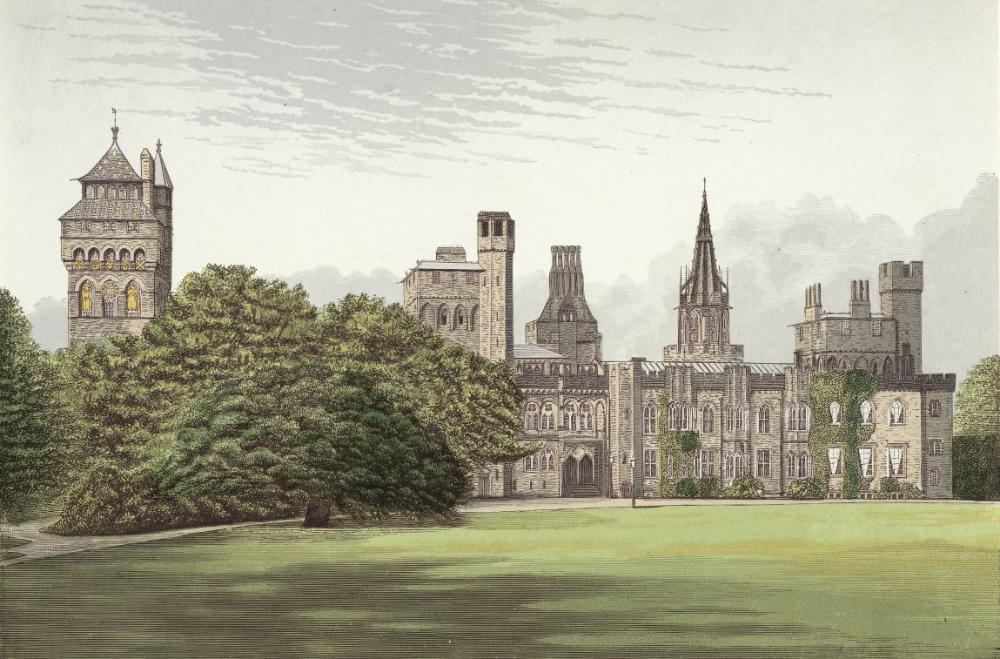
The transformation added a great clock tower and a range of richly decorated apartments to the castle, their exteriors picturesque and their interiors of astonishing splendour. Every surface was decorated, every room conceived as a total work of art, filled with carving, painting, gilding, and ornament that drew on themes ranging from the medieval and the biblical to the astronomical and the oriental.
The result was a Gothic revival fantasy of extraordinary power and beauty, a series of interiors that transport the visitor into a dream of the medieval past reimagined with Victorian imagination and wealth. This transformation gave Cardiff Castle its most extraordinary character, and the decorated apartments created by patron and architect are among the supreme achievements of the Gothic revival in Britain.
The collaboration between the wealthy patron and his brilliant, eccentric architect was one of the most fruitful in the history of British architecture, producing interiors of a richness and imagination almost without parallel. Both men shared a deep love of the medieval past and a boundless creative ambition, and their partnership gave the world one of the supreme achievements of the Gothic revival, a fantasy palace of extraordinary beauty.
The genius of the architect, at once brilliant and eccentric, is written into every corner of the decorated apartments, from their overall conception to the smallest detail of their ornament. His imaginative and scholarly approach, drawing on a vast range of sources, produced interiors of a richness and originality that have few rivals, and his work at Cardiff Castle stands among the masterpieces of the Gothic revival.
The Dazzling Interiors
The interiors created in the great transformation are the glory of Cardiff Castle, a sequence of rooms of almost overwhelming richness and beauty. Each is a total work of art, conceived around a theme and decorated with a lavishness that leaves visitors astonished, from soaring banqueting halls to intimate rooms of jewel-like intensity.
Among the most famous is a room whose ceiling is a marvel of gilded and painted decoration, glittering like the interior of a jewel box, its inspiration drawn from the art of distant lands. Others include a great hall adorned with scenes from history and legend, a library rich with carving, and rooms decorated with astronomical, biblical, and fantastical themes, each more astonishing than the last.
These interiors represent the fullest expression of the Gothic revival’s ambition to create total works of art, in which architecture, decoration, and furnishing were united into a single overwhelming effect. The dazzling rooms of Cardiff Castle, rich beyond description, are among the most extraordinary interiors in Britain, and they draw visitors from around the world to marvel at their beauty and imagination.
To step into the most sumptuous of the rooms is to be transported into a world of almost overwhelming richness, every surface alive with colour, carving, and gilding. The effect is one of wonder and astonishment, and visitors often find themselves lingering to take in the wealth of detail, discovering new marvels at every glance. These rooms are among the most extraordinary interiors to be found anywhere in Britain.
The famous room whose ceiling glitters like a jewel box, inspired by the art of distant lands, is among the most breathtaking of all the castle’s interiors, and it never fails to astonish visitors. Together with the great banqueting hall and the other decorated rooms, it forms a sequence of interiors of almost unparalleled richness, a world of beauty and imagination that is the crowning glory of Cardiff Castle.
The Clock Tower and the Skyline
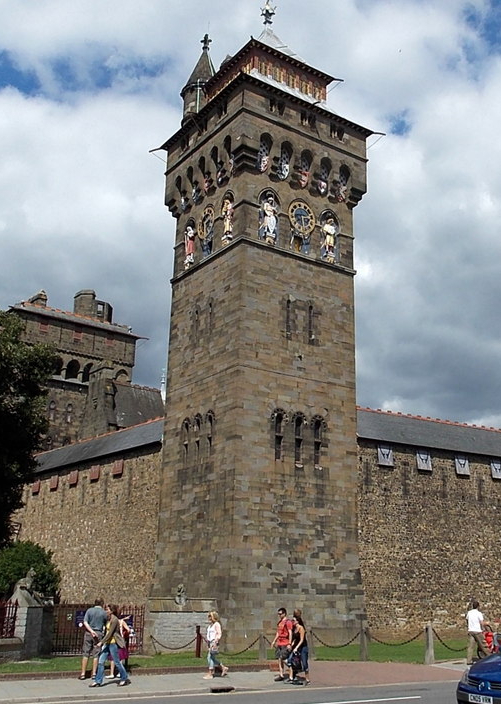
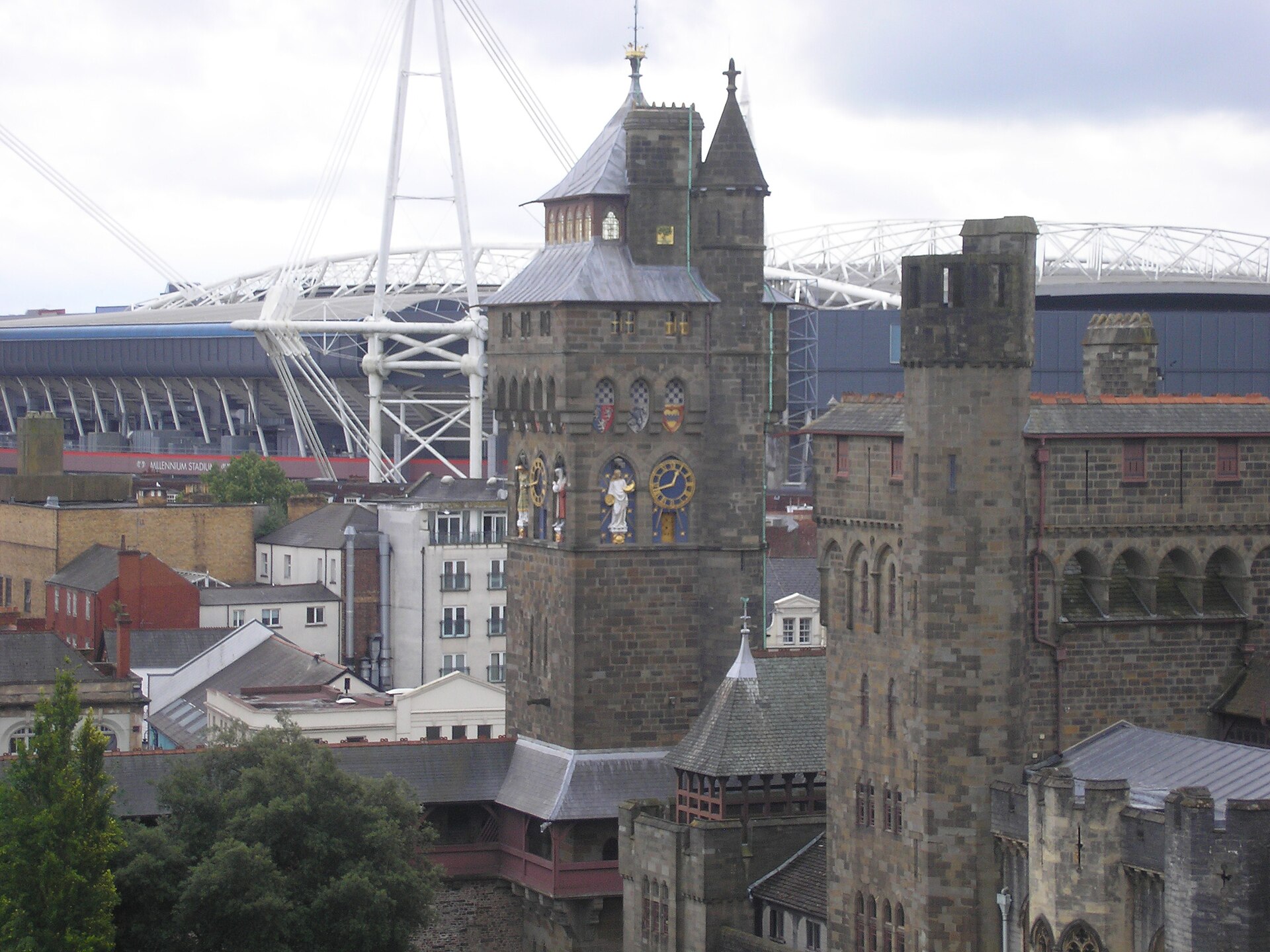
One of the most distinctive features added in the great transformation is the tall clock tower that rises above the castle, a picturesque and elaborate structure that has become one of the landmarks of Cardiff. Richly decorated and crowned with ornament, the tower contains some of the most splendid of the castle’s decorated rooms, and it dominates the castle’s skyline.

The clock tower is a masterpiece of the Gothic revival, its exterior enlivened with carving, sculpture, and colour, its interior containing rooms of extraordinary richness. It embodies the imaginative and romantic spirit of the castle’s transformation, a fantasy of medieval architecture reimagined with Victorian invention, and it stands as one of the most memorable features of the whole castle.
Rising above the walls and visible across the city, the clock tower has become an emblem of Cardiff Castle and of the Welsh capital. Its picturesque silhouette, adorned with ornament and colour, gives the castle its distinctive skyline, and it captures in a single structure the extravagant beauty and imaginative genius of the great transformation that made Cardiff Castle unique.
Rising above the walls and visible across the city, the clock tower has become the emblem of Cardiff Castle and one of the defining landmarks of the Welsh capital. Its picturesque and elaborate silhouette, rich with ornament and colour, captures the imaginative spirit of the great transformation, and it contains within it some of the most splendid of all the castle’s decorated rooms.
The Grounds and the Animal Wall
The castle is set within beautiful grounds, a great green space at the heart of the city that provides a tranquil and spacious setting for the ancient walls and the fantasy palace. The grounds, with their lawns, trees, and the great mound of the keep, offer a place of beauty and recreation in the centre of Cardiff, and they form an essential part of the castle’s setting.
Along one wall of the castle runs one of its most beloved features, a wall adorned with a series of sculpted animals, each carved with charm and character, peering down at passers-by. This famous animal wall, with its menagerie of stone creatures, has delighted generations of visitors and residents, and it has become one of the most cherished and distinctive features of Cardiff Castle.
The grounds and the animal wall add to the charm and appeal of the castle, softening the grandeur of the walls and the fantasy of the apartments with beauty, greenery, and whimsy. Together with the ancient walls, the Norman keep, and the dazzling interiors, they make Cardiff Castle a place of endless variety and delight, a fortress, a palace, and a park all gathered at the heart of the city.
The famous animal wall, with its charming procession of sculpted creatures, has become one of the best-loved features of Cardiff Castle, delighting generations of visitors and residents. This whimsical menagerie of stone animals adds a note of charm and playfulness to the castle, and it captures the imaginative spirit that runs through the whole of the great transformation, from the grandest hall to the smallest carved detail.
A Gift to the People of Cardiff
In the twentieth century, the castle passed from the hands of the noble family that had transformed it into the ownership of the city, given as a gift to the people of Cardiff. This generous act transformed the castle from a private residence into a public treasure, opening its walls, its keep, and its dazzling interiors to all who wished to visit.

The gift of the castle to the city was an act of great significance, ensuring that this extraordinary monument would be preserved and shared with the people of Cardiff and Wales. From a private fantasy palace, the castle became a public attraction and a source of civic pride, its treasures made accessible to all and its future secured as a cherished part of the city’s heritage.
Since becoming the property of the city, the castle has been cared for as one of the great treasures of Cardiff and Wales, open to the public and central to the life of the capital. This transformation from private residence to public monument has made the castle a symbol of the city, its history and its beauty shared with all, and it stands today as the cherished centrepiece of the Welsh capital.
The gift of the castle to the people of Cardiff was an act of remarkable generosity, transforming a private fantasy palace into a public treasure open to all. This transfer ensured the preservation of the castle and made its wonders accessible to the people of the city and beyond, and it stands as a defining moment in the castle’s history, the point at which it became the cherished centrepiece of the Welsh capital.
Since its transfer to public ownership, the castle has been cherished and preserved as one of the great treasures of Wales, its wonders open to all. The generosity that made this possible ensured that the extraordinary creation of patron and architect would be shared with the people rather than hidden away, and the castle has become a source of pride and delight for the city and the nation.
The Castle and the Welsh Capital
Cardiff Castle stands at the very heart of the Welsh capital, and its history is inseparable from that of the city that grew up around it. For centuries the castle was the centre of power in Cardiff, the stronghold around which the town developed, and the wealth that transformed it in the nineteenth century flowed from the industrial growth that made the city a great port.
The relationship between the castle and the city has been close and enduring. The castle gave Cardiff its ancient centre and its defining landmark, while the growth of the city and the wealth it generated made possible the castle’s extraordinary transformation. Today the castle remains the centrepiece of the capital, a great historic attraction at the core of the modern city.
As the capital of Wales, Cardiff gathers around the castle the institutions and life of the nation, and the castle stands as a symbol of the city and the country. Its position at the heart of the capital, surrounded by parks, civic buildings, and the bustle of the modern city, makes it central to the identity of Cardiff and to the experience of all who visit the Welsh capital.
The close bond between the castle and the city is written into the very fabric of Cardiff, whose growth and prosperity were tied to the fortunes of the castle and the family that held it. Today the castle remains the heart of the capital, a great historic attraction at the centre of the modern city, and it stands as a symbol of Cardiff and of Wales, central to the identity and the life of the nation’s capital.
A World of Symbolism and Imagination
What sets the interiors of Cardiff Castle apart is not only their richness but the depth of thought and symbolism woven into their decoration. Each room was conceived around a theme, and every detail of its ornament was designed to express and elaborate that theme, so that the rooms are not merely beautiful but meaningful, dense with allusion and idea.
The themes drawn upon in the decoration ranged widely across the learning and imagination of the age, embracing the medieval and the biblical, the classical and the astronomical, the natural world and the exotic art of distant lands. The patron and his architect delighted in this wealth of reference, filling the rooms with symbols and stories that reward close attention and reveal the depth of their shared vision.
This intellectual and imaginative richness gives the interiors a fascination that goes beyond their visual splendour. To explore the decorated rooms is to enter the mind of a remarkable collaboration between a wealthy patron and a brilliant architect, both steeped in the learning and the romance of their age, and to discover a world of ideas expressed in carving, painting, and gilding.
The result is a series of rooms that stand among the supreme examples of the Victorian ideal of the total work of art, in which every element was designed to contribute to a single, meaningful whole. In their fusion of beauty, symbolism, and imagination, the interiors of Cardiff Castle are among the most extraordinary achievements of nineteenth-century design, and they remain a source of wonder to all who see them.
The depth of learning and symbolism woven into the interiors reflects the seriousness with which the patron and his architect approached their great project. Far from being mere decoration, the ornament of each room was designed to express ideas and tell stories, and to explore these interiors with an eye for their meaning is to discover a world of thought and imagination as rich as the visual splendour that first astonishes the eye.
Cardiff Castle Today
Today Cardiff Castle is one of the most popular and remarkable historic attractions in Wales, drawing visitors from around the world to explore its Roman walls, Norman keep, medieval buildings, and above all its dazzling Victorian interiors. As the centrepiece of the Welsh capital, it offers an experience of extraordinary richness and variety, spanning two thousand years of history.

A visit reveals the ancient Roman walls, the climb to the Norman keep with its fine views, the beautiful grounds and famous animal wall, and the astonishing decorated apartments created in the great transformation. Few castles anywhere gather so much history and beauty into a single site, and the combination of ancient fortress and Victorian fantasy makes Cardiff Castle an unforgettable place to visit.
To experience Cardiff Castle is to encounter two thousand years of history and one of the most extraordinary works of the Victorian imagination, all at the heart of the Welsh capital. From Roman fort to Norman keep to Gothic revival fantasy, the castle unites the deep past with dazzling artistic invention, and it stands as one of the most remarkable and beloved castles in all of Britain, the cherished centrepiece of the city of Cardiff.
For the visitor to Cardiff, the castle is among the essential experiences of the city, offering an encounter with two thousand years of history and one of the most extraordinary works of the Victorian imagination. Whether drawn by the ancient walls, the medieval keep, or the dazzling interiors, visitors come away with a vivid impression of the castle’s astonishing variety and beauty, and of its central place in the story of the Welsh capital.
A visit to Cardiff Castle rewards those who take the time to explore its every layer, from the ancient Roman walls to the medieval keep and the dazzling Victorian interiors. It is a site of extraordinary richness and variety, uniting deep history with dazzling imagination, and it lingers in the memory as one of the most remarkable and rewarding castles to be found anywhere in Britain.
Palaces Nearby
Cardiff Castle is one of the great royal and national seats of the British Isles beyond England, and its story finds echoes in the royal castles and palaces of the neighbouring nations of these islands. Two more of these seats make natural companions to a visit here, each guarding the history of its own nation.
- The Palace of Holyroodhouse – the royal seat of Scotland in Edinburgh.
- Dublin Castle – from seat of rule to the heart of a free Ireland.
You May Like
Dublin Castle: From Seat of Rule to Heart of a Free Ireland


