In the heart of Dublin, on a site that has been a centre of power since the earliest days of the city, stands a complex of towers, courtyards, and grand apartments that has witnessed the whole sweep of Irish history. Dublin Castle is not a single palace but a layered ensemble of buildings raised over many centuries, and for most of its long life it was the seat of foreign rule in Ireland, the very symbol of the power that governed the island. Today, that history has been transformed, and the castle serves the independent Irish nation.
For some seven centuries Dublin Castle was the headquarters of British administration in Ireland, the fortress and palace from which the island was governed. Within its walls sat the seat of authority, and its history is inseparable from the long and often painful story of Ireland under foreign rule, a story of power, resistance, and eventual independence. The castle stood at the very centre of that drama for hundreds of years.
With the coming of Irish independence in the twentieth century, the castle passed from the hands of foreign rulers to the new Irish state, and its meaning was transformed. What had been the symbol of an alien power became a centre of the independent nation, used for the ceremonies of the Irish state, from the inauguration of presidents to great occasions of national and international importance. Its story thus embodies the whole arc of modern Irish history.
In this article you will get to know Dublin Castle fully: its ancient origins as a fortress, its long centuries as the seat of British rule, its grand state apartments and historic towers, its handover to the Irish nation, its role in the modern republic, and its life today as a ceremonial centre of the Irish state and one of the most historically significant sites in all of Ireland.
In This Article
- A Castle at the Heart of Irish History
- Ancient Origins
- Seven Centuries of Rule
- The Grand State Apartments
- Saint Patrick’s Hall
- The Medieval Record Tower
- The Chapel Royal
- Courtyards and Buildings
- The Handover to Ireland
- A Ceremonial Centre of the Republic
- The Gardens and the Ancient Pool
- The Castle and the City of Dublin
- Dublin Castle Today
A Castle at the Heart of Irish History
Dublin Castle stands in the centre of the Irish capital, a complex of buildings gathered around courtyards on a site that has been a stronghold since the founding of the city. Though called a castle, the ensemble that stands today is largely a palace and administrative complex of later centuries, incorporating an ancient tower that survives from its medieval origins, all layered together into a single historic whole.
For most of its history the castle was the seat of power in Ireland, the headquarters of the administration that governed the island under foreign rule. This made it the very symbol of that rule, the centre from which authority radiated across the country, and its history is bound up with the whole long story of Ireland’s subjection and its eventual struggle for freedom.
The transformation of the castle from the seat of foreign power to a centre of the independent Irish state gives it a unique significance among the historic sites of Ireland. It embodies the great turning point of modern Irish history, the passage from subjection to independence, and it stands today as a place where that history is preserved and where the ceremonies of the free Irish nation are performed.
There is a particular power in visiting a place whose meaning has been so completely transformed. To walk through the grand rooms of Dublin Castle is to move through spaces that once embodied the subjection of a nation and now serve its freedom, and this inversion gives the castle an emotional resonance that few historic sites can match, making every room a witness to the long journey from subjection to independence.
The layered nature of the castle, gathering buildings of many centuries around its courtyards, means that a visit is a journey through the whole of Irish history in a single site. From the medieval tower to the classical state apartments and the Gothic chapel, each part speaks of a different age, and together they tell the long story of power in Ireland, culminating in the triumph of the independent nation.
Ancient Origins
The site of Dublin Castle has been a centre of power since the earliest days of the city, when the first settlement grew up at the meeting of rivers where the castle now stands. In the medieval period, a great fortress was raised on the site, a stronghold with mighty walls and towers designed to command the city and the surrounding country, the seat of the authority that ruled the region.
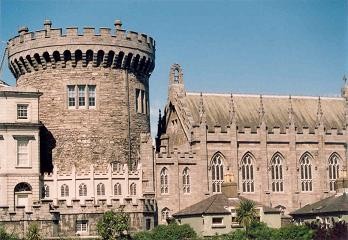
This medieval castle was a powerful fortress, its walls and towers guarding the centre of foreign power in Ireland. Though much of the original fortress has been lost or rebuilt over the centuries, one great tower survives from this early period, a massive round tower that is the oldest part of the castle and a tangible link to its medieval origins as a stronghold of rule.
From these fortified beginnings, the castle developed over the centuries from a purely defensive stronghold into a seat of administration and, eventually, a palace. Yet its origins as a fortress at the ancient heart of the city remained fundamental to its character and its role, and the surviving medieval tower stands as a reminder of the castle’s deep roots as a centre of power in Ireland.
The choice of this site, at the ancient meeting of waters where the first settlement arose, reflects its natural strength and its central position at the heart of the growing city. From these strategic beginnings the castle grew into the dominant stronghold of the region, and its position at the very origin of Dublin gives it a claim to be the deepest root of the city’s long and storied history.
Seven Centuries of Rule
For some seven hundred years, Dublin Castle was the headquarters of foreign administration in Ireland, the seat from which the island was governed. Within its walls sat the representatives of the crown, the officials who administered the country, and the apparatus of a government that ruled Ireland from this fortified centre in the heart of the capital.

The castle was thus the very embodiment of foreign rule, the physical and symbolic centre of the power that governed Ireland. From here decrees were issued, the administration was directed, and the authority that held sway over the island was exercised. For centuries of Irish history, to speak of the castle was to speak of the government and the power that ruled the country.
This long role as the seat of rule made the castle a focus of the political life of Ireland, and inevitably a target of the resistance and rebellion that punctuated the island’s history. The castle stood at the centre of the great struggles between rulers and ruled, a symbol of authority to those who held power and of subjection to those who resisted it, its walls witnessing the whole long drama of Ireland’s history.
The centuries during which the castle served as the seat of foreign rule left it laden with symbolic weight, so that it became, in the Irish imagination, the very embodiment of the power that governed the island. To generations of Irish men and women, the castle stood for the authority they lived under, and its dominance of the political life of the country made it the focus of both loyalty and resistance across the centuries.
The castle’s long role as a target of resistance and rebellion made it a focus of the great struggles that shaped Irish history. Around its walls swirled the conflicts between rulers and ruled, and its very name became shorthand for the government of the island. That this symbol of power should ultimately pass into Irish hands is the great and moving climax of the castle’s long story.
The Grand State Apartments
The most splendid part of the castle is its range of state apartments, magnificent rooms created over the centuries to serve as the ceremonial and residential quarters of the seat of power. These grand apartments, richly decorated with fine plasterwork, chandeliers, portraits, and furnishings, provided a setting of appropriate splendour for the ceremonies and social life of the administration.
The state apartments include a sequence of grand rooms used for receptions, ceremonies, and the entertainment of guests, their decoration reflecting the wealth and dignity of the power they served. From grand drawing rooms to the great hall used for the most important occasions, these apartments form one of the finest suites of ceremonial rooms in Ireland.
Today the state apartments serve the independent Irish nation, used for the ceremonies of the state and open to the public as one of the great historic attractions of Dublin. Their grandeur, once the setting for the ceremonies of foreign rule, now provides the backdrop for the occasions of the free Irish republic, a transformation that gives these magnificent rooms a special resonance in the story of the nation.
The magnificence of the state apartments reflected the wealth and dignity that the administration wished to project, and their splendour was a deliberate assertion of power. That these same rooms now serve the independent Irish nation, hosting its ceremonies and welcoming its guests, gives their grandeur a new meaning, and visitors today admire them not as symbols of foreign rule but as treasures of the Irish state.
Saint Patrick’s Hall
The grandest of all the state apartments is the great ceremonial hall, the most magnificent room in the castle and one of the finest ceremonial interiors in Ireland. This great hall, with its high painted ceiling and rich decoration, has been the setting for the most important ceremonies conducted at the castle across the centuries and into the present day.

The hall is adorned with a magnificent painted ceiling and hung with the banners and heraldry associated with the great occasions held within it. Its scale and splendour make it a fitting setting for the highest ceremonies of state, and it has witnessed many of the most significant events in the ceremonial life of both the old administration and the modern nation.
Today the great hall is used for the most solemn occasions of the Irish state, above all the inauguration of the presidents of the republic, which takes place within its splendid setting. That the highest ceremony of the independent Irish nation should be held in this hall, once the grandest room of the seat of foreign rule, is a powerful symbol of the transformation of the castle and the triumph of Irish independence.
That the presidents of Ireland should be inaugurated in the grandest hall of a castle that was once the seat of foreign rule is a symbol of extraordinary power. In choosing this setting for its highest ceremony, the republic asserts its complete possession of the castle and the triumph of Irish independence, transforming the grandest room of the old administration into the setting for the birth of each new Irish presidency.
The magnificent painted ceiling and rich decoration of the great hall make it a fitting setting for the highest ceremonies of the state, and its splendour never fails to impress visitors. To stand within it, knowing that here each Irish president begins their term, is to feel the full weight of the castle’s transformation, and the hall stands as the symbolic heart of the modern nation’s ceremonial life.
The Medieval Record Tower
The oldest surviving part of the castle is its great medieval tower, a massive round structure of ancient stone that stands as a reminder of the fortress from which the castle grew. This mighty tower, the most substantial survival from the medieval period, has served many purposes over the centuries, from defence to the storage of records, and it remains one of the most evocative features of the castle.

The tower’s thick walls and imposing form speak of the castle’s origins as a stronghold, built to command and defend the centre of power in Ireland. Standing amid the later palatial buildings, it provides a dramatic link to the medieval past, its ancient stone contrasting with the elegance of the state apartments and recalling the fortress that once stood on the site.
Over its long history the tower has been used to house important records and archives, giving it its association with the keeping of records. Today it stands as one of the most historic parts of the castle, a survival from the medieval fortress that anchors the whole complex in its deep past and reminds the visitor of the ancient roots of this centre of power in the heart of Dublin.
Standing amid the elegant classical buildings of the later castle, the massive medieval tower is a dramatic reminder of the fortress from which the whole complex grew. Its ancient, weathered stone speaks of a harder, more warlike age, and it anchors the castle in its deep medieval past, a tangible survival of the stronghold that once commanded the heart of Dublin.
The tower’s long service as a place for the keeping of records added another layer to its history, and it stands today as the most complete survival of the medieval fortress. Its ancient presence amid the later buildings gives the castle a depth of history that reaches back to the very foundations of foreign power in Ireland, and it remains one of the most evocative structures in the whole complex.
The Chapel Royal
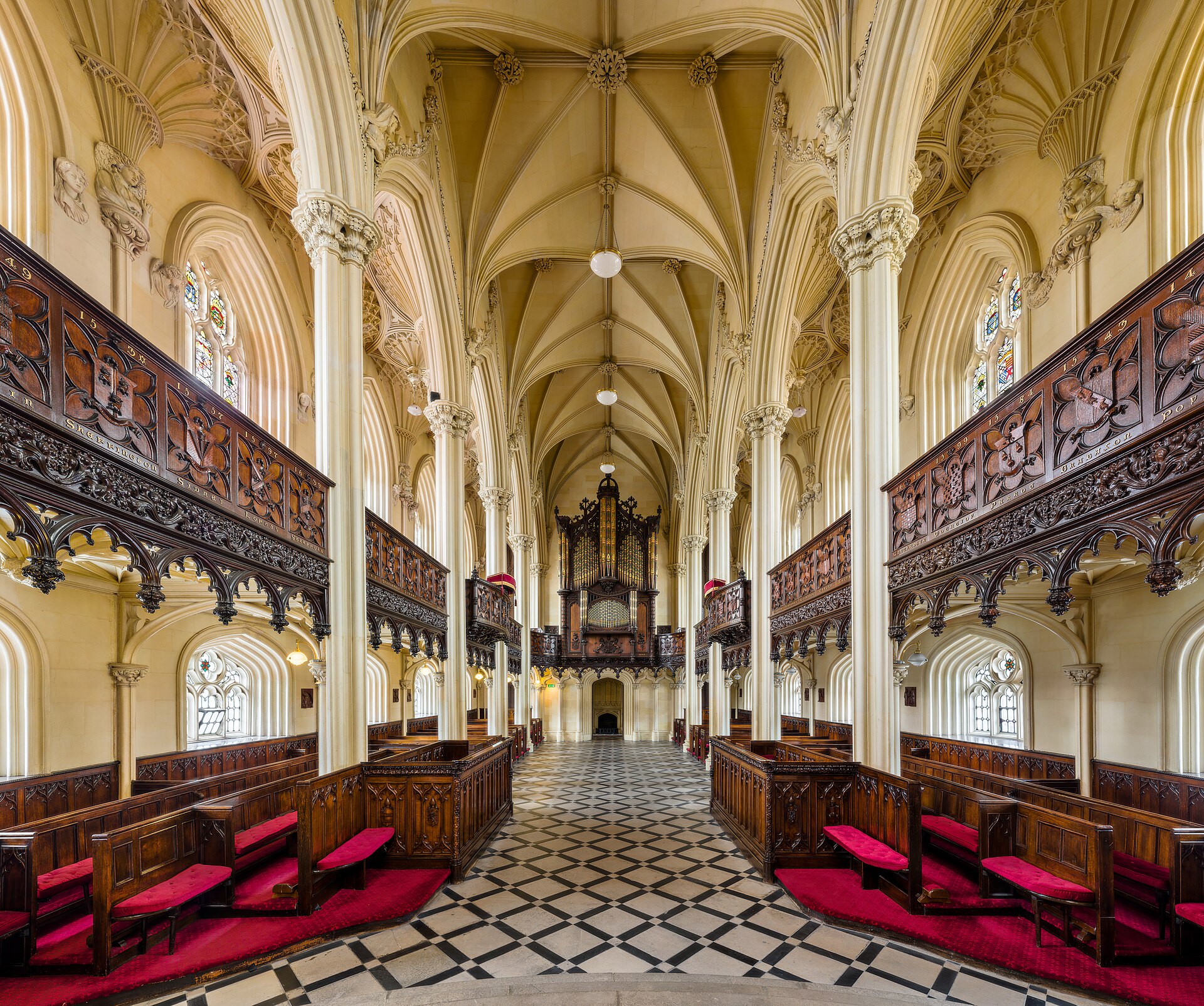
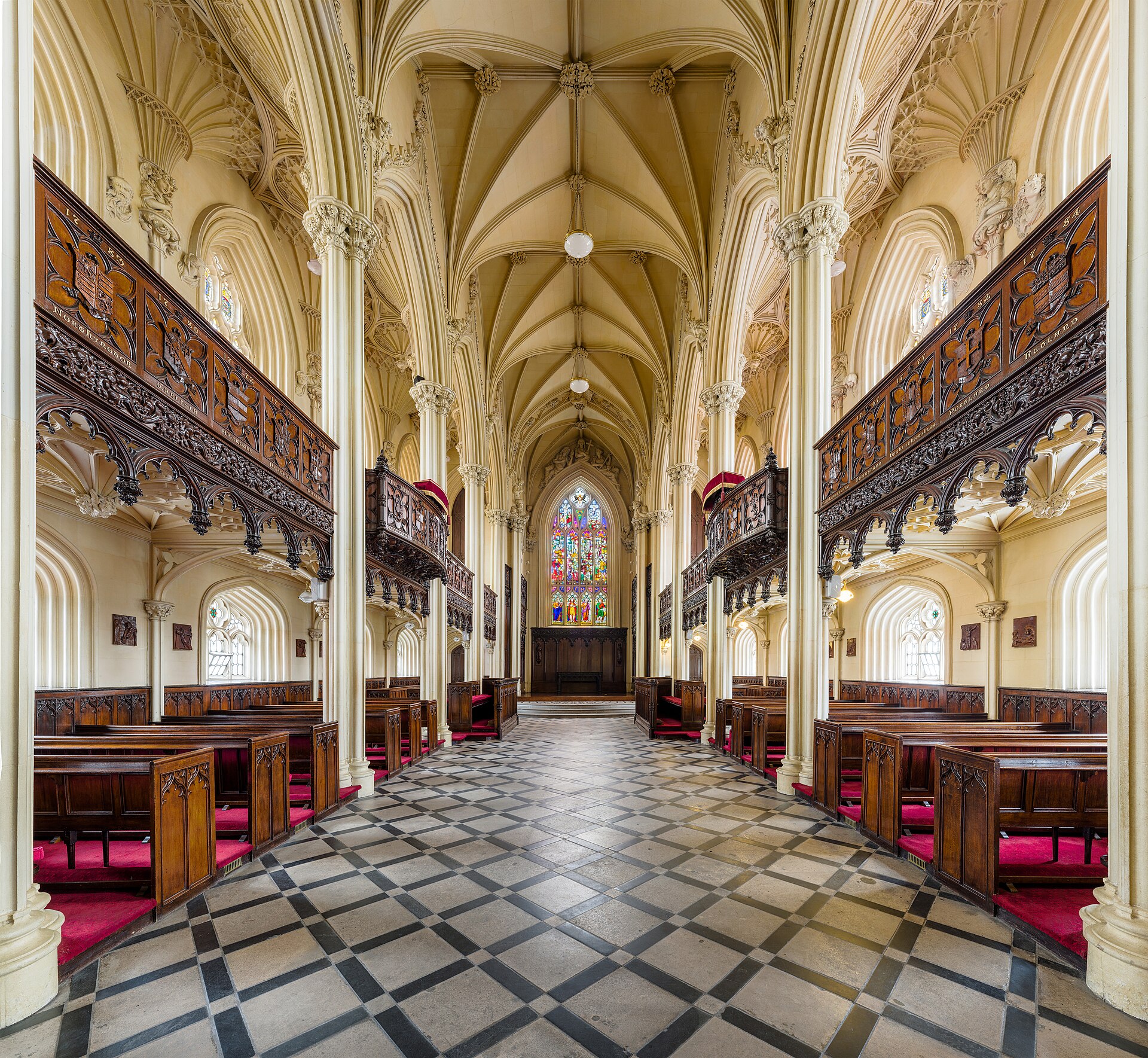
Beside the medieval tower stands one of the architectural gems of the castle, its beautiful chapel, a masterpiece of the Gothic revival style built to serve the religious needs of the seat of power. With its richly decorated interior, its fine vaulting, and its wealth of carved ornament, the chapel is one of the most beautiful and elaborate interiors in the whole complex.

The chapel is celebrated for the richness of its decoration, both inside and out, adorned with carvings, heraldry, and fine detail that make it a jewel of nineteenth-century Gothic revival architecture. Its elaborate interior, with its galleries, vaulting, and ornament, creates a space of great beauty and atmosphere, a striking contrast to the classical elegance of the state apartments nearby.
The chapel adds a note of Gothic splendour to the castle, its beauty complementing the grandeur of the state apartments and the ancient strength of the medieval tower. Together these varied buildings, from the medieval fortress to the classical palace and the Gothic chapel, give the castle its rich architectural character, layering many centuries and styles into a single remarkable complex.
The extraordinary richness of the chapel’s decoration, both within and without, makes it one of the finest examples of the Gothic revival style in Ireland. Its elaborate carvings, its heraldry, and its beautiful interior create a space of remarkable atmosphere, and it stands as a jewel among the varied buildings of the castle, a striking contrast to the classical restraint of the state apartments.
The chapel’s blend of Gothic beauty and rich heraldic decoration reflects the taste of the age that built it, and it stands as one of the finest interiors of its kind in the country. Its presence within the castle complex adds a note of ecclesiastical splendour to the ensemble, and it draws visitors to admire its elaborate carving and its atmospheric, richly decorated interior.
Courtyards and Buildings
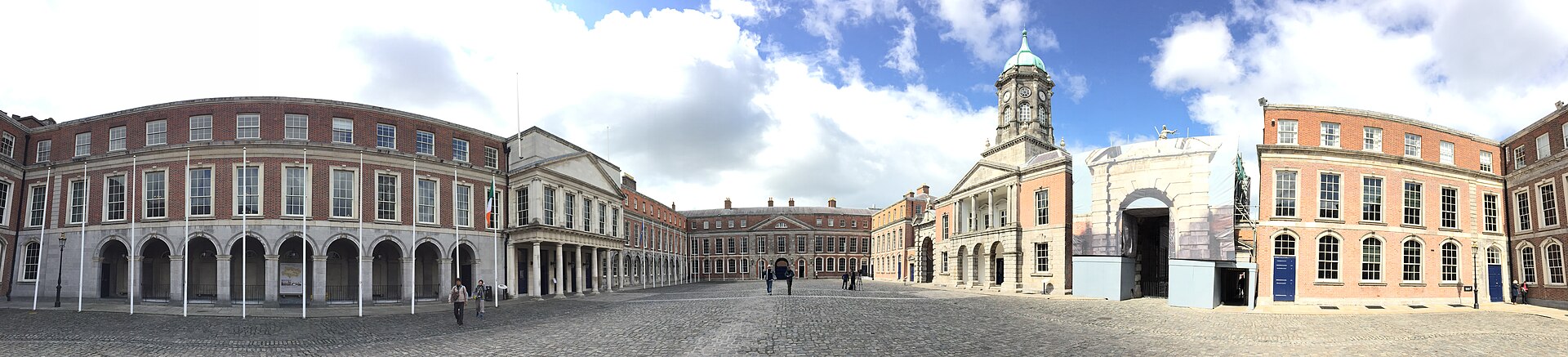
The castle is arranged around courtyards, the principal of which is a grand and stately square surrounded by the elegant classical buildings of the later castle. This great courtyard, with its harmonious facades and its notable towers and gateways, forms the ceremonial heart of the complex, the setting for arrivals and grand occasions.

Around the courtyards are gathered the various buildings that make up the castle, from the state apartments to administrative offices and other structures raised over the centuries to serve the seat of power. The result is a complex of considerable variety, its buildings ranging in date and style but united into a single historic ensemble arranged around its stately courtyards.
These courtyards and buildings, with their mixture of periods and purposes, reflect the long and complex history of the castle as a centre of power. From the grand ceremonial square to the surviving fragments of the older fortress, the complex tells the story of its own evolution, and to explore its courtyards is to trace the layered history of one of the most significant sites in Ireland.
The grand ceremonial courtyard, surrounded by its elegant classical facades and marked by its distinctive towers and gateways, forms the dignified heart of the castle. It is here that grand arrivals and occasions take place, and the harmonious architecture of the square gives the complex a stately unity, drawing together the varied buildings of many periods into a single ceremonial whole.
The Handover to Ireland
The great turning point in the history of Dublin Castle came with the achievement of Irish independence in the twentieth century, when the castle, for so long the symbol and seat of foreign rule, was formally handed over to the new Irish state. This moment, when the centre of the old administration passed into Irish hands, was one of the most symbolically charged events in the whole story of Irish independence.

The handover of the castle marked the end of centuries of foreign rule administered from within its walls, and the beginning of a new era in which the castle would serve the independent Irish nation. For a people who had long regarded the castle as the very symbol of their subjection, its transfer to the new state was a moment of profound significance, a tangible sign of the achievement of freedom.
From that moment the castle was transformed, its meaning inverted, as the seat of foreign power became a centre of the free Irish state. The buildings that had embodied Ireland’s subjection now served its independence, and the castle took on a new role as a place where the ceremonies and functions of the Irish nation would be performed, a symbol not of subjection but of the triumph of Irish self-government.
The formal handover of the castle to the Irish state was a moment charged with the emotion of centuries, the transfer of the very symbol of foreign rule into the hands of the free Irish nation. For a people who had regarded the castle as the embodiment of their subjection, this event was a profound and moving vindication, a tangible sign that the long struggle for independence had at last been won.
The inversion of the castle’s meaning, from the seat of foreign rule to a centre of Irish freedom, is one of the most powerful symbols in the story of the nation’s independence. Few buildings anywhere have undergone so complete a transformation of significance, and the castle stands as a monument to the triumph of Irish self-government, its very stones bearing witness to the achievement of freedom.
A Ceremonial Centre of the Republic
Since its transfer to the Irish state, Dublin Castle has served as a ceremonial centre of the republic, the setting for many of the most important occasions of the modern Irish nation. Above all, the castle is the place where the presidents of Ireland are inaugurated, their installation taking place amid the splendour of the great ceremonial hall.

The castle is also used for a wide range of other state functions, from official receptions and the entertainment of visiting heads of state to great occasions of national and international importance. When Ireland has hosted major international gatherings and events, the castle has often provided the grand and historic setting, its state apartments serving the ceremonial needs of the modern nation.
In these roles the castle serves the independent Irish state much as it once served the old administration, but now in the cause of Irish self-government and national dignity. Its transformation from the seat of foreign rule to a ceremonial centre of the republic is complete, and the castle stands today as a working symbol of Irish independence and the ceremonial heart of the modern nation.
The use of the castle for the inauguration of presidents and other great occasions of the republic has made it a living centre of the independent Irish state. Far from being a relic of the past, the castle continues to serve the nation, its historic grandeur placed at the service of Irish self-government, and its role in the ceremonial life of the republic keeps its long history vividly present.
The Gardens and the Ancient Pool
Behind the castle lies a garden that occupies a site of great historic significance, for here, according to tradition, was the ancient dark pool that gave the city of Dublin its name. This garden, laid out on the site of the vanished pool, connects the castle to the very origins of the city, a green and tranquil space steeped in the deep history of Dublin.

The garden provides a peaceful contrast to the grand courtyards and buildings of the castle, a place of lawns and planting that recalls the ancient origins of the site. Its design incorporates references to the early history of Dublin, and it offers visitors a quiet space in which to reflect on the deep past of the city and the castle at its heart.
The connection of the garden to the ancient pool that named the city gives it a special resonance, linking the castle not only to the centuries of rule but to the very foundation of Dublin itself. This deep historic significance, combined with the tranquillity of the garden, makes it one of the most evocative and meaningful parts of the whole castle complex.
The tradition that the garden occupies the site of the ancient dark pool that gave Dublin its name lends it a deep and poetic significance, connecting the castle to the very origins of the city. To stand in this quiet green space, on the site of the pool that named the capital, is to touch the deepest roots of Dublin’s history, a moving link between the castle and the foundation of the city itself.
The quiet beauty of the garden, laid out on the site of the ancient pool, offers a moment of reflection amid the grandeur and history of the castle. Its connection to the naming of Dublin gives it a resonance that goes beyond its tranquil beauty, and it reminds the visitor that the castle stands not only at the centre of Irish history but at the very origin of the city itself.
The Castle and the City of Dublin
Dublin Castle stands at the very heart of the Irish capital, and its history is inseparable from that of the city that grew up around it. For centuries the castle was the centre of power in Dublin, the fortress and seat of government around which the life of the city revolved, and it remains one of the principal historic landmarks at the core of the capital.

The relationship between the castle and the city reflects the long history of Dublin as a centre of power and administration. The castle anchored the city as its seat of authority, and the surrounding streets and buildings grew up in its shadow, so that the castle and the historic core of Dublin developed together, bound by their shared role at the centre of Irish affairs.
Today the castle is one of the great historic attractions of Dublin, drawing visitors to explore its state apartments, towers, chapel, and gardens, and to encounter the long and dramatic history of Ireland. Set at the heart of the capital, it offers an unforgettable window onto the story of the nation, from the founding of the city to the achievement of independence.
The castle’s position at the heart of Dublin, around which the historic city grew, makes it inseparable from the story of the capital. For centuries the seat of power and the focus of the city’s political life, the castle remains one of the principal landmarks of the historic core of Dublin, and to visit it is to stand at the very centre of the long and dramatic history of the Irish capital.
The historic core of Dublin, which grew up around the castle, remains one of the most atmospheric parts of the city, and the castle anchors it as its ancient centre of power. To explore the surrounding streets and then to enter the castle is to trace the deep history of the capital, and the castle stands as the enduring heart of a city whose story it has shaped for more than a thousand years.
Dublin Castle Today
Today Dublin Castle is one of the most significant and visited historic sites in Ireland, serving both as a ceremonial centre of the state and as a great attraction open to the public. Visitors can explore the grand state apartments, the medieval tower, the beautiful chapel, the historic courtyards, and the gardens on the site of the ancient pool, encountering the whole layered history of the castle.

A visit reveals the splendour of the state apartments and the great ceremonial hall where presidents are inaugurated, the ancient strength of the medieval tower, the Gothic beauty of the chapel, and the deep historic significance of the gardens. Few sites in Ireland gather so much history into a single complex, and the castle offers a rich and moving encounter with the long story of the nation.
To experience Dublin Castle is to encounter the whole sweep of Irish history, from the ancient origins of the city through seven centuries of foreign rule to the triumph of independence and the ceremonies of the modern republic. Transformed from the symbol of subjection to a centre of the free Irish nation, the castle stands as one of the most historically significant and moving sites in all of Ireland, at the very heart of its capital and its story.
For the visitor to Dublin, the castle offers one of the richest and most meaningful encounters with Irish history to be found anywhere in the city. Combining architectural splendour, deep historic significance, and the powerful story of Ireland’s transformation from subjection to independence, it rewards a visit with both beauty and profound resonance, and it stands among the essential experiences of the Irish capital.
Whether drawn by the splendour of the state apartments, the drama of Ireland’s history, or the beauty of the chapel and gardens, visitors to Dublin Castle come away with a vivid and moving impression of the nation’s past. It is a site that rewards a thoughtful visit, uniting architectural beauty with profound historical significance, and it holds a central place among the historic treasures of Ireland.
Palaces Nearby
Dublin Castle is one of the great royal and national seats of the British Isles beyond England, and its story finds echoes in the royal castles and palaces of the neighbouring nations of these islands. Two more of these seats make natural companions to a visit here, each guarding the history of its own nation.
- The Palace of Holyroodhouse – the royal seat of Scotland in Edinburgh.
- Cardiff Castle – two thousand years and a Gothic dream in the Welsh capital.
You May Like
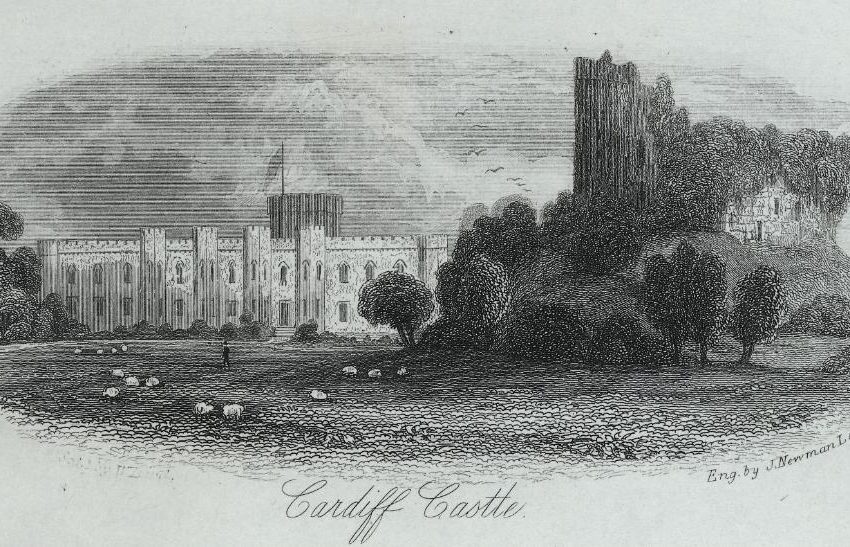
Cardiff Castle: Two Thousand Years and a Gothic Dream


One thought on “Dublin Castle: From Seat of Rule to Heart of a Free Ireland”