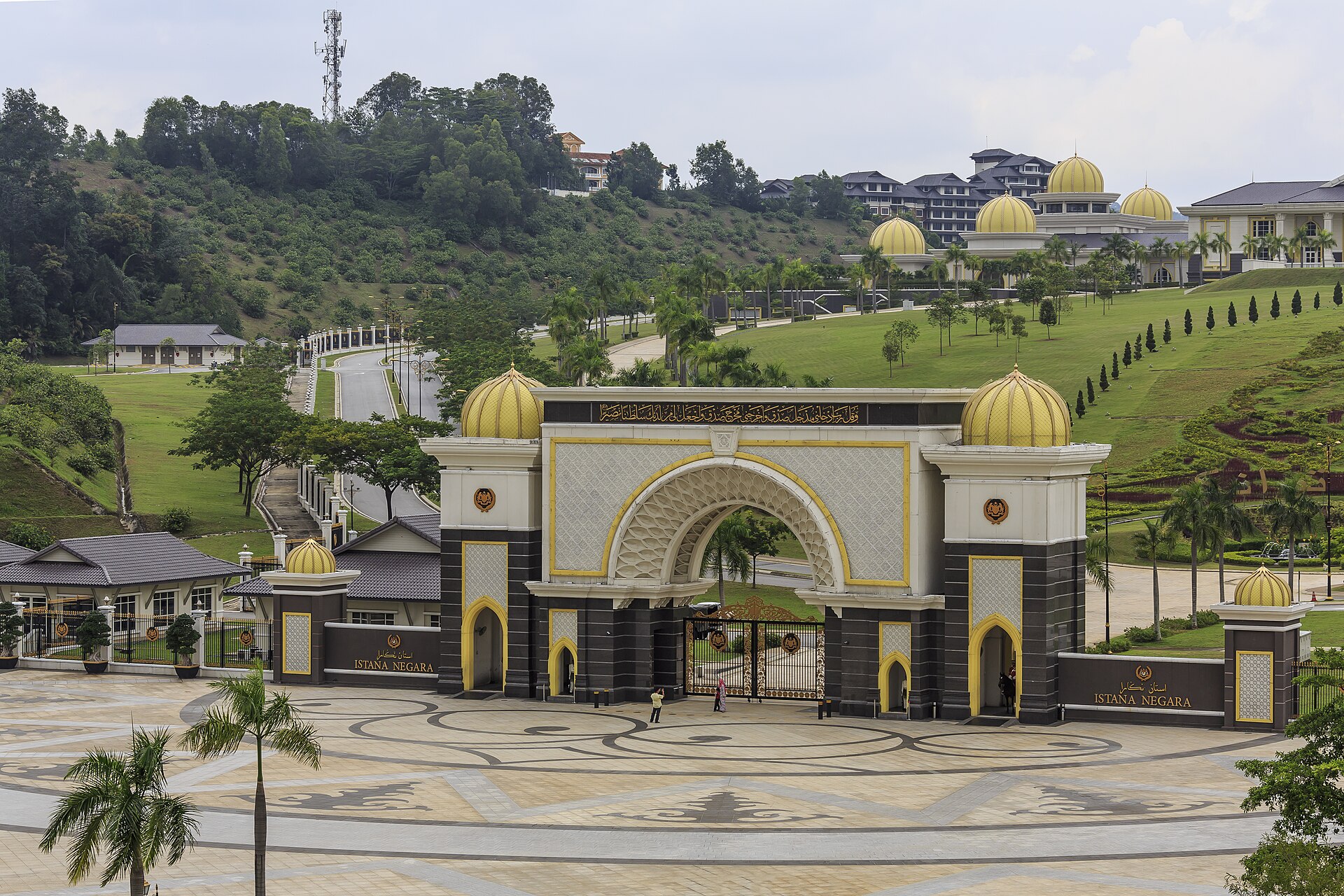
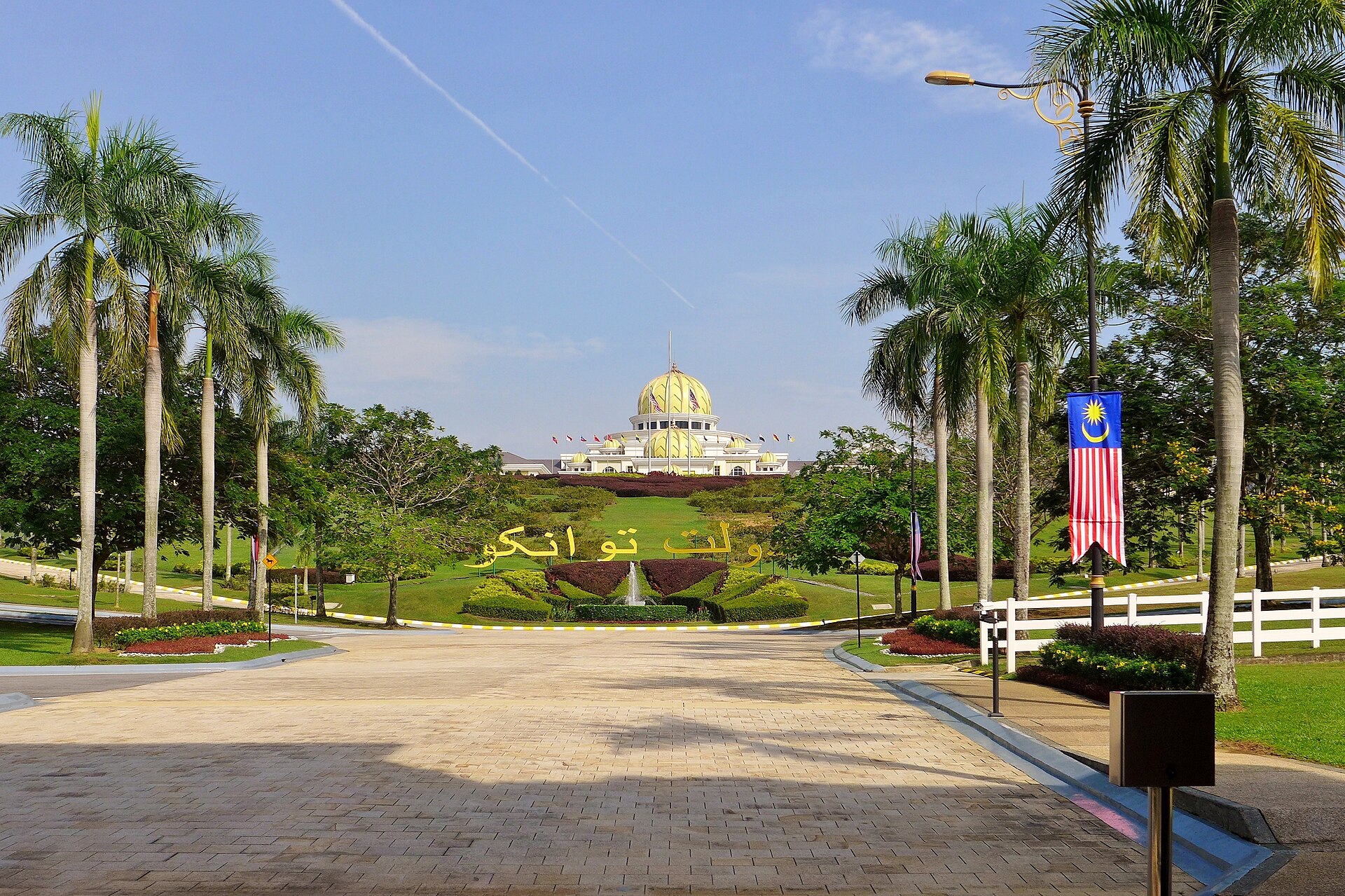
On a hill overlooking the Malaysian capital of Kuala Lumpur, its golden domes gleaming above landscaped grounds, stands the official residence of one of the most unusual monarchs in the world. Istana Negara, the National Palace of Malaysia, is the home of the Yang di-Pertuan Agong, the King of Malaysia, a sovereign chosen not by birth alone but through an extraordinary system that rotates the throne among the royal rulers of the nation’s states. The palace, grand and modern, is the ceremonial heart of this singular monarchy.
Malaysia’s monarchy is unlike any other in the world, for the country is a federation of states, several of which have their own hereditary rulers, and the national throne rotates among them, so that the King of Malaysia is elected from among these royal rulers for a set term. Istana Negara serves as the residence and ceremonial seat of whichever of these rulers holds the national throne, a palace for a monarchy that is at once hereditary and elective.
The palace that serves this unique monarchy today is a grand modern complex, opened in recent years to replace an older royal residence, and designed to provide a fitting setting for the ceremonies of the Malaysian crown. With its golden domes, its grand halls, and its ceremonial guard, the palace is one of the principal landmarks of Kuala Lumpur and a symbol of the nation and its distinctive monarchy.
In this article you will get to know Istana Negara fully: the unique elective monarchy it serves, the older palace it replaced, its grand modern architecture, its ceremonial halls and functions, its guard and the pageantry of the Malaysian crown, and its life today as the residence of the King of Malaysia and one of the principal symbols of the nation, a palace for a monarchy found nowhere else in the world.

In This Article
- The Palace of an Elected King
- A Unique Elective Monarchy
- The Yang di-Pertuan Agong
- The Old Palace and the New
- A Grand Modern Palace
- The Ceremonial Halls
- The Royal Guard and Pageantry
- The Palace Grounds
- The Crown, Islam, and Malay Tradition
- The Palace and the Capital
- A Symbol of the Federation
- Experiencing the Palace
- Istana Negara Today
The Palace of an Elected King
Istana Negara, the National Palace of Malaysia, stands on a hill overlooking Kuala Lumpur, a grand complex crowned with golden domes and set amid landscaped grounds. As the official residence of the King of Malaysia, it is the ceremonial heart of the nation’s monarchy and one of the principal landmarks of the capital, a symbol of the Malaysian crown and state.

What makes the palace so distinctive is the unique monarchy it serves, for the King of Malaysia is chosen through an extraordinary system unlike any other in the world. The throne rotates among the hereditary rulers of several of the nation’s states, so that the king is elected from among these royal rulers for a set term, a monarchy at once hereditary and elective.
The palace thus serves not a single dynasty but the rotating monarchy of the Malaysian federation, providing a residence and ceremonial seat for whichever of the royal rulers holds the national throne. This unique role gives Istana Negara a special character among the palaces of the world, a grand residence for a monarchy found nowhere else, at the heart of the Malaysian capital.
The rotating nature of the crown gives the palace a unique character among the royal residences of the world, for it is home not to one dynasty but to several in turn. This remarkable arrangement, unmatched anywhere else, makes Istana Negara the seat of a monarchy that is at once deeply traditional and strikingly original, a fitting symbol of a nation that has forged its own distinctive path.
Set apart on its hill, the palace commands a dignified presence above the capital, its golden domes visible from many parts of the city. It was designed to serve as both a residence and a stage for the ceremonies of the crown, and its grand scale reflects the importance of the monarchy as a unifying institution at the heart of the Malaysian federation.
A Unique Elective Monarchy
Malaysia’s system of monarchy is unlike any other in the world, a product of the nation’s history as a federation of states, several of which retained their own hereditary rulers. When the nation came together, these rulers agreed to a remarkable arrangement, under which the national throne would rotate among them, each taking a turn as the King of Malaysia for a set term.

Under this system, the King of Malaysia is chosen from among the royal rulers of the states through a formal election, holding the national throne for a fixed period before it passes to another. This creates a monarchy that is both hereditary, in that the king must be one of the hereditary rulers, and elective, in that he is chosen for the national throne, a combination unique in the world.
This distinctive monarchy reflects the history and structure of Malaysia as a federation, uniting the traditional rulers of its states in a single national crown that rotates among them. Istana Negara serves this unique institution, providing a residence and ceremonial seat for the rotating monarchy, and it stands as a symbol of the distinctive constitutional arrangement that binds the Malaysian federation together.
The agreement among the royal rulers to share the national throne, each taking a turn as king, is one of the most remarkable constitutional arrangements in the world, born of the need to unite a federation of states each with its own traditions and ruler. It has given Malaysia a monarchy that binds the nation together while preserving the distinct identities and traditions of its constituent states.
The system ensures that over time each of the participating royal houses shares in the honour of the national throne, a rotation that reflects the equality and unity of the states within the federation. Few constitutional arrangements anywhere have so ingeniously balanced the claims of hereditary rulers with the needs of a modern federal nation, and the palace stands as the embodiment of this achievement.
The Yang di-Pertuan Agong
The King of Malaysia bears the title Yang di-Pertuan Agong, meaning the supreme ruler, and he serves as the head of state of the federation, a constitutional monarch reigning above the politics of the nation. Chosen from among the royal rulers of the states, he holds the national throne for a fixed term, carrying out the ceremonial and constitutional duties of the crown.
The role of the Yang di-Pertuan Agong is largely ceremonial and constitutional, as in other constitutional monarchies, but he holds an important place as a symbol of national unity and continuity, standing above the divisions of politics and region. He also holds a special role in relation to the Islamic faith and the Malay traditions of the nation, adding to the significance of the office.
Istana Negara is the residence and ceremonial seat of the Yang di-Pertuan Agong, the setting for the ceremonies and functions of the office. As the king changes with the rotation of the throne, the palace serves each successive holder of the office, a constant royal residence for a rotating monarchy, and the ceremonial heart of the Malaysian crown.
The fixed term of the office, after which the throne passes to another of the royal rulers, distinguishes the Malaysian crown from the lifelong reigns of most monarchies. This regular rotation ensures that the various royal houses of the federation each share in the national throne, and it gives the monarchy a distinctive rhythm found nowhere else in the world.
The office of the Yang di-Pertuan Agong, held in turn by the royal rulers of the states, gives the Malaysian monarchy a remarkable continuity of institution combined with a regular renewal of its holder. This blend of permanence and rotation is unique in the world, and it reflects the ingenuity of the arrangement that binds the Malaysian federation together under a single crown.
The Old Palace and the New
For many decades, the Malaysian monarchy was served by an older palace, a grand residence set on a hill in another part of the capital, which had originally been built as a private mansion before becoming the national palace. This older Istana Negara served the monarchy through the early decades of the nation’s independence, witnessing the ceremonies of the crown.

As the needs of the monarchy grew, a decision was made to build a grand new palace to serve as the national residence, and the older palace was eventually replaced. The former palace, rich in history, was preserved and transformed into a royal museum, allowing the public to explore the residence that had served the monarchy for so many years.
The new Istana Negara, opened in recent years, is a grand modern complex designed to provide a fitting setting for the monarchy of a modern nation. The transition from the old palace to the new reflects the growth and development of Malaysia and its monarchy, and the two palaces together tell the story of the Malaysian crown through the decades of the nation’s independence.
The preservation of the former palace as a royal museum ensures that the history of the monarchy in the decades after independence is not lost, and it allows the public to explore a royal residence that would otherwise remain closed. The two palaces, old and new, together tell the story of the Malaysian crown, from the early years of independence to the modern era.
The former palace, with its own history and grandeur, served the monarchy through the formative decades of the independent nation, and its transformation into a museum preserves that history for future generations. Visitors to the old palace can trace the story of the Malaysian crown in the very rooms where it was exercised, a valuable complement to the grandeur of the new palace.
A Grand Modern Palace
The new Istana Negara is a grand modern palace, a vast complex crowned with golden domes and designed in a style that draws on Malay and Islamic architectural traditions. Set on a hill amid extensive landscaped grounds, the palace presents an imposing and dignified presence, a fitting residence for the monarchy of a modern nation.

The architecture combines modern construction with traditional Malay and Islamic elements, its golden domes, arches, and ornament reflecting the cultural and religious heritage of the nation. The palace was designed to express the dignity of the Malaysian crown and the identity of the nation, uniting the traditions of the past with the aspirations of the present.
The scale and grandeur of the palace, with its golden domes gleaming above the capital, make it one of the principal landmarks of Kuala Lumpur. Its architecture, blending modern and traditional elements, gives it a distinctive character, a grand modern residence for a unique monarchy, and a symbol of the nation and its heritage at the heart of the Malaysian capital.
The blending of Malay, Islamic, and modern elements in the architecture of the palace reflects the cultural and religious identity of the nation and its monarchy. The golden domes, the arches, and the ornament all draw on the heritage of the Malay world and the Islamic faith, giving the palace a distinctive character that expresses the identity of the crown and the nation it serves.
The palace was built to serve the needs of a modern monarchy while expressing the traditions of the nation, and its design achieves this balance with confidence. Its golden domes and Islamic and Malay ornament root it in the heritage of the country, while its scale and facilities meet the requirements of a contemporary head of state, making it a fitting seat for the crown of a modern nation.
The Ceremonial Halls
Within, the palace contains grand ceremonial halls used for the functions and ceremonies of the Malaysian crown, from the installation of the king to state banquets and the reception of dignitaries. These halls, richly decorated in a style blending modern and traditional elements, provide a setting of appropriate grandeur for the ceremonies of the monarchy.

The most important of these spaces is the great throne room, the setting for the grandest ceremonies of the crown, including the installation of the Yang di-Pertuan Agong. Richly decorated and designed to impress, the throne room is the ceremonial heart of the palace, the stage on which the most significant occasions of the Malaysian monarchy are performed.
The ceremonial halls of Istana Negara, from the throne room to the banquet halls and reception rooms, reflect the dignity and grandeur of the Malaysian crown. Their decoration, blending Malay, Islamic, and modern elements, expresses the identity and heritage of the nation, and they provide the setting for the ceremonies through which the monarchy represents the Malaysian people.
The great throne room, the setting for the installation of the king and the grandest ceremonies of the crown, is the ceremonial heart of the palace. Richly decorated and designed to impress, it provides a fitting stage for the most significant occasions of the Malaysian monarchy, and it embodies the dignity and grandeur of the crown at the heart of the palace.
Beyond the throne room, the palace contains banquet halls, reception rooms, and audience chambers for the range of ceremonies and functions the monarchy performs, from state dinners to the receiving of ambassadors. Each is decorated in the distinctive blend of Malay, Islamic, and modern styles that characterises the palace, providing dignified settings for the many occasions of the Malaysian crown.
The Royal Guard and Pageantry
One of the most colourful features of Istana Negara is its royal guard, whose members, including a mounted cavalry, stand watch at the palace gates and perform the ceremonial duties of guarding the monarch. The guard, in their distinctive uniforms, and especially the mounted cavalry, provide one of the great spectacles of the Malaysian capital.

The changing of the guard at the palace gates, and the presence of the mounted cavalry, draw visitors and photographers, offering a colourful glimpse of the pageantry of the Malaysian crown. The guard combines ceremonial splendour with the real function of protecting the monarch, and it forms part of the living tradition of the monarchy.
The pageantry of the royal guard, with its uniforms, its cavalry, and its ceremony, adds colour and tradition to the palace and the capital. It reflects the dignity and the living traditions of the Malaysian monarchy, and the sight of the mounted guard at the golden-domed palace is one of the most memorable spectacles of Kuala Lumpur, a symbol of the crown and the nation.
The mounted cavalry of the royal guard, in their colourful uniforms, are among the most photographed sights of the Malaysian capital, offering a vivid glimpse of the pageantry of the crown. Their presence at the golden-domed palace combines ceremonial splendour with the real function of guarding the monarch, a living tradition that delights visitors and locals alike.
The daily ceremonies at the palace gates have become one of the attractions of the capital, drawing visitors eager to see the colourful guard and the mounted cavalry. These living traditions connect the modern palace to the ceremonial heritage of the Malay world, and they add colour and pageantry to the life of the capital, a vivid symbol of the crown.
The Palace Grounds
Istana Negara is set within extensive landscaped grounds, covering a large area on its hill overlooking the capital. The grounds, with their lawns, gardens, and plantings, provide a beautiful and dignified setting for the palace, and they include the various buildings and facilities needed to serve the residence and the functions of the crown.

The grounds are designed to provide both privacy and grandeur, setting the palace apart on its hill amid greenery while providing the space for the ceremonies and functions of the monarchy. The landscaped setting complements the architecture of the palace, and it contributes to the imposing and dignified presence of the royal residence above the capital.
The palace grounds, with the golden-domed palace at their heart, form a green and dignified enclave at the edge of the bustling capital. They provide the setting for the residence and ceremonial life of the Malaysian crown, and they contribute to the beauty and grandeur of the palace, one of the principal landmarks of Kuala Lumpur and a symbol of the nation.
The extensive landscaped grounds, setting the palace apart on its hill amid greenery, provide both the privacy and the grandeur appropriate to a royal residence. They complement the architecture of the palace and contribute to its imposing presence above the capital, a green and dignified enclave at the heart of the bustling city.
The approach to the palace, past its guarded gates and up toward the golden-domed complex on its hill, conveys the dignity of the royal residence, and the well-tended grounds frame the palace to striking effect. The setting was chosen and shaped to give the monarchy a fitting home above the capital, at once accessible to the life of the city and set apart in its own dignified enclave.
The Crown, Islam, and Malay Tradition
The Malaysian monarchy holds a special place in relation to the Islamic faith and the Malay traditions of the nation, and the king plays an important role as a symbol and guardian of these traditions. This religious and cultural dimension adds to the significance of the crown and shapes the character of the monarchy and its ceremonies.

The royal rulers of the Malay states, from among whom the king is chosen, are traditionally regarded as heads of the Islamic faith in their states, and this role extends to the national monarchy. The palace and its ceremonies reflect this religious dimension, and the architecture of Istana Negara, with its Islamic elements, expresses the faith that is central to the identity of the crown and the nation.
The combination of the Islamic faith, the Malay traditions, and the modern constitutional role of the monarchy gives the Malaysian crown its distinctive character. Istana Negara, as the seat of this monarchy, embodies these various dimensions, a palace that unites religion, tradition, and modern statehood in the service of a unique and distinctive crown.
The role of the king as a symbol and guardian of the Islamic faith and Malay traditions adds a religious and cultural dimension to the Malaysian crown that shapes its character and its ceremonies. This role, inherited from the traditional position of the royal rulers, gives the monarchy a significance that reaches beyond its constitutional functions, deep into the identity of the nation.
The architecture of the palace, with its domes and Islamic ornament, gives visible expression to the religious dimension of the monarchy, reflecting the faith that is central to the identity of the crown and the Malay states. This union of religion, tradition, and statehood in the palace mirrors the character of the Malaysian monarchy itself, distinctive among the crowns of the world.
The Palace and the Capital
Istana Negara stands at the heart of Kuala Lumpur, the vibrant capital of Malaysia, a modern metropolis of soaring towers and diverse cultures. The palace, on its hill with its golden domes, is one of the principal landmarks of the city, a symbol of the monarchy amid the bustle and modernity of the capital.

The relationship between the palace and the city reflects the place of the monarchy in modern Malaysia, a traditional institution at the heart of a dynamic and modern nation. The palace provides a dignified royal presence in the capital, a symbol of continuity and tradition amid the rapid growth and change of the city.
As one of the principal landmarks of Kuala Lumpur, alongside the modern towers and cultural sites of the capital, Istana Negara offers visitors a glimpse of the Malaysian monarchy and its unique character. The palace, on its hill above the city, stands as a symbol of the nation and its crown, a grand royal residence at the heart of one of the great capitals of Southeast Asia.
The presence of the golden-domed palace on its hill amid the modern towers of Kuala Lumpur captures the character of Malaysia itself, a nation that unites tradition and modernity. The palace provides a dignified symbol of continuity and heritage amid the rapid growth of the capital, a reminder of the traditions that underpin the modern nation.
As Kuala Lumpur has grown into a great modern metropolis, the palace has remained a symbol of continuity and tradition at its heart, its golden domes a reminder of the heritage that underpins the dynamic nation. The contrast between the traditional palace and the modern city captures the character of contemporary Malaysia, a nation that honours its past while embracing the future.
A Symbol of the Federation
Istana Negara stands as a powerful symbol of the Malaysian federation and the unique constitutional arrangement that binds it together. As the seat of the rotating monarchy, shared among the royal rulers of the states, the palace embodies the unity of the federation and the distinctive system that unites its diverse states under a single national crown.

The rotating monarchy, and the palace that serves it, reflect the history and the character of Malaysia as a federation of states with their own traditions and rulers, united in a single nation. The crown provides a symbol of national unity that stands above the divisions of politics, region, and ethnicity, and Istana Negara, as its seat, embodies this unifying role.
For Malaysia, Istana Negara is thus more than a grand palace; it is a symbol of the nation and its unity, of the unique monarchy that binds the federation together, and of the traditions and the modern statehood that the crown represents. It stands as one of the principal symbols of the Malaysian nation, a grand residence for a monarchy found nowhere else in the world.
The rotating monarchy and the palace that serves it stand as symbols of the unity of the Malaysian federation, binding its diverse states under a single national crown while preserving their distinct identities. This unique arrangement, embodied in Istana Negara, is one of the defining features of the Malaysian nation and a source of stability and unity.
Experiencing the Palace
For visitors to Kuala Lumpur, Istana Negara is one of the notable sights of the capital, its golden-domed palace on its hill a symbol of the nation and its monarchy. Though the palace itself is not open to the public, visitors can view it from the grounds and gates, and the ceremonial guard, especially the mounted cavalry, provides a colourful spectacle.
The former palace, now a royal museum, offers visitors the chance to explore a royal residence that served the monarchy for many decades, providing a glimpse of the history and traditions of the Malaysian crown. Together, the new palace and the old, one a symbol of the modern monarchy and the other a museum of its history, offer a rich encounter with the Malaysian crown.
To experience Istana Negara, whether by viewing the grand new palace and its ceremonial guard or by exploring the historic former palace, is to encounter the unique monarchy of Malaysia and its place in the life of the nation. The palace stands as a symbol of the Malaysian crown and federation, and it offers visitors a memorable glimpse of one of the most distinctive monarchies in the world.
For visitors, the combination of the grand new palace with its ceremonial guard and the historic former palace, now a museum, offers a rich encounter with the Malaysian monarchy. Together they reveal both the living traditions of the crown and its history, and they rank among the notable experiences of a visit to the Malaysian capital.
A visit to the Malaysian capital is enriched by an encounter with Istana Negara, whether by viewing the grand new palace and its ceremonial guard or by exploring the historic former palace. Together they offer a memorable glimpse of one of the world’s most distinctive monarchies, and they rank among the essential experiences of Kuala Lumpur.
Istana Negara Today
Today Istana Negara is the residence and ceremonial seat of the King of Malaysia, the setting for the ceremonies and functions of the nation’s unique monarchy. Though the palace itself is not generally open to the public, its grounds, its gates, and its ceremonial guard, especially the mounted cavalry, draw visitors and offer a glimpse of the pageantry of the Malaysian crown.

The palace continues to serve the rotating monarchy of Malaysia, providing a residence and ceremonial seat for each successive Yang di-Pertuan Agong. As one of the principal landmarks of Kuala Lumpur, it is a symbol of the nation and its distinctive crown, and the ceremonies and pageantry associated with it remain an important part of the life of the capital and the nation.
To encounter Istana Negara is to glimpse one of the most unusual monarchies in the world, a rotating crown shared among the royal rulers of the Malaysian states, served by a grand modern palace crowned with golden domes. A symbol of the nation and its unique constitutional arrangement, Istana Negara stands as one of the principal royal residences of Southeast Asia and the ceremonial heart of the Malaysian crown.
As the seat of one of the world’s most distinctive monarchies, Istana Negara offers a glimpse of a crown unlike any other, served by a grand modern palace at the heart of a dynamic nation. Whether viewed from its gates, admired for its ceremonial guard, or understood through the history preserved in the former palace, it remains one of the principal symbols of Malaysia and its unique crown.
For all its modernity, the palace embodies deep traditions, and it stands at the heart of the ceremonial life of the nation. As the seat of a monarchy found nowhere else in the world, Istana Negara continues to fascinate visitors and to serve as a proud symbol of Malaysia, its golden domes a familiar and beloved landmark of the capital.
Palaces Nearby
Istana Negara is one of the great royal residences of Southeast Asia, and its story finds echoes in the palaces of the neighbouring nations of the region. Two more of these royal seats make natural companions to a visit here, each embodying the history of its own nation.
- Malacanang Palace, Manila — the riverside seat of the President of the Philippines, a colonial-era house at the heart of a nation’s political life.
- Istana Maimun, Medan — the golden palace of the Deli Sultanate in North Sumatra, a dazzling monument of the Sumatran tobacco boom.
You May Like

The Lost Garden of the Qing and the Night It Burned