Not far from the serene halls of the Kyoto Imperial Palace stands a very different kind of residence, one built not for a reigning emperor but for the military ruler who held the real power in Japan. Nijo Castle was the Kyoto stronghold and residence of the shogun, the supreme warlord who governed the country for centuries, and it stands as a magnificent monument to the age of the samurai and the power of the Tokugawa dynasty that ruled Japan for more than two hundred and fifty years.
Nijo Castle is famous not for towering fortifications but for the splendor of its palace, whose halls are decorated with dazzling gold-leaf paintings and whose floors were ingeniously designed to sing beneath the feet of intruders. Behind its moats and walls lies one of the finest surviving examples of the architecture of the samurai elite, a place where the power and wealth of the shogun were displayed in surroundings of great beauty and clever design.
The castle is bound up with some of the most important events in Japanese history, for it was here, in a sense, that the age of the shogun both began and ended. Built to proclaim the power of a new dynasty of military rulers, it later became the setting for the dramatic events that returned power to the emperor and set Japan on the path to the modern world, making it a place of profound historical significance.
In this article you will explore Nijo Castle from the great warlord who built it to its dazzling palace and clever defenses, through the age of the shogun to the events that ended it. Along the way you will encounter the singing floors, the golden paintings, and the beautiful gardens of this remarkable castle, and understand why this monument to samurai power in the old capital holds so important a place in the history of Japan.

In This Article
- The Castle of the Shogun
- The Warlord Who Built It
- Power and the Emperor
- The Ninomaru Palace
- The Singing Floors
- Golden Paintings of the Samurai Age
- The Halls of Audience
- The Inner Defenses
- The Gardens of Nijo
- The Ornate Gate
- Where the Age of the Shogun Ended
- A Preserved Treasure
- Visiting Nijo Castle Today
The Castle of the Shogun
Nijo Castle stands in the city of Kyoto, a walled and moated complex that served as the residence and stronghold of the shogun when he was in the old imperial capital. Surrounded by fortifications and moats, it contains within its walls magnificent palaces, gardens, and gates, forming one of the great monuments of the age of the samurai.
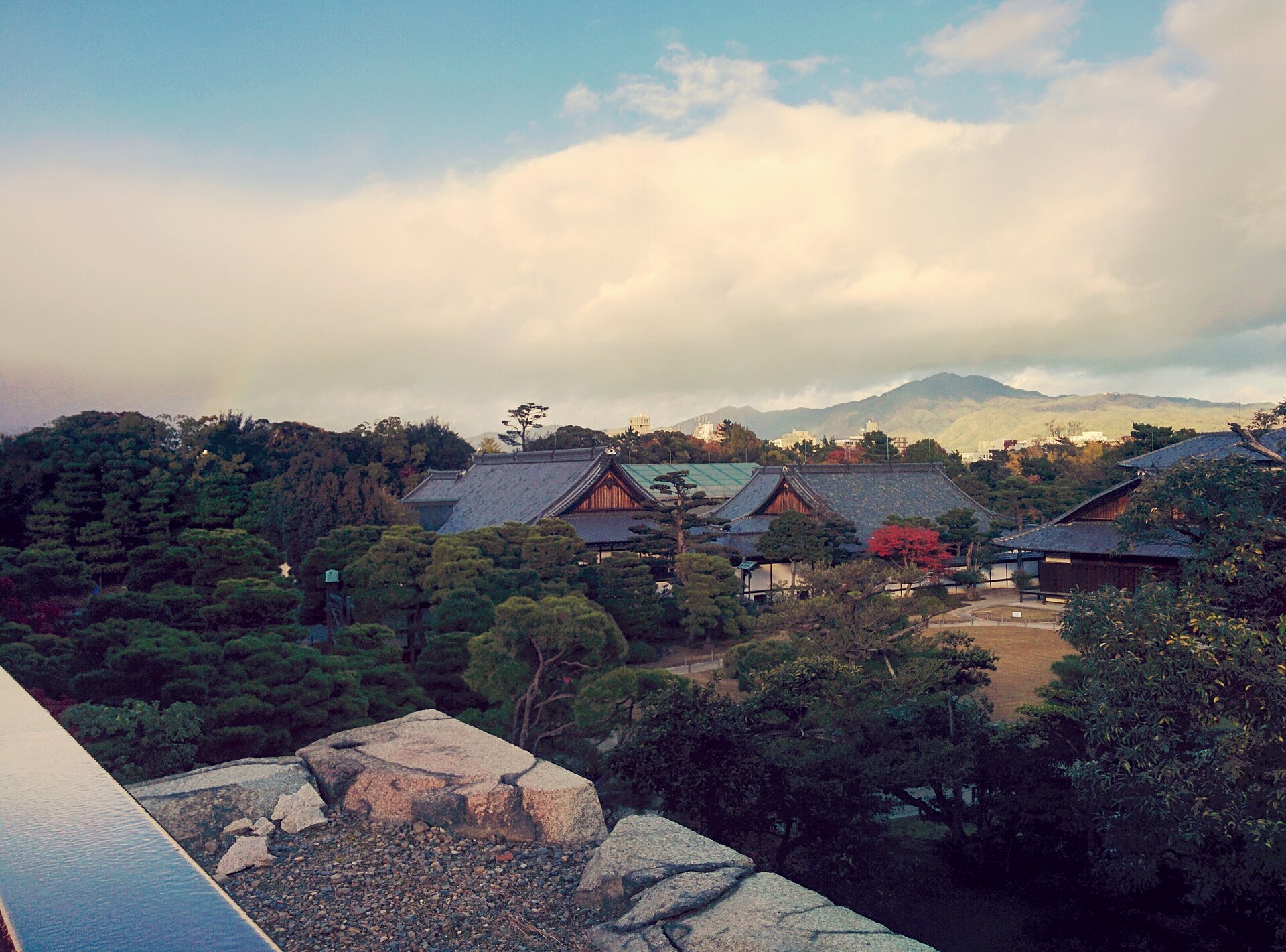
The castle is composed of two main defended areas, one within the other, each surrounded by its own walls and moat. Within these defenses lie the palaces, the gardens, and the other structures of the complex, arranged to combine the functions of a fortress with those of a luxurious residence for the military ruler of Japan.
Unlike the towering castles of some other traditions, Nijo Castle is famous above all for the splendor of its palace buildings, whose interiors are among the finest examples of the decorative arts of the samurai elite. The castle combined defense with display, its fortifications proclaiming the power of the shogun and its palaces demonstrating his wealth and taste.
For visitors today, Nijo Castle offers a vivid encounter with the world of the shogun and the samurai. Its palaces, with their golden paintings and singing floors, its gates and gardens, all preserve the atmosphere of the age when military rulers governed Japan from behind these moats and walls, and it stands as one of the most important historic sites in the country.
The contrast with the nearby imperial palace could hardly be greater, and it is instructive to see the two together. Where the emperor’s residence whispers of restraint and sacred simplicity, the shogun’s castle proclaims wealth and power in gold and ornament. Between them, the two sites lay bare the double structure of old Japan, the sacred sovereign and the ruling warlord, each expressed in stone and wood.
The Warlord Who Built It
Nijo Castle was built at the beginning of the seventeenth century by the great warlord who founded the last and greatest dynasty of shoguns, the military rulers who would govern Japan for more than two and a half centuries. Having achieved supremacy after a long age of civil war, he built the castle as his residence in Kyoto and as a symbol of his power.
The founder of the shogunate was one of the most important figures in Japanese history, the man who unified the country after generations of conflict and established a stable regime that would endure for centuries. The building of Nijo Castle was part of his assertion of power, a statement of the authority of his new dynasty in the imperial capital.
The castle was built to impress and to proclaim the might of the new military government. Its palaces and defenses expressed the power and wealth of the shogun, and its location in Kyoto, the seat of the emperor, made a clear statement about where real power in Japan now lay, in the hands of the military ruler rather than the sovereign.
From its foundation, Nijo Castle was thus bound up with the power of the Tokugawa dynasty and the establishment of their long rule over Japan. It stood as the symbol of their authority in the old capital, and its magnificent palaces embodied the confidence and splendor of the regime that would govern the country for the next two and a half centuries.
It is worth appreciating the timing of the castle’s construction, at the very dawn of a long peace. After generations of ruinous civil war, the founder of the shogunate imposed an order that would last for centuries, and Nijo Castle rose as one of the first great monuments of that new age, a declaration in wood and gold that the time of chaos was over and a single power now ruled.
Power and the Emperor
The building of Nijo Castle in Kyoto, the city of the emperor, made a powerful statement about the distribution of power in Japan. While the emperor reigned in his palace as the sacred and symbolic head of the nation, it was the shogun who held real political and military power, and his castle in the capital proclaimed that reality.

The relationship between the shogun and the emperor was central to the political order of Japan during this period. The shogun ruled in the name of the emperor, drawing legitimacy from the imperial institution, while wielding the actual power of government. Nijo Castle embodied this arrangement, the residence of the true ruler in the city of the symbolic sovereign.
The presence of the shogun’s magnificent castle near the imperial palace was thus a visible expression of the political realities of the age. The castle asserted the power of the military government, and its splendor was intended to overawe and to demonstrate the authority of the shogun, even in the sacred city of the emperor.
This dynamic between symbolic and actual power, between emperor and shogun, shaped Japanese history for centuries, and Nijo Castle stands as its monument. The castle and the imperial palace together, near neighbors in Kyoto, embodied the dual structure of Japanese power, and the story of the castle is inseparable from this defining feature of the nation’s history.
For most visitors, this arrangement is one of the most fascinating aspects of Japanese history, so different from the pattern of most other nations. That a hereditary military ruler should govern in the name of a powerless but sacred sovereign, each with his own palace in the same city, is a political design of remarkable subtlety, and Nijo Castle is its most eloquent monument.
The Ninomaru Palace
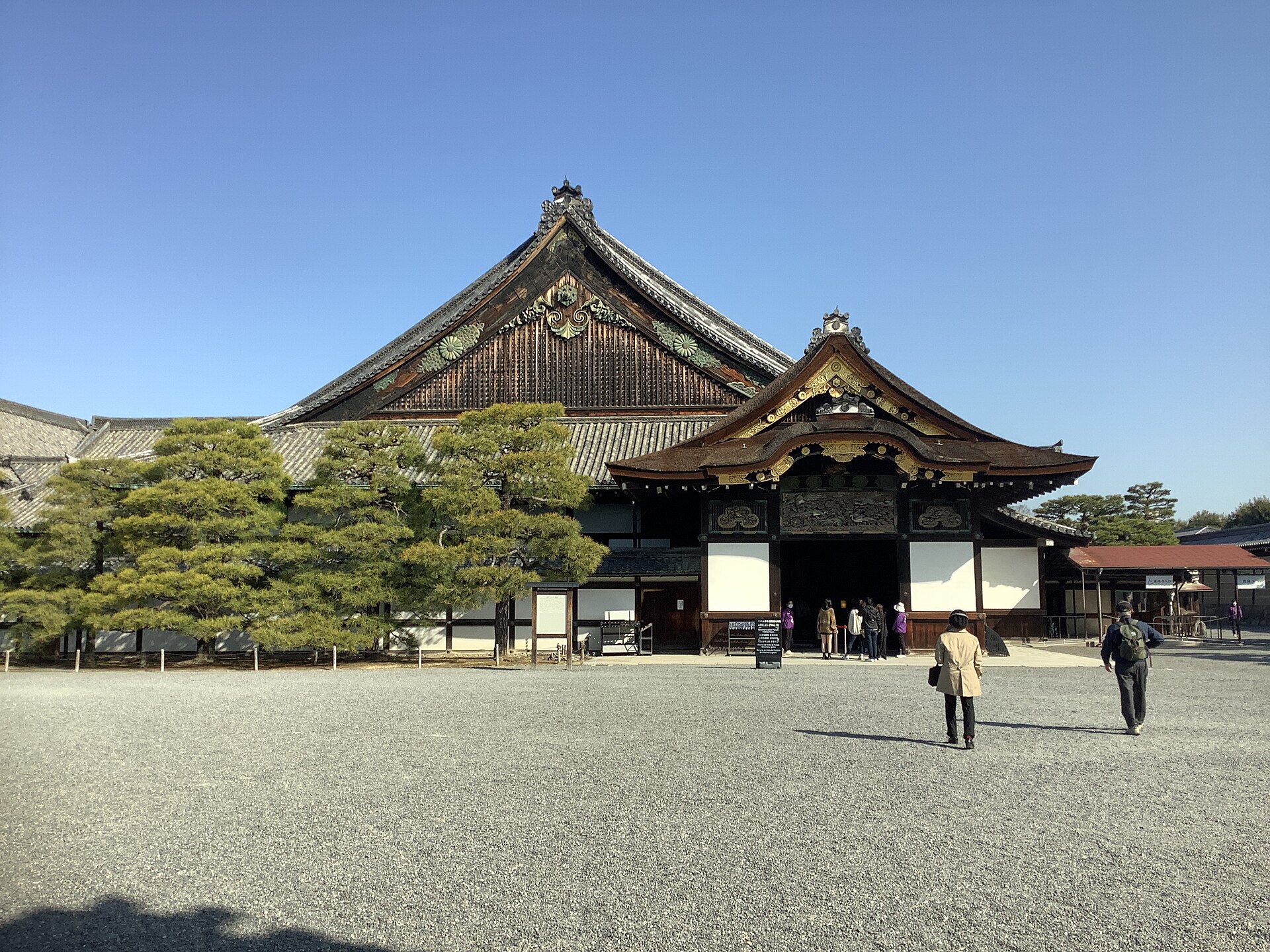
The heart of Nijo Castle is its great palace, one of the finest surviving examples of the architecture and decorative arts of the samurai elite. A sprawling complex of connected buildings, it served as the residence and audience halls of the shogun, and its interiors are among the most magnificent in all of Japan.

The palace is composed of a series of buildings linked together, containing a sequence of halls and rooms of increasing importance and exclusivity. Visitors and officials would pass through these spaces according to their rank, moving toward the innermost halls where the shogun received the most important guests, in an arrangement that expressed the strict hierarchy of the samurai world.
The buildings are constructed in the classical Japanese style, of wood with tatami-matted floors and sliding screens, but decorated with a splendor that proclaimed the wealth and power of the shogun. The interiors, with their golden paintings and elaborate carvings, are among the supreme achievements of the decorative arts of the age.
The palace is remarkable for the way it combines the restraint of classical Japanese architecture with the magnificence of its decoration. Its halls, with their painted screens and golden surfaces, their singing floors and hierarchical arrangement, offer an unmatched glimpse into the world of the shogun and the splendor of samurai power at its height.
Moving through the palace from the outer to the inner halls, a visitor experiences the deliberate escalation of grandeur that the builders intended. Each room is a little more magnificent than the last, the paintings a little bolder, the sense of approaching power a little stronger, until one reaches the innermost audience halls, where the full splendor of the shogun’s authority is brought to bear.
The Singing Floors
One of the most famous and ingenious features of Nijo Castle is its singing floors, corridors constructed so that they emit a chirping sound, resembling the song of a bird, when walked upon. Far from being a defect, this was a deliberate security measure, designed to make it impossible for anyone to move through the palace unheard.

These floors were an ingenious means of protecting the shogun from assassins and intruders. Constructed with clever mechanisms beneath the boards, they produced their distinctive sound with each footstep, so that no one could approach the shogun’s quarters in silence. The very floors of the palace thus served as an alarm system, an early and elegant form of security.
The sound of the floors, likened to the song of a nightingale, gave them their poetic name, and it remains one of the most memorable experiences for visitors to the castle today. To walk the corridors and hear them sing beneath one’s feet is to encounter directly the ingenuity of the builders and the security concerns of the shogun’s court.
The singing floors are a perfect example of the way Nijo Castle combined beauty, function, and cleverness. What might have been a simple security device became, in the hands of the palace’s builders, something with its own strange charm, and the floors remain one of the most beloved and distinctive features of this remarkable castle.
Whether the singing was engineered deliberately as a security device or arose as a by-product of the construction has been debated, but its effect is undeniable. In an age of intrigue and assassination, a floor that could not be crossed in silence was a real advantage, and the gentle, birdlike sound that fills the corridors turns a grim necessity into one of the palace’s quiet delights.
Golden Paintings of the Samurai Age
The walls and screens of the Ninomaru Palace are decorated with magnificent paintings, many on grounds of gold leaf, created by masters of the leading school of painting of the age. These paintings, depicting subjects such as pine trees, tigers, birds, and landscapes, are among the greatest treasures of the castle and of Japanese art.

The paintings served both to beautify the palace and to express the power and status of the shogun. Bold and magnificent, often set against shimmering gold backgrounds, they were designed to impress and to overawe those who entered the halls, and their subjects and style reflected the values and tastes of the samurai elite.
The use of gold leaf gave the interiors a dazzling splendor, especially in the dim light of the palace, where the golden surfaces would gleam and glow. This magnificence was a deliberate expression of the wealth and power of the shogun, transforming the halls into settings of overwhelming richness for the ceremonies of his court.
These paintings represent one of the high points of Japanese art, and their survival within the palace makes Nijo Castle a treasure house of the decorative arts of the samurai age. To see them in their original setting, adorning the halls where the shogun once received his guests, is to experience the full splendor of the world they were created to serve.
Many of the original paintings have been moved to protected storage and replaced in the halls by faithful reproductions, a measure taken to preserve these irreplaceable works from light and time. Even so, the effect within the halls remains overwhelming, and the golden screens continue to convey the splendor and the intimidating grandeur that their creators intended.
The Halls of Audience
The Ninomaru Palace was arranged as a sequence of halls of increasing importance, culminating in the grand audience chambers where the shogun received his guests. This arrangement expressed the strict hierarchy of the samurai world, with different ranks of visitors admitted to different halls according to their status.

The grandest of the halls were the settings for the shogun’s audiences, where he received the great lords and officials of the realm. Seated in splendor, surrounded by the golden paintings and the magnificence of the palace, the shogun appeared to his visitors as the supreme power in the land, and these halls were designed to convey his authority.
The arrangement of the halls, with the shogun raised above his visitors and the most important guests admitted to the innermost chambers, reflected the elaborate protocol of the samurai court. Everything about the halls, from their decoration to their spatial arrangement, was designed to express and reinforce the hierarchy and the power of the shogun.
These audience halls were the setting for the great ceremonies and the exercise of power at the heart of the shogun’s government. Here the relationships between the shogun and the lords of Japan were enacted, and the halls remain among the most impressive spaces in the castle, embodying the authority and splendor of the military rulers of Japan.
The Inner Defenses
Beyond the main palace, Nijo Castle contains an inner defended area, surrounded by its own moat and walls, which formed the innermost stronghold of the complex. This inner citadel provided an additional layer of defense and contained further palace buildings, at the heart of the castle’s fortifications.
The inner area was designed as the most secure part of the castle, protected by its moat and walls and accessible only through guarded gates. In an age when even the most powerful rulers had to guard against attack, this inner stronghold provided a final refuge and a secure center for the complex.
The castle once possessed a great tower or keep, a tall structure that would have dominated the complex, though it was lost to fire in later times and never rebuilt. The site of this lost tower can still be seen, and it reminds visitors of the castle’s original character as a fortress as well as a palace.
The inner defenses of Nijo Castle reflect its dual nature as both a stronghold and a luxurious residence. While the palace displayed the wealth and refinement of the shogun, the moats, walls, and inner citadel proclaimed his military power and provided for his security, combining the functions of fortress and palace in a single magnificent complex.
The Gardens of Nijo
Nijo Castle is famous for its gardens, among the finest examples of the classical Japanese art of landscape design. Arranged around ponds and among carefully placed stones and plantings, the gardens create scenes of great beauty and provide a striking contrast to the fortifications and the splendor of the palace.
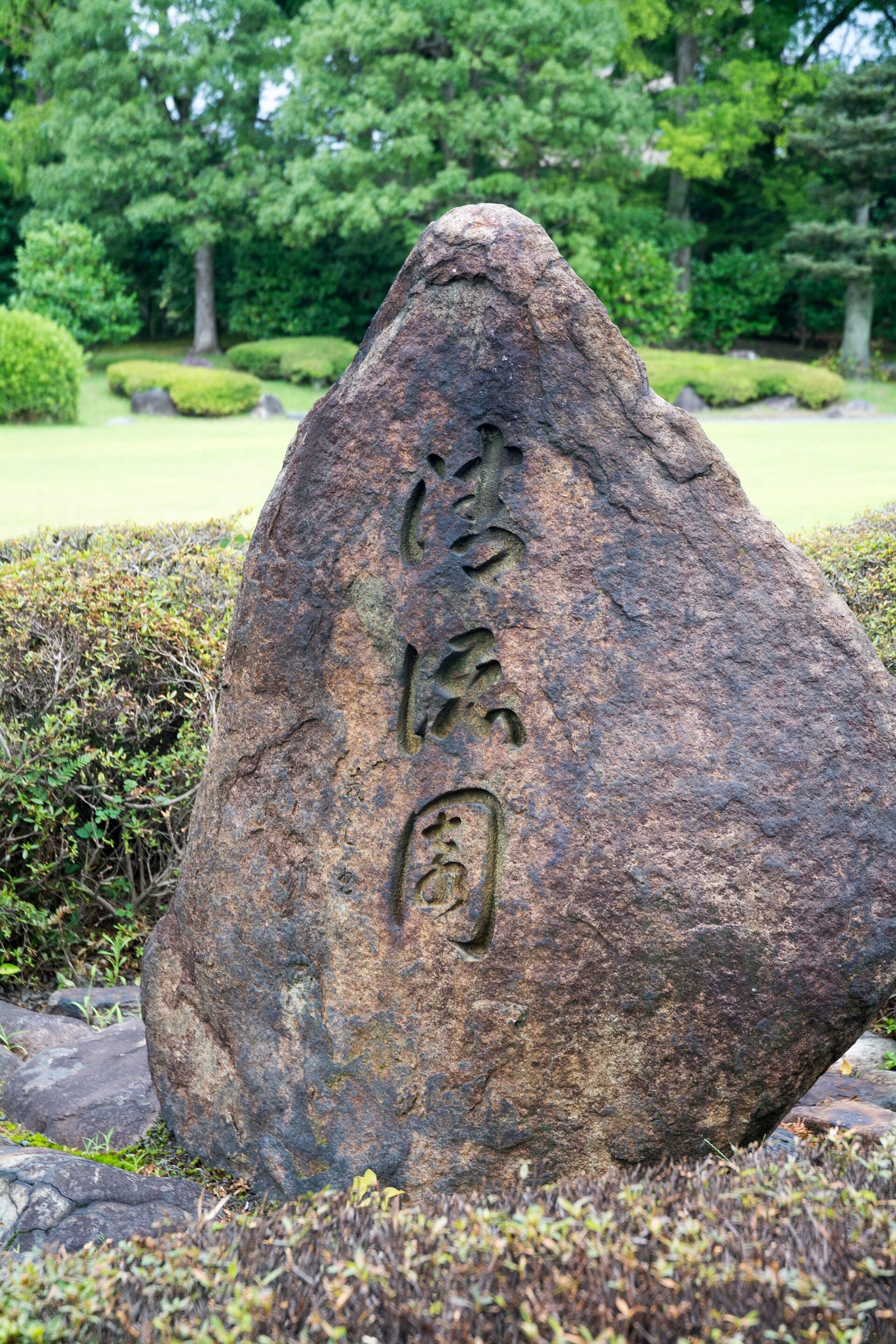
The principal garden, laid out beside the main palace, is a masterpiece of the garden art, combining a pond, islands, stones, and plantings into a composition of harmony and beauty. Designed to be admired from the palace, it brought the beauty of nature into the world of the shogun and offered a place of repose amid the grandeur of the castle.
The gardens of the castle reflect the deep Japanese love of nature and the sophisticated art of the garden designer. Every stone, every tree, every view was carefully considered, creating landscapes of great subtlety and beauty that change with the seasons and reward contemplation, in the finest tradition of the Japanese garden.
For visitors today, the gardens are among the great pleasures of the castle, offering beauty and tranquility alongside the magnificence of the palace and the strength of the fortifications. They complete the picture of Nijo Castle as a place where power, defense, and beauty were combined, a fortress and a palace set amid gardens of exquisite design.
A second garden, created later beside the inner defenses, adds another dimension to the grounds, and together the gardens allow the visitor to trace the evolution of Japanese landscape design across the life of the castle. Moving between them, one experiences different moods and periods, all united by the deep sensitivity to nature that defines the Japanese garden.
The Ornate Gate
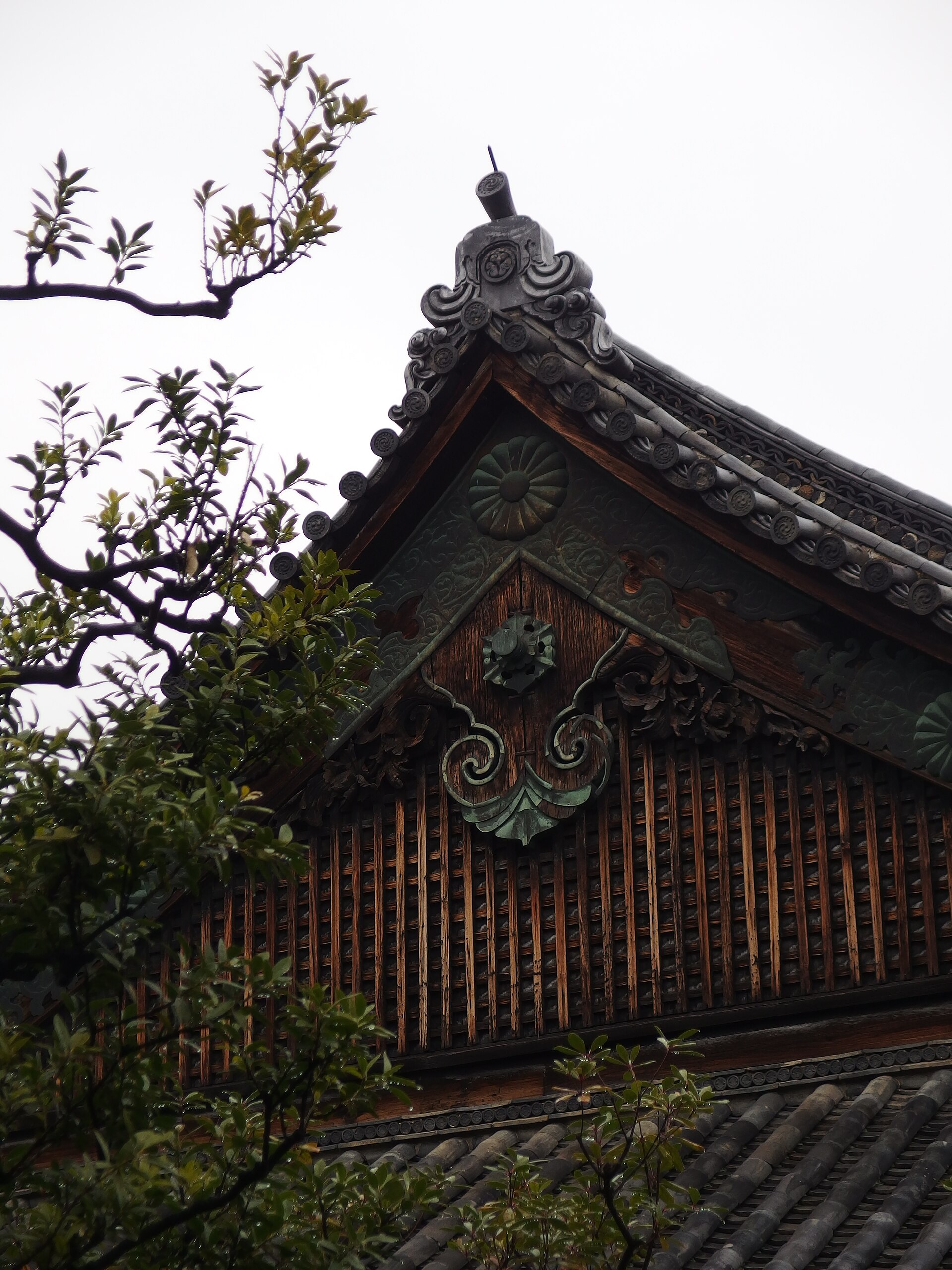
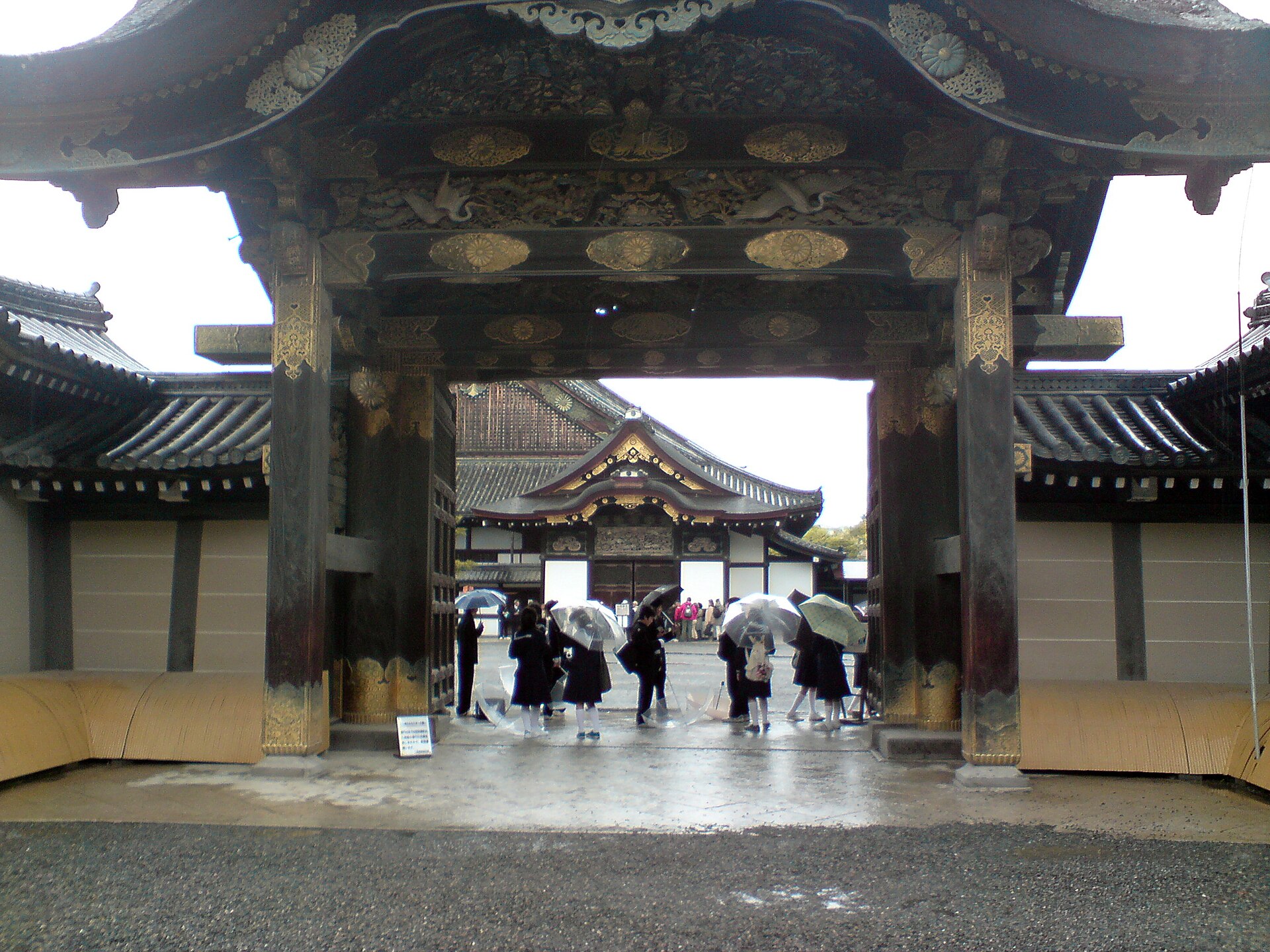
Among the most magnificent features of Nijo Castle is its great ornamental gate, an elaborately decorated structure that serves as the grand entrance to the main palace. Richly carved and adorned with gold and color, it is one of the most splendid gates in Japan and a masterpiece of the decorative arts of the age.

The gate is covered with elaborate carvings of animals, birds, flowers, and other motifs, gilded and painted in brilliant colors, creating a display of overwhelming richness. In contrast to the restrained elegance of much Japanese architecture, this gate revels in ornament, proclaiming the wealth and power of the shogun to all who approached the palace.
The magnificence of the gate served to impress visitors and to mark the threshold of the shogun’s residence. Passing beneath its splendid carvings, one entered the world of the military ruler, and the gate set the tone for the golden splendor of the palace beyond, a fitting entrance to the residence of the most powerful man in Japan.
This ornate gate remains one of the highlights of the castle, admired for the beauty and richness of its decoration. It stands as a magnificent example of the decorative arts of the samurai age, and it embodies the splendor and the confidence of the shogun’s regime, welcoming visitors into the golden world of Nijo Castle.
The gate repays slow looking, for its carvings reward the patient eye with an abundance of detail, from cranes and pines to mythical creatures, each rendered with consummate skill. In its riot of gilded ornament it stands almost as a manifesto, announcing that the restraint prized elsewhere in Japanese design could, when power demanded it, give way to sheer overwhelming magnificence.
Where the Age of the Shogun Ended
Nijo Castle holds a special place in Japanese history as the setting for the dramatic end of the age of the shogun. In the later nineteenth century, as Japan faced great pressures and the old order came under strain, it was at this castle that the last shogun made the momentous decision to return power to the emperor.

This return of power to the emperor brought to an end more than two and a half centuries of rule by the Tokugawa shoguns and set Japan on the path to sweeping modernization. That so pivotal an event took place at Nijo Castle, the very symbol of the shogun’s power, gives the castle a profound historical significance.
The irony is striking, for the castle that had been built to proclaim the power of the shogun became the setting for the surrender of that power. Within the golden halls where the authority of the military rulers had been displayed for centuries, the age of the shogun was brought to its close, and a new era in Japanese history began.
After these momentous events, the castle passed out of the hands of the shogun’s dynasty and eventually came into the possession of the imperial and then the public authorities. Its role as the residence of the military rulers of Japan was over, but its place in history was secured, as the castle where the age of the shogun both began and ended.
Standing in the hall where the shogun relinquished power, one feels the weight of the moment that turned there. In that decision, an entire era of Japanese history ended and another began, and the rapid transformation of Japan that followed can be traced back, in part, to what took place within these golden walls, giving the castle a significance far beyond its beauty.
A Preserved Treasure
In recognition of its outstanding importance, Nijo Castle has been designated a site of world heritage, acknowledging its significance as a monument of the age of the shogun and a treasure of Japanese art and architecture. This recognition has helped to ensure the preservation of the castle and its magnificent buildings.

The castle and its palaces have been carefully preserved and maintained, protecting the golden paintings, the singing floors, the gardens, and the other treasures of the complex. The palace is recognized as one of the finest surviving examples of the architecture of the samurai elite, and its preservation is a matter of great importance to Japan and the world.
As a preserved monument and museum, the castle allows visitors to experience the world of the shogun and the splendor of samurai power. Its careful maintenance ensures that the treasures it contains, from the paintings to the gardens, are protected for future generations to admire and to study.
The preservation of Nijo Castle secures for the future one of the most important monuments of Japanese history and art. Its palaces, gardens, and gates stand as a testament to the age of the shogun and the achievements of the samurai civilization, and they remain among the great cultural treasures of Japan.
Visiting Nijo Castle Today
Today Nijo Castle is one of the most popular attractions in Kyoto, drawing visitors from around the world to explore its palaces, gardens, and fortifications. Set within the city, it is easily reached and forms an essential part of any visit to the old imperial capital and its many historic sites.
View the exact location on Google Maps
A visit leads through the great ornamental gate into the magnificent Ninomaru Palace, where visitors can walk the singing floors, admire the golden paintings, and pass through the halls of audience. The experience offers a vivid encounter with the world of the shogun and the splendor of samurai power at its height.
Beyond the palace, the gardens and the fortifications reward exploration, offering beauty and a sense of the castle’s character as both a stronghold and a residence. The contrast between the strength of the moats and walls and the splendor of the palace and gardens is one of the great fascinations of the castle.
Whether you come for the golden paintings, the singing floors, the gardens, or the history, Nijo Castle offers an unforgettable experience. It is one of the great monuments of the age of the shogun, a treasure house of Japanese art, and the place where the long rule of the samurai rulers of Japan came to its dramatic end.
Nijo Castle pairs naturally with the nearby imperial palace to tell the whole story of power in old Japan, and many visitors see the two on the same day. Together they reveal the two poles of the nation’s history, the sacred and the martial, the emperor and the shogun, and Nijo Castle brings the martial pole vividly and gloriously to life.
Palaces Nearby
Nijo Castle is one of the great historic residences of Japan. To see how the emperor and the shogun each lived in the old capital, these nearby palaces make natural companions to a visit here.
You May Like
Chehel Sotoun: The Pavilion of Forty Columns in Safavid Isfahan