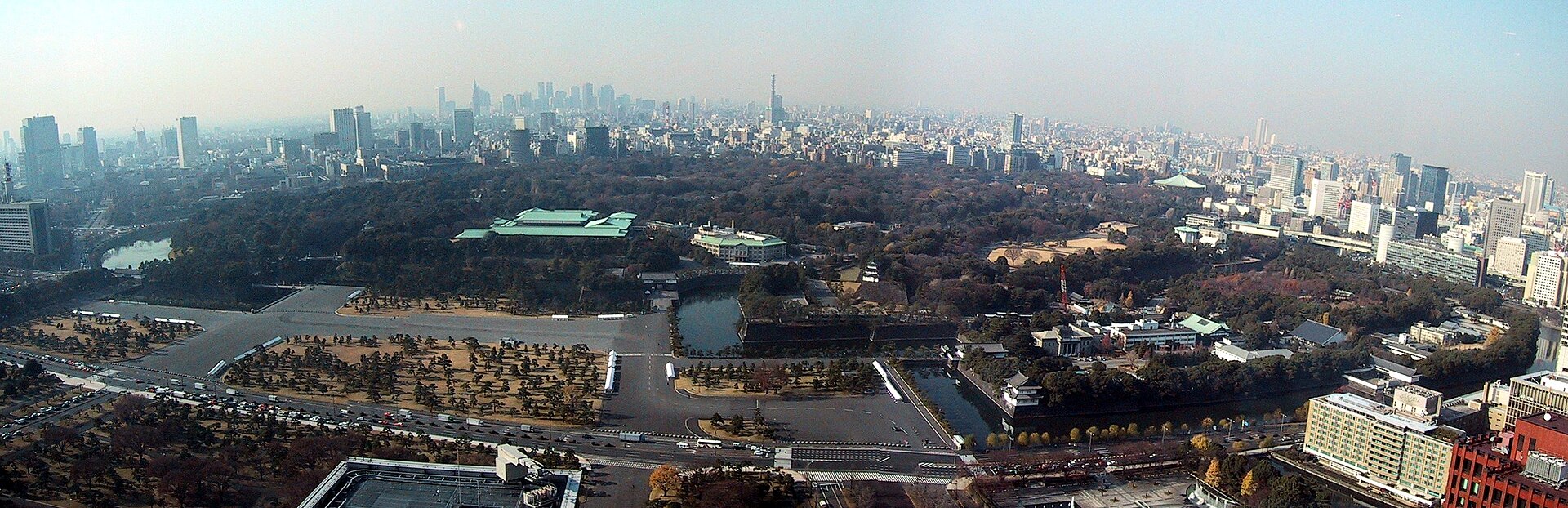
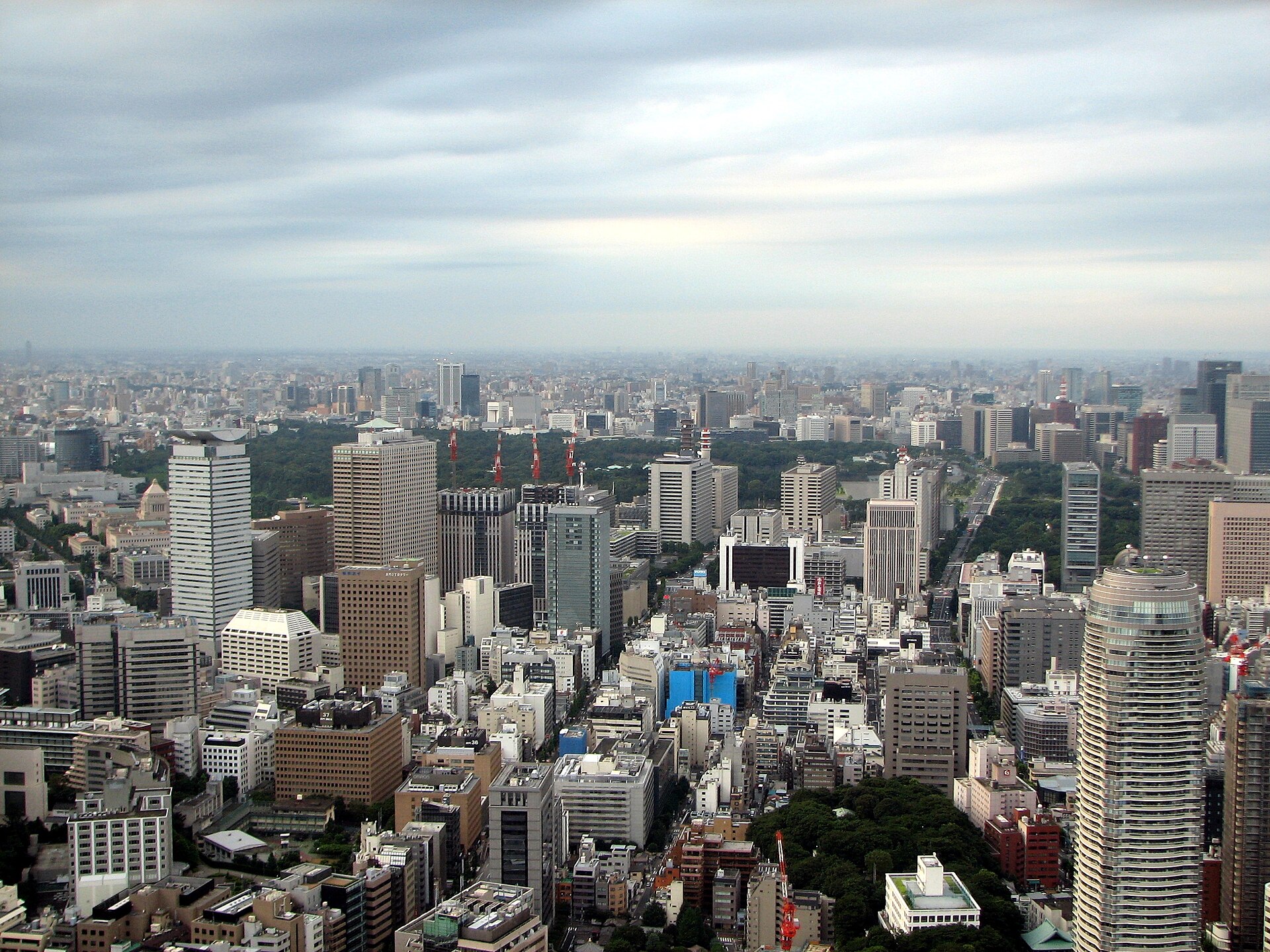
In the very center of Tokyo, one of the largest and most modern cities on earth, lies an oasis of green surrounded by wide moats and ancient stone walls. Within this vast enclosure, hidden behind trees and water, stands the Tokyo Imperial Palace, the residence of the emperors of Japan. Ringed by the skyscrapers of one of the world’s great financial districts, it is a remarkable island of tradition and tranquility at the heart of the bustling capital.
The Tokyo Imperial Palace occupies the site of what was once the greatest fortress in Japan, the mighty castle from which the shoguns governed the country for centuries. When Japan underwent its great transformation in the nineteenth century and the emperor moved from the old capital to the new, this former stronghold of the military rulers became the residence of the sovereign, and it has remained the imperial palace ever since.
Today the palace combines ancient and modern elements in a way that reflects the history of Japan itself. Its moats, stone walls, and surviving watchtowers recall the great castle that once stood here, while its palace buildings, rebuilt in the modern era, house the residence and ceremonial functions of a monarchy that has adapted to the modern world. It is a place where the deep past and the present meet.
In this article you will explore the Tokyo Imperial Palace from the great castle on whose site it stands to its famous bridges, moats, and gardens, through the history of the imperial move to Tokyo to the role of the palace today. Along the way you will discover the layers of history preserved within its walls and understand why this green heart of Tokyo holds so important a place in the life of modern Japan.
In This Article
- A Green Heart in the Great City
- The Site of the Great Castle
- The Emperor Comes to Tokyo
- The Famous Bridges
- Moats and Mighty Walls
- The Lost Keep
- The East Gardens
- The Modern Palace
- Ceremonies and the People
- The Surviving Watchtowers
- War, Destruction, and Recovery
- The Emperor in Modern Japan
- Visiting the Tokyo Imperial Palace Today
A Green Heart in the Great City
The Tokyo Imperial Palace occupies an enormous area in the center of Tokyo, a vast enclosure of gardens, moats, walls, and buildings surrounded by the modern city. Ringed by wide moats and massive stone walls, it forms a great green space at the heart of the metropolis, a striking contrast to the towers and traffic that surround it.

Within the enclosure lie the palace buildings, the residence of the imperial family, along with gardens, offices, and other structures, as well as the extensive grounds that were once part of the great castle. Much of the area is not open to the public, preserving the privacy of the imperial family, while other parts, including beautiful gardens, can be visited.
The palace complex combines the remains of the old castle with modern buildings constructed for the imperial residence. The moats, stone walls, and surviving watchtowers recall the fortress that once stood here, while the palace buildings themselves reflect the needs and tastes of the modern imperial institution.
For all its location in the heart of one of the world’s busiest cities, the palace and its grounds preserve an atmosphere of tranquility and dignity. The green expanse of the palace grounds, with its moats and gardens, offers a place of calm at the center of Tokyo, and the palace stands as the symbolic heart of the nation and the residence of its emperors.
The sheer contrast between the palace grounds and their surroundings is one of the defining experiences of central Tokyo. On one side of a moat rise glass towers full of offices and traffic; on the other spread lawns, ancient walls, and the quiet of the imperial precinct. Few great cities preserve so large and so tranquil a green space at their very heart.
The Site of the Great Castle
The Tokyo Imperial Palace stands on the site of what was once the largest and most powerful castle in Japan, the great fortress from which the shoguns ruled the country for more than two and a half centuries. This mighty castle was the center of the military government and the heart of the city that grew up around it, which would become Tokyo.

The castle was an enormous complex of fortifications, moats, walls, and palaces, protected by concentric rings of defenses and dominating the surrounding city. As the seat of the shoguns, it was the center of power in Japan, and its scale and strength reflected the might of the military rulers who governed from within its walls.
The great moats and stone walls that surround the imperial palace today are the surviving remains of this mighty castle, testaments to its former scale and power. Walking beside them, one can sense the grandeur of the fortress that once stood here, the greatest stronghold in the history of Japan.
The choice of this site for the imperial palace was rich with meaning, for it placed the emperor in the very heart of the former shogun’s power. When the imperial court moved to Tokyo, the emperor took possession of the stronghold from which the military rulers had governed, a powerful symbol of the transfer of power that had taken place.
To grasp the scale of the original fortress is to understand how completely it shaped the city. Tokyo grew up around this castle, its streets and districts radiating from the stronghold at its center, and even today the plan of the modern metropolis bears the imprint of the great fortress whose remains lie at the heart of the imperial palace.
The Emperor Comes to Tokyo
The Tokyo Imperial Palace became the residence of the emperor as a result of the great transformation that swept Japan in the later nineteenth century. When power was returned to the emperor and the country embarked on a program of rapid modernization, the imperial court was moved from the old capital of Kyoto to the new capital, and the emperor took up residence in the former shogun’s castle.

This move marked a profound change in the history of Japan and of the monarchy. The emperor, who for centuries had lived in seclusion in Kyoto as a symbolic figure, now became the active head of a modernizing state, and his move to the new capital placed him at the center of the nation’s political and public life.
The former castle of the shoguns was adapted to serve as the imperial palace, its buildings altered and new structures added to create a residence for the emperor. The transformation of the shogun’s fortress into the emperor’s palace symbolized the new order, in which the emperor stood at the head of the nation and the age of the shoguns had passed.
From this time, the Tokyo Imperial Palace became the principal residence of the emperors of Japan and the center of the monarchy in the modern age. Its history since then has been bound up with the history of modern Japan, through periods of expansion, war, and recovery, and it remains the residence of the imperial family to this day.
The relocation of the capital and the emperor was among the most symbolically charged acts of the entire transformation. By moving the sovereign from the ancient city of Kyoto to the former stronghold of the shoguns, the leaders of the new order announced in the clearest possible terms that a new age had begun, one in which the emperor, not the shogun, stood at the head of a modern nation.
The Famous Bridges
Among the most celebrated features of the Tokyo Imperial Palace are the bridges that lead across the moat toward the main gate, one of the most photographed sights in all of Japan. Set against the backdrop of the palace grounds and the stone walls, these elegant bridges have become an iconic image of the palace and of Tokyo.

The bridges cross the moat at the ceremonial approach to the palace, and their graceful forms, reflected in the water, create a scene of great beauty. Behind them rise the stone walls and a surviving watchtower, completing a composition that has come to symbolize the imperial palace in the minds of people around the world.
This approach is used on the most important ceremonial occasions, when the palace opens to the public and crowds gather to greet the imperial family. On these occasions, the bridges become the setting for the meeting between the emperor and the people, a moment of great significance in the life of the nation.
For visitors today, the view of the bridges, the moat, the walls, and the watchtower is one of the great sights of Tokyo, a scene of harmony and beauty at the heart of the modern city. The famous bridges remain the iconic image of the Tokyo Imperial Palace, the ceremonial threshold to the residence of the emperors of Japan.
The name by which the bridges are popularly known refers to their doubled or layered appearance, and generations of visitors have gathered at this spot to photograph the scene. It has become one of the essential images of Japan, reproduced countless times, and standing before it in person, with the watchtower rising beyond, one understands at once why it has so captured the imagination.
Moats and Mighty Walls
The Tokyo Imperial Palace is surrounded by a remarkable system of moats and massive stone walls, the surviving defenses of the great castle that once stood here. These fortifications, among the most impressive in Japan, encircle the palace grounds and give the complex its distinctive character as a fortress at the heart of the modern city.

The moats, filled with water and lined with stone, form concentric rings around the palace, a reminder of the layered defenses of the old castle. Broad and tranquil, they create a striking boundary between the palace grounds and the surrounding city, and they are among the most beautiful features of the complex, especially when lined with cherry blossoms in spring.
The stone walls that rise from the moats are masterpieces of construction, built of massive blocks fitted together with great skill. These walls, which have stood for centuries, testify to the engineering achievements of the builders of the old castle, and they remain among the most impressive fortifications in Japan.
Together the moats and walls preserve the memory of the great fortress and give the imperial palace its unique setting. They form a green and watery boundary around the palace, protecting its tranquility and privacy, and they stand as enduring monuments to the castle that once dominated the city, now the setting for the residence of the emperors.
The Lost Keep
The great castle that once stood on this site was crowned by an enormous central tower or keep, the largest ever built in Japan, which dominated the city from its height. This mighty structure, a symbol of the power of the shoguns, rose above the fortress and could be seen from across the surrounding lands.

The great keep, however, was destroyed by fire in the early period of the castle’s history and was never rebuilt. Its loss removed the most dominant feature of the fortress, though the castle remained the seat of the shoguns for centuries afterward, its power undiminished by the absence of the great tower.
Today the massive stone base on which the keep once stood can still be seen within the palace grounds, a reminder of the great tower that was lost. Standing on or beside this base, visitors can imagine the enormous structure that once rose here and dominated the city, the greatest castle keep in the history of Japan.
The story of the lost keep is part of the long history of the site, spanning the ages of the shoguns and the emperors. The surviving base of the tower, like the moats and walls, connects the modern imperial palace to the great fortress that preceded it, preserving the memory of the mighty castle at the heart of the emperor’s residence.
The decision never to rebuild the great keep, even when the resources to do so existed, is itself revealing. In an age of relative peace, so massive a symbol of military power was no longer thought necessary, and its empty base, left as it is, has become a quiet monument to the passing of the age of war and the long peace that the castle presided over.
The East Gardens
Part of the grounds of the Tokyo Imperial Palace is open to the public as beautiful gardens, occupying the area of the former inner defenses of the old castle. These gardens allow visitors to enter the historic heart of the complex and to enjoy its beauty and its connection to the past.
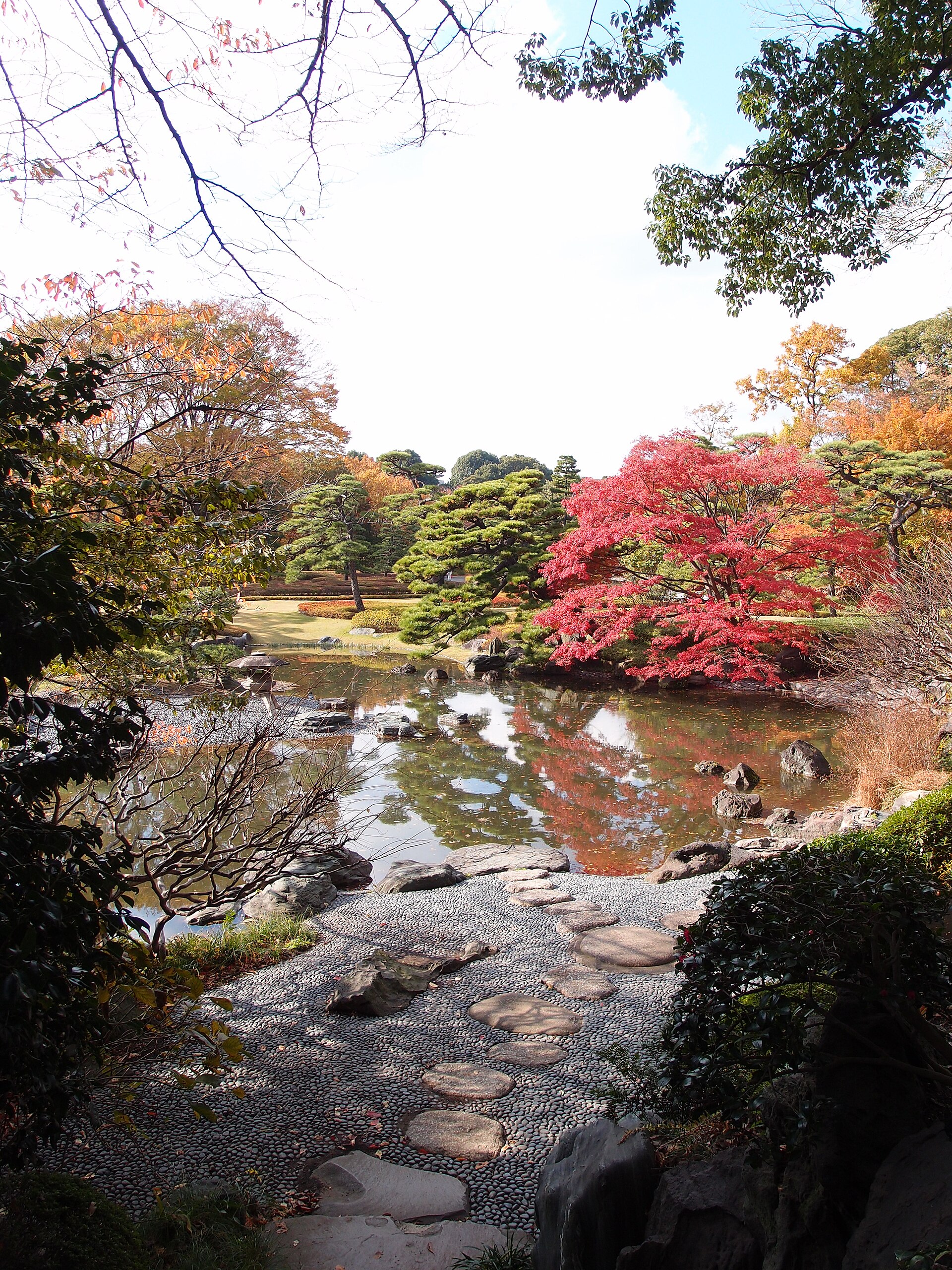
The gardens combine the traditional art of Japanese landscape design with the historic remains of the castle, creating spaces of great beauty and interest. Ponds, trees, lawns, and carefully composed scenes offer tranquility and beauty, while the surviving walls, gates, and foundations recall the fortress that once stood here.
Within the gardens, visitors can see the base of the lost keep, surviving watchtowers, and other remains of the old castle, alongside the beauty of the plantings and the ponds. The combination of history and beauty makes the gardens one of the great attractions of the palace, a place where the past and the present come together.
For the people of Tokyo and for visitors from around the world, the gardens offer a precious green space and a window into the history of the site. They allow access to the historic heart of the imperial palace grounds, and they preserve both the beauty of the Japanese garden and the memory of the great castle, at the center of the modern city.
In spring the grounds and the surrounding moats are transformed by the blossoming of the cherry trees, drawing great crowds to admire one of the most beloved sights of the Japanese year. The combination of the pale blossom, the dark water of the moats, and the ancient stone walls creates a scene of extraordinary beauty, and the palace becomes one of the great places in Tokyo to mark the season.
The Modern Palace
The palace buildings that serve as the residence of the imperial family and the setting for the functions of the monarchy are modern structures, rebuilt in the period after the great destruction of the mid-twentieth century. The earlier palace buildings were destroyed, and the present palace was constructed to serve the needs of the modern imperial institution.

The modern palace combines traditional Japanese architectural elements with contemporary construction, creating buildings suited to the ceremonial and residential functions of the monarchy. Set within the palace grounds, they house the residence of the imperial family and the halls used for important ceremonies and audiences.
Though much of the palace is not open to the public, its buildings are the setting for the most important functions of the modern monarchy, from state ceremonies to the reception of foreign dignitaries. The palace serves as the working heart of the imperial institution, combining the roles of residence and ceremonial center.
The modern palace reflects the character of the Japanese monarchy in the present age, adapted to the modern world while preserving its ancient traditions. As the residence of the imperial family and the setting for the ceremonies of the monarchy, it continues the long history of the imperial institution in a form suited to the contemporary era.
Ceremonies and the People
The Tokyo Imperial Palace is the setting for the great ceremonies of the modern Japanese monarchy, from state occasions to the reception of foreign leaders. These ceremonies, conducted in the palace, express the role of the emperor as the symbol of the nation and maintain the traditions of the imperial institution in the modern age.

On certain special occasions, the palace grounds are opened to the public, and crowds gather to greet the imperial family, who appear to receive their greetings. These occasions, including the celebrations of the New Year and other important dates, are among the few times when the public can enter the inner grounds and see the imperial family in person.
These meetings between the emperor and the people reflect the character of the modern monarchy, in which the emperor serves as a symbol of the unity of the nation. The gatherings at the palace on these occasions are moments of great significance, expressing the bond between the imperial institution and the people of Japan.
Through these ceremonies and public appearances, the palace remains central to the life of the nation, the setting for the rituals and occasions that link the emperor to the people. As the ceremonial heart of the monarchy, it continues to play an important role in modern Japan, a place where the traditions of the imperial institution are maintained and renewed.
The Surviving Watchtowers
Among the most evocative surviving features of the old castle are the watchtowers, or yagura, that still stand at points around the palace grounds. These structures, which once formed part of the castle’s defenses, are among the few original buildings of the fortress to survive, and they preserve the character of the old castle.
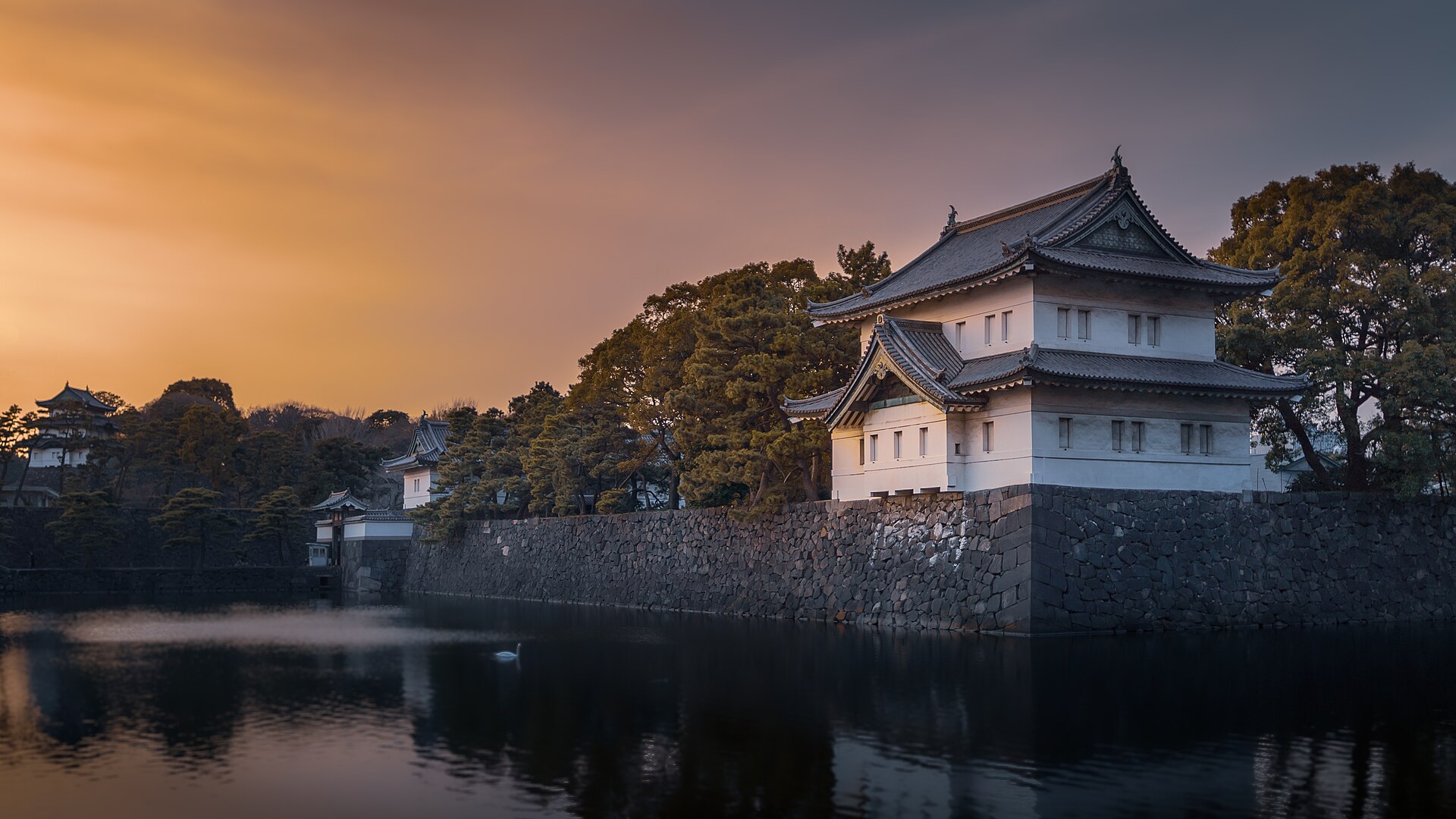
The watchtowers rise above the stone walls at the corners and along the fortifications, their elegant forms reflecting the classical style of Japanese castle architecture. Once used to guard and to survey the surrounding area, they now stand as beautiful reminders of the great fortress that once occupied the site.
These surviving towers are treasured as rare examples of the original architecture of the castle, having endured through the centuries and the destruction that befell much of the complex. Their preservation allows visitors to see something of the original fortress, and they are among the most beautiful and historic features of the palace grounds.
The watchtowers, together with the moats and walls, connect the modern imperial palace to its origins as the great castle of the shoguns. Standing above the water and the stone, they preserve the memory of the fortress and add to the beauty and the historic atmosphere of the palace, a link between the ages of the shoguns and the emperors.
War, Destruction, and Recovery
The Tokyo Imperial Palace and its history were deeply marked by the great war of the twentieth century, which brought destruction to the palace and to the city around it. During the war, parts of the palace were damaged or destroyed, and the palace was at the center of the dramatic events that ended the conflict.

It was from the palace that the momentous decision to end the war was announced to the nation, a turning point in the history of Japan. The emperor’s role in bringing the war to an end, and the events surrounding it, gave the palace a profound significance in the memory of this difficult period.
After the war, as Japan rebuilt and adopted a new constitution, the role of the emperor was transformed, and the palace buildings that had been destroyed were eventually rebuilt. The recovery of the palace paralleled the recovery of the nation, and it took on a new character in the postwar world.
The history of the palace during and after the war reflects the great upheavals that Japan experienced in the twentieth century. Through destruction and recovery, the palace endured, and it emerged into the postwar era as the residence of a monarchy transformed, adapted to the new order and to Japan’s place in the modern world.
The broadcast in which the emperor announced the end of the war was the first time most of his people had ever heard his voice, and it marked an epochal moment in the history of the nation. That this turning point should be so bound up with the palace deepens its significance, making it not only a residence but a witness to one of the most consequential moments in modern Japanese history.
The Emperor in Modern Japan
In modern Japan, the emperor holds a position defined by the constitution as the symbol of the state and the unity of the people, without political power. The Tokyo Imperial Palace is the residence and ceremonial center of this modern monarchy, and it reflects the character of the imperial institution in the contemporary age.
The modern role of the emperor, as a symbol rather than a ruler, continues in some ways the ancient pattern of Japanese monarchy, in which the emperor reigned but did not rule. In the present age, this role is defined by the constitution, and the emperor performs ceremonial and symbolic functions as the representative of the nation.
The palace serves as the setting for these functions, the place where the emperor carries out his constitutional duties and the ceremonies of the monarchy. It remains the residence of the imperial family and the working center of the institution, a place where ancient tradition and modern constitutional monarchy come together.
The endurance of the imperial institution into the modern age, and its adaptation to the role of a constitutional and symbolic monarchy, is one of the remarkable features of modern Japan. The Tokyo Imperial Palace, as the residence and center of this institution, stands as a symbol of the continuity of the monarchy and of the nation through great historical change.
That an institution rooted in the most ancient traditions of the country should have adapted so successfully to the role of a modern constitutional monarchy is one of the quiet achievements of contemporary Japan. The palace, blending the remains of a medieval fortress with the workings of a modern monarchy, embodies this continuity, a living link between the deep past and the present day.
Visiting the Tokyo Imperial Palace Today
Today the Tokyo Imperial Palace is one of the most important sites in the Japanese capital, drawing visitors from around the world to see its famous bridges, moats, and gardens. Set in the heart of Tokyo, it offers a green and tranquil retreat and a window into the history and the monarchy of Japan.

View the exact location on Google Maps
While the inner palace and the residence of the imperial family are not generally open to the public, visitors can enjoy the beautiful East Gardens, walk beside the moats and walls, and admire the famous view of the bridges and watchtower. These areas allow visitors to experience the beauty and the history of the palace grounds.
The surrounding area, with its parks and the wide spaces around the moats, is a popular place for walking and recreation, and the palace grounds are especially beautiful in the season of the cherry blossoms. A visit to the palace can easily be combined with the many other attractions of central Tokyo.
Whether you come for the famous bridges, the historic gardens, the moats and walls, or the sense of history at the heart of the modern city, the Tokyo Imperial Palace offers a memorable experience. It is the residence of the emperors of Japan, a green heart in the great metropolis, and a place where the long history of the nation and its monarchy is preserved at the center of the capital.
A walk around the outer moats, which can be done freely at any time, is one of the most rewarding ways to experience the palace, offering ever-changing views of the water, the walls, and the watchtowers against the backdrop of the modern city. It is a favorite route for the people of Tokyo, and it reveals the palace as both a historic monument and a living part of the daily life of the capital.
Palaces Nearby
The Tokyo Imperial Palace is one of the great royal residences of Japan. To trace the history of the emperors and the shoguns across the country, these nearby palaces make natural companions to a visit here.
You May Like
Chehel Sotoun: The Pavilion of Forty Columns in Safavid Isfahan


One thought on “The Tokyo Imperial Palace: The Emperor’s Green Heart on the Site of Edo Castle”