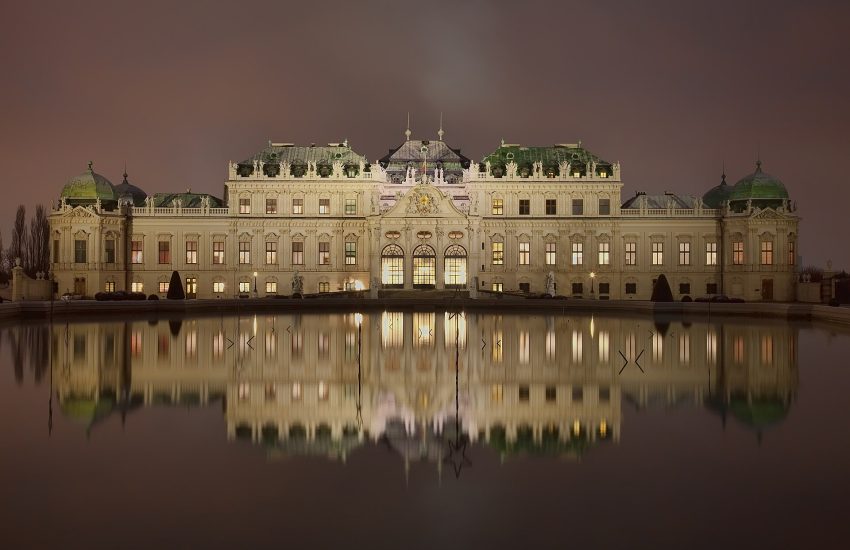
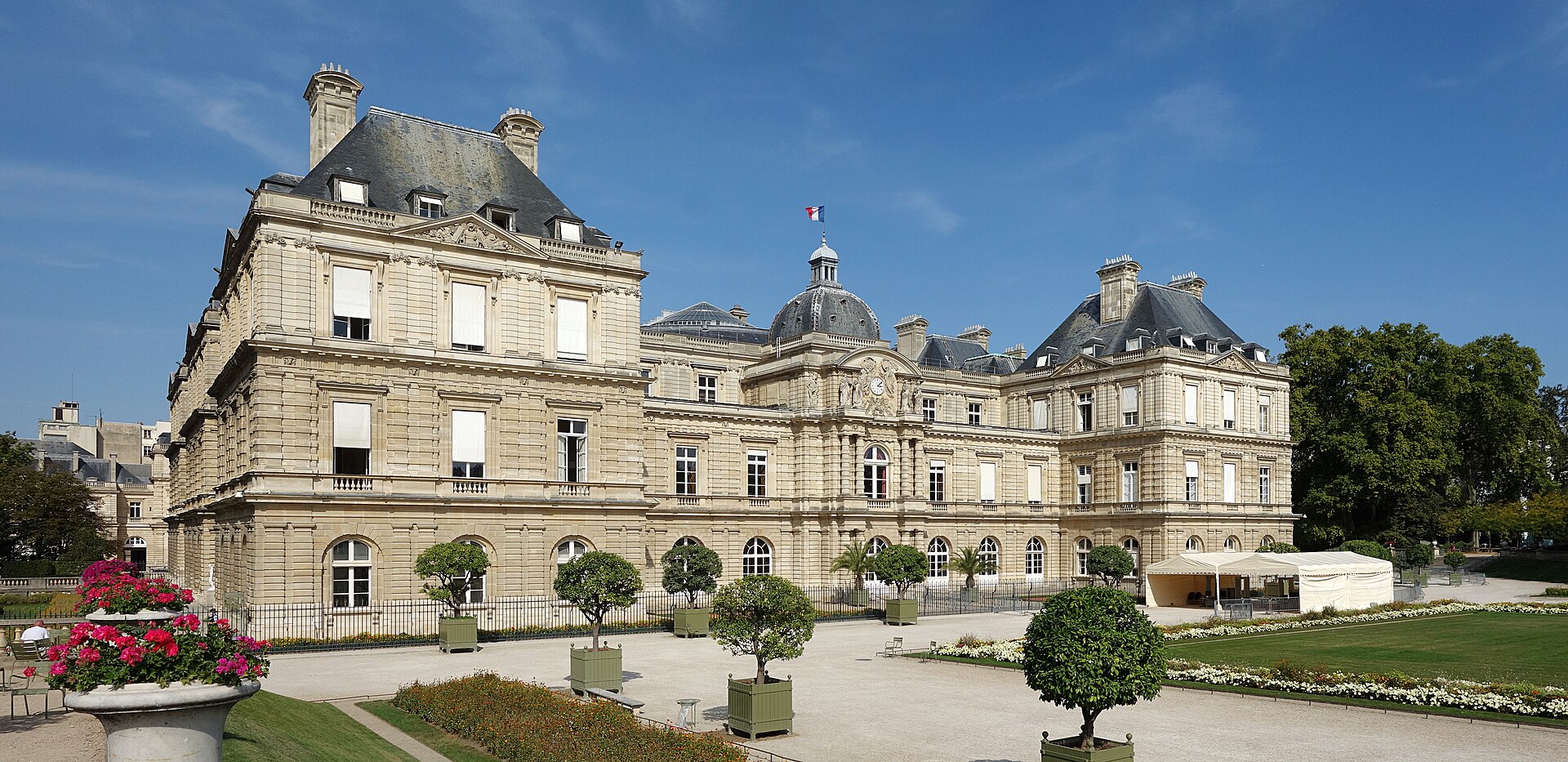
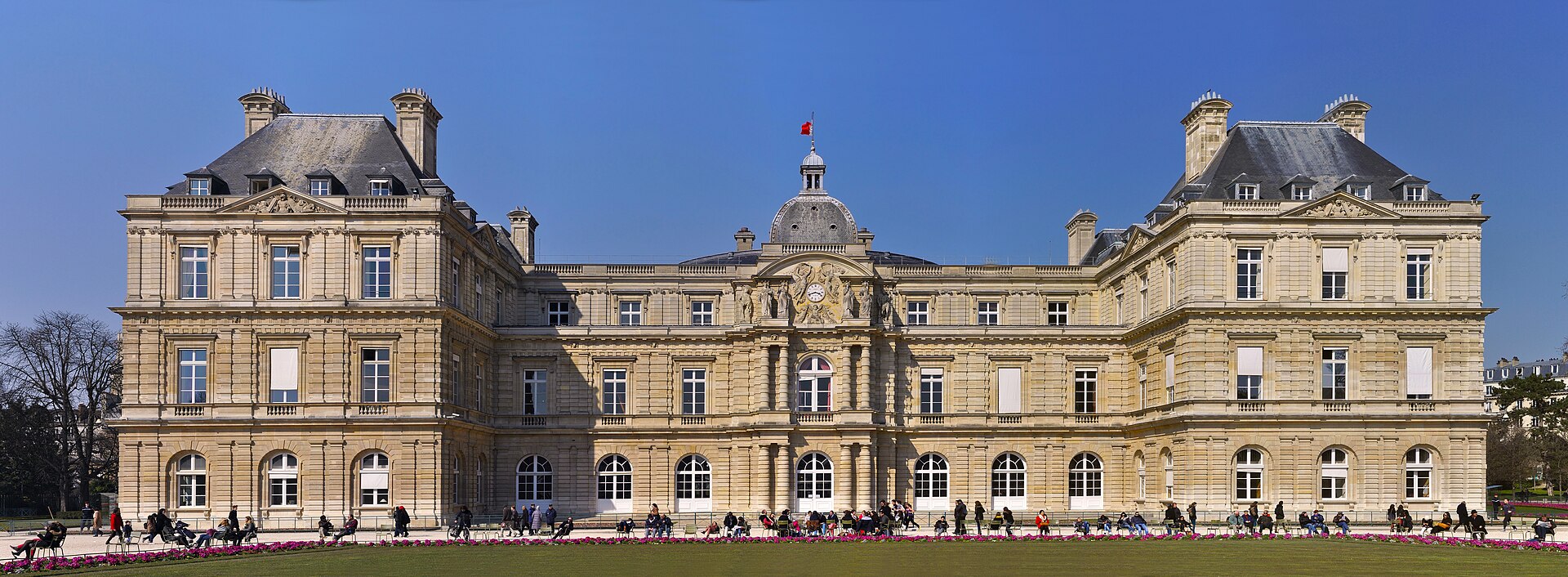
On the Left Bank of Paris, set behind one of the most beloved gardens in the world, stands a palace with a distinctly Italian air, its rusticated stone and bold silhouette recalling the great buildings of Florence rather than the classical elegance of France. This is the Palais du Luxembourg, and it was built by a homesick queen who wished to recreate, in the heart of Paris, something of the palace of her childhood far away in Italy.
The Luxembourg is a palace of many lives. It began as the residence of a powerful and controversial queen, passed through the hands of royalty and revolution, served as a prison during the Terror, and eventually became the seat of one of the two houses of the French parliament, a role it still fulfils today. Few buildings in Paris have played so many parts or witnessed so much of the nation’s history.
Surrounding the palace are the famous Luxembourg Gardens, a green oasis at the heart of the Left Bank that has been cherished by Parisians and visitors for centuries. Palace and garden together form one of the great ensembles of the city, a place where the grandeur of a royal residence meets the everyday pleasures of a public park, and where history and daily life mingle beneath the trees.
In the pages ahead you will explore the Palais du Luxembourg, from the queen who built it and the Italian dreams that shaped it, through the great artworks it once held and the dramatic history it witnessed, to its life today as the home of the French Senate. This is one of the hidden treasures of Paris, a palace with a story as rich as any in the city, and it rewards those who take the time to discover it.
In This Article
- A Palace for a Homesick Queen
- Florence on the Left Bank
- The Great Cycle of Paintings
- The Queen’s Turbulent Fate
- The Fountain of the Medici
- The Beloved Gardens
- A Royal Residence Through the Reigns
- From Palace to Prison
- The Home of the Senate
- Splendours of the Interior
- A Home for Art
- A Hidden Treasure of Paris
- Discovering the Luxembourg Today
A Palace for a Homesick Queen
The Palais du Luxembourg owes its existence to a queen who longed for the land of her birth. Marie de’ Medici, a member of the great Florentine family and the widow of a French king, found herself, after her husband’s death, a powerful figure at the French court, and she resolved to build for herself a magnificent new palace. But she wanted it to remind her of Italy, of the grand palaces of Florence where she had grown up.
The queen acquired land on the Left Bank of Paris and set about creating a residence that would evoke the architecture of her homeland. She looked back to the great palace of her Florentine childhood as her inspiration, wishing her new Parisian home to capture something of its character. The result was a palace with an unmistakably Italian flavour, unusual amid the buildings of Paris.
This personal, nostalgic motivation gives the Luxembourg a distinctive origin among the palaces of France. It was not built primarily as a seat of government or a monument to royal power in the abstract, but as the home of a particular woman who wished to surround herself with reminders of the world she had left behind. The palace is, in a sense, an expression of one queen’s longing for her distant home.
Marie de’ Medici was a formidable and much-debated figure, deeply involved in the politics of her time, and the palace she created reflected her wealth, her taste, and her ambition. In building the Luxembourg, she gave herself a residence worthy of her status and her origins, a grand Parisian palace touched with the spirit of Italy, and she left an enduring mark on the city of Paris.
There is something touching in the idea of one of the most powerful women in Europe building a palace out of homesickness. For all her wealth and authority, the queen remained, in some part of herself, the girl who had grown up among the palaces of Florence, and the Luxembourg was her attempt to carry a piece of that lost world with her into her life in France. The building is, in this sense, a monument to memory as much as to power.
Florence on the Left Bank
The most striking quality of the Palais du Luxembourg is its Italian character, which sets it apart from other Parisian palaces of its age. Where French royal architecture tended toward a refined classical elegance, the Luxembourg drew on the bolder, heavier style of Italian Renaissance palaces, with rusticated stonework and a robust, sculptural quality that recalled the great buildings of Florence.

This Italian flavour was a direct expression of the queen’s wishes, her desire to see the architecture of her homeland reflected in her Parisian residence. The architect who designed the palace skilfully blended these Italian influences with French traditions, producing a building that was at once foreign and familiar, an Italian palace reimagined for the setting of Paris.
The rusticated stonework, with its deliberately rough and heavily textured surfaces, gives the Luxembourg a powerful, earthy presence quite different from the smooth refinement of other French palaces. This treatment, borrowed from Italian models, lends the building a sense of solidity and strength, a robustness that speaks of the queen’s Florentine roots and her wish to bring that world to France.
In creating this Italian palace on the Left Bank, the queen and her architect produced one of the most distinctive royal residences in Paris. The Luxembourg stands as a reminder of the strong ties between France and Italy in this period, and of the way personal taste and nostalgia could shape great architecture, bringing a touch of Florence to the heart of the French capital.
This deliberate foreignness made the Luxembourg something of a statement in the Paris of its day, a building that wore its Italian inspiration openly at a time when French architecture was developing its own confident identity. Rather than blending quietly into its surroundings, the palace announced its distinctive character, and that boldness is part of what makes it so memorable among the great buildings of the city.
The Great Cycle of Paintings
One of the glories of the Palais du Luxembourg, in the days of its royal builder, was a magnificent series of paintings created to adorn its galleries by one of the greatest artists of the age. This great cycle of pictures depicted the life of the queen herself, transforming the events of her career into a grand allegorical drama filled with gods, symbols, and splendour.
The commission of this series was a remarkable act of self-celebration, the queen employing a supreme master to glorify her life and reign on the walls of her own palace. The resulting paintings were among the most ambitious of their kind, weaving together history and myth to present the queen as a figure of destiny, surrounded by allegorical grandeur. The cycle was a triumph of art in the service of royal image-making.
These paintings represented the height of the grand decorative style of their era, vast canvases alive with movement, colour, and drama. They turned the galleries of the Luxembourg into a showcase of the artist’s genius and the queen’s magnificence, a display of art and power combined that few palaces could rival. The cycle became one of the most celebrated achievements of its kind.
Though the paintings have since been moved to hang among the treasures of another great Parisian museum, their creation for the Luxembourg remains a central part of the palace’s story. The commission tied the building to one of the supreme artists in the history of European painting and gave it, for a time, one of the most remarkable interiors in all of France, a monument to the alliance of art and royalty.
The survival of the cycle, even in a different setting, means that the artistic vision created for the Luxembourg can still be experienced today, a rare thing among the decorative schemes of the age. Many such commissions have been lost or dispersed beyond recovery, but the pictures painted for the queen’s palace endure intact, a lasting testament to the ambition that once filled the galleries of the Luxembourg with the highest art.
The Queen’s Turbulent Fate
The story of the queen who built the Luxembourg is as dramatic as any in French history, and it lends a note of poignancy to the splendid palace she created. Having risen to great power as regent for her young son, she found her position increasingly precarious as he grew to manhood and asserted his own authority, and the relationship between mother and son turned bitter and fraught.
Despite the magnificence of the palace she had built for herself, the queen’s later years were marked by conflict, defeat, and ultimately exile. The powerful regent who had commissioned so grand a residence and so glorious a cycle of paintings celebrating her life found herself, in the end, driven from France, ending her days far from the palace that was meant to be her lasting monument.
There is a striking irony in this, that a palace built as a celebration of a queen’s power and destiny should have been so little enjoyed by her in the fullness of that glory. The Luxembourg outlived its builder’s fortunes, standing in splendour long after she had fallen from power, a monument to ambitions that were never fully realised in her own lifetime.
This turbulent history adds a human depth to the beauty of the Luxembourg, reminding us that behind the grand facades lie the hopes and disappointments of real lives. The queen’s dramatic fate is woven into the meaning of the palace, giving it a poignancy that enriches its splendour and lending the building a story of human ambition and reversal as compelling as its architecture.
The Fountain of the Medici
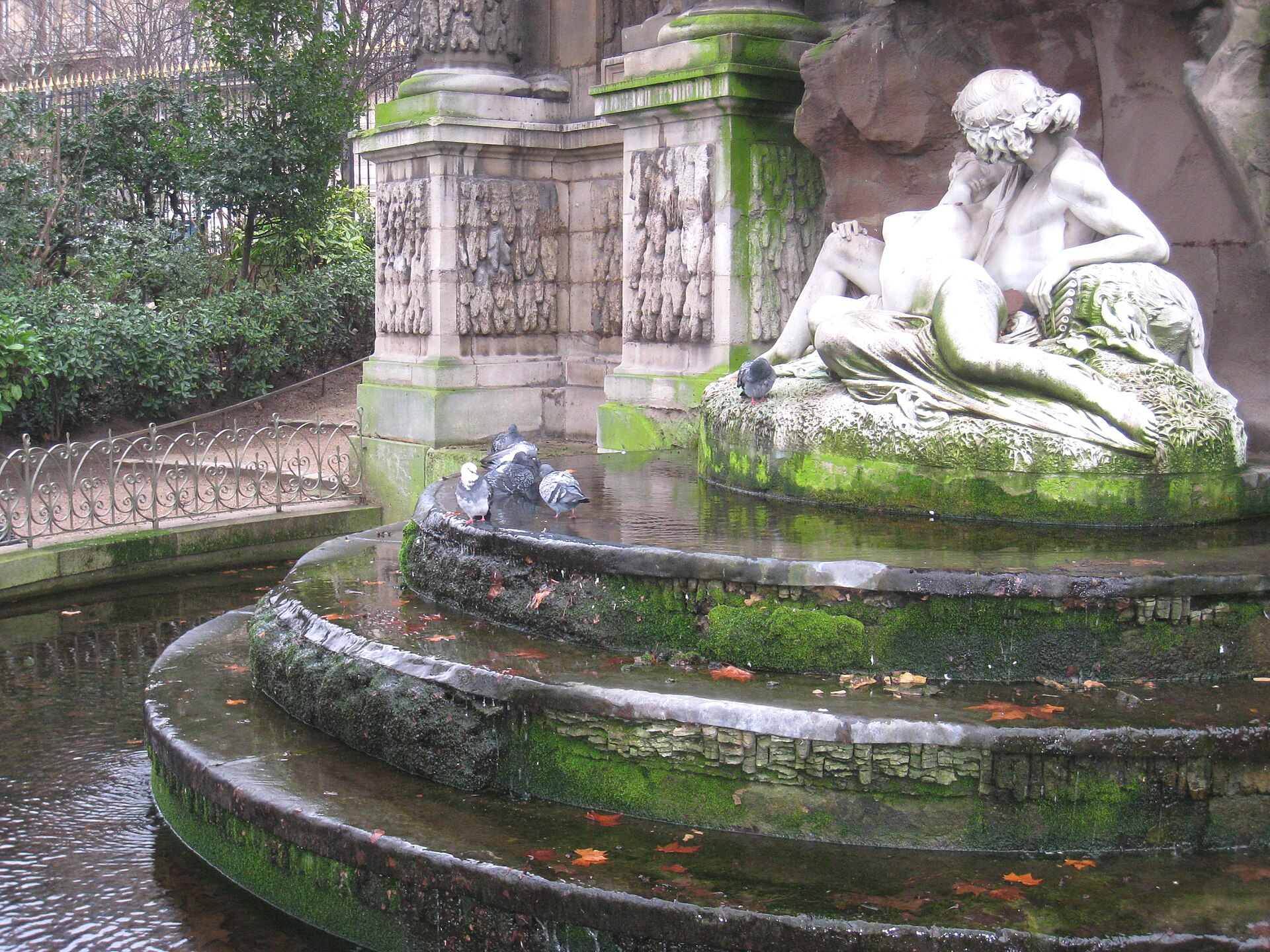
Among the most romantic features associated with the Palais du Luxembourg is a beautiful fountain in its gardens, a shaded and secluded spot that has enchanted visitors for centuries. This fountain, created in the time of the palace’s royal builder and named after her family, is one of the most beloved corners of the Luxembourg, a place of cool green tranquillity amid the bustle of the city.
The fountain is set within a leafy grotto-like enclosure, its long basin flanked by trees and adorned with sculpture, creating an atmosphere of romantic melancholy quite different from the formal grandeur of the palace itself. It is a place designed for quiet contemplation, a retreat within the garden where the noise of Paris seems to fall away and time slows down.
Over the centuries the fountain has been altered and embellished, but it has retained its essential character as one of the most poetic spots in the city. Generations of Parisians and visitors have come to sit beside its still water in the shade of the trees, and it has inspired artists and writers drawn to its peculiar charm, a secret and beautiful place at the heart of the garden.
The Medici Fountain is a reminder that the Luxembourg is not only a palace but a place of gardens and green retreats, where architecture and nature combine to create spaces of great beauty. This tranquil corner, bearing the name of the queen’s illustrious family, remains one of the most cherished features of the whole ensemble, a jewel of the Luxembourg that visitors return to again and again.
Part of the fountain’s magic lies in the contrast it offers to the formality of the rest of the ensemble. Where the palace and the main parterres are all order and grandeur, this shaded corner feels wild and secret, a place apart. That sense of stumbling upon a hidden retreat, even in the midst of a much-visited garden, is precisely what has made the fountain so beloved across the generations.
The Beloved Gardens
The gardens that surround the Palais du Luxembourg are among the most famous and best-loved public spaces in Paris, a green expanse at the heart of the Left Bank that draws Parisians and visitors alike in great numbers. Laid out in connection with the palace, the gardens combine formal French design with more relaxed and informal areas, creating a landscape of great variety and charm.
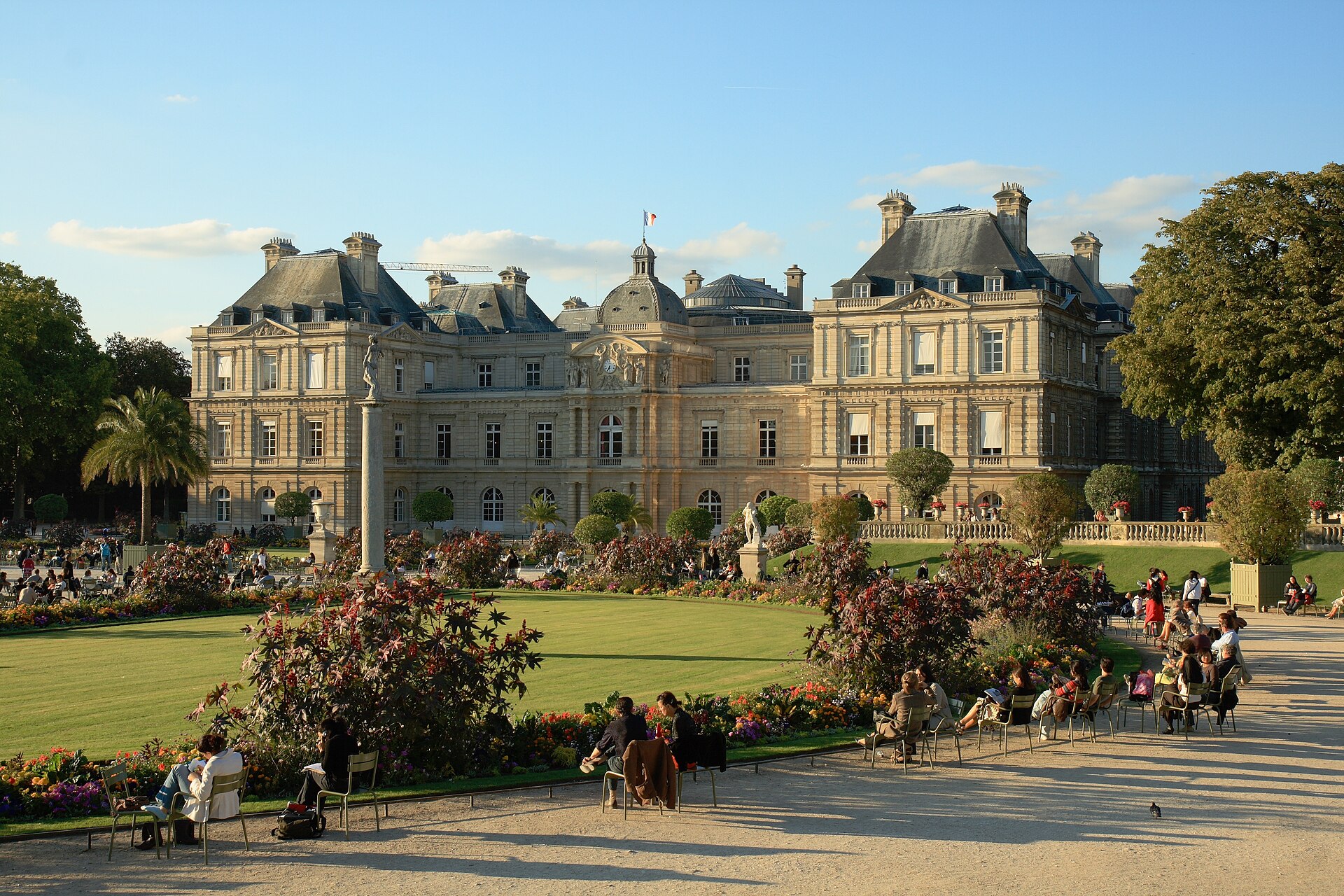
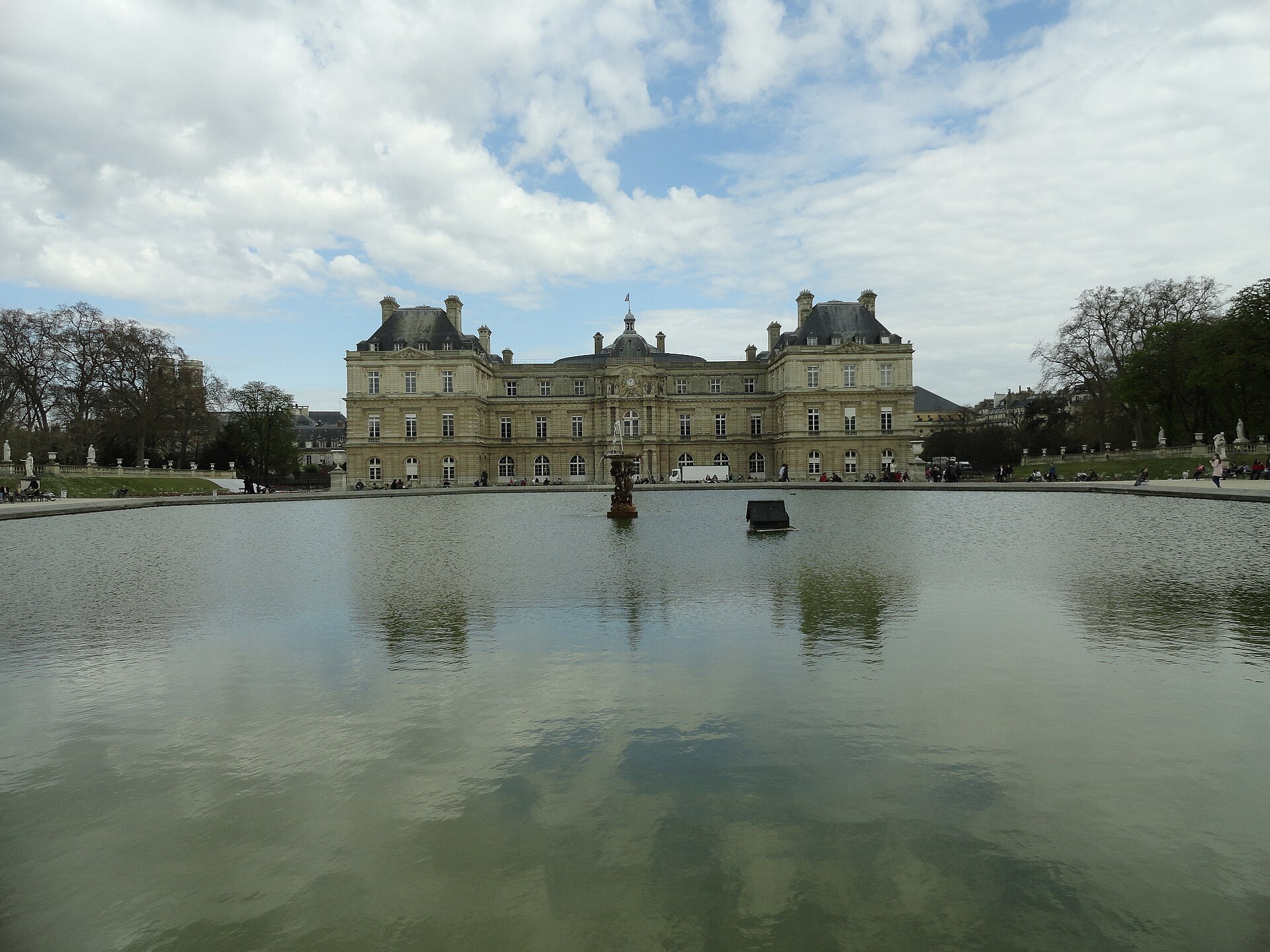
At the heart of the gardens lies a great ornamental basin, around which people gather to sit, to talk, and to watch children sail toy boats upon the water, a scene that has become one of the enduring images of Parisian life. The formal parterres, the tree-lined avenues, and the abundant sculpture make the gardens a place of beauty as well as a beloved spot for recreation and repose.
For centuries the Luxembourg Gardens have been a democratic space, open to all and woven into the daily life of the city in a way that the palace itself, with its more restricted functions, could never be. People come here to stroll, to read, to play, and simply to enjoy the beauty of the surroundings, making the gardens one of the great shared treasures of Paris.
The relationship between the palace and its gardens is essential to the character of the Luxembourg. The grand residence provides a magnificent backdrop to the green spaces, while the gardens offer a setting of beauty and life that softens the formality of the palace. Together they form one of the finest ensembles in Paris, where royal grandeur and public pleasure meet beneath the trees.
What makes the gardens so special is precisely their combination of grandeur and everyday life. Grand enough to serve as the setting for a royal palace, they are at the same time thoroughly woven into the ordinary rhythms of the city, a place where students read, families gather, and elderly Parisians play their games in the shade. Few spaces manage to be at once so magnificent and so genuinely loved.
A Royal Residence Through the Reigns
After its royal builder, the Palais du Luxembourg passed through the hands of various members of the royal family and the nobility, serving as a grand residence through the changing fortunes of the French monarchy. Its splendour and its situation made it a desirable home, and successive occupants used and adorned the palace, adding their own chapters to its long history.

As a residence for royalty and high nobility, the Luxembourg witnessed the life of the French elite across generations, its rooms hosting the households of princes and great families. The palace was maintained as a place of considerable grandeur, a fitting home for those of exalted rank, and it remained one of the notable aristocratic residences of Paris throughout this period.
The building’s role as a residence gave it a continuity of grand occupation across the reigns, even as the wider world of the monarchy shifted around it. Unlike a purpose-built institution, the Luxembourg carried the character of a lived-in palace, its halls and gardens serving the domestic and ceremonial life of its noble inhabitants across the centuries.
This long period as a royal and aristocratic residence forms an important part of the palace’s story, linking it to the world of the French elite before the upheavals that would transform it. The Luxembourg was, for much of its early history, above all a splendid home, and that character shaped the building that would later take on such very different roles in the life of the nation.
The changing cast of occupants also meant that the palace was continually being adapted and refreshed, each generation leaving traces of its own taste. This accumulation gave the Luxembourg the layered richness common to buildings long in use, so that even before its dramatic later transformations it already carried the marks of many hands and many lives within its walls.
From Palace to Prison
The French Revolution brought dramatic change to the Palais du Luxembourg, as it did to so many of the palaces of France. In the turmoil of those years, the grand royal residence was pressed into a grim new use, becoming a prison where those suspected of opposing the Revolution were held during the most dangerous period of the Terror.
The transformation of a splendid palace into a place of confinement was a stark expression of the revolutionary upheaval, the halls that had known royal luxury now filled with prisoners awaiting an uncertain fate. Among those held within its walls were figures of note, and the palace became bound up with the dark drama of the Revolution at its most fearful.
This episode is one of the most sobering chapters in the history of the Luxembourg, a reminder of how completely the Revolution overturned the old order and repurposed its monuments. The palace of a queen became a prison of the Republic, its meaning inverted by the great events sweeping through France, and its walls witnessed the fear and suffering of those caught up in the Terror.
Yet the palace survived this dark period, as it survived so much else, and emerged from the Revolution to take on a new and enduring role. The years as a prison were a passing phase, however grim, in the long life of the building, and they gave way in time to the function that the Luxembourg still fulfils today, its history turning from confinement to government.
It is one of the sharpest ironies of the palace’s history that a building raised to celebrate a queen should have become, for a time, a place of imprisonment under the Republic that overthrew the monarchy. Yet this reversal is entirely in keeping with the fate of the Luxembourg, a building whose meaning has shifted again and again with the tides of French history, adapting to each new age rather than being swept away by it.
The Home of the Senate
In the aftermath of the Revolution, the Palais du Luxembourg found the role it has held ever since, becoming the seat of an assembly at the heart of French government. The palace was adapted to house one of the two chambers of the nation’s parliament, and it has served as the home of this body through successive changes of regime, becoming firmly established as one of the great institutions of the French state.
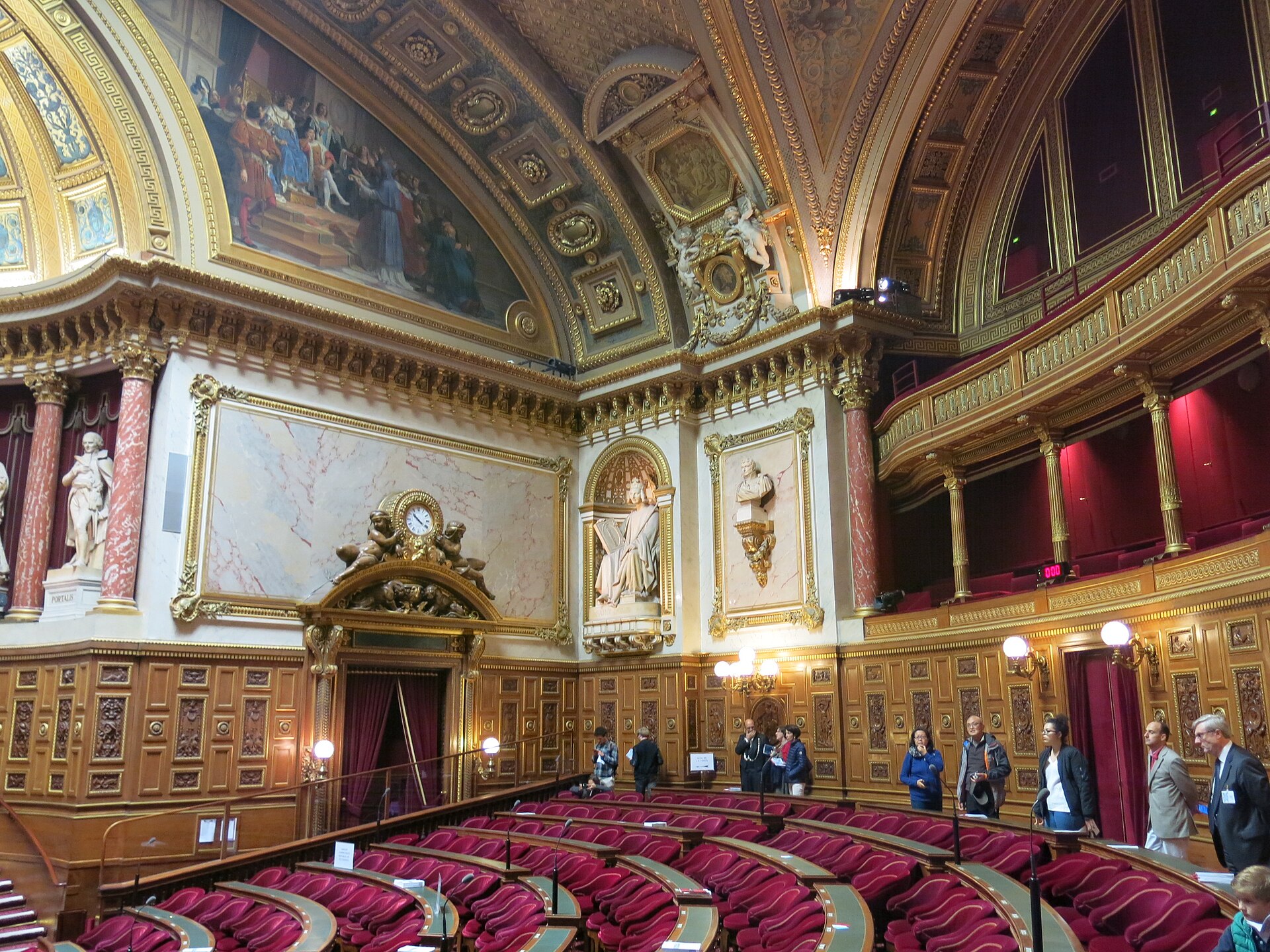
The conversion of the palace into a seat of government required significant alteration, above all the creation of a great chamber where the assembly could meet and debate. This semicircular hall, added to the historic building, became the working heart of the palace in its new role, the place where the nation’s affairs are discussed and its laws considered.
As the home of a house of parliament, the Luxembourg took on a central place in the political life of France, its rooms and halls given over to the business of governing the nation. The palace that had begun as the residence of a queen and served for a time as a prison became a working seat of democratic government, a remarkable transformation that reflects the changing history of France itself.
This role as the home of the Senate continues to the present day, making the Luxembourg not a museum or a relic but a living, working building at the centre of French public life. The palace of Marie de’ Medici endures as one of the most important institutions of the modern French state, its long and varied history culminating in this enduring function at the heart of the nation’s government.
The choice of this particular palace to house so important an institution was fitting, for its grandeur and its central position lent dignity to the assembly it sheltered. In taking on this role, the Luxembourg joined the small number of historic buildings that continue to serve at the very heart of a nation’s government, its ancient walls given new meaning by the democratic business conducted within them.
Splendours of the Interior
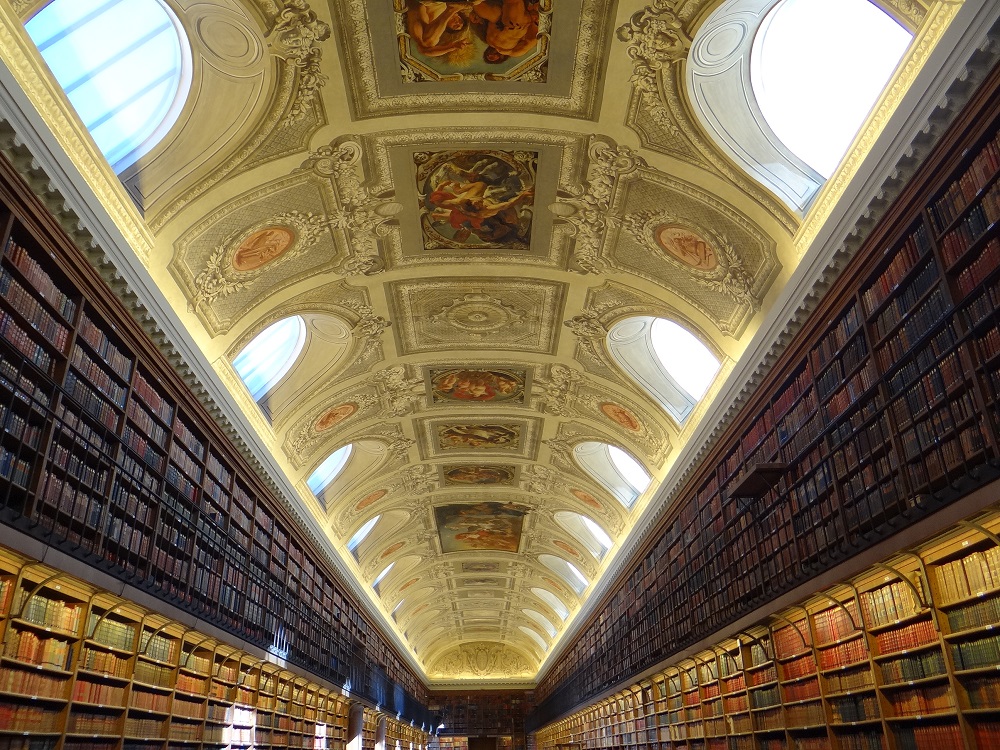
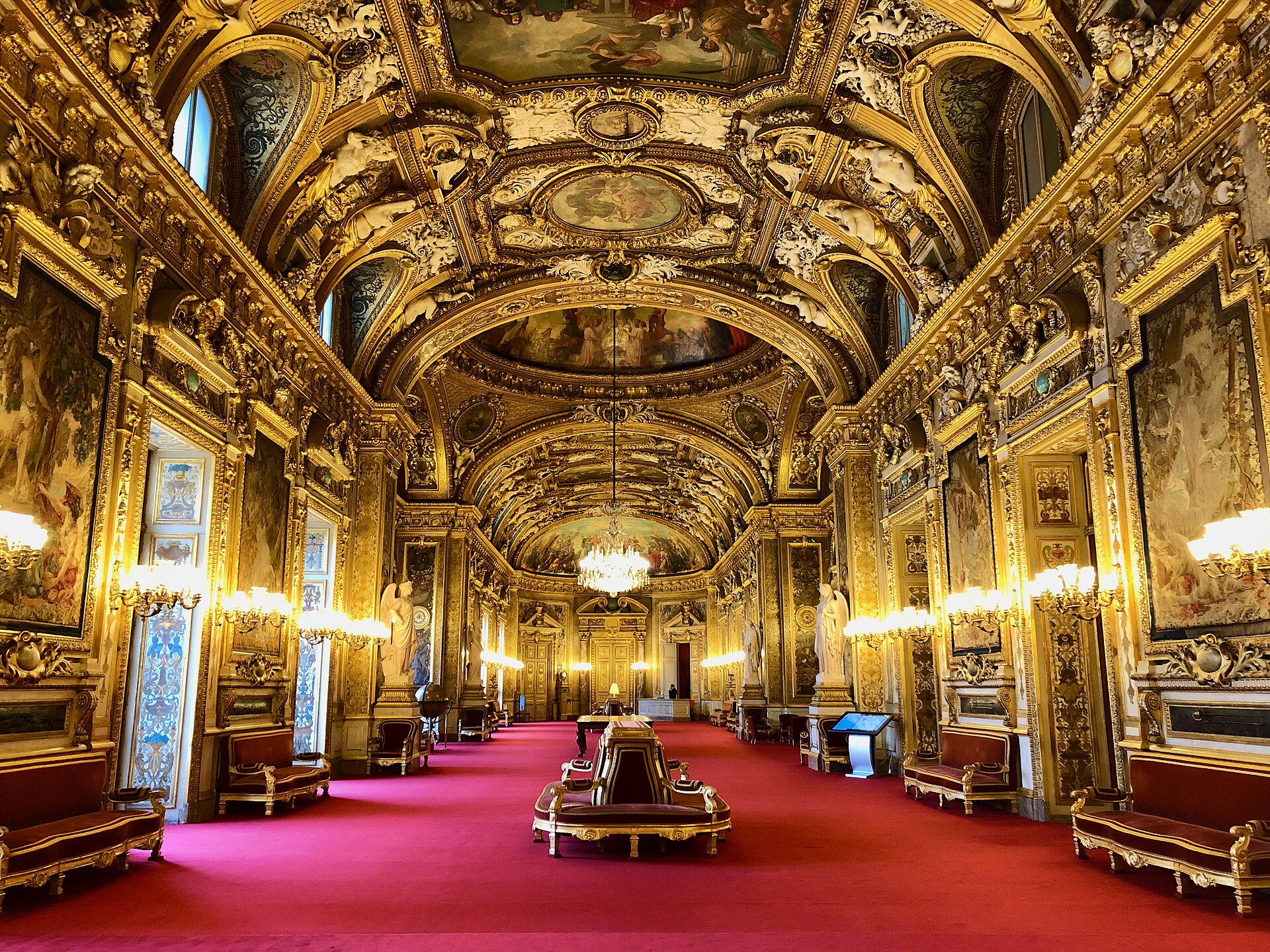
Behind the historic facades of the Palais du Luxembourg lie interiors of great splendour, adorned over the centuries to reflect the palace’s grandeur and its succession of important roles. Among the most magnificent of these spaces is a great library, its walls lined with books and its ceiling adorned with paintings by a celebrated artist, a room of exceptional beauty at the heart of the palace.

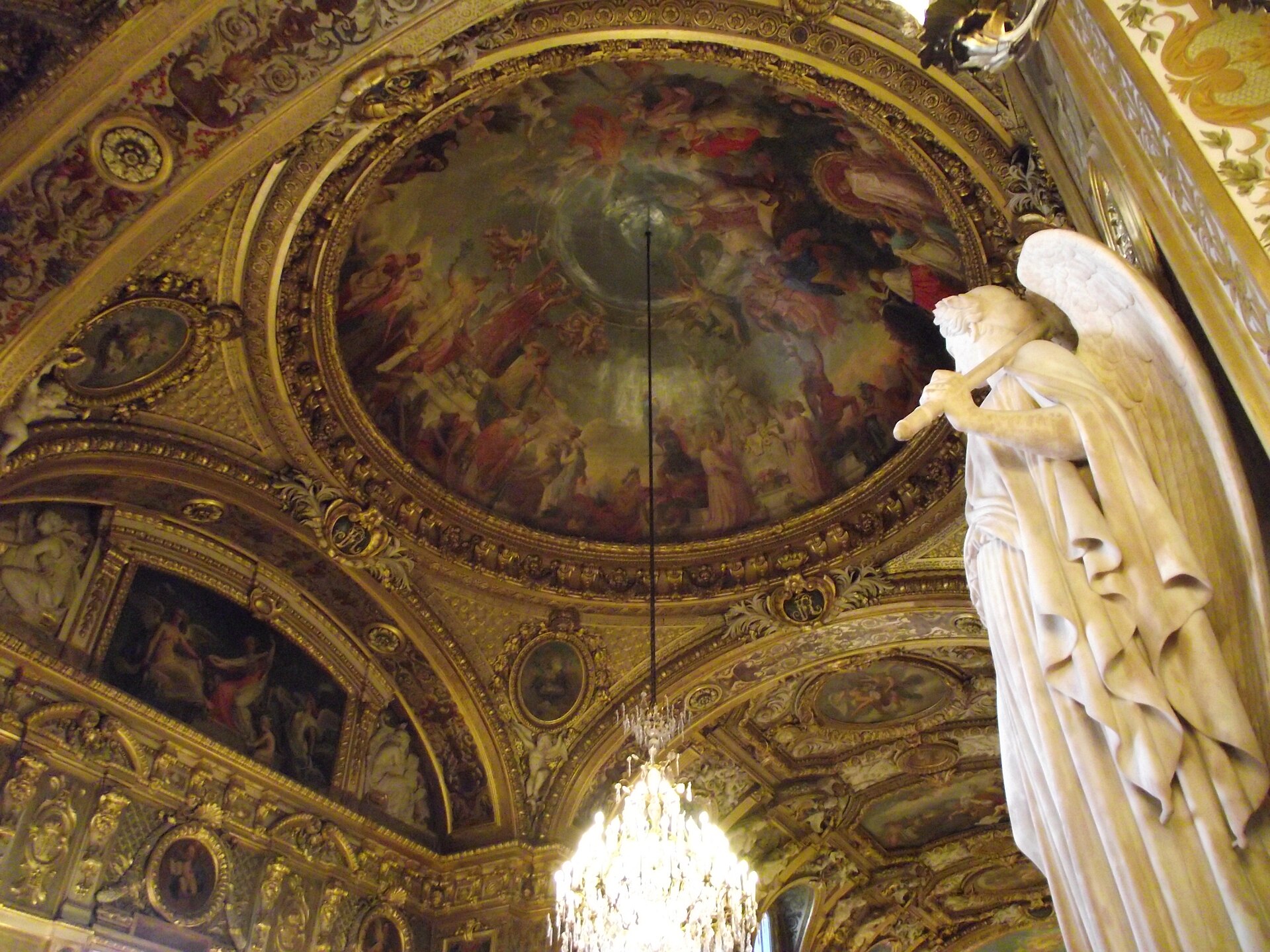
The decoration of these interiors reflects the wealth and importance of the institutions the palace has housed, with rich materials, fine paintings, and elaborate ornament creating spaces of real magnificence. The grand halls and galleries, adorned by skilled artists over the generations, give the Luxembourg interiors worthy of its status as a royal palace and a seat of government.
These splendid rooms are not merely decorative but serve the working life of the institution, providing settings for meetings, ceremonies, and the daily business of the assembly. The combination of historic grandeur and living function gives the interiors of the Luxembourg a special character, spaces that are both beautiful monuments and working parts of a great institution.
The richness of these interiors is a reminder that the Luxembourg, for all its long and varied history, has remained throughout a palace of real magnificence. From the days of its royal builder to its present role in government, the building has been adorned to reflect the importance of those it has housed, and its splendid rooms continue to impress all who are fortunate enough to see them.
For the fortunate visitor granted access, these interiors offer an experience quite different from that of a conventional museum, for they remain the working rooms of a living institution. To see them is to glimpse the setting in which the affairs of the nation are conducted, a rare combination of historic beauty and contemporary purpose that gives the Luxembourg’s splendour a special vitality.
A Home for Art
The Palais du Luxembourg holds a special place in the history of art in France, for it was associated with one of the earliest efforts to display art to the public. Part of the palace complex became home to a gallery where works of art could be seen, an important step in the development of the idea that great art should be accessible to all rather than reserved for private enjoyment.
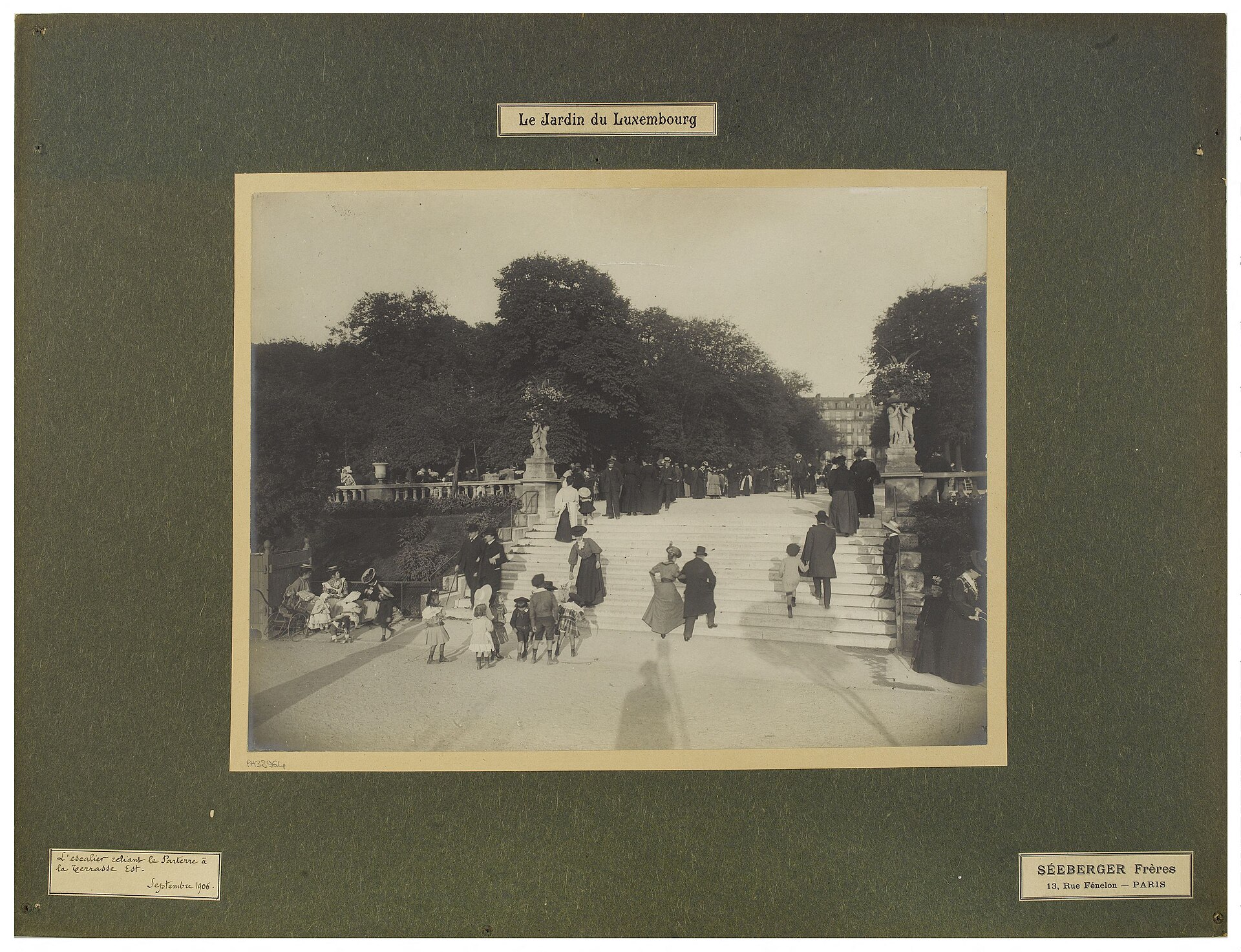
This early public gallery was a significant innovation, opening the appreciation of art beyond the narrow circle of the court and the wealthy. The Luxembourg thus played a part in the broader movement, so important in the history of France, toward making cultural treasures the shared inheritance of the public, a movement that would culminate in the great museums of Paris.
The tradition of displaying art at the Luxembourg has continued in various forms over the centuries, and the palace complex remains associated with the exhibition of art to this day. This connection adds yet another dimension to the rich identity of the Luxembourg, linking it not only to royalty and government but to the cultural life of the nation and the democratic ideal of art for all.
The role of the Luxembourg in the history of public art galleries is a reminder of the building’s remarkable versatility and its deep involvement in so many aspects of French life. From royal residence to prison to seat of government to home of art, the palace has served the nation in an extraordinary variety of ways, each adding to the depth and fascination of its long history.
That a single building should have contributed to the birth of the public art gallery while also serving as a royal home and a seat of government speaks to the extraordinary breadth of the Luxembourg’s significance. Few palaces anywhere can claim so many distinct roles in the cultural and political life of a nation, and this versatility is central to what makes the building so remarkable.
A Hidden Treasure of Paris
Amid the great monuments of Paris, the Palais du Luxembourg is in some ways a hidden treasure, less famous than the grandest sights of the city yet possessed of a beauty and a history to rival any of them. Many visitors know and love its gardens without fully appreciating the remarkable palace that stands behind them, or the extraordinary story that the building holds.
Part of the palace’s relative obscurity comes from its working role, for as the seat of a house of parliament it is not primarily a tourist attraction but a functioning institution of government. This gives the Luxembourg a different character from the great museums and monuments, a sense of being a living, working building rather than a site preserved chiefly for visitors, and it adds to its particular charm.
For those who take the time to discover it, the Luxembourg offers rewards out of all proportion to its fame, from the beauty of its Italian-inspired architecture to the tranquillity of its gardens and the richness of its history. It is a place that rewards the curious traveller willing to look beyond the most obvious attractions of Paris to find the deeper treasures the city holds.
In its combination of beauty, history, and living purpose, the Palais du Luxembourg embodies something essential about Paris itself, a city where the past and the present are woven together and where great monuments continue to play a part in the life of the nation. To know the Luxembourg is to know a hidden side of Paris, and to discover one of its truest and most rewarding treasures.
This quality of being at once famous and overlooked is part of the peculiar appeal of the Luxembourg. Everyone who visits Paris seems to pass through or beside its gardens, yet relatively few pause to consider the palace itself and the extraordinary history it embodies. To do so is to discover a depth and richness that the casual visitor easily misses, and to see a familiar place with new eyes.
Discovering the Luxembourg Today
A visit to the Palais du Luxembourg and its gardens is one of the great pleasures of Paris, and it offers a rewarding alternative to the more crowded attractions of the city. The gardens are open to all and can be enjoyed at any time, while the palace itself, as a working seat of government, can be visited under certain arrangements that allow a glimpse of its magnificent interiors.
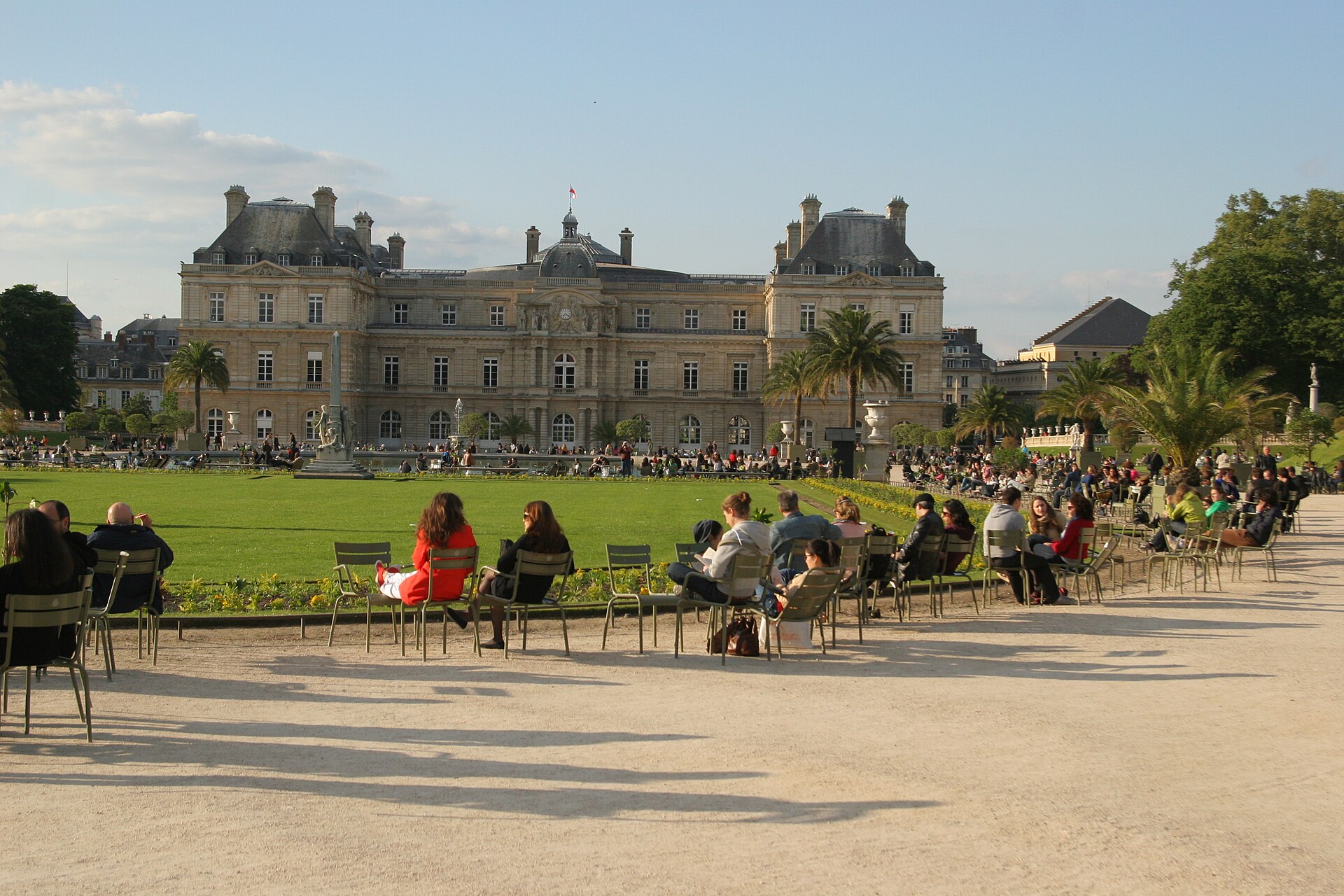
The gardens are the most accessible part of the ensemble and a destination in their own right, inviting the visitor to stroll among the parterres, sit beside the great basin, and seek out the romantic fountain in its leafy corner. To spend time in the Luxembourg Gardens is to share in one of the most cherished experiences of Parisian life, a moment of beauty and repose at the heart of the city.
For those able to see inside the palace, the interiors reveal the splendour of a building that has served queens and governments alike, from the magnificent library to the grand halls adorned by celebrated artists. To visit the palace is to encounter the living heart of French government housed within a monument of great beauty and remarkable history.
View the exact location on Google Maps
However you experience it, the Palais du Luxembourg offers a rich and rewarding encounter with the history and beauty of Paris. Palace and garden together tell a story that spans royalty, revolution, and republic, and they remain among the most beloved and rewarding places in the city. For the traveller seeking the deeper treasures of Paris, the Luxembourg is a destination not to be missed.
Palaces Nearby
If the Luxembourg has drawn you into the palaces of Paris and France, two more great residences lie close at hand:
You May Like
Sanssouci: The Vineyard Palace Where Frederick the Great Found Peace of Mind