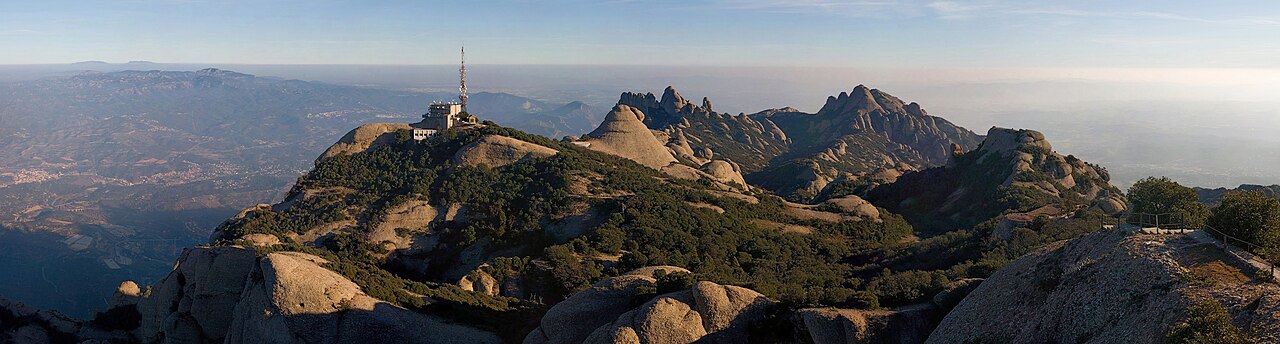
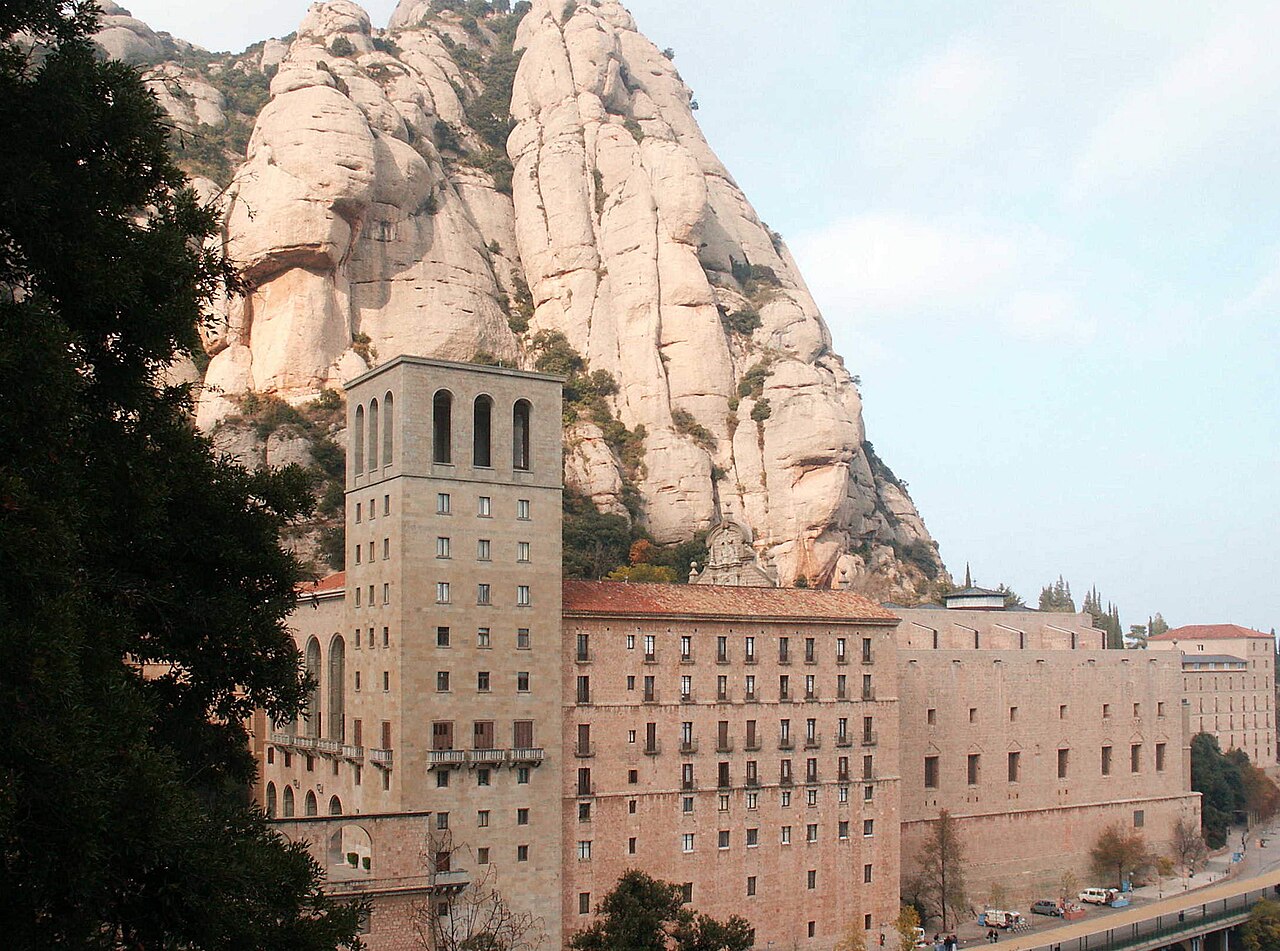
The mountain itself looks unreal, like something from a dream or a fairy tale. Rising abruptly from the plains not far from Barcelona, Montserrat is a vast formation of rounded grey rock pinnacles, hundreds of them, packed together like the fingers of a giant stone hand or the teeth of an enormous saw. Indeed the name means serrated mountain, and standing beneath it you understand at once why people have always felt that something holy must live here. Halfway up its impossible slopes, tucked against the cliffs, sits a monastery that has been the spiritual heart of Catalonia for a thousand years, and at its centre is a small, dark statue of the Virgin that Catalans love above almost anything else.
Like so many of the great Marian shrines, the story of Montserrat begins with a humble discovery and a statue that, the legend says, did not wish to be moved.
The Madonna who would not leave the mountain
The cherished tradition tells of shepherd children in the early Middle Ages who saw a light and heard music coming from a cave high on the mountain. Drawn to investigate, they and the local clergy discovered there a statue of the Virgin and child. When they tried to carry the image down the mountain to the town below, the story goes, it grew impossibly heavy and could not be moved beyond a certain point, which everyone took as a clear sign that the Virgin wished to be venerated there, on the mountain itself. And so a shrine was built around the spot, and from it grew the great monastery.
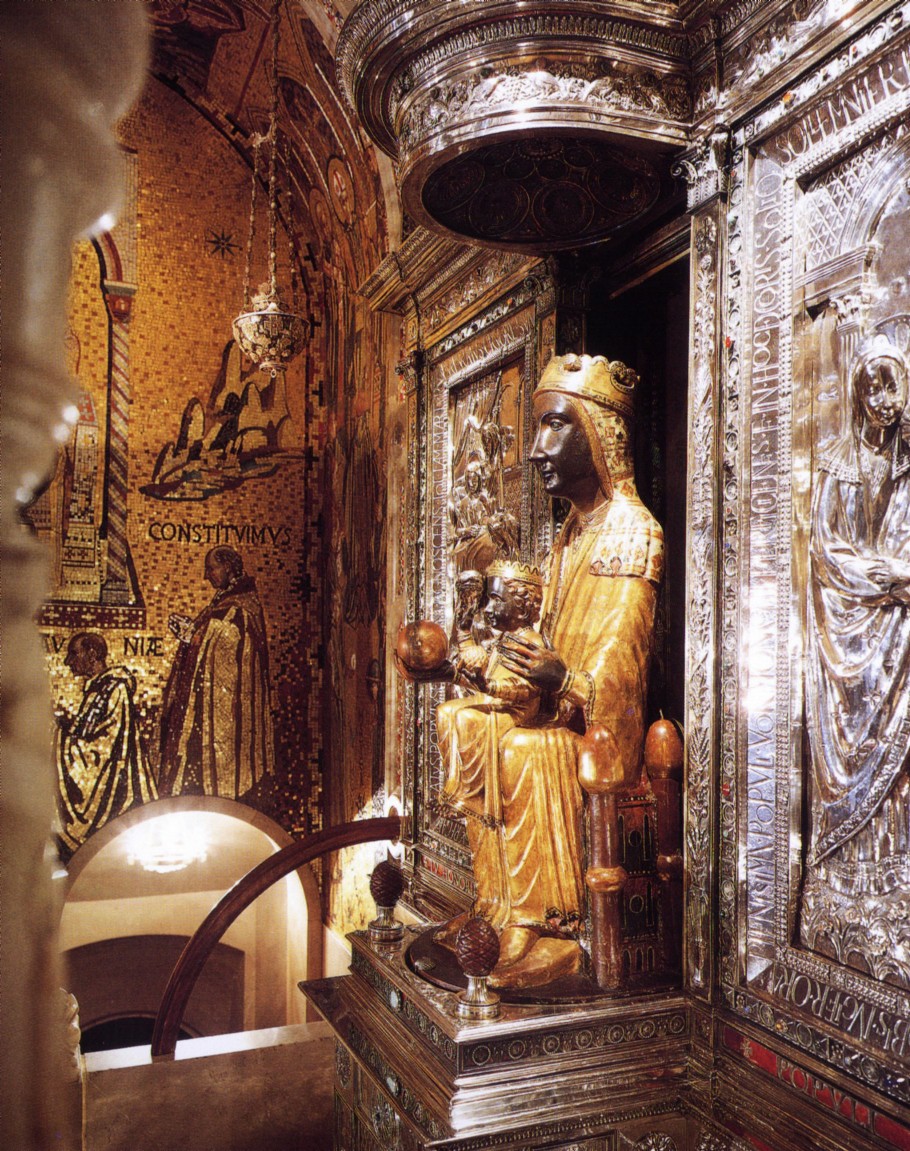
The statue at the centre of all this is a small carved image, darkened with age, affectionately known to Catalans as La Moreneta, the little dark one. Over the centuries she became far more than a religious image; she became a symbol of Catalonia itself, its patron and its mother. Pilgrims have climbed the mountain to stand before her for the better part of a thousand years, and the line of the faithful waiting to approach her still winds through the basilica every day, each person pausing for a moment of prayer before the dark wooden figure.
A thousand years of Catalan life
The Benedictine monastery that grew up around the shrine became one of the most important religious and cultural centres in this corner of Europe. For a thousand years its monks have kept the round of prayer, copied and printed books, and made Montserrat a beacon of learning. Its famous boys’ choir, one of the oldest in Europe, has sung in the basilica for centuries, and the sound of their voices rising in that mountain church is, for many visitors, the single most moving moment of a visit.
Through the turbulent history of modern Spain, and particularly through the long years of dictatorship in the twentieth century, Montserrat took on a deeper meaning still. The Catalan language and culture were suppressed during that period, and the monastery quietly became a refuge for them, a place where Catalan identity could be kept alive under the protection of the church. To this day Montserrat is bound up not only with faith but with the very idea of being Catalan, which is why it draws not only pilgrims but Catalans of every kind, believers and otherwise, who come to feel their connection to a place that has sheltered their spirit through good times and bad.
Where it belongs in the faith
Montserrat is a Roman Catholic monastery, run by Benedictine monks, and it sits firmly within the Western Catholic tradition of Marian devotion and pilgrimage that produced shrines like Lourdes, Fatima, and Aparecida. As at those places, the focus is the Virgin Mary, honoured as the mother of Christ and a powerful intercessor, and the act of pilgrimage, of making a journey to a holy place to pray, is central to the experience. The veneration of the dark Madonna, the offerings, and the prayers for her help all belong to the warm, image-rich devotional world of Catholicism.
It is interesting that so many of the most loved Marian images across the Catholic world, from Montserrat to Aparecida in Brazil to shrines elsewhere, are dark in colour, and the faithful have long found in that darkness a sense that the Virgin belongs to everyone, near and tender rather than distant. This Catholic emphasis on Mary and on holy images, shared with the Orthodox East, is one of the features that distinguishes these traditions from most Protestant ones, which tend to set aside such devotions in favour of a more direct and word-centred faith. At Montserrat, that Catholic devotion is woven together with the music of the choir, the drama of the mountain, and the deep loyalty of a whole people, into something with a character all its own.
Inside the mountain sanctuary
Reaching the monastery is an experience in itself, whether you wind up the dizzying mountain road or ride one of the cable cars and rack railways that climb the cliffs, with the plains falling away dramatically below. Arriving at the complex perched against the grey rock, you find a small world of buildings, the great basilica at its heart, surrounded by the monastery, lodgings, and the bustle of visitors. Above and around it, paths lead up into the strange rock formations, to hermitages and viewpoints and quiet corners where you can escape the crowds and feel the wild holiness of the mountain.
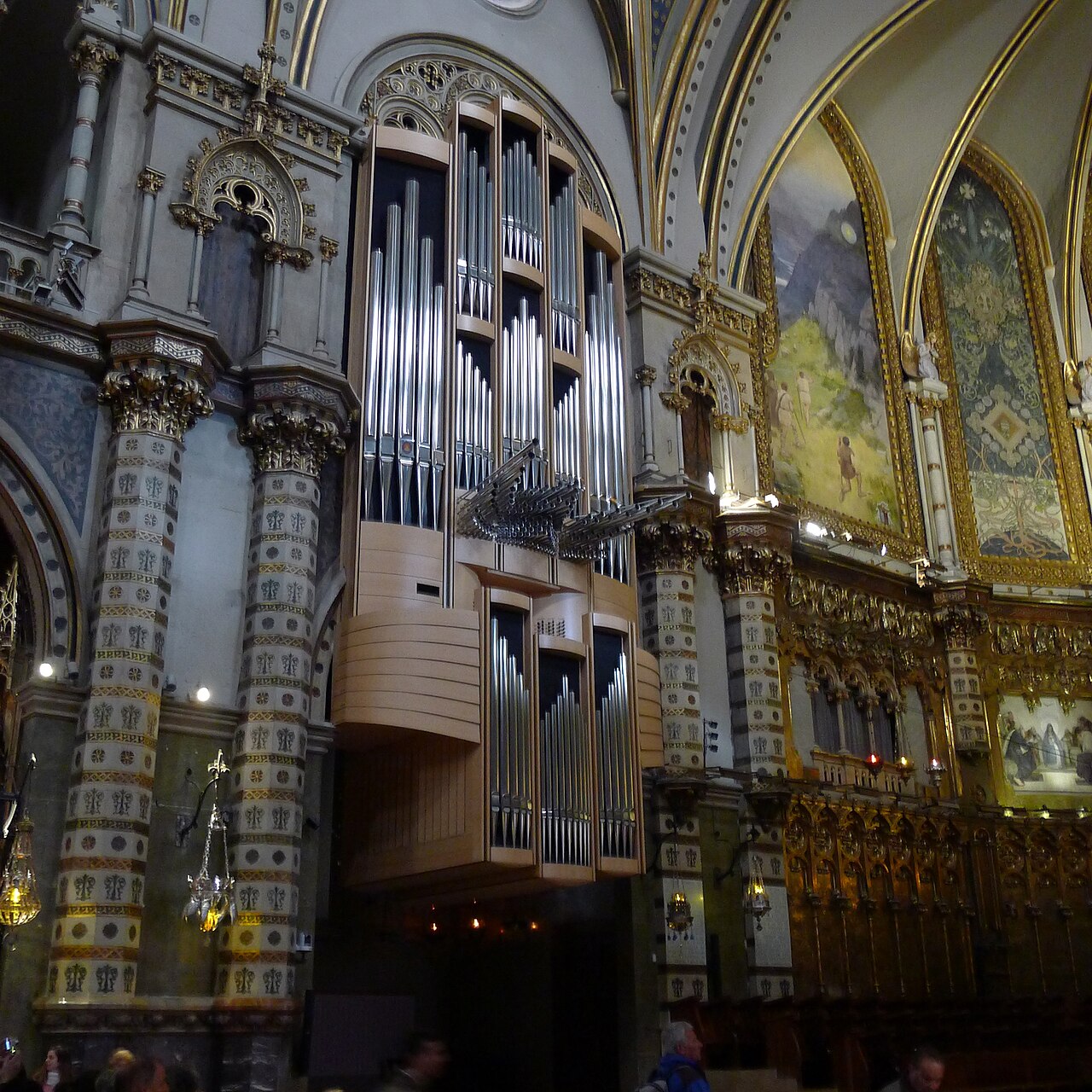
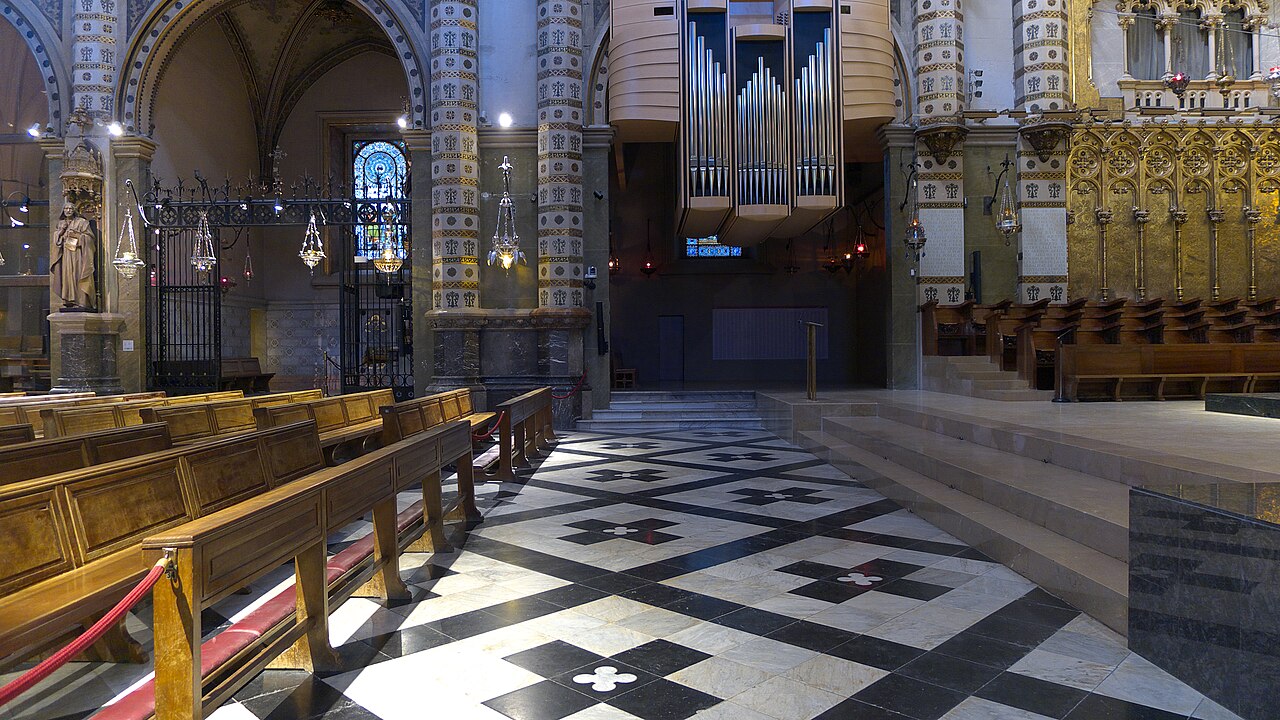
Inside the basilica, the faithful queue to climb to a special gallery behind the high altar where the dark Madonna sits, so that each pilgrim can come close to her, many reaching out to touch the orb she holds, worn smooth by countless hands. The church is rich and atmospheric, and if your visit coincides with the singing of the boys’ choir, the effect of those clear young voices filling the stone space is unforgettable. Outside, the contrast between the human scale of the monastery and the overwhelming wildness of the rock all around gives the whole place its particular power.
Climbing to Montserrat
Because it lies within easy reach of Barcelona, Montserrat is one of the most popular day trips in the region, and on a fine day it can be busy with both pilgrims and sightseers. Yet the mountain is large enough to absorb them, and those willing to walk a little, up to the higher hermitages or out along the trails among the rock pinnacles, quickly leave the crowds behind and find the silence and the spectacular views that have drawn seekers here for a millennium. Some visitors choose to stay overnight in the monastery lodgings, which lets them experience the place in the early morning and evening calm.
However you come, it is worth giving Montserrat more than a hurried hour. Stand in line to greet the little dark Madonna as Catalans have done for a thousand years, listen if you can to the choir, then walk out and up into the extraordinary mountain that cradles it all. There is a reason this strange sawn-toothed peak became holy ground, and a reason a whole people poured their faith and their identity into the monastery clinging to its side. You feel it most not in any single building, but in the meeting of the human and the wild, a small shrine and a vast mountain, that has made Montserrat, for so long, the soul of Catalonia.


