Most churches keep their paintings safely inside, sheltered from the weather. In a remote corner of northern Romania, a handful of small monasteries did something almost unheard of: they covered the entire outside of their churches, every wall, top to bottom, in brilliant frescoes, and left them exposed to five centuries of rain, snow, and sun. The most famous of them is Voronet, a little church in the green hills of the region once known as Bukovina, whose walls blaze with such an intense and luminous blue that people have given the colour its own name. They call it Voronet blue, and they call the church itself the Sistine Chapel of the East.
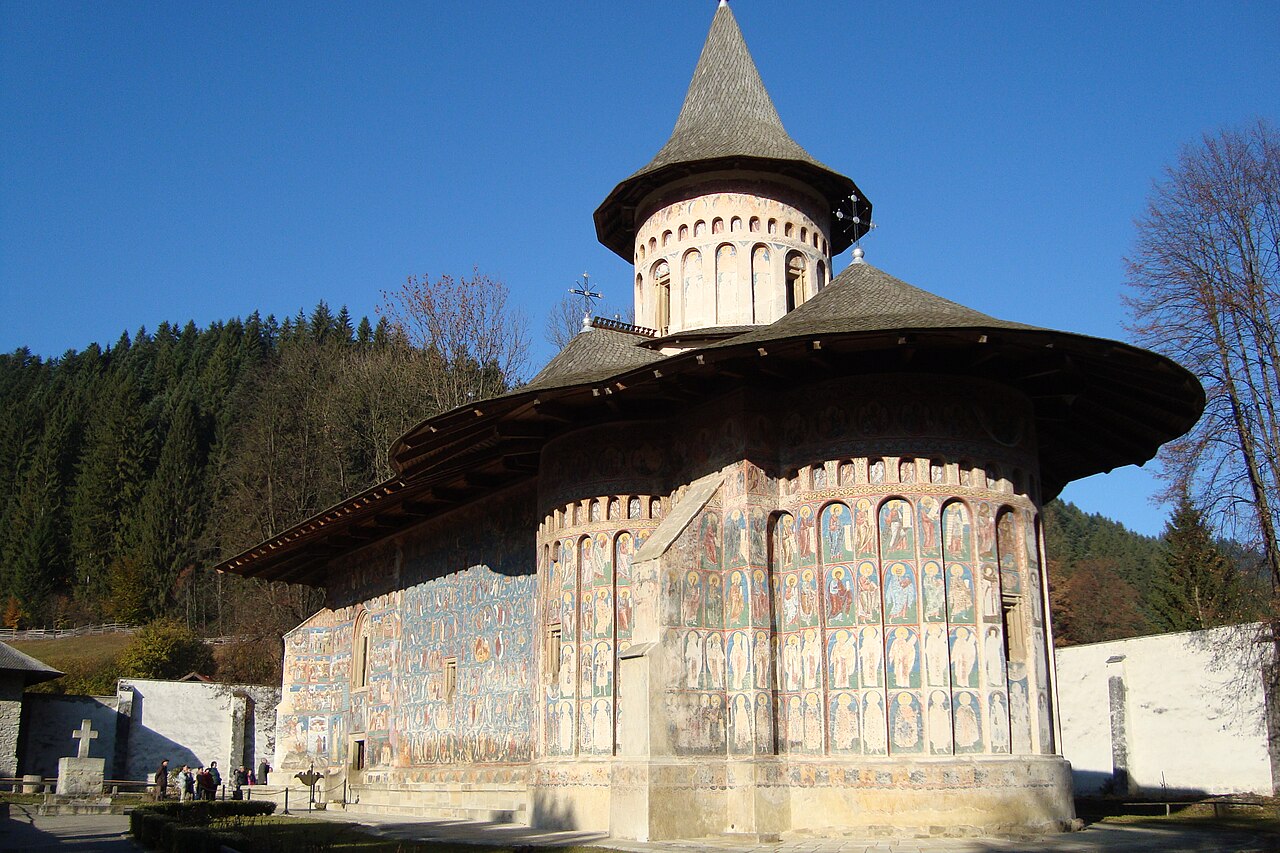
How a tiny monastery in a forgotten valley came to wear one of the great masterpieces of European painting on its outer skin is a story tied to war, faith, and a need to teach.
A church raised in a hurry, by legend at least
Voronet was founded in the late fifteenth century by the most celebrated of Moldavian rulers, a prince remembered as Stephen the Great, who spent much of his long reign defending his small Christian principality against powerful empires pressing in from the south and east. He was a builder as much as a warrior, and tradition credits him with founding a great many churches and monasteries, one, the legend fondly claims, for each of his many battles. Voronet was among them, and a beloved story holds that the church was raised with miraculous speed after a holy hermit urged the prince onward to victory.
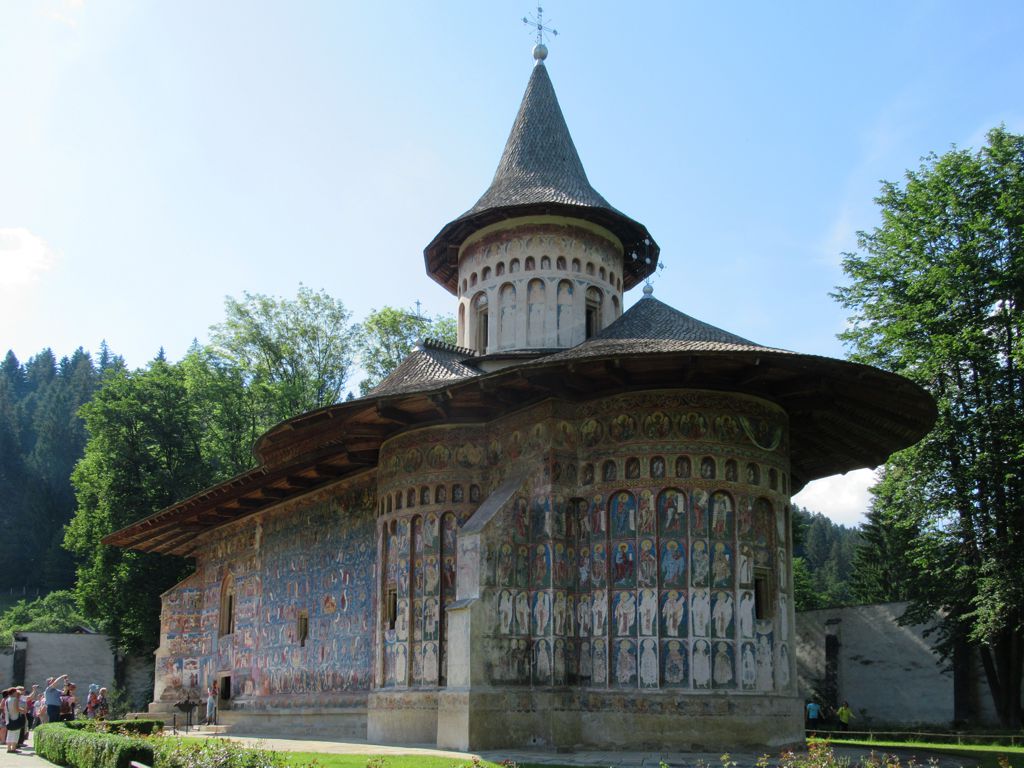
The famous exterior paintings came a few decades later, added under a later ruler in the sixteenth century, when the outer walls of the already-existing church were covered in their astonishing cycle of frescoes. This was the high point of a brief, dazzling flowering of art in this region, when a small group of churches received their painted skins. Only a handful survive in good condition, and Voronet, with its frescoes the best preserved and most vivid of all, is the jewel among them.
Painting as a book for those who could not read
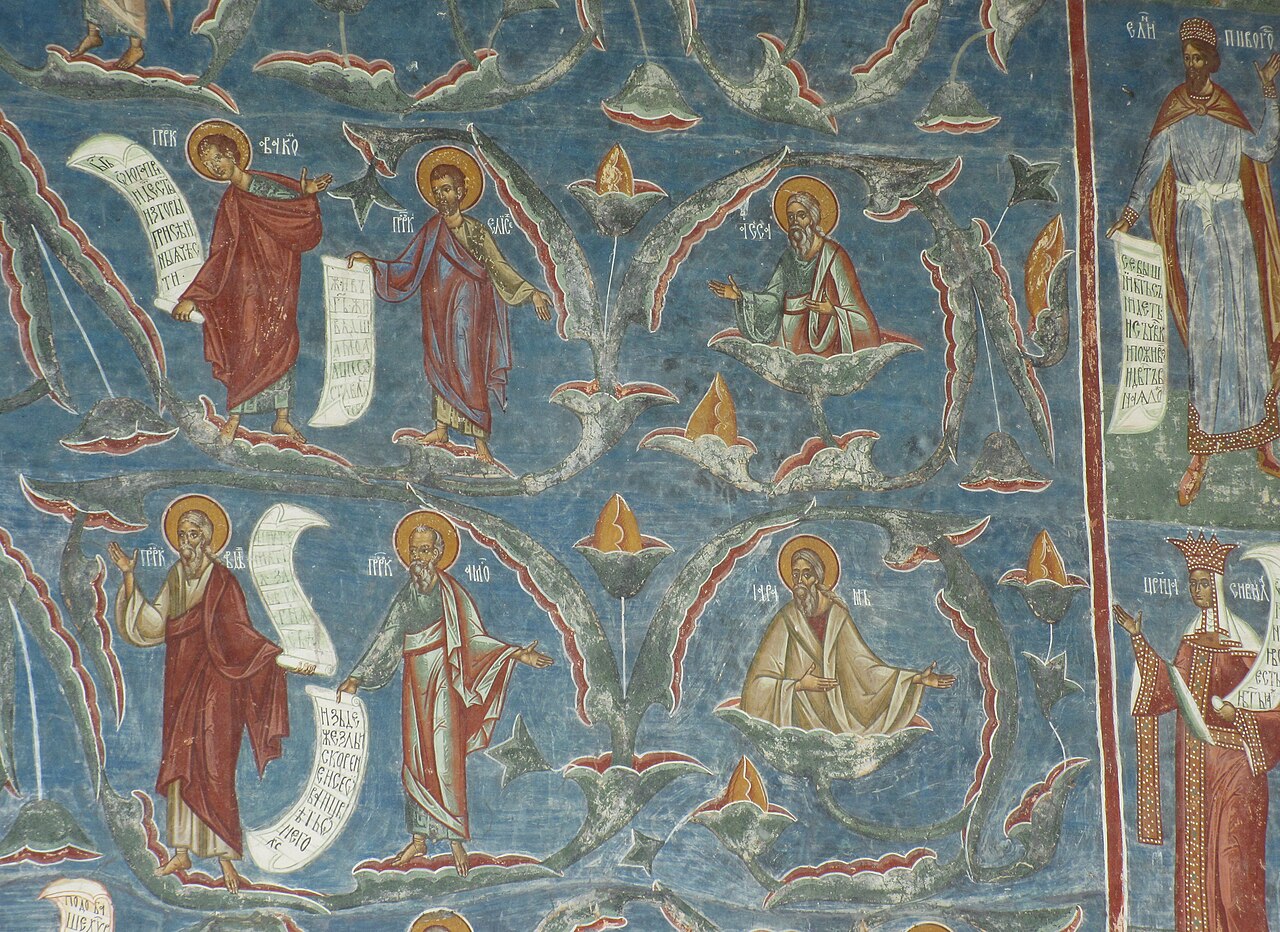
Why paint the outside of a church at all? The answer lies in the purpose these images served. In an age when almost no ordinary person could read, the painted walls were a vast picture book of the faith, a way of teaching the whole of Christian belief and history to villagers and pilgrims who gathered outside, since the small interiors could not hold large crowds. Standing in the churchyard, a worshipper could read the entire drama of salvation across the walls, from the lives of the saints to the end of the world.
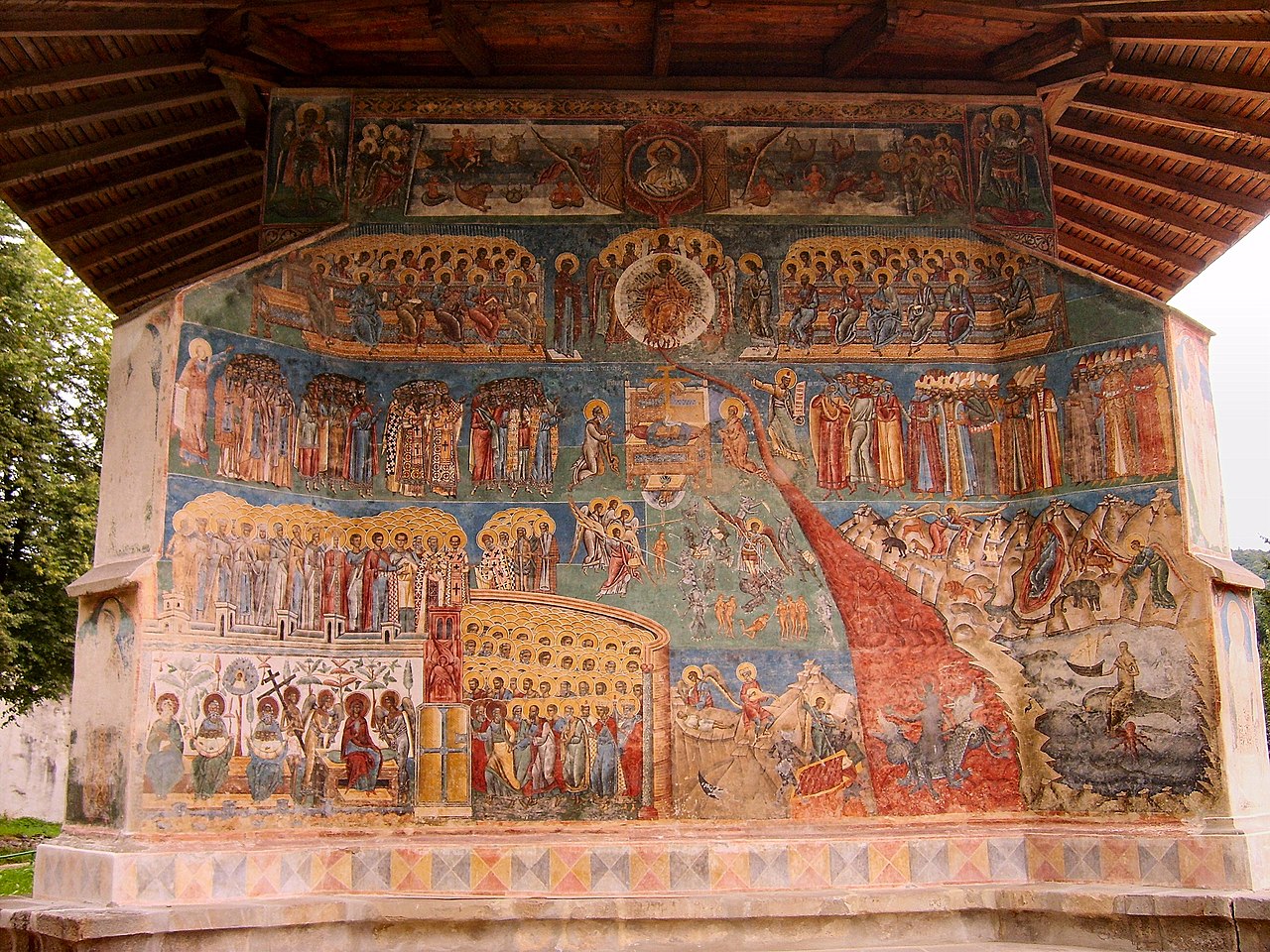
The most overwhelming of these images is the great Last Judgment that fills the western wall, a swirling, crowded vision of the end of time, with the rivers of fire, the weighing of souls, the saved and the damned, the angels and the resurrected dead, all rendered against that deep, glowing blue. It is a sermon you can see from across the valley, designed to fill the viewer with awe and a healthy fear. There is something deeply human in the details, the expressions on the faces, the local touches woven into the ancient scenes, that brings the medieval world startlingly close.
Its place in Orthodox Christianity
Voronet belongs to the Romanian Orthodox Church, yet another of the great national branches of Eastern Orthodox Christianity, sharing the same ancient faith, sung liturgy, and reverence for icons and saints as the Bulgarian, Serbian, Georgian, Greek, and Russian traditions. What is special about the painted monasteries is the way they take the Orthodox love of the holy image, normally expressed in icons and interior frescoes, and unfold it across the open exterior, turning the whole building into a single enormous icon standing in the landscape.
This is worth pausing on, because the icon is at the very heart of Orthodox spirituality in a way that sets it apart from much of Western Christianity. For an Orthodox believer, a sacred image is not mere decoration but a window onto heaven, a means through which the divine is made present and approachable. The Reformation in the West largely rejected such imagery, stripping many Protestant churches bare, while even Catholic art took a different path. The painted churches of Bukovina represent the Orthodox vision of sacred art carried to its most ambitious and beautiful extreme, theology written in colour across the sky. That these fragile outdoor paintings have survived five centuries of harsh mountain weather is regarded by many here as a small miracle in itself.
Standing before the blue
To arrive at Voronet is, at first, to be struck by how small and unassuming the church actually is, a modest structure with a steep roof, the kind of building you might pass without a second glance if its walls were bare. And then you take in the walls, and the impression reverses entirely. Every surface is alive with figures, ranks of saints and prophets and angels marching across the stone, scenes of heaven and torment, all suffused with that extraordinary blue that seems to deepen and glow as the light shifts.
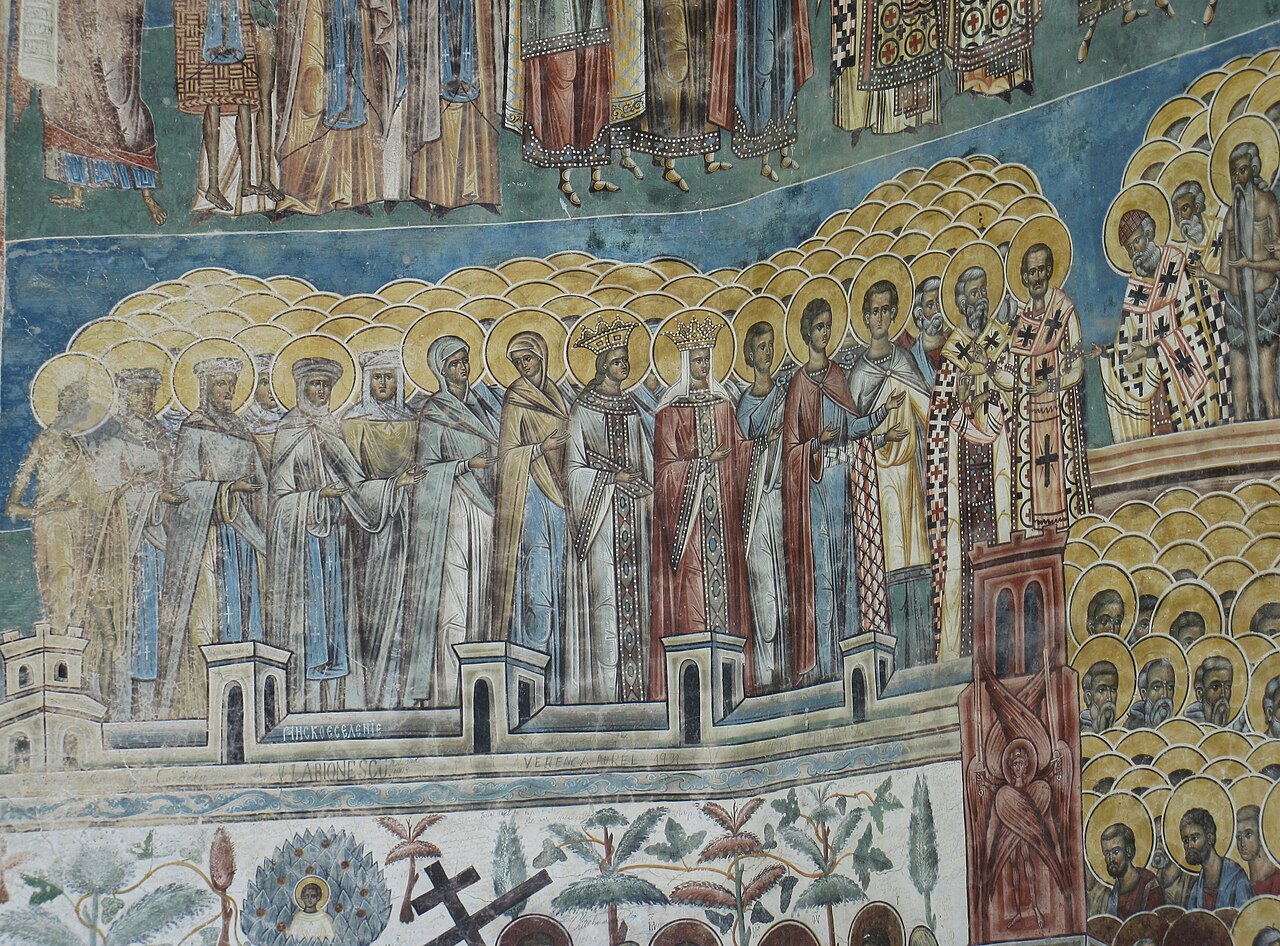
The colour really is the thing people remember. Generations of scholars have tried to work out exactly how the painters achieved a blue so pure and so durable, and while much has been learned, a little mystery still clings to it, which only adds to the magic. Inside, the church is small and dim and intensely atmospheric, but it is the exterior that holds you, drawing your eye from scene to scene until you realise you have been standing in the churchyard far longer than you intended, slowly reading a five-hundred-year-old painted sermon in a language of images.
Visiting the painted monasteries
Voronet lies in a beautiful, rural part of northern Romania, a region of rolling hills, forests, and traditional villages, and it is usually visited as part of a circuit of the painted monasteries scattered across the area, each with its own frescoes and its own character. Reaching them takes some travelling, but the journey through the gentle Bukovina countryside is a pleasure in itself, and the relative remoteness has helped these places keep their quiet, prayerful atmosphere. Several remain active monasteries, home to communities who continue the old round of worship.
It is the kind of place that rewards slowing down. Rather than rushing from one church to the next ticking them off, it is worth lingering at Voronet, walking slowly around the painted walls, letting your eye follow the great drama of the Last Judgment, and watching the famous blue change with the passing clouds. There is a particular wonder in standing where unlettered villagers once stood, looking up at the same images that taught them their faith half a millennium ago, the paint still glowing, the message still legible, the small church still keeping its silent, brilliant watch over the valley.


