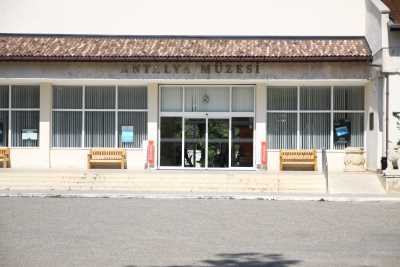
Antalya Museum was founded in 1922 by Süleyman Fikri Erten to protect the works saved from the plunder of the occupation forces that came to the region after the First World War. The Museum, which was first located in the Alaaddin Mosque in Kaleiçi and later in the Yivli Mosque, was moved to its current building in 1972. Today, Antalya Museum consists of 14 exhibition halls on an area of 30 thousand square meters, open-air galleries and a garden where sculptures and various works are exhibited. A significant part of the three ancient cultural regions of Lycia, Pamphylia and Pisidia, located within the borders of the Antalya Region, falls within the area of responsibility of the Antalya Museum.
Antalya Museum is an archeology and history museum and can also be described as a regional museum. Most of the works in the collection were obtained from excavations in the region. In the halls, works reflecting the thousands of years of history of Antalya can be seen, exhibited chronologically and sometimes according to subject. Antalya Museum is considered among the most important museums in the world, especially with the Roman Period artifacts found in Perge and the interesting and unique finds unearthed from the museum’s rescue excavations. The museum was awarded the “Council of Europe Museum of the Year” award in 1988.
Museum Halls
Children’s Department
In this hall designed for children, there are models of major settlements that played an important role in the cultural development of Anatolia and important centers in the Antalya Region.
Antalya Museum
Natural History and Prehistory Hall
In this hall, fossils that witnessed the formation of the world and artifacts that are the first finds of human history are exhibited. Useful items produced by human beings, who moved from hunting and gathering to settled life and thus took their first step towards civilization, idols and figurines belonging to their beliefs, and a jar tomb display reflecting one of the oldest burial traditions of Anatolia are also located in this hall.
Antalya Museum
Ceramic Works Hall
It is possible to see the development of terracotta works with the progress of civilization chronologically in this hall, from the Geometric Period (1100 BC) to the Byzantine Period (1100 AD).
Antalya Museum
Regional Excavations Hall
In this hall, where artifacts from regional excavations are exhibited, it is possible to see examples of artifacts unearthed as a result of archaeological excavations carried out by universities in the archaeological sites in the Lycia, Pamphylia and Pisidia regions and rescue excavations carried out by the museum.
Antalya Museum
Hall of Emperors
Statues of the emperors, empresses of the Roman Period and important political figures of the period, dating back to the 2nd century AD and found in Perge, are exhibited. You can also see the belly dancer statue, which has become the symbol of the Antalya Museum and was made by using black and white marble together.
Antalya Museum
Hall of the Gods
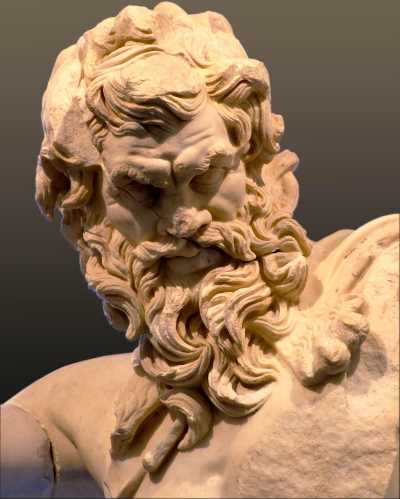
In this hall, it is possible to see the magnificent combination of sculpture and mythology. There are statues of gods and goddesses such as Zeus, the king of the gods mentioned in Greek mythology, Aphrodite, the goddess of love and beauty, and Apollo, the god of sunlight. All of these sculptures, dating back to the 2nd and 3rd centuries AD, were unearthed as a result of excavations in Perge.
Antalya Museum
Perge West Street and F-5 Fountain Hall
In this hall, the statue of Athena emerging from the West Street, the statue of Aphrodite emerging from the square in front of the Hellenistic Period Towers, and a total of 13 statues unearthed from the F5 Nymphaeum pool located in the western corner of the northern bath are exhibited. These are the statue of Emperor Caracalla and statues of gods and goddesses such as Asclepius, Helios, Nemesis, Selene and Tykhe, representing outstanding examples of Perge plastic art.
Antalya Museum
Mosaic Hall
The hall takes its name from the Roman period mosaics in the pool in the middle. Some of the mosaics found in the ancient cities of Seleuceia and Xanthos have mythological themes. The “Philosophers Mosaic” located in the Seleuceia Agora is among the most striking works. Famous philosophers, poets, writers, statesmen, orators and mathematicians of the period are depicted on the border around the mosaic. In the area opposite the Mosaics Hall, there is an important collection of various portraits of men and women, most of which belong to the Roman Period. Another group of twelve sculptures, unearthed in Severuslar Square and the West Gate during excavations in Perge in 2015, has been exhibited in the mosaics hall since 2016.
Antalya Museum
Perge Theater Hall
Seventeen monumental sculptures, friezes and some architectural pieces recovered from the stage building as a result of archaeological excavations at Perge Theater are exhibited in this hall. All these works were unearthed from under the ruins of the stage building, which was largely destroyed as a result of the earthquake. One of the most attractive statues of this hall is Alexander the Great. The statues reflect the characteristics of the Hadrian, Antonine and Severus periods.
Antalya Museum
Hall of Sarcophagi
Most of the sarcophagi exhibited in this hall were unearthed during excavations in the Perge necropolis. The marbles of these sarcophagi were brought to Perge from Attica, Prokonnesos (Marmara Island) or Dokimaion (Afyon) and were processed in Perge’s local sculpture workshop. In the hall, in addition to Pamphylia type sarcophagi with medallions, columns and garlands, pieces belonging to the Girlandli Sarcophagus and the Herakles Sarcophagus, which were illegally smuggled abroad and returned to their lands, and the Herakles Sarcophagus, which was smuggled abroad from the ancient city of Perge in the 1960s and seized at the Geneva Free Port and returned to the Antalya Museum in September 2017, can be seen.
Antalya Museum
Hall of the Cult of the Dead
Examples of burial traditions are exhibited on the lower floor of the museum annex building. The carved burial animation unearthed in the Ancient City of Patara, the magnificent Dionysian sarcophagus found in Perge, a caryatid belonging to the Heroon of Limyra, the statues and metope friezes of the temple built by the Limyrians for the Ptolemaic family, and the cenotaph friezes and inscriptions belonging to Galius Caesar can be seen in this hall. In the hall, the Herakles Statue, whose upper half was illegally smuggled from Perge to the USA and whose lower and upper parts were combined after being returned to our country, is exhibited in a section specially prepared for it.
Hall of Coins, Small Artifacts and Icons
In the coin display section of this hall located on the second floor, coins from the Pamphylia, Pisidia and Lycia regions, as well as coins from the Principalities Period, Anatolian Seljuk and Ottoman are exhibited. The other part of the hall is reserved for jewelry, underwater finds, the Korydalla find group and other small finds. Relics and icons of St. Nicholas, also known as Santa Claus, can also be seen in the hall.
Antalya Museum
Featured Works of Antalya Museum
incense burner
Hz. on the incense burner. There are multiple narrations about Mary’s life. The visible percentage is Hz. While Mary was pregnant, Hz. There is a description of her journey to Bethlehem to give birth to Jesus.
Antalya Museum
According to the description, Hz. Mary is on a donkey, an angel is seen in the back and Joseph (the stepfather of Jesus according to the Bible) is seen in the front. The inscription on the work reads, “It is the gift of the humble bishop Eutychianus to Mary (Mother of God).”
Berenice Vase
The vase is a wine vessel in the form of an embossed “Oinochoe”, unearthed during the excavations of the Ancient City of Xanthos. The work was created between 246-222 BC by the Egyptian Queen II, the wife of Pharaoh Ptolemy III Euergetes. It is understood from the inscription engraved on the shoulder of the female figure that it was made as a gift to Berenice.
Antalya Museum
The female figure is Tykhe, the goddess of luck, holding a sacred bowl (phiale) in her right hand and carrying a horn of fertility (cornucopia) in her left arm.
Goddess Artemis and the Zodiac Signs
The light disk-shaped work was unearthed in the Ancient City of Perge. The band surrounding the disc is divided into twelve sections, and the symbol of a zodiac sign is located in relief in each section.
Antalya Museum
Starting from the fracture on the left side, in order; In the first section, there is Capricornius in the form of a wild goat with a fish tail, and next to him is Centaur Centaur holding a bow in his hand and Sagittarius. This is followed by Scorpio. Afterwards, there is the sign of Libra, shown as a flying figure with its arms outstretched, holding a scale in its right hand. Virgo (Virgo) is depicted in a similar manner to the relief of Libra, and is holding two stalks of grain in each hand extending to either side. In the following sections, there are Leo (Leo), Cancer (Cancer), Gemini (Gemini), Taurus (Taurus), Aries (Aries) and Pisces (Pisces). On the inner circle surface, Goddess Artemis and figures related to her are depicted around her.
Statue of Caracalla
Caracalla is the eldest son of Roman Emperor Septimus Severus and Julia Domna. He had his younger brother Geta, with whom he was fighting for sultanate, killed in the arms of his mother, Julia Domna, in 211. Emperor Caracalla, who promised the soldiers that their wages would be increased in order to strengthen his position after this incident, killed approximately 20 thousand people, including senators, who were known to be close to Geta, in the first months of 212. After his death, Caracalla was sentenced to be erased from memory (damnatio memoriae) for these actions, his name was erased from the inscriptions, and his statues and busts were destroyed. The work has a special importance as it is the first and only statue of Emperor Caracalla that has survived to the present day in its entirety.
Antalya Museum
The statue, unearthed during the excavations of the Ancient City of Perge, is dated to the year 217, before Caracalla’s Parthian Campaign. The figure next to Caracalla is a Parthian soldier.
Dancing Woman Statue
The Dancing Woman Statue is one of the most important pieces of the Antalya Museum sculpture collection and dates back to the Roman Period (2nd century AD). It is a very rare example, as it is carved from finely porous marble in two different colors: black and white.
Antalya Museum
The skin part of the statue is made of white, while the clothes and hair parts are made of black marble. The sculpture has superior artistic qualities in terms of materials, workmanship and style. The work, which was found in many pieces and was erected by combining the existing parts and using metal supports, reflects the superior sculptural features of its period, as well as its beauty, as it was made in a movable manner.
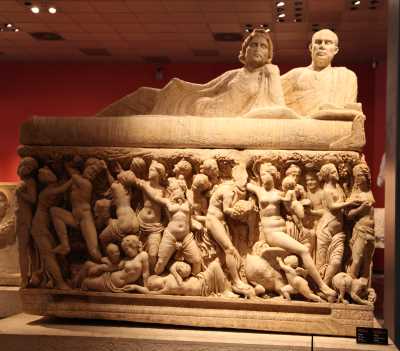
Dionysiac Sarcophagus
High-level workmanship and artistry can be observed in the sarcophagus, which can be dated to the mid-3rd century AD and used high quality marble. In the scene on the Attic Type Dionysian Sarcophagus, which has more than one myth, God Dionysus wants to pass through Thrace to go to India; but is prevented by King Lykourgos.
Antalya Museum
This insult to a god by King Lykourgos does not go unpunished. God Dionysus makes Lykourgous kill his own children with his axe, mistaking them for vine trunks.
Sacrifice Scene Frieze
In the work recovered from the Perge Theatre, Goddess Tykhe sits on the throne in the middle.
Antalya Museum
The goddess holds the depiction of Artemis of Perge (Artemis Pergaia) in her right hand and the horn of fertility (cornucopia) in her left hand.
Antalya Museum
On both sides of the frieze, there are bulls offered as sacrifices to the Goddess.
Leto
The goddess Leto statuette was recovered from the Elmalı-Bayındır Tumulus and can be dated to the end of the 7th century BC and the beginning of the 6th century. In the ivory figurine, Goddess Leto is depicted with a boy on her shoulder and a girl next to her.
Antalya Museum
One of the stories of Leto and the birth of her twin children, which has more than one narrative, is as follows: Leto, the lover of Zeus, comes to the Xanthos Valley in Lycia to give birth to her children and wants to give birth to and wash her children here. However, Lycian farmers do not allow Leto to reach the water, and as punishment Leto turns them into frogs.
Tired Herakles (Herakles Farnese)
The lower half of the Statue of Herakles was found in 1980 during scientific excavations carried out in the gallery called Klaudios Peison in the Southern Baths of the Ancient City of Perge. It was learned that the upper half of the statue exhibited in the Antalya Museum is in the Boston Museum of Fine Arts in America and is owned by a collector named Shelby White-Leon Levy, after it was published in the catalog called Glories of the Past. As a result of the initiatives and long efforts, the upper half of the statue was brought to our country in 2011 and put on display by combining it with the lower part in the Antalya Museum.
Antalya Museum
Herakles is the son of the Chief God Zeus and Alcmene. He is known as Heracles in Greek mythology and Hercules in Roman mythology. The name Herakles means “the fame of Hera” and is also defined as “heros”, meaning hero.
Herakles is a half-god, half-human, mythological personality who is the symbol of power, invincibility and struggle. With the goodness he carries in his heart, he wants to protect people from troubles and disasters. Throughout his life, he struggles with Goddess Hera’s hatred and jealousy towards him. According to mythology, Herakles was burned in an accident after completing his twelve tasks; He is completely purified from all his sins and reaches immortality.
Antalya Museum
According to myths, when Herakles turned 18, he was assigned by Eurystheus to kill the “Lion with the Golden Fleece” living in the forests of Nemea. He starts looking for the lion and returns home tired. Finally, one day he manages to kill the lion with the golden fleece. In the composition of the statue, Herakles, who killed the lion with great effort, is leaning on his staff and resting. Because of this composition, the statue is also called “Tired Herakles”.
Altar (Bomos)
In ancient times, people aimed to get closer and integrate with the gods by giving gifts to the gods in order to have their prayers accepted, seek refuge and believe in difficult and troublesome times. Altars also emerged as a result of this purpose.
Antalya Museum
Small-sized altar examples, which are generally thought to be used in indoor worship, are called “Bomos”. On this work, unearthed during the excavations of the Arykanda Ancient City, Goddess Athena is depicted in a local style. It is quite remarkable that some of the red madder on the pediment, inscription and figure is still visible.
Perge’s Daughter (Plancia Magna)
Plancia Magna is a figure who lived in the Ancient City of Perge in the 2nd century AD and made great contributions to the development of the city. Unlike women living in her period, she undertook political, religious and social duties, and on the other hand, she managed to come to the fore in many areas by managing the development activities of Perge.
Antalya Museum
Her differentiation from other women living in her period ensured that her name was remembered even centuries later.
Sarcophagus of Herakles
The marble sarcophagus, depicting the twelve labors of Herakles, belongs to the “Asia Minor Sarcophagus” group, of the type called “Torre Nova” in the archaeological literature. It was discovered when it was brought to Switzerland in 2010 after its restoration in England, and as a result of the scientific opinions of archaeologists who are experts on the sarcophagus, it was understood that the artifact originated in our country. The sarcophagus was returned to our country on September 13, 2017 and was subsequently exhibited at the Antalya Museum.
Antalya Museum
The King of Thebes marries his daughter Megara to Heracles. Hera, who had a grudge against Heracles since birth, caused Heracles to go crazy and Heracles killed his own children. When he came to, Heracles felt great pain and took shelter with a man named Thespios and was purified from his guilt. However, Hera does not find this enough. Apollo commands Eurystheus to enter his service through his oracle Pythia. If Herakles successfully completes the twelve tasks given by Eurystheus, he will be purified of his crimes and attain immortality. The “Twelve Labors of Hercules” are:
1-Killing the Nemean Lion: This lion terrorizes the Nemea region in Greece. Heracles tried to defeat the Nemean lion with his arrows and mace; But when he failed, he strangled her to death.
2- Killing the Lerna Dragon: The hero neutralized this dragon named “Hydra”, a nine-headed snake living in the Lerna swamp in the Argos region of Greece, by cutting off its eight heads and placing the ninth head under a large rock.
3-Catching the Erymanthos Wild Boar: Herakles caught the terrible wild boar living on the Erymanthos Mountain in the Arkadia region of Greece with the help of a net.
4-Catching the Kyreneia Deer: Heracles tried for a year to catch this deer with golden horns and bronze feet, which was protected by the Goddess Artemis and the God Apollo, and finally succeeded in bringing it by wounding it with an arrow.
5- Repelling the Birds of Lake Stymphalos: In Lake Stymphalos, located in the Arkadia region, birds with bronze beaks and claws feed on human meat. Herakles frightened the birds with the bells he received from Goddess Athena and killed them with his arrows.
6- Stables of Augias: The herds of Augias, King of Elis, were so large that their barns became unusable because of the manure that accumulated like mountains. Herakles cleaned the stables in one day by changing the course of the Alpheios and Peneios rivers.
7-Bringing the Cretan Bull: When the white bull of the Cretan king Minos was driven mad by God Posedion, he started eating all the crops, and eventually a great famine occurred in Crete. Herakles caught him by his horns and took him to Greece.
8-Catching Diomedes’ Horses: Thracian King Diomedes had horses that ate human flesh. Heracles kills Diomedes, feeds his meat to the horses, and tames the animals and brings them back. According to some, he killed the horses by having them torn to pieces by wild animals on Mount Olympus.
9-Taking Hippolyte’s Belt: Hippolyte, the queen of the Amazons, had a magical belt that was a gift from God Ares. Herakles managed to get the magical belt by killing Hippolyte.
10-Taking Geryoneus’ Cattle Herds: Giant Geryoneus was grazing large herds of cattle on the edge of the Okeanos River at the western end of the world. Herakles crossed the Okeanos River with the golden boat he received from God Helios, killed the Giant Geryoneus, and took his cattle to the king.
11- Bringing the Golden Apples of the Western Daughters (Hesperides): God Zeus gives magical apples to Goddess Hera as a wedding gift. Western girls and a dragon protect them. Herakles gets the magical apples with the help of Atlas, who carries the world on his back.
12-Bringing Kerberos: Heracles brings Kerberos, a dog guarding Hades, the God of the Underworld, from the underworld with the help of God Hermes and Goddess Athena.
Sarcophagus of Stephanos the Dog
The sarcophagus was brought from the Ancient City of Termessos, located in the Döşemealtı district of Antalya. It is considered a unique work because it was built for a dog.
Antalya Museum
On its narrow face, there is an 11-line ancient Greek inscription arranged in the form of a poem. It is understood from the inscription that this sarcophagus was built by a rich and lonely woman named Rhodope for her beloved dog Stephanos.
Apple Treasure
The most important coin group exhibited in the coin section of Antalya Museum is the “Elmalı Treasure”. This huge treasure containing approximately 1900 silver coins was found as a result of illegal excavations in 1984 in Bayındır village of Elmalı district of Antalya.
Antalya Museum
The Elmalı Treasure was returned to its homeland in 1999, and was described as the “Treasure of the Century” when it was unearthed in 1984. Because the first half of the 5th century BC, when the treasure was dated, was a period when information on political issues was extremely scarce. The treasury’s coins belonging to all the city-states in the region have not even entered commercial circulation yet and have been preserved in an extraordinary way until today. The information that the coins provide about block prints, weight systems and previously unknown names of kings and dynasties are very important in terms of illuminating the period.
One of the reasons why it is called “Treasure of the Century” is the 10-unit coins called “deca drachma”, which are very rare in the world. The currency of that time was a drachma and this unit weighed 4.3 grams. Normally, the highest currency unit was 4 drachmas. But the Athenians printed a limited number of decadrachms, each weighing 43 grams, in memory of the wars in which they defeated the Persians. Until 1984, only 13 of them were known to exist in the world. In the Elmalı Hoard, 14 decadrachms were found; However, only 6 of them could be brought to the museum. The frontal owl figure with open wings engraved on the back of these rare coins is designed differently from the classical owl coins of Athens, which were minted in the same type without changing for hundreds of years.
Antalya Museum
Source: “Antalya Museum”, Antalya from Past to Present II. Volume, Antalya Provincial Culture and Tourism Directorate, 2012, Antalya, p.183
Click to visit the museum virtually.
Places to visit in Antalya
Source: Antalya Provincial Culture and Tourism Directorate