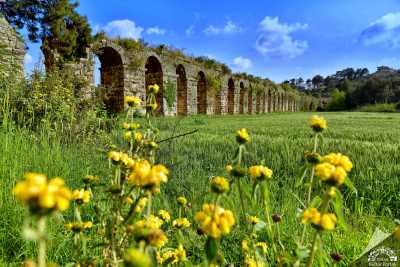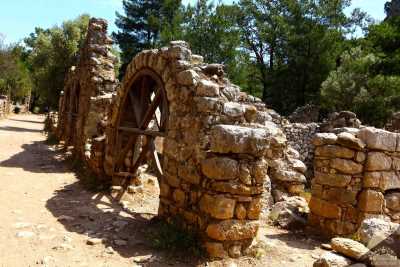
Olympos is the second important port city after Phaselis on the southern coast of Antalya. It takes its name, which means “high mountain”, from Tahtalı Mountain, one of the western extensions of the Taurus Mountains, sixteen kilometers north of it. Although the exact date of its foundation is unknown, Olympos, mentioned in the coins minted in 167-168 BC, is one of the six cities with three voting rights in the Lycian Union. The ruins of the city are located in the Kemer district of Antalya, within the borders of the Beydağları Coastal National Park.
General Directorate of Promotion Archive
Olympos is considered one of the important settlement centers of the Lycian Union. Commander Servilius Isauricus cleared this city, which was founded in the Hellenistic period, from pirates and annexed it to Roman territory in 78 BC. The city became an important religious center, gaining fame for its self-burning fire, known today as Yanartaş; It maintained this importance in the Roman and Byzantine periods as well.
Most of the surviving ruins of the city are in the forest, covered with trees and bushes, and belong to the Hellenistic, Roman and Byzantine periods. These ruins are generally located at the mouth and on both banks of a river that flows rapidly into the sea from east to west. In ancient times, the river bed that divided the city into two was enclosed in a canal, both sides of which were used as piers and connected to each other with a bridge. Today, one pillar of the bridge remains in place. There are building ruins from late periods in the small and steep acropolis located near the river mouth. The small theater with Hellenistic foundations and Roman repairs on the south bank of the river is quite dilapidated and only one side of the entrance is well preserved.
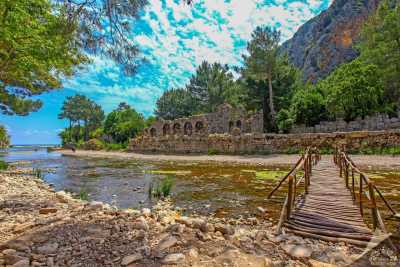
The Byzantine church, whose interior walls are decorated with frescoes, is the most monumental ruin in the area. Another important visible structure of the city is the temple gate located west of the river mouth. The door is among the architectural pieces found to belong to a small temple in the Ionic order; It is understood from the statue base in front of the door that it was built in the name of Roman Emperor Marcus Aurellius (172-173 AD).
The most interesting among the ruins is the Sarcophagus of Captain Eudomus, which was unearthed during the excavations carried out by the Antalya Museum. The sarcophagus, located in the hollow of the rock right next to the river mouth, is of great importance as it gives the name of the captain in its emotional poetic dedication inscription and depicts the shape of the ship in the ship relief on its long side.
General Directorate of Promotion Archive
Olympos Ancient City and its surroundings constitute a 7.5-kilometer stage of the famous Lycian Way walking route. To the east of Olympos, three hundred meters from the beach, is the Çıralı settlement, which is famous for its magnificent beach where Caretta caretta turtles lay their eggs and coastal dunes where many plants live. A few kilometers southwest of the city is Yanartaş, which is the subject of legends with its never-ending fire.
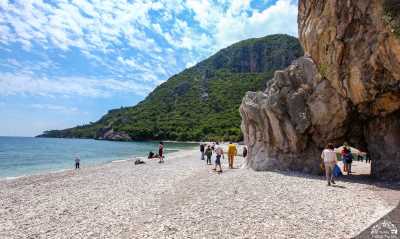
Olympos is among the “Ancient Cities of the Lycian Civilization” (2009) recommended to the UNESCO World Heritage List.
Source: Olympos, Antalya Promotion Book, Antalya Provincial Culture and Tourism Directorate (2017)
Places to Visit in Antalya
Source: Antalya Provincial Culture and Tourism Directorate