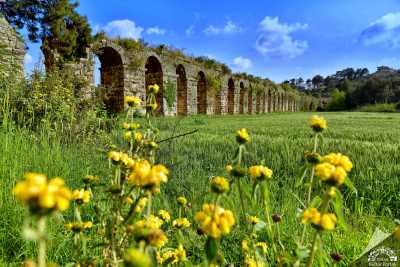
Phellos Ancient City was founded on the slopes of Mount Felen in the northeast of Kaş, on a hill overlooking the surrounding mountainous region. It is one of the few Lycian cities with a Greek name, along with Antiphellos, which it is located opposite. The Lycian word for the word Phellos, meaning “stony country”, is “Vehinda”.
Phellos, built on a ridge overlooking the surrounding mountainous region, was a very important city in the 4th century BC. However, while it was the center of the main settlement in the region, it lost this superiority to Antiphellos, a port city it founded, with the Hellenistic period.
Antalya Provincial Directorate of Culture and Tourism
Phellos, of which there is not much information about its history, looks like a defensive city and fortified position rather than a large settlement with its existing ruins. There are not many building remains in Phellos, except for the city walls surrounding the acropolis, where polygonal technique is seen in places. Spread over an area of approximately 550 meters in length and 200 meters in width, the Phellos acropolis is completely surrounded by walls and built of limestone blocks, which are the natural formation of the region. The towers in the east and south, adjacent to the walls, are in rectagonal technique. The house-type rock tomb, located on the western edge of the acropolis, is one of the most original examples of Lycian wooden house architecture reflected in the rock tomb.
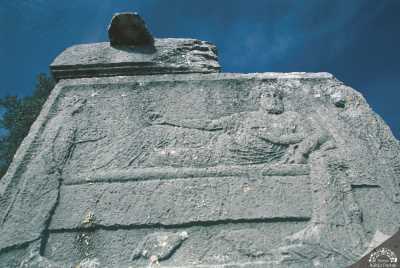
The sarcophagus with reliefs among the many sarcophagi located in the valley to the north of the acropolis and at the foot of the hill opposite is among the most striking works of the city. It consists of three parts: a pedestal, a sarcophagus and a lid made of limestone blocks. On one side of this sarcophagus, there is a depiction of the owner of the grave, lying on a couch and holding a glass in his hand. There are two figures standing on either side of the dead body and bird figures under the cedar. The other side of the sarcophagus is unclear. There is a warrior figure on one of the short sides of the sarcophagus, and on the other, there is a relief of a warrior offering a helmet to the grave owner. On the forehead of the lid of this sarcophagus dated 385-350 BC, griffins depicted facing each other can be noticed.
Phellos is among the “Ancient Cities of the Lycian Civilization” (2009) recommended to the UNESCO World Heritage List.
Source: “Phellos” Antalya from Past to Today [II. Volume], Antalya Provincial Directorate of Culture and Tourism (2012)
Places to Visit in Antalya
Source: Antalya Provincial Culture and Tourism Directorate